
On Mother’s Day, my son came to visit me carrying a bouquet as bright as the Sunday morning outside my windows. David was thirty-eight now, young, wealthy, and always busy, the kind of man whose phone never seemed to stop lighting up and whose shoes looked too polished for the dusty road that led to my little house outside Dallas.
He placed the flowers on my old wooden table, looked at me with a gentle but distant expression, and said, “Mom, my wife still sends you five thousand dollars every month, right? I just want to make sure you’re comfortable.”
I froze.
My heart began pounding so hard I could hear it over the soft hum of the ceiling fan. Five thousand dollars?
For the past eight months, I had been living on food packages from St. Mary’s Church and small donations from kind neighbors who knew enough not to ask too many questions. I had been stretching canned soup over two meals, waiting until the last possible week to refill my blood pressure medication, and pretending the leaking roof was only a small inconvenience.
I looked at my son, the boy I had once rocked to sleep in this very house, and whispered, “Son, the church is helping me get by.”
His smile vanished.
Before he could answer, my daughter-in-law appeared in the doorway like she had stepped out of a glossy magazine instead of my narrow front hall. Clara wore a pearl-colored silk dress, shiny silver heels, and a cloud of expensive perfume that drifted through the room like mockery. Her smile was dazzling, but her eyes were colder than any winter I had ever known in Texas.
She did not realize that on that very day, the last light of her elegance would begin to fade.
My name is Margaret Hayes. I am a sixty-seven-year-old widow living alone in a small house on the outskirts of Dallas, Texas. This house used to be filled with laughter. It was where my husband, Frank, and I raised our only son, David. After Frank passed away from a heart attack ten years ago, I learned to live quietly. I tended my garden, cooked simple meals, and sometimes taught Bible classes at St. Mary’s Church down the street.
I did not have much, but it was enough for a while. Then old age came knocking, and everything grew more expensive with each passing month.
David, the boy I once carried in my arms, was now a millionaire. He owned a chain of tech companies, drove a brand-new Tesla, and lived in a mansion in the Park Cities, where the annual property tax alone could have swallowed what I had earned in several years of honest work. I was proud of him. Of course I was. I had raised him with these two hands, believing he would grow into a good, kind, grateful man.
So when he walked into my house that afternoon and sunlight spilled across his tired, handsome face, my heart warmed the way it always did when I saw him.
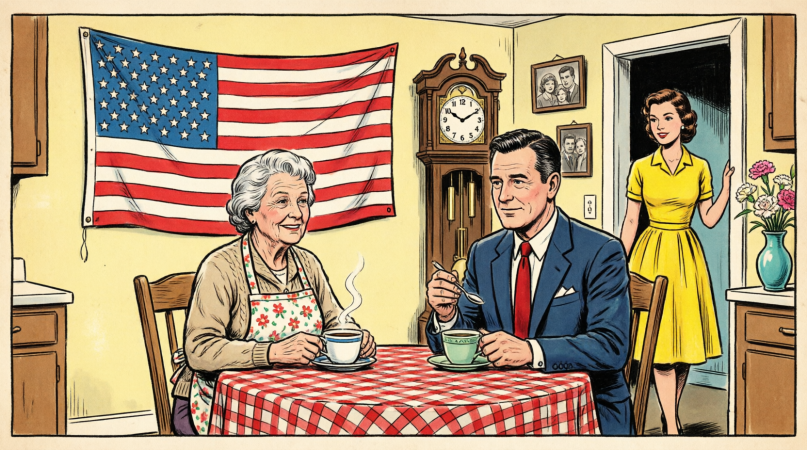
Then he asked about the money.
“Five thousand?” I repeated, my voice catching. “Son, the church is helping me survive.”
David’s eyes widened. He glanced toward Clara, who had just entered the room and was standing there as if the floor itself should be grateful for her shoes.
The scent of Chanel No. 5 filled my small living room, overpowering the apple pie I had just baked to welcome my son home.
Clara smiled lightly, a smile that could melt a room if it were not so cold.
“Oh, Mother, you must have forgotten,” she said sweetly, her voice like honey poured over ice. “I stop by every month to bring the money. Remember?”
I looked at her calmly.
“If you did bring it,” I said, barely above a whisper, “then it must have gotten lost somewhere.”
The room fell silent. I could hear the ticking of the wall clock, the hum of cars passing outside, and the pounding of my own heart. David looked from me to Clara and back again, his brow furrowed.
“Clara,” he said, “you have been bringing the money, right? I transfer it to you every month.”
Clara tilted her head. Her smile did not move.
“Of course, David. I come here every month. Maybe Mother just forgot. You know how old age can be. The memory isn’t what it used to be.”
The words were soft as feathers, but they landed on my heart like stones.
Old age.
I had heard that phrase too many times since Frank died, usually from people who thought an old widow was nothing but a fading memory in a cardigan. But I knew my memory. I remembered every bill, every prayer, every face at church, every loaf of bread that had been left on my porch when I could not afford groceries.
And I knew, without a shadow of doubt, that Clara had never given me a single penny.
I nodded slightly, choosing silence. Some battles are not meant to be fought right away. Some are meant to be observed.
David stood and placed a hand on my shoulder.
“Mom, it’s probably just a misunderstanding,” he said. “I’ll check the accounts. I just want you to live comfortably, without worry.”
I smiled faintly, but something inside me had awakened, something quiet and strong. I said nothing more. I cleared the table and placed a glass of orange juice in front of him.
Clara moved gracefully to his side and rested a possessive hand on his shoulder. Her gaze swept over me, cool and dismissive, the look of someone who believed money could buy not only comfort, but innocence.
The room turned cold, even though the Texas sun outside was blazing.
Clara glanced around the living room, her eyes brushing over the old photo frames on the wall. David as a little boy, golden hair, bright eyes, a carefree smile. Frank standing beside him with his arm around my shoulder. A birthday party. A fishing trip. A life that had once felt whole.
“You’ve done such a great job keeping the house clean, Mother,” Clara said. “Even at your age.”
I smiled faintly.
“Old, yes,” I said. “But not so old that I forget who comes through my door, Clara.”
David shifted uneasily.
“Mom, come on. It’s Mother’s Day. Don’t get upset.”
“I just want you to be happy, my son,” I said, my eyes still on Clara. “So do I. But happiness doesn’t come from what people say they have done for you. It comes from what they have actually done.”
David froze. Clara’s smile tightened, then disappeared altogether.
After they left, I sat alone in the living room while the afternoon sunlight spread across the old wooden table. Five thousand dollars a month. Eight months. Forty thousand dollars.
That money could have fixed my leaking roof. It could have replaced the broken refrigerator that rattled like it was begging to die. It could have helped me live out my later years with some dignity instead of counting cans from the church pantry and thanking God for every loaf of donated bread.
I pressed a hand to my chest, not out of anger, but from the ache rising inside me. A silent, bone-deep ache.
That night, I opened my old notebook, the one where I used to write grocery lists and prayers. This time I wrote something different.
Find the truth.
Under it, I added another line.
Do not trust fake tears.
I closed the notebook and took a deep breath. I was not weak. I had survived loss, loneliness, debt, and the slow humiliation of needing help after a lifetime of giving it. I would survive this too.
David might have been fooled, but I had not.
If Clara thought I would sit quietly while she played perfect wife and generous daughter-in-law, she had chosen the wrong woman to underestimate.
The next morning, I pulled out my old accounting ledger, the one I had kept from my years as treasurer of the women’s committee at St. Mary’s. The pages were neat, even after all that time. Twelve dollars for blood pressure medicine. Twenty-four for utilities. Ten for community dinner supplies. Every little expense, every little gift, recorded in blue ink.
There was no transfer from David Hayes.
Nothing.
Later that morning, I went to First Texas Community Bank, where I still kept my small savings account. I sat across from a young teller named Molly and handed her my passbook.
“Please check whether there have been any transfers from David Hayes,” I said. “He says he has been sending me five thousand dollars each month for the past eight months.”
Molly looked surprised. She typed for a while, then shook her head gently.
“I’m sorry, Mrs. Hayes. There’s nothing. The only activity was a dollar and thirty-five cents of interest back in February.”
I thanked her and stood.
Outside, the Texas morning wind swept through my gray hair. I stood on the sidewalk with my purse clutched in both hands, feeling as if a stone had fallen straight through my chest.
No transfers. No envelopes. No letters. Nothing.
For eight months, I had clipped coupons from the local paper, bought canned soup instead of fresh vegetables, and quietly thanked God whenever the church delivered food. I was used to eating alone. I was used to counting change before heading to the store.
But never, not once, had I imagined that behind my son’s silence was a lie wearing perfume.
That afternoon, I went to St. Mary’s Church as usual. Reverend Cole, who had known me for over twenty years, found me sitting quietly in the last pew after the service. He walked over, his voice kind.
“Mrs. Hayes, are you all right? You look tired today.”
I smiled faintly and hid my trembling hands in my lap.
“I’m just trying to understand why my son’s letters never arrived.”
Reverend Cole placed a hand on my shoulder.
“The Lord has a way of bringing truth to light. Don’t lose faith.”
I nodded, but inside, faith alone was no longer enough. I needed action.
That night, I opened the brown leather notebook David had given me for my sixtieth birthday. On the first page, instead of a prayer, I wrote, If they are lying, I will make them tell the truth through the law.
The words glowed under the lamp like a vow.
From that day forward, I began documenting everything. Every time Clara visited, I recorded the date, time, and her exact words.
Thursday, June 14. Clara stopped by with a cake. Said, “The money has been sent. Maybe the bank is delayed.” No envelope. No proof.
Saturday, July 12. Called and said she could not come because of a charity meeting. I heard restaurant music in the background.
Line by line, I wrote it all down. No anger. No hatred. Just the precision of a woman who had spent a lifetime balancing numbers and knew they never lied.
The weeks that followed were almost theatrical. Clara kept visiting, always flawless, always perfumed, always dressed as if every room were waiting for her entrance. Designer dresses. Expensive handbags. Sparkling heels. Each time she brought a small gift: flowers, cookies, scented candles, a jar of marmalade. Pretty things. Empty things. Never an envelope.
One afternoon in August, while I was watering the garden, her white Mercedes pulled into the driveway. Clara stepped out carrying lavender wrapped in brown paper.
“I brought you flowers to help you relax,” she said. “Stress isn’t good for the memory.”
I set the watering can down and wiped my hands on my apron.
“My memory is just fine, Clara. Fine enough to remember that the last time you brought me money was never.”
Her face twitched, but she recovered quickly.
“Oh, Mother, you must be mistaken. I’ve been sending it. Your bank must be at fault.”
I began arranging the flowers.
“Maybe. But I already asked the bank. They said nothing has come through for eight months.”
Silence.
Even the sparrows on the fence seemed to stop chirping.
Clara fidgeted with her necklace.
“I’ll double-check,” she said quickly, then hurried back to her car, leaving behind the scent of expensive perfume and panic.
I stood in the yard watching the car disappear, a mix of bitterness and clarity filling my chest. She had lied. Now she knew that I knew.
That evening I wrote: Clara, August 22. Lied. Nervous. Left early.
Each line felt like a hammer striking the hurt inside me. I was no longer the frail mother praying in silence. I was Margaret Hayes, the woman who had survived loss, debt, empty promises, and grief sharp enough to cut through bone.
And I would survive this too.
In the weeks that followed, I contacted David’s bank, pretending to ask about family gift transfers. They could not share private information, but one kind employee hinted at what I needed to hear.
“If funds were transferred,” she said carefully, “they would have to land in an account under your name. If you never received them, someone may have used a different account connected to your name.”
A chill moved down my spine.
Another account bearing my name, but not mine.
I closed my notebook and exhaled deeply. I knew what I was up against. Clara was charming, smart, manipulative, and capable of bending David’s trust until it served her. But I had been an accountant for three companies before retirement. I had managed thousands without losing a cent. If someone had dared to forge my name, I would find them.
That night, I reread every note I had written. Between the lines, I could almost hear Frank’s voice.
“Margaret, if someone underestimates you, don’t shout. Let them hear the sound of the truth instead.”
The next morning, I went back to church carrying a small envelope filled with copies of my notes. I handed it to Reverend Cole and said softly, “Father, if one day I cannot come to service, please keep this safe for me.”
He looked worried.
“Margaret, what are you doing?”
I smiled gently but firmly.
“I’m just preparing for the truth to be heard.”
As I walked home, my heart felt lighter. I knew the road ahead would be long. There would be tears, pain, betrayal, and perhaps a fracture that never fully healed. But I was not afraid anymore. I would get back every dollar they had stolen from me, but more than that, I would reclaim the respect they thought I had lost with age.
As the sun set behind the oak trees, I sat on my porch and watched the horizon burn red.
“Clara,” I whispered, “you picked the wrong woman to fool.”
Then I opened my notebook and wrote one final line at the bottom of the page.
The first step toward justice is memory.
A few weeks later, the Texas air was warmer than usual. The wind carried the scent of dry grass and jasmine from the vine behind my porch. I was trimming my lavender bushes when I heard the low, smooth sound of an expensive engine approaching.
A brand-new silver Lexus stopped at the gate, its polished paint so bright I had to squint. Clara stepped out looking as if she had walked straight out of a fashion spread. Cream linen dress. Oversized sunglasses. Mirror-bright heels. In her right hand, she carried a large gift basket wrapped with a golden ribbon.
“Mother, I brought you a little something,” she said. “David has been in meetings all morning, so I came in his place.”
“How thoughtful,” I said softly, without smiling.
Her gaze drifted across the garden.
“Oh my, your garden is still beautiful. I don’t know how you manage it all by yourself.”
“With these hands and a little patience,” I replied, tucking my shears into the potting soil.
She placed the basket on the patio table. Fancy cookies, orange marmalade, a small bottle of wine. Everything neatly wrapped, expensive, and empty.
I poured two glasses of iced tea and looked her straight in the eye.
“Clara, where is this month’s money? The five thousand dollars you said you would bring.”
For a split second, her smile froze.
Then she laughed, a sharp, hollow sound like glass tapping glass.
“Oh, Mother, I must have left it in the car.”
Her voice had gone slightly higher. I glanced toward the driveway, where the Lexus gleamed under the sun, temporary plates still fixed to the back.
“Nice car, Clara. Must have cost quite a bit.”
She shrugged.
“Not really. I upgraded for convenience. My boutique work requires a professional image.”
“Of course,” I said calmly. “A new car for work and old envelopes that keep getting left in the car. How odd.”
Her face stiffened.
“Oh, Mother, you don’t trust me anymore.”
“Trust,” I said, “usually comes with receipts.”
She stood first, pretending to check her watch.
“I have to run. I have a client meeting. But don’t worry. I’ll remind David to resend the money through the bank. I’m sorry for the small mix-up.”
I nodded.
“Go on, then. And don’t forget the envelope in your car this time.”
She paused on the steps, smiling thinly.
“You’re very sharp, Mother.”
I watched her walk away, the sound of her heels striking the wooden steps steady and cold, like a clock ticking down. When the Lexus disappeared down the road, I went back inside, opened the brown leather notebook, and wrote every detail.
September 10. Clara came alone. Gift basket. Claimed she left the money in the car. New Lexus. No proof. Voice unsteady. Avoided eye contact.
That afternoon, I walked to the post office down the road where the public phone still worked. I did not want to call from home. Not when I suspected Clara might be watching, listening, or waiting for me to make a mistake.
I dialed David’s company and spoke politely.
“Hello. This is Margaret Hayes, David Hayes’s mother. I would like to speak with someone in accounting. It is a personal matter.”
After a short hold, a middle-aged woman answered.
“This is Sandra Miller, head accountant. Mrs. Hayes, how can I help you?”
I gripped the receiver tightly.
“Thank you, Sandra. I need to confirm something small. My son said his company has been deducting five thousand dollars each month from his personal account to send to me. I need to know if that is correct.”
There was a pause.
“Mrs. Hayes, I cannot disclose personal financial details, but let me check what I’m allowed to confirm.”
I heard typing.
“Yes,” she said finally, her tone hesitant. “I recall seeing automated transfers on the same day every month for that amount. It does appear the money was sent, but I am not sure to whom.”
“To whom?” I repeated. “It was not sent to me.”
“I’m not certain, Mrs. Hayes. The recipient name matches yours, but the account number is different. I assumed it was yours.”
A chill ran through me.
“Thank you, Sandra. That is all I needed for now.”
I hung up and stood motionless in the phone booth. My heart raced, but my mind was clear as glass.
There it was.
Someone had created a fake account under my name, and only one person close enough had the access and nerve to do it.
Clara.
On the walk home, my shadow stretched long across the road. The wind carried the scent of scorched grass and dry earth. It reminded me of poor Texas summers long ago when my father used to say, “If you want to know who is honest, look at their hands.”
Honest hands always show the marks of work.
I thought of Clara’s hands. Long manicured fingers. Diamond rings. No calluses. No trace of real labor. Just polished nails signing papers that did not belong to her.
That night I skipped dinner. I made peppermint tea and sat at the kitchen table under the warm yellow light. The house was so quiet I could hear the cicadas outside fading into the dark. I opened a new page in my notebook.
September 10. Called David’s company. Confirmed money is being transferred but not to my account. Tomorrow the truth begins to surface.
Then I turned off the lamp and stepped onto the porch. Moonlight fell on the old wooden bench where Frank and I used to sit and talk after supper.
I touched the worn armrest and whispered, “Frank, if you were still here, you would tell me to do what is right, wouldn’t you?”
Only the wind answered beneath the eaves, but I understood.
The next morning, while I was cutting lavender stems to dry, a firm knock echoed at the door. Not the soft tap of a mail carrier or neighbor. This knock was steady and deliberate.
I wiped my hands on my apron and opened the door.
A tall, middle-aged man stood on the porch. He had graying hair and wore a charcoal suit that looked a little travel-worn. He smiled politely and gave a small nod.
“Mrs. Margaret Hayes? I’m Bennett, chief accountant at your son’s company, Hayes and Partners.”
I narrowed my eyes.
“You’re Bennett? I only know Sandra, the accountant I spoke with yesterday.”
He nodded.
“Yes. Sandra is my assistant. She told me about your call, and I thought you should know a few things.”
His voice was calm, but serious, tinged with regret. I invited him inside and poured a glass of water. Morning light streamed through the window, catching the lines on his face, the look of a man who had seen more than he wished to.
He set a leather briefcase on the table and opened it. Inside was a thick folder, neatly clipped and organized. I recognized the sharp printed text, the rows of numbers, the language of accounting. It had been my world for nearly forty years.
He slid the folder toward me.
“These are copies of eight transfers,” he said. “Each for five thousand dollars. Forty thousand total. The recipient is an account under the name Clara Hayes.”
It felt like ice water had been poured over me.
My hands shook as I flipped through the pages. The papers were clear. Sender: David Hayes. Recipient: Clara Hayes. Verified by the bank. Same date every month, steady as clockwork.
I looked up, my voice hoarse.
“Mr. Bennett, who opened that account?”
He sighed, removed his glasses, and wiped them with a cloth.
“Your daughter-in-law. Every document for the sub-account bears her signature and a signed authorization from David.”
I froze.
“Authorization? You mean David gave her permission to use my name?”
“Most likely he did not read the forms carefully,” Bennett said. “She presented an ID copy of you, which I suspect was forged. Sophisticated, but forged. The system automatically registered it as a support account connected to your name, even though the funds were routed under her control.”
I pressed a hand to my forehead. The room spun slightly.
It was not only betrayal. It was humiliation.
For eight months, Clara had used my name, a mother’s name, to siphon money from my own son.
“And David?” I asked quietly. “Does he know?”
Bennett hesitated.
“Honestly, I do not think so. David is a hard-working man, but he trusts people too easily. He lets Clara handle most of the paperwork.”
Then he paused and looked at me.
“She has also been using the company credit card for personal expenses.”
“The company card?”
“Yes. The corporate secondary card of Hayes and Partners. It is supposed to be for client entertainment and business expenses. Recently we found irregular charges. Spa visits, jewelry, clothing, first-class flights to New York, even charges connected to the Lexus. More than thirty thousand dollars in three months.”
I sat in silence. Spa. Jewelry. Flights. Lexus.
Each word struck like a hammer.
I turned to the window and looked at the wooden bench where Clara and I had once sat drinking tea while she chatted about her work.
“David is so busy,” she had said. “I handle everything for him.”
Now I understood what everything meant.
Every dollar.
I turned back to Bennett.
“Mr. Bennett, if I want to expose this, will you help me?”
He met my eyes.
“Mrs. Hayes, I believe in justice, but I also believe in evidence. We need to prepare carefully, otherwise she will twist the narrative and turn David against you. Clara is not an easy opponent.”
“I know,” I said. “I have seen her smile while she lies.”
“I’ll help,” Bennett said. “Give me time to gather everything. I need transaction histories, related documents, and written confirmation from the bank that the account is not yours. It will take a few days, but I promise we will have the truth.”
For the first time in months, I saw something in another person’s eyes that steadied me.
Integrity.
“Thank you,” I said softly. “You have no idea how much this means to me.”
He closed the folder and stood.
“I am just doing what is right, Mrs. Hayes. And I am sorry to say this, but cases like yours happen more often than people think. Many are betrayed by those closest to them.”
After he left, the house went quiet again. I stared at the stack of papers on the table, each transfer line a piece of evidence, each dollar a mark of betrayal. I placed everything into a small metal box and slid it under the cabinet. When I turned the key, it felt like I was locking the last door of my trust.
As afternoon faded, I brewed black tea and sat at the table, watching lavender sway in the garden. Everything outside looked peaceful, but inside me a quiet fire burned.
I opened my notebook.
September 11. Mr. Bennett came. Eight transfers, five thousand each, routed to Clara. Company card abused. David deceived. I have an ally. The fight begins.
I set down the pen and looked toward the window.
“Clara,” I said in a low voice, “you forgot I worked as an accountant for forty years. I can read lies and numbers, and this time the numbers will speak for me.”
Three days later, with every fact lined up in my head like rows on a balance sheet, I called David.
His voice was warm and familiar, but I heard exhaustion beneath it.
“Mom, I’m sorry I’ve been swamped lately. Clara says she has been visiting you regularly, right?”
“She has,” I said lightly. “Clara is very thoughtful. I was thinking of inviting you both to dinner this Sunday. It has been a while since we had a proper meal together.”
David agreed happily, never noticing the thin wire hidden in that invitation.
I spent all Sunday morning preparing, not because I wanted a perfect dinner, but because I wanted it to feel completely ordinary. Honey-roasted chicken, mashed potatoes, apple walnut salad, and apple pie. David’s childhood favorites. I polished Frank’s old silverware and set the dining table with candles. Everything was warm, sincere, and just enough to make a liar lower her guard.
At six, I heard the familiar engine at the gate. The silver Lexus slid into the driveway. Clara stepped out first, flawless as always, soft waves in her hair, jade silk dress, faint trail of Dior. David followed with white lilies.
“Mom, you look great,” he said, placing the flowers on the table.
“I’m better than ever,” I said. “Thanks to God’s grace. And the two of you.”
Clara smiled, her lips curling in that smug way I had learned to recognize.
I poured wine and tea. We talked about the weather, the lavender, the new neighbors down the street. Everything flowed as though no shadow had ever crossed this house. I let the room warm. I let her relax.
When the main course was served, I looked up and smiled.
“I truly appreciate you both,” I said. “Especially for this month’s five thousand dollars.”
Clara paused only a fraction of a second before flashing a bright smile.
“Oh, Mother, please don’t be so formal. I’m just doing what I should.”
I nodded, pretending to be shy.
“I’m thrilled. I just bought a new heater. Texas gets chilly early, and thanks to that money, I feel much more at ease.”
Clara’s smile widened. She tilted her head toward David as if to say, See, everything is fine.
I watched her slowly.
“Oh, Clara,” I said, as if the thought had just occurred to me, “I’m curious. What day do you usually send it?”
She answered instantly.
“The tenth every month, Mother.”
David looked up, puzzled.
“Wait,” he said. “Not the tenth, honey. I set the auto transfer for the fifteenth.”
The room went silent.
The faint clink of a knife against a plate sounded harsh. Clara stared at him. David stared back.
“Really?” she said with a strained laugh. “I thought you said the tenth.”
“No,” David said slowly. “I’m sure it’s the fifteenth. I picked that date because payroll hits then.”
I set my fork down gently.
“Oh, wonderful. I’ll go to the bank on the fifteenth and check, just to make sure the system is not having issues.”
Clara gave a brittle laugh.
“Mother, you are so careful. Don’t worry. I’ve been sending it regularly.”
David nodded, but his eyes had shifted. A thin new line of doubt had appeared.
After dinner, I brought out dessert. The apple pie was crisp, cinnamon drifting through the room. David praised it. Clara barely ate, glancing at her watch as if the walls had moved closer around her.
At the door, I said softly, “Thank you both for coming. I haven’t laughed this much in a long time. Remember, I’ll check the account on the fifteenth.”
Clara forced a smile.
“Yes, Mother. I’m sure there won’t be any problem.”
David kissed my cheek. His eyes were gentle, but I saw something else there now.
Doubt.
When their car pulled away, I went straight to the small office off the kitchen and turned on the computer. The glow from the screen caught Frank’s photograph on the desk. His smile felt like a quiet push forward.
I opened my email and wrote to the only two people I trusted now: Bennett and Amelia Row, an old college friend who specialized in financial fraud.
Subject: It is time to begin.
Bennett, Amelia, everything is ready. Clara lied about the transfer date. They contradicted each other at my table. Please move forward with the plan. By the fifteenth, I want every piece of evidence lined up. It is time for the truth to come from her own mouth.
I hit send and leaned back. Outside, the night breeze stirred the curtains with the scent of jasmine and damp soil. The clock ticked steadily, counting down to the day the truth would begin to crack through.
Two days later, Bennett replied.
I obtained confirmation from the bank. The account under your name was opened with forged documents. Amelia will handle the legal side. Everything is moving in the right direction.
I read the message and felt my chest tighten, then loosen, like an old iron gate swinging open.
I was not cruel. I did not want revenge for the sake of watching someone fall. I wanted the truth spoken so my son could wake up. I wanted David to understand that trust was not a blank check for someone to drain until nothing was left.
That night, I opened my notebook and wrote another line.
September 13. Dinner went perfectly. Clara exposed herself. David began to doubt. Justice is coming, soft as a breeze.
On the morning the evidence arrived, the Texas sky was startlingly clear. I sat by the window with jasmine tea, strangely calm. Around eight o’clock, the phone rang.
It was Bennett.
“Mrs. Hayes, it’s all done,” he said. “I sent the full statements and related invoices. Amelia has reviewed them. With your signature, we can open a legal case.”
Fifteen minutes later, the mail carrier knocked. A large sealed manila envelope lay in his hand, stamped confidential.
I set it on the table and stared at it before opening it.
Inside were dozens of clean printouts. Eight transfers. Five thousand dollars each. Forty thousand dollars in total. Sender: David Hayes. Recipient: Clara Hayes.
I read them twice and still felt disbelief, as if the numbers were laughing at my faith.
At the bottom was Bennett’s blue-ink note.
Mrs. Clara Hayes used this as a personal account. In addition to the eight transfers, there are other charges through the secondary card: spa, shopping, travel, and vehicle expenses. Total spending over eight months: $47,800.
I sat still. Morning light slipped through the blinds and laid pale gold across the pages. The color of truth.
There was a spa receipt in Houston for twelve hundred dollars. Cancun travel for two. First-class flights. Clothing. Jewelry. A down payment on the Lexus.
Each receipt was a small knife.
I remembered Clara walking into my house with gifts, smiling softly, saying, “Mother, I care for you like my own.”
Now I understood what care meant to her.
It meant draining every dollar under my name.
I reached for the notebook I had begun calling my justice journal and wrote carefully.
September 17. Bennett’s records received. Eight transfers. Clara’s hands. Spa, travel, Lexus. $47,800. The price of trust.
That afternoon, Amelia called. Her voice was firm and precise, the voice of someone seasoned by hard courtrooms.
“Margaret, I reviewed everything. It is solid. This is financial exploitation of an elder, plus fraud. We can go criminal or civil. Your call.”
I paused.
“Not yet. I do not want the court to see it before David does. He needs to witness it with his own eyes. Only then will justice mean something.”
Amelia was silent for a moment.
“You’re right,” she said. “Nothing cuts deeper than a son realizing his wife exploited his mother’s trust.”
“I’d like Reverend Cole to help me,” I said. “A small charity dinner. A reason for everyone to come.”
Amelia gave a soft, knowing laugh.
“A staged evening to expose the truth. Smart, Margaret. I’ll ask Bennett to condense the file. Give David a summary he cannot ignore.”
Near dusk, I drove to St. Mary’s. Reverend Cole was lining up wooden chairs in the hall. After I explained the plan, he thought for a moment and smiled kindly.
“Sometimes the Lord does not need thunder to reveal sin, Margaret. He only needs a small light of truth.”
“I just want David to see that light,” I said. “Not for revenge. So he stops being blind.”
That evening, I spread every statement and receipt across the dining table. With a red pen, I marked the large withdrawals and slipped them into a thick beige envelope. On the front, I wrote: Donation documents. Senior Assistance Fund.
Only I knew there was not a single donation inside.
Only guilt.
Only deceit.
I never loved a Sunday evening more than the one that followed. The late Texas sunlight poured over the garden, turning the lavender gold. In the kitchen, red wine beef stew simmered softly, filling the house with herbs and memory. It had been David’s favorite dish since childhood. He used to ask for it every birthday because, as he said, “Mom’s stew tastes better than any restaurant.”
This time I was not cooking only out of love. I was preparing a final dinner for my son to see the truth I had hidden too long.
On the table, I laid a crisp white cloth, antique porcelain dishes, and three small wine glasses. In the center rested the beige envelope like an invisible guest waiting to be acknowledged.
At seven, David and Clara arrived. He wore a simple white shirt. She, as always, appeared overdressed in pale pink silk, new heels, and pearls at her throat.
“Mom,” David said, hugging me tightly. “I missed this smell. Your stew smells like home.”
“I made it for you,” I said, resting a hand on his shoulder. “Just like old times.”
Clara stood behind him, her polished smile fixed in place.
“Oh, how cozy,” she said. “You always make dinner feel so special, Mother.”
“Yes,” I said softly. “Tonight will be very special.”
Fifteen minutes later, Reverend Cole arrived holding a large wrapped envelope.
“Sorry I’m late,” he said. “Here are the donation papers you asked me to bring.”
Clara tilted her head, her voice syrupy.
“Oh, so this really is a charity dinner. Mother, I thought you were joking.”
I poured everyone wine and smiled gently.
“Yes. A dinner to talk about trust, giving, and honesty.”
The words made Clara stiffen slightly, but she smoothed her expression. David smiled, unaware of the tension rising beneath the table.
When everyone was seated, I opened the envelope Reverend Cole had brought. The papers inside were neatly arranged, Bennett’s precision visible in every line. I pulled out the first sheet and spread it on the table.
“Son,” I said slowly, “this is the list of all the donations for your mother over the past eight months. I think you should take a look.”
David frowned.
“Donations? Mom, I’ve been sending the transfers every month.”
I slid the statement toward him.
The bold print was unmistakable.
Recipient: Clara Hayes. Amount: $5,000. Date: Fifteenth of each month.
David went silent. His eyes dropped to the page and widened from confusion to shock.
Clara jumped in, her voice sweet but pitched too high.
“Oh, that must be some mix-up. Banks make mistakes with names all the time.”
“Is that so?” I asked. “Then how about this spa bill in Houston? Twelve hundred dollars charged to the secondary card under your name. Was that the bank’s mistake too?”
Her face stiffened.
“Maybe someone used my name by accident.”
Before she could continue, a deep male voice came from the doorway.
“No, Mrs. Hayes. No one used your name by accident.”
Everyone turned.
Bennett stood at the threshold holding more printed pages. I had asked him to come but told no one else.
Clara’s face went pale.
David looked at him. “Who are you?”
“I’m Bennett,” he said firmly. “Chief accountant at your firm, and the person your mother authorized to investigate the transfers made under her name.”
The air froze.
I rose and faced Clara.
“Bennett can verify every amount, every signature, every transaction. Eight transfers. Five thousand dollars each. Not once did they reach me.”
David turned to his wife, voice breaking.
“Clara, what is this?”
She grabbed his hand, tears welling up instantly.
“I just borrowed it. That’s all. I was going to pay it back. I didn’t want to upset your mother.”
I sighed softly.
“Eight months of borrowing? With forged bank papers under your mother-in-law’s name?”
Clara sobbed harder, but her tears carried no guilt. Only desperation.
David pulled his hand away, eyes burning.
“What did you do to my mother?” he said, his voice shaking. “I sent that money so she could live comfortably. You used it for cars, spas, vacations, and lied to my face.”
“You don’t understand,” Clara said.
“Enough.”
David slammed his palm on the table. The glasses rattled sharply. The room fell silent except for Clara’s ragged breathing and my own pounding heart.
Reverend Cole, who had been quiet the whole time, folded his hands and spoke in a low voice.
“Sometimes God does not need to punish the guilty. He only lets them see their true reflection.”
I sat back down and looked at Clara.
“I did not need that money as much as I needed respect. You took that not only from me, but from your husband too.”
“Mother, I’m sorry,” Clara stammered. “I just wanted to help David manage things better.”
I shook my head.
“Stop lying. You did not manage. You stole.”
Bennett placed the final file in front of David.
“These are the originals, Mr. Hayes. Forged authorizations, bank records, receipts. Keep them. You will need them to protect what is yours.”
David stared at the numbers, then lifted his eyes to me. In them I saw pain, shame, and the first spark of awakening.
“Mom,” he whispered. “I am so sorry. I didn’t know. I was such a fool to trust her.”
I laid a hand on his shoulder.
“No, son. The mistake is not in trust. It is in those who betray it.”
Clara burst into sobs and stood abruptly.
“I can’t take this anymore. I don’t need anyone’s pity. If you want to believe her, go ahead.”
She snatched her purse and stormed out. Her heels struck the wooden floor, each step sounding like the end of something.
David did not stop her.
The door slammed. Silence fell. No crying. No excuses. Only the fading smell of stew and the heavy presence of truth.
When everyone left, I stayed behind and cleared the table. The half-eaten plates. The wine glasses. The chair where Clara had sat, still faintly warm. I gathered the fallen pages and placed them back in the envelope. My hands trembled, not from fear, but because I had finally reclaimed my dignity.
Outside, wind lifted the curtains. Moonlight streamed through the window and shone on the envelope like a seal of truth.
Every lie eventually comes to light.
That night, it had happened in my own home.
The court notice arrived sooner than I expected. Texas County Court. Margaret Hayes, plaintiff, versus Clara Hayes, defendant. Elder financial exploitation and family fraud.
Amelia had moved quickly. Her message was short.
All evidence filed. Preliminary hearing next Monday.
Justice was close, yet I felt no satisfaction. The morning of the hearing, the sky was gray and the wind sharp, like something about to break. I arrived early with Amelia. She wore a brown coat and carried herself with steady resolve.
“You holding up?” she asked.
“I am,” I said. “I just wish it did not have to come to this.”
The courthouse hallway smelled faintly of coffee, paper, and tension. When we entered the courtroom, Clara was already there in a black suit, her hair tied back, her face pale but pretending calm. Beside her sat a young lawyer who looked nervous enough to chew through his own pen.
David sat behind them, alone and silent. He did not look at me. He did not look at her. His eyes were tired and hollow.
The judge struck the gavel.
“The court is now in session for the case of elder financial exploitation. Margaret Hayes versus Clara Hayes.”
Amelia stood first. Her voice was clear and steady.
“Your Honor, for eight consecutive months, the defendant, Mrs. Clara Hayes, used a fraudulent bank account connected to her mother-in-law’s name to misappropriate a total of forty thousand dollars. Additionally, she used a company secondary credit card belonging to Hayes and Partners for personal expenses, including spa services, travel, and a private vehicle purchase.”
The courtroom went silent except for the rustle of paper as Amelia laid out the evidence. Bank statements. Spa receipts. The Lexus invoice. Cancun tickets. Each piece placed neatly before the judge.
“The defendant did not merely take money,” Amelia continued. “She concealed it by falsifying documents and using forged identification. This was deliberate and systematic.”
Clara’s lawyer stood quickly.
“Your Honor, my client maintains that this was a misunderstanding in household financial management. Mrs. Margaret Hayes is elderly and may have misremembered the transfers.”
I felt my blood heat, but Amelia placed a hand lightly on my shoulder.
Clara lowered her head, feigning fragility, then lifted her trembling voice.
“Your Honor, my mother-in-law has been forgetful lately. I brought her money many times. She just does not remember. I never meant to hurt anyone.”
Those words cut through me.
Forgetful.
Again that word. Again the soft cruelty of using age as a weapon.
Amelia stepped forward, her voice sharp as steel.
“Your Honor, Mrs. Hayes’s memory is sharp enough to document every visit, every date, and every statement the defendant made over eight months. Here is her journal.”
She held up my brown leather notebook.
“In this notebook, Mrs. Hayes recorded exact dates, times, and the defendant’s repeated explanations, including the claim that money was left in the car. These entries match the bank transaction data. If this is memory loss, then it is the sharpest memory loss I have ever seen.”
A murmur rippled through the courtroom.
The judge peered over his glasses and flipped through the pages. Then he turned toward Bennett, who had been called as an expert witness.
“Mr. Bennett, do you confirm the figures in this report?”
Bennett stood.
“Yes, Your Honor. I am the chief accountant at Hayes and Partners. I confirm that all statements and reconciliations are authentic. Each transfer was made from Mr. David Hayes’s personal account to an account opened under the name Margaret Hayes, but that account was controlled by the defendant, Mrs. Clara Hayes.”
The judge’s expression hardened.
Amelia continued.
“We request that the court order full repayment of the forty thousand dollars, including relevant fees, and restrict the defendant from managing or accessing financial accounts connected to Mr. David Hayes.”
No one spoke.
The judge lifted his head.
“After reviewing the documents, testimonies, and evidence, the court rules that the defendant, Mrs. Clara Hayes, shall repay the full forty thousand dollars to Mrs. Margaret Hayes. The defendant is stripped of access to and management rights over Mr. David Hayes’s financial accounts. She must also complete a mandatory financial rehabilitation program. This court is adjourned.”
The gavel struck, dry and cold, like a steel door closing.
Clara sank into her chair. Tears spilled down her cheeks. She turned toward David.
“You have to believe me. I didn’t mean to.”
David said nothing. He looked at her with empty eyes, then turned away.
The sight broke something in me.
I did not feel joy. I did not feel triumph. I felt only a dull ache, because to reclaim justice, I had to watch my son lose his marriage.
Amelia placed a hand on my shoulder.
“You did the right thing, Margaret. You did not just protect yourself. You saved your son.”
I nodded, but I could not smile.
Justice, I realized, is a double-edged sword. It cuts through deceit, but sometimes it also severs the fragile threads of family.
When I left the courthouse, rain had begun to fall. Heavy drops splashed onto the stone steps and broke apart into hundreds of smaller ones. I stood under the awning, feeling the cold mist against my face.
There was no applause. No cheers. No sense of victory. Only the quiet peace of someone who had walked the full circle of truth.
“David,” I whispered into the rain, “I do not know if you can forgive me. But I held on to the one thing I could never afford to lose.”
The truth.
After the trial, my house returned to an eerie stillness. No unexpected knocks. No hurried phone calls. Only the ticking of the wall clock and sunlight slipping through the curtains, lighting dust in the air.
Months passed, and David did not call. No messages. No emails. No “How are you, Mom?”
I did not blame him. He was trying to clean up the wreckage of his marriage. Still, on quiet nights, when moonlight crossed the windowpane, I often found myself holding the phone, staring at his name in my contacts, never pressing call.
Being a mother, I learned, sometimes means knowing when silence is the only way to let your child grow.
The restitution payment arrived one morning in June. Forty thousand dollars. I opened the bank email and read the words: Deposit completed successfully.
I thought I would feel joy. Instead, I felt hollow.
Then a thought came. If that money had once been used as a tool of deceit, now it had to become something good.
I used a small portion to repair the roof, replace the curtains, and finally buy a proper heater. With the rest, I reached out to Reverend Cole and Amelia.
“I want to start a small foundation,” I said as we sat in the parish office. “I’ll call it Grace Hands Foundation. I want to help elderly people who have been financially exploited by their own children or family.”
Reverend Cole looked at me for a long moment, then smiled gently.
“Margaret, this is how God turns pain into the seed of something good.”
Amelia opened her notebook.
“We will register it as a nonprofit. I’ll handle the legal side. Reverend Cole can represent the community group, and you will be the founder.”
I chuckled softly.
“I don’t want to be a founder, Amelia. I’m just a mother who learned how to stand up again.”
Three months later, Grace Hands Foundation officially opened in the basement of St. Mary’s Church. We had three desks, an old printer, and a wooden sign carved with the words: Helping the forgotten find their voice again.
Each week, Reverend Cole and I met people who came to share their stories. An old woman tricked by her daughter into signing away her home. A seventy-year-old man whose grandson drained his pension account. An eighty-year-old widow whose signature was forged for a bank loan.
Each story was a wound, but I had learned how to listen without breaking.
I held their hands and told them what I had lived: that truth does not save you instantly, but it always arrives right on time.
Amelia worked tirelessly, reaching out to legal organizations, applying for grants, and training volunteers. I oversaw what we called the heart work: listening, writing letters, comforting people, documenting their journeys.
One afternoon, while we were tidying the desks, Reverend Cole said quietly, “Margaret, isn’t it strange? Pain has become light for others.”
I smiled.
“Maybe that is how God rewrites the ending for those who were betrayed.”
As the foundation grew, reporters began reaching out. They wanted interviews with the brave mother who sued her millionaire daughter-in-law. One newspaper even offered a book deal.
I declined them all.
I did not want to become a story people gossiped about. I wanted peace. Justice can be public, but healing has to be private.
At night, I developed a new ritual. I placed a small candle on the table by the window. Its glow fell across the photo of David and me. I would light the candle and whisper, “Where are you, David? I’m not angry. I just hope you have learned something from all this pain.”
The flame would flicker over his childhood smile, the one untouched by betrayal.
I realized forgiveness is not forgetting. It is choosing not to let the wound define the rest of your life.
Sometimes Reverend Cole asked, “Margaret, have you truly forgiven her?”
I would answer, “Maybe I have, because I no longer want her to suffer. But forget? No. The betrayed can forgive, but they never forget.”
One crisp autumn morning, Amelia arrived with a new envelope.
“The foundation just received funding from the Elder Justice Fund,” she said. “They want a long-term partnership.”
I looked at the envelope and felt humbled. Who would have thought a woman who once survived on canned food from the church would now help others reclaim their dignity?
Still, on quiet nights, I sometimes heard the wind brushing the door and thought it sounded like my son’s voice.
I knew David was not ready. Maybe he was still trying to forgive himself. Maybe he was paying his penance through silence. I did not blame him. I waited not because I needed him, but because I needed the truth to come full circle.
I believed that one day, when my son knocked on my door, I would open it. Not because I had forgotten everything, but because I had learned to love without letting myself be broken again.
That night, rain poured steadily from dusk until midnight. Wind lashed against the windows. The yellow lamp in the living room reflected on the wet glass, glimmering like fragments of memory.
I was reviewing donation files for the next Grace Hands meeting when I heard a knock, soft but insistent, carrying the chill of the storm.
It was past ten.
At my age, few people knock that late unless something in their life has cracked open.
I walked to the door, my hand trembling as I turned the latch. The door swung open. Wind rushed in. Rain splattered onto the floor.
And there, under the downpour, stood David.
He was drenched, his hair plastered to his forehead, his eyes red and weary. In that instant, time froze. The boy I had once taught to tie his shoelaces now stood before me, trembling like a lost child.
“Mom,” he said, his voice cracking. “I’m sorry. I have been so stupid.”
Before I could answer, he stepped inside and sank to his knees on the wet floor. A broken sob escaped him, raw and unguarded. He buried his face in his hands, shoulders shaking.
I stood there looking at my son, the man who once thought he understood everything, now crumbling in the house where he had been raised to value honesty.
I knelt beside him and placed a hand on his shoulder.
“David, get up, son. Everyone stumbles. Forgiveness is not forgetting. It is saving yourself.”
He lifted his head, tears mixing with rain on his face.
“I don’t deserve your forgiveness. I doubted you. I let her manipulate me. I stayed silent while you suffered. Mom, I lost everything.”
I guided him to the sofa and dried his hair with a towel the way I had when he was little. Each motion was slow, tender, careful.
“I don’t need your apology,” I said quietly. “I need you to remember that truth never arrives late. It only waits until we are brave enough to face it.”
He stared at the flickering fireplace.
After a long pause, he whispered, “Clara’s gone, Mom.”
I stopped drying his hair.
“She drained the savings account,” he said. “She took what was left from the company and disappeared. They say she ran off with a man she knew before we were married. She left one message.”
He swallowed hard.
“You trusted the wrong person.”
I closed my eyes. No anger. No surprise. Only a quiet sadness settling in like the rain.
I took his hand.
“No, son. You realized the truth too late. But even when trust is broken, it is still what separates us from those who deceive.”
He rested his head on my shoulder like a child who had finally found his way home.
“I lost everything,” he whispered. “My career. My money. My dignity.”
I stroked his hair.
“No, my son. What you found tonight is far greater. You found the heart that knows how to admit its mistakes.”
The rain lasted until almost midnight. I brewed ginger tea while he sat by the fireplace. Steam rose into the scent of burning wood.
“I don’t understand how you can stay so calm after everything,” he said.
I smiled faintly.
“Because justice is not about making someone pay. It is about restoring balance. Clara reaped exactly what she sowed.”
He nodded, staring at the flames.
“I only have you left now, Mom.”
“No,” I said. “You still have yourself. What you choose to do from this moment on will decide whether you truly stand again.”
After a while, he said, “Can I help with your foundation? I want to do something meaningful. Maybe start this weekend.”
I looked at him. His eyes were sincere enough that I had to fight the emotion rising in my chest.
“Are you sure?”
“I am. I don’t want to live the way I used to anymore. I want to learn how to use money to heal instead of hurt.”
“Then come Saturday,” I said. “Reverend Cole will be happy to see you.”
From that day on, David came to help at the foundation every weekend. He arrived early with coffee, organized files, wrote thank-you letters to donors, helped Reverend Cole move chairs, and went with Amelia to meet elderly victims and record their stories.
People say time heals everything. For me, it was not time. It was watching my son change.
One morning, I saw him sitting at a desk, focused on fixing a spreadsheet, sunlight catching his brown hair. In that moment, I saw my little David again, the boy who used to help me wash dishes and once asked, “Mom, what does honesty mean?”
“David,” I called softly.
He looked up.
“You have crossed your own pain, son. Not everyone has the courage to do that.”
He smiled, a rare, genuine smile I had not seen in months.
“If it were not for you, Mom, I don’t know how long I would have drowned in guilt.”
I placed a hand on his shoulder.
“I did not save you, David. You saved yourself.”
Outside, a gentle rain began to fall. The door he had once knocked on during the storm now stood open. No more rain pouring in. Only wind carrying the scent of damp earth and lavender.
In that quiet moment, I understood. Life, no matter how broken, always leaves a door open for those who wish to return.
One autumn morning, I sat at my desk staring at a blank sheet of paper. The breeze carried lavender from the porch. I picked up my pen.
Clara, thank you.
Because of you, I learned the true value of honesty and the strength of self-respect.
I paused. There was no anger in me, only quiet peace.
If not for you, I might still believe truth is obvious and kindness is always repaid in kind. You taught me something different. Truth only has meaning when we are brave enough to defend it. You took my money, but in return you gave me something money could never buy: freedom.
I do not know where you are now or whether you have found peace. If one day you read this, I want you to know I forgave you, not because you deserve it, but because I refuse to stay chained to the darkness you left behind.
I folded the letter and slipped it into a cream envelope, then placed it inside the wooden box where Frank used to keep old birthday cards. Among the photos was a note he had once written me.
Margaret, truth does not need to be shouted. Only lived.
I closed the box. The click of the wood sounded like a chapter gently closing.
In the months that followed, Grace Hands Foundation grew faster than I could have imagined. New people came every week, some in tears, some with messy folders, some needing nothing more than a place to tell the story they had buried in silence. I saw myself in them: people deceived, belittled, and still clinging to the belief that justice existed.
Every time we helped someone reclaim their rights, I felt like I was reclaiming another fragment of my own past.
One day, David stopped by with two cups of coffee. He sat beside me and looked around the office, now filled with posters, charts, and thank-you cards.
“I can’t believe how big your foundation has become,” he said. “You really did turn pain into light.”
I chuckled softly.
“Not only the light of God, my son. The light of justice. God forgives, but justice never forgets.”
David nodded slowly.
“I think I’m finally learning that.”
I looked at him and saw the man he had become, not the one who ran from truth, but someone who now bowed to what was right.
I was no longer afraid of being poor. The days of standing in line for canned food at church were gone, but I did not feel shame remembering them. If anything, I was grateful. Those days taught me endurance.
I had learned there is something worth far more than money.
Self-respect.
When a person holds on to self-respect, they cannot truly be defeated, even when they lose everything else.
Every morning, I still wake early, brew tea, and open the windows to let the light in. Sunlight spills across the photo of Frank and me. He is wearing a white shirt, his arm around my shoulders, his eyes gentle and kind.
“If only you could see this,” I whisper. “You would be proud of me, wouldn’t you?”
I know he would smile. Not because of the money I recovered, but because I kept the strength he once loved in me.
The strength to never let anyone else define my worth.
One evening after David left the office, I opened the old journal that had followed me through the whole journey and wrote the final line.
The thief is gone, but the lesson remains.
Outside, the sky turned pale orange. Raindrops tapped softly on the roof. Distant church bells rang slow and deep, like time breathing.
I closed the journal. No need for revenge. No need for applause. Only the peace of knowing that even in a cruel world, honesty still has a place to stand.
A year later, Texas bloomed into spring. Lavender flourished by the porch, and the morning sky turned the soft blue of silk. I was brewing tea when the phone rang from Austin.
A cheerful woman spoke.
“Mrs. Margaret Hayes, congratulations. You have been selected as Texas Woman of the Year. The council honors those who have contributed to social justice and senior rights. We would love for you to speak at next week’s ceremony.”
For a moment, I froze. Not from pride, but disbelief.
A year earlier, I had been a sixty-seven-year-old widow living off church aid. Now they called me a symbol of peaceful justice.
Life, it seems, turns when you keep believing in the truth.
The ceremony was held in the grand hall of the city courthouse. I chose a simple light-blue dress. No glamour. No pretense. When I stepped onto the stage, applause filled the room. In the second row, I saw David wearing a white shirt, his eyes glowing with pride I had not seen since he was a boy.
The host smiled.
“Mrs. Margaret Hayes, founder of Grace Hands Foundation, a woman who turned personal pain into a force for justice and helped dozens of seniors reclaim their dignity.”
I walked to the podium, hands trembling slightly, voice steady.
“Thank you,” I began. “But today I am not telling my story. I am telling the story of an unnamed mother who was deceived by her own daughter-in-law, who lost both her money and her trust.”
The hall went silent.
“I once thought that when someone betrays you, the best revenge is silence. But I learned something else. When someone steals your trust, reclaim it with truth. No shouting. No hatred. Just truth. Because truth holds a power no punishment ever could.”
Applause rose, long and heartfelt.
I paused and saw David wiping his eyes. The look on his face almost broke me, not from pity, but because I knew he finally understood.
When I spoke again, my voice softened.
“Justice is not only what happens in court. It begins the moment you find the courage to say enough, even when the person who wronged you is someone you love. That is the bravest act any mother, any father, any human being can do.”
After the ceremony, there were photos, handshakes, bouquets. I did not remember every face, but I remembered the feeling: deep peace. No bitterness. No resentment. Quiet fulfillment.
As I stepped outside, light rain began to fall. Texas skies always knew how to remind me that even in rain, there could be light.
David came up beside me and draped his jacket over my shoulders.
“Mom,” he said softly, “I have never seen you shine like this.”
I smiled and held his hand.
“It is not because of the award, son. It is because you are here, like the old days. Only now you truly understand what honesty means.”
He smiled back, eyes misty.
“I do, Mom. And I promise I will live by it.”
The rain still fell, but it no longer felt cold. Inside me rose a small light: faith, freedom, and new beginnings.
That night, back home, I sat at my desk and opened my worn journal. I wrote one final line.
A mother’s greatest victory is not winning in court. It is teaching her child the value of honesty.
I closed the book and listened to the wind outside. The faint scent of rain still clung to the roof. On the table, a small candle flickered over the family photo: Frank, me, and little David. Three faces in one frame. Three moments in time, bound by one truth.
Love never dies.
It only changes form.
I smiled.
My life was no longer loud, rich, or grand. But it was full in its own quiet, peaceful
PART 1 — Mother’s Day
The twist tie on the church pantry bag cut into my finger as I carried it into the kitchen.
Inside the bag were two cans of peaches, a loaf of bread, and powdered soup packets from St. Mary’s Church. I set them carefully on the counter and checked the expiration dates the way poor people learn to do quietly.
Outside, a black Mercedes rolled into the driveway.
My heart lifted anyway.
Because no matter how old your child becomes, part of you still reacts to their arrival like sunlight entering a room.
I quickly slid the pantry bag beneath the counter just before the front door opened.
“Mom?”
David’s voice filled the little house warmly.
I turned toward him smiling.My son looked handsome in the expensive, exhausted way successful men often do:
- pressed white shirt
- silver watch
- tired eyes
- phone still glowing in his hand
He carried roses.
Fresh cream-colored roses.
“Happy Mother’s Day,” he said softly, kissing my cheek.
The smell of the flowers mixed with old wood, cinnamon pie, and the faint scent of canned food still lingering in the kitchen air.
“Sit down,” I told him. “I made apple pie.”
David smiled immediately.
“You still remember my favorite.”
Always, I almost said.
Instead, I poured him orange juice while he walked slowly through the living room looking at old photographs:
- David at seven holding a fish
- David at graduation
- Frank standing beside me years ago smiling beneath the Texas sun
For a moment, everything felt normal again.
Then David turned toward me casually and asked:
“Mom, Clara still sends you the five thousand every month, right?”
The room stopped breathing.
I stared at him.
Five thousand dollars.
Every month.
My fingers tightened around the kitchen towel.
That amount would have fixed the roof before winter.
It would have replaced the broken heater.
It would have meant I didn’t spend Thursday mornings standing in line beside struggling widows at the church pantry pretending I was only there to volunteer.
David smiled gently, completely unaware of what he had just done.
“I just want to make sure you’re comfortable,” he said.
Comfortable.
My throat burned.
I looked down at my hands so he would not see my face change.
Then quietly:
“Son… the church has been helping me get by.”
Silence.
David blinked once.
“What?”
“The church,” I repeated softly.
“They’ve been very kind.”
His smile disappeared slowly.
“Mom… what are you talking about?”
Before I could answer, heels clicked against the hallway floor.
Clara entered the kitchen like a woman arriving at a hotel lobby she owned.
Pearl silk dress.
Diamond earrings.
Soft expensive perfume.
She smiled the moment she saw David.
Then she looked at me.
“Oh good,” she said sweetly. “You already told her about the transfer increase.”
My chest tightened instantly.
David frowned.
“Mom says the church has been helping her.”
Clara laughed lightly.
Not loudly.
Not nervously.
Smoothly.
“Oh, Mother,” she said gently,
“you must have forgotten again.”
Again.
Such a tiny word.
Such a cruel one.
I stood perfectly still.
Clara moved beside David and rested one manicured hand against his shoulder.
“I bring the money every month,” she said softly.
“Sometimes she gets confused about dates.”
David looked uncomfortable immediately.
“Mom?”
There it was.
Not accusation.
Not anger.
Worse.
Doubt.
The kitchen suddenly felt smaller around me.
I looked at my son—
the boy I once stayed awake nursing through fevers,
the teenager who cried after his father’s funeral,
the young man who once promised:
“I’ll always take care of you, Mom.”
And now he was looking at me like he didn’t know which woman to believe.
Clara tilted her head sympathetically.
“Stress affects memory more than people realize at this age.”
At this age.
The sentence landed softly.
Like poison poured into tea.
David sighed quietly.
“Mom… maybe there’s just some misunderstanding here.”
Misunderstanding.
I almost laughed.
Instead, I nodded slowly and cut another slice of pie.
Because women my age learn something important:
sometimes silence reveals more than arguments ever do.
So I served dessert.
I listened while Clara described charity events and luxury hotels.
I smiled while David talked about meetings and expansion plans.
And beneath the counter beside my leg sat the church pantry bag.
Hidden.
Like evidence.
At one point David looked around the kitchen and smiled.
“I’m really grateful Clara takes care of everything while I’m busy.”
That sentence hurt more than I expected.
Not because he meant to wound me.
Because he truly believed it.
I glanced toward the pantry bag beneath the counter.
Then toward Clara’s pearl bracelet glittering beneath the light.
One woman bought jewelry.
Another counted soup cans.
And my son saw generosity in the wrong direction.
After dinner, David hugged me tightly at the door.
“Call me if you need anything, okay?”
I almost said:
I needed something eight months ago.
Instead I kissed his cheek.
“Drive safely.”
Clara smiled as she adjusted her coat.
“We’ll visit again soon, Mother.”
I nodded politely.
The Mercedes disappeared down the road.
The silence afterward felt enormous.
Slowly, I walked back into the kitchen.
The roses sat bright and beautiful on the table.
Beside them,
I placed the church pantry bag.
And suddenly the room told the truth better than words ever could.
One gift came from strangers who owed me nothing.
The other came from a son who thought I had already been saved.
PART 2 — “Mom… Clara Would Never Do That”
That night, I could not sleep.
The old heater rattled weakly beside my bed, pushing out more noise than warmth. Outside, Texas wind brushed against the windows while moonlight stretched across the hallway floor.
I lay awake staring at the ceiling stain above the closet.
Five thousand dollars.
Every month.
Eight months.
Forty thousand dollars.
The number moved through my mind like something alive.
Finally, around midnight, I got out of bed and walked quietly into the kitchen. The roses David brought sat in a glass vase beside the church pantry bag I still had not unpacked.
Beautiful flowers.
Bright.
Fresh.
Expensive.
And somehow they made me feel lonelier.
I opened the refrigerator.
Half a carton of milk.
Eggs.
Leftover soup.
Two apples.
I closed it gently.
Then I looked toward the small wooden drawer beside the stove and pulled out my blood pressure medication.
Three pills left.
My prescription refill wasn’t due for another ten days.
I stared at the bottle for a long moment before quietly twisting it shut again.
Tomorrow, I thought.
I’ll just take half tomorrow.
That’s how old women survive sometimes.
Not dramatically.
Quietly.
The next morning, I was watering lavender beside the porch when my phone rang.
David.
My heart lifted automatically.
“Mornin’, son.”
His voice sounded tired.
“Mom… about yesterday.”
I stayed quiet.
“I talked to Clara last night,” he continued carefully.
“She said she’s been bringing the money personally because you don’t like online transfers.”
I looked down at the cracked garden stones beneath my slippers.
Interesting.
Now the lie had structure.
“I see.”
“She was really upset, Mom.”
Upset.
Not me.
Her.
David sighed softly.
“I think maybe there’s just confusion somewhere.”
Confusion.
Such a polite word for betrayal.
I clipped a dying lavender stem slowly between my fingers.
“David,” I asked quietly,
“have you ever actually seen her give me the money?”
Silence.
Not long.
But long enough.
Then:
“No, but Clara would never lie about something like this.”
There it was.
Readers would feel it here:
that tiny emotional crack.
Because David didn’t sound arrogant.
He sounded certain.
That hurt more.
I sat slowly in the porch chair.
“Son, I know what comes through my front door.”
“And I know Clara,” he replied gently.
Gently.
That was the worst part.
He wasn’t cruel.
He wasn’t angry.
He truly believed he was protecting peace between two women he loved.
And that made the pain heavier somehow.
“I just don’t want you stressing yourself,” David continued.
“You’ve been alone a long time, Mom.”
Alone.
Not betrayed.
Lonely.
My chest tightened.
He thought grief was confusing me.
I looked toward the church pantry box sitting near the trash bin waiting to be broken down for recycling.
“David,” I asked softly,
“do you think I’d lie to you?”
His answer came too fast.
“No! Of course not.”
But then—
the hesitation.
The tiny hesitation afterward.
And I realized something heartbreaking:
for the first time in his life,
my son did not fully trust my word.
Not completely.
Because Clara had already started building doubt inside him carefully.
Quietly.
Politely.
The way poison enters water.
“Mom,” David said finally,
“Clara has done so much for us. Please don’t accuse her unfairly until we understand what happened.”
Us.
Not you.
Not me.
Us.
He and Clara had become a single emotional unit now.
And I was standing outside it.
I swallowed hard before answering.
“I understand.”
“You do?”
“Yes.”
I smiled faintly even though he couldn’t see it.
“I understand more than you think.”
He sounded relieved instantly.
“Good. I’ll sort everything out, okay?”
Sort.
Like this was paperwork.
Like betrayal could be filed neatly into folders.
“I know you will,” I said softly.
After we hung up, I stayed sitting on the porch for a long time.
The lavender moved gently in the wind.
Cars passed in the distance.
A dog barked somewhere down the road.
Ordinary sounds.
Ordinary morning.
But inside me,
something had shifted quietly.
Because I realized:
if Clara could make my son doubt me once—
she could do it again.
And suddenly this was no longer only about money.
It was about truth.
I stood slowly and went back inside.
Then I opened the kitchen drawer and pulled out the brown leather notebook David gave me years ago for my sixtieth birthday.
Inside the cover, written in his younger handwriting, were the words:
Love you forever, Mom.
My vision blurred briefly.
Then I turned to the first empty page and wrote carefully:
May 13
David believes Clara.
But not completely.
Underneath it, after a long pause, I added one more sentence.
That small hesitation in his voice may be the only crack the truth needs.
PART 3 — “At Your Age”
Thursday mornings were pantry mornings at St. Mary’s Church.
I arrived early carrying two reusable grocery bags and wearing the same blue cardigan I had owned for nearly ten years. The church basement smelled like canned vegetables, coffee, and old paper boxes.
Familiar smells.
Humbling smells.
“Margaret!” Reverend Cole called warmly. “You’re early again.”
“I like beating the crowd,” I answered with a smile.
That part was true.
It was easier collecting charity food before too many people arrived to witness it.
I helped stack soup cans for nearly an hour before Mrs. Patterson from down the street touched my arm gently.
“Sweetheart,” she whispered,
“take an extra bread loaf today. You look thinner.”
I almost told her I was fine.
Instead, I quietly accepted it.
That was another thing age teaches women:
sometimes dignity means accepting kindness without pretending you don’t need it.
As I packed the bread into my bag, my phone buzzed.
Clara.
For one foolish second, I thought:
Maybe she wants to tell the truth.
I answered softly.
“Hello?”
“Oh good,” Clara said brightly.
“I was worried you might still be upset from Mother’s Day.”
Upset.
Like we had argued over dinner plans instead of forty thousand dollars.
“I’m at church,” I said calmly.
There was the tiniest pause.
Then:
“How lovely. You always did enjoy volunteering.”
Volunteering.
Not surviving.
Interesting.
I stepped farther from the others toward the supply shelves.
“What do you need, Clara?”
Her voice stayed smooth.
“David’s worried about you.”
That sentence immediately tightened something inside my chest.
“Why?”
“He thinks stress may be affecting your memory.”
A soft sympathetic sigh.
“At your age, these things happen sometimes.”
There it was again.
Not accusation.
Erosion.
Tiny careful erosion.
I gripped the phone harder.
“My memory remembers every month I struggled to buy medication.”
Silence.
Then Clara laughed quietly.
“Oh, Mother. You really should stop thinking of everything as an attack.”
Mother.
She only called me that when she wanted to sound loving.
Never naturally.
Never sincerely.
“I don’t think this is an attack,” I answered.
“I think this is theft.”
The silence afterward changed shape completely.
Cold now.
Sharp.
When Clara spoke again, her sweetness had thinned.
“You know what I think?”
A pause.
“I think loneliness has made you emotional.”
Emotional.
Not observant.
Not truthful.
Just emotional.
I suddenly understood why manipulation works so well on elderly people.
Because the manipulator doesn’t need to prove you’re lying.
They only need to make you sound unreliable.
“David trusts me,” Clara continued softly.
“He knows I take care of things.”
I looked down at the pantry bag hanging from my wrist.
Inside it sat:
- powdered soup
- canned peaches
- discounted rice
Meanwhile Clara drove a new Lexus.
Something inside me hardened quietly.
Not rage.
Clarity.
“Clara,” I said carefully,
“did you ever imagine I might actually check the accounts?”
For the first time since the call began,
she hesitated.
Tiny hesitation.
But real.
Then:
“I think this conversation is becoming unhealthy.”
Interesting.
People often call conversations unhealthy right before truth becomes dangerous.
“I’ll speak with David tonight,” she added.
“He doesn’t need unnecessary stress.”
And suddenly I saw the entire strategy clearly.
Protect David emotionally.
Protect herself financially.
Make Margaret sound unstable.
Simple.
Elegant.
Cruel.
Before hanging up, Clara lowered her voice almost tenderly.
“You should really rest more, Margaret.”
A pause.
“Confusion can get worse very quickly.”
The line disconnected.
I stood frozen beside the pantry shelves while church volunteers moved around me quietly.
Not confusion.
Control.
That was what Clara feared losing.
“Mrs. Hayes?”
I turned.
Reverend Cole stood nearby holding another food box.
“You all right?”
I looked at the box.
Macaroni.
Cereal.
Powdered milk.
Then I smiled gently.
“Yes.”
A pause.
“Actually… I think I’m beginning to understand things very clearly.”
He studied my face carefully.
“Do you want to talk about it?”
I almost said yes.
Instead, I shook my head softly.
“Not yet.”
Because something important had changed during that phone call.
Before today,
I was hurt.
Now?
I was watching.
And women who quietly watch before speaking are often the most dangerous people in the room.
That afternoon, I returned home and unpacked the pantry food carefully into my kitchen cabinets.
Then I opened the brown leather notebook again.
May 16
Clara called while I was collecting church food.
Said loneliness and age may be affecting my memory.
Said David trusts her.
Sounded nervous when I mentioned checking accounts.
I stopped writing for a moment.
Then slowly added:
She is no longer trying to convince me.
She is trying to control what David believes about me.
PART 4 — “The Heater”
The cold arrived early that year.
Texas cold is different from northern cold. It doesn’t bury the world in snow. It slips quietly beneath doors and settles into old bones.
By November, the heater in my hallway had begun making a grinding sound every time it turned on.
I stood beside it one evening holding my cardigan tightly closed while the machine rattled like it was fighting to stay alive.
Then—
silence.
The heater stopped completely.
The house became still.
I waited a few seconds and pressed the thermostat again.
Nothing.
For a long moment, I simply stood there listening to the quiet cold spread through the hallway.
Repair costs immediately started calculating themselves in my head:
- service fee
- replacement parts
- labor
Too much.
I walked slowly into the kitchen and opened the small envelope where I kept emergency cash.
Thirty-two dollars.
Not enough.
My eyes drifted toward the framed photograph beside the window.
Frank smiling at me twenty-five years ago.
My wedding ring shining softly on my finger.
That ring sat upstairs now inside the velvet box in my dresser drawer.
I looked away immediately.
No.
Not yet.
The next morning, David called while I was boiling water on the stove for instant oatmeal.
“Mom! Guess what?”
His voice sounded lighter than usual.
“What?”
“Clara organized a charity gala last night. Raised almost two hundred thousand for children’s hospitals.”
I closed my eyes briefly.
Of course she did.
Women like Clara always loved public generosity.
Private kindness was harder.
“That’s wonderful,” I said softly.
“She’s incredible,” David continued proudly.
“I honestly don’t know how she manages everything.”
The kettle whistled quietly behind me.
I stared at the steam rising toward the ceiling.
“David,” I asked carefully,
“have you ever wondered why I never mention the money you send?”
He laughed gently.
“Mom, you’ve always been proud. Clara says she practically has to force you to accept help.”
I nearly dropped the spoon in my hand.
Practically force.
Interesting.
The lie was growing larger now.
More detailed.
More comfortable.
David kept talking warmly.
“She worries about you all the time.”
I looked toward the dead heater in the hallway.
Last night I slept wearing socks, a sweater, and two blankets.
Meanwhile my daughter-in-law was hosting luxury charity events in silk dresses.
And my son thought she was my protector.
“Mom?”
I realized David had asked something.
“I’m sorry, son. What?”
“I said maybe you should let Clara handle things more. She’s good at organizing help.”
The sentence hurt so deeply I had to sit down.
Because he wasn’t insulting me.
He truly believed he was helping.
“I’ve managed my life a long time,” I answered quietly.
“I know.”
His tone softened immediately.
“I just worry about you being alone.”
Again:
alone.
Not betrayed.
Weakness looked more believable to him than deception.
I stared down at the oatmeal packet in my hands.
Discount brand.
Expired last month.
“David,” I asked softly,
“do you think I can still take care of myself?”
“Of course!”
He sounded surprised.
“Mom, come on. Don’t do that.”
Do what?
Ask whether my own son still trusted my judgment?
“I’m just saying Clara and I want to make things easier for you.”
Clara and I.
Always together now.
A united front.
And suddenly I understood something painful:
every time Clara lied to David,
she strengthened the emotional wall between him and me.
Not because David loved me less.
Because he loved her too much to imagine she could be cruel.
That kind of blindness is powerful.
And dangerous.
“Mom,” David said carefully,
“are you upset with me?”
I swallowed hard before answering.
“No, sweetheart.”
A pause.
“I think you’re trying very hard to be a good husband.”
The silence afterward felt strange.
Then David laughed softly.
“Well… Clara says marriage only works when you trust each other completely.”
I looked toward the heater again.
Dead.
Cold.
Silent.
“Does she?”
“Yeah.”
He smiled through the phone.
“She says doubt destroys families.”
My chest tightened painfully.
No, I thought quietly.
Blindness does.
But I didn’t say it aloud.
Because mothers sometimes stay silent not from weakness—
but because they know forcing truth too early can push their children farther away.
After the call ended, I sat alone in the cold kitchen for a long time.
Then finally,
slowly,
I walked upstairs.
I opened the dresser drawer.
And took out the velvet ring box.
PART 5 — “The Ring Box”
The velvet ring box felt heavier than jewelry should.
I sat on the edge of my bed holding it in both hands while late afternoon light stretched quietly across the quilt Frank and I bought twenty years ago.
For a long moment,
I couldn’t open it.
Because some objects stop being objects after enough years.
They become:
- promises
- memories
- pieces of your life
Finally, slowly,
I lifted the lid.
My wedding ring rested inside on faded white fabric.
Simple gold.
Tiny diamond.
Worn smooth around the edges from decades of dishes, laundry, gardening, budgeting, and holding a family together.
Frank bought it when we had almost nothing.
I still remembered the apology in his voice afterward:
“I know it’s small, Margaret.”
And my answer:
“It’s enough because it came from you.”
My throat tightened painfully.
Downstairs, cold air drifted through the hallway where the heater sat dead and useless.
I closed my eyes briefly.
Then stood.
The pawn shop smelled like dust, metal, and old cigarettes.
A bell rang softly when I entered.
The man behind the counter looked up from a newspaper.
“You selling or borrowing?”
Selling.
The word stayed trapped inside my chest for a moment.
Then finally:
“Selling.”
He held out his hand.
I placed the ring in his palm carefully.
Like handing over part of a person.
The man examined it beneath a small lamp.
“Vintage.”
He squinted.
“Not bad condition.”
Not bad condition.
Funny way to describe thirty-nine years of marriage.
“How much?” I asked quietly.
He named a number.
Less than I hoped.
More than I expected.
Enough for:
- heater repair
- medication refill
- groceries
I nodded once.
The transaction took less than three minutes.
That was the cruel thing about losing important things:
sometimes life changes completely in the time it takes to sign a receipt.
When I stepped back outside,
the cold wind hit my face sharply.
And suddenly my left hand felt unbearably empty.
That evening, David called again.
I almost didn’t answer.
“Hey Mom.”
His voice sounded distracted tonight.
Typing in the background.
Office sounds.
A man living inside constant motion.
“How are you feeling?” he asked.
I looked down at the pharmacy bag beside me.
“Better.”
“Good.”
A pause.
“Clara said you sounded emotional earlier this week.”
Emotional.
Again.
I pressed my fingers gently against the empty place where my ring used to rest.
“She worries too much.”
David laughed softly.
“That’s just how she loves people.”
My chest hurt instantly.
Because once upon a time,
David used to describe me that way.
I walked slowly into the kitchen while holding the phone.
The repaired heater hummed softly now.
Warm air drifted through the hallway again.
Paid for by my marriage.
“Mom?”
“Yes?”
“You know Clara means well, right?”
There it was again.
Not:
“Did she steal from you?”
Not:
“Are you okay?”
Only:
Please don’t make me question my wife.
And the heartbreaking thing?
He didn’t even realize he was asking it.
I looked toward the roses from Mother’s Day.
They had started dying days ago.
Brown curling edges.
Drooping stems.
I should throw them away.
But I hadn’t.
“David,” I asked quietly,
“when was the last time you really looked at me?”
Silence.
Real silence this time.
Then:
“What do you mean?”
“I mean looked.”
A pause.
“Not during phone calls or quick visits.”
Another.
“Actually looked.”
He sounded confused now.
“Mom… of course I look at you.”
Do you?
Did he notice:
- the thinner face
- the cheaper groceries
- the colder house
- the missing ring
Or had Clara’s version of reality become easier to see than mine?
“I’m fine,” I said softly before he could answer.
“You don’t need to worry.”
And immediately I heard relief enter his breathing.
That hurt too.
Because part of him wanted peace more than truth.
“Okay.”
He sounded calmer now.
“I just want everyone getting along.”
Everyone.
As though this were mutual conflict instead of deception.
After we hung up,
I sat quietly in the warm kitchen.
The heater worked again.
The medicine sat refilled beside the sink.
Everything should have felt better.
Instead,
I suddenly started crying.
Not loudly.
Just quietly enough that nobody would hear except the ticking wall clock and the soft hum of the heater bought with my wedding ring.
An hour later,
there was a knock at the door.
Mrs. Patterson from church stood outside holding a casserole dish wrapped in foil.
“Oh Margaret,” she smiled warmly,
“I made too much chicken pie again.”
People always say “too much” when helping poor neighbors.
It protects dignity.
“You didn’t have to do that.”
“Nonsense.”
Then her expression softened carefully.
“You doing alright, sweetheart?”
I looked past her toward the dark road stretching beyond the porch.
Then smiled faintly.
“My son loves me very much.”
Mrs. Patterson nodded slowly.
But her eyes drifted toward my bare left hand.
And for one terrible second—
I realized someone else had noticed the ring was gone before David did.
PART 6 — “Please Don’t Make This Harder”
Sunday dinner at David’s house used to feel warm.
Back when Frank was alive, we would all sit together laughing over burned biscuits or football games while David stole extra pie before dessert.
Now the dining room felt like a magazine photograph:
- crystal glasses
- perfect flowers
- expensive candles
- silence polished smooth
Clara loved beautiful rooms.
Beautiful rooms were easier places to hide ugly things.
“Mother,” she smiled as she poured wine,
“you look much better tonight.”
I touched my cardigan sleeve lightly.
“Thank you.”
David looked relieved hearing that.
Good.
Calm.
Peaceful.
That was all he wanted anymore.
Halfway through dinner, Clara began describing another charity fundraiser.
“A luxury hotel downtown offered to sponsor the ballroom,” she said brightly.
“We’re hoping to raise nearly half a million this year.”
David smiled proudly.
“That’s my wife.”
My stomach tightened.
Because somewhere between church pantry lines and missing money,
Clara had still managed to become the generous one in David’s eyes.
I looked around the enormous dining room:
- marble counters
- wine cabinet
- imported chandelier
Forty thousand dollars disappears very comfortably in a house like this.
“Mother?” Clara tilted her head sweetly.
“You’re quiet tonight.”
David looked up immediately.
“You okay, Mom?”
There it was again.
Concern.
But the wrong kind.
Not:
“Were you betrayed?”
Instead:
“Are you emotionally fragile?”
I folded my napkin carefully across my lap.
“I’m just tired.”
Clara gave David a tiny sympathetic look.
The kind married people exchange silently.
Then she reached over and squeezed his hand.
“I told you she’s been overwhelmed lately.”
Overwhelmed.
Not deceived.
I watched David absorb the sentence automatically.
Not because he was foolish.
Because trust makes people lazy with doubt.
And Clara understood that perfectly.
David turned toward me gently.
“Mom… maybe you should stop worrying so much about the money situation.”
I looked at him slowly.
“What money situation?”
“The transfer confusion.”
He smiled carefully.
“I’m sure everything will make sense eventually.”
Eventually.
Such an easy word when your heat always works.
I reached for my water glass.
My hand shook slightly from exhaustion.
David noticed immediately.
“See?”
He looked toward Clara quietly.
“She’s stressed.”
Stress.
Not betrayal.
Always stress.
Clara softened her voice instantly.
“Margaret, sweetheart… nobody thinks less of you for needing help.”
Sweetheart.
I almost laughed.
Because she was saying it like I was some frightened old woman confusing reality with loneliness.
And my son—
my beautiful, blind son—
was beginning to believe her version of me more than the real one sitting in front of him.
I set my glass down carefully.
“David,” I asked softly,
“do you remember what your father used to say about accounting?”
He blinked.
“What?”
“Numbers don’t care about feelings.”
A pause.
“They only tell the truth.”
The room shifted slightly after that sentence.
Tiny shift.
But real.
Clara recovered first.
“Well fortunately,” she smiled lightly,
“we’re talking about family, not spreadsheets.”
Wrong answer.
I saw it immediately.
And for the first time all evening—
David noticed something too.
Tiny hesitation crossed his face.
Good.
Very good.
But then Clara touched his arm softly again.
And the hesitation disappeared.
“Mom,” David sighed gently,
“please don’t make this harder than it needs to be.”
The sentence landed harder than shouting ever could have.
Because he sounded tired.
Tired of tension.
Tired of choosing.
Tired of discomfort.
And suddenly I understood the real reason Clara kept winning:
she made life emotionally easier for him.
Truth asks people to suffer before healing.
Lies offer comfort immediately.
I smiled faintly and picked up my fork again.
“You’re right, son.”
A pause.
“I’m sure the truth will come out eventually.”
Clara’s eyes flickered toward me sharply.
Because she heard the difference.
David didn’t.
After dinner, while Clara cleared plates upstairs, David walked me to the front door.
Cold wind drifted across the driveway.
“You know I love you, right?” he asked quietly.
Oh God.
That nearly broke me.
Because he meant it.
Every word.
I touched his cheek gently.
“I know.”
“Then trust me.”
A pause.
“Clara would never intentionally hurt you.”
I looked into my son’s eyes and realized something devastating:
he was asking me to trust the very woman stealing from me.
Not because he was cruel.
Because admitting the truth would destroy the life he believed he built.
So instead,
his mind protected itself.
People do that more often than they admit.
I kissed his forehead softly.
“Goodnight, David.”
As I walked toward my car,
I heard Clara laughing inside the house.
Warm.
Beautiful.
Comfortable.
The sound followed me all the way home.
And later that night,
after sitting alone in my kitchen with only the ticking wall clock for company,
I opened the brown leather notebook again.
November 18
David asked me to trust Clara.
He still cannot see her clearly.
But tonight he hesitated for the first time.
I paused.
Then slowly wrote one final line beneath it.
The hardest thing about raising a good man is watching someone else
PART 7 — “The Bank Would Like To Confirm Your Identity”
The bank smelled like printer ink and expensive air conditioning.
I sat quietly in a leather chair beneath bright white lights while young employees in polished shoes hurried past carrying tablets and coffee cups.
Nobody noticed elderly women until paperwork became inconvenient.
“Mrs. Hayes?”
I looked up.
A young banker stood nearby smiling professionally.
“My name is Lauren. Please come with me.”
I followed her into a glass office overlooking downtown traffic.
“Now,” she said warmly while opening her laptop,
“you wanted to review your account activity?”
“Yes.”
My voice sounded calmer than I felt.
Because for the first time since Mother’s Day,
I was about to see proof instead of suspicion.
Lauren typed for several seconds.
Then paused.
Tiny pause.
Her smile flickered almost invisibly.
“Mrs. Hayes… it appears there are multiple linked accounts under your profile.”
My stomach tightened immediately.
“Multiple?”
“Yes.”
She turned the screen slightly toward me.
“One primary checking account and one supplemental transfer account.”
I stared at the screen.
I had never opened a supplemental account in my life.
“Could you explain that?” I asked softly.
Lauren’s fingers slowed on the keyboard.
“Well… according to the records, the account was authorized eight months ago.”
Eight months.
Exactly when the money stopped reaching me.
Cold moved slowly through my chest.
“Who authorized it?”
“I’ll need additional verification before discussing linked-user permissions.”
Linked-user permissions.
Such clean words for betrayal.
Lauren handed me a tablet.
“Could you confirm your address and date of birth?”
My fingers trembled slightly while entering the information.
Then Lauren’s expression changed completely.
Professional calm disappeared.
Concern entered quietly.
“Mrs. Hayes…”
She looked back at the screen.
“There have been recurring monthly deposits of five thousand dollars.”
I swallowed hard.
“Where did they go?”
Lauren hesitated.
Bank employees are trained carefully around fraud.
Especially family fraud.
“Would you like me to print the transfer history?”
“Yes.”
Immediately.
The printer hummed softly across the room.
Each page that emerged felt heavier than paper should.
Lauren stacked the documents carefully before handing them to me.
And there it was.
Eight transfers.
Forty thousand dollars.
Every payment deposited into an account carrying my name…
…then redirected forty-eight hours later.
Recipient:
C. Hayes Consulting.
My vision blurred for a second.
Not because I was shocked anymore.
Because part of me had still hoped there would be another explanation.
A banking error.
A misunderstanding.
Anything gentler than this.
Lauren lowered her voice sympathetically.
“Mrs. Hayes… did you authorize these transfers?”
I looked down at Clara’s name printed repeatedly across the pages.
So neat.
So official.
So confident.
“No.”
The word came out barely above a whisper.
Lauren inhaled slowly.
“Then we may need to involve fraud protection services.”
Fraud.
Interesting how differently betrayal sounds once institutions say it aloud.
Not confusion.
Not stress.
Not aging.
Fraud.
I folded the papers carefully into my purse.
“Not yet,” I said quietly.
Lauren frowned slightly.
“Mrs. Hayes, if someone accessed your accounts—”
“She’s family.”
That explained everything and nothing at the same time.
Lauren’s expression softened immediately.
Ah.
Now she understood the real problem.
Because strangers stealing money feels criminal.
Family stealing money feels shameful.
For the victim.
I stood slowly.
“Thank you for your help.”
“Are you sure you’ll be alright?”
No.
But I smiled politely anyway.
Women my age are experts at surviving while sounding fine.
Outside, cold wind swept between the buildings while traffic lights reflected across wet pavement.
I sat inside my old Buick gripping the steering wheel tightly.
Then finally—
after weeks of doubt,
confusion,
manipulation—
I allowed myself to say the truth aloud.
“Clara stole from me.”
The words filled the car heavily.
Real now.
Documented.
Dangerous.
For several long minutes,
I simply sat there breathing.
Then my phone rang.
David.
Of course.
I answered slowly.
“Hello?”
“Mom! Perfect timing.”
His voice sounded distracted again.
“Clara and I were talking about Thanksgiving plans.”
I closed my eyes briefly.
Clara and I.
Always together.
“David,” I said carefully,
“I went to the bank today.”
Silence.
Then:
“Okay?”
“They found another account under my name.”
The silence deepened instantly.
“What do you mean?”
“An account connected to Clara.”
I heard movement on his end now.
Chair scraping.
Office door closing.
“Mom…”
Not angry.
Worried.
Like he already feared where this conversation was heading.
“There were eight transfers,” I continued softly.
“Forty thousand dollars.”
David exhaled slowly.
Then came the sentence readers would hate him for:
“Mom… there’s probably an explanation.”
I looked down at the printed transfer records resting in my lap.
Clara’s name repeated eight separate times.
And somehow my son still reached for comfort before truth.
Because truth threatened his entire life.
“I have documents, David.”
“I know.”
His voice tightened slightly.
“But financial systems can look confusing sometimes.”
Confusing.
Again.
Everything became confusion when Clara stood near it.
I stared through the windshield at strangers crossing the street carrying coffee and shopping bags beneath gray November skies.
Ordinary people.
Ordinary lives.
And meanwhile,
my son was trying desperately to keep his world from cracking open.
“Mom,” David said carefully,
“please don’t do anything drastic until I speak to Clara.”
There it was.
Not:
“I believe you.”
Instead:
“Let me ask the woman who stole from you.”
My chest hurt so deeply I could barely breathe for a moment.
But when I answered,
my voice remained calm.
“Alright.”
Because suddenly I understood something important:
David was not ready for the truth yet.
But the truth was getting ready for him.
PART 8 — “She Refuses Help”
The refrigerator was almost empty when David arrived unexpectedly the following Tuesday.
I had just finished making tomato soup from canned paste and leftover broth when headlights swept across the kitchen window.
For one beautiful foolish second,
my heart reacted like it used to.
My son’s here.
I quickly wiped my hands on a towel and opened the front door before he could knock.
“David?”
“Hey, Mom.”
He looked exhausted:
- loosened tie
- dark circles beneath his eyes
- rainwater still clinging to his coat
But something else sat behind his expression tonight too.
Unease.
Good.
“Everything alright?” I asked.
“Yeah.”
Too fast.
“I was nearby after a meeting.”
Lie.
Not malicious.
Just embarrassed.
He came because the bank conversation disturbed him.
I stepped aside quietly.
“Well, come in before you freeze.”
David entered slowly, looking around the house while removing his coat.
And for the first time in a long time—
he actually looked.
His eyes moved across:
- peeling wallpaper near the hallway
- the old heater rattling unevenly
- the worn couch cushion patched at the seam
Tiny things.
Truth often hides inside tiny things.
“You should’ve told me the heater was making that noise,” he said suddenly.
I stirred the soup quietly.
“It works now.”
“Still.”
He frowned slightly.
“That sounds terrible.”
I almost smiled.
Because months ago,
he wouldn’t even have noticed it.
“Sit down,” I told him.
“I made soup.”
David loosened his sleeves and sat at the kitchen table while I poured two bowls.
Then came the moment.
The tiny crack.
His eyes drifted toward the refrigerator when I opened it for milk.
Almost empty.
Only:
- eggs
- margarine
- half a loaf of bread
- church pantry peanut butter
His forehead tightened slightly.
“Mom…”
I kept my back turned.
“Yes?”
“You need groceries.”
Hope flickered painfully inside my chest.
Finally.
Finally maybe he sees—
“She refuses help.”
Clara’s voice entered the kitchen smoothly before the thought could finish.
I turned.
She stood near the doorway holding two shopping bags from an expensive grocery store.
Perfect coat.
Perfect hair.
Perfect timing.
Of course.
David immediately relaxed seeing her.
“I didn’t know you were coming,” I said carefully.
Clara smiled sympathetically.
“David worried after your phone call.”
She set the bags on the counter.
“So I brought fresh groceries.”
Fresh strawberries.
Imported cheese.
Organic bread.
Performance generosity.
David exhaled softly beside the table.
“See?”
He smiled toward me gently.
“This is what I mean.”
What he meant:
Clara cares for you.
What readers felt:
No, David. LOOK HARDER.
Clara began unpacking groceries elegantly.
“I keep telling Margaret she shouldn’t isolate herself so much.”
A tiny laugh.
“She gets stubborn about accepting help.”
Stubborn.
Not robbed.
David nodded immediately.
“That’s exactly what I said.”
Of course it was.
Because Clara never contradicted David directly.
She aligned herself beside his emotional instincts.
That was why she was dangerous.
Not loud manipulation.
Comfortable manipulation.
I placed the soup bowls carefully onto the table.
David glanced at them.
“Mom… is this all you’ve been eating?”
Again—
that tiny flash of awareness.
Good.
Very good.
But Clara moved instantly.
“She’s been dieting again.”
A soft playful sigh.
“You know how she gets.”
Dieting.
David looked uncertain now.
He glanced between us slowly.
The moment stretched.
Please,
I thought.
Please ask one real question.
Instead he rubbed his forehead tiredly.
“You two are stressing me out.”
There it was.
The truth had become emotionally inconvenient.
And exhausted people often choose comfort over clarity.
Clara walked behind him and squeezed his shoulder gently.
“We’re both just worried about each other.”
David smiled faintly at that.
Then he looked back toward me.
“Mom… maybe you should let Clara organize your finances completely.”
The sentence hit so hard I physically went still.
Clara’s hands paused too.
Tiny pause.
Tiny victory.
Even she hadn’t expected him to offer control that easily.
I looked directly at my son.
“The woman connected to the account?”
David sighed immediately.
“Mom, not this again.”
Again.
As though repeated pain becomes less true through repetition.
“I showed you documents.”
“And I said I would look into it.”
“But you haven’t.”
Silence.
Real silence now.
Rain tapped softly against the kitchen windows.
David leaned back in his chair slowly.
Then finally said the line that would emotionally destroy readers:
“Mom… I think you’ve been alone too much lately.”
My chest hollowed instantly.
Not because he meant harm.
Because he truly believed loneliness was more believable than betrayal.
Clara lowered her eyes carefully beside the counter.
Performing sadness now.
“David,” she whispered softly,
“don’t.”
Perfect.
Absolutely perfect manipulation.
Protect him from conflict.
Protect herself from exposure.
I suddenly realized Clara wasn’t only stealing money anymore.
She was slowly teaching my son to distrust my reality.
And that—
that terrified me far more than forty thousand dollars.
David rubbed both hands across his face.
“I just want peace between the two people I love most.”
Oh God.
That line almost broke me completely.
Because he still loved me.
That was the tragedy.
He loved me while choosing not to see me clearly.
I stood slowly and carried my untouched soup bowl toward the sink.
Then quietly,
without turning around,
I said:
“David… peace built on lies eventually costs more than conflict built on truth.”
The kitchen went silent behind me.
And for the first time—
David did not immediately defend Clara.
PART 9 — “The Empty Ring Box”
After David left that night,
the silence inside the house felt different.
Not peaceful.
Waiting.
I stood alone in the kitchen staring at the untouched soup slowly cooling beneath the yellow overhead light.
For the first time,
David had hesitated without Clara rescuing the moment completely.
Tiny crack.
But cracks spread.
I washed the dishes slowly, then carried the dry towel upstairs toward my bedroom.
Halfway down the hallway,
I stopped.
The velvet ring box still sat open on the dresser where I had left it days ago.
Empty.
I looked at it for a long moment before finally walking closer.
Funny how absence can become visible.
The indentation where the ring once rested remained pressed into the fabric like memory refusing to flatten completely.
My chest tightened.
Forty years of marriage reduced to:
- heater repairs
- blood pressure medication
- groceries
And somehow the worst part still wasn’t losing the ring.
It was knowing my son never noticed it disappear.
I sat carefully on the edge of the bed and opened the brown leather notebook again.
November 22
David noticed the refrigerator tonight.
For one moment, I thought he finally saw me clearly.
I paused.
Then slowly wrote:
But Clara arrived before truth could fully enter the room.
The words looked heavier tonight.
More tired.
I closed the notebook and slid it back into the drawer beside the empty ring box.
Then my phone buzzed.
David.
Again.
I answered quietly.
“Hello?”
His voice sounded strange now.
Less confident.
“Mom… are you awake?”
“Yes.”
A long silence followed.
Then:
“I keep thinking about what you said.”
Hope flickered painfully inside me again.
Dangerous thing, hope.
“What part?”
“That peace built on lies sentence.”
I stared toward the dark bedroom window.
Rainwater moved softly against the glass.
“I didn’t mean to upset you,” he added quickly.
There it was again.
He still thought emotional discomfort was the problem.
Not deception.
“You didn’t upset me, David.”
He exhaled slowly.
“Clara says this whole thing is becoming unhealthy.”
Of course she did.
Because unhealthy conversations are usually the ones closest to exposing something.
“She says you’re isolating yourself more.”
A pause.
“She’s worried depression may be affecting your thinking.”
My fingers tightened around the phone.
Interesting.
The strategy was evolving now.
Not confusion anymore.
Mental decline.
And the terrifying part?
David sounded worried.
Not manipulated.
“She really cares about you,” he said softly.
I closed my eyes briefly.
“David… has Clara ever been wrong?”
Silence.
Real silence.
Then finally:
“What kind of question is that?”
“The kind people ask before something important breaks.”
Another pause.
I could almost hear him thinking now.
Good.
Very good.
Then—
just as suddenly—
his voice shifted again.
Defensive.
“She’s my wife, Mom.”
Not:
She’s innocent.
Just:
She’s my wife.
And suddenly I understood:
David wasn’t only protecting Clara anymore.
He was protecting his entire understanding of his own life.
If Clara was capable of this,
what did that say about:
- his judgment
- his marriage
- the years he trusted her completely
Truth threatens identity.
That’s why people resist it.
“Mom?”
“Yes?”
“I need you to promise me something.”
My chest tightened.
“What?”
“Please don’t accuse Clara publicly until we figure everything out.”
Publicly.
Interesting word.
Fear was entering now.
Not full belief.
But fear.
I walked slowly toward the dresser and opened the top drawer.
Inside sat:
- folded sweaters
- old photographs
- the empty velvet ring box
My eyes rested on it quietly.
“David,” I asked softly,
“what would you do if someone hurt me intentionally?”
His answer came immediately.
“You know I’d protect you.”
Tears burned suddenly behind my eyes.
Because he meant that too.
That was the tragedy of blind love:
good people can participate in cruelty while believing they are preventing it.
I touched the empty ring box gently.
Then asked the question that would change everything later:
“Would you still protect me if the person hurting me was someone you loved?”
The silence afterward stretched so long I thought the call disconnected.
Finally David whispered:
“Mom…”
Not an answer.
And somehow that hurt most of all.
After we hung up,
I sat alone on the bed for nearly an hour holding the empty ring box in my lap.
Then finally,
very slowly,
I realized something important:
David still had not noticed the missing ring.
But when he finally did—
it would destroy him.
PART 10 — “I’ve Tried So Hard With Your Mother”
The rain started just after midnight.
By morning, the entire town looked washed gray beneath low clouds and dripping power lines. I stood in the pharmacy line holding my refill slip while two women ahead of me discussed holiday travel plans and grandchildren.
Ordinary life continued so casually around private heartbreak.
“Mrs. Hayes?”
I stepped forward.
The pharmacist smiled apologetically.
“I’m afraid your insurance hasn’t processed yet.”
My stomach tightened.
“How much without it?”
He typed briefly.
Then named a number.
Too high.
Much too high.
I looked down at the folded bills inside my wallet:
- twenty
- ten
- three singles
Not enough.
“I can come back later,” I said quietly.
The pharmacist lowered his voice sympathetically.
“If you wait a few days, the insurance issue may clear.”
A few days.
I nodded politely and stepped aside.
Women my age become very skilled at pretending delayed medication is a scheduling inconvenience instead of a financial problem.
Outside, cold rain soaked the parking lot.
I sat inside my Buick gripping the steering wheel while my empty prescription bag rested on the passenger seat beside me.
Then my phone rang.
David.
Of course.
I answered softly.
“Hi, sweetheart.”
“Mom! Perfect timing.”
His voice sounded distracted but cheerful.
“Clara and I are stopping by tonight.”
My chest tightened immediately.
Tonight.
“Is something wrong?”
“No, no.”
A small laugh.
“Clara made extra lasagna.”
Interesting.
Clara only performed kindness after tension.
Damage control disguised as generosity.
“That’s thoughtful,” I answered carefully.
“She’s been really upset about everything lately.”
A pause.
“She feels like you hate her.”
I stared through the rain-covered windshield silently.
Hate her.
Not:
She stole from you.
Instead:
Her feelings are hurt.
David continued gently:
“I know things have been tense, Mom. But Clara’s tried really hard with you.”
The sentence hollowed something inside me.
Because somewhere between lies,
missing money,
and emotional manipulation—
my son now viewed Clara as the wounded one.
“I see,” I whispered.
“She cries about this sometimes.”
Of course she does.
Women like Clara understand something dangerous:
people rush to comfort visible emotion faster than quiet suffering.
And Margaret had always suffered quietly.
That was her weakness.
And her dignity.
“I don’t want this family falling apart,” David added softly.
Family.
Interesting how victims become threats once truth creates discomfort.
The rain hit harder against the windshield.
I looked toward the pharmacy bag beside me.
No medication.
No money.
No ring anymore.
Meanwhile Clara was crying in luxury kitchens about how difficult I had become.
“Mom?”
“Yes?”
“Please try tonight, okay?”
A pause.
“For me.”
Not:
Tell me the truth.
Instead:
Make peace easier.
I closed my eyes briefly.
“Alright.”
Relief immediately entered his voice.
“Thank you.”
Then warmly:
“I love you.”
Oh God.
That almost broke me.
Because he still meant it every single time.
That evening, Clara arrived carrying lasagna, wine, and expensive bakery bread.
Perfect image of devotion.
“Margaret,” she said softly the moment she entered,
“I thought you might enjoy homemade food tonight.”
Homemade.
The woman hadn’t cooked once in fifteen years.
David kissed my cheek warmly.
“You feeling better today?”
I smiled faintly.
“I’m alright.”
Clara unpacked dishes elegantly across the kitchen counter while David opened wine nearby.
Domestic harmony.
Manufactured carefully.
Then Clara touched my arm gently.
“You’ve lost weight.”
David looked up immediately.
“See?”
Clara’s expression filled with concern.
“I told you I’ve been worried.”
There it was again.
She always spoke first.
Defined reality first.
Controlled emotional framing first.
And David followed her version automatically because trust creates mental shortcuts.
I served plates quietly.
During dinner, Clara spoke softly about:
- charity events
- therapy articles
- stress in elderly widows
Not obvious enough to accuse.
Just enough to shape perception.
Then finally she sighed sadly and looked toward David.
“I’ve tried so hard with your mother.”
The room went still.
David immediately reached for her hand beneath the table.
And readers would HATE this moment.
Because Margaret sat there silently while the thief received comfort.
“I know you have,” David said gently.
I lowered my eyes to my untouched food.
Lasagna.
Warm bread.
Red wine.
Luxury sympathy.
Clara looked toward me with carefully wounded eyes.
“I don’t understand why you think I would hurt you.”
Because you already did.
Repeatedly.
But before I could answer,
David spoke again.
“Mom… maybe we all just need a fresh start.”
Fresh start.
Such a beautiful phrase for people who never paid the cost of the old one.
Clara’s eyes softened immediately.
“Exactly.”
Then she leaned against David slightly.
And my son—
my blind, loving son—
wrapped his arm around the woman stealing from his mother while believing he was protecting both of us at once.
I looked down at my bare left hand resting quietly beside the plate.
No ring.
No medication.
No truth reaching him yet.
And suddenly I understood the terrifying thing about manipulation:
it doesn’t only hide reality.
Eventually,
it replaces it.
PART 11 — “The Date Didn’t Match”
Three days later, David called while I was folding laundry in the living room.
His voice sounded strange immediately.
Tighter.
Distracted.
“Mom… can I ask you something?”
I stopped folding one of Frank’s old flannel shirts.
“Of course.”
Silence crackled softly through the line.
Then:
“When exactly did you stop receiving the money?”
My heart stumbled once.
Finally.
“Eight months ago.”
Another silence.
Longer this time.
David inhaled slowly.
“Are you sure?”
Not:
I believe you.
Still:
Are you sure?
But the question itself mattered.
Because doubt had finally changed direction.
“Yes.”
“What month?”
“March.”
I heard papers shifting somewhere on his end.
Good.
Very good.
“Why?” I asked quietly.
“No reason.”
Too quickly.
“I’m just trying to organize everything.”
Organize.
Again that word.
David always reached for order before emotion.
Even as a child.
If toys broke, he lined up the pieces carefully before crying.
Now his marriage was cracking the same way.
“I found something odd,” he admitted finally.
My fingers tightened around the folded shirt.
“What?”
Another pause.
Then:
“Clara told me she started bringing cash personally after your April birthday.”
April.
My pulse quickened.
“She’s lying.”
“Mom—”
“No.”
My voice stayed calm.
“Listen carefully.”
A pause.
“She just changed the date.”
Silence.
Heavy silence.
And suddenly I knew:
David saw it too.
Tiny contradiction.
Tiny fracture.
But enough.
Because lies are strongest when details stay simple.
The moment details multiply,
truth starts breathing.
“I need to talk to Clara again,” he said quietly.
Again.
Still not:
I believe you.
But readers would feel it now:
David sounded unsettled.
Good.
That emotional discomfort was necessary.
“David,” I asked softly,
“did she ever tell you why the transfers weren’t electronic?”
“She said you hated online banking.”
I almost smiled.
“I pay every utility bill online.”
The silence afterward was devastating.
Not dramatic.
Quiet devastation.
Because for the first time,
David had no immediate explanation ready.
I could almost hear his mind trying to protect itself:
- maybe misunderstanding
- maybe confusion
- maybe accounting error
Anything except:
my wife stole from my mother.
Truth arrives slowly when it threatens love.
“Mom…”
His voice sounded smaller now.
“You still have the documents?”
“Yes.”
“I think…”
He stopped.
Then corrected himself.
“I should probably look at them myself.”
Hope flickered dangerously inside me again.
Careful, Margaret.
Hope too early hurts worse later.
“Come by tomorrow,” I said softly.
“Okay.”
But before hanging up,
he added the sentence that showed readers he still wasn’t awake yet:
“Please don’t assume the worst about Clara until we know everything.”
There it was.
Even now—
with contradictions appearing—
his instinct still moved toward protecting her first.
Because emotionally,
he was not ready to survive the alternative.
After the call ended,
I stood quietly in the living room holding Frank’s old shirt against my chest.
Then slowly,
for the first time in months—
I smiled.
Not because David believed me yet.
Because certainty had finally left him.
And uncertainty is where truth begins.
PART 12 — “Maybe There’s Another Explanation”
David arrived the next afternoon carrying tension like a second coat.
I noticed it immediately:
- distracted eyes
- jaw too tight
- movements slightly delayed
Good.
Truth was finally making him uncomfortable.
I opened the front door quietly.
“Hi, sweetheart.”
“Hey, Mom.”
No hug this time.
Not coldness.
Overthinking.
His mind was too crowded now.
I led him into the kitchen where the brown leather notebook sat beside the transfer documents from the bank.
David looked at the paperwork immediately.
Then away from it.
Interesting.
Part of him already knew.
People avoid eye contact with truths before admitting them aloud.
“You want coffee?” I asked.
“Sure.”
I poured two cups while David slowly sat at the table.
Rain tapped softly against the kitchen windows again.
The heater rattled unevenly in the hallway.
Ordinary sounds.
Extraordinary tension.
Finally,
David picked up the bank statements.
I watched his eyes move:
- deposit dates
- account numbers
- transfer history
- Clara’s company name
The silence stretched longer and longer.
Then:
“She told me the money was always cash.”
I stirred cream into my coffee quietly.
“She lied.”
David rubbed one hand across his mouth.
“Maybe the account was temporary.”
Temporary.
There it was.
Readers would GROAN emotionally here.
Because even staring directly at evidence—
David still reached for rescue explanations.
“Eight months temporary?” I asked softly.
He didn’t answer.
Instead he kept reading.
Page after page.
Forty thousand dollars.
I saw the exact moment his breathing changed.
Because suddenly:
numbers stopped being abstract.
Now they looked like duration.
Repeated decisions.
Repeated theft.
“Mom…”
His voice sounded strained now.
“Did Clara ever have access to your information?”
“Yes.”
“When?”
“After Frank died.”
A pause.
“She offered to help organize paperwork.”
David closed his eyes briefly.
Good.
Very good.
Because now memories were rearranging themselves inside him.
That’s how awakening really happens:
not instantly.
Painfully.
The past begins changing shape.
“She handled taxes one year,” he murmured quietly.
I stayed silent.
Let him walk there himself.
That matters.
David stared at the pages again.
Then suddenly:
“Maybe there’s another explanation.”
There it was.
The line readers would both hate and understand.
Because David wasn’t defending Clara now out of blindness alone.
He was defending:
- his marriage
- his judgment
- his identity
- his entire emotional reality
If Clara was capable of this,
then David had failed to protect the two people he loved most.
That realization was terrifying him.
“What explanation would make this acceptable?” I asked quietly.
He looked up sharply.
Pain crossed his face instantly.
Good.
Truth should hurt now.
“I’m not saying acceptable.”
“Then what are you saying?”
David stood suddenly and walked toward the window.
Classic David.
Movement when emotionally trapped.
“She’s been under stress too,” he said quietly.
“The business expansion… the gala… everything lately…”
I almost smiled sadly.
Even now,
he was listing Clara’s pressures before my suffering.
That’s how emotional conditioning works.
“You know what I think?” I said softly.
David turned slowly.
“I think you’re trying to find a version of reality where nobody you love is cruel.”
The sentence hit him hard.
I saw it immediately.
Because it was true.
David wasn’t weak.
He was emotionally desperate.
And desperate people cling to comforting versions of reality long after evidence dies.
“Mom…”
His voice cracked slightly now.
First real crack.
“I don’t know what to think anymore.”
Finally.
Not certainty.
Not defense.
Confusion.
Real confusion.
And confusion is the beginning of collapse.
I opened the brown leather notebook slowly and slid it across the table.
“What’s this?” he asked.
“The months after the money disappeared.”
David frowned slightly.
Then he opened it.
And for the first time—
he started reading what my silence had cost me.
PART 13 — “The Notebook”
David read the first page twice.
I could tell because his eyes returned to the top slowly,
like his mind refused to accept the words the first time.
The kitchen stayed completely silent except for the heater rattling in the hallway.
Finally he read aloud quietly:
“May 13
David believes Clara.
But not completely.”
His voice sounded strained already.
Good.
Not because I wanted him hurt.
Because truth should feel heavy when it arrives late.
David turned the page slowly.
Then another.
And another.
I watched his expression change piece by piece:
- confusion
- discomfort
- guilt
- denial trying to survive
The notebook was not dramatic.
That was its power.
No screaming.
No accusations.
Just dates.
Details.
Quiet suffering documented carefully over months.
David stopped suddenly on one entry.
His eyes froze.
Then he read softly:
“Cut blood pressure pills in half today.
Refill must wait until next Thursday.”
The room changed.
Tiny shift.
But permanent.
“Mom…”
I said nothing.
Let him continue.
David turned another page.
“Church pantry again today.
Mrs. Patterson pretended not to notice I took extra bread.”
His jaw tightened instantly.
Another page.
“Heater stopped working tonight.
Repair cost more than expected.”
His breathing changed again.
Then—
the page.
The one I knew would eventually destroy him.
David stared silently at the entry for nearly ten seconds before reading:
“Sold wedding ring today.”
The notebook trembled slightly in his hands.
Good God.
He finally noticed.
His eyes lifted instantly toward my left hand.
Bare skin.
Empty.
The color drained from his face so fast it frightened me.
“Mom…”
Not confusion anymore.
Pain.
Real pain.
“When?” he whispered.
“Three weeks ago.”
“For the heater?”
“And medication.”
David physically sat back like the sentence hit him in the chest.
I watched him replay months inside his own mind:
- Mother’s Day roses
- empty refrigerator
- cold house
- Clara praising herself
- my missing ring
And worst of all—
his own voice defending her through all of it.
“That’s why you asked if I’d really looked at you.”
Not a question.
Realization.
I nodded slowly.
David lowered his head into one hand.
The notebook remained open beside him.
His wedding anniversary gift to me.
Now filled with evidence against his own blindness.
“That ring was Dad’s.”
There it was.
Not:
your ring
Dad’s.
Because suddenly he understood:
this theft had touched memory,
family,
grief,
love.
Not just money.
“I know.”
The kitchen went silent again.
Outside, rainwater slid down the windows in slow crooked lines.
David stared at the notebook like it might rearrange itself into a kinder version of reality.
It didn’t.
Finally he whispered:
“Why didn’t you tell me?”
The question almost made me laugh.
Not cruelly.
Just sadly.
“I tried.”
His eyes shut immediately.
Because now he heard it too:
- every phone call
- every hesitation
- every moment he chose comfort instead of listening
“I thought…”
He stopped.
Then tried again.
“I thought Clara was helping you.”
I looked toward the old heater humming softly in the hallway.
“She was helping herself.”
David inhaled sharply.
Then suddenly:
“No.”
His voice cracked.
“There has to be something I’m missing.”
Readers would ache here.
Because even shattered certainty still tries surviving.
Not because David was stupid.
Because emotionally,
human beings resist losing the people they trust most.
“I’m going to talk to Clara tonight,” he said suddenly.
Not ask.
Talk.
Important difference.
Good.
Very good.
But before standing,
his eyes fell one last time onto the notebook entry about the wedding ring.
And when he looked back at me—
for the first time in this entire story—
my son finally looked ashamed.
PART 14 — “What Did You Do?”
David left my house carrying the notebook like evidence from a crime scene.
Because that’s exactly what it was.
Not legal evidence.
Worse.
Emotional evidence.
Proof that while he trusted Clara completely,
his mother had been quietly falling apart.
I stood at the window watching his car disappear through the rain.
Then I whispered something I hadn’t admitted aloud yet:
“Please wake up.”
David found Clara in the kitchen reviewing seating charts for another charity event.
Soft jazz played through hidden speakers.
Wine rested beside her laptop.
Candles glowed warmly across marble countertops.
Beautiful life.
Beautiful lies.
“You’re home early,” Clara smiled without looking up.
David didn’t answer immediately.
Good.
The silence unsettled her first.
Tiny shift.
Tiny crack.
Finally she glanced up.
And froze.
Because she saw it instantly:
something inside him had changed.
“David?”
He set the notebook down on the counter carefully.
Clara’s smile faded slightly.
“What’s that?”
“My mother’s.”
Silence.
Not dramatic.
Dangerous.
David loosened his tie slowly.
Then asked the question differently this time.
Not gently.
“What did you do?”
Clara stared at him.
Perfect pause.
Perfect performance.
“I don’t understand.”
“You told me she was confused.”
“She is confused.”
David’s jaw tightened.
“You told me she was emotional.”
“She has been emotional.”
“You told me she refused help.”
“She DOES refuse help!”
There.
The mask slipped slightly.
Just enough.
David noticed.
Readers would FEEL this moment.
Because for the first time,
David wasn’t listening emotionally.
He was observing.
And manipulators become vulnerable once people start observing instead of trusting.
Clara folded her arms carefully.
“What exactly did Margaret tell you now?”
Not:
Is she okay?
Interesting.
David opened the notebook.
Then quietly read aloud:
“Sold wedding ring today.
Needed heater repair and medication.”
The room stopped moving.
Clara’s face changed instantly.
Tiny change.
Still catastrophic.
Because she knew.
David saw it.
“Her ring?” he whispered.
Clara recovered quickly.
“She’s exaggerating.”
Wrong answer.
David stared at her.
“My father’s ring?”
“She’s trying to make you emotional.”
Another wrong answer.
Because suddenly David heard something horrifying:
Clara wasn’t reacting with grief.
She was managing narrative.
The realization shook him visibly.
“She was getting food from church pantries.”
Clara exhaled sharply now.
“David, please.”
She stepped closer.
“You know how dramatic older people become when they feel lonely.”
Older people.
Not your mother.
David looked at her like he had never fully seen her before.
And honestly?
Maybe he hadn’t.
Love makes people blurry sometimes.
“She cut her medication in half.”
Clara rubbed her forehead.
“Oh my God.”
Then softly:
“She wrote all this down?”
Fear.
Real fear this time.
Not sadness.
Not concern.
Fear of documentation.
And David noticed THAT too.
Very important.
“She trusted you,” he said quietly.
Clara’s expression hardened for half a second before softening again.
“She’s manipulating you.”
There it was.
The final strategy.
Not:
The documents are wrong.
Not:
The transfers are fake.
Instead:
attack Margaret’s credibility completely.
David looked exhausted suddenly.
Emotionally exhausted.
Like his entire marriage had become unstable beneath his feet.
“The account exists, Clara.”
Silence.
“He showed you the statements?” she whispered.
Not denial.
Readers would go INSANE here.
Because Clara accidentally confirmed everything without realizing it.
David stepped backward slowly.
And in that moment—
the entire emotional structure collapsed inside him:
- his trust
- his certainty
- his marriage
- his version of reality
All cracking at once.
“You stole from my mother.”
Finally.
Finally he said it aloud.
Clara’s eyes filled instantly with tears.
Weaponized tears.
“I did everything for us!”
Her voice broke beautifully.
“The business was struggling—”
David physically recoiled.
Because now:
truth wasn’t abstract anymore.
Now it sounded selfish.
Human beings can survive lies longer than they can survive hearing the motive behind them.
“You let her sell Dad’s ring.”
Clara cried harder immediately.
“David please—”
“No.”
The word came out quietly.
Destroyed.
He looked toward the notebook again.
Then whispered the line readers had waited for through the entire story:
“What did I do to her?”
PART 15 — “She Still Defended You”
David didn’t sleep that night.
He sat alone in his office downstairs while rain struck the windows and Clara cried somewhere upstairs behind a locked bedroom door.
At least—
he assumed she was crying.
For the first time in years,
he wasn’t sure what was real anymore.
The notebook sat open on the desk beneath the lamp.
His mother’s handwriting stared back at him quietly.
No manipulation.
No performance.
Just dates.
Pain.
Silence.
David read the pages again around 2AM.
Then again at 3.
And each time,
different sentences destroyed him.
“David sounded relieved when I said I was fine.”
Another page:
“I think Clara is teaching my son the wrong version of kindness.”
And another:
“The hardest part is watching him trust her more gently than he listens to me.”
David pressed both hands over his face hard enough to hurt.
Because suddenly every memory had split into two versions:
- what he thought was happening
- what was actually happening
And the distance between those versions made him feel sick.
At 4:17AM,
he found himself opening the kitchen drawer searching for aspirin.
Instead,
he found receipts.
Small grocery receipts.
Not unusual by themselves.
But the dates—
the dates matched the missing transfers.
And every receipt carried Clara’s handwriting:
“Reimburse from Margaret acct.”
David went completely still.
One receipt fluttered from his hand onto the floor.
Another showed:
- luxury skincare
- designer shoes
- spa reservation
Paid from Margaret acct.
His stomach turned violently.
Not survival money.
Not emergency money.
Comfort.
His mother sold her wedding ring while Clara bought luxury moisturizer.
David gripped the counter so hard his knuckles whitened.
Then suddenly—
he remembered something.
Mother’s Day.
The church pantry bag beneath the kitchen counter.
Oh God.
He hadn’t imagined it.
He had seen it.
And he ignored it because Clara smiled first.
The realization hit him so hard he had to sit down.
That’s the worst kind of guilt:
the kind built from moments that now seem obvious.
At sunrise,
he drove to Margaret’s house.
Too fast.
No breakfast.
No sleep.
The roads still glistened wet beneath pale morning light when he pulled into the driveway.
His mother was watering lavender on the porch.
Of course she was.
Ordinary routines surviving extraordinary pain.
When she saw him,
her face softened immediately.
Still.
Even now.
“David?”
He stepped out of the car slowly.
And Margaret noticed it instantly:
- red eyes
- shaking hands
- guilt
The awakening had finally begun.
“Sweetheart…”
David walked toward her like a little boy approaching after breaking something precious.
Then stopped halfway up the porch steps.
For several seconds,
he couldn’t speak.
Because language becomes difficult once shame arrives honestly.
Finally he whispered:
“You sold Dad’s ring.”
Margaret looked down at her bare hand quietly.
Then nodded once.
David’s face collapsed.
Not dramatically.
Silently.
Like a building finally realizing its foundation cracked months ago.
“Why didn’t you call me?”
Margaret almost smiled sadly.
“You were busy protecting Clara.”
The sentence hit harder than yelling ever could have.
David lowered his eyes immediately.
Good.
Readers would ache for him now.
Because finally—
he understood the full horror:
his mother had not lost him suddenly.
She lost him slowly,
one dismissed concern at a time.
“I thought she was helping you.”
Margaret’s expression softened painfully.
“I know.”
No anger.
That made it worse.
David looked at her desperately.
“Why are you still being kind to me?”
The question hung between them in the cold morning air.
Margaret stepped closer slowly.
Then touched his cheek the same way she did when he was a frightened child.
“Because guilt already punishes good people enough.”
And that sentence—
that sentence completely broke him.
PART 16 — “The Dinner Invitation”
Three days later,
Margaret invited them both to dinner.
Clara almost refused immediately.
David noticed.
Tiny thing.
Still important.
“Why?” Clara asked carefully while standing in their kitchen adjusting an earring.
“You and your mother barely speak right now.”
David looked up slowly.
That sentence would have sounded normal to him two weeks ago.
Now it sounded strategic.
“She’s my mother.”
Clara forced a smile.
“Of course.”
A pause.
“I just don’t want another emotional scene.”
Emotional.
Always emotional.
Never truthful.
Never wounded.
David watched her differently now.
And Clara could feel it.
That was the problem with awakening:
once trust cracks,
people begin hearing old conversations with new ears.
“She sounded calm on the phone,” David said.
Margaret had sounded calm.
Too calm.
That frightened him more than anger would have.
Margaret spent the afternoon cooking slowly.
Not because she wanted peace.
Because she wanted clarity.
The dining table held:
- roasted chicken
- mashed potatoes
- green beans
- apple pie cooling near the window
Ordinary family dinner.
That was intentional.
Truth arrives hardest inside familiar spaces.
She moved carefully around the kitchen while the brown leather notebook rested beside a folder near the sink.
Inside the folder:
- bank transfers
- account copies
- reimbursement receipts
- printed timelines
Everything organized.
Quiet women often prepare most dangerously.
At 6:12PM,
David and Clara arrived.
Margaret noticed immediately:
they entered separately.
Interesting.
“Mother,” Clara smiled politely.
Too polite now.
Fear was hiding beneath elegance.
David hugged Margaret longer than usual.
And when he pulled away,
his eyes drifted unconsciously toward her left hand again.
Still bare.
Still hurting him.
Good.
They sat down together beneath soft kitchen light.
For several minutes,
conversation remained painfully normal:
- weather
- traffic
- charity events
- church renovations
The performance of family.
Then Margaret served pie.
And softly asked:
“David… what date did you say you started sending the five thousand?”
The room froze instantly.
Clara’s fork stopped moving.
David looked up carefully.
“March.”
Margaret nodded slowly.
Then turned toward Clara.
“And you said you started bringing cash after my birthday?”
Tiny pause.
“Correct,” Clara answered smoothly.
“April birthday,” Margaret said quietly.
“Yes.”
Margaret folded her napkin carefully onto the table.
Then looked directly at David.
“Your transfers started in March.”
A pause.
“Clara claims she switched to cash in April.”
Another pause.
“So where did March go?”
Silence detonated quietly across the room.
Readers would HOLD THEIR BREATH here.
Because finally:
the contradiction became public.
David turned slowly toward Clara.
And this time—
he did not rush to rescue her.
Good.
Very good.
Clara smiled too quickly.
“There may have been overlap.”
“Overlap?” Margaret asked softly.
“Yes.”
Clara laughed lightly.
“Honestly, financial details blur together sometimes.”
Margaret tilted her head slightly.
“Interesting.”
A pause.
“Because they seemed very clear when you explained my confusion to David.”
David flinched.
Good.
The sentence landed exactly where it needed to.
Clara’s eyes sharpened instantly.
“Margaret, I think this conversation is becoming inappropriate.”
There it was again:
control the emotional frame.
But tonight,
David noticed it too.
“How exactly did you open the supplemental account?” he asked quietly.
Clara turned toward him immediately.
“David—”
“No.”
His voice stayed calm.
“Answer me.”
The room changed.
Completely.
Because for the first time:
David sounded like someone searching for truth instead of comfort.
Clara inhaled slowly.
“I handled paperwork after Frank died.”
“You used her identity.”
“She authorized me!”
Margaret spoke quietly before David could.
“No, I trusted you.”
Silence.
Heavy.
Permanent.
David stared at Clara now like he was watching his own marriage disappear in real time.
And Clara finally understood something terrifying:
the emotional wall between mother and son was collapsing.
So she made one last desperate move.
Tears.
Instant.
Perfect.
Controlled.
“I did everything for this family!”
David closed his eyes briefly.
And instead of comforting her—
he whispered the sentence readers had waited for all story:
“Then why does my mother look like the one who paid for it?”
PART 17 — “The Receipt”
Clara stared at David in complete silence.
For the first time since Margaret met her,
the woman looked cornered.
Not defeated.
Dangerous.
Because manipulative people become most unpredictable once control begins slipping away.
“David,” Clara whispered carefully,
“you’re letting your mother turn this into something ugly.”
There it was again.
Not:
I’m innocent.
Instead:
The problem is emotional discomfort.
David noticed now.
Every shortcut.
Every deflection.
Every carefully redirected conversation.
And suddenly the last eight months rearranged themselves inside his mind like broken glass.
Margaret stayed quiet.
That mattered.
Because the silence forced Clara to keep speaking.
And the more Clara spoke—
the worse she sounded.
“I covered expenses for this family while you traveled constantly,” Clara continued.
“I handled everything alone.”
David looked exhausted.
“Using my mother’s account?”
Clara’s composure flickered.
“Temporarily.”
Margaret opened the folder slowly beside her plate.
Then slid one receipt across the table.
Spa reservation.
$1,280
Paid from Margaret acct.
David stared at it.
Then another receipt.
Designer shoes.
$940
Paid from Margaret acct.
Another.
Luxury skincare subscription.
Paid from Margaret acct.
The room went completely still.
Not survival.
Not emergency spending.
Comfort.
Vanity.
David looked physically ill now.
And readers would feel devastated because:
this was no longer abstract theft.
Now it had texture.
While Margaret:
- skipped medication
- used church pantries
- sold her wedding ring
Clara bought luxury products using her money.
David’s breathing changed.
He looked toward Clara slowly.
“You told me she was confused.”
Clara’s eyes filled instantly again.
Weaponized tears.
“She IS confused!”
Margaret finally spoke.
Quietly.
“No.”
A pause.
“You just never expected me to keep records.”
That sentence landed like a knife.
Because it was true.
Clara underestimated quiet women.
She assumed shame would keep Margaret silent forever.
David stared at the receipts again.
Then suddenly—
his eyes stopped on something specific.
Date.
He grabbed one receipt immediately.
“Wait.”
Margaret watched him carefully.
David looked up toward Clara.
“This spa charge…”
His voice weakened.
“…this was the same week Mom called about the heater.”
Clara said nothing.
David’s face drained completely.
Because now:
the timelines touched each other emotionally.
His mother slept in the cold while Clara relaxed in luxury.
And worst of all—
he defended Clara during that exact week.
“Oh my God.”
The sentence barely escaped him.
Clara stepped toward him quickly.
“David, listen to me—”
“No.”
He backed away instantly.
“Don’t.”
Readers would FEEL the shift here.
Because for the first time:
David no longer wanted comfort from her touch.
That matters emotionally.
Clara’s panic surfaced completely now.
“You think your mother’s innocent?”
She laughed shakily.
“She manipulated you perfectly!”
David stared at her in disbelief.
“She sold Dad’s ring.”
Wrong thing to say.
Wrong moment.
Because suddenly Clara realized:
the ring mattered more than the money emotionally.
David’s eyes filled instantly.
And when he spoke again,
his voice sounded shattered.
“You knew about the ring?”
Silence.
Tiny silence.
Deadly silence.
David closed his eyes briefly.
That was it.
Confirmation.
Margaret watched her son carefully now.
Because this—
this was the real heartbreak:
watching someone realize the person they trusted most was capable of watching suffering without stopping it.
David looked at Clara one final time.
Then quietly asked:
“When Mom needed help…”
A pause.
“…did you ever once feel guilty?”
The room held its breath.
And Clara made the mistake that finally destroyed everything.
She answered honestly.
“I didn’t think it was that serious.”
David physically recoiled.
Because suddenly he understood the full horror:
his mother’s suffering had become background noise to the woman he married.
And he had helped silence it.
PART 18 — “The Boy She Raised”
David left the dinner table without another word.
The front door slammed hard enough to shake the framed family photographs near the hallway.
Then silence.
Heavy silence.
Clara stood frozen beside the dining table while Margaret slowly folded her napkin into perfect quarters.
Ordinary movement.
Extraordinary collapse.
Finally Clara whispered:
“You planned this.”
Margaret looked up calmly.
“No.”
A pause.
“You planned this eight months ago.”
The sentence landed cleanly.
Precise truth always sounds colder than anger.
Clara’s mascara had started smudging beneath her eyes now.
Good.
For the first time,
her appearance reflected reality.
“You think you’ve won?” Clara snapped quietly.
“You just destroyed your son.”
Margaret’s expression changed instantly.
Pain.
Real pain.
Because that part mattered.
“David destroyed himself tonight,” she answered softly.
“He simply finally noticed.”
Clara laughed bitterly.
“You really think he’ll forgive you for humiliating his wife?”
Margaret almost smiled sadly.
“No.”
A pause.
“I think he’s trying to figure out whether he can forgive himself.”
And suddenly Clara looked frightened.
Not of Margaret.
Of what guilt might turn David into.
David drove for nearly two hours without realizing where he was going.
Rain blurred against the windshield while memories attacked him one after another:
- the church pantry bag
- the broken heater
- the empty refrigerator
- the missing ring
- Clara crying while Margaret stayed silent
Worst of all:
his own voice.
“Mom… Clara would never do that.”
His stomach twisted violently.
At a red light,
he suddenly slammed both hands against the steering wheel.
“What did I do?”
The question echoed through the car brokenly.
Because now he understood:
he hadn’t failed in one moment.
He failed repeatedly.
Gently.
Politely.
Lovingly.
That made it worse somehow.
Good people often imagine betrayal only comes through cruelty.
But neglect can wound just as deeply.
David pulled into an empty church parking lot around midnight and finally stopped driving.
Rain hammered the roof while he sat there breathing hard.
Then—
without thinking—
he opened his phone.
Old photographs filled the screen:
- Margaret teaching him to ride a bike
- Margaret sewing his graduation suit
- Margaret sitting beside Frank’s hospital bed exhausted but smiling for David anyway
And suddenly he remembered something so small it nearly destroyed him.
Third grade.
He came home crying because another boy stole his lunch money.
Margaret held him close and said:
“The worst thing isn’t losing money, sweetheart.”
“It’s discovering someone was comfortable letting you suffer.”
David started crying immediately.
Not graceful tears.
Deep,
shaking,
humiliating grief.
Because Clara knew.
The whole time.
And his mother knew too.
Which meant:
every phone call,
every dinner,
every conversation—
Margaret sat there watching her own son defend the person hurting her.
Oh God.
David covered his face with both hands.
For the first time in years,
he felt like a child again.
Lost.
Ashamed.
Wanting his mother.
At 1:43AM,
Margaret heard knocking at the front door.
Not polite knocking.
Desperate knocking.
She opened the door immediately.
David stood there soaked from rain.
Completely wrecked.
His eyes were swollen red.
His breathing uneven.
His shoulders shaking slightly.
And Margaret realized instantly:
the boy she raised had finally returned.
“David—”
He stepped forward suddenly and wrapped both arms around her so tightly she nearly lost balance.
Then he broke.
Completely.
“I’m sorry,” he choked out.
“Oh God, Mom… I’m so sorry.”
Margaret held him automatically.
Like mothers do.
No hesitation.
No punishment.
David buried his face against her shoulder like he used to after nightmares as a child.
“She lied to me.”
His voice cracked apart.
“And I helped her hurt you.”
Margaret closed her eyes briefly.
Because this—
this was the moment she had secretly feared most.
Not anger.
Guilt.
Good sons suffer terribly once they realize they failed the women who loved them first.
“David…”
“I didn’t SEE it.”
He shook violently now.
“You kept trying to tell me and I kept defending her.”
Margaret held the back of his head gently.
“You loved your wife.”
“I abandoned my mother.”
The sentence shattered in the middle.
And honestly?
Readers would cry here.
Because now:
David finally understood the emotional cost of blindness.
Margaret guided him slowly inside while rain poured behind them.
The heater hummed softly through the hallway.
Paid for by the ring he never noticed disappearing.
David saw it immediately now.
Every detail hurt differently.
He looked around the small house like someone seeing a crime scene hidden inside ordinary life.
Then his eyes landed on the framed photograph of Frank.
And quietly—
so quietly it almost disappeared—
David whispered:
“I failed both of you.”
PART 19 — “The Morning After”
The next morning felt strangely quiet.
Not peaceful.
After destruction, silence often feels exhausted instead.
David sat at Margaret’s kitchen table wearing one of Frank’s old sweaters because his clothes were still damp from the rain.
The sweater hung awkwardly on him now.
He looked older somehow.
Not physically.
Emotionally.
Margaret stood at the stove making coffee while pale morning sunlight stretched across the floorboards.
Neither of them spoke for a long time.
Words become careful after emotional collapse.
Finally David whispered:
“I left Clara.”
Margaret’s hands paused slightly against the coffee pot.
Not shock.
Sadness.
Because despite everything,
divorce still sounds like grief to mothers.
“Did she try to stop you?”
David laughed once.
Broken sound.
“She tried to explain it.”
A pause.
“She kept calling it temporary.”
Another.
“She said she was protecting our lifestyle.”
Lifestyle.
Interesting word.
People often rename selfishness once enough money surrounds it.
Margaret carried two coffee mugs to the table slowly.
David noticed immediately:
one mug had been chipped for years.
He remembered breaking it accidentally at sixteen.
Margaret kept using it anyway.
Suddenly that hurt too.
Everything hurt now.
“She said I made her feel unsafe last night,” he murmured.
Margaret sat quietly across from him.
“And how did that make you feel?”
David stared into the coffee.
“Confused.”
A weak breath escaped him.
“She stole from you… and somehow I still felt guilty for upsetting her.”
Margaret nodded softly.
“That’s what emotional manipulation does.”
A pause.
“It teaches good people to feel cruel for noticing cruelty.”
David looked up sharply.
Because suddenly:
his confusion had a name.
That mattered.
For months he believed:
- he was protecting peace
- he was being reasonable
- he was preventing family conflict
Now he understood:
he had been trained to distrust pain if acknowledging it threatened Clara emotionally.
And that realization devastated him.
“I keep replaying every conversation,” he whispered.
“The pantry bag.”
Another breath.
“The heater.”
Another.
“The ring.”
His voice broke completely on the last word.
Margaret reached across the table gently covering his hand with hers.
“It’s over now.”
David shook his head immediately.
“No.”
His eyes filled again.
“You lived through all of that alone.”
Not alone, Margaret almost said.
Women survive quietly beside invisible company:
memory,
routine,
pride,
God.
But she understood what he really meant.
He should have been there.
The guilt was eating him alive.
Good.
Not because suffering was deserved.
Because guilt was proof his humanity survived.
David swallowed hard.
“How did you keep loving me?”
Margaret almost smiled sadly.
“Oh sweetheart.”
A pause.
“You were never the person trying to hurt me.”
The sentence landed harder than blame ever could have.
Because now:
David realized his mother separated blindness from cruelty.
And somehow that mercy hurt even more.
He lowered his eyes toward the notebook resting nearby on the table.
“I don’t know who I was these last few months.”
Margaret looked at him carefully.
“You were a husband who trusted his wife.”
A pause.
“That’s not shameful.”
Then softly:
“Refusing to see the truth after discovering it would’ve been shameful.”
David closed his eyes briefly.
Because she was giving him a path back to himself.
That was another thing good mothers do:
they leave emotional doors unlocked even after being hurt.
Then suddenly,
David frowned slightly.
“What happens now?”
Margaret looked toward the folder of documents near the window.
“Now?”
A pause.
“Clara returns what she stole.”
“And if she doesn’t?”
Margaret’s voice stayed calm.
“Then the law becomes part of the conversation.”
David inhaled slowly.
Law.
Police.
Court.
Public exposure.
Reality was becoming real now.
And for the first time,
he looked frightened of what came next.
Not for himself.
For the life collapsing behind him.
Margaret saw it immediately.
“David.”
He looked up.
“You are allowed to grieve the marriage you thought you had.”
That sentence nearly broke him all over again.
Because yes—
Clara betrayed Margaret.
But Clara also destroyed David’s understanding of his own home,
his own love,
his own judgment.
Manipulation creates multiple victims.
And now everyone was bleeding differently.
PART 20 — “Clara Comes Back”
Clara returned three days later.
Not for David.
For control.
Margaret knew it immediately the moment the black Lexus rolled into the driveway just after noon.
Women like Clara never return emotionally first.
They return strategically.
Margaret was trimming dead lavender stems beside the porch when Clara stepped out of the car wearing dark sunglasses and a cream wool coat.
Beautiful.
Composed.
Dangerous again.
Interesting.
Fear had apparently reorganized itself back into elegance.
“Margaret,” Clara said calmly.
Not Mother anymore.
Good.
Masks were falling permanently now.
Margaret kept trimming lavender quietly.
“What do you want?”
Clara removed the sunglasses slowly.
Her eyes looked tired beneath perfect makeup.
“I need to speak with David.”
“He isn’t here.”
A tiny flicker crossed Clara’s face.
Disappointment.
Not grief.
Not love.
Loss of access.
Margaret noticed everything now.
“I tried calling him,” Clara continued carefully.
“He won’t answer.”
Margaret set the gardening scissors down beside the flower pot.
“That seems wise.”
Clara inhaled slowly.
Then came the performance.
Not crying this time.
Fragility.
“Margaret… this situation has become completely out of control.”
Interesting phrasing.
Not:
I hurt people.
Instead:
consequences became inconvenient.
Margaret looked toward the driveway calmly.
“You stole forty thousand dollars.”
“It wasn’t like that.”
“How was it?”
Clara hesitated.
Tiny hesitation.
Then:
“I intended to pay it back.”
There it was.
The sentence manipulators love most.
Temporary harm.
Future correction.
Delayed morality.
As though planned repayment erases present suffering.
Margaret studied her quietly.
“My wedding ring?”
That landed.
Clara looked away immediately.
Good.
Even now,
that detail still poisoned the entire situation emotionally.
“I didn’t know about the ring,” Clara said softly.
“No.”
Margaret nodded once.
“You just knew I was struggling.”
Silence.
The wind moved gently through the lavender between them.
Finally Clara whispered:
“You think David will ever forgive me?”
Interesting.
Not:
Can you forgive me?
David still remained the emotional center of Clara’s fear.
Margaret answered honestly.
“I don’t know.”
And for the first time since arriving,
Clara looked genuinely shaken.
Because manipulators survive through predictability.
But guilt changes people unpredictably.
Especially good men.
“He won’t even speak to me,” Clara whispered.
Margaret watched her carefully.
Then quietly asked the question that mattered most:
“Do you miss David?”
A pause.
“Or do you miss the life around him?”
Clara’s face hardened instantly.
There.
Truth touched something real.
“You think I never loved him?”
Margaret stayed silent.
Because honestly?
She no longer knew.
And that uncertainty felt tragic in its own way.
Clara laughed bitterly.
“You know what the worst part is?”
Her voice cracked slightly.
“Everyone suddenly acts like I’m some monster.”
Margaret stared at her.
“Aren’t you?”
The question hung coldly between them.
Clara’s eyes filled immediately.
Real tears this time.
Interesting.
Maybe even selfish people bleed once consequences arrive fully.
“I was drowning,” she whispered.
“The business debt… the pressure… David constantly traveling…”
Another breath.
“I just needed time.”
Margaret listened quietly.
Then asked softly:
“So why didn’t you ask us for help?”
Clara opened her mouth.
Stopped.
Because there was no answer that didn’t expose pride.
Or entitlement.
Or greed.
Exactly.
Margaret nodded slowly.
“That’s what I thought.”
Clara looked smaller suddenly.
Still elegant.
Still polished.
But smaller.
Because once manipulation fails,
people must finally stand beside their choices without emotional camouflage.
And many look shockingly fragile there.
Then headlights appeared down the road.
David’s truck.
Clara froze instantly.
Fear.
Real fear now.
David stepped out slowly when he saw Clara standing beside the porch.
The air changed immediately.
Not hatred.
Worse.
Disappointment.
Deep disappointment from someone who once loved you completely.
Readers would ache here.
Because Clara finally understood:
David no longer looked at her with emotional safety.
He looked at her with caution.
“David,” she whispered.
He stopped several feet away.
No hug.
No warmth.
Nothing.
Just distance.
Clara’s voice broke.
“Please talk to me.”
David looked exhausted.
“I listened to you for eight months.”
The sentence hit like a door locking shut.
Clara physically flinched.
Good.
Then David noticed the gardening scissors beside Margaret.
And beside them—
the lavender.
Freshly trimmed.
Carefully maintained.
His mother still nurturing living things after everything.
Meanwhile Clara consumed people while calling it survival.
That contrast hurt him visibly.
“Did you ever once think about her?” he asked quietly.
“The actual human being?”
Clara cried harder immediately.
“I thought I could fix it before anyone knew.”
David shook his head slowly.
“That’s the problem.”
A pause.
“You knew.”
PART 21 — “The Lawyer”
The lawyer’s office smelled like leather, coffee, and expensive silence.
David sat beside Margaret at the long conference table while Attorney Bennett reviewed the documents one page at a time beneath bright office lights.
Across from them,
Clara looked perfectly dressed and completely exhausted.
Interesting combination.
People often polish themselves harder when their inner life starts collapsing.
Attorney Bennett adjusted his glasses slowly.
“So let me understand this clearly.”
He looked toward Clara.
“You opened a supplemental account using Mrs. Hayes’ identity and redirected monthly transfers into your consulting business.”
Clara folded her hands tightly together.
“It was temporary.”
Bennett didn’t react.
Good lawyers don’t emotionally respond to excuses.
They translate them into liability.
“And Mrs. Hayes did not authorize these transactions?”
Clara hesitated.
Too long.
David noticed immediately now.
Every hesitation.
Every dodge.
Every emotional calculation.
“No,” Clara admitted quietly.
There it was.
Official now.
Not confusion.
Not stress.
Not family disagreement.
Fraud.
David looked physically ill hearing the word become real inside a legal room.
Bennett continued reviewing the receipts carefully.
Then stopped on one page.
His expression changed slightly.
“Spa charges?”
Clara’s face tightened.
David shut his eyes immediately.
Because somehow,
those receipts still hurt more than the account itself.
Luxury purchased beside hidden suffering.
That contrast poisoned everything emotionally.
Margaret sat quietly with both hands folded in her lap.
Calm.
That frightened Clara more than anger ever could have.
“You understand,” Bennett continued,
“that these transactions create both civil and criminal exposure.”
Criminal.
The word settled heavily across the room.
For the first time,
Clara looked genuinely afraid.
Not socially embarrassed.
Afraid.
David noticed that too.
And readers would FEEL the tragedy here:
the woman he once trusted most now looked like someone he didn’t fully know.
“I’ll repay everything,” Clara whispered quickly.
Bennett nodded professionally.
“That would certainly help.”
A pause.
“But repayment does not erase fraudulent conduct.”
David finally spoke.
Quietly.
“When were you planning to stop?”
The question cut deeper than legal language.
Because it wasn’t about money anymore.
It was about intention.
Clara looked toward him desperately.
“I didn’t mean for it to become this big.”
David stared at her.
Eight months.
Forty thousand dollars.
A wedding ring sold.
Big didn’t happen suddenly.
It accumulated.
One selfish decision at a time.
Margaret watched her son carefully now.
Because underneath the anger,
she could still see grief tearing through him.
Good men mourn betrayal differently.
Part of them keeps searching for the person they thought existed.
Bennett closed the folder gently.
“My recommendation,” he said calmly,
“is immediate repayment, formal written admission, and negotiated settlement before litigation proceeds.”
Litigation.
Settlement.
The marriage now sounded like paperwork.
That hurt David visibly.
Clara turned toward him suddenly.
“David, please.”
Tears filled her eyes again.
“You know me.”
And there it was.
The final emotional plea.
Not:
I’m innocent.
Instead:
remember the version of me you loved.
David looked at her for a very long time.
Then quietly answered:
“That’s the problem.”
A pause.
“I don’t know if I ever did.”
The sentence shattered the room.
Because honestly?
That was the real tragedy of the entire story.
Not stolen money.
Not legal consequences.
The terrifying realization that you can share your life with someone for years…
…and still not fully know what they’re capable of becoming.
PART 22 — “The Church Basement”
The story spread quietly before it spread publicly.
That’s how small towns work.
Not through newspapers.
Through pauses in conversations.
Through lowered voices in grocery stores.
Through church women pretending not to gossip while already knowing everything.
Margaret felt it the moment she entered St. Mary’s the following Sunday.
People looked at her differently.
Not pity exactly.
Recognition.
Reverend Cole approached gently after service while volunteers folded chairs in the basement.
“You holding up alright?”
Margaret smiled softly.
“As well as anyone can.”
He nodded slowly.
Then:
“David came by yesterday.”
That surprised her.
“He did?”
Reverend Cole leaned against the folding table quietly.
“He asked how long you’d been using the pantry.”
Margaret’s chest tightened immediately.
“Oh.”
The Reverend hesitated.
“I told him the truth.”
Of course he did.
And suddenly Margaret understood:
David was reconstructing reality now piece by piece.
Every hidden humiliation.
Every overlooked detail.
Good.
Painful.
Necessary.
Good.
“He cried,” Reverend Cole admitted softly.
That hurt more than she expected.
Because mothers never fully stop wanting to protect their children from suffering—
even when the suffering is deserved.
“What exactly did you tell him?” she asked quietly.
Reverend Cole looked saddened.
“I told him you always volunteered extra hours before taking food home.”
A pause.
“And that you asked us not to mention it because you didn’t want him worrying.”
Margaret closed her eyes briefly.
Oh David.
The guilt must be unbearable now.
Reverend Cole studied her carefully.
“You still defending him?”
She almost smiled.
“He’s still my son.”
The Reverend nodded slowly like he expected that answer.
Then his expression shifted slightly.
“There’s something else.”
A pause.
“Mrs. Patterson told him about the ring.”
Margaret physically went still.
Of course she did.
David asked.
People tell truths once someone finally looks ready to hear them.
“What did she say?”
“That you sold it the week the heater broke.”
Another pause.
“She said you cried in the pawn shop parking lot afterward.”
Margaret looked away immediately.
Interesting.
She hadn’t realized anyone saw her there.
The Reverend lowered his voice.
“He looked sick hearing it.”
Good sons should.
Not from punishment.
From love arriving too late.
That evening,
David sat alone in Margaret’s living room while she prepared tea in the kitchen.
He had started coming by almost every day now.
Not forcing conversation.
Not trying to repair things too quickly.
Just…
showing up.
That mattered.
The old David would have filled silence with solutions.
This David sat quietly inside consequences.
Growth often looks quieter than people expect.
Margaret carried tea into the room slowly.
David noticed immediately:
the church pantry bread on the counter.
Again.
Except this time—
he didn’t look away.
His eyes stayed on it painfully.
“I talked to Reverend Cole.”
Margaret nodded once.
“I figured.”
David stared down at his hands.
“He said you volunteered before taking food.”
His voice weakened.
“So nobody would feel sorry for you.”
Margaret sat beside him gently.
“Pride survives strange things.”
David swallowed hard.
“And Mrs. Patterson told me about the pawn shop.”
There it was.
The full wound finally opened.
Margaret looked down at her bare hand quietly.
David’s breathing became uneven again.
“I bought Clara a bracelet that same week.”
Oh God.
That was the kind of detail that destroys people emotionally.
Because guilt sharpens through contrast.
While his mother sold her marriage to survive—
he rewarded the thief with jewelry.
“I didn’t know,” he whispered.
Margaret reached over and covered his hand softly.
“I know.”
“No.”
His eyes filled again.
“You don’t understand.”
A pause.
“I thought I was being a good husband.”
And there it was.
The true emotional center of the story.
David’s blindness didn’t come from cruelty.
It came from a sincere desire to love correctly.
That’s why readers hurt for him now instead of hating him.
Margaret squeezed his hand gently.
“You loved someone who lied to you.”
A pause.
“That shame belongs to her first.”
David lowered his head.
Then quietly confessed the thing haunting him most:
“The worst part is…”
His voice cracked.
“…every time you tried telling me the truth, I thought Clara was the one who needed protection.”
Silence settled heavily around them.
The heater hummed softly nearby.
David stared at it for a long moment.
Then whispered:
“That sound is going to haunt me for the rest of my life.”
PART 23 — “The Hearing”
The courtroom felt colder than churches do.
Not physically.
Emotionally.
Everything inside it sounded controlled:
- polished shoes against tile
- quiet paper shuffling
- restrained voices
- consequences arriving professionally
Margaret sat beside Attorney Bennett wearing her navy church dress and the pearl earrings Frank once bought her at a county fair thirty years ago.
Simple earrings.
Real love rarely looks expensive.
Across the aisle,
Clara sat beside her own attorney looking immaculate in gray silk.
Interesting.
Some people dress for court like they’re still trying to win admiration instead of forgiveness.
David sat alone behind them both.
That mattered.
No longer beside Clara.
Not fully beside Margaret either.
Just:
alone inside what he finally understood.
The clerk called the case softly.
Legal language filled the room.
Fraudulent transfers.
Unauthorized account access.
Financial exploitation.
Ugly truths sound even uglier once institutions formalize them.
Clara kept her posture perfect through all of it.
But David noticed something Margaret missed:
her hands trembled whenever the transfer records appeared on screen.
Fear.
Real fear finally entering the body.
Attorney Bennett stood calmly.
“Your Honor, this is not merely a financial disagreement between family members.”
He gestured toward the evidence binder.
“This is a sustained pattern of deception against an elderly widow who trusted the defendant completely.”
Elderly widow.
David physically flinched hearing his mother reduced to vulnerability in public language.
Because suddenly he understood:
the world saw Margaret as someone needing protection.
And he had failed at that protection himself.
Clara’s attorney immediately responded.
“Mrs. Hayes was never denied support.”
A pause.
“My client intended repayment and believed the funds were being used within family discretion.”
Family discretion.
Margaret almost smiled sadly.
Interesting how theft becomes softer once wealthy people rename it carefully.
Then came the moment David dreaded most.
The notebook.
Attorney Bennett approached carefully holding the brown leather journal.
“Mrs. Hayes documented the financial and emotional impact of these events contemporaneously.”
Contemporaneously.
Such a cold word for heartbreak written in kitchens at midnight.
Bennett opened to one page.
Then read aloud:
“Cut blood pressure pills in half today.
Refill must wait until next Thursday.”
The courtroom went silent.
Not dramatic silence.
Human silence.
The kind people make once suffering suddenly becomes real.
David lowered his head immediately.
Good.
Readers would ache for him here because:
this was no longer private guilt.
Now strangers knew he failed to notice too.
Bennett turned another page.
“Sold wedding ring today.”
Clara shut her eyes briefly.
First visible crack.
The judge looked up sharply.
“Mrs. Hayes sold personal property for basic living expenses?”
Margaret answered quietly.
“Yes, Your Honor.”
The judge’s expression hardened instantly.
Good.
Even institutions respond once suffering becomes specific.
Not forty thousand dollars.
A wedding ring.
That detail humanized everything.
Clara’s attorney shifted uncomfortably.
David stared at the notebook like it might physically destroy him.
And honestly?
Maybe it already had.
Then Bennett presented the receipts:
- spa charges
- designer shoes
- luxury skincare
All connected to Margaret’s redirected funds.
The contrast poisoned the room emotionally.
Because everyone understood now:
this wasn’t desperation alone.
It was comfort purchased beside hidden suffering.
Finally,
the judge looked directly at Clara.
“Mrs. Hayes…”
A pause.
“Did you understand your mother-in-law was struggling financially during this period?”
The room held its breath.
Clara hesitated.
Tiny hesitation.
Fatal hesitation.
“Yes.”
David closed his eyes immediately.
Because that was it.
Not accounting confusion.
Not temporary borrowing.
Awareness.
Knowing.
The judge’s voice became colder.
“And you continued redirecting funds anyway?”
Clara’s composure finally cracked.
“I thought I could fix it before it became serious.”
There it was again.
The same sentence selfish people always use:
I thought there was still time before consequences mattered.
But suffering already mattered.
That’s the thing people like Clara never understand early enough.
The hearing continued another hour.
Legal arguments.
Settlement negotiations.
Restitution terms.
But emotionally?
The case ended the moment Clara admitted she knew Margaret was struggling.
Because after that—
every transfer looked cruel instead of careless.
When court adjourned,
people slowly began standing.
Papers folded.
Chairs moved.
Quiet conversations resumed.
David remained seated.
Still staring downward.
Margaret touched his shoulder gently.
“Sweetheart.”
He looked up slowly.
And readers would feel it instantly:
he looked like a man carrying grief instead of anger now.
That’s heavier.
“I used to think evil looked obvious,” he whispered.
A broken breath escaped him.
“But it looked like my own kitchen.”
PART 24 — “The House Felt Different”
After the hearing,
David stopped sleeping at the house.
Not immediately.
At first he told himself it was temporary.
Just until legal matters settled.
Just until emotions cooled down.
But deep down,
he already knew the truth:
the house no longer felt safe emotionally.
Every room carried echoes now.
The kitchen island where Clara cried while manipulating him.
The dining room where Margaret sat silently being doubted.
The hallway where he kissed his wife goodnight after defending her lies.
Memory changes architecture once truth arrives.
That was the terrifying part.
One evening,
David stood alone in the master bedroom while Clara packed clothes into expensive suitcases quietly across the room.
No screaming.
No dramatic fight.
Just distance.
Honestly?
That felt sadder.
“You don’t have to leave,” Clara said finally without looking at him.
David almost laughed at the sentence.
Because emotionally,
she had already left months ago.
Maybe years ago.
“I think you know I do.”
Clara zipped the suitcase sharply.
“So that’s it?”
She looked up finally.
“Twenty years together and suddenly I’m a monster?”
David stared at her silently.
Monster.
Interesting word.
Because the hardest part still wasn’t believing Clara was evil.
It was accepting she became comfortable ignoring suffering.
And maybe that distinction mattered.
“I don’t think you started as a monster,” he answered quietly.
That landed harder than anger would have.
Clara’s eyes filled instantly.
“Then why are you looking at me like that?”
David looked away toward the bedroom window.
Rain moved softly down the glass again.
Always rain during endings.
“Because I don’t recognize the person who watched my mother struggle and kept taking money anyway.”
The room went still.
Clara’s voice cracked slightly.
“You think this is easy for me?”
David closed his eyes briefly.
There it was again.
Her pain still stood at the center of every conversation.
Even now.
“I think everything became easier for you once you stopped seeing other people clearly.”
The sentence hurt her.
Good.
Not revenge.
Truth.
Clara sat slowly on the edge of the bed.
Smaller somehow.
Without performance,
without parties,
without polished smiles—
she suddenly looked like a frightened woman who made terrible decisions and kept making them too long.
And honestly?
That was sad too.
Manipulators are often emotionally starving people who learned control feels safer than vulnerability.
But understanding damage doesn’t erase damage.
“I loved you,” Clara whispered.
David’s face tightened painfully.
“I think you loved what life felt like beside me.”
Silence.
Because both of them feared he might be right.
After a long time,
Clara quietly asked:
“Did you ever love me?”
That question nearly destroyed him.
Because yes.
Completely.
That was the tragedy.
David sat down slowly across from her.
“I loved you enough to stop seeing things clearly.”
Clara cried then.
Real crying.
Not strategic.
Interesting.
Maybe consequences finally stripped performance away.
Or maybe losing emotional safety hurts everyone eventually.
David watched her for a long moment.
Then softly said the sentence readers would remember:
“My mother was starving quietly while I was thanking you for feeding her.”
Clara lowered her head completely after that.
No defense left now.
Only consequences.
Later that night,
after Clara drove away with the last suitcase,
David walked slowly through the empty house alone.
The silence sounded enormous.
No music.
No television.
No perfume drifting through rooms.
Just absence.
He entered the kitchen automatically.
Then froze.
The fruit bowl sat perfectly arranged in the center island exactly the way Clara always kept it.
Beautiful.
Untouched.
Decorative.
And suddenly David realized something devastating:
the house had always looked full.
Even while love inside it slowly emptied.
PART 25 — “The Check”
The restitution check arrived on a Thursday morning.
Certified mail.
Heavy envelope.
Official stamp.
Neat legal lettering.
Margaret held it quietly at the kitchen table while sunlight warmed the old wood beneath her hands.
Forty thousand dollars.
Returned.
Interesting how money can come back while trust never fully does.
David sat across from her drinking coffee silently.
He looked different these days:
- quieter
- slower
- less polished
Pain had stripped something artificial out of him.
Good.
Not because suffering is beautiful.
Because humility often arrives through heartbreak.
“You should cash it today,” he said softly.
Margaret nodded once.
Neither of them reached for celebration.
That mattered.
Because this story stopped being about money a long time ago.
David stared toward the check again.
“I still can’t believe she signed it.”
Margaret folded the envelope carefully.
“She signed because Attorney Bennett explained prison very clearly.”
David winced.
Even now,
he hated hearing consequences spoken aloud.
Not because Clara didn’t deserve them.
Because once upon a time,
he loved her enough to imagine growing old beside her.
People grieve broken illusions almost like deaths.
Margaret noticed his expression immediately.
“You miss her.”
Not accusation.
Observation.
David looked embarrassed for a moment.
Then finally:
“Yes.”
Good.
Readers would love this answer emotionally.
Because it proves David isn’t shallow.
Or cruel.
Or emotionally convenient.
He’s grieving honestly.
“I hate that part,” he admitted quietly.
“After everything she did… part of me still misses talking to her.”
Margaret reached for her coffee slowly.
“Love doesn’t disappear the same day trust does.”
The sentence settled softly between them.
David looked down at his hands.
“I keep wondering how long she’d have continued if we never found out.”
Margaret answered honestly.
“Probably until something forced her to stop.”
David shut his eyes briefly.
That still hurt him.
The idea that suffering only ended because exposure interrupted it.
Not compassion.
Not guilt.
Exposure.
Then suddenly,
David frowned.
“Mom…”
“Yes?”
“Why didn’t you hate me?”
There it was again.
The question haunting him constantly now.
Margaret almost smiled sadly.
“Because hate would’ve required believing you wanted me hurt.”
David’s eyes filled immediately.
“But I still hurt you.”
“Yes.”
A pause.
“But there’s a difference between cruelty and blindness.”
David looked away quickly.
Because somehow forgiveness was harder to survive than anger.
Anger creates defense.
Mercy creates reflection.
After a long silence,
Margaret stood and carried the check toward the kitchen drawer.
David watched her carefully.
“What are you doing?”
“Putting it away.”
“You’re not excited?”
Margaret looked toward him gently.
“Sweetheart… I already paid the real cost before the money came back.”
The ring.
The loneliness.
The doubt.
The feeling of becoming invisible to her own child.
Forty thousand dollars could never fully reimburse that.
David understood immediately.
His face tightened with fresh guilt again.
Good.
Not punishment.
Memory.
People should remember what blindness costs.
Then the doorbell rang.
Margaret opened it to find Mrs. Patterson standing outside carrying a lemon cake wrapped in foil.
“Oh!”
She smiled warmly seeing David inside.
“Well look who finally remembered where his mother lives.”
David laughed weakly.
“I deserve that.”
“Yes,” Mrs. Patterson nodded.
“You absolutely do.”
Margaret almost smiled.
That was another thing about small towns:
forgiveness arrives slower than gossip.
Mrs. Patterson stepped inside and noticed the certified envelope immediately.
“Everything settled?”
Margaret nodded softly.
“The money came back.”
Mrs. Patterson’s expression darkened.
“Hmph.”
Then quietly:
“Didn’t bring your ring back though, did it?”
The room went silent instantly.
David lowered his eyes.
Mrs. Patterson realized immediately.
“Oh Lord.”
She touched his shoulder gently.
“I’m sorry, sweetheart.”
David swallowed hard.
“No.”
His voice weakened.
“You should say it.”
Because he needed people to stop protecting him from the truth now.
That mattered too.
Mrs. Patterson looked toward Margaret carefully.
Then finally asked softly:
“Will you buy another ring?”
Margaret looked down at her bare hand for a long moment.
Then shook her head.
“No.”
A faint sad smile touched her lips.
“Some things aren’t replaceable.”
David physically looked away after that.
Because suddenly he understood:
the worst losses in life are not always financial.
Sometimes the deepest losses are moments you failed to see while they were disappearing.
PART 26 — “The Volunteer Sheet”
David started volunteering at St. Mary’s two weeks later.
Not because Margaret asked him to.
Because guilt kept searching for somewhere useful to go.
The first morning he arrived,
the church basement smelled like canned vegetables, coffee, and cardboard boxes.
The exact same smell Margaret lived with quietly for months while he remained blind to it.
That hurt immediately.
Reverend Cole handed him a volunteer clipboard without ceremony.
“Storage shelves need organizing.”
No emotional speech.
No judgment.
Just work.
Good.
David needed work more than comfort.
He rolled up his sleeves and spent the next three hours lifting boxes beside retirees and exhausted single mothers who thanked him politely without recognizing him.
And honestly?
That mattered.
For the first time in years,
nobody cared:
- how successful he was
- what car he drove
- who his wife used to be
They only cared whether he carried boxes carefully without dropping soup cans.
Humbling.
Healthy.
At one point,
an elderly man beside him struggled lifting a crate of bottled water.
David immediately stepped forward.
“I got it.”
The man smiled gratefully.
“Appreciate you, son.”
Simple words.
But something inside David cracked painfully anyway.
Because his mother spent months needing help exactly this small—
and he missed all of it.
Later that afternoon,
David sat alone at one of the folding tables organizing canned food labels when Mrs. Patterson approached carrying inventory sheets.
She studied him quietly.
“You look thinner.”
David laughed weakly.
“Apparently suffering burns calories.”
“Hm.”
She sat beside him slowly.
“Good.”
David blinked.
“You think I deserve suffering?”
Mrs. Patterson adjusted her glasses carefully.
“No.”
A pause.
“I think you needed honesty.”
The sentence landed gently.
Still painful.
David stared down at the volunteer forms.
“I keep replaying everything.”
A breath.
“The heater.”
Another.
“The pantry food.”
His voice weakened.
“The ring.”
Mrs. Patterson softened slightly.
“That’s because you loved her.”
David looked confused.
“My mother?”
“Yes.”
A pause.
“And because good sons punish themselves once they realize they stopped paying attention.”
The room went quiet around them.
Somewhere nearby,
children laughed upstairs after Sunday school.
Ordinary life continuing.
David rubbed one hand across his face tiredly.
“I don’t know how to forgive myself.”
Mrs. Patterson watched him carefully.
Then quietly answered:
“You don’t start with forgiveness.”
A pause.
“You start with showing up correctly next time.”
That sentence stayed with him all afternoon.
That evening,
Margaret found David repairing the loose porch railing without being asked.
Sunset light stretched gold across the yard while tools rested beside his boots.
“You didn’t have to do that,” she said softly.
David tightened the final bolt carefully.
“Yes I did.”
Margaret leaned gently against the porch post watching him.
He looked more like Frank these days.
Not physically.
In the way grief had humbled him into attentiveness.
David stepped down from the ladder slowly.
“I used to think being a good son meant providing things.”
Margaret stayed quiet.
“I never realized noticing things mattered more.”
Oh.
That was growth.
Real growth.
Not guilt speeches.
Not dramatic apologies.
Awareness.
Margaret’s chest tightened painfully with love.
Because despite everything—
the boy she raised was still inside him.
He just got lost for a while.
David glanced toward her bare left hand again.
Readers would notice:
he still does that constantly.
Because some guilt never fully leaves.
“I found myself looking at women’s rings in the grocery store today,” he admitted quietly.
“Like somehow I could fix it if I found one similar enough.”
Margaret smiled sadly.
“You can’t replace your father.”
David laughed once.
Broken sound.
“I know.”
Silence settled softly between them while evening cicadas hummed nearby.
Then David quietly asked:
“Do you think people can become good again after failing someone they love?”
Margaret looked at him for a long moment.
Then answered with the most important truth in the story:
“Sweetheart…”
A pause.
“Good people are not people who never fail.”
Another pause.
“They’re people who finally choose to see clearly after they do.”
PART 27 — “The Grocery Store”
The first time David saw Clara after the hearing was in a grocery store.
Of all places.
Not court.
Not lawyers’ offices.
Not some dramatic rainstorm.
A grocery store.
Ordinary places become unbearable once relationships die inside them.
David stood frozen beside the produce section holding a basket with:
- soup cans
- tea
- fresh bread
- Margaret’s favorite peaches
He bought groceries for her every Thursday now.
Not because she asked.
Because once you finally notice someone’s needs,
you can’t unknow them again.
Then he heard Clara’s voice.
“David?”
His stomach tightened instantly.
She stood near the flower section wearing a dark coat and no makeup for once.
Interesting.
Without perfection,
she suddenly looked tired.
Human.
Smaller.
And honestly?
That hurt too.
Because broken love rarely turns people into villains in real life.
Usually it turns them into strangers carrying mutual grief.
“Hi,” David answered quietly.
Awkward silence followed.
Clara glanced at the groceries in his basket.
Then noticed:
- discount soup
- pantry brands
- generic medication
Recognition flickered across her face immediately.
Good.
Now she saw what Margaret’s life actually looked like.
Not abstractly.
Tangibly.
“You shop for her now,” Clara whispered.
David nodded once.
“I should’ve been doing it sooner.”
The sentence landed softly.
Still devastating.
Clara looked away first.
A florist employee passed between them pushing roses toward the front display.
David stared at the flowers automatically.
Mother’s Day.
Oh God.
His chest tightened painfully again.
He remembered:
- the roses
- the pantry bag hidden beneath the counter
- Clara smiling first
- himself choosing comfort over observation
The memory physically hurt now.
“David…”
He looked up slowly.
Clara’s eyes were red.
Real crying recently.
Not strategic.
Interesting.
Maybe consequences finally stripped performance out of both of them.
“I know you hate me,” she whispered.
David answered honestly.
“No.”
A pause.
“I hate what happened.”
That was true.
And somehow sadder.
Because hate would have been emotionally simpler.
Clara swallowed hard.
“I did love you.”
David closed his eyes briefly.
The terrible thing?
Part of him still believed her.
Manipulative people can still feel real attachment.
That’s what makes them dangerous emotionally.
“But you loved comfort more,” he answered quietly.
Clara flinched.
Good.
Truth should land now.
“I was scared all the time,” she admitted suddenly.
“The business debt kept growing.”
Another breath.
“I thought if I could stabilize things first, nobody would get hurt.”
David stared at her.
“My mother sold her wedding ring.”
Clara’s eyes filled instantly again.
“I know.”
“No.”
His voice weakened.
“You know NOW.”
A pause.
“You knew struggle.”
Another.
“But you didn’t let yourself feel her suffering.”
The sentence hollowed the air between them.
Because that was the real accusation.
Not theft.
Emotional detachment.
Clara looked down at the floor tiles silently.
Then whispered:
“I don’t think I realized who I was becoming.”
David almost laughed sadly.
“Neither did I.”
That was the tragedy.
Not just Clara’s transformation.
His own blindness beside it.
A little girl ran past them laughing toward the candy aisle while her mother called after her affectionately.
Ordinary life again.
Always continuing.
Clara looked toward David one last time.
“Do you think people deserve second chances?”
Dangerous question.
Because both of them needed different answers.
David thought about:
- Margaret volunteering quietly before taking pantry food
- the empty ring box
- the notebook
- Mrs. Patterson saying honesty mattered more than comfort
Then finally answered carefully:
“I think second chances start after people stop protecting themselves from the truth.”
Clara cried silently after that.
No performance left now.
Just grief.
David adjusted the grocery basket in his arms.
Then softly said goodbye.
Not cruelly.
Not lovingly.
Just…
like someone burying a life he once believed would last forever.
As he walked away,
he passed the flower section again.
Roses.
Cream-colored.
Exactly like Mother’s Day.
This time,
he bought them for Margaret instead.
PART 28 — “The Roses”
Margaret was trimming pie crust when David arrived carrying cream-colored roses.
The exact same roses from Mother’s Day.
For one brief second,
the sight of them hurt both of them at once.
David noticed immediately.
Good.
Now he noticed emotional things too.
“I almost didn’t buy them,” he admitted quietly as he stepped inside.
Margaret took the flowers gently.
“They’re beautiful.”
But her voice carried memory now.
Not innocence.
David looked away toward the kitchen counter.
The church pantry bread sat there beside fresh peaches and canned soup he brought earlier that morning.
Two versions of love.
One too late.
One quietly surviving.
“I remember that day constantly,” he whispered.
Margaret placed the roses carefully into water.
“Mother’s Day?”
David nodded.
“The pantry bag.”
A pause.
“The way Clara answered before you could.”
Another.
“And how relieved I felt when her explanation sounded easier.”
There it was.
The real confession.
Not:
I believed her.
Worse.
I wanted the easier version.
Margaret stayed silent.
Because some truths grow better without interruption.
David leaned against the kitchen counter heavily.
“I think part of me knew something was wrong.”
His voice weakened.
“But if I admitted it…”
He stopped.
“…everything would’ve changed.”
Margaret looked toward him softly.
“Yes.”
That simple answer almost broke him again.
Because now:
he understood the exact moment morality becomes dangerous.
The moment truth threatens comfort.
“I failed some kind of test,” he whispered.
Margaret shook her head slowly.
“No.”
A pause.
“You encountered one.”
David frowned slightly.
“What’s the difference?”
Margaret adjusted the roses carefully inside the vase.
“A failed test ends.”
She looked toward him gently.
“A moral test keeps asking who you become afterward.”
The sentence settled deeply inside him.
Readers would LOVE this moment because:
Margaret never speaks like a victim seeking revenge.
She speaks like someone who understands people.
That emotional wisdom makes her unforgettable.
David looked around the kitchen quietly.
The room felt warmer now:
- repaired heater humming softly
- groceries filling the refrigerator
- sunlight touching old photographs
Healing looked ordinary.
That mattered.
Then his eyes landed on the brown leather notebook resting near the window.
Still there.
Still painful.
“I can’t stop thinking about all the entries I never knew existed.”
Margaret smiled sadly.
“That notebook wasn’t written to punish you.”
“I know.”
His eyes lowered.
“That almost makes it worse.”
Because if Margaret had screamed,
attacked,
or manipulated—
David could defend himself emotionally.
But she only documented reality quietly.
And quiet truth is devastating once finally seen.
David stepped closer toward the counter slowly.
Then carefully asked:
“Do you think Dad would be ashamed of me?”
Oh.
There it was.
The deepest wound.
Not Clara.
Not money.
His father.
Margaret’s eyes softened instantly.
“Frank loved you more than anything.”
“That’s not what I asked.”
“No.”
A pause.
“But it’s the answer first.”
David looked down silently.
Margaret walked toward him slowly.
Then touched his face gently the same way she used to after childhood nightmares.
“Your father would be heartbroken that you suffered like this.”
A pause.
“But ashamed?”
She shook her head softly.
“No.”
Another pause.
“He raised a man capable of admitting he was wrong.”
David’s eyes filled immediately.
Because honestly?
That kind of mercy feels unbearable once earned.
Then Margaret smiled faintly and handed him the vase.
“Put those on the table for me.”
David took the roses carefully.
And as he arranged them beside the sunlight—
he finally understood something simple and devastating:
love is not proven by how confidently you trust someone.
It’s proven by how bravely you face the truth once trust breaks.
PART 29 — “The Volunteer Board”
By spring,
people at St. Mary’s stopped introducing David as Margaret’s son.
Now they introduced him as:
“The man who always stays late to clean.”
Interesting how redemption begins.
Not through speeches.
Not through apologies.
Through repetition.
Every Thursday evening,
David organized pantry shelves after everyone else left.
Soup labels forward.
Bread rotated by expiration date.
Heavy boxes stacked carefully for elderly volunteers.
Small acts.
But small acts repaired things big words never could.
Margaret watched quietly from the basement doorway one evening while David helped Mrs. Patterson carry canned vegetables toward storage.
“You’re doing that wrong,” she complained.
David laughed softly.
“You tell me that every week.”
“And every week you still lift with your back instead of your knees.”
Readers would smile here.
Because this—
this was healing.
Not dramatic healing.
Community healing.
Ordinary healing.
Reverend Cole approached Margaret beside the doorway.
“He’s different.”
Margaret nodded gently.
“Yes.”
The Reverend studied David for a moment.
“He listens now.”
That sentence hit her harder than expected.
Because it was true.
Blindness had once made David emotionally impatient.
Now pain had slowed him into attentiveness.
Good.
Some people become softer after guilt.
Others become defensive.
David chose softness.
That mattered enormously.
Across the room,
a volunteer accidentally dropped a box of canned peaches.
Metal clattered loudly across the basement floor.
Immediately,
David crouched beside the embarrassed young woman.
“It’s okay.”
He smiled gently.
“Nothing broke.”
Margaret felt tears sting unexpectedly behind her eyes.
Because once upon a time,
that exact kindness belonged naturally to him.
Then adulthood,
success,
and comfort slowly buried it beneath distraction.
But not permanently.
Good people can lose clarity without losing themselves completely.
That was the entire heart of the story.
Later that evening,
David drove Margaret home beneath golden sunset light.
The windows were down slightly.
Warm air carried the smell of cut grass through the truck.
Peaceful.
For the first time in months,
peace didn’t feel fake.
David parked in the driveway but didn’t turn off the engine immediately.
“Can I ask you something?”
Margaret smiled faintly.
“You always do.”
He looked toward the steering wheel quietly.
“Do you think Clara was always like this?”
Important question.
Not:
Was she evil?
Instead:
When did she change?
Margaret considered carefully before answering.
“No.”
A pause.
“I think people become dangerous slowly when comfort matters more than honesty.”
David nodded silently.
Because deep down,
that frightened him too.
Not only Clara’s transformation.
His own vulnerability to blindness.
“I keep wondering how close I came to becoming someone I wouldn’t recognize.”
Margaret looked toward him gently.
“You already recognized it.”
A pause.
“That’s why you changed direction.”
The sentence comforted him slightly.
But not completely.
Good.
Some guilt should remain.
Not as punishment.
As memory.
David leaned back against the seat quietly.
“Sometimes I think about how easy it was for me to believe her.”
A weak breath escaped him.
“She sounded reasonable.”
Another.
“And you sounded hurt.”
Margaret nodded slowly.
“That’s why manipulative people are dangerous.”
A pause.
“They teach others to distrust pain because pain makes life inconvenient.”
David looked out toward the darkening road.
Then softly admitted:
“The worst part?”
A pause.
“I thought I was being mature by staying neutral.”
Oh.
That line mattered.
Because readers would recognize it instantly.
So many people mistake:
- avoidance for wisdom
- neutrality for fairness
- emotional comfort for peace
Margaret touched his arm gently.
“Neutrality helps the strongest person in the room.”
A pause.
“And back then, Clara controlled the room emotionally.”
David swallowed hard.
Then finally whispered:
“I’ll regret that for the rest of my life.”
Margaret smiled sadly.
“Good.”
He blinked.
“Good?”
“Yes.”
A pause.
“Because regret means your conscience survived.”
The truck fell quiet afterward while evening settled softly around them.
Then David finally turned off the engine.
And before getting out,
he looked toward his mother and quietly said the sentence that proved redemption had fully begun:
“I don’t want to be the kind of man who only notices suffering after it becomes visible.”
PART 30 — “The First Time He Noticed”
Summer arrived quietly that year.
Not dramatic heat.
Just longer evenings,
open windows,
and cicadas humming through the neighborhood after dark.
Margaret sat on the porch shelling peas into a bowl while David repaired the loose screen door nearby.
Small sounds filled the evening:
- peas tapping ceramic
- screwdriver turning slowly
- distant lawnmower
- church bells far away
Ordinary life.
The kind people almost destroy while chasing comfort too aggressively.
David tightened one last screw.
Then paused.
“Mom.”
Margaret looked up.
“The porch light’s flickering.”
She smiled softly.
“Yes.”
“I’ll replace it tomorrow.”
And suddenly—
unexpectedly—
Margaret felt tears burn behind her eyes.
Not because of the lightbulb.
Because he noticed.
That was the entire difference now.
Before,
David loved loudly but observed poorly.
Now he observed quietly.
That kind of love lasts longer.
David frowned immediately seeing her expression.
“Did I say something wrong?”
Margaret shook her head gently.
“No, sweetheart.”
A pause.
“You just finally started seeing things before they break completely.”
The sentence hit him hard.
Good.
Not painful enough to wound.
Just enough to remind.
David sat beside her slowly on the porch steps.
For a while,
they shelled peas together in comfortable silence.
Then he quietly admitted:
“I think I spent years assuming love meant people would tell me when they were hurting.”
Margaret nodded slowly.
“A lot of people believe that.”
“But you didn’t.”
“No.”
A pause.
“I thought being a burden would hurt you.”
That sentence hollowed him instantly.
Because now:
he understood the terrible emotional cycle completely.
Margaret stayed silent to protect David.
David stayed blind to protect peace.
And Clara survived inside the silence between them.
God.
David rubbed both hands over his face tiredly.
“I still don’t understand how I missed so much.”
Margaret looked toward the sunset quietly.
“Because suffering often becomes invisible when it happens gradually.”
The cicadas hummed louder in the warm evening air.
David thought about:
- the pantry food
- the heater
- the medication
- the ring
Not one catastrophe.
Just accumulated neglect.
That realization frightened him deeply.
Because honestly?
Most emotional disasters begin quietly.
Then Margaret reached for another pea pod and asked softly:
“Do you know what finally changed you?”
David looked over.
“The notebook?”
“No.”
She smiled sadly.
“You started paying attention after truth became emotionally expensive.”
Oh.
That landed.
Because yes—
before,
truth threatened comfort.
Now:
avoiding truth threatened his identity.
And that mattered more.
David leaned back against the porch railing quietly.
“Do you think I deserved forgiveness?”
Margaret almost laughed softly.
“Sweetheart, forgiveness isn’t earned like salary.”
“Then why forgive me?”
She looked toward him gently.
“Because I wanted my son back more than I wanted punishment.”
The sentence completely silenced him.
Readers would cry here.
Because Margaret’s love never disappeared.
It only suffered quietly.
David stared out toward the darkening road while emotion moved heavily across his face.
Then finally whispered:
“I used to think strength meant protecting my marriage at all costs.”
Margaret waited.
“Now I think strength means being willing to lose comforting lies.”
The porch fell quiet after that.
And honestly?
That sentence proved the real climax of the story had already happened.
Not in court.
Not during the confrontation.
But here:
a son finally learning the difference between loyalty and blindness.
PART 31 — “The Empty Chair”
The divorce finalized quietly in September.
No dramatic courtroom battle.
No screaming.
No public collapse.
Just signatures.
Interesting how entire lives can end through paperwork completed on a Tuesday afternoon.
David didn’t tell Margaret immediately.
Instead,
he sat alone in his truck outside the courthouse for nearly an hour staring at the final documents resting on the passenger seat.
Legally finished.
Emotionally?
Not even close.
Because grief doesn’t care when judges approve things.
Eventually he drove to Margaret’s house carrying a paper bag of takeout barbecue from her favorite restaurant.
Comfort food.
People return to childhood flavors when life hurts deeply enough.
Margaret opened the door smiling softly.
“You brought brisket.”
“You sound surprised.”
“You only buy brisket when something’s wrong.”
David laughed weakly.
Caught immediately.
That used to embarrass him as a teenager.
Now it comforted him.
They ate together quietly at the kitchen table while evening rain tapped softly against the windows again.
Always rain around endings.
Finally,
David folded his napkin carefully.
“It’s official.”
Margaret looked up gently.
“The divorce?”
He nodded once.
No relief entered the room.
Only sadness.
Because despite everything,
a marriage still died today.
Margaret reached across the table and touched his hand softly.
“How do you feel?”
David stared down at the untouched cornbread beside his plate.
“Like someone dismantled a house while I was still living inside it.”
Oh.
That sentence hurt.
Because readers would understand exactly what he meant:
not sudden destruction.
Gradual realization that the place you trusted was unstable long before collapse.
Margaret stayed quiet.
David exhaled slowly.
“I thought I’d feel angry.”
A pause.
“But mostly I just feel tired.”
That was honest.
Real heartbreak exhausts people more than it inflames them.
Then David looked toward the empty chair across from him automatically.
The chair Clara used to sit in during Sunday dinners.
Funny how absence becomes visible once somebody stops occupying familiar space.
Margaret noticed his eyes immediately.
“You miss having someone there.”
Not Clara specifically.
Presence.
Routine.
Shared life.
David nodded slowly.
“I keep reaching for conversations that don’t exist anymore.”
The loneliness in his voice nearly broke her heart.
Because this—
this was the hidden cost of awakening.
Truth saves people.
But it also removes illusions they once depended on emotionally.
David rubbed his forehead tiredly.
“I don’t even know which memories were real anymore.”
Margaret answered carefully.
“The moments were real.”
A pause.
“The trust inside them wasn’t.”
Silence settled heavily after that.
Then David whispered:
“Do you think Clara loved me at all?”
Dangerous question.
Margaret chose honesty.
“Yes.”
A pause.
“But not responsibly.”
David’s eyes filled instantly.
Because somehow that answer hurt more than hatred would have.
Love without responsibility.
Love without protection.
Love without honesty.
What kind of love survives like that?
Not healthy love.
But maybe still human love in a damaged form.
Margaret stood slowly and carried plates toward the sink.
David watched her quietly.
Then suddenly:
“Mom?”
“Yes?”
“I think part of why I ignored everything…”
He stopped.
Then forced himself to continue.
“…was because I was proud of being needed.”
Margaret turned slowly.
Oh.
There it was.
The deeper truth underneath all of it.
Clara constantly positioned David as:
- provider
- protector
- hero
- solution
And people become dangerously blind around identities that make them feel important.
“I liked believing I was holding everything together,” he admitted softly.
“So every time you sounded hurt…”
His voice weakened.
“…it felt easier to think you were mistaken than admit I was failing.”
The honesty in that sentence changed something important.
Because now:
David wasn’t only grieving Clara.
He was confronting himself.
That’s real redemption.
Margaret dried her hands carefully.
Then walked back toward the table.
“Sweetheart…”
A pause.
“The most dangerous lies are the ones that protect the version of ourselves we most want to believe.”
David lowered his eyes immediately.
Because yes.
That was exactly what happened.
For a long moment,
neither of them spoke.
Then finally,
David looked toward the empty chair again and quietly said:
“I don’t think I’m mourning Clara anymore.”
A pause.
“I think I’m mourning the man I thought I was beside her.”
PART 32 — “The Boy In The Photograph”
A week after the divorce finalized,
David found the old photo box in Margaret’s attic.
Dust covered the lid.
The cardboard smelled faintly like cedar and old paper.
He sat cross-legged beneath the attic light flipping slowly through decades of family photographs while rain tapped softly against the roof overhead.
Always rain around memory.
There he was at:
- age six holding a carved pumpkin
- twelve wearing braces and baseball socks
- seventeen beside his first truck
- twenty-two hugging Margaret at college graduation
And in every single photograph—
his mother looked at him the same way.
Like loving him was the easiest thing she ever learned.
David swallowed hard.
Because now:
every image felt heavier after discovering how completely she protected him even while suffering.
Then he found the photograph.
The one.
Mother’s Day.
Three years ago.
Margaret smiling beside the kitchen table holding cream-colored roses.
The exact same roses.
David stared at the picture for a very long time.
Then suddenly noticed something he never saw before:
Margaret’s smile looked tired even then.
Not unhappy.
Just…
carrying more than she admitted.
God.
How long had she been disappearing quietly while everyone called her “strong”?
The attic suddenly felt difficult to breathe inside.
David leaned back against an old trunk and closed his eyes tightly.
Then he remembered another moment.
Age ten.
Margaret working double shifts sewing uniforms after Frank injured his back.
David once asked:
“Why don’t you ever ask people for help?”
And Margaret answered:
“Because I want you to grow up believing home is stable.”
Oh God.
The realization hit him all at once:
his mother spent her entire life protecting his sense of safety.
And when Clara threatened that safety emotionally—
David protected the illusion instead of the person who built it.
He covered his eyes with one hand.
The guilt still arrived in waves sometimes.
Not destroying him now.
But humbling him constantly.
Good.
That was healthier.
Then footsteps creaked softly on the attic stairs.
Margaret appeared carrying lemonade.
“I thought you disappeared.”
David laughed weakly.
“I kinda did.”
She looked toward the photo box and smiled softly.
“Found the memories, huh?”
David nodded.
Then quietly held up the Mother’s Day photograph.
“You already looked tired here.”
Margaret studied the picture carefully.
“Maybe I was.”
“Why didn’t I see it?”
There it was again.
That question still haunted him.
Margaret climbed the last stair slowly and sat beside him on the attic floor.
“Because you trusted happiness more than observation.”
The sentence landed gently.
Still true.
David stared at the photograph again.
“I thought being a good son meant believing the people I loved.”
Margaret sipped her lemonade quietly.
“A good son believes.”
A pause.
“A wise son also notices.”
That hurt.
Good.
Not to punish.
To teach.
David looked around the attic:
- old Christmas decorations
- Frank’s fishing poles
- dusty boxes labeled DAVID SCHOOL
- forgotten family history stacked carefully into corners
Lives leave evidence everywhere once people slow down enough to look.
Then suddenly David laughed softly.
Margaret blinked.
“What?”
“I just realized something.”
“What?”
He smiled sadly down at the photo.
“You spent my whole childhood teaching me to pay attention.”
Margaret’s expression softened immediately.
Because yes.
She did.
Notice:
- loose floorboards
- storms coming
- lonely people
- tired eyes
- empty refrigerators
- unspoken pain
David learned those lessons once.
Then adulthood,
success,
comfort,
and routine slowly dulled them.
Until suffering finally sharpened them again.
He looked toward his mother quietly.
“I think I understand the real tragedy now.”
Margaret waited.
David swallowed hard.
“It wasn’t that Clara fooled me.”
A pause.
“It’s that I stopped being observant enough to protect the people who mattered.”
Silence filled the attic softly after that.
Then Margaret reached over and squeezed his hand.
And for the first time since the entire nightmare began—
David no longer looked like a man drowning in guilt.
He looked like a man learning from it
PART 33 — “The Woman At Register Four”
It happened on a Tuesday afternoon.
David stood in line at Miller’s Grocery holding:
canned soup
bread
Margaret’s medication refill
peaches
Always peaches now.
The cashier at Register Four was an older woman with trembling hands and tired eyes.
David noticed immediately.
That was the difference.
The woman carefully counted coins from a faded change purse while people behind her shifted impatiently in line.
“Ma’am,” the teenage cashier said awkwardly,
“you’re still short six dollars.”
The woman’s face flushed instantly.
“Oh.”
She looked embarrassed.
“I thought…”
Her fingers trembled harder.
“I must’ve counted wrong.”
David felt something painful twist inside his chest.
Because months ago?
He probably would’ve looked away politely.
Stayed “respectfully uninvolved.”
Now all he could see was:
- Margaret cutting medication in half
- church pantry lines
- quiet humiliation
- invisible suffering
The woman began removing items slowly:
- soup first
- then fruit
- then bread
Always bread.
David stepped forward immediately.
“I’ve got it.”
The woman looked up startled.
“Oh no, sweetheart, you don’t have to—”
“Yes I do.”
The sentence came out before he could soften it.
Because suddenly he understood something terrifying:
people suffer publicly every day while others pretend not to notice because noticing becomes emotionally inconvenient.
And once you see that clearly—
you can’t go back.
David handed the cashier a twenty quietly.
The elderly woman’s eyes filled instantly.
“Thank you.”
Not dramatic gratitude.
The exhausted gratitude of someone tired of struggling visibly.
David smiled gently.
“My mother would yell at me if I walked away.”
The woman laughed softly through tears.
Good.
Human warmth returning.
As David packed groceries into bags,
he noticed another thing:
the woman wore no wedding ring.
Funny how he notices hands now.
Loss leaves marks everywhere once you learn how to look properly.
That evening,
David told Margaret about the grocery store while helping her prepare dinner.
Margaret listened quietly while slicing carrots beside the sink.
“And I just kept thinking…”
David leaned against the counter.
“…how many times did people help you while I was busy believing everything was fine?”
Margaret answered honestly.
“More than once.”
That still hurt him.
Good.
Not as punishment.
As direction.
David stirred soup slowly on the stove.
“I used to think kindness meant being generous when situations became serious.”
A pause.
“Now I think kindness starts much earlier than that.”
Margaret smiled softly.
“Yes.”
Another carrot sliced carefully.
“Real kindness notices small suffering before it grows large.”
The kitchen filled with warm smells:
- onions
- broth
- fresh bread
Home.
Not expensive.
Not polished.
Just safe.
David looked around the room quietly.
Then suddenly:
“I think that’s what Clara lost.”
Margaret glanced up.
“The ability to notice?”
He nodded slowly.
“Everything became about maintaining comfort.”
A pause.
“And once comfort becomes more important than other people…”
His voice weakened.
“…you start explaining away their pain instead of responding to it.”
Oh.
That was wisdom now.
Not guilt.
Real transformation sounds quieter than dramatic apologies.
Margaret carried bowls toward the table.
“You know the saddest part?”
David looked over.
“People rarely become cruel all at once.”
A pause.
“They become comfortable first.”
Silence settled softly afterward.
Because both of them understood:
that truth applied to more than Clara.
It applied to entire families.
Communities.
Societies.
David sat down slowly at the table.
Then after a long moment quietly admitted:
“I think I spent years mistaking stability for goodness.”
Margaret frowned slightly.
“What do you mean?”
“If life looked successful…”
He searched carefully for the words.
“…I assumed the people inside it must be okay.”
The sentence hung heavily between them.
Because yes.
That was exactly how Margaret became invisible.
Not through hatred.
Through assumptions.
David looked toward the repaired heater humming softly nearby.
Then whispered:
“I never want to become that blind again.”
PART 34 — “The Phone Call He Almost Ignored”
The call came at 8:17PM while David was reviewing contracts at his office.
Unknown number.
Normally,
he would have ignored it.
Busy people become experts at filtering interruption.
His thumb already hovered over decline when something stopped him.
Notice first.
That lesson lived inside him now.
David answered.
“Hello?”
A hesitant female voice replied softly.
“Is this David Hayes?”
“Yes.”
“This is Linda from St. Mary’s.”
A pause.
“I’m sorry to bother you.”
Immediately,
he sat up straighter.
“What happened?”
“Oh—it’s not an emergency.”
She sounded embarrassed now.
“It’s just… your mother left church early tonight and seemed dizzy.”
The world narrowed instantly.
“Dizzy?”
“She said she was fine.”
Another pause.
“But she looked pale.”
Linda lowered her voice gently.
“She didn’t want anyone calling you.”
Of course she didn’t.
Margaret spent half her life protecting people from worrying about her.
David grabbed his keys immediately.
“Thank you for calling.”
As he rushed toward the parking garage,
a terrible thought hit him all at once:
Months ago,
someone probably made calls like this silently inside their own head.
Should we tell David?
Should we worry him?
He’s busy.
Margaret says she’s fine.
And because everybody respected her silence—
her suffering stayed invisible.
God.
David drove faster than he should through wet evening streets while guilt and fear twisted together inside his chest.
Not again.
Please not again.
He found Margaret sitting alone on her porch wrapped in a blanket when he arrived.
The porch light flickered softly overhead.
Still needed replacing.
David noticed immediately.
Good.
Margaret looked surprised seeing him.
“David?”
He climbed the steps quickly.
“Why didn’t you call me?”
She smiled faintly.
“Because I got lightheaded, not murdered.”
Not funny.
Not tonight.
David crouched beside her immediately.
“You should’ve told me.”
Margaret studied his face carefully.
Then softened.
Because she recognized the fear.
Not annoyance.
Not obligation.
Fear of failing again.
“Sweetheart…”
She touched his cheek gently.
“I’m alright.”
“Did you eat today?”
The question came too fast.
Too intensely.
Margaret blinked once.
Then:
“Yes.”
“What?”
She almost smiled.
“Chicken salad.”
“When?”
“Lunch.”
“With who?”
Now she laughed softly.
“David.”
Good.
Laughter meant strength returning.
But he still looked unconvinced.
Margaret noticed the panic still hiding beneath his calm expression.
And suddenly she understood something heartbreaking:
her son now feared missing suffering the way he once feared conflict.
Interesting.
Trauma shifts people in opposite directions sometimes.
“You don’t have to monitor me constantly,” she said gently.
“I know.”
A pause.
“But I need to know you’re okay.”
There it was.
Not guilt anymore.
Love paying attention.
Margaret pulled the blanket tighter around her shoulders while night insects hummed softly nearby.
Then she asked carefully:
“What did this really scare you about?”
David looked away immediately.
Good question.
The honest answer arrived slowly.
“I think…”
He swallowed hard.
“…I’m terrified of becoming comfortable enough to overlook pain again.”
Oh.
That landed deeply.
Because now:
his greatest fear wasn’t Clara.
It was blindness.
Margaret’s eyes softened instantly.
“David.”
A pause.
“Awareness doesn’t mean panic.”
He exhaled slowly.
“I know.”
Then quietly:
“I’m still learning the difference.”
The porch fell silent for a while.
Then Margaret reached over and squeezed his hand.
“You answered the phone.”
David frowned slightly.
“What?”
“The unknown number.”
A small smile touched her lips.
“Months ago you probably wouldn’t have.”
The sentence hit him unexpectedly hard.
Because yes.
Success had trained him to prioritize efficiency over interruption.
Now he understood:
sometimes compassion arrives disguised as inconvenience.
He looked toward the flickering porch light overhead.
Then quietly stood.
“Where are you going?”
“Getting the ladder.”
Margaret laughed softly.
“At night?”
“Yes.”
He smiled faintly for the first time all evening.
“Because now I notice things before they stop working completely.”
PART 35 — “The Porch Light”
David replaced the porch light at 9:42PM.
Not because the bulb mattered.
Because noticing mattered now.
The old ladder creaked beneath his weight while moths circled the flickering light above him.
Margaret stood below holding the flashlight despite repeatedly insisting she was perfectly capable of doing it herself.
“You’re hovering,” she complained lightly.
“I’m helping.”
“You’re hovering while helping.”
David laughed softly.
Good.
That sound had become easier again lately.
He unscrewed the old bulb carefully.
Burned out completely.
Interesting.
Things usually flicker before failing entirely.
People too.
The thought hit him unexpectedly hard.
Because now he saw the pattern everywhere:
- Margaret getting thinner
- quieter phone calls
- tired smiles
- delayed medication
- hidden pantry bags
Nothing collapsed suddenly.
The warning signs flickered first.
And he ignored them because life still looked functional from far away.
“David?”
He blinked.
“Yeah?”
“You stopped moving.”
“Sorry.”
He replaced the bulb slowly.
Warm yellow light flooded the porch immediately.
Steady.
Clear.
Reliable.
Margaret smiled softly beneath it.
“Well.”
A pause.
“Would you look at that.”
David climbed down the ladder carefully.
Then stood there staring at the glowing porch light longer than necessary.
Margaret noticed.
“You’re thinking again.”
“I do that now.”
She laughed quietly.
Good.
That laugh healed something inside him every time.
David folded the ladder and carried it toward the garage while cool night air moved gently through the trees.
Then he stopped suddenly near the driveway.
Across the street,
old Mr. Donahue struggled dragging trash bins toward the curb alone.
Eighty-two years old.
Bad hip.
Proud.
Months ago,
David might have nodded politely and continued home.
Now?
The struggle looked impossible to ignore.
“I’ll be right back,” he told Margaret.
She watched silently while he crossed the street immediately.
Mr. Donahue looked startled.
“David?”
“Got these for you.”
The older man grumbled automatically.
“I can handle my own trash.”
David smiled faintly.
“I know.”
A pause.
“But your hip says otherwise.”
Mr. Donahue snorted reluctantly.
“Your mother send you over here?”
Interesting question.
Because the whole neighborhood had started noticing the change too.
David pulled the heavy bins toward the curb carefully.
“No.”
A small smile touched his face.
“She just taught me to pay attention again.”
The old man grew quiet after that.
Then softly muttered:
“Your dad used to notice things too.”
Oh.
That hit deep.
David looked down at the cracked pavement silently.
Frank Hayes.
The man who fixed neighbors’ fences before being asked.
Who noticed empty refrigerators.
Who remembered birthdays.
Who quietly paid utility bills for struggling families without telling anyone.
David used to admire that as a child.
Then adulthood replaced attentiveness with schedules,
meetings,
efficiency,
and emotional shortcuts.
Until pain stripped him back toward something simpler again.
When David returned across the street,
Margaret was still standing beneath the new porch light wrapped in her blanket.
Watching him.
Proudly.
And suddenly he realized something devastating:
this—
this version of him—
was the son she thought she raised all along.
Not perfect.
Not heroic.
Just awake.
Margaret opened the front door quietly.
“You want tea?”
David smiled softly.
“Yeah.”
As they stepped inside together,
the warm porch light glowed steadily behind them in the darkness.
No longer flickering.
No longer ignored.
PART 36 — “The Kind Of Story People Carry”
Autumn returned quietly.
The lavender outside Margaret’s porch had started blooming again,
soft purple beneath cool Texas sunlight.
Inside St. Mary’s Church basement,
David pinned a new volunteer sheet onto the community board while Mrs. Patterson argued with Reverend Cole about canned bean inventory.
Some things never changed.
Good.
Healing should still leave ordinary life intact.
David stepped back from the bulletin board slowly.
Then noticed her.
The elderly woman from Register Four.
The grocery store.
She stood near the pantry shelves speaking softly with another volunteer while holding a paper bag against her chest.
When she recognized David,
her face brightened immediately.
“Oh!”
She smiled warmly.
“The soup man.”
David laughed softly.
“I guess that’s my title now.”
“It’s a good title.”
Margaret watched the interaction quietly from across the room.
And suddenly something inside her settled peacefully.
Because finally—
the lesson survived the pain.
Not perfectly.
Not dramatically.
But truly.
David crossed the room carrying another crate of canned food while church volunteers moved around him naturally now.
Not as:
- wealthy businessman
- divorced husband
- guilty son
Just:
David.
Present.
Attentive.
Useful.
That mattered more.
Margaret remembered the boy he once was:
the child who noticed injured birds,
who cried over lonely classmates,
who helped Frank fix broken fences without being asked.
That goodness never disappeared completely.
It only got buried beneath comfort,
success,
and emotional convenience.
Until suffering uncovered it again.
Reverend Cole approached Margaret quietly.
“He’s become dependable.”
Margaret smiled faintly.
“He always was.”
A pause.
“He just forgot what kind of things deserved his attention.”
The Reverend nodded thoughtfully.
Then after a moment:
“You know people are talking about what happened.”
Margaret almost laughed softly.
“In this town? I assumed they started weeks ago.”
“No.”
He smiled gently.
“I mean differently.”
She looked at him carefully.
“They’re talking about how your son changed.”
Oh.
That landed deeper than expected.
Because honestly?
That was the real ending.
Not Clara losing.
Not money returning.
Not courtrooms.
Transformation.
The Reverend folded his hands calmly.
“Most people become harder after betrayal.”
A pause.
“He became more observant.”
Margaret looked toward David again.
He was helping Mr. Donahue carry bottled water now while listening carefully to a volunteer describe her husband’s surgery.
Actually listening.
Not pretending.
Not waiting to speak.
Listening.
And suddenly Margaret realized something beautiful:
pain did not destroy her son.
It awakened him.
David glanced across the basement then.
Their eyes met.
And Margaret saw it instantly:
he notices people now the way Frank once did.
Quietly.
Naturally.
Before suffering becomes impossible to ignore.
Good.
Very good.
Later that evening,
David drove Margaret home beneath fading orange sunset light.
The porch light glowed warmly when they pulled into the driveway.
Still working.
Still noticed.
Margaret smiled softly climbing out of the truck.
“You know something?”
David looked over.
“What?”
“I think this whole terrible mess finally taught you the difference between looking at people…”
A pause.
“…and truly seeing them.”
The sentence settled deeply inside him.
Because yes.
That was the entire story.
Not money.
Not fraud.
Not even betrayal.
Attention.
Who receives it.
Who gets ignored.
Who suffers quietly while others choose easier explanations.
David looked toward the glowing porch light,
the lavender,
the old house that almost disappeared emotionally beneath his blindness.
Then finally answered softly:
“I don’t think I’ll ever stop noticing now.”
And honestly?
That was the kind of ending people carry with them after the story finishes.
BONUS EPILOGUE — “The Things We Notice”
Winter came again.
One full year after the heater broke.
One full year after the ring box became empty.
One full year after David finally learned that love without attention can still fail people quietly.
The town square glowed with Christmas lights while soft music drifted through the cold evening air.
Margaret stood beside David near the church donation table handing out cups of hot chocolate to families passing through the festival.
Children laughed nearby.
Snow threatened lightly from gray clouds above.
The whole town looked softer during Christmas.
David noticed things constantly now.
Not anxiously.
Naturally.
He noticed:
- the teenager pretending not to shiver without gloves
- the exhausted mother skipping food while feeding her children
- Reverend Cole limping harder than usual on his bad knee
And every time—
he responded before suffering needed to ask loudly.
That was the difference.
Mrs. Patterson approached carrying scarves for the donation box.
“Well,” she smiled,
“look at you two.”
Margaret laughed softly.
“What now?”
“You finally got your son back.”
David lowered his eyes immediately.
A year ago,
that sentence would’ve stabbed him with guilt.
Now?
It still hurt a little.
But mostly,
it reminded him to stay awake.
Good.
Mrs. Patterson handed Margaret a knitted scarf.
Then quietly whispered:
“Frank would be proud of him.”
David froze.
Margaret looked toward him gently.
And for the first time—
he believed it might actually be true.
Not because he never failed.
Because he learned from failure honestly.
That mattered more.
Later that night,
after the festival ended,
David drove Margaret home through quiet streets glowing beneath Christmas lights.
As they pulled into the driveway,
the porch light shone warmly against the darkness.
Still steady.
Still noticed.
Margaret smiled softly.
“You know what I think?”
David looked over.
“What?”
“I think pain changes people into clearer versions of themselves.”
David sat quietly thinking about that.
Then finally:
“I used to think the worst thing Clara did was steal money.”
A pause.
“But honestly?”
Another.
“The worst thing was teaching me to ignore discomfort instead of investigate it.”
Margaret nodded slowly.
“Yes.”
Because that lesson destroys families long before people realize it.
David looked toward the old house:
- repaired heater humming softly inside
- groceries filling the kitchen
- lavender sleeping beneath winter frost
- no more hidden suffering
Then he quietly admitted:
“I think the reason this whole thing haunts me so much…”
A pause.
“…is because none of the warning signs were invisible.”
Another.
“I just kept choosing easier explanations.”
Margaret reached over and squeezed his hand gently.
“And now?”
David looked toward the porch light glowing against the cold night.
“Now I think love means being brave enough to notice things before they become tragedies.”
Silence settled peacefully after that.
Not empty silence.
Healed silence.
Then Margaret smiled faintly and opened the truck door.
“Come inside.”
A pause.
“I made peach pie.”
David laughed softly.
“Of course you did.”
As they walked toward the warm porch together,
snow finally began falling lightly around them.
And for the first time in a very long while—
nothing important was being ignored anymore.
THE END