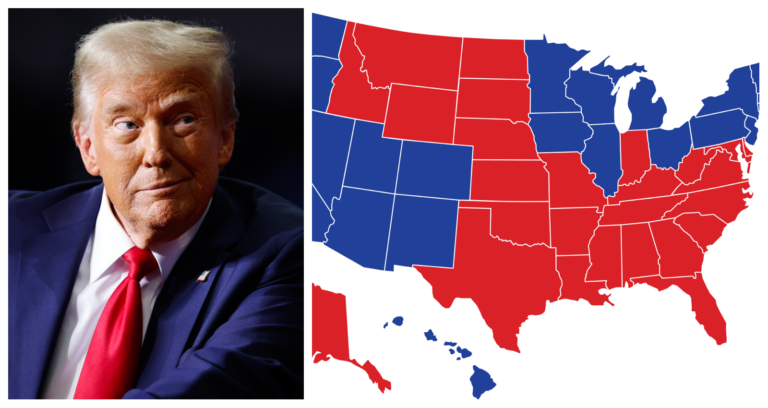
Oregon has not elected a Republican governor in four decades, but a new poll showing GOP state Sen. Christine Drazan narrowly leading Democratic Gov. Tina Kotek has placed that streak under renewed scrutiny.
The survey gives Republicans a potentially powerful fundraising message as the two former state House leaders prepare for a rematch of their closely contested 2022 gubernatorial campaign.
Drazan received support from 48% of registered voters surveyed, compared with 44% for Kotek, according to a polling memorandum obtained by The Oregonian/OregonLive.
The apparent 4-point advantage comes with an important limitation because the survey’s margin of error is plus or minus 4 percentage points, leaving the candidates statistically tied.
Drazan’s campaign commissioned the poll from Public Opinion Strategies, a national Republican-aligned firm that questioned 600 registered Oregon voters between June 22 and June 24.
The campaign has not publicly released the complete survey questionnaire, detailed methodology or demographic crosstabs that would allow independent analysts to examine how the results were produced.
Those limitations mean the poll cannot establish that Drazan is definitively ahead, but it provides evidence that the contest may be more competitive than Oregon’s political history initially suggested.
Drazan’s strategists have circulated the topline findings among lobbyists and prospective donors as they work to demonstrate that the Republican has a realistic path in the November election.
Oregon voters last elected a Republican governor in 1982, when Victor Atiyeh secured a second term, and Democrats have controlled the office continuously since January 1987.
Kotek defeated Drazan in 2022 with approximately 47% of the vote to the Republican’s 43.5%, while unaffiliated candidate Betsy Johnson captured nearly 9%.
Johnson’s presence divided voters dissatisfied with Democratic leadership and complicated Drazan’s effort to assemble the coalition necessary to win a statewide race in traditionally Democratic Oregon.
No comparable conservative-leaning independent is competing this year, potentially allowing Drazan to consolidate more of the anti-Kotek vote than she secured four years ago.
The current field includes Pacific Green Party candidate Brett Smith, whose presence could instead draw some left-leaning voters who otherwise might support Kotek.
Drazan has attempted to center the election on Oregon-specific concerns, including housing costs, homelessness, public safety, education and the broader cost of living.
Her campaign has held prominent events in downtown Portland designed to reinforce its argument that years of Democratic control have failed to resolve the state’s most visible problems, Idaho Learning News reported.
Kotek enters the final stretch facing widespread dissatisfaction over conditions in Oregon, giving Drazan an opportunity to present the election as a referendum on the incumbent’s record.
The Democratic campaign has responded by connecting Drazan to President Donald Trump and national Republican policies involving immigration enforcement, healthcare and election administration.
That strategy seeks to make the race about more than Kotek’s performance by reminding Oregon voters of their longstanding resistance to Republican presidential candidates and policies.
Drazan’s campaign wants the opposite dynamic, keeping voters focused on state government and asking whether Democratic leadership has produced acceptable results on everyday concerns.
Campaign finances offer another indication that the contest warrants attention because Drazan has accumulated approximately $3 million, providing the resources needed to remain competitive through the fall.
Kotek continues to hold a financial advantage, but Oregon’s comparatively affordable media markets outside Portland could allow Drazan to maintain a significant advertising and organizing operation statewide.
The election calendar also compresses the closing campaign because Oregon conducts elections primarily through mailed ballots that voters can complete before the traditional final week.
Ballots are scheduled to begin reaching voters in October, giving both campaigns a limited period to influence people who routinely return their ballots well before Election Day.
Those early voters could make decisions before late debates, advertising campaigns or unexpected developments reshape the political conversation during the final days, Idaho Learning News reported.
Independent polling will provide a clearer test of whether Drazan’s reported support extends beyond a survey commissioned by her own campaign.
The House overwhelmingly approved legislation Wednesday aimed at protecting American households and small businesses from paying infrastructure costs generated by the rapid expansion of large data centers.
The Ratepayer Protection Act passed 417-3, giving the first major House legislation addressing the electricity costs associated with the data-center boom broad bipartisan support.
H.R. 9340 would establish federal standards for state regulators to consider when determining how utilities recover the costs created by new large-load customers consuming 100 megawatts of electricity or more.
The measure is intended to prevent expenses for new generation, transmission lines and other grid upgrades required by large data centers from being shifted onto existing customers.
Republican Rep. Gabe Evans of Colorado introduced the legislation alongside Democratic Rep. Kathy Castor of Florida.
“Large load data centers must cover the full costs of any system updates they require, not families or small businesses,” Evans said during the push for passage.
Evans said the United States should continue building infrastructure needed for artificial intelligence while ensuring that families, farmers and small businesses are not required to subsidize that growth.
Castor similarly argued that major technology companies developing large AI facilities should pay for the electricity and grid upgrades their projects require.
The legislation would encourage special rate structures or other agreements designed to recover the full incremental infrastructure cost from large-load customers.
It would also encourage regulators to require financial assurances designed to protect ordinary customers if a data center later scales back operations or leaves a utility system entirely.
The legislation preserves considerable authority for individual states rather than imposing one specific nationwide utility-rate structure.
States without data-center-specific standards would be required to begin proceedings and consider the federal framework, but regulators would retain authority over how those principles are implemented locally.
That distinction has generated some criticism from lawmakers who argue the legislation does not go far enough because its regulatory framework remains largely state-directed.
Supporters counter that state flexibility is necessary because electricity markets, utility structures and energy needs vary substantially across the country.
House Energy and Commerce Committee Chairman Brett Guthrie said responsible data-center development can produce long-term infrastructure investment while arguing that the companies creating additional demand should bear the resulting costs.
“The Ratepayer Protection Act helps to safeguard these benefits by ensuring that the companies who are building data centers — and not American families and small businesses — are paying for the electricity they use,” Guthrie said.
The bill had already demonstrated unusually strong bipartisan support before reaching the House floor.
The Energy and Commerce Committee approved it unanimously in July by a 52-0 vote.
The legislation arrives as utilities around the country prepare for rapidly increasing electricity demand associated with artificial intelligence, cloud computing and other data-intensive industries.
Large data centers can require enormous amounts of electricity, making the question of who pays for new generation and transmission infrastructure increasingly significant for state regulators and consumers.
The issue has also become politically prominent ahead of the November midterms as lawmakers from both parties face constituent concerns about electricity prices and large data-center developments.
Republicans have generally sought to pair protections for existing ratepayers with continued expansion of U.S. artificial-intelligence infrastructure, while some Democrats have called for stronger requirements on technology companies.
The 417-3 House vote demonstrated significantly broader agreement on the basic principle that ordinary utility customers should not automatically inherit infrastructure costs created by exceptionally large new energy users.
The measure now moves to the Senate, where Ohio Republican Sen. Jon Husted is leading companion legislation.
Any Senate action would have to occur during a compressed legislative calendar as lawmakers approach the November elections., Politico reported.
For now, the House has delivered an unusually bipartisan response to one of the emerging economic questions surrounding the AI boom: who should pay when massive new data centers require billions of dollars in additional power infrastructure.
“Once my wife falls asleep again, remove her uterus. I never want her to have the chance to get pregnant.”
Those words reached me from the hospital corridor as I stood in my loose hospital gown, my legs unsteady and my body shaking after losing my baby. The voice was Jared Harlan’s—my husband, the man who had once promised before God that he would protect me no matter how the world changed.
I stood motionless behind a door left slightly open, gripping the icy metal frame to keep myself upright while the doctor said nothing. Jared spoke more quietly, but every cru:el sentence still reached my ears.
“Create a diagnosis—cancer, permanent d@mage, anything believable. Just make it happen,” Jared instructed. “And make sure Shelby never finds out.”
Shelby was me.
A moment later, Courtney Briggs arrived, an influencer employed by Harlan Media, my husband’s company. She wore a fitted white dress, one hand resting lightly over the small curve of her stomach. Jared pulled her gently toward him with an affection that no longer belonged to me.
“Make sure she receives the finest prenatal care available,” Jared told the doctor. “That child will be the only heir to the Harlan family.”
It felt as though the ground vanished beneath me, yet I neither cried nor shouted. I quietly returned to my room, carrying a silence so icy that even I found it frigh.ten.ing. On the bedside table sat a bouquet Jared had sent—white roses beside a note that read, “You and me against the world, my love.”
The sight of them made my stomach turn.
A young nurse entered with a warm smile, completely unaware she was speaking to a woman who had just overheard her own fate being decided.
“Mrs. Harlan, you’re incredibly fortunate,” the nurse said brightly. “Mr. Harlan booked this entire wing just for you, and he hasn’t left your side for even a minute.”
I gazed through the window at the crowded streets of Phoenix. Outside, life carried on as usual, untouched by the silent collapse of my marriage inside this hospital room.
“When you lost your baby, he cried like a little boy,” the nurse added while fluffing my pillows. “Very few women are blessed with such a devoted husband.”
A few minutes later, Jared rushed into the room looking breathless and visibly distressed. The instant he noticed I was awake, he hurried over and wrapped me tightly in his arms.
“Where were you?” Jared asked, his voice shaking. “I was terrified because I thought something awful had happened to you.”
His pan!c looked completely genuine, which made his betrayal even more horrifying.
He lifted a glass filled with dark-colored medicine and carefully held it to my mouth.
“Drink this, sweetheart,” Jared murmured. “It’ll help you heal, and we’ll still have another chance to start our family.”
The word “chance” cut through me like a blade.
“I don’t want that,” I answered firmly, leaning away from him.
For a brief instant, his eyes turned cold before the familiar gentle expression returned.
“Shelby, stop being difficult,” Jared replied, his tone becoming firmer. “Having my child has always been your greatest dream.”
I grabbed the glass from his hand and hurled it across the room. The dark liquid splashed over the spotless white floor like spilled ink.
“I said no,” I repeated, looking straight into the eyes that had lied to me so effortlessly.
Jared inhaled deeply, forcing himself to stay calm before turning toward the nurse.
“Give us some privacy,” Jared said.
The final thing I remember was a sudden sting in my arm. The room spun around me, Jared’s face dissolved into a blur, and darkness pulled me under.
When I opened my eyes again, morning had already arrived, and the ache inside my abdomen felt entirely different—deeper, heavier, and strangely hollow. My trembling hands lifted the blanket, revealing a fresh surgical scar stretching across my lower stomach.
Jared sat beside my bed with swollen, bloodshot eyes.
“My love, serious complications developed overnight,” Jared explained, raising a sealed medical file. “They found cancerous tissue in your uterus, so I had no choice but to approve emergency surgery to save your life.”
Every document looked flawless, official, and entirely legitimate.
But I had already heard the truth with my own ears.
Just then, the door swung open, and Courtney walked inside carrying a large fruit basket, smiling as though she had arrived for a joyful family celebration.
“Sorry to interrupt,” Courtney said with effortless politeness. “I only wanted to check on Mrs. Harlan.”
Jared neither stepped back nor looked uncomfortable. Instead, he simply tightened his grip around my hand.
Hidden beneath the blanket, while pretending to comfort me, his fingers quietly reached for hers.
That was the instant I realized the most painful loss was not my womb, but the truth that the person responsible for destroying my life shared my bed every night, and I still had no idea what he planned to take from me next.
Chapter 2: The Secret Recording
That afternoon, I pretended to be asleep because I needed to see how far their deception truly reached. Jared remained beside my bed, gently stroking my hair while Courtney sat opposite us with her legs crossed and a reserved smile. To anyone walking past, she looked like nothing more than a considerate visitor and a loyal employee.
But the mirror on the closet door reflected an entirely different reality.
Beneath the bed, Courtney slowly brushed her foot against Jared’s leg before becoming bolder. He glanced toward my face to make sure I had not moved, then wrapped his hand around her knee. Rather than stopping her, he silently signaled for patience.
Once they stepped into the hallway, I forced myself to stand and followed them as quietly as I could. I found them beside a storage room farther down the corridor. Jared seized her arm with visible irritation.
“I warned you not to pull that in front of Shelby,” Jared hissed.
Courtney answered with a mocking laugh.
“What exactly did you expect?” Courtney taunted. “You’ve spent two days pretending to be a devoted husband, but your son and I deserve your attention too.”
“Keep your voice down,” Jared whispered sharply.
“Really?” Courtney challenged. “Announce our engagement tomorrow, or I’ll tell everyone exactly what’s been happening.”
Jared said absolutely nothing, and that silence w0unded me more deeply than any slap ever could.
I struggled back toward my room, but before I reached the bed, my legs gave way beneath me. A nurse hurried inside and helped me to my feet.
“Please don’t cry, ma’am,” the nurse murmured kindly. “If Mr. Harlan sees you this upset, he’ll completely fall apart.”
I wanted to laugh at the irony or scre:am until my lungs gave out, but instead I simply let my tears fall.
That evening, Courtney entered my room by herself. Her pleasant smile had disappeared the moment she shut the door behind her and faced me.
“You already know, don’t you?” Courtney asked directly.
I remained silent.
“Jared is in love with me, and I’m carrying his baby,” Courtney declared proudly. “You have no value to him anymore.”
“How long?” I whispered with difficulty.
Courtney raised three fingers with satisfaction.
“Three years,” Courtney answered. “It began during a business dinner in Miami, and the day you lost your baby, he was actually spending the night with me at my apartment in Orlando.”
I remembered the terrifying hemorrhage, the endless unanswered phone calls, and Jared arriving the following day on his knees, swearing he would never forgive himself for failing to be there.
“You’ll sign the divorce papers tomorrow,” Courtney continued confidently. “He’ll marry me in church, and once my son arrives, everything the Harlan family owns will belong to us.”
“That’s what you believe,” I replied quietly.
Courtney leaned until her face was only inches from mine.
“Don’t fool yourself, Shelby,” Courtney sneered. “You’re still breathing only because Jared feels a little guilty. A woman with no children, no family, and no womb can never compete with me.”
After she walked away, I reached for the legal papers my attorney had prepared months earlier because of a suspicion I had refused to accept. My hand shook as I signed every page before leaving them neatly on the bed.
At sunrise, Jared discovered the documents, and every trace of color v@nished from his face.
“Divorce?” Jared asked in disbelief. “Shelby, what is this supposed to mean?”
I met his gaze without looking away.
“Before our wedding, I told you that if you ever fell in love with someone else, all you had to do was tell me, and I would walk away,” I said evenly. “But I also warned you that if you betrayed me, I would disappear from your life forever.”
“Shelby, you’re confused because of the medication,” Jared replied smoothly.
“No,” I answered. “For the first time, I’m seeing everything clearly.”
Just then, my attorney, Gavin Dillard, stepped into the room alongside a notary public and two state police officers. Jared’s face turned completely white.
“What have you done?” Jared demanded.
Gavin calmly placed a thick folder onto the bedside table.
“Mrs. Harlan requested a full copy of her medical records,” Gavin stated. “There’s one very unusual detail—the cancer diagnosis was signed by a physician who wasn’t even in the country on that date.”
But Gavin had not finished speaking.
“We also uncovered a preliminary DNA report for Miss Courtney,” Gavin continued. “The child she’s carrying has no genetic connection to the Harlan bloodline.”
Courtney walked into the room wearing a confident smile, but the expression disappeared the instant she heard those words.
Just as Jared parted his lips to demand answers, my phone buzzed with an anonymous text. It contained a picture of my mother along with one chilling sentence: “If you want to know why they stole your son, find the old house in Portland before they set it on fire.”
That was the moment I understood my unborn baby was not the only secret buried beneath years of lies.
Chapter 3: The Hidden Truth
I signed nothing else that day, and I never raised my voice. I allowed Jared, Courtney, the doctors, and every nurse to mistake my silence for surrender because I needed them to believe I was broken long enough to leave the hospital alive.
That same evening, Gavin escorted me out through a staff entrance. He drove me to my grandmother’s old home in Portland, a yellow mansion with creaking wooden floors that seemed to hold every forgotten family secret. I had spent my childhood summers there before my mother passed away and before Jared Harlan entered my life pretending to be my prince.
The photograph from the anonymous message showed my mother, Abigail Cooper, standing beside a man who was not my legal father. Written across the back in blue ink were the words: “If anything ever happens to me, never trust the Harlan family.”
For hours I searched through dusty boxes, faded photo albums, and forgotten drawers beneath the cover of darkness. Just before sunrise, I discovered a wooden chest hidden beneath a loose floorboard in the old study. Inside were handwritten letters, notarized paperwork, a flash drive, and my mother’s diary. Sitting on the floor, I read every page while my stomach twisted and my heart shattered.
My mother had never been an ordinary employee of the Harlan Group as I had always believed. She had been one of its founding partners. After her de:ath, forged documents had stolen her ownership shares, and Jared had known that truth long before he married me. He had not fallen in love with me by coincidence. He had pursued me to gain control of my inheritance.
Yet the flash drive contained something even more horrifying.
In an audio recording, my mother spoke through tears, her voice shaking with fear.
“Shelby, if you’re listening to this someday, please forgive me,” my mother whispered. “The Harlan family doesn’t only steal fortunes. They also buy doctors, judges, and police officers. If you ever have a child, never let them register the baby because they’ll treat that child like property.”
A wave of nausea swept over me as the anonymous message echoed in my mind once again: “They stole your son.”
Gavin immediately arranged for every document to be examined. Within twenty-four hours, experts confirmed the original signatures were genuine. My mother had left me not only valuable shares but legal ownership of half the company itself. Gavin also traced several multimillion-dollar payments made to a gynecologist named Dr. Sawyer Faulkner—the same physician who had approved my forced operation.
Before we had the chance to file criminal charges, someone unexpected arrived. Courtney stood outside the house without makeup, hiding behind oversized sunglasses, with a dark bruise visible along her neck.
“Jared knows the baby isn’t his,” Courtney blurted out the moment I opened the door. “He tried to strangle me last night.”
“And now you expect me to help you?” I asked in disbelief.
“I came because I’m willing to sell you the truth,” Courtney admitted quietly.
I would have shut the door in her face, but Gavin gave me a subtle signal to wait. We let her inside, where she cried without cameras, applause, or performance. She confessed that she had conceived through an anonymous donor because Jared had been completely sterile ever since a serious car accident during his teenage years. He had hidden that fact from everyone. That was why he forced the removal of my uterus. He couldn’t bear the possibility of me having another man’s child, and he intended to present Courtney’s baby as his rightful heir.
“But there’s something you still don’t know,” Courtney murmured. “Your pregnancy didn’t end the way they claimed.”
The room seemed to freeze.
Courtney reached into her handbag and removed a tiny memory card.
“I overheard Jared talking with Dr. Faulkner,” Courtney confessed. “They said your baby survived, and that it would be better to keep him hidden until the time came to use him.”
My fingers gripped the edge of the table so tightly they hurt.
“Where is he?” I demanded.
“At a private foundation in Denver called the Hope Center,” Courtney answered softly. “It receives regular funding from the Harlan Group.”
That very night, Gavin, Courtney, and I drove toward Denver. Two private security vehicles followed closely behind us as we crossed the highway in complete silence. When we arrived at the Hope Center, a polite but visibly anxious director greeted us. Gavin presented a temporary court order obtained using the newly uncovered medical evidence. She tried refusing us at first, but the moment he mentioned the federal prosecutor’s office, her composure collapsed.
She guided us into an enclosed garden where several children were playing beneath a large tree. Then I saw him.
A four-year-old boy wearing a blue shirt and a tiny scar above one eyebrow sat alone, carefully putting together a wooden train. His eyes were exactly like mine. Not merely similar—they were my eyes, carrying the same shape and the same quiet sadness.
I walked toward him without taking a breath.
“Hello,” I whispered softly.
The little boy lifted his head to look at me.
“Are you Shelby?” he asked.
The entire world seemed to stop.
“Yes,” I managed to whisper. “Who told you my name?”
He pointed at his chest.
“A lady who visited me said my mommy’s name was Shelby,” he answered. “She told me that one day you would come and find me.”
I dropped to my knees as tears spilled freely down my face.
“What’s your name?” I asked.
“Camden,” he replied.
Camden was my son, and he was alive. For four years, he had grown up without me because someone had decided that my role as a mother stood in the way of their business plans.
I embraced him as gently as I could, afraid he might fall apart in my arms. He didn’t cry. Instead, he leaned his head against my shoulder and quietly said something that completely shattered my heart.
“You were gone for a long time,” Camden whispered.
Those few words became my promise that no one would ever tear us apart again.
Chapter 4: The Final Judgment
Winning Camden back through the courts did not happen overnight. Jared used every connection he had, created false accusations, and claimed I was mentally unstable, guilty of blackmail, and responsible for stealing confidential corporate documents. By the following morning, gossip websites were displaying my photo beneath headlines reading: “Rejected wife attempts to destr0y businessman of the year.” His high-priced attorneys spread stories claiming I had completely lost my sanity after a medically necessary operation.
This time, however, I wasn’t fighting alone.
Gavin immediately delivered the recordings to the Attorney General’s Office. An investigative reporter named Sandra Dodson released an explosive article titled: “Shelby’s uterus was never an illness—it was evidence.” Within hours, people across the country were discussing the case. Women from Seattle, Boston, and Dallas came forward with their own stories of forced surgeries, fabricated diagnoses, and physicians shielded by corporate influence. My suffering stopped being mine alone and became the crack that exposed an entire system of corruption.
Jared answered with intimidation. Anonymous messages soon appeared, warning, “Stay silent or Camden will v@nish.” A van without license plates began following Gavin wherever he drove. Later, someone deliberately set fire to the front entrance of the Portland house. Fortunately, neighbors rushed outside carrying buckets and garden hoses before the flames could spread. Ruth, an elderly woman who owned the neighborhood grocery store, stood before television cameras and shouted.
“They will not silence this young woman!” Ruth declared fiercely. “This is a community—not the Harlan family’s workforce!”
Their support gave me courage I never realized I possessed.
The main trial took place inside a crowded Seattle courtroom. Every seat was occupied by journalists, activists, attorneys, and women wearing purple scarves in solidarity. I entered dressed entirely in white, holding Camden’s small hand while Courtney followed behind us, pale but determined.
Jared stood before the court wearing a perfectly tailored gray suit, looking as polished as ever. The instant his eyes met Camden’s, his calm expression cracked. That single moment was enough for everyone present to realize he recognized the little boy.
The judge ordered complete silence.
Gavin presented every piece of evidence one after another: the fabricated cancer diagnosis, the secret payments sent to Dr. Faulkner, the unauthorized hysterectomy, the documents stolen from my mother, and the financial transfers supporting the foundation where Camden had been hidden. Sandra Dodson submitted certified interview transcripts along with internal corporate emails. Courtney remained on the witness stand for over two hours, admitting every lie, revealing her pregnancy through artificial insemination, confessing her involvement, and describing the fear that eventually overwhelmed her.
“I wanted everything for myself,” Courtney said while crying. “But after discovering that Jared had stolen his own child, I realized he never truly loved anyone. He only wanted to own them.”
Jared jumped to his feet, consumed by rage.
“She’s lying!” Jared shouted. “They’re all lying!”
The judge immediately warned him to remain silent or be removed from the courtroom.
Then the final audio recording echoed throughout the room, carrying Jared’s unmistakable voice.
“If Shelby wakes up, everything falls apart,” Jared’s recorded voice said coldly. “Without a uterus, she can’t claim motherhood, and the child stays in protective custody until we need him.”
No one spoke.
Even the reporters remained perfectly still.
I shut my eyes because hearing those words before an entire courtroom broke something inside me for the last time—but it also freed me forever. It was no longer my testimony against the influence of a powerful man. It was his own voice delivering the evidence that buried him.
Dr. Faulkner was arrested before the day ended. The director of the Hope Center confessed to participating in an illegal adoption network in exchange for a lighter sentence. Two senior health officials resigned before they were even summoned to testify. The corrupt corporate attorney responsible for forging my mother’s paperwork attempted to escape the country but was captured at the border.
Jared was officially charged with obstetric v!olence, document forgery, attempted mur.der, child abduction, corporate fr@ud, and criminal conspiracy. Several months later, he received a historic prison sentence. He lost not only his freedom but also the family name he had hidden behind for years. His fortune was frozen, while my mother’s rightful ownership was fully restored to me. With those recovered assets, I established an organization dedicated to supporting women affected by medical and family abuse.
Courtney paid dearly as well. She lost her endorsements, her public image, and nearly every friend she had. Yet she revealed everything she knew and agreed to help repair the damage. We never became friends, and perhaps we never will, but sometimes justice depends even on those who once helped create the harm.
It took Camden many months before he finally called me Mom.
At first, he watched me as though I might disappear without warning. He slept with the lights on every night and hid cookies beneath his pillow in case there wasn’t any food the following day. Every time I found them there, I hated the people who had stolen his sense of safety even more.
Months later, we stood together in the Portland garden planting a young tree. Camden pressed his tiny hands into the soil before looking up at me.
“Are you staying?” Camden asked quietly.
I knelt in front of him.
“For the rest of my life,” I promised.
He studied my face carefully, almost as though he were reviewing an important agreement. Then he wrapped both arms around me.
“Then I can finally call you Mom,” he whispered.
I buried my face in his hair and cried—not because I had been defeated, but because I had finally found my way home.
Five years have passed since then. The scar across my abdomen remains, and I never hide it because it is the map of a battle they tried to win over my body. Jared is serving his lengthy sentence in federal prison. The Harlan Group no longer carries that name.
By court order, my mother’s ownership was officially restored, and the company became a public reproductive health foundation. At its entrance stands a plaque bearing her name: Abigail Cooper—a woman who refused to disappear.
Camden now runs through this house chasing a rescued dog named Buddy. Gavin became my partner—not to rescue me, but to walk beside me without ever making choices for me. I learned that peace is not always found in silence. Sometimes it arrives as a signed prison sentence, an unlocked door, a son who comes home, and the courage to speak the truth before the world.
I was brushing icing from my daughter’s cheek when the shrieking began in the hallway.
Not the birthday-celebration kind of shrieking.
Not children chasing balloons or someone dropping a dish.
This was my daughter, Emma, making that shattered sound a child makes when they are struggling to breathe and sob at the same time.
I spun so quickly my paper cup crumpled in my hand. Pink lemonade spilled across my dress. My sister Melissa stood beside the present table, grinning like she had just performed a magic trick. My mother remained next to her, composed as a queen, cutting cake for guests who abruptly seemed fascinated by the carpet.
Then Emma staggered out of the powder room.
For a moment, I could not understand what I was looking at. My eleven-year-old had walked in with thick honey-brown hair flowing down her back, hair she combed every night as though it were a living thing. She emerged with uneven chunks chopped above her ears, one side longer than the other, tiny curls clinging to her damp cheeks. A plastic salon cape trailed behind her like a crime scene sheet.
“Mom,” she choked out. “Aunt Melissa said it was a princess makeover.”
The room fell silent except for the bounce house buzzing outside.
My niece Ava, her glitter crown tilted on her head, watched from behind Melissa. She seemed bewildered, not guilty. She was eight. She had no clue the adults had transformed her party into a punishment.
I crossed to Emma, sank to my knees, and wrapped her against me. She trembled so v!olently her teeth chattered.
Melissa raised both hands. “Before you overreact, she agreed.”
“She is eleven,” I said.
“She kept flipping her hair around,” Melissa said, and that cheerful church-lady smile twisted into something crueler. “It was distracting from Ava’s day.”
My mother placed down the cake knife. “Now she won’t steal the attention.”
The words struck the room like a slap. A couple standing near the kitchen actually stepped backward.
I rose with Emma pressed beneath my arm. “Say that again.”
Mom wiped frosting from her thumb. “You always made everything about your child. Melissa spent a fortune on this party.”
“She cut my daughter’s hair.”
“We trimmed it,” Melissa snapped. “You act like hair is sacred.”
Emma murmured, “She locked the door.”
That was when my humorous, courteous, keep-the-peace side disappeared.
I pulled out my phone and began recording. “Emma, say that again.”
Melissa reached for the phone. I moved backward, crashing into the balloon arch. Streamers fluttered down between us. My mother stood from her chair, eyes blank and icy.
“Caroline,” she said, “put that phone away before this gets ugly.”
Behind her, my father came in from the patio carrying Emma’s backpack.
And inside his hand was a pair of scissors with my daughter’s hair still tangled in the blades.
My father did not appear ash@med.
He stood beneath the paper lanterns with those scissors dangling from his fist, breathing heavily, as though I were the one who had done something insane. The blades gleamed with strands of Emma’s hair. My stomach twisted.
“Give me the phone,” he said.
“No.”
Melissa reached toward Emma, and Emma scre:amed so piercingly every adult in that room finally snapped awake. I threw myself between them. “Touch her again and I call 911.”
Dad’s face darkened. “You are em.bar.ras.sing this family.”
I laughed once, harsh and loud. “That is what worries you?”
Mom moved closer, dropping her voice. “Your daughter has been spoiled her whole life. She needed a lesson before she became you.”
There it was. Not about hair. Not about Ava’s birthday. About me, again. About every time I had said no, I moved away, paid my own rent, raised a gentle child instead of a silent one.
I grabbed Emma’s backpack from Dad’s hand. He tried to keep hold. For one moment we were locked in a tug-of-war while children watched through the patio door.
Then Melissa’s husband, Daniel, spoke from the kitchen, “Let her go.”
Everyone went still. Daniel looked pale, his car keys clenched in his hand.
Dad let go of the backpack.
I left with Emma trembling beside me, the party music still playing cheerfully behind us as though nothing had happened. Inside the car, Emma folded herself into the passenger seat and murmured, “They made me sign something.”
“What?”
“A pink paper. Aunt Melissa said I had to write that I wanted it, or Grandma would tell everyone I cried because I was jealous of Ava.”
At urgent care, the nurse studied Emma’s haircut and then looked at me with an expression I will never forget. She recorded every red mark left where Melissa had gripped her shoulders. A compassionate salon owner remained open past midnight and shaped the d@mage into a short pixie cut while Emma watched herself in the mirror, silent. When she finally touched the cropped strands beside her ear, she whispered, “Will people laugh at me Monday?”
That word dropped like a stone.
Monday.
I searched through her backpack in the parking lot.
Beneath a crushed party favor was a folded consent form bearing my signature. Except I had never signed it. It claimed Emma had agreed to a children’s pageant “style change.” No logo, no complete address, only Melissa’s handwriting along the margins.
My phone vibrated.
It was Daniel.
I have the backyard camera audio. I’m sorry. I should have stopped it sooner.
He sent me a video.
My mother’s voice played first. “Cut it above the ears. The agency said Emma photographs better than Ava. This fixes Monday.”
Melissa murmured, “Caroline will lose her mind.”
Dad replied, “Then we call her unstable. We still have friends at the family court.”
My hand turned cold.
The charity modeling audition Emma had been invited to. Ava had landed on the waiting list. Melissa had not simply thrown a t@ntrum. She had arranged a disfigurement and created a paper trail.
At 7:04 the following morning, someone hammered against my front door.
“Caroline!” Melissa shouted. “Please, open up. We need to explain.”
Mom called out, “Do not ruin your sister’s hair.”
I stared through the peephole. Melissa was sobbing. Mom held a folder against her chest. Dad remained behind them, speaking into his phone.
Then he stared directly into my doorbell camera and said, “Yes, officer. My daughter is inside. She as:saulted my other daughter yesterday and kidnapped the child from a family event.”
A police cruiser rounded the corner onto my street. Behind me, Emma stepped out of her room wearing my old sweatshirt, noticed the blue lights through the blinds, and whispered, “Mom, are they taking me away?”
The cruiser pulled up beside my curb, and for one ridiculous second all I could think about was how badly my lawn needed mowing.
That is what shock does. Your entire life is burning, and your mind focuses on weeds.
I told Emma to sit in the hallway where I could keep her in sight. Then I opened the front door while leaving the chain securely latched.
My father moved forward as though the porch belonged to him. “Officer, finally. She is unstable.”
The older officer, a Black woman with silver woven through her braids, lifted one hand. “Sir, step back.” Her name tag read Monroe.
I said, “My daughter is inside. She is safe. These people cut her hair without her consent, forged my signature, and now they are making a false police report.”
Melissa let out a wounded little noise. “Caroline att@cked me.”
I raised my phone. “I have video, audio, medical documentation, salon pictures, and my doorbell camera just captured my father lying to dispatch.”
For the first time in my entire life, my father had no response prepared.
Officer Monroe instructed everyone to remain where they were. She entered the house alone after I removed the chain. She spoke with Emma first, not me. She crouched in the hallway, kept her tone soft, and asked whether Emma wanted some water. Emma nodded, clutching the sleeves of my old college sweatshirt.
No one coached her. No one had to.
Emma explained the truth in a quiet, steady voice. Melissa had brought her into the powder room. Grandma had waited beside the door. Grandpa had entered after Emma began crying and said, “Stop making your aunt look bad.” Melissa had cut once, then twice, then laughed nervously when she realized the sides were uneven. When Emma attempted to escape, Melissa gripped her shoulders and pushed the pink form beneath her hand.
Officer Monroe’s jaw tensed, but her expression remained calm. “Did your mother know about any of this?”
Emma shook her head firmly. “Mom would never.”
That nearly broke me.
Outside, my mother continued mumbling that people were too sensitive these days. Melissa cried into a napkin she had apparently brought along for the performance. Dad remained rigid beside the porch railing, pretending he was not frigh.ten.ed.
Then Daniel drove up behind the cruiser.
He stepped out holding a small black drive and dressed in the same rumpled clothes from the party. Melissa immediately stopped crying.
“Daniel,” she warned.
He stared at her, then turned toward me. “I should have said something before the first cut. I didn’t. That’s on me.”
My mother snapped, “You are betraying your wife.”
Daniel replied, “No, I’m telling the truth about a child.”
He handed Officer Monroe the original camera file, rather than a forwarded clip. He also showed her pictures of the fake permission form sitting on Melissa’s kitchen counter the evening before the party. In one picture, my mother’s hand could be seen, holding a pen above my name.
That was the revelation I had never expected.
The signature had not been Melissa’s imitation of mine. It belonged to my mother.
When Officer Monroe questioned her about it, Mom immediately folded, not because she felt guilty, but because she was furious. “Fine. I signed it. Caroline never listens. Ava deserved one special day, and Emma was going to take that too.”
“She is eleven,” I said from the doorway.
Mom examined me from head to toe. “And already just like you.”
For once, those words did not offend me.
Dad attempted one final move. He raised the folder he had brought and told the officer it contained “concerns” regarding my parenting. I discovered later that it was a partially completed emergency guardianship petition, stuffed with vicious little lies: I was unstable, I kept Emma isolated, I exploited her for attention, I had threatened Melissa. They had intended to frigh.ten me into signing a family agreement promising not to report anything. When I failed to answer the door quickly enough, Dad chose to place the first official call himself.
That decision destr0yed him.
False reports are not a family disagreement. Neither is forging a parent’s signature. Neither is restraining a crying child inside a bathroom while adults cut her hair with scissors.
Statements were collected. Evidence was recorded. A case number was printed on a card and placed into my hand. Officer Monroe instructed my parents and Melissa to leave and never return, using the kind of tone that reminds loud people they are no longer the ones in control.
Once they were gone, my house became silent.
Emma sat beside the kitchen table, running her fingers through her short hair. “Do I still have to go Monday?”
“No,” I said. “You do not have to prove anything to anybody.”
She stared down at the floor. “But if I don’t go, Aunt Melissa wins.”
There was my girl. Bru!sed, hum!liated, exhausted, yet somehow still standing.
I phoned the charity agency, expecting an uninterested receptionist to dismiss me.
Instead, the director had already spoken with Daniel. She asked me to provide the police case number and then said something that made me sit down.
“Emma was not invited because of her hair,” she said. “She was invited because she was kind to the younger kids at the spring workshop. We remember that.”
Monday morning, Emma put on a yellow cardigan over a white dress with silver sneakers. The salon owner arrived early and taught her how to sweep her pixie cut toward one side. I thought Emma might cry. Instead, she examined herself in the mirror, raised her chin, and said, “I look like somebody who solves mysteries.”
I laughed until I cried.
At the audition, Ava was waiting with Daniel. Not Melissa. Not my parents. Ava rushed toward Emma and burst into tears before she even reached us. “I didn’t know,” she said. “Mom told me you wanted matching short hair.”
Emma wrapped her arms around her. Not because anyone asked her to. Because Emma possesses a heart my family never managed to poison.
Daniel met my eyes over their heads. “I filed for divorce this morning.”
I nodded. I had no words prepared for him. Gratitude and anger can share the same table.
The agency did not transform the audition into a spectacle. Emma walked, responded to questions, helped a six-year-old straighten a twisted sash, and smiled only when she wanted to. Two weeks later, she was selected for the charity campaign. Ava was picked as an alternate for a smaller event, and truthfully, I was happy. She was a child too. She deserved a future beyond Melissa’s jealousy.
The legal process lasted longer and felt far less cinematic. There were interviews, phone calls, paperwork, and expenses. My mother accepted a plea related to the forged document. Melissa was charged for what happened inside that bathroom and eventually accepted counseling, community service, and a no-contact order involving Emma. My father’s false report cost him his volunteer role at the courthouse, which wounded him more deeply than any fine ever could. He had lost the room.
The family attempted all the familiar tactics. Cousins messaged me saying I was “dividing everyone.” An aunt reminded me that hair grows back. A church friend sent me a note about forgiveness, then blocked me after I asked whether she would allow someone to do that to her granddaughter.
I did forgive one person.
Ava.
She mailed Emma a crayon drawing showing two girls holding hands, one with long hair and another with short hair. No grown-up had written the message for her. It read, “I am sorry my birthday hurt you.”
Emma taped it behind her closet door.
Months passed, and her hair started growing back in soft, uneven waves. Some days she missed having it long. Other days she adored the short style. Both feelings were allowed. That was the lesson I wanted her to understand most. Her body, her emotions, her story. Nobody else gets a vote.
As for me, I quit opening doors that sounded like demands.
My mother kept leaving voicemails until I changed my number. Dad mailed a single letter claiming I had “gone too far.” I placed it inside a drawer beside the police report, the forged form, and the first lock of hair the salon owner had saved for Emma inside a tiny envelope.
Not as a monument to pa!n.
As evidence.
Because for years, my family had labeled me dramatic whenever I described what they were doing. Too sensitive. Too emotional. Too protective. That morning on my porch, with blue lights flashing outside and my daughter trembling behind me, I finally realized something simple.
Protective is not an insult.
It is a promise.
Emma is thirteen today. Her hair reaches her shoulders again, and she cuts it whenever she chooses, which sometimes means trimming half an inch and sometimes means getting bangs that challenge my belief in democracy. She still treasures the crayon card. She still adores yellow. She still enters rooms as though she has every right to be noticed.
And each year, on the anniversary of that terrible birthday party, we do something completely ridiculous and joyful.
Last year, we ate tacos, bought glittery hair clips, and squeezed into a mall photo booth until we were laughing too hard to pose properly.
People assume the victory was the police report, or the campaign, or my mother eventually being forced to say the word “guilty” inside a room filled with strangers.
Those things mattered.
But the true victory was this: my daughter learned that when somebody tried to make her smaller, I did not tell her to stay polite. I lifted her up, walked away, and never handed her back.
For one unreal second, I stood at the entrance carrying a paper bag from the bakery, a package of newborn diapers, and a folded green blanket, as though I had arrived with presents for a home that no longer belonged to me.
The living room appeared as if complete strangers had been living there.
Empty soda cans had rolled beneath the coffee table. Half-finished takeout boxes were scattered across the floor with their lids open. A foul odor lingered in the air—stale milk, sweat, filthy dishes, and something even harsher underneath it.
Neglect.
My mother was sleeping with the television remote resting across her chest.
Courtney had one arm draped over her eyes, the polish on her fingernails chipped, while her glowing phone rested beside her on the couch.
The television blasted a noisy game show, cheerful laughter flooding the room like a cru:el joke.
Then I heard Owen crying.
Not the strong, frustrated cry I had heard in the hospital whenever he needed feeding.
This one was faint.
Fragile.
Shattered.
The sound drifted down from upstairs.
The bakery bag slipped from my fingers.
“Hannah?” I called.
Neither my mother nor Courtney reacted.
I rushed upstairs, taking two steps at a time.
The hallway felt colder than it should have. The nursery door stood open, yet the crib was empty.
Then I heard my mother speaking from our bedroom.
“If taking care of a baby is so difficult for you, maybe you never should have become a mother.”
I stopped cold.
Those words slipped beneath the door like venom.
I shoved the door open.
What waited inside destroyed the final part of me that still believed my family was simply difficult, simply judgmental, simply controlling.
Hannah was lying on the floor beside the bed.
Her hair clung damply to her face. Her lips had lost their color. One hand rested weakly around the edge of Owen’s blanket, as though she had spent the last of her strength keeping him close.
Owen lay beside her inside his bassinet carrier, crying with that heartbreaking, exhausted wail.
My mother stood over them in her robe, arms folded tightly, her face filled with contempt.
Courtney rested against the dresser, drinking from one of Hannah’s water bottles.
“What the hell is going on?” I shouted.
My mother spun toward me.
For the first time in my entire life, Patricia Parker seemed genuinely surprised to see me.
Then her composure returned.
“Oh, good,” she said icily. “Maybe you can talk sense into your wife. She’s been lying around all morning.”
I fell to my knees beside Hannah.
“Hannah. Baby, look at me.”
Her eyelids trembled.
“Ethan?” she whispered.
Her voice was barely audible.
Something deep inside me split apart.
I pressed my hand against her forehead. She was burning with fever.
Then my gaze fell to her wrists.
Bruises encircled both wrists.
Dark marks shaped like someone’s fingers.
My stomach turned to solid ice.
“What happened to her wrists?” I asked.
Courtney avoided my eyes.
My mother pressed her lips together.
“She was hysterical,” Patricia said. “We had to stop her from hurting herself.”
Hannah let out a tiny sound, not even a real word—only fear escaping from a body too exhausted to protect itself.
Owen cried once more.
I picked him up with trembling hands. His diaper was completely soaked. His tiny mouth searched des.per.ate.ly against my shirt.
“When did he last eat?” I asked.
Nobody replied.
“When did my son last eat?” I shouted.
Courtney flinched.
Mom sighed and rolled her eyes. “Don’t start yelling. Hannah kept saying she couldn’t produce enough milk. I told her women have done this for centuries without complaining.”
I looked straight at her.
“You didn’t give him a formula?”
“She said she didn’t want formula,” Courtney mumbled.
Hannah slowly opened her eyes.
“I begged,” she whispered. “They took my phone. They wouldn’t let me call you.”
The room fell completely silent.
My mother’s expression turned cold.
“She’s confused.”
With obvious pain, Hannah reached toward the nightstand.
The drawer was still hanging open.
“My medicine,” she whispered. “They threw it away.”
Her postpartum antibiotics. Her pain medicine. The iron supplements her doctor had insisted she continue taking.
I glanced at the trash can beside the dresser.
Inside were several orange prescription bottles.
Empty.
My vision tunneled until my mother’s face was the only thing left in sight.
“You threw away her medication?”
Patricia raised her chin.
“I wasn’t going to let her drug herself into laziness.”
Something old and violent rose inside me, but Hannah moaned, pulling me back to what truly mattered.
I pulled out my phone.
My mother stepped toward me.
“Ethan, don’t be dramatic.”
I raised the phone to my ear.
“911,” I said, my voice sounding unfamiliar. “My wife is postpartum, burning with fever, barely awake. My newborn could be dehydrated. I need an ambulance immediately.”
Patricia reached for the phone.
I stepped away.
“Touch me,” I said quietly, “and I swear to God, you will never touch my family again.”
For the first time, she stopped.
The paramedics arrived only minutes later, but those few minutes felt endless.
Hannah faded in and out of consciousness. Owen’s cries became weaker. I changed his diaper with hands that barely functioned, wrapped him in the green blanket I had purchased on the drive home, and held him against my chest while whispering apologies he was too young to understand.
“I’m sorry,” I kept saying. “Daddy’s here. Daddy’s here now.”
The moment the first paramedic entered the room, his expression changed.
He never asked whether Hannah was exaggerating.
He never looked toward my mother for approval.
He knelt beside my wife, checked her pulse, temperature, and bl00d pressure, then turned to his partner.
“Move now.”
Patricia followed them downstairs, still protesting.
“She’s dramatic,” she insisted. “She’s always been dramatic.”
The paramedic gave her one brief glance.
“Ma’am, get out of the way.”
At the hospital, everything unfolded both too fast and far too slowly.
The doctors wheeled Hannah through one set of doors and took Owen through another.
I tried to go after both of them.
A nurse gently placed a hand on my arm.
“Sir, we’ll update you as soon as we can.”
“I left them,” I said.
The words escaped before I realized it.
The nurse’s expression softened.
“Stay where they can find you.”
So I remained standing beneath harsh fluorescent lights in the hallway, still wearing my travel jacket, with Hannah’s blood pressure numbers burned into my memory and Owen’s fragile cries still ringing inside my ears.
My mother and Courtney arrived about twenty minutes later.
They looked irritated.
Not frightened.
Frustrated.
Patricia strode straight toward me.
“You embarrassed me in front of those paramedics.”
I slowly turned to face her.
“My wife and son could die.”
“Don’t be ridiculous,” she snapped. “Women give birth every single day.”
Before I could respond, a doctor approached us.
She was in her forties, with weary eyes and a calm, steady voice.
“Mr. Parker?”
“Yes.”
“I’m Dr. Elena Morris. Your wife is suffering from a severe postpartum infection along with dehydration. Your son is dehydrated as well, but we treated him in time.”
My knees almost gave out.
“In time?” I whispered.
Dr. Morris did not smile.
“In time, provided there are no complications.”
Patricia let out a dramatic sigh, as though she had merely been inconvenienced.
“There, see? Everything is fine.”
Dr. Morris turned toward her.
“Nothing about this is fine.”
My mother blinked.
The doctor faced me again.
“Mr. Parker, I also need to ask about the bruises around your wife’s wrists.”
The hallway fell completely silent.
I felt Courtney stiffen beside my mother.
Dr. Morris continued in the same calm, professional tone.
“The !njuries are consistent with forceful restraint. Your wife has also reported being denied access to her phone and her prescribed medication. Because a newborn is involved, I am legally required to notify both law enforcement and hospital social services.”
My mother’s face was drained of color.
Courtney lowered her eyes.
Patricia forced out a brittle laugh.
“That’s ridiculous. We were helping.”
Dr. Morris remained completely unimpressed.
“Then you can explain that to the police.”
At that exact moment, I finally understood something I should have recognized years earlier.
My mother had never come to help Hannah.
She had come to punish her.
The police arrived shortly after midnight.
Two officers questioned me first. I told them everything, and every sentence tasted like ashes.
The house.
The phone calls.
My mother answered every one.
Hannah’s frightened voice.
The unlocked door.
The filthy rooms.
The bruises.
The medication lying in the trash.
When they asked whether I believed my mother was capable of hurting Hannah, I almost answered no.
By instinct.
Automatically.
Like the obedient son I had been conditioned to become.
Then I saw Hannah through the glass wall of the treatment room.
She lay pale and completely still beneath hospital blankets, an IV taped to her arm. A nurse adjusted the tubing while Hannah weakly turned her face toward the bassinet beside her bed, where Owen slept beneath a warm light.
My son’s tiny chest rose and fell.
Barely.
But it rose.
I turned back toward the officer.
“Yes,” I said. “I believe she is capable of it.”
That was when Courtney burst into tears.
Not because she felt guilty.
Because she was terrified.
“She told me not to say anything,” she blurted out.
My mother whirled toward her.
“Courtney.”
But Courtney was already falling apart.
“She said Hannah needed to learn respect,” she sobbed. “She said if Hannah became frigh.ten.ed enough, she’d agree to the house. She said Ethan would believe us because he always does.”
My entire body froze.
The officer leaned closer.
“What house?”
Courtney covered her mouth, shaking uncontrollably.
My mother pressed her lips into a thin, tight line.
Dr. Morris, standing nearby, looked at me with quiet disbelief.
That was when I realized the nightmare was far from over.
It had only opened its very first door.
The police separated the two of them.
Courtney followed one officer into a private interview room.
My mother remained standing in the hallway, stiff as marble, glaring at me as though I had been the one who betrayed her.
Me.
After everything she had done.
“You’re making a mistake,” she said.
I looked down at her wrists.
No bruises.
No IV.
No trembling from a raging fever.
No newborn son nearly starved because someone had mistaken cruelty for discipline.
“No,” I replied. “I made the mistake four days ago when I left Hannah with you.”
Her eyes became cold.
“She turned you against your own family.”
I laughed once, though it sounded shattered.
“My family is in that room.”
I pointed through the glass.
“My wife. My son. That is my family.”
For the first time, I saw genuine fear flash across my mother’s face.
Then the officer stepped out of the interview room carrying Courtney’s phone sealed inside a transparent evidence bag.
“She recorded part of it,” he told his partner.
The ground seemed to shift beneath me.
“What?” I asked.
Courtney walked out behind him, sobbing so hard she could barely breathe.
“I didn’t think it would become that bad,” she whispered.
The officer looked at me.
“There are videos.”
My mother shouted, “Courtney, you stupid girl!”
That single sentence told everyone everything they needed to know.
Later, I was permitted to watch one recording.
I wish I had never seen it.
I also know I had to.
The video showed Hannah sitting on the bedroom floor, pale and trembling, while Owen cried in her arms.
My mother stood over her.
“You think having a baby makes you important?” Patricia said in the recording. “You are in my son’s house because he allows it.”
Hannah struggled to stand.
Courtney laughed from behind the camera.
Then my mother seized Hannah’s wrist and shoved her back down.
Hannah cried out.
“Please,” she pleaded. “I need my phone. Owen needs help.”
Patricia leaned closer.
“Then sign the papers when Ethan comes home.”
My breathing stopped.
“What papers?” I asked.
The officer paused the recording.
“We found documents inside your mother’s purse.”
They were printed forms authorizing money from my savings account to be transferred into a property purchase fund.
But not for my mother’s house.
For a home already under contract.
A house listed in Courtney’s name.
My sister had been preparing to buy a property using my money.
My mother had wanted far more than control.
She had built an entire plan around it.
And Hannah, still bl.e.e.ding and recovering after childbirth, had been the only obstacle standing in their way.
That realization nearly destroyed me.
Not only the cru:elty.
Not only the bru!ses.
Not only the hunger, the fever, or the confiscated phone.
It was realizing that Hannah had been protecting our child’s future while I had been protecting my mother’s feelings.
I returned to Hannah’s hospital room before sunrise.
She was awake.
Weak, pale, exhausted—but awake.
Owen slept beside her, his tiny fingers resting curled above the blanket.
For several long seconds, I could not speak.
Hannah looked at me with eyes carrying too many emotions at once.
Relief.
Fear.
Pa!n.
And something even worse than anger.
Distance.
“I’m sorry,” I said.
Her eyes filled with tears, but none of them fell.
“You left,” she whispered.
Only two words.
No yelling.
No accusations.
Only the truth.
Somehow, that hurt far more than anything she could have scre:amed.
“I know.”
“I told you I was afraid.”
“I know.”
“You told me I was overreacting.”
My throat tightened.
“I know.”
Hannah turned her face toward Owen.
“He cried so much,” she whispered. “I thought he was going to stop. I kept thinking, if I could just get to the door. If I could just get to the neighbor. But I couldn’t stand without falling.”
I lowered my head.
There was no excuse.
There never would be.
“I failed you,” I said. “Both of you.”
She looked at me again.
For a moment, I thought she was going to ask me to leave.
I would have deserved it.
Instead, she quietly asked, “Where are they?”
“The police took their statements. Mom is being detained. Courtney is cooperating.”
Hannah closed her eyes.
“They’ll blame me.”
“No,” I said. “Not anymore.”
Her eyelashes trembled.
“You always said that.”
Those words struck me like a final judgment.
In that moment, I realized saving my wife would never be one dramatic act of heroism.
It would not be calling 911 a single time.
It would not be shouting at my mother in a hospital hallway.
It would be every day that followed.
Choosing Hannah.
Trusting Hannah.
Protecting peace instead of protecting appearances.
So I did the only thing I knew to do.
I slipped off my wedding ring and placed it on the blanket beside her hand.
Her eyes widened in surprise.
“Ethan?”
“This ring means nothing if I wear it only when life is easy,” I said. “I’m giving it back to you until I earn the privilege of wearing it again.”
Her face crumpled.
I wanted to reach for her, but I didn’t.
I had lost the right to comfort her without her permission.
So I remained seated beside her bed with my hands folded together, saying nothing while she cried.
Two days later, Hannah’s fever finally disappeared.
Owen began feeding normally with the careful support of a lactation nurse and pediatrician. His color returned. His cries became stronger.
I had never been more thankful to hear a baby scre:aming.
Meanwhile, the truth spread far more quickly than I expected.
Not because I told anyone.
Because Patricia did.
From the police station, before her phone was taken away, my mother called relatives claiming Hannah had “we:aponized postpartum hormones” to ru!n her.
By noon, my aunt had phoned me.
By one o’clock, my cousin.
By three, my father’s older brother, Uncle Raymond, who had stayed away from my mother for almost ten years, walked into the hospital waiting room wearing his worn work boots and a grim expression.
He hugged me once.
Then he quietly said, “I wondered when she’d finally go too far.”
I stared at him.
“What does that mean?”
Uncle Raymond glanced toward Hannah’s hospital room.
“Your father didn’t d!e from a heart att@ck simply because life was stressful, Ethan.”
My mouth went completely dry.
“My father died at forty-nine.”
“I know.”
He sat beside me, carrying a sorrow I had never noticed before.
“Your mother controlled everything by making people feel guilty. Money. Visits. Phone calls. Medical treatment. Your dad planned to leave her. He told me two weeks before he died.”
The hallway suddenly felt endless.
“He was leaving?”
Raymond nodded.
“He kept a folder. Bank statements. Written notes. Proof she’d been draining accounts and hiding debt. After the funeral, that folder vanished.”
I could barely hear anything over the pounding of blood inside my ears.
“Why didn’t you tell me?”
“You were twenty-two and worshiped her,” he answered gently. “You never would have believed me.”
I wanted to deny it.
But I couldn’t.
Because only four days earlier, Hannah had begged me with her eyes not to leave.
And I had walked away.
Uncle Raymond reached into his coat pocket.
He removed a small envelope, yellowed with age.
“Your father gave me this. He told me to keep it in case something ever happened.”
Inside was a handwritten letter.
The handwriting belonged to my father.
Unsteady, but unmistakable.
Ethan, if you ever read this, it means I failed to protect you from your mother’s version of love. Real love does not demand obedience. Real love does not punish you for choosing your wife, your child, or your own conscience. When the day comes, choose the family you build. Not the one that breaks you.
I read that final sentence three separate times.
Then I folded the letter and cried harder than I had at my father’s funeral.
The court case moved much faster than anyone expected because of the videos, the medical evidence, and Courtney’s cooperation.
Patricia was charged with unlawful restraint, neglect, as:sault, and child en.dan.ger.ment.
Courtney accepted a plea deal in exchange for her testimony.
I never spoke to either of them before the hearing.
But Patricia tried to speak to me.
As officers escorted her past the courtroom benches, she looked at me with tear-filled eyes and whispered, “Ethan, I’m your mother.”
Once, those words would have torn me apart.
This time, I looked at Hannah.
She sat beside me with Owen sleeping against her chest, one tiny hand wrapped around the edge of her blouse.
Then I turned back to Patricia.
“And she is his,” I said.
My mother’s face twisted.
Not with grief.
With rage.
That was the final proof.
She had never wanted forgiveness.
She wanted control placed back into her hands.
The judge granted protective orders for Hannah and Owen.
Before Hannah returned home, our house had been transformed.
New locks.
Security cameras.
My mother’s key was des.troy.ed.
Her belongings were packed by a neutral third party and delivered somewhere else.
Courtney wrote Hannah a letter apologizing for everything. Hannah read it once, folded it carefully, and placed it inside a drawer.
“Maybe someday,” she said.
Not forgiveness.
Not resentment.
Simply a boundary.
On our first night back home, Hannah stood in the nursery doorway for a long while.
I remained behind her, leaving enough space so she would not feel crowded.
Owen slept peacefully in his crib beneath the gentle glow of a nightlight.
The house was clean.
Silent.
Warm.
But peace did not return overnight.
It arrived little by little.
Through small choices.
I handled every nighttime feeding that I possibly could.
I learned to sterilize bottles, organize medications, clean pump parts, fold unbelievably tiny clothes, and recognize the difference between Owen’s hungry cry and his sleepy one.
I started therapy.
By myself at first.
Then, once Hannah felt ready, together with her.
Some days she allowed me to hold her hand.
Other days she didn’t.
I accepted both without complaint.
Three months later, on a rainy Saturday morning, Hannah discovered my father’s letter lying on the kitchen table.
I had never shown it to her.
Not because I wanted to hide it.
Because I refused to use my father’s suffering to excuse my own mistakes.
She quietly read the letter while Owen slept against my shoulder.
When she finished, she lifted her eyes.
“Your dad knew.”
I nodded.
“He did.”
Hannah’s expression softened, though only a little.
“Do you understand now?”
I looked down at our son.
Owen’s mouth twitched in his sleep, one tiny fist resting against my chest.
“Yes,” I said. “I understand that love without protection is only a promise waiting to fail.”
Hannah studied me for a long moment.
Then she reached across the table.
Resting in her palm was my wedding ring.
My breath caught.
“I’m not saying everything is fixed,” she said.
“I know.”
“I’m not saying I’ve forgotten.”
“I don’t want you to.”
Her fingers trembled slightly.
“But I’ve watched you choose us every day since the hospital.”
I couldn’t find any words.
She gently slid the ring back onto my finger.
The band felt heavier than it ever had before.
Not because it was a burden.
Because I finally understood what it truly meant.
Six months later, Owen laughed for the very first time while Hannah and I sat together on the living room floor, surrounded by soft building blocks and a pile of laundry we had never gotten around to folding.
It wasn’t a quiet laugh.
It was loud, surprised, bubbling laughter that seemed far too big for such a tiny body.
Hannah gasped.
I froze.
Then Owen laughed again, and Hannah burst into tears.
I reached for my phone to record the moment, but before pressing the button, I stopped.
Some memories do not need proof.
Some memories simply need witnesses.
So I lowered the phone and watched my wife lift our son into her arms.
Sunlight poured gently across her face.
The bru!ses around her wrists had long since faded.
But I knew certain scars healed where no one could see them.
I knew trust could never be demanded, inherited, or restored through apologies alone.
It had to be rebuilt in the silence after the sirens.
In the distance between confession and forgiveness.
In the everyday decision never again to mistake obedience for love.
Years from then, Owen would eventually ask why we never visited Grandma Patricia.
And when he was old enough, we would tell him the truth—not the darkest details, not the terror itself, but the lesson.
That family is not measured by bl00d.
That motherhood is not ownership.
That forgiveness does not require access.
And that people who truly love you never ask you to disappear so they can feel powerful.
But on that rainy afternoon, none of those words were necessary.
Hannah held our son close against her heart.
I sat beside them with my father’s letter safely tucked away inside the drawer, my wedding ring warm on my hand, and the green blanket wrapped around Owen’s tiny feet.
The very same blanket I had bought on the day I came home too late.
Only now, it no longer felt like a reminder of failure.
It felt like a promise.
I came home to find my wife and newborn son fighting for their lives.
But the greatest shock was not what my mother had done while I was away.
It was realizing that the monster I had been afraid to lose had never been my mother at all.
It had been the obedient son I used to be before I finally chose to become a husband and a father.
For several long moments after Michael Harris spoke the figure, I was unable to find my voice.
Two hundred forty thousand dollars.
Not a promise.
Not a possibility.
Money legally belongs to my daughter.
Grace had been sitting on the rug in my parents’ living room without her glasses while the very people calling themselves family had been holding onto money that should have been hers.
And Lauren had panicked over one accidental look at her phone as though Grace had uncovered classified information.
In a way, she had.
Michael’s tone remained steady.
“Your parents were appointed as trustees,” he said. “I cannot find any record showing a distribution to your side of the family.”
I lowered myself into a chair because my knees no longer felt dependable.
“So they simply kept it?”
Michael hesitated briefly.
“From everything available here, yes.”
Those words struck with a weight that settled deep beneath my ribs.
For years, I had stretched every dollar to preserve peace.
I had stepped in for small costs. I had filled financial gaps. I had listened while my parents and Lauren preached about family loyalty as Grace was treated like an unwanted burden lingering at the edge of every gathering.
All that time, Uncle Ray had secured my daughter’s future.
And they had quietly decided she was never meant to receive it.
“What do we do next?” I asked.
“We request a complete accounting,” Michael replied. “If needed, we take the matter to court. We ask for the trustees to be removed and the trust assets recovered.”
“And criminal charges?” I asked.
Another brief pause.
“If trust funds were intentionally concealed or misused, you may file an official report. That proceeds separately from the civil case.”
My gaze settled on the broken glasses resting on my kitchen table.
The cracked lens still reflected the light through one jagged fracture.
“Do it,” I answered.
Michael never questioned whether I was certain.
He simply replied, “All right.”
From that moment, everything became documentation.
Official correspondence.
Certified letters.
Formal accounting requests.
Copies of every trust record.
Dates, signatures, obligations, balances.
The sort of dull paper trail people dismiss until it becomes a detailed record of everything they tried to hide.
I filed the report as well.
Not over the kitchen.
Not over the hum!liation.
Over the trust.
Over trustees who had concealed $240,000 from a visually impaired little girl and kept silent until she noticed a single word on a phone screen.
The officer taking my statement glanced up twice.
“Your parents served as the trustees?” he asked.
“Yes.”
“And your daughter discovered this only because she happened to see something on your sister’s phone?”
“Yes.”
“And your sister answered by breaking her glasses?”
I met his eyes.
“Yes.”
He leaned back for a brief moment.
Then he pressed his pen to the paper and continued writing.
That quiet clicking sound stirred something inside me.
Not triumph.
Not revenge.
Validation.
For the first time, someone was recording the truth instead of dismissing it as another family disagreement.
Once the official notices were delivered, my family’s silence lasted less than a full day.
Then someone knocked at my door.
I looked through the peephole and found my mother standing on the porch holding a plate of cookies.
Dad stood behind her with both hands buried inside his jacket pockets, his eyes fixed on the ground.
Lauren waited slightly to one side with folded arms and a smile pulled so tightly across her face that it looked uncomfortable.
Cookies.
Because apparently chocolate chip cookies are supposed to convince people not to involve lawyers.
I opened the door without asking any of them to come inside.
Mom raised the plate.
“Erin, honey, we only want to talk.”
“What an interesting moment to visit,” I said.
Mom blinked.
“We have no idea what you’re talking about.”
I turned toward Lauren.
“Just like you have no idea what happened to Grace’s glasses?”
Lauren’s forced smile faltered.
“This is absurd. You’re tearing this family apart over nothing.”
“Nothing?” I echoed. “Two hundred forty thousand dollars counts as nothing now?”
Dad finally lifted his head.
“Erin…”
I held up a hand.
“You can discuss it with Michael Harris.”
Mom’s expression hardened.
“We’re your family.”
“I’ve noticed,” I replied. “That’s exactly the issue.”
Lauren moved a step closer.
“You have no idea what you’re doing.”
That nearly made me laugh.
For most of my life, my family had depended on me not seeing the truth.
Not seeing why Lauren was always forgiven.
Not seeing why Mom’s version of discipline somehow always landed on the quietest person in the house.
Not seeing why Dad’s silence was mistaken for neutrality instead of approval.
But now I saw it.
Completely.
Mom’s voice became sharper.
“You’re embarrassing all of us.”
“That’s ironic,” I answered. “Grace’s hands were bruised from scrubbing your kitchen while you stood there watching.”
Lauren blurted it out before she realized what she was saying.
“She never should have looked at my phone.”
There it was.
Not denial.
An excuse.
Mom whispered harshly, “Lauren.”
But Lauren had already begun falling apart.
“She was being disrespectful,” she insisted. “She needed a lesson. And now Erin wants to steal money from our children.”
I tipped my head slightly.
“Your children?”
Mom stepped forward, anger flashing across her face.
“Do you realize how unfair this is? Grace is only one child. Lauren has three.”
The porch fell silent.
Dad lowered his eyes once more.
Lauren stood motionless.
And suddenly I understood the calculation they had been making behind closed doors.
This had never been about respect.
It had never been about discipline.
It had never even been about Grace accidentally seeing something on a phone.
It was about Uncle Ray leaving money to my daughter instead of Lauren’s children.
To them, Grace’s future seemed unfair because they had wanted it divided differently.
“So that’s what this was really about,” I said quietly.
Mom’s face was drained of color.
Lauren stared at me with burning eyes.
“You’re actually going through with this?”
“Yes,” I replied. “I am.”
Mom’s voice shifted again. The anger disappeared, replaced by des.pe.ra.tion.
“Erin, please. Don’t do this.”
I looked at her for a long, silent moment.
“You already did,” I said. “The moment you decided my daughter’s future belonged to somebody else.”
Then I stepped backward and shut the door.
Not with force.
Not with anger.
Simply shut it.
The following weeks passed at an agonizing pace.
Legal proceedings have a strange rhythm. For a long time, it feels like nothing changes, and then suddenly everything changes at once.
Michael requested complete trust accounting.
My parents attempted to stall.
Lauren sent me three messages that remained unanswered.
Mom phoned from unfamiliar numbers.
Dad left one voicemail that started with a weary sigh and ended without ever saying he was sorry.
Michael remained focused on the essentials.
Dates.
Documents.
Trustee obligations.
Missing distributions.
The court ultimately removed my parents from their positions as trustees.
The $240,000 was recovered and transferred into a protected account for Grace, overseen by an independent fiduciary with safeguards my parents could never access.
That was the part that mattered most.
Not punishment.
Protection.
Because being a trustee is not a family honor.
It is a legal obligation.
And they had failed that obligation.
There were consequences outside the civil case as well.
Nobody went to prison. Real life is not a movie.
But there were criminal charges, financial penalties, probation, and community service. Enough for the story to stop living as family gossip and become something anyone could confirm.
Court records have a remarkable way of dismantling family legends.
The extended family learned the truth.
Invitations disappeared.
Phone calls became infrequent.
Relatives who once nodded approvingly whenever Mom talked about discipline suddenly became careful not to be seen standing beside her.
Lauren’s world became smaller.
Not ru!ned.
Smaller.
There is an important difference.
Her children’s extracurricular activities no longer became my financial responsibility. Their shortages belonged to her. Their fees belonged to her. The small emergencies that once landed in my checking account remained exactly where they belonged.
Dad stayed quiet.
That was the one thing about him that never changed.
But after everything that happened, I stopped pretending his silence meant he had stayed uninvolved.
Silence can be a decision.
Sometimes it is the gentlest-looking form of permission.
Grace’s replacement glasses arrived three weeks later.
They looked almost exactly like the pair Lauren had broken, but Grace wore them differently. More cautiously. Not because she had ever been careless, but because someone had taught her that something she depended on could disappear whenever an angry adult decided it should.
That lesson took far longer to heal than the bruises on her hands.
The redness v@nished first.
Then the flinching.
Then, little by little, the habit of apologizing.
For a while, Grace apologized for everything.
Sorry for asking for water.
Sorry after bumping into the table.
Sorry whenever she needed help reading words across the room.
Every single time, I gave her the same answer.
“You do not have to apologize for needing what you need.”
At first, she nodded as though she could not quite believe me.
Then, gradually, she began believing me a little more.
Several months later, one evening, I found her sitting at the kitchen table drawing pictures.
Her glasses had slipped halfway down her nose.
She pushed them back into place and looked toward me.
“Mom?”
“Yeah, baby?”
“Are we okay now?”
Every part of me wanted to answer yes without hesitation.
That is what mothers always want.
We want the world to feel simple. Safe. Finished.
But Grace deserved something better than an easy lie.
So I pulled up a chair beside her.
“We’re safe,” I said. “And we’re becoming okay.”
She sat quietly, thinking.
Then she nodded.
“I like that answer better.”
So did I.
Because healing did not begin the day the money was returned.
It did not begin when my parents lost their trustee positions.
It did not begin when Lauren finally stopped sending messages.
It grew inside quiet, ordinary moments.
Grace leaving her backpack in the hallway without asking whether it was allowed.
Grace laughing far too loudly at a silly cartoon.
Grace telling me she never wanted to visit Grandma’s house again without apologizing afterward.
That was the real victory.
Not the legal paperwork.
The freedom.
The right to exist without having to earn the space she occupied.
Michael sent the final confirmation on a rainy Thursday afternoon.
The trust funds were secure.
The trustee replacement had been finalized.
The account would remain protected until Grace reached the age Uncle Ray had specified in his trust documents.
I printed the confirmation and placed it inside a folder.
Then I slid that folder into the same drawer where I kept the photographs of her shattered glasses.
Not because I wanted to hold onto the pa!n.
Because I never wanted to lose sight of the lesson.
People who feel comfortable hurting your child do not deserve another chance simply because they share your DNA.
People who steal from your child’s future do not earn gentle treatment just because they repeat the word family.
And people who quietly watch while harm unfolds are not neutral.
They are witnesses who deliberately stood on the wrong side.
I never brought Grace back to my parents’ house.
Lauren never personally repaid the cost of the glasses.
The legal process accomplished far more than eight hundred dollars ever could.
Still, several months later, I received an envelope.
No return address.
Inside was a money order for $800.
No message.
No apology.
I deposited every dollar into Grace’s account and never tried to discover who had mailed it.
Some answers simply are not worth pursuing.
Today, Uncle Ray’s photograph sits on our bookshelf. In that picture, he is beside Grace at her sixth birthday party, listening with complete attention as she explains the story of a book featuring at least three dragons and, according to her, far too few maps.
He was the only adult in our family who always spoke to her as though she was complete.
I believe he understood.
Maybe not every detail.
Maybe not exactly how everything would unfold.
But he understood enough to leave her something protected.
He simply never imagined that the very people he trusted to guard it would become the ones trying to keep it from her.
That part still aches.
Perhaps it always will.
But pain is different from uncertainty.
I know exactly what happened.
I know exactly what I chose.
And I know I never went too far.
I did not raise my voice in that living room.
I did not fight with anyone on the porch.
I did not beg my parents to understand.
I took photographs.
I uncovered the trust.
I called an attorney.
I filed the report.
I shut the door.
That was what protecting my daughter looked like.
Quiet.
Documented.
Permanent.
Grace is eight years old now.
She wears purple glasses because she picked them herself. She says they make her look like someone who solves mysteries, and honestly, she is absolutely right.
Sometimes, when she pushes them higher on her nose, I still remember the cracked frame sitting on my kitchen table.
Then I look at her.
Her shoulders no longer curl inward.
Her hands no longer rest nervously in her lap as though she expects to be punished.
She takes up space.
She asks whatever she wants.
She laughs without first checking everyone else’s reactions.
That is the only ending that matters to me.
My sister believed she could teach my daughter respect by taking away the very thing that helped her see.
Instead, she revealed everything that had been hiding in plain sight.
A shattered pair of glasses led me to a hidden trust.
A little girl’s quiet memory uncovered $240,000.
And a door I should have closed many years earlier finally closed forever.
We are okay now.
Not because they ever apologized.
Because they no longer have access to the child they believed they could hurt, sh@me, or steal from.
Dana Harland’s office occupied the second floor of an old brick building downtown, directly above a café that always smelled far better than the drinks it served.
She was in her mid-forties, with cropped dark hair, observant eyes, and the composed posture of someone who had spent years listening to frigh.ten.ed people without ever sharing their pan!c.
“Tell me everything,” she said.
So I did.
The dinner.
The insult.
Three years of financial assistance.
The car installments.
The health coverage.
The surgical expenses.
The bank transfers.
Barbara arriving at my porch, crying at first, then threatening a custody battle when the tears failed.
Dana listened without saying a word.
After I finished, she tapped her pen lightly against the legal pad.
“How serious do you think she is?”
“Very.”
“Then we treat her as serious.”
That single sentence helped me far more than reassurance ever could.
She outlined what Barbara would most likely do.
Submit a petition.
Insist I was unstable.
Insist she could provide a better home for Ellie.
Claim grief had left me emotional and incapable.
“She’ll try to twist your boundaries into proof of hostility,” Dana said. “So starting now, you do not respond. No messages. No phone calls. No conversations on your porch. Everything goes through me.”
“Understood.”
“Now tell me you kept records.”
For the first time that week, I felt something close to confidence.
“I saved everything.”
Dana’s expression shifted.
“Everything?”
“Bank records. Cleared checks. Insurance confirmations. Medical payment receipts. Messages where she requested money. Proof of every vehicle payment.”
Dana smiled faintly.
“Good. Then she chose the wrong father to lie about.”
The petition arrived five days later.
A manila envelope rested on my front doorstep.
Emergency custody.
Barbara Hutchkins versus Derek Wyatt.
I stood in my kitchen while Ellie was at school and read every false accusation.
Emotionally unfit.
Financially irresponsible.
Unstable housing.
Erratic and threatening behavior.
Unsafe environment.
Barbara wanted temporary custody while the case moved forward.
For a brief moment, I felt genuine fear.
Not because any of it was true.
Because courtrooms are places where lies become d@ngerous when they arrive dressed in formal language.
Dana arrived an hour later carrying a briefcase and wearing a grim expression.
“This is aggressive,” she said, spreading the petition across my table. “But ag.gres.sive does not mean convincing.”
We reviewed everything point by point.
My income.
My mortgage history.
Ellie’s school records.
Medical records.
Letters from teachers.
Letters from her pediatrician.
References from neighbors.
A folder filled with photographs of birthdays, soccer matches, school functions, field trips, spelling awards, and the ordinary, stable life Barbara was trying to erase with accusations.
Dana organized everything into a binder.
Color-coded tabs.
Financial support.
Parenting records.
Medical stability.
School involvement.
Character references.
Barbara’s reliance on my money.
“This,” Dana said, holding the binder in the air, “is how we win.”
The preliminary hearing took place at the Crestwood County Courthouse.
Barbara appeared wearing a gray dress and pearl earrings, looking every bit like a delicate grandmother.
Her attorney, Roger Pruitt, argued that I was unpredictable and that Barbara had been a “stabilizing force” in Ellie’s life.
I remained completely still.
Dana had instructed me not to react.
So I didn’t.
When Barbara took the stand, she claimed I had threatened her.
“He told me I had three hours to run my mouth,” she said, her voice trembling. “I was frigh.ten.ed.”
Dana rose.
“Context, Your Honor. Mrs. Hutchkins made that statement after calling Mr. Wyatt’s eight-year-old daughter a disappointment.”
Judge Patricia Moreno peered over her glasses.
“Mrs. Hutchkins, did you say that?”
Barbara’s expression tightened.
“It was taken out of context.”
“What context would make that acceptable?”
Barbara had no response that improved her position.
Then came the finances.
Barbara’s attorney attempted to imply she had been supporting me.
Dana placed the bank statements across the table.
Three years.
Highlighted.
Car payments.
Insurance.
Medical expenses.
Transfers.
Judge Moreno examined them quietly.
“Mrs. Hutchkins,” she said at last, “these documents show Mr. Wyatt has been financially supporting you.”
Barbara swallowed.
“He wanted to help.”
“And yet you’re claiming you’re better prepared financially to care for the child than the man paying your expenses.”
Silence.
That was the first fracture.
The judge denied the emergency custody request.
Ellie remained with me.
However, she scheduled a full hearing three weeks later because the allegations were serious enough to examine.
I should have felt relieved.
I did, for about thirty seconds.
Then Barbara submitted a complaint to Child Protective Services.
She claimed I left Ellie home alone.
Claimed I shouted all the time.
Claimed Ellie was scared of me.
Dana called me immediately.
“Do not panic. They are required to investigate. Be truthful. Let them see your home. Let them speak with Ellie.”
That evening, I cleaned until my hands ached.
Not because the house was messy.
Because fear needs something to occupy itself.
The following afternoon, a caseworker named Linda Morrison arrived precisely at four o’clock.
Tired eyes.
A worn leather bag.
Professional compassion.
She walked through our living room, studied the photographs on the walls, Ellie’s school backpack beside the door, the small lavender bedroom with drawings taped unevenly across one wall.
Then she sat at my kitchen table.
“I received a report,” she said. “I need to ask you some questions.”
I answered every one.
My work hours.
School pickup.
Childcare.
Meals.
Doctors.
Neighbors.
Emergency contacts.
Then Linda spoke with Ellie in the living room.
I remained where Ellie could see me, but not close enough to influence her.
“Do you feel safe at home?” Linda asked.
“Yes.”
“Does your dad take good care of you?”
“Yes.”
“Has he ever hurt you?”
Ellie looked puzzled.
“No. Daddy doesn’t do that.”
When Linda asked whether Ellie was afraid of me, Ellie’s forehead furrowed.
“No. I’m scared when grown-ups say mean things.”
Linda looked at her quietly for a moment.
Then I watched her write something in her notes.
Three days later, Dana called.
“CPS closed the investigation. Linda’s report is outstanding. She wrote that Ellie is healthy, strongly bonded to you, and shows no evidence of neglect or fear. Barbara’s allegations were unfounded.”
I lowered myself into a chair because my knees suddenly refused to cooperate.
The full hearing took place on a Friday morning.
This time, more people filled the courtroom.
Several local observers.
A reporter from the town newspaper.
Tom and Jennifer sat in the back row, both looking as though they wished the chairs would swallow them whole.
Barbara testified first.
She said she loved Ellie.
She said she had tried to stay involved.
She said I was exhausted and angry.
Then Dana began her cross-examination.
“How many times have you visited Ellie outside Sunday dinners during the past three years?”
Barbara hesitated.
“A few.”
“According to the records, twice. Is that inaccurate?”
Barbara glanced toward her attorney.
“Not inaccurate, exactly.”
“Have you ever attended Ellie’s school events?”
“No.”
“Parent-teacher conferences?”
“No.”
“Doctor’s appointments?”
“No.”
“Did you know the name of Ellie’s teacher before this case?”
Barbara’s mouth opened.
Closed.
“No.”
Dana turned another page.
“At the dinner on November 10, did you say, ‘She’s not as pretty as her cousins. Some kids are just disappointments’?”
“It was taken out of context.”
Dana’s voice grew sharper.
“What context makes it acceptable to call an eight-year-old child a disappointment?”
Barbara remained silent.
Then Dana called her witnesses.
Mrs. Patterson, Ellie’s teacher, testified that I attended every conference, replied to emails promptly, helped Ellie with her studies, and volunteered on field trips.
Dr. Ramirez testified that Ellie was healthy, up to date on medical care, and showed no evidence of neglect or abuse.
Mrs. Chun, our neighbor, testified that Ellie was consistently clean, safe, supervised, and happy.
Linda Morrison, the CPS caseworker, testified that the report against me lacked merit and that my home was safe and stable.
Barbara’s attorney attempted one final surprise witness.
Carol Jennings, Barbara’s neighbor.
Carol claimed she had once seen me shouting aggressively in my front yard.
Dana asked when.
Carol gave the date.
Dana tapped her phone, connected it to the courtroom screen, and played footage from my security camera.
There I was in the yard, yelling:
“Get out of there! Go on!”
Then a raccoon scrambled out of my garbage can and waddled across the lawn.
The courtroom struggled not to laugh.
Judge Moreno didn’t struggle very much.
Dana turned toward the witness.
“Mrs. Jennings, he was yelling at a raccoon, correct?”
Carol’s face flushed red.
“I suppose so.”
“No further questions.”
Barbara lost the case at that moment, even before the judge announced her decision.
Dana’s closing argument was straightforward.
I had documentation.
Barbara had accusations.
I had witnesses.
Barbara had bitterness.
I had cared for Ellie every single day since Leah died.
Barbara had only shown interest after her financial support ended.
Judge Moreno reviewed her notes for what felt like an eternity.
Then she delivered her ruling.
Full custody remained with me.
Barbara’s emergency petition was denied.
Supervised visitation only, contingent upon parenting classes and proof of respectful behavior toward both Ellie and me.
Barbara would continue to be responsible for her own expenses.
The gavel struck.
Across the courtroom, Barbara sat completely frozen.
Not heartbroken.
Not regretful.
Enraged that no one in the courtroom had believed the performance she put on.
Outside, Dana shook my hand.
“You won because you kept records,” she said. “And because you stayed calm.”
I drove home and picked Ellie up from Mrs. Chun’s house.
That evening, we sat together in the backyard beneath the string lights I had hung months before.
The air carried the scent of freshly cut grass.
Crickets chirped beyond the fence.
Ellie rested her stuffed rabbit across her lap.
“Daddy?”
“Yes, sweetheart?”
“Is Grandma still mad?”
“Probably.”
“Will we see her again?”
“Only if she changes. And only if you want to.”
Ellie considered that for a moment.
“Are we okay?”
I reached over and took her hand.
“We’re more than okay, Ell.”
She leaned her head against my shoulder.
“We’re free.”
I never forgave Barbara.
Forgiveness requires genuine remorse.
Barbara had shown none.
But I didn’t need forgiveness to keep moving forward.
I needed my daughter to be safe.
I needed the house to feel peaceful.
I needed Sunday evenings to belong to us once again.
Now they do.
Sometimes we order pizza.
Sometimes we cook pancakes for dinner.
Sometimes Ellie reads aloud from the couch while I fold laundry and pretend not to notice when she stops to sound out a difficult word.
She smiles more these days.
Draws more often.
Laughs more loudly.
And every single time I hear that laughter, I think about Leah.
I remember the promise I made in that hospital room.
Take care of my mother.
I tried.
For three years, I truly tried.
But the living child standing before me mattered more than the promise I had made to the dying woman I loved.
Leah would have understood.
Because Leah was Ellie’s mother before she was Barbara’s daughter.
And any mother worthy of that name would have chosen her child too.
My voice splintered into the bitter Christmas night. Snow clung to my hair, seeped into my coat, and soaked the light blanket wrapped around my one-year-old daughter, Lily.
She was tucked tightly against my chest, shaking so v!olently I could feel every tiny tremor through my body.
The porch light flicked on.
My father, Raymond Carter, answered the door wearing his robe, his silver hair tousled, his eyes still clouded with sleep.
But the instant he looked at us, every trace of drowsiness disappeared from his face.
“Emily?” he asked, moving toward me. “Good God. What happened?”
I tried to answer, but my lips had gone numb.
“He… brought his mistress home,” I whispered. “For Christmas dinner. Right in front of everybody.”
My father’s jaw clenched.
“Daniel said I was making a scene,” I continued, tears turning icy on my face. “His mother told me I should have remembered my place. Then she packed our belongings, forced both of us outside, and locked the door.”
Dad lowered his gaze to Lily. The edges of her tiny fingers had turned blue. Her eyelids drooped, and her damp eyelashes clung together.
He didn’t say another word.
He ushered us inside, gently lifted Lily from my arms, and called out, “Martha!”
My stepmother hurried from the hallway. One glance at us, and she rushed away for towels, warm clothing, and the telephone. Within minutes, Lily was wrapped in heated blankets while Dad checked her breathing with the steady confidence of a man who had worked as a paramedic for three decades.
“She needs to get to the hospital,” he said.
“I don’t have my wallet,” I whispered. “They kept my purse. My car keys. Everything.”
Dad became completely still.
Then he reached for the ring of keys resting on the table by the entrance.
At first, I assumed he was about to drive us directly to the emergency room. Instead, his eyes settled on the small gold key hanging beside the key to his truck.
I knew exactly what it was.
Daniel and I had been living in a house that belonged to my father’s company. He had purchased it years before I got married and rented it to Daniel for almost nothing because he wanted his granddaughter to grow up somewhere secure.
Dad’s expression turned cold.
“They chose the wrong family.”
Twenty minutes later, after Martha drove Lily to the hospital while I sat wrapped in a blanket beside Dad in his truck, we stopped outside the same house where I had been thrown into the cold.
Every window glowed with warmth. Music drifted through the rooms. Laughter echoed beyond the walls.
Dad stepped out, walked to the front entrance, and unlocked it with his own key.
The laughter inside v@nished.
Daniel stood in the center of the living room holding a champagne flute. Next to him was a tall brunette dressed in crimson, her hand draped over his arm as though she already owned the house, the husband, and the future I had worked so hard to create.
His mother, Patricia, remained beside the fireplace, wearing pearl earrings and a satisfied smile that vanished the instant she noticed my father.
“What is this?” Daniel demanded. “You don’t have the right to come in here.”
Dad walked across the doorway without hurrying, melting snow dripping from his boots onto the spotless hardwood.
“This house belongs to me,” he replied.
Silence settled over the room.
Daniel frowned. “Belongs to you?”
Dad reached inside his winter coat, removed a folded packet of documents, and dropped it onto the coffee table.
“The title. The rental contract. The insurance records. Every one of them is registered under my company.”
Dad faced her calmly. “No, it isn’t. Your son has only been paying one dollar each month because my daughter begged me not to hum!liate him.”
Daniel’s girlfriend quietly stepped backward.
I remained behind Dad, wrapped tightly in his old wool blanket, my damp hair clinging to my face, my hands still trembling. Not because of the freezing weather anymore. Because they were standing comfortably inside my house while my daughter was lying in a hospital.
Daniel found his voice first. “Emily walked out on her own. She was acting completely hysterical.”
Dad spoke in a lower tone. “Think very carefully before repeating that.”
Daniel turned toward me. “You always exaggerate everything.”
That was when Dad pulled out his cellphone.
The display showed footage from the porch security camera. Patricia’s voice echoed clearly: “Take the baby and leave. You’re no longer welcome here.” Then Daniel’s voice followed: “Stop causing a scene. My mother told you to go.”
The recording showed Patricia tossing our bags into the snow. It captured Daniel slamming the front door while I pleaded for Lily’s winter coat.
Claire covered her mouth with both hands.
Patricia spoke quietly. “Raymond, we can explain.”
“No,” Dad answered. “You can start packing.”
Daniel let out a short, uneasy laugh. “You can’t throw me out on Christmas Eve.”
Dad slowly looked around the living room at the costly furniture, the Christmas decorations I had personally arranged, and the family stockings Patricia had removed from the mantel before tossing into the corner.
“I’m not removing you,” Dad replied. “I’m revoking permission for every visitor who isn’t listed on the lease. That includes your mother. And it includes her.” He nodded toward Daniel’s girlfriend. “They leave immediately.”
Daniel’s expression tightened. “What about me?”
“You remain,” Dad answered. “Tonight only. Tomorrow morning my attorney files claims for violating the lease, illegally excluding a tenant, stealing personal belongings, and putting a child in d@nger.”
Dad stepped forward at another pace. “He already has.”
Before midnight, Patricia was dragging heavy suitcases through the snowy yard. The brunette in the red dress climbed into an Uber while crying. Daniel remained seated on the sofa with both hands covering his face, suddenly completely sober.
Dad finally looked at me.
“Emily,” he said softly, “this isn’t the ending. It’s the beginning.”
At exactly 1:18 a.m., the hospital confirmed Lily had suffered only mild hypothermia and was expected to recover fully. Martha called my father first, then held the phone beside Lily so I could listen to my daughter’s sleepy little breaths.
I completely fell apart inside the truck.
Dad never asked me to stop crying. He never told me to stay strong. He simply remained beside me in the hospital parking lot, one hand gripping the steering wheel while the other rested gently across my shoulder.
For seven long years, I had stayed strong inside the wrong home.
I endured Daniel’s cruel words because he always apologized the following morning. I ignored Patricia’s insults because Daniel insisted she was simply “old-fashioned.” I accepted being labeled emotional, dramatic, ungrateful, and unstable because somewhere along the way I convinced myself that keeping peace required staying silent.
But that evening, standing before Daniel while my father played the porch recording, I felt something finally crack open within me.
Not anger.
Understanding.
The following morning, Christmas Day, my father’s lawyer, Rebecca Lang, arrived at his house promptly at nine carrying a leather briefcase, a laptop, and the composed confidence of a woman who had dismantled reckless men before breakfast.
She settled at the kitchen table while Martha spoon-fed warm oatmeal to Lily in her high chair. Lily already looked healthier, although her cheeks still seemed pale. Every time she reached both arms toward me, my chest tightened.
Rebecca listened quietly while I told her every detail from beginning to end.
The other woman’s name was Claire Whitman. Daniel had introduced her during dinner as a “business associate,” yet Patricia embraced her like she already belonged in the family. Daniel’s brother refused to meet my eyes. His father remained completely silent. Patricia waited until I carried Lily upstairs after dinner before following with two packed suitcases and telling me, “Daniel deserves a woman who supports his future, not someone who cries over every little thing.”
When I protested, Daniel came upstairs.
He never stood up for me.
Instead, he said I was making his mother uncomfortable.
Then he told me Claire would be sleeping in the guest bedroom.
He told me I had two choices: be courteous or leave.
Then Patricia packed Lily’s clothes but deliberately left behind her winter coat. She tossed my purse into her own bedroom and said I could have it back “after you learn some respect.”
Rebecca continued typing.
When I was done, she looked directly at me.
“Do you want to return to him?”
It was such a simple question.
That was exactly why it was difficult.
I looked toward Lily, who was happily spreading oatmeal across her tray with one tiny hand. My little girl knew nothing about betrayal. She only understood cold, fear, hunger, and the difference between arms that protected her and arms that abandoned her.
“No,” I answered. “I want out.”
Rebecca gave a single nod.
“Then we act quickly.”
By lunchtime, police officers escorted us back to the house so I could collect my identification, Lily’s birth certificate, my purse, and everything else that belonged to us. Daniel was still inside, tired, unshaven, and furious, yet somehow he seemed much smaller than he had the previous night.
“This is ridiculous,” he complained while the officers remained near the front entrance. “Emily, tell them this is all one big misunderstanding.”
I walked straight past him.
Patricia had already left, though the scent of her perfume still lingered throughout the hallway. Claire’s wineglass remained sitting on the kitchen counter. Christmas lights continued blinking around the damaged room as though absolutely nothing had changed.
I climbed the stairs to the bedroom I had once shared with Daniel. Our wedding photograph still rested on the dresser. In that picture, Daniel was smiling toward the camera instead of looking at me.
I packed Lily’s clothing. My own clothes. The framed photograph of my mother, who passed away when I was nineteen years old. And the tiny silver bracelet Dad had given Lily after she was born.
Daniel stopped in the doorway behind me.
“You’re actually doing this?” he asked.
I continued folding Lily’s pajamas into a travel bag.
“You brought another woman into our home on Christmas Eve,” I replied. “Then you stood there while your mother forced our baby into the snow.”
He winced. “I didn’t throw her outside.”
“No,” I answered. “You stood there and watched.”
For the first time, he had absolutely nothing to say.
At three that afternoon, Rebecca submitted an emergency custody request. Holiday court operations were limited, but the evidence spoke for itself: security footage, hospital documentation, the police report, witness testimony, and proof that Daniel had permitted his mother to force a one-year-old child outdoors into freezing temperatures without proper winter clothing.
Daniel’s relatives immediately tried to push back.
Patricia called my father before anyone else.
He answered using a speakerphone while Rebecca sat beside him.
“Raymond,” Patricia began, her voice soft and shaky. “This has become far too serious. It was only a family argument.”
Dad glanced toward me before replying.
“A family argument is disagreeing about dessert. You endangered my granddaughter.”
“I was emotional,” Patricia insisted. “Emily pushed me too far.”
Rebecca leaned closer to the phone.
“Mrs. Hartman, this conversation is being documented. Choose your words carefully.”
Silence filled the room.
Then Patricia disconnected the call.
Daniel sent me thirty-seven text messages that same day. They began with anger, shifted into begging, then returned to anger once more.
You’re ruining my life.
My mother didn’t intend any of this.
Claire means absolutely nothing.
You’ve taken this too far.
You’ll regret bringing lawyers into this.
I never answered.
Rebecca advised me not to.
Before the week ended, the temporary custody order was approved. Lily remained in my care. Daniel was granted supervised visitation until the complete hearing. Patricia was forbidden from having any contact with Lily.
That final condition made Daniel completely lose control.
Two days before New Year’s, he appeared outside Dad’s house, pounding loudly on the front door while shouting my name.
Dad opened the door with his phone already recording everything.
Daniel looked beyond him toward me.
“You think you can keep my daughter away from me?”
“You have supervised visitation,” Rebecca answered from behind me. She had come over to review paperwork and remained after Daniel began pounding on the door. “You do not have permission to harass my client.”
Daniel pointed directly at me.
“She’s turning everyone against me.”
I stepped forward.
For years, seeing him angry had made my stomach tighten into painful knots. But that day, with my father standing beside me, my attorney behind me, and Lily sleeping safely upstairs, Daniel’s anger looked completely different.
It looked like desperation.
“No, Daniel,” I said. “You accomplished that yourself.”
His face turned bright red.
“When I met you, you were nothing.”
Dad started moving toward him, but I gently touched his arm.
I wanted to answer that one on my own.
“When you met me,” I replied, “I had a college degree, steady employment, savings, loyal friends, and a loving family. After marrying you, all I had left were excuses. That’s what you gave me. Excuses for your temper, your lies, your mother, your affairs, and your debts.”
His expression shifted.
Rebecca noticed immediately.
“Debts?” she repeated.
That single word changed everything.
I had never intended to say it aloud. I never completely understood Daniel’s finances because he always insisted money was his responsibility. But during the following two weeks, Rebecca and a forensic accountant uncovered everything Daniel had been concealing.
Credit cards opened in my name.
A personal loan created using my signature copied from old tax documents.
Hotel payments.
Jewelry expenses.
Cash withdrawals.
And one large transfer to Patricia marked as “family assistance.”
Daniel had done more than betray me.
He had exploited me.
When Rebecca placed the report in front of me, I felt physically sick.
Dad read every page without speaking, then carefully laid the documents back onto the table.
“Emily,” he said, “this is fr@ud.”
The divorce stopped being only the end of a marriage. It became a financial investigation.
Daniel’s confidence disappeared quickly once the paperwork surfaced. He insisted I had approved those accounts, yet he could not explain why every statement had been sent to an email address I had never recognized. He claimed the hotel expenses were business trips, but his employer verified he had not traveled on those dates. He argued Patricia knew nothing about the money, but banking records proved she had received monthly transfers for nearly an entire year.
Patricia, who had always treated me as though I were beneath her, suddenly had very little to say.
When the custody hearing arrived in February, Daniel appeared wearing a navy suit, looking worn and exhausted. Patricia did not attend. Claire had disappeared. His brother sat quietly in the last row before leaving prior to the hearing’s conclusion.
The judge watched the security recording.
The courtroom remained completely silent as my voice echoed through the speakers.
“Please, Daniel. Lily doesn’t have her coat.”
Then Patricia’s voice.
“Get out.”
Then Daniel’s.
“Don’t make a scene.”
I lowered my eyes toward the table.
I could not bear watching it again.
The judge could.
When the video ended, she removed her glasses and studied Daniel for several long seconds.
“You had a duty to protect your child,” she said. “You failed.”
Daniel’s lawyer argued the event had been an isolated mistake. Rebecca presented evidence of the suspected financial fraud, the threatening text messages, the hospital records, and Martha’s witness statement describing Lily’s condition when we reached the hospital.
The judge awarded me primary physical custody. Daniel’s visits remained supervised. Patricia was prohibited from contacting Lily until another court review. Daniel was also ordered to produce his financial records and cooperate fully with the fr@ud investigation.
Outside the courthouse, Daniel waited beside the front steps.
For a second, I expected him to start shouting.
Instead, he simply looked exhausted.
“Emily,” he said quietly, “I made mistakes.”
I looked directly at him.
The woman I used to be would have clung to those words and built fresh hope around them. She would have searched his face for the husband she believed she married. She would have confused regret with genuine love.
But I was no longer that woman.
“You made choices,” I replied.
He swallowed hard.
Then I walked away.
Spring arrived slowly that year.
Lily finally began sleeping through the night once more. I found a therapist. I returned part-time to my marketing position in Hartford. Dad transformed the upstairs guest room into a cheerful little bedroom for Lily, complete with yellow curtains and a bookshelf shaped like a tiny house.
At first, living with my father at thirty-two made me feel em.bar.ras.sed. Then one afternoon Martha told me something I never forgot.
“You are not rebuilding your life from nothing,” she said while we folded clean laundry together. “You’re rebuilding it with everyone who truly loves you still standing beside you.”
By June, the divorce was officially finalized.
Daniel lost the house, naturally. My father’s company legally terminated the lease, and Daniel moved into a small apartment across town. The fraud investigation did not send him to prison, but it completely ruined his finances. He was ordered to repay every account opened under my name, reimburse part of my legal expenses, and complete court-approved parenting classes before requesting additional visitation.
Patricia sold her condominium to pay her own debts.
Claire never returned.
The final time I saw Daniel that year was at a supervised visitation center. Lily had already turned two, wearing pink sneakers while carrying a stuffed rabbit. Daniel knelt the moment he saw her, and his expression softened.
Despite every failure, he loved the feeling of being loved by her.
But love is never just a feeling.
Love is what you choose to do when nobody applauds, when nobody is watching, when protecting another person requires sacrificing your own comfort.
Lily hesitated briefly before walking toward him.
I remained seated behind the observation glass with a counselor close beside me. My hands never shook.
Dad waited outside inside his truck, quietly reading the newspaper as though he had never spent sleepless nights sitting beside my bed because I feared Daniel might return.
When the visit was over, Lily ran straight toward me.
“Mommy,” she said, raising both arms.
I lifted her into my embrace and held her tightly.
That Christmas, exactly one year after the night everything changed, Dad insisted on hosting the family dinner.
The house was filled with the scent of roasted turkey, cinnamon, fresh pine, and Martha’s homemade apple pie. Snow drifted softly beyond the windows, yet every room inside felt warm and welcoming. Lily wandered around in a bright red dress, proudly showing everyone her toy train. Dad wore the paper crown from a Christmas cracker because Lily had placed it on his head and declared, “Papa king.”
After dinner, Dad handed me a small gift box.
Inside was a single key.
I looked at it in confusion.
“What is this?”
Dad smiled warmly.
“Your new home.”
I immediately shook my head.
“Dad, I can’t—”
“You can,” he replied. “It isn’t charity. It’s a rental. A fair price. Your name on the lease. Your decisions. Your key.”
My throat tightened with emotion.
Martha reached over and gently squeezed my hand.
“You deserve a door that no one can ever shut against you.”
One week later, Lily and I moved into a cozy blue house with white shutters and a fenced backyard. It wasn’t luxurious. It wasn’t flawless. But every corner of it belonged to peace.
On our very first evening there, I tucked Lily into bed and stood quietly in the hallway for a few moments, listening to the silence.
There were no angry footsteps.
No harsh voices echoing from downstairs.
No one deciding whether I deserved warmth or kindness.
Only the gentle hum of the heater, the quiet creaking of an old house, and my daughter breathing peacefully behind a half-open bedroom door.
I walked to the front door and rested my hand on the lock.
For years, I believed a home was something you earned by enduring enough. By forgiving enough. By making yourself smaller and smaller.
I had been wrong.
A home was where your child felt safe.
A home was where your own name still belonged to you.
A home was where the door opened instead of closing when you arrived shaking from the cold.
And sometimes, the person who rescued you did not appear with grand speeches or dramatic promises.
Sometimes he arrived wearing an old bathrobe, carrying a ring of keys, looking at the people who had hurt you as though they had just made the greatest mistake of their lives.
My father never once said he had won.
He never needed to.
Every time Lily ran laughing across his yard, every time I signed a check with only my own name, every time Daniel needed the court’s permission just to see the daughter he had once failed to protect, the truth quietly filled the room.
My father remained silent for what felt like forever.
He stayed seated, the photograph quivering in his hands, its corners curling beneath the force of his grip. My mother lingered beside the doorway, one hand against her chest, breathing as though every bit of air had v@nished from the room.
Leo glanced from one grown-up to another.
“Mom?” he asked quietly.
“Who’s Ethan?”
I faced him, and for one brief instant, the entire world became gentle.
How could I explain that the man whose name had followed me for the past decade was more than a shadow from long ago?
How could I tell my son that his father had been courageous, gifted, determined, and destined for tragedy?
I crouched before him.
“Ethan was someone very special,” I said. “He was compassionate. And he cared about others. He wanted to prevent something terrible from happening.”
Leo searched my face.
“Was he my dad?”
The room fell utterly silent.
I had pictured this moment countless times. In some versions, I stayed composed. In others, I wept. Sometimes Leo became upset. Sometimes he wrapped his arms around me. Yet in none of those imagined moments did my parents sit behind us, shattered by the very same truth.
“Yes,” I whispered. “He was your dad.”
Leo lowered his gaze to our clasped hands. His small fingers gripped mine a little tighter.
“Did he know about me?”
My throat tightened.
“No,” I answered gently. “He v@nished before I had the chance to tell him.”
Leo gave a single nod, trying to seem older than ten.
Then he turned toward my father.
“Did Grandpa know him?”
My father recoiled.
I rose to my feet slowly.
“That’s what we need to discover.”
Dad studied the photograph once more.
“I don’t remember this,” he said. “I swear to you, Anna, I don’t remember standing there with Ethan.”
My mother brushed away her tears.
“Richard,” she said, her voice trembling, “think. Please.”
He shut his eyes.
“I remember the plant supervisor. Martin Vale. Everyone knew him. Cold man. Always courteous, never kind.” Dad rubbed his forehead. “I remember the inspections. The overnight shifts. The rumors. I remember Ethan showing up asking questions.”
My heart lurched.
“You knew he was investigating?”
Dad nodded slowly.
“Everyone did. At first, people mocked him. Some college kid believing he could take on a corporation.” He opened his eyes, and sh@me filled them. “But then he started uncovering things.”
“What things?”
Dad looked toward the flash drive resting on the table.
“The truth.”
The single word settled over us like drifting dust.
Mom stepped nearer.
“Richard, did you help him?”
Dad’s lips parted, yet nothing came out.
He stared at the photograph again, especially at Ethan’s handwriting.
YOUR FATHER TRIED TO WARN THEM.
“I don’t know,” Dad whispered.
An unfamiliar chill swept through me.
For ten years, I had believed my father was furious because I had kept Leo. Because I had refused to reveal the father’s identity. Because I had left his house pregnant, terrified, and determined.
But now I began to wonder if his anger had come from somewhere else.
Fear.
Guilt.
Or the lingering shadow of a memory that someone had taken away.
I reached for the flash drive.
“There’s more,” I said.
Dad looked at me as though I had set a we:apon in front of him.
“What do you mean?”
“When I opened it last month, I discovered a folder marked R.H.”
My father’s initials.
Richard Hayes.
My mother’s expression tightened.
“What was inside?”
“Audio recordings.”
Dad shot to his feet so suddenly that the chair toppled backward.
“No.”
His reaction startled Leo, who moved closer to my side.
Dad stepped away from the table, shaking his head.
“No. I don’t want to listen to them.”
“Richard,” Mom whispered.
“I said no.”
His voice broke, not from anger, but from fear.
That was the moment I understood.
Some parts of him are still remembered.
Not everything. Maybe not clearly. But somewhere deep inside, he knew that whatever those recordings contained could shatter the life he had spent years building out of silence.
I slipped the flash drive back into my bag.
“All right,” I said. “Not tonight.”
My father turned toward me, his eyes glistening.
“Anna, listen to me. If Ethan left you that drive, then he trusted you. But men like Martin Vale don’t v@nish simply because years have passed. If the evidence on that drive is genuine, then everyone connected to it is in danger.”
“I know.”
“No, you don’t.” His voice fell lower. “You have no idea what they’re capable of.”
A long silence settled over the room.
My mother looked at him.
“What did they do, Richard?”
He met her eyes, and for the first time in my life, my father seemed fragile.
“I can’t remember all of it,” he said. “But I remember waking up one morning in my truck outside the old quarry road. There was mud on my shoes. Blood on my sleeve.”
My mother gasped.
Dad slowly raised a trembling hand.
“It wasn’t mine.”
Leo slipped behind me.
I wanted to send him upstairs, to shield him from every pa!nful word spoken in that room. But this was his story too. His father’s story. His future.
“What happened?” I asked.
Dad swallowed hard.
“I went back to work the following day. Martin Vale called me into his office. He told me I’d suffered a stress episode. Said I’d been disoriented. Said I should take two weeks off.”
“Did you?”
“Yes.”
“And when you returned?”
Dad stared at the photograph.
“Ethan was gone.”
My mother covered her mouth.
Something cold and sharp spread through me.
“All these years,” I said, “you knew something wasn’t right.”
Dad nodded as silent tears rolled down his face.
“But I couldn’t prove anything. Then your mother got sick. Then I got sick. The bills kept piling up. The company doctor said it was nothing but bad luck. Aging. Genetics. Anything except the river. Anything except the plant.”
He looked toward Leo.
“And when you came home pregnant, refusing to tell us who the father was, saying it would affect all of us…” His voice cracked. “I thought you’d become involved with someone d@ngerous. I believed I was protecting you by driving you away.”
A single laugh escaped me, empty of any humor.
“You protected me by abandoning me?”
Pain flashed across his face.
“No. I failed you.”
Those words, as simple as they sounded, struck harder than any apology I had ever imagined.
For ten years, I had worn resentment like armor. It had kept me standing when I was young, pregnant, alone, and terrified. It had carried me through the whispers, the unpaid bills, the sleepless nights, the birthdays when Leo asked why Grandpa never visited.
But now that armor felt unbearably heavy.
Too heavy.
My mother walked toward me slowly.
“Anna,” she whispered. “I am so sorry.”
I looked at her, and the little girl still living inside me wanted to fall into her embrace. The woman I had become no longer knew how.
Before I could respond, the house phone rang.
Every one of us froze.
Nobody called my parents’ landline anymore.
The ringing sliced through the silence once again.
Dad stared at the phone as though it were alive.
“Don’t answer it,” I said.
It rang a third time.
Mom whispered, “Richard…”
Dad took a step toward it.
“Don’t,” I repeated.
He picked up the receiver.
For several long seconds, he remained silent.
Then every trace of color disappeared from his face.
A voice spoke from the other end. Quiet. Steady. Male.
I couldn’t make out the words, but I saw exactly what they did to him.
Dad’s shoulders stiffened. His eyes shifted to me, then to Leo, then to the bag hiding the flash drive.
At last, he whispered, “How did you know?”
My stomach twisted.
He listened for another moment.
Then the call ended.
Dad slowly lowered the phone.
“What did they say?” I asked.
He looked straight at me.
“They said Ethan should have remained buried.”
My mother let out a cry.
Leo clutched my hand.
I reacted immediately.
“Get your coats.”
Dad blinked.
“What?”
“We’re leaving.”
“Anna—”
“Now.”
My voice came out sharper than I meant it to, but nobody argued.
Within minutes, we were inside my car. Leo sat in the back beside my mother. Dad occupied the passenger seat, staring through the dark street while rain streaked across the windshield.
The town looked exactly as it always had. Small homes. Silent porches. A church steeple reaching into the night. The sort of place where secrets never disappeared—they simply learned how to sit quietly around dinner tables.
I drove without switching on the radio.
“Where are we going?” Mom asked.
“To Mara’s.”
Mara Chen had been my closest friend since high school. She was also a journalist now, working for an independent investigative newsroom two counties away.
Last month, when I finally unlocked Ethan’s flash drive, she was the very first person I contacted.
She warned me not to go to the police yet.
Not until we knew who was still shielding the company.
Not until every piece of evidence had been copied, authenticated, and stored somewhere no one could bury it again.
My father turned toward me.
“You already told someone.”
“Yes.”
“Good,” he whispered.
That caught me off guard.
“I thought you’d be angry.”
“I’m finished being afraid in the wrong direction.”
His words stayed with me as we continued through the rain.
Halfway to Mara’s apartment, headlights appeared behind us.
At first, I ignored them. Then the same car stayed behind us through three consecutive turns.
Dad noticed as well.
“Don’t speed,” he said quietly. “Just keep driving.”
Leo leaned forward.
“Is somebody following us?”
“No,” I lied.
My mother wrapped an arm around him.
The headlights drew nearer.
My pulse pounded.
Dad reached into his coat pocket and pulled out an old ring of keys.
“There’s a service road ahead,” he said. “Turn left after the bridge.”
“How do you know?”
“I used to drive it to the plant.”
The bridge appeared ahead, slick beneath the rain. I turned left at the very last second.
The vehicle behind us continued straight ahead.
For one long breath, nobody moved.
Then Leo released a shaky breath.
When we reached Mara’s building, she was already standing outside beneath a red umbrella, her black hair stuck against her cheeks.
“Inside,” she said before I could speak.
Her apartment was small, crowded with notebooks, camera gear, takeout boxes, and three laptops glowing across the kitchen table. She locked the door behind us before pulling me into a tight hug.
“You should’ve called sooner.”
“I know.”
Her gaze shifted toward my parents, then Leo.
“This is everyone?”
“For now.”
Mara looked at my father.
“You’re Richard Hayes.”
Dad nodded.
“I need to ask you something,” Mara said. “Have you ever heard the name Harbor Light?”
Dad’s expression shifted.
It was slight, but I caught it.
A flicker.
A doorway opening somewhere behind his eyes.
“What did you say?”
Mara turned one of the laptops toward us.
Displayed on the screen was a file directory from the flash drive.
One folder carried the label HARBOR_LIGHT.
Inside were scanned memos, maps, laboratory results, and emails. At the bottom, however, sat a video file.
Mara clicked it.
The footage was grainy, captured by a security camera inside what appeared to be a storage room. Metal shelving lined the walls. Fluorescent lights hummed overhead.
Ethan stood in the frame, younger than I remembered and exactly as I remembered. His hair was untidy. His jaw was tight. His eyes burned with urgency.
Standing beside him was my father.
My mother whispered his name.
In the recording, Ethan lifted a stack of papers.
“They know,” Ethan said. “They’ve known for years. The barrels are leaking into the riverbed.”
Dad’s recorded voice replied, low and gravelly.
“I gave the report to Vale.”
“And?”
“He told me to forget I’d ever seen it.”
Ethan stepped closer.
“Then we go public.”
Dad shook his head.
“You don’t understand this town. Vale owns people. Judges. Officers. Doctors. Half the council.”
“Then we make copies.”
“I already did.”
Everyone inside Mara’s apartment fell silent.
On the screen, Ethan stared at him.
Dad reached inside his jacket and handed Ethan something.
A flash drive.
Not the one I possessed.
A second one.
My father standing in the room let out a sound like all the air had left his body.
On the recording, he said, “Harbor Light. That’s the password. If anything happens to me, release it.”
Ethan’s expression turned grim.
“What if something happens to me first?”
Dad rested a hand on his shoulder.
“Then God help us.”
The recording ended.
No one said a word.
Mara leaned back in her chair.
“There are references to a second archive throughout Ethan’s files. He never had it. He only had fragments. But Richard…” She looked at my father. “You had the original.”
Dad pressed both hands against his head.
“I can’t remember.”
“Try,” I urged.
He closed his eyes.
Rain tapped softly against the windows. Somewhere in the building, a pipe groaned. Leo sat perfectly still beside my mother.
Dad whispered, “A locker.”
My heart skipped.
“What locker?”
“I don’t know. Metal. Blue door.” His breathing became faster. “There was a number. I can almost see it.”
Mara grabbed a notebook.
“Was it at the plant?”
“No.” Dad shook his head. “Somewhere public. Somewhere they wouldn’t think to search.”
His eyes opened.
“The bus station.”
Mara stood.
“The old Greyhound station?”
“It closed eight years ago,” Mom said.
“No,” Dad replied. “Before it shut down, they transferred all unclaimed storage to the county depot.”
Mara was already typing.
“County property warehouse. It opens at eight.”
“We can’t wait until morning,” I said.
Mara looked at me.
“Anna, breaking in isn’t a smart idea.”
“Neither is sitting here while someone who knows about Ethan is calling my parents’ house.”
She had nothing to say.
Dad stood up.
“I know a man who worked there.”
“Can you trust him?” Mara asked.
Dad’s jaw tightened.
“Ten years ago, I would’ve answered yes about a lot of people.”
That wasn’t reassuring, but it was all we had.
We left Leo and my mother inside Mara’s apartment with strict instructions not to answer the door. Before I left, Leo hugged me tightly.
“Mom,” he whispered, “was my dad brave?”
I kissed his forehead.
“Yes.”
“Are you?”
The question almost shattered me.
“I’m trying to be.”
Outside, the rain had faded into mist. Mara drove this time while Dad sat beside her and I rode in the back, gripping my phone. Every passing vehicle felt suspicious. Every shadow seemed to watch us.
The county depot stood behind a chain-link fence near the old railroad tracks. A single yellow light glowed above the entrance.
Dad called a former coworker named Calvin Price. To my surprise, Calvin answered on the second ring.
When Dad explained everything, Calvin stayed silent for a long moment.
Then he said, “I wondered when this would come back.”
Twenty minutes later, an old pickup truck pulled up to the gate.
Calvin was thin, gray-bearded, and visibly anxious. He unlocked the gate without saying hello.
“You shouldn’t be here,” he said.
“We know,” Mara replied.
“No,” Calvin answered. “You don’t.”
He led us through the warehouse, past rows of marked shelves and stacked crates. The air carried the smell of dust and damp cardboard.
“After the station closed,” Calvin explained, “everything was moved into section C. Most of it was auctioned off. Some lockers stayed sealed because the paperwork disappeared.”
Dad looked around, pale and drenched in sweat.
“Blue door,” he murmured.
Calvin stopped beside a row of old storage lockers.
There it was.
A narrow locker with faded blue paint.
Number 317.
Dad stared at it.
“That’s the one.”
Calvin handed him a pair of bolt cutters.
Dad hesitated before snapping the lock.
Inside sat a cardboard box.
Nothing else.
My heart dropped.
Mara carefully lifted the box and placed it on the floor. Inside were old newspapers, a broken flashlight, and a child’s red scarf.
Then Dad reached beneath the cardboard lining.
His fingers found a hidden slit.
He pulled out a sealed plastic pouch.
Inside was a flash drive.
Black.
Unmarked.
For a brief moment, none of us breathed.
Then a sound echoed from the far end of the warehouse.
A door shutting.
Calvin’s face turned ghostly white.
“We need to leave,” he whispered.
Mara slipped the drive into her pocket.
We turned toward the entrance, but footsteps echoed between the storage shelves.
Slow.
Steady.
A man stepped into the light.
Older now, yet instantly recognizable from the photograph.
Martin Vale.
He wore a dark overcoat, his silver hair perfectly combed, his expression calm enough to be terrifying.
“Richard,” he said. “I had hoped your memory would show you more mercy.”
Dad stepped in front of me.
“Stay away from my daughter.”
Vale smiled faintly.
“Your daughter has been carrying Ethan’s little keepsake for ten years. I’d say she’s been part of this story for quite some time.”
Mara’s hand drifted toward her phone.
Vale glanced toward her.
“Ms. Chen, I wouldn’t. There are officers outside who still believe I’m a respected citizen reporting a break-in.”
Calvin muttered a curse beneath his breath.
My father kept his eyes on Vale.
“What did you do to me?”
Vale let out a quiet sigh.
“You were exhausted, Richard. Burdened by guilt. Confused. Men like you are easy to break because you refuse to abandon your conscience.”
Dad’s hands curled into fists.
“Did I hurt Ethan?”
My breath caught.
Vale tilted his head.
“You truly don’t remember?”
Dad looked as though his legs might give way.
Vale stepped nearer.
“Ethan came to you that night. He trusted you. He believed you would help him. And you did.”
He smiled.
“That was the problem.”
“No,” Dad whispered.
“You warned him to flee. You handed him evidence. The two of you planned to expose everything together.”
Vale’s voice turned icy.
“So I made certain neither of you ever could.”
Mara spoke without warning.
“The drive has already been uploaded.”
Vale’s eyes shifted toward her.
It was only partly a bluff. I knew Mara had copied Ethan’s original files, but not this newly discovered archive.
For the first time, the calm expression on Vale’s face wavered.
I stepped forward.
“Ethan didn’t run away.”
Vale looked directly at me.
“No.”
“Where is he?”
Dad turned toward me, horror filling his face.
Vale’s smile faded.
“You’re still asking the wrong question.”
A chill crawled across my skin.
“What does that mean?”
Before he could respond, flashing red and blue lights filled the warehouse windows.
Police.
Vale relaxed once again.
“Time to finish this.”
Two officers entered through the side door.
But they didn’t approach us.
They walked straight toward Vale.
One of them said, “Martin Vale, you’re under arrest.”
Vale’s expression went completely blank.
Mara let out a long breath.
I turned toward her.
She raised her phone.
“Live audio stream,” she said quietly. “Started the moment he showed up.”
Vale looked at the officers, then back at us, and for a single second I saw the man beneath all the power: old, enraged, and frigh.ten.ed.
As they escorted him away, he paused beside me.
“You think this ends with me?” he whispered.
I refused to step back.
He leaned closer.
“Ask your father why Ethan wrote that note on the photograph.”
Then he was gone.
At sunrise, we returned to Mara’s apartment.
Leo ran into my arms, and I hugged him so tightly that he complained he couldn’t breathe. My mother wept quietly. My father sat beside the window, staring at the black flash drive resting on the table.
Mara connected it to an offline laptop.
A password prompt appeared.
Dad whispered, “Harbor Light.”
The screen unlocked.
Folders filled the display.
Documents.
Videos.
Medical records.
Payment logs.
Names.
So many names.
Mara opened a folder labeled E.BROOKS.
Inside was a single video file.
My hands started trembling.
“Anna,” Mara said gently, “you don’t have to watch this right now.”
“Yes,” I replied. “I do.”
She pressed play.
Ethan appeared on the screen.
Not inside the storage room.
Not at the plant.
He was sitting inside what looked like a cabin, his face marked by exhaustion yet his eyes still burning with determination.
My mother gasped.
My father rose to his feet.
The timestamp showed a date two days after Ethan had supposedly disappeared.
Ethan looked directly into the camera.
“Anna,” he said.
My knees nearly gave out beneath me.
“If you’re watching this, then Richard remembered enough to find the archive. That means my plan succeeded, or at least part of it did.”
I covered my mouth with one hand.
Ethan swallowed hard.
“I’m sorry I couldn’t come back. I wanted to. More than anything.”
Leo stood beside me, silent as stone.
Ethan continued.
“Vale believes he buried the truth. He didn’t. Richard tried to save me. Don’t blame him.”
My father broke down then, silently and completely.
Ethan leaned closer toward the camera.
“And Anna… there’s something else. Something I never told anyone.”
The room seemed to sway.
He glanced over his shoulder, as though he had heard someone behind him.
Then he faced the camera again.
“If they come for you, don’t trust the police. Don’t trust the company doctors. And don’t trust the woman who claims she was my mother.”
My blood turned to ice.
Leo whispered, “What?”
Ethan’s voice grew quieter.
“Because my real mother d!ed when I was six.”
The video suddenly distorted.
Static swallowed the screen.
Then one last image appeared.
A woman stood behind Ethan in the doorway of the cabin.
Older.
Graceful.
Smiling.
And I recognized her.
Everyone in town recognized her.
She was Mayor Evelyn Brooks.
The woman who had stood at Ethan’s memorial a decade earlier, weeping into a handkerchief while calling him her beloved son.
The screen faded to black.
Then a new message appeared:
ARCHIVE PART THREE REQUIRES BIOMETRIC ACCESS.
Mara frowned.
“What biometric access?”
Before anyone could respond, Leo stepped closer to the laptop.
The screen flickered.
A green scanning line swept across his face.
Then the computer chimed.
ACCESS GRANTED.
My son looked at me, terrified.
And from the laptop speakers, Ethan’s voice came back, clearer than ever.
“Hello, Leo.”
PART 3 — The Photograph That Made My Father Forget How To Breathe
My father fixed his eyes on the photograph as though it had stretched across an entire decade and wrapped its hands around his throat.
For several long moments, nobody moved.
Not my mother, standing frozen with both hands covering her mouth.
Not Leo, whose gaze traveled from one grown-up to another, sensing that something life-changing had just stepped into the room.
Not me.
And not Dad.
The aged photograph shook in his hands. Five men stood inside the chemical factory, smiling beneath unforgiving industrial lights. Ethan appeared younger than I remembered, brown hair falling across his forehead, one hand resting inside his jacket pocket as though he already sensed he had wandered too near dan.ger.
Standing beside him was the plant manager, Charles Voss.
Next to Voss stood my father.
Yet it was the handwritten message along the bottom that stole the air from the room.
YOUR FATHER TRIED TO WARN THEM.
Dad swallowed with difficulty. “I don’t remember this.”
His voice broke on the final word.
I wanted to trust him. I truly did. But ten years of being a.ban.don.ed had carved something unyielding inside me. I had survived giving birth without my mother beside me. I had worked back-to-back shifts while gently rocking Leo to sleep with my foot. I had lived on crackers for supper so he could still drink milk.
So when Dad murmured, “Emma, I swear to God, I don’t remember,” my heart refused to open without resistance.
It recoiled.
“You worked there for thirty-two years,” I said. “You knew those men.”
“I knew Voss,” he answered. “Everyone knew Voss. But Ethan?” He slowly shook his head, studying the picture again. “I don’t remember ever meeting him.”
Mom stepped forward, silent tears slipping down her cheeks. “Robert…”
Dad lifted his eyes toward her like someone completely lost.
Then his attention shifted to Leo.
Leo stood perfectly still. His little hand stayed wrapped around mine, though his fingers had tightened.
Dad’s expression changed.
Not softened exactly.
Broken open.
“Is he…” Dad struggled to finish. “Is he Ethan’s son?”
“Yes,” I answered.
Leo looked up at me. “Mom?”
My stomach twisted. I had always intended to explain everything gradually. Carefully. Not while standing in the doorway of the house where my childhood had fallen apart.
But life had never cared about my schedule.
I knelt before my son and gently brushed the hair away from his forehead.
“Leo,” I said quietly, “your father’s name was Ethan Brooks. He was courageous. He tried to protect people.”
Leo blinked. “Did he know about me?”
The question struck like a stone sinking into deep water.
I slowly shook my head. “No, sweetheart. I learned I was pregnant after he was gone.”
Leo lowered his eyes to his shoes.
It was the first moment I watched my son mourn someone he had never even known.
My mother let out a quiet, shattered sound.
Dad rose to his feet without warning. “Come inside.”
The words left me speechless.
Ten years earlier, he had forced me out.
Now he stepped aside, holding the front door open.
For one brief instant, I saw both versions of him together—the furious father who had chosen shame instead of me, and the trembling man standing before me now, suddenly surrounded by memories of the de:ad.
I stepped inside.
The living room felt smaller than it had in my memory. The same brown couch. The same clock hanging above the fireplace. The same family photographs covering the wall, except I had disappeared from the newer ones, as though someone had carefully erased me from every passing year.
Leo noticed.
Children always notice what adults desperately hope they overlook.
“There aren’t any pictures of Mom,” he said.
The room became completely still.
My mother lowered her eyes. “I couldn’t bring myself to remove them from my bedroom,” she whispered. “But your grandfather couldn’t stand seeing them hanging out here.”
Dad shut his eyes.
I nearly laughed. Not because anything was amusing, but because pa!n sometimes forces the body to search for any escape.
“He couldn’t stand looking at me?” I asked. “I was the one sleeping at a bus station that first night.”
Dad’s face collapsed.
“I know,” he said.
“No,” I answered. “You don’t.”
Silence settled again.
Then Mom took a hesitant step toward me. “Emma, I called shelters after you left. I called your old friends. I contacted the college.”
“But not me.”
“I didn’t have your phone number.”
“You could have found me.”
She began sobbing even harder. “I was scared.”
I stared directly at her. “Of Dad?”
She hesitated before answering.
“No,” she whispered. “Of what I would have to admit if I did.”
That quiet admission struck me far harder than any apology ever could.
Dad lowered himself heavily onto the sofa. The photograph was still clutched in his hands.
“There’s something else,” he said.
I looked directly at him.
He rubbed his forehead, suddenly appearing older than I had ever imagined. “After Ethan v@nished, there was an acc!dent at the plant. At least, that’s what they told us. A gas leak. A minor one, they claimed. Several of us received treatment at the clinic on-site.”
Mom turned toward him sharply. “Robert, you never told me that.”
“They told us not to alarm anyone. Said it wasn’t serious.” He tapped the side of his head. “Afterward, I had headaches for months. Blank spots. Tiny pieces of memory missing. I’d forget conversations. Forget where I left things. One day I drove to the grocery store and couldn’t remember why I had gone there.
My anger wavered.
“What are you saying?” I asked.
Dad looked back at the writing beneath the photograph.
“I’m saying maybe I really did warn them. Maybe Ethan knew. Maybe I helped him, and then something happened that erased those memories.”
Mom lowered herself onto the couch beside him, her face drained of color.
I wanted to dismiss it. It sounded far too convenient. Too unbelievable. Too simple for the man who had shattered my life to suddenly claim, “I forgot.”
Then Dad reached into the drawer of the side table.
His hand trembled as he removed a small metal tin.
“I haven’t looked inside this for years,” he said.
Inside were worn employee ID cards, retirement documents, faded receipts, and a key fastened to a red plastic tag.
Written across the tag in Dad’s handwriting was a single word:
EASTRIDGE.
My breath caught in my throat.
Eastridge Storage.
Ethan had mentioned it once long ago. He had said, “If I disappear, there’s more than the flash drive. But you won’t be able to reach it without the key.”
Back then I believed he was talking about the flash drive itself.
Now I finally understood.
Dad stared at the key as though it had materialized out of thin air.
“I don’t remember this either,” he whispered.
Leo stepped closer and carefully lifted the key.
“Maybe Grandpa was helping my dad,” he said.
My father let out a sound I had never heard from him before.
A sob.
He buried his face in both hands.
Then my son—my ten-year-old boy, who had every reason to resent this stranger—walked over and gently placed the key into his lap.
“It’s okay,” Leo said softly. “We can figure it out.”
At that moment, something changed. Not forgiveness. Not yet. But the first tiny fracture in the wall separating us.
Dad slowly lowered his hands.
His eyes glistened with tears.
“Emma,” he said, “there’s a storage facility about twenty minutes away.”
I looked at the key.
Then at the flash drive.
Then back to the photograph.
Outside, evening settled against the windows, washing the room in blue.
For ten years, I had believed I carried the entire truth by myself.
Now I realized Ethan had scattered pieces of it everywhere.
And one of those pieces had been resting inside my father’s house all along.
“We’re going tonight,” I said.
Dad looked at me.
“Together?” he asked.
I hesitated.
Then Leo’s hand slipped gently back into mine.
“Together,” I answered.
But none of us noticed my mother standing behind us, staring once again at the photograph.
Not at Ethan.
Not at Dad.
At the fifth man in the picture.
A man I had overlooked.
A man whose face was partly hidden beneath the harsh overhead light.
My mother whispered, “Oh no.”
We all turned toward her.
She pointed at him with a trembling finger.
“I know him.”
Dad frowned. “Who is he?”
Mom’s voice became almost inaudible.
“He came here after Emma left.”
My blood turned to ice.
“What?”
Mom’s lips quivered.
“He said he worked at the plant. He told us that if we ever tried to contact you, we would lose everything.”
The room seemed to sway.
Dad stared at her in disbelief. “You never told me?”
“I thought he was only trying to frighten us,” Mom cried. “But then your medical bills disappeared. The mortgage trouble vanished. Every time we were about to lose everything, money showed up from nowhere.”
I felt nauseated.
“You took money from them?”
“I didn’t know what else to do!”
Dad slowly stood, his expression growing darker. “Margaret…”
Mom stepped backward. “I was only trying to keep us alive.”
I could barely force out the words. “And you never questioned why they wanted you to stay away from me?”
She looked at Leo.
That alone was all the answer I needed.
They had known I was important.
They had known my child was important too.
Maybe they didn’t understand the reason.
But they knew enough.
Dad gripped the storage key tightly.
“No more secrets,” he said.
Then another sound sliced through the room.
A car door closing outside.
Every one of us turned toward the window.
A black sedan was parked along the curb.
Its engine remained running.
And behind the tinted windows, someone sat watching the house.
PART 4 — The Storage Unit Beneath The Storm
For ten long seconds, nobody breathed.
The black sedan idled beneath the streetlamp like a predator waiting for the right moment. Rain had begun to fall, thin silver streaks drifting through the light. The windshield was too heavily tinted to see inside, but I could feel the presence of whoever waited there.
Dad stepped toward the window.
Mom caught his arm. “Robert, don’t.”
Leo edged closer to me.
I wanted to stay strong for him, but my heart was pounding so v!olently I could feel it beating inside my throat.
“Do you know that car?” I asked.
Mom slowly shook her head. “No.”
Dad’s jaw hardened. “I do.”
All of us looked at him.
“I saw it two weeks ago,” he said. “Parked outside my doctor’s office.”
A chill spread through me. “Two weeks ago?”
He nodded slowly. “And again outside the pharmacy. I convinced myself I was imagining things.”
The sedan’s headlights blinked once.
Then it eased away from the curb and disappeared down the street.
Mom coll@psed onto the sofa. “They know you’re here.”
I tightened my grip on Leo’s shoulder.
For years I had imagined coming back to this house would only force me to face my parents. The anger. The apologies. The heartbreak. I had never imagined uncovering a secret buried so deeply that someone might still be protecting it ten years later.
Dad turned toward me. “We have to leave now.”
“You’re ill,” Mom said. “You can’t go running through the rain chasing shadows.”
“They aren’t shadows,” he snapped. “They’re why Ethan died.”
The word died made Leo flinch.
Dad noticed immediately and his expression softened. “I’m sorry.”
Leo swallowed hard. “It’s okay.”
But it wasn’t.
Nothing about this was okay.
Five minutes later, we climbed into Dad’s old pickup truck. Mom refused to stay behind, despite Dad telling her to remain home. She climbed into the back seat beside Leo and held an umbrella over both of them until the doors were closed.
I sat beside Dad in the passenger seat.
He drove.
The town looked unfamiliar through the rain-covered windshield. Streets I had known. Corners I remembered. The diner where I once studied after school. The church where Mom used to sing in the choir. The grocery store where Dad had bought strawberry cupcakes for my thirteenth birthday.
Now every memory seemed to hide another one beneath it.
A secret town beneath the town I thought I knew.
Eastridge Storage stood behind a closed hardware store near the edge of town. The office lights were off, but a keypad guarded the front gate. Dad stopped the truck beside it and frowned.
“I don’t know the code.”
Before anyone else spoke, Leo leaned forward from the back seat.
“Try Ethan’s birthday.”
I turned to look at him. “How do you know that?”
His face turned red. “You told me once. March 18.”
I had.
On one of those quiet evenings when grief made me reveal more than I meant to.
Dad typed in 0318.
The gate buzzed and slowly swung open.
No one said a word.
We drove between endless rows of storage units, the truck’s tires hissing across the rain-soaked pavement. The red tag attached to the key read C-17.
We found the unit near the rear of the property.
Dad shut off the engine.
Rain drummed loudly across the roof.
“Stay inside the truck,” I told Leo.
“No.”
“Leo—”
“This is about my dad too.”
His voice was quiet, yet unwavering.
Mom rested a hand on my arm. “Let him be with us.”
I hated it. I hated that my son had to carry any part of this burden. But I had spent ten years trying to shield him from the truth, and somehow the truth had still reached him.
Together, we stepped into the rain.
Unit C-17 was secured with an old padlock, rusty but still solid. Dad inserted the key.
It turned smoothly.
The metal door groaned as it rolled upward.
The smell reached us first.
Dust. Cardboard. Aging paper. Damp concrete.
Dad switched on a flashlight.
Inside stood three filing cabinets, two large plastic containers, and a wooden desk with a single drawer.
Resting on top of the desk was an envelope.
My name was written across the front.
EMMA.
My knees almost gave way.
With trembling hands, I picked it up.
The paper had grown yellow with age.
Inside was a letter.
Ethan’s handwriting.
Emma,
If you’re reading this, then I never made it home.
I’m sorry. I know those words are far too small for everything I’m leaving behind. There were things I couldn’t tell you because I feared that knowing them would place you in dan.ger. But there is one thing you must understand.
Your father is not my enemy.
He helped me.
At first, I didn’t trust him. I believed he was like the others—remaining silent because silence paid better than honesty. But Robert found me after one meeting and handed me copies of internal reports. He said, “There are kids drinking from that river. Someone has to stop this.”
He was frightened. But he helped anyway.
If he ever turns against you, something is wrong.
Trust the evidence.
Trust the boy.
And trust the sentence I taught you.
My breathing stopped.
The sentence.
I read those words again.
Trust the boy.
Leo looked up at me. “What sentence?”
I couldn’t answer.
Because all at once, I remembered.
Ethan had once laughed and said that if we ever had a child, the very first sentence he would teach him would be, “The river remembers what people bury.”
I laughed too. It sounded beautiful and oddly mysterious.
But Ethan had never been joking.
I carefully folded the letter, my hands still trembling.
Dad opened the filing cabinets. They were packed with paperwork. Shipping logs. Laboratory reports. Printed emails with dates. Employee memorandums. Medical complaints submitted by families living nearby.
Mom opened one of the plastic containers and discovered cassette tapes, each marked with a date.
“Who was still using these?” she whispered.
“Someone who didn’t trust computers,” Dad replied.
Leo stood beside the desk, staring at the drawer.
“Mom,” he said, “there’s something in here.”
I pulled it open.
Inside rested a small silver voice recorder.
Beneath it lay a sealed legal envelope addressed to:
ATTORNEY SAMUEL PRICE — DELIVER ONLY IF ETHAN BROOKS IS DEAD OR MISSING.
Dad looked at me. “Samuel Price?”
I recognized the name.
Everyone in town did.
He had been the community’s most respected attorney, a man who challenged powerful corporations and usually lost—but never without making them fight for every inch. He had passed away six years earlier.
Mom suddenly gasped. “His daughter.”
“What?”
“His daughter took over the firm. Nora Price.”
Dad picked up one of the cassette tapes. “Then we bring all of this to her.”
A sound drifted in from outside.
The faint crunch of gravel beneath shoes.
Dad switched off the flashlight.
We stood motionless in complete darkness.
Another sound.
A car door closing.
Then a voice echoed outside the storage unit.
“Robert Hale.”
Mom’s hand instantly reached for Leo’s shoulder.
Dad stepped toward the entrance, but I caught hold of his sleeve.
The voice came again.
“You have something that doesn’t belong to you.”
My entire body went cold.
I knew that voice.
Older now. Harsher.
But unmistakable.
Charles Voss.
The plant director from the photograph.
Dad’s face turned pale with recognition.
“Stay behind me,” he whispered.
But Leo moved before anyone could stop him.
He stepped toward the open doorway of the storage unit and called into the rain,
“The river remembers what people bury.”
The words cut through the darkness.
Outside, everything fell silent.
Then Charles Voss whispered, “Who told you that?”
Leo stood his ground, rain settling across his face.
“My father.”
Voss stepped into the doorway, holding an umbrella. He looked much older than he had in the photograph, his hair now silver, his face lined with age, but his eyes remained sharp and icy.
He stared at Leo as though he had seen a ghost.
Then he smiled.
Not with kindness.
“Ethan always did enjoy theatrics.”
Dad’s hands clenched into fists. “What did you do to him?”
Voss looked at him with quiet amusement. “Robert, after all this time, you still can’t remember?”
Dad became perfectly still.
Voss took another step forward.
“You created quite a problem for us. You and that young man. We spent years cleaning up your mess.”
Mom whispered, “Leave us alone.”
Voss paid no attention to her. His eyes never left Leo.
“That child was never supposed to exist.”
I stepped in front of my son.
Something inside me ignited.
“Don’t look at him.”
Voss’s smile widened. “Emma Hale. The girl who disappeared. We searched everywhere for you.”
“I know.”
“You should have remained hidden.”
Dad stepped forward. “That’s enough.”
Voss sighed quietly. “Robert, you were always such a disappointment. You could have enjoyed a comfortable retirement. Instead, you handed confidential documents to a student you barely understood.”
Dad’s voice trembled with anger. “You po!soned innocent people.”
“We managed liability.”
“You murdered Ethan.”
Voss’s expression never changed.
But he said nothing.
That silence told us everything.
Then bright headlights flooded the storage lane.
Another vehicle sped into the lot.
Voss turned immediately.
A woman stepped out wearing a blue raincoat, holding a phone in one hand.
“Nora Price,” she called. “And everything you just admitted has been recorded.”
Voss’s expression shifted.
For the first time, fear crossed his face.
Nora Price walked toward us, rain streaming down the hood of her coat.
“I received a scheduled delivery tonight,” she said, raising the legal envelope. “From my father’s old case system. Ethan Brooks arranged for it to activate the moment someone opened this storage unit.”
I stared at her.
“How?”
She smiled faintly. “Your father helped him create a de:ad man’s switch.”
Dad whispered, “I did?”
Nora looked at him with quiet sympathy. “Yes, Mr. Hale. You did.”
Voss slowly stepped backward.
“You have no idea what you’re getting involved with,” he warned.
Nora raised her phone.
“Actually, I do. And now the county sheriff does too.”
Sirens echoed in the distance.
Voss turned to run.
But Leo spoke once more.
Not loudly.
Not with anger.
Only with certainty.
“You can’t bury a river.”
Voss stopped.
For one strange moment, his shoulders slumped.
Then flashing police lights washed the storage units in red and blue.
As officers rushed through the rain toward us, my father reached out for my hand.
I almost pulled away.
But I didn’t.
Because inside that storage unit, surrounded by the evidence Ethan had given his life to protect, I finally understood the impossible truth.
My father had never betrayed Ethan.
Someone had stolen the memory of his bravery.
PART 5 — The Trial Of Buried Years
The arrest of Charles Voss did not repair our family.
Real life is far harsher than stories in that way.
It opened doors, certainly. It shattered old locks. It brought reporters, attorneys, investigators, and federal agents into our quiet Ohio town. It transformed Ethan Brooks from a forgotten missing person into the symbol of a scandal stretching across counties and decades.
But it did not erase the night Dad forced me out.
It did not return the ten years I had lost.
It did not give Leo his father.
And it did not make forgiveness any easier.
For three days, we remained at my parents’ house while Nora Price organized the evidence. I slept in my old bedroom beneath the faint marks where posters had once hung before I left for college. Leo slept on a mattress beside my bed because he insisted the house made “weird noises.”
On the second night, I woke to find Mom standing in the hallway holding a framed photograph.
It showed me at seventeen, wearing a yellow dress before senior prom.
“I kept it in my closet,” she said quietly.
I sat upright. “Why?”
“Because every time I looked at it, I remembered the sound of the front door closing behind you.”
I stayed silent.
Mom stepped into the room. “Emma, I was a coward.”
The words were plain.
No excuses.
No attempts to soften them.
Maybe that was why they hurt less.
“I kept telling myself your father couldn’t be challenged,” she continued. “I convinced myself you needed to learn responsibility. I told myself countless things so I could sleep at night.”
“Did you?”
She slowly shook her head. “No.”
Leo shifted in his sleep but never woke.
Mom looked at him, and her face crumpled beneath love and sorrow.
“He has Ethan’s eyes,” she whispered.
“Yes.”
“And your stubborn chin.”
Despite everything, I nearly smiled.
Mom carefully sat down on the edge of the bed. “After you left, when that man came here, I should have told someone. I should have told Robert. I should have found you.”
“Why didn’t you?”
She lowered her eyes to her hands.
“Because part of me was angry too,” she admitted. “Not the way your father was. But angry that you refused to explain. Angry that you made us afraid. Angry because our good little girl suddenly had secrets.”
The truth was painful.
But it was honest.
“I was nineteen,” I said. “I was terrified.”
“I know.” Her voice cracked. “And I left you to be terrified by yourself.”
That sentence entered me quietly and settled somewhere deep inside.
For years, I had imagined my mother apologizing dramatically, crying in my arms, begging for forgiveness. Instead, this was harder. Quieter. More human.
“I don’t know how to forgive you,” I admitted.
She nodded. “Then don’t. Not yet.”
I looked at her.
She wiped away her tears. “Just let me earn that chance.”
The following morning, Nora Price arrived carrying three boxes of copied documents and wearing the exhaustion plainly across her face.
“The evidence is even stronger than I expected,” she said. “Ethan documented contamination, illegal dumping, bribed inspections, falsified safety reports, and medical settlements hidden behind shell companies.”
Dad sat at the kitchen table with an oxygen tube beneath his nose. His illness looked far worse in the daylight. His hands had grown thin. His shoulders no longer carried their old strength.
“What about the gas leak?” he asked.
Nora’s expression became serious. “There are records confirming the incident. Several employees were exposed to a neurotoxic compound. The company physician documented symptoms in three workers, including you.”
For ten years, I had believed Dad’s cru:elty came only from pride. But the truth was far more complicated. He had still chosen to throw me out. He had still refused to hear me. Yet beneath those choices lay fear, illness, man!pulation, d@maged memories, and a corporation that had mastered the art of turning families into silence.
The real villain had polluted more than a river.
It had poisoned trust itself.
The trial began six months later.
By then, the story had become national news.
Ethan’s remains were discovered near an a.ban.don.ed service road outside the plant grounds. There was no shocking revelation, no dramatic courtroom confession, only the quiet confirmation that he had never disappeared willingly.
He had been stopped.
Silenced.
But never defeated.
Because his evidence survived.
Because my father protected the key.
Because I protected Leo.
And because Leo had asked to meet his grandparents.
The courtroom was overflowing on the opening day.
I sat beside Leo in the front row. He wore a blue button-down shirt, his hands folded tightly together in his lap. Dad sat on my opposite side, thinner than ever but determined to be there. Mom sat beside him, nervously tearing tissues apart in her hands.
Charles Voss entered wearing a dark suit.
He never looked in my direction.
He looked at Leo.
Only once.
But that single glance was enough to make Dad lean forward, a low growl rising from his throat.
“Don’t,” I whispered.
Dad leaned back again, trembling.
Nora Price presented the case like a woman setting fire to a room that had been locked for years.
One document at a time.
One tape at a time.
One witness at a time.
Former employees took the stand. Families spoke about illness. Scientists explained the contamination. Investigators followed the money trail. The photograph appeared on the large courtroom screen.
Then Nora called my father.
Dad slowly walked to the witness stand.
The entire courtroom watched him.
He raised his right hand and swore to tell the truth.
Nora approached with quiet care. “Mr. Hale, did you know Ethan Brooks?”
Dad looked toward the jury.
“For ten years, I didn’t remember him,” he said. “But yes. I knew him.”
“And did you help him collect evidence?”
Dad’s voice trembled. “Yes.”
“Why?”
He looked at Leo.
Then at me.
“Because he was right.”
Nora allowed the silence to settle around those words.
Dad continued. “Because I worked at that plant and kept telling myself not to ask too many questions. I had a mortgage. A family. A daughter about to begin her future. Staying silent felt safer.”
His eyes filled with tears.
“Then Ethan showed me water reports from neighborhoods where children played. He asked, ‘Safe for who?’ And I had no answer.”
The courtroom remained completely silent.
“So I helped him.”
“Did you report the contamination yourself?” Nora asked.
“I tried. We arranged a meeting with senior management. This photograph was taken that day.”
The image appeared once more.
Dad stared at it.
“I remember now,” he whispered.
A wave of emotion swept through the courtroom.
Dad pressed a hand against his chest. “I remember Ethan telling Voss that the river samples were enough to trigger a federal investigation. I remember Voss smiling and saying, ‘Young man, you have no idea how expensive truth can be.’”
Voss shifted uneasily at the defense table.
Nora’s voice remained steady. “What happened after that meeting?”
Dad’s face grew tight.
“There was a leak. Or at least that’s what they told us. I remember a sharp chemical smell. Men shouting. Then a clinic room. After that… pieces of my memory disappeared.”
He swallowed hard.
“When my daughter told me she was pregnant, something inside me panicked. I didn’t understand why. I heard dan.ger in her words, but I couldn’t remember where that fear came from. So I made the worst decision of my life.”
He turned toward me.
“In front of this court, and in front of my grandson, I want to say what I should have said ten years ago.”
My breath caught.
Dad’s voice broke.
“Emma, I failed you. Not because I was sick. Not because I was afraid. Because I chose anger when my daughter needed love.”
I covered my mouth.
Leo reached over and took my hand.
Dad continued, tears now running freely.
“And Leo, you should have been welcomed into this family from the very first breath you took. I’m sorry I lost ten years of being your grandfather.”
Leo’s eyes filled with tears.
He whispered, “It’s okay.”
But Dad slowly shook his head.
“No, it isn’t. But I hope someday it can be better.”
That was the moment the trial stopped being only about evidence and became about everything that evidence had stolen.
The defense tried to tear apart his testimony.
They called him confused.
Sick.
Unreliable.
Then Nora played the tape.
Ethan’s voice echoed through the courtroom.
Clear.
Young.
Alive.
“Robert Hale is helping me. If I disappear, he is in danger too. He told me something tonight I can’t stop thinking about. He said, ‘My daughter deserves to grow up in a town that doesn’t poison its own children.’”
Dad broke down.
Mom did too.
And so did I.
Leo sat perfectly still, listening to his father’s voice for the very first time.
When the recording ended, he whispered, “Play it again.”
The judge looked at him with quiet kindness.
No one moved.
Then Nora, after receiving permission, played the recording once more.
Ethan’s voice filled the courtroom again.
“My daughter deserves to grow up in a town that doesn’t poison its own children.”
Leo buried his face against my shoulder.
For the first time, I allowed myself to cry not only for everything I had lost, but also for everything Ethan had fought to protect.
The verdict came after eleven days.
Guilty.
Not on every count.
But on enough.
The courtroom erupted—not exactly in celebration, but in relief. It sounded like hundreds of people finally breathing again after holding their breath for years.
Voss was escorted away.
He looked much smaller than before.
At the courtroom doors, he turned around one final time.
His eyes settled on Leo.
“You really think this ends here?” he said.
The bailiff pulled him forward.
But his words remained behind.
Because villains rarely build empires alone.
And three days after the verdict, Nora called me.
Her voice was heavy.
“Emma,” she said, “we found another name in Ethan’s files.”
I tightened my grip on the phone. “Who?”
She hesitated.
Then she spoke a name that made my mother drop the plate she had been carrying.
Daniel Whitcomb.
My father’s longtime doctor.
The physician who treated the workers after the chemical leak.
The same doctor still treating Dad.
PART 6 — The Doctor Who Kept The Town Sick
The strangest thing about betrayal is how ordinary it can appear.
Sometimes it doesn’t arrive with a villain’s smile or a black sedan parked outside your home.
Sometimes it wears a white coat.
Sometimes it simply says, “Take two of these and call me next week.”
Dr. Daniel Whitcomb had cared for half the town for twenty-five years. He delivered babies, signed school sports physicals, adjusted bl00d pressure medication, and smiled from a framed newspaper article hanging in his waiting room beneath the headline:
LOCAL DOCTOR HONORED FOR COMMUNITY SERVICE.
He had treated my father after the plant acc!dent.
He had cared for my mother’s kidney condition.
He had told Dad that his memory problems were simply “normal aging.”
According to Ethan’s files, he had also been receiving payments through a shell company connected to the plant.
Nora spread the documents across my parents’ kitchen table.
Leo had gone outside with Mom to plant flowers along the front walkway. It was the first truly ordinary thing they had done together, and I could hear his laughter drifting through the open window.
That laughter made everything feel even sharper.
“What exactly did Whitcomb do?” I asked.
Nora pointed to a ledger. “He minimized symptoms, falsified exposure records, and signed medical waivers claiming workers had suffered no lasting chemical injuries.”
Dad’s expression darkened. “He told me I was imagining everything.”
“He had every reason to,” Nora replied. “If your condition had been connected to the plant, it would have strengthened Ethan’s case.”
I looked toward Dad. “You’re still seeing him.”
Dad nodded slowly. “I have an appointment tomorrow.”
“No,” I said immediately.
Nora leaned back in her chair. “Actually, that appointment could help us.”
I stared at her. “Absolutely not.”
“We need evidence that he’s still hiding something.”
“My father is not bait.”
Dad looked up.
For one brief moment, surprise crossed his face.
Then something gentler.
He had heard what I called him.
My father.
Not Robert.
Not Dad spoken with years of distance wrapped around it.
My father.
“I can do it,” he said.
“No.”
“Emma—”
“I’ve already lost enough because adults convinced themselves that keeping secrets was courage.”
That left him with no reply.
Nora nodded. “Fair enough. Then we handle this legally and safely. I’ll contact the investigators. No reckless heroics.”
But reckless heroics had always been the sickness running through our family.
Ethan carried the evidence alone.
Dad helped in secret.
Mom buried her fear beneath silence.
I disappeared for ten years instead of risking the truth.
And Leo—my fearless, impossible son—had stood in the doorway of that storage unit and spoken a sentence that made a criminal tremble.
That evening, I found Dad sitting on the front porch.
The spring air carried the scent of damp earth and blooming lilacs. Across the yard, Mom and Leo had placed small solar lights along the walkway. They glowed like tiny captured stars.
Dad held a mug of tea with both hands.
“You should be resting,” I said.
He smiled faintly. “You sound just like your mother.”
I sat beside him.
For a while, we listened to the crickets.
Then he spoke.
“I keep thinking about the night you told us.”
My chest tightened.
“So do I.”
“I remember your face.” His voice became rough. “You looked like a little girl trying not to drown.”
I looked away.
“I was.”
Dad closed his eyes. “I convinced myself I was protecting your future.”
“You were protecting your pride.”
“Yes,” he said.
The answer came instantly.
Truthfully.
I looked back at him.
He continued, “I was ashamed. Not because you were pregnant, even though I believed that at the time. I was ashamed because I was terrified and didn’t understand why. Somewhere inside me, I think I recognized Ethan’s name. Some damaged corner of my mind sensed danger coming. And instead of asking questions, I attacked.”
He stared into the darkness beyond the yard.
“I’ve replayed that night a thousand times since you came home. Every version ends the same way. I open the front door before you ever reach the sidewalk.”
My eyes stung with tears.
“But you didn’t.”
“No,” I said.
He nodded slowly. “No. I didn’t.”
The truth remained between us.
Painful.
But honest.
Then he reached into his shirt pocket and pulled out a folded sheet of paper.
“I wrote something for Leo,” he said. “In case of my health…”
“Don’t.”
“Emma.”
“No.” My voice cracked. “You don’t get to come back into my life and leave again.”
Dad’s eyes filled with tears.
“I’m trying not to.”
I pressed my lips together, struggling to keep from crying.
He handed me the paper anyway.
“It isn’t a goodbye,” he said. “It’s a promise.”
I unfolded it.
In unsteady handwriting, he had written:
Things I Owe My Grandson
Teach him how to fish.
Show him how to repair the old truck.
Tell him stories about his mother when she was a little girl.
Take him to visit Ethan’s memorial.
Cheer at every school event he allows me to attend.
Never let anger speak before love again.
I couldn’t bring myself to read that final line a second time.
I folded the paper and held it tightly against my chest.
Inside the house, my phone rang.
Nora.
I answered immediately.
“We have a problem,” she said.
My stomach sank. “What happened?”
“Whitcomb knows we’ve started investigating him. He emptied his office records tonight.”
Dad stood up.
Nora continued, “But he overlooked something. My investigator found a storage locker registered under the clinic’s old corporate account.”
I looked at Dad.
“Where?”
Nora let out a slow breath.
“Beneath the clinic’s basement.”
The following morning, federal investigators arrived carrying a search warrant.
The clinic looked pa!nfully ordinary. Beige walls. Plastic plants. A bowl of lollipops sitting on the reception desk.
Dr. Whitcomb was nowhere to be found.
“He called in sick,” the receptionist said nervously.
Of course he had.
Investigators searched through the building while Nora, Dad, and I waited outside the basement door. Mom stayed home with Leo, although he protested fiercely until I promised to tell him everything that was appropriate afterward.
The basement smelled of disinfectant and aging cardboard.
Behind a locked supply room, investigators discovered file boxes stacked from floor to ceiling.
Names.
Dates.
Symptoms.
Payments.
And one locked cabinet marked ARCHIVE.
Inside waited the final betrayal.
Medical files belonging to dozens of workers.
Including Dad.
Including Mom.
Including me.
My hands went numb.
“Me?” I whispered.
Nora read through the file before slowly looking up.
“Emma, after you left Ohio, someone requested medical surveillance under your name.”
“What does that mean?”
She hesitated.
“They were monitoring whether you gave birth.”
The room blurred around me.
Dad whispered, “Leo.”
Nora nodded.
“There’s more.”
She pulled out another document.
It was a memo from Dr. Whitcomb to Charles Voss, dated ten years earlier.
SUBJECT: HALE PREGNANCY
The daughter refused termination. Potential Brooks offspring may create future legal vulnerability if paternity is established. Recommend continued observation. Family pressure unsuccessful. Direct contact not advised unless the subject resurfaces.
I couldn’t speak.
Dad grabbed the cabinet to keep himself upright.
Nora’s voice softened. “Emma…”
I walked away.
Up the stairs.
Out of the clinic.
Into the parking lot.
I doubled over, struggling to breathe.
For ten years, I believed my parents had thrown me away and the world had forgotten I existed.
But the truth was even worse.
The world had never forgotten.
It had been watching.
My son’s existence had frightened them before he had even opened his eyes.
Dad came outside a moment later.
He didn’t reach for me.
He simply stood nearby, crying in silence.
“I’m sorry,” he said.
For the first time, those words still weren’t enough.
But they were honest.
That evening, Dr. Whitcomb was arrested at a motel two towns away.
Reporters called him the “company doctor.”
People around town called him far worse.
I called him one more piece of the machine that had tried to destroy Ethan, erase my father’s courage, silence my mother with fear, and reduce my unborn child to nothing more than a liability.
But the machine was falling apart.
Then came the discovery that changed everything once again.
Three weeks later, Nora arrived at our house carrying a sealed evidence bag.
Inside was a small cassette tape.
The label read:
FOR LEO BROOKS HALE — WHEN HE IS OLD ENOUGH.
I stared at it.
“That’s Ethan’s handwriting,” I whispered.
Leo stood beside me, his eyes wide.
“Is it from my dad?”
Nora nodded.
I wanted to protect him.
But Leo looked at me with the same steady eyes that had led us back to Ohio.
“Please,” he said.
So we gathered together in the living room.
Dad.
Mom.
Nora.
Leo.
And me.
We placed the cassette into an old tape player Dad had found in the back of his closet.
Static crackled through the speakers.
Then Ethan’s voice filled the room.
“Hey, little one.”
Leo froze.
Ethan laughed softly on the recording, his voice warm and slightly nervous.
“I don’t even know if you exist. That’s a strange way to begin, isn’t it? But I love your mother, and sometimes I imagine impossible futures. If one of those futures became you, then there’s something I need you to know.”
Leo’s eyes filled with tears immediately.
Ethan continued.
“Truth matters. But people matter more. Don’t let my fight turn your heart into stone. Find joy. Be a little annoying. Ask far too many questions. Love your mother out loud. She acts tough, but she cries during dog food commercials.”
A broken laugh escaped my lips.
Leo leaned gently against me.
“And if Robert Hale is there,” Ethan’s voice continued, “tell him I trusted him. Tell him courage still counts, even when memory fails. Tell him to forgive himself before regret steals the years he has left.”
Dad covered his face with both hands.
The tape crackled softly.
“And to my child, whoever you are—Leo, Lily, little comet—I’m sorry I couldn’t stay. But I believe love leaves instructions behind. Keep looking for them. They’re everywhere.”
The tape clicked to an end.
Nobody moved.
Then Leo crossed the room and wrapped his arms around my father.
Dad froze.
Then he embraced him with trembling arms.
And my son whispered the sentence that finally broke every one of us.
“Grandpa, my dad said you can forgive yourself.”
PART 7 — The Day The River Gave Something Back
By summer, the town had changed.
Not in the way movies like to pretend small towns change after the truth is revealed. The sky didn’t suddenly become brighter. The river didn’t instantly run clean. People didn’t magically become kinder simply because corruption had finally been exposed.
Some families were angry.
Some carried shame.
Some denied everything because denial felt easier than admitting they had raised their children beside poisoned water.
But others stepped forward.
Former workers. Nurses. Office clerks. Truck drivers. A janitor who had secretly kept disposal records inside a shoebox because, as he put it, “something felt wrong.” A retired security guard who remembered seeing Ethan’s car parked near the plant entrance on the night he disappeared.
The truth kept growing.
And so did the wound.
But wounds can also become openings.
A relief fund was established for affected families. The plant was shut down while cleanup efforts began. Federal teams arrived to test the soil and water. Nora became the busiest attorney across three counties.
My parents’ house became, strangely enough, a place where people gathered.
They arrived carrying documents.
Memories.
Apologies.
Some came specifically to see Dad.
One man named George Miller stood on the porch twisting his hat nervously between his hands.
“I called you crazy back then,” he told Dad. “When you said something wasn’t right about the smell near the east drainage ditch. I laughed at you.”
Dad nodded quietly.
George’s eyes filled with tears. “My wife’s sick now.”
Dad placed a hand on his shoulder. “I’m sorry.”
George slowly shook his head. “No. I am.”
The town was learning a painful lesson.
Silence never stays empty.
It is always filled with consequences.
Leo watched all of it.
He asked questions no child should ever need to ask, yet he also rode his bicycle along the sidewalk, ate far too many popsicles, and built a model rocket with Dad inside the garage.
The first time Dad truly laughed was when the rocket blasted sideways and disappeared into Mom’s hydrangea bush.
Mom came running outside, furious.
Leo shouted, “Scientific failure!”
Dad laughed so hard he had to sit down.
Mom tried to stay angry.
She couldn’t.
I stood in the driveway watching them, and something inside me finally loosened.
Not healed.
But loosened.
One evening, Leo found me sitting on the back steps.
“Are we moving here?” he asked.
I looked at him in surprise. “Do you want to?”
He shrugged. “I like Grandma’s pancakes.”
“That’s not a reason to move across states.”
“It’s a pretty good reason.”
I smiled.
He sat down beside me. “Grandpa says there’s a science club at the middle school.”
“You checked?”
He nodded. “And Nora told me the school also has a debate team.”
“You hate arguing.”
“No, I hate arguing with people who don’t use evidence.”
I laughed.
Then his expression turned serious.
“Mom?”
“Yeah?”
“Are you still angry with them?”
The question settled quietly between us beneath the fading evening light.
“Yes,” I answered honestly. “Sometimes.”
“But you still love them?”
I looked through the kitchen window, where Mom was washing the dishes while Dad was doing a terrible job drying them.
“Yes.”
Leo nodded as though the answer made perfect sense.
“People can be both?”
I gently ran my hand through his hair.
“Most people are.”
He rested his head against my shoulder.
“I think Dad would’ve liked it here.”
I closed my eyes.
“Your dad did like it here,” I said softly. “He wanted to save it.”
Three weeks later, Nora called with more news.
“They’re building a memorial,” she said. “For Ethan. By the river.”
The dedication ceremony took place on a bright September morning.
Half the town attended.
Maybe even more.
The river flowed quietly behind the temporary stage, its brown-green water reflecting the morning sun. Cleanup crews had already begun working upstream, but no one pretended the damage had been erased.
A stone monument stood beneath a young oak tree.
ETHAN BROOKS 1990–2012 HE TOLD THE TRUTH WHEN SILENCE WAS SAFER.
Beneath it, a second inscription had been added at Leo’s request.
THE RIVER REMEMBERS WHAT PEOPLE BURY.
Leo wore a tie and hated every minute of it.
Mom kept adjusting his collar until he groaned, “Grandma, I can still breathe.”
Dad stood beside him, leaning on a cane. His health had improved a little under his new doctors, although some of the d@mage would never disappear. Even so, he looked stronger than he had only a few months earlier.
Nora gave a speech.
Then Ethan’s mother, Ruth Brooks, stepped forward.
I had met her only once before, shortly after Ethan disappeared. Back then, she had looked straight through me, consumed by a grief too enormous to share. After I left Ohio, I always assumed she bl@med me for vanishing.
Now she stood before the crowd, her silver hair pinned neatly back, her eyes calm and steady.
“My son believed truth was never a weapon,” she said. “He believed it was a light. He was young enough to think light always wins quickly.”
A sad smile touched her face.
“He was wrong about it quickly.”
Gentle laughter rippled through the crowd.
“But he was never wrong about the light.”
Then Ruth turned toward Leo.
“Come here, sweetheart.”
Leo froze.
I gave him a gentle nudge.
He walked over to her.
Ruth took both of his hands.
The entire crowd watched.
“I lost my son,” she said, her voice trembling. “But today, I meet the part of him that kept walking.”
Leo’s face crumpled.
Ruth wrapped him in a hug.
And I saw Ethan in the curve of Leo’s shoulders, in the way he tried so hard to be brave and failed in the most beautiful way.
Then Dad stepped forward.
He had never planned to speak.
I knew because Mom whispered, “Robert?” in quiet alarm.
But he slowly walked to the microphone.
The crowd fell silent.
“My name is Robert Hale,” he said. “I worked at that plant for thirty-two years.”
A murmur spread through the audience.
Dad tightened his grip on the microphone stand.
“For a long time, I believed being a good man meant providing for my family and keeping my head down.”
He looked at me.
“I was wrong.”
The wind stirred the leaves of the young oak.
“Being a good man means listening when the truth makes you uncomfortable. It means believing your child before believing your pride. It means opening the door before regret has to spend ten years knocking.”
My throat tightened.
Dad turned toward Ruth Brooks.
“Your son was braver than men twice his age. He trusted me. I forgot that trust, but he never did. He left behind evidence. He left behind words. He left behind a son.”
He looked at Leo.
“And for whatever years I have left, I promise to honor all three.”
The applause began softly.
Then it grew louder.
Dad stepped away from the microphone, embarrassed and overwhelmed.
Leo ran to him and wrapped his arms around his waist.
Camera flashes filled the air.
But the real moment was much smaller than any photograph could capture.
Dad bent down and whispered something into Leo’s ear.
Leo nodded.
Later, I asked him what Grandpa had said.
Leo smiled.
“He said, ‘Let’s build something that flies straight this time.’”
After the ceremony, Ruth walked over to me.
For a long moment, we simply looked at one another.
Then she gently touched my cheek.
“You look exhausted,” she said.
I laughed through unexpected tears. “I’ve been exhausted since I was nineteen.”
“I know.”
“I’m sorry I never told you about Leo.”
She nodded slowly. “I was angry for a while.”
“I understand.”
“But grief blinded me too,” she said. “Maybe all of us spent those years walking around with our eyes covered.”
Then she handed me a small box.
“Ethan left this at my house before he disappeared. I couldn’t bring myself to open it for years. When I finally did, I knew it belonged with you.”
Inside was a ring.
Simple silver.
Nothing expensive.
Tucked beneath it was a note.
For Emma, when the dan.ger is over.
I stared at the words.
The breath left my lungs.
Ruth smiled sadly. “He was going to ask you.”
The world blurred.
I sat beneath the oak tree and cried harder than I had cried in years.
Not because of the life we lost.
But because, for the very first time, I allowed myself to imagine the life Ethan had dreamed of.
A little house.
A loud child.
Sunday morning pancakes.
Arguments over laundry.
A silver ring slipped onto my finger by a young man who believed that love always leaves instructions.
Leo sat down beside me and leaned against my arm.
“Are you okay?” he asked.
I looked at the ring resting in my hand.
Then at my son.
Then at the river.
“I think,” I whispered, “I’m finally becoming okay.”
That evening, we returned to my parents’ house.
The porch light was on.
The front door stood open.
Not all the way.
Just enough.
But enough was enough.
Inside, Mom had prepared dinner. Dad had already set the table. Leo carefully placed Ethan’s cassette tape on the mantel beside my old prom photograph and a newly framed picture from the memorial ceremony.
For the first time in ten years, my photograph had returned to the living room.
And so had my son’s.
That night, after everyone had gone to bed, I stood alone in front of the mantel.
Three photographs rested side by side.
Me at seventeen.
Ethan at twenty-one.
Leo at ten, laughing beside the river.
I touched the silver ring that now hung from a chain around my neck.
Then I heard Dad’s voice behind me.
“I wish I’d known him longer.”
I turned around.
“So do I.”
Dad stepped up beside me.
“I can’t change what I did,” he said.
“No.”
“But maybe I can change what happens next.”
I looked at him for a long time.
Then I reached for his hand.
He held it gently, as though he feared it might v@nish.
Forgiveness didn’t arrive like lightning.
It arrived like sunrise—slow, quiet, and impossible to stop once the darkness began to fade.
PART 8 — The Sentence That Finally Changed Everything
One year after I knocked on my parents’ front door with Leo standing beside me, we returned to the river.
Not for a trial.
Not for a memorial.
For a celebration.
The cleanup was beginning to make a difference. Slowly, imperfectly, but undeniably. The riverbanks had been reinforced with fresh soil. Warning signs still remained in certain places, yet wildflowers now lined the walking path. Children still weren’t allowed into the water, but families had started gathering beneath the trees again.
Nora Price organized the event after the settlement received final approval.
The money could never erase the damage.
Nothing could.
But it would pay medical expenses, restore damaged land, fund scholarships, and build a community health clinic free from corporate influence.
The scholarship was named after Ethan.
Leo wasn’t old enough to receive the first one.
But he insisted on helping select the winner.
“He would’ve wanted somebody who asks too many questions,” Leo said.
Nora laughed.
“That might become the official requirement.”
We had moved back to Ohio two months earlier.
Not into my parents’ house.
There was simply too much history beneath that roof.
Instead, Leo and I rented a small yellow house three blocks away, with a crooked front porch and a backyard large enough for rockets that rarely flew correctly. Dad helped repair the steps. Mom planted herbs beside the kitchen window. Every Sunday, Ruth Brooks arrived carrying a pie and another story about Ethan as a little boy.
Our family never became perfect.
Mom and I still had difficult days. Sometimes one careless sentence reopened old wounds between us. Sometimes Dad’s guilt made him overly cautious, too eager to please, and I had to remind him that I wanted a father, not someone trying to repay a debt forever.
Sometimes Leo became quiet after hearing other children talk about their fathers.
On those evenings, he played Ethan’s cassette.
Not the whole recording.
Only the beginning.
“Hey, little one.”
Then he would sit without speaking, his eyes closed, letting a voice from another time find him again.
The celebration began as the sun was setting.
Lanterns hung from the oak tree beside Ethan’s memorial. Tables overflowed with food. Children chased one another across the grass. Music drifted softly above the river, warm and golden.
Dad arrived wearing the suit jacket Leo had picked out for him.
It was far too formal.
Leo said he looked “like a retired detective.”
Dad replied, “Good. Detectives earn respect.”
Mom burst into tears the moment she saw them standing together.
“You cry about everything,” Leo teased.
“I have a special talent,” she answered.
I stood near the memorial, watching people gather.
For so many years, this town had been the place where my life fell apart.
Now it was slowly becoming the place where broken things discovered new shapes.
Nora found me carrying a stack of programs.
“You ready?” she asked.
“No.”
“Perfect. That means this matters.”
She nodded toward the stage.
“You’re speaking after Ruth.”
I groaned. “I agreed to talk for two minutes.”
“You agreed to talk. I ignored the two-minute part.”
“Lawyers are criminals.”
“Only the good ones.”
Ruth spoke first.
She shared a story about eight-year-old Ethan trying to “rescue” frogs from a pond that needed no rescuing. He had carried twenty-three frogs home inside a bucket and released every one of them into her bathtub.
The crowd burst into laughter.
Leo laughed louder than anyone.
Then Ruth looked at him and said, “Your father believed every living creature deserved the chance to find its way home.”
My chest tightened.
Then it was my turn.
I walked to the microphone.
The crowd grew quiet.
I saw Mom sitting in the front row, her hands clasped beneath her chin. Dad sat beside her with one hand resting on his cane. Leo stood between them, serious, attentive, and bright-eyed.
I took a deep breath.
“Ten years ago,” I began, “I left this town carrying a duffel bag, a broken heart, and a secret I believed I had to bear by myself.”
The river flowed quietly behind me, reflecting the final light of day.
“I was nineteen years old. I was pregnant. And I was terrified. When I told my parents, I said something none of us truly understood at the time. I said, ‘If I end this pregnancy, it won’t just affect me. It’ll affect all of us.’”
Dad lowered his head.
“I believed I was talking about the evidence. About Ethan’s truth. About the dan.ger that waited in the future. And I was talking about those things. But now I understand I meant something else too.”
I looked toward Leo.
“I meant that sometimes a single life becomes the thread that keeps many other lives from unraveling.”
Leo’s eyes filled with tears.
“My son didn’t save us because he was perfect. He saved us simply by existing. By asking questions. By wanting to meet the grandparents I was too w0unded to face. By speaking a sentence his father left behind.”
I touched the ring hanging around my neck.
“For years, I believed courage meant surviving alone. But Ethan understood something I didn’t. He scattered pieces of the truth among people. With my father. With Nora’s father. With me. With his mother. And somehow, with a child he would never have the chance to meet.”
My voice trembled.
“Love leaves instructions. We only have to be brave enough to follow them.”
The crowd remained silent.
Then I turned toward my parents.
“Mom. Dad. I spent years believing the door that closed behind me was the end of our family.”
Mom was openly crying now.
“But this past year taught me something. A closed door isn’t always the end. Sometimes it becomes the place where someone finally learns how to knock from the other side.”
Dad wiped away his tears.
“I’m not grateful for what happened,” I said. “I never will be. But I am grateful for what we chose after the truth came into the light. We chose to stay. To listen. To repair what could still be repaired. To grieve what never could be. And to love each other anyway.”
I looked at Leo once more.
“Your father should be standing here.”
Leo nodded, tears running down his face.
“But because he isn’t, we’ll carry him differently. Not like a stone.”
I smiled through my tears.
“Like a lantern.”
The applause began softly.
Then it swelled around all of us.
I stepped down from the stage, my legs still trembling.
Leo ran straight to me and wrapped his arms around my waist.
“That was definitely longer than two minutes,” he mumbled into my shirt.
I laughed through my tears. “Blame Nora.”
“I always do.”
Dad walked toward us slowly.
For a moment, he seemed unable to find the words.
Then he took both of my hands.
“I’m proud of you,” he said.
The words were simple.
But they landed exactly where they had been missing for the last ten years.
I closed my eyes.
When I opened them again, Mom was standing beside him.
“I’m proud of you too,” she whispered.
I reached for her.
This time, when she embraced me, I didn’t pull away.
I hugged her back.
Not because everything had been forgotten.
Because everything had been remembered, and love had arrived anyway.
As the sun dipped lower, Nora announced the first recipient of the Ethan Brooks Scholarship.
A seventeen-year-old girl named Maya Chen received it. She was fearless and had written an essay exposing unsafe housing conditions in her neighborhood.
Leo leaned toward me and whispered, “Definitely curious enough.”
After the ceremony, the children received paper lanterns with battery-powered lights inside. They weren’t released into the sky or floated down the river—Nora had insisted on environmental responsibility with frightening lawyer determination—but instead they carried them along the walking trail, tiny lights glowing through the evening.
Leo carried one.
Dad walked beside him.
Mom, Ruth, and I followed a few steps behind.
When they reached Ethan’s memorial, Leo stopped.
He looked at the stone.
Then at the river.
Then at Dad.
“Grandpa?”
“Yes?”
“Do you think he’d be upset that I’m happy?”
The question broke something open inside every adult standing there.
Dad slowly knelt down, wincing slightly as he did.
“No,” he said. “I think he fought so you could be.”
Leo looked down at the lantern in his hands.
Then he gently placed it at the foot of Ethan’s memorial.
“I’m going to become a scientist,” he said.
Ruth smiled. “Are you?”
“Or a lawyer. Maybe both. Somebody has to stop people from doing stupid things with chemicals.”
Nora, standing nearby, called out, “I fully support that career choice.”
Leo turned toward the river.
Then, in the quietest voice, he said,
“The river remembers what people bury.”
After a brief pause, he added something new.
“But it also remembers what people plant.”
None of us spoke.
Because that was the sentence none of us expected.
The one Ethan had never written.
The one Leo created for himself.
That was the most surprising truth of all.
Not that the past had been filled with secrets.
But that the future still had room to grow.
Dad reached for one of my hands.
Mom reached for the other.
Ruth rested her hand gently on Leo’s shoulder.
And there we stood—scarred, imperfect, rebuilt—beside a river that had carried poison, evidence, grief, and at last, hope.
Years from now, people would tell this story in different ways.
Some would say Ethan Brooks brought down a powerful corporation.
Some would say Robert Hale remembered the truth too late, yet still in time for it to matter.
Some would say Emma Hale returned home with her son and shattered ten years of silence.
But I know the real story.
A frightened nineteen-year-old girl refused to give up her unborn child because somewhere beneath all her fear and heartbreak, she understood one impossible truth.
That child was never the end of her life.
He became the beginning of everyone’s second chance.
Leo slipped his hand into mine.
“Mom?”
“Yeah?”
“Can we get pancakes after this?”
I laughed.
Dad laughed.
Mom laughed.
Even Ruth laughed through tears.
And just like that, the greatest mystery of our lives ended not with revenge, not with destruction, but with a little boy asking for pancakes beneath a sky glowing with lanterns.