Category: Uncategorized

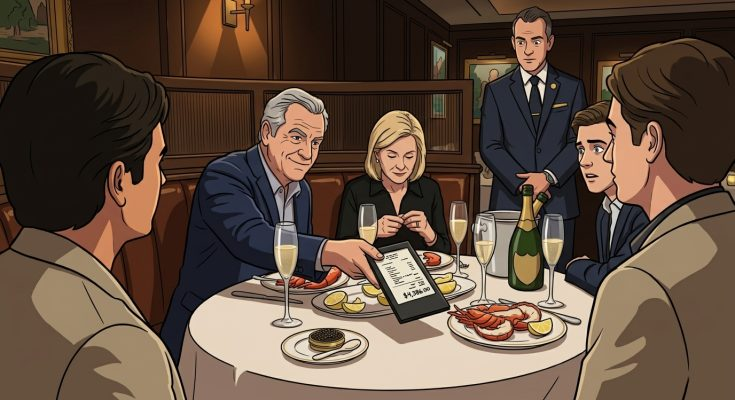
  • “My husband stole my platinum card to take his parents on a trip. When I canceled it, he yelled at me: ‘Reactivate it right now or I’m divorcing you!’, and his mother swore she’d kick me out of the house… I just laughed.”


    They returned three days early.
    They didn’t walk in like a family ashamed or like tired travelers. They walked in the way they always had: making noise, dragging expensive suitcases, complaining about the world as if the world owed them something. Patricia was the first to cross the threshold, wrapped in a cream-colored coat, her lips pursed and her chin held high. Behind her came Jamie, wearing dark sunglasses even though it was already getting dark, and Mauro brought up the rear, dragging two suitcases and talking on the phone to someone at the bank, demanding explanations in a tone that mixed fury and arrogance.
    I was sitting in the living room with a cup of tea in my hands, and Veronica was to my right, elegant and calm, with a black portfolio on her lap. Across from us, a notary was waiting. And by the window, looking solemn, stood my company’s forensic accountant.
    The scene threw them off for only a second.
    Then Patricia reacted.
    “What is the meaning of this?” she snapped, dropping her bag onto an armchair as if she still had the right to own the air in the room. “What are these people doing in my house?”
    I smiled.
    “That’s exactly what I’d like to clarify, Patricia. Because this is not your house.”
    Mauro hung up the phone and looked at me with bloodshot eyes.
    “What the hell is wrong with you? You put us through a horrifying humiliation. They detained us, froze our hotel, made us pay out of pocket for emergencies, my dad almost passed out from the rage, and you’re just sitting here drinking tea as if you hadn’t done anything.”“I did exactly what I had to do when someone steals my card and spends hundreds of thousands of dollars without authorization.”

    Jamie let out a venomous laugh.
    “Oh, please. You’re his wife. It wasn’t theft. It was family support.”
    Veronica finally opened her portfolio and set a folder on the table.
    “Legally, it was theft,” she said with such impeccable serenity that Jamie lost her smile. “It was also breach of trust, misuse of financial instruments, and, regarding subsequent transactions, potential corporate fraud.”
    Mauro blinked.

    “Who is this woman?”
    “The attorney for the person you have been stealing from for years,” I replied.
    Patricia stepped forward, indignant.
    “Watch your words, Rebecca. Nobody has stolen anything from you. My son has given you a last name, stability, and social standing.”
    I let out a laugh so clear and sharp that it made everyone uncomfortable.
    “A last name? Mine opened more doors than his did from day one. Stability? Your son can’t keep a checking account stable. Social standing? Patricia, please. The only thing your family has managed to maintain with discipline is a lie.”
    Mauro slammed his suitcase against the floor.
    “Enough. We’re going to talk, just you and me.”
    “No,” I said, and that word sounded like a deadbolt sliding into place. “No more private conversations where you twist the facts to suit yourself.”
    I saw him tense up. Mauro had always hated losing control of the narrative. His favorite trick was to make me doubt my own memory, my own boundaries, my own anger. But that night, he had nowhere to put his hands.

    Veronica slid several documents toward him.
    “Here are the divorce papers, the request for a financial restraining order, and notice of an internal investigation into the misappropriation of funds from Miller Biotech.”
    The color drained from his face.
    “What?”
    “For eleven months,” Veronica continued, “periodic amounts were transferred from a corporate account to three shell vendors. This morning, we finished linking those payments to a shell company managed by a straw man connected to you.”
    Jamie’s eyes went wide. Patricia whipped around to face her son.
    “Mauro… what is she talking about?”
    He held up both hands, sweat already beading on his forehead.
    “That’s absurd. It must be an administrative error. I never…”
    The accountant spoke for the first time.
    “We have digital signatures, remote authorizations, and correspondence forwarded from your personal email. It is not an error.”
    The word correspondence hit exactly where it hurt. I saw the exact moment on his face when he realized he could no longer improvise. This wasn’t a marital spat. It was a documented downfall.

    Patricia, however, still didn’t grasp the scale of the fire. She took a step toward me with that old superiority she’d used to crush me for years.

    “You are not going to destroy my son over a temper tantrum. You’re a woman. Marriages go through tests. They get fixed. And if you think you own anything, let me remind you that this house is upheld by our family name.”

    The notary cleared his throat.

    “Forgive me for correcting you, ma’am. The property belongs to the Herrera-Miller Trust. The only living beneficiary is Mrs. Rebecca Miller. Your husband has no ownership stake. Neither do you, nor your children.”

    Patricia stared at him as if he were speaking a foreign language.

    “That can’t be.”

    “It is,” the notary said, dryly. “And there’s more. By virtue of the proceedings initiated, any non-owner resident must vacate the premises by a deadline that expires today, unless expressly authorized by the titleholder.”

    Jamie took off her sunglasses.

    “Are you kicking us out?”

    I looked at her.

    “No, Jamie. I am reclaiming my house.”

    Patricia let out a strangled gasp and turned toward Mauro.

    “Do something.”

    But Mauro was no longer the man screaming from the airport. There was something childish and pathetic in the way his gaze darted between the documents, my lawyer, and the door, searching for an exit that didn’t exist.

    “Rebecca,” he said, changing his tone with a disgusting speed, “honey, this got out of hand. The trip was a silly thing, yes, but you can’t destroy us over that. We can fix it. I’ll pay you back. I’ll sign whatever you want. Let’s talk calmly.”

    “You don’t just owe me for the trip, Mauro.”

    I took a sip of tea and set the cup down on the table with total care.

    “You owe me three years of tolerated humiliations, of money used behind my back, of meetings where you took credit for contracts I closed, of employees pressured to cover your mistakes, of favors demanded in my name, of bank accounts tampered with, and of letting me live with your mother turned into an executioner inside my own home.”

    Patricia exploded.

    “I did you the favor of accepting you! You never fit into our family.”

    I looked at her with all the calm I had left.

    “And I made the mistake of believing I had to be grateful for tolerance where I deserved respect.”

    There was a heavy silence. Then Veronica arranged the last folder.

    “Furthermore,” she said, “we have filed a preemptive complaint for economic and domestic violence. The private bank, the insurance carrier, and two strategic partners have already been notified that Mr. Mauro Miller has no authority to represent or operate on behalf of Rebecca Miller’s company.”

    That was what really triggered him.

    “No!” he roared. “You can’t do that. I have a meeting with the Japanese investors tomorrow.”

    “Not anymore,” I replied. “I canceled it this morning. And I’ve also canceled your access to the corporate office, the country club, the company car, and the credit line you were using as if it were your inheritance.”

    Jamie started to cry. Not out of sadness. Out of rage. Patricia brought a hand to her chest like a soap opera actress offended by life. Mauro, meanwhile, looked at me with naked hatred.

    “Did you plan all of this?”

    “No. You planned it the day you decided to believe that I would never defend myself.”

    Then the doorbell rang.

    Nobody was expecting anyone else. Veronica looked at me briefly, and I nodded.

    The bailiff walked in, accompanied by two private security guards. He held an additional notice in his hand.

    “Mr. Mauro Miller, Mrs. Patricia Salas, and Miss Jamie Miller,” he read in a formal tone, “by instruction of the property owner and based on the granted protective measures, you must vacate the premises immediately, taking only your essential personal belongings. The rest will be subject to inventory.”

    “This is an outrage!” Patricia shouted.

    “No,” I said, standing up for the first time all night. “An outrage was what you did to me, believing my patience was submission.”

    I walked slowly toward Mauro.

    I saw him up close, without the social charm, without his rehearsed smiles, without the comfort of believing himself untouchable. Just a man in debt, a coward, held up for years by the talent of a woman he never respected.

    “You said if I didn’t reactivate the card, you’d divorce me,” I whispered. “Thank you for giving me the idea.”

    He tried to touch my arm. I took a step back.

    “Don’t touch me.”

    “I’m just talking to you.”

    “No. You’re holding me.”

    He must have seen something in my face, because he let go immediately.

    Good.

    Because if he hadn’t, that story would have taken a different path, not the one I wanted to tell.

    I walked out with the suitcase to the living room. Adriana made an indignant noise. Ernest shook his head as if I were an investment that turned out defective.

    “Do as you please,” he said. “But don’t think about coming back later.”

    I left the suitcase by the door. I walked over to the table where the remains of the disaster still lay. Glass, the smell of alcohol, the TV black as a dead eye. I picked up the hammer from the floor.

    The three of them recoiled.

    I didn’t raise my arm.

    I just walked to the kitchen, opened the bag drawer, and tucked it inside a grocery bag. Then I pulled out another folder. The green one. The one I had put together myself when we married with guarantees, manuals, tickets, and invoices for the valuable items that were actually mine or came from my parents.

    I went back to the living room and placed it on the bar.

    “Everything in here is backed up by invoices or transfers. Everything in here is mine or my parents’. Everything goes with me tomorrow.”

    Adriana was on the verge of a heart attack from pure spite.

    “You gold digger!”

    The phrase made me laugh this time. Truly.

    “No, ma’am. A gold digger is Kevin selling other people’s cherries. I would be a gold digger if I stayed here supplying appliances while you call me crazy.”

    David ran a hand over his face.

    “Are you seriously going to do this over a fight?”

    I tucked the folder into my tote bag and grabbed the suitcase.

    “No. I’m doing this for my dignity.”

    I opened the front door.

    Then the doorbell rang.

    One long ring.

    Persistent.

    The four of us stood still.

    We all turned toward the door as if the world could still take one more twist and get even worse.

    Andrew was the only one to react first.

    “I’ll get it.”

    He walked toward the entrance with a firm step. We followed him with our eyes. We heard the latch. The door.

    And then a woman’s voice.

    Old.

    Broken.

    Familiar.

    “I apologize for arriving unannounced… but I was told Rebecca Miller lives here.”

    My entire body went cold.

    I didn’t recognize the face. I didn’t know her.

    The voice.

    It was the exact same voice from the old audio clip that had been in my mother’s paperwork. The one that, years ago, on a poorly recorded cassette, said to someone: “Don’t ask any more about the girl, Rose, they’ve already made their life.”

    Andrew took a step back.

    Standing in the doorway was a very elderly woman, frail, leaning heavily on a cane, her hair dyed an impossible shade of jet black, and a brown manila folder clutched tightly against her chest.

    Rebecca saw her.

    And the little bit of air she had left vanished.

    “No…” she whispered.

    The woman locked her eyes onto her.

    “Yes, honey. It’s time.”

    I felt my heart crawl up into my throat.

    “Who is she?” I asked.

    The old woman looked at me.

    And with a calm that scared me more than any crying ever could, she replied:

    “The only person alive who saw your mother hand Charlotte over… and the same person who signed the forged paperwork so the child would end up where she never should have grown up.”….
    “The Woman At The Door”

    The old woman stood motionless in the doorway.
    Thin.
    Fragile.
    One trembling hand wrapped around a black cane while the other clutched a worn brown folder against her chest like something inside it could still destroy lives.
    Nobody spoke.
    Not even Patricia.
    And that alone made the room feel wrong.
    Rebecca had gone completely pale beside me. Her eyes remained locked on the woman’s face as if she were trying to force herself to remember something impossible.
    The old woman looked at her slowly.
    Carefully.
    Then her expression broke.
    “Oh God,” she whispered. “You really do look like Rose.”
    Rebecca inhaled sharply.
    “My mother?” she asked.
    The woman nodded once.
    I saw Veronica straighten beside the fireplace immediately.
    Something about this woman had changed the entire atmosphere of the room. Minutes ago the house had been full of shouting, lawyers, threats, humiliation.
    Now it felt like everyone was standing too close to a grave.
    Patricia recovered first.
    “I think there’s been some mistake,” she said coldly. “Who exactly are you?”
    The woman ignored her completely.
    Her eyes never left Rebecca.
    “I wasn’t sure I’d find you alive,” she whispered.
    Mauro let out an irritated breath.
    “Rebecca, enough of this. Whoever this woman is, she clearly needs help.”
    “No,” the old woman replied softly. “What she needs… is the truth.”
    Silence.

    Rebecca swallowed hard.
    “What truth?”
    The old woman took a slow step inside.
    Andrew quietly closed the front door behind her.
    The click of the lock echoed through the room.
    “I apologize for arriving this way,” the woman said. “But after what happened this week… after seeing your name in the news connected to the Miller family… I realized I had run out of time.”
    Rebecca frowned.
    “You know about Mauro?”
    The woman gave a sad smile.
    “Child… I know things about your life that even you don’t know.”
    Jamie crossed her arms dramatically.
    “Oh, fantastic. Now we have crazy old women making prophecies.”
    “Jamie,” Mauro muttered.
    But even he sounded uneasy now.

    The old woman slowly lowered herself into the armchair near the fireplace. The folder never left her hands.
    Veronica moved closer.
    “Would you like water?”
    “Yes,” the woman whispered. “Thank you.”
    Rebecca still hadn’t moved.
    She looked frozen between fear and curiosity.
    Finally, she stepped forward.
    “How did you know my mother?”
    The old woman looked down at the folder in her lap.
    For several seconds, she said nothing.
    Then carefully…
    she opened it.
    Old photographs.
    Documents.
    Yellowed papers folded with age.
    And on top of them all—
    a small faded picture of a little girl with dark curls.

    Rebecca stared at it.
    Something inside her face changed instantly.
    “Who is that?” she whispered.
    The old woman looked at her sadly.
    “That,” she replied, “is Charlotte.”
    The room became completely silent.
    Rebecca’s lips parted slightly.
    “No…”
    The old woman nodded slowly.
    “Yes.”
    Mauro rubbed his forehead impatiently.
    “Rebecca, this is ridiculous. Charlotte is dead. Your mother told you that years ago.”

    The old woman’s eyes suddenly sharpened.

    “No,” she said quietly. “That’s what she was forced to say.”

    Patricia shifted.

    Small movement.

    But I noticed it.

    So did Veronica.

    Rebecca took another step closer.

    “What are you talking about?”

    The old woman’s hand trembled over the photograph.

    “Your mother loved that little girl more than her own life.”

    Rebecca’s voice cracked.

    “Then why did she give her away?”

    The old woman closed her eyes briefly.

    And when she opened them again, they looked full of old guilt.

    “She didn’t,” she whispered.

    Rebecca stopped breathing.

    The old woman looked directly into her eyes.

    “Your mother didn’t give Charlotte away willingly.”

    Rebecca’s entire body stiffened.

    The room suddenly felt too small.

    Too quiet.

    Too dangerous.

    Then Rebecca finally whispered the question nobody else dared ask.

    “Then who forced her?”

    “The Altered Birth Certificate”

    Nobody answered Rebecca immediately.

    The silence stretched painfully across the room.

    The old woman lowered her eyes to the photograph again as if simply looking at Charlotte hurt her physically.

    Veronica slowly took a seat beside her.

    “Ma’am,” she said carefully, “my name is Veronica Saldana. I’m Rebecca’s attorney. If there’s something you know, now is the time to say it.”

    The woman nodded faintly.

    “I know,” she whispered. “That’s why I came.”

    Rebecca remained standing.

    Arms wrapped around herself now.

    Like she was suddenly cold.

    Mauro looked irritated.

    Patricia looked nervous.

    And Jamie looked completely lost.

    The old woman carefully removed another paper from the folder.

    An old hospital document.

    Folded so many times it looked ready to tear apart.

    Veronica reached for it.

    The moment she opened it, her expression changed.

    Rebecca noticed immediately.

    “What is it?”

    Veronica didn’t answer at first.

    She kept reading.

    Then reading again.

    Finally she looked up slowly.

    “This document was modified.”

    Patricia spoke too quickly.

    “That’s impossible.”

    Everyone looked at her.

    Patricia froze for half a second before forcing a laugh.

    “I mean… old records are often damaged.”

    But Veronica was no longer listening to her.

    She pointed at the paper.

    “Different ink,” she murmured. “Different typing alignment. The surname section was replaced.”

    Rebecca stepped closer.

    “What surname?”

    The old woman looked exhausted suddenly.

    “Charlotte’s.”

    Rebecca stared at her.

    “I don’t understand.”

    “You were never supposed to be separated,” the woman whispered.

    Mauro groaned loudly.

    “Oh for God’s sake. Rebecca, listen to yourself. You’re standing here letting some stranger rewrite your entire life based on old papers.”

    The old woman looked at him sharply.

    “Your wife’s mother spent years searching for her child.”

    That shut him up.

    Rebecca blinked slowly.

    “My mother searched for Charlotte?”

    The woman nodded.

    “For years.”

    Rebecca sat down hard in the nearest chair.

    “She told me Charlotte died.”

    “She lied because she was terrified.”

    Tears filled Rebecca’s eyes immediately.

    The old woman continued quietly:

    “Rose hired private investigators. She traveled under fake names. She reopened hospital inquiries three different times. She even tried paying former employees to recover sealed files.”

    Veronica looked stunned.

    “She went that far?”

    “She never stopped,” the old woman whispered. “Not once.”

    Rebecca covered her mouth.

    I could actually see memories moving behind her eyes now.

    Broken memories.

    Old moments suddenly changing meaning.

    “My mother…” she whispered. “She used to cry at night.”

    Nobody interrupted her.

    “She thought I was asleep,” Rebecca continued weakly. “Sometimes I’d hear her arguing with my grandfather behind closed doors…”

    The old woman lowered her head sadly.

    “She blamed herself every day she stayed alive.”

    Jamie shifted uncomfortably.

    “This is getting insane.”

    But nobody paid attention to her.

    Veronica kept studying the document.

    Then suddenly she went still.

    Completely still.

    Rebecca noticed instantly.

    “What now?”

    Veronica looked up slowly.

    “The hospital registration number doesn’t match the birth certificate.”

    “What does that mean?” Rebecca asked.

    “It means,” Veronica replied carefully, “someone changed the official identity records after Charlotte was born.”

    Rebecca’s face lost color again.

    “No…”

    The old woman nodded weakly.

    “Yes.”

    A terrible silence filled the room.

    Then softly…

    almost like a confession…

    the old woman whispered:

    “Rebecca and Charlotte were never supposed to grow up apart.”

    “Patricia’s Fear”

    Nobody moved after the old woman spoke.

    It felt as if the air itself had stopped.

    Rebecca sat frozen in her chair, staring at the altered birth certificate on the table like her mind could no longer process reality fast enough.

    Mauro suddenly stood.

    “This is enough,” he snapped. “Rebecca, you cannot seriously believe this.”

    His voice sounded stronger now.

    More aggressive.

    Like he was trying to regain control.

    “These are old papers from a confused woman,” he continued. “That’s all.”

    The old woman looked at him calmly.

    “You sound exactly like the men who helped bury the truth.”

    Mauro laughed bitterly.

    “Oh please.”

    But there was tension in his jaw now.

    Real tension.

    Rebecca looked up slowly.

    “My mother searched for Charlotte her entire life?”

    The old woman nodded.

    “Yes.”

    “Then why didn’t she tell me?”

    The woman hesitated.

    And that hesitation terrified me.

    Because it looked like fear.

    Old fear.

    The kind that survives decades.

    “She was warned,” the old woman whispered finally.

    Rebecca’s eyes narrowed.

    “Warned by who?”

    The woman’s hands tightened around the cane.

    “I can’t say everything yet.”

    “Why not?” Rebecca demanded.

    “Because some of the people involved are still alive.”

    That changed the room again.

    Jamie let out a nervous laugh.

    “You’re acting like this is some conspiracy movie.”

    The old woman ignored her completely.

    Instead, her gaze slowly drifted across the room.

    Across Mauro.

    Across Veronica.

    Across me.

    And then—

    it stopped on Patricia.

    Everything inside the woman froze.

    Patricia noticed immediately.

    So did everyone else.

    For the first time since arriving, Patricia looked genuinely uncomfortable.

    “You keep staring at me,” she snapped defensively. “Why?”

    The old woman’s breathing changed.

    Shallow now.

    Uneven.

    Rebecca noticed it too.

    “What is it?” she whispered.

    The old woman kept staring at Patricia.

    “No…” she murmured faintly.

    Patricia grabbed her purse instantly.

    “I’m leaving. This entire situation is absurd.”

    But the old woman suddenly stood up so quickly her cane nearly slipped.

    “You.”

    Patricia froze.

    The room went completely silent.

    The old woman stared at her with growing horror.

    Like she had just seen a ghost.

    Rebecca slowly rose from her chair.

    “What’s happening?”

    The old woman’s lips trembled.

    Patricia took a step backward.

    And that was the moment everyone understood:
    Patricia knew something.

    “You…” the old woman whispered.

    Patricia’s face turned white.

    The woman pointed at her with shaking fingers.

    “You were there that night too.”….
    “The Hidden Archive”

    Patricia stopped breathing.
    Not dramatically.
    But enough for Rebecca to notice.
    And once Rebecca noticed…
    she couldn’t unsee it.
    The old woman still pointed at her with trembling fingers.
    “You were there,” she whispered again.
    Patricia recovered fast.
    Too fast.
    “You’re insane,” she snapped. “I have no idea who you are.”
    But her voice cracked slightly near the end.
    The old woman laughed weakly.
    A sad laugh.
    “Oh, Patricia… you always did panic when someone remembered too much.”
    Mauro immediately stepped forward.
    “That’s enough.”
    “No,” Rebecca said sharply.
    Everybody looked at her.
    Her eyes were fixed entirely on Patricia now.
    Dark.
    Cold.
    Dangerously focused.
    “You knew about Charlotte?”
    Patricia grabbed her purse tighter.
    “I’m not discussing nonsense invented by senile strangers.”
    Rebecca moved closer.
    “One answer.”
    “Rebecca—”
    “One answer,” she repeated. “Did you know my mother?”
    Patricia looked cornered for the first time in years.
    And she hated it.
    “I met her once or twice,” she muttered.
    The old woman shook her head immediately.
    “Lie.”

    Veronica quietly took out her phone.
    “I think this conversation should be recorded from now on.”
    That made Mauro explode.
    “Oh my God, enough already! Rebecca, you are destroying your entire life over fairy tales.”
    Rebecca slowly turned toward him.
    “No,” she whispered. “I think my life may have been destroyed long before tonight.”
    Silence.
    The old woman carefully sat down again, exhausted.
    “I shouldn’t have waited this long,” she whispered.
    “But after Rose died… I became afraid.”
    Rebecca’s expression softened slightly.
    “My mother trusted you?”
    Tears appeared in the woman’s eyes.
    “She begged me to help her find Charlotte.”
    Rebecca closed her eyes briefly.
    Pain crossed her face so openly that even Jamie stopped talking.
    The old woman reached into the folder again.

    This time she removed a small brass key attached to a faded motel tag.
    Room 214.
    Lakeview Storage.
    Rebecca frowned.
    “What is that?”
    “A storage unit,” the woman whispered. “Your mother rented it under another name.”
    Veronica straightened immediately.
    “What’s inside?”
    The old woman looked directly at Rebecca.
    “Everything she found before they stopped her.”
    The room became still again.
    Mauro scoffed loudly.
    “This is absurd.”
    But nobody listened to him anymore.
    Rebecca took the key slowly.
    Her fingers trembled slightly.
    “Stopped her?” she whispered.
    The old woman hesitated.
    Too long.

    Then finally:
    “Rose got too close to the truth.”
    A cold feeling crawled down my spine.
    Rebecca’s voice became barely audible.
    “What truth?”
    The woman looked terrified now.
    As if even speaking about it was dangerous.
    “That Charlotte didn’t disappear randomly.”
    Rebecca stared at her.
    “What does that mean?”
    The old woman leaned closer.
    “It means someone planned it.”

    “The Storage Unit”

    Rain started falling before we even left the house.
    Heavy rain.
    The kind that blurred traffic lights and made the city look haunted.
    Rebecca drove herself.
    Neither Veronica nor I argued with her.
    She hadn’t spoken once during the entire drive.
    Not after Patricia locked herself in the guest room.
    Not after Mauro started yelling again.
    Not after the old woman whispered:

    “Your mother got too close.”

    The storage facility sat near the industrial edge of the city.
    Old.
    Almost forgotten.
    Rebecca tightened her grip on the steering wheel while staring at the rusted sign outside.

    Lakeview Storage.

    Unit 214.

    Exactly like the motel tag.

    “You okay?” Veronica asked softly.

    Rebecca nodded too quickly.

    “No.”

    That honesty hurt more than pretending.

    We walked through narrow concrete hallways while fluorescent lights buzzed overhead.

    Unit 214 waited near the back.

    Small.

    Gray.

    Ordinary.

    Rebecca stared at the lock for several seconds before sliding the brass key inside.

    Her hand shook.

    Then—

    click.

    The metal door rolled upward slowly.

    Dust filled the air immediately.

    And inside…

    boxes.

    Dozens of them.

    Carefully labeled.

    Photos.
    Letters.
    Hospital copies.
    Cassette tapes.
    Newspaper clippings.

    Rebecca stepped inside like someone entering a grave.

    “Oh my God…”

    Veronica immediately crouched beside one of the boxes.

    “These are investigation records.”

    I watched Rebecca lift an old photograph with trembling fingers.

    Her mother.

    Younger.

    Crying outside a hospital.

    On the back someone had written:

    “She says they took the wrong child.”

    Rebecca stopped breathing.

    Veronica looked up sharply.

    “What?”

    Rebecca handed her the photo silently.

    Veronica’s face changed instantly.

    “That’s impossible…”

    But another thing caught Rebecca’s attention.

    A red notebook.

    Thin.
    Worn.

    Hidden beneath a stack of folders.

    She opened it carefully.

    Inside were handwritten entries.

    Dates.

    Names.

    Phone numbers.

    And one phrase repeated over and over across multiple pages:

    FIND CHARLOTTE BEFORE THEY DO.

    A chill ran through the room.

    Then Rebecca flipped another page.

    And froze.

    “What is it?” I asked.

    She looked up slowly.

    Terrified.

    “There are recent entries.”

    Silence.

    Veronica stepped closer.

    “That’s impossible. Your mother died years ago.”

    Rebecca pointed at the final page.

    Fresh ink.

    Recent date.

    Only three months old.

    And beneath it:

    SHE’S STILL ALIVE.

    “The Missing Records”

    Rebecca didn’t sleep that night.

    None of us did.

    By morning, Veronica had spread dozens of documents across Rebecca’s dining room table.

    Hospital records.
    Legal filings.
    Adoption requests.
    Private investigator notes.

    But something was wrong.

    Very wrong.

    “These files have gaps,” Veronica muttered.

    Rebecca sat across from her wearing the same clothes from yesterday.

    Eyes red.
    Hands cold.

    “What kind of gaps?”

    Veronica tapped several pages.

    “Missing years. Missing signatures. Entire sections removed.”

    I frowned.

    “Deleted?”

    “No,” Veronica said quietly. “Cleaned.”

    Rebecca looked up slowly.

    “Meaning?”

    “Meaning somebody with authority wanted this history erased professionally.”

    The room went silent again.

    Rebecca leaned back weakly.

    Suddenly memories started returning to her in pieces.

    Small things.

    Her mother arguing with her grandfather late at night.

    A locked room nobody could enter.

    Her mother once calling her:

    “my surviving daughter.”

    At the time Rebecca thought it was grief talking.

    Now…

    she wasn’t sure anymore.

    “I remember something,” Rebecca whispered suddenly.

    Veronica looked up.

    “My mother used to hide photographs inside winter coat pockets.”

    “Why?”

    “She said walls listen.”

    A terrible silence followed that sentence.

    Veronica slowly opened another folder.

    Then stopped.

    “Rebecca…”

    Her voice sounded strange.

    “There’s a sealed court reference here.”

    Rebecca frowned.

    “What kind?”

    “A family custody hearing.”

    My stomach twisted instantly.

    “About Charlotte?”

    Veronica looked pale.

    “There’s no child name listed.”

    “Then whose hearing was it?”

    Veronica swallowed hard.

    “The case number was removed.”

    Rebecca suddenly stood.

    “Can we recover it?”

    “Maybe,” Veronica replied. “If records still exist.”

    Rebecca laughed bitterly.

    “And if they haven’t been erased too.”

    Nobody answered.

    Then her phone vibrated.

    Unknown number.

    Rebecca hesitated before answering.

    “Hello?”

    Heavy breathing.

    Then a woman’s voice whispered:

    “Stop looking for Charlotte.”

    Rebecca froze.

    The voice continued:

    “Some children were never meant to be found.”

    The call disconnected.

    Nobody moved.

    Then Veronica’s laptop chimed suddenly.

    New banking notification.

    Rebecca frowned.

    “What now?”

    Veronica stared at the screen.

    Confused.

    Then horrified.

    “There’s financial activity,” she whispered.

    Rebecca stepped closer.

    “What kind of activity?”

    Veronica looked up slowly.

    “The identity connected to Charlotte’s original records…”

    She swallowed hard.

    “…was used three days ago.”…
    “Mauro’s Desperation”

    Rebecca stared at the banking notification like the screen had stopped being real.
    The identity connected to Charlotte’s original records was active.
    Three days ago.
    Three.
    Days.
    Ago.
    “That’s impossible,” Mauro snapped immediately.
    Nobody had even noticed him walk back into the room.
    His hair was messy.
    His shirt wrinkled.
    His face pale from an entire night without sleep.
    But what caught my attention was this:
    He looked scared.
    Not angry.
    Scared.
    Veronica slowly turned the laptop toward herself again.
    “The account activity came from a private medical payment processor,” she murmured. “Someone using Charlotte’s old identity paid for a prescription.”
    Rebecca’s breathing became uneven.
    “She’s alive…”
    Mauro slammed both hands against the table.
    “No. No, this is exactly what somebody wants you to believe.”
    Rebecca looked up sharply.
    “What does that mean?”
    “It means you’re being manipulated,” he snapped. “Can’t you see that?”
    But Veronica narrowed her eyes.
    “You seem extremely nervous about this.”
    Mauro laughed harshly.
    “Because this entire situation is insane.”
    “No,” Rebecca whispered. “I think you’re afraid.”
    That hit him hard.
    His jaw tightened instantly.
    “You want to know what I’m afraid of?” he barked. “I’m afraid you’re destroying everything over fairy tales and forged records.”
    Rebecca stood slowly.
    “No,” she said again. “You’re afraid because this is real.”
    Silence.
    For one terrible second, Mauro looked like he wanted to say something else.
    Something dangerous.
    But instead he grabbed his jacket.

    “I’m done with this.”
    Then he walked out.
    Too quickly.
    Veronica watched the door close.
    “He knows something.”
    Rebecca nodded faintly.
    “Yes.”
    And for the first time since this nightmare began…
    I think she truly believed it.

    Three hours later, Mauro sat alone inside his parked car across the street from Miller Biotech.
    Rain slid slowly across the windshield.
    His hands shook while dialing a number from memory.
    The person answered immediately.
    “You shouldn’t be calling me,” the voice said coldly.
    “We have a problem,” Mauro whispered.
    A pause.
    Then:
    “How much does she know?”

    Mauro looked toward the company building.

    “She found the storage unit.”

    Silence.

    Long silence.

    Then the voice became dangerous.

    “And the records?”

    “She has some of them.”

    “Some?”

    Mauro slammed his fist against the steering wheel.

    “I don’t KNOW how many!”

    Another silence.

    Then quietly:

    “You were told years ago to stay away from this.”

    Mauro closed his eyes.

    “I didn’t think the old woman would talk.”

    “That was your first mistake.”

    Mauro swallowed hard.

    “And my second?”

    The answer came instantly.

    “Marrying Rebecca.”

    The line disconnected.

    Mauro stared at the dead phone screen.

    Sweat rolled slowly down his temple.

    Because for the first time in years…

    he realized he was no longer being protected.

    “The Break-In”

    Rebecca returned to her office the next morning.

    Everything felt different now.

    The glass walls.
    The employees.
    The elevators.

    Even the silence inside the executive floor felt wrong.

    Like somebody had already been there before her.

    Veronica noticed it too.

    “The door was unlocked,” she murmured.

    Rebecca froze.

    She always locked her office personally.

    Always.

    Slowly, she stepped inside.

    Nothing looked damaged.

    No broken drawers.
    No overturned furniture.
    No shattered glass.

    Everything appeared perfectly normal.

    Which somehow made it worse.

    Veronica moved carefully toward Rebecca’s desk.

    Then stopped.

    “Rebecca…”

    Her voice dropped immediately.

    Rebecca walked closer.

    The bottom drawer was open slightly.

    Only slightly.

    But enough.

    Rebecca’s stomach tightened.

    She yanked it open completely.

    Empty.

    “No…”

    Veronica frowned.

    “What was inside?”

    Rebecca looked pale.

    “A file.”

    “What kind of file?”

    Rebecca swallowed hard.

    “My mother’s private investigator records.”

    Silence.

    Veronica’s expression darkened instantly.

    “Someone knew exactly what to take.”

    Rebecca spun toward the office door.

    “Security footage.”

    Twenty minutes later they sat inside the surveillance room.

    The technician looked nervous.

    “Ma’am… I don’t understand.”

    “Show me last night,” Rebecca ordered.

    He clicked through recordings.

    Parking garage.
    Lobby.
    Elevators.

    Everything normal.

    Then midnight.

    The executive floor camera flickered once.

    Twice.

    And then—

    black screen.

    For exactly fourteen minutes.

    Veronica stared at it.

    “That’s not random.”

    The technician looked confused.

    “But there’s more.”

    He rewound another angle.

    Loading dock camera.

    A figure wearing a dark coat exited the building at 12:18 AM.

    Face hidden.
    Hat low.

    But Rebecca suddenly leaned forward.

    “Stop.”

    The technician froze the frame.

    Rebecca’s heart started pounding.

    The figure held something under one arm.

    A red file.

    Her missing file.

    Veronica narrowed her eyes.

    “Can you zoom?”

    The image blurred badly.

    But one detail remained visible.

    A silver watch.

    Rebecca knew that watch.

    Because she bought it herself three years ago.

    For Mauro.

    BOOM.

    “The Other Girl”

    Rebecca couldn’t stop staring at the frozen image.

    The silver watch glimmered faintly beneath the security light.

    Mauro’s watch.

    The one she gave him during their first wedding anniversary trip to Florence.

    The same trip where he held her hand and promised:

    “You’ll never have to face anything alone again.”

    Rebecca almost laughed at the memory now.

    Veronica slowly folded her arms.

    “He broke into your office.”

    Rebecca nodded numbly.

    “But why steal only that file?”

    Neither of them answered immediately.

    Because they both already knew.

    The file contained something dangerous.

    Something bigger than fraud.
    Bigger than the divorce.

    Something connected to Charlotte.

    Rebecca suddenly remembered the notebook from the storage unit.

    FIND CHARLOTTE BEFORE THEY DO.

    Before they.

    Plural.

    Not one person.

    Multiple.

    Her chest tightened instantly.

    “Veronica…”

    “Yes?”

    “What if Charlotte was hiding?”

    Veronica looked at her carefully.

    “You think she knows someone is searching for her?”

    Rebecca’s voice dropped lower.

    “I think someone may have spent years making sure she stayed hidden.”

    Silence.

    Then Rebecca remembered something else.

    A memory from childhood.

    Small.

    Strange.

    But suddenly important.

    “There was another bedroom,” she whispered.

    Veronica frowned.

    “What?”

    “In my grandfather’s estate.”

    Rebecca stared into space now.

    “When I was little, there was a locked room near the east hallway.”

    The memory became clearer while she spoke.

    “A pink blanket.”
    “A music box.”
    “A framed drawing signed with the letter C.”

    Her breathing became uneven.

    “My mother used to stand outside that room crying.”

    Veronica went still.

    “Rebecca…”

    “She told me it belonged to ‘the other girl.’”

    The room became completely silent.

    Rebecca slowly sat down.

    “Oh my God.”

    She had forgotten it.

    Forgotten all of it.

    Or maybe…

    forced herself to.

    Then Veronica’s phone rang.

    Unknown number.

    She answered carefully.

    “Hello?”

    Nobody spoke.

    Only breathing.

    Then a distorted voice whispered:

    “Tell Rebecca to stop opening graves.”

    The line disconnected instantly.

    Veronica lowered the phone slowly.

    Rebecca looked terrified now.

    “Who was that?”

    Veronica’s expression hardened.

    “Someone watching us.”

    “The Burned File”

    That night, Rebecca refused to stay alone.

    Not because she was weak.

    Because for the first time in her life…

    she understood that this wasn’t just family drama anymore.

    Someone was actively trying to erase the past.

    And possibly willing to hurt people to keep it buried.

    Rain hammered against the windows while Veronica reviewed copied documents in the dining room.

    Rebecca sat silently nearby, staring at old photographs again.

    Rose holding a child.
    Rose crying outside a hospital.
    Rose standing beside a man whose face had been scratched out violently.

    Rebecca touched the damaged photo carefully.

    “Who are you?” she whispered.

    Then suddenly—

    the alarm system exploded.

    Both women jumped.

    Motion detection.
    Rear entrance.

    Veronica stood instantly.

    “Stay here.”

    “No.”

    Rebecca grabbed the fireplace poker beside the mantel.

    Together they moved through the dark hallway.

    The security lights outside flashed violently through the rain.

    The back door stood slightly open.

    Cold air poured inside.

    Veronica cursed under her breath.

    “Someone’s here.”

    Rebecca’s heart pounded so hard it hurt.

    Then she smelled it.

    Smoke.

    “Oh my God…”

    They ran toward the study.

    Rebecca stopped dead in the doorway.

    Fire.

    Small.
    Controlled.

    Burning directly inside the fireplace.

    But nobody had lit it earlier.

    Veronica grabbed the iron poker immediately and pulled the burning papers apart.

    Rebecca’s stomach dropped.

    Red folders.

    Investigation documents.

    Her missing file.

    Or what remained of it.

    Someone had broken into the house.

    Just to destroy the evidence.

    Rebecca stared at the flames in horror.

    Then Veronica suddenly froze.

    “What?”

    Veronica carefully pulled out one half-burned paper.

    Only part of the page survived.

    But it was enough.

    Rebecca stepped closer.

    And saw a photograph attached to the report.

    A woman.

    Dark hair.
    Sharp eyes.
    Maybe mid-thirties.

    Alive.

    Across the bottom someone had typed:

    CHARLOTTE HERRERA
    Confirmed sighting — six months ago.

    Rebecca stopped breathing.

    Because the woman in the photograph looked almost exactly like her….
    “The Woman In The Photograph”

    Rebecca couldn’t stop staring at the burned photograph.
    The woman’s face looked too familiar.
    Too impossible.
    Same dark eyes.
    Same cheekbones.
    Same expression Rebecca saw every morning in her own mirror.
    Veronica slowly lowered the half-burned page onto the table.
    The fire still crackled softly behind them.
    Neither woman noticed anymore.
    “This was taken six months ago,” Veronica whispered.
    Rebecca’s lips parted slightly.
    “She’s alive…”
    The words barely sounded real.
    Veronica carefully studied the surviving text again.
    “Confirmed sighting,” she read quietly. “No location listed. Most of the report was destroyed.”
    Rebecca suddenly grabbed the paper.
    “Can this be restored?”
    “Maybe partially.”
    “Then do it.”
    Her voice cracked for the first time.
    Not from weakness.
    From hope.
    Dangerous hope.
    Rebecca sat down slowly while rain battered the windows behind them.
    Her hands shook violently now.
    “All these years…” she whispered. “My mother was telling the truth.”
    Veronica watched her carefully.
    “You need to prepare yourself emotionally.”
    Rebecca laughed weakly.
    “For what?”
    “For the possibility that Charlotte may not want to be found.”
    Silence.
    That possibility hit harder than anything else so far.
    Rebecca lowered her eyes.
    “She thinks we abandoned her.”
    Nobody spoke after that.
    Because deep down…
    they both feared it might be true.

    Across the city, Mauro sat inside a private parking garage beneath an abandoned office tower.
    His face looked exhausted.|
    Sweat soaked the collar of his shirt despite the cold.
    A black SUV waited nearby with its headlights off.
    The passenger window slowly lowered.
    “You failed,” a man’s voice said calmly from inside.
    Mauro clenched his jaw.
    “I destroyed the file.”
    “Not all of it.”
    Mauro said nothing.
    The man inside the SUV sighed softly.

    “You were useful once.”

    “I can still fix this.”

    “Can you?”

    Mauro stepped closer desperately.

    “She found a photograph. That’s all.”

    “And that alone is enough to destroy people.”

    Mauro’s breathing became uneven.

    “Who is Charlotte really?”

    Silence.

    Then finally:

    “The wrong child.”

    Mauro frowned.

    “What does that mean?”

    But the SUV window rolled back up slowly.

    Conversation over.

    The vehicle disappeared into the darkness seconds later.

    Leaving Mauro standing alone.

    Terrified.

    “The Betrayal Inside”

    The next morning, Rebecca walked into Miller Biotech feeling watched.

    Employees lowered their eyes too quickly.
    Conversations stopped when she passed.
    Phones disappeared beneath desks.

    Something had changed.

    And she felt it immediately.

    Veronica noticed too.

    “The rumor spread,” she murmured.

    Rebecca frowned.

    “What rumor?”

    Nobody answered her directly.

    Until they entered the executive conference room.

    A newspaper sat on the table.

    Folded open.

    Huge headline.

    BIOTECH EXECUTIVE UNDER INVESTIGATION FOR FAMILY FRAUD

    Rebecca stopped cold.

    “What the hell is this?”

    Veronica grabbed the paper immediately.

    The article was brutal.

    Anonymous sources.
    Financial accusations.
    References to missing family records.
    Hints of inheritance manipulation.

    But one line froze Rebecca completely:

    Sources inside Miller Biotech claim Rebecca Miller concealed evidence tied to an ongoing identity investigation.

    Inside Miller Biotech.

    Rebecca’s stomach dropped.

    Someone inside the company leaked information.

    “No,” she whispered.

    Veronica’s expression darkened instantly.

    “This article contains confidential details.”

    Rebecca slowly looked around the empty conference room.

    Then realization hit.

    “They’re inside my company.”

    Before Veronica could answer—

    the conference room door opened.

    Daniel Cho stepped inside.

    Rebecca’s senior financial analyst.

    Young.
    Quiet.
    Brilliant.

    And suddenly very pale.

    Rebecca narrowed her eyes.

    “Daniel.”

    He swallowed hard.

    “We need to talk.”

    Something inside Rebecca immediately went cold.

    Veronica crossed her arms.

    “About what?”

    Daniel shut the door behind him carefully.

    Then looked directly at Rebecca.

    “I think someone’s been accessing your private investigation files from inside the executive server.”

    Silence.

    Rebecca stared at him.

    “What?”

    Daniel looked terrified now.

    “I found hidden logins.”

    Veronica stepped forward immediately.

    “Whose?”

    Daniel hesitated.

    Too long.

    Rebecca noticed instantly.

    “Say it.”

    Daniel’s face lost color.

    “The access credentials belong to someone in your legal department.”

    “The Deleted Emails”

    Rebecca sat motionless.

    Legal department.

    Her eyes slowly moved toward Veronica.

    Veronica immediately understood.

    And looked furious.

    “No,” she said sharply. “Absolutely not.”

    Daniel raised both hands quickly.

    “I’m not accusing anyone directly.”

    “Then explain yourself carefully,” Veronica snapped.

    Daniel swallowed hard.

    “The login credentials originated from an internal legal access point.”

    Rebecca’s chest tightened painfully.

    “Could someone fake that?”

    “Yes,” Daniel admitted. “But whoever did it knew your system extremely well.”

    Veronica grabbed the printed server logs from his hands.

    Her face darkened more with every page.

    “These deletions happened over months,” she murmured.

    Rebecca looked sick.

    “Deleted what?”

    Daniel hesitated again.

    Then quietly:

    “Emails connected to Charlotte.”

    Silence.

    Heavy silence.

    Rebecca slowly sat down.

    “My mother’s records?”

    Daniel nodded weakly.

    “And communications with private investigators.”

    Rebecca closed her eyes.

    Someone had been erasing evidence from inside her own company for years.

    Not recently.

    Years.

    Veronica looked up sharply.

    “Who had full archive authority before Rebecca became CEO?”

    Daniel answered immediately.

    “Former executive counsel.”

    Rebecca frowned.

    “Martin Keller?”

    Daniel nodded.

    A horrible memory crossed Rebecca’s face instantly.

    Martin Keller.

    Her grandfather’s longtime attorney.

    The man who resigned suddenly after Rose died.

    Veronica’s expression changed.

    “When did he leave?”

    “Eight years ago.”

    “And where is he now?”

    Daniel looked uncomfortable.

    “Nobody knows.”

    The room became very quiet.

    Rebecca whispered slowly:

    “My mother hated him.”

    Veronica looked at her.

    “Why?”

    Rebecca stared into space again.

    “She once told me…” Rebecca swallowed hard, “…that some people smile while helping bury families.”

    A chill moved through the room.

    Then Daniel looked nervous again.

    “There’s something else.”

    Rebecca’s stomach twisted.

    “What now?”

    Daniel reached into his folder slowly.

    “I recovered one deleted email before the archive wiped completely.”

    Veronica held out her hand instantly.

    Daniel gave her the paper.

    Veronica read silently.

    Then froze.

    Rebecca stood.

    “What?”

    Veronica looked genuinely shaken.

    “The email came from your mother.”

    Rebecca’s heart started pounding violently.

    “To who?”

    Veronica looked up slowly.

    “Charlotte.”..
    “The Email”

    Rebecca grabbed the printed email before Veronica could stop her.
    Her hands trembled violently.
    The message was old.
    Very old.
    Sent thirteen years ago.
    From Rose Herrera.
    To an address that no longer existed.
    Rebecca’s breathing became shallow while reading.

    I know they’re watching my calls now.
    I know they intercept the letters.
    But if this reaches you somehow, please believe me:

    I never abandoned you.

    I searched for you every single year.

    I tried to bring you home.

    — Mom

    Rebecca broke.
    Not loudly.
    Not dramatically.
    But something inside her collapsed silently.
    Veronica gently touched her arm.
    “Rebecca…”
    “She knew,” Rebecca whispered.
    Tears rolled down her face.
    “She knew Charlotte was alive.”
    Daniel looked uncomfortable standing there now.
    “There’s more,” he admitted quietly.
    Rebecca looked up slowly.
    “What?”
    Daniel swallowed hard.
    “The email was never sent.”
    Silence.
    Rebecca frowned.

    “What do you mean?”
    “It stayed trapped in the company’s private archive system,” Daniel explained. “Someone intercepted it before delivery.”
    Veronica’s eyes narrowed instantly.
    “So Rose used company servers.”
    Daniel nodded.
    “Which means whoever blocked the message had internal access.”
    Rebecca slowly lowered the paper.
    “My mother tried reaching her…”
    Veronica’s expression hardened.

    “And somebody made sure Charlotte never saw it.”

    The room fell silent again.

    Rebecca suddenly looked exhausted beyond words.

    Years.

    Her mother spent years searching for Charlotte while someone quietly erased every trail behind her.

    Not random sabotage.

    Organized sabotage.

    Daniel shifted nervously.

    “There’s another thing bothering me.”

    Rebecca almost laughed bitterly.

    “Of course there is.”

    Daniel hesitated.

    “The deleted archives weren’t accessed recently.”

    Veronica frowned.

    “What do you mean?”

    Daniel looked pale now.

    “Someone is still actively deleting files.”

    That changed everything.

    Rebecca stared at him.

    “Still?”

    He nodded slowly.

    “As recently as last week.”

    A chill spread through the room.

    Rebecca whispered:

    “Someone inside my company is still protecting this secret.”

    Nobody answered.

    Because nobody could deny it anymore.

    Then suddenly—

    Rebecca’s office door opened.

    Hard.

    All three turned instantly.

    Jamie stood there breathing heavily.

    Mascara smeared.
    Phone in hand.
    Face white with panic.

    Rebecca frowned immediately.

    “What are you doing here?”

    Jamie looked terrified.

    Not angry.

    Terrified.

    “You need to turn on the television,” she whispered.

    “Public Exposure”

    The television screen lit the conference room in cold blue light.

    Every major news channel carried the same headline.

    MISSING HEIRESS MYSTERY CONNECTED TO MILLER FAMILY EMPIRE

    Rebecca felt the blood drain from her face.

    “No…”

    The anchor continued speaking while old photographs flashed across the screen.

    Rose Herrera.
    Mauro.
    Rebecca entering the courthouse.
    Patricia leaving the estate earlier that week.

    Then—

    Charlotte’s burned photograph appeared.

    Rebecca stopped breathing.

    “How did they get that picture?”

    Nobody answered.

    Because they were all thinking the same thing.

    Someone leaked it.

    The reporter continued:

    Sources claim a second daughter connected to the Herrera family may have disappeared under suspicious circumstances years ago.

    Jamie looked near tears now.

    “Mom’s losing her mind downstairs.”

    Rebecca turned sharply.

    “What?”

    “She’s screaming at Mauro,” Jamie whispered. “She thinks he talked.”

    Veronica muted the television instantly.

    “Who leaked this?”

    Daniel looked sick.

    “The timing is too precise.”

    Rebecca nodded faintly.

    “This was planned.”

    Then another headline appeared beneath the first one:

    FORMER EXECUTIVE COUNSEL MARTIN KELLER REPORTED MISSING

    The room froze.

    Rebecca stared at the screen.

    Martin Keller.

    Her grandfather’s old attorney.

    The man connected to the deleted archives.

    Veronica grabbed the remote.

    “Turn the volume back up.”

    The anchor continued:

    Keller disappeared forty-eight hours ago after allegedly withdrawing several sealed legal records from a private archive facility.

    Rebecca’s heart pounded violently now.

    “He took the files.”

    Veronica nodded slowly.

    “And now he’s gone.”

    Jamie suddenly looked terrified again.

    “There’s more.”

    Everyone turned toward her.

    She swallowed hard.

    “Someone’s outside.”

    Rebecca frowned.

    “What?”

    Jamie pointed shakily toward the lobby windows.

    Dark SUVs lined the street below.

    Reporters.
    Cameras.
    Photographers.

    Dozens.

    The scandal had exploded publicly now.

    And it was no longer just about divorce or fraud.

    This had become something much darker.

    Much bigger.

    Rebecca stared silently at the flashing cameras below.

    Then her phone vibrated.

    Unknown number.

    Again.

    She answered carefully.

    “Hello?”

    Static.

    Then a man’s voice whispered:

    “If you want Charlotte alive… stop trusting Veronica.”

    The line disconnected.

    Rebecca slowly lowered the phone.

    Veronica frowned immediately.

    “What did they say?”

    Rebecca looked at her.

    But for the first time since this nightmare began…

    hesitation appeared in her eyes….
    “Don’t Trust Veronica”

    Rebecca kept staring at Veronica after the call ended.
    Only a few seconds passed.
    But they felt endless.
    Veronica noticed immediately.
    And that hurt more than the phone call itself.
    “What did they say?” she repeated carefully.
    Rebecca hesitated.
    Jamie looked between them nervously.
    Daniel stayed silent.
    Outside, camera flashes exploded against the lobby windows like lightning.
    Rebecca finally spoke.
    “They said…” she swallowed hard, “…that if I want Charlotte alive, I should stop trusting you.”
    Silence.
    Absolute silence.
    Veronica’s face hardened instantly.
    “That’s exactly what they want.”
    Rebecca frowned.
    “What?”
    “To isolate you.”
    Veronica stepped closer calmly.
    “Rebecca, listen to me very carefully. Whoever is behind this knows you’re getting closer. They’re trying to break trust between everyone around you.”
    Rebecca wanted to believe her immediately.
    She really did.

    But something terrible had already happened inside her mind:
    doubt.
    Small.
    Ugly.
    Growing.
    Daniel spoke carefully.
    “There’s one thing we know for certain.”
    Everyone looked at him.
    “The person leaking information has access to legal archives.”
    Veronica crossed her arms.
    “And that could include dozens of people over the last decade.”
    “But your department controlled most of the permissions,” Daniel replied quietly.
    The tension between them became instant.
    Sharp.
    Rebecca rubbed her forehead.

    “Enough.”

    Nobody spoke.

    Rebecca looked exhausted now.

    Emotionally exhausted.

    “Right now we focus on Charlotte,” she whispered.

    Veronica softened slightly.

    “Agreed.”

    But the damage was already done.

    Because Rebecca no longer looked at her the exact same way.

    And Veronica knew it.

    Three floors below, reporters crowded outside the building entrance.

    Phones raised.
    Cameras flashing.
    Questions screaming through the glass.

    The news had spread too fast.

    Too strategically.

    Rebecca watched the chaos silently from above.

    Then suddenly—

    her assistant burst into the conference room.

    Panicked.

    “Ms. Miller…”

    Rebecca turned immediately.

    “What now?”

    The assistant looked pale.

    “The board members are demanding an emergency meeting.”

    Daniel cursed quietly under his breath.

    Of course they were.

    Scandal scared investors faster than truth ever could.

    Rebecca straightened slowly.

    “No,” she said.

    Everyone looked at her.

    “No more hiding.”

    For the first time in hours…

    something colder entered her expression.

    Something stronger.

    “Prepare the conference hall,” she ordered.

    Veronica frowned.

    “Rebecca, with the media outside—”

    “Good.”

    That surprised everyone.

    Rebecca grabbed the remote control and unmuted the television again.

    Every channel still discussed Charlotte.

    Missing heiress.
    Altered records.
    Family conspiracy.

    Good.

    Let them talk.

    Rebecca slowly looked toward the windows.

    “They spent years controlling the story,” she whispered. “Now they can lose control publicly.”

    “The Emergency Board Meeting”

    The conference hall looked like a battlefield.

    Executives whispering nervously.
    Phones vibrating nonstop.
    Assistants rushing between tables.

    And at the center of it all—

    Rebecca.

    Calm.

    Cold.

    Beautifully furious.

    The moment she entered, conversations stopped.

    Board Chairman Elliot Greene stood immediately.

    “Rebecca,” he began carefully, “we need answers.”

    She walked directly to the front of the room.

    “You’ll get them.”

    That confidence unsettled everyone more than panic would have.

    The giant television screens behind her still displayed news coverage of the scandal.

    Charlotte’s blurred photograph appeared again.

    Rebecca forced herself not to react emotionally.

    Weakness would destroy her here.

    One board member leaned forward nervously.

    “Are the accusations true?”

    Rebecca looked directly at him.

    “Which accusations?”

    “That your family hid another heir.”

    Murmurs spread instantly.

    Rebecca clasped her hands together slowly.

    “My family,” she said carefully, “has hidden many things from me. I’m discovering that in real time alongside all of you.”

    That honesty shocked the room.

    Another executive spoke up.

    “What about the fraud investigation involving Mauro Miller?”

    Rebecca’s expression became ice.

    “Mauro Miller no longer represents this company in any capacity.”

    “Was company infrastructure used to conceal personal records?”

    That question hit harder.

    Because it was dangerous.

    Rebecca noticed Veronica tense slightly nearby.

    Before she could answer—

    the conference room doors opened.

    Everyone turned instantly.

    Patricia walked inside.

    And she looked destroyed.

    Hair messy.
    Makeup ruined.
    Hands shaking.

    But her eyes?

    Pure rage.

    “Rebecca,” she snapped, ignoring the room full of executives, “you need to stop this immediately.”

    The entire board stared in shock.

    Rebecca looked almost amused.

    “You broke into my board meeting?”

    Patricia marched closer.

    “You have no idea what you’re doing.”

    Rebecca stood slowly.

    “No,” she whispered. “I think for the first time in my life, I finally do.”

    Patricia lowered her voice suddenly.

    Panic leaked through it now.

    “You’re waking up people that should’ve stayed buried.”

    The room went completely silent.

    Rebecca narrowed her eyes.

    “What people?”

    Patricia realized too late what she had just implied.

    Veronica noticed instantly.

    “So there ARE others involved.”

    Patricia stepped backward.

    “I didn’t say that.”

    “Yes,” Rebecca whispered coldly. “You did.”

    “The Journalist”

    By midnight, Rebecca’s scandal had become national news.

    Not business news.

    Not celebrity gossip.

    National obsession.

    Talk shows discussed Charlotte’s disappearance.
    Legal analysts debated altered birth records.
    Social media exploded with theories.

    And one name appeared everywhere now:

    Rebecca Miller.

    Rebecca sat alone in her penthouse office watching the city lights below.

    For the first time all day…

    silence.

    Then a knock interrupted it.

    “Come in.”

    A man entered slowly.

    Tall.
    Dark-haired.
    Calm.

    Maybe late thirties.

    Rebecca immediately recognized him.

    Elias Mercer.

    Investigative journalist.

    Dangerous reputation.
    Pulitzer winner.
    Known for destroying political careers.

    “What are you doing here?” Rebecca asked carefully.

    Elias closed the door behind him.

    “Trying to help you before someone gets killed.”

    Rebecca’s stomach tightened instantly.

    “That’s a dramatic introduction.”

    “I wish it were dramatic.”

    He placed a thick folder on her desk.

    Rebecca frowned.

    “What is this?”

    “Everything I could recover about Charlotte Herrera.”

    Rebecca’s pulse quickened.

    “You’ve investigated this before?”

    Elias looked grim.

    “Three years ago.”

    Rebecca froze.

    “Why?”

    “Because someone paid to make the story disappear.”

    Silence.

    Rebecca slowly opened the folder.

    Inside:
    hospital maps,
    court references,
    financial transfers,
    photographs.

    And one picture made her blood turn cold.

    Martin Keller.

    Standing beside Patricia.

    Twenty years younger.

    Speaking to a man whose face had been blacked out intentionally.

    Rebecca whispered:

    “Who is that?”

    Elias looked directly at her.

    “That,” he said quietly, “is the man your mother feared most.”
    “The Man In The Photograph”

    Rebecca couldn’t stop staring at the blacked-out face.
    The photograph looked old.
    Expensive.
    Deliberately hidden.
    Patricia stood beside Martin Keller outside what looked like a courthouse entrance.
    And next to them—
    the unidentified man.
    Even with his face obscured, something about him felt powerful.
    Dangerous.
    Rebecca slowly looked up at Elias.
    “Who is he?”
    Elias remained silent for several seconds.
    Long enough to make Rebecca uneasy.
    Finally he spoke.
    “I don’t know his real name.”
    Rebecca frowned immediately.
    “What?”
    “He used different identities over the years,” Elias explained. “Financial consultant. Political advisor. Trust manager. Depends which decade you investigate.”
    Veronica crossed her arms tightly.
    “That’s impossible.”
    “No,” Elias said calmly. “It’s expensive.”
    Rebecca’s pulse quickened.
    “You’re saying this man erased people professionally?”
    Elias nodded once.
    “And protected wealthy families from scandals.”
    The room became still.
    Rebecca lowered her eyes toward the photograph again.
    “Why would someone like that care about Charlotte?”
    Elias hesitated.
    Then quietly:
    “Because Charlotte may never have been the intended target.”
    Silence.
    Rebecca looked up sharply.
    “What does that mean?”
    Elias pulled another document from the folder carefully.
    Hospital intake report.
    Partially damaged.

    “There was confusion the night Charlotte disappeared,” he explained. “At least according to the records I recovered.”

    Rebecca’s breathing slowed dangerously.

    “Confusion about what?”

    Elias looked directly at her now.

    “About which child they were supposed to take.”

    The entire room froze.

    Veronica immediately stepped forward.

    “That’s insane.”

    Elias gave a humorless smile.

    “Welcome to your family history.”

    Rebecca felt physically sick now.

    “No…”

    She backed away from the desk slowly.

    “No, that doesn’t make sense.”

    But suddenly…

    memories started surfacing again.

    Her grandfather refusing to let photographers near her as a child.

    Security guards around the estate.

    Her mother crying after phone calls.

    The locked bedroom.

    The whispered phrase:

    “Protect Rebecca.”

    Not Charlotte.

    Rebecca.

    Her knees weakened slightly.

    Veronica caught her arm immediately.

    “Sit down.”

    Rebecca barely heard her.

    “What if…” she whispered weakly.

    Nobody interrupted.

    “What if Charlotte wasn’t hidden from us…”

    Her voice broke.

    “What if I was?”

    “The Press Conference”

    By morning, every news network in the country had gathered outside Miller Biotech.

    Satellite trucks lined the street.
    Helicopters circled overhead.
    Reporters screamed questions through barricades.

    And standing behind tinted glass inside the executive floor—

    Rebecca watched it all silently.

    Veronica approached carefully.

    “You don’t have to do this.”

    “Yes,” Rebecca replied softly. “I do.”

    Because hiding no longer protected anyone.

    Maybe it never had.

    Daniel entered the room carrying his tablet.

    “You’re trending globally now.”

    Rebecca almost laughed.

    “What a nightmare.”

    Daniel hesitated.

    “There’s more.”

    Rebecca looked at him tiredly.

    “What now?”

    “The board wants you removed temporarily.”

    Silence.

    Veronica cursed quietly.

    “Cowards.”

    Daniel nodded faintly.

    “They’re afraid the scandal will destroy investor confidence.”

    Rebecca stared through the glass toward the reporters below.

    Then slowly…

    she smiled.

    Not warmly.

    Not happily.

    Dangerously.

    “Good,” she whispered.

    Veronica frowned.

    “Good?”

    Rebecca turned toward them both.

    “For years these people survived because everyone stayed quiet.”

    She picked up Charlotte’s photograph from the desk carefully.

    “That ends today.”

    The press conference exploded before it even started.

    Cameras flashing.
    Voices shouting.
    Security struggling to control the crowd.

    Then Rebecca stepped onto the stage.

    And the entire room fell silent.

    She wore black.

    Simple.
    Elegant.
    Severe.

    Like someone attending a funeral.

    Maybe she was.

    The funeral of her old life.

    Rebecca stepped behind the podium slowly.

    Hundreds of cameras pointed directly at her.

    One reporter shouted immediately:

    “Is Charlotte Herrera alive?”

    Another:
    “Did your family hide a child?”

    “Was your company involved in evidence destruction?”

    Rebecca raised one hand calmly.

    Silence slowly returned.

    Then she spoke.

    “My entire life,” she said quietly, “I was told a story about my family.”

    Every camera focused harder.

    “I believed that story because the people I loved told it to me.”

    Her voice remained steady.

    “But over the last few days, I discovered something terrifying.”

    She lifted the altered birth certificate slowly.

    “This document was forged.”

    Gasps spread instantly.

    Rebecca continued:

    “A child disappeared. Records were erased. Evidence was hidden. And multiple people with power helped bury the truth.”

    The room exploded with shouting questions.

    Then suddenly—

    movement near the back exit.

    Rebecca stopped speaking.

    Security started yelling.

    A man pushed through the crowd violently.

    Old.
    Panicked.
    Bleeding from one side of his face.

    Martin Keller.

    The missing attorney.

    Rebecca’s heart nearly stopped.

    Martin looked directly at her with pure terror.

    Then screamed:

    “THEY KNOW YOU REMEMBERED.”

    And seconds later—

    a gunshot echoed through the room….
    “The Gunshot”

    Screaming erupted instantly.
    Reporters ducked beneath tables.
    Cameras crashed onto the floor.
    Security agents shoved people toward exits.
    Rebecca stood frozen behind the podium.
    The gunshot still echoed inside her skull.
    Martin Keller collapsed near the back row.
    Blood spread across his shoulder while terrified journalists crawled across the floor trying to escape.
    “DOWN!” security screamed.
    Veronica grabbed Rebecca violently.
    “Move!”
    But Rebecca couldn’t stop staring at Martin.
    Because he was still alive.
    And trying desperately to say something.
    The shooter was already gone.
    Vanished inside the chaos.
    Rebecca pulled away from Veronica suddenly.
    “Rebecca!” Veronica shouted.
    Too late.
    Rebecca ran toward Martin.
    People screamed at her to stop.
    Security tried blocking her.
    Flashbulbs exploded everywhere.
    But Rebecca dropped beside the injured attorney anyway.
    Martin grabbed her wrist instantly.
    Hard.
    Terrified eyes locked onto hers.
    “You have to listen,” he whispered painfully.
    Blood covered his trembling hand.
    Rebecca leaned closer.

    “Who did this?”

    Martin shook his head weakly.

    “No time…”

    His breathing became ragged.

    “They lied to your mother.”

    Rebecca’s pulse pounded violently.

    “What lies?”

    Martin’s eyes filled with panic.

    “Charlotte was never supposed to disappear.”

    Rebecca froze.

    “What?”

    Martin tried sitting up slightly.

    Security crowded around them now.

    Sirens screamed outside.

    But Martin only looked at Rebecca.

    “They took the wrong girl.”

    Everything inside Rebecca stopped.

    “No…”

    Martin coughed painfully.

    “Your mother figured it out too late.”

    Rebecca stared at him in horror.

    “What are you saying?”

    Martin’s fingers tightened around her wrist.

    “They were supposed to take YOU.”

    “The Wrong Child”

    The emergency room hallway smelled like bleach and panic.

    Police officers crowded every entrance.
    Reporters waited outside the hospital gates.
    Phones rang nonstop.

    And inside a private waiting room—

    Rebecca sat motionless.

    Martin’s words replayed inside her head endlessly.

    They were supposed to take YOU.

    Veronica paced nearby.

    “This changes everything.”

    Rebecca laughed weakly.

    “I don’t even know what ‘everything’ is anymore.”

    Daniel entered carrying coffee nobody touched.

    “The police are asking questions.”

    Rebecca looked up slowly.

    “About the shooting?”

    Daniel hesitated.

    “And about Charlotte.”

    Of course.

    Rebecca lowered her eyes again.

    Charlotte.

    A woman she never met.

    A ghost that somehow controlled her entire life.

    Then suddenly—

    another memory surfaced.

    Sharp this time.

    Painfully sharp.

    Rebecca whispered:

    “The fire.”

    Veronica stopped pacing.

    “What?”

    Rebecca stared into space.

    “When I was seven… there was a fire at my grandfather’s estate.”

    Daniel frowned.

    “You never mentioned that.”

    “Because nobody talked about it afterward.”

    The memory became clearer while she spoke.

    Smoke.
    Security guards.
    Her mother screaming someone’s name.

    Not Rebecca.

    Charlotte.

    Rebecca’s breathing became uneven.

    “My mother thought Charlotte was inside the house.”

    Veronica slowly sat beside her.

    “What happened?”

    Rebecca swallowed hard.

    “My grandfather locked me in his office while everyone searched the estate.”

    Silence.

    Then quietly:

    “He kept saying: ‘Protect the surviving girl.’”

    Daniel looked disturbed now.

    “Surviving?”

    Rebecca nodded weakly.

    “At the time I thought he meant after the fire.”

    But now…

    now she wasn’t sure.

    The waiting room door suddenly opened.

    A detective entered.

    Tall.
    Gray-haired.
    Serious expression.

    “Mrs. Miller,” he said carefully, “Martin Keller is asking for you.”

    Rebecca stood immediately.

    “Is he conscious?”

    “For now.”

    That answer terrified everyone.

    Martin looked smaller in the hospital bed.

    Older.
    Weaker.
    Closer to death.

    Machines beeped softly around him.

    He motioned weakly for Rebecca to come closer.

    She stepped beside him slowly.

    Martin’s voice barely worked now.

    “Your grandfather…” he whispered painfully, “…made terrible mistakes.”

    Rebecca stared at him coldly.

    “You helped him.”

    Tears filled Martin’s eyes.

    “Yes.”

    The honesty shocked her.

    Martin swallowed painfully.

    “We thought we were protecting the family.”

    Rebecca’s jaw tightened.

    “By stealing children?”

    Martin closed his eyes briefly.

    “No.”

    His voice cracked.

    “By protecting the inheritance.”

    Rebecca went still.

    “What inheritance?”

    Martin looked terrified suddenly.

    As if even now he feared saying too much.

    Then finally—

    he whispered:

    “Charlotte wasn’t hidden because she was unwanted.”

    Rebecca leaned closer.

    “Then why?”

    Martin looked directly into her eyes.

    “Because Charlotte was the real heir.”

    “The Real Heir”

    Rebecca felt like the floor disappeared beneath her.

    “The real heir?” she whispered.

    Martin nodded weakly against the hospital pillows.

    Machines beeped faster beside him now.

    Veronica stepped closer immediately.

    “Martin, you need to explain carefully.”

    But Martin looked only at Rebecca.

    “Your grandfather built the trust around bloodline succession,” he whispered painfully. “The firstborn daughter inherited everything.”

    Rebecca’s stomach twisted.

    “Charlotte…”

    Martin nodded again.

    “She was born first.”

    Silence.

    Rebecca tried processing the words.

    All these years…

    the empire.
    The trust.
    The protection.
    The secrecy.

    Not built around Rebecca.

    Built around Charlotte.

    “My mother knew?” Rebecca whispered.

    Martin closed his eyes.

    “Eventually.”

    Rebecca’s voice broke.

    “And she still stayed?”

    Martin looked ashamed.

    “They threatened her.”

    Veronica stiffened immediately.

    “Who?”

    Martin’s breathing became uneven again.

    “The men managing the trust.”

    Rebecca frowned.

    “My grandfather’s lawyers?”

    Martin gave a weak, humorless laugh.

    “Lawyers don’t control billions alone.”

    That sentence chilled the entire room.

    Rebecca stared at him.

    “There are other people behind this.”

    Martin nodded faintly.

    “Families.”

    Silence.

    Old money.

    Old power.

    The kind that survived generations by destroying problems quietly.

    Rebecca suddenly understood something terrifying:

    Mauro was never the real enemy.

    He was small.

    Useful.
    Manipulated.
    Disposable.

    The real danger existed much higher above him.

    Then Martin suddenly grabbed Rebecca’s sleeve weakly.

    “They know Charlotte resurfaced.”

    Rebecca’s pulse quickened instantly.

    “Where is she?”

    Martin looked horrified.

    “I don’t know anymore.”

    “Who’s protecting her?”

    “I don’t know.”

    “Who shot you?”

    Martin froze.

    Fear crossed his face instantly.

    Real fear.

    Then slowly…

    he turned his head toward the hospital room window.

    Rebecca followed his gaze.

    And her blood turned cold.

    A man stood across the street beneath the rain.

    Watching the hospital directly.

    Dark coat.
    Black umbrella.
    Motionless.

    The exact same figure from the old courthouse photograph.

    The faceless man….
    “The Watcher”

    Rain poured across the hospital windows in silver streaks.
    Rebecca couldn’t stop staring at the man outside.
    Dark coat.
    Black umbrella.
    Perfectly still.
    Watching.
    Not hiding.
    Watching.
    Martin’s breathing became erratic beside her.
    “Him…” he whispered weakly. “Don’t let him see you alone.”
    Rebecca turned sharply.
    “Who is he?”
    Martin shook his head immediately.
    “I never knew his real name.”
    Veronica stepped closer to the window carefully.
    “Security needs to lock this floor down.”
    But before anyone could move—
    the figure outside lifted his head slightly.
    And even from across the street…
    Rebecca felt it.
    Recognition.
    Like he knew exactly who she was.
    Her chest tightened instantly.
    Then the man calmly turned away and disappeared into the rain.
    Gone.
    Just like that.
    Veronica grabbed her phone immediately.
    “I’m calling private security.”
    “No,” Martin rasped suddenly.
    Everyone looked at him.
    His face had gone pale with fear.
    “No police reports. No official security.”

    Rebecca frowned.
    “Why?”
    Martin grabbed her wrist weakly again.
    “Because if the trust realizes Charlotte resurfaced publicly…”
    His voice broke.
    “…they’ll erase her again.”
    Silence.
    Rebecca stared at him.
    “What IS this trust?”
    Martin laughed bitterly through the pain.
    “You still think it’s just money.”
    Rebecca’s stomach twisted.
    “Then what is it?”
    Martin closed his eyes briefly.
    “Control.”
    The heart monitor beside him beeped faster.
    Veronica moved closer carefully.
    “Martin, who controls it now?”
    He hesitated.

    And that hesitation answered enough already.

    Rebecca whispered:

    “My grandfather wasn’t the real leader.”

    Martin looked at her slowly.

    “No.”

    The room became very quiet.

    Then Martin whispered something so softly Rebecca almost missed it.

    “Your mother tried to run with both girls.”

    Rebecca froze.

    “What?”

    Martin’s eyes filled with tears.

    “She knew what they wanted from you.”

    Cold spread through Rebecca’s entire body.

    “What did they want?”

    Martin looked terrified now.

    But before he could answer—

    the hospital lights flickered.

    Once.

    Twice.

    Then the entire floor went dark.

    “The Blackout”

    Screaming erupted somewhere down the hallway.

    Emergency alarms began blaring seconds later.

    Red backup lights flooded the hospital floor in violent flashes.

    Rebecca’s pulse exploded instantly.

    Veronica moved first.

    “Get away from the windows.”

    Daniel grabbed the hospital room door shut.

    “What the hell happened?”

    Nobody answered.

    The darkness felt wrong.

    Too sudden.
    Too precise.

    Martin looked terrified now.

    “No…” he whispered weakly. “No, no, no…”

    Rebecca turned toward him.

    “What?”

    But Martin’s eyes were fixed on the hallway outside.

    Like he expected death to walk through the door any second.

    Then—

    footsteps.

    Slow.

    Measured.

    Approaching through the emergency lighting.

    Rebecca’s heartbeat slammed against her ribs.

    Veronica quietly reached inside her purse and pulled out a small handgun.

    Rebecca stared.

    “You carry a gun?”

    Veronica never looked away from the door.

    “I started after your mother died.”

    Silence.

    Rebecca froze.

    “What?”

    But before she could ask another question—

    the footsteps stopped directly outside the room.

    Nobody breathed.

    Then…

    the door handle moved slowly.

    Daniel backed away immediately.

    Veronica raised the weapon.

    The handle stopped moving.

    Silence again.

    Heavy silence.

    Then a voice spoke softly from the other side of the door.

    Female.

    Calm.

    Terrifyingly calm.

    “Rebecca.”

    Rebecca stopped breathing.

    She knew that voice.

    Not from memory.

    From somewhere deeper.

    Something instinctive.

    Something impossible.

    The woman outside continued softly:

    “You’ve spent your whole life searching for me.”

    Tears instantly filled Rebecca’s eyes.

    No.

    No way.

    The voice trembled slightly now.

    “And I’ve spent mine hiding from the people trying to kill us.”

    Rebecca moved toward the door before anyone could stop her.

    “Rebecca!” Veronica snapped.

    But Rebecca’s hand already touched the handle.

    Her entire body shook violently now.

    Slowly…

    she opened the door.

    A woman stood beneath the flashing red emergency lights.

    Dark hair.
    Sharp eyes.
    Rain-soaked coat.

    The exact woman from the burned photograph.

    Alive.

    And looking at Rebecca like she was seeing a ghost.

    Charlotte….
    Nobody moved.
    Nobody breathed.
    The emergency lights flashed red across the hallway while Rebecca stared at the woman standing in front of her.
    Charlotte.
    Alive.
    Real.
    Not a photograph.
    Not a hidden record.
    Not a ghost buried inside old documents.
    Alive.
    Rebecca’s knees nearly gave out beneath her.
    Charlotte looked just as overwhelmed.
    Her eyes scanned Rebecca’s face slowly like she was trying to recognize herself in another person.
    Because in some terrifying way…
    she could.
    “You…” Rebecca whispered.
    Charlotte gave a weak laugh that almost sounded like pain.
    “Yeah,” she whispered back. “That was my reaction too.”
    Tears rolled down Rebecca’s face instantly now.

    Everything inside her felt shattered open.
    Years of lies.
    Missing memories.
    Her mother’s grief.
    The locked bedroom.
    The altered records.
    All of it standing alive in front of her.
    Charlotte looked exhausted.
    Not glamorous.
    Not dramatic.
    Just tired.
    Tired in the way people become after surviving too much for too long.
    Then Veronica stepped forward sharply.
    “How did you find us?”
    Charlotte’s entire expression changed instantly.
    Guarded now.
    Dangerously guarded.

    “I didn’t come here for you.”

    Veronica narrowed her eyes.

    “That wasn’t my question.”

    Rebecca quickly stepped between them.

    “Stop.”

    Charlotte looked at Rebecca again.

    Something emotional flickered across her face.

    “You really sound like her,” she whispered.

    Rebecca’s voice cracked immediately.

    “Our mother?”

    Charlotte nodded slowly.

    Silence stretched between them painfully.

    Then Rebecca whispered the question she feared most:

    “Did she really try to find you?”

    Charlotte closed her eyes briefly.

    When she opened them again, they were full of tears.

    “She never stopped.”

    Rebecca broke completely after that.

    A sob escaped her before she could stop it.

    Charlotte looked devastated watching her cry.

    “I used to hate her,” Charlotte admitted quietly. “I thought she gave me away.”

    Rebecca covered her mouth.

    “But she didn’t,” Charlotte continued shakily. “I learned that later.”

    Behind them, Martin suddenly started coughing violently.

    Blood appeared at the corner of his mouth.

    Charlotte immediately went pale.

    “We don’t have time.”

    Everyone looked at her.

    Rebecca wiped her face quickly.

    “What do you mean?”

    Charlotte stepped into the hospital room finally and shut the door behind her.

    “Because if they know I’m here,” she whispered, “someone in this hospital is already trying to kill us.”

    “The List”

    The room exploded with tension instantly.

    Daniel moved toward the door.

    “What do you mean someone here is trying to kill us?”

    Charlotte looked directly at him.

    “I mean exactly that.”

    Rebecca stared at her sister.

    Sister.

    The word still felt unreal inside her mind.

    Charlotte removed a folded paper from inside her coat carefully.

    Old.
    Wrinkled.
    Protected inside plastic.

    “I didn’t come empty-handed,” she said quietly.

    Veronica stepped closer cautiously.

    “What is that?”

    Charlotte looked at Rebecca first.

    Then slowly unfolded the paper.

    A list of names.

    Twenty-three names.

    Executives.
    Lawyers.
    Trust managers.
    Politicians.

    And at the very top—

    Patricia Salas.

    Rebecca stopped breathing.

    “No…”

    Charlotte nodded faintly.

    “She’s been connected to them for years.”

    Martin weakly turned his head away in shame.

    Rebecca looked at him immediately.

    “You knew?”

    Martin whispered painfully:

    “Yes.”

    Rage exploded inside Rebecca instantly.

    “You let this happen to us?”

    Martin’s eyes filled with tears.

    “You don’t understand what those people are capable of.”

    Charlotte’s expression became ice cold.

    “I do.”

    Everyone looked at her.

    For the first time since arriving…

    Charlotte no longer looked emotional.

    She looked dangerous.

    “What happened to you?” Rebecca whispered.

    Charlotte hesitated.

    Then quietly:

    “They trained me to disappear.”

    A chill spread through the room.

    Veronica narrowed her eyes.

    “Who?”

    Charlotte looked directly at her.

    “The same people who raised Mauro to marry Rebecca.”

    Silence.

    Rebecca felt physically sick now.

    “What?”

    Charlotte nodded slowly.

    “Mauro didn’t meet you accidentally.”

    Everything stopped.

    Rebecca stared at her in horror.

    “No…”

    Charlotte stepped closer carefully.

    “You were watched your entire life, Rebecca.”

    “The Marriage”

    Rebecca backed away slowly.

    “No.”

    Charlotte nodded sadly.

    “Yes.”

    The hospital room suddenly felt too small.

    Too hot.

    Too dangerous.

    “Mauro married me because of the trust?” Rebecca whispered.

    Martin closed his eyes weakly.

    Charlotte answered instead.

    “At first, yes.”

    Rebecca laughed once.

    Broken.

    Disbelieving.

    “Oh my God.”

    Every memory twisted instantly into something uglier.

    Their first meeting.
    The rushed romance.
    Patricia’s obsession with the marriage.
    The pressure.
    The manipulation.

    None of it accidental.

    Rebecca looked toward Martin with raw fury.

    “You knew.”

    Martin couldn’t even defend himself anymore.

    “They believed controlling your marriage would control the inheritance.”

    Rebecca’s chest tightened painfully.

    “And Charlotte?”

    Charlotte’s expression darkened immediately.

    “They couldn’t control me.”

    Silence.

    Daniel looked disturbed.

    “So they hid her?”

    Charlotte gave a humorless smile.

    “No. They tried to erase me.”

    Rebecca stared at her sister carefully now.

    For the first time she noticed small details:
    the scar near Charlotte’s wrist,
    the constant awareness in her eyes,
    the way she positioned herself near exits automatically.

    Survival instincts.

    Charlotte noticed Rebecca staring.

    “They moved me through different identities for years,” she admitted quietly. “Different schools. Different names. Different countries.”

    Rebecca whispered:

    “You were alone?”

    Charlotte looked away briefly.

    “Mostly.”

    That one word nearly destroyed Rebecca emotionally.

    Then Veronica suddenly stepped closer.

    “The list,” she said carefully. “Where did you get it?”

    Charlotte hesitated.

    Too long.

    Rebecca noticed immediately.

    “What aren’t you telling us?”

    Charlotte looked directly at her.

    Then quietly whispered:

    “Someone inside your company helped me escape.”

    Silence.

    Daniel froze instantly.

    Veronica narrowed her eyes.

    “Who?”

    Charlotte’s expression changed slightly.

    Fear.

    Real fear.

    Then softly—

    “She’s dead now.”

    “Rose Herrera”

    Rain hammered the hospital windows while silence consumed the room.

    Rebecca couldn’t stop thinking about one thing:

    Their mother knew.

    Rose Herrera spent years fighting people powerful enough to erase identities.

    Alone.

    Charlotte carefully sat beside the hospital wall now, exhausted.

    Rebecca slowly approached her.

    “I need to know everything.”

    Charlotte looked up.

    “You won’t sleep after you hear it.”

    “I already don’t.”

    Silence.

    Then Charlotte nodded faintly.

    “They took me after the estate fire.”

    Rebecca froze.

    “The fire wasn’t an accident?”

    Charlotte laughed bitterly.

    “No.”

    Martin covered his eyes weakly from the hospital bed.

    Charlotte continued quietly:

    “Your mother tried escaping with both of us that night.”

    Rebecca felt tears forming again instantly.

    “She chose us?”

    “Every time.”

    Charlotte’s voice cracked slightly there.

    “She fought them harder than anyone expected.”

    Rebecca whispered:

    “Then why didn’t she run?”

    Charlotte looked shattered suddenly.

    “Because they threatened to kill you.”

    Silence.

    Heavy silence.

    Rebecca slowly sat down beside her sister.

    Charlotte stared ahead while speaking now.

    “Rose made a deal.”

    Veronica stiffened immediately.

    “What kind of deal?”

    Charlotte swallowed hard.

    “She agreed to stay silent publicly if they let you remain with her.”

    Rebecca’s breathing became uneven again.

    “So she sacrificed—”

    “Herself,” Charlotte interrupted quietly. “Not me.”

    Rebecca looked confused.

    Charlotte finally turned toward her fully.

    “Rose kept searching for me secretly because she believed she could fix everything later.”

    Tears rolled silently down Rebecca’s face.

    But Charlotte’s expression became darker now.

    “Then she discovered something she was never supposed to know.”

    The room became still.

    Rebecca whispered:

    “What?”

    Charlotte looked directly into her eyes.

    “Our mother found out who your real father was.”

    “The Final Truth”

    Nobody spoke.

    Rebecca stared at Charlotte like language itself had stopped working.

    “My… what?”

    Charlotte looked devastated.

    “She didn’t tell you?”

    Rebecca shook her head slowly.

    Martin suddenly looked terrified again.

    “No,” he whispered weakly. “No, don’t say this here.”

    Charlotte ignored him.

    “Our mothers had different fathers,” she whispered. “But you…”

    Rebecca’s chest tightened painfully.

    “You’re not a Herrera by blood.”

    The room spun.

    Everything Rebecca believed about herself began collapsing at once.

    The inheritance.
    The trust.
    The marriage.
    The protection.

    All built around a lie.

    Rebecca whispered weakly:

    “Then why was I protected?”

    Charlotte looked heartbroken.

    “Because your father was more dangerous than the trust.”

    Silence.

    Veronica slowly stepped closer.

    “Who was he?”

    Charlotte’s eyes filled with fear.

    Real fear.

    Then she whispered the name:

    “Alexander Vale.”

    Martin closed his eyes immediately like a condemned man hearing a death sentence.

    Daniel frowned.

    “Who is that?”

    Nobody answered.

    Because Rebecca already recognized the name.

    Not from family stories.

    From business.

    Alexander Vale.

    Founder of Vale International.

    Billionaire.
    Political kingmaker.
    Untouchable.

    And officially dead for sixteen years.

    Rebecca whispered:

    “That’s impossible.”

    Charlotte shook her head slowly.

    “No,” she whispered. “The impossible part…”

    She looked directly into Rebecca’s eyes now.

    “…is that he’s still alive.”…
    “The Dead Man”

    Rebecca didn’t sleep.
    Not after Charlotte’s revelation.
    Not after Alexander Vale’s name ripped her entire identity apart.
    By dawn, the penthouse looked like a war room.
    Newspapers.
    Archived articles.
    Financial reports.
    Photographs spread across every surface.
    Charlotte sat near the window wrapped in silence, staring out at the rain-covered city below.
    She hadn’t spoken in almost an hour.
    Veronica typed rapidly across three different monitors.
    And Rebecca…
    Rebecca stared at the screen showing Alexander Vale’s obituary.

    ALEXANDER VALE DEAD IN TRAGIC YACHT EXPLOSION
    Body never recovered.

    Sixteen years ago.
    Rebecca reread the sentence again.
    And again.
    No body recovered.
    A chill moved through her chest.
    “That’s not a death,” Veronica muttered finally. “That’s a disappearance.”
    Rebecca looked up slowly.
    “You think he staged it?”
    Veronica didn’t answer immediately.
    Instead she opened another file.
    Private intelligence records.
    Sealed references.
    Government contracts tied to Vale International.

    Rebecca frowned.

    “How are you even accessing this?”

    Veronica’s jaw tightened slightly.

    “I still know people.”

    That answer disturbed Rebecca more than it should have.

    Charlotte suddenly stood.

    Too fast.

    “Stop saying his name.”

    The room went quiet.

    Rebecca looked at her carefully.

    Charlotte’s entire body looked tense now.
    Almost frightened.

    “You hate him that much?” Rebecca asked softly.

    Charlotte laughed bitterly.

    “Hate?”

    She turned toward the window again.

    “You don’t hate storms, Rebecca. You survive them.”

    Silence.

    Rebecca watched her sister carefully.

    Charlotte’s fear didn’t feel emotional anymore.

    It felt trained.

    Conditioned.

    Veronica quietly slid another document across the table.

    Rebecca looked down.

    Tuition transfers.

    Security invoices.

    Private educational grants.

    Her name appeared everywhere.

    Rebecca frowned.

    “What is this?”

    Veronica looked grim.

    “Someone paid anonymously for your schools.”

    Rebecca blinked slowly.

    “That’s impossible. My grandfather—”

    “No,” Veronica interrupted carefully. “These payments bypassed the trust completely.”

    Rebecca’s stomach twisted.

    Private drivers.
    Bodyguards disguised as chauffeurs.
    Security teams near university campuses.

    Records stretching back twenty years.

    Her chest tightened painfully.

    “All this time…”

    Charlotte looked at her sadly.

    “He watched everything.”

    Rebecca felt sick.

    Not protected.

    Observed.

    Managed.

    Every “lucky opportunity” suddenly looked different now.

    The internships.
    The business introductions.
    The scholarships.
    The sudden protections after scandals.

    Nothing felt accidental anymore.

    Rebecca whispered weakly:

    “My whole life was monitored.”

    Nobody denied it.

    Then Veronica froze suddenly while opening another archive file.

    “What?” Rebecca asked.

    Veronica slowly turned the laptop screen toward her.

    Old graduation photograph.

    Crowded campus.
    Students celebrating.

    And standing far behind the crowd…

    a man in a dark coat watching Rebecca directly.

    Tall.
    Elegant.
    Silver hair.

    Alexander Vale.

    Alive.

    Watching her graduation six years after his supposed death.

    “The Watching”

    Rebecca couldn’t stop staring at the photograph.

    Alexander Vale stood half-hidden behind a line of trees near the graduation ceremony.

    Watching.

    Not smiling.
    Not approaching.

    Just watching.

    Rebecca zoomed in shakily.

    “He was there…”

    Charlotte avoided looking at the screen entirely.

    “Yes.”

    Rebecca looked up sharply.

    “You knew?”

    Charlotte nodded faintly.

    “He always checked from a distance.”

    The words made Rebecca feel physically violated.

    Like every memory she owned suddenly belonged to someone else too.

    Veronica crossed her arms tightly.

    “This wasn’t protection.”

    “No,” Charlotte whispered. “It was obsession.”

    Silence.

    Rebecca’s breathing became uneven.

    “He watched me grow up?”

    Charlotte finally looked at her.

    “For your entire life.”

    Rebecca stood abruptly and walked toward the kitchen window.

    She needed distance.
    Air.
    Reality.

    But the city below suddenly felt unfamiliar too.

    How many people around her had been placed there intentionally?

    How many friendships?
    Relationships?
    Business opportunities?

    Her mind started spiraling.

    “My mother knew?”

    Charlotte nodded slowly.

    “Rose fought him constantly.”

    Rebecca turned back immediately.

    “What do you mean fought?”

    Charlotte hesitated.

    Then quietly:

    “Phone calls. Lawyers. Threats.”

    The room became still.

    “He wanted access to you,” Charlotte continued. “Rose kept trying to disappear with you.”

    Rebecca whispered:

    “Why me?”

    Charlotte looked away.

    “That’s the part she never told me.”

    Veronica suddenly slid another folder onto the table.

    “I found financial overlaps.”

    Rebecca frowned.

    “What kind?”

    “Shell corporations connected to Vale International.”

    Charlotte immediately stiffened.

    “No.”

    Veronica looked grim.

    “They connect directly to Mauro.”

    Silence.

    Rebecca stared at her.

    “What?”

    Veronica opened the documents carefully.

    Loan restructures.
    Debt purchases.
    Private bailouts.

    Mauro’s failed businesses should have collapsed years ago.

    But every time they nearly failed…

    anonymous capital rescued them.

    Rebecca’s stomach dropped.

    “Alexander financed Mauro?”

    Charlotte looked horrified now.

    “Oh my God…”

    Veronica nodded slowly.

    “For years.”

    Rebecca felt cold spread through her body.

    Then the final document appeared on screen.

    Confidential transfer approval.

    Signed through a Vale-connected trust account.

    Purpose:

    Maintain marital stability.

    Rebecca stopped breathing.

    “The Controlled Marriage”

    Mauro looked terrible.

    For the first time since Rebecca met him…

    he looked completely defeated.

    No expensive suits.
    No polished charm.
    No arrogance.

    Just exhaustion.

    Rebecca sat across from him inside the private legal conference room while rain battered the windows outside.

    Veronica stood near the door silently.

    Charlotte refused to come.

    The moment she heard Mauro arrived, she disappeared upstairs without a word.

    Rebecca slid the financial records across the table slowly.

    Mauro looked at them once.

    Then closed his eyes.

    “You know,” Rebecca whispered.

    Mauro laughed weakly.

    “I know enough.”

    Rebecca leaned forward.

    “How long?”

    Silence.

    Mauro rubbed both hands over his face.

    “My companies were dying before we met.”

    Rebecca’s chest tightened.

    “And then suddenly they survived.”

    He nodded once.

    “Anonymous investors.”

    “Vale-connected investors.”

    Mauro swallowed hard.

    “Yes.”

    Rebecca stared at him.

    “So our marriage…”

    His eyes filled with shame instantly.

    “At first, it was arranged pressure.”

    The words hit harder than Rebecca expected.

    Even after everything.

    Even now.

    Pain still came.

    Patricia’s obsession with the wedding suddenly made horrifying sense.

    The rushed engagement.
    The constant manipulation.
    The forced appearances.

    Rebecca whispered:

    “You never loved me?”

    Mauro looked shattered by the question.

    “That’s the problem.”

    Silence.

    Rebecca waited.

    Mauro laughed bitterly again.

    “I was supposed to marry you for access.”

    His voice cracked.

    “But somewhere along the way… I actually fell in love with you.”

    Rebecca looked away immediately.

    Because part of her wanted to believe him.

    And she hated herself for that.

    Mauro lowered his eyes.

    “But by then it was too late.”

    Veronica finally spoke.

    “Too late for what?”

    Mauro looked terrified suddenly.

    “You don’t understand these people.”

    Rebecca snapped instantly:

    “Then MAKE me understand.”

    Mauro flinched.

    Then whispered:

    “I was never important enough to say no to them.”

    Silence.

    Heavy silence.

    Rebecca stared at the broken man in front of her.

    For the first time…

    she saw it clearly.

    Mauro wasn’t powerful.

    He was owned.

    Used.

    Disposable.

    Not innocent.

    Never innocent.

    But trapped too.

    Then Mauro reached into his coat slowly.

    Veronica immediately tensed.

    “It’s just documents,” he muttered.

    He placed a thin folder on the table.

    Rebecca frowned.

    “What is this?”

    Mauro looked directly at her.

    “The psychological reports.”

    Cold spread through Rebecca instantly.

    “What reports?”

    Mauro’s voice broke completely now.

    “The ones they gave me after every argument.”

    Rebecca stopped breathing.

    Mauro lowered his head in shame.

    “They wanted me to keep you emotionally dependent.”…
    “Rose’s Escape Plan”

    Rebecca couldn’t stop staring at the folder.
    Psychological reports.
    Prepared after arguments.
    Analyzing her behavior.
    Manipulating her emotions.
    Her marriage suddenly felt contaminated.
    Engineered.
    Manufactured.
    “What exactly are these?” she whispered.
    Mauro looked sick.“They monitored your stress levels. Emotional reactions. Attachment patterns.”
    Rebecca’s face lost color.
    “No…”
    Veronica grabbed the folder immediately.
    Her expression darkened with every page.
    “These are clinical observations,” she muttered. “Somebody studied Rebecca psychologically for years.”
    Rebecca’s chest tightened painfully.
    Mauro spoke quietly now.
    “After major fights, Patricia would call someone.”
    Rebecca looked at him sharply.
    “Who?”
    “I never knew directly.”

    Mauro rubbed his forehead weakly.
    “But afterward… I’d receive instructions.”
    Silence.
    Rebecca whispered:
    “What kind of instructions?”
    Mauro couldn’t even look at her now.
    “When to apologize.”
    “When to withdraw affection.”
    “When to make you feel guilty.”
    “When to create dependency.”

    Rebecca physically recoiled.

    Like he had struck her.

    Because suddenly…

    she remembered everything.

    Every manipulated argument.
    Every moment she questioned herself.
    Every time Mauro made her feel unstable after standing up for herself.

    Not random.

    Designed.

    Tears filled Rebecca’s eyes instantly.

    “You let them do that to me?”

    Mauro looked destroyed.

    “I hated myself for it.”

    “But you still did it.”

    Silence.

    Then softly:

    “Yes.”

    Rebecca turned away before he could see her cry.

    Because the worst part wasn’t the betrayal anymore.

    It was realizing how long someone had been trying to control her mind.

    Then Charlotte suddenly appeared at the doorway.

    Holding a small cardboard box.

    Everyone looked at her.

    Charlotte’s expression was unreadable.

    “I found these in Martin’s storage files,” she said quietly.

    Veronica stepped closer immediately.

    “What is it?”

    Charlotte carefully opened the box.

    Cassette tapes.

    Old.
    Labeled by hand.

    Rose’s handwriting.

    Rebecca stopped breathing.

    “No…”

    Charlotte picked up one tape carefully.

    Label:

    IF SOMETHING HAPPENS TO ME

    Rebecca’s knees weakened instantly.

    Veronica grabbed an old tape recorder from the archive shelf nearby.

    Nobody spoke while she inserted the cassette.

    Static crackled softly through the speakers.

    Then—

    Rose’s voice.

    Young.
    Exhausted.
    Terrified.

    Rebecca covered her mouth immediately.

    “My God…”

    Rose spoke quietly through static:

    If you’re hearing this… then I failed.

    Rebecca broke instantly.

    Charlotte closed her eyes painfully beside her.

    Rose continued:

    They know I tried moving money out of the trust.

    Veronica froze.

    Rose’s breathing sounded shaky on the recording.

    I wanted to take both girls and disappear before Alexander found us again.

    Rebecca looked toward Charlotte slowly.

    Charlotte already looked devastated.

    Rose continued:

    Martin promised he would help me escape.

    Martin.

    Silence filled the room.

    Then Rose’s voice cracked with grief:

    I trusted the wrong people.

    Rebecca’s tears fell harder now.

    Years.
    Her mother fought for years completely alone.

    Then the tape crackled again.

    And Rose whispered the sentence that froze everyone:

    If Alexander finds Rebecca first… everything is over.

    “The Invitation”

    Nobody spoke after the tape ended.

    The silence felt haunted.

    Rebecca sat motionless beside the recorder while Rose’s final words echoed endlessly inside her head.

    If Alexander finds Rebecca first… everything is over.

    Charlotte looked pale now.

    Actually pale.

    Terrified in a way Rebecca had never seen before.

    Veronica slowly removed the cassette tape.

    “What did she mean by that?”

    Charlotte answered immediately.

    “She meant he doesn’t love people.”

    Silence.

    Rebecca looked up slowly.

    “What does he love?”

    Charlotte’s eyes darkened.

    “Ownership.”

    A chill spread through the room.

    Then Daniel entered suddenly from the hallway.

    Holding an envelope.

    No postage.
    No return address.

    “Someone delivered this downstairs,” he said carefully.

    Rebecca frowned.

    “For me?”

    Daniel nodded once.

    Veronica immediately took the envelope first.

    No fingerprints.
    Heavy paper.
    Expensive.

    Inside sat a single black card.

    No signature.

    Only an address.

    Private estate outside the city.

    And beneath it—

    one sentence.

    You deserve the truth.

    Rebecca’s heartbeat slowed dangerously.

    Charlotte instantly stood.

    “No.”

    Everyone looked at her.

    Her fear was immediate.
    Violent.

    “No,” she repeated. “You can’t go.”

    Rebecca stared at the card.

    “He wants to meet me.”

    Charlotte moved closer quickly.

    “You don’t understand what he is.”

    Rebecca looked up.

    “Then help me understand.”

    Charlotte’s eyes filled with something close to panic.

    “He makes people feel safe before he destroys them.”

    Silence.

    Veronica crossed her arms tightly.

    “This could be a trap.”

    “It IS a trap,” Charlotte snapped immediately.

    Rebecca looked back at the address again.

    Private estate.
    North shoreline.

    Expensive enough to disappear inside.

    Daniel spoke carefully.

    “You really thinking about going?”

    Rebecca didn’t answer immediately.

    Because the terrifying truth was:

    yes.

    Part of her needed answers now more than safety.

    Charlotte noticed instantly.

    “No.”

    Rebecca finally looked at her sister fully.

    “I need to see him.”

    Charlotte looked heartbroken.

    “He’s exactly what our mother feared.”

    Rebecca whispered softly:

    “And he’s still my father.”

    Charlotte turned away immediately like the word itself disgusted her.

    Nobody spoke after that.

    Three hours later, Rebecca arrived alone.

    The estate overlooked dark ocean cliffs beneath heavy rain clouds.

    Massive gates opened automatically before she even stopped the car.

    No guards visible.

    Which somehow felt worse.

    The mansion itself stood hidden in darkness except for one illuminated window upstairs.

    Rebecca stepped inside slowly.

    The doors closed behind her automatically.

    Silence.

    Cold silence.

    Then a voice echoed calmly through the darkness:

    “Hello, Rebecca.”
    “Alexander Vale”

    Rebecca couldn’t see his face at first.
    Only the outline.
    Tall.
    Still.
    Perfectly calm inside the dark room overlooking the ocean.
    Lightning flashed beyond the massive windows.
    And for one horrible second…
    she saw him clearly.
    Silver at his temples.
    Sharp eyes.
    Elegant black suit.
    Older than the photographs.
    But unmistakably the same man.
    Alexander Vale.
    Alive.
    Rebecca stopped walking.
    Every instinct inside her screamed danger.
    But Alexander only watched her quietly.
    Like he’d been waiting years for this exact moment.
    “You came alone,” he said calmly.
    Rebecca folded her arms tightly.
    “You expected otherwise?”
    A faint smile touched his mouth.

    “Your mother always brought lawyers when she was afraid.”
    The mention of Rose hit Rebecca immediately.
    “You don’t get to talk about her.”
    Alexander’s expression barely changed.
    “No,” he replied softly. “I suppose I lost that privilege.”
    Silence.
    Rebecca looked around carefully.
    The mansion felt empty.
    Too empty.
    No staff.
    No guards.
    No movement.
    Only him.
    That somehow frightened her more.
    Alexander slowly walked toward the fireplace.
    “I know Charlotte warned you about me.”

    Rebecca’s jaw tightened.

    “She’s terrified of you.”

    Lightning flashed again.

    For the first time…

    something painful crossed Alexander’s face.

    “I never wanted Charlotte hurt.”

    Rebecca laughed once.

    Coldly.

    “You expect me to believe that?”

    “No,” he admitted calmly. “I expect you to hate me.”

    The honesty unsettled her immediately.

    Alexander poured himself a drink slowly.

    “You have your mother’s eyes,” he murmured.

    Rebecca ignored that.

    “Why fake your death?”

    Alexander looked toward the ocean.

    “Because powerful families don’t forgive betrayal.”

    Rebecca frowned.

    “What betrayal?”

    Alexander’s gaze sharpened.

    “I tried dismantling the trust system.”

    Silence.

    Rebecca stared at him.

    “What trust system?”

    Alexander gave a humorless smile.

    “You still think your grandfather controlled everything.”

    He shook his head slowly.

    “No, Rebecca. Your grandfather answered to older people than himself.”

    A chill spread through her body.

    “The trust families,” she whispered.

    Alexander nodded once.

    “Generational wealth survives by controlling bloodlines, marriages, inheritances… identities.”

    Rebecca felt sick again.

    “And Charlotte?”

    Alexander’s expression darkened immediately.

    “She became a problem.”

    Rebecca snapped instantly:

    “She was a CHILD.”

    For the first time, Alexander raised his voice slightly.

    “I KNOW.”

    The room fell silent again.

    Alexander closed his eyes briefly like he regretted the reaction.

    Then quietly:

    “They wanted Charlotte erased because she complicated succession.”

    Rebecca’s chest tightened painfully.

    “My mother tried protecting us.”

    “Yes.”

    “You failed her.”

    That one landed.

    Alexander looked away.

    And suddenly…

    for the first time…

    he looked old.

    Not powerful.

    Just tired.

    “I loved Rose,” he said softly.

    Rebecca almost hated herself for noticing how genuine it sounded.

    Almost.

    Alexander slowly sat down across from her.

    “You need to understand something very carefully now.”

    Rebecca said nothing.

    Alexander’s eyes locked onto hers.

    “Mauro was never your husband.”

    Silence.

    Rebecca froze.

    Alexander continued calmly:

    “He was an investment.”

    “The Recording”

    By morning, the world exploded again.

    Every news station carried leaked recordings connected to the Herrera trust scandal.

    Rose’s voice.

    Martin Keller’s confessions.

    Private financial transfers.

    The story had become unstoppable.

    Rebecca sat silently inside Veronica’s office while television screens flashed chaos across every wall.

    Patricia’s face appeared repeatedly beneath giant headlines:

    TRUST SCANDAL CONNECTED TO SOCIALITE PATRICIA SALAS

    Veronica looked exhausted.

    “I released the recordings.”

    Rebecca looked up slowly.

    “You?”

    Veronica nodded once.

    “They were going to bury everything again.”

    Rebecca didn’t argue.

    Because deep down…

    she knew Veronica was right.

    On screen, journalists replayed Rose’s trembling voice:

    They’re watching Rebecca now.

    Charlotte stood near the back window listening silently.

    Every time their mother’s voice played…

    something inside Charlotte visibly broke.

    Rebecca noticed.

    And for the first time truly understood:

    Charlotte lost more years than she did.

    More birthdays.
    More safety.
    More love.

    Martin’s final recorded statement appeared next.

    Weak voice.
    Hospital bed.
    Barely breathing.

    Patricia Salas knew about the separation.

    Reporters erupted instantly.

    Outside the courthouse, cameras swarmed Patricia as she tried forcing her way through security.

    “You lied for YEARS!” someone shouted.

    Patricia looked destroyed.

    Hair messy.
    Designer glasses gone.
    Face full of panic.

    “This is political manipulation!” she screamed.

    Then another recording played publicly.

    Martin again:

    The marriage between Rebecca and Mauro Miller was strategically encouraged.

    Patricia stopped walking.

    The world around her froze.

    Even the reporters fell silent.

    And then—

    handcuffs clicked around her wrists.

    Patricia gasped.

    “No—”

    Federal agents escorted her down courthouse stairs while cameras exploded everywhere.

    Rebecca watched silently from Veronica’s office.

    No satisfaction came.

    Only exhaustion.

    Then Rose’s voice played one final time through the speakers:

    If my daughters ever hear this…

    I never stopped fighting for you.

    Charlotte broke completely.

    A sob escaped her before she could stop it.

    Rebecca crossed the room instantly and held her sister tightly for the first time.

    And neither woman let go.

    “Mauro Miller Falls”

    Mauro’s world collapsed in less than forty-eight hours.

    Investors abandoned him publicly.
    Accounts froze.
    Luxury partners disappeared overnight.

    The country club revoked his membership by email.

    Even his closest friends stopped answering calls.

    Rebecca watched none of it directly.

    But she heard everything.

    Because the media loved public destruction.

    Especially wealthy destruction.

    Mauro sat alone in a nearly empty penthouse staring at headlines covering every screen.

    FRAUD INVESTIGATION EXPANDS

    MARRIAGE MANIPULATION SCANDAL

    MILLER EMPIRE CONNECTIONS COLLAPSE

    His phone buzzed constantly.

    Lawyers.
    Debt collectors.
    Reporters.

    Then finally—

    Patricia.

    Mauro answered weakly.

    “What.”

    Patricia sounded hysterical.

    “This is YOUR fault.”

    Mauro closed his eyes slowly.

    Of course.

    Even now…
    she blamed him.

    “You married her wrong,” Patricia snapped. “You got emotionally attached.”

    Silence.

    Then Mauro laughed.

    Broken.
    Empty.

    “You really don’t understand anything.”

    Patricia’s breathing sharpened angrily.

    “You ruined this family.”

    Mauro whispered quietly:

    “No. Families love each other.”

    And for the first time in his life…

    Patricia had no answer.

    The line disconnected.

    Mauro sat alone afterward for a very long time.

    Then finally—

    he picked up a folder hidden beneath the couch.

    Alexander Vale files.

    Private recordings.
    Trust ledgers.
    Surveillance authorizations.

    Evidence.

    Real evidence.

    Mauro stared at Rebecca’s photograph clipped inside one report.

    Then whispered:

    “I’m sorry.”

    And for the first time…

    he actually meant it.

    That night, Mauro arrived outside Rebecca’s penthouse unexpectedly.

    Charlotte immediately tensed seeing him through security cameras.

    “He shouldn’t be here.”

    Rebecca hesitated.

    Then finally nodded.

    “Let him up.”

    Mauro entered looking exhausted beyond recognition.

    No arrogance left.
    No performance.

    Only defeat.

    He handed Rebecca the folder silently.

    “What’s this?”

    Mauro looked directly at her.

    “The proof you need against Alexander.”

    Rebecca froze.

    Mauro swallowed hard.

    “He monitored your life long before we met.”…
    “The Choice”

    Rebecca stared at the folder in Mauro’s hands without touching it.
    Rain tapped softly against the penthouse windows while silence stretched between them.
    Charlotte stood near the hallway watching Mauro like she expected him to explode at any second.
    Maybe part of her always would.
    Mauro looked at Rebecca carefully.
    Not possessively.
    Not manipulatively.
    Just sadly.
    “He recorded everything,” Mauro whispered.
    Rebecca frowned.
    “Alexander?”
    Mauro nodded once.
    “Meetings. Surveillance reports. Psychological evaluations. Financial controls.”
    Charlotte crossed her arms tightly.
    “He likes ownership.”

    Mauro looked toward her briefly.
    “No,” he said quietly. “He likes obedience.”
    A chill moved through the room.
    Rebecca slowly opened the folder.
    Inside:
    security photographs,
    school reports,
    travel records,
    private therapist summaries.

    Her life.
    Reduced to monitored data.
    Rebecca’s stomach twisted violently.
    There were photographs of:

    • her entering university
    • lunches with investors
    • arguments with Mauro
    • private dinners
    • even grief after her mother’s funeral

    Years of observation.

    Her hands began shaking.

    “Oh my God…”

    Mauro lowered his eyes.

    “He wanted to predict you emotionally.”

    Charlotte looked sick too now.

    Rebecca flipped another page.

    Handwritten note.

    Alexander’s handwriting.

    Rebecca responds strongly to emotional isolation.
    Attachment stability remains critical.

    Rebecca physically recoiled.

    Like she’d touched something rotten.

    Mauro whispered:

    “I’m sorry.”

    Rebecca looked up sharply.

    “You knew.”

    Tears appeared instantly in Mauro’s eyes.

    “Not all of it.”

    “But enough.”

    Silence.

    Mauro nodded weakly.

    “Yes.”

    Rebecca closed the folder slowly.

    Then finally asked the question haunting her:

    “Why stay?”

    Mauro laughed bitterly.

    “Because by the time I realized what these people really were… I was already owned too.”

    Charlotte looked away immediately.

    Not forgiveness.

    Never forgiveness.

    But maybe understanding.

    Tiny.
    Painful.
    Human.

    Then Rebecca’s phone vibrated.

    Private number.

    Alexander.

    She answered slowly.

    “Yes?”

    His calm voice filled the silence instantly.

    “You saw the files.”

    Rebecca’s jaw tightened.

    “You monitored me like an experiment.”

    “No,” Alexander replied softly. “Like a daughter.”

    Rebecca almost lost control hearing that.

    “You don’t get to call yourself my father.”

    Silence.

    Then quietly:

    “You sound exactly like Rose when she was angry.”

    That hurt more than Rebecca expected.

    Alexander continued calmly:

    “The trust families are collapsing now. You have a choice.”

    Rebecca frowned.

    “What choice?”

    “Walk away from the empire,” he said. “Or take control of it.”

    Charlotte immediately shook her head violently.

    “No.”

    Alexander ignored her.

    “You’re stronger than the people who built this system.”

    Rebecca whispered:

    “You helped build it too.”

    Silence.

    Then finally:

    “Yes.”

    The honesty unsettled her again.

    Alexander’s voice lowered.

    “But you could destroy it from the inside.”

    Rebecca stared out across the city lights silently.

    Power.

    Control.

    Revenge.

    Part of her understood the temptation now.

    And that terrified her most of all.

    Then slowly…

    Rebecca spoke.

    “No.”

    Silence.

    Alexander didn’t answer immediately.

    Rebecca’s voice became steadier.

    “I’m done letting powerful people decide who I become.”

    Charlotte looked at her carefully.

    Proud.
    Relieved.
    Emotional.

    Rebecca continued softly:

    “My mother spent her life fighting these people.”

    Her eyes filled with tears.

    “I won’t become one of them.”

    The line went silent.

    Then Alexander whispered something that almost sounded like sadness:

    “You really are Rose’s daughter.”

    The call disconnected.

    BOOM.

    — END PART 39 —

    PART 40

    “The Truth”

    Three weeks later…

    the empire collapsed publicly.

    Trust records leaked worldwide.
    Shell corporations exposed.
    Political connections investigated.

    The families who spent decades hiding behind wealth and secrecy suddenly faced cameras, subpoenas, and criminal inquiries.

    And at the center of it all—

    Rebecca Herrera.

    Not Miller.

    Not Vale.

    Herrera.

    Because for the first time in her life…

    she chose her own name.

    The old estate stood nearly empty now.

    No staff.
    No parties.
    No illusion of power.

    Just silence.

    The same silence that once swallowed childhood memories whole.

    Rebecca walked slowly through the halls one final time beside Charlotte.

    The locked bedroom near the east hallway stood open now.

    Dust floated through pale afternoon light.

    Inside remained:
    the old music box,
    faded pink blankets,
    childhood drawings signed with the letter C.

    Charlotte stopped in the doorway.

    For a moment she looked very small.

    Not the hardened survivor.
    Not the hidden heir.

    Just a little girl who lost her home.

    Rebecca quietly took her hand.

    Charlotte looked at her with tears already forming.

    “She kept this room exactly the same,” Charlotte whispered.

    Rebecca nodded softly.

    “Mom never gave up on you.”

    Charlotte broke completely after that.

    Rebecca held her tightly while both sisters cried inside the room built from grief and secrets.

    Downstairs, movers carried away the final boxes of trust documents.

    The old world was ending.

    Not dramatically.

    Quietly.

    Like rotten things finally collapsing under their own weight.

    Later that evening, Rebecca and Charlotte stood together outside the estate overlooking the dark shoreline.

    Wind moved softly through the trees.

    The mansion behind them looked smaller somehow.

    Powerless.

    Rebecca stared at it for a long moment.

    Then finally spoke.

    “They built this family on secrets.”

    Charlotte squeezed her hand gently.

    Rebecca looked toward the ocean.

    Toward freedom.
    Toward uncertainty.
    Toward a future nobody else controlled anymore.

    And softly…

    with tears in her eyes but peace in her voice…

    she finished:

    “We survived by telling the truth.”

    END

  • PART2: My son raised his hand at me for my bakery. The next morning, I served coffee… and justice quietly arrived with it.


    Detective Jenkins was incredibly faster.
    She moved with a terrifying, practiced efficiency, closing the distance between the kitchen door and the table in two massive strides. Before Julian’s fingers could even brush the edge of the envelope, she grabbed him fiercely by the collar of his expensive cashmere sweater. With a swift, brutal motion, she kicked the back of his knee, instantly breaking his balance, and slammed him chest-first down onto the solid mahogany table.
    The good silver clattered violently. Coffee spilled from the knocked-over cups, staining the pristine, ironed lace tablecloth a dark, muddy brown.
    “Do not move a single muscle, Mr. Hayes,” Jenkins commanded, her voice dropping an octave, her knee pressing sharply and painfully into his lower lumbar spine.
    “Julian!” Evelyn shrieked, a high-pitched wail of pure terror. She scrambled backward, her expensive silk robe catching on a chair, until her back hit the hallway wall.
    Judge Sterling did not flinch. She calmly moved her plate of brioche to a dry section of the table, entirely unbothered. Harrison didn’t even blink; he casually, elegantly slid the envelope back across the table, safely out of Julian’s frantic, pinned reach.
    Julian’s bruised cheek was pressed hard against the unforgiving wood of the table. He stared sideways at me, his chest heaving aggressively against the mahogany, his eyes filling with a desperate, pathetic
    moisture.
    “Mom. Please,” he gasped out, his voice cracking. “Please. Stop this. Tell her to get off me. They’re going to ruin me. I’ll go to prison. You can’t do this to your own son.”
    I looked down at him from my end of the table. For a fleeting, agonizing second, I saw the ghost of the little boy who used to stand on a wooden stool just to help me punch down the heavy dough. The boy who cried inconsolably when he dropped a sugar cookie on the floor. The boy I had loved so deeply, so unconditionally, that I had tragically let my love mutate into a shield, constantly protecting him from the harsh consequences of his own selfish nature.
    Then, I slowly reached up and touched my bruised, swollen cheek. I felt the heat of the trauma. I looked at the grown man who genuinely believed physical violence was an acceptable business negotiation strategy against his own mother.

    “You ruined yourself, Julian. I am merely providing the receipts.”
    The metallic, heavy click-click of police handcuffs echoed sharply in the quiet dining room as Jenkins secured his wrists behind his back. It was a cold, final, mechanical sound.
    Evelyn pressed her back harder against the wall, trembling so violently her teeth chattered. “I didn’t touch her! You all saw the video, I didn’t hit her! I was just standing there. The business stuff, the money, that was all him! He made me set up the LLC! He threatened me!”
    Harrison Cole sighed, opening a secondary, slightly thinner red folder. “Save it for the prosecutor, Evelyn.

    We have the IP logs from the laptop that initiated every single fraudulent wire transfer. They trace directly back to your personal device, operating on your private, password-protected network. You also personally forged Clara’s signature on the intent-to-sell document sent to the corporate buyers at Apex. We have a handwriting expert’s sworn affidavit confirming it.”
    Evelyn’s face turned the sickening color of wet chalk. Her knees buckled slightly.
    “You greedy, lying cow!” Julian spat, twisting violently in the heavy cuffs to glare at his wife, spittle flying from his lips. “You threw me under the bus! You told me she’d cave! You told me she was weak!”
    Evelyn’s mouth snapped shut. The unified front was completely obliterated.

    Judge Sterling stood up smoothly, smoothing out the invisible wrinkles in her elegant skirt. “Well. I believe I have seen more than enough to sign whatever emergency warrants Detective Jenkins requires this morning. I will be in my chambers by nine, Sarah.”
    “Thank you, Your Honor,” Jenkins replied, hauling Julian roughly to his feet. “II need both of you to step outside to my cruiser. Right now. You have the right to remain silent, and I highly suggest you start exercising it.”
    Evelyn began to sob uncontrollably, but it was a dry, hollow, ugly sound. No real tears fell. It was the horrific sound of a parasite realizing the host had not only survived, but had laid a fatal trap.

    I stood up. My chair scraped loudly, harshly against the hardwood floor, commanding the room’s absolute attention one last time.
    “For thirty-five years,” I said, my voice echoing off the walls in the sudden, heavy silence, thick with emotion but stripped of mercy. “This house and that bakery fed you, clothed you, and paid for every single extravagant privilege you recklessly squandered. Your father died kneading dough in the back room at sixty years old just so you could go to a school that taught you how to wear a bespoke suit and steal from your own family.”
    Julian lowered his eyes to the floor, his shoulders finally sagging in total, crushing defeat.

    “You came back here hungry, and I fed you. You came back broke, and I employed you. You came here cruel…” I paused, taking a deep, shuddering breath, letting the silence hang heavy like a storm cloud. “… and I finally believed you.”

    I turned my back on them. I walked slowly into the kitchen, picked up the small, polished brass bell we used to ring when a fresh, hot batch of bread came out of the industrial oven, and I rang it once. Clear, bright, and final.

    Jenkins pushed Julian toward the front door. At the threshold, right before crossing into the reality of his ruined life, he stopped and looked back over his shoulder.

    “Mom. I’m sorry. I love you.”

    I didn’t look at him. I couldn’t. I looked at the glass jar of The Mother resting safely on the marble counter, bubbling softly, alive and enduring.

    “Take out the trash, Detective.”

    The heavy oak front door closed with a deeply satisfying thud. But as I turned back to my attorney to discuss the next steps, the silence was shattered. A new, sharp, incredibly aggressive knock echoed from the front porch. It wasn’t the police. It was the kind of rapid, demanding knock that meant a completely new nightmare was waiting on the other side of the wood.

    Harrison and I exchanged a sharp glance. Detective Jenkins had already escorted Julian and Evelyn down the driveway; this was someone else entirely.

    I walked to the door, my apron still tied around my waist, my bruised cheek aching with every step. I pulled the door open.

    Standing on my porch was a man who looked like he had been manufactured in a corporate boardroom.

    He wore a razor-sharp charcoal suit, a platinum watch that caught the morning sun, and carried a sleek titanium briefcase. Behind him, idling in my driveway right behind the police cruisers, was a black town car.

    “Clara Hayes?” he asked, his voice slick and polished, though his eyes darted nervously toward the street where Julian was currently being pushed into the back of a squad car.

    “I am Clara,” I said, blocking the doorway. “And you are?”

    He offered a tight, practiced smile that didn’t reach his cold eyes. “Preston Croft. Vice President of Acquisitions for Apex Hospitality Group. Julian was expecting me. We had an appointment at 9:00 AM to finalize the transfer signatures and secure the proprietary yeast cultures. Though… it appears there’s been some sort of domestic disturbance?”

    He tried to look past me, angling for a view of the house. He thought Julian had merely gotten into a loud argument. He thought the deal was still breathing.

    A cold fury, entirely different from the heartbreak I felt for my son, ignited in my chest. This was the shark that had circled my waters, smelling the blood my son had spilled.

    “There is no domestic disturbance, Mr. Croft,” I said, stepping out onto the porch, forcing him to take a step back. “That was a criminal arrest. The man you have been negotiating with for the past six months had absolutely zero legal authority to sell you a single crumb from my bakery, let alone the real estate or the trademarks.”

    Preston Croft’s slick smile vanished. The corporate mask slipped, revealing genuine irritation. “Mrs. Hayes, with all due respect, I have hundreds of pages of emails, a signed letter of intent, and Julian assured me-“

    “Julian lied to you,” Harrison Cole said, stepping out onto the porch to stand shoulder-to-shoulder with me.

    He didn’t introduce himself; he just let his intimidating presence do the talking. “Julian Hayes committed massive financial fraud, forged signatures, and attempted to coerce my client. If Apex transferred any

    ‘goodfaith’ money into Julian’s offshore accounts, I suggest you call your legal department immediately, because that money is gone, seized by the federal government as of 8:00 AM this morning.”

    Croft turned slightly pale. “Forged? We have a legally binding…” He trailed off, realizing the severity of Harrison’s statement. He looked back at me, his eyes narrowing, assessing me not as a grandmother, but as an adversary. “Mrs. Hayes, Apex is prepared to offer you directly a sum that will guarantee you a very comfortable retirement. Why fight this? The brand is dying in the hands of a single operator. We can take it global.”

    “The brand,” I said, my voice dropping to a dangerous whisper, “is my husband’s life. It is not a line item on your quarterly earnings report. And if you or any representative of Apex Hospitality Group ever sets foot on my property or the bakery’s premises again, my attorney here will file a lawsuit against your conglomerate for predatory business practices, tortious interference, and conspiracy to commit elder fraud so fast your stock price will plummet before lunch.”

    I took one final step forward, invading his personal space. “Now. Get off my porch.”

    Croft looked at Harrison, then back at me, then at the police cruiser pulling away with my son in the back.

    He swallowed hard, his Adam’s apple bobbing in a perfect mirror of Julian’s earlier panic. He spun on his expensive Italian leather heel, marched back to his town car, and slammed the door.

    I watched the car speed away, kicking up gravel. I turned back to Harrison, feeling a sudden, overwhelming exhaustion wash over me, but underneath it, a profound, unbreakable strength. The battle was truly over……..
    Six months later, the house was profoundly quiet, but in a way that felt like a long, deep, restorative exhale rather than a lonely silence.
    The chaos of that morning had settled into the slow, methodical, and merciless grinding of the justice system. Julian pled guilty to felony elder abuse, aggravated assault, and massive corporate embezzlement. His high-priced corporate lawyers, likely paid for by whatever he had hidden, abandoned him the absolute second Harrison leaked the existence of the high-definition video footage and the devastating forensic audit to the prosecutor’s desk.
    Evelyn, desperate to save her own skin, tried to cut a plea deal by testifying against him, but the digital paper trail of her forged signatures and shell LLCs left her with absolutely no leverage. She took a plea for wire fraud and conspiracy.
    They lost everything. The cars were repossessed. The country club memberships were revoked. The restitution wiped out their frozen accounts, and whatever dignity they thought they possessed was dragged through the local papers.
    I didn’t go to the courthouse for the final sentencing. I didn’t need to see my son in a bright orange jumpsuit to know that it was over. I had mourned the boy he was years ago; I had no tears left for the man he had chosen to become.
    Instead, I sent a highly detailed, written victim impact statement.

    On the exact morning it was being read into the court record, I was sitting at a small, elegant wrought-iron table on the newly renovated brick patio directly behind The Hearthside Bakehouse. The morning air was crisp, holding the promise of autumn, and the intoxicating smell of fresh cinnamon, caramelized sugar, and baking bread wrapped around me like a warm, familiar blanket.

    Judge Sterling-now simply Margaret to me-sat across the table, casually sipping her dark roast coffee from a ceramic mug. Harrison Cole had helped me restructure the entire business. We placed the bakery, the brand trademark, and my personal home into an ironclad, irrevocable trust.

    I had promoted a bright, fiercely dedicated young woman named Maya, who actually loved the alchemy of baking, to General Manager. She ran the front of the house with a smile, while I remained the silent guardian of the ovens.

    The locks on my house were changed. The secret recipe ledgers were permanently secured in a bank vault downtown. And the camera in my living room stayed exactly where it was.

    I sat back and watched a massive line of loyal, happy customers form outside the bakery’s glass doors, laughing and chatting in the bright morning sun. They were buying the rye, the brioche, the memories. For the first time in incredibly long, agonizing years, the people surrounding me were here for the bread, not for my blood.

    Margaret lifted her mug in a gentle, respectful toast, the ceramic clinking softly against her saucer. “To perfect timing, Clara. And to the absolute resilience of the truth.”

    I reached up and gently touched my cheek. The purple bruise was long gone, completely faded into the skin, leaving behind only the hard-won, impenetrable wisdom it had brought.

    “To the perfect recipe,” I replied, clinking my own cup against hers.

    I picked up a slice of my signature sourdough toast, slathered in butter. I took a slow, deliberate bite. It was tangy, complex, incredibly resilient, and utterly unbreakable. Just like the woman who baked it.

  • My boyfriend texted me: “I’m sleeping with her tonight. Don’t wait up.” I replied: “Thanks for letting me know.” Then I packed up his entire life and left it at that door… but at 3:00 in the morning, my phone rang

    My boyfriend texted me: “I’m sleeping with her tonight. Don’t wait up.” I replied: “Thanks for letting me know.” Then I packed up his entire life and left it at that door… but at 3:00 in the morning, my phone rang

    and a sealed envelope with your name on it,” Lauren finished, her voice cracking. “But that’s not the worst part.”

    I felt the room closing in. The shadows on the ceiling, the blue glow of my phone, the distant hum of the refrigerator in the kitchen—everything became too sharp, as if fear were honing the edges of reality.

    “What else is there?” I asked. I heard her swallow hard on the other end. “A marriage certificate.” I didn’t understand. Or maybe I did, but my mind chose to shield me for a split second. “Whose?” I whispered. There was a pause. “Ethan’s… and mine.”

    I sat frozen on the bed, my free hand clutching the new comforter I’d bought just two weeks ago, back when I still believed life could be organized with pretty pillows and a designer lamp.

    “That doesn’t make sense,” I finally said. “You and I don’t even know each other.” “I know,” Lauren replied, sounding so defeated that for the first time since I answered the call, I stopped imagining her as the enemy. “That’s why I called you. Because I don’t understand anything either.”

    A car passed by outside, its headlights tracing a brief reflection across my window. I closed my eyes. I breathed. I counted to three. “Have the police arrived yet?” “No. The neighbor called them, but they’re taking their time. Ethan is passed out next to the planters. He got up a minute ago, threw up in the garden, and collapsed again. I don’t know if he’s faking it or if he’s really that far gone.”

    The image disgusted me, but I felt no pity. “Open the envelope,” I told her. “What?” “The one with my name on it. Open it.” “Are you sure?” “Yes.”

    I heard the rustle of paper, the sound of adhesive tearing, and her breathing becoming increasingly ragged. Then, silence. A long one. “Lauren?” She didn’t answer. “What does it say?” When she finally spoke, her voice was barely a thread.

    “It’s a letter addressed to you. It looks like it was drafted by an attorney… or a firm. It says that in the event of ‘any operational incident,’ you were to receive it along with copies of certain documents.” My stomach tightened. “Read it.” I heard another paper unfold.

    “‘This is to certify that Mr. Ethan Cárdenas maintained, for the past fourteen months, a contractual and personal relationship with two women residing in Los Angeles: Valerie Sarmiento and Lauren Ochoa…’” Lauren stopped. “Oh my God.” “Keep going.” “‘…With the objective of obtaining access, through emotional means, to equity assets and lines of credit associated with both identities. In the event of conflict, absence, or refusal of cooperation by Mr. Cárdenas, this documentation shall serve as a safeguard for the affected parties.’” She went quiet again. “Valerie… what the hell is this?

    I couldn’t respond right away. The answer was so monstrous that my brain kept trying to give it a human shape. An infidelity. A humiliation. A double life. No. It was worse. It was a business.

    “Lauren,” I finally said, with a calm I didn’t actually feel. “I need you to tell me exactly what papers are in there.” I heard her shuffling through them. “There’s the civil marriage certificate. Dated eight months ago. There are copies of my ID, yours, bank statements, credit applications… there’s an empty jewelry box, two lease agreements, and…” she took a breath, “a gray folder with tabs.” “Open it.” “It has your name on one tab. And mine on another.”

    The room tilted slightly. I pressed my bare feet against the cold floor to keep my balance. “Read mine.” “Financial profile, payment history, the deed to the house in your name, your accountant’s contact info… God. There are also notes. Handwritten things.” “What do they say?”

    Lauren went silent for two seconds before reading, as if she were ashamed to give voice to something so filthy. “‘Patient. Needs to feel chosen. Tendency to handle things alone. Does not confront immediately. Possible access to family business line if cohabitation is formalized.’” She let out a broken exhale. “There’s more.”

    I didn’t want to hear more, yet I needed to hear everything. “Read yours,” I said. “‘Impulsive. Lives alone. Handles cash. More vulnerable due to rift with sister. Requires constant validation. Best to use promise of stability.’” Her voice broke. “There are also amounts listed. Dollar amounts.”

    I said nothing. Because in that moment, I realized something chilling: Ethan hadn’t just lied to us. He had studied us. Like we were pieces of real estate. As if love could be audited.

    I got out of bed and walked to the dining room. I needed to move so I wouldn’t shatter. The house was impeccably clean in an offensive way. His keys were no longer in the bowl by the door. His sneakers were no longer kicked aside by the sofa. The armchair where he used to sit and drink beer while telling me to “slow down” with my work now looked like it belonged to a stranger.

    “Valerie,” Lauren said with a new urgency. “There’s a photo.” “What photo?” “Of you.” My pulse spiked. “From where?” “You’re outside of a bank. You’re carrying a blue folder. On the back, there’s a date written from two weeks ago.”

    I closed my eyes. That was the day I went with my advisor to review my mortgage renewal and move some funds into a CD. I hadn’t told Ethan. Or so I thought. “There’s another one,” Lauren continued. “Of me. I’m entering a courthouse. It has notes, too.”

    A cold current crawled up my spine. He was following us. He was watching us. And then another thought, even worse, pierced through everything else: if that letter existed, if someone had prepared it “in case of an operational incident,” then Ethan wasn’t working alone.

    “Lauren,” I said, “listen carefully. Take everything. The folder, the letter, the certificate, the IDs—all of it. Put it in a bag that isn’t his. Don’t touch more than you have to.” “What about him?” “Don’t go near him.” “Valerie, he’s getting up.”

    My heart gave a sickening thud. On the other end, I heard a muffled noise. An object falling. Lauren’s breathing getting shorter. Then, a male voice—slurred, furious, and far too close to the phone. “Who are you talking to?”

    Ethan. I hadn’t heard him since he was pounding on my door, but I immediately recognized that way he dragged his words when he thought he was in control, even when drunk. Lauren didn’t answer. “Give me that,” he ordered. “Don’t touch me,” she said.

    I was already reaching for my keys. “Lauren, get out of the house right now,” I said. “I can’t. He’s at the door.” “Lock yourself in.” “The keys are out there with him.”

    There was a struggle, a gasp, the sound of something hitting wood. “Lauren!” “You found things that weren’t yours,” I heard Ethan say, clearer now, sounding less drunk than he had moments before. “Give me the folder.”

    I froze. He was faking it. The whole time, he might have been faking it.

    “Ethan!” I shouted into the phone, knowing he’d hear me. “The police are on their way!” There was a brief silence. Then his laugh. Low. Familiar. Horrible. “Always so dramatic, Val.”

    My stomach turned hearing him use that almost affectionate tone, as if just hours ago he hadn’t sent me a text saying he was going to another woman’s bed. “Let her go.” “That depends on what she has in her hands.” “You don’t control anything anymore.”

    He laughed again. “That’s what you think because I never told you how things actually work.” I heard a whimper from Lauren, then the sound of a door slamming. Maybe she had managed to run to another room. “Valerie,” she whispered, breathless, recovering the phone, “I locked myself in the bathroom.”

    I breathed for the first time in several seconds. “Bolt the door.” “I did.”

    A heavy thud echoed on the other side. Ethan had reached the door. “Lauren. Open up.” Another thud. “I’m not going to repeat myself.”

    I grabbed my jacket and my car keys. I wasn’t thinking anymore, only acting. “Don’t open it for anything,” I said. “I’m coming over.” “Don’t come alone.” “I’m not alone.”

    It was a lie, but it came out automatically, with a firmness that even convinced me a little. I hung up.


    The next part happened very fast. I called 911 while nearly running down the stairs of my building. I gave them the address, Ethan’s name, reported a possible assault, fraud, and stolen personal documents. The operator told me not to go near the scene. I told her I wouldn’t, even as I was starting my SUV.

    The city at 3:00 AM has a strange cruelty. The streets are half-empty. Traffic lights change for no one. The storefronts are shuttered. Everything feels suspended, but beneath it, a violence pulses that you can feel even if you can’t see it. I drove toward Silver Lake with my hands gripping the steering wheel.

    At a red light, I remembered the first time I saw Ethan. It was at a birthday lunch for a mutual friend. He was wearing a white shirt with the sleeves rolled up, possessed of that unbearable ease for making every person feel like the most interesting one in the room. With me, it worked because he didn’t try to impress me; he studied me. Now I understood. He asked exact questions. He listened to my answers like they mattered. He learned my cracks. He knew where to enter.

    Love, I thought, is also a form of intelligence. And people like him use it as a lockpick.

    When I turned onto Lauren’s street, I saw the lights first. A patrol car. Then another. A neighbor in a bathrobe standing on the sidewalk. And Ethan’s black suitcase lying open, spilling shirts and cables over the wet pavement.

    I braked so hard the seatbelt bit into my chest. Two officers were at the entrance. Another was talking to a woman wrapped in a beige blanket. Lauren. I recognized her immediately even though I had never seen her. Not by her face. But by the exhaustion.

    There is a kind of betrayal that changes your posture before it changes your expression. It slightly rounds your shoulders. It leaves you staring at the ground as if you think some piece of your old life might still be there.

    I got out of the SUV. She looked up at me. For a second, we looked at each other the way two people might after surviving the same accident, not yet knowing if they are witnesses, victims, or collateral damage. Her hair was a mess, her lips pale, a red scratch on her forearm.

    “Are you okay?” I asked. She nodded once, though she clearly wasn’t. “He’s gone,” she said. “When he heard the sirens, he jumped the back fence.”

    A surge of rage hit me so hard I almost laughed. Of course. Even in his escape, he chose the least dignified exit.

    One of the officers approached. “Valerie Sarmiento?” “Yes.” “We need you to come with us to identify some documents and file a formal report. Ms. Ochoa explained there may be identity theft and fraud involved.”

    Lauren clutched a navy blue tote bag to her chest. “Everything is in here,” she said. I looked at her. “Thank you for not hiding it.” Her smile was sad. “I guess we’ve both had enough of his secrets.”

    They took us into the living room. Lauren’s house smelled of fresh coffee and the damp earth of the garden. There was a candle lit in the kitchen, maybe to mask the smell of vomit or fear. On the table, the documents were spread out like evidence of a sentimental and financial crime.

    The lawyer’s letter. The copies of our IDs. The marriage certificate. Applications for two premium credit cards. A lease for an apartment in Century City under a company name we didn’t recognize. And, at the bottom of the gray folder, a small black notebook.

    I opened it with cold hands. The first page had a list of female names. Six. Next to each name, a city. An amount. A date. And a word underlined in red: Status.

    Lauren leaned in next to me. “What does that mean?” I turned to the second page. There were columns. Observations. Notes similar to the ones she had read over the phone. Not just about us. About others. Seattle. Austin. Miami. Chicago.

    We weren’t an exception. We were a series.

    I felt nauseous. One of the officers called for a cybercrimes unit, while another began photographing everything. Lauren and I gave our statements separately. I repeated his name so many times—Ethan Cárdenas—that it started to sound fake, as if it had never truly belonged to him.

    While I was talking to the officer, I noticed something odd in the notebook. A piece of paper folded between the last pages. I pulled it out. It wasn’t a note. It was a photograph. And as soon as I saw it, the air left my lungs.

    It wasn’t me. It wasn’t Lauren. It was my mother.

    She was sitting on a cafe terrace, looking straight at the camera, unaware she was being photographed. Across from her, on the other side of the table, was Ethan. The date written on the back was from three months before I ever met him.

    My pulse began to throb in my throat. I turned the photo over. There was a sentence written in Ethan’s handwriting: “Contact validated. Entry possible via eldest daughter. Await instruction.”

    I lifted my head very slowly. Lauren was still talking to an officer at the other end of the room. Outside, the patrol car lights bathed the walls in intermittent blue. In the kitchen, the coffee continued to drip, quiet and steady, as if the world hadn’t just split wide open.

    I looked again at the photograph of my mother with Ethan. And for the first time since 7:08 PM, I realized that Ethan’s betrayal might not have started with me. Maybe I was never the final target. Maybe I was just the door.

  • My husband refused to pay for a doctor, calling our daughter a “liar.” The secret hospital visit saved her life just in time.


    The doctor looked at the image and whispered, “There’s something inside her…” I couldn’t do anything but scream.

    I knew something was wrong long before anyone else cared to notice.

    For weeks, my fifteen-year-old daughter, Hailey, had complained of nausea, sharp stomach pains, dizziness, and a constant feeling of tiredness that was unusual in a girl who previously enjoyed soccer, photography, and late-night conversations with her friends.

    But lately he hardly spoke.

    She kept her hood up even indoors and shrank back whenever someone asked her how she felt.

    My husband, Mark, downplayed everything. “She’s just faking it,” he insisted. “Teenagers exaggerate everything. Don’t waste time and money on doctors.” He said it with that cold certainty that extinguished any argument.

    But I couldn’t ignore it. I saw how Hailey was eating less and sleeping more.

    I saw her wince in pain as she bent down to tie her shoes.

    I watched her lose weight, lose color, lose the light in her eyes. Something inside her was breaking, and I felt powerless, as if I were watching my daughter fade away behind a frosted glass.

    One night, after Mark fell asleep, I found Hailey curled up in her bed, clutching her stomach.

    Her face was pale, almost gray, and tears soaked her pillow.

    “Mom,” she whispered, “it hurts. Please make it stop.”

    That moment shattered what little doubt I had left.

    The following afternoon, while Mark was still at work, I drove her to St. Helena Medical Center. She barely spoke during the entire drive, staring out the window with a distant expression I didn’t recognize.

    The nurse took his vital signs, the doctor ordered blood tests and an ultrasound… and I waited, wringing my hands until they trembled.

    When the door finally opened, Dr. Adler entered with a solemn expression. He was clutching a folder tightly, as if the information inside weighed more than the paper should.

    “Mrs. Carter,” he said quietly, “we need to talk.”

    Hailey was sitting next to me on the stretcher, trembling.

    Dr. Adler lowered his voice. “The image shows that there is something inside her.”

    For a second, I couldn’t breathe.

    “Inside her?” I repeated, barely able to form the words. “What do you mean?”

    He hesitated… a doubt that spoke louder than any words.

    My stomach sank. My heart pounded against my ribs. The room tilted slightly, as if gravity had shifted beneath my feet.

    I felt my hands going numb.

    “What… what is it?” I whispered.

    Dr. Adler exhaled slowly. “We need to discuss the results in private. But I need you to prepare.”

    The air in the room became stifling.

    Hailey’s face fell

    And at that moment, before the truth was told, before the world opened up beneath my feet…

    I don’t remember how I managed to stay on my feet after that. I only remember the feeling—like my whole body was dissolving from the inside—when Dr. Adler closed the door and said the words no mother should ever hear.

    “Her daughter is pregnant,” he said. “About twelve weeks along.”

    The room fell silent. That kind of silence that presses on your skull.

    I looked at him, confused. “No,” I whispered. “There must be some mistake. She’s fifteen. She hardly ever leaves the house except to go to school.”

    Hailey began to cry with her face in her hands, her shoulders shaking violently.

    I reached out to her, but she moved away; not from me, I realized, but from the weight of what she was carrying.

    Dr. Adler’s voice softened. “Given her age, we are required to contact a social worker. She will need support, both medical and emotional.”

    I nodded mechanically, as if I were underwater and hearing it from afar.

    A social worker named Lauren arrived shortly after. She asked to speak with Hailey alone. I waited in the hallway, pacing back and forth, my hands clasped so tightly that my nails left half-moons on my palms.

    Every minute felt like an hour.

    When Lauren came out, her expression was serious.

    “Mrs. Carter… we need to talk.”

    My knees went weak. “Please. Just tell me.”

    She told me to sit down. I didn’t sit down.

    “Hailey revealed that the pregnancy was not the result of a consensual situation,” she said gently. “Someone hurt her. This was not something she chose.”

    My head went blank. “Who?” I managed to say, choking. “Who did this to my daughter?”

    Lauren hesitated. “She wasn’t ready to say it. But she indicated it was someone she sees regularly. Someone she was afraid people wouldn’t believe.”

    Fear built up inside me, cold and thick.

    “Does she feel safe at home?” Lauren asked quietly.

    The question hit me like a slap in the face.

    “Of course she’s safe,” I said, but the words sounded fragile. “I… I would never let anything happen to her.”

    Lauren looked at me with empathy, but also with that painful honesty reserved for those who are about to see their world shatter.

    “Sometimes,” she said quietly, “children remain silent because they are trying to protect precisely the people who love them.”

    Something flickered in my mind: Hailey shrinking when Mark entered a room, her growing silence, her sudden dread of weekends when he was home.

    No.

    No. My throat was squeezed so hard it hurt.

    I slumped into a chair, trembling violently.

    “Mrs. Carter,” Lauren continued, “until we know more, I recommend that you and Hailey stay somewhere else tonight: at a friend’s house, a relative’s house… just as a precaution.”

    My breathing became rapid and shallow.

    Mark had always been strict, sometimes harsh… but no. I couldn’t allow myself to think that.

    Except that I was already thinking about it.

    And every memory I had pushed away began to return like icy water.

    I nodded weakly. “I’ll take her to my sister’s house.”

    Lauren put a hand on my shoulder. “Okay. The police will have to talk to both of you tomorrow. But tonight, focus on getting Hailey to a safe place.”

    When I returned to the examination room, Hailey was sitting with her knees drawn up to her chest, staring blankly at the wall. When she saw me, she broke down again, sobbing uncontrollably.

    I hugged her.

    “I’m here,” I whispered, my voice breaking. “You’re safe with me. We’re going to get through this. I promise.”

    But inside, I was falling apart.

    Because she already feared the truth she wasn’t ready to face…

    And tomorrow, that truth would destroy our lives.

    Hailey and I barely spoke on the way to my sister’s house. She rested her forehead against the window while I tried to keep my hands steady on the steering wheel.

    Every lamppost, every passing shadow, made me jump. I couldn’t stop imagining Mark’s face if he came home early and found us missing.

    My sister, Amanda, opened the door before I could even knock. Seeing my face, she didn’t ask any questions: she stepped aside and gently hugged Hailey. Hailey collapsed against her, sobbing softly.

    We settled into the guest room. Hailey huddled under the blankets like a wounded animal. I sat beside her until her breathing slowed and she finally fell asleep.

    But I couldn’t sleep.

    My mind replayed memories like a broken film: Hailey shrinking when Mark entered a room, her sudden refusal to sit down to dinner with us, the tremor in her voice whenever he raised his.

    The way she protected her phone. How she begged me—she pleaded with me—not to leave her alone with him.

    How could I not have seen it?

    At 2 a.m. I went to the living room, where Amanda was waiting.

    “What happened?” he asked in a low voice.

    The words came out trembling. “Hailey is pregnant.”

    Amanda gasped, covering her mouth. “Oh my God.”

    “And someone hurt her,” I said, completely breaking down. “She didn’t choose this.”

    Amanda didn’t rush to comfort me with empty words. She just sat beside me and held my hand while I trembled.

    The next morning, police officers greeted us at the child protection center.

    Hailey gave her statement in a room with soft yellow walls and stuffed animals on every shelf, a place meant to comfort… but nothing could soften what she had to relive.

    When he finally came out, he walked straight into my arms and clung to me as if he were drowning.

    Detective Morris approached. “Mrs. Carter, may I speak with you?”

    My stomach churned. “Did she… tell them who it was?”

    The detective nodded gravely. “Yes. He said so.”

    My breath froze.

    “It was Mark,” he said.

    For a moment, my brain refused to understand. The syllables made no sense. It was as if I had spoken in another language.

    Then the truth hit me like a crashing wave.

    Mark.

    My husband. The man I shared the house with. The man I entrusted my daughter to.

    My knees buckled. I grabbed onto a chair to keep from falling.

    Detective Morris continued calmly. “We’ve already issued a warrant. They’re tracking him down right now.”

    I covered my mouth and sobbed into my palm. I felt Amanda’s arm around my back, but nothing could really hold me up.

    All the pieces fell into place: Hailey’s fear, her silence, Mark’s contempt, his controlling behavior. He hadn’t just ignored her pain.

    He had caused it.

    Hours later, Detective Morris returned with an update. “She’s in custody. Her daughter is safe.”

    Those words —your daughter is safe— made me slump into a chair, as inside me relief and devastation clashed.

    During the following weeks, Hailey began therapy, and I immediately initiated divorce proceedings. Mark was charged based on her testimony, evidence documented by doctors, and other findings uncovered by the police.

    Healing wasn’t immediate. Some nights Hailey cried herself to sleep. Some nights I did. But we weren’t trapped anymore.

    We found an apartment on the other side of town, small but cozy. Hailey started attending a support group and, little by little, began to recover parts of herself: her art, her gentle humor, her voice.

    One afternoon, sitting on our new sofa eating Chinese takeout, she looked at me and said, “Mom… thank you for believing me.”

    I took his hand. “I always will.”

    And I said it with every part of my soul.

    Our life isn’t perfect, but it’s ours… and it’s safe.

    And that’s enough.

    If this story touched you, share your thoughts: your voice helps stories like this reach other people.

  • Part1: They Canceled My Ticket and Went on Vacation Without Me, But Their New Year Became a Lesson They Never Saw Coming


    At the airport, I was told my ticket was canceled. My family boarded without even looking back. That night, my sister texted, “You should be used to being left out by now.” I just replied, “Don’t worry. Your new year will be unforgettable.” When they came back, their phones lit up with alerts. After that, their lives began to fall apart….
    I knew something was wrong before the airline agent said a word, because people who work at airport gates have a special way of going quiet when they see bad news on a screen.
    She scanned my boarding pass once, then again, while my seven-year-old daughter stood beside me in her pink winter coat, holding my hand with the kind of trust that made every betrayal feel twice as sharp. Behind us, the line moved in an impatient shuffle of rolling suitcases, paper coffee cups, puffy jackets, and families laughing too loudly because New Year’s trips make people feel like their real lives are temporarily suspended.
    My family was already near the front of the boarding lane. My mother had her cream scarf wrapped perfectly around her neck, my father was checking his watch like he had personally invented punctuality, my brother was joking with our cousin, and my sister Marissa was taking selfies with her husband beneath the departure sign.
    My daughter lifted her free hand and waved.
    No one waved back.
    At first, I told myself they hadn’t seen her. That was what I had been doing my whole life with my family, translating cruelty into accidents so I could keep loving people who made it difficult.
    The trip had been planned for two months. There had been group chats, booking screenshots, weather forecasts, grocery lists, and dozens of messages about the cabin in Colorado with heated floors, a massive stone fireplace, a private hot tub on the deck, and snow expected just in time for New Year’s Eve.
    I had sent my share almost immediately. Thirteen hundred dollars, transferred without complaint, because that was who I had always been in my family.
    The dependable one.
    The one who paid first, fixed quietly, covered gaps, remembered passwords, handled account links, set up automatic payments, and pretended not to notice when nobody remembered to thank her.
    The agent looked at my ID, then looked back at the screen. Her expression stayed polite, but something in her eyes changed, and that tiny shift made my stomach drop before she even spoke.
    “Ma’am,” she said carefully, “this reservation appears to have been canceled.”

    I stared at her.

    “That’s not possible,” I said, keeping my voice low because my daughter was looking up at me. “I paid for this ticket. My family is on this flight. We’re all together.”

    The agent typed again, called another employee over, and asked whether someone else had managed the booking. I said yes, my sister had handled the group reservation, because Marissa liked controlling anything that came with confirmation numbers and attention.

    That was when the second agent gave me a look I still remember.

    Not pity, exactly.

    Recognition.

    Like she had seen people abandoned before and hated being the person who had to say it out loud.

    I stepped away from the counter and pulled out my phone. I texted Marissa first, then my mother, then my brother, my fingers moving too quickly across the screen while my daughter asked if we were still getting on the plane.

    No one answered.

    Then I looked up and saw them boarding.

    My mother handed over her phone. My father followed. My sister laughed at something her husband said, tucked her hair behind one ear, and walked down the jet bridge in the same camel coat she had posted online that morning with the caption, “New year, new peace.”

    My brother went after her. My cousin too, the same cousin who had somehow avoided paying his share for groceries last Thanksgiving and still ended up with leftovers.

    Not one of them turned around.

    My daughter tugged my sleeve, and I felt the whole airport narrow into that one small pull.

    “Mom,” she asked, “are we going?”

    I swallowed so hard it hurt.

    “No, baby,” I said. “We’re not.”

    The Uber ride home was quiet except for the hum of the heater and the soft thud of my daughter’s boots against the seat. She looked out the window for most of the drive, still wearing the little knit hat she had picked out for snow pictures, and I stared at my phone as if staring hard enough could make someone in my family finally answer.

    Nobody did.

    At home, I carried our bags back inside one by one. The apartment looked exactly the way we had left it that morning, breakfast bowls rinsed in the sink, a half-zipped backpack on the couch, mittens drying near the radiator, everything waiting for a version of the day that no longer existed.

    I put my daughter in pajamas, made her grilled cheese because it was the only thing she wanted, and told her we would go sledding somewhere local if we could find enough snow. She nodded like she believed me, but her eyes were too quiet.

    After she fell asleep, I sat on the edge of my bed and opened the family group chat.

    Four days earlier, Marissa had written, “I’ll handle the final confirmations.”

    Nobody questioned it. Why would they? Marissa had always loved being the family’s little manager when it made her feel important, and I had always loved peace enough to let her.

    At 10:07 p.m., after hours of silence, her message finally came through.

    “You should be used to being left out by now.”

    No apology.

    No explanation.

    No pretend confusion.

    Just those words, sitting on my screen like a door locked from the other side.

    I read them once. Then again. Then I looked toward my daughter’s room, where the night-light painted a soft yellow stripe across the hallway, and something inside me went very still.

    For years, I had mistaken being needed for being loved.

    I paid my parents’ utility bills when their account overdrafted. I kept the streaming subscriptions under my email because nobody else wanted to deal with passwords. I helped my brother cover truck repairs when he swore he would pay me back “after the next paycheck.” I set up the emergency savings account because my mother said every family needed a safety net, and somehow I became the net.

    I had never made a speech about it. I had never held it over their heads. I had never posted screenshots or demanded public gratitude.

    I simply showed up.

    And they left me at an airport with my child.

    I typed back one sentence.

    “Don’t worry. Your new year will be unforgettable.”

    Then I opened my laptop.

    The first password I changed was for the shared expense document, the one Marissa loved using whenever she wanted to prove she was organized. Then I removed my debit card from my parents’ utilities, canceled the streaming accounts tied to my email, disconnected the family Spotify plan, and logged out every device I did not own.

    After that, I went deeper.

    The PayPal account I had set up for my father years ago, the one linked to backup payments for family reservations, was mine. The joint account used for large purchases had my name on it, too. The emergency fund they treated like a magical bucket they could dip into whenever responsibility became inconvenient had my contributions sitting right there, cleanly traceable and legally mine to withdraw.

    So I withdrew them.

    Not a dollar that wasn’t mine.

    Not one thing I didn’t have the right to remove.

    I simply stopped being available.

    By the time I closed my laptop, it was almost three in the morning. My hands were steady, my face was dry, and my family was somewhere above the clouds, probably sleeping against airplane windows, thinking I was home crying into a pillow.

    They forgot quiet women can still read contracts.

    They forgot safety nets can be untied.

    They forgot I had spent years learning every account, every due date, every backup card, every password, because I was the only one they trusted when life needed fixing.

    They landed the next morning and started posting immediately.

    Marissa uploaded a video of snow falling outside the cabin window, with her coffee cup placed carefully in the foreground like she was filming a commercial for peace she had not earned. My brother posted the living room, all wood beams and orange firelight, while someone laughed off camera and my mother wore the fuzzy robe she had mentioned three separate times in the chat.

    I watched from my apartment while my daughter ate cereal at the kitchen table and asked whether we could still do something fun.

    “Yes,” I told her. “We absolutely can.”

    I let them have the first day.

    I let them enjoy the fireplace, the snow, the hot tub, the fake little captions about rest and family and breathing again. I let Marissa post a photo of everyone holding mugs on the deck, cropped just tightly enough that nobody missing from the picture would look accidental.

    Then the first message came.

    My cousin texted, “Did you change the password to the expense doc?”

    I didn’t answer.

    Marissa sent one word.

    “Seriously?”

    Still, I didn’t answer.

    By the second night, things had started to crack. My mother left a voicemail saying they were having “some issues” with a reservation and wondered if I had “updated something on my end,” her voice bright and careful in the way people sound when they are scared but still trying to pretend they have authority.

    Then my father’s card declined at a steakhouse in town.

    Twice.

    I knew because my brother texted me, then deleted the message, then texted again asking if the joint account was “acting weird.” It was not acting weird. It was acting independent for the first time in years.

    That same night, the cabin host emailed Marissa about the second half of the rental fee. The deposit had been charged through a card connected to an account I managed, because everyone had assumed I would be there to quietly smooth things over.

    But I was not there.

    They had made sure of that.

    By day three, Marissa stopped posting. By day four, my brother left early, though my mother claimed in the group chat that he had a work emergency. By day five, alerts started rolling in from banks, payment apps, subscriptions, and accounts that had always worked because I made sure they worked.

    My phone lit up with calls from relatives who usually remembered I existed only when something was overdue.

    I let every call ring.

    Then, on day six, while my daughter and I were building a lopsided snowman in the courtyard outside our apartment, my mother finally sent the message I had been waiting for.

    “What’s happening?”

    I looked at those two words for a long time.

    Not “I’m sorry.”

    Not “Where are you?”

    Not “How is my granddaughter?”

    Just panic, now that the ground beneath them had started to move.

    I put my phone back in my pocket and helped my daughter press a baby carrot into the snowman’s face.

    That afternoon, the family group chat began unraveling in real time. My mother asked if anyone could access the emergency account because the mortgage payment had bounced. Marissa said she couldn’t log in because the account no longer existed. My brother asked what happened to the savings.

    I watched the messages stack on top of each other like people pounding on a door they had locked themselves.

    Then, just after 6 p.m., another notification appeared.

    It was from the cabin property manager.

    The subject line read: Final payment failed — urgent response required.

    And for the first time all week, I smiled.

    Part 2….

    The email was polite, but there was steel underneath every sentence. The property manager explained that the outstanding balance had failed four times, the backup card had been frozen, and if payment was not received by 6:00 p.m. the next evening, they would begin formal action for intentional non-payment.

    I did not write a caption. I did not add a comment. I simply forwarded the entire email into the family group chat, header, timestamp, and all.

    The calls came so fast my phone looked like it was vibrating with guilt.

    Mom. Dad. Marissa. My brother. My aunt from Florida. Even my cousin, who suddenly seemed very interested in family unity now that the cabin host wanted money from the people actually sleeping under that roof.

    I answered none of them.

    Then a blocked number called. I almost ignored it, but something made me pick up.

    The woman on the other end introduced herself from the county sheriff’s office and said she was following up on a civil complaint regarding a luxury rental property. My name had been listed on the original reservation, and she needed to confirm whether I was still associated with the group.

    I told her the truth.

    I had been removed from the trip without my knowledge. I never boarded the plane. I never stayed in the cabin. I never received a refund for the $1,300 I had paid.

    There was a pause.

    “Understood,” she said. “Thank you for your time, ma’am.”

    Ten minutes later, Marissa texted, “Did you actually report us?”

    I stared at the message and felt nothing but a clean, quiet distance.

    They were doing that part to themselves.

    The next afternoon, my brother showed up at my apartment with messy hair, tired eyes, and a check folded in his hand. He said he didn’t know Marissa had canceled my ticket. He said he thought I had backed out. He said Mom was scared, Dad was furious, and everyone thought I was trying to get them arrested.

    I looked at the check.

    $1,300.

    My price of admission back into silence.

    I did not touch it.

    “This stopped being about money the moment my daughter waved at all of you and nobody waved back,” I said.

    He had no answer for that.

    That night, Marissa sent one final message.

    “You’ve always been bitter. You just finally snapped.”

    A second one followed.

    “You’re not acting like a real daughter.”

    I screenshotted both, not because I needed proof for them, but because I needed proof for myself. Proof that when the mask slipped, there was nothing underneath but entitlement wearing family’s name.

    The next morning, local news picked up the rental complaint. No names, but the photo from the cabin porch was clear enough for their church friends, neighbors, and Facebook circle to recognize every face they cared so much about protecting.

    For the first time in years, they were the ones explaining themselves.

    And I didn’t have to say a single word.

    SAY “OK” IF YOU WANT TO READ THE FULL STORY — sending you lots of love

    ❤️👇👇
    At the airport, the agent told me my ticket had been canceled, and while I stood there holding my daughter’s hand, confused and humiliated in front of a line of strangers, my family boarded the plane without even looking back. That night, after hours of silence, my sister finally texted, “You should be used to being left out by now,” and I replied with the calmest sentence I had ever written in my life: “Don’t worry. Your new year will be unforgettable.”

    I still remember the fluorescent brightness of the boarding area, the smell of burnt airport coffee, the squeal of suitcase wheels against the polished floor, and my daughter’s small hand tucked inside mine while everyone around us looked like they were headed toward something happy. People were taking selfies with their neck pillows, balancing Starbucks cups on top of carry-ons, laughing about who had packed too much, and there I was, trying to keep my daughter excited for a trip I had helped pay for, plan, and believe in.

    My parents were near the front of the line, dressed in their heavy winter coats, my mother fussing with her scarf like she was the star of some cozy holiday commercial. My sister was snapping pictures with her husband, my brother was throwing jokes around the way he always did when he wanted the whole room to know he was in a good mood, and my cousin, who had somehow managed to come on this trip despite never contributing to anything that did not benefit him directly, was already bragging about the cabin hot tub.

    My daughter lifted her little hand and waved at them. No one waved back.

    This trip had been planned for two months, and I had the group chat receipts to prove it. Booking links, cabin photos, grocery lists, rental car details, screenshots of the mountain forecast, jokes about who was bringing board games, debates about whether we needed snow boots, and a dozen messages about the private hot tub on the deck, the heated floors, the massive fireplace, and the snow expected to fall on New Year’s Eve.

    I had been the third person to send in my share. Thirteen hundred dollars, split like everyone else’s, and I sent it the same day my sister asked because I did not want to be the problem, did not want anyone whispering that I was difficult, and did not want my daughter to miss a rare family vacation because I had hesitated over money.

    It was supposed to be a week away from everything. A fresh start, a snowy reset, the kind of trip families take in those ads where everyone wears matching socks and plays cards by the fire, and maybe that was foolish of me, because by then I should have known my family only liked togetherness when I was helping finance it.

    The airport was packed, and I was nervous, though I kept telling myself it was only because flying with a child makes every detail feel heavier. I double-checked our bags, our coats, my purse, the folder with our confirmation, my daughter’s snacks, her headphones, the little stuffed fox she insisted on bringing because he had “never seen snow before.”

    Everything was in place until suddenly it was not. The moment the airline agent scanned my ticket, I felt the mood shift before she said a word.

    She scanned it once, then again, her expression carefully neutral in that trained customer-service way that makes bad news feel even worse. Her eyes moved quickly to another screen, then she asked to see my ID, and when she stepped aside to call another agent over, I felt my stomach drop into a place I could not reach.

    I asked what the issue was. She said my reservation had been canceled.

    She said it quietly, like it was something I already knew and had simply forgotten to mention. I asked her to check again, because there had to be a mistake, and she did check again, typing quickly, scanning, comparing, pausing with the same tight expression that told me the answer had not changed.

    I told her that could not be right, that I had paid, that my entire family was on this flight, that we were all part of the same trip. She asked if someone else had booked the reservation for me, and I said yes, my sister had handled the group booking, because my sister always handled that kind of thing and everyone trusted her to do it.

    That was when the second agent gave me a look I will never forget. It was not rude, not impatient, not exactly pitying, but something more complicated, the look of a woman who had just understood a story I was still standing too close to see.

    I stepped away from the counter, my daughter tugging gently at my sleeve and asking if we were getting on the plane. I told her, “Just a minute, sweetheart,” in the soft voice mothers use when panic is already rising but children are still listening.

    I grabbed my phone and texted my sister first. Then my brother. Then my mother.

    No one answered.

    I looked up from my phone and saw them boarding. My parents disappeared into the jet bridge first, then my sister and her husband, then my brother, then my cousin, all of them walking forward like nothing had happened, like I was not standing twenty yards away with my child and a canceled ticket.

    Not one of them turned around. Not one.

    My daughter watched them go with a confused little crease between her eyebrows, and then she asked the question I had been dreading. “Are we still going on vacation?”

    I looked at the agent, then at the jet bridge, then at my daughter’s face, and whatever small hope I had been holding went cold. “No,” I said, because there was no gentle lie big enough to cover what had just happened.

    The Uber ride home was silent except for one question. My daughter, strapped into the back seat with her stuffed fox in her lap, asked if I was mad.

    I told her I was not, but that was only because I did not know how to explain the difference between mad and whatever had taken root inside me by then. Mad was too small, too hot, too temporary, and what I felt was colder than that, deeper than that, something almost still.

    At home, I helped her take off her coat, made her a bowl of cereal because she suddenly said she was hungry, and then sat on the edge of my bed with my phone in my hand. I scrolled through the group chat until I found the message from four days earlier, the one from my sister saying, “I’ll handle the final confirmations.”

    No one had questioned it. Why would they?

    She always handled the social details, the reservations, the little bits of family performance everyone praised her for, while I handled the things that kept our family from financially collapsing every time someone forgot a bill, overdrew an account, or needed money before payday. This time, apparently, she had handled me right out of the plane.

    Around ten o’clock that night, after ignoring my calls and messages for hours, my sister finally texted me back. No apology, no explanation, no panic about the mistake, no “Oh my God, I thought you canceled,” no attempt to pretend it had not been deliberate.

    “You should be used to being left out by now.”

    I stared at the words for maybe ten seconds. Then I typed, “Don’t worry. Your new year will be unforgettable.”

    After that, I got to work.

    They had forgotten who they were dealing with, or maybe they had never understood it in the first place. They had forgotten how much of the family’s quiet financial machinery ran through me, how many accounts had my name attached, how many payments cleared because I was the one watching, how many emergencies dissolved because I stepped in before anyone else had to feel uncomfortable.

    Bills, subscriptions, auto payments, shared savings, backup cards, household accounts, my parents’ mortgage emergency buffer, my brother’s truck repair fund, the family streaming plans, the shared expense document, the emergency account everyone contributed to in theory but I kept alive in practice. For years, I had been the one they leaned on quietly, without thanking me loudly enough for anyone else to notice.

    I had never complained. I had never made it a thing.

    That night, I logged into every shared account, changed every password I had the authority to change, pulled out every dollar with my name legally attached to it, removed every payment method that belonged to me, and severed every financial thread they had treated like family love instead of access. By the time I was done, I was not part of the family system anymore.

    I was something else. And that was only the beginning.

    They landed early the next morning. My sister posted one of those fake candid videos people take when they want everyone to know they are relaxed but also want to be envied for how beautifully they relax.

    Snow fell in slow motion outside the cabin window, her coffee cup sat in the foreground, a soft playlist played behind the clip, and the caption said, “Finally breathing again.” A few minutes later, my brother posted a video of the living room, all exposed wood beams, fire crackling in the hearth, someone laughing off screen, probably my cousin, and my mother already wearing the fuzzy robe she had mentioned three separate times in the group chat.

    They looked cozy. Carefree. As if nothing had happened.

    I watched it all from my apartment while my daughter ate cereal at the kitchen table and asked if we could go sledding later, since we were not going on the “big snow trip.” I told her yes, because she deserved at least one promise that day that someone intended to keep.

    And I smiled. Not because I was fine, and not because what they had done did not hurt, but because now I had a plan.

    They thought leaving me behind was something I would cry about, complain about, and eventually get over because that was how it had always worked. They forgot I was the one who handled things, and people who never handle things themselves often do not understand how fragile their comfort really is.

    The first day, I did not do anything obvious. I wanted them to get comfortable, to post their little videos, settle into their rented luxury, pour coffee in front of snowy windows, and pretend they were living inside a Pinterest board.

    I gave them twenty-four hours of peace. Then I started.

    The first thing I did was remove my debit card from the utility bills at my parents’ house. My name was the only one on autopay, and the bills would not bounce immediately, but the chain would begin soon enough.

    Next, the streaming services. Netflix, Hulu, Spotify family plan, everything tied to my email and my card.

    I did not just change passwords. I shut the accounts down entirely.

    They would find out later, probably in the middle of some movie, maybe with everyone curled by the fireplace and my sister making cocoa for an Instagram story. I pictured the TV freezing halfway through, the error message appearing, and the room going quiet in that particular way people go quiet when something invisible they relied on suddenly disappears.

    By noon, my phone was buzzing. A missed call from my cousin, which I ignored.

    He texted, “Did you change the password to the expense doc?” I let it sit.

    Then my sister sent one word: “Seriously?”

    Still nothing from me.
    By day two, they were scrambling. My mother left a voicemail saying they were having “some issues with a reservation” and asking if I had updated something on my end.
    Her voice was light, too light, the voice she used when she was worried but still hoping to keep control of the story. She did not understand yet that the problem was not a glitch.
    That night, they tried to eat at a fancy steakhouse in town, a place I had actually been to once for a work retreat. My dad’s card was declined twice, and I found out through my cousin, who apparently could not resist texting three people about the embarrassment before dessert.
    The joint account my dad and I shared to cover bigger purchases had hit its threshold because I had pulled out every dollar that legally belonged to me. Their backup option, another card linked to a PayPal account I had set up for them years ago, was no longer available either.
    Then came the cabin host. She emailed my sister saying the second half of the rental fee had not gone through.
    They had used my card for the deposit, assuming I would be there, assuming I would keep paying, assuming the woman left at the airport would still honor the financial structure of a trip she was not allowed to take. Now my name was off the reservation, the payment failed, and my sister had to put down her own card.
    I knew she did not have that kind of limit. She posted nothing that night.
    In fact, she deleted the earlier cabin posts. That was when I knew the fantasy had started to crack.
    On day three, my brother left early, or at least that was the family explanation. My mother wrote in the group chat that he had a work thing come up, but I knew the real reason.
    The savings account I used to help him cover repairs on his truck, the account that was technically half mine but mostly treated like his emergency wallet, was closed now. I made sure of it.
    On day four, I started seeing bank notifications, or rather, I started seeing the aftershocks of them reacting to notifications. The mortgage buffer tied to my parents’ home had been deactivated, the shared emergency fund was closed, and my employer-linked banking app was disconnected from anything that was not mine.

    Every alert had my name somewhere in it. Every failed attempt pointed back to the safety net they had thrown out at the airport.

    That was when the texts started coming in, not just from my mother and sister, but from my cousin, an aunt who had not been on the trip, and relatives who had never reached out unless someone was sick, dead, or in need of money. My mother finally messaged directly: “What’s happening?”

    I stared at it, then closed the app.

    They had relied on me for years, quietly and conveniently. I was never the favorite, never the loud one, never the one whose birthdays got glowing posts or whose feelings got protected in group decisions.

    But I was always the safety net. They cut me out of a plane I helped pay for, and now they were about to learn how it felt to fall without one.

    The best part was that the week was not even over yet.

    By day six, my phone looked like a hotline. Missed calls, voicemails, texts from relatives who had not remembered my number during birthdays, holidays, or ordinary days when no one needed anything from me.

    I had not said a word to any of them since the airport, but now, suddenly, I was the most popular person in the family. It was amazing how visible I became once the invisible work stopped.

    They were still at the cabin, snowed in, ironically. A storm hit the area that morning, shutting down the roads temporarily, and I only knew because my cousin posted a clip of the driveway buried in snow with the caption, “Cabin fever is real.”

    No music this time. No filters. No fake cozy glow.

    Around ten, my mother called again. I watched it ring.

    Then my father. Then my brother. Then my sister twice.

    She followed with a text: “Can we please just talk?”

    Not one of them used the word sorry.

    I did not reply. At noon, my cousin sent something longer, explaining that the cabin host had threatened to cancel their final two nights if they did not clear the balance, that the second attempt on my sister’s card had failed, and that my dad’s backup card was frozen.

    “They’re embarrassed and stuck,” he wrote, as if I was supposed to hear that and rush back into my old role. I did not even understand what they expected from me anymore.

    They had thrown my daughter and me out of the trip like we were luggage too heavy to bring, and now they wanted me to carry the whole thing from home.

    Around one, the group chat started buzzing. My mother wrote, “Can anyone access the emergency account? Mortgage bounced.”

    My sister replied, “I can’t even log in. It says the account no longer exists.”

    Then my brother wrote, “What happened to the savings?”

    It was chaos, and I watched it unfold in real time. The financial setup they had quietly built their lives around, the one I had maintained so well they forgot it required a person, was gone.

    Not sabotaged. Not stolen.

    Removed, exactly like I had been.

    That afternoon, my dad showed up at my apartment unannounced. I did not open the door.

    I stood behind it while my daughter sat quietly in the living room, watching cartoons too softly because she could feel the tension even if she did not understand it. He knocked once, then twice, then stood there for a long time in silence.

    I watched through the peephole as he finally walked back to his car. No coat, no expression, no rehearsed speech left on his face.

    That was when I realized he did not even know what to say. He had not come with answers, explanations, or remorse.

    He came because they were cornered.

    My sister tried again later. This time, she sent a wall of text, the kind people write when they want to flood you with emotion so you cannot find the original offense underneath all the sentences.

    She wrote that they were overwhelmed, that things had escalated too fast, that no one meant to hurt me, that I was taking things too far, that this was not how family behaves, and that I needed to think about how all this would affect my daughter. That last part almost made me answer.

    My daughter. The child who stood at an airport waving at relatives who would not look back.

    No mention of the canceled ticket. No explanation for how my reservation vanished. No apology for leaving me standing there with my child while the entire family boarded without us.

    I did not respond.

    Later that night, I got a call from a number I did not recognize. The voicemail was from the cabin host, sounding awkward and uncomfortable, asking if there was any way I could reactivate the payment or transfer the booking.

    Apparently, they had been trying to verify funds for forty-eight hours, the storm had made checkout logistics worse, and they could not leave without settling the full amount. The system had flagged the reservation for potential fraud.

    When I heard the word fraud, I laughed out loud. Not because it was funny, but because the irony was too thick to swallow any other way.

    At dinner, my daughter asked why everyone kept calling. I told her that sometimes, when people do not value someone until they lose them, they panic.

    She nodded like she understood, though I knew she probably did not understand the full shape of it yet. Someday she would, and maybe that was the saddest part of all.

    That night, I finally replied to my mother’s last message. She had asked, “Are you doing this on purpose?”

    I wrote, “Yes, and I’m not even close to finished.”

    Then I muted the chat, put my phone face down, and let them sit with it. They had one day left at the cabin, and I was just getting started.

    On their seventh and final full day, the silence from their side became deafening. The trip that had been broadcast like a lifestyle blog, every snowflake, dinner plate, and log thrown into the fire, had suddenly gone completely dark.

    No posts. No updates. Not even one of my sister’s blurry morning selfies pretending she woke up effortlessly beautiful with coffee already in hand.

    I figured the storm had passed and they were probably tired, maybe humbled, maybe finally beginning to understand that when you remove a person from your life, you do not get to keep the parts of them that were useful.

    Then, around nine in the morning, my inbox pinged. It was an email from the cabin’s property manager, not a system notice, but a direct message, polite and urgent.

    They had tried charging the outstanding balance four times. Every attempt had failed.

    The email stated that if full payment was not received by 6 p.m., they would be contacting the local sheriff’s department and pursuing the matter as intentional non-payment.

    I almost deleted it. Instead, I forwarded the entire email into the family group chat, full header, timestamp, and the section mentioning possible legal action.

    No caption. No emojis. Just consequence.

    Within minutes, my phone vibrated nonstop. My mother called, then my father, my sister five times, my brother, and even my aunt from Florida, who apparently had found time to care now that embarrassment had crossed state lines.

    I did not answer a single call. Then came one from a blocked number.

    I picked up because part of me already knew. It was the county sheriff’s office.

    The woman on the other end was professional and brief. She said she was following up on a civil complaint regarding a luxury rental property, and my name had been listed as part of the original reservation.

    She asked if I could confirm whether I was still associated with the group. I told her the truth.

    I told her I had been removed from the trip without my knowledge, that I never boarded the plane, that I never stayed in the cabin, and that I had not received a refund for my contribution. There was a long pause.

    Then she said, “Understood. Thank you for your time, ma’am.”

    Not ten minutes passed before my sister texted, “Did you actually report us?”

    I stared at it and did not answer. They were already doing that part to themselves.

    I did not need to say another word.

    The surprise came at 1:30 p.m., just as I was helping my daughter pull on snow boots so we could go to the park. Someone knocked on the door, quiet and steady.

    I looked through the peephole and saw my brother. I had not seen him since before Christmas.

    He looked like he had not slept, his jacket half-zipped, his hair messy, his face drawn in a way that made him look younger and older at the same time. No suitcase, no smile, no “Hey, sis,” just him standing there holding something in his hand.

    I opened the door only because my daughter was watching. He asked to come in, and I let him.

    We sat at the kitchen table, the one covered in crayons, sticker books, and a half-finished drawing of a snowman my daughter had abandoned when she heard the knock. My brother stared at the table for a long moment before speaking.

    He said he did not know my ticket had been canceled. He said my sister handled everything, and he honestly thought I had backed out at the last minute.

    I told him I had been standing at the gate, holding my child’s hand, while my daughter waved at him and he looked away. He did not argue.

    Then he pulled out a check and slid it across the table. Thirteen hundred dollars, my portion of the trip.

    “Just take it, please,” he said. “Mom’s freaking out. They’re talking about lawyers. Everyone thinks you’re going to get them arrested.”

    I did not touch the check. I looked at it, then at him, and told him the truth.

    “This stopped being about money the second my daughter watched all of you walk away.”

    His face tightened, but he stayed quiet, so I kept going. I told him it was about every Christmas where I had been treated like a backup plan, every late-night phone call I answered to help someone pay a bill they forgot, every account I managed because nobody else wanted responsibility, every time they used me as a safety net and then acted like I did not matter when the room was full.

    “This is not me causing drama,” I said. “This is me stepping off the stage.”

    He nodded slowly. Then he left.

    No comeback, no defense, no family speech. Just a quiet departure that felt less like an apology than the first moment he understood apology might not be enough.

    That night, I got the final message from my sister. “You’ve always been bitter. You just finally snapped.”

    A few minutes later, she added, “You’re not acting like a real daughter.”

    I screenshotted both. Not because I needed proof for anyone else, but because I wanted to remember exactly who they became when the structure started collapsing around them.

    The twist I did not see coming arrived the next morning. Local news picked up the story.

    A headline ran across their town’s community site: “Luxury cabin guests under investigation for unpaid rental fees during holiday storm.”

    It did not name names, but there was a photo taken from the street, blurry but clear enough for anyone who knew them. My mother stood on the porch in that fuzzy robe, my father was in his flannel, my sister had her arms crossed, and my cousin hovered behind them like he wished he could disappear into the snow.

    They were trending locally by lunch. Someone posted the article on Facebook and tagged my sister.

    I did not laugh. I did not smile.

    I poured myself coffee and watched quietly, because for the first time in years, they were the ones explaining themselves, and I did not have to say a word.

    The story did not explode nationally, and it did not need to. It hit the exact pockets that mattered: their town, their church group, their Facebook circle, the neighbors whose opinions my mother cared about more than my child’s feelings.

    The caption under the photo was simple. “Out-of-town guests fail to pay for cabin rental during winter storm, under investigation.”

    The photo was not flattering. My mother looked confused, my sister was mid-blink, and my father was adjusting his jacket with the stiff awkwardness of a man caught in a reality he did not prepare a speech for.

    By noon, my mother’s Facebook page was wiped clean. My sister’s stories disappeared. My cousin locked his Instagram.

    I did not need to check the group chat to know it was dead. Not just quiet, abandoned.

    I expected retaliation, another angry text, another family member showing up at my door, or maybe some long message about how I had humiliated them. But nothing came.

    Just silence. A new kind of silence.

    Not the kind where people are too proud to apologize, but the kind where they are too ashamed to be seen.

    Three days passed. No calls, no accusations, no emergency requests, and for once, no one asked me to fix anything.

    Then on Friday afternoon, while I was folding laundry in the living room, my daughter walked in holding an envelope. She said someone had left it at the door.

    No knock. No name.

    Inside was the same check my brother had handed me. Still folded, still uncashed.

    There was also a typed letter, one page, no signature, written in stiff, overly formal language that sounded like my mother trying to imitate an attorney after watching two courtroom dramas.

    It said they had reviewed contributions made toward the trip and had decided that since I had not actually gone, I was not entitled to a refund. It called what happened “a family misunderstanding” and said it was time to let the matter rest and move forward.

    Let it rest. As if it had not been deliberate.

    As if it had not been cruel. As if leaving me and my daughter at the airport without a backward glance was a scheduling confusion instead of a decision.

    I did not get mad. I did not scream, and I did not text them back.

    I grabbed a pen, turned the page over, and wrote one sentence: “Next time you want peace, don’t create a war you expect someone else to clean up.”

    I sealed the envelope, left it with no return address, and dropped it in their mailbox on my way to the store. No dramatic goodbye, no final speech, just facts returned to the people who kept trying to misplace them.

    The rest of that weekend was strangely calm. Nobody reached out, no one came knocking, and the group chat stayed silent.

    I think they realized the damage was not just financial anymore. It was deeper than the closed accounts, bounced charges, canceled subscriptions, and public embarrassment.

    The real damage was that they had finally shown me exactly where I stood in their world, and this time I believed them.

    What changed everything for me happened that Sunday. My daughter and I were walking back from the park, her hand in mine, her boots dragging through melting snow while she kicked at little gray slush piles along the curb.

    She looked up at me and asked, “How come we always have to be the quiet ones?”

    I stopped walking. “What do you mean, baby?”

    She shrugged, looking down at her boots. “Like when people are mean or lie or leave us out, you just say it’s okay and move on. But I don’t think it’s okay.”

    I stood there on the sidewalk, the cold air pressing against my face, and let that sink in. She was not accusing me, not trying to start anything, not repeating something she had heard from an adult.

    She was telling me what she saw. And she was right.

    For years, I had been the one smoothing everything over, forgiving before anyone asked, swallowing the truth to keep the room warm for people who had no problem leaving me in the cold. I had called it strength, maturity, being the bigger person, and keeping the peace.

    But what had it taught my daughter? That when people lie or exclude you, the safest thing to do is smile smaller and ask for less?

    I looked at her and said, “You’re right. It’s not okay, and it won’t be happening again.”

    That night, after she fell asleep, I sat at my laptop and booked a trip just for us. Mid-January, private cabin in Colorado, real snow, real firewood, a hot tub overlooking a frozen lake, all the things I had paid for but never got to enjoy.

    No group chat. No shared accounts. No favors hidden inside family obligations.

    Just me and my daughter.

    When the confirmation came through, I posted a screenshot. Not flashy, not dramatic, just enough for the people watching to understand.

    Caption: “Paid in full. No passengers left behind.”

    A few days later, we were in the mountains, laughing in snow so clean it looked unreal, drinking cocoa under a wool blanket, watching the fireplace crackle while wind howled outside the cabin windows. I posted pictures, yes, but not for attention.

    For clarity.

    For them to see what it looked like when I took my power back. For once, I was not behind the camera making sure everyone else looked happy, and I was not the one checking accounts to keep the trip running smoothly for people who would later forget I was there.

    I was the one finally living.

    And I did not miss them. Not even a little.

    We left early on a Thursday morning with no rush, no crowd, no chaos. Just my daughter and me, a thermos of coffee, a bag of snacks, and a playlist we had built together the night before.

    She picked half the songs, mostly movie soundtracks and cheerful things I would not have chosen, but I did not mind. It felt good to let someone else have a say without worrying they would use it against me later.

    The resort was tucked between mountains, isolated in the best possible way. The cabin had floor-to-ceiling windows and a view that made me forget screens existed, though of course I still brought my phone.

    I knew I would use it, not to message anyone, because those bridges were gone, but to share the version of the story that belonged to me.

    That first evening, I posted a photo of my daughter in a red beanie holding a snowball mid-laugh. No caption, just the image.

    By the next morning, three relatives had viewed my story, including my sister. Then came the passive-aggressive likes from extended family, quiet little digital footprints from people who knew exactly what had happened but did not know what to do with the fact that I was not broken over it.

    The next day, I shared more. Snowmobiles, a late-night hot tub, a short clip of us baking cookies in the cabin’s little kitchen, and one from the dog sled ride where my daughter laughed so hard her hat nearly slipped over her eyes.

    Not to brag. To remind them I paid for this trip myself.

    No shared cards. No silent subsidies. No safety net holding up people who would never hold me.

    The reactions were quiet but obvious. My cousin reactivated his stories and posted a vague quote about letting go of grudges.

    My mother somehow found a way to send a single heart emoji to one of the photos. I did not reply.

    Then one night, my sister posted something for the first time in weeks. It was a black square with white text that said, “People change. Sometimes the kindest ones become cold after being burned too many times.”

    I did not screenshot it. I did not need to.

    What she did not understand was that I had not become cold. I had become clear.

    There is a difference.

    On our last night there, my daughter asked if we could come back next year. I told her yes without checking with anyone, without opening a group chat, without calculating who owed what or worrying about whether my parents would approve.

    We were our own plan now.

    On the flight home, she fell asleep leaning against me, warm and heavy and safe. I sat there watching the clouds pass below, thinking about how quiet life became once I stopped begging to be seen by people determined to look away.

    When we landed, I turned on my phone. One last message waited from my sister.

    “You made your point. Hope it was worth it.”

    I stared at it for a moment. Then I blocked her.

    Not out of spite, not because I needed the last word, but because there was nothing left to say. It was not about revenge anymore.

    It was about freedom. And I had never felt lighter.

    The End

  • THE CALL THAT CHANGED EVERYTHING


    PART 3 — THE CALL THAT CHANGED EVERYTHING
    The radio exploded so loudly it made Emily jump.
    “Unit 14 respond immediately.”
    “Possible overdose.”
    “Female unconscious.”
    “Corner of Belmont and 8th.”
    “EMS en route.”
    Every officer develops a strange relationship with that sound.
    Most people hear radio chatter as noise.
    We hear possibility.
    Car accidents.
    Domestic violence.
    Heart attacks.
    Shootings.
    The worst day of somebody’s life compressed into static and coordinates.
    I grabbed the radio automatically.
    “Unit 14 en route.”
    Then I looked back at Emily.
    She still stood on the sidewalk clutching the straps of her backpack with red eyes and windblown hair.
    For a split second, I saw panic return to her face.
    Not because of the emergency.
    Because she thought I was about to leave her standing there alone again.
    And honestly?
    I hated that I recognized that expression.
    The expression people get when life has taught them help is always temporary.
    “I have to go,” I told her gently.
    She nodded too quickly.
    “Of course.”
    “I’m sorry.”
    “You already did enough.”
    That sentence bothered me.
    Did enough.
    Like kindness had a limit.
    Like compassion worked on a meter.
    I reached into my pocket and pulled out a business card.
    Not the official department card.

    My personal one.

    The one I only gave out when somebody genuinely needed help beyond a police report.

    I wrote something on the back.

    Then handed it to her.

    “If you get stuck tonight, call me.”

    She looked confused.

    “I can’t do that.”

    “Yes, you can.”

    “But—”

    “Emily.”
    “Listen carefully.”

    Her eyes lifted toward mine.

    “You are not bothering me.”
    “You are not ruining my day.”
    “And you are not alone right now.”

    The wind whipped around us for a second.

    Traffic moved through the intersection nearby.

    Somewhere across campus, students laughed loudly outside a coffee shop.

    Normal life continued while this exhausted young woman stood one missed exam away from watching her future collapse.

    Finally she whispered,
    “Okay.”

    Then I got back into the cruiser and hit the lights again.

    The sirens screamed as I pulled away.

    In the rearview mirror, I watched Emily standing there on the sidewalk alone beside her backpack until the university buildings swallowed her from sight.

    I told myself that would probably be the last time I ever saw her.

    I was wrong.

    The overdose call turned out to be a nineteen-year-old girl unconscious in a gas station bathroom.

    Fentanyl.

    Narcan saved her.

    Barely.

    By the time EMS took over and I finished paperwork, it was nearly six in the evening.

    I had officially been on shift for almost fourteen hours.

    My back hurt.
    My eyes burned.
    And all I wanted was to go home, microwave leftovers, and sit in silence for thirty minutes before bed.

    Instead, while pulling into the station parking lot, I looked down at my phone and saw one voicemail.

    Unknown number.

    Something told me exactly who it was before I even played it.

    “Hi, Officer.”
    “It’s Emily.”
    “I’m sorry to bother you.”

    There it was again.

    Sorry.

    People who are drowning apologize too much.

    “I just…”
    “My car repair estimate came back.”

    A long pause.

    Then quietly:
    “I can’t afford it.”

    I leaned back against the seat and closed my eyes.

    She continued quickly, like she was embarrassed to still be speaking.

    “They said the engine problem is worse than they thought.”
    “And if I don’t pick up the car by tomorrow, storage fees start adding up.”
    “I know this isn’t your responsibility.”
    “I just didn’t know who else to ask.”

    That last sentence sat heavily in the silence of the cruiser.

    I just didn’t know who else to ask.

    Do you know how bad things have to get before somebody calls a cop because they literally have nobody left?

    I rubbed my forehead and asked,
    “Where are you right now?”

    “At the library.”

    “You’ve been there this whole time?”

    “I didn’t want to spend money.”

    “Emily.”

    Another pause.

    Then softly:
    “I bought one coffee six hours ago.”

    Jesus.

    I looked at the clock.

    6:12 p.m.

    “You eaten?”

    Silence.

    That was answer enough.

    “Stay where you are,” I told her.

    “You don’t have to—”

    “I know.”
    “Stay there.”

    Twenty minutes later, I found her sitting alone on the fourth floor of the university library surrounded by nursing textbooks and empty notebook pages.

    She looked exhausted.

    The kind of exhaustion that reaches beyond being tired.

    Survival exhaustion.

    She stood immediately when she saw me.

    “You really came.”

    Something about the surprise in her voice made my chest tighten.

    I held up a takeout bag.

    “Sit down.”

    Her eyes widened slightly when she smelled the food.

    Burger.
    Fries.
    Soup.

    Nothing fancy.

    But the way she stared at it told me she had not eaten a real meal in longer than she wanted to admit.

    “I can pay you back,” she said immediately.

    “No.”

    “I mean it.”

    “I know.”
    “No.”

    She laughed weakly.

    Then after a few seconds she finally sat back down.

    I watched her try to eat slowly at first.

    Then faster once hunger overpowered pride.

    That told me everything I needed to know.

    People who are truly struggling always try to hide how hungry they are.

    Halfway through the meal, she stopped suddenly.

    “What?”

    She looked embarrassed.

    “I forgot what hot food tasted like.”

    That sentence nearly broke me.

    I leaned back in the chair and studied this young woman more carefully.

    Twenty-one years old maybe.
    Dark circles under her eyes.
    Hair pulled into a rushed ponytail.
    Hands rough from work.
    Nursing notes highlighted in three different colors across the table.

    And somehow still trying.

    Still studying.
    Still showing up.
    Still fighting.

    “You work at the diner near campus?” I asked.

    She nodded.

    “Nights and weekends.”

    “How many hours?”

    “As many as they’ll give me.”

    “And school?”

    “Full-time.”

    “When do you sleep?”

    She gave a tired laugh.

    “That’s funny.”

    Not bitter.

    Just honest.

    Then she surprised me by asking,
    “Why did you become a cop?”

    I looked out the library window for a moment.

    Nobody had asked me that in years.

    Not really.

    Most people assume they already know the answer.

    “I grew up poor,” I admitted finally.

    Emily looked surprised.

    “My mom worked double shifts.”
    “My dad left when I was eleven.”
    “There were years we barely kept the lights on.”

    Her expression softened slightly.

    “I didn’t know that.”

    “Most people don’t.”

    I looked at the students moving across campus below us.

    “When I was sixteen, my mom got robbed walking home from work.”

    Emily’s eyes widened.

    “She was okay.”
    “But I remember the officer who responded.”

    I smiled faintly at the memory.

    “He stayed two hours after his shift ended.”
    “Fixed our broken front door himself.”
    “Bought groceries.”
    “Never made my mom feel ashamed.”

    I shrugged slightly.

    “I think part of me spent the rest of my life trying to become that guy.”

    Emily stared down at her food quietly.

    Then she whispered,
    “I think you already did.”

    That hit harder than I expected.

    The library lights dimmed automatically for evening mode.

    Around us, keyboards clicked softly while exhausted students studied for futures they prayed would eventually pay off.

    Then Emily’s phone buzzed.

    The second she looked at the screen, all the color drained from her face.

    “What?”

    She swallowed hard.

    “It’s my landlord.”

    She answered immediately.

    “Hello?”

    I watched her expression crumble slowly during the conversation.

    “No, please.”
    “I just need until Friday.”
    “I told you financial aid comes next week.”

    Pause.

    Then:
    “I understand.”
    “I understand.”

    By the time she hung up, her hands were shaking again.

    “He’s changing the locks tomorrow.”

    The words barely came out.

    My stomach dropped.

    “When’s your rent due?”

    “It already was.”

    “How much?”

    She hesitated.

    “Emily.”

    “Eight hundred.”

    I exhaled slowly.

    Not because eight hundred was impossible.

    Because I could already see exactly what was happening.

    Tuition.
    Books.
    Food.
    Gas.
    Repairs.
    Life.

    Each thing alone survivable.

    Together?
    Crushing.

    Then she quietly admitted something worse.

    “If I lose the car too…”
    “I don’t know how I’ll get to clinicals.”

    “What are clinicals?”

    “Nursing training at the hospital.”

    “And if you miss them?”

    “I fail the semester.”

    There it was.

    The entire future balanced on a dying car and eight hundred dollars.

    I looked around the library.

    Hundreds of students.

    Some stressed.
    Some privileged.
    Some lost.
    Some brilliant.

    And somewhere inside all that noise sat one exhausted girl trying to become a nurse while secretly living out of a failing car.

    I asked carefully,
    “Does anyone know?”

    She shook her head immediately.

    “My professors think I commute from an apartment.”
    “My friends think I’m staying with family.”
    “My mom thinks I’m fine.”

    “You haven’t told your mother?”

    “She’s sick.”

    The words came out quietly.

    “She already works too hard.”
    “She thinks college is my way out.”

    She laughed bitterly again.

    “I can’t tell her I’m sleeping in a parking garage.”

    I stared at her for several seconds.

    Then finally asked,
    “Where are you sleeping tonight?”

    Her eyes immediately lowered.

    “In the car probably.”

    “No.”

    She looked up.

    “What?”

    “No.”

    Confusion crossed her face.

    “You can’t stay there tonight.”

    “I’ll be okay.”

    “No, you won’t.”

    “I’ve done it before.”

    “That doesn’t make it okay.”

    She looked trapped between pride and exhaustion.

    Then quietly:
    “I don’t have anywhere else.”

    And suddenly I understood something.

    This was the moment.

    The dangerous one.

    The moment where a struggling person either meets help…
    or learns the world will watch them sink politely.

    I pulled out my phone.

    She looked nervous immediately.

    “What are you doing?”

    “Calling someone.”

    “Who?”

    “My wife.”

    Emily froze.

    “No.”
    “No, absolutely not.”

    I ignored her and waited for my wife to answer.

    “Hey,” she said immediately.
    “You alive?”

    “Barely.”

    She laughed softly.

    Then she heard my tone change.

    “What happened?”

    I looked at Emily sitting across from me clutching her backpack like it was armor.

    Then I said quietly,
    “I met a kid today who reminds me too much of us twenty years ago.”

    Silence.

    My wife understood faster than anyone else on earth ever could.

    “Where is she?”

    Across the table, Emily’s eyes widened.

    “She?” my wife asked gently through the phone.

    “Yeah.”

    Another pause.

    Then:
    “Bring her home.”

    Emily immediately shook her head violently.

    “No.”
    “No, I can’t.”

    I held up one finger.

    My wife continued,
    “And before she says no, tell her I already made soup.”

    Emily looked horrified.

    “How does she know I’m saying no?”

    My wife laughed through the phone.

    “Because proud people always say no first.”

    That almost made Emily cry again.

    And honestly?

    That was the moment everything changed.

    PART 4 — THE NIGHT MY WIFE OPENED THE FRONT DOOR

    Emily spent the entire drive to our house apologizing.

    Not once.
    Not twice.

    Constantly.

    “I’m sorry.”
    “You really don’t have to do this.”
    “I can leave after dinner.”
    “I don’t want your wife thinking something weird.”
    “I’m probably ruining your evening.”

    By the fourth apology, I finally glanced over at her while stopped at a red light.

    “Emily.”

    She looked over nervously.

    “You know what the worst part about survival mode is?”

    Her fingers tightened around her backpack straps.

    “What?”

    “It teaches good people to feel guilty for needing help.”

    She looked out the window after that.

    The city lights reflected across the passenger-side glass while rain streaked downward in long silver lines.

    I could practically see her trying not to cry again.

    When we pulled into my driveway twenty minutes later, every light inside the house was already on.

    Warm yellow light glowed through the curtains.

    My wife always does that when someone’s coming over.

    Makes the house look welcoming before they even step inside.

    Emily stared at the front porch quietly.

    “You don’t have to pretend everything’s okay in there,” I told her.

    She laughed weakly.

    “I wasn’t planning to.”

    But the truth was, she already was.

    People who survive by themselves become experts at pretending.

    We walked up the porch steps.

    Before I could even unlock the front door, it swung open.

    My wife stood there wearing sweatpants, fuzzy socks, and one of my old college hoodies.

    The smell of homemade soup drifted out behind her immediately.

    And the second Emily saw her smile, something in her face changed.

    Not relaxed exactly.

    More like confused by kindness.

    “You must be Emily,” my wife said gently.

    Emily nodded awkwardly.

    “Hi.”

    My wife looked her over carefully.

    Not judgmentally.

    Mothers have a certain look when they spot exhaustion in someone young.

    It bypasses logic entirely.

    “You’re freezing,” my wife said immediately.
    “Come inside.”

    Emily stepped in slowly.

    Then instantly looked down at her shoes.

    “I can take these off.”

    “You can if you want.”

    Emily took them off anyway and lined them neatly beside the door.

    That tiny detail hit me immediately.

    Kids raised around unstable people learn how not to inconvenience anybody.

    My wife noticed too.
    I could tell.

    “Soup’s almost done,” she said casually.
    “And before you panic, yes, you’re staying the night.”

    Emily’s head snapped up.

    “No.”
    “No, I can’t.”

    “You can.”

    “I really can’t.”

    “You really can.”

    Emily looked at me desperately like I was supposed to stop this.

    I didn’t.

    My wife folded her arms.

    “Emily, how long have you been sleeping in that car?”

    Silence.

    Then quietly:
    “Almost two weeks.”

    “And when was the last time you slept in a real bed?”

    Another silence.

    That answer told us enough.

    My wife softened immediately.

    “Honey.”
    “You’re staying.”

    Honey.

    That word nearly shattered Emily on the spot.

    Because when was the last time somebody had spoken to her like she mattered instead of like she was a problem to solve?

    She looked down fast.

    “I don’t want to be a burden.”

    My wife walked closer.

    “You know something?”
    “The people most afraid of being burdens usually carry the heaviest loads alone.”

    Emily’s eyes instantly filled again.

    I pretended not to notice and took her backpack gently from her shoulder.

    It weighed almost nothing.

    That bothered me more than I expected.

    A whole life reduced to one exhausted backpack.

    My wife led her toward the kitchen.

    “Sit.”
    “Eat.”
    “And if you apologize one more time, I’m assigning you dish duty.”

    That finally made Emily laugh a little.

    Tiny.
    But real.

    The kitchen smelled like chicken soup, bread, garlic, and coffee.

    Warmth.

    Real warmth.

    Not just temperature.

    The kind people feel when they stop bracing for rejection.

    Emily sat at the table carefully, like she still wasn’t convinced she belonged there.

    My wife placed a huge bowl of soup in front of her.

    Steam curled upward.

    Emily stared at it for several seconds before touching the spoon.

    “You don’t have to ration it,” my wife said softly.

    Emily looked embarrassed immediately.

    “I wasn’t.”

    “Yes, you were.”

    That silence again.

    Then Emily admitted quietly,
    “I’ve been trying to make food stretch.”

    My wife sat across from her slowly.

    “How bad is it really?”

    Emily kept staring at the soup.

    Finally:
    “I had forty-three dollars left after tuition.”

    “And family?”

    “My mom lives three states away.”

    “You can’t stay with her?”

    Emily shook her head immediately.

    “She’s sick.”

    There was something in her voice when she said it.

    Fear.
    Protectiveness.
    Guilt.

    My wife noticed too.

    “What kind of sick?”

    Emily hesitated.

    Then quietly:
    “Kidney disease.”

    The room went still.

    “She works at a grocery store.”
    “She keeps pretending she’s okay.”
    “But I hear it in her voice now.”

    She rubbed her hands together nervously.

    “I can’t go back home.”
    “If I quit school now, everything she sacrificed becomes meaningless.”

    My wife looked toward me for one second.

    That look.

    The one married couples develop after years together.

    Whole conversations inside one glance.

    We both understood immediately.

    This girl wasn’t stubborn.

    She was terrified of becoming the reason her mother suffered for nothing.

    Emily finally started eating.

    Slowly at first.

    Then faster.

    Halfway through the bowl, she stopped suddenly.

    “What?”

    She looked embarrassed again.

    “This is the first homemade meal I’ve had in months.”

    My wife nearly cried right there.

    Instead she stood up abruptly and cut more bread.

    That’s what she does when emotions get too close to the surface.

    She feeds people harder.

    After dinner, my wife showed Emily the guest room.

    Nothing fancy.

    Just a small room with soft yellow walls, a bookshelf, and clean blankets.

    Emily stood in the doorway frozen.

    “You can close the door,” my wife told her gently.

    Emily nodded.

    But she still didn’t move.

    Finally she whispered,
    “I forgot rooms could feel safe.”

    That sentence stayed with me long after she disappeared inside.

    Around midnight, I got up for water.

    The hallway light was still on.

    As I passed the guest room, I noticed the door cracked slightly open.

    Inside, Emily was asleep sitting upright against the headboard.

    Fully dressed.
    Shoes back on.
    Backpack clutched tightly against her chest.

    Like some part of her still expected to be told to leave at any moment.

    I stood there quietly for several seconds.

    Then my wife appeared behind me.

    “She didn’t unpack,” she whispered.

    “No.”

    “She thinks this is temporary.”

    I looked back toward the room.

    “She’s probably learned everything is temporary.”

    My wife’s eyes filled.

    “She’s somebody’s daughter.”

    That sentence hit me hard.

    Because suddenly I pictured Emily’s mother lying awake somewhere three states away believing her daughter was safe at school while that same daughter had been sleeping in a freezing car trying not to lose everything.

    My wife gently pushed the guest room door wider open.

    Then quietly walked inside.

    I watched her place an extra blanket over Emily’s shoulders.

    The girl didn’t even wake up.

    She was that exhausted.

    The next morning changed everything.

    I woke up around six expecting silence.

    Instead I smelled coffee.

    And heard quiet crying.

    I walked into the kitchen.

    Emily sat at the table holding her phone against her ear while tears rolled silently down her face.

    “No, Mom.”
    “I’m okay.”
    “I promise.”

    Pause.

    Then:
    “Yes, classes are fine.”

    Another pause.

    Emily looked up and saw me standing there.

    She immediately turned away slightly.

    Trying to hide the tears.

    That told me the conversation wasn’t going well.

    Then I heard a weak woman’s voice through the phone speaker.

    “You sound tired, baby.”

    Emily’s face crumpled instantly.

    “No, I don’t.”

    “You do.”

    Silence.

    Then the woman said something that made my stomach drop.

    “Are you eating enough?”

    Emily covered her mouth immediately.

    Because mothers know.

    Even across state lines.
    Even through bad phone connections.
    Even through lies.

    They know.

    Emily whispered,
    “Yes.”

    Her mother didn’t answer for several seconds.

    Then quietly:
    “You don’t have to protect me from the truth.”

    The kitchen became painfully silent.

    Finally Emily broke.

    Not loud.
    Not dramatic.

    Just shattered.

    “I’m trying so hard, Mom.”

    That sentence nearly broke my wife beside me.

    Emily cried into the phone while apologizing over and over.

    “I didn’t want you worrying.”
    “I didn’t want you getting sicker.”
    “I thought I could fix everything.”

    Her mother started crying too.

    “I never wanted you carrying this alone.”

    My wife stepped forward immediately and took the phone gently.

    “Hi,” she said softly.
    “My name’s Carol.”

    Emily looked horrified.

    But her mother sounded relieved instantly.

    And suddenly I realized something heartbreaking.

    This sick woman three states away had probably spent weeks terrified something was wrong but powerless to reach her daughter.

    Carol smiled gently while speaking into the phone.

    “She’s safe here.”
    “She ate.”
    “She slept.”
    “And no, we’re not letting her disappear back into that car.”

    Emily covered her face with both hands.

    And for the first time since I met her…

    She stopped trying to survive everything alone.

    PART 5 — THE GIRL WHO NEVER ASKED FOR TOO MUCH

    After the phone call with her mother, something inside Emily changed.

    Not completely.

    Trauma does not disappear overnight just because someone is kind to you once.

    But the constant panic in her eyes softened slightly.

    Like her body had finally realized it was allowed to stop running for a minute.

    My wife made pancakes that morning.

    Real pancakes.
    Butter.
    Syrup.
    Blueberries.

    Emily kept insisting she only wanted one.

    My wife ignored her and gave her four.

    By the second pancake, Emily started crying again.

    At that point, my wife finally pointed a spatula at her and said,
    “If you cry one more time over breakfast food, I’m making six more.”

    That actually made Emily laugh hard enough to snort.

    The poor girl looked horrified afterward.

    My wife laughed too.

    And suddenly the kitchen sounded normal.

    Not tragic.
    Not heavy.
    Just human.

    I stood near the coffee maker watching this exhausted nursing student slowly remember what safety sounded like.

    And honestly?

    That moment scared me a little.

    Because once you start caring about somebody, you also become afraid for them.

    Before leaving for class, Emily offered to clean everything.

    Counters.
    Dishes.
    Floors.

    She moved around the kitchen like someone trying to earn oxygen.

    My wife finally grabbed both her shoulders gently.

    “Emily.”

    She froze immediately.

    “You do not have to work for kindness here.”

    That sentence hit hard enough that Emily could not answer.

    She just nodded quickly and looked away.

    At the university that afternoon, Emily texted me for the first time.

    I almost laughed when I saw it because it was painfully formal.

    “Hello Officer Reynolds.
    Thank you again for your assistance.
    I just wanted to let you know I made an A-minus on the exam.”

    I stared at the message for several seconds.

    Then replied:
    “That’s great.
    Also stop texting me like you’re filing a police report.”

    Three dots appeared instantly.

    Then:
    “Sorry.”

    I sent back:
    “There it is again.”

    A minute later:
    “Okay.
    Thank you.
    And sorry for saying sorry.”

    That one actually made me laugh out loud sitting alone in the cruiser.

    Over the next few days, a strange rhythm developed.

    Emily stayed in our guest room “temporarily.”

    Temporary became four days.
    Then seven.
    Then two weeks.

    Not because anyone officially decided it.

    Because nobody could bring themselves to throw a drowning person back into deep water.

    My wife started leaving small things outside the guest room door.

    Clean towels.
    A better pillow.
    A sweatshirt when the weather turned colder.

    One night I walked past and saw Emily asleep at the desk instead of the bed.

    Nursing textbooks spread everywhere.

    Flashcards.
    Coffee cups.
    Highlighted notes.

    She had fallen asleep mid-sentence while studying.

    My wife quietly placed a blanket around her shoulders.

    Then whispered something I will never forget.

    “She’s been surviving so long she forgot how to rest.”

    That was exactly it.

    Even safe, Emily still lived like disaster might kick down the door at any second.

    She flinched whenever her phone rang late at night.
    She apologized every time she used the washing machine.
    She tried replacing groceries she barely touched.
    She folded blankets so neatly it looked military.

    One afternoon, my wife opened the fridge and noticed Emily had labeled a container:
    “Please eat this before it goes bad.”

    Inside sat half a sandwich.

    Half.

    My wife stared at it silently for several seconds.

    Then she walked into the living room where Emily sat studying anatomy flashcards.

    “Why did you save half a sandwich?”

    Emily looked confused.

    “I wasn’t that hungry.”

    My wife folded her arms.

    “Emily.”

    Silence.

    Then quietly:
    “I’m used to saving food.”

    That hit hard.

    Because starvation changes people long after they start eating again.

    Not just physically.

    Mentally.

    You begin treating food like uncertainty.

    Like something temporary.
    Fragile.
    Dangerous to waste.

    My wife sat beside her gently.

    “How long were things bad before the car?”

    Emily stared at the flashcards in her lap.

    Then finally answered.

    “Longer than I admitted.”

    And slowly, piece by piece, the full story came out.

    Her father had disappeared years earlier after gambling debts destroyed the family financially.

    Her mother worked nonstop afterward trying to keep them afloat.

    Emily became “the responsible one” early.

    Too early.

    Straight A’s.
    Scholarships.
    Part-time jobs.
    Never causing problems.

    She started working at fifteen.
    Started helping pay bills at sixteen.
    Started hiding stress from her mother at seventeen.

    “Because she already looked tired all the time,” Emily admitted quietly.

    Then came college.

    Everyone celebrated like it was victory.

    The smart daughter escaping poverty through nursing school.

    But nobody talks enough about how expensive escaping poverty actually is.

    Textbooks.
    Scrubs.
    Clinical fees.
    Transportation.
    Food.
    Housing.

    Every semester felt like balancing on ice one inch thick.

    Then her roommate left unexpectedly after getting engaged.

    Rent doubled overnight.

    Emily picked up more diner shifts.

    Then more.

    Then overnight shifts.

    Then stopped sleeping properly.

    Then stopped eating properly.

    Then started secretly sleeping in her car because tuition mattered more than rent.

    By the end of the story, my wife was openly crying.

    Emily immediately looked guilty.

    “I’m sorry.”
    “I didn’t mean to dump all this on you.”

    My wife shook her head instantly.

    “No.”
    “No more apologizing for telling the truth.”

    Emily stared down at her hands.

    Then whispered something so quietly I almost missed it.

    “I’m tired.”

    Not physically.

    Soul tired.

    The kind that comes from carrying your entire future on your back while pretending the weight feels normal.

    That night after Emily went to bed, my wife and I sat together quietly in the kitchen.

    Rain tapped against the windows.

    The clock above the stove ticked softly.

    Finally my wife spoke.

    “She reminds me of your sister.”

    That surprised me.

    My younger sister Rachel had died years ago.

    Cancer.

    But before that?

    She had been exactly like Emily.

    Too independent.
    Too proud.
    Too determined to carry pain privately.

    “She does,” I admitted quietly.

    My wife wrapped both hands around her tea mug.

    “She’s been in survival mode for so long she thinks accepting help is weakness.”

    I nodded slowly.

    Then asked the question we were both avoiding.

    “What happens when the semester ends?”

    Silence.

    Because we both knew.

    Temporary safety still has expiration dates.

    The next morning, something unexpected happened.

    Emily got sick.

    Not dramatic.
    Not emergency-room sick.

    But exhausted-body-finally-stopping sick.

    She nearly fainted in the kitchen trying to make coffee.

    One second she was standing there.
    The next she grabbed the counter hard enough to knock over a mug.

    I caught her before she hit the floor.

    Her skin felt ice cold.

    “Emily.”

    “I’m okay.”

    “No, you’re not.”

    “I just stood up too fast.”

    But her body was shaking.

    My wife touched her forehead immediately.

    “She’s burning up.”

    Emily tried protesting again.

    “I have clinicals today.”

    “You have a fever.”

    “I can’t miss clinicals.”

    “You can barely stand.”

    “I already missed one last semester.”

    There it was.

    Fear again.

    Not fear of being sick.

    Fear of falling behind.

    Fear of losing momentum.

    Fear that one pause could destroy everything she worked for.

    My wife finally used her serious voice.

    The one that even scares me sometimes.

    “Emily Grace.”

    Emily froze immediately.

    My wife pointed toward the couch.

    “You are not going anywhere.”

    “But—”

    “No.”

    “I’ll fail attendance.”

    “You’ll fail consciousness if you keep this up.”

    Emily looked like she might cry from frustration.

    Then suddenly she whispered:
    “I don’t know how to stop.”

    That sentence shattered the room.

    Because underneath the grades and jobs and exhaustion was the real problem.

    She genuinely did not know how to rest without feeling unsafe.

    My wife sat beside her carefully.

    “You know what happens when people spend too long surviving?”

    Emily shook her head weakly.

    “They stop believing they deserve care.”

    Tears rolled down Emily’s face instantly.

    Not loud tears.

    Quiet ones.

    The dangerous kind.

    The kind people cry when they are finally too tired to pretend anymore.

    For the next two days, Emily slept almost nonstop.

    My wife made soup.
    Tea.
    Toast.

    I watched this young woman slowly unravel from pure exhaustion like somebody who had been holding herself together through force of will alone.

    At one point she woke up disoriented and apologized because she “slept too much.”

    She had been asleep thirteen hours.

    Thirteen.

    That was not laziness.

    That was collapse.

    And during those quiet recovery days, our house began changing too.

    Emily’s textbooks spread onto the kitchen table permanently.

    Her shampoo appeared beside ours in the shower.

    My wife bought extra coffee without thinking about it.

    One evening I came home from shift and found Emily and my wife laughing together while baking cookies.

    Flour everywhere.
    Burned edges.
    Smoke detector going off.

    For the first time since meeting her, Emily looked young.

    Actually young.

    Not like a struggling student carrying a mortgage-sized amount of stress.

    Just twenty-one.

    That frightened me too in a strange way.

    Because it revealed how much of her youth survival had stolen.

    One Saturday morning, while helping my wife carry groceries inside, Emily suddenly asked:
    “Officer Reynolds?”

    “You can call me Tom, you know.”

    She looked uncomfortable immediately.

    “That feels illegal.”

    I laughed.

    “What’s up?”

    She hesitated.

    Then quietly:
    “Why are you really helping me?”

    There it was.

    The question beneath everything.

    Not:
    What are you doing?

    Why?………………………….
    Why invest in somebody broken?
    Why care this much?
    Why open your home?
    Why interrupt your own life?
    I leaned against the kitchen counter thinking carefully before answering.
    Finally I said:
    “Because one bad month shouldn’t decide someone’s entire future.”
    Emily looked down.
    “And because?”
    “And because somebody once helped my family when we were drowning.”
    She looked back up slowly.
    “What happened?”
    So I told her.
    About my mother working double shifts.
    About eviction notices.
    About cold winters with barely enough heat.
    About the police officer who fixed our broken door after my mother got robbed.
    About groceries appearing anonymously on our porch.
    Emily listened silently.
    Then whispered:
    “So you’re paying it forward.”
    I thought about that.
    Then shook my head slightly.
    “No.”
    “I think I’m repaying a debt I never got to finish.”
    That stayed with her.
    I could tell.
    But neither of us realized how much things were about to change.
    Because three nights later, Emily got a phone call that made her entire face go white.
    And after hearing what happened on the other end of that line…
    She looked at me and whispered:
    “I think my mom is dying.”

    PART 6 — THE PHONE CALL AT 1:14 A.M.

    The phone rang at exactly 1:14 in the morning.

    I remember the time because I was still awake downstairs finishing paperwork from shift while the television played quietly in the background.

    Upstairs, the house was silent.

    My wife had gone to bed hours earlier.
    Emily had fallen asleep at the kitchen table studying pharmacology flashcards before we finally convinced her to sleep in the guest room.

    The ringtone shattered the quiet so suddenly that I actually jumped.

    At first I almost ignored it.

    Then I heard movement upstairs.

    Fast movement.

    Panic movement.

    A bedroom door opening too quickly.
    Bare feet hitting hardwood.
    The sound of somebody breathing wrong before they even speak.

    Emily appeared at the top of the staircase holding her phone in both shaking hands.

    And the second I saw her face, my stomach dropped.

    Somebody was hurt.

    She answered before even reaching the bottom step.

    “Mom?”

    Silence.

    Then:
    “What?”
    “No.”
    “No, no, no…”

    Her knees nearly gave out halfway down the stairs.

    I stood instantly.

    Emily grabbed the railing so hard her knuckles turned white.

    “I’m coming.”
    “I’m coming right now.”

    Then she hung up.

    For several seconds she just stood there shaking violently.

    I stepped closer carefully.

    “What happened?”

    Her mouth opened twice before words finally came out.

    “She collapsed at work.”

    Every muscle in my body tightened.

    “Who called you?”

    “One of her coworkers.”

    Emily’s breathing became ragged.

    “She passed out in the stockroom.”
    “They called an ambulance.”

    My wife rushed downstairs at that exact moment wearing pajama pants and panic in her eyes.

    “What happened?”

    Emily turned toward her.

    And suddenly all the strength holding her together snapped.

    “I think my mom is dying.”

    That sentence changed the entire atmosphere of the house instantly.

    My wife wrapped both arms around her immediately while Emily broke apart sobbing into her shoulder.

    “I should’ve been there.”
    “I knew she was getting worse.”
    “I knew it.”

    My wife held her tighter.

    “No.”
    “No.”
    “This is not your fault.”

    Emily kept shaking her head violently.

    “She kept saying she was fine.”
    “She kept saying she was just tired.”

    Then she looked at me with absolute terror in her eyes.

    “She’s alone.”

    That was the part destroying her.

    Not just fear.

    Distance.

    Three states away while her mother was being loaded into an ambulance by strangers.

    I grabbed my keys immediately.

    “We’re going.”

    Emily blinked.

    “What?”

    “We’re driving.”

    “No.”
    “No, I can’t ask you—”

    “You didn’t.”

    “But your work—”

    “I’ll call in.”

    “It’s seven hours away.”

    “I know.”

    My wife was already moving upstairs.

    “I’m packing snacks.”

    That’s who my wife is.

    The world falls apart and she immediately starts preparing sandwiches.

    Emily looked completely overwhelmed.

    “You don’t have to do this.”

    I stepped closer.

    “Emily.”
    “Listen carefully.”

    She looked up at me through tears.

    “You are not driving across three states alone at two in the morning after crying this hard.”

    She opened her mouth to argue again.

    Then stopped.

    Because deep down?
    She knew she couldn’t.

    Within thirty minutes, we were on the road.

    Rain hammered the windshield while highway lights streaked past in long blurry lines.

    Emily sat curled in the passenger seat clutching her phone so tightly I thought it might crack.

    My wife sat in back with blankets and coffee like she was preparing for war.

    Nobody spoke much during the first hour.

    Emily kept checking her phone every thirty seconds.

    No updates.

    No answers.

    Just silence.

    And silence is dangerous when someone you love is in the hospital.

    Because your brain fills it with worst-case scenarios automatically.

    Around 3:40 a.m., Emily finally whispered:
    “What if she dies before I get there?”

    The words hung heavy inside the car.

    My wife leaned forward from the back seat immediately.

    “She won’t.”

    “But what if she does?”

    Her voice cracked completely.

    “What if the last thing I ever did was lie to her?”

    That hit hard.

    I glanced over briefly.

    “She knows you love her.”

    Emily wiped her face angrily.

    “That’s not the same.”

    No.

    It wasn’t.

    Because people always think they have more time.

    More calls.
    More visits.
    More chances to tell the truth.

    Then suddenly there’s an ambulance.
    A hospital.
    A phone call at 1:14 in the morning.

    Emily stared out at the dark highway for a long time before speaking again.

    “She kept asking if I was eating.”
    “And I kept lying.”

    My wife’s eyes filled instantly in the back seat.

    “She knew,” she said softly.

    Emily laughed bitterly.

    “Moms always know, huh?”

    “Yes,” my wife whispered.
    “They always know.”

    The rain got worse around dawn.

    Traffic slowed.

    Headlights smeared across wet pavement while exhausted truckers drifted between lanes.

    Emily finally fell asleep around five in the morning.

    Not real sleep.

    Fear sleep.

    The kind where your body shuts down for survival while your face still looks worried.

    She curled against the passenger door clutching her phone against her chest.

    My wife quietly reached forward and tucked another blanket around her shoulders.

    Then whispered to me:
    “She’s still just a kid.”

    And honestly?

    That was the cruelest part.

    Life had forced Emily to become an adult so fast that everybody forgot how young she actually was.

    By the time we reached the hospital, the sun was barely rising.

    Gray morning light washed over the parking structure while exhausted nurses changed shifts near the emergency entrance.

    Emily woke up disoriented the second the car stopped.

    Then panic hit her all over again.

    “We’re here?”

    “Yeah.”

    She practically ran inside before the doors fully opened.

    The emergency room smelled like disinfectant, stale coffee, exhaustion, and fear.

    Hospitals always smell the same.

    Like people trying desperately not to lose someone.

    Emily rushed to the front desk.

    “My mom.”
    “Teresa Bennett.”
    “She came in by ambulance.”

    The nurse typed quickly.

    Then her expression softened slightly.

    “She’s stable.”

    Emily physically collapsed against the counter in relief.

    Not dramatic.

    Just all the tension leaving her body at once.

    The nurse continued carefully.

    “She’s upstairs.”
    “They’re still running tests.”

    Emily nodded rapidly while tears streamed down her face again.

    A few minutes later, we stepped into Room 412.

    And I will never forget the look on Emily’s face when she saw her mother lying there.

    Teresa looked small.

    Smaller than I expected.

    Hospital gowns do that to people.

    Machines beeped softly around the bed.
    IV lines.
    Monitors.
    Pale fluorescent lights.

    But the worst part was Teresa’s face when she saw Emily.

    Guilt.

    Not relief.

    Guilt.

    “Baby,” she whispered weakly.
    “You shouldn’t have come all this way.”

    Emily started crying immediately.

    “Mom.”

    Teresa looked past her then noticed me and my wife standing quietly near the doorway.

    Confusion crossed her face.

    Emily wiped her eyes quickly.

    “This is Officer Reynolds.”
    “And Carol.”

    Teresa looked embarrassed instantly.

    “Oh my God.”
    “You brought strangers into this mess.”

    My wife moved forward immediately.

    “We’re not strangers anymore.”

    That nearly made Teresa cry too.

    Emily sat beside the hospital bed and grabbed her mother’s hand carefully like she was afraid she might disappear.

    For several minutes neither of them spoke much.

    They just looked at each other.

    And honestly?

    That silence said everything.

    Fear.
    Love.
    Exhaustion.
    Relief.

    Finally Teresa whispered:
    “You lost weight.”

    Emily laughed through tears.

    “So did you.”

    That tiny joke nearly broke me.

    Because even now, both of them were trying harder to protect each other than themselves.

    The doctor arrived around eight.

    Middle-aged.
    Tired eyes.
    Gentle voice.

    He explained things carefully.

    Severe exhaustion.
    Untreated kidney complications.
    Dangerously high blood pressure.
    Malnutrition.
    Stress.

    “Her body has been under strain for too long,” he admitted.

    Teresa stared toward the window quietly.

    Emily immediately asked the question she feared most.

    “Is she going to die?”

    The doctor paused.

    Then answered honestly.

    “Not if she starts taking care of herself.”

    That should have felt comforting.

    Instead Teresa started crying softly.

    Because everyone in that room understood the real problem immediately.

    Taking care of yourself costs money.

    Appointments.
    Medication.
    Time off work.
    Rest.

    All luxuries for people already drowning financially.

    The doctor left us alone afterward.

    Teresa looked ashamed almost instantly.

    “I’m sorry.”

    Emily shook her head hard.

    “No.”

    “I ruined your semester.”

    “No.”

    “You should be at school.”

    “I should be here.”

    Teresa’s voice cracked.

    “I tried so hard to give you a better life.”

    Emily burst into tears again.

    “You did.”

    “No.”
    “I trapped you in all this.”

    That sentence hit like a punch.

    Emily stood up suddenly.

    “You did not trap me.”

    “Yes, I did.”
    “You’re sleeping in your car trying to save yourself because I couldn’t keep us afloat.”

    Silence.

    Emily froze completely.

    Teresa’s eyes widened.

    The room went still.

    She looked slowly toward her daughter.

    “What?”

    Emily’s face went white.

    Because she had never told her.

    Not fully.

    Not honestly.

    Teresa sat up too quickly.

    “What do you mean sleeping in your car?”

    “Mom—”

    “What do you mean?”

    And suddenly years of hidden suffering exploded open inside a tiny hospital room.

    Emily cried while trying to explain.
    Tuition.
    Rent.
    The roommate leaving.
    Sleeping in parking garages.
    Skipping meals.

    Every sentence visibly shattered Teresa more.

    “You were homeless?”

    “No.”
    “I had the car.”

    Emily realized how ridiculous that sounded the second it came out.

    Tears streamed down Teresa’s face.

    “Oh my God.”

    “I didn’t want you worrying.”

    “So instead you suffered alone?”

    Emily broke completely.

    “I didn’t know what else to do.”

    And then Teresa whispered the sentence that destroyed everyone in that room.

    “I would rather lose everything than lose you.”

    Silence.

    Heavy silence.

    The kind that changes people permanently.

    Because suddenly both women realized the same terrible truth:

    They had spent years secretly destroying themselves trying to protect each other.

    And neither one had ever wanted that.

    My wife quietly stepped out of the room crying.

    I followed her into the hallway.

    For several seconds neither of us spoke.

    Then she looked at me and whispered:
    “We can’t let them go back to surviving like this.”

    I knew exactly what she meant.

    And honestly?

    I had been thinking the same thing since the library.

    Back inside Room 412, Emily sat beside her mother holding her hand while morning light slowly filled the hospital windows.

    For the first time since meeting her…

    She looked less like someone running from disaster.

    And more like someone finally too exhausted to keep pretending she was okay.

    PART 7 — THE TRUTH ABOUT SURVIVAL

    The hospital room changed after the truth came out.

    Not loudly.

    Nobody screamed.
    Nobody blamed anyone.

    But the air changed.

    Because once people stop hiding pain from each other, everything becomes more honest.

    Teresa looked at Emily differently after learning about the car.

    Not with disappointment.

    With heartbreak.

    The kind only mothers carry.

    She kept staring at her daughter like she was trying to memorize every exhausted detail she had missed through phone calls and forced smiles.

    “You were sleeping alone in parking garages?”

    Emily wiped her face quickly.

    “It wasn’t always bad.”

    “That’s not an answer.”

    “I locked the doors.”

    Teresa covered her mouth.

    “Oh my God.”

    Emily immediately reached for her hand.

    “Mom, please.”
    “I’m okay.”

    “No.”
    “You survived.”
    “That’s different.”

    Silence settled heavily between them.

    Machines beeped softly in the background.

    Outside the hospital room, nurses moved through the hallway with tired footsteps and coffee cups.

    Normal life continuing beside private disasters.

    Finally Teresa whispered:
    “Why didn’t you tell me?”

    Emily laughed weakly through tears.

    “Because every time we talked, you sounded tired.”

    “And?”

    “And I couldn’t be one more thing hurting you.”

    Teresa closed her eyes.

    That sentence destroyed her.

    You could see it happen physically.

    Years of guilt arriving all at once.

    “I failed you.”

    “No.”

    “Yes.”
    “I promised myself your life would be bigger than this.”

    Emily leaned closer immediately.

    “It is bigger than this.”

    “But look at what it cost you.”

    Emily shook her head.

    “No.”
    “Look what it gave me.”

    Teresa looked confused.

    Emily glanced toward me and my wife standing quietly near the doorway.

    “It brought me here.”

    That nearly broke Carol completely.

    She turned away pretending to fix her purse while secretly wiping tears.

    I understood exactly why.

    Because sometimes people enter your life so suddenly that your heart has not caught up yet.

    One week earlier Emily had been a stranger speeding toward an exam.

    Now we were standing in a hospital room three states away feeling protective enough to fight the universe itself for her.

    Life moves strangely sometimes.

    The doctor returned later that afternoon with more test results.

    Teresa needed treatment immediately.

    Medication adjustments.
    Diet changes.
    Monitoring.
    Rest.

    Real rest.

    Not “sit down for twenty minutes then go back to work” rest.

    The problem?

    Teresa couldn’t afford to stop working.

    The second the doctor mentioned reduced stress and recovery time, her eyes filled with panic.

    “I can’t miss shifts.”

    The doctor looked exhausted.

    “I understand.”

    “No, you don’t.”
    “If I miss work, we lose the apartment.”

    Emily looked down instantly.

    There it was again.

    Everything connected to survival.

    Health became financial.
    Financial became emotional.
    Emotional became physical.

    One problem infecting every part of life.

    The doctor sighed softly.

    “I’m not telling you this as a physician anymore.”
    “I’m telling you as someone who’s watched too many people wait too long.”
    “If you continue like this, your body will make the decision for you eventually.”

    That scared her.

    I could see it.

    Not the illness itself.

    Powerlessness.

    The fear of becoming dependent on others.

    After he left, the room stayed quiet for a long time.

    Then Emily whispered:
    “You can come stay with us.”

    Teresa looked startled.

    “What?”

    “At the house.”

    “No.”
    “Absolutely not.”

    “You need help.”

    “I am not becoming charity.”

    That word landed hard.

    Charity.

    Pride is complicated when you’ve spent years barely surviving.

    People begin confusing help with humiliation.

    My wife finally stepped closer.

    “Teresa.”

    Teresa looked toward her carefully.

    “This isn’t charity.”

    “What is it then?”

    Carol smiled sadly.

    “It’s what people are supposed to do for each other.”

    Teresa’s eyes filled instantly.

    But she still shook her head.

    “I can’t impose.”

    I finally spoke for the first time in several minutes.

    “You know something I’ve learned as a cop?”

    Teresa looked over.

    “The people most afraid of being burdens usually spent their whole lives carrying everyone else.”

    Silence.

    Then tears.

    Again.

    Because truth does that sometimes.

    It bypasses pride entirely.

    That evening, Emily and Teresa talked privately while my wife and I sat in the hospital cafeteria drinking terrible coffee.

    Neither of us touched the food.

    “You already decided, didn’t you?” my wife asked quietly.

    “About what?”

    “Helping them.”

    I stared into the coffee cup.

    “I think we crossed that line days ago.”

    She smiled slightly.

    “Yeah.”
    “I think so too.”

    Then after a pause:
    “You scared?”

    I laughed softly.

    “Terrified.”

    “Why?”

    Because I already knew.

    This was no longer temporary.

    Not emotionally.

    People don’t survive together through fear, exhaustion, hospitals, midnight drives, and truth without becoming connected permanently somehow.

    And honestly?

    That kind of responsibility is frightening.

    Because once you care deeply about someone, their pain starts mattering to you in dangerous ways.

    “What if we can’t fix it?” I admitted quietly.

    My wife reached across the cafeteria table and squeezed my hand.

    “We’re not supposed to fix their whole lives.”

    “Then what are we supposed to do?”

    She smiled softly.

    “Help carry the heavy parts for a while.”

    God, I loved that woman.

    Back upstairs, Teresa finally agreed to come stay with us temporarily after discharge.

    Temporary.

    That word again.

    People use temporary when they’re afraid to hope for permanence.

    Emily looked relieved enough to collapse.

    That night, after Teresa finally fell asleep, Emily and I walked quietly through the hospital hallway toward the vending machines.

    The hospital felt different after midnight.

    Quieter.
    Lonelier.

    Machines humming softly.
    Night nurses whispering.
    Families sleeping awkwardly in waiting room chairs.

    Emily leaned against the vending machine while staring at nothing.

    “You know what the worst part was?”

    “What?”

    “Pretending everything was normal.”

    Her voice echoed quietly down the hallway.

    “Going to class while wondering where I’d park safely that night.”
    “Smiling at customers while calculating gas money in my head.”
    “Hearing other students complain about tiny things while I secretly wondered if I could afford shampoo.”

    She laughed weakly.

    “One girl in my class cried because her parents bought her the wrong apartment furniture.”

    I smiled slightly.

    “Ouch.”

    “Meanwhile I was hiding ramen noodles in my backpack.”

    The vending machine buzzed loudly.

    Neither of us moved.

    Then Emily asked quietly:
    “Can I tell you something awful?”

    “Sure.”

    “There were nights in the car where I genuinely thought about quitting.”

    I stayed silent.

    Not because I didn’t care.

    Because I knew she needed space to say it completely.

    “Not life,” she clarified quickly.
    “School.”

    She wrapped her arms tightly around herself.

    “I’d sit there freezing and think maybe this was the universe trying to tell me I didn’t belong there.”

    My chest tightened.

    “How close did you get?”

    She stared at the floor.

    “One online withdrawal form away.”

    That hurt more than I expected.

    Because somewhere out there are thousands of brilliant exhausted people standing one bad week away from losing futures they fought desperately for.

    Not because they lack intelligence.

    Because survival keeps interrupting opportunity.

    Emily looked toward me carefully.

    “You know what stopped me?”

    “What?”

    She smiled faintly.

    “The exam.”

    I frowned slightly.

    “What do you mean?”

    “If my car hadn’t broken down…”
    “If you hadn’t pulled me over…”
    “If I missed that final…”

    She shrugged.

    “I probably would’ve dropped out.”

    The hallway suddenly felt very quiet.

    Then she laughed softly through tired eyes.

    “Crazy how life works, huh?”

    No.

    Not crazy.

    Fragile.

    Human lives change on tiny moments all the time.

    One traffic stop.
    One open door.
    One stranger choosing compassion over convenience.

    The next morning, Teresa was officially admitted for further treatment and observation.

    Insurance issues immediately became a nightmare.

    Bills.
    Forms.
    Coverage questions.

    Emily looked ready to collapse again within hours.

    That was when Carol quietly took over.

    And let me tell you something about my wife:

    Hospitals should fear organized middle-aged women with clipboards.

    By noon she had:

    • Contacted a social worker
    • Organized Teresa’s paperwork
    • Found financial assistance programs
    • Argued with billing twice
    • Forced Emily to eat a sandwich
    • Made three phone calls that somehow terrified professionals into cooperating faster

    Emily watched all this like someone witnessing magic.

    “How is she doing that?”

    I smiled.

    “Your generation has social media.”
    “Mine had women who weaponized determination.”

    For the first time in days, Emily genuinely laughed.

    Real laughter.

    Not survival laughter.
    Not polite laughter.

    Relief laughter.

    And honestly?

    That sound healed something inside all of us.

    Three days later, Teresa was discharged.

    Weak.
    Exhausted.
    Still scared.

    But stable.

    The drive back to our town felt different than the drive there.

    Quieter in a peaceful way.

    Emily sat beside her mother this time instead of the front seat.

    At one point I glanced in the rearview mirror and saw Teresa asleep against the window while Emily gently held her hand.

    Like the roles had reversed completely.

    Back at our house, my wife transformed the guest room overnight.

    Extra blankets.
    Better pillows.
    Flowers.
    Medication organizer.

    Teresa cried immediately when she saw it.

    “I can’t believe strangers are doing this for me.”

    Carol corrected her gently.

    “We stopped being strangers a while ago.”

    That was the truth.

    And deep down?
    We all knew it.

    The weeks afterward became something strange and beautiful.

    Hard.
    Messy.
    Emotional.

    But beautiful.

    Teresa slowly regained strength.
    Emily returned to classes.
    Carol managed meals like feeding people was a competitive sport.
    I worked shifts then came home to a house suddenly louder and warmer than it had been in years.

    For the first time since meeting Emily…

    She began acting her age sometimes.

    Not always.

    Trauma doesn’t disappear that easily.

    But little moments started appearing.

    Laughing too hard during movies.
    Falling asleep on the couch while studying.
    Arguing playfully with my wife about coffee strength.

    One evening I came home and found music playing loudly in the kitchen.

    Emily and Teresa were dancing badly while Carol burned garlic bread.

    All three were laughing.

    I stood in the doorway just watching them.

    And honestly?

    That moment hit harder than any dramatic speech ever could.

    Because peace looks small from the outside.

    Until you remember what someone survived to reach it.

    But life was not done testing us yet.

    Because two weeks later…

    Emily opened her student financial aid portal.

    And discovered something that made all the color leave her face instantly.

    PART 8 — THE EMAIL THAT ALMOST DESTROYED HER AGAIN

    I knew something was wrong the second Emily stopped breathing normally.

    Not literally.

    But that sharp frozen stillness people get when life suddenly punches them in the chest.

    She sat at the kitchen table with her laptop open in front of her while rain tapped softly against the windows outside.

    Carol was stirring soup.
    I was halfway through reading the newspaper.
    Teresa sat on the couch folding laundry slowly because she still tired easily.

    Everything felt peaceful for once.

    Then Emily whispered:
    “No.”

    Not loud.

    Barely audible.

    But every person in that room looked up instantly.

    Her face had gone completely white.

    “What happened?” Carol asked.

    Emily kept staring at the laptop screen like she was reading a death sentence.

    “No.”
    “No.”
    “No.”

    She started clicking frantically.

    Refreshing the page over and over again.

    I stood up immediately.

    “Emily?”

    Her eyes filled with panic.

    “My financial aid.”

    The way she said those words made my stomach drop.

    “What about it?”

    She swallowed hard.

    “It’s gone.”

    Silence.

    Carol walked over quickly and looked down at the screen.

    Emily’s scholarship status had changed.

    ACADEMIC PROBATION REVIEW.

    Aid suspended pending attendance verification.

    My pulse spiked immediately.

    “What does that mean?”

    Emily’s voice shook violently.

    “It means they think I missed too many clinical hours.”

    “But you were in the hospital with your mother.”

    “It doesn’t matter.”

    Her breathing became uneven.

    “If they revoke the scholarship, I can’t pay tuition.”
    “If I can’t pay tuition, I’m removed from the program.”
    “If I’m removed from the program—”

    She stopped.

    Because she couldn’t say it out loud.

    The entire future again.
    One screen away from disappearing.

    Teresa stood up too quickly from the couch.

    “This is my fault.”

    “No,” Emily snapped instantly.

    “Yes.”
    “If I hadn’t gotten sick—”

    “Mom, stop.”

    Tears rolled down Teresa’s face immediately.

    “I ruined everything.”

    Emily shoved the chair backward hard enough to hit the wall.

    “Why does everyone keep saying that?”

    The room went silent.

    Emily looked horrified the second the words left her mouth.

    Because she wasn’t angry at her mother.

    She was drowning.

    “There’s always something,” she whispered.
    “Every time I get close to stability, something happens.”

    Carol stepped toward her carefully.

    “Emily.”

    But suddenly all the fear she had been holding in for months exploded out.

    “I can’t do this again.”
    “I can’t sleep in that car again.”
    “I can’t lose everything again.”

    Her voice cracked completely.

    “I’m so tired.”

    Then she started crying so hard she could barely breathe.

    Not graceful crying.

    Panic crying.

    The kind that comes from someone whose nervous system has been overloaded for too long.

    Carol wrapped her arms around her immediately.

    But Emily kept shaking.

    “What if this is it?”
    “What if this is where everything finally falls apart?”

    I looked at the laptop screen.

    Then at the email again.

    Attendance review hearing required.

    Three days.

    That was all she had.

    Three days before a committee decided whether years of work survived or disappeared.

    I looked back at Emily.

    And something inside me hardened immediately.

    “No.”

    Everyone looked toward me.

    I folded the laptop shut gently.

    “We’re not letting a computer-generated email decide your life.”

    Emily wiped her face shakily.

    “You don’t understand.”
    “The nursing program is brutal.”
    “They remove people all the time.”

    “Then we fight.”

    She stared at me.

    Fight.

    Like the possibility had not even occurred to her.

    Because people who survive alone get used to accepting disasters quietly.

    Carol pulled out a chair.

    “Sit down.”

    Emily obeyed automatically.

    That’s how exhausted she was.

    Carol sat beside her.

    “First of all, you are not handling this alone.”
    “Second, no more spiraling before soup.”
    “Third…”

    She pointed toward the laptop.

    “We are going to figure this out one step at a time.”

    Teresa looked guilty again.

    “I should never have needed help.”

    Emily immediately grabbed her hand.

    “No.”
    “No more of that.”

    And suddenly I realized something important.

    They were finally starting to protect each other honestly instead of self-destructively.

    That mattered.

    A lot.

    The next morning, we drove to the university.

    Emily looked physically sick during the entire ride.

    She kept rereading policy pages on her phone while bouncing her knee anxiously.

    “I should’ve emailed professors sooner.”
    “I should’ve documented everything.”
    “I should’ve handled this better.”

    “You were helping your mother survive,” I reminded her.

    “That’s not an excuse in nursing school.”

    The bitterness in her voice surprised me.

    Then she admitted quietly:
    “They expect us to function like machines.”

    The campus looked different this time.

    Not hopeful.

    Threatening.

    Students moved between buildings carrying coffees and backpacks while Emily stared at the administrative office like it might execute her publicly.

    Inside, fluorescent lights buzzed overhead while exhausted students waited in hard plastic chairs.

    Emily checked in at the front desk.

    The receptionist smiled politely until seeing the file.

    Then her expression changed.

    Professional sympathy.

    Bad sign.

    “We’ll call you shortly.”

    Emily sat beside me gripping her folder so tightly the papers bent at the corners.

    “I’m gonna throw up.”

    “No, you’re not.”

    “What if they remove me?”

    “They won’t.”

    “You don’t know that.”

    No.

    I didn’t.

    That was the worst part.

    For the first time since meeting her, I couldn’t simply fix the problem with action.

    This wasn’t a tow truck.
    A meal.
    A safe place to sleep.

    This was bureaucracy.

    Cold systems built without compassion.

    And those systems crush vulnerable people every day.

    Finally the door opened.

    “Emily Bennett?”

    She stood so fast she nearly dropped the folder.

    I stood too.

    The administrator looked at me politely.

    “Only the student may enter.”

    Emily immediately panicked again.

    “It’s okay,” I told her quietly.
    “We’ll be right here.”

    Her eyes met mine for one long second.

    Fear.
    Exhaustion.
    Hope.

    Then she disappeared inside.

    The meeting lasted fifty-seven minutes.

    I know because I checked the clock constantly.

    When the door finally opened again, Emily stepped out looking numb.

    Not crying.

    Worse.

    Empty.

    My stomach dropped immediately.

    “What happened?”

    She didn’t answer.

    Just walked silently past me toward the hallway exit.

    I followed quickly.

    “Emily.”

    Still nothing.

    Then suddenly she stopped near a vending machine and covered her face with both hands.

    “They said maybe.”

    That confused me.

    “What?”

    She looked up with devastated eyes.

    “They said maybe.”

    Tears spilled instantly.

    “They’re reviewing whether my absences qualify as exceptional hardship.”
    “They need documentation.”
    “Medical verification.”
    “Faculty approval.”

    She laughed bitterly.

    “Basically they’re deciding whether my life falling apart was acceptable enough.”

    Anger flared inside me so fast it surprised even me.

    Because somewhere inside that building sat people calmly debating whether a homeless student caring for her hospitalized mother deserved permission to continue becoming a nurse.

    Emily slid down against the wall slowly until she sat on the floor.

    “I can’t breathe.”

    I crouched beside her immediately.

    “Yes, you can.”

    “No.”
    “I’m so tired.”

    Her whole body shook.

    “I’ve worked so hard.”

    That sentence destroyed me.

    Because she had.

    God, she had.

    And still the world kept asking for more.

    More proof.
    More strength.
    More endurance.
    More suffering.

    I sat beside her quietly on the floor against the vending machine like I didn’t care who stared.

    “You know what I think?”

    She wiped her eyes.

    “What?”

    “I think the world gets addicted to watching strong people survive impossible things.”

    She stared at me silently.

    “People start assuming they’ll keep surviving forever.”
    “So they stop noticing how unfair the weight actually is.”

    Emily’s mouth trembled.

    “I don’t feel strong.”

    “No.”
    “You feel exhausted.”

    Big difference.

    That afternoon became a war.

    Carol contacted professors.
    I called every administrative number I could find.
    Teresa cried twice believing she ruined everything.

    Emily kept apologizing for existing in crisis.

    By evening, our dining table looked like a legal office.

    Medical records.
    Attendance policies.
    Emails.
    Scholarship documents.

    Carol wore reading glasses and fury.

    Which, honestly, is one of the most dangerous combinations on earth.

    At one point she looked up and said:
    “These people are about to discover what happens when middle-aged women stop being polite.”

    Emily laughed unexpectedly through tears.

    That laugh mattered.

    Because fear had almost swallowed her completely earlier.

    Over the next forty-eight hours, something incredible happened.

    People started showing up for Emily.

    Her anatomy professor wrote a statement describing her as one of the hardest-working students in the program.

    A clinical supervisor confirmed she never once complained despite obvious exhaustion.

    A classmate admitted Emily secretly helped tutor struggling students for free.

    Another professor revealed Emily regularly stayed late helping elderly patients during training shifts even when technically off the clock.

    I watched Emily read those statements in stunned silence.

    Because for the first time, she saw herself through other people’s eyes.

    Not as someone barely surviving.

    But as someone quietly extraordinary.

    Then came the biggest surprise.

    Her diner manager showed up at our house.

    Big guy named Rick.
    Covered in grease stains and coffee smell.

    He stood awkwardly on the porch holding an envelope.

    Emily looked shocked.

    “What are you doing here?”

    Rick scratched the back of his neck.

    “You forgot your tips jar.”

    Inside the envelope was cash.

    A lot of cash.

    Emily blinked repeatedly.

    “What is this?”

    Rick shrugged.

    “Customers heard what happened.”

    Her face went pale.

    “You told people?”

    “No.”
    “Your coworker Jenna did.”
    “And now half the diner’s mad at you.”

    Emily looked confused.

    “Why?”

    “Because apparently you were helping everybody while secretly sleeping in your car and nobody knew.”

    He shook his head.

    “That’s rude, Emily.”

    That nearly made Carol cry laughing.

    Rick continued awkwardly:
    “The nurses from the hospital came by too.”

    “What?”

    “They said you helped comfort some old guy during clinicals when his family never visited.”

    Emily looked stunned.

    Rick shoved the envelope toward her.

    “Anyway.”
    “People wanted to help.”

    Her hands shook opening it.

    Almost four thousand dollars.

    Emily physically sat down.

    “No.”
    “No, this is too much.”

    Rick folded his arms.

    “Funny.”
    “That’s exactly what you say every time somebody leaves extra in the tip jar for struggling customers.”

    Emily stared at him speechless.

    Then Rick said something none of us expected.

    “You know why everybody likes you, kid?”

    She looked up slowly.

    “Because you never became cruel.”

    Silence.

    Heavy silence.

    Rick shrugged again.

    “Most people who struggle that hard get bitter eventually.”
    “You didn’t.”

    Then he pointed at her.

    “You became kinder.”
    “That’s rare.”

    After he left, Emily cried quietly at the kitchen table for almost an hour.

    Not from sadness.

    Overwhelm.

    Because kindness feels unbearable when you spent years expecting abandonment instead.

    Three days later, the university finally called.

    Emily stood in the kitchen gripping the phone with both hands while every person in the house froze.

    “Yes.”
    “Okay.”
    “Yes, ma’am.”

    Long silence.

    Then suddenly her knees buckled.

    Carol caught her instantly.

    Emily covered her mouth.

    And whispered:
    “Oh my God.”

    My heart nearly stopped………………
    “What?”
    Tears exploded down her face.
    “They approved it.”
    The entire kitchen erupted.
    Carol screamed.
    Teresa sobbed.
    I nearly knocked over a chair.
    Emily kept crying into the phone while nodding rapidly.
    “Yes.”
    “Thank you.”
    “Thank you so much.”
    When she finally hung up, she just stood there shaking while tears streamed down her face.
    “You’re staying in the program?” I asked carefully.
    She nodded violently.
    Scholarship restored.
    Absences excused.
    Academic probation removed.
    The room exploded again.
    Teresa collapsed into tears against her daughter while apologizing over and over.
    Emily held her tightly.
    “No.”
    “No more apologizing.”
    Then she looked toward us.
    And quietly whispered:
    “I thought my life was over.”
    Carol walked over immediately and held her face gently.
    “Honey.”
    “Your life was never over.”
    “You were just exhausted and alone.”
    That sentence stayed with Emily.
    I could tell.
    Because for the first time since I met her…
    She finally started believing survival might not have to hurt this much forever.

    PART 9 — THE FIRST TIME SHE STOPPED LOOKING OVER HER SHOULDER

    The strangest part about surviving trauma is how long your body keeps expecting disaster after the danger passes.

    Even after the scholarship was restored…
    Even after Teresa’s health stabilized…
    Even after Emily stopped sleeping in parking garages…

    She still startled every time her phone rang late at night.

    She still apologized before asking simple questions.
    Still looked nervous opening the refrigerator.
    Still acted shocked whenever Carol bought her favorite coffee creamer without being asked.

    Fear lingers.

    Especially the kind built slowly over years.

    But little by little, the house changed her anyway.

    Not through speeches.

    Through repetition.

    Safe breakfast.
    Safe sleep.
    Safe conversations.
    Safe silence.

    That is how healing usually begins.

    Quietly.

    Two weeks after the scholarship decision, I came home from shift and found Emily asleep on the living room couch with an open textbook resting on her chest.

    The television played softly in the background.
    Rain tapped against the windows.
    Carol sat nearby reading while Teresa folded towels slowly beside her.

    Nobody was talking.

    The whole room felt peaceful in a way that almost hurt to look at.

    Then Carol glanced toward me and smiled carefully.

    “She fell asleep without her shoes on.”

    It took me a second to understand why that mattered.

    Then I remembered.

    The first night she stayed with us, she slept fully dressed with her shoes on and backpack clutched against her chest.

    Ready to leave instantly if necessary.

    Now?

    Barefoot.
    Asleep.
    Safe enough to forget survival for a little while.

    That nearly broke me.

    Carol touched my arm softly.

    “She’s finally resting.”

    Emily woke up a few minutes later disoriented.

    The second she realized she had accidentally slept for almost three hours, panic crossed her face.

    “Oh my God.”
    “I was supposed to study.”

    “You needed sleep more,” Carol said.

    “But my exam—”

    “Emily.”

    Carol gave her the look.

    The one all mothers somehow develop universally.

    “You cannot build a future on top of a destroyed body.”

    Emily sighed heavily and rubbed her eyes.

    Then quietly admitted:
    “I don’t really know how to slow down.”

    Teresa looked up from the towels.

    “That’s my fault.”

    Emily immediately shook her head.

    “No.”

    “Yes.”
    “You grew up watching me work constantly.”

    Teresa’s voice cracked slightly.

    “You learned exhaustion before balance.”

    That sentence hung in the room heavily.

    Because it was true.

    Children absorb survival habits from the adults around them.

    Not through lessons.

    Through observation.

    Emily had spent years watching her mother sacrifice sleep, health, comfort, and peace just to keep life moving.

    So she learned to do the same thing to herself.

    Carol finally stood up.

    “That ends now.”

    Both women looked toward her.

    “You know what this family needs?”
    “Therapy.”

    Emily blinked.

    Teresa looked horrified.

    “We can’t afford therapy.”

    Carol folded her arms.

    “We also couldn’t afford emotional collapse.”
    “Yet here we are.”

    I laughed despite myself.

    Emily did too.

    But the truth stayed in the room afterward.

    Because survival had damaged both of them deeply in ways money alone couldn’t fix.

    That weekend, Emily returned to clinical training for the first time since the hospital crisis.

    She was terrified.

    Absolutely terrified.

    I drove her there because her car was still waiting on repairs she couldn’t yet afford.

    The whole drive she bounced her knee anxiously.

    “What if everybody knows?”

    “About what?”

    “The car.”
    “The scholarship review.”
    “Everything.”

    I glanced over.

    “You know something I’ve noticed?”

    “What?”

    “The people most worried about being judged are usually the least judgmental themselves.”

    She stared out the window quietly.

    Then whispered:
    “I just don’t want to look weak.”

    That hit hard.

    Because exhausted people often confuse vulnerability with failure.

    When we reached the hospital training center, Emily sat frozen for several seconds before getting out.

    “You okay?”

    “No.”

    “Good.”
    “That means you still care.”

    She laughed nervously.

    Then suddenly asked:
    “Can I tell you something embarrassing?”

    “Sure.”

    “I almost quit nursing school three times.”

    I looked at her carefully.

    “But you didn’t.”

    “No.”
    “And honestly?”
    “I don’t know why sometimes.”

    I smiled slightly.

    “Yes, you do.”

    She frowned.

    “No, I really don’t.”

    “Yes, you do.”

    Silence.

    Then finally I said:
    “Because even exhausted people still run toward what matters to them.”

    That stayed with her.

    I could tell.

    She repeated it quietly to herself after getting out of the car.

    Like maybe she needed permission to believe it.

    That afternoon, something happened at the hospital that changed everything again.

    Emily came home late.

    Later than usual.

    But not panicked.

    Different.

    Quiet.

    Thoughtful.

    Carol noticed immediately.

    “What happened?”

    Emily sat slowly at the kitchen table.

    Then after several seconds she said:
    “I met a patient today.”

    That alone told us this mattered.

    Nursing students see dozens of patients.

    But some stay with you.

    This one clearly had.

    “She was eighty-two,” Emily continued softly.
    “Heart failure.”
    “No family visiting.”

    She stared down at her hands.

    “She reminded me of my grandmother.”

    Carol sat beside her quietly.

    “What happened?”

    Emily swallowed hard.

    “She was scared.”

    Tears filled her eyes unexpectedly.

    “And she kept apologizing.”

    The room went still.

    “Apologizing for what?” I asked.

    Emily laughed weakly.

    “For existing.”
    “For needing help.”
    “For bothering nurses.”

    God.

    That hit all of us at once.

    Because every exhausted person eventually learns that same terrible habit.

    The old woman apparently kept saying:
    “I know everybody’s busy.”
    “I don’t want to be trouble.”

    Emily’s voice shook while retelling it.

    “She needed someone to stay with her while they ran tests.”
    “So I stayed after my shift ended.”

    “How long?”

    “Three hours.”

    Carol smiled softly.

    “That sounds like you.”

    Emily wiped her eyes.

    “She told me something before I left.”

    “What?”

    Emily looked toward the window.

    “She said…”
    ‘The world teaches women to shrink themselves so nobody gets tired carrying them.’”

    Silence filled the kitchen.

    Then Emily whispered:
    “I think I’ve been shrinking myself for years.”

    Nobody answered immediately.

    Because she was right.

    Making herself smaller.
    Needing less.
    Feeling guilty for existing.
    Apologizing for pain.

    Survival had trained her to disappear politely.

    And slowly, finally, she was beginning to see it.

    That night, after everyone went to bed, I found Emily sitting alone on the back porch wrapped in a blanket staring at the sky.

    The air smelled like rain and wet leaves.

    I sat beside her quietly.

    “You okay?”

    She nodded slowly.

    Then after a pause:
    “Do you know what scares me now?”

    “What?”

    She laughed softly.

    “Hope.”

    I looked at her carefully.

    “That’s honest.”

    “I spent so long preparing for everything to fall apart…”

    She pulled the blanket tighter around herself.

    “…that now I don’t know what to do when good things happen.”

    That sentence stayed with me.

    Because healing sounds beautiful until you realize it requires learning entirely new ways to exist.

    Trust.
    Rest.
    Joy.
    Hope.

    Those things become unfamiliar after enough struggle.

    Emily looked toward me carefully.

    “Can I ask you something?”

    “Sure.”

    “Why did you really stop helping?”

    “What do you mean?”

    “The officer who helped your family.”

    I blinked.

    Because honestly?
    I had not talked about him in years.

    Emily continued softly.

    “You said he fixed your door.”
    “Bought groceries.”
    “Helped your mom.”

    She hesitated.

    “But something in your voice sounded sad when you talked about him.”

    I stared out into the darkness quietly.

    Then finally answered.

    “He died.”

    Emily’s face softened immediately.

    “When?”

    “About fifteen years ago.”

    “What happened?”

    “Heart attack.”

    Silence.

    Then I admitted something I had never said out loud before.

    “I never got to thank him properly.”

    The words surprised even me.

    Because suddenly I realized that was true.

    I became a police officer partly because of that man.
    Built my entire life around the example he set.

    Yet I never really told him.

    Emily wrapped the blanket tighter around herself.

    “I think he knew.”

    “Maybe.”

    “No.”
    “I really think he knew.”

    I looked at her.

    Then she smiled faintly.

    “People who quietly save others usually don’t do it for recognition.”

    God.

    That sounded older than twenty-one.

    That sounded like someone who understood suffering deeply.

    Weeks passed.

    Then months.

    And slowly, unbelievably…

    Life became calmer.

    Not perfect.

    But calmer.

    Teresa’s health improved steadily.
    Emily’s grades climbed again.
    Carol stopped pretending Emily was a “temporary guest” and started openly introducing her as “one of ours.”

    Which made Emily cry the first time she heard it.

    Naturally.

    By spring semester, Emily no longer looked exhausted all the time.

    Still tired sometimes.
    Still stressed.

    But different.

    Alive again.

    One afternoon I stopped by the diner where she worked and watched quietly from a booth while she moved between tables laughing with customers.

    And for the first time since meeting her…

    She looked light.

    Not weighed down by invisible panic.

    Just present.

    Then I noticed something unexpected.

    Every time she passed an elderly customer sitting alone, she slowed down slightly.

    Extra coffee refill.
    Extra conversation.
    Extra patience.

    Tiny acts of care.

    The kind people only give when they know loneliness personally.

    Rick, the diner manager, sat beside me eventually.

    “She’s different now.”

    I nodded.

    “Yeah.”

    He sipped coffee thoughtfully.

    “Still works too hard though.”

    “Some habits take time.”

    Rick laughed softly.

    “You know she paid for a customer’s meal yesterday?”

    That surprised me.

    “Why?”

    “Guy looked embarrassed counting change.”
    “She pretended the register messed up and covered it herself.”

    I smiled despite myself.

    There it was.

    Kindness repeating itself again.

    The same thing happened with me.
    With the officer before me.
    With Carol.

    Help moving quietly from person to person like a relay race nobody talks about enough.

    Then came graduation season.

    Not Emily’s yet.

    But close enough that nursing students started discussing hospital placements and future jobs constantly.

    One night at dinner, Emily looked unusually quiet.

    “You okay?” Carol asked.

    Emily hesitated.

    Then:
    “There’s a residency opening at St. Matthew’s.”

    That got my attention immediately.

    St. Matthew’s was one of the best hospitals in the region.

    Competitive.
    Prestigious.
    Hard to get into.

    “That’s amazing,” Carol said instantly.

    Emily laughed nervously.

    “I probably won’t get it.”

    “Why not?”

    “Because everybody applying is brilliant.”

    I leaned back in my chair.

    “Emily.”

    She looked over.

    “You slept in a freezing car while carrying full-time nursing school and still fought your way back after almost losing everything.”

    Silence.

    “You’re not competing with ordinary applicants.”
    “You already survived harder things.”

    Her eyes filled unexpectedly.

    Again.

    Honestly, by that point our whole household cried constantly.
    We had become emotional-support people.

    Carol pointed her fork at her.

    “Apply.”

    Emily nodded slowly.

    “Okay.”

    But later that night, I overheard her crying quietly in the guest room anyway.

    Not from sadness.

    Fear.

    Because when you’ve spent years barely surviving…
    success becomes terrifying too.

    What if she failed?
    What if she didn’t deserve it?
    What if stability disappeared again?

    Trauma whispers those questions constantly.

    And none of us knew yet…

    That one phone call only three weeks later was about to change Emily’s life forever.

    PART 10 — THE PHONE CALL THAT MADE HER DROP THE COFFEE MUG

    The call came on a Thursday morning.

    I remember because Carol had just burned toast for the second time while arguing with the weather forecast on television.

    Emily sat at the kitchen counter wearing blue scrubs with wet hair and dark circles under her eyes from studying all night.

    She looked exhausted again.

    Not broken-exhausted like before.

    Normal nursing-school exhausted.

    Which was still alarming by ordinary human standards.

    Teresa sat nearby sorting medication into one of those plastic weekly organizers while softly humming along to an old radio station.

    For the first time in months, the house felt stable.

    Bills were being paid.
    The fridge stayed full.
    No one was secretly sleeping in cars.
    Nobody was hiding eviction notices inside backpacks.

    Peace had finally started feeling believable.

    Then Emily’s phone rang.

    She glanced down casually while reaching for her coffee.

    And froze.

    Every bit of color vanished from her face instantly.

    “What?” Carol asked immediately.

    Emily stared at the screen like she was afraid touching it might change reality.

    “It’s St. Matthew’s.”

    The room went completely silent.

    My stomach tightened instantly.

    The residency program.

    Emily’s hands started shaking so badly coffee splashed over the rim of her mug.

    “Answer it,” Teresa whispered.

    Emily looked terrified.

    “What if it’s bad news?”

    Carol blinked.

    “Honey.”
    “It’s a phone call.”
    “Not a firing squad.”

    Emily laughed weakly.

    Then answered.

    “Hello?”

    Silence filled the kitchen.

    All we could hear was the muffled voice on the other end and Emily’s increasingly stunned expression.

    “Yes.”
    “Yes, this is Emily Bennett.”

    Long pause.

    Then:
    “Wait… what?”

    Her free hand covered her mouth instantly.

    Carol grabbed my arm so hard it hurt.

    I could barely breathe myself.

    Emily’s eyes filled with tears.

    “You’re serious?”

    Another pause.

    Then suddenly she started crying.

    Not panicked crying.

    Disbelieving crying.

    The kind people do when life finally gives them something good and their nervous system doesn’t know how to process it.

    “Yes.”
    “Yes, absolutely.”
    “Thank you.”
    “Thank you so much.”

    She hung up slowly.

    Then just stood there silently while tears rolled down her face.

    Nobody moved.

    Nobody wanted to break the moment.

    Finally Teresa whispered:
    “What did they say?”

    Emily laughed through tears.

    “I got it.”

    Carol screamed immediately.

    I’m not exaggerating.

    Actually screamed.

    Teresa burst into tears.
    I nearly knocked over my coffee trying to stand up too fast.

    Emily kept shaking her head like she genuinely couldn’t believe it.

    “They picked me.”

    Then she said the sentence that destroyed every person in the room.

    “They said my professors wouldn’t stop talking about me.”

    God.

    That hit hard.

    Because somewhere along the way, this exhausted homeless student secretly became extraordinary in other people’s eyes too.

    Carol wrapped her in a hug so tight I thought she might crack ribs.

    Teresa cried openly into both hands.

    And Emily?

    Emily looked overwhelmed in a way I had never seen before.

    Because for the first time in years…

    Her future suddenly felt bigger than survival.

    That afternoon we celebrated with terrible grocery-store cake and cheap decorations Carol bought in a panic.

    Emily kept insisting it was “too much.”

    Naturally.

    At one point she stood in the middle of the kitchen staring at the little congratulations banner hanging crookedly across the cabinets.

    Then quietly admitted:
    “No one’s ever celebrated me before.”

    That sentence shattered the room all over again.

    Teresa looked devastated instantly.

    “We celebrated birthdays.”

    “I know.”

    “We celebrated graduation.”

    “I know.”

    Emily wiped her eyes carefully.

    “But this feels different.”

    Carol understood immediately.

    Because birthdays are expected.

    This?
    This was recognition.

    Recognition that Emily herself mattered beyond what she could survive.

    That night, after everyone went to bed, I found Emily sitting alone in the backyard wrapped in a blanket staring up at the stars again.

    It had become her spot.

    The place she went whenever emotions got too big.

    I sat beside her quietly.

    “You okay?”

    She laughed softly.

    “No idea.”

    Fair answer.

    The night air smelled like cut grass and distant rain.

    For a while we just sat there listening to crickets.

    Then Emily whispered:
    “I’m scared.”

    “Of what?”

    She stared upward.

    “What if I lose this too?”

    There it was.

    Trauma again.

    The constant expectation that happiness is temporary.

    I leaned back in the chair.

    “You know what I think?”

    “What?”

    “I think people who spend years surviving get addicted to preparing for disaster.”

    Emily nodded slowly.

    “Because if you expect bad things, they hurt less.”

    “Does it work?”

    She thought for a second.

    “No.”

    “Exactly.”

    Silence settled between us comfortably.

    Then she admitted something else quietly.

    “When they called…”
    “For one second I thought they were gonna tell me I didn’t deserve it.”

    That hurt more than it should have.

    Because even now, after everything she survived…

    Part of her still believed success belonged to other people more than her.

    I looked toward the house.

    Warm lights glowing through windows.
    Carol asleep on the couch probably.
    Teresa finally resting peacefully upstairs.

    Then back toward Emily.

    “You know why they picked you?”

    She shrugged weakly.

    “Pity?”

    I laughed.

    “No.”

    “Then why?”

    “Because people trust nurses who understand pain.”

    She looked over slowly.

    I continued carefully.

    “You know what hospitals can’t teach?”
    “What it feels like to be scared.”
    “To feel helpless.”
    “To feel invisible.”
    “To feel ashamed for needing help.”

    Emily’s eyes filled slightly.

    “You understand all of that now.”
    “And instead of becoming cruel…”
    “You became softer.”

    The tears finally came again.

    Quietly.

    “I almost quit.”

    “I know.”

    “I was so close.”

    “I know.”

    She covered her face with both hands.

    “If my car hadn’t broken down…”

    There it was again.

    That tiny moment.

    That single traffic stop changing entire lives.

    Not because I rescued her.

    Because one act of kindness interrupted disaster long enough for her to keep going.

    Emily looked at me carefully.

    “You ever think about how weird life is?”

    “All the time.”

    “You were supposed to write me a speeding ticket.”

    “Still technically should.”

    She laughed softly.

    “Instead you changed my entire life.”

    I shook my head immediately.

    “No.”

    She frowned slightly.

    “Yes, you did.”

    “No.”
    “You did.”

    Silence.

    Then I said the truth.

    “I just left a door open.”
    “You walked through it.”

    That stayed with her.

    I could tell.

    Because she looked down quietly for several seconds afterward.

    Then whispered:
    “I want to do that for people someday.”

    “You already are.”

    “No.”
    “I mean really.”

    I smiled slightly.

    “Emily.”
    “You stayed three extra hours comforting a scared old woman who had no visitors.”
    “You secretly paid for a stranger’s meal.”
    “You spent years tutoring classmates for free.”

    She opened her mouth to argue.

    I held up a hand.

    “You think kindness only counts when it’s dramatic.”
    “It doesn’t.”

    The wind moved softly through the trees around us.

    Then Emily asked quietly:
    “Can I ask something weird?”

    “Sure.”

    “If things had gone differently…”
    “If I missed the exam…”
    “If you gave me the ticket…”

    She swallowed hard.

    “Do you think anybody would’ve noticed if I disappeared?”

    That question hit me like a punch.

    Because deep down?
    I knew exactly what she meant.

    Not physically disappear.

    Emotionally.
    Academically.
    Socially.

    Would the world have noticed one more exhausted struggling student quietly giving up?

    I answered honestly.

    “Eventually.”
    “But not fast enough.”

    Emily looked down.

    “That’s what scares me most.”

    And honestly?

    That scared me too.

    Because there are thousands of Emilys everywhere.
    People balancing futures on breaking points while pretending they’re fine.

    The next few months passed quickly.

    Emily started her residency at St. Matthew’s.

    Long shifts.
    Hard cases.
    Stress.
    Exhaustion.

    But different now.

    Purpose exhaustion.
    Not hopeless exhaustion.

    One evening she came home after a brutal hospital shift and sat at the kitchen table completely drained.

    Carol immediately pushed soup toward her.

    Emily laughed weakly.

    “I think I watched three people die today.”

    The room went quiet.

    Nursing changes people fast.

    Especially compassionate people.

    Emily stared into the soup bowl silently.

    Then whispered:
    “I didn’t realize how much loneliness exists in hospitals.”

    That stayed with all of us.

    She began talking more about patients afterward.

    Not names.
    Not details.

    Feelings.

    The old man who pretended not to be scared.
    The woman who apologized for needing help.
    The teenager detoxing alone.

    And slowly, Emily became the nurse everyone trusted most during difficult moments.

    Not because she was technically perfect.

    Because patients felt safe with her.

    One night around midnight, she came home crying quietly.

    I found her sitting at the kitchen table in scrubs stained with coffee and exhaustion.

    “What happened?”

    She wiped her face immediately.

    “One of my patients died.”

    I sat beside her.

    She laughed bitterly.

    “They teach you how to save people.”
    “They don’t teach you what to do when you can’t.”

    Then she admitted something else.

    “She reminded me of my mom.”

    That explained everything.

    The patient had kidney disease too.
    Same age range.
    Same stubborn independence.

    Emily had sat beside her after shift ended because the woman’s family lived too far away to arrive in time.

    “She kept apologizing for bothering me.”

    There it was again.

    Always that.

    People shrinking themselves even while dying.

    Emily stared down at her hands.

    “So I stayed.”

    “How long?”

    “Until the end.”

    Silence.

    Then she whispered:
    “No one should leave the world feeling like a burden.”

    God.

    That girl had become something remarkable.

    Not despite what she survived.

    Because of it.

    Years later, people would talk about Emily Bennett as one of the best nurses at St. Matthew’s.

    Patients requested her by name.
    Families hugged her in hallways.
    Doctors trusted her instincts.

    But what most people never understood was this:

    Her kindness was born inside a freezing car.
    Inside hunger.
    Inside fear.
    Inside nights where she believed nobody would notice if she disappeared.

    That history stayed inside her forever.

    One winter evening nearly three years after the traffic stop, I got called to assist another officer near the university district.

    Young woman pulled over for speeding.
    Crying.
    Panic attack.

    The scene looked painfully familiar.

    The rookie officer beside the car looked annoyed.

    I walked up slowly.

    And through the windshield, I saw a terrified college student gripping the steering wheel with shaking hands……………………
    For one brief second, it felt like time folding backward.
    Then someone stepped around the ambulance parked nearby.
    Blue scrubs.
    Dark ponytail.
    Calm eyes.
    Emily.
    She was working emergency response rotation that night.
    The student looked at her desperately.
    “I’m sorry.”
    “I know I messed up.”
    “I just can’t fail this exam.”
    Emily froze slightly.
    Then looked toward me.
    We both started laughing softly at the exact same moment.
    The rookie officer looked confused.
    Emily stepped toward the student carefully.
    “Hey.”
    “Breathe.”
    The girl looked terrified.
    Emily crouched slightly beside the car window.
    “What’s your name?”
    “Maya.”
    “What’s your major?”
    “Nursing.”
    That nearly sent me into another lifetime.
    Emily looked back at me one more time.
    Then quietly asked the girl:
    “When’s your exam?”
    “Twenty minutes.”
    Emily smiled slowly.
    And I knew exactly what she was about to do before she even said it.
    “Okay,” she whispered gently.
    “We’re gonna figure this out.”

    PART 11 — THE NIGHT EVERYTHING CAME FULL CIRCLE

    The young student behind the wheel looked exactly how Emily used to look.

    Terrified.
    Exhausted.
    One bad moment away from collapsing completely.

    Rain tapped softly against the roof of the car while traffic crawled past the flashing police lights.

    The rookie officer beside me still held the ticket book in one hand looking unsure what to do.

    Emily crouched beside the driver’s window carefully.

    “What’s your name again?”

    “Maya.”

    “Okay, Maya.”
    “Look at me.”

    The girl tried.
    But tears kept spilling too fast.

    “I’m gonna lose my scholarship.”

    Emily’s face changed slightly at those words.

    Not dramatic.

    Just understanding.

    Deep understanding.

    The kind only people who’ve stood near that cliff themselves recognize immediately.

    “What happened?” Emily asked gently.

    “My car battery died this morning.”
    “I missed my bus.”
    “My professor already warned me about attendance.”
    “And now I got pulled over and—”

    Her breathing broke apart completely.

    The rookie officer looked uncomfortable.

    Honestly?
    He looked overwhelmed.

    Because nobody trains you for moments like this.

    Traffic law is easy.
    Human desperation is harder.

    Emily rested one hand gently against the edge of the car door.

    “Maya.”
    “Breathe first.”
    “Talk second.”

    The girl nodded shakily.

    Then Emily glanced toward me.

    That look passed between us instantly.

    The memory.
    The similarity.
    The impossible feeling of watching history repeat itself.

    I stepped beside the rookie officer quietly.

    “You know what this reminds me of?”

    He frowned slightly.

    “What?”

    I smiled faintly.

    “A story I’ll tell you someday.”

    Back at the car, Maya wiped her face quickly.

    “I know I was speeding.”
    “I’m sorry.”

    Emily almost laughed.

    There it was again.

    Sorry.

    Always sorry.

    The rookie officer shifted awkwardly.

    “She was doing forty-six in a twenty-five.”

    Emily nodded.

    Then looked at Maya carefully.

    “You eaten today?”

    Maya blinked in confusion.

    “What?”

    “Have you eaten?”

    Silence.

    Then quietly:
    “Not really.”

    Emily exhaled softly through her nose.

    Exactly the same.

    Exhaustion.
    Panic.
    Hunger.
    Fear.

    The whole terrible combination.

    Then Maya admitted something else.

    “I’ve been sleeping at the student library some nights.”

    That hit me hard instantly.

    Emily froze too.

    The rookie officer looked confused.

    “What do you mean sleeping there?”

    Maya immediately looked ashamed.

    “Just studying late.”

    But we both recognized the lie immediately.

    Emily leaned slightly closer.

    “Late enough to sleep?”

    Maya’s eyes filled instantly.

    And there it was.

    The truth.

    Again.

    She finally whispered:
    “My roommate left.”
    “I’m behind on rent.”

    The rookie officer slowly lowered the ticket book.

    Good.

    He was learning.

    Emily glanced toward me one more time.

    And suddenly I realized something overwhelming:

    She was no longer the scared girl in crisis.

    She had become the calm voice helping someone else survive theirs.

    That nearly broke me right there on the roadside.

    Emily straightened slightly.

    “When’s your exam?”

    “Fifteen minutes.”

    The rookie officer looked at me uncertainly.

    Department policy technically mattered here.

    So did discretion.

    So did humanity.

    I looked at him carefully.

    Then said:
    “You know what protecting and serving actually means?”

    He hesitated.

    “What?”

    “It means understanding the difference between danger and desperation.”

    The rookie officer stared at Maya for several seconds.

    Then finally sighed.

    “No ticket.”

    Maya burst into tears immediately.

    “No no no,” Emily said gently.
    “That’s not the important part right now.”

    She pointed toward the ambulance SUV parked nearby.

    “Get in.”

    Maya blinked.

    “What?”

    “You heard me.”

    The rookie officer looked startled.

    “Can we even do that?”

    I smiled slightly.

    “Guess we’re finding out.”

    Ten minutes later, Emily sat beside Maya in the emergency response vehicle while lights flashed through wet city streets.

    And honestly?

    Watching them together felt surreal.

    Because years earlier, Emily had sat in my cruiser exactly the same way:

    • clutching her backpack
    • terrified of losing her future
    • apologizing for existing

    Now she sat on the other side of that moment.

    Calm.
    Steady.
    Safe enough to help someone else breathe.

    Halfway across town, Maya looked at her nervously.

    “Why are you helping me?”

    Emily smiled softly.

    And for one second I saw the exact same expression Carol used to wear while helping her.

    Gentle understanding.

    “Because somebody once helped me.”

    Maya stared at her.

    “What happened?”

    Emily looked out the rain-streaked window quietly.

    Then she laughed softly.

    “It’s a very long story.”

    When they reached campus, Maya looked moments away from fainting again.

    Emily walked her all the way inside.

    The professor at the lecture hall door looked irritated immediately.

    Until Emily calmly said:
    “Sorry she’s late.”
    “She was involved in a medical emergency.”

    Technically not untrue anymore.

    The professor immediately stepped aside.

    Maya stopped before entering the room.

    Then suddenly hugged Emily hard.

    Fast.
    Desperate.
    Emotional.

    “Thank you.”

    Emily hugged her back gently.

    Then whispered something I barely heard standing nearby.

    “One bad month doesn’t get to decide your whole life.”

    God.

    That sentence hit me harder than almost anything else ever had.

    Because it was no longer my lesson.

    It had become hers now too.

    After Maya disappeared into the lecture hall, Emily stood quietly outside for several seconds.

    Rain tapped softly against the hospital vehicle.

    Students rushed across campus carrying coffees and laptops and futures they hoped would hold together.

    Then Emily looked toward me.

    Her eyes filled unexpectedly.

    “You okay?” I asked.

    She laughed weakly.

    “That felt weird.”

    “What did?”

    “Seeing myself in somebody else.”

    Yeah.

    I understood that feeling too well.

    On the drive back, she stayed unusually quiet.

    Finally she admitted:
    “I used to think survival made people hard.”

    I glanced over.

    “What do you think now?”

    She smiled faintly.

    “I think it makes compassionate people softer.”

    That stayed with me.

    Weeks later, Maya showed up at the hospital with coffee and a handwritten thank-you card.

    Inside was a note.

    I still remember every word.

    “You probably don’t remember me as clearly as I remember you.
    But that night, I genuinely thought my life was ending.
    You looked at me like I was still worth saving anyway.
    That mattered more than you know.”

    Emily cried reading it.

    Naturally.

    Then she folded the card carefully and placed it inside the same drawer where she kept:

    • her restored scholarship letter
    • the St. Matthew’s acceptance email
    • the first paycheck from nursing
    • and one old faded business card with my phone number written on the back

    The card from the night we met.

    Years passed after that.

    Good years.

    Not perfect.
    No life ever is.

    But stable.

    Teresa’s health stayed managed.
    Carol kept unofficially adopting struggling people through aggressive kindness.
    I got older.
    Emily became one of the most respected nurses in the hospital.

    And slowly, almost without noticing…

    Our family expanded around her naturally.

    Not through paperwork.
    Not through biology.

    Through survival.
    Love.
    Time.

    One Christmas morning, Emily handed me a wrapped box before breakfast.

    “You didn’t have to get me anything,” I told her.

    “I know.”

    Inside sat a framed photograph.

    At first glance, it looked ordinary.

    Just a picture of:

    • me
    • Carol
    • Teresa
    • and Emily

    Standing in the kitchen laughing while flour covered the counters from some failed baking attempt.

    But underneath the photo was a small engraved sentence.

    Thank you for stopping me that day.

    I stared at it silently for several seconds.

    Then looked back up at her.

    Emily’s eyes were already watery.

    “I don’t mean the traffic stop,” she admitted quietly.

    The room went completely silent.

    And suddenly I understood.

    Not the speeding.
    Not the exam.

    The spiral.

    The loneliness.
    The belief that nobody would notice if she disappeared quietly under pressure.

    I stood up immediately and hugged her hard.

    “Hey,” I whispered.
    “You did the hard part.”
    “You stayed.”

    She laughed shakily against my shoulder.

    “Barely.”

    “Still counts.”

    Carol was openly crying by this point.
    Teresa too.

    Honestly, all of us had become emotionally unstable people together.

    But maybe that’s what family really is sometimes.

    A group of people who witness each other honestly and stay anyway.

    Three years later, I officially retired from the police department.

    Big ceremony.
    Plaques.
    Speeches.
    Cheap cake.

    The usual.

    I hate attention, so naturally the department made me stand in front of two hundred people while pretending not to sweat.

    Near the end of the ceremony, they invited community members to say a few words.

    I expected maybe a city council member.

    Instead…

    Emily walked onto the stage wearing navy-blue scrubs beneath a winter coat because she came straight from hospital shift.

    The entire room quieted immediately.

    She looked nervous holding the microphone.

    Then she smiled toward me.

    “A few years ago,” she began softly,
    “Officer Reynolds pulled me over for speeding.”

    The room laughed lightly.

    “I thought my life was ending that morning.”

    Silence settled slowly across the room.

    “My car was failing.”
    “My scholarship was hanging by a thread.”
    “My mother was sick.”
    “And I was secretly sleeping in parking garages trying not to lose everything I’d worked for.”

    The room became completely still.

    Emily’s voice shook slightly.

    “He could’ve written me a ticket.”
    “He could’ve treated me like another irresponsible college kid.”
    “He could’ve looked away.”

    She swallowed hard.

    “Instead…”
    “He saw me.”

    God.

    That nearly destroyed me right there.

    Emily continued carefully through tears.

    “And because one person chose compassion during the worst season of my life…”
    “I became a nurse.”

    You could hear people crying quietly across the room now.

    Not dramatic crying.

    Real crying.

    The kind truth causes.

    Emily smiled weakly.

    “There’s this idea that heroes save people in giant dramatic moments.”
    “But honestly?”
    “Sometimes they just leave a door open long enough for exhausted people to walk through it.”

    I completely lost composure at that point.

    Totally gone.

    The room stood applauding before she even finished speaking.

    And through all that noise…

    I suddenly thought about the officer who once helped my mother when I was young.

    The man who fixed our broken door.
    Bought groceries.
    Stayed after shift.

    He probably never imagined his kindness would echo this far either.

    That’s the thing nobody tells you about compassion.

    It multiplies quietly.

    One person helps another survive.
    That person later helps someone else.
    Then another.
    Then another.

    Like lights turning on one by one in dark places.

    After the ceremony, Emily hugged me outside the station while snow fell softly around the parking lot.

    Then she laughed suddenly.

    “What?”

    “You know what’s weird?”

    “What?”

    “If you had given me that speeding ticket…”

    I smiled.

    “Yeah.”

    “I probably would’ve paid it before fixing the engine.”

    I laughed hard enough to scare a nearby officer.

    Then Emily looked toward the snowfall quietly.

    “You really changed my life.”

    I shook my head again.

    “No.”

    She smiled softly.

    “You still doing that thing where you refuse credit for anything?”

    “Absolutely.”

    She rolled her eyes.

    Then after a long pause she whispered:
    “Okay.”
    “Then maybe what you really did…”
    “…was remind me my life mattered before I forgot.”

    And honestly?

    That might’ve been the truest thing anyone ever said about the whole story.

    PART 12 — THE LETTER THAT ARRIVED FIVE YEARS LATER

    Five years after the traffic stop, I stopped carrying my badge.

    Retirement settled on me strangely.

    For the first few months, I still woke up at 4:30 in the morning automatically.
    Still checked traffic when hearing sirens.
    Still reached for a radio that was no longer clipped to my belt.

    People think retirement feels peaceful immediately.

    Honestly?

    At first it just feels quiet.

    Too quiet.

    Carol adapted faster than I did.

    Of course she did.

    That woman could build purpose out of thin air.

    She volunteered at the church pantry twice a week, organized donation drives like military operations, and somehow kept accidentally feeding every struggling college student within a twenty-mile radius.

    Emily said she had become “a suburban vigilante armed with casseroles.”

    Which was honestly accurate.

    Emily herself changed too over those five years.

    Not all at once.

    Healing never happens dramatically.

    It happens slowly enough that one day you suddenly realize somebody laughs easier than they used to.

    That was Emily.

    The panic left her eyes gradually.
    The constant apologizing faded.
    She started buying little things for herself without guilt.

    Good coffee.
    Better shoes.
    Fresh flowers sometimes.

    Tiny acts that meant:
    I deserve comfort too.

    That mattered more than she understood.

    By year five, she had become one of the lead nurses in emergency intake at St. Matthew’s.

    Doctors trusted her instincts completely.
    Families searched for her face in waiting rooms.
    New nurses followed her around trying to learn how she stayed calm during chaos.

    But the thing everyone noticed most?

    She remembered people.

    Not just medical charts.

    People.

    The scared father pacing hallways.
    The teenager pretending not to cry.
    The exhausted woman apologizing for “being dramatic” while having chest pains.

    Emily always stopped.
    Always listened.
    Always softened the room somehow.

    One evening I visited the hospital bringing her coffee during a double shift.

    The ER looked like controlled disaster.

    Phones ringing.
    Machines beeping.
    Patients crying.
    Stretchers moving everywhere.

    And somehow, in the middle of all that noise…

    Emily moved calmly through it like steady water.

    Not rushed.
    Not cold.

    Present.

    I stood quietly near the nurses’ station watching her kneel beside an elderly man gripping the side rails of a hospital bed.

    “I know this is scary,” she told him gently.
    “But you are not alone right now.”

    That sentence hit me immediately.

    Because years earlier?
    Someone had said the same thing to her.

    Not exactly the same words.

    But the same feeling.

    I suddenly understood something powerful in that moment:

    Kindness survives through repetition.

    It travels.
    Changes shape.
    Keeps moving forward.

    Emily finally noticed me standing there and smiled instantly.

    “There’s my retired traffic menace.”

    I handed her the coffee.

    “You look tired.”

    “I am tired.”

    “Difference?”

    She laughed softly.

    “Now I’m tired because I’m building something.”
    “Not because I’m trying not to drown.”

    God.

    That sentence alone made every hard moment worth it.

    A few months later, something unexpected happened.

    A letter arrived at our house.

    Handwritten.
    No return address.

    Carol opened it while I worked in the garage.

    Then suddenly yelled:
    “TOM.”

    Not panic.
    Shock.

    I walked inside wiping grease off my hands.

    “What?”

    Carol stood frozen at the kitchen counter holding the letter with tears already forming in her eyes.

    “You need to read this.”

    Inside was a single folded page.

    The handwriting looked shaky and uneven.

    Dear Officer Reynolds,
    You probably don’t remember me.
    Five years ago, my daughter Maya got pulled over before a nursing exam.
    A nurse named Emily helped her get there on time.
    You both probably thought it was a small thing.
    It wasn’t.

    I sat down immediately.

    Carol covered her mouth quietly.

    The letter continued.

    Maya was planning to quit school that week.
    We didn’t know how bad things had gotten financially.
    She was too ashamed to tell us.
    That night, after you helped her, she came home crying and told us everything.
    For the first time in months, she also sounded hopeful.

    My chest tightened hard.

    She graduated nursing school last spring.
    Last month she started pediatric oncology.
    Yesterday she told me she finally understands why strangers helped her that night.
    She said:
    “People kept leaving doors open for me when life kept trying to close them.”

    Jesus.

    I had to stop reading for a second.

    The final paragraph destroyed me completely.

    I just wanted you to know that your kindness did not stop with Maya.
    Now she sits beside sick children every day and tells scared parents:
    “You are not alone.”
    I think that belongs to you too.
    Thank you for seeing my daughter before the world convinced her she was invisible.

    I stared at the page for a long time after finishing.

    Then looked toward Carol.

    Neither of us spoke immediately.

    Because what do you even say after realizing one tiny choice echoed into hundreds of lives you’ll never meet?

    That night, I drove to the hospital and found Emily near the cafeteria finishing paperwork.

    I handed her the letter silently.

    She read it slowly.

    Then halfway through, tears started falling onto the page.

    By the end she couldn’t even speak.

    She just sat there crying quietly while hospital noise echoed around us.

    Finally she whispered:
    “I thought I was the only one.”

    “The only one what?”

    “The only one barely surviving.”

    She wiped her eyes carefully.

    “I didn’t realize how many people are secretly one bad week away from losing everything.”

    That was true too.

    Most struggling people don’t look dramatic.
    They look normal.
    Tired.
    Quiet.
    Embarrassed.

    The world misses them constantly.

    Emily folded the letter carefully.

    Then looked up at me.

    “You know what scares me now?”

    “What?”

    “How close I came to disappearing from my own life.”

    I stayed silent.

    Because honestly?
    That scared me too.

    If the car had started that morning…
    If I ignored the speeding…
    If pride kept her from accepting help…

    An entire future could’ve quietly collapsed.

    Not just hers.

    Every patient she later comforted.
    Every frightened family she later guided.
    Every struggling student she later helped.

    All of it connected.

    Months later, St. Matthew’s invited Emily to speak at a nursing school orientation.

    She almost refused.

    “I hate public speaking.”

    Carol rolled her eyes.

    “You survived homelessness and nursing school.”
    “You can survive a microphone.”

    So Emily went.

    The auditorium was packed with nervous first-year nursing students.

    Some excited.
    Some terrified.
    Some probably already secretly struggling.

    Emily stood at the podium gripping her note cards too tightly at first.

    Then she looked out across the room.

    And suddenly set the cards down.

    “I almost didn’t become a nurse,” she admitted immediately.

    The room went completely quiet.

    She told them pieces of the truth.

    Not every painful detail.

    But enough.

    Working nonstop.
    Living out of her car.
    Almost dropping out.
    Believing exhaustion meant failure.

    Then she said something that later spread across the entire campus.

    “Struggling does not mean you don’t belong here.”

    Students started crying almost immediately.

    Emily continued softly:
    “The world will try to convince you that needing help means weakness.”
    “It doesn’t.”
    “It means you’re human.”

    One student in the front row covered her face crying.

    Another nodded rapidly while wiping tears.

    Emily looked around the room carefully.

    “And if any of you are secretly drowning right now…”
    “Please stop trying to survive alone.”

    That line changed lives.

    We know because students started emailing her afterward.

    Messages like:

    • “I thought I was the only one.”
    • “I almost quit last semester.”
    • “Your speech stopped me from giving up.”

    Emily saved every email.

    Every single one.

    Not because she needed praise.

    Because she understood what those students were really saying:

    Thank you for making survival feel less shameful.

    One winter night almost seven years after we first met, Emily came over for dinner wearing hospital scrubs and carrying a grocery bag full of food.

    Carol frowned immediately.

    “What’s all this?”

    Emily smiled casually.

    “Extra groceries.”

    “For who?”

    “There’s a nursing student in my building.”

    Ah.

    There it was.

    The pattern again.

    “She keeps pretending she’s fine,” Emily admitted.
    “But she’s eating crackers for dinner and working two jobs.”

    Carol looked emotional immediately.

    “What are you gonna do?”

    Emily smiled softly.

    “Leave a door open.”
    God.
    I had to look away for a second after that.
    Because suddenly I realized the story never really ended.
    Not with the traffic stop.
    Not with graduation.
    Not with nursing.
    It kept moving.
    One exhausted person helping another survive long enough to breathe again.
    Years later, people would ask me about my proudest moment as a police officer.
    Big arrests?
    Heroic rescues?
    Dangerous calls?
    Honestly?
    None of those.
    My proudest moment happened because I chose not to write a speeding ticket one rainy morning.
    Because sometimes protecting and serving has nothing to do with punishment.
    Sometimes it means recognizing when someone is carrying more than they can hold.
    Sometimes it means understanding that desperation and danger are not the same thing.
    And sometimes…
    The most important thing you ever do for another human being…
    is remind them they still deserve a future before they forget it themselves.

    PART 13 — THE NIGHT EMILY FOUND A GIRL SLEEPING IN THE HOSPITAL STAIRWELL

    It happened during a snowstorm.

    The kind that makes the entire city feel quieter than normal.

    Streetlights glowing through heavy snow.
    Emergency rooms overflowing.
    People slipping on sidewalks while pretending they are not cold.

    Emily had worked sixteen hours already.

    Two nurses called out sick.
    A highway accident flooded the ER.
    One elderly patient coded twice.
    Another family screamed at staff because they had waited too long.

    By midnight, her feet hurt so badly she could barely feel them anymore.

    She sat alone near the vending machines rubbing her eyes while stale hospital coffee cooled beside her.

    That was when she noticed the girl.

    Curled up in the stairwell near the third-floor exit.

    At first glance, Emily thought she was waiting for someone.

    Then she looked closer.

    Backpack as pillow.
    Thin hoodie.
    Sneakers soaked from snow.
    Arms wrapped tightly around herself trying to stay warm.

    And immediately…

    Emily knew.

    Some things become recognizable forever once you survive them yourself.

    The girl looked up quickly the second she noticed Emily standing there.

    Fear flashed across her face instantly.

    The same fear Emily used to carry.

    Please don’t make me leave.

    Emily crouched slightly.

    “Hey.”

    The girl sat up too fast.

    “I’m not bothering anyone.”

    There it was again.

    Always that first.

    Not:
    Hello.
    Not:
    Can you help me?

    Just:
    I promise I’m not a problem.

    Emily’s chest tightened painfully.

    “What’s your name?”

    Silence.

    Then:
    “Jasmine.”

    “You hurt?”

    Jasmine shook her head quickly.

    “No.”
    “I’m just waiting.”

    “For what?”

    Long pause.

    Then quietly:
    “Morning.”

    God.

    That answer nearly broke her instantly.

    Emily sat down on the stair beside her.

    The hospital hummed softly around them.
    Machines.
    Footsteps.
    Distant overhead pages.

    Jasmine looked terrified now.

    “You’re gonna call security, right?”

    Emily smiled sadly.

    “No.”

    The girl looked confused.

    “Then why are you sitting here?”

    Because somebody once sat beside me instead of pushing me away.

    But Emily didn’t say that out loud.

    Instead she asked gently:
    “How long have you been awake?”

    Jasmine hesitated.

    “Two days maybe.”

    Emily frowned immediately.

    “What?”

    “I had exams.”

    “How old are you?”

    “Nineteen.”

    College.

    Of course.

    Emily looked at the soaked backpack.
    The cheap notebooks.
    The pharmacy textbook sticking halfway out of the zipper.

    “School?”

    Jasmine nodded.

    Then quietly admitted:
    “I can’t go back to the apartment tonight.”

    Emily already knew what came next before hearing it.

    Roommates.
    Rent.
    Money.
    Pride.
    Fear.

    The details always changed slightly.

    The exhaustion never did.

    Jasmine kept staring at the floor.

    “I know how this looks.”

    Emily almost laughed softly at that.

    Because once upon a time she said those exact words too.

    “No,” Emily replied gently.
    “I think I know exactly how this looks.”

    That made Jasmine finally look up.

    Really look up.

    And for one second, Emily watched the girl realize something important:

    The person talking to her understood.

    Not academically.
    Not professionally.

    Personally.

    Emily stood slowly.

    “Come on.”

    Jasmine panicked immediately.

    “Where?”

    “Cafeteria first.”
    “You look like you’re about to pass out.”

    “I don’t have money.”

    Emily smiled slightly.

    “Good thing I do.”

    Twenty minutes later, Jasmine sat across from her holding a tray full of eggs, toast, soup, fruit, and coffee while staring at it like she had been handed treasure.

    Emily recognized that look instantly too.

    People who are truly hungry never attack food dramatically.

    They hesitate first.

    Like they’re afraid it might disappear.

    “You don’t have to eat slow,” Emily said softly.

    Jasmine looked embarrassed immediately.

    “I wasn’t—”

    “Yes, you were.”

    That silence again.

    Then quietly:
    “I’ve been trying to make groceries last.”

    Emily leaned back in the chair slowly.

    The fluorescent cafeteria lights buzzed overhead while snow hammered the hospital windows outside.

    And suddenly it felt like sitting across from her younger self.

    “What happened?” Emily asked gently.

    Jasmine laughed weakly.

    “Life?”

    Fair answer.

    Piece by piece, the story came out.

    Financial aid delays.
    A roommate moving out.
    Two jobs.
    Missed rent.
    A landlord threatening eviction.
    Sleeping in the campus library some nights.

    Emily listened quietly through all of it.

    No interruptions.
    No judgment.

    Then Jasmine admitted the worst part.

    “I haven’t told my parents.”

    “Why?”

    “Because they already sacrificed too much getting me here.”

    There it was again.

    That terrible guilt.

    The feeling that struggling makes you ungrateful somehow.

    Emily looked down at her coffee cup for several seconds.

    Then finally said:
    “I used to sleep in my car.”

    Jasmine froze.

    “What?”

    Emily smiled faintly.

    “About seven years ago.”

    The girl stared at her in disbelief.

    “You’re joking.”

    “No.”

    “But you’re a nurse.”

    “Now.”

    Silence.

    Then:
    “What happened?”

    Emily laughed softly.

    “It’s a very long story.”

    And for the next hour, she told her pieces of it.

    Not all of it.

    Just enough.

    The speeding ticket.
    The car.
    The scholarship panic.
    The fear.
    The shame.

    Jasmine cried halfway through.

    Not dramatic crying.

    Relieved crying.

    Because hopeless people often feel less alone the second someone admits:
    Me too.

    Finally Jasmine whispered:
    “How did you survive it?”

    Emily thought about that carefully.

    Then answered honestly.

    “People helped me before I convinced myself I was invisible.”

    That sentence landed hard.

    You could see it.

    Jasmine stared down at the cafeteria tray quietly.

    Then admitted something heartbreaking.

    “I think I already started feeling invisible.”

    Emily’s throat tightened instantly.

    Because yes.
    That’s exactly what prolonged struggle does.

    You stop imagining futures.
    Stop asking for help.
    Stop believing anyone would notice if you quietly disappeared.

    Emily reached into her pocket slowly.

    Pulled out her wallet.

    Then removed something folded carefully behind her ID badge.

    The old business card.

    Mine.

    The same card from the traffic stop all those years ago.

    Edges worn now.
    Ink fading slightly.

    She looked at it for a second before smiling softly.

    Then she handed Jasmine another card instead.

    Her own.

    Back handwritten across the back:
    Call if things get bad.

    Jasmine stared at it.

    “Why are you helping me?”

    Emily almost laughed.

    Because life really does repeat itself sometimes.

    She answered the same way I once answered her.

    “Because one bad month shouldn’t decide your whole life.”

    Jasmine cried immediately.

    Hard.

    The kind of crying people do when they realize they don’t have to survive alone for one more night.

    Emily brought her home.

    Of course she did.

    Carol didn’t even blink when they walked through the front door at 2:17 a.m.

    She simply looked at the soaked terrified college student standing beside Emily and said:
    “You hungry?”

    Jasmine burst into tears before answering.

    Honestly?
    At that point our house had basically become a rehabilitation center for exhausted people held together by soup and emotional support.

    Teresa came downstairs half-awake wearing slippers and immediately started making tea.

    Jasmine looked completely overwhelmed.

    “You don’t even know me.”

    Carol wrapped a blanket around her shoulders gently.

    “Honey.”
    “We know enough.”

    That sentence destroyed the poor girl.

    Later that night, after Jasmine finally fell asleep in the guest room, Emily sat quietly at the kitchen table staring at the old business card again.

    I walked in for water and found her crying softly.

    “You okay?”

    She laughed weakly.

    “Yeah.”

    Then she held up the card.

    “I finally understand something.”

    “What?”

    She looked toward the guest room where Jasmine slept safely for the first time in weeks.

    “This was never really about rescuing people.”

    I leaned against the counter.

    “No?”

    Emily shook her head slowly.

    “It was about interrupting loneliness.”

    God.

    That might’ve been the smartest thing anyone ever said about the whole story.

    Because loneliness is what nearly destroyed her in the beginning.

    Not just poverty.
    Not just fear.

    Isolation.

    The belief that suffering had to stay hidden.

    Emily wiped her eyes carefully.

    “You know something weird?”

    “What?”

    “I used to think surviving made me broken.”

    I stayed quiet.

    Then she smiled softly through tears.

    “But maybe it just made me capable of recognizing pain faster.”

    Outside, snow continued falling softly over the sleeping city.

    Inside, one exhausted college student finally slept warm upstairs.

    And at the kitchen table below…

    another former exhausted college student finally understood why she survived.

    FINAL PART — THE DOOR THAT STAYED OPEN

    Jasmine stayed three nights.

    Only three.

    But sometimes three nights is enough to change the direction of someone’s life.

    The first night, she barely slept.

    Emily recognized the signs immediately.

    The light footsteps.
    The checking locks twice.
    The constant apologizing.

    Survival habits.

    The second night, Carol caught her secretly trying to wash all the towels because she felt guilty “taking up space.”

    The third night, Teresa found her crying quietly in the kitchen at 3 a.m. while staring into the refrigerator.

    Not because she was hungry.

    Because she had forgotten what it felt like to stop worrying about food.

    Teresa sat beside her for almost an hour that night.

    Two women from different generations.
    Different lives.
    Same exhaustion.

    And sometime around sunrise, Jasmine admitted something she had never said out loud before.

    “I don’t think I was scared of being homeless.”

    Teresa looked at her carefully.

    “Then what were you scared of?”

    Jasmine stared down into her tea.

    “That nobody would notice.”

    God.

    That sentence moved through the room like a ghost afterward.

    Because every single person in that house understood it personally.

    Emily understood it from the car.
    Teresa understood it from years of silent sickness.
    Carol understood it from watching people carry pain privately for decades.
    And I understood it from years wearing a badge while watching exhausted people fall apart quietly in plain sight.

    Nobody wants to become invisible.

    But struggling people often do.

    A week later, Emily helped Jasmine apply for emergency student housing assistance.

    Carol helped her budget groceries.
    Teresa helped her organize medication and stress reminders.
    I fixed the brakes on her old car after discovering they were nearly gone.

    And slowly, Jasmine started breathing differently too.

    Not survival breathing.

    Normal breathing.

    The kind that reaches all the way into your lungs.

    Three months later, she sent Emily a text message from campus.

    Passed my finals.
    Still here.
    Thank you for seeing me.

    Emily stared at that message for a very long time.

    Then quietly whispered:
    “There it is again.”

    The pattern.

    The door opening.
    The light passing forward.

    Years moved faster after that.

    Funny how life does that once survival stops consuming every second.

    Emily eventually became the nurse people asked for by name.

    Not because she was flashy.
    Not because she was perfect.

    Because she stayed.

    That mattered more than credentials ever could.

    She stayed beside scared patients.
    Stayed beside grieving families.
    Stayed beside overwhelmed students.
    Stayed beside lonely people who felt ashamed for needing care.

    And somehow…

    people always calmed down faster when Emily walked into the room.

    One evening, nearly ten years after the traffic stop, I visited the hospital for something minor.

    High blood pressure scare.
    Carol insisted I was “too stubborn to age responsibly.”

    Typical marriage stuff.

    A young nurse escorted me into an exam room.

    Nervous kid.
    Probably twenty-two.
    Hands shaking slightly while checking paperwork.

    Then suddenly he looked at my chart and froze.

    “You’re Officer Reynolds?”

    I blinked.

    “Retired.”
    “But yeah.”

    His eyes widened immediately.

    “Oh my God.”

    Now I was confused.

    “What?”

    The nurse laughed nervously.

    “You probably don’t remember this.”
    “But years ago…”
    “My sister almost dropped out of nursing school.”

    I stared at him carefully.

    Then realization hit.

    “Maya?”

    He pointed at me instantly.

    “Yeah.”

    Jesus.

    The world suddenly felt very small.

    He shook his head laughing softly.

    “She still talks about you and Emily constantly.”

    I leaned back smiling.

    “How’s she doing?”

    His entire face lit up.

    “She runs pediatric oncology now.”

    Of course she did.

    Some people survive pain and become exactly who hurting people need.

    Before leaving the room, the nurse paused near the doorway.

    Then quietly admitted:
    “She told me something once.”
    “She said one kind moment can echo through a person’s whole life.”

    After he left, I sat there alone thinking about all the strange invisible connections between people.

    One officer helps a struggling family.
    Years later that boy becomes a cop.
    That cop helps a terrified student.
    That student becomes a nurse.
    That nurse later saves another exhausted girl from disappearing into loneliness.
    And somewhere down the line…
    those people help others too.

    Nobody sees the full chain while it’s happening.

    That’s what makes kindness so powerful.

    It keeps moving long after the original moment ends.

    A few months later, Emily officially bought her first home.

    Small place.
    Nothing extravagant.

    But when she got the keys, she cried harder than she did at graduation.

    Because this time there was no fear attached……………………
    No eviction notice.
    No hidden panic.
    No wondering where she would sleep next month.
    Just keys.
    Safe keys.
    Carol cried too, obviously.
    Honestly, Carol cried at grocery commercials by this point.
    The night Emily moved in, she invited us over for dinner.
    The house still smelled like fresh paint and cardboard boxes.
    Half the furniture wasn’t assembled correctly.
    One lamp leaned sideways.
    The dining table wobbled slightly.
    Perfect.
    At one point during dinner, Emily disappeared into another room quietly.
    When she came back, she held something in her hands.
    The old business card.
    Mine.
    Still worn.
    Still faded.
    “I kept this the whole time,” she admitted softly.
    I smiled.
    “I know.”
    “How?”
    “You carried it everywhere.”
    She laughed.
    Then looked down at the card for several seconds.
    “You know what’s strange?”

    “What?”

    “I used to think this card saved my life.”

    I stayed quiet.

    Then she looked around her little house.

    At Carol laughing in the kitchen.
    At Teresa finally healthy enough to tease everyone again.
    At the warm lights.
    The safe walls.
    The future.

    Then she smiled softly.

    “But now I think it was really the first proof that maybe my life was worth saving.”

    Nobody spoke after that.

    Because honestly?

    Nothing better could’ve been said.

    Late that night, after dinner ended and boxes still sat stacked near the walls, Emily walked us to the front door.

    Snow fell softly outside.

    Just like the night she met Jasmine.
    Just like the winters she used to survive inside her car.

    Before we left, she hugged Carol tightly.

    Then Teresa.

    Then me.

    And right before stepping back, she whispered something so quietly only I heard it.

    “I don’t feel invisible anymore.”

    God.

    That was it.

    That was the whole story right there.

    Not the traffic stop.
    Not the scholarship.
    Not even the nursing career.

    That.

    A terrified exhausted girl who once believed nobody would notice if she disappeared…

    finally understanding she mattered.

    Years later, after Carol and I grew older and slower and retirement settled fully into our bones, we still kept one habit.

    Every winter, on the first heavy snowfall, Emily came over for dinner.

    No matter how busy she was.
    No matter how chaotic the hospital became.

    Soup.
    Bread.
    Bad movies.
    Warm lights.

    And every single year before leaving, she stopped near the front door and looked outside at the snow quietly for a moment.

    Like she remembered.

    The car.
    The fear.
    The loneliness.
    The freezing nights.
    The impossible exhaustion.

    Then she would smile softly to herself before putting on her coat.

    Because survival no longer haunted her.

    It reminded her.

    Reminded her to notice struggling people.
    Reminded her to stay soft.
    Reminded her that one open door can become an entire future.

    And sometimes…

    the loudest way to save someone’s life…

    is simply refusing to let them believe they are alone.

     THE MAN WHO WALKED BACK INTO THEIR LIVES

    “I never got to thank him.”

    The words sat quietly between us on the back porch while rain drifted softly through the darkness.

    Emily looked at me carefully.
    “You think about him a lot?”

    “More than I admit.”

    I leaned back in the porch chair slowly.

    “When my mom was drowning financially, everybody disappeared.”
    “Friends.”
    “Neighbors.”
    “Family.”

    The wet wind moved through the trees softly.

    “But that officer didn’t.”
    “He kept showing up.”

    Emily listened silently beneath the blanket wrapped around her shoulders.

    “One winter, our power got shut off for three days.”
    “I came home from school and found space heaters sitting on the porch with no note.”

    I smiled faintly at the memory.

    “My mom cried harder over those heaters than she did over the eviction notices.”

    Emily swallowed hard.

    “You never found out it was him?”

    “Oh, we knew.”
    “He just pretended we didn’t.”

    That made her smile slightly.

    Then I admitted something deeper.

    “I think I became a cop because part of me hoped I’d eventually become the kind of person who changes somebody’s life quietly.”

    Emily stared at the rain for several seconds.

    “You did.”

    I looked over.

    She meant it.

    Not dramatically.
    Not emotionally.

    Honestly.

    And somehow that hit harder than anything else ever could.

    Before I could answer, headlights suddenly swept across the front windows of the house.

    A car pulled slowly into the driveway.

    At almost midnight.

    Emily frowned immediately.

    “You expecting someone?”

    “No.”

    The porch light reflected across an older dark sedan.

    The driver shut the engine off slowly.

    Then nobody moved.

    My instincts sharpened immediately.

    Years as a cop teach you how to recognize hesitation.

    And the man stepping out of that car looked terrified.

    Middle-aged.
    Thin.
    Gray jacket soaked by rain.
    Hands trembling slightly.

    The second Emily saw his face…

    All the color vanished from hers.

    Not fear exactly.

    Shock.

    Pure shock.

    “Oh my God,” she whispered.

    I looked between them carefully.

    The man stood frozen near the driveway like he suddenly regretted coming.

    Then quietly said:
    “Emily.”

    Her breathing stopped.

    Carol opened the front door behind us.
    “What’s going on?”

    Then she saw Emily’s face.

    And understood instantly this was bad.

    Very bad.

    Emily stood up slowly from the porch chair.

    I had never seen her look like that before.

    Not scared.
    Not exhausted.

    Wounded.

    Deeply wounded.

    The man swallowed hard.

    “You look like your mother.”

    Emily’s voice came out barely above a whisper.

    “What are you doing here?”

    Silence.

    Rain hit the driveway softly around him.

    Then he said the one sentence that made my stomach tighten immediately.

    “I heard Teresa was in the hospital.”

    Emily laughed once.

    A hollow sound.

    “You heard.”

    Not:
    You came.
    Not:
    You called.

    You heard.

    The man looked down briefly.

    “I didn’t know how bad things got.”

    That changed something in Emily instantly.

    All softness disappeared from her face.

    “You didn’t know?”

    Her voice sharpened.

    “You vanished.”

    Carol quietly moved beside me.

    Neither of us interrupted.

    Because this was not our moment.

    This was old pain finally arriving at the front door.

    The man took a shaky breath.

    “I know I don’t deserve to be here.”

    “You’re right.”

    The words came fast.
    Cold.
    Instant.

    I had never heard Emily speak like that.

    Years of buried anger suddenly sitting right there beneath the surface.

    The man nodded slowly like he expected it.

    “I made mistakes.”

    “Mistakes?”

    Emily laughed again.
    Still hollow.

    “You gambled away our rent money.”
    “You disappeared.”
    “You left Mom working herself into the ground while I was still a kid.”

    Every word hit him physically.

    Good.

    Some truths should.

    “I know.”

    “No.”
    “You don’t.”

    Tears suddenly filled Emily’s eyes again.

    “But I do.”

    That silence afterward felt massive.

    Heavy enough to crush the porch itself.

    The man looked older every second standing there.

    “What happened to you?” Emily whispered.

    That question surprised even him.

    Because underneath the anger…

    There was grief.

    Not for who he was.

    For who he should have been.

    The man rubbed both hands over his face slowly.

    “After I left… things got worse.”

    Emily folded her arms tightly.

    “I don’t care.”

    But her voice cracked saying it.

    Which meant she did.

    At least a little.

    That’s the cruel thing about parents.

    Even the disappointing ones still live inside your heart somewhere.

    “I got clean three years ago,” he admitted quietly.

    Nobody answered.

    “I’ve been working construction in Missouri.”
    “I tried calling a few times.”

    Emily stared at him in disbelief.

    “A few times?”

    “I didn’t think you’d want to hear from me.”

    “So your solution was disappearing for eight years?”

    Fair question.

    No good answer existed.

    The man looked toward the ground again.

    “I was ashamed.”

    Emily exploded.

    “Mom worked herself sick!”
    “I was sleeping in my car!”
    “And you were ashamed?”

    Her voice cracked loudly enough that Teresa suddenly appeared behind the screen door inside the house.

    Weak.
    Pale.
    Confused.

    “What’s happening?”

    Then she saw him.

    And froze completely.

    The entire world stopped moving.

    Teresa gripped the doorway so hard I thought she might collapse.

    The man looked at her like somebody staring at a ghost.

    “Teresa…”

    She whispered his name slowly.

    “David.”

    Carol immediately moved toward Teresa in case she fell.

    Honestly?
    I was ready too.

    Because the amount of pain suddenly standing in our driveway could have drowned an entire city.

    David stepped forward slightly.

    “You look tired.”

    Teresa laughed softly through tears.

    “You look guilty.”

    Nobody moved.

    Then suddenly Emily turned toward the house.

    “I’m done.”

    She walked inside immediately.

    Fast.

    Like she physically could not stand there one second longer.

    Teresa looked torn apart watching her go.

    Then she looked back toward David.

    “Why now?”

    That question nearly broke him.

    “I heard from an old friend that you were hospitalized.”
    “And I realized…”

    His voice cracked.

    “…I might run out of time before saying sorry.”

    Teresa stared at him silently.

    Rainwater rolled down his jacket while porch light reflected off exhausted eyes.

    “You don’t get to walk back in here and act like guilt is redemption,” she whispered.

    “I know.”

    “No.”
    “You don’t.”

    Her own tears finally spilled over.

    “You left us during the hardest years of our lives.”

    David closed his eyes briefly.

    “I know.”

    Teresa shook her head slowly.

    “Emily used to wait by the window for you.”

    That hit him hard enough he physically stumbled slightly.

    “She defended you for years.”
    “Do you understand that?”
    “She kept believing you’d come back.”

    Carol quietly covered her mouth beside me.

    David looked shattered now.

    Good.

    Again:
    Some truths deserve weight.

    “I wanted to come back a hundred times,” he whispered.

    “But?”

    “I hated myself too much.”

    Teresa laughed bitterly.

    “So you abandoned us to punish yourself?”

    Silence.

    Then the sentence that changed everything:

    “I brought money.”

    Emily reappeared instantly from inside the house.

    Like rage itself had dragged her back to the doorway.

    “What?”

    David reached into his jacket slowly and pulled out an envelope.

    “I’ve been saving.”
    “I know it doesn’t fix anything.”

    Emily looked disgusted.

    “You think this is about money?”

    “No.”

    “Then why bring it?”

    His eyes filled completely.

    “Because it’s the first useful thing I’ve done for you in years.”

    Nobody spoke.

    The rain kept falling softly around all of us.

    Finally Teresa whispered:
    “How much?”

    “Thirty-two thousand.”

    The entire porch went silent.

    Emily blinked hard.

    “What?”

    “I sold my truck.”
    “Most of my tools.”
    “I’ve been saving for years.”

    He held the envelope with shaking hands.

    “It’s yours.”
    “For school.”
    “For whatever you need.”

    Emily stared at him like she genuinely did not know what to feel.

    Anger.
    Shock.
    Suspicion.
    Hope.

    All fighting at once.

    Then quietly she asked:
    “Why now really?”

    David’s face finally broke completely.

    “Because I heard my daughter was homeless while becoming a nurse…”

    Tears rolled down his face openly now.

    “…and I realized I was still failing both of you even from far away.”

    Nobody moved.

    Nobody breathed.

    Then he whispered the saddest sentence I had heard in years.

    “I thought staying gone hurt less than watching me disappoint you again.”

    Emily’s expression crumbled instantly.

    Not forgiveness.

    Not yet.

    But understanding.

    And understanding is dangerous when you’ve spent years trying to hate someone.

    Teresa sat down heavily in the porch chair.

    Emotionally exhausted already.

    David looked at her carefully.

    “I don’t expect forgiveness.”

    “Good.”

    “I just wanted one chance to do something right before it’s too late.”

    Emily looked away immediately after hearing that.

    Because underneath everything…

    She was terrified he might disappear again.

    And honestly?

    So was I.

    The rain finally slowed.

    Nobody knew what to say next.

    Then Carol quietly broke the silence.

    “Well.”
    “You can’t stand in the driveway all night.”

    Everyone looked toward her.

    Including me.

    Carol folded her arms.

    “What?”
    “The man’s soaked.”

    Emily looked horrified.
    “Carol—”

    “What?”
    “I didn’t say he gets emotional redemption.”
    “I said pneumonia helps nobody.”

    That woman could disarm bombs with casserole energy.

    David looked stunned.

    “You’d let me inside?”

    Carol shrugged.

    “I let a homeless nursing student move in after one dinner.”
    “My judgment’s clearly questionable already.”

    And somehow…

    Against all logic…

    Emily laughed.

    Tiny.
    Broken.
    But real.

    The first crack in eight years of pain.

    And none of us realized yet…

    That this night would eventually become the thing that healed their entire family.

     THE NIGHT THE TRUTH FINALLY CAME OUT

    Nobody slept much after David walked back into their lives.

    The house felt emotionally overcrowded.

    Too many memories.
    Too many regrets.
    Too many years sitting silently between people who once loved each other deeply.

    Carol eventually forced everyone to eat pie around midnight because apparently emotional collapse still requires dessert in her universe.

    David sat at the far end of the kitchen table looking like a man attending his own funeral.

    Emily barely looked at him.

    Teresa looked exhausted just breathing near him.

    And I sat quietly realizing this family had been bleeding from wounds nobody properly cleaned for years.

    At one point David finally whispered,
    “You kept the necklace.”

    Teresa’s hand instinctively moved toward her neck.

    Small silver cross.

    Worn thin with age.

    She looked away immediately.

    “It was never about the necklace.”

    David nodded slowly.

    “I know.”

    Silence again.

    Then Emily suddenly stood up.

    “I need air.”

    She walked out the back door before anyone could stop her.

    I waited about ten seconds before following.

    Outside, the rain had finally stopped.

    Everything smelled like wet pavement and cold grass.

    Emily stood near the porch railing hugging herself tightly.

    “You okay?”

    “No.”

    Honest answer.

    She laughed weakly while wiping her face.

    “I spent years imagining what I’d say if I ever saw him again.”

    I leaned beside the railing quietly.

    “And?”

    “Turns out anger gets complicated when somebody looks broken.”

    That was true.

    Pain becomes messy when the person who hurt you also looks destroyed by it.

    Emily stared into the dark backyard.

    “You know the worst part?”

    “What?”

    “A tiny part of me is still happy he came.”

    She looked ashamed admitting it.

    Like loyalty to her own pain required permanent hatred.

    “You’re allowed to feel that,” I told her quietly.

    “He abandoned us.”

    “Yes.”

    “He let Mom suffer.”

    “Yes.”

    “He left me.”

    I nodded slowly.

    “All true.”

    Emily’s eyes filled again.

    “Then why do I still want him to stay?”

    Because hearts are complicated.

    Because children never fully stop wanting parents.

    Because grief and love often live in the same room together.

    But before I could answer, the back door opened again.

    David stepped outside carefully.

    Emily immediately stiffened.

    “I can leave,” he said quietly.
    “I didn’t mean to interrupt.”

    She almost said yes.

    I could see it.

    But instead she whispered:
    “No.”
    “Just… don’t lie tonight.”

    That hit him hard.

    He nodded slowly.

    “Okay.”

    Nobody spoke for several seconds.

    Then Emily finally turned toward him.

    “Why didn’t you come back sooner?”

    David looked older than ever standing under the porch light.

    “Because every year that passed made it feel harder.”

    “That’s not an answer.”

    “No.”
    “It’s cowardice.”

    Emily folded her arms tightly.

    “You know what Mom said after you left?”

    David shook his head slowly.

    “She told me you loved us.”
    “She defended you for years while working herself into the ground.”

    His eyes immediately filled.

    Emily continued anyway.

    “You know what I did?”

    Silence.

    “I believed her.”

    David looked like he physically could not breathe.

    “I waited by windows.”
    “I checked parking lots.”
    “I thought every strange car was yours.”

    Tears rolled down Emily’s face openly now.

    “And eventually I stopped missing you.”
    “I started missing the idea of somebody who never really existed.”

    That sentence nearly dropped him to his knees.

    Because deep down?

    He knew it was true.

    David leaned heavily against the porch railing.

    “I was addicted.”

    Emily laughed bitterly.
    “I know.”

    “No.”
    “You don’t.”

    He looked toward the dark yard.

    “My father gambled too.”
    “Drank too.”
    “Disappeared for days.”

    Emily’s face hardened instantly.

    “So you repeated it.”

    “Yes.”

    No excuses.

    That surprised all of us.

    David wiped rainwater and tears from his face roughly.

    “I kept thinking I’d stop after one big win.”
    “One lucky break.”
    “One recovery.”

    He laughed weakly.

    “But addiction doesn’t work like that.”

    Emily stayed silent.

    “I lost jobs.”
    “Lost apartments.”
    “Lost every decent person who tried helping me.”

    Then quietly:
    “And eventually I lost the right to call myself your father.”

    That one hurt.

    Because he meant it.

    The kitchen light behind us glowed warmly through the windows.

    Inside, Teresa and Carol sat quietly pretending not to watch.

    David looked toward Emily carefully.

    “I heard about nursing school from your aunt years ago.”

    Emily blinked.
    “What?”

    “I kept checking on you from a distance.”

    That angered her instantly again.

    “So you stalked our lives instead of joining them?”

    Fair point.

    David nodded slowly.

    “I told myself you were better off.”

    Emily’s voice cracked loudly.

    “You missed everything.”

    Silence.

    “My graduation.”
    “My birthdays.”
    “Mom getting sick.”

    She stepped closer.

    “Do you know what it felt like watching her work double shifts while pretending she wasn’t in pain?”

    David closed his eyes.

    “No.”

    “No, you don’t.”

    Then Emily whispered the sentence that finally shattered him completely.

    “I learned how to panic about bills before I learned how to drive.”

    David covered his face immediately.

    And for the first time since arriving…

    He cried openly.

    Not polite tears.
    Not controlled ones.

    Real grief.

    The kind people cry when they finally stop hiding from what they destroyed.

    “I’m sorry,” he whispered repeatedly.
    “Oh God, I’m sorry.”

    Emily cried too.

    Because sometimes hearing the apology you waited years for hurts almost worse than never getting one at all.

    After several minutes, David finally reached into his wallet slowly.

    “There’s something else.”

    He pulled out an old photograph.

    Bent at the corners.
    Worn thin.

    Emily frowned slightly while taking it.

    Then froze.

    It was her.

    Age maybe eight.

    Missing front teeth.
    Holding a stuffed rabbit.
    Laughing wildly while sitting on his shoulders.

    Emily stared at it silently.

    “I carried that everywhere,” David admitted quietly.

    She looked up sharply.

    “Why?”

    “Because it was proof I once had something beautiful before I ruined it.”

    That silence afterward felt endless.

    Then softly…
    Dangerously softly…

    Emily asked:
    “Did you ever stop loving us?”

    David looked horrified by the question.

    “Never.”

    “Then why was leaving easier than staying?”

    And there it was.

    The real wound.

    Not abandonment.

    Feeling unworthy of staying loved.

    David’s voice cracked completely.

    “Because every time I looked at you two…”
    “…I saw people who deserved better than me.”

    Emily shook her head instantly through tears.

    “That was supposed to be your decision to fix.”
    “Not ours to survive.”

    God.

    That line hit like lightning.

    David physically sat down hard in the porch chair afterward like his legs gave out beneath him.

    Inside the kitchen, Teresa finally opened the back door slowly.

    Her eyes were red.

    She had heard everything.

    All of it.

    David looked toward her immediately.

    And suddenly twenty-five years of history stood face-to-face beneath one porch light.

    Teresa stepped outside quietly.

    Then said something none of us expected.

    “You know what made me hate you most?”

    David looked terrified to hear the answer.

    “Not leaving.”

    Silence.

    “It was how hard Emily worked trying to become the kind of person nobody abandons.”

    Emily’s face crumpled instantly.

    Because it was true.

    Straight A’s.
    Overachieving.
    Never needing too much.
    Never asking for help.

    She spent years trying to earn permanence.

    Teresa wiped tears from her cheeks slowly.

    “She thought if she became perfect enough… people would stay.”

    David broke all over again hearing that.

    “Oh God.”

    “And even after everything,” Teresa whispered…
    “…she still defended you.”

    Emily looked away immediately.

    Ashamed.

    David stared at his daughter like he no longer recognized the depth of damage he caused.

    Then quietly he asked:
    “What do I do now?”

    Nobody answered right away.

    Because some damage cannot be fixed with one speech.

    Or one apology.

    Or one envelope full of money.

    Finally Emily spoke.

    “You tell the truth.”
    “All of it.”
    “No disappearing again.”
    “No lies.”
    “No excuses.”

    David nodded immediately.
    “Okay.”
    “And if you leave again…”
    Her voice cracked.
    “…don’t come back this time.”
    That landed hard enough the whole porch went silent again.
    Because everybody understood.
    This was the last chance.
    Not at forgiveness.
    At honesty.
    David swallowed hard.
    “I won’t disappear again.”
    Emily stared at him for several seconds.
    Trying to decide whether she believed him.
    Then finally…
    Very slowly…
    She handed the old photograph back.
    “No more watching us from far away.”
    David looked stunned.
    Like he genuinely never expected another chance to stand near his own family again.
    And honestly?
    Neither did I.
    But healing rarely arrives cleanly.
    Usually it limps through the front door carrying years of damage and asking quietly if it’s too late.

     THE FIRST HOLIDAY THEY SPENT AS A FAMILY AGAIN

    Three days after David came back into their lives, Emily still did not fully trust him.

    Honestly?

    None of us did.

    Not because people cannot change.

    Because abandonment leaves echoes.

    And echoes do not disappear just because somebody suddenly sounds sincere.

    But David stayed.

    That mattered.

    He helped Carol fix the leaking gutter without being asked.
    Cooked breakfast badly one morning and nearly burned the bacon.
    Drove Teresa to follow-up appointments.
    Sat quietly at the kitchen table while Emily studied instead of demanding attention or forgiveness.

    He stayed.

    And slowly, the tension inside the house shifted from panic into uncertainty.

    Which was progress.

    One cold Thursday evening, I came home from shift and found something I never expected to see.

    Emily and David sitting together at the kitchen table.

    Not arguing.

    Talking.

    Quietly.

    A photo album sat open between them.

    David looked up nervously when I walked in.

    Like he expected to be kicked out for existing.

    Emily noticed too.

    “You don’t have to look terrified every time somebody enters the room,” she told him.

    He laughed awkwardly.
    “I’m still getting used to being allowed here.”

    That sentence carried more sadness than humor.

    Carol appeared beside me carrying grocery bags.

    “What are we looking at?”

    Emily held up an old photograph.

    Tiny Emily covered head to toe in mud while David laughed behind the camera.

    “I fell in a pond five minutes after Mom told me to stay clean.”

    Teresa walked in behind us and groaned immediately.

    “You screamed like you were dying.”

    “I was six.”

    “You were dramatic.”

    Emily smiled faintly.
    “I wonder where I got that from.”

    David looked down quietly after hearing that.

    Still unsure whether he deserved inclusion in moments like this.

    The truth?

    He probably didn’t.

    But healing is strange.

    Sometimes people earn tiny pieces of trust one ordinary moment at a time.

    Later that night, after everyone went upstairs, David stayed behind helping dry dishes.

    The kitchen was quiet except for running water and the low hum of the refrigerator.

    Then suddenly he spoke.

    “She hates me less today.”

    I glanced over.

    “You noticed?”

    “Yeah.”

    He smiled sadly.

    “She used sarcasm instead of anger.”

    Honestly?
    Fair observation.

    David dried another plate slowly.

    “I forgot what her laugh sounded like.”

    That one hit hard.

    Because you cannot recover lost years.
    You only feel them sitting between conversations forever.

    “She used to laugh all the time,” he whispered.
    “When she was little.”

    I leaned against the counter quietly.

    “She still does.”
    “When she feels safe enough.”

    David stopped moving for a second after hearing that.

    Safe enough.

    He understood the meaning immediately.

    The next morning brought another surprise.

    Emily invited David to campus.

    Not emotionally.
    Not dramatically.

    Casually.

    Almost accidentally.

    “I have clinicals until four,” she said while grabbing coffee.
    “If you want to come see the nursing building afterward or something.”

    David genuinely looked stunned.

    “You want me there?”

    Emily shrugged too quickly.

    “I mean… if you want.”

    That was the closest thing to an olive branch he had received in years.

    He nodded immediately.

    “I’d like that.”

    The second she left for class, Carol looked at me with narrowed eyes.

    “She’s trying.”

    “Yeah.”

    “She’s terrified.”

    “Yeah.”

    Carol sighed softly.

    “Poor kid.”

    And honestly?
    That applied to both of them.

    David spent the entire day nervous.

    Nervous.

    A grown man with gray in his beard pacing our living room because his daughter invited him to see her classroom.

    That told me everything about how deeply he regretted missing her life.

    At 3:50 that afternoon, we pulled into the university parking lot.

    David adjusted his jacket at least twelve times.

    “You look like you’re going to a job interview,” I told him.

    “I’m more scared of this.”

    Fair.

    Very fair.

    Emily met us outside the nursing building wearing blue scrubs and exhaustion.

    But this time?

    Not hopeless exhaustion.

    Purpose exhaustion.

    Different thing entirely.

    David stared at her like he physically could not process the sight.

    “My God.”

    Emily frowned slightly.
    “What?”

    “You look like a nurse already.”

    Something inside her softened instantly hearing that.

    Not because the compliment was extraordinary.

    Because fathers are supposed to notice things like that.

    And she had missed hearing it for years.

    She rolled her eyes slightly to hide emotion.

    “Don’t make it weird.”

    David laughed quietly.
    “Sorry.”

    She showed us around campus awkwardly at first.

    Simulation labs.
    Lecture halls.
    Study rooms.

    Everywhere we walked, students greeted Emily warmly.

    “Hey Emily.”
    “Thanks again for helping me study.”
    “You working tonight?”

    David noticed all of it.

    The respect.
    The affection.
    The way people naturally trusted her.

    At one point a professor stopped beside us smiling.

    “There’s my future ICU superstar.”

    Emily immediately looked embarrassed.

    The professor glanced toward David and me.

    “You family?”

    David froze.

    Emily hesitated only half a second before answering.

    “Yeah.”

    That single word nearly shattered him.

    I saw it happen in real time.

    Because after years of absence…
    After years believing he permanently destroyed that relationship…

    She still called him family.

    The professor continued cheerfully:
    “You should be proud.”
    “She’s one of the best students we have.”

    David looked openly emotional now.

    “I am.”

    And for the first time since returning…

    I believed him completely.

    Later, while Emily finished paperwork inside a classroom, David and I waited in the hallway.

    Students rushed around us carrying coffee cups and stress.

    David stared through the classroom window quietly.

    “She really built all this herself.”

    “She did.”

    He nodded slowly.

    “You know what kills me?”

    “What?”

    “She became strong in all the ways a kid shouldn’t have to.”

    That truth landed heavily.

    Because Emily’s resilience came with scars.

    Overachieving.
    Hyper-independence.
    Fear of needing people.

    Survival skills disguised as personality traits.

    David rubbed both hands over his face slowly.

    “I missed her becoming this person.”

    “You did.”

    No point softening it.

    He deserved honesty now.

    David swallowed hard.

    “I don’t know how to live with that.”

    Maybe you don’t, I thought.

    Maybe some pain is supposed to stay painful.

    That evening, something happened none of us expected.

    Emily asked David a question during dinner.

    A simple question.

    But important.

    “What was I like as a baby?”

    The whole table went silent.

    David looked stunned.

    Then emotional.

    Then terrified to answer wrong.

    “You never slept,” he said softly.

    Emily laughed immediately.
    “Still true.”

    “You hated carrots.”
    “You loved cartoons.”
    “You used to fall asleep on my chest every night while I watched baseball.”

    Emily listened quietly.

    Hungry for pieces of herself she lost when he disappeared.

    Teresa watched both of them with tears in her eyes the entire time.

    Because deep down?

    She knew this mattered.

    Not just reconciliation.

    Identity.

    Children deserve access to their own history.

    Later that night, Carol pulled me aside while everyone cleaned up dinner.

    “She’s beginning to forgive him.”

    “You think so?”

    “No.”
    “I think she’s beginning to hope he stays.”

    That scared me more.

    Because hope creates vulnerability.
    And vulnerability becomes dangerous when trust was broken once already.

    But over the next few weeks…

    David stayed.

    Every day.

    No disappearing.
    No excuses.
    No running.

    He found construction work nearby.
    Started helping pay groceries despite Carol fighting him about it constantly.
    Fixed things around the house quietly.
    Attended Teresa’s appointments.
    Showed up.

    Consistently.

    And consistency heals things apologies never can.

    One snowy evening in December, Emily came downstairs wearing pajamas and holding a mug of hot chocolate.

    She looked around the living room.

    Teresa asleep in the recliner.
    Carol knitting badly while pretending she was good at it.
    David helping me untangle Christmas lights while swearing under his breath.

    The house glowed warm against the winter darkness outside.

    Emily stood there silently for several seconds.

    Then whispered something so quietly only I heard it.

    “This feels fake.”

    I looked over carefully.
    “What does?”

    She swallowed hard.

    “All of it.”

    The Christmas lights reflected softly in her eyes.

    “People helping.”
    “Nobody yelling.”
    “Not being scared all the time.”

    Her voice cracked slightly.

    “I don’t think I realized how tense I lived until it stopped.”

    That sentence nearly broke me.

    Because surviving chaos long enough makes peace feel suspicious.

    I stepped beside her quietly.

    “You know what healing really is?”

    “What?”

    “Your body slowly learning the emergency is over.”

    Emily looked around the room again.

    At her mother sleeping safely.
    At David laughing quietly while fixing tangled lights.
    At Carol threatening to throw glitter at everyone if we ruined her decorations.

    Then Emily whispered:
    “I think this might be the first holiday I’ve ever looked forward to.”

    And honestly?

    That was the moment I realized the story was no longer about survival.

    It was about rebuilding a life after survival finally ends.

     THE CHRISTMAS MORNING THAT CHANGED EVERYTHING

    The first snowstorm arrived three days before Christmas.

    Heavy.
    Silent.
    Beautiful.

    By sunrise, the entire neighborhood looked buried beneath soft white light.

    Carol loved it.

    Emily hated driving in it.
    Teresa complained her knees could predict storms better than weather apps.
    David stood outside at six in the morning trying to shovel the driveway like he was personally fighting winter itself.

    And for the first time in a very long time…

    The house felt alive.

    Not just occupied.

    Alive.

    The kitchen smelled constantly like cinnamon, coffee, soup, or something Carol insisted “just needed another ten minutes” while smoke alarms disagreed violently in the background.

    Emily had finals that week.

    Which meant the dining table disappeared beneath flashcards, highlighters, anatomy notes, empty mugs, and stress.

    Every time she thought nobody noticed, she bounced her knee under the table hard enough to shake the chairs.

    Survival habits still lived inside her.

    But now?

    She was no longer surviving alone.

    And that changes people slowly.

    One evening around midnight, I walked downstairs for water and found Emily asleep at the table again.

    Her cheek rested against an open textbook.

    Christmas lights reflected softly across the window behind her while snow drifted outside.

    The whole scene looked painfully peaceful.

    Until I noticed something that nearly stopped my heart.

    She had fallen asleep smiling.

    Tiny smile.
    Barely there.

    But real.

    No fear lines between her eyebrows.
    No tension in her shoulders.
    No shoes on.
    No backpack clutched against her chest like an emergency exit.

    Just sleep.

    Real sleep.

    And honestly?

    I stood there for almost a full minute staring at that tiny smile because it felt like watching somebody slowly come back to life.

    Carol appeared behind me quietly carrying a blanket.

    “She did that yesterday too,” she whispered.

    “What?”

    “Smiled in her sleep.”

    Carol gently draped the blanket over Emily’s shoulders.

    “She’s finally dreaming about things besides survival.”

    That sentence hit me harder than it should have.

    Because trauma steals dreaming first.

    People stop imagining futures when they spend too long just trying to survive the week.

    The next morning, Emily nearly had a panic attack over Christmas gifts.

    Not receiving them.

    Giving them.

    I walked into the kitchen and found her staring at a calculator beside her phone.

    “What’s wrong?”

    “I can’t afford this.”

    I looked down.

    She had a list.

    Carol.
    Teresa.
    Me.
    David.

    Tiny gift ideas beside each name.

    Scarves.
    Books.
    Coffee mugs.
    A new winter hat for Teresa.

    Nothing expensive.

    But Emily looked devastated anyway.

    “You don’t need to buy us anything.”

    “Yes, I do.”

    “No, you don’t.”

    “Yes.”
    “I live here.”

    The way she said it made my chest tighten.

    Like safety required payment.

    Like love needed proving.

    “You know what I think?” I asked quietly.

    She rubbed her forehead tiredly.

    “What?”

    “I think somewhere along the line you learned relationships only last if you earn your place constantly.”

    Emily froze.

    Because I was right.

    Children from unstable homes often become emotional employees in their own relationships.

    Useful.
    Helpful.
    Never too expensive.
    Never too needy.

    She looked away quickly.

    “I just don’t want to take advantage of anyone.”

    “You haven’t.”

    “But—”

    “Emily.”

    She looked up.

    “You brought things into this house too.”

    Confusion crossed her face immediately.

    “What things?”

    “Laughter.”
    “Energy.”
    “Purpose.”
    “Hope.”

    Her eyes instantly filled.

    I continued anyway.

    “You know how quiet this house was before you arrived?”

    That surprised her.

    Because she still could not fully understand her own impact on people.

    “Carol started cooking real meals again because of you.”
    “Teresa smiles more.”
    “David’s trying harder than I’ve seen any man try in years.”

    I smiled slightly.

    “You changed this place too.”

    Emily looked down immediately trying not to cry.

    Then whispered:
    “I didn’t know people could feel like home that fast.”

    God.

    That line stayed with me.

    Because home is not walls.
    Or furniture.
    Or addresses.

    It’s the first place your nervous system stops preparing for disaster.

    A few days later, the nursing program released final grades.

    Emily pretended she wasn’t nervous.

    Which fooled absolutely nobody.

    She paced the living room while refreshing her laptop every thirty seconds.

    David looked more anxious than she did honestly.

    At one point Carol finally snapped:
    “If you hit refresh one more time, I’m hiding the computer.”

    Emily stopped pacing briefly.

    Then immediately refreshed again.

    Twenty minutes later…

    The portal updated.

    And suddenly Emily stopped moving entirely.

    Complete silence.

    My stomach dropped.

    “What?”

    She stared at the screen.

    Then slowly covered her mouth with both hands.

    “Oh my God.”

    Teresa stood up too quickly from the couch.

    “What happened?”

    Emily turned the laptop around.

    Every course:
    Passed.

    Not barely.

    Highest marks of her entire academic career.

    Clinical distinction.
    Dean’s recognition.
    Top evaluation scores.

    Carol screamed first.

    Teresa burst into tears immediately afterward.

    David looked stunned beyond speech.

    Emily just sat there shaking while tears rolled silently down her face.

    “I did it,” she whispered.

    Not graduation yet.

    Not fully finished.

    But something enormous shifted inside her in that moment.

    Because for the first time…

    She stopped seeing herself as someone barely surviving school.

    And started seeing herself as someone who truly belonged there.

    David suddenly stood up and walked out of the room.

    Emily looked confused immediately.

    “What happened?”

    I already knew.

    A minute later, we heard quiet crying from the back porch.

    Emily found him standing outside in the snow wiping tears from his face aggressively.

    “You okay?”

    David laughed weakly.

    “No.”

    Snowflakes landed softly across his jacket while Christmas lights glowed behind him through the windows.

    “I missed all your school awards growing up.”

    Emily stayed quiet.

    “I missed science fairs.”
    “Honor roll.”
    “Birthdays.”

    His voice cracked completely.

    “And now suddenly I’m standing here watching my daughter become extraordinary.”

    Emily looked down into the snow quietly.

    Then softly asked:
    “Why does that make you sad?”

    David stared at her in disbelief.

    “Because I should’ve been there from the beginning.”

    Silence.

    Then Emily whispered something that changed him forever.

    “You’re here now.”

    That destroyed him.

    Absolutely destroyed him.

    He cried openly in the snow while his daughter stood beside him under Christmas lights neither of them expected to see together again.

    Inside the house, Carol quietly cried into a dish towel while pretending to clean counters.

    Teresa sat silently holding her chest like her heart physically hurt from emotion.

    And I stood near the window realizing something important:

    Healing does not erase old pain.

    It simply creates enough new memories that pain stops being the only thing left.

    Christmas morning arrived quietly.

    Soft snow.
    Coffee brewing.
    Music playing low from the kitchen.

    Emily came downstairs wearing fuzzy socks Carol bought her two weeks earlier.

    The same Emily who once slept in a freezing car now looked half-asleep and safe in oversized pajamas holding hot chocolate.

    That alone nearly broke me.

    Gifts covered the living room floor.

    Nothing extravagant.

    Mostly practical things.
    Warm clothes.
    Books.
    Nursing supplies.
    Handmade stuff.

    Emily looked overwhelmed immediately.

    “This is too much.”

    Carol pointed toward the couch.

    “Sit down before I throw wrapping paper at you.”

    David sat awkwardly near the edge of the chair like he still wasn’t sure he deserved inclusion in any of this.

    Then Emily handed him a small wrapped box quietly.

    His eyes widened.

    “You got me something?”

    “Open it.”

    Inside sat an old baseball glove.

    Restored carefully.
    Cleaned.
    Repaired.

    David stared at it in complete shock.

    “You kept this?”

    Emily shrugged slightly.

    “You left it in the garage years ago.”

    He looked like someone had punched straight through his chest.

    “I thought Mom threw everything away.”

    “She wanted to.”
    “I hid some things.”

    That silence afterward felt enormous.

    Because suddenly everyone understood something heartbreaking:

    Even at her angriest…
    Even abandoned…
    Even hurting…

    Part of Emily never fully gave up on him.

    David gripped the glove tightly while tears filled his eyes again………………..
    Then he whispered:
    “I don’t deserve you.”
    Emily looked at him carefully for several seconds.
    Then quietly answered:
    “Probably not.”
    That made everyone laugh through tears.
    And honestly?
    It was perfect.
    Because forgiveness is not pretending pain never happened.
    It’s choosing honesty and love to exist in the same room together.
    Later that afternoon, while snow fell softly outside and everyone drifted through post-Christmas exhaustion…
    Emily sat beside me quietly near the fireplace.
    “You know what’s weird?”
    “What?”
    “I used to think success meant finally not needing anybody.”
    I looked over carefully.
    “And now?”
    She watched her family laughing softly in the kitchen.
    Teresa alive.
    David present.
    Carol happy.
    Then she smiled faintly.
    “Now I think success might just be having people who stay.”
    And honestly?
    After everything she survived…
    I thought that was the wisest thing I had ever heard.

     THE NIGHT EMILY FINALLY BROKE DOWN

    By January, the house had developed routines.

    Real routines.

    Not survival schedules.
    Not crisis management.

    Life.

    Carol made coffee before sunrise while humming badly off-key.
    Teresa took medication at exactly eight every morning and complained about it every single time.
    David left early for construction work carrying thermoses and guilt.
    I rotated between shifts and exhaustion.

    And Emily?

    Emily studied.

    Constantly.

    But differently now.

    Not like someone running from failure.

    Like someone finally running toward a future she could actually picture surviving long enough to reach.

    The change was subtle at first.

    She laughed more.
    Slept longer.
    Stopped hiding food in napkins “for later.”
    Started leaving textbooks around the house without apologizing for taking up space.

    Tiny things.

    But healing usually looks tiny before it looks dramatic.

    One snowy Sunday afternoon, I came home early and found Emily asleep on the living room floor surrounded by flashcards.

    Carol had covered her with two blankets and positioned a pillow under her head like she was protecting a wounded animal.

    The fireplace crackled softly nearby.

    Teresa sat in the recliner knitting badly while daytime television played quietly in the background.

    And David?

    David sat silently in the armchair just watching Emily sleep.

    Not creepy.

    Heartbroken.

    The kind of expression fathers get when they realize how many moments they lost forever.

    He looked up when I walked in.

    “She studies until she physically crashes,” he whispered.

    “Yeah.”

    Silence.

    Then:
    “She got that from us.”

    Not just him.

    Both parents.

    Work until collapse.
    Keep going no matter what.
    Ignore pain until your body forces acknowledgment.

    Generational survival patterns passed down like inheritance.

    David rubbed both hands together slowly.

    “You know what scares me?”

    “What?”

    “She still thinks rest has to be earned.”

    That hit hard because it was true.

    Even now, safe and loved and housed…

    Emily treated rest like a reward instead of a human need.

    That night, something happened none of us expected.

    Emily got accepted for a prestigious hospital internship.

    A massive opportunity.
    Competitive.
    Career-changing.

    The kind of thing nursing students dream about for years.

    She opened the email at dinner.

    Then just stared.

    Carol immediately noticed.

    “What?”

    Emily blinked rapidly at the screen.

    “I…”
    “I got it.”

    The whole table exploded instantly.

    Carol screamed again.
    Teresa cried immediately.
    David nearly knocked over his water glass standing up too fast.

    Emily laughed in complete disbelief.

    “No way.”
    “No way.”

    She reread the email three times.

    Then four.

    Then suddenly stopped smiling.

    The shift happened so fast it startled all of us.

    “What’s wrong?” I asked carefully.

    Emily’s face slowly lost color.

    “The internship is in Chicago.”

    Silence.

    Big silence.

    Three states away.

    Teresa looked crushed immediately but tried hiding it.

    “That’s amazing, baby.”

    Emily nodded weakly.

    “It starts in four months.”

    David sat down slowly again.

    Carol stopped smiling too.

    Because suddenly everyone understood the same thing:

    The house that healed her…
    might only have her temporarily.

    Emily stared at the email quietly.

    Then whispered:
    “I can’t leave.”

    That surprised me.

    “What?”

    “I can’t.”

    Carol frowned slightly.

    “Emily, this is huge.”

    “I know.”

    “You worked for this.”

    “I know.”

    Then her voice cracked unexpectedly.

    “But what if something happens here while I’m gone?”

    There it was.

    The real fear.

    Not moving.
    Not school.

    Loss.

    Because people who survive instability become terrified to step away from fragile happiness.

    Teresa reached across the table immediately.

    “Baby, you cannot build your whole life around protecting me.”

    Emily looked down fast.

    “I’m not.”

    “Yes, you are.”

    The room became painfully quiet.

    David finally spoke softly.

    “She’s scared everybody’s gonna disappear again.”

    Emily’s head snapped up instantly.

    “Don’t.”

    But he was right.

    The second life finally became good…
    her brain immediately started preparing for disaster again.

    Because trauma teaches people happiness is temporary.

    Carol reached over and closed the laptop gently.

    “We are not making any decisions tonight.”

    Emily nodded quickly.

    Too quickly.

    Then suddenly stood up.

    “I’m tired.”

    She walked upstairs before anyone could stop her.

    And honestly?

    The entire room felt colder after she left.

    Later that night around two in the morning, I woke up thirsty.

    As I walked downstairs, I noticed light under the guest room door.

    At first I thought Emily was studying again.

    Then I heard it.

    Crying.

    Not soft crying.

    The kind people do when they genuinely believe nobody can hear them.

    It stopped me instantly.

    Because there is something uniquely heartbreaking about hearing someone finally collapse after spending months pretending they’re okay.

    I knocked gently.

    “Emily?”

    Silence immediately.

    Then hurried movement.

    “Yeah?”

    Her voice sounded wrecked.

    I opened the door slowly.

    And honestly?

    The sight nearly broke me.

    She sat on the floor beside the bed surrounded by open notebooks, internship papers, and printed schedules.

    Crying so hard she could barely breathe.

    “I’m sorry,” she blurted immediately.
    “I didn’t mean to wake anyone.”

    There it was again.

    Apologizing for pain.

    I sat carefully beside her on the floor.

    “What happened?”

    She laughed weakly through tears.

    “I think I’m ruining everything.”

    “No, you’re not.”

    “Yes.”
    “Yes, I am.”

    She wiped her face aggressively.

    “I finally got the thing I worked for.”
    “The thing I wanted.”

    Her voice cracked.

    “So why does it feel terrifying?”

    I stayed quiet.

    Because she needed room to say it completely.

    Emily hugged her knees tightly against her chest.

    “What if I leave and Mom gets sick again?”
    “What if Dad disappears?”
    “What if I lose this too?”

    Tears streamed harder now.

    “What if this is the part where life punishes me for finally being happy?”

    God.

    That sentence shattered me.

    Because people who survive prolonged hardship genuinely start believing peace is a trick.

    Like happiness is simply the calm before something awful.

    “You know what survival mode does?” I asked quietly.

    Emily shook her head slowly.

    “It trains your nervous system to expect loss constantly.”

    She looked exhausted.
    Completely emotionally exhausted.

    “So how do I stop?”

    I thought carefully before answering.

    “You don’t stop overnight.”

    Silence.

    “But eventually…”
    “…you learn that loving people and losing people are not the same thing.”

    Emily stared at the floor.

    “I’m scared to need this family too much.”

    There it was.

    The deepest fear underneath everything.

    Attachment.

    Because attachment becomes terrifying when abandonment already happened once.

    I leaned back against the bed quietly.

    “You know what I think?”

    “What?”

    “I think you spent so long surviving alone that now being loved feels dangerous.”

    That hit her hard enough she immediately started crying harder.

    Not dramatic.

    Devastated.

    Because it was true.

    She whispered through tears:
    “I don’t know how to trust good things.”

    I nodded slowly.

    “Most people don’t after enough pain.”

    For several minutes neither of us spoke.

    Then Emily admitted something she had never said out loud before.

    “There were nights in the car where I genuinely thought nobody would notice if I disappeared.”

    That sentence hollowed out my chest.

    She covered her face immediately after saying it.

    “I know that sounds horrible.”

    “No.”
    “It sounds lonely.”

    More silence.

    Then quietly:
    “I used to park near the hospital parking garage because it felt safer.”
    “And sometimes I’d watch families walking inside together…”

    Her voice cracked again.

    “…and wonder what it felt like having people who came looking for you.”

    I physically could not speak for several seconds after hearing that.

    Because somewhere out there, while we slept comfortably in warm houses…

    This exhausted brilliant young woman had been sitting alone in a freezing car wondering what it felt like to matter enough for someone to search for her.

    Finally I asked carefully:
    “What changed?”

    Emily looked up slowly.

    “You pulled me over.”

    God.

    That hit like a punch straight to the heart.

    She laughed weakly through tears.

    “Funny, right?”

    No.

    Not funny.

    Fragile.

    Human life is terrifyingly fragile sometimes.

    One moment.
    One choice.
    One stranger deciding compassion mattered more than convenience.

    Emily wiped her face slowly.

    “You know what the weirdest part is?”

    “What?”

    “I thought being rescued would feel dramatic.”

    She looked around the room quietly.

    “But mostly it just felt like people letting me rest.”

    That sentence stayed with me forever.

    Because real love often looks less like saving someone…
    and more like making exhaustion safe enough to finally stop hiding.

    Around three in the morning, Carol appeared in the doorway wearing pajamas and concern.

    She took one look at Emily’s face and immediately understood everything.

    Without saying a word, she crossed the room and sat on the floor beside her.

    Emily started crying again instantly.

    “I’m sorry.”

    Carol rolled her eyes immediately.

    “If you apologize one more time while emotionally collapsing, I’m charging you rent.”

    That made Emily laugh through tears.

    Exactly as intended.

    Carol pulled her gently against her shoulder.

    “You know what your problem is?”

    Emily sniffled.

    “What?”

    “You think being loved means becoming impossible to lose.”

    The room went very quiet.

    Because that was it.

    Exactly it.

    Straight A’s.
    Overachieving.
    Helping everyone.
    Never needing too much.

    Emily spent years trying to become indispensable enough that nobody would leave her again.

    Carol smoothed her hair carefully.

    “Honey.”
    “People who love you don’t stay because you earned perfect attendance emotionally.”

    Emily broke all over again hearing that.

    And honestly?

    So did I a little.

    Because deep down, a lot of broken people spend their entire lives trying to become useful enough to deserve permanence.

    Carol held her tighter.

    “You do not have to exhaust yourself proving you’re worth staying for.”

    The crying after that became quieter.

    Softer.

    The kind that happens when somebody finally feels understood instead of judged.

    And sometime near dawn…

    For the first time in years…

    Emily finally stopped trying to carry everything alone.

    THE FIRST TIME EMILY CALLED IT HOME

    After the breakdown, something shifted permanently inside the house.

    Not dramatically.

    Nobody made speeches.
    Nobody suddenly became healed.

    But the pretending stopped.

    Emily stopped acting like she was “temporarily inconveniencing” everyone.

    And the rest of us stopped pretending she wasn’t already family.

    That mattered more than anyone admitted out loud.

    The next few weeks became quieter emotionally.

    Gentler.

    Emily still studied obsessively.
    Still worried too much.
    Still apologized occasionally out of habit.

    But now, when panic started pulling her under…

    She told someone.

    That was new.

    And honestly?
    That was huge.

    One snowy afternoon, Carol found Emily sitting at the kitchen table staring blankly at her internship paperwork again.

    Not crying.

    Just frozen.

    Carol quietly set a mug of tea beside her.

    “You’re spiraling.”

    Emily blinked slowly.
    “I’m thinking.”

    “No.”
    “You’re catastrophizing.”
    “Different hobby entirely.”

    Emily laughed weakly despite herself.

    Carol sat beside her.

    “What’s the fear today?”

    Emily stared down at the papers.

    “That if I leave for Chicago…”
    “…everything here disappears while I’m gone.”

    There it was again.

    The terror beneath every hopeful thing.

    Carol stirred sugar into her tea slowly.

    “You know something nobody tells traumatized people?”

    Emily looked over quietly.

    “What?”

    “Healing feels unsafe at first.”

    Silence.

    “Because chaos becomes familiar.”
    “Pain becomes predictable.”
    “And happiness suddenly gives you something to lose.”

    Emily swallowed hard.

    “That’s exactly what it feels like.”

    Carol nodded gently.

    “When you lived in survival mode, you only had to think about the next disaster.”
    “But now?”
    “Now you actually have people, dreams, stability.”

    She smiled softly.

    “That’s terrifying for someone who’s used to losing things.”

    Emily looked like she might cry again.

    Instead she whispered:
    “How do normal people live like this?”

    Carol laughed softly.

    “They don’t.”
    “They just hide the panic better.”

    That made Emily genuinely laugh.

    And honestly?

    That laugh sounded lighter than before.

    Not forced.
    Not exhausted.

    Alive.

    Later that evening, David came home carrying a cardboard box awkwardly under one arm.

    Snow covered his jacket.
    His boots tracked melted slush across the floor immediately.

    Carol yelled at him from the kitchen on instinct.

    He apologized automatically.

    Honestly, they already acted like an old married couple again half the time.

    “What’s that?” Emily asked.

    David suddenly looked nervous.

    “Uh…”
    “I found some things.”

    He placed the box carefully on the dining table.

    Inside sat old photographs.
    Drawings.
    Report cards.
    Birthday cards.
    Little pieces of Emily’s childhood he had secretly kept all those years.

    Emily froze immediately.

    “You saved all this?”

    David rubbed the back of his neck awkwardly.

    “I couldn’t throw it away.”

    She carefully lifted a faded construction-paper card from the box.

    DAD’S BEST FRIEND written in giant crooked letters across the front.

    Inside, tiny-child handwriting:
    I LOVE YOU EVEN WHEN YOU SNORE.

    Emily stared at it silently for several seconds.

    Then laughed suddenly through tears.

    “You snored like a chainsaw.”

    David smiled carefully.

    “Still do.”

    Teresa quietly sat down beside the box too.

    And slowly…
    painfully…
    beautifully…

    The four of us watched years return to them piece by piece.

    A zoo ticket.
    School pictures.
    A broken bracelet Emily made at summer camp.
    A photo of Teresa asleep on the couch while little Emily slept on her chest.

    David touched that picture carefully.

    “That was after your first asthma attack.”

    Emily looked surprised.
    “I forgot about that.”

    “I didn’t.”

    And honestly?

    That line hit hard.

    Because memory is one of the cruelest parts of regret.

    People who leave still remember things.
    Birthmarks.
    Favorite songs.
    Tiny moments nobody else noticed.

    Love does not always disappear when people fail each other.

    Sometimes it survives underneath damage for years.

    At the bottom of the box sat something else.

    A notebook.

    Emily frowned slightly while opening it.

    Then froze.

    Every page contained dates.

    Short entries.
    Tiny updates.

    About her.

    “First dance recital today.”
    “Middle school graduation.”
    “Heard she wants to become a nurse.”
    “Saw a photo online—looks just like Teresa when she laughs.”

    Emily looked up slowly.

    David already looked ashamed.

    “You kept a journal?”

    He nodded weakly.

    “It was stupid.”

    “No.”
    “It was sad.”

    Fair answer.

    David stared at the table.

    “I didn’t think I deserved to show up in your life.”
    “But I couldn’t stop wondering about it either.”

    Emily flipped through page after page silently.

    Years of guilt written in terrible handwriting.

    One entry made her stop completely.

    Age seventeen:
    Heard she got a scholarship.
    Cried in my truck for twenty minutes.
    Still the smartest person I’ve ever known.

    Emily covered her mouth instantly.

    The room went very quiet.

    Because suddenly everyone understood something painful:

    David had not stopped loving them.

    He simply hated himself more than he trusted that love mattered.

    And that destroys people.

    Emily closed the notebook slowly.

    Then asked the question nobody expected.

    “Why didn’t you start over somewhere else?”

    David looked confused.

    “What do you mean?”

    “You could’ve had another family.”

    His face changed instantly.

    Like the thought physically offended him.

    “I already had one.”

    God.

    That line nearly killed Teresa emotionally right there.

    She looked away quickly wiping tears.

    Emily stared at him silently for several seconds.

    Trying to reconcile the man who left…
    with the man who carried her childhood drawings for eight years.

    Trauma complicates love like that.

    Nothing becomes simple again afterward.

    That night, snowstorm warnings rolled across every weather channel.

    Heavy winds.
    Dangerous roads.
    Power outage risks.

    Carol prepared like civilization itself might collapse.

    Candles.
    Blankets.
    Soup.
    Flashlights.
    Enough groceries to survive until 2040 apparently.

    By midnight, snow hammered the house so hard visibility disappeared completely outside.

    And around 1:30 a.m. …

    The power went out.

    The whole house dropped into darkness instantly.

    Teresa startled awake upstairs.
    Carol cursed from the hallway.
    David nearly walked into a wall carrying candles.

    And Emily?

    Emily froze.

    Completely froze.

    I noticed immediately.

    Her breathing changed.
    Her eyes widened.
    Shoulders tight.

    Not because of darkness.

    Because trauma remembers things differently.

    “You okay?” I asked quietly.

    She nodded too fast.
    “Yeah.”

    Lie.

    Big lie.

    Carol lit candles around the living room while snow pounded the windows violently outside.

    The house glowed soft gold afterward.

    Quiet.
    Warm.
    Safe.

    But Emily still looked pale.

    She sat curled tightly on the couch beneath blankets staring at nothing.

    I sat beside her carefully.

    “What’s happening in your head right now?”

    She hesitated.

    Then whispered:
    “The car.”

    My chest tightened immediately.

    “There were nights during storms…”

    Her voice cracked softly.

    “…where I thought I might freeze in there.”

    Nobody spoke after that.

    Not even Carol.

    Because suddenly the darkness inside the house felt different.

    Not cozy.

    Painful.

    Emily stared toward the window.

    “The engine stopped working one night during freezing rain.”
    “I remember wrapping my feet in towels because I couldn’t feel them anymore.”

    Jesus Christ.

    Carol physically sat down hard after hearing that.

    Emily laughed weakly.

    “I used to park under lights because darkness made it worse.”

    David looked shattered across the room.

    “You were cold like that while I was gone.”

    Emily looked over carefully.

    “Yes.”

    That one word destroyed him more than any yelling ever could.

    He covered his face silently.

    And honestly?

    Nobody comforted him.

    Some guilt deserves to be felt fully.

    The storm outside worsened………………………
    Wind shook the windows.
    Snow buried cars halfway up the tires.
    Carol eventually made everyone sit together near the fireplace with blankets and hot chocolate.
    At one point Teresa fell asleep against David’s shoulder accidentally.
    Neither of them noticed at first.
    Emily did.
    She watched quietly for several seconds.
    Then smiled.
    Tiny smile.
    Sad.
    Hopeful.
    Healing.
    And suddenly I realized something incredible:
    For the first time in years…
    Emily was no longer the person holding everybody together alone.
    The weight had finally spread across people who loved her too.
    Around three in the morning, while the storm still raged outside…
    Emily quietly looked around the candlelit living room.
    At Carol half-asleep under blankets.
    At Teresa breathing peacefully.
    At David staring into the fire like he still couldn’t believe he was allowed here again.
    Then softly…
    so softly I almost missed it…
    She whispered:
    “This feels like home.”
    And honestly?
    That might have been the most important thing she ever said.

     THE NIGHT EMILY HEARD THE WORD “DAUGHTER” AGAIN

    The storm lasted two days.

    Two full days of buried roads, flickering candles, melting snow tracked across the floor, and Carol declaring every six hours that “this family is absolutely not dying hungry.”

    Honestly, I think she enjoyed emergencies a little too much.

    Something about feeding traumatized people soup gave her purpose.

    By the second night without power, the whole house had settled into strange temporary routines.

    Blankets everywhere.
    Flashlights on counters.
    Board games nobody finished.
    Emily studying beside candlelight while Teresa argued that “nobody can memorize anatomy in the dark.”

    Emily absolutely could.

    That girl could probably pass nursing exams during an earthquake.

    But something else had changed too.

    She looked… softer.

    Not weak.
    Not fragile.

    Just less braced for impact.

    Like her body had finally started believing disaster was not permanently waiting around every corner.

    And honestly?

    Watching that happen in real time felt almost sacred.

    That second night, around dinner, Carol forced everybody into the living room because the fireplace gave the most heat.

    David sat on the floor repairing an old lantern.
    Teresa folded blankets for absolutely no reason besides anxiety.
    I attempted cards with Emily while she destroyed me repeatedly because apparently she was competitive about everything.

    “You cheat,” I accused.

    “I’m literally winning honestly.”

    “Feels suspicious.”

    She laughed.
    Real laugh.
    Head tilted back.
    Eyes bright.

    And for one split second…

    You could suddenly see the little girl she might have been before survival stole so much from her.

    David saw it too.

    I watched his expression change immediately.

    That deep painful look parents get when they glimpse the childhood they missed.

    Emily noticed him staring.
    “What?”

    David smiled weakly.
    “Nothing.”

    “No, what?”

    He hesitated.

    Then quietly:
    “You laugh exactly like your grandmother.”

    The room went still.

    Emily blinked.

    “My grandma?”

    Teresa looked surprised too.

    David nodded slowly.

    “She used to laugh so hard she scared birds away from the yard.”

    Emily stared down at the cards in her hands quietly.

    Because moments like that matter when pieces of your family history disappeared.

    Tiny inherited things.
    Laughter.
    Habits.
    Expressions.

    Proof you belong to people.

    Proof you came from somewhere.

    Later that night, after Teresa went upstairs to sleep and Carol disappeared into the kitchen searching for more candles “just in case civilization collapses further,” Emily sat near the fireplace alone reading one of her nursing textbooks.

    David stayed across the room pretending to fix the lantern for almost twenty minutes before finally speaking.

    “You always read that hard?”

    Emily didn’t look up.
    “Pretty much.”

    “Why?”

    That made her pause.

    Then she answered honestly:
    “Because I was scared average wouldn’t save me.”

    God.

    That line hit every adult in the room differently.

    David looked devastated instantly.

    Because somewhere deep down, he understood he helped create that fear.

    Emily finally looked up from the textbook.

    “What?”

    He swallowed hard.
    “You shouldn’t have felt that pressure as a kid.”

    She shrugged weakly.
    “But I did.”

    Silence settled heavily again.

    Then David admitted quietly:
    “You know something awful?”

    Emily watched him carefully.

    “I used to tell people I left because I was selfish.”

    “You were.”

    “I know.”

    He stared down at his hands.

    “But that wasn’t the full truth.”

    Emily frowned slightly.

    “What was?”

    David looked terrified to answer honestly.

    “I left because every day I stayed…”
    “…I felt more like a failure.”

    The fireplace cracked softly between them.

    “I couldn’t pay bills.”
    “Couldn’t stop gambling.”
    “Couldn’t fix anything.”

    His voice roughened.

    “And eventually I convinced myself you two deserved better than watching me destroy everything.”

    Emily’s eyes filled instantly.

    “That wasn’t your decision to make.”

    “I know.”

    “No, really.”
    “You took away our choice too.”

    That hit him hard.

    Because she was right.

    Abandonment steals agency from everyone involved.

    Emily closed the textbook slowly.

    “You know what Mom did after you left?”

    David shook his head carefully.

    “She worked until she collapsed.”
    “She smiled while she was exhausted.”
    “She made excuses for you constantly.”

    Tears gathered in her eyes now.

    “And me?”
    “I became obsessed with never needing anything.”

    David covered his face briefly.

    “I know.”

    “No.”
    “You don’t.”

    Her voice cracked softly.

    “I used to practice asking for help in my head before talking to people.”

    That sentence shattered something inside him.

    “What?”

    Emily laughed weakly through embarrassment.

    “I’d rehearse conversations.”
    “Like…”
    ‘Don’t sound needy.’
    ‘Don’t ask for too much.’
    ‘Make it easy for people to say yes.’”

    Nobody moved.

    Because trauma teaches children negotiation before safety.

    David looked physically sick hearing it.

    “Oh God.”

    “And if somebody helped me?”
    “I’d panic afterward wondering how to repay them.”

    Silence.

    Then she whispered:
    “I thought love disappeared if you became inconvenient.”

    That line broke him completely.

    David started crying quietly right there beside the fireplace.

    No defending himself.
    No excuses.

    Just grief.

    Real grief.

    Emily looked startled by it honestly.

    Like part of her still expected him to avoid emotion instead of facing it.

    “I am so sorry,” he whispered.
    “For all of it.”
    “For every fear you built because of me.”

    Emily looked down quickly.

    Because deep down?

    That was the apology she actually needed.

    Not:
    Sorry I left.

    But:
    Sorry for what leaving taught you about yourself.

    Huge difference.

    The lights finally came back around midnight.

    The entire house suddenly buzzed alive again.

    Appliances humming.
    Clocks flashing.
    Heat roaring back through vents.

    Carol cheered from upstairs like we had won the Super Bowl.

    But honestly?

    None of us moved immediately.

    The candlelight still flickered softly around the living room while snow pressed against the windows outside.

    And suddenly Emily laughed quietly.

    “What?”

    She shook her head smiling faintly.

    “A few months ago…”
    “…I was trying to sleep in a freezing car wondering if anybody would notice if I disappeared.”

    Silence.

    Then softly:
    “And now I’m sitting here arguing about lanterns with people who feel like family.”

    Nobody spoke after that.

    Because honestly?
    There was nothing bigger to say.

    The next morning, the roads finally cleared enough for life to resume.

    Carol returned to grocery shopping like it was military deployment.
    David went back to construction work.
    Teresa resumed arguing with daytime television.

    And Emily?

    Emily received another email from Chicago.

    Official internship onboarding.
    Housing information.
    Start dates.

    Real now.

    Terrifyingly real.

    I found her sitting alone at the kitchen table staring at it again.

    “You okay?”

    She nodded weakly.
    “Maybe.”

    “Bad maybe?”

    “Big maybe.”

    I sat beside her quietly.

    Emily stared toward the snow outside the windows.

    “You know what’s weird?”

    “What?”

    “I spent years praying for opportunity.”

    Then softly:
    “And now I’m scared to leave the first place that ever felt safe.”

    That honesty hurt.

    Because growth often requires leaving the places that healed you.

    And that feels horribly unfair.

    She rubbed both hands around the coffee mug slowly.

    “What if I lose this version of us?”

    “You won’t.”

    “You can’t promise that.”

    No.

    I couldn’t.

    People change.
    Distance changes things.
    Life changes things.

    But still…

    “You know what I can promise?”

    She looked over.

    “Home is not a building anymore.”

    Her eyes filled instantly.

    I continued quietly:
    “You carry people with you after they love you properly.”

    Emily looked away quickly trying not to cry.

    Then whispered:
    “Nobody’s ever loved me without making me feel expensive first.”

    Jesus.

    That line nearly crushed me.

    Because she meant emotionally expensive.
    Financially expensive.
    Inconvenient.
    Heavy.

    Like existing always came with apology attached.

    I leaned back in the chair quietly.

    “Well.”
    “That sounds like their failure.”
    “Not yours.”

    Emily laughed softly through tears.

    Then suddenly Carol appeared from the hallway carrying folded laundry.

    She looked between us immediately.

    “Why are both of you emotional before noon?”

    Emily wiped her face quickly.
    “We’re fine.”

    Carol narrowed her eyes.
    “Suspicious answer.”

    Then, without warning, she crossed the kitchen and kissed the top of Emily’s head casually while setting laundry down.

    Tiny gesture.

    Automatic.

    Maternal.

    But the effect on Emily was immediate.

    She froze completely.

    Carol noticed too.
    “What?”

    Emily stared down at the table suddenly unable to speak.

    Then quietly…
    very quietly…

    “My mom used to do that when I was little.”

    Carol’s entire expression softened instantly.

    “Well.”
    “She raised somebody worth loving very fiercely.”

    That was it.

    That was the exact moment.

    Emily broke into tears again.
    Not panicked tears.
    Not survival tears.

    Grief tears.

    The kind people cry when they finally realize how long they lived emotionally starving.

    Carol immediately wrapped both arms around her while Emily shook silently against her shoulder.

    And through tears…

    For the very first time…

    Emily whispered the word she had been too scared to say out loud.

    “Home.”

     THE DAY EMILY STOPPED ASKING PERMISSION TO EXIST

    After Emily called it home, something subtle but powerful changed inside her.

    Not overnight.

    Healing never works like movies.

    Nobody wakes up magically fearless because they cried in somebody’s kitchen once.

    But little things began disappearing.

    The constant apologizing.
    The hesitation before opening the refrigerator.
    The instinct to make herself smaller whenever someone else entered the room.

    It happened gradually.

    Like watching winter thaw one quiet inch at a time.

    One Saturday morning, Carol nearly cried over something ridiculously small.

    Emily made coffee.

    Not unusual.

    But this time?

    She made enough for herself automatically.

    No hesitation.
    No:
    “Is it okay if I use this?”
    No:
    “I can buy more later.”

    Just simple belonging.

    Carol noticed immediately.

    Actually froze beside the sink watching her.

    Emily frowned.
    “What?”

    Carol shook her head quickly.
    “Nothing.”

    But later she whispered to me privately:
    “She stopped asking permission.”

    And honestly?

    That mattered more than anyone outside trauma could fully understand.

    People who survive instability become hyperaware of every resource they consume.

    Food.
    Space.
    Time.
    Love.

    Everything feels borrowed.

    So the first time someone simply exists comfortably inside safety…

    It’s huge.

    A week later, Teresa had another medical appointment.

    Routine this time.
    Nothing terrifying.

    But hospitals still made Emily tense immediately.

    I noticed her hands shaking while driving there.

    “You okay?”

    “Yeah.”

    Lie.

    Again.

    But softer than before.

    Not defensive.
    Just automatic.

    The appointment lasted almost two hours.

    Tests.
    Medication adjustments.
    Blood pressure monitoring.

    By the end, Teresa looked exhausted.

    And honestly?
    Scared.

    Not because she was dying.

    Because chronic illness humiliates people slowly.

    Dependence.
    Bills.
    Fatigue.
    Needing help to carry groceries someday.

    I watched her staring quietly out the hospital window afterward while Emily handled pharmacy paperwork.

    “You alright?” I asked carefully.

    Teresa smiled weakly.
    “I hate this.”

    “The hospital?”

    “No.”
    “Needing people.”

    That hit hard because she meant it completely.

    Years of surviving alone had trained her too.

    She rubbed her hands together nervously.

    “You know the worst part?”

    “What?”

    “Emily learned it from me.”

    Silence.

    “She watched me work myself sick her whole life.”
    “She watched me apologize for every bill.”
    “Every problem.”
    “Every moment I needed help.”

    Her eyes filled slowly.

    “And now she does the exact same thing.”

    That truth sat heavy between us.

    Because survival habits become family heirlooms if nobody interrupts them.

    When Emily returned carrying prescriptions and paperwork, Teresa suddenly grabbed her hand.

    Emily blinked.
    “What?”

    Teresa’s voice shook softly.

    “You do not have to spend your whole life earning the right to rest.”

    Emily froze completely.

    Hospital noise buzzed softly around us.
    Phones ringing.
    Nurses walking past.
    Wheelchairs squeaking against tile.

    But all Emily could focus on was her mother staring at her like someone finally understanding the damage they accidentally passed down.

    Tears immediately filled Emily’s eyes.

    “Mom—”

    “No.”
    “Listen.”

    Teresa squeezed her hand tighter.

    “You spent years trying to become unbreakable because you watched me survive everything alone.”

    Emily started crying quietly.

    “And I am so sorry for teaching you that.”

    God.

    That sentence nearly destroyed me.

    Because parents rarely realize children copy suffering more carefully than advice.

    Emily shook her head rapidly.
    “You did your best.”

    “I know.”
    “But my best still hurt you sometimes.”

    That honesty changed something inside both of them.

    Not blame.

    Truth.

    And truth heals differently than pretending.

    The next month moved faster than any of us wanted.

    Chicago paperwork.
    Internship preparation.
    Housing forms.
    Orientation packets.

    Every completed step made Emily more excited…

    And more terrified.

    One evening I found her sitting alone on the back porch wrapped in blankets again.

    The snow had melted finally.
    Cold rain replaced it instead.

    “You always come out here when you’re overwhelmed,” I said.

    Emily smiled faintly.
    “Feels quiet.”

    I sat beside her.

    For a while neither of us spoke.

    Then she whispered:
    “What if I fail there?”

    “You won’t.”

    “You don’t know that.”

    “I know you.”

    She looked down.

    “That’s the problem.”

    “What is?”

    “Everyone here believes in me so much.”

    Her voice cracked softly.

    “And sometimes I’m scared you’re all seeing somebody stronger than I actually am.”

    That line hit hard because exhausted people often mistake survival for fraud.

    I leaned back against the porch chair slowly.

    “You know what I think?”

    “What?”

    “I think you confuse struggling with failing.”

    Emily frowned slightly.

    “What’s the difference?”

    “Failing means stopping.”
    “Struggling means continuing despite difficulty.”

    Silence.

    Then softly:
    “You’ve never stopped.”

    She stared out into the darkness quietly after that.

    Then admitted something deeper.

    “I still keep expecting people to get tired of me eventually.”

    There it was.

    The abandonment wound again.

    The deepest one.

    Because when someone leaves during your hardest years, part of your brain permanently prepares for everyone else to leave eventually too.

    “What would make you believe otherwise?” I asked carefully.

    Emily laughed weakly.

    “I don’t know.”

    Honest answer.

    And honestly?
    That’s the brutal thing about healing.

    Sometimes people receive love long before they know how to trust it.

    The following Friday, something happened none of us expected.

    Emily got sick again.

    Not flu.
    Not fever.

    Exhaustion.

    Pure emotional and physical exhaustion crashing into her all at once.

    I came home from shift and found her sitting on the kitchen floor crying silently beside an exploded pile of paperwork.

    Chicago documents.
    Hospital forms.
    Student loan information.
    Housing contracts.

    Carol sat beside her rubbing circles across her back while Teresa heated soup nearby.

    Emily looked completely overwhelmed.

    “I can’t do all this.”

    “Yes, you can,” Carol said gently.

    “What if I mess something up?”
    “What if I forget paperwork?”
    “What if they realize I don’t belong there?”

    Panic spirals again.

    Classic survival brain.

    David walked in halfway through and immediately understood the emotional weather of the room.

    He quietly sat beside Emily on the floor too.

    And then he said something that stunned all of us.

    “You know what addiction recovery teaches you?”

    Emily sniffled.
    “What?”

    “That your brain lies when it’s scared.”

    The kitchen went quiet.

    David continued softly.

    “It tells you everyone hates you.”
    “That you’re failing.”
    “That one mistake destroys everything.”

    He looked directly at her.

    “But fear is not prophecy.”

    That landed hard.

    Because for once, he was not speaking as the man who left.

    He was speaking as somebody who also rebuilt himself from shame.

    Emily wiped tears from her face slowly.

    “What if I’m not ready for this?”

    David smiled sadly.

    “Kid.”
    “Nobody from backgrounds like ours ever feels ready for good opportunities.”

    That surprised her.

    He shrugged slightly.

    “When life teaches you survival first…”
    “…success starts feeling suspicious.”

    God.

    True.

    Painfully true.

    Carol finally shoved a bowl of soup into Emily’s hands.

    “No emotional collapse without eating.”

    Emily laughed weakly through tears.
    “Yes, ma’am.”

    And honestly?

    That tiny moment healed something too.

    Because a few months earlier, Emily would have hidden panic alone inside a freezing car.

    Now?

    She collapsed surrounded by people who stayed.

    Huge difference.

    Later that night, after everyone went upstairs, Emily remained at the kitchen table finishing forms.

    I noticed something different immediately.

    No panic now.

    Just concentration.

    She looked up while signing paperwork.

    “You know something weird?”
    “What?”
    “I used to think strength meant handling everything alone.”
    I leaned against the doorway quietly.
    “And now?”
    She smiled faintly.
    “Now I think real strength might be letting people love you before you think you deserve it.”
    That one stayed with me.
    Because honestly?
    Most broken people spend years trying to become worthy of care before accepting any.
    But healing begins the moment someone realizes love was never supposed to be earned through suffering in the first place.
    Around midnight, Emily finally finished the last form.
    Chicago internship officially confirmed.
    Apartment secured.
    Hospital placement finalized.
    Orientation complete.
    Real now.
    Terrifyingly real.
    She stared at the confirmation email for a long time.
    Then suddenly whispered:
    “I’m actually leaving.”
    Fear flickered across her face instantly afterward.
    But something else existed beside it now too.
    Hope.
    Real hope.
    Not survival hope.
    Not desperate hope.
    Future hope.
    And honestly?
    That was the moment I realized Emily Bennett was no longer just surviving her life anymore.
    She was finally beginning to build one.

     THE NIGHT BEFORE EMILY LEFT FOR CHICAGO

    The closer Chicago got, the quieter the house became.

    Not sad exactly.

    Careful.

    Like everyone understood something important was ending…
    while something else was beginning at the exact same time.

    Emily tried pretending she wasn’t emotional about leaving.

    Nobody believed her.

    Not when she started lingering in rooms longer than usual.
    Not when she took pictures of stupid little things around the house.
    Not when she suddenly wanted family dinners every night “before things get busy.”

    She was preparing herself.

    And honestly?

    So were we.

    Three weeks before departure, Carol announced she was throwing Emily a goodbye dinner.

    Emily immediately protested.

    “I’m not dying.”

    “You’re moving to Chicago.”
    “Same emotional category.”

    “Carol.”

    “No arguing.”
    “There will be lasagna.”
    “My decision is final.”

    That woman weaponized comfort food aggressively.

    The dinner happened on a rainy Friday evening.

    Nothing fancy.

    Just family.
    Warm lights.
    Too much food.
    Too many emotions hiding underneath ordinary conversation.

    Carol cooked enough for forty people despite only six of us existing.

    Teresa brought old photo albums.
    David actually shaved properly for once.
    Emily spent most of the evening laughing harder than she had in months.

    And honestly?

    That almost made the sadness worse.

    Because once somebody becomes part of your daily life…
    you notice exactly how much space they occupy.

    At one point during dinner, Carol disappeared into the hallway and returned carrying a small wrapped box.

    Emily frowned immediately.

    “You already bought me too much stuff.”

    “This one matters.”

    Emily carefully unwrapped it.

    Then froze instantly.

    Inside sat a keychain.

    Simple silver metal.

    One word engraved across the front:

    HOME.

    Emily stared at it silently.

    Carol’s voice softened.

    “So wherever you go next…”
    “…you stop thinking you’re alone.”

    That destroyed Emily immediately.

    Tears filled her eyes so fast she laughed from embarrassment.

    “Carol—”

    “Nope.”
    “No speeches.”
    “I cry ugly.”

    Too late.

    Teresa was already crying.
    David looked emotional enough to collapse.
    Honestly, I wasn’t doing much better.

    Emily clutched the keychain tightly against her palm.

    And quietly whispered:
    “I don’t know how to thank any of you for this year.”

    David answered first.

    “By staying alive long enough to enjoy the life you fought for.”

    God.

    The whole room went silent after that.

    Because everyone understood exactly what he meant.

    Not literally.

    Emotionally.

    Survival mode steals the ability to enjoy good things.
    People become so used to bracing for pain that happiness starts feeling temporary.

    Emily looked down quickly wiping tears.

    Then softly:
    “I’m trying.”

    “I know,” David whispered.
    “That’s why I’m proud of you.”

    Proud.

    That word hit her differently now.

    Not painfully.
    Not longingly.

    Safely.

    And honestly?
    Watching her finally receive fatherly love without immediately preparing for disappointment felt like witnessing something sacred heal in real time.

    Later that night, after dinner ended and Carol forced leftovers onto everyone like an armed hostage negotiation…

    Emily found me outside on the porch.

    Rain tapped softly against the roof.
    The neighborhood looked quiet beneath streetlights and wet pavement.

    She leaned beside the railing quietly.

    “You know what scares me most?”

    “What?”

    She stared out into the darkness.

    “That I’ll become happy there.”

    I frowned slightly.
    “That’s the fear?”

    She nodded slowly.

    “Because if I become happy somewhere else…”
    “…part of me worries this place stops being mine.”

    God.

    That was such a trauma response it hurt.

    Like love only existed if physically protected nearby.

    I leaned against the railing beside her.

    “You know what healthy attachment actually is?”

    “What?”

    “Being able to leave without believing love disappears behind you.”

    She looked down quietly.

    “I’m still learning that.”

    “I know.”

    Rain drifted softly through the cold night air.

    Then Emily admitted something she had clearly been carrying for weeks.

    “There’s another reason Chicago scares me.”

    I waited.

    “What if I get there…”
    “…and realize I don’t know who I am without struggling anymore?”

    That sentence hit hard.

    Because survival had shaped her entire identity for years.

    The hardworking girl.
    The responsible one.
    The exhausted fighter.

    But peace creates a terrifying question afterward:

    Who are you when you no longer need to survive constantly?

    “I think,” I said slowly…
    “…you’re about to meet the version of yourself that pain kept interrupting.”

    Emily stared at me quietly after that.

    Then tears slowly filled her eyes again.

    “Do you really think there’s a version of me underneath all this?”

    “Yes.”

    No hesitation.

    Because I believed it completely.

    She laughed weakly while wiping her face.

    “You always sound so calm.”

    “I’m faking confidence professionally.”

    That made her smile.

    Small smile.
    Real one.

    Then suddenly she whispered:
    “I’m scared to miss everybody this much.”

    There it was.

    The deepest fear underneath everything again.

    Attachment.

    Because now she finally had people worth missing.

    And honestly?
    That kind of love terrifies people who once survived abandonment.

    The next few weeks passed brutally fast.

    Packing boxes.
    Orientation calls.
    Buying winter clothes for Chicago.
    Carol sneaking money into Emily’s bags when she thought nobody noticed.

    David became weirdly emotional every time he looked at moving boxes.

    At one point he stood in the hallway staring at them for almost a full minute.

    “You okay?” I asked.

    He laughed softly.
    “Just thinking.”

    “About?”

    “I missed watching her grow up.”
    “And now suddenly I’m watching her leave too.”

    That hurt.

    Because life rarely gives people enough time once they finally repair what broke.

    One night, Emily came downstairs carrying an old duffel bag.

    David immediately recognized it.

    “My old bag?”

    “You left it years ago.”

    He looked embarrassed.
    “You can throw it out.”

    Emily shook her head.

    “No.”
    “I’m taking it.”

    David blinked in surprise.

    “That thing’s ancient.”

    “So are you.”
    “I’m still keeping you around.”

    The silence afterward nearly broke him emotionally.

    Because humor like that only happens once fear starts loosening its grip around love.

    The night before departure arrived too quickly.

    Everyone felt it.

    The house quieter than usual.
    Long hugs lasting slightly too long.
    People pretending not to be emotional while clearly failing.

    Emily finished packing around midnight.

    Then wandered downstairs unable to sleep.

    I found her sitting alone in the living room holding the HOME keychain Carol gave her.

    “You okay?”

    She nodded slowly.
    “Just thinking.”

    I sat beside her.

    The room glowed softly from lamp light and half-packed boxes.

    Then quietly she asked:
    “Do you think people can actually heal completely?”

    Big question.

    I thought carefully before answering.

    “No.”

    Emily looked down immediately.

    Then I continued:
    “But I think people can heal enough that pain stops making every decision for them.”

    That made her emotional instantly.

    Because deep down?

    That was what she wanted most.

    Not forgetting.
    Not erasing the past.

    Freedom from being controlled by it.

    She stared toward the staircase quietly.

    “You know something weird?”

    “What?”

    “I used to fantasize about somebody rescuing me constantly.”

    Her voice softened.

    “But now?”
    “I think what saved me was people staying long enough that I finally wanted to rescue myself too.”

    Jesus.

    That line stayed with me forever.

    Because real healing is not becoming dependent on rescue.

    It’s finally believing your own life is worth protecting too.

    Around one in the morning, footsteps creaked softly across the stairs.

    David appeared in the hallway half-asleep holding a glass of water.

    He stopped when he saw us.

    “You two having emotional porch talks indoors now?”

    Emily laughed quietly.
    “Looks like it.”

    He hesitated awkwardly.

    Then walked closer.

    And for several seconds, nobody spoke.

    Finally David looked at his daughter carefully.

    “I need you to know something before tomorrow.”

    Emily’s expression softened instantly.

    “What?”

    His voice shook slightly.

    “There is absolutely nowhere you could go…”
    “…that would make me stop trying to be your father now.”

    Silence.

    Heavy silence.

    Then:
    “I know I lost years.”
    “I know I don’t deserve easy forgiveness.”

    His eyes filled slowly.

    “But I need you to understand something clearly.”

    Emily was already crying quietly now.

    “You were never hard to love.”

    God.

    That line broke her completely.

    Not because she doubted him.

    Because some wounded parts of her had believed the opposite for years.

    David stepped closer carefully.

    “The adults around you failed.”
    “But that was never because you were too much.”
    “Or too needy.”
    “Or too difficult.”

    His voice cracked completely.

    “You were a child.”
    “And you deserved people who stayed.”

    Emily cried openly now.

    Real crying.
    Years of pain finally hearing the exact truth it needed.

    David wiped tears from his face too.

    Then softly:
    “And I am going to spend the rest of my life grateful I got another chance to tell you that.”

    The room felt impossibly emotional after that.

    Like something enormous finally settled peacefully into place.

    Emily stepped forward first.

    And hugged him.

    Not hesitant this time.
    Not careful.

    Full hug.
    Tight.
    Certain.

    And honestly?

    Watching that healed something inside everybody standing there.

    Because sometimes the most powerful thing in the world…
    is simply hearing somebody say:

    “You were always worth staying for.”

     THE AIRPORT GOODBYE

    Nobody slept the night before Emily left.

    Not really.

    The house stayed quiet, but emotionally?
    Everybody was awake.

    Carol reorganized kitchen cabinets at two in the morning because anxiety apparently made her aggressive toward Tupperware.
    Teresa pretended to watch television while staring at nothing.
    David walked around checking Emily’s luggage repeatedly like suitcases might disappear if he stopped supervising them.

    And Emily?

    Emily sat awake in bed listening to the sounds of a home she was terrified to leave behind.

    Because that was the strange thing nobody warns you about after trauma:

    Once you finally find safety…
    walking away from it feels impossible.

    Even when the future waiting for you is beautiful.

    By five in the morning, the entire house smelled like coffee and nerves.

    Chicago flight: 8:40 a.m.

    Snow had started again overnight.
    Soft flakes drifting beneath dark skies while the city slowly woke around us.

    Emily came downstairs wearing a thick winter coat Carol insisted on buying because:
    “Chicago wind does not care about your finances.”

    She looked exhausted already.

    Emotionally overloaded.

    But underneath it all?

    There was excitement too.

    Tiny.
    Fragile.
    Real.

    Carol immediately started crying the second she saw her carrying luggage.

    “Oh absolutely not,” Emily groaned.
    “You promised.”

    “I lied.”
    “I raised you emotionally for this moment.”

    “You did not raise me.”

    Carol pointed aggressively.
    “Details.”

    That made Emily laugh despite herself.

    And honestly?

    That laugh saved everyone from completely falling apart too early.

    The drive to the airport felt surreal.

    Rain mixed with snow against the windshield.
    Coffee cups balanced dangerously between seats.
    Nobody wanting to acknowledge what was happening too directly because naming pain makes it real faster.

    Emily sat in the backseat beside Teresa.

    Their hands stayed linked almost the entire drive.

    At one point Teresa quietly whispered:
    “You have your medication list?”

    “Yes, Mom.”

    “Extra phone charger?”

    “Yes.”

    “Copies of your documents?”

    “Yes.”

    “Pepper spray?”

    Emily laughed softly.
    “Yes, Mom.”

    Teresa nodded once.
    “Okay.”

    Then immediately started crying anyway.

    David stared out the passenger window silently most of the drive.

    And honestly?

    I think he was trying to memorize every second.

    Because after losing eight years already…
    every remaining moment mattered differently now.

    When we finally pulled into departures, reality hit everyone at once.

    Cars unloading luggage.
    Families hugging goodbye.
    Flight announcements echoing through cold morning air.

    Emily stepped out slowly.

    And suddenly nobody knew how to begin this goodbye properly.

    Carol solved the problem first by immediately pulling Emily into a crushing hug.

    “You call if you’re sad.”
    “You call if you’re happy.”
    “You call if you’re hungry.”
    “You call if somebody annoys you.”

    Emily laughed through tears.
    “I will.”

    “And if Chicago hurts your feelings, I’ll personally fight the city.”

    “That seems excessive.”

    “I’m from Ohio.”
    “We specialize in unnecessary emotional commitment.”

    Emily cried harder laughing at that.

    Then Carol cupped her face carefully.

    “You hear me?”

    Emily nodded.

    “No.”
    “Actually hear me.”

    Carol’s own voice cracked completely now.

    “You are not alone anymore.”
    “Not in any city.”
    “Not in any apartment.”
    “Not on your worst day.”

    Emily broke instantly after hearing that.

    Because part of her still expected love to become temporary once distance entered the picture.

    Carol hugged her again tightly.

    “You have people now.”
    “Permanent people.”

    Permanent.

    That word hit Emily like a physical force.

    Next came Teresa.

    And honestly?

    That one nearly destroyed everybody watching.

    Teresa touched Emily’s face gently like she still couldn’t believe her daughter survived long enough to reach this moment.

    “I am so proud of you,” she whispered.

    Emily immediately started crying again.

    “You fought so hard for this life.”

    “So did you,” Emily whispered back.

    Teresa shook her head softly.

    “No.”
    “You surpassed me.”

    God.

    The emotion between them felt enormous.

    Years of struggle.
    Bills.
    Exhaustion.
    Fear.
    Love.

    All standing together in one airport terminal at seven in the morning.

    Teresa hugged her tightly.

    Then quietly admitted:
    “I spent years terrified life would harden you permanently.”

    Emily cried softly against her shoulder.

    “But it didn’t.”
    “You stayed kind anyway.”

    That line nearly broke me too.

    Because surviving hardship without becoming cruel afterward?
    That’s one of the hardest things a person can do.

    Then came David.

    And suddenly the entire world felt quiet around them.

    People moved through the airport.
    Announcements echoed overhead.
    Suitcases rolled across tile.

    But none of it mattered.

    Just father and daughter standing face-to-face after nearly losing each other forever.

    David looked terrified suddenly.

    Like one goodbye might somehow reopen every abandonment wound they barely managed to heal.

    Emily saw it immediately.

    “You okay?”

    He laughed weakly.
    “Not even a little.”

    Fair.

    Very fair.

    He looked at her for several seconds before speaking.

    “You know what I kept thinking all week?”

    “What?”

    “That younger version of you deserved this moment too.”

    Emily’s eyes filled instantly.

    “The little girl who studied too hard.”
    “The teenager sleeping in parking lots.”
    “The kid who thought she had to become perfect before people stayed.”

    His voice cracked.

    “She deserved to see this version of you.”

    Emily covered her mouth immediately trying not to sob.

    David stepped closer carefully.

    “I missed years.”
    “And I’ll regret that forever.”

    Tears rolled down his face openly now.

    “But Emily…”
    “…you built something beautiful anyway.”

    That absolutely shattered her.

    Because underneath every achievement…
    every scholarship…
    every exhausted survival instinct…

    part of Emily still carried grief for the younger self who suffered through all of it alone.

    David hugged her tightly.

    And softly whispered:
    “You survived long enough to become the person she needed.”

    God.

    Even Teresa had to look away crying after that.

    Emily held onto him fiercely.

    Not scared now.
    Not uncertain.

    Certain.

    Because for the first time in years…

    She believed he meant it when he said he was staying.

    Finally, after all the hugs and tears and emotional destruction…

    It was my turn.

    Emily looked completely exhausted emotionally by then.

    Red eyes.
    Shaky breathing.
    Trying desperately not to cry anymore because there are only so many times a human body can emotionally collapse before dehydration becomes a concern.

    I smiled slightly.
    “You look brave.”

    “I feel nauseous.”

    “That’s usually how bravery works.”

    That made her laugh softly.

    Then suddenly she looked terrified again.

    “What if I mess this up?”

    There it was.

    One last fear before the leap.

    I stepped closer.

    “You know what your problem is?”

    “What?”

    “You still think your life can only go two ways.”
    “Perfect success… or complete collapse.”

    Emily stared quietly.

    “But most healthy lives happen in the middle.”
    “Mistakes.”
    “Loneliness sometimes.”
    “Bad days.”
    “Good ones too.”

    I smiled softly.

    “You’re allowed to be human there.”

    That hit her hard.

    Because survival mode convinces people mistakes equal disaster.

    I continued quietly:
    “You do not have to earn your right to exist in Chicago.”
    “You already belong there.”

    Emily’s tears finally spilled over again.

    Then suddenly she hugged me too.

    Tight.

    And quietly whispered the words that nearly stopped my heart.

    “Thank you for pulling me over that night.”

    Jesus.

    All at once I could see it again:

    Cold parking lot.
    Old car.
    Exhausted girl preparing herself for another lonely night.

    One tiny decision changing everything afterward.

    I hugged her tighter.

    “Thank you for staying alive long enough for us to find you.”

    That one broke both of us a little.

    Final boarding announcements echoed overhead.

    Real now.

    Actually happening………………….
    Emily wiped her face aggressively and laughed weakly.
    “I hate airports.”
    “Everybody hates airports.”
    “They’re just giant buildings where people cry publicly.”
    That made her laugh again.
    Then finally…
    She picked up her suitcase.
    And for one brief second, fear crossed her face so intensely it almost looked like she might stay.
    But then something incredible happened.
    She looked back at us.
    At Carol crying openly.
    At Teresa holding David’s hand.
    At people who loved her fully.
    Safely.
    Permanently.
    And instead of looking terrified of leaving…
    She looked like someone finally secure enough to go.
    Huge difference.
    Emily smiled through tears.
    Then softly said:
    “I’ll come home soon.”
    Home.
    Not:
    Your house.
    Not:
    Ohio.
    Home.
    And honestly?
    That was the moment everybody knew she had truly healed enough to begin her life.

     THE FIRST NIGHT ALONE IN CHICAGO

    Chicago did not welcome people gently.

    It hit them.

    Cold wind slammed between buildings hard enough to steal breath.
    Taxi horns echoed endlessly through crowded streets.
    The sidewalks moved too fast.
    Everybody looked busy.
    Everybody looked like they already belonged somewhere.

    And Emily?

    Emily stood outside her new apartment building gripping two suitcases and trying very hard not to panic.

    Because suddenly nobody was nearby anymore.

    No Carol yelling from the kitchen.
    No Teresa reminding her to eat.
    No David awkwardly hovering trying to help.
    No safe porch.
    No familiar voices.

    Just her.

    Alone.

    Again.

    That realization hit harder than she expected.

    The apartment itself was tiny.

    One bedroom.
    Old radiator.
    Brick walls painted badly enough she could see three different layers of previous tenants beneath the white.

    But it was clean.
    Warm.
    Safe.

    And for somebody who once slept in a freezing car…

    Safe mattered more than beautiful.

    Emily slowly set her bags down in the middle of the living room.

    Silence immediately surrounded her.

    Big silence.

    The kind that makes lonely thoughts louder.

    She walked from room to room slowly.

    Kitchen.
    Bathroom.
    Bedroom.
    Window overlooking busy Chicago streets glowing beneath evening snow.

    This was her life now.

    No emergency.
    No survival plan.
    No temporary arrangement.

    Her life.

    And honestly?

    That terrified her more than homelessness ever did.

    Because survival mode gives people clear instructions:
    Just get through today.

    But peace?
    Peace forces people to imagine tomorrow.

    Emily unpacked mechanically for almost an hour.

    Fold clothes.
    Stack textbooks.
    Arrange nursing supplies.
    Pretend not to feel emotionally overwhelmed.

    At one point she accidentally opened the duffel bag David gave her.

    Inside, tucked between sweaters…

    sat a handwritten note.

    Her hands immediately started shaking.

    Kid,

    I know I missed years I can never return.
    But if you ever doubt yourself in this city, remember something:
    You survived things that would have broken most people.

    Not because you were supposed to suffer.
    Not because pain made you special.
    But because somewhere underneath all that fear, there was always strength in you.

    And Emily?
    You do not have to survive alone anymore.

    Love,
    Dad

    She sat on the floor crying before she even finished reading it.

    Because deep down?

    Part of her still expected love to disappear the second distance appeared.

    But there it was.
    Still reaching toward her across state lines.

    A knock suddenly interrupted her spiraling thoughts.

    Emily startled immediately.

    Fear flashed through her body so fast it almost made her dizzy.

    Old survival instinct.

    Nobody knocks unexpectedly with good news at night when you’ve lived through enough instability.

    She carefully opened the door.

    A woman around her age stood outside holding takeout containers awkwardly.

    Curly dark hair.
    Oversized hoodie.
    Tired eyes.

    “Oh thank God,” the woman sighed.
    “You actually exist.”

    Emily blinked.
    “What?”

    “I’m your upstairs neighbor.”
    “Maya.”

    She lifted the takeout bag.

    “The landlord said a nursing student moved in today and honestly you looked emotionally overwhelmed carrying boxes earlier, so…”

    Emily stared at the food.

    “…I brought dumplings.”

    Silence.

    Then suddenly Emily laughed.

    Not because it was funny.

    Because kindness still surprised her sometimes.

    Maya frowned slightly.
    “Is that weird?”
    “I can leave.”
    “This sounded less creepy in my head.”

    “No.”
    “No, it’s nice.”

    Emily stepped aside awkwardly.

    Maya entered carrying enough food for six people.

    “You unpack like somebody preparing for an apocalypse,” she observed immediately.

    “That’s fair.”

    “You okay?”

    And there it was.

    The dangerous question.

    The one Emily still never fully knew how to answer honestly.

    But something about Maya felt safe.

    Not emotionally demanding.
    Not invasive.

    Just observant.

    Emily shrugged weakly.

    “I think I’m having a delayed emotional reaction to moving across the country.”

    “Ah.”
    “Classic nervous breakdown territory.”

    That made Emily laugh again.

    Maya sat cross-legged on the floor immediately because apparently furniture was optional in Chicago.

    “So.”
    “Trauma or gifted child burnout?”

    Emily stared at her.
    “What?”

    Maya pointed with chopsticks.
    “Those are the only two reasons somebody your age folds socks that aggressively.”

    God.

    Emily laughed so hard she nearly cried again.

    “Both,” she admitted finally.

    “Excellent.”
    “I’m mentally ill too.”
    “We can split Uber costs to therapy eventually.”

    That was the first moment Chicago stopped feeling entirely terrifying.

    Tiny moment.

    But real.

    Over the next few days, orientation consumed Emily completely.

    Hospital tours.
    Training modules.
    Security badges.
    Schedules.

    The hospital itself was enormous.

    Bright lights.
    Controlled chaos.
    Doctors moving fast through hallways.
    Machines constantly beeping somewhere in the distance.

    And underneath all of it…

    Emily felt familiar.

    Not emotionally.
    Professionally.

    Because helping people made sense to her in ways most other things never had.

    Pain made sense.
    Fear made sense.
    Exhaustion made sense.

    She understood vulnerable people instinctively because she had once been one.

    On her third day, a senior nurse named Angela stopped her outside a patient room.

    “You’re Emily, right?”

    Emily immediately panicked internally.
    “Yes?”

    Angela studied her carefully.

    “You’re good with people.”

    That surprised her.

    “Oh.”

    “You don’t rush scared patients.”
    “You explain things slowly.”
    “And trauma patients calm down around you.”

    Emily blinked hard.

    Nobody had ever complimented her that specifically before.

    Angela smiled softly.

    “Usually nurses have to learn empathy.”
    “You already carry it naturally.”

    God.

    If only she knew why.

    Later that night, Emily called home while sitting on her apartment floor eating terrible microwave noodles.

    Carol answered immediately.

    “ARE YOU EATING VEGETABLES?”

    “Hello to you too.”

    “I’m serious.”
    “Chicago cannot turn you into a raccoon.”

    Emily laughed quietly.

    And suddenly…

    The apartment did not feel as empty anymore.

    Because home had followed her.

    Not physically.

    Emotionally.

    Huge difference.

    One by one everyone grabbed the phone.

    Teresa asking if she was sleeping enough.
    David wanting to know if the radiator worked properly.
    Carol threatening legal action against anyone underfeeding her.

    And for the first time in her life…

    Emily experienced something completely unfamiliar:

    People checking on her without needing anything in return.

    No guilt.
    No transaction.
    No emotional debt attached.

    Just love.

    After the call ended, Emily sat quietly beside the apartment window watching snow drift through Chicago lights.

    Then her phone buzzed again.

    A text from David:

    Proud of you today.
    No reason.
    Just thought you should hear it.

    Emily stared at the message for a long time.

    Then slowly smiled.

    Because something had finally changed permanently inside her.

    She no longer felt like a temporary guest in other people’s lives.

    She felt wanted.

    Safe.

    Chosen.

    And honestly?

    That changes everything about a person.

    Across the city, ambulance sirens echoed softly through the night while snow buried sidewalks beneath silver light.

    Emily wrapped Carol’s HOME keychain around her fingers carefully.

    Then whispered something into the quiet apartment she never thought she would believe about herself:

    “I think I’m going to be okay.”

     THE LIFE EMILY NEVER THOUGHT SHE WOULD LIVE

    Spring arrived slowly in Chicago.

    The snow melted first.
    Then the gray skies softened.
    Then suddenly tiny patches of green began appearing between sidewalks and buildings like the city itself was remembering how to breathe again.

    And honestly?

    So was Emily.

    The internship became harder than anyone warned her.

    Long shifts.
    Trauma units.
    Patients dying.
    Families crying in hospital hallways at three in the morning.

    There were nights she came home emotionally hollowed out.

    Nights she sat on her apartment floor still wearing scrubs because she was too exhausted to move.

    But something important had changed now.

    She no longer collapsed alone.

    Texts waited for her.
    Calls from home.
    Photos Carol sent of badly cooked casseroles.
    Voice messages from Teresa reminding her to sleep.
    Random proud messages from David that always arrived exactly when she needed them most.

    People stayed.

    That was still the strangest part.

    One rainy evening after a brutal twelve-hour shift, Emily sat beside a young patient who refused treatment because he was terrified.

    Everybody else had tried already.

    Doctors.
    Nurses.
    Social workers.

    The boy kept shaking his head silently while staring at the floor.

    And suddenly Emily recognized the look instantly.

    Fear disguised as stubbornness.

    She knelt beside him quietly.

    “Can I tell you something?”

    The boy shrugged weakly.

    “When I was younger, I used to think asking for help made me dangerous to love.”

    The room went still.

    The boy finally looked up.

    Emily smiled softly.

    “But it turns out people need people.”
    “And being scared doesn’t make you difficult.”
    “It makes you human.”

    The boy started crying quietly afterward.

    And eventually…
    very slowly…

    He let the nurses help him.

    Later that night, Angela found Emily sitting alone near the vending machines drinking terrible coffee.

    “You okay?”

    Emily laughed softly.
    “I think I accidentally had an emotional breakthrough with a teenager today.”

    Angela smiled knowingly.

    “You know why patients trust you?”

    Emily looked over.

    “Because you talk to people like someone who understands surviving.”

    That line stayed with her all night.

    Because for years, Emily viewed her past only as damage.

    But now?

    She finally understood something different.

    Her pain had not made her worthless.

    It had made her compassionate.

    And compassion saves people every day.

    By summer, Emily’s apartment no longer looked temporary.

    Plants sat near windows.
    Photos covered the refrigerator.
    Blankets Carol mailed filled the couch.
    A framed picture of Teresa and David laughing together sat beside her desk.

    Life had quietly moved in.

    One weekend in July, Emily flew home to Ohio for the first time since leaving.

    She cried before the plane even landed.

    Not from fear this time.

    From recognition.

    Because somewhere along the way…

    Home stopped being the place she escaped from.

    And became the place she returned to.

    The moment she walked through the front door, Carol screamed like someone returning from war.

    Teresa cried immediately.
    David hugged her too tightly.
    Even I nearly lost emotional control when she dropped her bags and laughed:

    “You people are dramatic.”

    But her voice shook saying it.

    Because she felt it too.

    The warmth.
    The safety.
    The permanence.

    That night, everyone sat together on the back porch while summer rain rolled softly through the trees.

    The exact same porch where David first returned months earlier.

    The exact same porch where Emily once admitted she did not know how to trust good things.

    Now she sat there different.

    Still emotional.
    Still healing.

    But lighter.

    David looked at her quietly.

    “You seem happier.”

    Emily thought about it carefully before answering.

    “I think I finally stopped waiting for my life to fall apart.”

    Silence settled softly around all of us.

    Then Teresa whispered:
    “You deserve peace, baby.”

    And for the first time ever…

    Emily believed her.

    Later that night, after everyone went inside, Emily stayed alone on the porch a little longer.

    Warm wind moved through the trees.
    Fireflies blinked softly across the backyard.
    Laughter echoed faintly from inside the house.

    She thought about the girl sleeping in a freezing car.
    The girl practicing conversations in her head before asking for help.
    The girl convinced she had to become perfect before anybody would stay.

    And quietly…

    Emily grieved her.

    Not because that girl was weak.

    Because she survived far too much alone.

    But then she thought about everything afterward too.

    The traffic stop.
    The warm kitchen.
    Carol’s terrible casseroles.
    Teresa healing.
    David coming home.
    Chicago.
    The hospital.
    The patients she now helped survive.

    And suddenly Emily understood something enormous:

    Her life had not been ruined.

    It had simply taken longer than most people’s to finally begin.

    Her phone buzzed softly beside her.

    A message from David.

    You still awake?

    Emily smiled immediately.

    Yeah.

    Three dots appeared.

    Then:

    Just wanted to say goodnight.
    Love you, kid.

    Emily stared at the message for a long time.

    Then finally typed words she once thought she might never fully mean again:

    Love you too, Dad.

    She hit send.

    And somewhere deep inside her…
    a wound that had stayed open for years finally closed quietly.

    Inside the house, Carol laughed too loudly at something on television.
    Teresa argued with her immediately afterward.
    The kitchen light still glowed warm against the darkness.

    Home.

    Real home.

    Not perfect.
    Not painless.
    Not magical.

    Just people who stayed.

    Emily looked out across the quiet backyard one last time and smiled softly through tears.

    Because after everything…

    She had finally become the kind of person who no longer survived life alone.

    And honestly?

    That was always the real ending she needed.

  • He believed that he was abusing his wife. Until he touched the incorrect twin.


    When you step out of San Gabriel and the metal gate closes behind you, the sun feels violent.For ten years, light arrived to you filtered through bars, dusty windows, and the kind of routines meant to keep difficult people from becoming dangerous. Out here, it hits your face whole. You stand on the sidewalk in Lidia’s shoes, with her purse over your shoulder and her fear still warm inside the fabric of her blouse, and realize freedom does not feel soft at all.It feels like a blade.The taxi driver calls you señora and asks for the address.You answer in Lidia’s voice, low and apologetic, and the sound of it almost makes you sick. For ten years, your body learned discipline in a place where every door had rules and every emotion had to fit inside someone else’s paperwork. Now you are heading toward a house where rules belong to a drunk man, his cruel mother, and his sister, and your chest is so calm it frightens you more than anger ever did.

    Anger is loud.

    What you feel now is older, colder, more useful. The city slides past the window in gray June light, and you think of Lidia crying across the hospital table, her sleeves pulled down over bruises, her voice cracked around the name of a man who thought marriage meant private ownership. By the time the taxi turns onto her street, you are no longer thinking like someone who escaped.

    You are thinking like someone who entered enemy ground.

    The house is smaller than you imagined.

    Lidia had described it over years in scraps, as if speaking too clearly might make it more real. A two-story place with chipped paint, a metal gate, a patch of weeds pretending to be a yard, and one broken porch tile that catches the toe of anyone not careful. You notice everything immediately because survival, for people like you, begins in details.

    The front door opens before you knock twice.

    A little girl with huge dark eyes and a pink shirt gone gray at the collar stands there clutching a stuffed rabbit by one ear. Sofi. Three years old. Too thin, too watchful, and already carrying the posture of children who learned early that adults can change temperature without warning.

    “Mami?” she says.

    You kneel before she can see the hesitation in your face.

    The first thing that hits you is how carefully she studies you. Not just a child greeting her mother, but a small person taking inventory of tone, smell, mood, danger. When she wraps her arms around your neck, you understand with sudden fury that a three-year-old should never hug like someone checking whether today is safe.

    “Yes, baby,” you whisper.

    She pulls back and frowns.

    “You sound weird.”

    You almost smile.

    Children are ruthless little witnesses, and honesty lives in them long before politeness. You smooth her hair and tell her your throat hurts, that the hospital air felt strange and dry, and she accepts it because she is three and because children in violent homes learn to accept incomplete answers if they sound gentle enough.

    From the hallway, a woman’s voice cuts in sharp as broken glass.

    “Are you planning to stand outside all day?”

    That will be Teresa, Damián’s mother.

    She sits at the dining table wearing a housedress, red lipstick, and the expression of someone personally offended by the existence of other women. Beside her is Damián’s sister, Verónica, scrolling through her phone with the lazy cruelty of people who outsource the dirtiest work to the strongest bully in the room and then enjoy the leftovers.

    Teresa looks you up and down.

    “So,” she says, “His Majesty the madonna returns.” She means the hospital visit, not with concern, but with accusation. As if Lidia taking one afternoon to see her twin was a luxury stolen from more deserving people.

    You lower your eyes the way Lidia would.

    That costs you something. Everything in you wants to look directly at her until she remembers every ugly word she ever used against your yaas sister and hears it back in the shape of your silence. But not yet. Monsters grow careless when they believe they are still looking at prey.

    “Sofi needs dinner,” you say softly.

    Teresa snorts.

    “Then cook.”

    The kitchen is a narrow corridor pretending to be a room.

    A dented refrigerator, one sticky window, a sink with chipped enamel, and an old stove with only three reliable burners. You open the cabinets and feel rage rise like heat under a closed lid. Barely any food. Pasta, oil, stale crackers, rice. In the corner, hidden behind tea tins, you find two fruit cups and a packet of animal crackers wrapped carefully in a dish towel.

    Lidia’s stash for Sofi.

    You make rice, eggs, and whatever vegetables are still decent enough to cut. Sofi sits at the table watching you with solemn concentration while Teresa complains from the other room that you take too long and waste too much. Verónica wanders in only to ask whether Damián knows you were at “the asylum” longer than expected, then smiles when she says the word.

    You say almost nothing.

    Silence is easier for them to misread than argument. They take your quiet for weakness, exactly as cruel people always do. By the time the front door slams open an hour later and Damián walks in smelling like alcohol, cheap cologne, and entitlement, the house has already given you more information than any confession could have.

    He is taller than you pictured.

    Not because Lidia described him as imposing, but because fear tends to enlarge the people who hurt us. In person, yaas he is just a man with broad shoulders gone soft around the edges, bloodshot eyes, and a face that still wears enough charm to fool strangers for the length of a dinner. He kisses Sofi on the head without really looking at her, then glances at you.

    “You’re back late,” he says.

    The sentence sounds normal until you hear the ownership underneath it.

    No hello. No how is your sister. Not even the fake tenderness abusive men sometimes perform when other witnesses are present. Just a mild complaint, casual as a receipt, because to him Lidia’s time belongs to the house the way plates and mops do.

    “I stayed longer than I planned,” you answer.

    He tosses his keys on the table and looks at your face more closely.

    For one terrible second, you think he sees through you. That somehow the years outside and inside those white walls marked you differently than they did Lidia, that strength has a posture even when it is trying to hide. But then he shrugs, sits down, and asks what there is to eat, as if the whole world were only a chain of services arriving too slowly.

    Dinner tells you more.

    Teresa criticizes the rice. Verónica says the eggs are rubbery. Damián complains that the beer is warm, then asks for money from Lidia’s housekeeping envelope because he “covered the important bills this week.” Sofi drops her spoon once and freezes so completely you can feel your hands tightening beneath the table.

    No one comforts her.

    That may be the ugliest part. Not the insult, not the greed, not the way Damián taps the table with two fingers when he wants your attention like you are waitstaff in his private restaurant. The ugliest part is how ordinary they make cruelty feel. Not an eruption. A climate.

    That night, when the house finally settles into its creaks and stale breathing, you begin your work.

    Lidia and you had not planned beyond the gate. There was no map, no perfect list, only a desperate exchange between two sisters whose faces matched even after ten years apart. But you learned in San Gabriel that survival starts with three things: observe, endure, and never waste the first opening.

    You wait until Teresa’s door closes.

    Then until Verónica’s shower stops. Then until Damián’s breathing turns deep and ugly through the thin wall. Sofi sleeps curled around the stuffed rabbit on a mattress in the small room that used to be storage, and when you kiss her forehead, she flinches before recognizing the touch.

    You have to step into the hallway to breathe.

    Lidia’s room smells like detergent, tired fabric, and fear held too long. You search quietly. First the closet, then the dresser, then the shoeboxes under the bed. Inside the third box, beneath old receipts and a rosary with one bead missing, you find what you were hoping for.

    A notebook.

    It is not dramatic at first glance. Just a school notebook with a sunflower on the cover and bent corners from being hidden badly and often. But when you open it, your sister’s pain is arranged in dates, names, and amounts so exact your chest aches.

    June 14, black eye, because he lost money.

    June 21, no groceries, Teresa said Sofi eats too much.

    July 3, bruise on shoulder, Verónica pushed me into the sink.

    August 1, Damián took my card again.

    You sit on the floor and read until your vision blurs.

    Lidia did not come to you empty-handed. She had been trying to build a bridge out of paper while drowning. Near the back of the notebook, the entries change shape. Less about bruises, more about money. Loans in her name. A motorbike Damián said he needed for deliveries and then sold. Gambling debts. Threats. And one sentence underlined so hard the page nearly tore.

    If I leave, they said they’ll tell everyone Nayeli escaped because of me and Sofi will grow up with a crazy mother and a criminal aunt.

    You close the notebook and sit very still.

    There it is. The real prison. Damián was not only beating your sister. He was using you as the bars. Your confinement, your history, the town’s fear of the girl who hit too hard when a boy dragged her twin by the hair. He turned your name into a leash and wrapped it around Lidia’s throat.

    You do not sleep much after that.

    At dawn, while the house is still gray and half-dead with old air, you move into the yard and start doing the exercises that kept your mind from rotting inside San Gabriel. Push-ups. Squats. Controlled breathing. Quiet enough not to wake the house, hard enough to wake the animal under your ribs.

    When you straighten, Sofi is at the back door watching you.

    “Mommy,” she whispers, “why are you strong now?”

    You go still.

    Children notice change with a cruelty and grace adults have long forgotten. Sofi does not sound afraid, only puzzled, as if some part of her has been waiting to see whether mothers can become different creatures overnight. You kneel in the damp grass and say the truest safe thing you have.

    “Because nobody is allowed to scare us forever.”

    She thinks about that.

    Then she nods in the solemn way only children of chaos can nod, like someone much older just signed a quiet treaty with hope. “Okay,” she says. “Can I have cereal?” The world, rude and miraculous, keeps moving.

    The next two days teach you the house’s rhythm.

    Teresa wakes first and likes to complain before coffee. Verónica leaves at eleven in too much perfume and comes back with gossip, shopping bags, and the sort of eyes that light up when someone else is cornered. Damián disappears for hours, returns with less money than he should have, and drinks hardest on the nights he loses.

    You learn where he keeps his phone.

    You learn that Teresa stores cash in an old cookie tin and that Verónica knows every bruise on Lidia’s arms by shape and age. Most importantly, you learn what kind of violence Damián prefers. Not wild public rage. Controlled private certainty. The sort that says, You belong to the room I shut behind you.

    On the third night, he tests you.

    He comes home drunker than before, finds no meat left because Teresa served the last of it to a cousin, and decides the missing thing in the house is not food but someone to blame. Sofi is already asleep. Verónica smirks from the hallway. Teresa does not even look up from the television.

    Damián grabs your wrist.

    For ten years in San Gabriel, men in white coats wrote paragraphs about your impulses as if they were weather patterns. No one ever asked what happened to the body forced to sit still while cruelty strutted around pretending to be authority. When Damián’s hand closes around your wrist, your first instinct is clean, fast, and old: break it.

    Instead, you let yourself do something smaller.

    You twist just enough.

    Not enough to expose yourself. Not enough to send him into real panic. Just enough that his fingers buckle open on reflex and he stares at you as if he has touched a wire where a woman used to be. The room freezes.

    “What was that?” he asks.

    You lower your eyes like Lidia would and say, “You were hurting me.”

    That works better than if you had lied.

    Because now he has to decide whether he imagined the strength in that tiny motion or whether fear has begun changing his wife in ways he doesn’t understand. Abusers hate uncertainty more than resistance. Resistance can be punished. Uncertainty keeps them awake.

    Later, when he falls asleep facedown and snoring, you take his phone.

    The passcode is Sofi’s birthday. Of course it is. Men like him like to borrow innocence even for their locks. You move quickly, copying messages to Lidia’s email draft folder, photographing loan notices, and forwarding a thread between Damián and a man named Chino Serrano who is done “waiting like a fool while your wife still has assets.”

    Assets.

    You read that word three times. Not savings. Not money. Assets. Somewhere under the bruises and terror, Damián thinks like a scavenger with a calculator. The messages make it clear. He owes enough gambling debt to be desperate, and his plan is nearly ready.

    He wants Lidia to sign over a small house lot outside Toluca left to her by your late grandmother.

    You had forgotten the lot existed.

    Lidia probably tried to. Families talk about land like it is a blessing while men plan around it like vultures circling heat. The transfer is set for Friday, only four days away, through a “friendly” notary who won’t ask too many questions as long as Damián arrives sober enough to form his own name.

    The next message is worse.

    If she starts with the crying or refuses, we use the instability angle. Her sister’s file helps. A judge will sign anything if we say child risk.

    You stare at the screen until your jaw hurts.

    There it is. Not just a plan to steal land. A backup plan to put Lidia away the way they put you away. Your life turned into a template for her imprisonment. Suddenly the white halls of San Gabriel are no longer ten years behind you. They are standing in the room.

    At 2:13 a.m., you make your first outside call.

    Dr. Lucía Ferrer answers on the fifth ring.

    She is one of the few people at San Gabriel who ever spoke to you like a person instead of a file. Young for the place, sharp-eyed, and dangerous in the quiet way all good women are dangerous once they stop mistaking institutions for morality. When she hears your voice, she does not waste time on shock.

    “I thought it might come to this,” she says.

    You tell her everything.

    Not elegantly. Not chronologically. The bruises, the child, the swap, the debts, the Friday signing, the threats about using your psychiatric history against Lidia. She listens the way doctors should always listen when the story matters more than the diagnosis. By the time you finish, she has already shifted into action.

    “Your sister stays where she is,” she says. “I’ll move her to the protected wing and log her under emergency trauma observation.” You close your eyes in brief gratitude. “And I’m calling Alma Reyes.”

    “Who is that?”

    “A lawyer who likes abusive men least when they think paperwork belongs to them.”

    That answer is good enough for now.

    By morning, you have an ally.

    Alma arrives that afternoon in a small blue hatchback with no makeup, blunt bangs, and the expression of a woman permanently unimpressed by male improvisation. She poses as a social worker collecting vaccination information because in neighborhoods like this, people will tolerate government-looking women as long as they assume the problem belongs to someone else’s child.

    She meets Sofi in the yard.

    She sees the bruised tension in the house, the stains, the way Teresa answers for everyone, the way Verónica hovers half-listening, already irritated by questions she cannot dominate. Alma does not ask much while inside. Good lawyers save their real curiosity for rooms with doors that lock.

    When she leaves, you follow her out with the trash.

    “Friday,” she says without turning her head. “We don’t need him to hit you. We need him to confirm what he is doing and why.” The relief that floods through you is almost dizzying. For years the world only knew how to look at you after violence, after damage, after you became the visible problem. Alma is offering something better. Control before impact.

    You spend the next two days building the trap.

    Lidia’s old phone becomes your recorder. Damián’s messages become evidence. The notebook becomes timeline and corroboration. Alma gets emergency protective filings ready in Lidia’s name and alerts a family judge she trusts, one tired woman in a gray suit who has seen too many “unstable wives” turn out to be evidence-rich victims of well-dressed cowards.

    The child becomes your fiercest reason.

    Sofi begins telling you little things in the way children do once one adult finally stops scaring them. Not in speeches. In crumbs. That Daddy gets mad when cards lose. That Grandma Teresa says girls who cry get sent away. That Aunt Verónica pinched her arm for spilling juice and said, “See? Now your mom will pay for it.”

    Every new detail is another nail.

    But the hardest part is pretending to remain afraid enough for Damián to stay careless. You must flinch when he enters too fast. Lower your voice. Ask small questions. Carry the same defeated body Lidia wore into the hospital because predators only swagger when the prey keeps acting injured.

    On Thursday night, Damián sits at the table with tequila and papers.

    He tells you the lot transfer is “just a temporary formality” to consolidate family assets. He says the notary is a friend. He says once the debt pressure eases, everything will be safer for Sofi. You listen with lowered eyes while the phone in your apron pocket records every word.

    Then he says the line Alma was hoping for.

    “If you don’t sign,” he says, “I swear I’ll tell them you’re unstable. I’ll tell them it runs in your blood and your sister’s already proof. You know what judges do with women like that.” Women like that. The language of every man who thinks fear is a category and women can be filed inside it.

    You almost thank him.

    Instead you whisper, “I’ll sign.”

    He leans back, satisfied. Teresa actually smiles.

    That night, after everyone sleeps, you stand over the bathroom sink and look at Lidia’s face in the mirror. Your face. Softer than yours used to be. More tired. But still yours. Twinhood is a strange country. Same eyes, different weather.

    “Tomorrow,” you whisper to the reflection, “you stop being their cage.”

    Friday arrives hot and mean.

    The notary’s office is not really an office so much as a room behind a furniture store two neighborhoods over, the kind of place that smells like dust, cheap polish, and favors too dirty for daylight. Damián dresses better than he has all week. Teresa wears pearls. Verónica brings lipstick and boredom, as if she expects the whole thing to take twenty minutes and end with lunch.

    You wear Lidia’s blue blouse.

    The one with the tiny tear near the cuff where Damián once yanked too hard. Alma told you to wear it if you could. Judges, she said, do not always notice symbolism, but juries do, and cameras notice everything. The recorder is sewn into the lining of your purse.

    The notary, señor Mijares, is sweating before anyone sits.

    He recognizes greed the way butchers recognize weight. There are papers already set out on the desk. Transfer language. Guardianship contingencies. A blank medical addendum meant to support the “instability” route if needed. You keep your hands folded in your lap and let them think the room still belongs to them.

    Damián starts the performance.

    He calls you mi amor with too much sweetness. Says you’ve been under stress. Tells Mijares you’re emotional since the child’s birth and the “family history” worries everyone. Teresa adds that you’re delicate. Verónica says you get confused around paperwork. They layer it carefully, as if they’ve done this kind of thing in smaller ways for years.

    Then Damián slides the pen toward you.

    “Sign here.”

    You pick it up.

    Your hand does not shake. That bothers him immediately. He notices, then smiles harder, as if he can erase the feeling in his own gut by widening his mouth. You lean over the page, and instead of signing, you ask the first question.

    “So after this,” you say softly, “the lot belongs to you?”

    The notary glances up.

    Damián laughs. “Temporarily.”

    “And if I say no?”

    His eyes flash.

    Teresa hisses your name under her breath. Verónica rolls her eyes. Mijares shifts in his chair because now there is friction in the room, and friction is bad for dirty paperwork.

    Damián leans closer.

    “If you say no,” he says, voice dropping into its real shape, “then we do it the other way. You sign the medical recommendation, and by Monday you’ll be somewhere with bars on the windows, your daughter will stay with my family, and your crazy sister’s file will make the whole thing easy.”

    That is enough.

    You set down the pen.

    Then you straighten slowly, look him directly in the eyes for the first time in a week, and say in your own voice, “You always did talk too much when you thought women were trapped.”

    The room stops breathing.

    Teresa goes pale first. Verónica blinks like a lizard in bad light. Damián stares at you so blankly that for one second he looks more lost than cruel, as if reality itself just changed clothes in front of him.

    “What did you say?” he asks.

    You push back the chair and stand.

    “No,” you say, “that isn’t Lidia’s voice, is it?” You tilt your head slightly, the way you used to when you were sixteen and already knew how to tell whether someone would run or swing first. “You always talked about my sister as if she were weak. Funny thing is, you never imagined what would happen if you finally raised your hand around the wrong twin.”

    Verónica makes a choking sound.

    Teresa grabs the edge of the desk. Damián’s face goes through confusion, realization, outrage, and then something almost like fear. That last one is the most honest expression he has worn since you met him.

    “You’re insane,” he says.

    The insult lands wrong now.

    Not because it doesn’t hurt, but because its power depends on your shame, and shame has already left the room. For ten years people used that word to reduce you to a warning sign. Today it sounds like what it has always been in the mouths of weak men. A prayer that the world will distrust the woman who noticed them clearly.

    The door opens behind you.

    Alma steps in first. Then Dr. Ferrer. Then two uniformed officers and a woman from child services with a folder under one arm. The judge didn’t come, of course, but her emergency orders did, and they are far more useful than outrage in a room like this.

    No one moves.

    Not because they are noble. Because they are cornered. Damián’s mouth opens, closes, opens again. Teresa starts shouting about tricks and intruders and family matters, which is exactly the sort of thing people say when their private kingdom discovers the state.

    Alma lays the documents on the desk.

    “Emergency protective order for Lidia Reyes and her minor child,” she says. “Petition to preserve property interests. Notice of suspected coercion, domestic violence, financial abuse, and child endangerment.” She glances at the notary. “And if you so much as touch those transfer papers again, I’ll add conspiracy.”

    Mijares nearly melts.

    He lifts both hands, already distancing himself from the room, the family, the documents, and possibly his own spine. It is almost funny how quickly courage leaves people who rent it from abusers.

    Damián recovers enough to lunge toward you.

    Not fully. Not all the way. Just one sudden violent movement, instinct outrunning strategy, because men like him would rather destroy the witness than survive the story. This time you do not hold back.

    You catch his wrist.

    Then his shoulder.

    Then the whole ugly weight of him as he drives forward, fueled by alcohol, panic, and the lifelong certainty that women fold when pressed hard enough. But you spent ten years turning fury into discipline, your body into something no one inside San Gabriel could fully understand or confiscate. You pivot, use his speed, and send him hard against the desk where the transfer papers scatter like white birds.

    The room explodes.

    Teresa screams. Verónica backs into the filing cabinet. One officer lunges in. The other already has Damián’s arm pinned while he swears that you attacked him, that you’re violent, that you escaped, that everyone knows what you are. Dr. Ferrer steps forward then, calm as winter, and says the sentence that breaks his version of the world in half.

    “She was scheduled for discharge review next month,” she says. “Ten years of compliance, treatment, and no violent incidents. Which is more than can be said for you.”

    Sofi appears in the doorway.

    For one horrific second you hadn’t known if Alma’s team had reached her first. They had. She is wrapped in Lidia’s cardigan, standing beside the child services worker, clutching the stuffed rabbit, and looking at the scene with wide eyes that somehow are not frightened in the old way. More startled. Like a little girl watching thunder hit the tree that had always shadowed her yard.

    Then Lidia steps in behind her.

    For the first time since the switch, your twin stands in daylight outside San Gabriel, thinner than you, bruised but upright, and the sight of her almost knocks the breath out of you. Damián stops struggling long enough to stare. Teresa makes a horrible little sound. Verónica looks between the two of you as if twinhood itself were witchcraft.

    Lidia walks to Sofi and kneels.

    “Baby,” she says, voice shaking, “I’m here.”

    Sofi throws herself at her so hard the rabbit flies from her hand.

    That moment is what breaks the room for good. Not the legal papers. Not the officers. Not even Damián cuffed and furious against the desk. A child choosing her mother without fear. A woman who was supposed to stay small stepping into view beside the sister everyone called dangerous. Some truths do not need speeches once a child runs toward the right arms.

    The aftermath is not clean.

    It never is. There are statements, hospital photographs of bruises, medical exams, neighbor interviews, school concerns, and Teresa trying to tell anyone who will listen that this is all a misunderstanding inflamed by “two unstable sisters.” But Damián talked too much. The recordings exist. The messages exist. The notebook exists. The lot transfer papers, the guardianship threat, the instability strategy, all of it now lives under fluorescent lights in rooms where men in suits cannot drink their way back into control.

    Verónica turns first.

    Of course she does. Women like her always worship power until it starts leaking through the floorboards. Once she realizes charges may touch her too, she suddenly remembers every slap, every time Teresa ordered Lidia not to waste ice on bruises, every night Damián came home raging about gambling losses. Her statement is not noble. It is self-preserving. It is still useful.

    Teresa does not turn.

    She spits, cries, threatens, and calls you monsters. You let her. Mothers like that do not lose their sons so much as lose the audience that made their sons possible. She had built herself a throne out of excuses and found, too late, that paper burns faster than devotion.

    The hearing comes fast because Alma pushed hard and because judges are more responsive than people imagine when the evidence is already stacked in the right order.

    Damián sits at the defense table in a clean shirt and a bruised ego, trying to wear indignation like innocence. His lawyer leans heavily on the identity switch, as if what matters most in this story is that two sisters traded places rather than the years of beatings, threats, and plans to weaponize psychiatric stigma against a mother and child. Alma dismantles that in twelve minutes.

    “Had the sister not intervened,” she says, “we would be discussing a coerced property transfer and wrongful institutionalization instead of prevention.”

    The judge agrees.

    Protective orders become long-term. Temporary custody stays with Lidia under supervised support, not because she is weak, but because trauma deserves structure, and because good systems can exist even if you spent ten years trapped in bad ones. The lot remains hers. The house is barred from Damián and his family. Charges proceed.

    Then comes the part you never expected.

    Dr. Ferrer testifies for you.

    Not just about Lidia’s injuries or Sofi’s fear or the phone calls in the night. About your history. About the town’s version of sixteen-year-old Nayeli. About how you were labeled dangerous after stopping an assault no one else wanted to describe honestly. About how ten years of confinement outlasted both necessity and mercy because institutions are often more comfortable warehousing difficult women than admitting they were made difficult by violence.

    The courtroom goes very still……… read more below

    You had braced yourself for judgment there, for the old eyes, the old whisper, the shape of your name turning people cautious. Instead you sit listening while the truth you carried alone for a decade is spoken aloud in neat legal sentences and given back to you as context rather than stain.

    The judge orders a competency review.

    Not as punishment. As correction. Two weeks later, the psychiatric panel finds what Dr. Ferrer already knew. You are not unfit for the world. You are a woman who learned too young that the world rewards violent men and cages the women who stop them too loudly.

    Release becomes official.

    The first morning after the order, you wake not inside San Gabriel or inside Lidia’s house of fear, but in a small apartment above a bakery run by Alma’s aunt. The windows stick when it rains. The shower moans before hot water arrives. The smell of bread climbs the stairs before dawn every day like a blessing no institution ever figured out how to manufacture.

    Lidia and Sofi visit often.

    At first, your twin startles easily. Door slams still empty her face. She apologizes when she laughs too loudly or eats too little or forgets something harmless. Trauma does that. It turns ordinary space into a room full of invisible furniture your body keeps bruising itself against. But slowly, almost stubbornly, she begins to return to herself.

    Sofi changes fastest.

    Children heal in bursts, not lines. One week she still ducks at raised voices. The next, she is drawing houses with open windows and two women standing in the yard with the same face. She calls you Tía Nay with an awe that makes you want to laugh and weep at once, as if you are part person, part story she will tell later when someone asks when things started getting better.

    You get a job at the bakery.

    That surprises everyone except you. Work has rules, and rules you can see are easier to trust than love wrapped in promises. Kneading dough at dawn turns out to be a good way to teach your hands that strength can build as well as defend. The owner, Alma’s aunt Clara, never asks for the whole story. She simply pays on time, keeps coffee hot, and tells anyone who talks too much that bread does not rise better under gossip.

    Months later, the criminal case against Damián resolves.

    He does not get the dramatic cinematic punishment people imagine when they say justice as if the word were a thunderclap. He gets something duller and, in its way, harsher. Convictions that limit work. Court-mandated treatment no one expects to change him. Public records. Supervised contact denied after he fails to follow the first set of rules because men like him confuse rules with insults. Teresa grows old faster under the weight of her own bitterness. Verónica leaves town.

    And Lidia?

    Lidia learns to buy oranges without apologizing to the cashier for taking too long. She learns to sleep with a lamp off. She learns that no one is going to lock the bathroom door from the outside. The first time she raises her voice in a meeting with her support counselor, she bursts into tears afterward because anger still feels to her like a forbidden language. You sit with her until she stops apologizing for having one.

    One evening in late October, you take Sofi to the little park near the bakery.

    She is four now and furious about a swing being “too slow,” which you consider a miracle. While she kicks at the air and demands more momentum from the universe, Lidia sits beside you on the bench holding two paper cups of cinnamon coffee. The light is soft. The world looks almost ordinary, which is its own kind of luxury.

    “I thought I was the weak one,” she says quietly.

    You look at her.

    For most of your life, the town decided which twin was safe and which one was dangerous. Lidia internalized softness until it nearly drowned her. You internalized rage until people called it your whole name. But sitting there with Sofi shouting at the sunset, you can finally see what no one ever taught either of you.

    “There was never a weak one,” you say. “There was the one they could hurt in public and the one they locked away for not accepting it.”

    She starts crying then.

    Not violently. Just the silent kind that comes when a truth is gentle enough to enter somewhere pain has been barricaded for years. You lean your shoulder against hers and let the children at the park scream and run and make their ordinary noise around you.

    Winter arrives with hard skies and early dark.

    By then the bakery has become yours as much as Clara’s. Lidia helps with the books. Sofi decorates sugar cookies badly and magnificently. Dr. Ferrer still checks in sometimes, not as doctor to patient now, but as one stubborn woman making sure another did not get thrown back behind the wrong wall after becoming useful to a story.

    Then one morning, a letter arrives from San Gabriel.

    You open it expecting bureaucracy. Instead it is from one of the orderlies, a quiet man named Iván who used to sneak you extra coffee on storm days. He writes that the garden is blooming, that Dr. Ferrer made them repaint the visitation room, and that your old exercise bar is still in the yard because no one else uses it with your discipline. At the bottom he writes something small that breaks you open in the kitchen before dawn.

    You were never the scariest thing in that place. Just the least willing to lie about what frightened you.

    You fold the letter and tuck it into the bakery till for luck.

    Years later, when Sofi is old enough to ask the real questions, you tell her carefully. Not the grotesque details. Not the theatrical version people would prefer. You tell her that some men think love means getting to hurt whoever stays. You tell her that fear grows strongest in silence. You tell her that once, before she remembers, her mother and her aunt looked so much alike that a violent man forgot to be afraid of the face in front of him.

    “And then what happened?” she asks.

    You glance at Lidia, who is frosting cupcakes across the kitchen with the fierce concentration of someone still learning sweetness can be made on purpose. Then you look back at the girl whose small hands no longer tremble when she reaches for things.

    “Then,” you say, “he finally met the wrong sister.”

    She laughs because to her it sounds like the beginning of a fairy tale.

    In a way, maybe it is. Not the kind with castles and princes and tidy rescues. The kind where women survive each other back into life. The kind where monsters do not vanish because goodness appears, but because evidence does, and witnesses, and one woman who stopped apologizing for the shape of her fury.

    Sometimes, before opening the bakery in the morning, you stand in the dark kitchen while the first trays rise.

    The city is quiet then. Flour dust floats like pale smoke through the strip of light above the sink. Lidia hums upstairs getting Sofi ready for school. Your own hands, once catalogued by doctors as dangerous, move through dough with patience no chart could ever have predicted. And you think about the gate at San Gabriel, the taxi, the small yard, the first dinner, the pen above the transfer paper, the look on Damián’s face when he realized the woman in front of him was not the one he had spent years teaching to fear him.

    People will always tell that story wrong.

    They will say one sister was good and the other was wild. They will say violence made one fragile and the other hard. They will say you switched identities and tricked a cruel man, as if cleverness were the whole of it. But the truth is simpler and sharper.

    You and Lidia did not change into different women.

    You finally used what the world had done to both of you against the man who thought it made him untouchable.

    THE END

  • While we were out shopping, my eight-year-old suddenly grabbed my hand and whispered, “Mom—bathroom. Right now.” Inside the stall she leaned close and breathed, “Don’t move. Look.” I bent down—and went still. I didn’t cry. I didn’t panic. I handled it. And not long after, my mother-in-law’s face drained of color because.


    I was halfway through the kind of ordinary Saturday that feels like a gift when you have an eight-year-old: nothing on the schedule, a short list of errands, the cheerful chaos of Lily pulling things off shelves while I tried to remember which shampoo we were out of. The outdoor mall was busy the way malls get on mild spring weekends, families moving in slow currents past store windows, the smell of pretzels and sunscreen mixing in the open air. Lily had been narrating everything since we parked, which is her standard mode of operation, and I was half-listening with the comfortable inattention of a parent who has learned to filter signal from noise.

    Then she grabbed my wrist.

    Not tugged. Grabbed, hard enough to leave a mark I noticed later.

    “Mom.” Her voice was completely different. Low and tight, stripped of the performance she usually brought to requests. “Bathroom. Quickly. Now.”

    Lily is eight years old and deeply committed to drama. She treats broccoli like a personal insult and argues bedtime with the intensity of a trial lawyer. But there is a register she uses when something has actually frightened her, and I heard it clearly in that one word. I dropped the shampoo and the pack of socks I had been carrying and took her hand without asking questions.

    We found the women’s restroom near the department store. She pulled me straight to the far stall, the one at the end, locked the door behind us, and pressed her back against it. She stood like that for a moment, just breathing. Then she leaned close to my ear.

    “Shh. Don’t move. Look.”

    I bent down, confused and trying not to show it. She pointed at her backpack, the new one, the bright yellow one with the embroidered flowers that her grandmother Diane had given her the night before at dinner. Lily had set it on the floor between her sneakers, and she was pointing at the bottom corner near the seam.

    The lining was slightly torn. Something round and silver was pushing through from the inside.

    My brain processed it in pieces, the way your mind does when it encounters something that should not exist. The white plastic edge. The size of a coin. The clear tape holding it in place against the pink inner fabric.

    An AirTag.

    The cold that moved through me started in my chest and reached my hands before I fully understood what I was looking at.

    I turned the backpack carefully, pulling the torn seam just far enough to see it clearly. Whoever had placed it there had not simply dropped it in. It had been wrapped in tape and wedged deep into the corner of the lining, tucked behind a layer of fabric. This was not something that had been forgotten in a pocket or slipped in carelessly. This had been hidden.

    Lily’s voice was barely a breath. “It beeped when we were in the shoe store. I thought maybe it was a toy at first. Then I felt the bump through the fabric and I remembered what those things are from that video we watched.”

    She meant a safety video from her school, one of those age-appropriate internet safety lessons. My eight-year-old remembered an AirTag from an internet safety video. I was going to have complicated feelings about that later.

    Right then, I took a slow breath and made a decision. I was not going to cry. I was not going to stand in a bathroom stall shaking while my daughter watched me fall apart. She needed to see me steady, so I was going to be steady.

    I opened the camera on my phone and started taking photos. The seam. The tape. The device itself. The backpack label. Lily’s face while she explained, quietly and clearly, exactly what she had noticed and when. I wanted her account preserved while it was fresh, in her own words, documented.

    Then I opened my notifications and found the Find My alert I had dismissed two hours earlier. I had glanced at it when we were getting out of the car and assumed we were parked near someone else’s keys or wallet, the way you do in a crowded lot. This time I read all the way through. An unknown AirTag had been traveling with me since that morning.

    Since before we left the house.

    I opened our family group chat. At 11:14 in the morning, Diane had sent a message to the thread: cheerful, casual, the kind of thing she sent regularly. “How’s shopping going? Find anything cute for Lily?” I had not told her we were shopping. I had not mentioned this mall or this day to anyone. She had known where we were because she had known where the backpack was.

    I texted Mark with the steadiness of someone who has already made up their mind about what comes next: Call me now. Emergency. Your mother.

    He called in under a minute. I kept my voice low and told him exactly what we had found, exactly what the notification said, and exactly what Diane’s message had been. He went silent for a few seconds in a way I recognized, the silence of a man updating a belief he had been resisting for a long time. Then he said, “Stay inside. Go to security. I’m leaving.”

    I took Lily to the family restroom, which was larger and had a lock. I asked the first staff member I found to contact mall security and asked them not to touch the backpack. Lily sat on the counter and swung her legs and tried to look unconcerned. I could see her working at it, the way kids do when they are performing bravery for a parent. I kissed her forehead and told her she had done exactly the right thing, that she was smart and brave and I was very proud of her.

    “Are we in trouble?” she asked.

    “Absolutely not,” I said. “You told the truth. That’s all I ever need you to do.”

    A security officer named Mr. Hernandez arrived and walked us toward the office near the food court. I was carrying the backpack in one of the plastic bags from our shopping, keeping it as untouched as I could while still keeping it with me.

    That was when I looked through the front doors of the mall and saw a blue SUV pulling into the fire lane.

    Diane got out smiling. She was dressed neatly, her hair done, looking like a woman who had somewhere pleasant to be. She moved toward the entrance with the ease of someone who had no reason to be uncomfortable. Then her eyes found the backpack in my hand, sealed in plastic, and her smile stopped.

    I do not mean it faded. I mean it stopped, completely and immediately, like a light switched off.

    She pushed through the entrance with one hand out in front of her, performing harmlessness. “What on earth is going on? Mark called and said emergency. Is Lily alright?” But she was not looking at Lily. She was looking at the bag.

    Mr. Hernandez stepped in front of her. “Ma’am, I need you to wait here, please.”

    Mark arrived four minutes after that, still in his work shirt, moving fast. Lily slid off the counter and ran to him and that was when she finally cried, the delayed crying children do when the safe person arrives and they can finally stop holding it together. He held her for a long moment, then looked at me over the top of her head. I handed him my phone with the photos.

    He turned to face his mother.

    “Mom. Why is there a tracker sewn into Lily’s backpack?”

    Diane did not answer the question. She crossed her arms and lifted her chin. “Hidden? That’s a bit dramatic. It’s a safety device. Children go missing every single day. I was protecting my granddaughter.”

    “You put a tracker in my daughter’s bag without telling me,” I said. I kept my voice level because I wanted every word to land clearly.

    “You work long hours,” she said. “You get distracted. I simply did what you should have done yourself.”

    That sentence did something to the air in the room. Mark went very still.

    I asked Mr. Hernandez to request a police officer. I wanted an official report. Not because I was trying to escalate the situation, but because I understood exactly what would happen if there was no documentation. By Sunday, this story would be a misunderstanding. By Monday, it would be my overreaction. By next week, I would be the daughter-in-law who made a scene at the mall over a grandmother’s love.

    I was not going to let the story get rewritten.

    While we waited for the officer, Mr. Hernandez reviewed footage from the hallway cameras and confirmed that no one had opened or touched the backpack anywhere in the mall. Lily had walked in with the device already inside it. It had been there when Diane handed her that backpack at dinner the night before.

    The officer who responded was thorough and patient. He listened to everything, examined the photos, reviewed the Find My alert, and noted the timestamp on Diane’s message in the group chat. He explained, without editorializing, that secretly placing a tracking device on a person, including a child, without the knowledge of that child’s custodial parents raised serious legal concerns that varied by jurisdiction. He recommended we preserve the device, document all communications, and consult a family law attorney if we wanted to understand our options fully.

    Diane tried to speak three times. Each time she began with some variation of “I’m her grandmother,” as if the title itself were an argument.

    Then Lily spoke.

    Her voice was clear and small, the way children sound when they are reporting a fact rather than telling a story.

    “Grandma said not to show Mom the inside pocket because she sewed a surprise charm in there.”

    Nobody said anything for a moment.

    I watched Diane’s face in that silence. It moved through something complicated: not shame, not quite. Calculation. The recognition that a specific version of events had just become unavailable to her.

    Mark looked at his mother for a long time. When he spoke, his voice was quieter than I had heard it in years, and quieter was worse than loud.

    “You told my daughter to hide something from her mother.”

    Diane looked at him. Then at me. Then she said, “I needed to know where she was. You don’t understand what it is to worry about someone.”

    I almost laughed. Not from humor but from the sheer altitude of the absurdity. “You weren’t worried,” I said. “You were tracking us. There’s a difference.”

    This was not the first boundary she had pushed in the last year. It was not the fifth. Over the previous six months there had been the afternoon she appeared at Lily’s gymnastics class without telling anyone she was coming, claiming she had simply wanted to watch. There had been the phone calls to Lily’s school inquiring about pickup schedules, which the school had mentioned to me in passing because they thought I knew. There had been the afternoon I was home sick and Diane let herself in with an old spare key to leave soup on the counter, and I had found her in my kitchen, and she had seemed genuinely puzzled by my reaction. Each time it happened, each time I brought it to Mark, we would talk about it and land in the same place: it’s just how she is. She means well. Let it go.

    What I understand now, standing in that security office, was that “let it go” had been a policy of appeasement that had convinced Diane the rules did not apply to her. Every ignored boundary had been filed away as permission.

    Before we left, I turned to Diane directly and said, simply and clearly, with Mark and Lily and two witnesses present: “You will not have unsupervised access to my daughter until I decide otherwise.”

    Diane drew breath to respond.

    Mark stood up beside me.

    “No, Mom,” he said. “We’re done calling this normal.”

    It was the first time in our marriage that I heard him use that particular voice with her. Flat and final, without the softening he usually added, the small verbal cushions that made his objections easy for her to dismiss. I did not cry. But it cost me something to stay composed in that moment, and I think it cost him more.

    We drove home almost in silence. Lily fell asleep before we reached the highway, which is what she does when she has been frightened and is too exhausted to stay awake any longer.

    That evening, Mark called the school from our kitchen table and had Diane removed from every list: pickup authorization, emergency contacts, approved visitors. I called our pediatrician’s office and asked them to add a password to Lily’s records. Mark found Diane’s old spare key in the junk drawer and left the house to have the locks changed, which took less than an hour, and when he came back he looked like a man who had put something down he had been carrying for a long time.

    I stayed up late building a document. Not a diary, not a venting exercise. A clean timeline: dates, locations, descriptions, screenshots of messages, copies of photos, the incident report number from the mall. Every relevant event from the past six months, organized chronologically, with factual language only. No emotional commentary, no interpretation. Just what happened, when it happened, and who was present.

    I had watched enough of Diane’s behavior to know that when people like her lose control of a situation, the first thing they reach for is the story. They reframe. They minimize. They redistribute blame. My document existed to make that harder.

    She began exactly as I expected.

    By Monday morning, Mark had received a text from his mother telling him I was unstable, that I was turning Lily against her family, that she had only used a safety device because I was overwhelmed and not managing things properly. She called Mark’s sister with a version of events in which I had made a humiliating public scene over a misunderstanding. I imagine there were other calls I did not hear about.

    I sent one reply to Diane, with Mark copied on the message: You secretly placed a tracking device inside Lily’s bag and instructed her not to tell me. Contact will be supervised until further notice. Then I stopped engaging entirely. No argument. No defense. No emotional escalation. Just the documented truth, repeated once.

    The harder part was Lily.

    She was not hysterical. She never is. But at bedtime that week she asked careful, precise questions, the kind children ask when they are trying to map out a situation that confused them. Was Grandma angry at her for telling me? Was she allowed to keep other gifts from her grandmother, or should she check them first? Was she in trouble for not telling me sooner?

    Each question broke something in me a little.

    Eight-year-olds should not have to perform quality control on their grandmother’s gifts. They should not have to weigh loyalty against honesty. They should not lie awake working out whether telling the truth was the right call.

    Mark and I said the same things to her in different words and different moments over the following days: you are never in trouble for telling me the truth. Trustworthy adults do not ask children to keep secrets from their parents. What you did was brave and right and exactly what we would want you to do.

    I watched Lily absorb this slowly, the way children absorb anything that contradicts something they previously believed. It took time. It required repetition. But I watched it settle.

    To his credit, Mark did not treat this as a single incident requiring a single apology. He was honest with me about what he was recognizing in himself: that he had minimized his mother’s behavior for years because confronting her required him to be an ungrateful son, which was a role he had been conditioned to dread. He found a therapist. A few weeks later, we started going together, not to repair damage from a single bad day but to address the pattern that had allowed the bad day to happen at all. Every time I had told him something was wrong and he had answered with let it go, we had both lost a little ground. We had a lot to rebuild.

    Two weeks after the mall, Diane asked to meet. Public place, no Lily, just the three of us. I agreed. I did not agree because I was ready to forgive her or because I believed she was ready to be forgiven. I agreed because I wanted clarity to exist between us in explicit, written terms, and a coffee shop was as good a place as any to deliver it.

    She arrived looking composed. She had clearly prepared herself for a conversation she expected to be able to manage.

    I placed a folder on the table before she finished sitting down.

    Inside were the documents I had been building for two weeks. The police incident report. The mall security statement. The screenshots of her messages. The school’s written confirmation of the access removal. And a single page, signed by both me and Mark, outlining the terms under which she would have contact with Lily going forward: supervised visits only, no gifts that had not been inspected or approved in advance, no communication with Lily that involved any form of secrecy, no contact with her school or any of her activities, and clearly defined consequences if any of these terms were violated.

    Diane looked at the folder for a moment. Then she looked up at me.

    “I cannot believe you’re treating me like a criminal.”

    “I’m treating you,” I said, “like someone who made a dangerous decision and then blamed me for finding out about it.”

    She cried. The crying was real, I think, in the way that regret and pride and self-pity can all feel genuine when they’re tangled together. She apologized. And then, in the same breath, she began explaining herself again: the worry, the fear, the feeling of being shut out, the sense that I kept her too far from Lily. The justification arrived right behind the apology, which told me everything I needed to know about where we actually stood.

    I let her finish. Then I slid the boundary document across the table and said, “These are the terms. If you want to be part of Lily’s life, these are the terms.”

    She took the paper. She did not argue further. I do not know what she felt in that moment, and I decided some time ago that it was not my responsibility to manage her feelings about consequences she had brought on herself.

    That was several months ago. The situation today is quieter, more carefully constructed, and more honest than anything we had before. Lily sees her grandmother occasionally, always with one of us present, always with the knowledge that the visit can end the moment something feels wrong. Lily knows she can say so. She knows she will be believed.

    The yellow backpack is gone. I did not ceremonially destroy it. I simply took it to the donation bin outside the grocery store and dropped it in, and that was that.

    What Lily kept was something more durable. She learned, at eight years old, that her instincts are worth listening to. That the quiet wrongness she felt when she heard that beep was a signal worth following. That she is allowed to tell me when something feels off, even when the person involved is someone we love. Especially then.

    I think about that sometimes, the particular courage it took for a little girl to pull her mother into a bathroom stall and say, look, something is wrong, I need you to know. She did not know what she had found. She did not know what would follow. She just knew it did not feel right, and she trusted me with that.

    I hope she always does. I hope I am always worth trusting with it.

    That, more than any document or changed lock or legal consultation, is what I want her to carry forward from all of this: the knowledge that telling the truth to the right person, even when it is uncomfortable, even when it disrupts something, is the thing that keeps you safe.

    She figured that out on her own.

    The rest, we figured out together.

    Adrian Hawthorne
    Adrian Hawthorne is a celebrated author and dedicated archivist who finds inspiration in the hidden stories of the past. Educated at Oxford, he now works at the National Archives, where preserving history fuels his evocative writing. Balancing archival precision with creative storytelling, Adrian founded the Hawthorne Institute of Literary Arts to mentor emerging writers and honor the timeless art of narrative.

  • I left my eight-year-old daughter and her three-year-old sister at my parents’ home on Christmas Day.

    Part 1

    Hospitals have a way of erasing time.

    The hallway outside my husband’s room smelled like antiseptic, old coffee, and floor wax, that sharp sterile mix that sticks in the back of your throat until food tastes wrong and your own clothes start smelling like fear. The fluorescent lights hummed overhead with the same steady irritation they always have, and every few seconds a machine somewhere gave a soft electronic chirp, like the building itself was breathing through clenched teeth.

    Three floors above the emergency entrance, David lay in a hospital bed with one arm bandaged, three broken ribs, a concussion, and stitches disappearing into his hairline. He had gone out that morning to pick up cinnamon rolls for the girls because he always insisted Christmas breakfast should feel “more festive than toast,” and by 10:15 I was standing in the trauma bay with dried blood on my sleeve, listening to a surgeon explain internal bleeding in the careful, neutral voice doctors use when they’re trying not to hand panic a megaphone.

    By some miracle, he was going to be okay.

    That was the sentence I clung to.

    He was pale and groggy and full of pain medication now, but alive. Stable. Monitored overnight. Not dying. Not disappearing on us.

    I should have felt grateful enough to collapse.

    Instead I felt split in half.

    Because I still had the girls with me.

    Maisie, my older daughter, was eight and trying very hard to act older than that. She had her dark hair tied back with the red velvet ribbon I’d put in that morning before everything went sideways, and it was now slipping loose around one ear. Ruby, my three-year-old, had lost one white patent-leather shoe somewhere between the ER waiting room and radiology and kept asking, every fifteen minutes, when Daddy was coming home.

    I had already stretched them too far past tired. Past confused. Into that glassy, fragile little-kid zone where a small inconvenience can turn into heartbreak.

    The nurse outside David’s room crouched beside me. “They can’t stay up here much longer,” she said gently. “We’re about to move another patient in, and it’s going to get crowded.”

    I knew that. I’d known it for an hour and still kept delaying the decision, hoping something easier would appear.

    It didn’t.

    So I did what seemed safest.

    I called my mother.

    She picked up on the second ring, breathless, the television loud in the background. “Hello?”

    “Mom, it’s me. David was in an accident.”

    That got her attention fast. Not the warm kind. The sharp kind. The kind that sounds like someone mentally rearranging the day around new information. I explained quickly—surgery, stable now, girls exhausted, I needed somewhere safe for them for a few hours while I stayed at the hospital.

    She said yes too easily.

    “Of course,” she said. “Bring them over. Your father and I will manage. That’s what family is for.”

    That sentence should have comforted me.

    Instead something in me twitched, because my mother loved the idea of family more than the reality of caring for one. She liked polished photos, correctly addressed Christmas cards, and grandchildren who behaved decoratively for an hour and then went home. Still, I was operating on fumes, and their house was only ten minutes away. I had grown up in that house. I knew the front walkway, the brass knocker, the chipped flowerpot by the porch steps.

    It was familiar enough to feel safe.

    That was my mistake.

    By the time I got the girls into the car, it was already getting dark. Not real night yet, but that washed-out gray-blue winter dusk that makes every street look colder than it is. Snow had started falling again, light at first, dry flakes skimming across the windshield. Ruby fell asleep before we reached the second traffic light, one mitten pressed to her cheek. Maisie sat upright in the front passenger seat, serious and quiet, her hands folded around the hem of her coat.

    “Is Daddy gonna die?” she asked softly.

    I gripped the steering wheel tighter. “No. The doctors fixed what they needed to fix.”

    “But he looked really bad.”

    “Yeah,” I said. “He did. But he’s going to get better.”

    She nodded like she was filing that away and trying to believe it later.

    My parents’ house looked exactly the same as it had my whole life. White siding. Dark shutters. Neatly trimmed hedges now frosted with snow. A wreath on the front door so symmetrical it looked measured. Warm yellow light glowing behind the living room curtains.

    If I had seen anything missing—my mother’s car, the porch light, any sign at all that something was off—I would have stayed. I would have dragged the girls back to the hospital and let them nap in the waiting room chairs if I had to.

    But nothing looked wrong.

    I parked at the curb and twisted around to unbuckle Ruby, who was limp and warm with sleep. Maisie had already opened her own door.

    “Listen to me,” I said. “Go straight inside. Grandma and Grandpa know you’re coming. I just have to go back and check on your dad, okay?”

    Maisie gave me that solemn, too-adult little nod that always made my heart ache. “I’ll hold Ruby’s hand.”

    “Good girl.”

    I watched them climb out. Maisie took Ruby’s mittened hand. Ruby stumbled once, then leaned against her sister, half asleep. Their little winter boots crunched over the powdery snow on the driveway. Maisie looked back once, lifted a hand, and I lifted mine.

    Then I drove away.

    I can still see them in my rearview mirror if I let myself.

    Two tiny figures headed toward a house I believed would open.

    Back at the hospital, I barely made it to the chair outside David’s room before the adrenaline wore off and left me shaking. I texted my mother: Just dropped them off. Thank you.

    No reply.

    I remember noticing that. I remember thinking it was rude and then feeling irritated with myself for caring about manners on a day like that.

    A nurse brought me bad coffee in a paper cup. I drank it anyway. Somewhere down the hall, a man coughed in long wet bursts. A janitor mopped around a vending machine. Snow tapped softly at the narrow window by the waiting area, fine and constant.

    At 6:47 p.m., my phone buzzed in my hand.

    Unknown number.

    For one stupid second I almost ignored it. I was tired, angry, wrung out. I thought maybe it was spam or one of those robocalls about car warranties that always seem to come at the worst possible time.

    Then I answered.

    “Mrs. Anderson?” a calm voice said. “This is Riverside General Hospital. We have your daughters here.”

    Everything in me went cold.

    I sat up so fast the coffee sloshed onto my wrist. “What?”

    There was the rustle of papers, distant voices, the kind of controlled noise you only hear in emergency departments.

    “Eight-year-old Maisie Anderson and three-year-old Ruby Anderson,” the woman said gently. “They were brought in by ambulance about twenty minutes ago. They’re being treated for hypothermia and severe exhaustion. Your older daughter had your number written on a piece of paper in her coat pocket.”

    My mouth stopped working. I could hear my pulse in my ears, loud and wrong.

    “That can’t be right,” I whispered. “They’re with my parents.”

    The woman paused just long enough for dread to become certainty.

    “No, ma’am,” she said. “They are not.”

    And by the time I got to my feet, one thought was already pounding through me hard enough to drown out everything else.

    If my girls were in a hospital across town, then what had happened at my parents’ door?

    Part 2

    I don’t remember telling the nurse where I was going.

    I remember the sound my chair made scraping backward across the linoleum. I remember my coat half falling off the hanger when I yanked it loose. I remember running—really running—through those polished corridors in boots that weren’t built for speed, slipping once near the elevators and catching myself on a cold metal rail.

    Outside, the parking lot had disappeared under a fresh layer of snow.

    The sky was that dense, low winter black that seems to press down on the tops of buildings. The windshield needed scraping, my hands were shaking too hard to do it properly, and I kept dropping the keys against the frozen asphalt. By the time I got the engine started, I was breathing like I’d sprinted a mile. The heater blew out air that still smelled faintly like crayons and french fries from the girls’ last car ride, and that smell nearly undid me.

    Riverside General was eighteen minutes away in decent weather.

    That night it felt like another country.

    The roads were slick, and snow kept slapping sideways across the glass faster than the wipers could clear it. Every red light felt personal. Every slow driver in front of me felt unbearable. I kept gripping the steering wheel so hard my fingers ached, and over and over one useless thought circled through my head: I left them there. I left them there. I left them there.

    By the time I reached the ER entrance, I was crying so hard I could barely see the sliding doors.

    A nurse spotted me almost immediately, probably because panic has a look to it. She was in navy scrubs, her hair twisted into a bun that had started to fall loose, and she touched my elbow without wasting time on gentleness.

    “Mrs. Anderson?”

    “Yes.”

    “Come with me.”

    The emergency department smelled like warm plastic, disinfectant, and overheated air. We passed curtained bays, a child crying somewhere behind one of them, a television bolted high in a corner playing a holiday movie with the sound off. My boots squeaked on the floor. My breath came in sharp bursts I couldn’t control.

    Then she pulled back a curtain.

    My girls were side by side in narrow hospital beds.

    Heated blankets were tucked around them so tightly only their faces showed. Ruby looked shockingly small against all that white and blue. Her lips still had a faint bluish tint around the edges, and there was a pulse-ox clip on her tiny finger that looked obscenely large. Maisie was awake, staring at the ceiling with the blank, brittle expression people get when they’ve gone too far past fear and landed in survival.

    My knees nearly gave out.

    “Maisie,” I said, but it came out as a gasp.

    She turned her head when she heard me. The second she saw my face, something broke. Not loudly. Not dramatically. Just one fragile crack in the set of her mouth, and then tears started slipping sideways into her hair.

    I dropped to my knees beside her bed and took her hand.

    It was still so cold.

    Not cool. Not chilly. Cold in that deep, frightening way that seems wrong on a living child.

    “What happened?” I asked.

    Her throat worked when she swallowed. Her voice came out rough, scraped thin. “Grandma and Grandpa wouldn’t let us in.”

    I stared at her.

    For a second the sentence made no sense. My brain could not fit those words together into reality. My parents were cold people, yes. Critical. Unpleasant. The sort who could make a seven-minute visit feel like a performance review. But this? No. I kept waiting for the missing piece. The misunderstanding. The part where she said they weren’t home or she knocked on the wrong door or some stranger answered.

    But Maisie just kept crying quietly and said, “We knocked, and Grandma opened it. She looked at us weird and said, ‘Get lost. We don’t need you here.’”

    I felt something inside me go utterly still.

    No heartbeat. No breathing. Just still.

    “She said that?” I whispered.

    Maisie nodded. “I told her you said we were supposed to come inside.”

    Her eyes squeezed shut. “Then Grandpa came and said, ‘Go bother somebody else.’ He sounded mad.”

    The words landed one by one, hard and clean.

    “They shut the door,” she said. “I knocked again. Nobody came back.”

    Behind me, Ruby whimpered.

    I turned and went to her bed. She was drifting in and out, eyelashes wet, cheeks blotchy from crying. When I bent down, she lifted one hand weakly toward me.

    “Mommy,” she whispered. “I was so cold.”

    I gathered as much of her as the wires would allow and kissed the damp hair at her temple. Her skin smelled like hospital soap and that strange metallic warmth of fever blankets.

    A doctor in his fifties waited until both girls were calmer before motioning me a few feet away. He had kind eyes and the tired posture of somebody on the back end of a very long shift.

    “Your daughters are stable,” he said quietly. “That’s the first thing I want you to hear.”

    I nodded, because if I opened my mouth too soon I was going to scream.

    “Your older daughter carried your younger one for a considerable distance,” he went on. “Based on where they were found and what she’s been able to tell us, likely close to two miles. In below-freezing temperatures. Your younger child’s body temperature was dangerously low when EMS brought her in.”

    I pressed a hand over my mouth.

    “Who found them?”

    “A man named Gerald Fitzpatrick,” he said. “Retired firefighter. He was driving home and saw your older daughter collapse while still trying to drag or carry the younger one. He called 911 immediately and stayed with them until the ambulance arrived.”

    The room tilted a little.

    “Where?”

    “Near Morrison Street.”

    It took me one second to place it. Three, maybe four blocks from my parents’ street. Not random wandering. Not lost immediately. They had walked. Kept walking. Past unfamiliar houses. Past intersections my eight-year-old daughter didn’t know. Through blowing snow with a three-year-old who must have gotten heavier with every block.

    “How long were they out there?” I asked.

    The doctor exhaled slowly. “We can’t know exactly. But longer than was safe. Quite a bit longer.”

    Then he looked at me the way doctors do when they don’t want to finish a sentence because finishing it would be cruelty.

    “Another hour,” he said, “and this conversation might be very different.”

    I turned away from him because I couldn’t let him see my face.

    When I went back to the beds, Maisie was looking at Ruby, not at me.

    “I tried to carry her,” she said quietly. “At first I held her hand, but she kept crying and sitting down. So I put her on my back like this.” She moved one shoulder weakly, demonstrating through the blankets. “Then my arms hurt. Then my legs hurt. Then I couldn’t feel my fingers.”

    I sat beside her and took her hand in both of mine.

    “Why didn’t you go back and knock again?” I asked before I could stop myself.

    The question sliced through me the second it was out. It sounded like blame. Her eyes widened, and I hated myself instantly.

    “I did,” she said. “Twice. Then Grandpa turned the porch light off.”

    I closed my eyes.

    There are moments when the last tiny thread holding your old version of someone snaps for good. That was mine.

    My mother had not been confused.
    My father had not been distracted.
    They had not failed to notice two children on the porch.

    They had made a choice.

    The doctor came back with admission paperwork. Overnight observation for both girls. Monitoring for lingering complications. Fluids. Rewarming. Possible muscle strain for Maisie from carrying Ruby so far.

    I signed forms with a hand that barely looked like mine.

    I stayed until both girls were asleep, though “asleep” isn’t really the word for the way they drifted under exhaustion. Maisie kept twitching awake every few minutes, eyes flying open to check whether I was still there. Ruby whimpered through dreams I knew she wouldn’t remember and yet would feel somewhere in her body anyway.

    When I finally stood up, my knees cracked.

    I still had to go back upstairs and tell David.

    He was awake when I got there, propped slightly up in bed, one side of his face shadowed by the dim hospital lamp. He took one look at me and knew something had happened.

    “What is it?”

    I sat in the vinyl chair beside him and told him everything. The door. The words. The walk. The ambulance. The almost.

    By the time I got to the part about Ruby’s body temperature, the color had drained from his face.

    “Your parents did that?” he asked.

    His voice was so quiet it scared me more than shouting would have.

    I nodded.

    He stared at the wall for a long time, jaw tight enough to show a pulse in his temple. Then he looked back at me.

    “What are you going to do?”

    Outside the window, the snow kept falling in thick silent sheets, covering everything in something that looked clean and was not.

    I folded my hands in my lap because they were shaking again, and for the first time all night, the panic started to harden into something colder.

    “Not enough with words,” I said. “Words never mattered to them.”

    David held my gaze.

    “So what then?”

    I looked at the dark glass, saw my own reflection staring back—drained, furious, and suddenly very clear—and I knew exactly one thing.

    By morning, my parents were going to learn that leaving my daughters in the cold had cost them more than they ever imagined.

    Part 3

    I didn’t sleep that night.

    There was nowhere to do it anyway.

    I spent half the time downstairs with the girls and the other half upstairs with David, carrying coffee between floors like that could keep me upright. By dawn, the inside of the hospital had taken on that weird washed-out early-morning hush, when the night staff looks haunted and the day staff hasn’t fully arrived yet. The windows were pale gray. The vending machine coffee had started tasting like burnt cardboard. Somewhere a floor buffer whined down the corridor, and I remember wanting to throw it through the glass.

    The girls were stable. That was the only reason I stayed functional.

    Ruby’s color had returned, and she finally slept without whimpering every few minutes. Maisie was awake when I came down around six, sitting up slightly in bed with her blanket tucked under her arms like she was trying to hold herself together.

    “Did I do something wrong?” she asked me.

    That question still lives in my bones.

    I sat on the edge of the bed and pushed her hair back from her face. “No, baby. No. You did everything right.”

    “Grandma looked mad before she even opened the door.”

    “Maisie.” My voice came out too sharp, and I softened it. “Listen to me. None of this is your fault.”

    She stared at the blanket. “I didn’t know where our house was. I just tried to go where the cars were.”

    That made sense in the terrible logic of a frightened child. Follow the roads. Follow the lights. Keep moving. Protect Ruby. She had done more in those freezing hours than some adults do in a lifetime of claiming to love people.

    When the nurse came in to check vitals, I stepped out into the hall and finally let myself shake.

    I knew my parents. That was the hardest part. Not that they were secretly monsters. That would have been easier, in a way. The truth was uglier and more ordinary. They were the kind of people who had spent my whole life calibrating warmth according to usefulness.

    My sister, Caroline, got praise, tuition help, and Sunday dinners with my mother’s good china because she had married a lawyer and moved to the right neighborhood and wore clothes that looked expensive without seeming like she tried. I got lectures. I got critiques disguised as concern. I got reminders that David came from “different stock,” which was my father’s favorite expression when he wanted to insult someone without sounding vulgar.

    When I married David, they skipped the wedding because they “didn’t approve of the timing.” When Maisie was born, they came to the hospital for twelve minutes, took two photos, and spent most of the visit commenting on how tired I looked. Ruby’s birth didn’t even earn a visit. My mother mailed a blanket with the tags still on.

    They had always been emotionally stingy.

    But this was something else.

    This was not indifference.
    This was not neglect.
    This was decision.

    And the more I thought about that, the more a single truth kept settling deeper: if I let them spin this into confusion or stress or a family misunderstanding, they would do what they had always done. Rewrite. Minimize. Outlast.

    I was done letting them do that.

    By nine in the morning, I had a yellow legal pad, my phone charger, and a list.

    I wrote down every detail while it was still fresh.
    Time I dropped the girls off.
    What my mother said on the phone that morning.
    The exact wording Maisie remembered.
    The doctor’s name.
    The street where Gerald Fitzpatrick had found them.
    Every person who might later claim not to know.

    Then I called Child Protective Services.

    The woman who answered sounded careful at first, in that bureaucratic way people do when they think they’re about to hear about a custody grudge or a spite report. I told her exactly what happened. No embellishment. No dramatic language. Just facts.

    Two children.
    Ages eight and three.
    Dropped at grandparents’ home by prior arrangement.
    Turned away.
    Forced to walk in freezing conditions.
    Hospital admission for hypothermia and exhaustion.

    Her tone changed by the second minute.

    By the time she transferred me to an investigator, her voice had gone flat with focus.

    Next I called the police department handling Morrison Street. They already had the incident report started because EMS had flagged the circumstances, but they had not yet connected it to my parents by name. I fixed that.

    Then I called an attorney.

    Not because I wanted theatrics. Because I knew my parents valued one thing above love, above decency, above blood.

    Reputation.

    They owned a small accounting firm that served half the local small businesses in our county. My father handled the numbers; my mother handled the clients with her polished smile and saintly phone voice. Their entire identity was built on being respectable. Dependable. The kind of people you trust with tax records and payroll and private financial damage.

    I sat in a hospital waiting area with bad coffee and swollen eyes and thought: people who leave children outside to freeze should not be protected by the costume of respectability.

    So I wrote one more thing.

    A post.

    I did not name them. I didn’t need to. I described what had happened in plain language. Two girls. Christmas Day. A mother at the hospital with an injured husband. Grandparents who had agreed to help, then turned children away and shut the door. An eight-year-old carrying her three-year-old sister through the snow until both collapsed.

    I posted it in three local community groups. Then five. Then every parent network and neighborhood page I belonged to.

    By the time I looked up again, my phone was vibrating nonstop.

    Hundreds of comments.
    Private messages.
    People asking if the girls were alive.
    People demanding names.
    People tagging friends.

    Someone asked what street it happened on. I said Oakwood Lane.

    That was enough.

    Within an hour, somebody had replied: Isn’t that where Warren & Elise Anderson live?

    And then it started.

    The thread split open. Shock. Fury. Parents saying they knew exactly who my mother was. Former clients of the firm saying they couldn’t imagine it. Others saying, actually, yes they could. Because it’s always interesting how quickly “unthinkable” becomes “now that you mention it…”

    My phone rang around noon.

    Mom.

    I answered on speaker and set it on the little table in the waiting room.

    “What have you done?” she demanded.

    Not hello. Not where are the girls. Not are they okay.

    “What have you done?”

    I felt something cold and almost calm move through me.

    “I told the truth.”

    “Our phone hasn’t stopped ringing. People are making disgusting accusations.”

    “You left my daughters outside in the snow.”

    There was a sharp inhale on the other end. “We did not know they’d go wandering off.”

    For a second I actually laughed. It came out ugly.

    “Wandering off? They were eight and three. What exactly did you think would happen when you slammed the door in their faces?”

    “We thought you were coming right back.”

    “You told them to get lost.”

    There was a pause. Not guilt. Calculation.

    “You are blowing this completely out of proportion.”

    My fingernails bit into my palm.

    “Ruby’s lips were blue,” I said. “Another hour and we might have buried her.”

    Mom’s voice hardened. “They’re fine now, aren’t they?”

    I ended the call without another word.

    Upstairs, David was more awake and more furious than he had been all morning. When I told him about the reports and the post, he nodded once.

    “Good.”

    “You don’t think I’m acting out of rage?”

    He looked at me like the question offended him. “I think rage is the only sane response.”

    By evening, twelve clients had either called the accounting office or posted publicly that they were “reviewing relationships.” My mother’s business page had turned into a bonfire of horrified reviews. A local parenting blogger had messaged me asking for permission to share the story. I said yes.

    And just before six, a detective called and said she wanted to interview Maisie formally with a child specialist as soon as the doctors cleared it.

    Her last sentence sat with me long after the call ended.

    “Mrs. Anderson,” she said, “this is one of those cases where the details are so bad people will try very hard to pretend they aren’t real. I’d advise you to save everything.”

    I looked out at the snow still falling past the hospital windows, steady and indifferent, and realized something with a clarity that made me dizzy.

    The story was out now.

    And if my parents thought public shame was the worst part, they had no idea what was coming next.

    Part 4

    The first person from my family to show up wasn’t my mother.

    It was my Aunt Paula.

    Of course it was Paula.

    She had always functioned as my mother’s unofficial defense attorney, translator, and emergency public relations team. If my mother insulted someone at a dinner table, Paula would later explain that she was “just overtired.” If my father snapped at a waiter, Paula would mention his blood pressure. If Caroline forgot a birthday, it was because she was busy. If I forgot one, it was because I had “become self-involved.”

    Paula arrived at my house six days after Christmas in a camel coat, lipstick perfect, boots clicking hard against the porch boards. The girls were home by then, though “home” didn’t yet mean settled. Ruby had bounced back the way little children sometimes do, quick and miraculous, but Maisie had not. She startled at the sound of the front door opening. She asked twice a day whether Grandma knew where we lived. She refused to go near the windows after dark if snow was falling.

    I met Paula on the porch so she wouldn’t see any of that.

    The air smelled like ice and chimney smoke. Somebody down the street was burning cedar logs, and the sharp, clean scent kept catching in my nose while Paula launched in without greeting.

    “You need to stop this.”

    I leaned against the railing. “Good afternoon to you too.”

    “Don’t be smart.” Her face was flushed, whether from cold or anger I couldn’t tell. “Your mother is barely holding herself together. Your father hasn’t slept. People are treating them like criminals.”

    “They are criminals.”

    Paula blinked hard, offended on principle. “They made a terrible mistake.”

    I crossed my arms. “A mistake is forgetting mittens. A mistake is buying the wrong medicine. Turning away two children in freezing weather and ignoring them while they knock on the door is a choice.”

    Her mouth tightened. “That is not how your mother told it.”

    That interested me. “Oh?”

    “She said she opened the door, told the girls to wait a minute, then got pulled away. She said she assumed you were parking the car or coming back to get them.”

    I looked at her for a long second.

    Then I said, very evenly, “Maisie remembers the exact words.”

    Paula’s expression shifted—just slightly, just enough to show the start of doubt.

    “She’s eight,” Paula said quickly. “Children get confused under stress.”

    “The doctors found both girls unconscious on Morrison Street.”

    Paula opened her mouth.

    I didn’t let her speak.

    “Ruby’s body temperature was dangerously low. Maisie carried her for close to two miles. She was so exhausted her arms had spasmed. She couldn’t fully uncurl her fingers for hours.” My voice stayed level somehow, which made the words sound even sharper. “So if my mother’s story is that she got distracted for a minute, your first question should be why my daughters had to nearly die before anyone in that house checked the porch.”

    Paula looked away first.

    “You’re destroying your family,” she said, but the confidence was gone now.

    “No,” I said. “I’m protecting the one that matters.”

    She left ten minutes later, angry because anger is easier to carry than reality.

    Inside, Maisie was sitting cross-legged on the living room rug with one of Ruby’s picture books open in her lap. She wasn’t reading it. Just turning pages without seeing them.

    “Was that Great-Aunt Paula?” she asked without looking up.

    “Yep.”

    “Did you tell her to go away?”

    I sat beside her and tucked the blanket around her legs. “Pretty much.”

    She nodded like that was the only acceptable outcome.

    Therapy started the following Monday.

    Dr. Patricia Hammond’s office was in a converted old house near the elementary school, the kind with squeaky hardwood floors, a basket of mismatched slippers by the door, and soft lamps instead of overhead lights. It smelled like peppermint tea and crayons. I had chosen her because she specialized in childhood trauma and because the school counselor had used the phrase “calm nervous systems” when describing her, which sounded like exactly what we needed.

    Maisie disappeared into Dr. Hammond’s office clutching her stuffed fox and came out forty-five minutes later looking wrung out but lighter, like some pressure valve had finally hissed.

    Ruby was too young for formal sessions, but Dr. Hammond suggested play-based check-ins and told me what to watch for.

    “Children that young store distress in the body first,” she said. “Sleep, appetite, clinginess, regression. The memory won’t necessarily come out as a coherent story.”

    “And Maisie?”

    Dr. Hammond folded her hands in her lap. “Maisie understands enough for this to cut deep. Not just the cold. Not just the fear. The betrayal.”

    I sat very still.

    “She keeps checking doors in session,” Dr. Hammond went on. “And she asked me whether grown-ups are allowed to lie when they’re supposed to keep you safe.”

    That sentence sat in the center of my chest like a stone.

    “What do I do?”

    “You tell her the truth in age-appropriate ways. You reassure without overpromising. You keep routines as stable as possible. And you do not, under any circumstance, minimize what happened to make the adults feel better.”

    I laughed once without humor. “That won’t be a problem.”

    It wasn’t.

    The detective came on Wednesday.

    Detective Sarah Morrison was tall, composed, and had the kind of plain, steady face that made children less afraid of her. She brought a child psychologist for Maisie’s interview and spent almost an hour at my kitchen table going over timelines, weather conditions, medical reports, and the sequence of calls.

    “Mr. Fitzpatrick’s statement is very strong,” she said, flipping through a file. “He found them in a state that aligns with prolonged cold exposure and physical exhaustion. He says the older one was still trying to pull the younger one by the hood when he got out of his truck.”

    I gripped the edge of my chair.

    “Does he know who they are?”

    “He does now. He asked how they were doing.”

    I made a note to thank him properly, then realized that “properly” didn’t seem big enough for someone who had stumbled onto my daughters at the exact moment the universe still allowed saving.

    When Maisie’s interview ended, Detective Morrison came back into the kitchen and shut her folder carefully.

    “This is one of the clearer cases I’ve handled involving family,” she said.

    “Clearer how?”

    “No ambiguity. No conflicting timeline that holds. Your daughter’s account is detailed and consistent. The medical evidence supports prolonged exposure. The weather report confirms dangerous conditions. And your parents had accepted responsibility for the children that afternoon based on your messages.”

    That last part had been a gift from my mother’s own habit of wanting everything in writing. I still had her text from that morning:

    Bring the girls whenever. We’ll keep them warm while you handle the hospital.

    I had stared at those words at least twenty times since.

    “Will there be charges?” I asked.

    She didn’t dodge. “I’ll be recommending them.”

    That night David came home.

    He was slower than usual, sore and stitched and still pale under the eyes, but stubborn enough to sign himself out the second the surgeon allowed it. The girls clung to him so hard I got nervous about his ribs. Ruby buried her face in his sweatshirt and cried in hiccupping little bursts. Maisie stood very straight for about five seconds, then melted completely and held on like she could physically keep him from leaving again.

    We ate takeout soup at the kitchen table because nobody had the strength for anything else.

    Halfway through dinner, the doorbell rang.

    David froze. So did Maisie.

    That was new. The way fear can spread through a room like dropped ink.

    I got up and checked the camera feed on my phone.

    My father was standing on the porch in his dark wool coat, hands in his pockets, shoulders squared the way he used to square them before coming into my room to tell me I had disappointed him.

    I did not open the door.

    He rang again.

    Then he called my phone.

    I answered only because I wanted a record.

    “You need to stop this circus,” he said immediately.

    No apology. No question about the girls. Just irritation, because that was his native language whenever consequences inconvenienced him.

    “You came to my house?”

    “I came to talk sense into my daughter.”

    I looked at him through the screen on my phone. Snow caught on his shoulders and hair. He looked older than he had a week earlier. Smaller too. It did not move me.

    “You don’t have a daughter standing at this door,” I said. “You have the mother of the children you abandoned.”

    His jaw flexed. “For God’s sake, stop using dramatic words.”

    “Leave.”

    “You are not going to ruin us over a misunderstanding.”

    I almost smiled at the absurdity of the word. Misunderstanding. As if the temperature had been misunderstood. As if two miles of footprints in the snow had been misunderstood. As if blue lips and IV fluids and nightmares were all just unfortunate punctuation.

    “Go,” I said again.

    When he didn’t move, David stood up from the table despite my protest and called the police non-emergency line himself.

    My father left three minutes before the cruiser arrived.

    But as I stood there by the darkened window, watching his taillights disappear down the street, Detective Morrison’s words came back to me.

    I’ll be recommending charges.

    And suddenly the front porch no longer felt like the real battleground.

    Because if my father was already bold enough to show up at my door before the case had even been filed, then once the prosecutor got involved, this was going to get uglier than I had planned for.

    Part 5

    The prosecutor called on a Thursday morning while I was cutting Ruby’s toast into triangles she would immediately ignore in favor of stealing blueberries off Maisie’s plate.

    Her name was Carla Nguyen, and she had one of those voices that sounded warm until you noticed how efficiently she arranged information. She introduced herself, said the district attorney’s office had reviewed the police file, the medical reports, and the weather data from Christmas afternoon.

    Then she said, “We are moving forward.”

    I put the knife down.

    Maisie looked up from her cereal. “Mom?”

    I smiled at her automatically. “Nothing, baby. Eat.”

    Carla continued. “The initial charge recommendation is child endangerment with aggravating factors due to weather conditions, ages of the children, and the preexisting caregiver arrangement.”

    The phrase preexisting caregiver arrangement mattered more than I expected. It meant this wasn’t an abstract moral failing. It meant responsibility had been accepted. Then violated.

    “What do you need from me?” I asked.

    “Cooperation. Documentation. And likely testimony later. We’ll also want the children’s treatment records and any written communication confirming your parents agreed to watch them.”

    I had all of that already organized in a folder on my dining room table, because once rage had somewhere lawful to go, it became very efficient.

    After I hung up, I stood at the sink longer than necessary, staring at the ice crystals forming on the inside corners of the kitchen window. Outside, the neighborhood was waking up—car doors slamming, a dog barking, someone dragging a recycling bin to the curb. Normal life. Trash day. School day. Morning.

    My parents were about to be charged with a crime.
    And I still had to sign a permission slip for Maisie’s field trip.

    That’s the rude thing about crisis. It never arrives with the courtesy to pause everything else.

    Richard Chen, the attorney I’d hired for the restraining order and protective paperwork, came by that afternoon with a slim leather briefcase and a face that suggested he’d already met a hundred versions of my parents in court.

    “They will try three things,” he told me at the dining room table while Ruby colored on a placemat nearby. “Minimize. Reframe. Appeal to family.”

    I nodded. “They’ve already started.”

    “They may also ask to meet privately. Do not.”

    “What if they want to apologize?”

    He gave me a look over the rim of his glasses. “Real apologies don’t require access to the victim before arraignment.”

    That answer pleased me more than it should have.

    The arraignment happened the following week.

    I didn’t go.

    Not because I was afraid to see them. Because I refused to turn their first public consequence into a theater performance for their benefit. They wanted me in the room so they could scan my face for weakness, for grief, for whatever old family lever might still move. They were not getting that.

    Instead, I stayed home with the girls, waited for Richard’s text, and baked banana muffins with Ruby because stirring batter kept my hands from shaking.

    Not guilty, the text read at 10:17 a.m.
    Of course.

    Nothing in my parents’ emotional vocabulary had ever included immediate accountability. “Not guilty” made perfect sense in a family where outcomes always mattered more than actions. If a child survived, the adults hadn’t really done anything wrong. If the story could still be polished, nobody had to look at the scratch marks.

    Around noon, Gerald Fitzpatrick called.

    Until that week, I had known him only as the retired firefighter who found my daughters in the snow. We’d spoken twice already—once by phone after I got his number from Detective Morrison, once briefly when he dropped off a teddy bear for Ruby and a paperback nature guide for Maisie because he “didn’t think hospitals were good places to come empty-handed.” Even his gifts had been practical kindnesses. Something to hold. Something to look at. No fuss.

    “How are the girls?” he asked.

    “Better every day.”

    “Good.” He cleared his throat. “Listen, I’m going to be testifying if they need me. I just wanted you to know I don’t scare easy, and I’m not changing my story for anybody.”

    I leaned against the kitchen counter. “Thank you.”

    He let out a short breath. “No need. Anybody with eyes would do the same.”

    But that wasn’t true, was it? Anybody with eyes had not done the same. My parents had looked straight at two children and chosen not to help. The world was full of people with eyes and no courage.

    Gerald had both.

    That mattered.

    A few days later he came by in person.

    He was broad-shouldered, silver-haired, with the weathered face of somebody who had spent years outdoors and mostly in service of other people. He took off his boots carefully by the door without being asked. Ruby handed him a stuffed rabbit as if that were a formal greeting ritual, and he accepted it with equal seriousness.

    Maisie hovered at first, half hidden behind the hallway wall. Gerald never pushed. He just sat at the kitchen table, drank the coffee I offered, and told the girls in a low, easy voice about the time he’d rescued a raccoon from a church basement because “even troublemakers deserve a second chance if they haven’t actually committed tax fraud.”

    Ruby laughed so hard milk came out of her nose.

    Maisie cracked a smile.

    That was the first time I saw her fully smile after Christmas.

    When he left, she stood at the door in her socks and asked, “Will you come back sometime?”

    He glanced at me first, polite enough to understand lines, then back at her.

    “If your mom says it’s okay,” he said, “I’d be honored.”

    After he drove away, Maisie went to her room and came back with a drawing. Two girls in puffy coats. A man beside them with a giant orange hat that Gerald had not, in fact, been wearing. Child art doesn’t care about realism. Above all three of them she’d written in shaky pencil: The Good Man.

    I cried in the pantry so she wouldn’t see.

    Meanwhile, the legal machine kept moving.

    CPS opened a formal neglect and endangerment file, mostly redundant to the criminal case but important for protective history. Richard filed the restraining order extension. The girls’ school added both my parents’ names to the no-contact list, and the principal sat me down in her office with peppermint tea and a packet of safety protocols like we were discussing a bomb threat instead of grandparents.

    “It happens more than you’d think,” she said quietly. “Adults who feel entitled to a child after they’ve lost access.”

    That word again.
    Entitled.

    It fit.

    On Friday evening, my mother’s lawyer called.

    He was smooth. Courteous. The kind of man who probably billed by the sigh.

    “My clients would like an opportunity to express remorse and discuss a family-centered resolution.”

    I almost laughed into the phone.

    “A family-centered resolution,” I repeated. “You mean one where they avoid consequences.”

    “My clients are devastated.”

    “My daughters were admitted for hypothermia.”

    A pause.

    “I understand emotions are high.”

    “No,” I said. “You understand your clients are frightened.”

    I hung up before he could reshape the sentence.

    That night, after the girls were in bed, David and I sat in the living room with the lights off except for the Christmas tree we still hadn’t taken down. The ornaments glowed softly in the dark. Ruby’s paper angel from preschool hung crooked near the bottom. Maisie’s handmade salt-dough star had cracked in one corner years ago, and I’d kept it anyway.

    David rested carefully back against the couch, still sore if he moved too fast.

    “Do you ever wonder why they did it?” he asked.

    I stared at the tree lights. “Every hour.”

    “What’s your answer?”

    I thought about my mother’s tight smile. My father’s contempt for weakness, which always seemed to mean vulnerability in anyone but himself. The way both of them had looked at children their whole lives—as decorations when convenient, interruptions when not.

    “They didn’t want the inconvenience,” I said finally. “And once they decided that, they saw the girls as a problem to be pushed away.”

    David was quiet a long time.

    Then he said, “They should be very glad a stranger found them before I did.”

    The house went silent around us.

    And in that silence, with the colored lights reflecting faintly in the dark window, I realized something new that made the hair rise on my arms.

    I had spent weeks asking why my parents had done it.

    But the next question was worse.

    If they could do that to my children once, what else had they been capable of all along that I had simply spent my life trying not to name?

    Part 6

    The hearing was set for late February.

    By then the streets had turned into that ugly winter in-between—gray snowbanks, salt crusting the edges of sidewalks, frozen puddles wearing a skin of dirt. Christmas felt far away to other people. To me it sat in the center of every day like a nail under carpet, something you stopped looking at only because you already knew exactly where it was.

    Maisie had improved enough that Dr. Hammond started calling her progress “meaningful,” which sounded oddly formal for something as precious as your child sleeping through the night without screaming. Ruby had started forgetting in the merciful toddler way, though she still hated being cold now. If the house dipped a degree, she’d come find me with her blanket dragging behind her and ask, “Mommy, we staying inside, right?”

    Always, I told her.
    Always.

    On the day of the hearing, Richard wanted me there.

    “You don’t have to say yes to seeing them,” he told me. “But judges notice presence. So do prosecutors.”

    So I went.

    The courthouse was all beige stone and old radiator heat, the kind of building that smells faintly like paper dust and damp wool. I wore the only black coat I owned and the boots I’d bought two years earlier for a work conference because they made me feel more competent than I actually was. David couldn’t come; he was back at work and still not fully cleared for long days on hard benches. Gerald came instead.

    He waited with me in the hallway outside courtroom 3B, hands folded over the handle of his cane—not because he needed the cane much, but because old injuries from firefighting liked to remind him of themselves in the cold.

    “You okay?” he asked.

    “No.”

    He nodded once. “Good answer.”

    That made me smile despite everything.

    When my parents came around the corner, I understood for the first time what public consequence really looks like on a body.

    My father’s suits had always fit him like armor. That morning his jacket hung loose at the shoulders, like he’d lost weight too fast. My mother looked carefully assembled—hair done, pearls in place, lipstick chosen to suggest restraint—but there was a puffiness under her eyes that makeup couldn’t quite cover. They both slowed when they saw me.

    Neither of them looked like they expected Gerald.

    Good.

    My mother took half a step in my direction. Richard moved smoothly between us without even glancing away from his phone.

    “My client is not available for discussion,” he said.

    My mother’s chin lifted. “I only wanted to say—”

    “No,” I said.

    Just that.

    A small word. Solid enough to stand on.

    She closed her mouth.

    Inside, the hearing was less dramatic than television promises and more brutal because of that. No speeches. No booming gavel. Just facts arranged in order until denial looked ridiculous.

    The prosecutor presented the timeline.
    The weather conditions.
    The medical records.
    The distance.
    The text message confirming my parents had agreed to care for the girls.
    Gerald’s statement.

    Then Gerald himself took the stand.

    I will never forget the way his voice sounded in that room. Not angry. Not theatrical. Simple. Steady. He described driving down Morrison Street after checking on an elderly neighbor. Described seeing what at first looked like a heap of coats near a snowbank. Described realizing one of the coats was moving.

    “The older girl was conscious for maybe ten seconds after I reached them,” he said. “She kept saying, ‘Please help my sister first.’”

    The courtroom went very still.

    My mother’s attorney tried to imply confusion, accident, overreaction. Gerald didn’t give him room.

    “No, sir,” he said once, almost kindly. “I know what hypothermia looks like. I spent thirty-two years pulling people out of bad situations. Those girls had been in the cold far too long.”

    Then the prosecutor showed the photographs.

    Not all of them. Just enough.

    The blankets in the ER.
    Ruby’s colorless face.
    Maisie’s red, raw hands.

    I didn’t look at my parents. I didn’t need to.

    The defense strategy was exactly what Richard predicted: minimize, reframe, appeal.

    My mother claimed she had been overwhelmed, thought I was parking, assumed the girls were with me. My father said he “didn’t realize” the seriousness of the weather and thought the children had been told to wait in the car. Neither explanation held up under the text messages, the timeline, or Maisie’s recorded interview. Richard had warned me that bad lies often sound insultingly flimsy once they’re forced into sequence. He was right.

    When the prosecutor asked my mother, “If you believed the children were in the car with their mother, why did you turn off the porch light?” the room changed.

    Because that had been in Maisie’s statement. A detail so small and specific it rang true the second she said it.

    My mother blinked. “I don’t recall doing that.”

    The prosecutor didn’t raise her voice. “You don’t recall, or you deny it?”

    My mother looked at her lawyer.

    That pause said everything.

    My father was worse. He got irritated, which had always been his tell whenever the truth cornered him.

    “This is being treated like we put them out in the woods,” he snapped at one point.

    The prosecutor’s expression didn’t move. “No, sir. It is being treated like you shut your door on an eight-year-old and a three-year-old in below-freezing weather. Which is what happened.”

    I think that was the moment he understood the old tools weren’t going to work. Bluster. Dismissal. Moral superiority. None of it could lift the facts off the floor.

    The judge’s ruling came at the end of a long afternoon.

    Conviction on misdemeanor child endangerment.
    Probation.
    Community service.
    Mandatory parenting education.
    No contact with the children.
    Protective order upheld.

    My mother cried then. Not quietly. My father went stiff and red and stared straight ahead, which was how he had always tried to survive shame—by pretending it was happening to someone else.

    I did not cry.

    I felt tired. So tired I thought maybe I’d been tired my whole life and just hadn’t had language for that particular flavor until then.

    Outside the courtroom, Paula materialized from somewhere near the elevators, eyes bright with rage.

    “Are you happy now?”

    Gerald shifted slightly beside me. Richard opened his mouth. I answered first.

    “No,” I said. “But I’m finished.”

    That enraged her more than if I’d shouted. She launched into some breathless speech about broken family lines, public disgrace, old people losing everything, how my mother had barely eaten in weeks, how my father’s business partners were panicking, how there were kinder ways to handle things.

    “There are kinder ways to be a grandparent,” I said.

    She stopped.

    Gerald put a hand lightly at my elbow, not guiding exactly, just reminding me I could leave. So I did.

    By the end of the week, the accounting firm lost its biggest client.

    By the end of the next week, six more had terminated contracts.

    I heard it through the same community grapevine that had carried the story in the first place. Business owners talk. So do church ladies, accountants, teachers, barbers, and parents waiting in school pickup lines. The details changed depending on who told them, but the core stayed fixed: respectable people had left two little girls outside in the snow, and now respectable people wanted distance.

    My mother called from a new number on a Sunday afternoon.

    I answered by accident because I thought it might be the pharmacy.

    “Our lives are ruined,” she said.

    I stood at the kitchen counter, a loaf of bread half sliced in front of me.

    “You nearly ruined my children’s.”

    “We have been punished enough.”

    The nerve of that sentence actually hollowed me out for a second. Punished enough. As if there were some chart where terror and frostbite and abandonment converted neatly into dollars lost and clients gone.

    “I don’t decide that,” I said. “Reality does.”

    Then I blocked the number.

    That night David found me standing in the girls’ doorway while they slept. Ruby starfished under her blanket. Maisie curled on her side with the stuffed fox under her chin. The night-light painted the room in soft amber and left a line of warm gold across the floorboards.

    “You okay?” he asked quietly.

    I didn’t turn around.

    “I think they’re just now realizing the court wasn’t the end of it.”

    David came up beside me and looked in at the girls.

    “No,” he said. “It was the beginning.”

    And the next morning, when Richard forwarded me the notice that the restraining order had been permanently extended, I realized there was still one thing left that my parents had not yet lost.

    The illusion that, given enough time, I might forgive them.

    Part 7

    They lost that illusion in the mail.

    Not because I sent anything dramatic. No scorched-earth letter. No stack of legal citations. No final speech with the sort of lines people wish they’d thought of sooner. I simply stopped responding to every hand extended toward me from the wreckage.

    That silence did more than anger ever could.

    My mother started writing letters in February. At first they came twice a week, then once a week, then irregularly, as if even guilt has trouble maintaining a schedule when it isn’t getting results. The envelopes were cream-colored, always addressed in the exact same slanted handwriting I’d spent childhood recognizing from report-card notes and passive-aggressive birthday cards.

    I threw the first few away unopened.

    Then one afternoon, after Maisie’s therapy and before picking Ruby up from preschool, curiosity won.

    I sat in my parked car with the heater ticking and tore open the flap.

    My dear Hannah,

    I know you don’t want to hear from me, but I am still your mother. Nothing can change that. We made a terrible mistake in a terrible moment. Your father was stressed. I wasn’t feeling well. Everything happened so quickly. We are paying for it now every hour of every day. Please don’t harden your heart so much that you forget we are family.

    That was the whole thing in miniature, wasn’t it?

    We made a mistake.
    We were stressed.
    We are suffering.
    Don’t be so hard.

    Nothing about the girls.
    Nothing about what they experienced.
    Nothing specific enough to qualify as remorse.

    I folded the letter once, neatly, and dropped it into the gas station trash can before driving away.

    By March, the business was gone.

    Officially gone. Office lease terminated. Sign removed. Website scrubbed down to a blank page and then taken offline entirely. The firm my parents had built over thirty years vanished in less than ten weeks once enough people understood the difference between “well-regarded” and “trustworthy.”

    Paula kept bringing me updates like she thought human misery was an emotional invoice I was morally obligated to pay.

    “Your father’s stocking shelves at Milton’s Market now.”

    “That sounds exhausting.”

    “He’s sixty-three.”

    “He was still younger than the man who found my daughters in the snow.”

    She hated when I answered that way—plain, unsoftened, impossible to climb over.

    “My mother has a call center job,” Paula said another time, standing in my kitchen while I packed Maisie’s lunch. “She gets screamed at all day by strangers.”

    I zipped the lunchbox. “I imagine being powerless is new for her.”

    Paula stared at me as if she no longer recognized the niece she used to patronize into submission.

    Maybe she didn’t.

    I didn’t recognize her either. Not really. Not after all those years of neutrality that had somehow always broken in my mother’s favor. People like Paula love peace as long as it means asking the wounded party to limp more quietly.

    One evening in late March, my sister Caroline called.

    We had spoken only twice since Christmas, both times briefly, both times with that strained politeness people use when they’ve already chosen a side and are waiting for you to notice.

    “Mom says you won’t read her letters.”

    “I read one.”

    “And?”

    “And it was about her.”

    A pause.

    Caroline sighed. “Look, I’m not defending what they did.”

    That is always what comes right before someone defends what they did.

    “But destroying their entire lives? Was that really necessary?”

    I stood at the kitchen sink staring out at the yard where Ruby had left a plastic watering can upside down in the dead grass. “They almost killed my children.”

    “You keep saying that like they wanted that.”

    “No,” I said. “I keep saying it because intention doesn’t warm a freezing child.”

    Caroline was quiet for a beat. “You know Mom says she thought you were right behind them.”

    “I know. Maisie says Grandma opened the door, looked at her, and said, ‘Get lost.’ Those are not confusing words.”

    “She’s eight.”

    “And she carried a three-year-old nearly two miles. I’m comfortable trusting her memory.”

    That landed. I heard it in the silence that followed.

    Caroline tried a different route. “If you keep this up forever, one day you might regret it.”

    “What exactly would I regret?”

    “Not forgiving them before it’s too late.”

    I dried my hands slowly on a dish towel. “Caroline, if I let them back in, and one day Maisie asks me why I chose the people who abandoned her over the child who begged to be believed, that’s regret. The rest is just distance.”

    She did not call again for a while after that.

    The most unexpected shift in that season was Gerald.

    He went from witness to regular presence so gradually I almost missed the transition. First he stopped by to check on the girls. Then he showed up with a bag of sidewalk chalk “for warmer weather planning.” Then he came to dinner because Ruby had specifically requested “the nice man with the laugh.” Then he was helping David rehang the crooked gate in the backyard, telling terrible stories about firehouse pranks while Maisie and Ruby sat on overturned buckets like they’d paid admission.

    He never overstepped. That was the miracle of him.

    He asked before bringing gifts. He listened more than he spoke. He remembered details the way loving people do—not to demonstrate attentiveness, but because other people’s lives actually mattered to him. Maisie mentioned once that she liked ladybugs, and the next week he brought her a little field guide to backyard insects. Ruby said she hated peas and he solemnly promised never to become the kind of grown-up who tricked children about vegetables.

    “You can’t make promises like that unless you mean them,” Maisie told him.

    He put a hand to his chest. “Young lady, I have integrity.”

    That made her laugh so hard juice came out her nose.

    Dr. Hammond noticed his effect immediately.

    “He’s regulating the room just by being in it,” she told me after one of Maisie’s sessions. “Steady adults do that for children who’ve been frightened. Predictability is medicine.”

    I wrote that sentence down.

    Predictability is medicine.

    Maybe that’s why my parents had always felt dangerous even before Christmas. Not because they were loud or chaotic. Because their affection was conditional and their moods were weather systems. You could never quite know what version of them you were walking toward.

    By April, Maisie had started asking whether Gerald would come to her school’s science night. By May, Ruby had started introducing him to strangers as “my Mr. Gerald.”

    He cried, quietly and with great embarrassment, the afternoon David and I asked if he would be willing to become the girls’ legal guardian in an emergency.

    We did it in the backyard over lemonade while Ruby chased bubbles and Maisie drew fossils in chalk on the patio.

    Gerald took his glasses off and rubbed both eyes with the heels of his hands. “I never had children of my own,” he said. “Didn’t work out that way.”

    “You’d be good at it,” David said.

    Gerald laughed once. “At my age, I’d be more of an elderly raccoon supervising from the porch.”

    “You found them,” I said. “You stayed. You’ve stayed.”

    He went quiet at that.

    Then he nodded.

    “It would be an honor.”

    That night, after the girls were in bed, I sat at the kitchen table and realized something that should have made me sad and instead just felt true.

    A stranger had become safer than my blood.

    And once you really accept that, there are only two ways to live:
    either lie to yourself forever,
    or build a new definition of family and mean it.

    The next morning, another letter arrived from my mother.

    This one was thicker.

    And before I even opened the envelope, I knew from the weight of it that it still wasn’t going to contain the one thing I had never received from her in my life:

    the truth without bargaining attached.

    Part 8

    The thicker letter turned out to be worse.

    I opened it at the kitchen table while the girls were upstairs arguing over whose turn it was to choose the bedtime story, and by the second paragraph I wished I had just dropped it straight into the recycling bin with the grocery flyers.

    This one was longer, shakier, drenched in the sort of self-pity my mother had always mistaken for vulnerability.

    She wrote that they were losing the house.
    That my father’s hip hurt from stocking shelves.
    That she now cleaned office buildings at night because nobody respectable would hire her after “the legal misunderstanding.”
    That her life had become humiliating.
    That perhaps I could find some Christian compassion and speak to the prosecutor about “softening public perceptions.”

    Not one sentence asked how Maisie’s nightmares were.
    Not one asked whether Ruby still cried if her socks got wet.
    Not one said: I see what I did to your children.

    Just humiliation. Rent. Pain. Reputation.

    It was like reading a weather report from somebody else’s disaster and being asked to grieve the roof more than the people trapped under it.

    I didn’t tear the letter up.

    I kept it.

    Not because it moved me. Because it was evidence—not for court anymore, but for myself. Proof against the inevitable erosion of memory. The human mind loves to sand down its own splinters. Years from now, part of me might have been tempted to wonder if I’d exaggerated, if maybe time had hardened me into unfairness.

    That letter would answer that temptation in my mother’s own handwriting.

    Maisie’s ninth birthday came in October.

    She wanted a chocolate cake with purple frosting, a bounce house in the yard, and exactly nine girls sleeping over even though I told her that number sounded less like a party and more like a lawsuit. We negotiated down to six. Ruby considered this a personal betrayal until I bribed her with extra icing roses.

    The day of the party was windy and bright, with leaves scraping along the deck and the first real bite of fall in the air. The bounce house billowed in the backyard like some giant blue cartoon lung. Kids ran in and out with their socks half on, cheeks pink, voices carrying over each other in every direction. There was pizza and shrieking and spilled juice and a thousand tiny disasters that all somehow added up to joy.

    Gerald came early to help David anchor the bounce house and stayed late to teach the girls a card trick involving a queen of hearts that no one, including him, ever fully got right. Ruby climbed into his lap three times and once fell asleep against his sleeve for almost ten minutes despite the noise. Maisie’s best friend Taylor whispered to me while they were waiting for cake, “Mr. Gerald is the coolest grown-up here,” and I laughed because she wasn’t wrong.

    At one point, while the girls were decorating cupcakes in the kitchen, Taylor tugged my sweater sleeve.

    “Mrs. Anderson?”

    “Yeah?”

    “Maisie told me about last Christmas.”

    Children always choose the moments that leave adults least prepared.

    I looked down at her. She had frosting on her chin and rainbow sprinkles stuck to her wrist.

    “She did?”

    Taylor nodded. “She said her grandparents were bad people.”

    I exhaled slowly. “She’s had a hard year.”

    Taylor thought about that with the grave seriousness only nine-year-olds can summon. “My grandma makes me soup when I’m sick,” she said. “Why would grandparents do that?”

    I could have given her the adult answer. Narcissism. Entitlement. Emotional cruelty. Personality structures built around appearances and control.

    Instead I said the truest simple thing I had.

    “Because being related to someone doesn’t automatically make them kind.”

    She accepted that immediately. Children often do. It’s adults who contort themselves trying to make blood sound holier than behavior.

    “Well,” Taylor said, “Mr. Gerald acts more like a grandpa anyway.”

    Then she walked off before I could answer, as if that settled it.

    Maybe it did.

    By then, the criminal case was behind us, the no-contact order was stable, and my parents had retreated into the edges of local life like embarrassed ghosts. I heard about them only through Paula or Caroline when either of them got brave—or guilty—enough to mention it.

    “They sold the house,” Caroline said during one of our few calls that fall.

    I stood in the laundry room matching tiny socks while she talked. “I know.”

    “They’re in a two-bedroom apartment near the highway now.”

    “That sounds loud.”

    She made an exasperated noise. “Do you have to be like this?”

    “Yes.”

    A pause.

    Then, quieter, “Mom says she dreams about the girls.”

    I clipped two clothespins onto the basket rim harder than necessary. “Good. Maisie used to wake up screaming that she couldn’t feel her hands.”

    Caroline went silent.

    There are some truths that make continuation impossible unless the other person is willing to stop pretending. She wasn’t. Not then.

    The first snowfall of the new winter came earlier than expected.

    I noticed because Maisie stopped playing mid-sentence and went very still by the living room window. It wasn’t even a real storm yet, just soft flakes beginning to drift under the porch light, but I watched her shoulders rise.

    “Hey,” I said gently. “Come here.”

    She didn’t cry. She just crossed the room fast and pressed into my side like she needed proof that walls existed.

    “We’re not going anywhere,” I said.

    “I know.”

    “You’re safe.”

    “I know.”

    But she stayed there for a long time anyway, listening to the radiator click and the kettle start to hiss in the kitchen while snow gathered outside.

    That night, after the girls were asleep, I stood at the sink looking out at the white lawn and thought how odd trauma is. Not dramatic all the time. Often just a weather pattern returning to your body before your mind has time to prepare.

    My phone buzzed on the counter.

    Unknown number.

    I nearly ignored it.

    Then I answered, already angry.

    It was a mediator.

    An actual professional mediator.

    “My name is Teresa Holland,” the woman said. “Your parents have retained me in hopes of arranging a restorative conversation.”

    I laughed once. “They hired someone to ask me for forgiveness?”

    “They asked for facilitated dialogue.”

    “What part of the restraining order sounded like a conversation starter?”

    To her credit, Teresa didn’t retreat. “I understand you’re upset.”

    “That’s an incredible sentence.”

    She sighed softly. “Mrs. Anderson, people make catastrophic mistakes. Sometimes structured accountability—”

    “They had accountability. It came with a judge.”

    “Your parents say they want to apologize.”

    “Then they can write something truthful and sit with not getting a response.”

    The line was quiet for a beat.

    Then Teresa said, in a tone almost reluctant, “They also say they’ve lost everything.”

    There it was. The real payload.

    I turned off the burner under the kettle before it could scream. “And my daughters lost the ability to trust winter.”

    When I hung up, the house had gone so silent I could hear snow sliding off the gutters.

    I went upstairs to check on the girls.

    Ruby slept curled around a stuffed rabbit. Maisie had one arm flung over the blankets, face soft in the night-light glow, nothing about her sleeping body suggesting the child who had once staggered through unfamiliar streets carrying her sister in the dark.

    I stood there for a long minute with my hand on the doorframe.

    And the thought that came to me was so simple it almost felt cruel.

    My parents still believed this story ended with them being let back in.

    They still didn’t understand that for me, the ending had already changed.

    The next move, whatever pathetic or expensive form it took, wasn’t going to be about reconciliation.

    It was going to be about whether they could finally survive hearing no and not mistaking it for injustice.

    Part 9

    They did not survive hearing no gracefully.

    Two weeks before Christmas, a delivery driver left a large white box on my porch wrapped in a red satin ribbon so ridiculous it looked like it belonged in a department store window. My name was on the label. The sender line was blank.

    I knew before I touched it.

    David knew too. He glanced at the ribbon and said, “Absolutely not,” the way some people say grace before dinner.

    The girls were in the living room building a pillow fort and arguing over whether stuffed animals needed their own socks in winter. I waited until they were distracted, then carried the box straight to the kitchen and opened it with scissors.

    Inside were three wrapped presents, a tin of homemade shortbread, and a cream envelope addressed in my mother’s handwriting:

    For our beloved granddaughters.

    There’s a particular kind of rage that doesn’t feel hot at all. It feels efficient.

    I took the entire box—presents, cookies, card, ribbon—and dropped it into the outside trash bin with enough force that the metal lid banged.

    When I came back inside, Ruby looked up.

    “Was it cookies?”

    “Nope.”

    That satisfied her. Childhood is such a mercy sometimes.

    My phone rang less than an hour later.

    Blocked number.

    I let it go to voicemail. Then I listened.

    My mother’s voice came through watery and urgent. “Please don’t throw the gifts away. They’re for the girls. We just want them to know we love them.”

    I deleted the message and changed the gate code that afternoon.

    The next day I called the girls’ school again—not because the order had changed, but because I have learned that repetition is the mother of safety. I reminded the principal, the office staff, and both teachers that neither of my parents was ever to speak to the girls, pick them up, or send items through the office.

    The principal nodded in that serious, no-nonsense way I had come to appreciate. “We’re aware,” she said. “And we’ll stay aware.”

    Ruby’s preschool got the same call.

    Then I notified the front desk at David’s physical therapy clinic, the church where the girls went for pageant rehearsal, and even the pediatric dentist because trauma teaches you that adults who feel entitled to children do not respect venue.

    That evening, snow started again.

    Not the violent kind from the year before. This was soft, pretty snow. The kind that makes suburban streets look like Christmas cards if you’ve never associated it with blue lips and ER monitors. Ruby pressed both hands to the window and squealed, “Can we build a snow bunny?”

    Maisie didn’t say anything. She just looked at me.

    “Yes,” I said. “Tomorrow, if the wind stays low.”

    Her shoulders dropped half an inch.

    That was how healing looked now. Not dramatic breakthroughs. Tiny body decisions. Muscles unclenching. Eyes leaving the exits.

    Gerald came over the next afternoon carrying a bag of oranges, a pack of hot cocoa, and a scarf knitted in some heroic shade of mustard.

    “Why the oranges?” David asked.

    “Because my wife used to say every winter household needs vitamin C and a stubborn attitude.”

    He said her name sometimes now—Lena—as if our house had made it possible again. I liked that. I liked that grief had somewhere to sit at our table without becoming the whole meal.

    We all went outside together. The cold smelled clean and metallic. Snow packed under our boots with that satisfying crisp squeak. Ruby insisted on making the snow bunny six feet tall. Maisie corrected her on structural limitations. Gerald built absurdly oversized ears. David, still not thrilled about shoveling motions after the accident, supervised from a lawn chair like some sort of injured snow architect.

    At one point, Maisie leaned against me, cheeks pink with cold.

    “Last year I thought snow was bad forever,” she said quietly.

    I tucked her hat lower over one eyebrow. “How about now?”

    She considered. “Now I think snow is just snow. It depends who you’re with.”

    That sentence hit me so hard I had to turn away under the excuse of adjusting Ruby’s mitten.

    Christmas morning came bright and sharp.

    The girls woke before dawn, of course. Ruby came barreling into our room yelling, “It’s present time!” and landed knee-first on David’s healing rib without any respect for medical history. Maisie followed less loudly but just as excited, hair wild, socks mismatched, carrying the stuffed fox under one arm as if it too deserved Christmas.

    Downstairs, the tree lights glowed gold against the dark windows. Cinnamon rolls baked in the oven. Coffee filled the kitchen with that rich, bitter warmth that always feels like adulthood surviving another holiday. Gerald came over in a green sweater that Ruby declared “very elf-adjacent,” and he accepted that as a compliment.

    We opened presents.
    We made too much breakfast.
    David burned one batch of bacon while trying to open a toy microscope.
    Ruby got sparkly boots and wore them indoors for five straight hours.
    Maisie got a fossil kit, three books, and a purple scarf she immediately wrapped around both herself and Gerald because apparently sharing neckwear was festive now.

    No one said my parents’ names.

    No one needed to.

    Their absence was not a hole in the day. It was architecture. Space where danger was no longer allowed.

    By late afternoon, the girls were sprawled on the rug in that post-present daze children get when joy finally outruns energy. Ruby was asleep with one glitter boot still on. Maisie was using the microscope to examine a pine needle and narrating its magnificence like a tiny naturalist.

    David stood beside me in the kitchen while I rinsed dishes.

    “You okay?” he asked.

    I looked through the window at the backyard. Snow on the fence posts. Gerald out there in the fading light, pretending not to notice Ruby had taped a bow to his coat earlier. The whole world washed in that blue-gray stillness that comes just before evening settles.

    “Yeah,” I said. “Actually, yeah.”

    He kissed my temple. “Good.”

    The peace of that moment should have been enough to end the day.

    But around seven, the security camera on my phone buzzed.

    Motion at the front gate.

    I opened the app and froze.

    Two figures stood under the porch light, half shadow, half snow. My mother in her long dark coat. My father beside her, shoulders hunched against the wind. My mother was holding something in both hands—flowers, maybe, or another box.

    David saw my face and reached for the phone.

    “What?”

    I turned the screen toward him.

    He swore under his breath.

    On the camera feed, my mother stepped closer to the door. My father stayed back, jaw set, the posture of a man who still thought presence itself was authority.

    Then my mother lifted her face toward the doorbell camera, and even through the muted video I could read the shape of her mouth as she spoke.

    Please.

    Behind me, in the living room, Maisie’s voice floated in, light and content:
    “Mr. Gerald, look, I found another crystal.”

    I stared at the screen and understood something with absolute certainty.

    If I opened that door, I would be teaching my daughters that peace is always negotiable when guilty people cry hard enough.

    And I was never going to teach them that.

    So I set the phone down, reached for the intercom, and prepared to say the one word my parents had spent a lifetime trying to train out of me.

    No.

    Part 10

    I pressed the intercom button.

    “What are you doing here?”

    My voice came out colder than I felt. Not shaking. Not loud. Just flat enough to travel.

    On the camera feed, my mother flinched as if I’d slapped her. My father lifted his chin with that same old offended dignity, the one he used to wear when restaurant servers weren’t deferential enough or when I chose a college he hadn’t approved of.

    “It’s Christmas,” my mother said.

    As if that explained anything.

    “It’s also a violation,” I said.

    She held up what she was carrying—a poinsettia wrapped in foil, the leaves glossy red under the porch light. Of course it was a poinsettia. My mother had always favored gestures that looked festive from across a room.

    “We just wanted five minutes.”

    “No.”

    Snow moved through the cone of the porch light in small, relentless swirls. My father finally stepped closer.

    “You are being cruel now,” he said.

    That word.

    Cruel.

    I looked through the hallway into the living room where Maisie was laughing at something Gerald had said. Ruby had finally woken up and was trying to balance three candy canes inside the bowl of her toy dump truck. My house smelled like cinnamon, coffee, and the piney wax of the tree candles I only lit once a year. Warmth. Safety. The ordinary holiness of a quiet Christmas evening.

    Then I looked back at the screen.

    “You left my children outside in the freezing dark.”

    My mother shook her head immediately. “We made a terrible mistake.”

    “You made a choice.”

    My father’s mouth flattened. “Enough with the performance.”

    That sentence was so familiar it almost made me tired instead of angry. Every time my father was confronted with pain he didn’t want to acknowledge, he called it dramatics. Emotion. Performance. It was his way of insisting only his reactions counted as real.

    David held out his hand for the intercom. I gave it to him.

    “If you don’t leave,” he said, calm as stone, “I’m calling the police.”

    My mother started crying then. Not loud. Not theatrical. The kind of crying designed to make everybody nearby feel responsible for the fact of tears itself.

    “Please,” she said. “We’ve lost everything.”

    The line between us crackled softly.

    I believed her.

    That was the thing. I believed she had lost the house she loved, the business she used as social proof, the predictable life she had spent decades arranging around appearances. I believed my father’s pride had been gutted by late-night grocery shifts and the humiliation of answering to managers younger than his children. I believed consequence had scraped them raw.

    None of that changed the temperature outside on the night my daughters were turned away.

    And for once in my life, I refused to let my mother’s suffering outrank someone else’s.

    “You lost everything after you chose to endanger my children,” I said. “They lost safety before they were old enough to spell the word.”

    I ended the intercom.

    Then I called the police non-emergency line and reported a violation.

    My parents left before the cruiser arrived, but not before the camera caught my father yanking the poinsettia hard enough to tear the foil wrapper in his hand and dropping it onto the porch. One bright red leaf stuck to the wet wood for hours afterward like a small ugly flag.

    Maisie noticed it the next morning.

    “Why is there a flower outside?”

    I crouched beside her while Ruby banged a spoon against her cereal bowl like a tiny percussionist.

    “Because some people don’t understand boundaries,” I said.

    She thought about that and then asked the question I had known was coming eventually.

    “Was it Grandma?”

    “Yes.”

    She didn’t cry. Didn’t even look especially surprised. That was somehow sadder.

    “Did you let her in?”

    “No.”

    Her whole face softened.

    “Good.”

    That one word might have healed something in me.

    The police report added another layer to the file. Richard told me it was useful, if depressing. “Entitled people almost always test the edges once they realize they can’t charm their way back,” he said.

    By spring, my parents had stopped trying direct contact.

    Not because they understood.
    Because they had exhausted their current methods.

    Paula still tried.

    She appeared in April with a foil-wrapped pound cake and the tired eyes of someone carrying other people’s moral debt.

    “Your mother is in therapy now.”

    “That’s nice.”

    “She says the counselor told her she’s never taken true accountability in her life.”

    I set the mail on the table. “That sounds expensive, learning things I figured out when I was twelve.”

    Paula winced. “You don’t have to make everything sharp.”

    “I do when people keep trying to sand the facts down.”

    She stood in my kitchen while Ruby colored at the table and Gerald, in the backyard, helped Maisie identify bird calls using a phone app. The spring air coming through the cracked window carried in the wet green smell of new grass.

    Paula looked out at them and did something I had not expected.

    She sighed like a woman finally too tired to defend the wrong people.

    “They really did lose her,” she said quietly.

    “Who?”

    “Maisie.”

    I followed her gaze. Maisie was pointing excitedly at a robin on the fence, and Gerald was leaning in, all attention, all patience. No performance. No conditional warmth. Just presence.

    “Yes,” I said. “They did.”

    Paula rubbed both hands over her face. “I don’t know how your mother thought any of this would end.”

    “She thought family meant immunity.”

    Paula didn’t argue.

    That summer, David and I made Gerald’s place in our lives formal. Legal paperwork. Emergency contacts. School forms. He laughed and called himself “the backup grandpa model with improved reliability,” and Ruby decided this meant he needed a cape for his birthday.

    Maisie, who had once checked every lock in the house twice before bed, started sleeping with her bedroom door open again. She joined soccer. She got into an argument at school about whether trilobites were underrated. She became a child whose biggest visible crisis was one friend being mean about a lunchbox, which felt like a miracle I could have gotten on my knees for.

    The girls asked about my parents less and less.

    That was another truth nobody warns you about: absence becomes normal faster than people who value blood ties would ever admit. If what was missing had been harmful, the body does not mourn it the same way.

    In October, on the second anniversary of the Christmas storm, we took the girls apple picking instead of staying home with memory. The orchard smelled like cold dirt, hay, and sugar donuts. Ruby ate half a caramel apple and got it in her hair. Maisie carried a basket too large for her on purpose because she liked proving she could.

    On the drive home, sleepy and sunburned by autumn light, she said from the back seat, “I’m glad we have our own family.”

    David caught my eye over the rearview mirror.

    I asked lightly, “What do you mean, your own family?”

    Maisie yawned. “Us. Daddy. You. Ruby. Mr. Gerald. The people who actually show up.”

    Kids have a way of reducing decades of emotional theory to one clean sentence.

    That night, after they were asleep, I sat on the back porch under a blanket with a mug of tea gone cold in my hands. Crickets in the bushes. Porch boards creaking under David’s boots as he came out to join me.

    “You thinking?” he asked.

    “Always.”

    He sat down beside me. “About them?”

    “About the fact that I don’t think about them much anymore.”

    He smiled a little. “That’s probably the healthiest possible ending.”

    I leaned back and listened to the night.

    He was right, but endings are odd things. We expect them to arrive with fanfare. Closure. Thunder. A speech.

    Sometimes they arrive quietly.

    A child sleeps with her door open.
    A dangerous name stops coming up at dinner.
    A porch light means welcome again instead of fear.

    And by the time I truly understood that, there was only one final thing left for me to decide.

    Not whether I would forgive my parents.

    I already knew I wouldn’t.

    The real question was whether I was finally ready to say that out loud—to them, to anyone, without softening it for comfort.

    I got that chance sooner than I expected.

    Because three weeks later, my mother emailed me with the subject line:
    Before it’s too late.

    And even before I clicked it open, I knew the message would demand the one thing she still believed she was owed.

    A last chance.

    Part 11

    My mother’s email arrived at 11:14 p.m., because of course it did.

    People who live on emotional manipulation love late-night timing. They count on fatigue to soften boundaries. They hope darkness makes you nostalgic or weak or at least less precise.

    The subject line was: Before it’s too late.

    I stared at those words while the dishwasher hummed in the kitchen and rain ticked against the back windows. The girls were asleep upstairs. David had already gone to bed. Gerald had left an hour earlier after helping Ruby build what she insisted was a “research castle” out of cardboard boxes in the garage.

    I clicked.

    Hannah,

    I know you probably won’t answer this, but I’m asking as plainly as I can. Your father isn’t well. He won’t go to the doctor because he says we can’t afford more bad news, but he’s thinner, weaker, and he gets out of breath going up the apartment stairs. I am asking for one meeting. One conversation. Not for me. For him. Before it is too late.

    I know you think we don’t deserve it. Maybe we don’t. But there has been enough punishment. Enough suffering. We are old now, and time is running out.

    I keep thinking about the girls as babies. How small Maisie’s fingers were. How Ruby smelled like powder the first time I held her. I know you think I have no right to those memories, but they are still mine.

    Please. One hour. Public place. No pressure. Just a chance to say what should have been said long ago.

    Mom

    I read it twice.

    Then I read it a third time, slower.

    There were better words in it than before. More awareness, maybe. Or at least more desperation dressed up as awareness. But even now, in a note supposedly about repair, she had still used the language of her own suffering like a battering ram. Punishment. Time. Old age. Memories. Nothing about what she had taken from my daughters except as scenery for her grief.

    Not enough.

    I closed the laptop and sat there in the dark kitchen listening to the rain.

    My father did get sick that winter. Not dramatically. Not movie-sick. Just the slow, humiliating kind that comes after years of anger, hard work you weren’t built for, ignored pain, cheap food, and pride. Paula told me in pieces because she still couldn’t decide whether she wanted to be the messenger or simply could not stop herself.

    “It’s his heart, probably,” she said over the phone one afternoon while I folded laundry. “Or lungs. He won’t get tests.”

    “That sounds like a decision.”

    “For God’s sake, Hannah.”

    “What?”

    “He’s still your father.”

    I set a stack of towels into the basket and looked out the window at Ruby in the yard wearing rain boots in dry weather because apparently shoe logic is not a child’s problem to solve.

    “He was still my children’s grandfather,” I said.

    Paula inhaled sharply, then went quiet.

    My mother sent two more emails.
    Then one through Teresa the mediator.
    Then one final note that was, to her credit, the closest she had ever come to the truth.

    I should have protected them.
    I should have protected you years before that day too.
    I know now that asking for your forgiveness is still asking you to carry my comfort.
    I am trying not to do that anymore.

    That line stopped me.

    Not because it fixed anything.
    Because it was correct.

    I showed it to David.

    He read it, handed the phone back, and said, “That’s the first honest sentence she’s ever sent you.”

    “Maybe.”

    “Does it change anything?”

    I looked through the kitchen doorway where Maisie sat at the table doing homework with her tongue pressed against the corner of her mouth in concentration, while Ruby lined up crayons from shortest to tallest and called it “important math.”

    “No,” I said. “But it matters that she finally wrote it.”

    In the end, I agreed to one meeting.

    Not for closure. Not for reconciliation. And absolutely not for my father.

    I agreed because I wanted to say the final thing in person and never doubt later that I had been clear.

    We met at a diner halfway across town on a rainy Thursday in March.

    A place with vinyl booths, sticky laminated menus, and a pie case by the register. Neutral ground. Bright enough to stop nostalgia from doing favors. Public enough to keep everyone behaved.

    My mother arrived first. My father came with her but looked diminished in a way illness and consequence can do together—shoulders caved slightly inward, skin sallow, one hand trembling when he reached for the coffee cup. He looked older than his years. Smaller than my memory.

    And I felt nothing like triumph.

    Just distance.

    We made tiny talk for less than thirty seconds before I stopped it.

    “You asked to meet,” I said. “So say what you need to say.”

    My mother folded and unfolded her napkin. My father stared at the table for a long time, then looked at me with eyes that were still his, still sharp, but dulled around the edges by something I could not tell was regret or exhaustion.

    “I was wrong,” he said.

    No preface.
    No sermon.
    No complaint about being old or lonely or misunderstood.

    Wrong.

    It should have mattered more.

    Maybe it would have if he’d said it before the court dates, before the business collapse, before the jobs, the apartment, the years. Maybe if he’d said it the night my daughters were in the hospital. Maybe if he had said it on my porch instead of calling me dramatic. Timing changes the moral weight of truth.

    Still, I listened.

    My mother cried quietly. My father did not.

    He said, “There isn’t an excuse that doesn’t sound pathetic now. I was irritated. Your mother was upset. The girls looked like… responsibility we hadn’t chosen in that moment. And instead of acting like decent people, we acted like ourselves.”

    That last part landed harder than anything else.

    Because that was it exactly.

    Not a slip.
    Not a freak break in character.
    A revelation of character under pressure.

    My mother nodded through tears. “I spent my whole life wanting things neat and manageable. I treated people like interruptions if they arrived with needs I hadn’t scheduled for. I know that now.”

    I let silence do what it needed to do.

    Finally my mother whispered, “Is there any path back?”

    There it was.
    The actual question.
    Not apology. Access.

    I looked at both of them. Really looked.

    At the age in their faces.
    The fear.
    The lateness of their honesty.
    The years they had spent training me to absorb injury quietly so their comfort could survive.

    And I thought of Maisie, age eight, knocking on that door with Ruby’s hand in hers.
    I thought of porch light off.
    I thought of blue lips.
    I thought of the words get lost.

    “No,” I said.

    My mother closed her eyes.

    I went on because I wanted no ambiguity left in the world.

    “You do not get access to my daughters. You do not get holidays. You do not get redemption through proximity. I’m glad you finally told the truth. I’m glad you can name what you did. I hope whatever time you have left is honest. But there is no path back into our lives.”

    My father’s jaw worked once. Then he nodded.

    Maybe, at the end, he respected plain language more than anyone had ever taught me he could.

    My mother asked if she could write to the girls for when they were older.

    “You can write anything you want,” I said. “I make no promises about delivery.”

    That was all.

    No hugging.
    No tears from me.
    No softening.

    I paid for my coffee, stood up, and left them in the booth under the buzzing diner lights with a plate of untouched fries between them and the bill still clipped beneath the ketchup bottle.

    Outside, the rain had stopped. The air smelled wet and metallic. Clouds were breaking, thin strips of late light showing through.

    When I got home, Ruby met me at the door wearing a superhero cape and rain boots again, because that is apparently her permanent aesthetic. Maisie shouted from the living room, “Mom, Mr. Gerald says my volcano project is scientifically dramatic but emotionally convincing.”

    I laughed—really laughed, sudden and helpless.

    That sound echoed through my house, bright and familiar.

    And in that moment I knew the story was over.

    Not because my parents had apologized.
    Not because I had forgiven them.
    Not because everyone had finally learned the same lesson.

    It was over because I no longer needed anything from them.

    Part 12

    Years later, if you ask my daughters about Christmas, they won’t start with the bad one.

    That matters.

    Ruby remembers glitter glue and cinnamon rolls and the year Gerald dressed as an elf so convincingly that she cried because she thought Santa had outsourced management. Maisie remembers the fossil kit, the bounce house, the science museum membership we got one spring when she announced paleontology was not a phase but “a long-term intellectual direction.” Childhood, for them, did not stay trapped on a frozen sidewalk.

    That is the happiest ending I know how to measure.

    Maisie is thirteen now.

    She is taller than I was at fifteen, opinionated about books, protective of Ruby in a way that has softened but never vanished, and deeply unimpressed by adults who confuse authority with wisdom. Sometimes when she’s doing homework at the kitchen table with her glasses sliding down her nose, I catch flashes of the eight-year-old who staggered through the snow carrying her sister because there was no one else.

    Not in a tragic way.

    In a reverent one.

    Ruby is eight. Wild, funny, impossible to rush. She remembers fragments of the night in the snow—mostly sensations, she says. The burn in her fingers. Being sleepy. Maisie’s coat zipper pressing against her cheek while she was carried. She doesn’t remember my parents’ faces from that day, and I have never corrected that mercy.

    Gerald is family in every way that counts.

    Not honorary. Not symbolic. Real.

    He comes to school concerts. He helps with science fair displays. He knows which cereal Ruby will only eat dry and which one Maisie pretends she has outgrown but absolutely hasn’t. When David and I updated our wills last year, the attorney never blinked when we named him again. By then it was simply factual.

    My parents never met the older versions of the girls.

    That is not a tragedy. That is a result.

    My father died before he ever saw Ruby lose her first tooth or Maisie win the district science fair. He had two years after our diner meeting. Some heart issue, eventually. A call from Paula. A funeral I did not attend. My mother wrote once afterward, not asking for anything this time, just saying:

    He died knowing he deserved what he lost.

    I believed that more than I expected to.

    My mother is still alive. Still in that apartment, though a different one now. Still in therapy, according to Paula, though I no longer collect updates the way I used to. Every once in a while she sends a birthday card. Not to the girls directly—to me, for them. I keep them in a box in the closet, unopened but not discarded. Not out of sentiment. Out of accuracy. Someday, if either girl asks, I want the record intact. I want them to know that silence was not the same as pretending.

    Maisie asked once when she was eleven, “Do you think Grandma really changed?”

    We were driving home from soccer. The car smelled like wet grass and orange slices. Ruby was asleep in the back seat with one shin guard still on.

    “I think she may have learned the truth about herself,” I said. “That’s not the same as becoming safe.”

    Maisie nodded. “Okay.”

    That answer was enough for her because she had already grown up inside the better lesson: remorse does not erase risk. An apology does not buy access. Late love is still late.

    And that, more than anything, is what I wanted my daughters to learn from all of it.

    Not that the world is cruel.
    They know that already.

    Not that family can fail you.
    They know that too.

    What I wanted them to learn was this:
    When someone shows you that your safety matters less than their comfort, believe them the first time.
    Then leave the door closed.

    People sometimes hear the story in fragments through town gossip or old newspaper archives or because Paula, even now, cannot fully stop narrating it like a cautionary tale about pride. And every so often someone says some version of the same thing to me.

    “Do you ever feel guilty?”

    No.

    Not for reporting it.
    Not for the court case.
    Not for the ruined business.
    Not for the apartment.
    Not for the old age they spent stripped of the identity they preferred.

    Because guilt belongs to the people who opened a door, saw two little girls, and chose themselves.

    I chose my daughters.

    Over blood.
    Over appearances.
    Over the fake peace of pretending children should recover quietly so adults can stay comfortable.

    I would choose them again in every version of this story.

    That’s why I sleep well.

    That’s why our house feels warm even in winter.

    That’s why when the first snow falls now, Maisie opens the front door and breathes in the cold like she owns it, and Ruby runs outside in oversized boots screaming that she’s going to build a snow dragon, and I stand on the porch with my coffee and watch them without dread.

    The snow did not win.
    My parents did not win.
    Fear did not win.

    The girls did.

    Not because nothing bad happened.
    Because bad things happened, and they were still protected after.
    Because the adults who failed them were not allowed to keep the script.
    Because the man who found them became proof that strangers can be better than blood, and because their mother learned, finally and fully, that love without protection is just decoration.

    Sometimes I think back to the last thing my father ever said to me in that diner.

    “I was wrong.”

    He was.

    But wrong is not the same as forgiven.
    Truth is not the same as restored.
    And family is not a title you keep after you shut the door on a freezing child.

    So this is the ending.

    Clear.
    Complete.
    Exactly what it should be.

    My parents were never welcomed back.

    My daughters grew up safe.

    And every Christmas since, when the tree lights come on and the house smells like cinnamon and coffee and somebody inevitably burns the first tray of cookies, I look around at the people who stayed, the people who earned their place, and I feel the kind of peace that can only come after you stop begging broken people to love correctly.

    I chose my children.

    That choice cost my parents everything.

    I have never regretted it for a single day.

  • “He Spent $2,800 on My Amazon—So I Quietly Took Everything Back That Night”


    Part 1
    The email came in while I was brushing my teeth, and at first, I thought it was spam.
    Thanks for your Amazon order. Your package will arrive Friday.
    The blue glow of my phone lit up the bathroom mirror, throwing a pale stripe across my face. I had toothpaste foam at the corner of my mouth, my hair twisted on top of my head with a clip that had lost half its grip, and the house was still wrapped in that thin early-morning silence before alarms and school bags and breakfast arguments.
    I stared at the notification.
    I had not ordered anything.
    The night before, I had worked late from the dining room table, reviewing quarterly reports until the numbers blurred. By the time I shut my laptop, I barely had the energy to rinse my mug, much less shop online. My daughter, Nora, had already been asleep for hours. My sister Marissa and her son Jason had stayed over because their apartment had “plumbing issues,” which, in Marissa language, could mean anything from an actual leak to her landlord finally asking for the rent she was late on.
    I tapped the email, expecting a scam link, a fake logo, something obvious.
    It was real.
    My stomach tightened.
    Before I could scroll, another notification dropped.
    Then another.
    Then another.
    By the time I rinsed my mouth and walked into the kitchen with wet hands, five order confirmations sat in my inbox like little bombs.
    The kitchen smelled like old coffee and the cinnamon waffles Nora had begged for the night before. Pale winter light pressed through the blinds, striping the table, the counters, and Jason’s backpack tossed half-open on a chair. A charger cord hung from it like a loose vein.
    I opened the first order.
    PlayStation VR mega bundle. $1,749.99.
    I opened the second.
    Bluetooth gaming chair pair. $299.99.

    The third.
    LED gaming desk with programmable lights. $262.66.
    The fourth.
    Amazon gift cards. $500.
    The fifth was a mess of accessories: controller skins, a headset stand, light strips, a snack mini-fridge shaped like a safe.
    Total: $2,812.64.
    For a second, all I heard was the refrigerator humming.
    Then footsteps padded down the hallway.

    Jason shuffled into the kitchen in pajama pants and an oversized hoodie, thirteen years old and already wearing the permanent bored expression of a man waiting on disappointing service. His hair stuck up in the back. His phone was in his hand. He looked at me, then at my phone, then smiled.
    Not nervous.
    Not guilty.
    Smug.
    “Oh yeah,” he said, as casually as if he had borrowed my phone charger. “I ordered a few things on your Amazon.”
    The sentence landed so strangely I almost laughed.
    “You what?”
    “My birthday’s next week.” He shrugged and opened the fridge. “Mom said it was fine.”
    I stood barefoot on the cold tile, one hand still damp around my phone.
    “Jason,” I said slowly, “you spent almost three thousand dollars.”
    He took out the orange juice and drank straight from the carton.
    “Not three thousand,” he said. “It was like twenty-eight something.”
    My jaw tightened.
    He wiped his mouth with the back of his sleeve. “You make good money anyway. Mom said you wouldn’t care.”
    That was the first crack.
    Not the money. The confidence.
    The way he stood in my kitchen, drinking my orange juice, wearing a hoodie I had bought him at Christmas, telling me I would not care because that was the kind of woman I had allowed them to believe I was.
    Useful.
    Available.
    Too tired to fight.
    My name is Emily Carter. I was thirty-six, divorced, and raising a ten-year-old daughter who carried a sketchbook everywhere and believed the world made more sense if she could draw it first. I worked in logistics for a medical supply company, which sounded boring until you realized hospitals panic quickly when shipments disappear. I was good at my job because I noticed patterns before other people did.
    Except, apparently, in my own family.
    Marissa was my older sister by two years, though most people assumed she was younger because she had spent her life being rescued from consequences and I had spent mine arriving early with a checkbook and a plan.
    When her electricity got shut off, I paid the bill.
    When Jason needed soccer cleats, I bought them.
    When Marissa’s car died in a grocery store parking lot last year, I gave her my old Toyota Corolla. It was worth at least ten grand, clean title, low mileage, reliable as sunrise. I told her not to worry about paying me. I said I wanted her and Jason to be safe.
    What I did not say, because I did not understand it yet, was that kindness can become a leash if you hand it to the wrong person.
    “Where’s your mom?” I asked.
    Jason smirked again. “Sleeping.”

    I walked down the hall.
    Marissa had taken my guest room, as usual. She was propped against the pillows, scrolling TikTok with the volume just low enough to pretend it wasn’t rude. Her dyed blond hair was piled into a messy bun, and yesterday’s mascara shadowed under her eyes. The room smelled like vanilla body spray and the peppermint gum she chewed when she wanted people to think she was calm.
    “Did you give Jason my Amazon password?” I asked.
    She did not pause the video.
    “Morning to you too.”
    “Marissa.”
    She sighed and tapped the screen. A woman’s voice froze mid-sentence. “He wanted birthday stuff.”
    “He spent $2,812.”
    Her eyes flicked up.
    Only for a second.
    Then she laughed.
    Actually laughed.

    “Em, come on. It’s not like he bought a car.”
    My fingers tightened around the phone. “He used my card.”
    “You have Prime. It was easier.”
    “He bought five hundred dollars in gift cards.”
    “Well, return them if you’re going to be dramatic.”
    “Gift cards aren’t always refundable.”
    She rolled her eyes. “It’s not that much. Just let it go.”
    Let it go.
    The words slid under my skin like a splinter.
    Let it go, like I had not paid her gas bill twice last month.
    Let it go, like she had not used my Netflix, Hulu, Disney Plus, Amazon Prime, warehouse club membership, and my patience for years.
    Let it go, like Jason had not looked me in the eye and smiled because he already knew his mother would defend him.
    I looked at my sister, lying in my guest bed under my clean sheets, telling me to absorb her son’s theft because it was inconvenient for her to care.
    Something shifted inside me.
    Not loudly.
    No dramatic snap.
    Just a small door closing.
    “I’m not letting it go,” I said.
    Marissa tossed her phone onto the blanket. “Don’t start.”
    But I had already started. I just did not know yet how far I was willing to go.
    And when Jason walked by the doorway laughing into his phone, bragging to somebody that his “setup” was coming Friday, I realized this was not just about an Amazon order anymore.
    It was about what they thought they could take from me next.
    Part 2
    I did not yell that morning.
    That surprised everyone, including me.
    I canceled what I could from my phone with my thumb moving fast and cold across the screen. Some orders were already “preparing to ship,” which made my pulse beat harder behind my eyes. The gift cards were the worst. Digital cards, delivered to Jason’s email within minutes. Five hundred dollars gone like smoke.
    Amazon customer service put me on hold twice.
    The first representative told me cheerfully that unauthorized purchases should be reported quickly.
    “I am reporting them quickly,” I said, standing in my laundry room because it was the only place in the house where Jason and Marissa could not hear me.
    The dryer smelled like warm cotton. Nora’s school uniforms tumbled behind me with a soft thudding rhythm. Normal sounds. Safe sounds. They made the situation feel even stranger.
    The second representative was kinder. She froze shipments, flagged the account, and told me I would likely get most of the physical item charges reversed.
    “Gift cards may require review,” she said.
    “Review?”
    “Yes, ma’am. Because they were delivered and may have been redeemed.”
    I closed my eyes.
    Through the wall, Jason laughed.
    “Please note,” the woman added, “you may want to change your password and remove shared household users.”
    Shared household users.
    That phrase almost made me laugh. My whole life had become one long shared household plan, and everyone else kept streaming while I paid the subscription.
    I changed the password. Removed Marissa. Removed Jason. Removed the old address linked to her apartment. Removed the saved card and added two-factor authentication. Every click felt like clipping a wire.
    When I came out, Nora was sitting at the kitchen table with her cereal untouched.
    She had dark curls like mine and soft brown eyes that always seemed to be watching more than they said. Her sketchbook was open beside her bowl, but the page was blank.
    “Mom?” she asked quietly. “Are we still going to school?”
    Her voice pulled me back into my body.
    “Yes, baby.” I smoothed her hair. “Go grab your coat.”
    Jason snorted from the couch. “Baby.”
    I turned.
    He did not look up from his phone.
    “What did you say?”
    He shrugged. “Nothing.”
    Nora’s shoulders curled inward.
    I saw it.
    Really saw it.

    Not for the first time, maybe, but for the first time without excuses rushing in to cover it.
    She moved faster toward the hallway, clutching her sketchbook against her chest.
    Marissa came in behind her, yawning. “Why is everyone so tense?”
    I looked from Jason to Nora’s empty chair.
    “What did he call her?”
    Marissa rubbed her eyes. “Emily, it’s too early.”
    “What does Jason call Nora?”
    Jason sighed dramatically. “Oh my God.”
    Marissa gave me a warning look. “Don’t interrogate my kid.”
    “That depends on what your kid is doing.”
    “He teases her. They’re cousins. Kids tease.”
    Nora came back with her backpack, face carefully blank.
    Too blank.
    I knew that look. It was the look of a child trying not to be trouble.
    I had worn it myself growing up whenever Marissa cried first and I knew the room had already chosen her.
    I took Nora to school.
    In the car, the heater blew warm air against the windshield, melting a foggy half-moon near the dashboard. Traffic crawled past wet lawns and recycling bins tipped at the curb. Nora sat in the back seat instead of the front, even though I let her ride up front on school mornings when she wanted.
    She stared out the window.
    “Nora,” I said gently.
    “Yeah?”
    “Does Jason tease you a lot?”
    Her fingers tightened around the spiral of her sketchbook.
    “Not a lot.”
    That was not a no.
    “What does he say?”
    She shrugged.
    In the rearview mirror, I watched her blink too fast.
    “Sweetheart.”
    “He says my drawings are weird.”
    My stomach clenched.
    “And?”
    “He calls me art freak.”
    The road blurred for a second. I blinked hard.
    “How long?”
    She did not answer right away.
    “Nora.”
    “Since summer.”
    Summer.
    We had spent nearly every Saturday at Marissa’s place since summer. Cookouts. Errands. Sleepovers when Marissa wanted “girl time” with me and then disappeared onto the porch with her phone. I had told myself the kids were bonding.
    My daughter had been shrinking in plain sight.
    “He laughs when I read out loud too,” Nora added, voice small. “He says I sound like a cartoon mouse.”
    A horn honked behind me because the light had turned green

    I drove.

    I kept both hands on the wheel because if I didn’t, I might have pulled over and cried in front of her.

    “Why didn’t you tell me?”

    She looked down. “You like Aunt Marissa.”

    That answer hurt worse than an accusation.

    I had made my child feel that keeping peace with my sister mattered more than telling me the truth.

    At the school drop-off line, I turned around as much as the seat belt allowed.

    “I am sorry,” I said. “I should have noticed.”

    Nora’s eyes widened. She was not used to adults apologizing without adding a lesson.

    “You’re not in trouble,” I said. “Jason was wrong. Aunt Marissa was wrong if she ignored it. And I was wrong for not paying closer attention.”

    Her mouth trembled once.

    Then she nodded.

    When she got out, she paused and looked back at me.

    “Do I have to go to Aunt Marissa’s anymore?”

    The question opened something raw in me.

    “No,” I said. “You don’t.”

    She walked into school with her sketchbook tucked under one arm, and I sat in the drop-off lane until a teacher waved me forward.

    By the time I got home, Marissa and Jason were gone. The guest bed was unmade. A wet towel lay on the floor. Jason had left a cereal bowl in the sink with milk turning gray around the edges.

    I cleaned nothing.

    Instead, I opened my laptop and checked every shared account.

    Streaming. Phone plan. Warehouse membership. Amazon. My old spare debit card Marissa kept “for emergencies.” The family cloud storage Jason used to back up gaming clips. Even the GPS app I had installed on the Corolla after Marissa got lost twice and called me crying from the wrong side of town.

    The Corolla.

    I clicked into the vehicle app.

    There it was, parked at Marissa’s apartment complex.

    I stared at the little car icon on the map.

    Then I opened my filing cabinet.

    The title was still in my name.

    Marissa had never transferred it. Too busy, she said. DMV lines were a nightmare. We’re sisters, Em, why does paperwork matter?

    I held the title in my hands, the paper crisp and official.

    For the first time all morning, I smiled.

    Because Marissa was right about one thing.

    Paperwork mattered.

    Part 3

    That night, I made spaghetti because it was Nora’s comfort food.

    The sauce simmered in the pot with garlic, basil, and the cheap red wine I only used for cooking. Rain tapped the kitchen window. Nora sat at the table coloring a dragon in green pencil, her tongue poking out the corner of her mouth the way it did when she concentrated.

    The house felt different with Marissa and Jason gone.

    Not empty.

    Breathable.

    My phone buzzed every twenty minutes with messages from Marissa.

    You seriously changed the Amazon password?

    Jason said his birthday stuff got canceled.

    You’re embarrassing me.

    Call me.

    Emily, stop being insane.

    I did not answer.

    At dinner, Nora twirled noodles around her fork and watched me carefully.

    “You’re not eating,” she said.

    “I’m thinking.”

    “About Aunt Marissa?”

    I looked at her across the table. Tomato sauce dotted her chin. Her hair was still damp from the shower, curling at the ends.

    “About a lot of things.”

    She nodded like an old woman. “Thinking makes food cold.”

    That made me laugh.

    A real one.

    After she went to bed, I stood in the doorway for a while. Her room smelled like lavender shampoo and colored pencils. Drawings covered the wall above her desk: dragons, cats with crowns, a crooked city skyline, a portrait of me with superhero shoulders.

    On her nightstand, one page lay half-hidden under a library book.

    A girl stood alone at the edge of a playground while a boy pointed and laughed. The girl’s face had been erased so many times the paper had gone thin.

    My chest tightened.

    I backed out quietly.

    At 11:43 p.m., Marissa finally stopped texting.

    At midnight, I put on jeans, a black hoodie, and sneakers.

    I took the spare key from the drawer where I kept batteries and takeout menus. The little Toyota key was on a faded purple keychain Nora had made with plastic beads years ago. I closed the drawer softly.

    The night air was cold enough to sting my nose.

    I drove my own SUV to Marissa’s apartment complex, parking near the visitor dumpsters where the security camera did not point directly. The complex smelled like wet asphalt, stale cigarettes, and fried food from someone’s open window. A television flashed blue in a second-floor apartment. Somewhere, a dog barked twice and went quiet.

    The Corolla sat under a flickering lot light.

    My Corolla.

    Silver paint. Small dent on the rear bumper from when I backed into a mailbox three years ago. Registration sticker I had paid for. Insurance I had kept covering because Marissa always promised she would switch it over “next payday.”

    Inside, a fast-food bag sat on the passenger floor. Jason’s hoodie was crumpled in the back seat. A sticky ring from a soda cup marked the console.

    For one second, guilt rose.

    She needs it for work.

    Jason needs rides.

    You gave it to her.

    Then I thought of Nora’s erased drawing.

    I unlocked the car.

    The engine turned over easily. Reliable as ever.

    As I pulled out of the lot, the GPS app pinged my phone.

    Vehicle movement detected.

    I smiled again.

    Yes, it was.

    I drove to my house, parked the Corolla in my garage, and disabled the location-sharing device I had installed myself. Then I locked the garage door and stood there in the smell of motor oil, cardboard boxes, and cold concrete.

    No screaming.

    No confrontation.

    No final warning.

    Just a boundary with wheels.

    I slept better than I expected.

    At 8:02 a.m., the calls began.

    I was pouring coffee into my favorite mug, the one Nora painted with uneven sunflowers, when my phone lit up.

    Marissa.

    Ignored.

    Again.

    Ignored.

    Then texts.

    Where is my car?

    Emily answer me.

    Did you take my car?

    This is theft.

    I need to get to work.

    Jason has school.

    You are unbelievable.

    At 8:17, someone pounded on my front door hard enough to rattle the frame.

    Nora looked up from her cereal, eyes wide.

    “Go get your shoes,” I said calmly. “Stay in your room for a minute.”

    “Is it Aunt Marissa?”

    “Yes.”

    Her face changed, fear and hope mixing in a way that made me hate myself a little.

    “I’ll handle it,” I said.

    She went.

    I opened the door.

    Marissa stood on my porch in leggings, a puffy jacket, and slippers. Her hair was wild, her face blotchy from anger or cold, maybe both. Behind her, my neighbor Mr. O’Keefe was pretending to rake leaves that were too wet to rake.

    “Where’s my car?” she demanded.

    I leaned one shoulder against the doorframe.

    “It’s not your car.”

    Her mouth opened, then closed. “Excuse me?”

    “The title is in my name. Insurance is in my name. Registration is in my name.”

    “You gave it to me.”

    “I let you use it.”

    “That is not what happened.”

    “Paperwork says otherwise.”

    Her eyes narrowed. “You’re seriously taking back a car because Jason ordered birthday gifts?”

    “Jason stole nearly three thousand dollars using my account after you gave him access.”

    She rolled her eyes. “Oh my God, you’re still on that?”

    My calm thinned.

    “Yes,” I said. “I’m still on theft.”

    “He’s thirteen.”

    “You’re thirty-eight.”

    That hit. I saw it.

    She stepped closer. “You are punishing a child.”

    “No. I’m holding his mother accountable.”

    “He made a mistake.”

    “He smirked in my kitchen and told me you said I would pay for it anyway.”

    Her face flickered.

    Just once.

    Not remorse. Calculation.

    “You’re twisting things,” she said.

    I lowered my voice. “And Jason has been bullying Nora.”

    Marissa threw up both hands. “There it is. Your delicate little art princess.”

    The words landed between us like a dropped knife.

    Behind me, somewhere down the hallway, I heard a tiny creak.

    Nora’s bedroom door.

    Marissa kept going. “Maybe if you didn’t baby her so much, she could handle a joke.”

    Something inside me went completely still.

    I stepped onto the porch and pulled the door almost closed behind me.

    “You don’t get to talk about my daughter.”

    “Oh, please.”

    “No,” I said. “Not anymore.”

    The rain had stopped, but water dripped steadily from the gutter beside us. Mr. O’Keefe had stopped pretending to rake. Across the street, Mrs. Patel’s curtains moved.

    Marissa noticed the audience and lowered her voice.

    “Emily, stop. Give me the keys. We’ll talk later.”

    “There is no later. I’m removing you and Jason from every account. No Amazon. No streaming. No phone add-ons. No emergency card. No car.”

    Her face hardened. “So that’s it? You’re done with your own sister?”

    I thought of every bill. Every rescue. Every “just this once” that became a pattern. Every time Nora had gone quiet so Marissa could stay loud.

    “Yes,” I said.

    Marissa stared at me like I had become a language she could not read.

    Then she said, “Mom and Dad will hear about this.”

    For the first time that morning, I smiled without warmth.

    “Good.”

    Because there were things they needed to hear too.

    And when I closed the door in Marissa’s face, I heard Nora crying softly behind me.

    Not because she was scared.

    Because she had heard me choose her.

    Part 4

    My mother called at lunch.

    I was working from the dining table, or pretending to. The spreadsheet on my laptop had not changed in twenty minutes. Nora was at school, and the house held a quiet that felt like it was waiting for a verdict.

    When Mom’s name flashed on my phone, I almost let it go to voicemail.

    I could already hear the speech.

    Family is family.

    Marissa struggles.

    Jason is just a kid.

    You know how your sister gets.

    Instead, I answered.

    “Hi, Mom.”

    “Emily.” Her voice had the careful tone she used when walking into other people’s storms. “Your sister called.”

    “I assumed.”

    “She’s very upset.”

    “I’m sure.”

    Mom sighed. In the background, I heard Dad say something and a cabinet close. Their house always had noise in it: kettle whistles, newspaper rustle, old floorboards, Dad humming without realizing.

    “She says you took her car.”

    “My car.”

    “She says you’re angry about a birthday present.”

    I laughed once.

    Not nicely.

    “Did she mention the amount?”

    A pause.

    “She said Jason ordered a headset.”

    “A headset.

    “That’s what she said.”

    I opened my Amazon history, took screenshots, and sent them to Mom while we were on the phone.

    “Check your messages,” I said.

    Silence.

    Then a sharp inhale.

    “Emily.”

    “Yes.”

    “This says almost three thousand dollars.”

    “Yes.”

    “Gift cards?”

    “Yes.”

    “Did he redeem them?”

    “Some of them. I’m disputing what I can.”

    Another silence, longer this time.

    Then Dad’s voice came closer. “What’s going on?”

    Mom must have put me on speaker because she said, “Jason used Emily’s Amazon and spent twenty-eight hundred dollars.”

    Dad said, “He did what?”

    There was the scrape of a chair.

    Mom came back. “Marissa didn’t tell us that.”

    “No,” I said. “She wouldn’t.”

    “She said you humiliated her.”

    “She humiliated herself.”

    “Emily.”

    “Mom, he also bullies Nora.”

    The line went quiet in a different way.

    I heard Dad stop moving.

    “What do you mean?” Mom asked.

    “He calls her art freak. He mocks her voice. He laughs when she reads. She begged me not to make her go to Marissa’s anymore.”

    My voice cracked on that last sentence, and I hated it.

    Not because crying was weak.

    Because Marissa had taken enough from me. I did not want her taking my composure too.

    Dad said, low and angry, “Jason said that to Nora?”

    “For months.”

    Mom whispered, “We didn’t know.”

    “I know.”

    That was true. I believed they didn’t know.

    But belief did not soften the next truth.

    “I didn’t know either,” I said. “Because I didn’t ask the right questions. Because I was too busy trying to keep peace with Marissa.”

    Mom said nothing.

    I kept going.

    “I’m done. She doesn’t get the car. She doesn’t get my accounts. Jason doesn’t get access to Nora. And I’m not discussing it like a family vote.”

    Dad cleared his throat.

    Usually, Dad avoided conflict the way cats avoid baths. He fixed things in the garage while Mom mediated. He said, “Your mother knows best,” and disappeared behind lawn equipment.

    This time, his voice was clear.

    “Good.”

    I blinked.

    Mom said, “Richard.”

    “No,” Dad said. “That boy stole from her. Marissa lied about it. And if he’s picking on Nora, then somebody should have put a stop to it before now.”

    My throat tightened.

    “Thanks, Dad.”

    “I’m not finished.” He sounded gruff, embarrassed by his own sincerity. “I’m sorry we didn’t see it.”

    That apology did more damage to my defenses than Marissa’s shouting had.

    I stared at the steam rising from my coffee.

    That evening, Mom and Dad showed up with banana bread and serious faces. Jason was in the back seat of their car, arms crossed, staring out the window like he was being transported to prison. Marissa was not with them.

    I opened the door but did not invite Jason inside.

    Mom noticed.

    “Can he talk to Nora?” she asked.

    “No.”

    Jason’s head snapped toward me from the car.

    Mom looked like she wanted to argue, then didn’t.

    Good.

    We sat in the living room. Dad placed the banana bread on the coffee table like an offering. The house smelled like cinnamon, coffee, and the faint graphite scent of Nora’s pencils from the art supplies scattered near the couch.

    Nora stayed in her room with the door open, drawing where she could hear if she wanted to and retreat if she needed to.

    Mom began carefully.

    “Marissa says she needs the car for work.”

    “She should have thought of that before giving her son my payment information.”

    Dad grunted agreement.

    Mom gave him a look. He ignored it.

    “We were hoping,” she continued, “maybe you could let her use it temporarily. Just until she gets something else.”

    “No.”

    The word came out simpler than I expected.

    Mom folded her hands. “Emily—”

    “No. I need you to hear me. The car is not the issue. The car is the first consequence she has not been able to dodge.”

    Dad leaned back in his chair, watching me with an expression I couldn’t read.

    Mom said softly, “She is your sister.”

    “Yes,” I said. “And I am Nora’s mother.”

    That ended something in the room.

    Not the conversation exactly.

    The old hierarchy.

    The one where Marissa’s emergency came first because she made the most noise.

    Mom looked down.

    Dad said, “Fair enough.”

    After a moment, he added, “I’ll tell her we tried.”

    “No,” I said. “Tell her the truth. You heard what happened, and I said no.”

    Mom’s eyes lifted to mine.

    She looked older than she had when she came in.

    “All right,” she said.

    Outside, Jason got out of the car.

    He stood near the driveway with his hood up, hands shoved in his pockets. He did not come to the door. He looked toward Nora’s window, then down at his shoes.

    For one second, I saw not the smirking thief from my kitchen, but a thirteen-year-old boy who had been taught entitlement so well he mistook it for confidence.

    That did not excuse him.

    It did make the sadness more complicated.

    As my parents left, Jason still would not look at me.

    But on the porch, Dad paused.

    “Em,” he said quietly, “Marissa has been telling people you stole the car.”

    “I know.”

    “You want me to correct that?”

    I looked past him at Jason in the back seat, then toward Nora’s window where the curtain moved slightly.

    “Yes,” I said. “I do.”

    Dad nodded.

    And when they pulled away, I realized I was not just fighting Marissa anymore.

    I was fighting the version of the story she had already started selling.

    Part 5

    By the next morning, Marissa had posted on Facebook.

    I did not have to look. Three people sent it to me before I had coffee.

    There is nothing like being betrayed by family when you’re already struggling. Some people will smile while helping you, then rip everything away when they need control. Pray for me and my son. We’re learning who really loves us.

    She added a broken-heart emoji.

    Marissa had always been good at vague enough to avoid lawsuits, specific enough to poison the well.

    The comments filled quickly.

    Stay strong, mama.

    People show their true colors.

    You and Jason deserve better.

    One cousin wrote, Is this about the car? That’s so messed up.

    I set my phone facedown.

    The urge to respond burned through me. I could post screenshots. Order totals. Texts. The car title. I could explain Jason bullying Nora. I could turn the whole thing into a digital courtroom and probably win.

    But winning online has a smell to it.

    Burnt sugar. Smoke. Something that sticks to your clothes.

    Nora came into the kitchen wearing mismatched socks and holding her sketchbook to her chest.

    “Can I stay home today?” she asked.

    She had school. I had meetings. Life did not pause just because adults acted like teenagers.

    But her face looked pale.

    “Is your stomach hurting?”

    She shrugged.

    That usually meant feelings.

    I crouched in front of her. “Is this about yesterday?”

    “Are people mad at you?”

    My heart pinched.

    “Some people are confused.”

    “Because of Aunt Marissa?”

    “Yes.”

    Nora looked down at her socks. One had stars, the other cats.

    “Can they be mad at me too?”

    “No.” My voice came out firm enough that she looked up. “None of this is your fault.”

    She nodded, but not like she believed me.

    So I made a decision.

    “Grab your markers,” I said. “You’re coming to work with me for the morning.”

    My office was twenty minutes away, a gray building with too much glass and not enough parking. I usually worked hybrid, but that day I had to sign vendor paperwork in person. Nora sat in an unused conference room with her sketchbook, a granola bar, and my tablet. The room smelled like dry-erase markers and stale air conditioning. She drew quietly while I answered questions from coworkers who noticed her but were polite enough not to pry.

    Around eleven, my phone buzzed.

    Unknown number.

    I ignored it.

    Then again.

    Then a text.

    This is Paul. Marissa’s boyfriend. We need to talk.

    I frowned.

    Paul?

    I had heard the name once. Maybe twice. Marissa had mentioned “seeing someone” who was “really stepping up,” which usually meant a man who liked being called mature because he owned sunglasses and had opinions.

    I blocked the number.

    At three, I picked Nora up from the conference room. She showed me her drawing: a fox wearing armor standing between a smaller rabbit and a dark forest.

    “That’s beautiful,” I said.

    She smiled shyly. “The fox is tired but still guarding.”

    I swallowed.

    “I like the fox.”

    At home, I made grilled cheese and tomato soup. Rain moved in during the afternoon, tapping softly against the windows. Nora ate on the couch under a blanket, sketchbook balanced on her knees. She seemed calmer.

    Then a Dodge Charger pulled into my driveway.

    Black. Loud. Aggressive in the way certain cars seem to reflect the men who buy them used and talk about horsepower at gas stations.

    Marissa got out first.

    Then Paul.

    He wore sunglasses even though the sky was gray. He had a shaved head, a trimmed beard, and the swagger of a man entering a conversation he had rehearsed in the mirror. Marissa stood behind him with her arms crossed, letting him lead.

    That told me enough.

    I told Nora to stay on the couch and turned on the TV louder than necessary.

    Then I stepped outside, closing the door behind me.

    The air smelled like wet pavement and exhaust.

    Marissa pointed at me. “You blocked me?”

    “Yes.”

    “Are you twelve?”

    Paul stepped forward. “We just want to talk.”

    I looked at him. “And you are?”

    His jaw tightened. “I’m the guy trying to keep this family from falling apart because you’re throwing a tantrum over a car.”

    I stared at him for a second.

    Then I laughed.

    Not loudly.

    Just enough.

    “You moved into my sister’s life five minutes ago and decided you’re the family spokesperson?”

    His face flushed.

    Marissa snapped, “Don’t talk to him like that.”

    “Then don’t bring him to my porch.”

    Paul lifted a hand. “Look, nobody’s saying Jason should’ve ordered stuff, but you’ve got money. Marissa’s struggling. You can’t just take back something you gave.”

    “Watch me.”

    His mouth tightened. “That’s cold.”

    “No,” I said. “Cold is letting a thirteen-year-old steal thousands of dollars from your sister and calling it birthday shopping.”

    Marissa rolled her eyes. “Here we go.”

    “And cold,” I continued, looking at her now, “is letting that same boy bully my daughter for months and then calling her too sensitive.”

    Paul glanced at Marissa

    He had not known that part.

    Good.

    Marissa’s face hardened. “Jason jokes around.”

    “Nora erased drawings because of him.”

    “That’s not my problem.”

    The sentence came out fast.

    Too fast for her to catch.

    Even Paul looked at her.

    I felt every bit of remaining guilt leave my body.

    “You’re right,” I said quietly. “She is not your problem. And from now on, you are not mine.”

    Marissa’s expression flickered.

    “Emily.”

    “No calls. No visits. No holidays. No access to my accounts, my car, or my child.”

    Paul stepped closer. “You need to calm down.”

    I looked at him until he stopped moving.

    “Take one more step toward my door and I call the police.”

    He scoffed, but his feet stayed planted.

    Behind me, through the window, I saw Nora standing in the living room, the blanket around her shoulders like a cape.

    Watching.

    I turned back to Marissa.

    “You taught Jason that other people’s things are his if he wants them badly enough. You taught him that Nora’s feelings don’t matter if he thinks it’s funny. And now you’re teaching him that when consequences show up, you bring a man to intimidate your sister.”

    Her lips parted.

    For once, she had nothing ready.

    “Leave,” I said.

    Paul muttered something under his breath, but Marissa pulled his arm.

    They walked back to the Charger.

    As the engine roared and backed out of my driveway, I realized my hands were trembling.

    Not from fear.

    From the cost of finally meaning what I said.

    But just before sunset, something thumped softly against my front door.

    When I opened it, a folded sheet of notebook paper lay on the mat.

    One word was written on the outside in shaky capital letters.

    Sorry.

    Part 6

    I stood there with the note in my hand while cold air moved around my ankles.

    The porch light had just clicked on, bathing the doormat in a yellow circle. The driveway was empty. Rainwater beaded on the folded paper, softening one corner. Whoever left it had run off quickly. No footsteps remained on the wet concrete, only the dark shine of evening and the smell of damp leaves.

    Nora came up behind me.

    “What is it?”

    I turned the paper over.

    “Maybe a note.”

    “From Aunt Marissa?”

    “I don’t think so.”

    We went inside. I locked the door, then checked it twice because Paul’s voice still lived under my skin. Nora followed me into the kitchen and climbed onto a stool. Her eyes stayed on the note.

    I wanted to send her away before opening it.

    But this had touched her too.

    I sat at the table. The overhead light hummed softly. Nora’s soup bowl still sat by the sink, orange streaks drying along the rim.

    I opened the paper.

    The handwriting was messy, all capital letters pressed too hard into the page.

    I’M SORRY FOR ORDERING THE STUFF. I DIDN’T THINK YOU’D NOTICE THAT FAST. MOM SAID YOU ALWAYS PAY FOR EVERYTHING ANYWAY SO I THOUGHT IT WAS FINE. I KNOW THAT SOUNDS BAD. IT IS BAD. I’M SORRY.

    I stopped.

    Nora leaned closer but did not ask to read.

    I continued.

    I’M ALSO SORRY FOR CALLING NORA ART FREAK. I THOUGHT IT WAS FUNNY BUT I SAW HER FACE ONE TIME AND I KNEW IT WAS MEAN. I STILL DID IT. THAT WAS MESSED UP.

    There was a space, like he had paused.

    YOU DON’T HAVE TO FORGIVE ME. I JUST WANTED TO SAY IT BECAUSE GRANDPA SAID IF YOU’RE MAN ENOUGH TO DO WRONG YOU SHOULD BE MAN ENOUGH TO NAME IT. I’M NOT A MAN BUT I GET WHAT HE MEANT.

    No signature.

    I knew it was Jason anyway.

    For a long moment, neither Nora nor I said anything.

    The refrigerator clicked on. Somewhere outside, a car passed through a puddle with a wet hiss.

    Nora’s voice came softly. “Is it from Jason?”

    “Yes.”

    “Can I see?”

    I hesitated.

    Then I handed it to her.

    She read slowly, her lips moving a little. When she finished, she placed the note on the table and pushed it back toward me.

    “Do I have to say it’s okay?”

    “No.”

    “Do I have to forgive him?”

    “No.”

    She looked relieved, then guilty for looking relieved.

    “He said sorry,” she whispered.

    “He did.”

    “That’s good, right?”

    “It’s a start.”

    “But not the end?”

    I looked at my ten-year-old daughter, who had just said something half the adults in my life still could not understand.

    “Exactly,” I said. “An apology is a start. Changed behavior is the rest.”

    She nodded and slid off the stool.

    “Can I draw?”

    “Always.”

    She went to the living room.

    I stayed at the table with Jason’s note.

    It would have been easy to let that letter soften everything. To call Marissa, to say maybe we all overreacted, to fold consequence back into comfort because a boy had written two honest paragraphs.

    But I thought about the sentence: Mom said you always pay for everything anyway.

    Jason had done wrong.

    Marissa had taught him why he thought he could.

    The next morning, Mom called.

    This time, her voice was tired instead of diplomatic.

    “Jason wrote you a note?”

    “He did.”

    “Your father made him.”

    “That explains the man enough line.”

    A small laugh moved through her voice, then disappeared. “He cried, Emily.”

    I closed my eyes.

    I did not want to hate a thirteen-year-old.

    I did not hate him.

    That was the complicated part.

    “He needs help,” Mom said.

    “He needs consequences.”

    “He’s grounded. Your father took his tablet, his console, everything. Marissa is furious.”

    “Of course she is.”

    “She says we’re all turning on her.”

    I poured coffee into my mug and watched steam curl up in the morning light.

    “Are you?”

    Mom sighed. “Maybe we should have a long time ago.”

    That silence held years.

    Marissa at sixteen, borrowing my clothes and ruining them, then crying until Mom told me to be kind.

    Marissa at twenty-two, moving back home after quitting another job, while I paid rent and took night classes.

    Marissa at thirty-eight, calling theft a birthday gift.

    “What happens now?” Mom asked.

    “I don’t know.”

    “Would you consider seeing Jason? Not Marissa. Just Jason. Your father wants to talk to him properly, and maybe Nora deserves to hear an apology if she wants one.”

    “If Nora wants one,” I said.

    “Yes. If Nora wants one.”

    That mattered.

    After school, I showed Nora the choice like a small object she could hold or put down.

    “Jason wrote the note,” I said. “Grandma says he might apologize in person. You do not have to see him. You do not have to accept it. You can say no now and change your mind later.”

    Nora sat on her bed with her sketchbook open. The fox in armor had gained a sword and a bandage over one eye.

    “Would Aunt Marissa be there?”

    “No.”

    “Would you?”

    “Yes.”

    “Grandpa?”

    “Probably.”

    She thought about it.

    “Not yet,” she said.

    I nodded. “Not yet.”

    That night, I called Mom and told her.

    She accepted it without argument.

    Another small miracle.

    But peace never lasts long when someone else thinks your boundary is just a locked door they have not kicked hard enough.

    Two days later, an envelope arrived from Amazon.

    Inside was a notice about disputed gift cards.

    They had been redeemed.

    And the delivery email belonged not to Jason, but to Marissa.

    Part 7

    The email address was unmistakable.

    Marissa had used the same one since college, back when she thought adding “xo” to everything made her sound glamorous. There it was in the Amazon fraud report: marissaxo17.

    The gift cards had not gone to Jason’s gaming account.

    They had gone to her.

    I read the document three times while standing by the mailbox, cold wind pushing hair across my face. Across the street, a delivery truck idled with its flashers on. Somewhere nearby, someone was burning leaves, and the smoky smell made my throat tighten.

    Five hundred dollars.

    Not the biggest amount in the mess, but the ugliest.

    Jason had stolen like a kid testing limits.

    Marissa had stolen like an adult who knew exactly where the limits were and expected me to move them.

    I took the letter inside, scanned it, and sent it to Amazon, my credit card company, and myself. Then I placed the original in a folder labeled Marissa – Financial.

    The fact that I already had a folder told me a lot.

    My phone rang at 7:12 that evening.

    Mom.

    “Emily,” she said. “Your sister wants to come by tomorrow.”

    “No.”

    “She says she has the Amazon items.”

    “I canceled most of them.”

    “She says some arrived anyway. She wants to return them.”

    “And the gift cards?”

    Silence.

    There it was.

    Mom had not known.

    “Ask her about the gift cards,” I said.

    “Emily.”

    “Ask her.”

    Mom covered the phone, but not well enough. I heard muffled voices. Dad’s lower rumble. Mom’s sharper question. Then silence. Then Marissa’s voice rising in the background, too distant to catch every word but familiar in shape.

    Defensive.

    Victimized.

    Loud.

    Mom came back.

    “She says she used them for groceries.”

    I laughed, but it came out empty.

    “Groceries from Amazon gift cards delivered before I noticed?”

    “She says she was going to pay you back.”

    “No, she wasn’t.”

    Mom did not argue.

    For the first time, she did not argue.

    The next afternoon, Marissa showed up alone.

    No Paul. No Jason. No dramatic pounding.

    Just her, standing on my porch with a cardboard box in her arms and shadows under her eyes.

    I opened the door but kept the chain on.

    Her gaze dropped to it, and hurt flashed across her face like she had earned trust by appearing tired.

    “Really?” she said.

    “Yes.”

    She swallowed whatever she wanted to say and lifted the box slightly. “The stuff that shipped.”

    I looked at the box. It was taped badly, corners crushed. Labels peeled off and slapped back on.

    “Leave it.”

    “I wanted to explain.”

    “No.”

    Her mouth tightened. “Emily, please.”

    That word sounded strange from her. Please was not Marissa’s natural language.

    I closed the door, removed the chain, and stepped outside instead of inviting her in.

    The air smelled like frost and wet mulch.

    “Explain out here.”

    She looked past me toward the window.

    “Nora home?”

    “Yes.”

    “Can I see her?”

    “No.”

    Marissa’s eyes filled. “I didn’t know Jason was being that mean.”

    “You knew he teased her.”

    “I didn’t know it mattered that much.”

    I stared at her.

    She heard herself. I saw it.

    “I didn’t mean that,” she said quickly.

    “Yes, you did.”
    She set the box down. Her hands were shaking.“I returned what I could. The refund should go back to your card. The gift cards…” She looked away. “I used them.”
    “For groceries?”“For bills.” Her voice grew smaller. “And Paul’s car payment.”There it was.New information, new rot.“Paul’s car payment.”“He said he’d pay me back.”I almost closed the door right then.Instead, I asked, “Did Jason know?”“No.”The answer came fast.Maybe true.Maybe not.“Jason thought they were for his birthday,” she said. “I told him you’d cover it. I thought I could return the big stuff and keep the gift cards, and you’d never notice because you’re busy and you never check things like that.”The honesty was so blunt it was almost impressive.“You planned it.”Her face crumpled. “Not like that.”“Exactly like that.”“I was desperate.”

    “Desperate people ask. Thieves hide.”

    She flinched.

    Good.

    For years, Marissa had treated truth like something rude I should keep to myself.

    Not anymore.

    “I’m sorry,” she whispered.

    I waited.

    “I know I say that when I want things to go back,” she added. “I know. But this time I know I messed up. Dad said if I don’t pay you back, he’ll stop helping me too. Mom won’t let me stay there unless I break up with Paul.”

    “Have you?”

    Her eyes dropped.

    No.

    Of course not.

    I stepped back.

    “That’s your choice.”

    “He’s not that bad.”

    “Marissa.”

    “He’s not.”

    “Then let him pay his own car payment.”

    Her face hardened a little. There she was again, the reflex, the loyalty to whoever was currently helping her avoid herself.

    “I didn’t come here to talk about Paul.”

    “You came here because consequences reached your door.”

    She looked tired enough to fall over.

    “I can pay you back two hundred a month.”

    “For how long?”

    “Until it’s paid.”

    “In writing,” I said.

    Her eyes lifted.

    “And you will admit in writing that Jason used my account with your permission and that you redeemed the gift cards. You will not post about me. You will not call me selfish online or offline. You will not contact Nora. You will not come to my house without asking. And the Corolla stays with me.”

    “That car was how I got to work.”

    “You should call Paul.”

    Her face flushed.

    “Wow.”

    “Yes,” I said. “That’s what it feels like when the person who keeps rescuing you stops.”

    For a moment, I thought she might scream.

    Instead, she looked down at the box.

    “I was jealous of you,” she said.

    I did not respond.

    “You always had it together. The house, the job, Nora. Even after the divorce, you didn’t fall apart. I kept waiting for you to need me, but you never did.”

    That was so wildly untrue I almost laughed.

    I had needed people. I had just learned early that needing Marissa cost more than loneliness.

    “I needed a sister,” I said. “You kept being a bill.”

    Her face changed.

    Not anger.

    Impact.

    She picked up the box, then set it down again like she had forgotten why she lifted it.

    “I’ll sign whatever,” she said.

    “Good.”

    “Will you ever forgive me?”

    There it was.

    The question people ask when they want pain converted into permission.

    I looked at my sister. The same sister who once painted my nails for junior prom. The same sister who borrowed my rent money at twenty-five and paid me back in silence. The same sister who let her son turn my daughter’s softness into target practice.

    “No,” I said.

    Her eyes filled.

    “I might stop being angry someday,” I added. “I might hope you get better. I might even let Jason apologize to Nora if Nora chooses that. But forgive you? No.”

    Marissa nodded once, stiffly.

    Then she walked down the steps.

    She did not scream. She did not slam anything. She just got into an Uber waiting at the curb and left the box on my porch.

    I stood there until the car disappeared.

    Inside, Nora waited near the hallway.

    “Was she sorry?” she asked.

    “Yes,” I said.

    “Do you believe her?”

    “I believe she felt sorry today.”

    Nora thought about that.

    “Is that different?”

    “Very.”

    And as I carried the box into the garage, I noticed something tucked under the flap.

    A receipt.

    Not from Amazon.

    From a pawn shop.

    And the item sold had my name written all over it.

    Part 8

    The pawn shop receipt was dated three weeks earlier.

    Before the Amazon order.

    Before the car.

    Before Marissa’s apology on my porch.

    Item: gold bracelet, engraved.

    Seller: Marissa Lane.

    I knew the bracelet before I even checked my jewelry box.

    My grandmother had given it to me when Nora was born. Thin gold chain, tiny oval plate engraved with N.C. on one side for Nora Claire and E.C. on the other for me. I wore it the day I brought Nora home from the hospital, then put it away after my divorce because I was afraid of losing it during the chaos of moving.

    I had not noticed it missing.

    That realization made my knees weak.

    Marissa had been inside my bedroom. My closet. My things.

    Not during a moment of panic. Not because Jason clicked too freely. She had gone looking.

    I walked to my room with the receipt in my hand. The house seemed too quiet. Nora was in the living room watching a movie, the volume low. My bedroom smelled like laundry detergent and the cedar blocks I kept in the closet. I opened the top drawer of my dresser.

    The blue velvet box was still there.

    Empty.

    I sat on the bed.

    For a few seconds, I could not move.

    Then I called the pawn shop.

    A man answered with a bored voice. “Miller’s Buy-Sell.”

    I gave him the receipt number.

    He shuffled papers. “Yeah, bracelet’s still here. Hasn’t cleared the hold period yet.”

    Relief came so fast I nearly cried.

    “I’m the owner,” I said.

    That got his attention.

    Within an hour, I was at the shop with the police report number, photos of me wearing the bracelet, and the receipt Marissa accidentally left in the box. The shop smelled like dust, old electronics, and metal. Guitars hung on one wall. Glass cases held watches, rings, knives, and other people’s bad decisions.

    The owner placed my bracelet on a black velvet tray.

    It looked smaller than I remembered.

    Maybe everything does after betrayal touches it.

    I did not have to buy it back. The police placed it on hold as stolen property. Another report. Another folder. Another piece of proof.

    When I got home, Mom was waiting in my driveway.

    Dad sat in the passenger seat, arms crossed, face set.

    Mom stepped out before I had fully parked.

    “She stole jewelry?” she asked.

    “She pawned Nana’s bracelet.”

    Mom closed her eyes.

    My grandmother had been her mother.

    That bracelet was not expensive compared to the Amazon order or the car. Maybe a few hundred dollars. But some thefts are not measured in money. Some are measured in the moment you understand there was no room in your life they considered sacred.

    Dad got out slowly. “Where is she?”

    “I don’t know.”

    “We do,” Mom said.

    I looked at her.

    “She’s at our house.”

    The air changed.

    “She came there after leaving my place?”

    Mom’s face looked carved. “She said Paul kicked her out because she couldn’t get him money. She told us you were being cruel. Then your father saw your text.”

    Dad’s jaw worked. “She’s in the kitchen.”

    I almost laughed. It would have sounded unhinged.

    “Why are you here?”

    Mom swallowed. “Because I wanted to tell you before we call the police.”

    That stopped me.

    Dad looked at me directly. “You file whatever you need. We’re done covering.”

    Those words closed a loop I had been carrying since childhood.

    We’re done covering.

    Not calm down. Not forgive. Not think of your sister.

    Done covering.

    We drove to my parents’ house together.

    Not because I wanted confrontation, but because the police needed my statement and Marissa needed to hear me say the next boundary with witnesses.

    Their house smelled the same as always: lemon furniture spray, coffee, banana bread. The kind of smell that had once meant safety. Marissa sat at the kitchen table in one of Mom’s cardigans, face blotchy, hands wrapped around a mug.

    Jason sat at the far end.

    His eyes were red.

    He looked from me to his mother, then down.

    Marissa stood when I entered. “Emily, I can explain.”

    I placed the pawn receipt on the table.

    “No, you can’t.”

    She started crying immediately.

    “I was going to get it back.”

    “When?”

    “When things got better.”

    “Things don’t get better because you steal heirlooms and wait.”

    Jason stared at the receipt.

    “What is that?” he asked.

    Marissa said, “Nothing.”

    I said, “Your mother pawned my bracelet.”

    His face changed in a way I had not expected.

    Not surprise exactly.

    Recognition.

    Like a boy seeing the pattern he had been living inside.

    “You said Aunt Emily gave it to you,” he whispered.

    Marissa turned sharply. “Jason, not now.”

    He pushed back from the table. “You said she gave it to you because she didn’t want old stuff.”

    Dad muttered something under his breath.

    Mom put a hand on the counter.

    Marissa looked trapped.

    I almost felt sorry for her.

    Almost.

    The police arrived twenty minutes later.

    No one shouted. No one fainted. Marissa gave a statement full of soft words that meant hard things. Borrowed. Planned to return. Misunderstanding. Family matter.

    The officer wrote everything down.

    When he asked me if I wanted to pursue charges, the kitchen went silent.

    Marissa looked at me with pleading eyes.

    Jason stared at the floor.

    Mom held her breath.

    Dad did not.

    “Yes,” I said.

    Marissa made a sound like I had struck her.

    But Jason looked up.

    And in his face, beneath the fear and shame, I saw something I had not seen before.

    Understanding.

    Part 9

    Marissa was not taken away in handcuffs that day.

    Life rarely gives people the clean scene they imagine.

    The officer explained the report would go to the county attorney. The bracelet would remain evidence until it could be released back to me. The Amazon fraud case and the pawned bracelet would be reviewed together. Because the car title was mine, there was nothing to charge there, no matter how loudly Marissa had told Facebook I stole it.

    That disappointed her.

    Consequences, I was learning, come in different shapes.

    Some wear uniforms.

    Some look like your parents asking you to leave.

    Dad did it after the officer left.

    Marissa sat at the kitchen table with her hands over her face. Jason stood by the back door, shoulders hunched. Mom looked like she had aged five years in an afternoon.

    Dad cleared his throat.

    “Marissa,” he said. “You and Jason can stay tonight. Tomorrow, you need somewhere else.”

    Her head snapped up. “Dad.”

    “No.”

    One word.

    Flat.

    Final.

    “You can help me,” she said. “I’m your daughter.”

    “So is Emily.”

    The room went still.

    I had waited my whole life to hear that sentence.

    It came too late to undo things, but not too late to matter.

    Marissa looked at Mom. “You’re going to let him kick us out?”

    Mom’s eyes filled, but her voice held. “I’ll help Jason. I’ll help you find resources. But I’m not lying for you anymore.”

    Marissa stood so fast the chair scraped back. “Unbelievable.”

    Jason flinched.

    Everyone saw it.

    Marissa saw everyone seeing it and grabbed her purse.

    “Fine,” she snapped. “I’ll figure it out myself like I always do.”

    That was such a lie the walls should have rejected it

    Jason did not move.

    “Come on,” she said.

    He looked at Dad.

    Then at me.

    Then at his mother.

    “I want to stay with Grandpa tonight,” he said.

    Marissa froze.

    “What?”

    His voice shook, but he repeated it. “I want to stay here.”

    “You don’t get to choose that.”

    Dad stepped forward. “Tonight, he does.”

    Marissa’s face twisted. For one terrifying second, I thought she would grab him. Instead, she pointed at me.

    “You did this.”

    “No,” I said. “You did.”

    She left alone.

    The door slammed so hard a framed family photo rattled on the wall.

    Jason sat down slowly, like his legs had stopped working.

    I did not go to him. It was not my place, and Nora’s pain still came first. But when he started crying silently, shoulders shaking, I felt the complicated ache again.

    Children can harm other children.

    Children can also be shaped by adults who use them like shields.

    Both things can be true.

    On the drive home, Nora was quiet. I had not wanted her at my parents’ house for the confrontation, so she had stayed with my neighbor Mrs. Chen, drawing cats in hats and eating too many dumplings.

    When I picked her up, Mrs. Chen squeezed my hand and said, “Your daughter is very talented. Also, she worries too much for a child.”

    That sentence stayed with me.

    At home, Nora curled beside me on the couch.

    “What happened?” she asked.

    “Aunt Marissa took something from my room and sold it.”

    Nora’s eyes widened. “Like stealing?”

    “Yes.”

    “Is she in jail?”

    “No.”

    “Will she be?”

    “I don’t know.”

    She thought about that. “Is Jason in trouble?”

    “Yes. But he’s safe with Grandma and Grandpa tonight.”

    Her fingers picked at the edge of the blanket.

    “Do I have to feel bad for him?”

    “No.”

    “Can I?”

    “Yes.”

    She leaned against me. “I feel bad, but I’m still mad.”

    “That’s allowed.”

    “Are you mad?”

    “Yes.”

    “Do you feel bad too?”

    I sighed. “A little.”

    She nodded as if this confirmed something important. “Feelings are messy.”

    “Very.”

    The next few weeks were hard in quieter ways.

    Marissa disappeared into Paul’s orbit, then out of it, then back again. She sent angry emails because she was blocked everywhere else. I did not respond. The county attorney filed misdemeanor charges for the bracelet and fraud-related complaints for the Amazon gift cards. The credit card company reversed most charges after Amazon confirmed the unauthorized use, but the redeemed cards remained under investigation.

    Jason stayed with my parents temporarily.

    That was its own storm.

    Marissa accused them of kidnapping, then abandoned that argument when Dad told her he would happily explain the situation to a judge. Jason started counseling through his school. His grades were worse than anyone had known. He had been skipping assignments, lying about homework, and spending hours online with older teens who thought cruelty was entertainment.

    Mom called me once after a family session.

    “I keep thinking,” she said, “about how much we missed.”

    I looked at Nora, drawing at the table with new markers Dad had bought her. She was making the fox again, but this time the rabbit had a shield too.

    “We all missed things,” I said.

    “Maybe.”

    “No,” I said. “We did. But missing it can’t be where the story ends.”

    Mom cried then.

    I let her.

    I still did not forgive Marissa.

    That became clearer as time passed, not less.

    Forgiveness, people told me, would free me.

    But I was already freer without her access to my life.

    What I wanted was not revenge. I wanted distance, repayment, and peace. I wanted my daughter to stop watching me let someone hurt us because we shared blood.

    A month after the first Amazon email, Dad asked if I would come to Sunday dinner.

    “Jason will be there,” he said carefully. “Marissa won’t.”

    I looked at Nora, who was reading on the floor with her socked feet against the wall.

    “I’ll ask Nora,” I said.

    Her answer surprised me.

    “Yes,” she said.

    “You’re sure?”

    She nodded. “I don’t want him to think I’m scared of him.”

    I crouched beside her. “You don’t have to prove anything.”

    “I know.” She looked down at her book. “I just want Grandma’s mashed potatoes.”

    Fair enough.

    So we went.

    And Jason was waiting on the porch with a paper bag in his hands and fear written all over his face.

    Part 10

    Jason looked smaller without his phone.

    That was the first thought I had when we pulled into my parents’ driveway. He stood near the porch steps in jeans and a plain sweatshirt, no tablet, no earbuds, no sarcastic slouch. Just a thirteen-year-old boy holding a paper bag with both hands like it might break.

    Nora sat beside me in the passenger seat, sketchbook on her lap.

    “You okay?” I asked.

    She nodded once.

    I did not move until she did.

    That mattered now.

    She opened the car door, and we walked up together. The yard smelled like damp grass and wood smoke from Dad’s fire pit. Through the kitchen window, I could see Mom moving around, steam rising from a pot.

    Jason swallowed when we reached him.

    “Hi,” he said.

    Nora stayed half a step behind me.

    “Hi,” she said.

    He held out the bag, not too close.

    “I got you something. Grandpa helped, but I picked it.”

    Nora looked at me.

    “It’s your choice,” I said.

    She took the bag carefully.

    Inside was a set of gel pens, the good kind with metallic colors, and a small black sketchbook with thick paper.

    Jason rushed into words. “I didn’t use your mom’s money. Grandpa made me earn it. I cleaned his garage and pulled weeds and washed both cars, and I’m still not done paying back stuff, but this is from my money.”

    Nora stared at the pens.

    Then at him.

    “Why did you call me art freak?” she asked.

    Jason’s face went red.

    I saw Mom freeze inside the kitchen window.

    Good.

    Let the adults hear children ask clear questions.

    Jason looked at the porch floor. “Because I’m stupid.”

    Nora did not accept that. “That’s not an answer.”

    My daughter.

    A fierce pride rose in me.

    Jason rubbed one sleeve across his nose. “Because you’re good at drawing and I’m not good at anything except games. And when people laughed, I felt… I don’t know. Bigger.”

    Nora listened.

    He continued, voice rough. “That’s not an excuse. Grandpa said excuses are just lies wearing costumes.”

    Dad, from somewhere inside, muttered, “Darn right.”

    Jason glanced toward the window, then back. “I’m sorry. I shouldn’t have said it. I shouldn’t have ordered stuff. I shouldn’t have acted like your mom owed us. You don’t have to forgive me.”

    Nora looked down at the pens.

    “I don’t forgive you yet,” she said.

    Jason nodded quickly. “Okay.”

    “But I like the pens.”

    His shoulders lowered a little. “Okay.”

    “And if you make fun of my drawings again, I’m leaving.”

    “I won’t.”

    “If you do, I’m telling everyone.”

    He nodded harder. “You should.”

    That was not a happy ending.

    It was better.

    It was real.

    Dinner was cautious but peaceful. Mom made pot roast, mashed potatoes, green beans with almonds, and apple crisp. The house smelled like butter and cinnamon. Dad carved meat at the counter while keeping one eye on Jason like he was supervising a live wire.

    Nora sat beside me. Jason sat across from her.

    He did not tease. He did not smirk. He asked, awkwardly, what she liked drawing most.

    “Animals with armor,” she said.

    “Cool,” he replied, and looked like he meant it.

    After dinner, Nora and Jason sat at opposite ends of the living room floor. She drew. He worked on homework with Dad hovering nearby. It was not close. It was not warm.

    But Nora’s shoulders stayed relaxed.

    That was enough.

    Marissa did not come.

    She sent Mom six messages during dinner. Mom read none of them until after dessert. When she finally checked, her face went tight, and she handed the phone to Dad without a word.

    He read, shook his head, and set it facedown.

    I did not ask.

    Boundaries include not volunteering for other people’s chaos.

    A month became three.

    The Amazon refunds came through except for the gift cards. Marissa was ordered to repay them as part of restitution, along with the value connected to the bracelet case. She missed the first payment. The court did not care about her excuses the way family used to. A wage garnishment followed after she finally got work at a call center.

    The Corolla stayed in my garage for a while.

    Then I sold it.

    I did not sell it to punish her. I sold it because I no longer wanted that silver car sitting like a monument to the years I confused rescue with love.

    With part of the money, I enrolled Nora in a weekend art class at the community center.

    The first morning, she wore her favorite denim jacket and carried her new sketchbook. The classroom smelled like paint, paper, and clay. Sunlight fell across long tables covered in jars of brushes. Kids chatted nervously, comparing pencils and markers.

    Nora looked at me.

    “What if they think my drawings are weird?”

    “Then they have eyes that don’t work.”

    She smiled.

    At the end of class, she ran out with charcoal on her fingers and joy all over her face.

    “Mom, they liked the fox.”

    “Of course they did.”

    “No, like, really liked it.”

    I hugged her carefully because she had a drawing in one hand and pride in the other.

    That day mattered more than any refund.

    Marissa tried to contact me many times.

    Email. New numbers. Messages through cousins. A handwritten letter delivered to Mom’s house. I read one, just to see if anything had changed.

    Emily,

    I know I messed up, but you’ve always acted better than me. Maybe if you helped without making me feel small, I wouldn’t have had to hide things. Jason misses Nora. I miss my sister. I hope you can stop punishing us someday.

    I folded the letter and put it in the folder.

    Not because I needed it as evidence anymore.

    Because sometimes you need a reminder that an apology with blame stitched through it is not an apology.

    On Nora’s eleventh birthday, we had a small party at an art studio. Mom and Dad came. Jason came with them, after Nora agreed. He gave her a book about creature design and spent most of the party washing paintbrushes because Dad had told him being invited somewhere meant being useful.

    He did not mention Marissa.

    Neither did I.

    At the end, Nora showed him a sketch of a dragon wearing headphones.

    Jason grinned. “That one looks like it would roast people online.”

    Nora narrowed her eyes.

    He panicked. “I mean that as a compliment.”

    She studied him, then laughed.

    It was the first time I heard her laugh with him without shrinking afterward.

    I watched from across the room with a paper plate of cake in my hand and felt something loosen.

    Not forgiveness.

    Hope.

    There is a difference.

    Part 11

    The last time I saw Marissa, it was raining.

    Not dramatic movie rain. Just a cold, steady drizzle that made the grocery store parking lot shine under the lights. I was loading bags into my trunk while Nora sat in the car arranging a new pack of colored pencils by shade because order soothed her.

    “Emily.”

    I knew her voice before I turned.

    Marissa stood three spaces away, thinner than before, hair pulled back, call center badge still clipped to her jacket. She held no box, no boyfriend’s hand, no excuse I could see.

    My body still tightened.

    That told me enough.

    “Marissa,” I said.

    She glanced toward the car. “Is Nora there?”

    “Yes.”

    “I won’t go near her.”

    “Good.”

    Rain dotted her face. She wiped it away, then laughed once without humor. “You look like you’re ready to call the cops.”

    “I’m ready to protect my peace.”

    She nodded slowly. “I deserved that.”

    I waited.

    Old Emily would have filled the silence for her. Made it easier. Offered a bridge.

    New Emily let her stand on her own side of the water.

    “I’m paying the restitution,” she said.

    “I know.”

    “Dad told me you sold the Corolla.”

    “Yes.”

    Her mouth twisted, but she swallowed whatever came up. “Probably smart.”

    Another silence.

    “I broke up with Paul.”

    I did not react.

    “He was using me,” she said.

    I kept my face still.

    She smiled sadly. “Yeah. I know. Rich coming from me.”

    A car rolled past, tires hissing through puddles.

    Marissa looked toward Nora’s window but did not step closer. “How is Jason?”

    “You should ask Mom and Dad.”

    “He doesn’t want to talk to me much.”

    “He’s hurt.”

    Her eyes filled. “I know.”

    I believed that she did know.

    That did not change my answer to the question she had not asked yet.

    “I’m not here to ask for money or the car or anything,” she said. “I just wanted to tell you I started counseling. Court-ordered at first, but I kept going.”

    “That’s good.”

    “I’m trying to understand why I do this. Why I take and take and then act offended when people notice.”

    The honesty sat between us, fragile but real.

    “I hope you figure it out,” I said.

    Her face crumpled a little.

    “Do you think someday…” She stopped.

    “No,” I said gently.

    She looked down.

    “I’m glad you’re getting help,” I continued. “I hope you become someone Jason can trust. I hope you build a life that doesn’t depend on draining other people. But you and I are not going back.”

    Tears slipped down her cheeks, blending with rain

    “Ever?”

    “I don’t know what twenty years from now looks like. But I know now. And now, the answer is no.”

    She nodded, crying silently.

    “I miss you,” she whispered.

    For a moment, I saw us as girls.

    Sharing a bedroom. Whispering after lights out. Marissa teaching me how to curl my hair with a straightener. Me helping her study because she always waited until the night before. The old love flickered, not dead exactly, but far away, behind glass.

    “I miss who I thought we were,” I said.

    That was the truest thing I had.

    She covered her mouth.

    Then she stepped back.

    “Tell Nora…” She stopped herself. “No. Don’t. That’s not fair.”

    I nodded once.

    “Goodbye, Marissa.”

    “Bye, Em.”

    I got into the car.

    Nora looked up from her pencils. “Was that Aunt Marissa?”

    “Yes.”

    “What did she want?”

    “To say she’s trying to get better.”

    Nora considered that while rain tapped the roof.

    “Are we going to see her?”

    “No.”

    She nodded, then went back to sorting pencils.

    No relief. No grief. Just acceptance.

    Children adapt to the shape of safety when adults finally stop making them hug harm.

    By spring, Jason had moved back with Marissa part-time under rules my parents helped enforce. Counseling continued. Restitution continued. His relationship with Nora stayed limited and supervised, not because I hated him, but because trust grows at the speed of proof, not apology.

    Sometimes he came to Mom and Dad’s Sunday dinners.

    Sometimes we did.

    Sometimes Nora said yes.

    Sometimes she said no.

    Every answer was respected.

    That became the real happy ending: not everyone holding hands around a table pretending hurt had evaporated, but a family finally learning that access could be earned, paused, or denied.

    Nora kept drawing.

    Her fox in armor became a whole series. The fox gained friends: a rabbit with a shield, a crow with a lantern, a bear who carried maps. Her art teacher entered one piece in a youth showcase downtown. Nora wore a blue dress and her old sneakers to the opening. My parents came. Jason came with Dad and stood quietly near the back.

    The drawing showed the fox standing in front of a small house while a storm broke around it. In the window, a rabbit painted stars on the walls.

    The title card read: The Guard Who Learned Home Was Worth Defending.

    I read it and had to step into the hallway for a minute.

    Nora found me there.

    “Are you crying?”

    “No.”

    “Your face is wet.”

    “Humidity.”

    She rolled her eyes.

    I hugged her, and she let me.

    Later, Jason approached her near the snack table.

    “I liked your fox,” he said.

    “Thanks.”

    “It’s better than anything I can draw.”

    Nora tilted her head. “You could practice.”

    He smiled a little. “Maybe.”

    That was it.

    No grand reconciliation. No instant cousin friendship. Just two kids standing near cookies and lemonade, one learning not to cut others down, the other learning she did not have to make herself smaller to be safe.

    On the drive home, Nora leaned her head against the window.

    “Mom?”

    “Yeah?”

    “Thank you for taking the car back.”

    I glanced at her.

    She was watching the city lights smear across the glass.

    “It wasn’t really about the car, was it?” she asked.

    “No,” I said. “It wasn’t.”

    She nodded.

    “I think it was about you remembering you could say no.”

    My throat tightened.

    From the back seat, her framed drawing rattled softly against the cardboard box around it.

    “Yes,” I said. “I think you’re right.”

    Part 12

    Two years after the Amazon email, I bought Nora a real drafting table.

    Not a cheap folding desk. Not a wobbly craft table from a clearance aisle. A solid wooden drafting table with an adjustable top, side drawers, and a small brass lamp that made her room glow like an artist’s studio at sunset.

    She cried when she saw it.

    Then she pretended she wasn’t crying because she was twelve now and had a reputation to maintain with exactly no one.

    “Mom,” she whispered, running her fingers over the smooth edge. “This is too much.”

    “No,” I said. “It’s exactly enough.”

    Her room had changed since those days when she erased drawings until the paper tore. The walls were covered now: foxes, dragons, city skylines, portraits of Mrs. Chen’s cat, a watercolor of my parents’ backyard, and one surprisingly emotional sketch of a waffle. She had won two local art contests and started selling greeting cards at a small craft fair, where she carefully labeled prices in pencil and nearly fainted when a stranger bought four.

    She was still sensitive.

    Thank God.

    The world had tried to make that sound like weakness. Jason had mocked it. Marissa had dismissed it. Even I, for too long, had treated Nora’s quietness like something I needed to toughen instead of protect.

    Now I knew better.

    Sensitivity was how she saw colors other people missed. How she noticed when someone’s smile was fake. How she drew sadness without making it ugly. How she knew, before I did, that our family peace had been built on her silence.

    My life was quieter too.

    I had a new Amazon account, a locked-down credit card, separate streaming passwords, and a deep spiritual commitment to two-factor authentication. The Corolla was long gone. In its place, my garage held storage bins, Nora’s old school projects, and a used treadmill I kept promising to use.

    Marissa kept paying restitution.

    Not perfectly, but consistently enough that the court stopped sending warning notices. She stayed in counseling. She worked. She found a small apartment across town. Mom said she had not dated anyone in a year, which was presented like evidence of emotional growth and maybe it was.

    I was glad.

    From a distance.

    That distance remained.

    Some relatives thought I was harsh. Aunt Linda cornered me at a funeral once and said, “You only get one sister.”

    I said, “That’s what made it so important for her not to steal from me.”

    Aunt Linda avoided me after that.

    Fine.

    Jason changed more visibly.

    At fifteen, he was taller, quieter, and awkward in the way boys get when they are embarrassed by their own former cruelty. He worked weekends with Dad mowing lawns and doing small repairs. Half his pay went toward restitution by his own choice after the court stopped requiring it from him directly.

    He and Nora were not close.

    But they were civil.

    Sometimes, at family dinners, he asked about her art. Sometimes she answered with more than one word. Once, he sent her a link to a digital drawing tutorial and wrote, This looks like your dragon style but cooler. She replied, thanks.

    For them, that was practically a parade.

    One Sunday afternoon, Mom hosted lunch for Dad’s birthday. Not the chaotic old version where Marissa arrived late and I paid for whatever she forgot. A smaller version. Slower. Boundaried.

    Marissa was not invited because I would be there with Nora.

    Mom had asked me first. She asked now. That still mattered.

    After cake, Jason found me on the porch.

    The air smelled like cut grass and charcoal. Dad was inside arguing that store-bought cake was fine if you put ice cream next to it. Nora was in the living room showing Mom a sketch on her tablet.

    Jason stood beside the porch rail, hands in his hoodie pocket.

    “Aunt Emily?”

    I looked at him.

    He had not called me that in a long time.

    “Yeah?”

    “I know I said sorry before.”

    “You did.”

    “I know that doesn’t fix it.”

    “No.”

    He nodded.

    His face was older now, but I could still see the boy in my kitchen, smirking with orange juice on his lip. I could also see the boy on my parents’ porch, holding gel pens like a peace offering he did not deserve to have accepted.

    “I’m still sorry,” he said. “Not because Grandpa made me say it. Just… I am.”

    The old me might have rushed to comfort him.

    The new me told the truth.

    “I believe you.”

    His eyes lifted.

    “That doesn’t erase it,” I added. “But I believe you.”

    He nodded again, blinking fast.

    “Thanks.”

    He went back inside.

    I stayed on the porch a while, watching clouds move across the afternoon sky.

    I did not forgive Marissa.

    People expect that sentence to taste bitter.

    It doesn’t.

    It tastes like clean water.

    I hope she becomes better. I hope she and Jason build something honest. I hope she learns how to love without using need as a crowbar. But I do not give her access to my money, my home, my daughter, or the tender parts of my life.

    That is not revenge.

    That is architecture.

    A locked door is part of a safe house.

    Nora came out a few minutes later with frosting on her sleeve.

    “Jason apologized again?”

    “He did.”

    “Are you okay?”

    I smiled. “You asking me that now?”

    She shrugged. “You ask me all the time.”

    Fair.

    “I’m okay.”

    She leaned beside me against the railing.

    “Do you think Aunt Marissa will ever be normal?”

    I considered that.

    “I think normal is overrated. I hope she becomes honest.”

    Nora nodded.

    “That would be better.”

    We stood together while laughter rose from inside the house. Mom scolding Dad. Dad denying cake theft. Jason saying something too low for me to catch. The sounds of a family that was not fixed exactly, but no longer pretending broken things were whole.

    On the way home, Nora put her feet on the dashboard until I gave her the look.

    She sighed dramatically and lowered them.

    Then she said, “You know what’s weird?”

    “What?”

    “When Jason called me art freak, I thought maybe I should stop drawing.”

    My hands tightened slightly on the wheel.

    “But now,” she continued, looking out at the road, “I think maybe people attack the thing they can’t take from you.”

    I did not speak for a moment.

    The evening sun cut through the windshield, turning everything gold. Nora’s new sketchbook sat in her lap. She had drawn a fox on the cover in silver marker.

    “You’re pretty wise for twelve,” I said.

    “I know.”

    There she was.

    My girl.

    Still soft. Still sharp. Still herself.

    When we got home, she went straight to her drafting table. I made tea, changed into sweatpants, and opened my laptop to check bills. The house smelled like peppermint, pencil shavings, and the lemon candle Nora liked.

    No one had my passwords.

    No one had my card.

    No one had my permission to make my daughter smaller.

    Before bed, Nora taped a new drawing to the fridge. It showed the fox, the rabbit, the crow, and the bear standing around a glowing table covered in maps. Outside the window, a storm raged, but inside the little house, every lock shone bright.

    At the bottom, she had written: Safe is something you build.

    I stood in the kitchen long after she went upstairs, staring at those words.

    Two years earlier, I thought the story began with an Amazon order.

    It didn’t.

    It began with every little thing I let slide because I was afraid of being called selfish. Every bill I paid to avoid a fight. Every insult I minimized because Marissa was “struggling.” Every time I taught Nora, without meaning to, that peace mattered more than truth.

    The Amazon order was only the alarm.

    The Corolla was only the first door I closed.

    The real ending was this: my daughter drawing again under a warm lamp, my home quiet without being tense, my bank account mine, my kindness no longer available for theft.

    So no, I did not let it go.

    I let go of them.

    And in the space they left behind, Nora and I built something better than family obligation.

    We built peace with locks on the doors, art on the walls, and no apology accepted until it came with change.