Category: Uncategorized

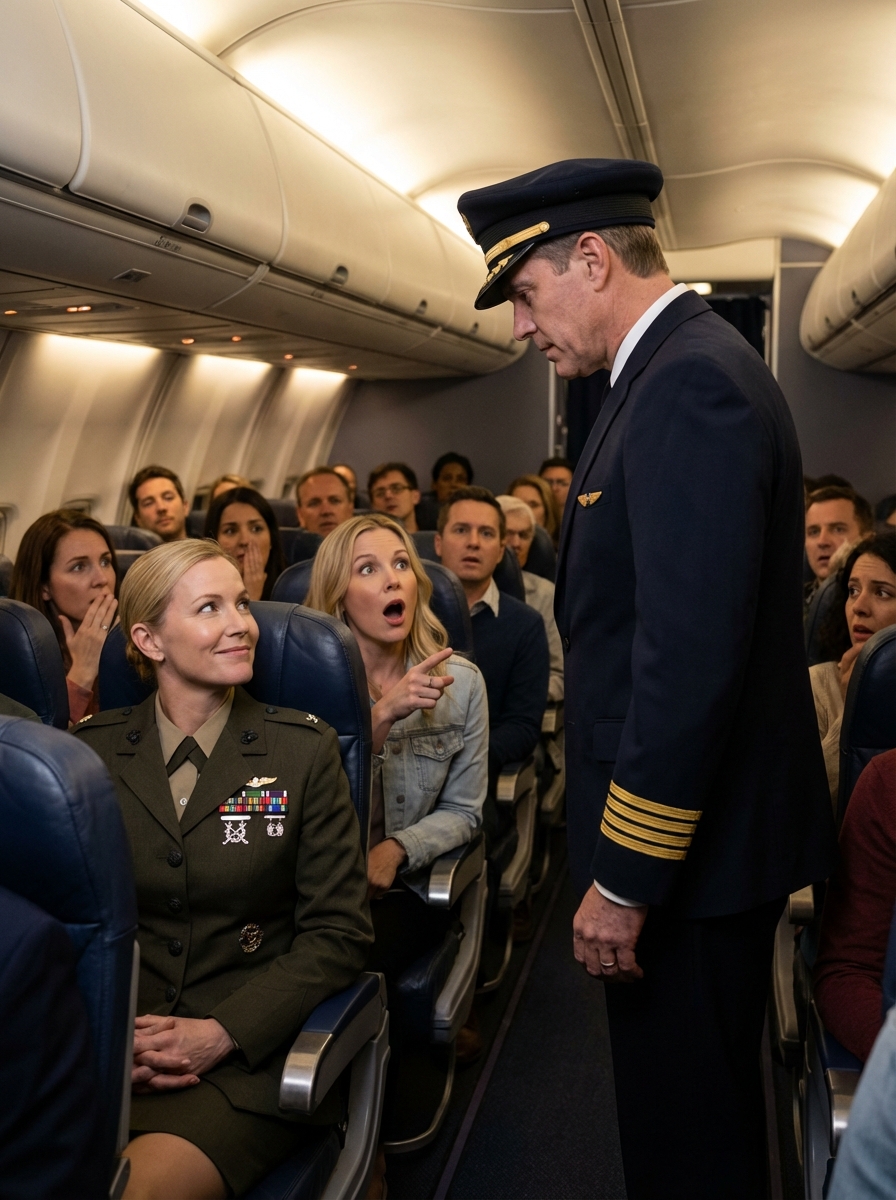
  • The captain stopped beside my economy seat, and saluted. “General, ma’am.” In one second, the laughter died, my father’s grin vanished, and the family that had mocked me all morning finally realized they had never known who I was. But the real secret wasn’t my rank.

    The captain stopped beside my economy seat, and saluted. “General, ma’am.” In one second, the laughter died, my father’s grin vanished, and the family that had mocked me all morning finally realized they had never known who I was. But the real secret wasn’t my rank.

    The captain stopped beside my economy seat, and saluted. “General, ma’am.” In one second, the laughter died, my father’s grin vanished, and the family that had mocked me all morning finally realized they had never known who I was. But the real secret wasn’t my rank.

    Part 1

    The VIP lounge at LAX carried the scent of dark-roast coffee, lemon polish, and the kind of wealth that made people lower their voices even when nobody had asked them to. Floor-to-ceiling glass overlooked the runway. Leather chairs were arranged in tidy little clusters. At the bar, a man in a crisp white shirt uncorked champagne at eleven in the morning as if that were an ordinary Tuesday ritual.

    My family looked like they had been born for that room.

    My father, Arthur Bennett, stood near the windows with one hand in his pocket and a whiskey in the other, silver hair slicked back so perfectly it looked sprayed into place. My mother, Evelyn, had already found another polished couple with matching carry-ons and was telling them we were headed to Hawaii for my grandparents’ fortieth anniversary celebration. My sister, Chloe, stood in the center of everything in a cream pantsuit, sunglasses pushed up on her head, gold hoops flashing every time she turned beneath the lounge lights.

    And then there was me.

    I sat off to the side in a low chair, a black duffel at my feet and my old military backpack leaning against my leg. That backpack had survived heat, rain, two deployments, and more airports than I could count. The nylon had faded with wear. One zipper pull had long ago been replaced with a strip of olive cord. Chloe despised that bag more than she despised almost anything I had ever said.

    She claimed it made us look poor.

    “Harper,” my mother called without even glancing at me, “sit up a little straighter. You look tired.”

    I had been awake since 3:30, handling secure messages before dawn, but I only said, “I’m fine.”

    That was my role in the family. The one-word answer. The quiet daughter. The sister people described with a tiny shrug, like I existed just off-camera.

    I worked for the government.

    That was how they always phrased it. Never the military. Never command. Never anything specific, or serious, or important-sounding. Just the government, said in the same tone people used for tax paperwork and DMV lines. Over time, it had become one of the family jokes.

    Harper does computer stuff for the military. Basically IT in camouflage. Spreadsheet soldier.

    It had started as laziness and become something meaner, but I let them keep their version of the story. Operational security was part of it. So was the simple truth that people who underestimate you tend to get careless.

    Two minutes later, Vance Carter arrived wearing the kind of expensive polish some men carry like a second tailored suit. Tall, tanned, perfect haircut, cufflinks that probably cost more than the rent on my first apartment. He kissed Chloe on the cheek, clapped my father on the shoulder, and lifted his phone like he was heading into a board meeting instead of a family vacation.

    “Tickets are locked in,” he said. “First class all the way to Honolulu.”

    My father grinned. “That’s my son-in-law.” Chloe gave a pleased little half-bow, as if someone had just handed her an award. “You’re welcome.” She pulled a stack of boarding passes from her purse.

    Four of them had thick gold edging. “Dad.” She handed him one. “Mom.” “Vance, obviously.”

    She kept the fourth for herself and fanned those gold-edged passes once, slow and deliberate. Then she turned toward me with the expression people get when they suddenly remember an obligation they wish they could ignore.

    “Oh,” she said.

    One word. Enough contempt to fill a page.

    She went back into her bag and pulled out another boarding pass. This one looked thinner, slightly wrinkled, like it had already had a rough life at the bottom of her purse. She walked over and dropped it into my hand.

    Not handed. Dropped. “Here.” I looked down.

    34E. Economy. Middle seat. Near the back. Chloe leaned close, perfume floating over me in a bright expensive cloud. “I figured you’d be more comfortable near the bathroom,” she said softly. “Should feel familiar.”

    My father laughed. Actually laughed.

    Vance took a sip of champagne and added, “We were being generous, really. Standby would’ve been more your budget.”

    My mother made a small sound behind her glass. Not quite laughter. Not quite protest. That was her specialty—letting cruelty happen in a tone soft enough to deny later.

    I slid the boarding pass into my jacket pocket and stood.

    Chloe blinked. “That’s it? No fight?”

    “Seat looks fine.” That answer bothered her more than a full argument ever could have.

    My father shook his head. “You really should’ve tried harder in life, Harper.” I swung my backpack over one shoulder. “I did.” The remark passed right through him.

    A boarding announcement crackled through the lounge. Chloe flashed her gold-edged pass at me like a final flourish.

    “Priority boards first,” she said. “Coach is somewhere out there.” I nodded. “Good to know.”

    The main terminal felt like a different country. Loud. Crowded. Honest. Kids sat on the carpet staring at tablets. A man in a Lakers hoodie argued with a gate agent about a carry-on. Somewhere nearby, someone was eating cinnamon pretzel bites, and the sweet buttery smell drifted through the walkway. It all felt more real than the lounge ever had.

    At the gate, I stepped out of line and pulled out my second phone.

    Government issue. Matte black. No logo.

    I entered a memorized sequence and waited for the secure line to connect. “Control,” a voice answered. “Eagle One boarding commercial,” I said quietly. “Maintain passive monitoring on flagged regional traffic. Pacific corridor.”

    A beat. “Copy, Eagle One.” I ended the call and stepped back into line as boarding began.

    Seat 34E was exactly where Chloe had promised—close enough to the lavatory that I heard the latch click every few minutes. The cabin smelled faintly of cold recycled air, coffee, and industrial cleaner. I slid my backpack under the seat, fastened my belt, and watched the rest of the passengers settle in.

    A little later, my family came down the aisle on their way to first class.

    Chloe looked down at me with a full-toothed smile. “Comfortable back here?”

    “Very.” My father gave a soft snort. “Maybe next year.” Vance slowed beside my row. “Still doing computer work for the military?”

    “Something like that.” He chuckled and kept walking.

    About twenty minutes after takeoff, the cabin loosened. Seat belt sign off. People stood immediately. Bags opened overhead. Ice clinked in cups. Up front, the first-class curtain shifted as passengers drifted toward the rear lavatory.

    Vance appeared at my row holding a paper cup of coffee and his laptop.

    “Couldn’t sleep up there,” he said. Then he shifted. The cup tipped.

    Coffee splashed across my jacket and down the front of my shirt, hot enough to sting but not enough to burn. The empty cup hit the floor and rolled beneath the seat ahead of me.

    Vance did not apologize. He looked down with the faintest smile. “Guess military training doesn’t cover beverage handling.” A few nearby passengers glanced over, waiting. I looked at the dark stain spreading across my jacket. “It happens.”

    Disappointment flickered across his face.

    Then I saw his laptop.

    Black. Thin. Corporate issue. He opened a movie window first, but that was not what mattered. What mattered was the Wi-Fi icon at the top of the screen and the folder he accidentally clicked when turbulence nudged his wrist.

    DoD_SYS_A12 He corrected it fast, but not before I saw an email header flash open. External domain. Not familiar. Not good.

    Defense contractors do not connect sensitive work devices to public in-flight Wi-Fi unless they are reckless, stupid, or dirty. Vance was not stupid.

    I kept my face blank and touched the phone inside my pocket without pulling it out. One command. Silent capture initiated. The plane jolted hard enough to rattle the overhead bins. Then harder.

    The seat belt sign flashed back on. Nervous laughter skipped through the cabin in thin little bursts. Somewhere near row twenty, a baby started crying. A flight attendant’s polished voice came over the intercom.

    “Ladies and gentlemen, please return to your seats immediately.” From first class, I heard Chloe rise above everyone else. “You can’t just leave us without information.”

    My father joined in. “I want to speak to the captain.”

    The plane dropped once—sharp, sudden—and a plastic cup skidded down the aisle. Vance half-closed his laptop and stood. He looked irritated, not frightened, which told me plenty.

    Then the cockpit door opened.

    A tall, gray-haired captain stepped into the aisle and moved past first class without so much as glancing at my family. Chloe actually reached out a hand to stop him. He ignored her. Vance started, “Captain, I’m a government contractor—”

    Ignored.

    The captain kept walking. Down the aisle. Past premium economy. Past row twenty-five. Past a man gripping both armrests so hard his knuckles had turned white.

    Then he stopped beside me. The entire cabin went still. The captain straightened, brought his heels together, and raised a sharp military salute. “General, ma’am,” he said.

    And from somewhere up front, I heard Chloe inhale like glass cracking under heat.

    Part 2

    When an entire cabin goes silent at once, you can hear the airplane itself.

    The engines roared steadily beneath the floor. Air whispered through the vents. Somewhere up front, a half-secured service cart rattled. Beyond that, nothing. Not even Chloe.

    The captain held his salute.

    I unbuckled slowly and stood. Habit settled over me before emotion did—shoulders squared, chin level, voice steady. I returned the salute.

    “At ease, Captain.”

    He lowered his hand. “Ma’am, Honolulu Center advised us that a senior command officer with Pacific authorization is aboard. We have a navigation systems fault layered on top of storm closures at the nearest civilian fields. There is one viable landing option.”

    I already knew what it would be.

    “Joint Base Pearl Harbor-Hickam,” I said.

    “Yes, ma’am. But base operations require authorization to divert a civilian aircraft into restricted airspace under current conditions.”

    Around us, the whispers began.

    General?

    Did he say general?

    What the hell?

    The captain held my gaze. “I need your clearance code.”

    Up in first class, my father made a small confused noise. Chloe stood in the aisle gripping a seatback, all the color drained from her face. Vance had gone absolutely still.

    I reached into my inner pocket and pulled out the black phone. The secure prompt lit the screen. My thumb moved through the sequence without hesitation.

    “You’re cleared for emergency diversion,” I said. “Transmit authorization Delta-Seven to base command and request restricted corridor entry. They’ll know who to contact.”

    The captain nodded once. “Copy that, General.”

    Then he turned and headed back toward the cockpit at nearly a run.

    The whispers only grew louder.

    I sat down again, fastened my seat belt, and smoothed the front of my coffee-stained jacket. Somehow that stain seemed almost funny now.

    A woman across the aisle stared openly. “Are you really—”

    “Yes.”

    She blinked and leaned back without finishing.

    From the front, Chloe finally found her voice. “Harper?”

    I looked forward, not at her.

    The descent began ten minutes later. The plane angled down through thick cloud and rough air, the kind of heavy chop that made the seat frames creak. Outside the window there was only gray, until suddenly the clouds broke and wet island light appeared below. The runway at Hickam came into view—long and bright, flanked by floodlit hangars, dark military aircraft, and low concrete buildings no civilian passenger mistook for an airport terminal.

    We landed hard.

    Not dangerously. Just military-runway hard—reverse thrust roaring, deceleration sharp enough to press everyone forward into their belts. A few passengers clapped out of nerves. No one joined them.

    Instead of taxiing toward a terminal, we turned toward an isolated piece of ramp lit up like a film set. Black SUVs. Security trucks. Uniformed personnel waiting in a line.

    When the aircraft door opened, bright white light poured in.

    I stayed seated until the first military police officer stepped inside. He wore full tactical gear and moved with the efficient economy of someone who did not need theatrics. He scanned the cabin once, then looked directly at me.

    “General Bennett, ma’am.”

    I stood.

    That was when my father made his move. He pushed into the aisle from first class, tie crooked, face flushed.

    “You should let us through,” he told the MPs. “We’re with her. We’re family.”

    The nearest officer did not even look at him. “Sir, return to your seat.”

    “You don’t understand,” Arthur snapped. “That’s my daughter.”

    A second officer shifted into place, body blocking the aisle. “Sir. Seat.”

    Behind him, Chloe stood pale and blinking too fast. “Harper, what is happening?” she asked, and for the first time in years, there was no sarcasm in her voice. Only fear.

    Vance said nothing at all. He looked like a man mentally replaying every careless choice he had made in the last two hours.

    I walked forward.

    My father tried once more. “At least tell them—”

    I passed him without stopping.

    Outside, the heat hit me first. Hawaii under storm light has its own smell—wet concrete, jet fuel, salt air, tropical earth. Floodlights washed the tarmac in white. Two rows of security personnel stood near the stairs, and beyond them waited a cluster of officers in mixed uniforms—Air Force, Army, Navy. An Air Force brigadier with silver at his temples stepped forward carrying a sealed folder.

    He handed it to me. “General, immediate briefing. We have a cyber alert tied to this aircraft.”

    That answered one question.

    I opened the folder beneath the floodlights. The first page gave me a fast incident summary: anomalous packet bursts from commercial cabin Wi-Fi, flagged encryption signature consistent with classified contract architecture, mirrored under emergency authority.

    Confirmation.

    Through the oval window in the aircraft door, I could see Chloe’s face close to the glass, blurred.

    Good.

    Let her watch.

    A black SUV took me across the base to the operations building. Inside, the air-conditioning felt aggressive after the tropical damp outside. The command room glowed blue-white with wall displays and workstation monitors—satellite weather, network traces, timestamps. Analysts moved quietly, the way competent people do when they know panic is useless.

    Captain Lena Morales met me halfway.

    “General.”

    “Report.”

    She pulled up a network map on the main screen. “Your onboard request initiated passive capture. We identified one high-risk device transmitting over public aircraft Wi-Fi. We mirrored traffic before the flight diverted.”

    “Show me.”

    The data stream opened.

    Packet timing. Destination relays. One node pulsing at regular intervals.

    Morales enlarged the device ID.

    Corporate contractor machine.

    Registered to Carter Strategic Defense.

    Vance.

    Something inside me went perfectly still.

    Another analyst opened a second screen. “He entered through the passenger network but tunneled through encrypted wrapping. Sloppy masking. Either he panicked or he assumed no one on that flight could identify the signature.”

    “He assumed wrong,” I said.

    The analyst nodded and clicked deeper. Folders populated the display. Architecture diagrams. Access maps. Internal vulnerability assessments for a defense communications system in active procurement.

    Not harmless paperwork.

    Not even close.

    Morales folded her arms. “If this leaves controlled hands, it shortens the path to a breach.”

    I scanned file names, then the financial tabs beneath them. Offshore routing. Shell entities. Payment staging.

    “Source company?” I asked.

    The analyst opened linked registration records. “Working through a Cayman structure. Corporate front for payment intake.”

    The first name on the registration was not foreign.

    Not anonymous.

    It was familiar enough to chill the room.

    Director: Chloe Bennett Carter.

    The signature at the bottom was hers.

    And in a single instant, the worst person in my family stopped being merely petty, loud, and cruel.

    She was involved.

    Part 3

    Most of my adult life has been spent in rooms where reacting too fast could cost far more than pride. So when I saw Chloe’s name on that registration document, I did not gasp. I did not swear. I did not slam a hand on the table.

    I just leaned closer.

    The signature was hers. Same sharp loop on the C. Same pointless flourish on the tail of the y. Chloe had always signed her name like she expected it to be framed.

    Morales studied me. “You know her.”

    “She’s my sister.”

    That bought exactly one second of silence before everyone went back to work. One thing I’ve always respected about serious professionals: once they know the truth matters more than your feelings, they stop treating you like glass.

    The analyst kept clicking. “Three shell companies. Two in the Caymans, one in Delaware. Funds come in as consulting and contract facilitation fees, then move out through layers.”

    “To whom?”

    “Still tracing.”

    A second screen lit up with emails captured from Vance’s open connection on the plane. Most were short, carefully vague, professionally evasive. But one decrypted attachment exposed part of its title:

    Exposure Incentives Schedule

    I stared at it.

    Not security hardening.

    Not consulting.

    Not even bribery dressed in clean language.

    Payment for weakness.

    Someone was buying holes in an American defense system, and Vance had carried the price list onto a commercial flight.

    Morales exhaled through her nose. “He wasn’t being careless.”

    “No,” I said. “He was doing business.”

    Some betrayals arrive hot, with humiliation and the urge to destroy something. This one came cold. Clean. Chloe and Vance had mistaken my silence for stupidity for so long that neither had noticed the only thing that mattered: I did not need to win arguments in a room when I could win the board underneath it.

    “Secure everything,” I said. “No alerts outside this room. I want continued passive collection. Let him believe he’s still ahead.”

    “Yes, ma’am.”

    “And no contact with my family until I say so.”

    Morales nodded. “Understood.”

    The commercial flight was cleared to continue later that afternoon once the storm front shifted west. I reboarded last, alone, carrying no visible sign that I had just spent three hours inside a base operations center reading evidence that could send my sister to prison.

    Seat 34E was waiting.

    Chloe twisted around before I even sat down. “Where did you go?”

    “Work.”

    She searched my face. “What kind of work needs soldiers?”

    “The boring kind.”

    That irritated her, which helped. Irritated people cling to familiar scripts. My father leaned over from the front and chuckled.

    “Military overreaction,” he said. “Probably thought you mattered more than you do.”

    Chloe recovered quickly. “Exactly.”

    Vance said nothing.

    He watched me once when he thought I wasn’t looking, then looked away too fast. Fear wears different faces. Some people get louder. Some freeze. Vance had gone tight around the mouth, like a man already drafting explanations.

    We landed in Honolulu under a bruised purple sunset.

    The resort sat on a curved stretch of shoreline north of Waikiki—carved stone, torchlight, tropical flowers arranged so perfectly they looked expensive even from a distance. Our private dining room overlooked the water. Glass walls. White tablecloths. A string quartet somewhere far enough away to sound costly rather than intrusive.

    Everyone acted as if the afternoon had been awkward instead of life-altering.

    My mother admired the orchids. My father toasted my grandparents before they even arrived at the table. Chloe slid effortlessly back into the center of attention as if nothing had ever shifted.

    She did not even open the menu.

    “We’ll start with the seafood tower,” she told the waiter. “And the Wagyu tasting. Actually, for the whole table.”

    The waiter, who looked as though he had been trained to remain composed through aristocratic divorces, simply nodded. “Very good, ma’am.”

    The food arrived in stages—oysters on crushed ice, butter-poached lobster, thin slices of seared beef still pink at the center. The room smelled of charred fat, white wine, salt, citrus. My family kept talking over all of it, floating over the day’s surface with the skill of people who do not want to look directly at a crack.

    Not one of them asked what had actually happened on that plane.

    That was the thing about my family. They never wanted the truth. They wanted a version of events that preserved the pecking order.

    By the time dessert menus arrived, Chloe was glowing again. She had her laugh back. My father had gone from loud to louder. Vance had loosened his tie, but not his expression.

    Then the waiter returned with the check folder and laid it discreetly beside Chloe.

    She did not even glance at it.

    She slid it across the table until it stopped against my water glass.

    The movement was so smooth she must have imagined it earlier.

    “Well,” she said with a smile, “since you’re apparently a big deal now.”

    Arthur laughed. “Yeah, General. Put the taxpayers to work.”

    My mother gave me that hopeful look she used when she wanted ugliness to pass quickly. Not because she disapproved of Chloe, but because she disliked public discomfort.

    I opened the folder.

    A little over three thousand dollars.

    I closed it and reached into my jacket for my travel card. Matte black titanium. Heavier than a normal credit card. Small government insignia engraved in the corner. The waiter saw it and his posture shifted instantly—not dramatically, just enough.

    “Of course, ma’am.”

    He took the card with both hands.

    My father frowned. “What kind of card is that?”

    “Government travel authorization.”

    Chloe rolled one shoulder. “Convenient.”

    “Sometimes.”

    The waiter returned, placed the receipt in front of me, and stepped away. Dinner should have ended there—stupid, expensive, clean. But I was done pretending.

    I folded the receipt, set down my pen, and looked directly at Vance.

    “Something interesting happened today,” I said.

    He stopped moving.

    “Oh?”

    “The Department of Defense opened a contract audit.”

    Arthur waved a dismissive hand. “That sounds unbearably boring.”

    I kept my eyes on Vance. “They’re looking at offshore payment routes.”

    A beat.

    Then another.

    Chloe’s smile thinned. “What does that have to do with us?”

    I lifted my wine and let the silence stretch.

    “Depends,” I said. “How often do you do business in the Cayman Islands?”

    Vance’s fork slipped from his fingers and struck the plate with a sharp metallic clink.

    Nobody at the table breathed for a full second.

    He looked at me then—not like a smug brother-in-law being teased at dinner, but like a man who had just realized the floor beneath him was not floor at all.

    Part 4

    The family villa sat behind palms and black lava rock, with wide glass doors facing the ocean and a private pool glowing blue after dark. It smelled like polished wood, expensive sunscreen, and the damp sweetness of flowers that had clearly been replaced before dawn.

    Chloe walked in first and began assigning rooms as if she owned the place.

    “Mom and Dad upstairs. Vance and I take the ocean suite, obviously. Harper, you get the room by the patio.”

    The room by the patio was smaller, darker, and close enough to the pool equipment closet that I could hear it humming through the wall.

    “Works for me,” I said.

    That disappointed her, which almost made it worth it.

    Inside the room, I set my duffel down and took out a slim black tablet. Government issue. Hardened shell. Secure environment. It looked dull enough to bore any civilian, which was part of its beauty. I carried it back to the living room, set it on the coffee table with the screen dim but live, then stretched and said, “I’m going for a walk.”

    No one stopped me.

    The beach was nearly empty. Resort torches threw gold patches over the sand, and beyond them everything turned silver-blue under the moon. The surf came in slow and even. Salt hung in the air. Somewhere farther downshore, a couple laughed softly into the wind.

    I walked until the villa was just a cluster of lit windows behind the palms. Then I pulled out my phone and opened the tablet feed.

    The angle gave me half the living room and the coffee table. Audio came in a second later—ice clinking in glasses, my father opening the minibar, Chloe’s heels on tile.

    I watched Chloe notice the tablet.

    “What’s that?” my mother asked.

    “Harper’s,” Chloe said.

    The screen brightened under her touch.

    Vance appeared behind her a moment later, face pulled tight. “Leave it.”

    Chloe laughed, brittle and careless. “If she left it unlocked, that’s her problem.”

    “It’s military hardware.”

    “It’s a tablet.”

    “It’s her tablet.”

    That quieted her for about two seconds.

    Then she sat down, dragged it closer, and glanced toward the hall to make sure I was not coming back. “If there’s an audit, it’ll be on here.”

    My pulse stayed slow. That is the beauty of a trap properly set: patience does the rest.

    Vance hovered behind the couch. “Don’t be stupid.”

    She tilted the screen for him. “Bring your laptop.”

    He hesitated long enough to prove he knew it was dangerous, then disappeared into the suite and returned with the same black machine from the plane.

    On my phone, their reflections moved faintly across the dark window behind them. Beyond the glass, the ocean looked black and endless.

    The tablet accepted Chloe’s first touch exactly the way it had been designed to—no password prompt, just a command console and a cheerful little input field that made civilians think they were already halfway inside.

    Chloe smiled. “See?”

    Vance sat beside her and started typing.

    I could hear the small rapid clicks of the keys over the surf. It never stops amazing me how much panic can sound like confidence.

    “What are you trying to do?” Chloe asked.

    “Find the mirror logs. If she has them, I delete them.”

    “You can do that?”

    He did not answer.

    On my end, the tablet had already begun collecting evidence. Front-camera images. Ambient audio. Touch-pressure maps. Fingerprint residue capture. Device handshake logs. Villa network IDs. Quietly, methodically, it was gathering enough to tie them to the intrusion six different ways before they even understood the door was never real.

    Then Vance triggered the escalation.

    A red banner filled the screen.

    UNAUTHORIZED ACCESS DETECTED

    Chloe flinched. “What is that?”

    “Kill it,” Vance snapped.

    “I’m trying!”

    The countdown started.

    00:59

    00:58

    00:57

    The tone began softly—a thin electronic chime, the sound of something waking up. Then the camera flashed. Once. Twice.

    Chloe slapped at the screen. “It won’t close.”

    “Disconnect it.”

    “I did!”

    Vance grabbed the tablet and tried to force it down manually. The alarm went fully live then—a sharp, pulsing siren that bounced off the high ceilings and turned the entire villa into an echo chamber.

    Upstairs, my father shouted, “What the hell was that?”

    My mother yelled Chloe’s name.

    The screen displayed one final line in clean, merciless letters:

    BIOMETRIC CAPTURE COMPLETE
    FEDERAL EVIDENCE PROTOCOL ACTIVE

    Even from the beach, over the surf, I could hear Chloe start swearing.

    The countdown hit zero.

    The siren cut out instantly.

    That silence after a person loses the illusion of control has its own sound. On my feed, Chloe stood breathing too fast, one hand pressed to her chest. Vance had gone pale around the mouth.

    “This is a trap,” he said.

    She turned on him at once. “You said you could fix it.”

    “You touched it.”

    “You told me to get your laptop!”

    I turned off the live feed and put the phone away. A wave pushed cold foam over my shoes and retreated, leaving the sand firm beneath me.

    By the time I walked back into the villa, Chloe and Vance had managed to rearrange their faces into something almost normal.

    Almost.

    The tablet sat dark on the coffee table.

    I picked it up and looked between them. “Something wrong?”

    Chloe forced a laugh. “Your little toy started screaming.”

    “Glitch,” I said.

    “Yeah,” Vance replied too quickly. “Glitch.”

    I nodded and carried it back to my room.

    I did not sleep much. Not from worry. There was simply no reason to. The logs came in clean and complete—fingerprints, facial captures, connection traces, even a partial voiceprint match from Chloe saying, If there’s an audit, it’ll be on here.

    At 3:12 a.m., another message came through from base.

    Subjects identified. Probable cause threshold exceeded. Federal team standing by.

    I lay in the dark listening to the pool filter hum through the wall and the ocean break softly beyond the glass.

    By breakfast, I knew exactly what time the agents would arrive.

    Part 5

    The anniversary ballroom overlooked the water from the second floor of the resort—pale stone, endless glass, flower arrangements so expensive they barely looked real. Morning light streamed through the windows and flashed off the silverware. The air smelled of orchids, coffee, butter from brunch service, and the ocean every time the terrace doors opened.

    My grandparents sat at the center table.

    Grandma June wore a blue silk jacket and pearl earrings that had probably outlasted half the marriages in the room. Grandpa Walter looked slightly uncomfortable in a linen blazer and deeply pleased to be next to her. They were the only reason I had agreed to come at all. June squeezed my hand when I leaned down to kiss her cheek.

    “You look tired,” she murmured.

    “Long flight.”

    Her eyes lingered on my face. She had always noticed more than she said. “You all right?”

    “Yes.”

    Not completely true. Close enough.

    Chloe arrived ten minutes later in a white dress fitted so perfectly it probably had its own insurance policy. Makeup flawless. Smile bright. If anyone in the room had not spent the previous night inside the blast radius of a federal evidence trap, it was because they had refused to notice.

    Vance came in beside her looking like he had slept in a chair. Arthur had already found the champagne. My mother kept fussing with napkins and flowers the way some people rearrange furniture when anxious.

    I stood near the windows with a glass of ice water once the speeches began. Outside, the Pacific flashed in the hard sunlight. Inside, the room held that expensive hush that always comes a few seconds before something goes wrong.

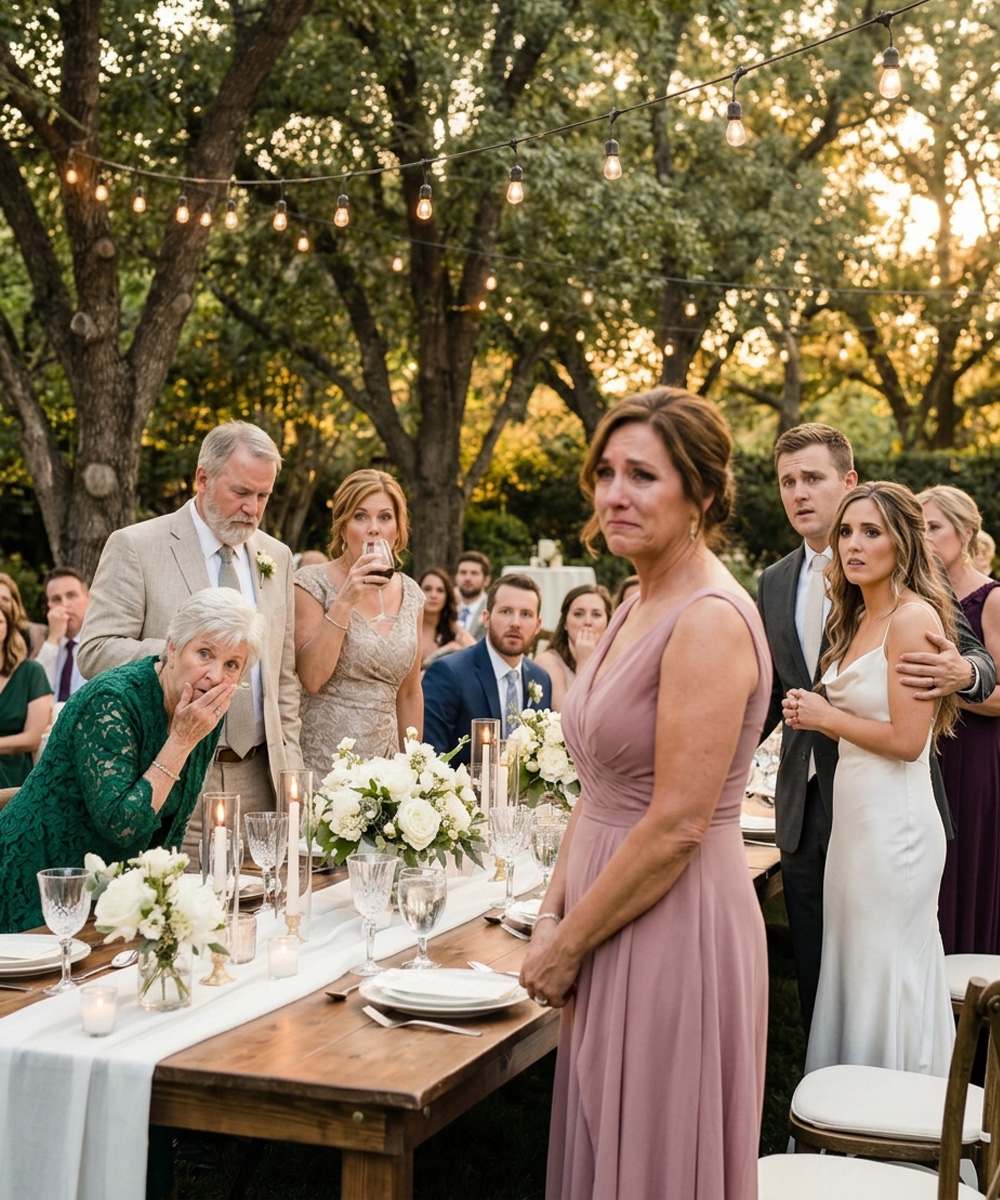
    The emcee introduced my grandparents. Applause rolled through the ballroom. Chloe stood, smoothed her dress, and floated toward the stage with a flute of champagne.

    Of course she did.

    “My grandparents taught us the value of family,” she began, smiling at the tables. “And loyalty.”

    The word had barely left her mouth when the ballroom doors slammed open.

    The sound cracked through the room like a shot.

    Eight federal agents entered fast and organized, dark suits over body armor, badges flashing under the chandeliers. Guests turned in a wave. Chairs scraped. Somebody near the back whispered, “Jesus.”

    Arthur shot to his feet. “What is this?”

    The lead agent did not even slow down. He walked straight past my father, past the cake table, past the stunned musicians, and stopped at the base of the stage.

    “Chloe Bennett Carter,” he said. “Vance Carter.”

    Chloe lowered the microphone slowly. “Excuse me?”

    “You are under arrest.”

    The room erupted in whispers.

    Arthur stepped in front of the agent, chest out, face red. “There’s been some mistake.”

    The agent’s expression never changed. “No, sir.”

    At the same moment, two other agents reached Vance. He stepped backward once and hit the edge of a table. Crystal rattled. One of the agents took his wrist and brought it behind his back with practiced force.

    “Wait,” Vance said. “You can’t—”

    The cuff clicked shut.

    That sound carried farther than any raised voice.

    Chloe still had the microphone in one hand. “Do not touch me,” she said, but her voice came out thin and high. Another agent stepped onto the stage.

    “Ma’am, put the glass down.”

    She did not.

    The agent caught her forearm, and the flute slipped from Chloe’s hand and shattered against the floor near her white heel.

    My mother gasped.

    Grandma June closed her eyes once, briefly, like someone absorbing impact without moving.

    Arthur tried again, louder. “My daughter is not a criminal.”

    The lead agent turned just enough to face him. “Your daughter is the listed financial director of multiple shell entities used to route payments tied to classified defense vulnerabilities.”

    Arthur stared at him blankly. The words had nowhere to land inside the reality he preferred.

    Then his eyes found me.

    “Harper.”

    My name crossed the room and pulled the attention of half the ballroom with it.

    He pushed toward me. My mother came too, white-faced and shaking. All around us, guests lifted phones, leaned toward one another, whispered behind hands, wearing that ugly mix of embarrassment and fascination people get when they watch another family split open in public.

    “Harper,” my mother said, grabbing my wrist. “Tell them this is wrong.”

    I set my water glass on the nearest table.

    Arthur lowered his voice, as if that could make the request more reasonable. “You know people. Make a call.”

    My mother’s grip tightened. “Please. She’s your sister.”

    Behind them, agents were escorting Chloe and Vance toward the doors. Chloe turned once and looked directly at me. Not pleading. Not yet. It was a different look—the look of a person finally understanding that the trap had not sprung by accident. The look of someone realizing exactly who had been sitting quietly in the room all along.

    “Blood is blood,” my mother whispered.

    That sentence might have meant something to me if they had remembered it before they needed help.

    I gently removed her hand from my sleeve.

    “Yes,” I said.

    Hope lit both their faces so fast it almost hurt to watch.

    “I am a general,” I continued. “And my oath was not to my family.”

    Arthur’s jaw tightened. “Harper—”

    “My oath,” I said evenly, “was to the country I serve.”

    My mother’s eyes filled. “What does that have to do with Chloe?”

    I held her gaze. “At the moment? Everything.”

    Behind us, the doors opened. Humid air spilled in from outside. The agents led Chloe through first. Then Vance.

    My father looked at me like I had turned into a stranger while standing still.

    “No,” he said. “You don’t do this to family.”

    I almost laughed—not because it was funny, but because that was exactly what they had been doing to me for years in smaller, cleaner, socially acceptable pieces. They just had never imagined I might be the one with enough power to stop pretending.

    My mother’s mouth trembled. “Please save her.”

    “No.”

    The word came out clear. No apology. No softness. Only truth.

    Something inside her face collapsed.

    Arthur stepped back like I had hit him. “You’re heartless.”

    That landed lighter than he wanted. I had heard worse from better people.

    The ballroom doors shut behind the agents, and the room filled with the low stunned hum of guests deciding whether to sit back down or flee. Across the room, June was watching me. She did not smile. She did not approve. But she did not look away.

    I turned toward the exit.

    Behind me, my mother called, “If you walk out now, don’t expect this family to forget it.”

    I kept walking.

    Outside, the sunlight was hard enough to sting. A black SUV waited at the curb with an agent holding the rear door open. I got in without looking back.

    My mother called me heartless as I left the ballroom.

    I kept going, because sometimes the cruelest lie is the one that says loyalty should matter more than the truth.

    Part 6

    The first thing I did when I got back to the base was remove the jacket that still carried a faint coffee stain on the cuff.

    The second thing I did was listen to my voicemail.

    Eleven messages in the first hour.

    My father moved between rage and demands. My mother cycled from tears to bargaining to long silences where she simply breathed into the phone before hanging up. A cousin I barely spoke to left a stiff, self-righteous message about public humiliation. An old neighbor from Orange County—someone who once told me women in the military made her “nervous”—called to say she was praying for us all.

    I deleted everything except my parents’ messages.

    Not sentiment.

    Evidence.

    By late afternoon I sat in a conference room on base with Captain Morales and NCIS Special Agent Daniel Reed. Reed looked like the kind of man who could have sold luxury watches if he had not chosen a career dismantling lies. Trim suit. Quiet voice. Eyes that missed nothing.

    He slid a thick folder toward me.

    “Financial cross-links,” he said. “First pass is complete.”

    I opened it.

    Fresh toner. Fresh ink. Inside were wire transfers, account numbers, corporate signatures—and one document that made something inside me go still all over again.

    Bennett Strategic Consulting, LLC.

    My father’s company.

    Not a real company, not really. Arthur had built retirement around a few advisory contracts and a larger mythology about his importance. He loved words like consulting and strategic. They made long lunches sound like empires.

    A transfer of $275,000 had landed in that account six weeks earlier from one of Chloe’s shell entities.

    Memo line: regional facilitation.

    My father had used some of that money to pay deposits on the villa, the anniversary event, and the first-class tickets he had bragged about as if they were proof he had somehow beaten life.

    I stared at the page for a long moment.

    “He claims he believed it was a legitimate advisory fee,” Reed said.

    “Did he advise anything?”

    Reed’s mouth nearly moved. “Not enough to invoice that amount.”

    “And my mother?”

    Morales tapped another page. “She approved a charity-gala reimbursement that paid the floral vendor and event staging through a personal account later replenished by Chloe. That’s weaker legally. Stronger morally.”

    That sounded exactly like my mother. She never wanted enough information to be responsible. She preferred soft-focus reality—beautiful parties, clean tablecloths, no ugly questions.

    For a second, all I could see was my father in the LAX lounge, whiskey in hand, laughing when Chloe assigned me row 34E. He had been spending dirty money while mocking me for not having enough of it.

    Reed folded his hands. “There’s more.”

    He slid a photograph across the table.

    A small brass marina key on a wooden fob.

    Stamped: 118.

    “Pulled from villa security footage this morning,” he said. “Your father removed an envelope from the office drawer around six a.m. before staff arrived.”

    “Where is he now?”

    “At the resort. Claims it’s personal property.”

    “And it isn’t.”

    “No.”

    He tapped the photo again.

    “Before his arrest, Vance set up a timed beacon. If a remote server does not get a live check-in within a defined window, it pushes an encrypted package elsewhere. We haven’t identified the receiver yet. We think Locker 118 holds the local backup.”

    A dead-man switch.

    Of course.

    Vance was the kind of man who never trusted any betrayal path unless he had built a second one behind it.

    I leaned back. The leather chair creaked. “Has my father been contacted?”

    “Maybe. Maybe not. But he’s moving like a man who thinks he’s helping his daughter.”

    My phone buzzed facedown on the table.

    Unknown number.

    I let it ring once, then answered. “Bennett.”

    The voice on the line was female, clipped, professional. “General Bennett? This is attorney Melissa Karr. I represent Chloe Carter.”

    Of course she did.

    “My client is requesting a meeting,” the lawyer said. “She says she’ll speak only with you.”

    Reed and Morales watched me.

    “What does she want?”

    “She says,” Karr replied, “that you think you found the whole thing, but you didn’t.”

    I closed my eyes for one beat.

    “Where is she?”

    “Federal holding, Pearl Harbor Annex.”

    “I’ll be there in thirty minutes.”

    When I ended the call, Reed nudged the marina key photo closer.

    “You think she’s stalling?”

    “Probably.”

    “You still going?”

    “Yes.”

    Morales tilted her head. “Why?”

    Because liars usually tell one truth when they believe it might still save them.

    I stood and picked up the folder.

    As I did, Reed added, “General?”

    I looked up.

    “We pulled one more frame from the villa footage.”

    He handed me a second image.

    My father, just before dawn, slipping the marina key into his pocket with hands that did not look shocked or confused at all.

    Chloe was not the only one in my family still hiding something.

    Part 7

    Federal holding rooms all smell the same.

    Stale coffee somewhere nearby. Overworked ventilation. Disinfectant that never fully masks the scent of metal and anxiety. The interview room they put me in was small, overlit, and plain, with a steel table bolted to the floor and a pane of dark glass on one wall.

    Chloe was already there when they brought me in.

    She looked smaller without an audience.

    No designer dress. No heels. No carefully staged room to stand in the center of. Just detention clothes, no jewelry, and a quick ponytail that exposed the strain in her face. Even so, the first thing she did when she saw me was straighten her shoulders, as if posture alone could restore rank.

    “Harper.”

    I sat across from her. “You asked for me.”

    She laughed softly under her breath. “Still doing that calm thing.”

    “It saves time.”

    For a second she only looked at me. There was something almost childlike in it—not innocence, but recognition. As if she were finally studying a map after spending years assuming she already knew the terrain.

    Then the mask returned.

    “I want a deal.”

    “You don’t make deals with me.”

    “You could help.”

    “No.”

    Her nostrils flared. “You didn’t even hear me.”

    “I heard enough on the plane, at dinner, and in the villa.”

    That hit. A quick flicker in her eyes. She knew then that I knew about the tablet, and fear moved through her so fast it barely showed.

    “That was Vance,” she said.

    “No.”

    “Yes,” she snapped. “He built everything. He handled the contracts. He told me where to sign.”

    “And you signed.”

    She opened her mouth, shut it, and changed tactics. Chloe had always done that. When truth failed, she reached for performance.

    “You think I wanted this?” she asked, leaning forward. “Do you know what it’s like growing up next to someone who never wanted normal things? Dad bragged about Vance because Vance made money. Mom worshiped anything polished. And you…” She laughed again, sharper. “You made everyone uncomfortable because you never cared about what the rest of us cared about.”

    I said nothing.

    She hated that.

    “I had to build something,” she went on. “I had to win at something. Do you understand that?”

    “You chose this as the thing to win.”

    Her jaw tightened. “You always sound so clean.”

    “That’s because I am.”

    For the first time, real anger lit her face. “Don’t do that. Don’t sit there like you’re better than me.”

    “I don’t have to.”

    Silence cracked across the room.

    Chloe looked down at her hands. When she spoke again, her voice was smaller. More dangerous.

    “Vance built a backup,” she said. “A dead-man release. If he missed a check-in, an encrypted package moved to a second handoff point.”

    “Locker 118?”

    Her eyes shot up. “You already know about the locker.”

    “I know enough.”

    She wet her lips. “There’s a drive in there. And a satphone. If the satphone gets powered on and keyed correctly before tonight, the archive routes to the buyer instead of dumping blind.”

    “Who has the key?”

    She smiled then, and it was ugly because no charm remained in it. “Dad.”

    I let the silence stretch.

    She mistook that for surprise and kept going, because Chloe always believed a pause meant she was winning.

    “Vance told him it was legal paperwork. Investment documents. Dad took the envelope this morning because he still thinks he can fix things if he gets the right papers to the right lawyer.” She leaned closer. “He isn’t going to a lawyer, Harper.”

    “Where is he going?”

    “Marina.”

    “Which one?”

    She shrugged. “You’re the genius. Figure it out.”

    I stood.

    That startled her more than yelling would have.

    “You’re leaving?”

    “Yes.”

    She rose too, palms on the table. “Wait.”

    I turned.

    For a moment, I thought she might finally say something real. An apology. A confession. Anything that belonged to the moment instead of her ego.

    Instead she whispered, “Don’t let Vance bury me with him.”

    There it was.

    Not remorse.

    Self-preservation.

    I knocked once and the guard opened the door.

    As I stepped into the hallway, Chloe said my name again. I did not turn back.

    Reed was waiting there. “Well?”

    “She confirmed the locker and the satphone. Arthur has the key.”

    Reed swore softly. “We pulled traffic cams from the resort while you were inside.”

    He handed me a tablet.

    The image showed my father at the rental car stand just forty minutes earlier, baseball cap low, sunglasses on, envelope tucked under one arm. Timestamp recent.

    “Tracker on the vehicle?” I asked.

    “Too slow for consent, too slow for a warrant if he’s already moving. But we got a light-frame at an intersection.”

    He enlarged the next still.

    A street sign.

    Ala Wai Small Boat Harbor.

    “Not the obvious choice,” I said.

    “No,” Reed answered. “Which means somebody told him not to take the obvious one.”

    We moved fast after that—down the corridor, out into the humid dusk, into black SUVs that smelled like rain-wet pavement, vinyl, and gun oil. Honolulu traffic glittered around us in wet light. The radio crackled with check-ins.

    I watched the city blur past and thought about my father clutching that envelope like a solution.

    He had laughed in the lounge.

    He had tried to push past armed MPs on the plane.

    He had begged me in the ballroom.

    And after all of that, he was still choosing Chloe.

    My phone buzzed with a message from base.

    Timed release window: 4 hours 11 minutes.

    Reed glanced at the screen and muttered, “Not much time.”

    “No.”

    Rain began as we turned toward the harbor—light first, then harder, ticking across the windshield in slanted lines. Masts appeared ahead like dark needles against the sky. Sodium lights turned the wet pavement amber.

    Reed touched his earpiece. “Units in position?”

    A voice answered, “Affirmative. No visual yet on Bennett.”

    Then another voice cut in, sharper.

    “Stand by. Gray Lincoln entering east lot. Single male driver matches photo.”

    I looked through the rain-specked glass toward the marina lights.

    My father had the key.

    And whatever sat in Locker 118 mattered enough that someone still considered him useful.

    Part 8

    Harbors at night have their own language.

    Rigging tapping against metal masts. Water striking pilings in hollow little knocks. Diesel drifting through salt and wet rope. The whole place looked slick and dim under the rain, boats rocking behind locked gates while the city glowed farther back like another world.

    We parked without lights.

    Reed issued fast commands into his radio while I stepped out into the warm rain and pulled my jacket tighter. My father’s rental car sat crooked in the east lot, wipers still going. He had gotten out in a hurry.

    We moved between parked trucks and stacked gear until we had a clear line toward the locker row by the maintenance shed.

    Arthur stood there in a windbreaker, one hand gripping the key fob. Across from him stood a woman in a navy suit holding an umbrella. Not Chloe’s lawyer. Younger. Sharper. No handbag.

    Courier, I thought.

    She said something I could not hear over the rain. My father shook his head hard enough for panic to show even from a distance.

    Then he opened the locker.

    “Federal agents!” Reed shouted. “Step away from the locker!”

    Everything shattered at once.

    The woman dropped the umbrella and ran toward the pier. My father lurched backward, trying to slam the locker closed like a child hiding a mess. Reed’s team split cleanly—two after the woman, two toward Arthur, one cutting wide toward the dock.

    I reached my father first.

    “Move,” I said.

    His face was ghost-white. Rain ran into his eyebrows. “Harper—listen to me.”

    “Move.”

    “She said it was legal exposure material. Vance said if the wrong people got it, Chloe would never—”

    “Move.”

    “I’m trying to protect your sister.”

    That did it. Something hot finally flashed through all the cold.

    “You are protecting the people who sold out the country,” I said. “Again.”

    His mouth opened. Behind him, Reed’s agents tackled the woman near the dock gate. She hit the pavement hard, one shoe spinning into a puddle. The satphone in her hand struck concrete and cracked.

    Reed yanked open the locker fully.

    Inside sat a waterproof hard-shell case, a yellow document envelope, and a sealed manila folder on top labeled in typed black letters:

    HARPER BENNETT

    For one second, the rain, the shouting, the harbor—everything narrowed to that folder.

    “Bag it all,” Reed ordered.

    I reached in before he could stop me and took the folder first.

    Inside were printouts.

    Photographs of me at LAX.

    A still frame from the aircraft showing me in 34E.

    A blurry shot of the black phone in my hand near the gate window.

    Typed notes clipped behind them.

    Subject likely higher clearance than publicly disclosed.
    Possible leverage through family dynamics.
    If compromised, push narrative: personal vendetta triggered after onboard family dispute.

    Another page.

    A draft media leak outline.

    A commercial passenger publicly humiliated by wealthy relatives later exploits undeclared military authority to sabotage defense contractor brother-in-law.

    My lips parted, but no sound came out.

    Reed took the pages from me and scanned them fast. “He built a fallback frame.”

    “Yes.”

    The waterproof case snapped open.

    Inside was the drive. Matte black. Unmarked. Beside it sat a second phone and a folded sheet of handwritten timings. One line had been circled twice.

    Release to journal contact if no safe channel by 0600 EST.

    Reed swore. “He wasn’t just selling data. He built a press cover story in case he got caught.”

    I looked at my father.

    He had stopped struggling against the agent holding him. Rain soaked his windbreaker dark. He stared at the folder in Reed’s hand, then at me, and I saw the exact second he understood there was no version of events left where he could call any of this a misunderstanding.

    “I didn’t know about that part,” he said quietly.

    I believed him.

    I also did not care.

    “You knew enough,” I said.

    The woman they had tackled was back on her feet now, cuffed, hair plastered to her face. Reed checked her ID and handed it off.

    “Corporate intermediary,” he said. “Contract courier. Tied to one of the shell entities.”

    My father looked sick.

    “Arthur,” I said.

    He lifted his head.

    “Did you take money from Vance and Chloe?”

    Rain tracked down his face. He closed his eyes once. “It was a consulting fee.”

    “That wasn’t what I asked.”

    His silence answered for him.

    I turned away and looked out over the harbor. Boat lights trembled on black water. Somewhere down the pier, a halyard slapped rhythmically against a mast, thin and bright through the rain.

    Reed handed me the timing sheet. “There’s more.”

    I read it once.

    Then again.

    The drive was not only a backup cache.

    It also held a second archive set for automated release—doctored emails, falsified travel authorizations, manufactured evidence designed to make it appear that I had used classified access to settle a personal score.

    Vance had not merely planned to betray the country.

    He had built a version of me meant to die with him.

    Part 9

    The drive took forty-seven minutes to clone and another six to open once the right forensic team got their hands on it.

    By then we were back on base inside a secure lab that smelled like warm circuitry, stale coffee, and the metallic bite of nonstop air-conditioning. It was past midnight. No one mentioned the hour. The room glowed with monitor light and the steady pulse of status LEDs.

    Morales stood at the primary terminal. Reed leaned against the counter with his jacket off and sleeves rolled. I stood behind them while the contents of the recovered drive unfolded screen by screen.

    The first archive was exactly what we expected.

    Payment trails.

    Vulnerability maps.

    Buyer routing.

    Encrypted correspondence.

    The second archive was uglier.

    Vance had built a contingency narrative file so complete it would have impressed me if it had not been aimed at me. Altered travel logs making it appear I had booked that commercial flight because I already knew about his contract. Fake internal memos suggesting I had flagged his company weeks earlier outside official channels. A draft anonymous letter to a defense reporter accusing me of abusing military authority. Dozens of assembled fragments meant to sell one clean story:

    Humiliated sister gets revenge on successful family.

    He had understood one thing, at least. In this country, plenty of people will forgive treason before they forgive a woman who looks emotional at the wrong moment.

    “Can he still release any of this without the satphone?” I asked.

    Morales shook her head. “Not through the intended route. But if he pre-seeded pieces elsewhere, we need to move first.”

    Reed set a printout in front of me. “We found a scheduled outbound draft to a freelance national security reporter in D.C. It was set to trigger if the check-in failed. It didn’t complete because the satphone never authenticated, but the reporter may still get a partial ping or retry header.”

    “Call them.”

    “Already done,” Reed said. “Federal hold request only. No details yet.”

    Good.

    Because the case mattered in court, but the public story around it mattered too. Trials happen in front of judges. Reputations go on trial everywhere.

    At three in the morning, I finally sat with a mug of terrible base coffee and listened to the voicemail my mother had left an hour earlier.

    This one was quieter.

    “Harper,” she said, voice ragged. “Please call me back before this gets worse.”

    Before this gets worse.

    Not I’m sorry. Not Are you safe. Not I understand.

    Just the same old instinct—contain the mess, shrink it, keep the neighbors from seeing.

    I called anyway.

    She answered on the first ring. “Harper?”

    “Yes.”

    The relief in her voice flooded the line. “Thank God. Your father said you were with agents and no one would tell me anything. I need you to listen.”

    I stared at the lab floor while she spoke, gray epoxy scuffed by rolling chairs and years of equipment.

    “Your sister is terrified,” my mother said. “Your father didn’t know what he was doing. And this whole marina situation—people make mistakes when they’re scared.”

    People make mistakes.

    One phrase for offshore laundering, espionage routing, obstruction, and attempted evidence transfer.

    “I’m listening,” I said.

    She lowered her voice. “If this goes to court, the family name will be destroyed.”

    There it was.

    The true center of gravity.

    “Mom—”

    “No, let me finish. Chloe says Vance pressured her. Your father says the money was consulting. Maybe technical things look worse on paper than they are. Maybe you could explain context. You know how these agencies can be.”

    I closed my eyes.

    She wanted me to lie in polished language. Not because she was stupid. Because she had built a life around the idea that appearance itself was morality. If it sounded fine and looked fine, then maybe it was fine.

    “You want me to testify dishonestly,” I said.

    “I want you to protect your family.”

    “You should have started there.”

    Silence.

    Then, softer: “Harper, please.”

    I thought of Chloe at ten blaming me for a lamp she broke. Thought of my father laughing when I tracked mud into a school event while Chloe stayed spotless. Thought of every Thanksgiving joke about my “government salary” while they spent dirty money on champagne and orchids.

    “No,” I said.

    My mother inhaled sharply. “So that’s it? You’ll send your own sister to prison?”

    “No,” I answered. “She sent herself.”

    I ended the call before she could turn it into something else.

    The case moved fast after that. Vance flipped first, exactly the way men like him usually do—with no dignity and under the illusion that cooperation makes them clever. Chloe held out longer, then shifted through counsel into partial admissions. Arthur hired his own attorney. Evelyn stopped calling for nearly a week, then sent one email containing only four words:

    Please don’t testify against us.

    Against us.

    Not against Chloe. Not against Vance.

    By then prosecutors had enough to convict without me, but my testimony would destroy the defense theory that personal grievance had driven the investigation. So I prepared.

    Captain Rowan, the pilot, agreed to testify about the emergency diversion. Airline logs confirmed the systems fault and ATC chain. Cabin crew statements documented Vance’s movements, the coffee spill, the open laptop, and the disturbance in first class. The honeytrap tablet logs were airtight. The harbor arrest sealed the obstruction path.

    Technically, it was one of the cleanest cases I had ever seen.

    Emotionally, it was a landfill fire.

    The first morning of court, I stepped from the SUV in a dark suit and saw my parents waiting on the courthouse steps. My mother looked ten years older. My father had lost weight.

    He moved toward me before security shifted. “Harper.”

    I stopped.

    He held out a folded page with both hands. “Please. Just read this before you go in.”

    I took it.

    Not because I wanted to hear him.

    Because I wanted him to watch what I did next.

    I opened the paper.

    A statement drafted by his lawyer. Soft language. Regret. Confusion. No knowledge of criminal intent. Near the end, one line asked me to “clarify any misunderstandings regarding the family’s role.”

    I folded it again, placed it back in his hand, and said, “Get out of my way.”

    For once, he did.

    Inside Courtroom 4B, Chloe sat at the defense table in a gray suit and a face I almost recognized.

    Almost.

    Part 10

    Courtrooms are colder than television makes them look.

    Not in temperature. In feeling. Real courtrooms are fluorescent, procedural, and packed with people taking notes with unreadable expressions. There is no soundtrack telling you what matters. Only the scrape of chairs, the rustle of legal pads, and the slow, relentless correction of lies by fact.

    Chloe looked smaller at the defense table than she had in holding, which I would not have thought possible. Her hair had been professionally done again, but the polish now carried a desperate edge, as if she had put it on like armor and discovered too late it was tissue paper. Vance sat two seats away, already cooperating, staring forward as though he had nothing to do with the woman whose life he had burned beside his own.

    I testified on the third day.

    The prosecutor took me through my background, my assignment, the limits of what could be discussed in open court, the emergency on the aircraft, the authorization request, the secure response at Hickam, the mirrored traffic, the chain of evidence, the villa access logs, the harbor recovery.

    Step by step.

    No drama.

    No room for performance.

    Then came cross-examination.

    Chloe’s attorney was smooth, sharp, and exactly the kind of man who mistook calm women for easy targets.

    “General Bennett,” he said, “would it be fair to say you have a strained relationship with your sister?”

    “Yes.”

    “And on the day in question, you were publicly embarrassed by your family on the aircraft?”

    “I was assigned a seat in economy.”

    A flicker of a smile. “And mocked.”

    “I’m sure you have the cabin statements.”

    A few pens paused in the jury box.

    He changed direction. “So you admit there was personal conflict.”

    “I admit my family is rude.”

    A sound moved through the gallery—not quite laughter, more like pressure escaping.

    He tried again. “Isn’t it true your decision to initiate scrutiny of Mr. Carter’s device was influenced by personal hostility?”

    “No.”

    “How can you be sure?”

    “Because public aircraft Wi-Fi does not become safer when my relatives are annoying.”

    Even the judge’s mouth twitched.

    The attorney’s tone hardened. He brought up the coffee spill, family history, the ballroom arrest, and even Vance’s false narrative file, trying to twist the existence of the smear into proof that I had somehow invited it.

    Ambitious.

    I answered everything the same way—directly, specifically, without emotion.

    That was what ultimately destroyed the defense theory. Not the files. Not the logs. My composure.

    There is no defense for a story that depends on a woman becoming hysterical when she refuses to become hysterical on command.

    The verdicts came six weeks later.

    Vance pleaded out and still got enough federal time to watch his hair turn fully gray. Chloe fought longer and lost harder—conspiracy, financial fraud, espionage-related charges, obstruction. Her sentence landed in the double digits. Arthur avoided prison but took charges tied to concealment and obstruction around the marina handoff—probation, asset seizure, financial ruin. My mother escaped criminal exposure by a margin so narrow it felt less like innocence than mercy.

    After sentencing, the courthouse hall filled with camera shutters, lawyers in hurried clusters, and the low churn of post-verdict voices. Chloe’s escort paused while one cuff was adjusted. She turned and saw me standing near the far wall.

    For a second, the hallway narrowed.

    She looked terrible.

    Not disheveled. Not broken. Just stripped of the belief that she could still talk the world into reflecting back whatever version of herself she preferred. The lipstick had worn away. Shadows sat beneath her eyes. Her wrists looked too small inside the cuffs.

    “Harper,” she said.

    I waited.

    Her throat moved. “I was going to say I’m sorry.”

    “Were you?”

    She looked down, then back up. “Part of me is.”

    That was maybe the most honest thing she had ever said to me, and it still was not enough.

    She took a breath. “Could you ever forgive me?”

    “No.”

    The answer came so easily it surprised even me. Not because I had not known it. Because I had finally spoken it without feeling obligated to soften it.

    Something in her face tightened, then emptied. She had spent her entire life believing every locked door would open eventually if she pushed hard enough with charm, tears, or nerve.

    This one did not.

    The marshal touched her elbow. She was turned away before she could speak again.

    Ten minutes later, my mother found me outside under a white stone overhang that trapped the afternoon heat. She looked smaller too. Less polished. More human, if I was feeling charitable. My father stood a few feet behind her, hands shoved in his coat pockets, staring at the ground.

    “Harper,” she said.

    I did not answer.

    Tears filled her eyes quickly. “Please don’t let this be the end.”

    I looked at her. Really looked.

    At the woman who had let Chloe cut at me for years because stopping cruelty would have interrupted dinner.

    At the woman who had asked me to lie in court because the family name mattered more than the truth done inside it.

    “This ended a long time ago,” I said.

    My father finally lifted his head. “We made mistakes.”

    “Yes.”

    “That doesn’t mean you throw us away.”

    I almost laughed. “You did that first.”

    My mother’s hand flew to her mouth.

    Arthur stepped forward once. “We’re still your parents.”

    “And you’re still people who chose money, appearances, and Chloe over the truth every time it mattered.”

    His face hardened. “So that’s it?”

    “Yes.”

    I pulled my keys from my pocket. The old house key to my parents’ place—the one I had carried for years out of habit more than use—caught the light in my palm. I set it on the stone ledge between us.

    My mother stared at it like it might say something kinder than I would.

    “I’m not coming back for holidays,” I said. “I’m not taking calls when Chloe wants favors from prison. And I’m not helping either of you rebuild a version of this that calls it a misunderstanding. Tell yourselves whatever story you need. I’m done being part of it.”

    Then I walked to my car.

    Neither of them followed.

    Behind me, traffic moved, a bus hissed at the curb, someone shouted into a phone. Life had already started the rude, ordinary work of continuing.

    That was fine.

    I did not need a dramatic ending anymore.

    I already had one.

    Part 11

    Eight months later, I opened a letter from my mother and fed it straight into the shredder in my office kitchenette without reading past the first line.

    Dear Harper, after everything, I still believe—

    The blades took the rest.

    Paper curled into the bin like pale confetti. The motor wound down. Outside my office window, late winter light lay silver over the Potomac. The building hummed with printers, footsteps, and distant voices—the ordinary machinery of people doing real work.

    I had transferred back east after the trial.

    New assignment.

    Same weight.

    Different coastline.

    My apartment belonged only to me—clean, quiet, half-unpacked in the way a place stays when its owner is rarely home long enough to fuss over it. My old military backpack rested by the door. My running shoes were drying on the mat. A coffee mug from Hickam sat in the sink. It turned out peace did not arrive through speeches. It arrived through small, unglamorous details. Locked doors. Silent phones. Evenings without dread.

    I still received case updates because some of the foreign-buyer threads kept widening. Vance had become more cooperative now that prison had stripped his arrogance down to bone. Chloe had filed appeals, lost two, and learned that federal facilities do not care how good you once looked in white dresses. Arthur had sold the house. Evelyn had apparently joined a church group and was telling people the family had endured “a season of testing.”

    That sounded exactly like her.

    I did not call.

    I did not visit.

    I did not forgive.

    The one letter I kept came from Grandma June.

    Handwritten in blue ink on thick cream paper that smelled faintly of her rose lotion.

    You did what needed doing, she wrote. I wish it had never been necessary. Those are not the same thing.

    Your grandfather says the orchids at the resort were ugly and the cake was dry. He says if anyone asks, tell them that part at least was a crime.

    I laughed when I read that. Really laughed. The kind that begins in your chest and surprises you because you had forgotten what it sounded like.

    She ended with a sentence I read more than once.

    You were never the least important person in the room. Some rooms were simply too foolish to recognize you.

    I folded that note carefully and kept it in the top drawer of my desk.

    On a gray Thursday in March, I flew back to California for a briefing. My assistant had booked me first class automatically. Rank. Budget. A life I had built without anyone’s approval.

    At the gate, the airline agent offered early boarding.

    I looked through the glass at the aircraft and thought, unexpectedly, of row 34E. Of the thin boarding pass Chloe had dropped into my hand like an insult. Of the smell of coffee on my jacket. Of her certainty. Of how power had been sitting with me the entire time while she mistook money for it.

    “I’ll wait,” I told the agent.

    She smiled politely and moved on.

    I stood there with my backpack over one shoulder, listening to the airport. Suitcase wheels. A child begging for gummy bears. Somebody laughing too loudly into a phone. Espresso beans grinding behind me at a kiosk. Real life. Unfiltered.

    I did not need first class to prove anything.

    I did not need my family to understand me.

    And I did not need late apologies from people who only learned my value once it cost them something.

    When my group was called, I stepped onto the jet bridge with everyone else and felt strangely light.

    Not healed, exactly. Healing is too tidy a word for what comes after betrayal.

    But clear.

    Clear enough to understand that some losses are not tragedies. Some are removals. Extractions. The clean cut that lets infection drain.

    As I crossed the aircraft threshold, the flight attendant smiled and welcomed me aboard. I thanked her, found my seat, stowed my bag, and took the window.

    The cabin smelled like cold air, coffee, and fresh plastic—the same as always, the same as that day, and completely different too.

    A man across the aisle glanced at my old backpack, then at the small silver insignia on my travel folder. He looked like he wanted to ask me something.

    I turned toward the window before he could.

    Outside, runway lights stretched in neat white lines into the dusk. Planes moved slowly against the horizon. Somewhere beyond the terminal glass, the city went on not caring who had once underestimated whom.

    That was fine.

    The people who mattered now knew exactly who I was.

    More importantly, so did I.
  • She refused to sign the documents… so they tried to take everything from her anyway. But the mortgage file held a secret name no one expected.

    She refused to sign the documents… so they tried to take everything from her anyway. But the mortgage file held a secret name no one expected.

    Part 3

    “It wasn’t just the beating,” I whispered. “You need to look at the mortgage file.”

    Officer Ramirez’s eyes sharpened.

    My mother stopped crying for half a breath.

    My father’s grip on the chair tightened until his knuckles turned white.

    “What do you mean?” Officer Ramirez asked.

    I swallowed, and it hurt all the way down. “Trevor kept saying it was just a formality. Nadia said the bank needed my signature. But when I looked at the papers in the garage…” My voice trembled, but I forced the words out. “Some of them already had my name printed as if I’d agreed. One page looked like a signed authorization. But I never signed anything.”

    The officer’s face changed.

    Not dramatically. Not like in movies.

    Just enough.

    Her pen stopped moving.

    “Did you see a signature?”

    “I saw something that looked like mine,” I said. “But it wasn’t mine.”

    My mother covered her mouth. “No. Nadia wouldn’t—”

    “Yes, she would,” my father said.

    The room went still.

    My mother turned to him slowly. “What?”

    Dad looked like the words were breaking his teeth on the way out. “I saw Trevor with paperwork last week. He asked where we kept old tax documents. Said Nadia needed proof of family address history.”

    “Robert…” my mother whispered.

    “I thought it was for the mortgage.” His eyes found mine, and the shame in them nearly hurt worse than my shoulder. “I gave him a box from the hall closet.”

    My chest tightened.

    That box had everything.

    Old school records. Copies of my birth certificate. My Social Security card from when Mom helped me replace it years ago. Old bank statements from when I still lived at home.

    Everything Trevor would need to build a fake version of me.

    Officer Ramirez stood.

    “I’m going to need your permission to request a fraud hold on your credit reports and contact the lender.”

    “You have it,” I said instantly.

    My mother sobbed, “Oh God, what have we done?”

    For the first time in my life, I didn’t comfort her.

    Because something inside me had finally gone quiet.

    Not numb.

    Clear.

    I had spent years shrinking myself to keep my family peaceful, and they had mistaken my silence for permission.

    Two hours later, Officer Ramirez returned with a detective named Hayes and a folder tucked under his arm.

    His expression told me before his mouth did.

    “It’s worse than we thought,” he said.

    My father sat down hard.

    Detective Hayes opened the folder. “The lender received an application three weeks ago. You were listed as a co-borrower, not a cosigner.”

    I blinked. “What?”

    “Your income was inflated. Your employment history was altered. Your savings account balance was fabricated.” He looked at me carefully. “And there were documents attached that included scans of your ID, tax forms, and bank statements.”

    My mouth went dry.

    “That’s identity theft,” Officer Ramirez said softly.

    Detective Hayes nodded. “Forgery, attempted mortgage fraud, conspiracy, assault, coercion. Depending on what else we find, possibly wire fraud.”

    My mother made a tiny broken sound.

    I stared at the ceiling.

    Nadia hadn’t wanted my help.

    She had wanted my life on paper.

    My clean credit. My steady income. My years of careful saving.

    And when I refused to participate in the lie, Trevor tried to beat my consent out of me.

    “Where are they now?” I asked.

    The detective glanced at Ramirez.

    “They’re being brought in for questioning.”

    “Questioning?” my father snapped, rising from the chair. “He nearly killed my daughter!”

    “Robert,” Mom whispered.

    “No.” Dad’s voice cracked like old wood splitting. “No, don’t you dare tell me to calm down. I let that man into my garage. I let him stand near my daughter. I gave him that box.”

    He turned away, pressing his fist to his mouth.

    For years, my father had been the quiet parent. The one who disappeared into the garage when Nadia screamed, who lowered the television when Mom cried, who told me, “Just let your sister cool off.”

    But now there was no cooling off.

    Only damage.

    And proof.

    By the next morning, my face had swollen so badly I could barely open one eye. My shoulder felt like it belonged to someone who had been assembled wrong. Every breath dragged pain through my ribs.

    But when Detective Hayes came back, I made myself sit up.

    He carried a tablet this time.

    “We recovered security footage from your parents’ garage.”

    My mother flinched.

    Dad looked at the floor.

    “There was a camera?” I asked.

    Dad nodded slowly. “I installed it after someone stole tools last winter. I forgot it was there.”

    For one terrible moment, nobody spoke.

    Then Detective Hayes said, “It captured everything.”

    My stomach twisted.

    Everything.

    Nadia pushing the papers toward me.

    Trevor hitting me.

    My scream when my shoulder came out.

    My sister’s voice saying, “Maybe now you’ll stop being selfish.”

    Detective Hayes didn’t play it for me. He didn’t need to.

    I already carried it under my skin.

    “Trevor is claiming you attacked him first,” the detective said. “The video destroys that.”

    A bitter laugh escaped me and turned into a gasp of pain.

    “And Nadia?”

    His mouth tightened. “She says she had no idea the documents were fraudulent.”

    I closed my eyes.

    Of course.

    Nadia had always known how to cry at exactly the right time.

    When we were kids, she broke my grandmother’s porcelain angel and sobbed until Mom blamed me. In high school, she stole twenty dollars from Dad’s wallet and said I needed lunch money. When she crashed Mom’s car at nineteen, she said I distracted her by calling.

    And they always believed her.

    Because Nadia was louder.

    Because Nadia broke things publicly.

    Because I cleaned up quietly.

    “Does the video show her reaction?” I asked.

    Detective Hayes nodded. “Clearly.”

    “Good.”

    That afternoon, my parents stepped into the hallway to speak with the doctor, and for the first time since waking up, I was alone.

    Then my phone buzzed on the tray beside me.

    Nadia.

    My hand shook as I stared at her name.

    Another buzz.

    Then another.

    Finally, a voicemail appeared.

    I shouldn’t have listened.

    But some wounds demand to hear the knife apologize.

    Her voice came through thin and breathless.

    “Lena, please. You have to tell them this is a misunderstanding. Trevor is scared. I’m scared. You don’t understand what’s happening. We were desperate. The house was supposed to fix everything.”

    I stared at the wall.

    “The kids need that house,” she continued. “You don’t have children, so maybe you don’t understand what it means to want a real home.”

    There it was again.

    My life measured against what I didn’t have.

    No husband.

    No children.

    No mortgage.

    Therefore, no claim to pain.

    Then Nadia’s voice dropped.

    “And before you ruin us, you should ask Dad what he did.”

    My blood turned cold.

    The voicemail ended.

    When my parents returned, I was still holding the phone.

    “What did she mean?” I asked.

    Mom froze.

    Dad’s face went gray.

    “What did Nadia mean when she said I should ask Dad what he did?”

    My mother sat down slowly, as if her legs had forgotten their purpose.

    Dad didn’t speak.

    “Tell me,” I said.

    He looked older than he had ten minutes ago.

    “When you were twenty-one,” he said, “after you moved out, Nadia got into debt. Credit cards. Payday loans. Things we didn’t know about until collectors started calling.”

    I remembered that year. Mom had called constantly, begging me to visit more, saying Nadia was “fragile.”

    Dad swallowed.

    “She asked me for help. I refused at first. Then she said…” He stopped.

    “She said what?”

    “She said if we didn’t help, she’d disappear. Maybe worse.”

    My mother began crying silently.

    “So we paid it,” Dad said. “We emptied part of the savings we’d set aside.”

    I frowned. “What savings?”

    Mom looked at him.

    Dad whispered, “The money your grandmother left for you.”

    The room tilted.

    For a second, the hospital sounds vanished.

    No monitors.

    No footsteps.

    No distant announcements.

    Only my heart, pounding once.

    Twice.

    “My inheritance?” I said.

    Dad closed his eyes.

    “She left money for both of you,” Mom said. “But Nadia needed help immediately, and you were so responsible. We thought… we thought you would be okay.”

    I stared at them.

    Responsible.

    That word had followed me like a curse.

    I was responsible, so I got less attention.

    Responsible, so I needed less help.

    Responsible, so my emergencies could wait.

    Responsible, so they stole from me and called it faith in my strength.

    “How much?” I asked.

    Dad’s mouth trembled.

    “Sixty-eight thousand dollars.”

    The number struck harder than Trevor’s fist.

    Sixty-eight thousand dollars.

    Enough for a down payment.

    Enough for graduate school.

    Enough to leave every bad apartment I’d ever lived in.

    Enough to breathe.

    And they had handed it to Nadia because she knew how to make her collapse louder than mine.

    I turned my face away.

    “Get out.”

    Mom gasped. “Lena—”

    “Get out.”

    Dad took one step toward me. “Please, sweetheart—”

    “Do not call me that right now.”

    He stopped.

    I looked at them with my one good eye. “Trevor dislocated my shoulder. Nadia tried to steal my identity. But you two taught her where to find the door.”

    My mother broke.

    My father looked like he wanted to fall to his knees.

    I didn’t care.

    Not then.

    Maybe not ever.

    They left without another word.

    That night, I didn’t sleep.

    Pain came in waves. Nurses came and went. Machines beeped. Somewhere down the hall, someone laughed, and the sound felt obscene.

    Near dawn, Officer Ramirez returned.

    “I’m sorry to bother you,” she said.

    “You’re not.”

    She hesitated. “Your sister has been arrested.”

    I exhaled slowly.

    “And Trevor?”

    “In custody. The lender is cooperating. They found emails between him and Nadia discussing your documents.”

    My hand tightened around the blanket.

    “What did the emails say?”

    Ramirez’s face softened with something like anger.

    “One line stood out.” She opened her notebook. “Nadia wrote, ‘Lena always says no at first, but Mom and Dad can break her down.’”

    For a moment, I couldn’t breathe.

    Not because of my ribs.

    Because somewhere deep inside me, a final fragile thread snapped.

    Mom and Dad can break her down.

    That was the plan.

    Not persuasion.

    Not family.

    A coordinated demolition.

    Ramirez closed the notebook. “There’s more. The bank flagged another name tied to the mortgage documents. Someone listed as a silent source of funds.”

    I frowned. “Who?”

    She looked at me carefully.

    “Your grandmother.”

    I stared at her.

    “My grandmother is dead.”

    “Yes,” Ramirez said. “But someone attempted to use an account in her name as proof of reserves.”

    My skin prickled.

    “That account shouldn’t exist.”

    “It does,” she said. “And according to preliminary records, it was opened years ago. By your father.”

    Everything inside me went quiet again.

    Only this time, the quiet was dangerous.

    A week later, I was discharged with bruises blooming across my body like storm clouds. I moved slowly, every step measured, but I went straight from the hospital to the district attorney’s office.

    Detective Hayes, Officer Ramirez, a prosecutor, and a financial crimes investigator were waiting.

    So were my parents.

    My mother looked wrecked.

    My father looked hollow.

    Nadia and Trevor weren’t there. Their attorney had advised them not to attend.

    Smartest thing either of them had done.

    The investigator slid a document across the table.

    “Your grandmother created two trusts before she died,” he said. “One for Nadia. One for you. Your parents had administrative access until you turned twenty-five.”

    I stared at the paper.

    “You were told the money was gone,” he continued. “But it wasn’t all gone.”

    Dad covered his face.

    The investigator said, “Your trust still contains approximately one hundred and forty-two thousand dollars.”

    My mother cried out.

    I couldn’t move.

    “What?”

    “Your father did withdraw funds years ago,” the investigator said. “But not the full amount. The remaining account was hidden under a structure that made it difficult to trace casually. Recently, someone tried to use it to support the mortgage application.”

    I turned to my father.

    He looked at me through red eyes.

    “Why?” I whispered.

    He broke.

    “I was going to give it back,” he said. “I swear. I kept telling myself I would fix it before you found out.”

    “When?”

    He had no answer.

    And that was the answer.

    Mom grabbed my hand, but I pulled away.

    Then the prosecutor said something none of us expected.

    “There’s another issue.”

    I looked at him.

    He placed a second document on the table.

    A birth certificate.

    Mine.

    But the father’s name was wrong.

    Not Robert Hale.

    Another name.

    Thomas Whitaker.

    My mother made a sound like she had been shot.

    Dad whispered, “Don’t.”

    I stared at the paper until the letters blurred.

    “Who is Thomas Whitaker?”

    No one answered.

    So the prosecutor did.

    “He was your grandmother’s attorney. And according to the trust documents, he was also the man who funded your trust personally.”

    My mother was shaking now.

    Dad’s face collapsed.

    The truth moved slowly through the room, monstrous and impossible.

    I looked at Mom.

    “Tell me.”

    She sobbed into her hands.

    Dad whispered, “I raised you.”

    “That is not what I asked.”

    Mom lifted her ruined face.

    “Thomas was your father,” she said. “Biologically. Your grandmother knew. She made the trust because she wanted you protected.”

    Protected.

    That word almost made me laugh too.

    Because everyone who claimed to protect me had hidden something behind my back.

    My name.

    My money.

    My blood.

    My future.

    And yet, in that moment, sitting bruised and broken across from the people who had lied to me my entire life, I felt something rise in me stronger than rage.

    Freedom.

    Nadia had tried to steal my identity, and accidentally uncovered it.

    The twist was so cruel it felt divine.

    Three months later, Trevor pleaded guilty.

    Nadia tried to fight, then folded when the emails surfaced. She cried in court, of course. She said she was desperate. She said she loved me. She said she never meant for me to get hurt.

    I stood before the judge with my arm still stiff from therapy and my cheek healed into a faint shadow beneath the skin.

    “My sister didn’t make one mistake,” I said. “She made a plan. My brother-in-law didn’t lose control. He used violence as a signature pen. And my parents didn’t fail to see me. They trained themselves not to.”

    Nadia wept harder.

    I didn’t look at her.

    The trust was legally transferred to me. The hidden account became evidence. My parents avoided criminal charges only because I chose not to pursue them for the old withdrawals.

    But I did something worse, at least to them.

    I left.

    I changed my number. Froze my credit. Moved to a new city near the ocean, where the air smelled like salt instead of hospital disinfectant and garage oil.

    On my first morning there, I received a letter forwarded from the prosecutor’s office.

    Inside was a copy of a handwritten note from my grandmother, sealed with the trust documents decades earlier.

    My dearest Lena,

    One day, they may try to convince you that love means sacrifice without limit. It does not. Love that requires you to disappear is not love. It is hunger. You were born into secrets, but you do not have to live inside them. When the time comes, choose yourself without apology.

    I read it three times.

    Then I walked outside, barefoot on the cold balcony, and watched the sun climb out of the water.

    For the first time in my life, nobody was asking me to sign away my future.

    Nobody was telling me to forgive.

    Nobody was calling me selfish.

    My shoulder still hurt when it rained.

    My family still existed somewhere behind me, tangled in excuses and court dates and unanswered calls.

    But the mortgage they tried to force me into never closed.

    The house Nadia wanted went to another buyer.

    And the life she tried to steal?

    I finally claimed it for myself.

  • My parents ignored my urgent calls from the hospital because my sister was having a meltdown over paint colors. So I had my lawyer visit me in the ICU—and when they finally showed up, they learned the true cost of their neglect.

    My parents ignored my urgent calls from the hospital because my sister was having a meltdown over paint colors. So I had my lawyer visit me in the ICU—and when they finally showed up, they learned the true cost of their neglect.

    arrow_forward_ios

    Read MorePause

    01:01

    00:06

    01:31Mute

    Chapter 1: The Hospital and the Color Palette

    The rhythmic, mechanical beeping of the heart monitor was the only sound tethering me to reality. It was a cold, steady, indifferent noise that echoed off the sterile white walls of the Emergency Room trauma bay. Every time my chest rose to draw a breath, a sharp, agonizing stab of pain radiated from my abdomen, forcing me to exhale in a shallow, trembling gasp.

    “Blood pressure is dropping again,” a nurse said urgently, her gloved hands pressing a thick wad of gauze against my side. “We need to prep O.R. 3. Has anyone reached her family?”

    “Still trying,” another nurse replied, holding my shattered smartphone. The screen was cracked into a spiderweb of glass from the impact of the drunk driver who had T-boned my sedan at sixty miles an hour. “It keeps going straight to voicemail.”

    I lay on the narrow gurney, my body immobilized by a neck brace and trauma straps. My vision was swimming, the edges of the room blurring into a terrifying, indistinct haze. I was bleeding internally. The ER doctor, a grim-faced man with tired eyes, had told me ten minutes ago that my spleen was likely ruptured and I needed emergency surgery to stop the hemorrhaging.

    “Sarah,” the doctor leaned over me, his penlight flashing in my eyes. “We need consent. Do you have a spouse? Parents? Someone we can contact immediately to authorize the procedure if you lose consciousness?”

    I tried to nod, but the brace stopped me. “My parents,” I rasped, the taste of copper thick on my tongue. “Call them again. Please.”The nurse tapped the cracked screen of my phone. She put it on speaker.

    The dial tone rang twice before the automated greeting kicked in. It was my mother’s voice, artificially cheerful and dripping with the kind of performative exhaustion she wore like a badge of honor.

    “Hi, you’ve reached the Davis residence. If this is about Lily, she’s having a very hard day today, so please be patient and leave a message. We are turning our phones off to focus on family time. Beep.”

    I closed my eyes as a tear tracked through the blood and dirt on my cheek. As if the whole world had to stop spinning to accommodate my younger sister’s emotions. It had been this way for twenty-four years. Lily was the fragile, artistic “Golden Child,” prone to dramatic meltdowns over minor inconveniences. I was the reliable, financially successful “fixer” who was expected to clean up the messes, fund the lifestyle, and never, ever require attention.An hour passed. The pain in my abdomen grew from a sharp stab to a dull, heavy, suffocating ache. The doctors were running out of time to stabilize me non-surgically.

    Suddenly, my phone vibrated on the metal tray beside my bed.

    The nurse looked at the screen. Her expression faltered. A look of deep, uncomfortable pity crossed her face before she read the words aloud.

    “Can’t talk right now, Sarah. Stop calling. Lily is crying hysterically because the painters mixed the ‘eggshell’ color wrong for her new bedroom. It looks yellow in the sunlight. Your father and I are trying to calm her down. Don’t ruin her day with your work drama.”

    I stared at the ceiling, my vision blurring completely as the tears finally spilled over. I was bleeding internally. My life was literally dripping away onto the hospital sheets. And my parents were ignoring my calls because my twenty-two-year-old sister was throwing a tantrum over a shade of off-white paint.

    “Do you want me to reply?” the nurse asked softly, her voice thick with suppressed anger on my behalf.

    “Yes,” I typed with trembling, bloody fingers. “I’m in the hospital. Car crash. I might need emergency surgery. I need you.”

    I hit send. We waited. One minute. Five minutes. Ten minutes.

    Only silence replied.

    The doctor returned, looking at the monitors with deepening concern. “We can’t wait anymore, Sarah. We have to take you up to the ICU to prep. Do you want us to call anyone else? A next of kin to hold your medical proxy?”

    I gripped the cold metal rail of the gurney. The illusion of my family shattered in that exact moment, breaking as violently as the windshield of my car. They had never been my safety net. I was just their ATM.

    “Yes,” I said, my voice suddenly devoid of tears, replaced by a cold, hard clarity. “Call my lawyer.”

    Chapter 2: The Lawyer’s Choice

    The transition to the Intensive Care Unit was a blur of bright lights, moving ceilings, and the constant, urgent voices of medical staff. They managed to temporarily stabilize my blood pressure with IV fluids and coagulants, buying me a small window of lucidity before the inevitable surgery.

    I lay in the sterile, quiet ICU room, the adrenaline slowly giving way to a bone-deep exhaustion. But I couldn’t sleep. I couldn’t afford to lose consciousness. Not yet.

    Exactly forty-five minutes after the hospital staff made the call, the heavy doors of the ICU swung open.

    Naomi strode into the room. She was a senior partner at the corporate law firm that handled my company’s contracts, and over the past five years, she had become my most trusted advisor. Dressed in a razor-sharp charcoal suit, her heels clicking quietly on the linoleum, she looked completely out of place in a hospital, yet entirely in command of the room.

    She didn’t offer empty platitudes or fake sympathy. She took one look at the monitors, then looked at me.

    “You look terrible, Sarah,” Naomi said, her tone professional but her eyes betraying a fierce, protective concern. She set a thick leather briefcase on the rolling tray table over my bed.

    “I feel worse,” I managed a weak, grim smile.

    Naomi unlatched the briefcase and pulled out a manila folder. “The doctor briefed me outside. You have a ruptured spleen and minor internal bleeding. They want to operate in twenty minutes. Are you lucid? Are you understanding me clearly, or are the painkillers clouding your judgment?”

    “I’m lucid,” I said, wincing as I shifted my weight. “I haven’t taken the heavy narcotics yet. I told them to wait until you got here.”

    “Good. Then we do this right now.” Naomi slid a dense, legally binding document from the folder and placed it on the tray directly in front of me. She uncapped a heavy gold fountain pen and handed it to my uninjured hand.

    The bold, black title at the top of the page caught my eye immediately: REVOCATION OF HEALTHCARE PROXY / UPDATED DURABLE POWER OF ATTORNEY.

    My fingers gripped the pen. The metal felt ice-cold against my skin.

    “Sarah, listen to me,” Naomi said, leaning closer, dropping her formal corporate tone for a moment. Her voice was firm, sincere, and brutally honest. “If you go into that operating room right now and they put you under anesthesia, your parents remain your legal next of kin. By default, they hold your medical proxy.”

    I swallowed hard, the reality of her words settling over me like a suffocating blanket.

    “I saw the text messages on your phone while the nurse was filling out the intake forms,” Naomi continued, her eyes narrowing with barely concealed disgust. “I am going to ask you one question, and I want you to think very carefully before you answer. Do you really want the people who ignored your frantic calls from an emergency room because they were arguing over paint colors… to have the power to pull your plug?”

    I stared at the document.

    “Do you want them,” Naomi pressed on, her legal mind mapping out the worst-case scenarios, “to have the legal authority to manage your medical care, to access your bank accounts, and to control the two-million-dollar trust fund your grandfather left you while you lie in a coma?”

    The image of my mother, standing by my hospital bed, checking her watch and complaining that my life support machine was beeping too loudly because it was giving Lily a headache, flashed vividly in my mind.

    It wasn’t a hypothetical. It was exactly what they would do. They would leverage my tragedy to gain sympathy, access my money, and continue to fund my sister’s parasitic existence while I fought for my life.

    “No,” I whispered. The word felt like a physical weight lifting off my crushed chest. “No, I don’t.”

    “Then sign it,” Naomi instructed, tapping the bottom line of the page. “This document instantly strips your parents of all medical and legal decision-making power. It appoints me as your sole legal and healthcare proxy. If you can’t speak, I speak for you. And I promise you, Sarah, I will not let them near you.”

    I bit my lip, feeling the metallic taste of blood again. I placed the tip of the fountain pen against the thick paper.

    Just as the ink began to flow, forming the first letter of my name, the heavy doors of the ICU burst open.

    The frantic, irritated voice of my mother echoed down the quiet hallway before she even stepped fully into the room.

    “Alright, alright, where is she?” my mother huffed loudly, her designer heels clicking aggressively against the floor. “Lily finally stopped crying, thank god. We had to promise her we’d redo the entire room in ‘cloud white’ to get her to calm down.”

    Chapter 3: The Room of Truth

    My parents walked into the ICU like they were walking into a slightly disappointing hotel room.

    My mother, dressed in an immaculate cashmere sweater set and clutching a Birkin bag that I had bought her for her birthday, looked around the room with a deep frown of annoyance. My father trailed behind her, checking his expensive smartwatch, looking equally put-upon.

    “Geez, Sarah,” my mother complained, stepping up to the foot of my bed. She didn’t look at the heart monitor. She didn’t look at the IV lines snaking into my arms. She didn’t even notice the blood seeping through the thick white bandages wrapped tightly around my torso. “I told you we were coming eventually. Why didn’t you text us the room number? We had to wait at the front desk for ten minutes.”

    “And the parking here is an absolute nightmare,” my father chimed in, crossing his arms. “I had to park the Mercedes in the public lot. And why is it so freezing in this room? You should ask them to turn the AC down.”

    They stood there, two perfectly healthy, wealthy people whose entire lifestyle was funded by my eighty-hour work weeks, complaining about parking while I lay bleeding internally.

    “Do you have any idea how panicked Lily was when she heard you went to the hospital?” my mother continued, her tone accusatory, as if my car crash was a personal insult to my sister. “She has anxiety, Sarah, you know this! We had to promise to buy her that new convertible she wanted just to calm her nerves. Your father already put down the deposit using your supplementary card.”

    They didn’t see the monitors. They didn’t see the pale, bruised skin of my face. They only saw an inconvenience.

    I didn’t say a word. I didn’t cry. I didn’t try to explain the severity of my injuries or beg for their sympathy. The time for seeking their love was officially over.

    I looked down at the legal document resting on the tray. With a steady hand, ignoring the searing pain in my side, I pressed the fountain pen into the paper and signed my name. The signature was bold, aggressive, and entirely final.

    My father finally noticed the woman in the sharp suit standing beside my bed. He frowned, pointing a finger at Naomi.

    “Who is that?” he demanded, his voice dropping into the authoritative tone he only used when he wanted to intimidate someone. “Is she an insurance lawyer? Because if she’s trying to get you to sign a lowball settlement for the car crash, don’t do it. We can sue the other driver for millions. Lily needs a new wardrobe for her trip to Paris.”

    Naomi smoothly pulled the document from under my pen. She pulled a notary stamp from her briefcase and stamped the paper with a heavy, satisfying thud.

    She placed the document back into her briefcase, clicked the locks shut, and turned to face my parents. She stood at her full height, physically inserting herself between them and my hospital bed, acting as an impenetrable shield.

    “No, sir,” Naomi said, her voice dropping the temperature in the room by ten degrees. “I am not an insurance lawyer. I am Naomi Vance, Senior Partner at Vance & Sterling. And as of ten seconds ago, I am Sarah’s sole legal and medical proxy.”

    My mother’s face scrunched in confusion. “Medical proxy? What are you talking about? Are you crazy, Sarah? I am your mother! I am your next of kin! I have the legal right to decide everything regarding your care!”

    Naomi didn’t flinch. She reached back into her briefcase and pulled out a second, thicker document.

    “You used to have that right, Mrs. Davis,” Naomi said, her eyes narrowing with the lethal precision of a predator closing in on its prey. “Until thirty seconds ago. But medical proxy isn’t all she just stripped from your hands.”

    Chapter 4: The Financial Cutoff

    The air in the ICU grew dangerously still. The only sound was the rhythmic beeping of my heart monitor, which had surprisingly begun to steady as the legal paperwork finalized my emotional detachment from them.

    My mother stared at Naomi, her manicured hands gripping her Birkin bag so tightly her knuckles turned white. “What do you mean, ‘that’s not all’? Sarah, what is this woman talking about? Stop playing these dramatic games and tell her to leave. We need to discuss the deposit for Lily’s car.”

    “The second document,” Naomi announced, holding the paper up. Her voice echoed with absolute, undeniable authority in the small room. “Is a formal, legally binding notification of immediate financial termination.”

    My father took a step forward, his face flushing a deep, angry red. “Financial termination? What the hell does that mean?”

    “It means,” Naomi read from the document, her eyes scanning the legal jargon with practiced ease, “an immediate freeze has been placed on all supplementary bank accounts, credit lines, and corporate cards issued under Sarah Davis’s name. This includes the platinum card you are currently using to pay the painters at your residence.”

    My father’s mouth dropped open. The color drained from his face, leaving him looking suddenly old and grey. “You can’t do that! The deposit for Lily’s convertible… they’re running the card right now! We just swiped it an hour ago!”

    “Then the transaction will decline,” I rasped from the bed. Every word I spoke sent a jolt of pain through my broken ribs, but the power behind my voice was undeniable. “And the painters will walk off the job tomorrow when the check bounces.”

    “Sarah!” my mother shrieked, her voice pitching into a hysterical, ugly register. “Are you insane? You’re doing this just because we were a little late to the hospital? You are punishing us for a tiny mistake? You are so vindictive and cold-blooded!”

    “I’m cold-blooded?” I asked, pushing myself up slightly against the pillows, ignoring the nurse who rushed in to tell me to lie flat. I looked my mother dead in the eyes. I wanted her to see exactly what she had done.

    “My spleen is ruptured, Mom,” I said, my voice eerily calm. “I have internal bleeding. I was hit by a drunk driver. I could have died alone in this room, terrified and in agony, while you were standing in a hallway arguing over a shade of off-white paint.”

    I paused, letting the silence ring in their ears.

    “You didn’t make a ‘tiny mistake,’” I continued, my gaze locking onto my father, who was suddenly staring at the blood soaking through my bandages as if seeing it for the first time. “A mistake is taking a wrong turn on the highway. Choosing a paint color over the life of your daughter is a statement of value. It told me exactly what I am worth to you. An ATM.”

    “Sarah, please, you’re overreacting—” my father stammered, raising his hands defensively.

    “Furthermore,” Naomi interrupted, driving the final, lethal nail into the coffin of their parasitic lifestyle. “This document officially removes both of you, and your youngest daughter Lily, as beneficiaries of the trust fund established by Sarah’s late grandfather. Should Sarah succumb to her injuries today, every single asset she owns will be liquidated and donated to charity. You will receive absolutely nothing.”

    The word “nothing” hung in the air like a guillotine blade that had just been dropped.

    The realization hit them with the force of a freight train. It wasn’t just about a new car for Lily or a paint job. It was about their mortgage. Their luxury vacations. Their country club memberships. Their entire identity was built on a foundation of my money, and I had just detonated the pillars.

    “You ungrateful little bitch!” my father roared, his shock instantly morphing into violent rage. He lunged forward, raising his hand, intending to physically snatch the legal documents from Naomi’s grasp. “Give me that paper! I am her father! I will void this garbage right now!”

    Before his fingers could even graze the manila folder, the ICU doors burst open for the third time.

    Chapter 5: Evicting the Toxicity

    The lead trauma surgeon strode into the room, flanked by two massive hospital security guards whose sheer size immediately forced my father to halt his advance.

    “What is going on in here?” the surgeon demanded, looking at the screaming monitors by my bed. My heart rate had spiked, the stress of the confrontation triggering the alarms. “The patient needs to be prepped for the O.R. right now!”

    Naomi didn’t miss a beat. She seamlessly pivoted from corporate shark to protective proxy.

    “Doctor,” Naomi said clearly, projecting her voice over my mother’s rising hysteria. She held up the freshly signed and notarized document. “I am the patient’s legal medical proxy. These two individuals are causing the patient severe emotional and physical distress. They are elevating her blood pressure and actively threatening her health. They are no longer authorized visitors. I demand they be removed from this floor immediately.”

    My mother’s eyes widened in sheer disbelief. “Removed? Arrested? We are her family! We have a right to be here!” She grabbed the sleeve of the surgeon’s white coat. “Doctor, tell this woman to leave! My daughter is heavily medicated, she doesn’t know what she’s doing!”

    The surgeon looked at the notarized document in Naomi’s hand, then looked at the blood seeping through my bandages, and finally at my parents, who were screaming about bank accounts and paint colors instead of asking about my surgical odds.

    “Family are the ones who stay by the bed when you bleed, ma’am,” the doctor said, his voice dripping with absolute, professional disdain. He pulled his arm out of my mother’s grasp and nodded to the security guards. “Escort them out. If they resist, call the police.”

    “You can’t do this!” my father bellowed, his face veins bulging as the two guards clamped their massive hands onto his shoulders and began forcing him backward toward the door. “Sarah! Tell them to stop! If you do this, you are dead to us! You will never be part of this family again! Lily will never forgive you!”

    “I’ll sue you!” my mother shrieked, kicking wildly as a guard guided her by the elbow out of the room. “I’ll take you to court! I’ll take everything you have!”

    “You have no grounds, Mrs. Davis,” Naomi called out after her, her voice cool and victorious. “But feel free to try. I bill at eight hundred dollars an hour. Good luck finding a lawyer who will take your case now that your credit cards are declined.”

    Their screams faded down the long hallway, eventually muffled and silenced entirely as the heavy, soundproof ICU doors swung shut.

    The room was suddenly, beautifully quiet. The only sound left was the steady, rhythmic beeping of the machines keeping me alive.

    I closed my eyes, and a single tear escaped, tracking warmly down my cheek. It wasn’t a tear of pain, or grief, or loss.

    It was a tear of pure, unadulterated relief. The heavy, suffocating chain that had bound me to their toxicity for twenty-four years had finally snapped.

    “Time to go to the operating room, Sarah,” the surgeon said gently, signaling the nurses to unlock the wheels of my bed. “You’re going to be okay. We’re going to fix you up.”

    As the nurses began to push the bed toward the doors, I looked up at Naomi. She was packing her briefcase, her sharp demeanor softening into a genuine, reassuring smile.

    “Thank you,” I whispered, my eyelids growing heavy as the anesthesiologist injected the pre-op sedative into my IV. “Thank you for showing up.”

    “I’ll be waiting right outside the O.R. doors until you wake up,” Naomi promised, walking alongside the bed. “Nobody gets past me. You just focus on surviving. I’ll handle the rest.”

    I closed my eyes as the bed rolled down the hallway, the fluorescent lights passing overhead like a countdown to a new beginning. I was bleeding, broken, and alone. But for the first time in my life, I was safe.

    Chapter 6: The New Canvas

    Six months later.

    The morning sun streamed through the expansive, floor-to-ceiling windows of my newly purchased luxury condo, casting warm golden light over the hardwood floors. I stood in the center of the spacious living room, holding a warm, ceramic mug of artisan coffee, breathing in the quiet peace of my own sanctuary.

    My recovery had been brutal. The surgery to repair my spleen had been successful, but it took months of physical therapy and rest to regain my strength.

    Through it all, Naomi had been a fortress. True to her word, she had blocked every single attempt my parents made to contact me.

    She had just sent me the monthly legal and financial report via email. I had read it over breakfast.

    The fallout from my financial cutoff had been swift and devastating for them. Within two months, without my income to sustain their bloated lifestyle, my parents had defaulted on their mortgage. They were forced to sell the massive suburban house at a loss to avoid foreclosure. They were currently renting a cramped two-bedroom apartment on the less glamorous side of town.

    Lily’s life had completely imploded. The dealership had cancelled the order for her convertible when the deposit bounced. Without my credit card to fund her spa days, her designer clothes, and her “influencer” lifestyle, she had been forced to do the unthinkable: she had to get a job. Naomi’s investigator reported that Lily was currently working part-time as a barista at a local coffee shop, constantly complaining to customers about how her “evil, jealous sister” had ruined her life.

    They had left dozens of voicemails on my new, private number—first screaming with rage, then threatening legal action, and finally, deteriorating into pathetic, sobbing pleas for me to “come back to the family” because they missed me.

    I hadn’t listened to a single one. I simply forwarded them all to Naomi’s office for the harassment file.

    I took a slow sip of my coffee and looked up at the massive accent wall in the center of my new living room.

    The painters had just finished rolling the final coat this morning. The smell of fresh paint still lingered faintly in the air, but it wasn’t an unpleasant smell. It smelled like a fresh start.

    The wall wasn’t “cloud white.”

    It wasn’t “eggshell,” or “bone,” or “alabaster,” or any of the sterile, boring, compromising colors my mother and sister had constantly argued over.

    It was a brilliant, strong, incredibly deep sapphire blue. It was bold, uncompromising, and unapologetically vibrant. It was the color of the deep ocean, the color of a clear midnight sky.

    It was the color of freedom.

    I smiled, reaching out to gently touch the dry edge of the wall. I had survived the crash. I had survived my family. I had taken back the keys to my own life, and I was finally the one in the driver’s seat.

    And for the first time in my twenty-four years on this earth, as I looked at the beautiful, deep blue wall of my own home, I felt that the canvas of my life was absolutely perfect.

  • PART1: My son came back from his mother’s house walking strangely, clenching his teeth, unable to sit down. I didn’t call a lawyer. I didn’t argue with my ex… I called 911 before anyone could erase the evidence.

    PART1: My son came back from his mother’s house walking strangely, clenching his teeth, unable to sit down. I didn’t call a lawyer. I didn’t argue with my ex… I called 911 before anyone could erase the evidence.


    A police officer looked up.
    “From the bathroom?” he asked.
    Lorena nodded too quickly.
    “Yes. He slipped. You know how kids are—they complain about everything.”
    I felt a rage so deep it left me speechless.
    My son was behind a door, trembling, and she was still using the same old words: “complaining,” “drama,” “too sensitive.”
    The doctor came out twenty minutes later.
    She didn’t look uncertain.
    Her jaw was tight, and she held a folder against her chest.
    “We need to transfer him to a pediatric hospital and activate protocol,” she said.
    Lorena stepped forward.
    “Doctor, I can take him. I’m his mother.”
    The doctor didn’t even look at her.
    “No. The child will remain under medical protection for now.”
    Lorena turned pale.
    “What are you implying?”
    “I’m not implying anything. I’m documenting injuries.”
    That word pierced straight through me.
    Injuries.
    Not a hit.
    Not a fall.

    Injuries.
    Tomás came out on a stretcher, lying on his side with his face buried in a sheet. When he saw me, he stretched out his hand.
    “Dad…”
    I ran to him.
    “I’m here, champ.”
    “Is Mom coming?”
    I looked at Lorena.
    She tried to smile at him.
    Tomás went stiff.
    The social worker noticed.
    “The lady will wait outside.”
    Lorena let out a nervous laugh.
    “This is absurd. My son is confused.”
    The doctor closed the folder.
    “Then we’ll make sure we hear him without pressure.”

    They took us to the Pediatric Hospital in Coyoacán. The ambulance moved through half-empty streets, the siren echoing against the buildings. I sat beside Tomás holding his hand while he whispered over and over that he didn’t want to go back with Diego.
    That night, the hospital stopped being just a name on a medical form and became the first place where someone saw my son as a child, not a problem.
    “Who is Diego?” the paramedic asked gently.
    Tomás closed his eyes.
    “My mom’s boyfriend.”
    I already knew.
    But hearing it in my son’s broken voice made me hate myself.
    Diego had shown up six months earlier carrying flowers for Lorena, wearing gym clothes, speaking with a friendly voice. He used to slap me on the back.
    “Count on me for anything, buddy.”
    I was never his buddy.
    I was the father who got in his way.
    In pediatric emergency care, they asked me to wait while specialists examined Tomás. I wanted to go in. I wanted to never let him go. I wanted to break every protocol with my bare hands.
    A social worker stopped me.
    “Mr. Andrés, I know this hurts, but we need to protect the evidence and the child. Even from you, even though you were the one who called.”
    I wasn’t offended.
    I felt ashamed.
    Because I understood that real protection meant not blindly trusting any adult.
    Not even me.
    Lorena arrived fifteen minutes later with Diego.
    He looked serious, wearing a black jacket, hair still wet, carrying that offended-man expression people practice in front of mirrors.

    “Where’s my son?” Lorena asked.
    “He’s being evaluated,” the nurse replied.
    Diego stepped forward.
    “I want to see him too. I live with him.”
    The police officer moved in front of him.
    “You’ll wait here.”
    Diego smiled.
    “Officer, don’t make this bigger than it is. The kid fell. Andrés is using this to take custody away from his mother.”
    The examination room door opened.
    Tomás screamed from inside.
    It wasn’t a loud scream.
    It was a scream of panic.
    “Don’t let him in!”
    Everyone froze.
    Diego stopped smiling.
    The doctor stepped out.
    “That man is not to approach the child.”
    Lorena tried to speak, but her voice cracked.
    “Tomás is being manipulated.”
    For the first time, the doctor looked directly at her.
    “Ma’am, your son just asked us not to let him near him. We’re going to listen to him.”
    That sentence felt like watching a door open inside a burning house.
    At midnight, staff from the DIF arrived.

    They explained that Mexico City’s DIF handles reports of child abuse within families through intervention by a multidisciplinary team and can begin comprehensive care for children after screening. I nodded, but inside I was trapped in a single image: Tomás asking me if he could sleep standing up.
    The psychologist spoke to him using dolls.
    She didn’t force him.
    She didn’t pressure him.
    She told him:
    “You can point. You can write. You don’t have to say everything today.”
    Tomás picked up a small doll and placed it behind a chair.
    Then he picked up a bigger one.
    He placed it in front of the door.
    “This is Diego,” he whispered.
    It felt like my skin was being ripped off.
    The psychologist spoke softly.
    “Did Diego hurt you?”
    Tomás nodded.
    “Did your mother see it?”
    He didn’t answer.
    Then his eyes filled with tears.
    “She turned up the TV.”
    Lorena was in the hallway when she heard him.
    “Lies!” she screamed. “Andrés put those ideas in his head!”
    The officer moved her back.
    Diego started walking toward the exit.

    “I’m calling my lawyer.”

    “Do not leave,” the officer said.

    “I’m not under arrest.”

    “You are required to give a statement.”

    Diego let out a humorless laugh.

    “You have no idea who you’re messing with.”

    I did.

    A coward.

    At two in the morning, a woman named Graciela arrived.

    She was Lorena’s neighbor. She lived in the apartment downstairs. She always greeted me when I came for Tomás, but never said more than “good afternoon.”

    That night she walked into the hospital carrying an old cellphone and a bag of sweet bread nobody was going to eat.

    “I’m sorry,” she said, staring at the floor. “I heard things. I recorded some of them.”

    Lorena went white.

    “Graciela, stay out of this.”

    The woman lifted her face.

    “I should’ve gotten involved sooner.”

    On the recording, a television was blaring loudly.

    Underneath it, blows.

    Then Tomás’s voice:

    “No more, please.”

    Then Diego:

    “If you tell your dad, you’ll see what happens.”

    And then Lorena, clear and tired, as if annoyed by the interruption:

    “Make him shut up already. We’ll drop him off tomorrow.”

    I folded over in the chair.

    I didn’t cry.

    Not because I was strong.

    Because sometimes the body freezes so it won’t die.

    Graciela was crying.

    “I’m sorry. I was scared. Diego has friends. Lorena said you were crazy.”

    I took her hand.

    “Thank you for not deleting it.”

    That was all I could say.

    The next morning we were referred to a Women’s Justice Center. In Mexico City, those centers provide specialized and coordinated services for women, girls, and boys up to age twelve who are victims of family or gender violence. Tomás was eight, and for the first time his age wasn’t used to call him a liar, but to protect him.

    That’s when the slow part began.

    The real part.

    The kind that never appears in movies.

    Statements.

    Photographs.

    Evaluations.

    Clothes sealed in bags.

    Interviews with psychologists.

    Copies.

    Signatures.

    Phone calls.

    The same questions repeated carefully without breaking the child.

    Tomás would fall asleep for moments in a chair leaning against my arm, waking every time a door slammed shut.

    “Is Diego here?” he would ask.

    “No.”

    “Mom?”

    “She’s outside.”

    “Are you taking me back?”

    “No.”

    “Even if she says yes?”

    “Even if she screams.”

    He looked at me as if he wanted to believe me but didn’t know how anymore.

    That was the hardest part.

    Not winning temporary custody.

    Not hearing Lorena accuse me.

    Not watching Diego pretend to be innocent.

    The hardest part was realizing my son no longer trusted the word of any adult.

    Not even mine.

    The first emergency hearing was three days later.

    I hadn’t slept.

    Tomás was with my sister under authorized supervision because they didn’t want to expose him to the courthouse hallways.

    Lorena arrived dressed in white.

    Like a victim.

    Diego didn’t go inside, but he stood outside leaning against a truck.

    She cried in front of the judge.

    “My son is being manipulated by his father. Andrés never accepted the divorce.”


    My lawyer tried to touch my arm so I wouldn’t react.
    He didn’t need to.
    That day I wasn’t there to fight Lorena.
    I was there so they would listen to Tomás.
    The prosecutor presented the medical report.
    The social worker presented her report.
    The psychologist requested that the child not return to his mother’s home.
    The neighbor Graciela handed over the recordings.
    Then they showed security footage from Lorena’s apartment building elevator.
    Tomás appeared walking with difficulty, holding onto the wall, while his mother walked ahead without turning around. Diego followed behind them looking at his phone.
    Lorena stopped crying.
    The judge called for silence.
    I looked at the screen and felt something break inside me that I hadn’t realized was still whole.
    It wasn’t only pain.
    It was the loneliness of my son.
    That long hallway.

    Those crooked steps.
    That mother walking ahead.
    In the end, the judge ordered temporary protective measures.
    Tomás would not return to Lorena while the investigation continued. Diego was forbidden from approaching him. Any visits with his mother, if
    authorized, would be supervised and subject to psychological evaluation.
    I didn’t feel victorious.
    I felt like throwing up.
    Because my son had needed to arrive broken before the world stopped demanding impossible proof from him.
    The first night at home, Tomás wanted to sleep in my room.
    I put a mattress beside my bed.
    I didn’t tell him he was too old.
    I didn’t tell him nothing would happen.
    I asked him:
    “Do you want the lamp on?”
    “Yes.”
    “The door open?”
    “Yes.”
    “The lock on?”
    He hesitated.
    “Two locks.”
    I locked both.

    Then I placed a chair against the door.
    He looked at me.
    “Will you get mad if I put that there?”
    “No.”
    He pushed it in front of the door himself.
    Then he lay on his side.
    “Dad.”
    “Yes?”
    “If I wake up, will you still be here?”
    I lay down on the floor next to his mattress.
    “Here.”
    At three in the morning he opened his eyes.
    “You’re still here?”
    “I’m still here.”
    He fell back asleep.
    I didn’t.
    For weeks I learned a new language.
    I didn’t say, “It’s over now.”
    I said, “You’re with me now.”
    I didn’t say, “Don’t be afraid.”
    I said, “You can be afraid and still be safe.”
    I didn’t say, “Your mother loves you.”

    Because I didn’t know what to call a love that turns up the volume while a child cries.
    I said:
    “Adults are supposed to protect children. When we don’t, that’s wrong.”
    Tomás started therapy.
    At first he drew houses without windows.
    Then cars with open doors.
    Then a small figure standing in a living room.
    One day he drew a couch.
    Under it he wrote:
    “Here I can sit.”
    I taped it to the refrigerator.
    Not as a reward.
    As a reminder.
    The school had to respond too.
    The principal, who used to tell me Tomás was “sensitive” and that divorce could cause fantasies, greeted me with swollen eyes.
    “Mr. Andrés, I’m sorry.”
    I looked at her.
    “Don’t say it to me. Say it to the next child who comes in afraid.”
    She stayed silent.
    That was better than any long apology.
    Lorena asked to see him a month later.

    The visit was supervised.
    Tomás walked in holding a ball.
    Lorena stood up crying.
    “My love.”
    He stepped backward.
    The supervisor asked her to sit down.
    “Tomás decides whether he wants to come closer.”
    Lorena looked at me.
    “See what you’ve done?”
    The supervisor raised her hand.
    “Ma’am, if you blame the father or the child, we’ll suspend the visit.”
    Tomás sat far away.
    He didn’t speak for ten minutes.
    Then he asked:
    “Does Diego still live with you?”
    Lorena lowered her eyes.
    “It’s complicated.”

    Tomás squeezed the ball.
    “Then I’m not going.”
    The visit ended.
    Outside, Lorena caught up with me.
    “You took my son away from me.”
    I thought about my apartment door, the ambulance, the words “he’s being dramatic.”
    “No. You left him with someone he was afraid of. And when he came back hurt, you said he was exaggerating.”
    She slapped me.
    Not hard.
    But right in front of the center’s security camera.
    The social worker sighed.
    “That also goes into the file.”
    Lorena froze.
    For the first time she understood that reality no longer depended on her version of events.

    Diego disappeared for two months.

    Then they found him.

    I won’t describe every detail of the legal process because some parts belong to Tomás, not to me. I’ll only say there were charges, evaluations, hearings, and one sentence he repeated to the psychologist:

    “I said it hurt and nobody protected me.”

    That sentence I can repeat.

    Because it haunts me.

    Because it accuses me too.

    Not like Lorena.

    Not like Diego.

    It accuses me of waiting too long.

    Eight months later, Tomás asked me to take him to Parque de los Venados.

    He wanted to ride a bike.

    We got there early.

    There were cotton candy stands, men walking dogs, children running around, and the familiar smell of corn with lime.

    Tomás stared at the bicycles.

    “What if I fall?”

    “I’ll help you up.”

    “What if I cry?”

    “I’ll listen.”

    “What if it hurts?”

    I swallowed hard.

    “I’ll believe you.”

    He got on.

    Pedaled two meters.

    And fell.

    My heart stopped.

    He stayed on the ground staring at me, waiting for something that wasn’t help.

    Waiting for punishment.

    I walked over slowly.

    “Did it hurt or scare you?”

    He blinked.

    “Both.”

    “Let’s check.”

    His knee was scraped.

    Nothing more.

    I cleaned it, put on a bandage, and gave him a kiss he allowed me to give.

    “Can I try again?” he asked.

    “Yes.”

    He pedaled again.

    This time he made it all the way to the fountain.

    Not very far.

    Far enough.

    I cried without letting him see.

    That night, before bed, he sat on the couch with a bowl of popcorn.

    Sitting down.

    Without asking permission.

    Without biting his lips.

    Without asking if he could sleep standing up.

    I watched him the way people watch a small miracle.

    “Dad,” he said.

    “What is it?”

    “Thank you for calling 911 before asking Mom.”

    My throat tightened.

    “I saw you, son.”

    “I wanted someone to see me.”

    I sat beside him carefully, not wanting to invade his space.

    “I see you now.”

    He didn’t answer.

    He just rested his head against my shoulder.

    To me, that was bigger than any sentence a judge could hand down.

    The process continued.

    Lorena got supervised visitation, mandatory therapy, and a distance she could no longer negotiate with tears. Diego faced what he had to face. I learned that being a father isn’t just loving your child deeply. It’s acting in time, even when everything is shaking.

    My name is Andrés.

    My son came back from his mother’s house walking strangely, clenching his teeth, unable to sit down.

    That night I didn’t call a lawyer first.

    I didn’t argue with my ex-wife.

    I didn’t wait for explanations.

    I called 911.

    I wasn’t a hero.

    I was late.

    But that time I wasn’t too late.

    And ever since then, every time Tomás leaves his backpack by the door, curls up on the couch, and fills the living room with crumbs, I don’t scold him right away.

    Sometimes I just watch him.

    A child sitting without pain.

    A child making noise.

    A child slowly beginning to believe that home is no longer a place where he has to endure suffering in silence.

    To me, that is justice.

  • My husband demanded a divorce and everything we owned, except our son. I agreed, despite my lawyer’s protests. At the final hearing, I signed it all away. He smiled—until his lawyer read what he’d missed.

    My husband demanded a divorce and everything we owned, except our son. I agreed, despite my lawyer’s protests. At the final hearing, I signed it all away. He smiled—until his lawyer read what he’d missed.

    When Daniel told me he wanted a divorce, he didn’t soften a single word.

    We were sitting at the kitchen island—the one I helped design, the one with the skylight he loved showing off to his friends. He clasped his hands together, calm and detached, and said, “I want the house, the cars, the savings. Everything.” Then, as if mentioning an afterthought, he added, “You can keep our son.”

    Our son, Ethan, was eight and upstairs doing his homework. I remember noticing how carefully Daniel avoided saying his name, as if calling him “the son” made it easier to discard him. My chest tightened, but I didn’t cry. I had learned early in our marriage that Daniel read tears as weakness.

    A week later, my lawyer, Margaret Collins, nearly dropped her pen when I repeated his demands in her office.
    “Emma, this is unreasonable,” she said. “You contributed financially. You’re entitled to half. And custody isn’t something you just give away.”

    “I want him to have it all,” I replied.

    She stared at me as if I’d lost my mind. “Why would you do that?”

    Because the real conflict had already happened—Daniel just didn’t realize it yet. For twelve years, he had underestimated me, and that blind spot was about to cost him everything that truly mattered.

    At mediation, I didn’t argue. I didn’t negotiate. I signed where I was told. Daniel looked almost euphoric, tapping his fingers on the table, already picturing himself alone in the big house, driving his new car, free of responsibility except a child support payment he assumed would be insignificant.

    Friends said I was being reckless. My sister cried and begged me to rethink it. Even Margaret tried one last time.
    “There has to be a reason,” she said quietly. “If there is, I hope it’s a good one.”

    “It is,” I told her.

    The final hearing was short. The judge reviewed the agreement, raised an eyebrow at the imbalance, and asked if I understood what I was giving up. I said yes. Daniel smiled for the first time in months, a wide, satisfied grin, like he’d finally won a game he’d been playing for years.

    I signed the last document and slid the pen back across the table. Daniel’s lawyer leaned toward him and whispered something, her expression changing as she read the attached addendum.

    Daniel’s smile vanished.

    The air in the room shifted—that was when the real story began.

    His lawyer cleared her throat. “Mr. Wright,” she said carefully, “there’s an issue we need to address before this is finalized.”

    Daniel frowned. “What issue? It’s over.”

    She glanced at the judge, then back at him. “Your wife filed a separate petition three weeks ago concerning sole legal custody, educational authority, and residential designation.”

    Daniel turned sharply toward me. “What is she talking about?”

    “I’m talking about Ethan,” I said calmly.

    What Daniel had never taken the time to understand was how much power legal custody actually held. He believed money was leverage. He thought houses, accounts, and cars meant control. But Ethan was the center of my life, and for years I had quietly learned how to protect him.

    Three months before divorce was even mentioned, Daniel had accepted a promotion that required constant travel. He was gone four or five days a week. He missed school meetings, doctor visits, and therapy sessions for Ethan’s mild learning challenges. His absence wasn’t emotional—it was documented.

    With Margaret’s help, I filed for sole decision-making authority over education and healthcare, citing Daniel’s unavailability and written consent he’d signed without reading, buried in a stack of travel documents. He trusted me to “handle the family stuff.” I did.

    The addendum Daniel’s lawyer was reading stated that while he kept the physical assets, he had no authority over where Ethan lived, studied, or received medical care. I had already been approved to relocate.

    “Relocate where?” Daniel snapped.

    “To Massachusetts,” I said. “Near my parents. Near Ethan’s new school.”

    He stood up abruptly. “You can’t take him away from me.”

    The judge spoke evenly. “Mr. Wright, according to the agreement you signed and the custody order approved last month, you already agreed to this.”

    Daniel’s face flushed. He looked at his lawyer, then at me, betrayal written plainly across his features.
    “You planned this.”

    “Yes,” I said. “I planned for our son.”

    By demanding “everything except the son,” Daniel had revealed exactly how he valued Ethan. The court noticed. The paperwork reflected it. And legally, Ethan was now mine to protect, raise, and move if it served his best interests.

    We left the courthouse separately. Daniel stormed past empty hallways, humiliated in a way money couldn’t fix. I walked slowly, legs shaking, heart racing, but steady in my resolve.

    The house he won soon felt hollow.

    FOR ILLUSTRATIVE PURPOSE ONLY

    The cars sat unused when he traveled. And the silence at night—the absence of a child’s laughter—was something no court could compensate for.

    For Ethan, the transition was gentle. We talked things through. We planned. He was excited about his new school and being closer to his grandparents. I never spoke badly about his father. I didn’t need to. Reality spoke loudly enough.

    Daniel called often at first. Then less. Eventually, only about logistics. He tried to renegotiate, hinted at legal threats, but the foundation was already set. The system worked exactly as intended—when someone paid attention.

    I didn’t win by taking. I won by letting go of what never truly mattered to me.

    Two years later, my life looks nothing like it did at that kitchen island. I rent a modest house with a small yard where Ethan practices soccer and leaves muddy shoes by the door. I drive a used car that starts every morning. I budget carefully. I work full-time and still attend every school event.

    And I have peace.

    Daniel still owns the old house. Friends say he rarely stays there now—it’s too large, too quiet. He travels constantly, chasing the next promotion. When he sees Ethan, it’s scheduled and polite. They feel more like distant relatives than father and son.

    I don’t celebrate that. I never wanted to defeat Daniel. I wanted to choose what was best for Ethan.

    What surprised me most was how many people later admitted they wished they’d made similar choices. They fought over furniture, equity, and pride, and lost sight of what truly shaped their children’s lives. They believed compromise meant weakness.

    It doesn’t.

    Strength is knowing what’s worth fighting for.

    Ethan is thriving. His grades improved. His confidence grew. He laughs more now. Sometimes he asks why his dad didn’t fight harder to keep him. I answer honestly, without bitterness.
    “Adults make choices based on what they think matters most,” I tell him.

    Then I add, “You matter to me.”

    Looking back, the moment Daniel said, “Everything except the son,” was the clearest gift he ever gave me. It showed me exactly who he was—and allowed me to act without hesitation.

    Divorce isn’t about revenge. It’s about clarity. About understanding that losing things can be the only way to gain a future.

    I don’t regret signing those papers. I don’t regret the whispers or the judgment. I knew the truth—and I trusted myself to follow it.

    If you’re standing at a crossroads, pressured to fight battles that don’t align with your values, pause. Ask yourself what “winning” will look like five, ten, twenty years from now.

    Sometimes, the quietest decisions echo the longest.

    If this story resonated with you, share your thoughts or experiences below. Your voice might help someone else today.

  • Once, as we were leaving the hospital, she took my hand and said to me in a soft voice:

    Once, as we were leaving the hospital, she took my hand and said to me in a soft voice:

    “Son… I don’t know why God put you in my path,” she said in such a weak voice that I had to lean closer to hear her better, “but when I can no longer pay you… please don’t stop visiting me yet.”

    That sentence stayed with me.

    I smiled, trying to lighten its weight.

    “Don’t worry, Doña Carmen. Just focus on getting better first.”

    She squeezed my hand with her cold, bony fingers.

    “Promise me.”

    I don’t know why, but I promised.

    From then on, I kept going to her house every week, sometimes twice, even though she never gave me the 200 pesos she had promised.

    At first, I thought she simply forgot.

    Later, I imagined she might be waiting to gather several weeks together to pay me all at once.

    Eventually, I understood the truth: she simply had nothing to pay me with.

    One afternoon, while I was making her some chicken broth, I gathered the courage and said,

    “Doña Carmen, don’t worry about the money. You can pay me whenever you can.”

    She set the spoon down on the plate and looked at me with a strange sadness.

    “You always talk as if there will still be a ‘later.’”

    I didn’t know how to respond.

    Over the months, my routine became part of her life, and she slowly became part of mine.

    I would bring her fruit when I had a little extra money.

    I bought her medicine if I noticed she couldn’t afford it.

    Sometimes, after finishing the cleaning, I would sit with her for a while and listen to stories about her youth, about a husband who had already passed away, and about some children who, according to her, “had their own lives.”

    She never spoke badly of them.

    That impressed me.

    She would only say,

    “A mother never stops being a mother, even when her children forget how to be children.”

    One day I found, in a half-closed drawer, several old letters returned by the mail.

    All addressed to the same place in Monterrey.

    All with the same last name.

    None opened.

    I said nothing.

    Neither did she.

    But that night, for the first time, when I was leaving, she asked,

    “Could you come back tomorrow?”

    I did.

    And the next day as well.

    Her health began to worsen quickly.

    She could hardly get up by herself.

    Her breathing came in small, struggling efforts.

    One morning the doctor at the community clinic pulled me aside and told me bluntly,

    “She’s very weak. I don’t think she has much time left.”

    That afternoon, leaving the clinic, I helped her slowly into a taxi. Doña Carmen stayed quiet, looking out the window as if she were seeing a city that no longer belonged to her.

    Before getting out in front of her house, she said,

    “Diego… when I die, don’t let them throw away my things without checking the wardrobe.”

    I felt a blow in my chest.

    “Don’t say that.”

    “Promise me.”

    That word again.

    And again, I nodded.

    The last two weeks were very hard.

    She could hardly eat anything.

    I moistened her lips with water.

    I tucked in her blankets.

    I read newspaper headlines out loud so she could feel that the world was still entering through her door.

    One night she grabbed my wrist with a strength I didn’t know she still had.

    “Forgive me.”

    “For what?”

    Her eyes filled with tears.

    “For not paying you.”

    Something inside me broke.

    “You don’t owe me anything, Doña Carmen.”

    She barely shook her head.

    “Yes, I do. But it’s not money that you’re going to receive.”

    I didn’t understand those words.

    Two days later, when I arrived, the neighbor across the street was standing at the door with red eyes.

    I knew the news before she spoke.

    “She passed away at dawn, son.”

    I entered the house feeling like my feet would not respond.

    Everything was exactly the same.

    The cup on the table.

    The old radio.

    The cane leaning beside the bed.

    But she was no longer there.

    The funeral home had taken her a few hours earlier, and her children—whom I had never seen—had said on the phone that they wouldn’t arrive until the next day.

    The neighbor handed me a yellowed envelope.

    “She told me to give this only to you.”

    My name was written on it in Doña Carmen’s trembling handwriting.

    I sat on the bed and opened it with shaking hands.

    Inside there was a single letter and a small key.

    The letter said:

    Diego,

    If you’re reading this, then I’m gone, and I can finally tell you the truth without you interrupting me with your habit of saying, “Don’t worry.”

    Yes, I owed you money. A lot. More than a student should lose because of a stubborn old woman like me. And every time I saw you sweeping, cooking, taking me to the hospital, or coming back with groceries even when I had nothing to pay you, I felt ashamed. Not because you helped me, but because your hands reminded me of someone I failed too.

    I had to pause for a moment.

    Then I kept reading.

    Thirty-two years ago I had a son named Tomás. He was kind, stubborn, and good. He studied and worked at the same time, just like you. One day he became ill with a lung disease. The doctors said that with treatment he could survive, but I didn’t have enough money. So I made a cowardly decision: I used the savings he had set aside for university, thinking I would return them soon. I never could. My son never blamed me. He only said he understood. But he died six months later.

    The handwriting grew more unsteady after that.

    Since then I lived with two guilts: not being able to save him… and accepting his kindness as if it were endless. When you came to my door, at first I thought you were just another young man doing a job. But every broth you made me, every hospital visit, every time I saw you come in tired and still smile, I felt as if life was giving me one last chance to ask for forgiveness.

    Tears were already falling onto the paper.

    In the wardrobe, behind the bottom drawer, there is a metal box. The key is in this envelope. Inside you will find an envelope with money. It is not a fortune, but it is everything I managed to save by selling the few jewels I had left and collecting an old debt. You will also find the deed to this house. My children abandoned it years ago. They never visited me. They only called when they believed I still had something they could take from me. I leave them nothing.

    The house is yours.

    My heart felt like it stopped.

    I read that line three times.

    I’m not leaving it to you because you cleaned my house. I’m leaving it to you because you returned my dignity when I already felt like a burden. I’m leaving it to you because in my last months you were more family than blood. And I’m leaving it to you also for Tomás, because when I saw you walk through that door, with your worn backpack and your tired hands, it felt as if he came home for a little while.

    I could barely see through my tears.

    I wiped my eyes with my sleeve and continued.

    Don’t use this to mourn me too much. Use it to finish your studies. To sleep without owing rent. To eat better than I sometimes saw you eat when you thought I didn’t notice. And if someday you have your own kitchen, I want you to make chicken broth and remember this old woman who loved you the way she didn’t know how to love in time.

    With gratitude,
    Carmen Ruiz

    I stayed still for a long time.

    I don’t know how long.

    I only remember the distant noise of the alley, a dog barking outside, and the unbearable weight of that letter on my knees.

    Then I stood up, went to the wardrobe, and found the false drawer.

    Behind it was the metal box.

    I opened it with the key.

    Inside were several bundles of neatly wrapped bills, the house deeds, and an old photograph.

    In the photo, Doña Carmen appeared much younger, smiling beside a young man of about twenty.

    Thin.

    Dark-skinned.

    With a calm expression.

    On the back, in almost faded ink, it said:

    Tomás, 1991. My pride.

    I broke down right there.

    Not because of the money.

    Not because of the house.

    But because I suddenly understood that during all those months I had not been helping just a sick old woman.

    I had been walking through the guilt of a mother.

    And in her own way, she had tried to heal with me something she could never repair with her son.

    The next day her children arrived.

    Two well-dressed men and a woman wearing dark glasses, all in a hurry, smelling of expensive perfume and looking annoyed.

    As soon as they saw me inside the house, one of them asked,

    “And who are you?”

    “Diego. I helped her.”

    They didn’t even say thank you.

    They started checking drawers, opening furniture, talking among themselves about selling the house, about “settling this matter quickly,” and about how much the cheapest funeral would cost.

    Then I handed them a copy of the letter and the deeds.

    The daughter was the first to go pale.

    “This can’t be legal.”

    “Yes, it is,” I said with a calmness I didn’t know I had. “Your mother had everything notarized three months ago. I went with her.”

    It was true.

    One afternoon she had asked me to take her to see “a lawyer” downtown. I thought it was just some routine paperwork.

    It wasn’t.

    The eldest son clenched his teeth.

    “You manipulated a sick old woman.”

    My blood boiled, but before I could respond, the neighbor across the street spoke from the doorway with a firm voice:

    “The only thing that young man did was take care of her when none of you bothered to come see her.”

    A heavy silence filled the room.

    Doña Carmen’s children understood they had little to do there.

    They left with the same hurry they had arrived with.

    They didn’t even ask how her final days had been.

    After the funeral, I returned to the house alone.

    I sat at the table where I had served Doña Carmen so many meals.

    I opened the letter again.

    And I cried until my head hurt.

    With that money I paid my university debts.

    I fixed the roof of the house.

    Painted the walls.

    Replaced the gas installation that had been dangerous.

    I kept the old radio, the faded photographs, and the wooden bed, because throwing them away felt like erasing something sacred.

    I continued studying.

    More peacefully.

    With less hunger.

    With less fear.

    Two years later, I graduated.

    The day I received my diploma, the first thing I did was return to the alley with a bag full of ingredients.

    I made chicken broth in Doña Carmen’s kitchen.

    Just as she had asked.

    When the steam filled the house, I felt an absence as large as a presence.

    By habit, I served two bowls.

    One for me.

    Another in front of the empty chair.

    “I finished, Doña Carmen,” I said quietly, my throat tight. “I made it.”

    Outside, evening was falling over Guadalajara, and the alley was just as small, just as silent.

    But I was no longer the same young man who had come for 200 pesos.

    Because sometimes you accept a job to earn money…

    and end up discovering, without realizing it, the final act of love and repentance of someone who was leaving this world.

  • At my sister’s wedding dinner my dad introduced me to the groom’s family and said ‘This is our daughter… she makes a living cleaning toilets.’ My mom sighed and added, ‘We stopped expecting anything from her a long time ago.’ The groom’s mother slowly tilted her head, studying my face, then murmured, ‘Hold on… aren’t you the woman who—’

    At my sister’s wedding dinner my dad introduced me to the groom’s family and said ‘This is our daughter… she makes a living cleaning toilets.’ My mom sighed and added, ‘We stopped expecting anything from her a long time ago.’ The groom’s mother slowly tilted her head, studying my face, then murmured, ‘Hold on… aren’t you the woman who—’

    My sister Vanessa’s wedding dinner took place in a private room at a steakhouse just outside Denver—the kind of place with dim amber lighting, polished silverware, and waiters who moved as if they were gliding across ice. Every table was dressed in ivory linen, every wineglass gleamed, every centerpiece of white roses and eucalyptus arranged so perfectly it felt like someone had edited reality until it looked worthy of approval. I had come straight from work, though I’d showered, changed into a navy dress, and done my makeup in the staff restroom before driving over. Even so, I felt like I had carried the entire day with me into that room.

    Vanessa looked radiant. My parents looked proud. And I already knew exactly where I stood in the family portrait, even without anyone saying it aloud.

    They said it anyway.

    After the salads were cleared, my father began making his rounds, introducing people with the smug enthusiasm of a man showcasing a curated collection. “This is our son, Daniel, works in commercial real estate.” “This is Vanessa, of course, our beautiful bride, marketing director at a luxury brand.” Then he stopped beside me, resting a hand lightly on my shoulder like he was presenting something he wished he could quietly remove.

    “This is our daughter, Emily,” he said. He smiled at the groom’s family, then added, “She makes a living cleaning toilets.”

    A few people gave awkward laughs, unsure whether it was meant to be funny.

    My mother, seated beside me, sighed and took a sip of wine. “We stopped expecting anything from her a long time ago.”

    I kept my expression neutral. Years of practice.

    Yes, I cleaned restrooms. I also managed sanitation contracts for medical offices, schools, and office buildings across three counties. I owned the company. I employed thirty-two people. I paid all of them above market rate and provided health coverage after six months. But my parents never used words like “owner” or “businesswoman.” Those words were saved for people they wanted to boast about.

    Across the table, the groom’s mother had been quiet all evening. Her name was Patricia Whitmore—elegant, silver-haired, and observant in a way that suggested she missed nothing. While everyone else looked away from me out of secondhand embarrassment, she did the opposite. She tilted her head slightly and studied me with sudden focus.

    Then she murmured, “Hold on… aren’t you the woman who—”

    The room shifted.

    My father’s smile faltered. My mother lowered her glass. Vanessa turned toward Patricia with a strained expression, and the groom, Ethan, froze mid-reach for his water. For one suspended moment, every fork paused, every whisper faded, and every eye in that polished room turned toward me. Patricia leaned forward, recognition sharpening her expression, and before anyone could redirect the conversation, she said, louder now:

    “Aren’t you the woman who saved my husband’s company last winter?”

    No one spoke. The silence was so complete I could hear the faint hum of the wine cooler against the far wall.

    My father let out a short, uncertain laugh. “I’m sorry?”

    Patricia didn’t take her eyes off me. “At Whitmore Senior Care Center. During the norovirus outbreak in January.” She turned slightly, addressing the table. “Our cleaning contractor walked out. We were hours from being shut down by the county inspector. Staff were panicking, families were calling nonstop, and my husband was preparing to cancel admissions for the month.” She gestured toward me. “She came in that same night.”

    Heat rose in my face—not from embarrassment, but from being pulled into attention I hadn’t chosen.

    “It was a contract job,” I said evenly.

    Patricia shook her head. “No. It was a rescue.”

    Someone at the far end of the table whispered, “Whitmore Senior Care? That place?”

    Patricia nodded. “Yes, that place. Emily arrived after ten at night in boots and coveralls with a team and a checklist thicker than our emergency binder. She walked every floor herself. She reorganized isolation areas, corrected staff movement patterns, called in extra supply deliveries when distributors said it would take three days, and had the facility ready for inspection in under forty-eight hours.”

    My mother blinked. “Emily did that?”

    I looked at her. “You never asked what I do.”

    She looked down.

    Patricia continued, her tone firm and warm. “My husband told me later that if she hadn’t stepped in, we would have lost hundreds of thousands of dollars, but more importantly, residents could have been at serious risk. She refused to cut corners. She trained our night supervisor on-site. She even made one of our board members put on gloves and follow protocol instead of standing there offering opinions.”

    That drew a few genuine laughs.

    Ethan leaned forward. “Mom, is this the Emily Carson from Sterling Sanitation Group?”

    I nodded. “Yes.”

    His eyebrows lifted. “I know that company. Our hotel division tried to get on your client list last year.”

    My father stared at me. “Your company?”

    I met his gaze. “Yes. Mine.”

    Silence settled again, and in that pause, I could almost feel the old narrative unraveling. The daughter they dismissed no longer fit the story they had told for years.

    Vanessa’s smile tightened. “Well,” she said, trying to regain control, “that’s… impressive.”

    Patricia looked at her kindly but didn’t soften the truth. “It is more than impressive. It is honorable work, done exceptionally well.”

    Then she turned to my parents. “With respect, if this is the daughter you stopped expecting anything from, I think the problem was never her.”

    No one reached for their wine. No one laughed. My father’s face had gone pale, and my mother sat still, staring at her napkin as if it might offer an escape. But the evening wasn’t finished with them yet, because Ethan’s father, who had been quiet until now, cleared his throat.

    “Actually, there’s something else you should probably know about Emily.”

    Robert Whitmore set down his glass and folded his hands.

    “Last month,” he said, “our board approved a regional expansion. We’re opening two new facilities next year. Emily’s company is at the top of our operations shortlist—not because of charity, not because Patricia recognized her tonight, but because she runs one of the most disciplined service organizations we’ve seen.”

    He looked directly at my father.

    My father opened his mouth, then closed it. For perhaps the first time, he seemed to realize that speaking would only diminish him further.

    Robert continued, “I asked around about Sterling after the outbreak. Office buildings, private schools, urgent care clinics. Same feedback every time: responsive, ethical, high standards, low staff turnover.” He gave me a small smile. “That last one told me almost everything.”

    I smiled back. “I pay people like they matter.”

    “As you should,” he said.

    That broke the tension. People began asking real questions—not the polite, dismissive kind my relatives usually offered, but genuine ones. How had I started? How many employees? How did I win contracts? Was it true I worked nights alone at first? I answered simply. I told them I started with a borrowed vacuum, a used cargo van, and a notebook of leads. I told them I cleaned exam rooms while studying licensing requirements in my car. I told them my first big client came because I answered a call at 5:40 a.m. when another company didn’t.

    And yes, I told them I had cleaned toilets. Thousands of them.

    Because it was never the insult people thought it was.

    Vanessa grew quieter as the conversation moved beyond her control. My mother tried once to rest her hand on my wrist, but I picked up my glass before she could. Not dramatically—just honestly. My father muttered something about being “proud, of course,” but even he seemed to hear how hollow it sounded.

    Dinner continued, but the atmosphere had shifted in a way no toast or decoration could fix. People still celebrated, still complimented the dress and the flowers and the band booked for Saturday. But beneath it all, another truth now sat openly among us: I had never been the failure. I had simply built a life they didn’t know how to value.

    When dessert arrived, Patricia leaned toward me and said quietly, “You handled that with more grace than they deserved.”

    I let out a small laugh. “I’ve had practice.”

    Before leaving, she asked for my card. Robert asked about meeting in April. Ethan shook my hand with genuine respect. Vanessa hugged me for photos, but I could feel the stiffness in it—the disorientation of someone watching the old hierarchy collapse.

    Outside, the night air was cold and clean. I stood for a moment beside my car, my heels sinking slightly into the gravel, and felt something settle inside me.

    Not revenge. Not quite triumph.

    Relief.

    The kind that comes when the truth finally arrives before you do.

    I drove home without calling anyone.

    And that was mostly the end of it.

    Except now I keep thinking about how many people spend years being judged by those who never once tried to understand them. So let me ask you this: have you ever had a moment where someone looked down on your work, only to later realize how wrong they were? If this resonates, what was your turning point? I think more people need that reminder than they realize.

  • I was lying in a hospital bed when my mother-in-law sla.pped me in front of my own parents and shouted, “You’ve brought nothing but shame to this family!”

    I was lying in a hospital bed when my mother-in-law sla.pped me in front of my own parents and shouted, “You’ve brought nothing but shame to this family!”

    I was lying in a hospital bed when my mother-in-law struck me in front of my own parents and yelled, “You’ve brought nothing but shame to this family!” My mother froze. I couldn’t even lift my hand. But my father stepped forward with a look I had never seen before and said, “You touched my daughter once. Now you answer to me.” What followed left everyone in that room stunned.

    I was still connected to monitors when my mother-in-law hit me in front of my parents.

    The hospital room carried the scent of antiseptic and old coffee, and the fluorescent lighting made everyone seem harsher than they really were—everyone except Diane Mercer, my husband’s mother. She didn’t need unflattering light to appear cold. She entered wearing a cream coat, expensive perfume, and the same expression she always wore when she came to judge me. My husband, Ryan, stood by the window with his hands buried in his pockets. My mother sat beside my bed, softly rubbing my arm. My father, Daniel Brooks, remained near the door, silent and observant.

    I had been admitted the night before with severe abdominal pain and dehydration following complications from surgery. I was drained, fragile, and barely able to sit up without assistance. Ryan had told his mother not to come. She showed up anyway.

    Diane didn’t ask how I was. She didn’t glance at the chart clipped to my bed. She looked straight at me and said, “So this is what you do now? Lie in a hospital bed and make everyone run around for you?”

    My mother tensed. “She just had surgery,” she replied carefully.

    Diane flicked her hand dismissively. “I’m speaking to my son’s wife, not to you.”

    I swallowed and forced my voice to stay steady. “Please leave. I’m not doing this today.”

    That only made her louder.

    “Oh, now you have boundaries?” she snapped. “You didn’t have boundaries when you pulled Ryan away from his family, spent his money, and turned him into someone I barely recognize.”

    Ryan muttered, “Mom, stop,” but it was weak, automatic—almost meaningless.

    Diane moved closer to my bed. “Do you know what this family thinks of you, Emily? They think you are dramatic, manipulative, and lazy.”

    My heart monitor began climbing, the sharp electronic beeps speeding up. My mother stood, ready to call a nurse. My father stayed still, but I saw his jaw tighten.

    I said, “Get out.”

    Then Diane leaned in and hissed, “You are not the victim here.”

    Before anyone realized what she was about to do, she slapped me across the face.

    The sound cracked through the room. My mother screamed. Ryan rushed forward too late. Pain flared across my cheek, hot and humiliating, and for a moment I couldn’t even breathe. I tasted salt and metal.

    And then I heard my father’s voice—low, controlled, more terrifying than any shout.

    He stepped between my bed and Diane, locked eyes with her, and said, “You just made the biggest mistake of your life.”

    Part 2

    Everything shifted in the seconds after my father spoke.

    My mother reacted first. She slammed the call button so hard I thought it might break, shouting for security, while Ryan kept repeating, “Mom, what did you do? What did you do?” as if the slap had happened on its own and not after three years of him excusing every cruel thing Diane ever said. My cheek burned, my chest tightened, and the monitor beside me shrieked with frantic beeping. But in the middle of the chaos, my father never raised his voice.

    That was what frightened Diane the most.

    Daniel Brooks had spent his entire life being underestimated because he never performed anger. He was a contractor from Ohio who believed in early mornings, solid fences, and speaking only when it mattered. Diane, polished and theatrical, had likely assumed he was simple. But when my father stepped forward, his calm felt sharper than violence.

    “You assaulted my daughter in a hospital bed,” he said. “In front of witnesses. In front of medical equipment. In front of her husband, who apparently still doesn’t know how to act like one.”

    Diane laughed at first, but it sounded thin and unsteady. “Don’t you dare threaten me.”

    “I don’t need to threaten you,” my father replied. “You already gave me everything I need.”

    Security arrived within a minute, followed by a nurse and a doctor. My mother was crying, trying to comfort me while explaining what had happened. Ryan kept reaching for my hand, but I pulled it away. It was the first time in our marriage I had done so without apology.

    The nurse saw the red mark on my face and the spike in my vitals. She documented everything immediately. The doctor asked if I wanted the incident reported as patient assault. Before I could respond, Diane tried to interrupt, saying, “This is a family misunderstanding.”

    My father turned to the doctor and said, “No. It is not. It is an assault, and I want it written exactly that way.”

    Then he looked at Ryan.

    I will never forget that look.

    Not anger. Not theatrics. Just pure disappointment.

    “You brought my daughter into a family where this woman has been bullying her for years,” he said. “And you stood there while she hit her. Don’t call yourself helpless. Call yourself what you are—a man who allowed abuse because confronting your mother was harder than protecting your wife.”

    Ryan looked like he had been struck too. He opened his mouth, but no words came out.

    Diane began shouting that my family was trying to ruin hers. Security told her to leave. When she refused, they escorted her out.

    But the hardest moment came after the door closed.

    My father pulled a chair to my bedside, sat down, and said quietly, “Emily, you do not have to go back to that house. Not for one more night. Not for one more excuse. Not for one more chance.”

    Ryan stared at me from across the room as if he finally understood this wasn’t about smoothing things over anymore.

    Because for the first time, my silence had witnesses. And my father was not going to let anyone bury the truth.

    Part 3

    The next forty-eight hours revealed everything broken in my marriage.

    The hospital filed the incident report. Security preserved their notes. My nurse, Carla, offered to give a statement. My mother photographed the mark on my face once the swelling became visible. And my father, who had never cared for family drama, became intensely focused. He contacted an attorney before I was discharged. He arranged for me to recover at my parents’ home instead of returning to Ryan and Diane. He even sent Ryan one message, just one: Do not come near my daughter until she decides what she wants, not what you want.

    Ryan called me thirty-two times in a single day.

    He cried. He apologized. He blamed stress, pressure, family habits, his mother’s temper, his own “shock.” He promised therapy, boundaries, distance, change. But the truth is, when a woman is struck in a hospital bed and her husband still needs time to find his backbone, the marriage is already telling a story words cannot fix.

    I began replaying years of smaller moments I had ignored. Diane mocking my cooking at Thanksgiving. Diane criticizing my clothes, my weight, my career. Diane entering our home without permission. Diane telling Ryan private things about me that he should never have shared. Every time, Ryan said, “That’s just how she is.” Every time, I convinced myself peace was more mature than confrontation.

    I see it differently now. Peace without respect is just surrender dressed in polite language.

    A week later, Ryan came to my parents’ house to talk. My father let him in, but barely. We sat in the living room, sunlight stretching across the rug, my mother quietly folding laundry in the next room because she didn’t trust herself to listen without crying.

    Ryan said, “I know I failed you.”

    “Yes,” I replied.

    He looked stunned, maybe because he expected softness, or maybe because I had always made his guilt easier to carry than my pain. He asked if there was any way to fix things.

    I told him the truth.

    “The slap was the first time she hit me,” I said. “It was not the first time you let her hurt me.”

    That sentence ended any pretense. He cried harder after that, but tears are not change. Regret is not protection. And love, if it means anything, has to show up when it matters most.

    I filed for separation two weeks later.

    Diane tried to send messages through relatives, church friends, even Ryan’s sister. She called me dramatic. She called my father controlling. She said I had “weaponized one bad moment.” But people speak differently when there are reports, witnesses, and a visible mark captured under hospital lights. Her version collapsed under facts.

    The strongest response was never a punch, never a scream, never a scandal.

    It was my father refusing to let abuse be renamed as misunderstanding.

    And it was me finally refusing to help them hide it.

    If this story struck you, tell me honestly: if you were in my place, would you have left Ryan after that hospital room, or would you have given him one last chance to prove he could stand up for you?

  • The continuation of the story

    The continuation of the story

    The classroom went quiet—but no longer with tension. It was the uneasy silence of anticipation. The students’ attention shifted away from Alejandro and settled on Mrs. Carmen López.

    Colonel Javier Morales folded his arms calmly.

    “Rewind the footage to one minute before the student walked in,” he said evenly.

    The principal, clearly rattled, complied. On the screen, Carmen López was seen leaving the classroom in a hurry. She set her handbag on the chair beside her desk. The zipper was slightly open.

    “Pause it there,” the colonel instructed.

    The image froze.

    “Are you certain you locked your bag before stepping out?” he asked quietly.

    “Of course,” she replied too quickly. “I always do.”

    “The video suggests otherwise,” Javier answered calmly.

    Whispers spread among the students.

    The footage resumed. At 10:40, the janitor entered with a bucket and mop. She moved the chair and lifted the bag slightly to clean underneath. For a few seconds, she was out of view of the camera.

    “I’d also like to review the hallway cameras,” the colonel said to the officers. “We need the complete sequence.”

    Carmen’s face drained of color.

    “Are you saying I’m lying?”

    “I’m saying I verify facts,” Javier replied.

    Miguel García stood beside his son. The anger that had driven him there had cooled into something sharp and controlled.

    One of the officers spoke up.

    “Ma’am, can you confirm that you were carrying exactly five hundred euros in cash this morning?”

    “That’s absurd!” she protested. “It’s my money!”

    “In a theft report, we must confirm that the reported amount actually existed,” the officer explained professionally.

    She had no answer.

    The principal cleared his throat.

    “Carmen… perhaps we should handle this carefully.”

    “That boy has challenged me since September!” she burst out. “He undermines my authority!”

    Miguel stepped forward.

    “He refused to tell you who posted comments in the class chat. That’s not a crime.”

    The statement echoed through the room.

    The colonel turned to Alejandro.

    “Did you touch the bag?”

    “No, sir,” the boy replied steadily.

    “Have you had prior issues with the teacher?”

    Alejandro hesitated, then nodded.

    A heavy sigh rippled across the classroom.

    Javier faced Carmen again.

    “Did you suggest to the father that bringing cash would avoid involving the police?”

    She faltered.

    “I only wanted to avoid a scene…”

    “The scene was created by accusing someone without evidence,” he said.

    One of the officers closed his notebook.

    “At this time, there is no proof connecting Alejandro García to any theft,” he stated formally. “However, there are concerns about the public search of a minor in front of classmates.”

    The words landed hard.

    Carmen sank into her chair. Her certainty had vanished.

    Students began whispering again—this time not about Alejandro, but about their teacher.

    The principal inhaled deeply.

    “Mrs. López, pending clarification, you are relieved of your duties.”

    She didn’t argue.

    Miguel placed a reassuring hand on his son’s shoulder. Alejandro stood tall now. The trembling was gone.

    The officers secured the footage. The colonel approached Miguel.

    “You did well not to give in,” he said quietly.

    “I didn’t want favors,” Miguel replied. “Only fairness.”

    “And that’s what you got.”

    The students slowly packed up. Two boys approached Alejandro.

    “We knew it wasn’t you,” one said.

    “Sorry we didn’t speak up sooner,” added another.

    Alejandro nodded silently.

    They walked down the hallway, their footsteps echoing in the near-empty building.

    “Dad…” Alejandro said softly.

    “Yes?”

    “I thought no one would believe me.”

    Miguel stopped and met his son’s eyes.

    “As long as you’re honest, I’ll always stand with you.”

    Alejandro swallowed.

    “It was awful when she emptied my backpack in front of everyone.”

    Miguel’s jaw tightened, but his tone remained calm.

    “That should never have happened.”

    At the gate, the colonel caught up to them.

    “The case will proceed through administrative and academic channels,” he explained.

    Miguel nodded. “Thank you, Javier.”

    “Don’t thank me. Thank the cameras… and the fact that you chose not to pay.”

    A faint smile crossed Miguel’s face.

    The late afternoon sun cast a warm glow over the courtyard as students drifted away, still talking about what had happened.

    In the car, the silence felt lighter—no longer heavy, but relieved.

    “Were you scared?” Alejandro asked.

    “Yes,” Miguel answered. “But not for myself.”

    Alejandro stared out the window.

    “I was scared too.”

    “Being afraid doesn’t make you guilty,” his father said.

    At home, the closet door they had started fixing that morning still hung slightly crooked. The screwdriver lay on the floor.

    Miguel picked it up.

    “Let’s finish what we started.”

    Alejandro smiled faintly.

    As his father adjusted the hinge with steady hands, the boy watched closely. Something inside him had shifted—not just relief, but understanding.

    “Dad…”

    “Yes?”

    “Today I learned telling the truth isn’t always enough. Sometimes you have to stand firm until people listen.”

    Miguel tightened the final screw and tested the door. It aligned perfectly.

    “That’s right,” he said. “And you also learned you’re not alone.”

    Life in the kitchen returned to normal. But the day’s events would not fade easily.

    The school investigation would continue. The phone call, the implied pressure about money, the threat of involving authorities—all of it would be documented.

    But for Alejandro, the most important part had already happened: he left that classroom with his head high.

    And Miguel, watching his son walk confidently to his room, understood something too—that real authority isn’t about fear.

    It’s about steady protection.

    The closet door was fixed.

    And somehow, so was something deeper between them.