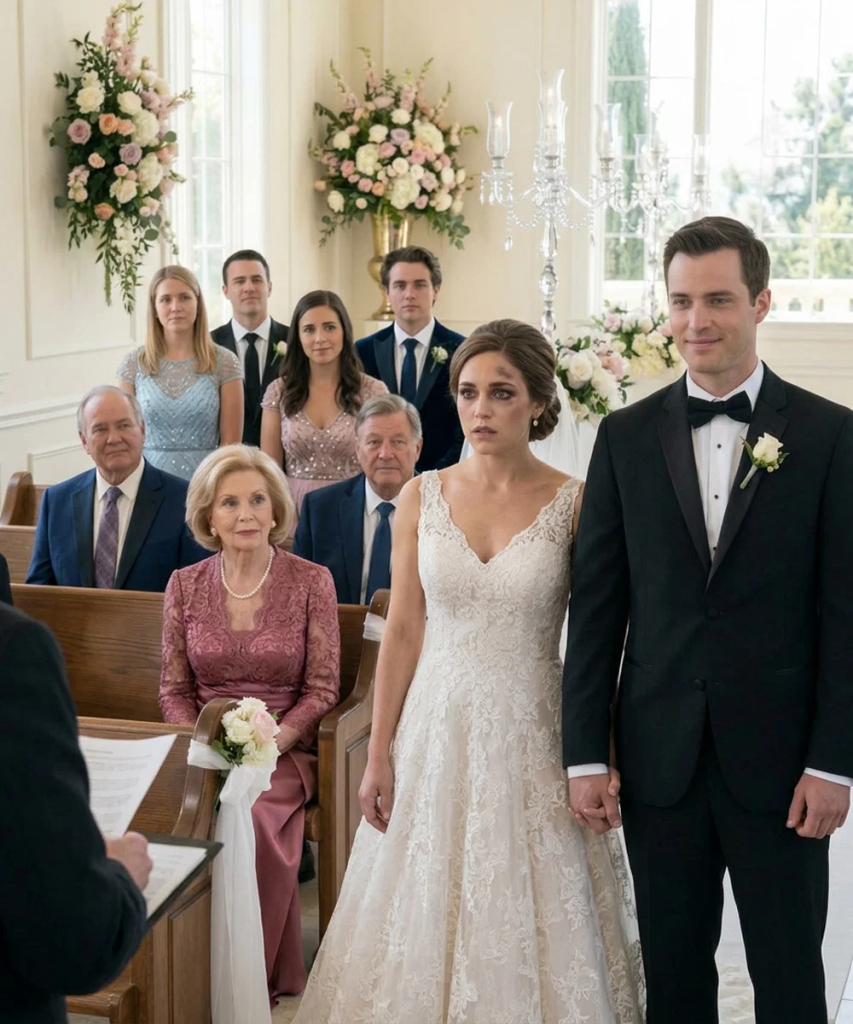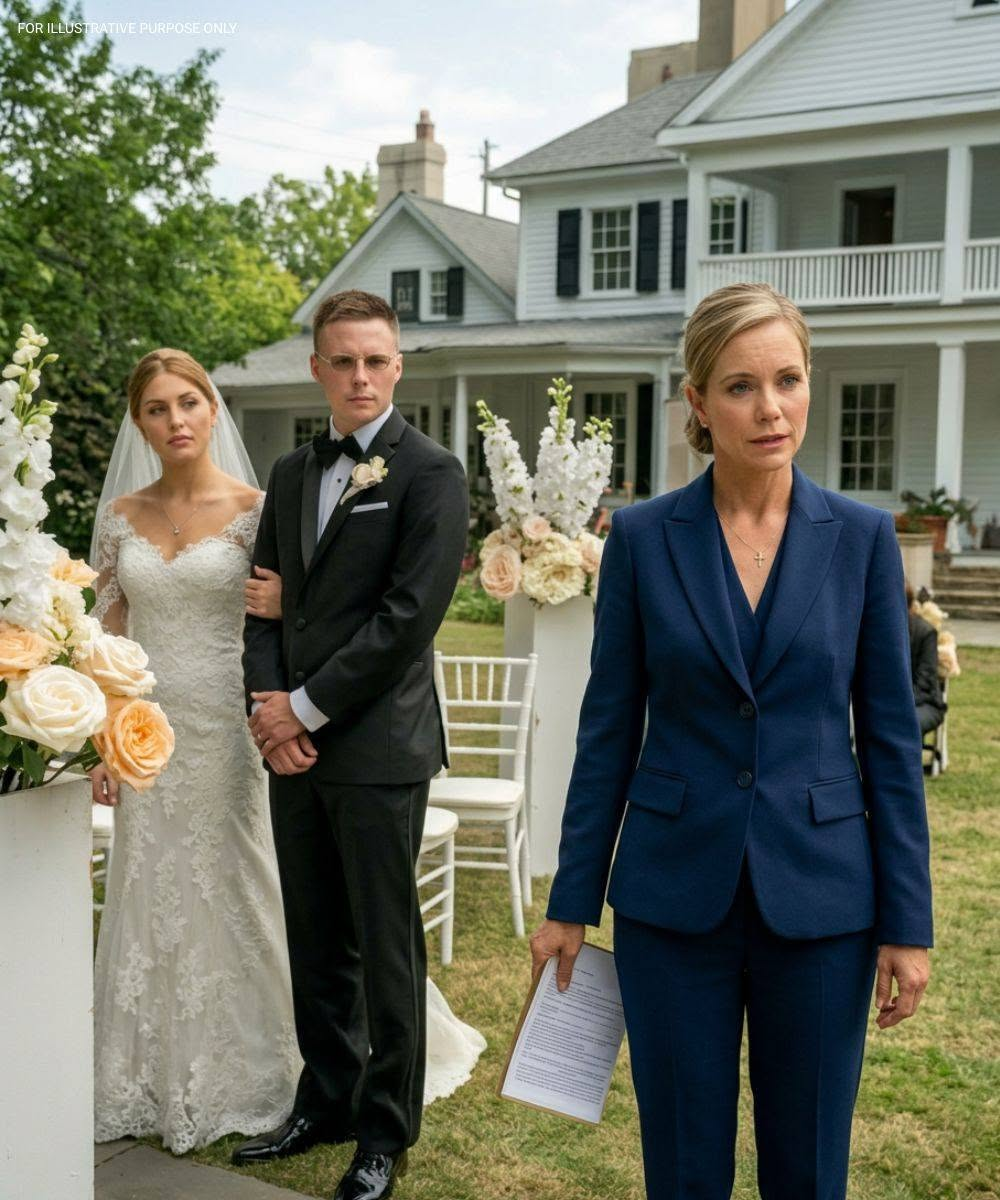
• My Parents Said I Was Not Invited To My Brother’s Wedding After I Gifted Him A House

    My Parents Said I Was Not Invited To My Brother’s Wedding After I Gifted Him A House

    The House Deed

    My parents told me I wasn’t invited to my brother’s wedding—despite the fact that I had purchased the house he lived in, a property worth $770,000.

    “It’s only for close family,” my father explained casually. My brother just laughed it off.

    So while his extravagant wedding reception—with nearly two hundred guests—was taking place inside that very house, I sold the property out from under him. What happened when the bride’s family discovered the truth stopped the entire celebration cold.

    That single sentence—“You’re not on the guest list”—spoken by my brother about his own wedding, in a home I had paid for, cost him $770,000.
    It cost my father his daughter.
    And it cost me the final illusion that my own family would ever truly consider me one of them.

    My name is Sierra. I’m thirty-one years old.

    To understand how it came to this, we have to go back seventeen years—to a rainy Tuesday in October when my mother died and everything in my life changed.

    The Day Everything Changed

    My mother’s funeral was gray and damp, the air heavy with the scent of lilies that I still can’t stand to this day. My father, Gerald, stood stiffly beside the casket. He wrapped an arm around my brother Dalton, who was sixteen and already taller than him.

    “You’re the man of the house now,” he announced loudly.

    I was fourteen, standing just a few feet away. I had just lost my mother.

    Yet no one said anything to me. No comforting hand on my shoulder. No hug. No acknowledgment. People spoke to my father and brother while moving around me as if I were invisible.

    The only person who noticed me was Patricia Callahan—my mother’s closest friend.

    She knelt in the wet grass, ignoring her expensive dress, and took my hands firmly.

    “I promised your mom I’d always look out for you,” she told me fiercely. “Don’t ever forget that.”

    At the time, I didn’t fully understand the importance of those words.

    But my mother had known what would happen after she was gone.

    Two Different Futures

    After her death, our family split in two.

    Dalton’s life filled with opportunity.
    He got a nearly new Mustang at sixteen.
    My father took him on college scouting trips.
    His education fund grew steadily.

    Meanwhile, I was mostly ignored.

    When I needed money for textbooks, my father barely looked up from the television.

    “Ask your brother,” he said. “He controls the budget.”

    At sixteen I started working before school—4:30 a.m. shifts at a coffee shop.

    Later I discovered something worse: my mother had created equal college funds for both of us before she died. After she was gone, my father quietly transferred my entire fund to Dalton.

    No explanation. No apology. Just silence.

    Building a Life Alone

    At eighteen, I left home with a suitcase and a scholarship I had earned myself.

    I never looked back.

    Over the next decade I built my own career in real estate. I wasn’t wealthy or lucky—I simply worked hard and learned early that no one was going to save me.

    Then, after three years of silence, my father suddenly called.

    Not to reconnect.

    To make a request.

    “Your brother needs a house,” he said. “He’s serious about a girl from a good family. Help him out.”

    Part of me—the part that was still that lonely fourteen-year-old girl—wanted to believe this was my chance to finally be seen.

    So I bought Dalton a beautiful four-bedroom colonial house for $770,000.

    And I gave him the keys.

    What I didn’t tell him was that the deed remained in my name.

    Being Erased

    At first, everything seemed fine.

    But slowly, I began to disappear from their lives.

    I wasn’t invited for holidays.
    Christmas gatherings happened without me.
    My brother grew distant.

    Then one evening I saw something online.

    Nicole—Dalton’s fiancée—had posted a photo of their Christmas celebration in the house I bought.

    The caption read:

    “Family Christmas at our home. Just us.”

    I realized then what was happening.

    I wasn’t part of their story anymore.

    Later, a colleague informed me that Dalton had even consulted a lawyer about adverse possession—a legal method of claiming ownership of property.

    My brother wasn’t just living in the house.

    He was researching how to take it from me.

    The Wedding Invitation That Never Came

    When Dalton’s wedding invitations went out, I didn’t receive one.

    When I confronted him, he replied:

    “The guest list is tight. Don’t make this about you.”

    I reminded him the wedding was happening in my house.

    His response stunned me.

    “It’s been my house for years.”

    When I called my father, he dismissed me.

    “I gave it to him,” he said. “Just let your brother be happy.”

    That’s when I finally understood something important.

    My resilience had never impressed my father.

    It had simply made me easy to exploit.

    The Decision

    I contacted an attorney.

    He confirmed what I already suspected:

    Legally, my brother had no claim to the property.

    So I listed the house for sale.

    Three weeks later, a young family offered full price.

    We scheduled the closing for June 14th—one day before the wedding.

    The Wedding Night

    On June 15th, two hundred guests gathered at the house for Dalton’s lavish reception.

    At 8:47 p.m., two things happened.

    A courier delivered a legal Notice to Vacate to the front door.

    And Dalton, my father, and his new bride received an email explaining the truth.

    The house had been sold.

    Dalton had thirty days to leave.

    When the bride’s mother read the documents and asked who “Sierra Mercer” was, my brother tried to lie.

    But a family friend spoke up.

    “She’s his sister,” she said.
    “And she paid for this house.”

    The room fell silent.

    Within hours, the wedding reception ended.

    The Aftermath

    My father called the next morning furious.

    “You ruined your brother’s wedding,” he said.

    “No,” I replied calmly.
    “I sold my property.”

    Dalton later called too—first threatening to sue, then apologizing.

    Seventeen years too late.

    A New Beginning

    The $770,000 from the sale didn’t feel like a victory.

    It felt like balance finally being restored.

    I used part of the money to pay off my student loans—the ones I had because my father stole my college fund.

    Then, together with Patty, I created the Linda Mercer Foundation, named after my mother.

    The foundation provides scholarships for girls who lose their mothers young—girls who must build their lives alone, just like I did.

    Moving Forward

    Dalton and his wife eventually moved into a small apartment. His reputation within her family never recovered.

    As for me, I bought a modest house with a garden and a small porch.

    The deed is entirely in my name.

    By the front door stands a framed photo of my mother.

    It’s the first home I’ve ever had that belongs completely to me.

    And for the first time in my life, that feels like enough.
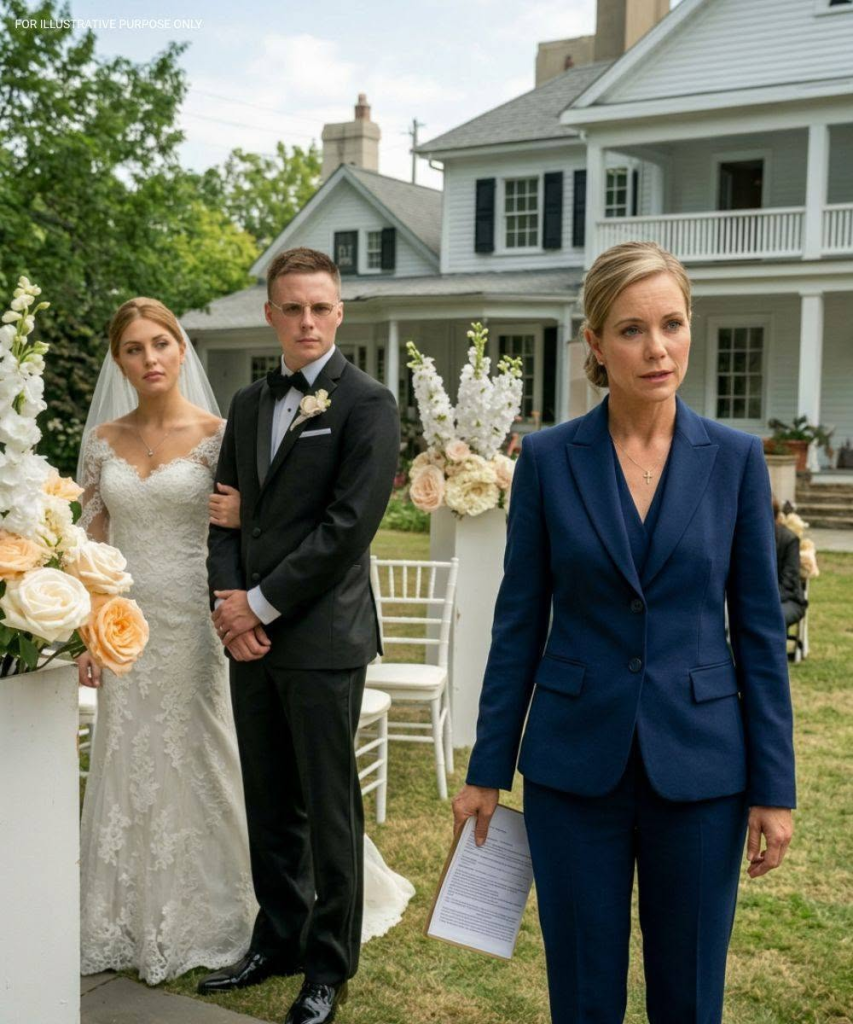
  • He Was Driving His Millionaire Fiancée Home… Until He Saw His Ex-Wife Standing On The Side Of The Road With Two Babies In Her Arms — And The Lie That Tore His Family Apart Began To Unravel, Revealing A Truth She Never Expected Him To Find

    He Was Driving His Millionaire Fiancée Home… Until He Saw His Ex-Wife Standing On The Side Of The Road With Two Babies In Her Arms — And The Lie That Tore His Family Apart Began To Unravel, Revealing A Truth She Never Expected Him To Find


    The Road Where Everything Stopped

    The afternoon heat shimmered above the two-lane highway that curved through the rolling countryside outside Lexington, Kentucky, while the late summer sun pressed down on the windshield of my graphite-colored SUV, and for a brief moment I had been listening only halfheartedly to the woman beside me describe floral arrangements for our engagement party, thinking instead about quarterly projections and an upcoming acquisition that had consumed most of my waking hours.

    “Slow down, Ryan. Pull over right now.”

    The sharpness in Celeste Wainwright’s voice sliced through the quiet hum of the engine, and because I had grown accustomed to reacting quickly to her impatience, I pressed the brake pedal almost without thinking, feeling the vehicle shudder slightly as dust lifted from the shoulder of the road and drifted across the glass.

    I turned toward her, puzzled, while she leaned forward and pointed past the hood with manicured fingers that trembled not from fear but from disdain.

    “Look over there. Isn’t that your ex-wife? I swear that’s her.”

    I followed the line of her gaze, and whatever words had been forming in my mind dissolved before they could reach my lips.

    On the edge of the highway, beneath the relentless sun, stood a woman I once knew more intimately than I had ever known myself.

    Her name was Maren Caldwell, although she had once signed it as Maren Halbrook, and for a moment my memory overlaid the present image with a different one: the way she used to glide through charity galas in tailored navy gowns, the way her laugh carried across polished floors in downtown Chicago when we still believed our partnership was unbreakable.

    The woman before me bore little resemblance to that polished figure.

    She looked thinner, her shoulders narrower beneath a faded cotton blouse, and her sandals appeared worn from miles of walking, while strands of chestnut hair clung to her temples as though even the breeze had grown too tired to lift them.

    Yet it was not her appearance that tightened my grip around the steering wheel until my knuckles whitened.

    Strapped against her chest were two infants secured in soft carriers, their small heads resting against her, their pale blond hair catching the light in a way that made my breath stall inside my lungs.

    They were identical.

    And their features were unmistakable.

    Two Children I Never Knew

    At Maren’s feet lay a canvas bag half-filled with aluminum cans and plastic bottles, the kind people collected for deposit refunds, and the sight of it felt like a quiet accusation that did not need words in order to be understood.

    The last time I had seen her, she had been escorted out of our lakefront home by security staff I employed, after evidence had surfaced suggesting she had diverted funds from one of my development projects and betrayed my trust in ways I believed were unforgivable.

    Now she stood on the shoulder of a rural road, cradling two children who carried my face in miniature.

    Celeste rolled down her window before I could stop her.

    “Well, if it isn’t Maren Caldwell,” she called out with a thin smile that never quite reached her eyes. “I guess life finally put you where you belong.”

    Maren did not answer her.

    She did not even glance in Celeste’s direction.

    Instead, she lifted her eyes to meet mine, and in that look there was no rage, no theatrical appeal for sympathy, only a depth of sorrow that felt older than the dust on the roadside, as though she had been carrying it quietly for months without expecting anyone to notice.

    The babies stirred against her chest, and she adjusted the fabric around their heads to shield them from the wind, her hands steady despite everything.

    Celeste reached into her handbag, withdrew a folded bill, and flicked it out of the window so that it drifted down near Maren’s sandals.

    “For formula,” she said lightly. “Don’t say we never helped.”

    The money landed in the dirt, and Maren looked down at it briefly before lifting her gaze back to me, holding it there for a heartbeat that felt far longer than it should have, and then she bent to retrieve her bag of recyclables instead of the bill.

    Without speaking, she turned and began walking along the road, the twins resting against her as if she were the only stable thing in their small universe.

    Something inside my chest shifted in a way that made it difficult to breathe.

    The Night I Turned Her Away

    As the SUV idled on the shoulder, I found myself pulled backward into a night eighteen months earlier, when accusations had filled our living room like smoke that refused to clear.

    There had been bank transfers traced to accounts under Maren’s name, photographs allegedly showing her meeting a competitor in a hotel lobby, and a diamond pendant that once belonged to my mother discovered inside her jewelry box after she insisted she had never touched it.

    Celeste had been the one to uncover the evidence, presenting it with a calm efficiency that seemed almost admirable at the time, and I remember how certain I felt, how convinced I was that betrayal had been confirmed beyond question.

    Maren had stood before me in that marble-floored living room, her hands trembling not from guilt but from disbelief.

    “Ryan, this isn’t what it looks like. Please, just listen to me.”

    I had refused.

    Because anger is easier to hold than doubt, and pride often masquerades as strength, I dismissed her explanations as desperation and instructed our attorney to proceed with the divorce, ignoring the way her voice cracked when she tried to finish a sentence I never allowed her to complete.

    There had been something she was trying to tell me that night, something urgent and unfinished, but I silenced it before it could take shape.

    Now, staring at the fading figure of the woman I once called my wife, I understood that I had never truly heard her.

    A Decision Made in Silence

    Celeste adjusted her sunglasses and turned toward me with impatience flickering across her features.

    “Can we go now? I don’t want to sit here all day.”

    Her tone carried an edge that suggested irritation rather than compassion, and although part of me wanted to step out of the vehicle and run after Maren, to demand answers or perhaps to offer an apology I should have given long ago, another part of me recognized that any confrontation in Celeste’s presence would accomplish nothing except alert her.

    If those children were mine, and every instinct told me they were, then something far more deliberate than a misunderstanding had taken place.

    I eased my foot back onto the accelerator and merged into traffic, leaving Celeste at an upscale boutique in downtown Lexington under the pretense of a meeting I needed to attend alone, and then I drove directly to the headquarters of Halbrook Infrastructure, the engineering firm I had built from modest beginnings into a respected regional enterprise.

    From the top floor of our glass-walled building, the city stretched outward in tidy grids, while inside my office the quiet felt almost oppressive.

    I closed the door and dialed the number of the only person I trusted to untangle complications without announcing his presence.

    Gideon Pike had once been a compliance auditor before shifting into private investigations, and his meticulous approach to details had saved my company from costly missteps more than once.

    When he answered, his voice carried the steady calm I needed.
    “Gideon, I need you to look into Maren Caldwell,”
     I said, forcing my tone to remain even despite the storm inside me. “Where she’s been since the divorce, how she’s been supporting herself, and especially the two children she’s with.”

    There was a brief pause before he responded.

    “You think they’re yours.”

    It was not a question.

    “I need to know the truth,” I replied. “And reopen everything from the divorce. The transfers, the photos, the pendant. Every detail. I want to understand exactly how that evidence appeared.”

    He did not hesitate.

    “I’ll start today.”

    Three Days of Waiting

    The next seventy-two hours unfolded with a tension that made sleep elusive and conversation with Celeste almost unbearable, because every time she spoke about wedding venues or honeymoon destinations, I found myself replaying the image of Maren shielding the twins from the wind.

    On the third evening, Gideon arrived at my office carrying a slim folder that seemed far too small to contain the magnitude of what it represented.

    He sat across from me without ceremony.

    “The children were born eight months after your divorce was finalized,” he began, opening the folder to reveal hospital records. “Maren never filed for child support, and she declined assistance from your former in-laws, which suggests she was trying to keep you uninvolved.”

    My throat tightened as he continued.

    “As for the financial transfers, they were routed through an account opened under her name, but the IP addresses trace back to a device registered to Celeste Wainwright. The hotel photos were taken on a night when Maren’s phone was pinging from a prenatal appointment. And the pendant was purchased at auction by a third party two weeks before it was ‘found’ in your home.”

    I felt the room tilt slightly.

    “You’re saying none of it was real.”

    Gideon met my gaze steadily.

    “I’m saying it was constructed. Deliberately.”

    A Truth Worse Than Betrayal

    The weight of his words settled slowly, because it was not merely that Maren had been innocent, but that I had been manipulated into believing otherwise, and that I had chosen convenience over trust at a moment when patience might have changed everything.

    “There’s one more thing,” Gideon added carefully. “The twins’ birth certificates list Maren as the sole parent. There is no father recorded.”

    The implication struck harder than any accusation ever could.

    Maren had carried and delivered our children alone, without my presence, without my support, while I moved forward with engagement plans and corporate expansions, convinced I had been wronged.

    For a long moment, neither of us spoke.

    Finally, I exhaled slowly.

    “I need to see her.”

    Gideon nodded.

    “I can arrange it quietly.”

    The Woman on the Road

    The following morning, guided by information Gideon obtained through discreet inquiries, I drove alone to a modest apartment complex on the outskirts of town, where the paint peeled slightly from the stair railings and potted plants lined narrow balconies as small attempts at beauty.

    Maren answered the door holding one of the twins against her hip, while the other slept in a portable crib behind her, and although surprise flickered across her face, she did not appear frightened.

    For a moment we simply stood there, the distance between us heavier than the space itself.

    “Ryan,” she said softly.

    Her voice carried the same warmth I remembered, though tempered by exhaustion.

    “I didn’t know how to reach you,” I began, aware that explanations sounded hollow even as they formed. “I learned the truth about what happened.”

    She studied my expression carefully.

    “It took you a long time.”

    There was no accusation in her tone, only quiet acknowledgment.

    I stepped inside at her invitation, noticing how tidy the small apartment was despite its simplicity, how carefully she had arranged the children’s blankets and bottles.

    “Why didn’t you tell me about them?” I asked gently, glancing toward the crib.

    She shifted the baby slightly against her shoulder.

    “I tried that night,” she replied. “You wouldn’t let me finish.”

    Her words settled between us with a finality that required no embellishment.

    What Comes After Truth

    We sat at her kitchen table, sunlight filtering through thin curtains, and spoke not as adversaries but as two people reckoning with consequences neither had anticipated, because while the deception had been orchestrated by someone else, the fracture in our marriage had widened due to my refusal to question what I was shown.

    “I never wanted your money,” Maren said quietly. “I wanted you to trust me.”

    I nodded, because there was nothing else to say.

    Outside, a breeze moved through the trees, gentler than the wind on that highway days earlier, and I realized that repairing what had been broken would require more than apologies or legal corrections.

    It would require humility, consistency, and a willingness to face the ways I had failed.

    As I looked at the twins, whose small hands curled instinctively around their mother’s blouse, I understood that the road where everything stopped had also been the place where truth began to surface, and that whatever happened next, I would no longer allow pride to silence what mattered most.

  • At my son’s wedding, he quietly asked me to leave, saying his fiancée didn’t want me there. I held back my emotions and walked out without making a scene, my hands trembling behind my back. But the next morning, he called as if nothing had happened: “Mom… I need the ranch keys.”

    At my son’s wedding, he quietly asked me to leave, saying his fiancée didn’t want me there. I held back my emotions and walked out without making a scene, my hands trembling behind my back. But the next morning, he called as if nothing had happened: “Mom… I need the ranch keys.”

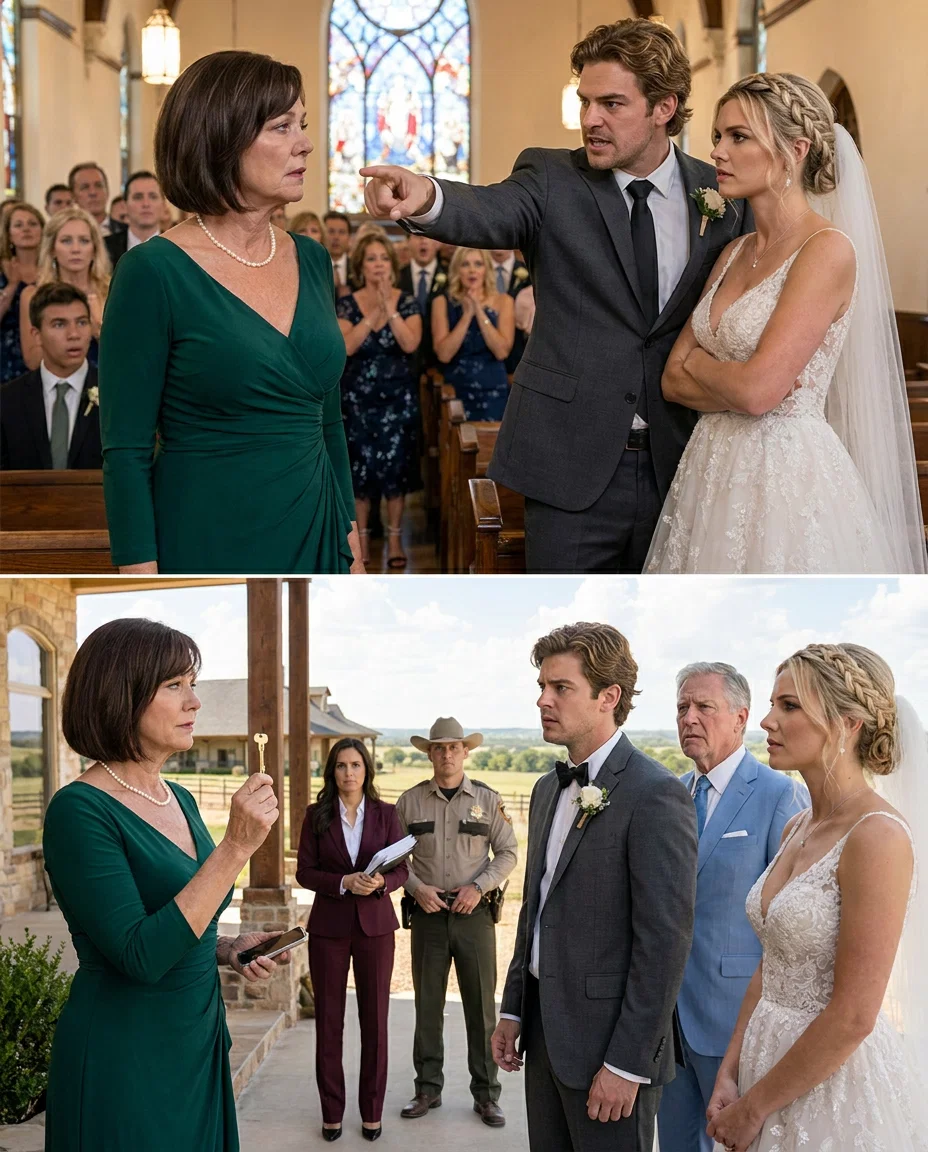
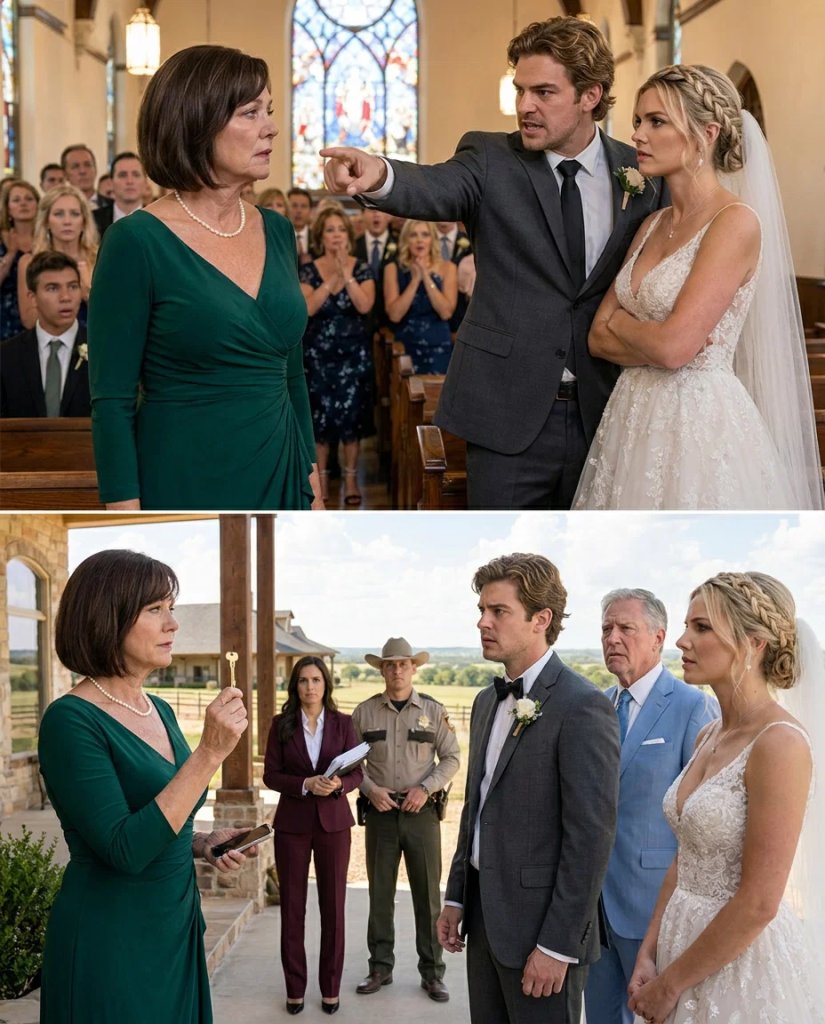
    The moment my son finished his wedding vows, he pointed toward the church doors and told me to leave.

    Not gently. Not privately. In front of two hundred guests, with cameras still recording and celebration waiting outside.

    “Leave, Mom,” Ethan said sharply, his face flushed under the stained-glass light. “Claire doesn’t want you here.”

    A ripple moved through the crowd—shock mixed with curiosity. People are always drawn to moments like this when it’s not their own life falling apart.

    I looked at my only child, standing beside his bride like he was defending something precious. Claire didn’t even try to hide her satisfaction. Her hand rested lightly on his arm, her smile small and cutting.

    “Ethan,” I said quietly.

    “No.” He cut me off. “You always make things about you. Today isn’t about you. Just go.”

    My hands trembled behind my back, hidden in my navy dress. I had worn the pearls his father gave me before he passed. I had baked for the rehearsal dinner because Claire said catered food felt “too impersonal.” I had even covered the cost of the flowers when Ethan said money was tight.

    And now he looked at me like I didn’t belong.

    I swallowed the humiliation and simply nodded.

    “Congratulations,” I said.

    I walked out without crying. That, more than anything, seemed to disappoint them.

    Outside, the cold Wyoming wind hit hard. Beyond the parking lot stretched the land leading to Horizon Ranch—my ranch, though Ethan had started calling it “ours” after Claire entered his life.

    I sat in my truck for a long moment, staring back at the church.

    I remembered Ethan as a child, running through the fields. As a teenager, promising he would never sell his father’s land. And just weeks ago, asking why I kept certain documents locked away.

    Now I understood why.

    The next morning, he called.

    “Mom, I need the ranch keys,” he said casually. “Claire and I are going there for photos. Her dad wants to take a look at the property.”

    No apology. No regret.

    Just the keys.

    Something inside me settled into a calm I hadn’t felt before.

    “You don’t own it,” I said quietly.

    Silence.

    Then a short laugh. “What?”

    “You heard me.”

    By mid-morning, he was at my door, knocking hard. Claire stood behind him in sunglasses, and her father waited by their car, watching like he already had everything figured out.

    “What are you doing?” Ethan demanded. “The ranch is family property.”

    “It is,” I replied.

    “Then give me the keys.”

    “No.”

    Claire stepped forward. “This is unnecessary. We have plans. Investors are coming. Ethan told us the land would be available after the wedding.”

    I looked at my son.

    He didn’t meet my eyes.

    That’s when everything became clear.

    “You were going to sell it,” I said.

    Ethan hesitated. “Not all of it. Just part. We could turn it into something bigger—cabins, events—”

    “Your father is buried on that land.”

    “That’s emotional thinking,” he said. “Not practical.”

    Her father finally spoke, his tone smooth. “Mrs. Walker, let’s be reasonable. Ethan is the heir. Legally—”

    “Legally?” I repeated.

    For years, people like him had mistaken my quiet nature for ignorance. They didn’t know I had managed every detail of that ranch for decades. They didn’t know I had protected it legally in ways they couldn’t undo.

    They didn’t know the truth.

    “Ethan,” I said calmly, “your father left you memories. Not ownership.”

    His face changed.

    “The ranch is mine,” I continued. “Every acre. Every right.”

    Claire frowned. “Prove it.”

    “I already have.”

    Within the hour, my lawyer arrived. So did the sheriff.

    Documents were presented. Notices were issued.

    What they thought was theirs… never was.

    Their plans unraveled quickly.

    Ethan looked at me, no longer confident.

    “Mom… please.”

    But something had already changed.

    “No,” I said. “You made your choice.”

    Months later, the ranch remained exactly as it was—protected, peaceful, and still mine.

    People often think revenge is loud and destructive.

    But sometimes, it’s simply standing your ground, keeping what matters, and choosing peace over being taken for granted.

  • As I arrived at my son’s wedding, he blocked my path at the church door and said: “I didn’t invite you, Mom. The whole family decided you’re no longer a part of us.”

    As I arrived at my son’s wedding, he blocked my path at the church door and said: “I didn’t invite you, Mom. The whole family decided you’re no longer a part of us.”

    When I showed up at my son’s wedding, he stepped into the church doorway and stopped me cold. “I didn’t invite you, Mom. The whole family decided you’re no longer a part of us.” I met his eyes, tightened my grip on my purse, and answered quietly, “That’s fine, son… but don’t forget to check your phone.” What no one realized was that, even then, the truth was already on its way.

    When I arrived at my son’s wedding, he was standing at the entrance and blocked my way.

    “I didn’t invite you, Mom,” he said, his voice hard. “The whole family agreed—you’re no longer part of us. Please leave.”

    I smiled, steady and composed. “Alright, son. But don’t forget to check your phone. I’m leaving.”

    When he looked at his phone… you know that moment when your heart seems to stop, yet you’re still on your feet?

    That was exactly how I felt when my son, Daniel, extended his arm in front of me, keeping me from stepping inside the church.

    I looked flawless. I had chosen a deep sapphire dress that cost me $3,000—an impossible sum for someone who had always lived modestly. I had spent three hours at the salon that morning.

    My nails were perfect, my hair styled elegantly, exactly as the stylist said a groom’s mother should appear. I wore a perfume I had saved for years, waiting for a moment like this.

    And what moment could matter more than my only son’s wedding?

    The church was breathtaking. White flowers covered every inch of the entrance.

    Guests stood outside in formal clothes, laughing, taking pictures. I watched it all with a practiced smile, gripping tightly the leather handbag that had once belonged to my own mother.

    Inside my purse, my phone had been vibrating nonstop—messages I ignored, calls I refused. I already knew what was about to happen.

    As I stepped forward, my son appeared in the doorway like a shadow.

    Daniel looked different—thinner, tense, with dark circles beneath his eyes. The charcoal suit he wore was clearly expensive—far beyond what he could usually afford. I knew exactly who had chosen it.

    Behind him stood two security guards, arms crossed, as if I were a threat. As if being a mother were dangerous.

    “Mom…” he began, but his voice faltered.

    He swallowed and looked away.

    I said nothing. I simply waited.

    My heart was pounding so loudly I could feel it behind my eyes, yet my face remained calm.

    “I didn’t invite you here.”

    Silence.

    People nearby started to notice. Whispers spread. Curious eyes turned toward us.

    “The whole family decided… you’re no longer part of us,” he continued, struggling through the words. “Please, Mom… just leave.”

    Each word cut like a blade.

    But I didn’t cry. Not there. Not in front of them.

    I glanced inside the church and saw her—Vanessa, the bride—standing confidently among the guests in her fitted white dress, showing off exactly what she always liked to display.

    She met my eyes and gave me that crooked smile—the smile of someone convinced she had already won.

    I took a slow breath.

    “Alright, son,” I said quietly. “But don’t forget to check your phone.”

    Daniel frowned, confused. He opened his mouth to speak, but I had already turned away.

    I walked down the steps slowly, one step at a time, my head held high, my posture steady.

    Like my mother, Mrs. Elena, always taught me—dignity belongs to no one but yourself.

    I got into the car that had been waiting with the engine running.

    Only after the door closed, and the car pulled away from that beautiful church—and from the son I barely recognized—did a single tear slip down my cheek.

    But it wasn’t a tear of defeat.

    It was the tear of someone who had just set everything in motion.

    Because inside that phone I told Daniel to check… was everything.

    Every lie. Every manipulation. Every secret Vanessa had hidden from him for two years.

    And in ten minutes, when he opened that scheduled message, the wedding she had dreamed of would collapse like sand.

    But to understand how I reached that moment, I have to go back.

    Back to the day my husband, Robert, took his last breath and left me with one final request:

    “Protect our son, even from himself.”

    Two years before the wedding, I sat beside a hospital bed that creaked with every movement.

    The sharp smell of disinfectant filled the air. The fluorescent lights flickered above.

    Robert held my hand with surprising strength.

    Sixty-three years of life. Forty-two years of marriage. All reduced to that cold room.

    Cancer had taken him quickly—pancreatic cancer. Silent, ruthless. By the time you notice it, it’s already too late.

    Robert had always been a quiet, hardworking man. Every morning at five, he would open the auto parts factory we had built together from nothing.

    I handled the office—the paperwork, the accounts, the suppliers. We were partners in everything, even if no one truly knew it.

    To the outside world, Robert was just an ordinary worker.

    We lived simply. A modest house in a middle-class neighborhood. No luxury cars. No designer clothes. No extravagant dinners.

    He always said, “Money shouts when you show it off… and whispers when you keep it.”

    And we kept it quiet.

    “Promise me something,” he whispered that final night, his voice weak. “Don’t tell anyone about the money yet. Our son needs to grow up first.”

    I promised.

    Three days later, I buried him under a gray, rainy sky.

    Daniel stood beside me, holding a black umbrella.

    He was forty at the time. Single. Working a decent job in tech. Living comfortably, but nothing extraordinary.

    After the funeral, I met with our lawyer, Mr. Harrison, who had known Robert for decades.

    “I’ll be direct,” he said, opening a thick folder. “Your husband left a considerable estate.”

    Considerable was an understatement.

    The factory alone was worth over a million dollars.

    Our home, fully paid off and renovated, was worth nearly three million.

    We owned a rental apartment bringing in steady monthly income.

    There were investments. Savings. Even a piece of land inherited from his parents.

    In total—over five million.

    I sat frozen.

    “There’s more,” Mr. Harrison added, sliding me a sealed envelope. “Your husband’s will.”

    My hands trembled as I opened it.

    “Leave everything to you,” Robert had written. “Daniel will receive his share when he’s ready—when he proves he can value what we built.”

    I folded the letter and hid it away.

    I didn’t tell my son.

    Not yet.

    I continued living simply. Same house. Same habits. The factory ran under a trusted manager. The income arrived quietly each month.

    Daniel assumed I was living off a small pension.

    He even offered to help me financially sometimes.

    “I’m fine, son,” I would say. “Don’t worry.”

    I believed I was protecting him.

    But six months later, everything changed.

    He showed up one afternoon, smiling in a way I hadn’t seen before.

    “Mom, I want you to meet someone.”

    Behind him stood a woman.

    Blonde. Perfectly styled. Dressed far too boldly for a casual visit.

    She couldn’t have been more than thirty.

    “Hello, mother-in-law,” she said brightly, extending her hand. “I’m Vanessa. So nice to meet you.”

    The moment I touched her hand, something inside me tightened.

    I didn’t know it yet, but she was about to change everything.

    She walked into my home as if she already owned it.

    Didn’t ask to sit. Didn’t take off her heels. Just dropped onto the sofa and began scanning the room with sharp, calculating eyes.

    “What a charming house,” she said. “Very… vintage.”

    Vintage.

    Daniel sat beside her, glowing, completely blind.

    “She’s an influencer,” he said proudly. “She has thousands of followers.”

    Vanessa smiled modestly, but I saw the satisfaction in her eyes.

    She asked questions—too many questions.

    About the house. The business. My late husband. The future.

    Her eyes lingered on my desk.

    At one point, she even opened a drawer.

    “Oops, sorry,” she said quickly. “Bad habit.”

    But I had seen it.

    She had looked.

    And she had understood.

    That night, lying in bed, I knew exactly what had entered my life.

    A woman who didn’t love my son.

    A woman who had seen something—and started calculating.

    What I didn’t know was that she was already ahead of me.

    And within three months, she would make a move that would change everything between my son and me.

    Three months later, my phone rang.

    “Mom, I proposed. She said yes.”

    Ninety days.

    And they were already engaged.

    The wedding was set for four months later.

    Too fast. Far too fast.

    But I said nothing.

    “Congratulations, son.”

    Two weeks later, they came back.

    Vanessa sat like she owned the place.

    “Let’s talk about the wedding,” she said. “I’ve chosen everything—venue, dress, church. It’s going to be perfect.”

    Then she looked straight at me.

    “Since you’re the groom’s mother… we thought you could help with the expenses.”

    It wasn’t a request.

    It was a demand—wrapped in a smile.

  • When I Entered The Courtroom In Full Uniform, Dad Let Out A Quiet Laugh, And Mom Just Sighed. The Judge Froze Mid-Sentence, His Voice Breaking As He Said, “DEAR GOD… IT’S REALLY HER.” Silence Filled The Room. They Never Imagined Who I Had Become


    When I Entered The Courtroom In Full Uniform, Dad Let Out A Quiet Laugh, And Mom Just Sighed. The Judge Froze Mid-Sentence, His Voice Breaking As He Said, “DEAR GOD… IT’S REALLY HER.” Silence Filled The Room. They Never Imagined Who I Had Become

    PART 1 — The Uniform They Thought Was a Costume

    The moment I pushed through the heavy courtroom doors, the room went quiet in a way that didn’t feel normal.

    Not the polite hush people give a uniform.

    This was the sudden silence of strangers recalculating their assumptions.

    My service dress uniform sat crisp on my shoulders. Ribbons aligned. Medals catching the overhead light. I walked down the aisle on polished stone, each step a clean click that echoed off wood paneling and old marble.

    Third row. Right side.

    My parents.

    My father, Richard Hale, leaned toward my mother and let out that small, private laugh he saved for one kind of moment—when he wanted to make someone feel smaller without saying it out loud. My mother, Diane Hale, sighed like she was watching a teenager show up overdressed to the wrong party.

    Between them sat my older brother, Grant Hale, in a tailored suit, jaw tight, hands folded like he owned the air around him.

    I didn’t look away.
    I didn’t smile.
    I didn’t ask permission to exist.

    At the government table, an Assistant U.S. Attorney shifted to make space. I set my binder down, squared it to the edge like a habit, and faced forward.

    “All rise,” the bailiff called.

    Judge Harrison entered, robe flowing, a man in his sixties with sharp eyes and controlled movements. He adjusted his glasses, glanced at the docket, and began reading like it was any other morning.

    “Case 24-CR-081. United States versus—”

    His gaze lifted.

    It found me.

    And stopped.

    For half a second, the courtroom held its breath. Then the judge leaned toward the microphone, voice catching in a way I didn’t expect from a man like him.

    “Dear God…”

    Silence thickened.

    “It’s really her,” he said, quieter now—like he’d spoken a name the room wasn’t ready for.

    Then he said two words that landed like a stamp.

    “Operation Nightshade.”

    Somewhere behind me, my father’s laugh died mid-breath.

    PART 2 — The Moment the Room Changed Sides

    Judge Harrison’s eyes stayed on me.

    “Major Hale,” he said, the title landing like a gavel all by itself. “You wrote the Nightshade affidavit.”

    I didn’t correct him. Not out loud, anyway. Operations don’t belong to one person.

    But I had built the timeline.
    I had structured the evidence.
    I had sworn the warrant.

    “Yes, Your Honor,” I said.

    His nod was slow. Heavy. Final.

    “Noted.”

    And just like that, the weight moved—off my shoulders and onto the defense table.

    Grant turned his head just enough to look at me. His eyes were glossy with something close to disbelief, like he’d never pictured me in a room where my words mattered.

    My mother’s fingers drifted to her throat, searching for a necklace that wasn’t there. My father stared forward, face stiff, trying to force reality back into the shape he preferred.

    Two weeks earlier, they’d laughed for real at Sunday dinner.

    Grant had leaned back like the world was his, even with an indictment sitting on the counter like junk mail.

    “Mix-up,” he’d said, casual as a weather report.

    Wire fraud.
    Export violations.
    Conspiracy.

    Dad had beamed. “My son’s attorneys will crush it.”

    Mom nodded, bright and brittle. “Once the adults talk, this disappears.”

    Then Grant looked at me with that smirk he wore when he wanted an audience.

    “Hey, counselor,” he said loudly. “Maybe you can swing by the courthouse, file something for my team. Grab them coffee.”

    They laughed. Easy. Certain. Cruel in its comfort.

    I smiled back, polite as glass.

    Because in my world, silence isn’t emptiness.

    It’s control.
    PART 3 — What They Never Knew About My “Quiet” Life

    In our house, the hierarchy was always clear.

    Dad was the sun. Mom orbited him and called it loyalty. Grant was the heir. The bright planet everyone watched.

    And I was the extra.

    I learned early how to take up less space.

    At eight, I folded my own laundry because Mom was “helping Grant.”
    At twelve, I laughed at Grant’s jokes before Dad could decide they weren’t funny.
    At sixteen, I kept my biggest hopes quiet, because loud hopes got crushed in our house.

    I left for college on scholarship. Dad said he was proud in the same tone he used when he found a good deal on a lawn mower.

    “Smart,” he said. “Don’t expect us to pay.”

    Grant got a graduation party.

    I got a handshake.

    ROTC gave me something my family couldn’t rewrite—standards that didn’t bend around Grant’s ego. Instructors who didn’t care who my parents were. Only whether I showed up prepared.

    I commissioned and went into legal work because it was the only kind of fight where the rules were sharper than personalities.

    In court, evidence matters.

    People don’t get to decide you’re small just because it makes them comfortable.

    I climbed fast—not because I loved promotions, but because I loved competence.

    And then one day, a boring discrepancy hit my desk.

    A shipment log.
    A misclassified component.
    A paper trail that didn’t match what the system claimed.

    It started like routine.

    Then it didn’t.

    Because buried in the shell-company paperwork was a name I recognized like a bruise.

    Hale Ridge Consulting.

    Grant’s “startup” label.

    His favorite kind of lie—one with clean fonts and vague language.

    I told myself it couldn’t be him.

    Then I pulled a signature off a document and saw his looping G. The flourish he practiced on birthday cards to look important.

    That was the moment my life split cleanly into before and after.

    I opened a new file.

    And I named it Nightshade—because some things look harmless until they kill what they touch.

    PART 4 — The Case That Became a Landmine

    Nightshade didn’t grow loud.

    It grew precise.

    Dubai routing.
    Cyprus intermediaries.
    Invoice fraud.
    Export categories deliberately mislabeled.

    Every time we closed a door, Grant found another hallway—because he didn’t see laws as walls.

    He saw them as suggestions.

    When the evidence locked into place, I did the hardest thing I’ve ever done.

    I walked into my supervisor’s office, stood at attention, and recused myself from prosecution.

    Not from the truth.

    From the role.

    Because convicting my brother at counsel table would let the defense turn my integrity into a headline.

    But testifying to my work?

    That was different.

    That was necessary.

    Grant’s attorneys filed motions fast: improper warrant, biased investigator, personal vendetta.

    Me translated into an insult.

    Then the judge made a request that turned my stomach cold.

    He wanted the originating investigator sworn to the affidavit.

    So I showed up.
    In full uniform.

    Because if they were going to attack the case by attacking me, they were going to do it in the open.

    PART 5 — The Question That Blew Up Their Story

    The defense attorney stood smooth and confident, voice built for courtrooms.

    “Your Honor, this investigation was amateur hour. Major Hale acted out of personal animus.”

    Judge Harrison didn’t react.

    He just looked at me.

    “Major Hale,” he said. “Stand. Approach and be sworn.”

    My palm hit the Bible.

    I spoke the oath.

    The attorney smiled like he thought he’d already won.

    “Major, you have a personal history with the defendant, correct?”

    “Yes,” I said. “He’s my brother.”

    “And you don’t like him.”

    The courtroom cooled by a few degrees.

    “Personal feelings are irrelevant to documented conduct,” I said.

    “That’s not an answer,” he pressed. “Do you dislike him?”

    I felt my mother’s gaze like a blade.

    I kept my voice level.

    “I don’t dislike my brother. I dislike crimes that risk national security.”

    A ripple moved through the room.

    The attorney lifted my affidavit like it was a prop. “This—this so-called Nightshade warrant—was based on assumptions.”

    Judge Harrison’s voice cut clean.

    “Let her answer.”

    I opened my binder.

    And I spoke like I was back in the secure briefing room where facts mattered more than anyone’s ego.

    “On May 12th, at 21:32 Zulu, the defendant’s network credentials accessed a restricted engineering repository,” I said. “The access logs match his token. The download package size matches the encrypted bundle later transmitted to a Dubai IP tied to Hale Ridge Consulting.”

    The attorney tried to interrupt.

    “Let her finish,” the judge snapped.

    I didn’t raise my voice. I didn’t need to.

    I stacked timestamps like bricks.

    SWIFT transfers.
    Invoice numbers.
    Export category citations.
    Chain-of-custody records.

    Grant’s smile was gone.

    My father’s face drained.

    My mother sat frozen like she’d just realized the “quiet daughter” had been building a hurricane in silence.

    The defense attorney sank back into his chair.

    And Judge Harrison’s gavel sounded like a lock turning.

    “Motion denied,” he said. “Bail denied. Defendant remanded.”

    Cuffs clicked shut.

    Grant turned his head once, eyes wet with shock and fury.

    I didn’t move.

    For the first time in my life, the silence wasn’t theirs to use.

    It was mine.

  • “Is that useless old woman going to devour everything again?” my son-in-law shouted, and the table erupted in laughter.

    “Is that useless old woman going to devour everything again?” my son-in-law shouted, and the table erupted in laughter.

    “Is that useless old woman going to devour everything again?” my son-in-law shouted, and the table erupted in laughter. I felt something inside me break. I stood up slowly, wiped my lips, and whispered, “Excuse me.” No one noticed my gaze. No one understood my silence. But the next morning, when the phone rang from the bank… his laughter was the first thing to disappear.

    I was having dinner with my family one Sunday night at my daughter Laura’s house. The table was full, the wine was flowing, and the conversations were constant. I barely spoke; at seventy-two, I’d grown accustomed to listening more than I spoke. Then, amidst the noise, my son-in-law Javier burst out laughing and said loudly, “Is that useless old woman going to eat everything again?” Some tried to hide their laughter, but several laughed. No one reprimanded him.

    I felt the blood boil in my cheeks. It wasn’t the first time he’d made a comment like that, but it was the first time he’d done it in front of everyone, without the slightest shame. I looked at my daughter, waiting for her to say something. She looked down at her plate. In that moment, I understood that I was alone at that table.

    I didn’t reply. I’ve never been one for scenes. I simply put down my silverware carefully, dabbed my lips with my napkin, and stood up with what little dignity I had left. “Excuse me,” I murmured. No one tried to stop me. Behind me, the laughter continued for a few more seconds, until the conversation changed the subject, as if nothing had happened.

    As I put on my coat in the entryway, I remembered all the times I had helped that family. The money I lent them when Javier wanted to open his business. The hours I spent babysitting my grandchildren so they could work. The bills I silently paid when things weren’t going well. I never asked for recognition, only respect.

    That night I didn’t cry. The humiliation was too profound to turn into tears. Instead, when I got home, I opened a folder I kept at the back of my closet. Inside were the loan documents I had guaranteed with my savings and my signature. I looked at the date, the terms, the clauses Javier never bothered to read. I picked up the phone, took a deep breath, and dialed my bank’s number. When the operator answered, I knew that something in my life—and in his—was about to change forever.

    Part 2

    The next morning, I requested an urgent appointment with my branch manager, Mr. Morales, a meticulous man who had been managing my accounts for years. When I entered his office, he discreetly closed the door and offered me a seat. I didn’t mince words. I explained that I wanted to withdraw my guarantee on the business loan for Javier Romero, my son-in-law. He frowned and opened the file on his computer.

    “Ms. Carmen, you know that this loan was granted primarily because of your guarantee,” he said cautiously. “Without your guarantee, the bank will have to reassess your son-in-law’s creditworthiness.”

    “I know that perfectly well,” I replied. “I no longer wish to assume that risk.”

    We reviewed the clauses. Legally, I could withdraw my guarantee if I formally notified the bank of my decision and the bank determined that the conditions had changed. And they had: Javier’s business had been behind on payments for months. I knew this because I had covered two installments without my daughter finding out. This time, I wouldn’t.

    I signed the documents with a steady hand. It wasn’t an impulsive act, but the consequence of years of petty slights, hurtful jokes disguised as trust, and the assumption that my help was an obligation. Mr. Morales looked at me over the top of his glasses.

    “When this is officially reported, there could be serious consequences for your son-in-law.”

    I nodded. “There will be for everyone if this continues.”

    Two days later, the bank called Javier to inform him that his line of credit was under immediate review and that he had to provide additional guarantees within a very short timeframe. Without my guarantee, his company was no longer a secure client. Furthermore, the accumulated late payments came to light. He was summoned to an urgent meeting.

    That same afternoon, my phone rang. It was Laura, crying.

    “Mom, do you know anything about the bank? Javier almost had a heart attack. They say they can cancel the loan if he doesn’t provide another guarantee.”

    I closed my eyes for a moment before answering. “Yes, honey.” I withdrew my guarantee.

    There was a long silence on the other end. Then, her voice trembled. “Why would you do that?”

    I thought of dinner, the laughter, her gaze fixed on her plate. “Because I can no longer pay for a place at a table where I’m not respected.”

    She didn’t hang up, but she didn’t know what to say either. For the first time in a long time, my silence weighed more than any shout.

    Part 3

    The following days were tense. Javier tried to call me several times, but I didn’t answer. I had nothing new to add. The bank gave him a limited time to present a new guarantee or restructure the debt with much harsher conditions. Some suppliers started demanding advance payments. The security he had always taken for granted was crumbling.

    A week later, Laura came to see me alone. Her eyes were tired, and her hands were clasped tightly around her purse. We sat in the kitchen, just like when she was a child and would come to tell me about her school problems.

    “Mom, I didn’t know Javier spoke to you like that,” she said softly. “I thought you two were just joking around.”

    I looked at her calmly. “Jokes don’t hurt when there’s respect. When all that’s left is mockery, it’s not a joke anymore.”

    I explained everything I had done for them over the years, including the payments I had silently made. Not to reproach her, but so she would understand the true weight of things. Laura cried, but this time she didn’t look down.

    Javier ended up selling part of the business to cover debts and renegotiate the loan on much less favorable terms. I didn’t ruin him; I didn’t save him either. I just stopped being the invisible cushion that absorbed every blow. Months later, he came to my house. He brought neither gifts nor elaborate excuses.

    “Mrs. Carmen…” he began, uncomfortably. “I wanted to apologize. I was an idiot.”

    I didn’t respond immediately. I showed him in, offered him coffee, and listened. Apologies don’t erase the past, but they can change the future if they’re backed up by actions. Time will tell if he learned his lesson.

    For my part, I sat down at the table with them again some time later. This time, no one made jokes about my age or my plate. Sometimes respect isn’t demanded with shouting, but with clear boundaries.

    If you’ve ever felt belittled by your own family, you know how difficult it is to take this step. Would you have done the same in my place, or would you have remained silent to avoid conflict? Your opinion is also part of this story.

  • Disguised and working secretly at my husband’s company, I made one simple move at lunch—I picked up his water and took a drink. His secretary instantly exploded, slapped me in front of everyone, and yelled, “How dare you drink my husband’s water?”

    Disguised and working secretly at my husband’s company, I made one simple move at lunch—I picked up his water and took a drink. His secretary instantly exploded, slapped me in front of everyone, and yelled, “How dare you drink my husband’s water?”

    When Emily Carter stepped through the doors of Halstead Innovations on her first morning, no one suspected she was married to the company’s founder and CEO. That was intentional. For three years, her union with Nathan Halstead had existed publicly only as a faint mention in outdated society columns and a handful of carefully suppressed corporate whispers. For eleven months they had been separated in every meaningful way except legally, and in that time Nathan had become a distant figure whose image appeared more often in business publications than across a shared table.Patio, Lawn & Garden

    Emily had trimmed her hair to shoulder length, darkened its usual honey-blonde into a cool chestnut shade, swapped silk dresses for simple office slacks, and returned to her maiden name: Emily Brooks. Through a staffing agency, she obtained a temporary operations role at Nathan’s company without ever approaching the executive floor. She was not there to reconcile—she wanted answers. The rumors had been enough—about Nathan’s endless late nights, about a secretary who behaved less like an employee and more like royalty, about signatures on documents that shifted money in unfamiliar ways. Nathan no longer gave her direct answers. So she chose to enter his world unnoticed.

    For two weeks, Emily studied the office’s rhythm. She kept a low profile, worked efficiently, and spoke little. She noticed how employees subtly stiffened whenever Vanessa Cole, Nathan’s executive secretary, swept across the floor in sharp cream blouses and impossibly high heels. Vanessa carried herself with the certainty of someone who believed the building—and everyone in it—belonged to her.

    By Friday, Emily observed something more. Vanessa lingered constantly near Nathan’s office, guarding his door, correcting assistants, finishing his thoughts in meetings she technically had no place in. People joked quietly about it. “She knows what he’s thinking before he does,” one analyst murmured. “Like a wife,” another added, then laughed too quickly.

    At lunch, the kitchen buzzed with noise and conversation. Emily stood near the counter, scrolling through emails while waiting for the microwave. At the far end sat a glass of water beside a leather portfolio embossed with N.H. She recognized immediately that it was Nathan’s. She also knew he never used the staff kitchen. Vanessa must have brought it while preparing for his afternoon board review.

    Emily looked at the glass for a single, deliberate moment. Then, as casually as if it meant nothing, she picked it up and drank.

    The room went silent. A chair scraped sharply against the tile. Vanessa stormed over, eyes blazing, and before anyone could react, her hand struck Emily’s face. The crack echoed through the kitchen.

    “You dare drink my husband’s water?” Vanessa snapped.

    Emily’s head turned with the impact, her cheek burning. Around them, employees froze in shock. Slowly, she faced Vanessa again, a faint red mark rising on her skin, and asked in a voice so calm it unsettled everyone, “Your husband?”

    Vanessa lifted her chin, breathing fast, furious and certain. “Yes. Mine.”

    Emily placed the glass down with careful precision. From the doorway behind Vanessa came a low, sharp male voice. “What exactly is going on here?”

    Nathan had arrived just in time to hear everything. No one moved. He stood in the doorway in a dark navy suit, one hand still resting on the frame, disbelief etched across his face. His gaze shifted from Vanessa to Emily, then to the water glass between them like evidence.

    Vanessa recovered first. Turning quickly, her anger reshaped into controlled distress. “Nathan, this employee was disrespectful. She took your lunch setup, handled your things, and—”

    “Handled my things?” Emily repeated, touching her stinging cheek. “That earns a slap now?”

    Nathan’s eyes narrowed as he stepped forward. “Vanessa, did you hit her?”

    Vanessa hesitated. In that pause, the room understood more than the slap itself had revealed. She had expected immediate support. Now she realized something had gone wrong.

    “She provoked me,” Vanessa said finally. “Everyone knows how close we are. She was mocking me.”

    Emily let out a short, humorless laugh. “Close enough to call yourself his wife?”

    Nathan’s jaw tightened. “Vanessa. My office. Now.”

    Vanessa paled. “Nathan—”

    “Now.”

    He didn’t raise his voice, which made the command sharper. Vanessa walked past him, shoulders stiff, while every employee avoided looking at her.

    Nathan stayed where he was. For a moment, he didn’t look at Emily like a stranger would. His gaze lingered too long, searching her face with something close to alarm.

    “Miss Brooks,” he said carefully, using her employment name, “are you injured?”

    Emily met his eyes. There it was—a flicker of recognition. Not certainty, but instinct. She had once known every tone in his voice. Now she heard caution, unease, and the first crack in whatever structure he had built around his life.

    “I’ll survive,” she said.

    Human Resources arrived within minutes, flustered and pale. Statements were taken. Witnesses were separated. Vanessa insisted Emily had staged everything to humiliate her. Emily answered each question precisely, never revealing her identity. But before leaving the conference room, she added one sentence that shifted the entire investigation.

    “You may want to review why an executive secretary feels entitled to identify herself publicly as Mr. Halstead’s spouse.”

    By mid-afternoon, rumors surged through the office. At four o’clock, Emily received a message from the executive floor instructing her to report to Conference Room C at five-thirty. She arrived early.

    Nathan was already there, standing by the window overlooking downtown Chicago, sleeves rolled once, tie slightly loosened—a rare sign of strain. He turned as the door closed.

    “It’s you,” he said.

    Emily leaned against the door without replying.

    Nathan exhaled slowly. “I knew there was something familiar, but I didn’t expect—” He stopped. “What are you doing here?”

    “Working,” Emily replied. “Apparently your company hires efficiently.”

    His expression hardened. “Don’t play games with me.”

    Her laugh was colder this time. “Games? Nathan, your secretary slapped me in front of half your staff and called you her husband. If anyone’s been playing games, it isn’t me.”

    He fell silent.

    Emily stepped closer. “I came because I kept hearing things. About your company. About money moving through shell vendors. About your inner circle shutting out senior finance staff. About Vanessa acting like she owns the place.”

    She stopped at the table. “I wanted to see whether you were incompetent, compromised, or unfaithful. I haven’t ruled anything out.”

    His eyes flashed. “I am not having an affair with Vanessa.”

    “But you let her act like she could claim you publicly?”

    “I didn’t know she was doing that.”

    “Then you’ve lost control of your own office.”

    That landed.

    Nathan pulled a folder forward and slid it toward her. “Since you’re here, look.”

    Inside were audit notes, flagged transactions, unsigned approvals, and expense authorizations routed through executive administration. Vanessa’s name appeared everywhere—not as final authority, but as the gatekeeper threading herself through every process connected to Nathan’s signature.

    Emily read quickly, her expression tightening. “You suspected her?”

    “I suspected someone,” Nathan said. “Three months ago, outside counsel found inconsistencies. Small ones at first. Duplicate invoices. Vendors with polished websites and empty histories. Calendar entries shifted to create ‘urgent’ signing windows. Vanessa controlled access to half the paper flow.”

    He met her gaze. “I was building a case.”

    “Then why not fire her?”

    “Because if she’s part of something bigger, removing her too soon gives everyone time to disappear.”

    Emily closed the folder. “So while you were building a case, she was building a fantasy marriage.”

    He looked tired for the first time. “That part I didn’t see.”

    “No,” Emily said quietly. “You didn’t.”

    Silence stretched between them, filled with everything unspoken over the past eleven months—grief, distance, blame, and absence.

    “What do you want from me?” he asked at last.

    Emily pushed the folder back. “The truth. All of it. And tonight, you’re going to get the same from me.”

    At six-fifteen, they reviewed kitchen security footage. At six-seventeen, Vanessa entered without knocking.

    She pushed the door open with the confidence of someone who still believed access meant power, even after everything had begun to unravel. Her makeup had been retouched, but poorly. Anger flickered beneath the surface. She glanced from Nathan to Emily to the folder, and in that moment she understood more than she should have.

    “You’re meeting privately with her?” Vanessa asked tightly. “After what she did?”

    Nathan’s expression turned flat. “This is not your room, Vanessa.”

    She ignored him, focusing on Emily. “Who are you really?”

    Emily straightened slowly. The disguise remained, but the posture did not. When she lifted her chin, the atmosphere shifted.

    “My name,” she said, “is Emily Carter Halstead.”

    Color drained from Vanessa’s face. Nathan closed his eyes briefly, as if bracing for impact.

    Vanessa laughed, thin and strained. “No. That’s impossible.”

    “It’s public record,” Emily said. “Though I understand why you missed it. Nathan and I stopped sharing our private lives with people who confuse proximity with possession.”

    For the first time, Vanessa looked afraid. Then that fear hardened into calculation.

    “She’s lying,” Vanessa said to Nathan. “People like this get unstable when they think they have leverage.”

    “Enough,” Nathan said coldly. He pressed the intercom. “Security to Conference Room C. And HR.”

    Vanessa stepped back. “You can’t be serious.”

    “Oh, I am,” Nathan replied. “You assaulted an employee, falsely claimed a relationship with me, and inserted yourself into restricted financial processes under review.”

    The mask shattered. “Restricted?” she snapped. “I built this office for you. I managed your schedule, your investors, your crises, your lies. Half this company works because I held it together while you hid behind your own ego.”

    Nathan didn’t flinch. “That still doesn’t make you my wife.”

    She turned on Emily. “And you—sneaking in here pretending to be some temp just to spy? What kind of woman does that?”

    Emily stepped forward. “The kind who noticed her husband was surrounded by thieves.”

    Security entered before Vanessa could respond. Two officers paused near the door. HR followed moments later.

    Nathan remained composed. “Escort Ms. Cole to her office. Supervise the collection of personal items, disable credentials, and secure all devices for legal review.”

    Vanessa stared at him. “You think this ends with me?”

    Emily caught the phrasing immediately. Not confusion—threat.

    Nathan heard it too. “Who else?”

    Vanessa smiled faintly. “Check your chief procurement officer. Check the consulting retainers. Check who signed when you were too busy pretending to be untouchable.”

    Within an hour, outside counsel returned. Records were frozen. Email access was suspended for multiple senior staff. What Nathan had tried to contain erupted into full investigation.

    By midnight, there was enough evidence for federal referral: bid manipulation, kickbacks, fraudulent vendors, falsified approvals—all coordinated through administrative channels.

    Emily stayed—not because Nathan asked, but because the truth was finally moving.

    Near one in the morning, they stood alone in his office. Chicago’s lights burned cold outside.

    “I should have seen it sooner,” Nathan said.

    “You should have seen many things sooner,” Emily replied.

    He accepted that quietly. After a pause, he said, “I never betrayed you with her.”

    Emily looked at him. “I believe that now.”

    It wasn’t forgiveness. Just truth, separated from the wreckage.

    “And us?”

    She let the silence stretch. “Us isn’t fixed just because your secretary was delusional and your procurement team was corrupt.”

    A faint, tired smile touched his face.

    “That sounds like you.”

    “That’s because I never pretended to be someone else for long.”

    He studied her. “Will you leave again?”

    Emily glanced at the stack of seized files. “Tomorrow, I’m still an operations employee. Someone should probably finish the quarter-end reporting.”

    He exhaled softly. “My wife undercover in my own company.”

    “Separated wife,” she corrected. “Don’t get sentimental.”

    At the door, she paused. “Vanessa was right about one thing. Your company ran on people fixing your neglect. That ends now—or everything else will.”

    Then she left.

    By the following week, Vanessa Cole’s arrest made regional headlines. Two executives resigned before subpoenas reached them. Halstead Innovations survived—damaged, but standing.

    The mark on Emily’s cheek faded in two days.

    What lay beneath took longer.

    But for the first time in nearly a year, the lies were gone—and that was a beginning neither of them could fake.

  • On my wedding day, I showed up with a black eye. My fiancé stood beside me… and when he saw my mother, he smiled. Then he said, ‘It’s so she learns.’ Everyone in the room laughed. And then I did something that sh0cked them all…

    On my wedding day, I showed up with a black eye. My fiancé stood beside me… and when he saw my mother, he smiled. Then he said, ‘It’s so she learns.’ Everyone in the room laughed. And then I did something that sh0cked them all…

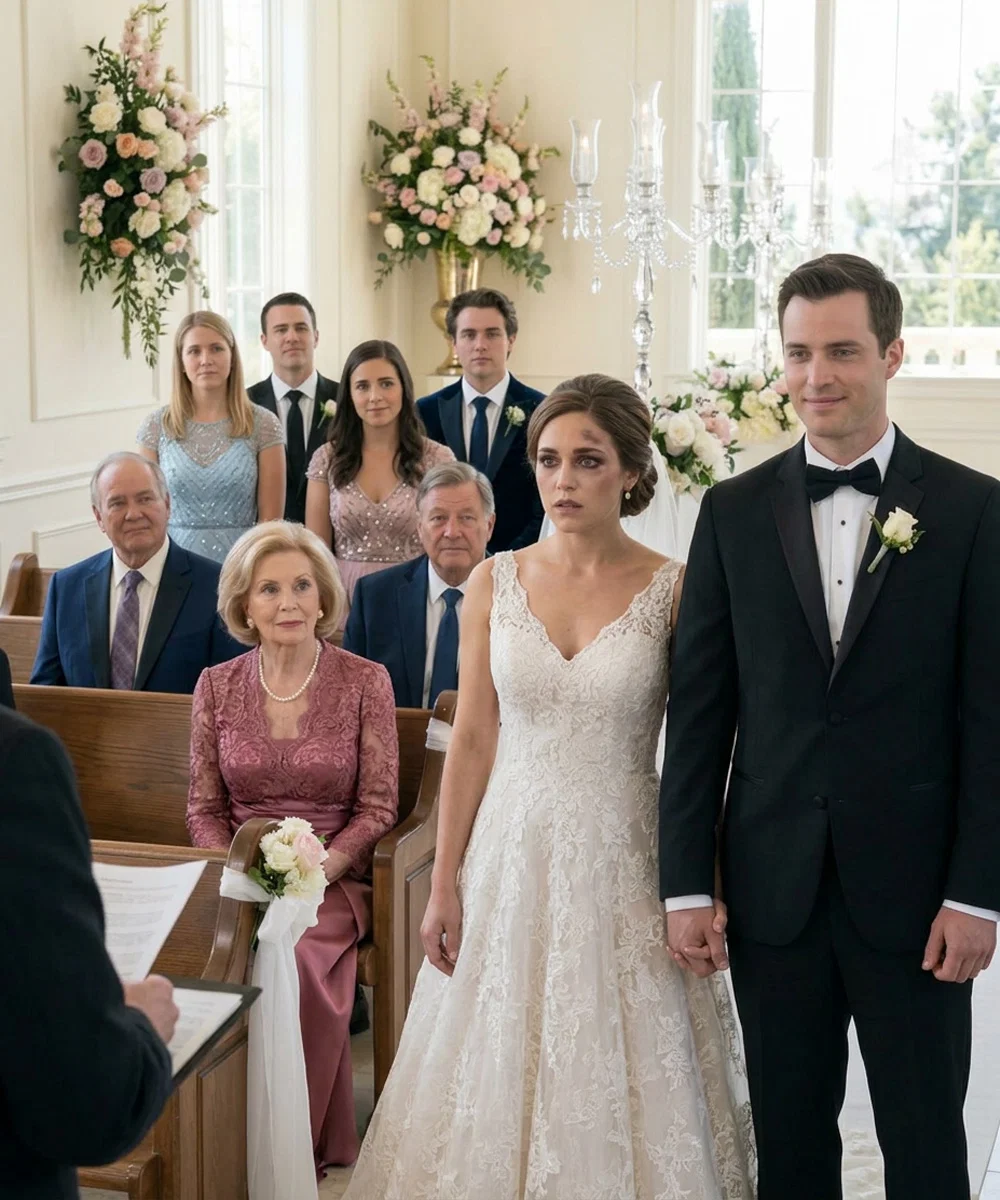
    On the morning of my wedding, I stood in front of the mirror in the bridal suite with a thick layer of concealer covering a bruise that makeup could not completely hide. My left eye was swollen just enough to draw attention, just enough to spark whispers. My maid of honor, my best friend Rachel, kept asking if I wanted to call everything off. I told her no. I had spent too many years learning how to smile through humiliation to walk away before I understood how deep it really went.

    The bruise didn’t come from a fall, an accident, or some dramatic incident in a dark parking lot. It came from my mother, Diane. The night before the wedding, she had barged into my apartment because I refused to let her “fix” the seating chart for the third time. She wanted her country club friends near the front, my late father’s sister pushed to the back, and my future mother-in-law placed as far from the head table as possible.

    When I said no, she grabbed my arm. I pulled away, and her ring struck my face. It happened quickly. Then came the familiar silence, followed by her favorite line:

    “Look what you made me do.”

    I almost canceled the wedding that night. Not because I didn’t love my fiancé, Ethan, but because I was exhausted—exhausted from managing my mother’s moods, protecting her image, and pretending her cruelty was just “stress.” Ethan told me to try to sleep and promised we would deal with everything together after the ceremony. I wanted to believe him. I needed to believe him.

    So I showed up.

    By the time I arrived at the ceremony hall, people had already noticed. Conversations softened into murmurs. My cousins stared. My mother arrived wearing a pale blue dress with pearls at her throat, looking composed and elegant—the kind of woman who chaired charity events and wrote handwritten thank-you notes. The kind people described as “graceful.” She looked at my face and didn’t flinch.

    Then Ethan stepped beside me at the front. I turned toward him, hoping for the steady look I had fallen in love with. Instead, his eyes moved past me and settled on my mother. A strange smile spread across his face, small and satisfied.

    Then he said, clearly enough for the room to hear:

    “It’s so she learns.”

    For a moment, the room went completely still.

    Then people laughed.

    And right there at the altar, I realized the man I was about to marry had known exactly what happened to me.

    The laughter hurt more than the bruise ever had.

    Not everyone laughed fully. A few guests gave those uneasy half-smiles people wear when they aren’t sure if something is a joke or a confession. But enough of them laughed. Enough that my skin went cold. My mother pressed her lips together as if disapproving, though something pleased flickered in her eyes.

    Rachel, standing just behind me, whispered, “Olivia, don’t do this. Not like this.”

    But by then I wasn’t inside the wedding I had planned anymore. I was standing inside the truth.

    I looked at Ethan.

    “What did you just say?”

    His smile faded into irritation, like I was causing a scene over something trivial.

    “Don’t start,” he muttered quietly. “We’re in the middle of the ceremony.”

    “No,” I said, louder now. “Tell them what you meant.”

    The officiant took a nervous step back. My future in-laws shifted in their seats. My mother folded her arms—a gesture I had known since childhood as a warning.

    Ethan leaned closer and lowered his voice.

    “Your mom said you needed to stop being difficult. She said you were hysterical, that you wouldn’t listen, that sometimes consequences are the only thing that works.”

    There it was. Clean. Simple. Ugly.

    “You talked to her about me?” I asked.

    He shrugged slightly.

    “She knows how to handle you.”

    Handle me.

    Behind me, Rachel inhaled sharply. My chest felt hollow, yet my mind had never been clearer. I thought about every moment in the past year I had explained away: Ethan laughing when my mother mocked my career, Ethan telling me I was “too sensitive,” Ethan insisting I should apologize after every family argument just to keep the peace.

    I had mistaken his calm for kindness.

    It was never kindness.

    It was alignment.

    I turned to face the guests. Nearly a hundred people sat in white chairs beneath soft lights and floral arches I had spent months choosing. Colleagues from work, cousins from Ohio, neighbors from my childhood street, college friends who had flown in from Seattle and Denver. Some faces showed confusion. Others looked embarrassed.

    “My mother hit me last night,” I said.

    The room froze.

    I touched the bruise beneath my eye.

    “And apparently my fiancé thinks that was a useful lesson.”

    My mother stood so quickly her chair scraped loudly across the floor.

    “Olivia, that is enough.”

    “No,” I said. “It’s actually years too late.”

    She glanced around the room, clearly preparing to turn the moment into another story about her unstable daughter. But this time I didn’t let her speak first.

    I pulled a small envelope from my bouquet. Inside were photos Rachel had taken the night before—timestamps included—and screenshots of messages from my mother telling me to “cover your face and stop being dramatic.” I had brought them because some part of me suspected I might need proof.

    I handed the envelope to the officiant, turned back to Ethan, slid the engagement ring from my finger, and dropped it into his palm.

    “You don’t get to stand beside me after siding with the person who hurt me,” I said. “This wedding is over.”

    No one laughed after that.

    The silence that followed felt larger than the church, larger than the flowers, larger than the years I had spent trying to be agreeable enough to earn love that should have been given freely. Ethan stared at the ring in his hand as if that were the shocking part. My mother opened her mouth, closed it, then shifted to anger when she realized tears would not rescue her.

    “You are humiliating this family,” she snapped.

    I almost smiled. For most of my life, that sentence would have broken me. That day, it set me free.

    “I’m telling the truth,” I said. “If that humiliates you, that’s your problem.”

    Rachel reached my side before anyone else moved. Then my aunt Carol, my father’s sister, stood from the third row and walked straight toward me. She had spent years staying quiet to avoid my mother’s explosions, but not this time.

    “You’re coming with us,” she said, placing a hand on my shoulder.

    That small gesture nearly undid me more than all the chaos.

    Ethan’s mother began apologizing in a trembling voice, though I barely heard her. Ethan finally found his words, but they were the wrong ones.

    “Olivia, don’t throw away our whole future over one misunderstanding.”

    I looked at him and saw clearly that he still believed this was a negotiation. That if he said the right combination of soft words and practical concerns, I would step back into line, dab my eye, and continue the script.

    “This wasn’t a misunderstanding,” I said. “It was a warning. And I’m finally listening.”

    Then I turned to the guests and did the strangest, bravest thing I had ever done. I thanked them for coming. I told them the reception hall had already been paid for, the food was ready, and they were welcome to stay, eat, and celebrate not a marriage—but a woman leaving the people who mistook control for love.

    A few people actually clapped.

    Then more joined in.

    Not out of pity, but out of recognition. Out of relief. Out of support.

    That evening, still wearing my wedding dress, I ate my own wedding cake with Rachel and Aunt Carol in a private room at the venue. My mascara was ruined, my future uncertain, and for the first time in years, I could breathe.

    In the weeks that followed, I filed a police report, began therapy, changed my locks, and blocked both Ethan and my mother. It was messy. It was painful. It was real.

    And it was mine.

    People later asked how I found the courage to walk away at the altar. The truth is courage didn’t arrive all at once. It appeared in a single unbearable moment when staying felt more dangerous than leaving.

    So that was the day I arrived at my wedding with a black eye and walked away with something better than a husband:

    my own life back.

    And if this story resonates with you, share it, talk about it, and remind someone that refusing abuse never makes them “too difficult.” Sometimes the bravest love story is the one where a woman chooses herself.

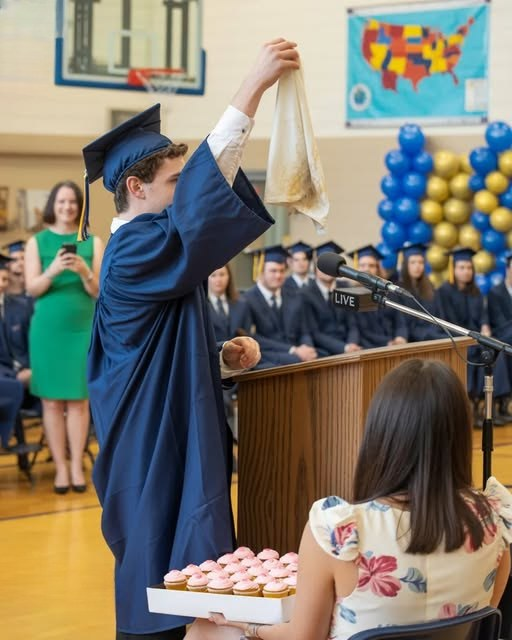
  • Young Mother Sacrifices Future for Abandoned Nephew Until Biological Mom Crashes His High School Graduation

    Young Mother Sacrifices Future for Abandoned Nephew Until Biological Mom Crashes His High School Graduation


    Nineteen years ago, twenty-two-year-old Myra Summers gave up her dreams of graduate school when her older sister Vanessa unexpectedly left her three-week-old baby behind. Their parents, Rita and Gerald, dismissed the heartbreaking abandonment as a temporary break and forced Myra to raise her infant nephew Dylan entirely by herself. Myra got through countless sleepless nights soothing his severe colic for eleven weeks and eventually came to terms with her lifelong role as his caretaker. She worked nonstop to provide for him while keeping her old graduate school acceptance letter hidden in a desk drawer. She showed up at every school event and doctor’s visit, quietly forming an unbreakable connection with the boy who saw her as his only parent.

    Their peaceful life faced a sudden shock on the morning of his high school graduation. As Myra sat in the gymnasium with her longtime friend Claire, Vanessa suddenly swept into the room wearing an expensive green dress alongside a wealthy man named Harrison. Rita and Gerald followed closely behind, carrying a decorated grocery store cake and praising Vanessa as his real mother. Vanessa approached the stage area to publicly claim her son, and she deliberately reduced nineteen years of motherly devotion to the role of a temporary babysitter in front of the entire crowd. Myra felt an overwhelming weight as cruel whispers filled the room, but she stayed perfectly quiet to let Dylan handle the painful situation.

    When Dylan approached the microphone to give his valedictorian speech, he set aside his planned remarks to correct the false story unfolding in the gymnasium. He turned the attention of the large crowd toward Myra while praising her enormous sacrifices and steady presence throughout his entire childhood. Reaching inside his graduation gown, Dylan pulled out the faded yellow blanket he had been wrapped in on the day he was left behind, which Myra had secretly kept in a safe. He then produced a harsh handwritten letter Vanessa had written nineteen years earlier, demanding that Myra take over his care. He openly questioned Vanessa about her absence during every major milestone and medical emergency he ever faced.

    Dylan proudly announced to the silent crowd that biology only gives a starting point, but true family belongs to the person who stays when no one else is watching. The entire audience broke into a massive standing ovation for Myra, while a completely humiliated Vanessa watched Harrison walk away from her in disgust. After the ceremony, Dylan confronted his grandparents about their lifelong pattern of enabling behavior before wrapping Myra in a tearful hug beside the school bulletin boards. Later that evening in their quiet apartment, Myra placed his graduation items into her safe and discovered a newly updated school contact card. Dylan had crossed out the word guardian and officially listed Myra as his mother to permanently lock in her rightful place.

  • King Charles takes “swipe” at Donald Trump in latest speech

    King Charles held a speech on what would have been his mother, Queen Elizabeth II’s 100th birthday on Tuesday. Yet, one royal expert has now claimed that a part of the speech was a “swipe” at president Donald Trump, just weeks before the royals are set to visit the White House.Last year, Donald Trump and his wife, Melania Trump, visited King Charles and the Royal Family. The meeting appeared to have been a success, when King Charles and Queen Camilla accepted an invitation to the White House in late April as a part of celebrating the U.S 250th Anniversary.

    The royals will meet the POTUS Donald Trump as Buckingham Palace has confirmed a state visit to the United States.The trip to the US has been expected for quite some time. However, visits like this are carried out on behalf of the UK government, and an official announcement appeared to be delayed until tensions surrounding the Iran war had eased, the BBC reports.

    Exactly how King Charles and Queen Camilla’s schedule in the U.S will look has not yet been revealed. Still, the monarch will reportedly address Congress.It will be the first UK state visit to the U.S since Queen Elizabeth visited in 2007. At that time, Barack Obama was the president.However while the visit might be “terrific,” one royal expert has now brought up some quite concerning words. On Tuesday, April 21, Queen Elizabeth II would have turned 100, and the celebration was held at Buckingham Palace.

    King Charles says late Queen would be ‘troubled’ by today’s world

    King Charles to visit Donald Trump at the White House

    Donald Trump made an announcement through social media that the U.S visit will be between April 27 and 30. A “a beautiful Banquet Dinner at the White House on the evening of April 28th” will be arranged, the president said, adding that he and First Lady Melania Trump “look forward to spending time with the King, whom I greatly respect.” He concluded that it will be “TERRIFIC.”

    Queen Elizabeth was Britain’s longest-reigning and longest-lived monarch, spending 70 years on the throne before her death in September 2022, at the age of 96.

    In a televised statement, Charles explained that his mother had shaped the world around her and touched many lives. However, with everything that is going on in the world, she would be concerned.

    “Today, as we mark what would have been my beloved mother’s 100th birthday, my family and I pause to reflect on the life and loss of a sovereign who meant so much to us all, and to celebrate anew the many blessings of her memory,” King Charles said.

    King Charles takes “swipe” at Donald Trump in emotional speech

    “Millions will remember her for moments of national significance; many others for a fleeting personal encounter, a smile, a kind word that lifted spirits, or for that marvelous twinkle of the eye when sharing a marmalade sandwich with Paddington Bear in the final months of her life.”

    He continued, “Much about the times we now live in, I suspect, may have troubled her deeply, but I take heart from her belief that goodness will always prevail and that a brighter dawn is never far from the horizon,” Charles said. “God bless you, darling mama. You remain forever in our hearts and prayers.”

    The fact that King Charles mentioned “troubled” times in the world prompted royal expert Kinsey Schofield to respond. Appearing on Sky News, Schofield claimed that the monarch’s tribute to his late mother was a “swipe” at Donald Trump and his war in Iran.

    “I’m going to be honest, maybe I’m just sensitive … but I felt like that was a swipe at what’s going on in the United States between Donald Trump and Iran,” Schofield said.

    “When he’s talking about global issues, I don’t think that’s a direct swipe at ex-prince Andrew, but I’d suggest she might be a little bit more worried about what’s going on at her back porch,” she added.