PART 1
The first thing Mallory Hayes heard after almost dying was the steady beep of a hospital monitor.
When she opened her eyes, Ethan was sitting beside her, exhausted and holding her hand. He told her she had collapsed at work and had been unconscious for most of nine days.
Mallory looked around the room and noticed two empty visitor chairs.
No flowers from her mother.
No card from her father.
No message from her sister.
When she asked where they were, the nurse gently explained that the hospital had called every emergency contact. Her parents had been told her condition was critical, but they said they would visit “when their schedule allowed.”
Her family lived less than an hour away.
Not one of them came.
PART 2
During recovery, Mallory slowly realized who had truly cared for her.
Ethan had slept in a hospital chair.
Her coworker Jenna brought socks, books, and comfort.
Nurse Carla treated her with kindness and dignity.
But her own family only returned when they needed money.
A month after Mallory came home, her father texted:
“We need $12,000 for your mother’s surgery.”
No hello.
No concern.
Just a demand.
Mallory sent him one dollar and wrote:
“Good luck.”
Her father exploded, called her selfish, and said she owed the family.
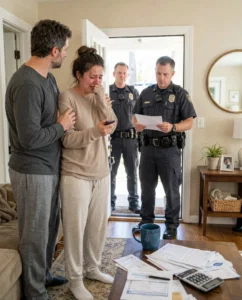
Then he filed a false police report, claiming she had stolen money from them.
When the officers arrived, Mallory showed them everything: the texts, the $1 transfer, the hospital records proving her family had ignored calls, and a voicemail where her father threatened to accuse her unless she sent money.
The officers told her to save every piece of evidence.
PART 3
Mallory began documenting everything.
She saved hospital logs, bank transfers, texts, voicemails, and the police case number. For the first time, she stopped trying to protect people who had never protected her.
She sent one final message to her parents and sister, telling them not to ask for money again and not to come to her home uninvited.
Her mother replied:
“You have changed.”
Mallory knew she had.
She had finally stopped confusing being useful with being loved.
Over the following months, she grew stronger. She returned to work. She spent peaceful holidays with Ethan. Her family’s silence still hurt, but it also healed her.
In the end, Mallory understood one painful truth:
You can owe people kindness, honesty, and gratitude.
But you do not owe your life to people who only notice