Author: admin

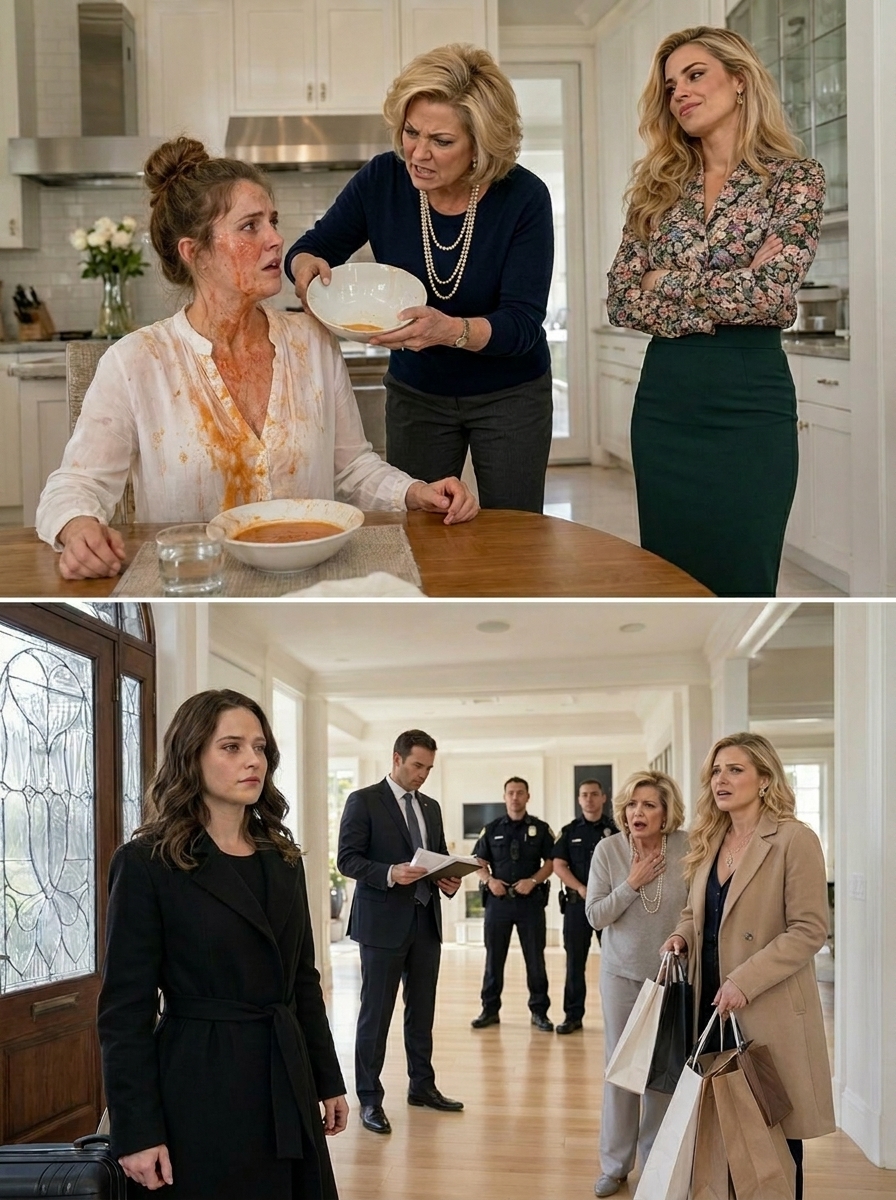
  • On Christmas Eve, I Heard My Husband Whisper “It’s Our Baby” To His Pregnant Mistress… Then Her Husband Put $200,000 In Front Of Me And Told Me Not To Divorce Him Yet…

    On Christmas Eve, I Heard My Husband Whisper “It’s Our Baby” To His Pregnant Mistress… Then Her Husband Put $200,000 In Front Of Me And Told Me Not To Divorce Him Yet…

    The first sound I caught was my husband laughing like someone hopelessly in love.

    Just not with me.

    I stood barefoot on the icy marble tiles of his parents’ sunroom, one palm resting against the partly opened door, listening as Mark Whitmore murmured into his phone on Christmas Eve while his whole family waited in the dining room.

    “I know,” he whispered gently. “I know, sweetheart. But it’s our baby. You can’t give it away.”

    For one suspended moment, my brain refused to process the sentence. My body understood before my heart could catch up. My grip tightened around the brass handle until the metal cut into my skin. Somewhere behind me, Christmas music drifted through the old Victorian house, bright and merciless. Someone near the fireplace burst into laughter. Mark’s mother, Patricia, was probably arranging her flawless crystal glasses. His father was likely pouring bourbon while pretending not to stare at me the way he always did whenever Patricia looked elsewhere.

    And my husband — the man I had loved for ten years — stood inside a glass room filled with roses, telling another woman not to give up their child.

    “Just survive Christmas,” Mark said. His tone was warm, intimate, almost eager. “I’ll file after New Year’s. I promise. I can’t keep pretending with Anna forever.”

    The floor seemed to tilt beneath me.

    Apparently I had been pretending too. Pretending not to notice the late nights. Pretending not to hear the softness in his voice whenever he said Jessica’s name. Pretending not to see the new cologne, the guarded phone, the secretive smile that crossed his face whenever his screen lit up during dinner. Jessica Vance. His co-worker. Beautiful. Elegant. Married. The type of woman who shakes your hand while silently calculating how much of your life she can take.

    Mark laughed once more.

    “No, James doesn’t know,” he said. “And by the time he does, we’ll already have a plan.”

    James.

    Her husband.

    I stepped backward so abruptly my shoulder struck the wall. The noise was small, but Mark stopped speaking immediately. Silence snapped taut inside the sunroom.

    “Anna?” he called.

    I ran.

    Not dramatically. Not screaming. Not the way women do in movies when betrayal becomes public entertainment. I ran like someone fleeing a fire invisible to everyone else. I snatched my coat from the front closet, grabbed my keys from the silver tray beside the door, and hurried past Patricia as she emerged from the dining room carrying a platter of deviled eggs.

    “Anna, where are you going?” she demanded, her voice sharp enough to slice glass.

    “I forgot something,” I answered.

    It was the first lie I told that evening.

    Mark came down the hallway just as I pulled open the front door. Beneath the golden chandelier, his face had gone pale.

    “Anna,” he said quickly. “Wait.”

    I looked at him. Truly looked at him.

    Ten years of marriage stretched between us. Ten years of Sunday mornings, mortgage payments, grocery lists, anniversary dinners, silent disappointments, and all the tiny compromises I had mistaken for love.

    And there he stood — my husband — panic flashing in his eyes because he had no idea how much I had overheard.

    That panic told me everything.

    Patricia appeared behind him. “What is happening?”

    Mark ignored her completely. His eyes stayed fixed on me.

    I smiled.

    Not because I felt calm, but because something inside me had frozen hard enough to survive.

    “Merry Christmas,” I said.

    Then I walked into the freezing night.

    The cold air struck my face so sharply my eyes watered, but I didn’t cry. I climbed into our SUV, locked the doors, and drove away from that glowing house while Mark remained on the porch beneath a wreath his mother had imported from some boutique in Vermont. In the rearview mirror, I saw him lifting his phone to his ear.

    Mine started vibrating seconds later.

    Mark.

    Then Mark again.

    Then Patricia.

    Then Andrew, Mark’s younger brother.

    I powered the phone off and kept driving.

    I drove through streets drenched in Christmas lights, past churches glowing with candles, past homes where families were probably uncorking wine and pretending the holidays didn’t reveal every fracture in their lives. I passed the hotel where Mark and I first met during a charity auction, the bakery where he bought me cinnamon rolls after our courthouse wedding, the little park where we once promised we’d have two children and a dog before turning thirty-five.

    We never had children.

    He had one with Jessica.

    By the time I reached Riverside Park, my hands had stopped trembling. That frightened me more than the hurt itself. Pain was human. Trembling was human. But the stillness inside me felt like something new being born.

    Something dangerous.

    I parked beside the frozen river and sat alone in the darkness. Across the water, the city shimmered like a life I no longer belonged to. Mark’s voice kept echoing in my head.

    It’s our baby.

    I’ll file after New Year’s.

    I can’t keep pretending with Anna forever.

    For ten years, I had been Anna Whitmore — the reasonable wife. The calm wife. The woman who remembered birthdays, balanced accounts, made excuses, wrote thank-you notes to Mark’s unbearable mother, and accepted loneliness as the quiet cost of marriage.

    That woman died in a parking lot on Christmas Eve.

    I drove home not to reconcile, not to demand answers, but to pull myself out of the wreckage before it collapsed on me. The house was dark when I arrived. Our house. Three bedrooms. Blue shutters. A mortgage under my name because my credit score had been better when we bought it. A front porch I had decorated with pine garland two days earlier while Mark claimed he was stuck in a late meeting.

    I moved slowly through every room, seeing proof of my devotion everywhere. The framed wedding photograph on the entry table. The ceramic bowl I made in a class he never attended. The expensive coffee machine he gave me last year, probably ordered with the same hand he used to text Jessica at midnight.

    I packed a single suitcase.

    Clothes. Toiletries. My laptop. My passport. The folder containing our financial records. The anniversary photo album from our trip to Maine, where Mark kissed my forehead on a cliffside and promised he wanted us to start over.

    I removed my wedding ring in the kitchen.

    For a moment, I held it beneath the light. A simple diamond set in white gold. I remembered the day he slipped it onto my finger, how young we had been, how convinced I was that being chosen meant being safe.

    Then I placed it beside the coffee machine and walked away.

    The downtown hotel catered to business travelers and people whose lives had exploded quietly. The clerk glanced at my suitcase, my pale face, my Christmas sweater, and asked only, “How many nights?”

    “I don’t know,” I replied.

    Inside the room, I sat on the edge of the bed and switched my phone back on.

    Forty-seven messages. Nineteen missed calls.

    Mark’s first texts sounded cautious.

    Where did you go?

    Then worried.

    Anna, please answer me.

    Then irritated.

    My parents are upset. You embarrassed everyone.

    Then frightened.

    I don’t know what you heard, but you need to let me explain.

    That was when I smiled again.

    Not because anything was amusing.

    Because he had confirmed it.

    I typed one sentence.

    I’m safe. I need space.

    Then I switched the phone off again, lay flat across the bed, and stared at the ceiling while Christmas Eve quietly became Christmas morning.

    When I woke up, the world felt silent.

    Not peaceful. Silence after destruction is different. Heavy. Like dust settling after a house caves in.

    A thin line of winter sunlight stretched across the hotel carpet. I turned my phone on at 7:23 a.m. and messages flooded in immediately.

    Patricia had sent four.

    This behavior is unacceptable.

    Mark’s father had sent one.

    Your husband deserves an explanation.

    I nearly laughed. Their son had gotten another man’s wife pregnant, but somehow I was the rude one.

    Mark had sent one final message shortly after midnight.

    Please come home. We can fix this.

    I didn’t respond.

    Instead, I opened my laptop.

    For years, I had taught high school history. I always told my students that people reveal themselves not through grand speeches, but through records. Receipts. Letters. Dates. Movements. Patterns. Truth always leaves fingerprints.

    So I started digging.

    Bank statements first.

    At first glance, the charges looked ordinary. Restaurants. Parking garages. Ride shares. A hotel bar. A boutique spa. But once I looked with clear eyes, the pattern became savage. Two dinners at restaurants Mark always claimed he hated. A hotel charge from a night he supposedly slept at the office during a system failure. Jewelry purchased from a store where I had never received anything.

    Our money had financed his affair.

    I created a folder on my desktop and named it “Documents.”

    Not “Mark Affair.”

    Not “Divorce.”

    Documents.

    Facts were stronger than grief.

    Then I searched Jessica Vance.

    Her company profile appeared first. Senior strategy director. Married to James Carter, founder and majority owner of Carter Meridian Investments. Her photo showed glossy blonde hair, sharp cheekbones, and a smile polished by years of mirrors. I remembered meeting her at Mark’s office Christmas party three weeks earlier. She wore a dark green suit and touched Mark’s arm whenever she laughed.

    Back then, I told myself not to be insecure.

    Now I examined every photo from that party like a detective studying a crime scene. Jessica standing beside Mark near the bar. Jessica leaning toward him during a toast. Mark looking at her while everyone else faced the camera.

    The affair hadn’t been hidden from me.

    It had been protected by my willingness not to see it.

    By ten o’clock, I had screenshots, bank records, and a five-page timeline beginning with the Christmas party and ending with the phone call I overheard in Patricia Whitmore’s sunroom. I wrote down every sentence I could remember.

    It’s our baby.

    James doesn’t know.

    I’ll file after New Year’s.

    Then I searched for divorce attorneys.

    Helen Thornton’s name appeared near the top. She specialized in high-conflict divorces, marital misconduct, and complicated asset disputes. Her office was closed for Christmas, naturally, but there was an emergency number.

    I still didn’t call.

    Calling would make everything real.

    Before I could decide, hunger drove me downstairs. The hotel breakfast area was nearly empty. A few children in pajamas covered waffles with red and green sprinkles. An elderly couple shared coffee beside the window. I sat alone with toast I couldn’t force myself to swallow.

    “You’re Anna Whitmore.”

    The voice came from my right.

    A man stood beside my table. Early forties. Tall. Gray overcoat. Tailored suit. Dark blond hair combed neatly back. His face was controlled, but his eyes looked exactly how mine felt.

    “Who are you?” I asked.

    He set a business card on the table.

    James Carter.

    “My wife,” he said, “is Jessica Vance.”

    The name landed between us like a loaded weapon.

    I stared at him. “Then I think you already know who my husband is.”

    “I do.” He sat across from me without asking. “And I know where he was last night before going to his parents’ house. I know where he was last Tuesday. I know where he was on November seventeenth. I know which hotel room he paid for with a card ending in 9142.”

    My stomach tightened painfully.

    James opened a leather folder and slid several photographs across the table.

    Mark and Jessica entering a restaurant.

    Mark and Jessica leaving a hotel.

    Mark and Jessica kissing in a parking garage.

    Mark’s hand resting on Jessica’s lower back.

    Jessica gazing at him like she trusted him more than the man now sitting across from me.

    Every photograph was dated.

    October 15.

    October 22.

    November 3.

    November 17.

    December 6.

    December 19.

    This wasn’t a mistake. It was an entire second life.

    “I hired an investigator,” James said. “I needed proof before I acted.”

    I lifted my eyes to him. “She’s pregnant.”

    For the first time, his composure fractured.

    “What?”

    “I heard Mark say it last night. He told her it was their baby.”

    James leaned back slowly. His face became frighteningly still.

    Then he closed his eyes.

    “Of course,” he said quietly. “That explains the doctor’s office.”

    “You knew?”

    “I suspected it. I just didn’t have confirmation.”

    Neither of us spoke for several moments. Around us, Christmas breakfast continued with soft clinks of silverware and cheerful little voices. Two betrayed spouses sat at a hotel table surrounded by photographs of the people who had destroyed them.

    “What are you going to do?” he asked eventually.

    “Divorce him.”

    James nodded like he had expected nothing else. “I’m divorcing Jessica too.”

    “Then why are you here?”

    He glanced toward the windows where snow had begun falling lightly outside. “Because timing matters.”

    He bent down, lifted a black briefcase onto the table, and placed it in front of me.

    I let out one sharp laugh. “What is that?”

    “Open it.”

    “I don’t think so.”

    “Please.”

    Something in his voice made me comply.

    Inside were stacks of hundred-dollar bills arranged with military precision.

    My breath caught.

    “That’s one hundred thousand dollars,” James said. “Half now. Half later.”

    I shoved the briefcase back toward him like it might burn me. “For what?”

    “For three months of silence.”

    Every nerve in my body went rigid. “Excuse me?”

    “Don’t file yet,” he said. “Don’t confront Mark. Don’t alert Jessica. Let them believe they’re safe.”

    I stood so fast my chair scraped loudly against the floor. “You think you can buy me?”

    “No.” James kept his voice even. “I think you deserve compensation for what I’m asking you to survive.”

    “And what exactly are you asking?”

    “To wait. To gather evidence. To let them continue making mistakes.”

    I stared at him in disbelief.

    He continued calmly, ruthlessly. “If you file today, Mark panics. He warns Jessica. Jessica panics. They erase messages, move money, destroy evidence, rewrite timelines, blame stress, call it a brief lapse in judgment. But if we wait, their affair becomes impossible to deny. Apartment leases, medical appointments, financial misconduct, repeated deception, public exposure. The safer they feel, the sloppier they become.”

    “You expect me to live with him?”

    “I have to live with her.”

    That answer silenced me completely.

    For the first time, I saw the exhaustion underneath James Carter’s polished exterior. He wasn’t some cold villain from a legal drama. He was a man whose wife was carrying another man’s child while likely sleeping beside him every night.

    “You already spoke to lawyers,” I said quietly.

    “Yes. Several.”

    “And they told you this was smart?”

    “They told me evidence wins. Emotion loses.”

    I looked down at the money. “Why involve me?”

    “Because if you act before I’m ready, my case weakens. And if I move before you’re ready, yours weakens too.” He leaned forward slightly. “But if we both file together — same day, same hour — Mark and Jessica won’t have time to protect each other.”

    The idea was horrible.

    The idea was perfect.

    Three months. Ninety days of pretending. Ninety days of sharing breakfast with a liar, sleeping beside betrayal, smiling while he planned another family.

    “I don’t know if I can do that,” I admitted.

    James’s expression softened slightly. “Neither do I. But I know what happens when we let them control the narrative.”

    I thought about Mark’s messages.

    You embarrassed everyone.

    We can fix this.

    I don’t know what you heard.

    He was already rewriting reality.

    I sat back down slowly.

    “If I agree,” I said carefully, “I don’t take orders from you.”

    “I wouldn’t expect you to.”

    “We exchange evidence only. No emotional games. No revenge fantasies.”

    “Agreed.”

    “And when the time comes, we both file.”

    “Same day,” he replied. “Same hour.”

    I looked once more at the briefcase. Not as money.

    As proof that someone understood the price of what I was about to do.

    “Three months,” I said.

    James exhaled quietly.

    I closed the briefcase.

    By noon, I was back at the house.

    Mark was already home.

    He stood in the kitchen holding my wedding ring delicately between two fingers. His hair was disheveled. His eyes were bloodshot. For one dangerous second, the sight of him hurt so badly I nearly forgot the plan.

    Nearly.

    “Anna,” he said, his voice cracking. “Thank God.”

    I set my suitcase down. “I needed space.”

    “I was terrified.” He stepped closer. “You disappeared on Christmas Eve. My mother was hysterical.”

    “I’m sure Patricia loved that.”

    His expression tightened. “That’s not fair.”

    No, I thought. Fair would’ve been dragging him into the dining room last night and forcing him to explain Jessica’s pregnancy over prime rib.

    Instead, I lowered my eyes like a woman too heartbroken to fight.

    “I heard something,” I said carefully. “I don’t know what I heard.”

    Mark froze.

    Then he moved closer, reaching for my hands. I let him hold them.

    “You misunderstood,” he said quickly. “It was about work. Jessica’s dealing with something complicated, and I was trying to help her.”

    I looked at him with perfectly crafted confusion.

    “She’s pregnant?”

    His throat shifted.

    “She thought she might be,” he said. “It’s not mine, Anna. I swear to God.”

    The lie entered the room so smoothly I almost admired it.

    “I don’t know what to believe,” I whispered.

    Mark pulled me into his arms.

    And I let him.

    His cologne was familiar. So was the shape of his chest, the warmth of his hands, the rhythm of his breathing. My body still remembered safety even when my mind knew better. That was the cruelest thing about betrayal. Love does not vanish instantly. It rots slowly.

    “I love you,” he whispered into my hair.

    Over his shoulder, I saw my ring resting on the counter.

    “I know,” I answered.

    That became my second lie.

    For the next week, I played the wounded wife.

    Not the suspicious wife. Not the furious wife. The wounded wife was more useful. She asked fewer questions because she feared the answers. She slept at the edge of the bed. She moved quietly through the house. She accepted soft apologies without demanding details.

    Mark relaxed.

    Men like Mark always mistake silence for weakness.

    On the third day, he went back to work. I made coffee before he left. He kissed my cheek and said, “I’ll be home late. Year-end reports.”

    “Okay,” I replied. “Drive safe.”

    The second his car disappeared down the street, I texted James.

    He left at 8:12. Says office.

    James answered less than a minute later.

    Jessica left at 8:04. Says client meeting.

    At 11:38, James sent a photograph.

    Mark and Jessica walking into a restaurant near Grand Central. Her coat was cream-colored. His hand rested against her back.

    I stared at the picture until my eyes blurred.

    Then I saved it into the folder.

    Documents.

    The days settled into a pattern so ugly it almost became normal. Mark lied. I smiled. James watched. I documented.

    Mark claimed he was at the gym.

    GPS images placed him outside a boutique apartment building in Long Island City.

    Mark said he was meeting clients for drinks.

    Receipts showed a candlelit dinner for two at an Italian restaurant.

    Mark said he needed distance because my “emotional reaction” on Christmas Eve had shaken him.

    Security footage showed him and Jessica entering a hotel at 9:14 p.m. and leaving at 1:52 a.m.

    I learned that betrayal follows a schedule.

    It comes with restaurant reservations, parking citations, elevator cameras, pharmacy receipts, and calendar appointments labeled “strategy call.”

    One Saturday morning, Mark announced he was going for a run.

    He came downstairs wearing athletic clothes, kissed my forehead, and said, “I’m trying to clear my head.”

    “Good,” I answered. “You need that.”

    He looked relieved, almost thankful.

    The moment he left, I entered his study.

    Mark had always been careless with paper. Careful with his phone, careless with everything else. In the bottom drawer of his desk, beneath old tax forms and the printer manual, I found a lease agreement.

    Apartment 14C.

    Long Island City.

    Tenant: Mark Whitmore.

    Start date: November 1.

    Six-month lease.

    My hand trembled once, and only once.

    I photographed every page carefully. Then I returned it exactly where I had found it.

    When James saw the images, he called immediately.

    “This matters,” he said. “Very much. A private residence used to continue the affair.”

    “You sound like a lawyer.”

    “I’ve spent too much time around them recently.”

    For the first time, I heard something close to humor in his voice.

    I almost smiled.

    Then I remembered why we knew each other.

    “Do you ever feel disgusting?” I asked quietly.

    “Every day.”

    “For pretending?”

    “For still caring.”

    That answer stayed with me for hours.

    Because I still cared too.

    Not the way I once had. Not with trust. But some wounded part of me still searched Mark’s face across the dinner table for the man who once stayed awake all night when I had the flu, who cried when our first pregnancy test came back negative after months of trying, who squeezed my hand outside the fertility clinic and said we were enough even if it was always just the two of us.

    That version of him had been real.

    And that made this version harder to survive.

    By the second month, Mark stopped being cautious.

    He spoke to Jessica openly in the garage, assuming I couldn’t hear. He smiled at his phone during breakfast. He started dressing differently. New shirts. New watch. He claimed it was for “executive presence.”

    I found myself wondering if Jessica liked blue.

    Then, one Wednesday morning, everything shifted.

    Mark came downstairs before seven. He was nervous. He poured coffee and forgot to drink it, checked his watch three separate times, kissed my cheek too quickly.

    “Early meeting,” he said.

    “With who?”

    He blinked. I almost never asked direct questions anymore.

    “Finance team.”

    “Good luck.”

    He left at 7:18.

    At 7:24, James texted.

    Jessica left. Same direction.

    I opened the tracking app James had helped me install legally through my attorney’s guidance and my ownership interest in the vehicle. Mark’s car moved toward Manhattan before stopping outside a medical building.

    My phone rang.

    James.

    “Anna,” he said quietly, “the investigator is there.”

    “What is it?”

    A pause.

    “Obstetrics.”

    The kitchen vanished around me.

    My hand rested beside a bowl of oranges on the counter. Sunlight stretched across the sink. The dishwasher hummed softly in the background. Everything looked painfully ordinary. That offended me. How dare the world remain normal?

    Fifteen minutes later, the photographs arrived.

    Mark and Jessica entering the clinic.

    Jessica resting a hand lightly against her stomach.

    Mark opening the door for her.

    Mark sitting beside her in the waiting room, leaning close with tenderness all over his face.

    Tenderness.

    That was the word that destroyed me.

    Not passion. Not desire. Tenderness.

    He looked at her like she carried his future.

    I sat on the kitchen floor and cried for the first time.

    Quietly. Furiously. One hand covering my mouth so the house wouldn’t hear me.

    Then I stood up, washed my face, and saved the pictures.

    Documents.

    That evening, Mark came home carrying flowers.

    White tulips.

    My favorite.

    “I know things have been strange,” he said, setting them on the counter. “I want us to be okay.”

    I looked at those flowers and almost hated him more for remembering.

    “They’re beautiful,” I said softly.

    Relief crossed his face.

    At dinner, he talked about work. He asked about my classes. He even laughed when I told him about a student confusing Andrew Jackson with Michael Jackson.

    For forty-seven minutes, we sounded like a married couple.

    Then his phone buzzed.

    He glanced down and tried not to smile.

    I watched him fail.

    That night, lying awake beside him, I realized I was no longer waiting because James had paid me. I was waiting because the truth deserved a courtroom, not a screaming match.

    Helen Thornton agreed.

    I finally met her in person the next afternoon. She was in her late fifties, silver hair cut sharply at her jawline, eyes sharp enough to smell lies through concrete. Her office overlooked downtown traffic and contained almost nothing personal except for one framed quote.

    The truth does not need volume. It needs evidence.

    She reviewed my folder in silence.

    Every page of it.

    The bank statements. The photographs. The hotel receipts. The apartment lease. The clinic images. The timeline. The investigator materials James had shared through proper legal channels. The documented record of Mark’s lies.

    When she finished, she removed her glasses.

    “Mrs. Whitmore,” she said calmly, “your husband is in serious trouble.”

    Hearing it from her didn’t make me happy.

    It made me breathe again.

    Helen explained the process carefully. Divorce. Asset division. Claims involving marital misconduct where applicable. Financial misuse. Possible professional consequences if Mark had violated company policies. She was precise, careful, and unwilling to promise outcomes she couldn’t control.

    “I don’t sell revenge,” she told me. “I pursue results.”

    “Good,” I said. “I don’t want revenge.”

    She studied me closely.

    “What do you want?”

    I thought about the sunroom. The baby. The briefcase. The tulips. The way Mark told me he loved me while building another life with someone else.

    “I want him unable to call me crazy,” I answered.

    Helen smiled faintly.

    “That,” she said, “we can absolutely do.”

    James and I chose a Monday.

    Ten a.m.

    By then, the evidence had become overwhelming. Jessica had started spending nights at the Long Island City apartment. Mark had transferred money from our shared savings into an account I had never seen. Jessica had attended three prenatal appointments with Mark beside her. They had discussed baby names through messages James’s investigator recovered from lawful device backups inside his marital household.

    They weren’t hiding an affair anymore.

    They were rehearsing a future.

    The Friday before filing, Patricia invited us to dinner.

    Mark begged me to attend.

    “She thinks you hate her now,” he said.

    “I don’t hate your mother.”

    That was mostly true. Patricia was far too exhausting to hate properly.

    So I went.

    The Whitmore dining room looked identical to Christmas Eve. Same chandelier. Same polished table. Same portraits of dead relatives who seemed disappointed in everyone. Patricia served roast chicken and asked whether I had “calmed down” since the holiday.

    Mark’s grip tightened around his fork.

    I smiled politely. “I’ve had a lot of time to think.”

    “Good,” Patricia said. “Marriage requires maturity. A woman can’t simply run away whenever she feels emotional.”

    Across the table, Mark stared down at his plate.

    For one reckless second, I wanted to say everything. I wanted to tell Patricia her precious son had rented an apartment for his pregnant mistress. I wanted to watch her perfect expression crack apart.

    Instead, I lifted my wine glass.

    “You’re right,” I said. “Sometimes a woman should wait until she has all the facts.”

    Mark looked up sharply.

    Only for a second.

    But I saw fear return to his eyes.

    Good, I thought.

    Remember that feeling.

    Monday morning arrived gray and bitterly cold.

    I dressed carefully. Navy coat. White blouse. Low heels. No wedding ring.

    Helen’s conference room smelled like coffee and printer ink. She arranged the documents neatly in front of me.

    “Divorce petition,” she said. “Financial claims. Supporting evidence index. Request for favorable asset division. Misconduct documentation.”

    I signed where she indicated.

    My signature looked steadier than I felt.

    At 9:58, Helen logged into the electronic filing system.

    At 9:59, she looked at me.

    “Ready?”

    I thought about the woman I had been on Christmas Eve, trembling outside a sunroom door.

    Then I thought about the woman sitting here now.

    “Yes.”

    At exactly 10:00 a.m., Helen clicked submit.

    Filed.

    My phone buzzed.

    James.

    Same here.

    For the first time in months, I felt something close to peace.

    Not happiness. Not triumph.

    Just the clean sound of a door locking behind me.

    The papers were served three days later.

    Mark called at 2:17 p.m.

    I let it ring twice before answering.

    “Anna,” he said breathlessly. “Where are you?”

    “At home.”

    “I’m coming now.”

    He hung up.

    I was making tea when he arrived.

    The front door slammed hard enough to shake the wall. Mark stormed into the kitchen clutching the court envelope, face pale, tie loosened, hair disheveled.

    “What the hell is this?”

    I glanced at the envelope. “It appears to be a legal document.”

    “Don’t do that.” His voice cracked sharply. “Don’t talk to me like I’m stupid.”

    I set my mug down carefully. “Then stop behaving like I am.”

    He flinched visibly.

    For several long seconds, we stood facing each other in the kitchen where we had once danced barefoot while pasta boiled over on the stove.

    He opened the papers with shaking hands.

    “You’re divorcing me.”

    “Yes.”

    “You’re demanding sixty percent of the assets?”

    “Yes.”

    “You’re accusing me of financial misconduct?”

    “I’m documenting it.”

    His eyes moved rapidly down the page.

    Then stopped.

    His face changed instantly.

    “Jessica,” he whispered.

    I stayed silent.

    He slowly looked up at me. “You’re naming Jessica?”

    “Yes.”

    “How did you—”

    He stopped himself.

    A guilty man’s first instinct is never innocence.

    It is damage control.

    I leaned lightly against the counter. “I knew on Christmas Eve.”

    The color drained completely from his face.

    “I heard you in the sunroom.”

    “Anna—”

    “I heard you tell her it was your baby. I heard you promise you’d file after New Year’s. I heard you ask whether James knew.”

    He sank heavily into a chair.

    “I can explain.”

    “No,” I said softly. “You can speak. That’s not the same thing.”

    He covered his face with both hands.

    For one brief moment, I saw the boy I married. Frightened. Cornered. Smaller than his lies.

    Then his phone rang.

    Jessica.

    He stared at the screen like it might bite him.

    “Answer it,” I said.

    He did.

    Even from where I stood, I could hear her voice — high, furious, panicked.

    “Mark, James knows everything! He filed! He’s suing me! What did you tell Anna?”

    Mark shut his eyes.

    “I didn’t tell her anything,” he muttered.

    I smiled.

    Jessica screamed something too distorted for me to understand.

    Then Mark snapped, “Don’t blame me!”

    There it was.

    The great love story started devouring itself within five minutes of exposure.

    He ended the call and looked at me.

    “She’s scared.”

    “So was I,” I said quietly. “For months.”

    “That’s different.”

    I laughed.

    The sound came out soft and ugly.

    “Of course you think that.”

    Mark stood abruptly. “You took money from him, didn’t you?”

    My smile disappeared.

    He had guessed. Or Jessica had. Or perhaps guilt had finally sharpened his instincts.

    “You don’t get to be offended by strategy,” I said, “when your entire affair was a strategy.”

    His face twisted bitterly. “So you trapped me.”

    “No, Mark. I stopped rescuing you from your own choices.”

    He had nothing left to say.

    The settlement offer arrived one week later.

    Mark wanted a clean divorce. No admissions. Equal split. Minimal damages. Confidentiality.

    Helen read the proposal aloud and actually laughed.

    “No,” I said.

    “I assumed.”

    James received a nearly identical offer from Jessica. She claimed Mark manipulated her. Mark claimed Jessica pursued him. Their love, once powerful enough to destroy two marriages, couldn’t survive legal consequences.

    The case moved forward.

    Court was colder than I expected.

    Not physically, though the air conditioning was relentless. Emotionally. The law had no interest in heartbreak except where it intersected with evidence. Nobody cared how it felt to make breakfast for a man after seeing photographs of him at prenatal appointments. Nobody asked what it does to a woman to sleep beside someone secretly planning to leave her after the holidays.

    The court cared about dates.

    Receipts.

    Transfers.

    Leases.

    Messages.

    Video.

    Helen was extraordinary.

    Mark’s attorney tried suggesting the photographs had been misunderstood. Helen produced hotel records. He claimed the apartment was “temporary work housing.” Helen produced photographs of Jessica entering with overnight bags, Mark carrying baby furniture boxes, and utility payments made from our joint account.

    Jessica testified once.

    She wore pale gray and cried beautifully.

    She said she had been vulnerable. She claimed Mark told her his marriage was “functionally over.” She said she believed I already knew we were emotionally separated.

    Helen stood.

    “Mrs. Vance, were you aware Mr. Whitmore lived with his wife throughout the affair?”

    Jessica swallowed hard. “Yes.”

    “Were you aware they shared a marital residence?”

    “Yes.”

    “Were you aware Mrs. Whitmore attended his family Christmas dinner as his wife?”

    Jessica’s mouth tightened. “I suppose.”

    “Were you pregnant with Mr. Whitmore’s child at that time?”

    Her attorney objected.

    The judge allowed the question.

    Jessica whispered, “Yes.”

    Across the aisle, James stared straight ahead.

    He never once looked at her.

    Mark testified the following week. He looked older. Exhausted. Less polished. He admitted the affair but insisted he intended to handle everything “respectfully.”

    Helen repeated the word slowly.

    “Respectfully?”

    Mark shifted in his seat.

    “You rented an apartment using marital funds.”

    “I made mistakes.”

    “You attended prenatal appointments with your mistress while telling your wife you were at work.”

    “I was confused.”

    “You told Jessica Vance you would file for divorce after New Year’s while simultaneously telling your wife you loved her and wanted to repair the marriage.”

    He looked down.

    Helen allowed the silence to settle.

    Then she asked quietly, “Mr. Whitmore, were you confused, or were you lying to both women for as long as it benefited you?”

    His attorney objected.

    But Mark had already answered with his face.

    The ruling came six weeks later.

    Helen called me on a rainy Thursday morning.

    “Anna,” she said, “we won.”

    I sat at my new kitchen table. Two weeks earlier, I had moved into a short-term rental because I could no longer breathe inside the old house full of ghosts.

    Helen explained the judgment carefully.

    Favorable asset division. Significant damages. Reimbursement for misused marital funds. Legal fees. The court found Mark primarily responsible for the collapse of the marriage and acknowledged Jessica’s role in knowingly interfering with it. The house would be sold. I would receive the larger share. Mark would pay. Jessica would pay.

    The numbers were large enough to matter.

    But not large enough to return ten years of my life.

    I thanked Helen, hung up, and cried again.

    Not because I was sad.

    Because my body finally understood it was safe.

    Mark lost his job before the month ended. James didn’t need to be cruel. The company’s internal review accomplished what consequences always do once invited into the room. Mark had violated policies, misused company expense structures, and created a scandal involving a senior employee connected to ownership. He resigned before termination became public, but everyone knew the truth.

    Jessica moved back in with her parents outside Westchester.

    The Long Island City apartment sat empty for two months before Mark finally broke the lease at a loss.

    Their baby was born in early summer.

    A boy.

    I learned that from James one afternoon over coffee. He mentioned it carefully, almost like the information might hurt me.

    It didn’t.

    Not the way I expected.

    The child was innocent. That was the strange mercy in all of it. He hadn’t betrayed anyone. He had simply arrived inside the wreckage two adults built before he ever took his first breath.

    “Does Mark see him?” I asked.

    “Sometimes,” James replied. “Jessica and Mark aren’t together anymore.”

    Of course they weren’t.

    Affairs survive beautifully in shadows.

    They usually die in daylight.

    By then, I had sold the blue-shuttered house. On the final day, I walked through every room alone. The bedroom where I used to wait for Mark to come home. The kitchen where he lied while holding tulips. The study where I discovered the lease. The front porch where I hung Christmas garland before my life split apart.

    I expected grief.

    Instead, I felt grateful for the woman who survived there long enough to leave.

    I locked the front door and handed the keys to the realtor.

    With the settlement, my share of the house, and the money James gave me through our private agreement, I bought a small apartment overlooking the Hudson. It had wide windows, old wooden floors, and a kitchen just large enough for one woman who no longer cooked for liars.

    I chose every detail myself.

    A pale gray sofa. Linen curtains. A round oak table. Blue dishes. No wedding photographs. No inherited furniture from Patricia. No coffee machine attached to painful memories.

    Just space.

    Morning became my favorite part of the day.

    I woke before sunrise, brewed coffee, and watched the river turn silver beneath the light. I returned to teaching with a calmness my students noticed before I did. One girl stayed after class one afternoon and said, “You seem happier now, Mrs. Whitmore.”

    I almost corrected her surname.

    Then I smiled.

    “I am.”

    I changed my name back to Anna Ellis in August.

    The first time I wrote it on a form, my hand paused slightly.

    Then the letters came naturally.

    Anna Ellis.

    Mine again.

    James and I stayed in touch, cautiously at first. There is a strange intimacy between two people who witnessed the same explosion from opposite sides. We didn’t romanticize it. We didn’t pretend pain made us destined for each other. We were simply two survivors who understood the geography of one another’s scars.

    In September, he invited me out for coffee.

    Not legal coffee. Not evidence coffee.

    Just coffee.

    We met at a small café near the river. He wore jeans instead of a suit. I wore a yellow sweater because I had decided yellow looked hopeful and I was tired of dressing like a deposition.

    “You look different,” he said.

    “So do you.”

    “I sleep now.”

    “That must be nice.”

    He laughed.

    It was the first time I had heard him laugh without bitterness attached to it.

    We talked about ordinary things. Cooking classes. My students. His plan to spend a month driving through the Southwest. My dream of visiting Italy alone — not because I had nobody to go with, but because I wanted to prove I could enjoy my own company.

    When we parted, he hugged me.

    Warm. Careful. Respectful.

    Nothing more.

    Not yet.

    Maybe not ever.

    And somehow, that was okay.

    That winter, I bought a small wreath for my apartment door.

    On Christmas Eve, one year after the sunroom, I invited three friends over. We drank hot chocolate with too much whipped cream, ordered Chinese food, and watched old movies while snow drifted over the Hudson. After midnight, once they left, I stood by the window with a blanket wrapped around my shoulders.

    My phone buzzed.

    For one foolish second, I thought it might be Mark.

    It was James.

    Merry Christmas, Anna. I hope this one is peaceful.

    I looked around my apartment.

    At the candle flickering on the table. At the blue dishes in the sink. At the snow beyond the glass. At the reflection of a woman who had been betrayed, humiliated, paid to wait, forced to pretend, and still somehow managed not to become cruel.

    I typed back.

    It is. I hope yours is too.

    Then I turned off the lights, stood in the soft glow of the city, and let myself remember everything.

    Not to suffer.

    To honor the distance.

    A year earlier, I thought losing Mark meant losing my future. I believed divorce would turn me into a failed wife, an abandoned woman, a cautionary story whispered about during family dinners.

    I was wrong.

    Losing Mark returned the parts of myself I had traded away for peace. My voice. My judgment. My anger. My dignity. My mornings. My name.

    Some betrayals destroy a home.

    Some simply reveal it was never shelter to begin with.

    And sometimes, the woman left standing in the ruins does not rebuild the same life.

    Sometimes she walks away carrying the evidence, the truth, the money, the scars, and the keys to a door nobody else can lock.

    That Christmas, I slept deeply.

    No lies beside me.

    No glowing phone in the dark.

    No husband laughing in another room.

    Only snow against the window, the river beyond it, and a silence so clean it felt almost like forgiveness.
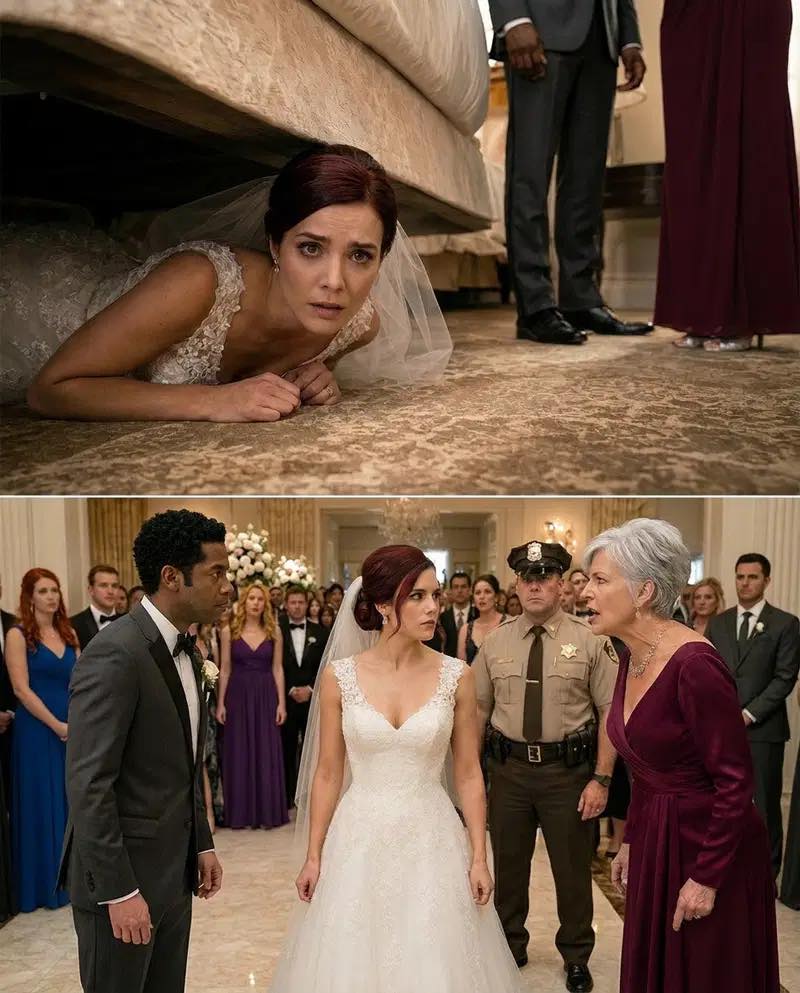
  • On my wedding night, I crawled under the bed, my veil still caught in my hair, giggling – one last silly prank before I became a wife. The door cre:aked. My husband’s voice came through, warm… then my mother-in-law’s voice cut through like ice. “Have you given it to her yet?” she hissed.

    On my wedding night, I crawled under the bed, my veil still caught in my hair, giggling – one last silly prank before I became a wife. The door cre:aked. My husband’s voice came through, warm… then my mother-in-law’s voice cut through like ice. “Have you given it to her yet?” she hissed.

    Part 1:

    On my wedding night, I discovered that my husband’s vows had been laced with betrayal. I was hiding beneath the bed, my veil caught in my hair, one hand pressed over my mouth to hold back nervous laughter, when the door creaked open—and love walked in wearing the shoes of my enemy.

    “Is she asleep?” my mother-in-law whispered.

    Daniel gave a quiet laugh. “Almost. She drank the champagne.”

    “Did you give it to her?”

    “She drank enough. She’ll be unconscious soon.”

    My smile vanished.

    Their feet stopped only inches from my face. My heart pounded so hard I was afraid the floor itself would expose me.

    “Good,” his mother said. “Once she’s out, bring the papers. By morning, she’ll wake up with nothing.”

    Daniel sighed. Not with guilt. Not with fear. Just boredom.

    “She’ll sign whatever we put in front of her if we tell her she already agreed.”

    “She’s an orphan with a pretty face and a trust fund,” his mother said coldly. “Girls like her are meant to be controlled.”

    My fingers dug into the carpet.

    Controlled.

    That was what they thought I was. A soft little bride. A lonely woman desperate for family. A fool who had mistaken polished cruelty for love.

    Daniel walked toward the vanity. I heard a drawer scrape open.

    “The transfer forms are here,” he said. “Once her shares are in my name, the board will approve the merger.”

    “And the house?” his mother asked.

    “Sold by Friday.”

    She chuckled. “Your father always said marrying rich was better than working hard.”

    I closed my eyes.

    My father had built Hale Medical from one small clinic and a secondhand van. Before he died, he warned me that greed always arrived with a smile. So I learned contracts before makeup, security law before wedding etiquette, and corporate governance before floral arrangements.

    Daniel didn’t know that.

    He didn’t know the champagne glass he had handed me touched my lips but never went down my throat.

    He didn’t know my father’s old security consultant had installed cameras in every private suite of the estate.

    And he definitely didn’t know that the “helpless bride” under the bed was the majority shareholder he needed alive, awake, and willing.

    My veil tightened in my hair.

    Above me, Daniel said, “She was so easy.”

    I smiled in the darkness.

    No, darling.

    I was patient.

    I let my body go limp before Daniel found me.

    He knelt beside the bed, his handsome face blurring into view as I kept my eyes half-closed. The same face that had trembled during his vows. The same mouth that had promised to protect me.

    “Poor thing,” he murmured, brushing my cheek. “Too much champagne.”

    His mother stood behind him in silver silk, arms folded, watching me like an expensive object being inspected.

    “Do it now,” she said. “Before the staff starts cleaning.”

    Daniel lifted me onto the bed. I made my breathing slow and heavy, like I had no strength left. He tapped my face twice.

    “Clara? Sweetheart?”

    I didn’t move.

    His mother smiled. “Perfect.”

    They placed papers on the bedside table. Daniel slid a pen between my fingers.

    “Just a few signatures,” he whispered with a laugh. “Then you can sleep forever in whatever tiny apartment you can afford.”

    Rage burned through me, but my hand stayed loose.

    The pen dragged across the paper uselessly. No signature. Only a messy scratch.

    Daniel cursed.

    His mother struck the table. “Hold her hand properly.”

    “She’s too limp.”

    “Then forge it.”

    That was their first beautiful mistake.

    Part 2:

    Forgery required intent. Coercion required evidence. Drugging required toxicology. And I had already prepared for all three.

    Three weeks before the wedding, I noticed Daniel asking too many questions about my voting shares, my father’s house, and my private accounts. So I changed my will. I froze transfer permissions. I informed the board that any post-wedding movement of assets required direct video confirmation from both me and my attorney.

    Then I invited suspicion to dinner and watched it eat.

    The champagne had gone into a hidden sample vial tucked inside my bouquet. The cameras were recording. My phone, hidden inside the hollow heel of my wedding shoe, was livestreaming audio to my lawyer.

    Daniel’s mother leaned close to my face.

    “Stupid girl,” she whispered. “Your father should have taught you not to trust hungry people.”

    That almost broke me.

    Because my father had taught me exactly that.

    Daniel forged my name once. Twice. Five times. His mother photographed the pages and sent them to someone.

    “By tomorrow afternoon, Hale Medical belongs to us,” Daniel said.

    “To you,” she corrected sharply. “But don’t forget who put you there.”

    He laughed. “Of course, Mother.”

    Then the door burst open with drunken groomsmen calling for him. Daniel snapped the folder shut.

    “Hide these,” his mother said.

    “In the safe?”

    “No. In her suitcase. If anything goes wrong, we say she planned it.”

    They were getting careless now, drunk on victory. Arrogance makes people loud. Greed makes them sloppy.

    When they left, I waited thirty seconds.

    Then I sat up.

    My hands were shaking, but my mind was ice.

    I pulled the vial from my bouquet, sealed it, and slipped it into the emergency pouch sewn beneath my dress. Then I retrieved my phone.

    A message from my lawyer glowed on the screen.

    We got everything. Police on standby. Board notified. Your call.

    I looked at the forged signatures. The papers hidden in my suitcase. The wedding ring on my finger.

    Daniel thought he had married a fortune.

    He had married a trap.

    I typed back with one thumb.

    Wait until breakfast. I want witnesses.

    Morning arrived golden and cruel.

    I walked into the dining hall still wearing my wedding dress, my veil gone, my hair pinned back, my face pale enough to please them. Daniel stood at the head of the table beside his mother, surrounded by relatives, investors, and two members of the Hale Medical board.

    He smiled too brightly.

    “My wife had a difficult night,” he announced. “But we have wonderful news.”

    His mother lifted her glass. “A new family. A new future. A new chapter for Hale Medical.”

    I sat slowly.

    Daniel placed a folder in front of me. “Clara, darling, we should tell them together.”

    I looked at the folder.

    Then at him.

    “Tell them what?”

    A flicker crossed his face.

    “That you’ve transferred your shares to me. For the stability of the company.”

    Gasps and pleased murmurs came from his side of the family.

    My board members did not smile.

    Daniel’s mother leaned toward me. “Don’t be shy. You made the right decision.”

    I picked up the documents. Studied the signatures. Let the silence stretch until even the silverware seemed afraid to move.

    Then I said, “That is not my signature.”

    Daniel laughed. “You were emotional. You signed late.”

    “No,” I said calmly. “I was under the bed.”

    His face emptied.

    The room froze.

    His mother’s glass stopped halfway to her mouth.

    I looked at her. “You should know the cameras in the bridal suite record audio.”

    Daniel whispered, “Clara—”

    I raised one finger.

    Part 3:

    My lawyer entered through the side door with two police officers, my security consultant, and Dr. Mensah, the board’s ethics chair. Behind them, a projector screen lit up.

    The room watched Daniel’s polished shoes stop beside the bed.

    Then his voice filled the hall.

    “She drank enough. She’ll be unconscious soon.”

    His mother’s voice followed, sharp and cold.

    “By morning, she’ll wake up with nothing.”

    Someone screamed.

    Daniel lunged for the remote, but an officer caught his arm.

    I stood.

    “Daniel forged my signature. His mother told him to hide the documents in my suitcase. The champagne sample has already been sent for testing. The transfer is void. The merger proposal is suspended. And under the morality and criminal conduct clauses in the prenuptial agreement Daniel signed yesterday, he leaves this marriage with nothing.”

    His mother slammed both hands onto the table.

    “You little snake!”

    I stepped closer, my voice low.

    “No. A snake bites without warning. I gave your son vows, a home, and a chance to walk away from my money and love me honestly.”

    Daniel’s face twisted. “I loved you.”

    “You loved the lock,” I said. “Not the woman holding the key.”

    The officers took him first. His mother fought harder, throwing threats about lawyers, reputation, and family. But every threat was recorded. Every signature was evidence. Every witness in that room became another nail in the trap she had built for me.

    By sunset, the wedding photos had been replaced by headlines. Daniel was charged with fraud, conspiracy, and attempted drugging. His mother’s accounts were frozen after investigators found the broker she had contacted before the ceremony. Their relatives disappeared from my house like smoke.

    Six months later, I stood in the renovated lobby of Hale Medical as our new free clinic opened under my father’s name.

    I wore no veil.

    No ring.

    Only a white suit, steady hands, and peace.

    Daniel sent one letter from prison.

    I returned it unopened.

    Some women survive betrayal by learning to forgive.

    I survived by remembering everything.

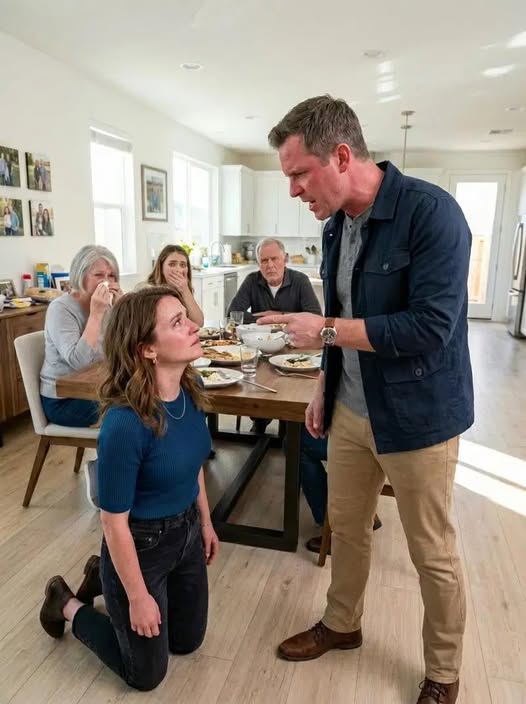
  • Everyone thought I was about to break when my husband raised a belt and ordered me to admit I ch:eated

    Everyone thought I was about to break when my husband raised a belt and ordered me to admit I ch:eated

    When my husband, Brandon Hale, pulled his father’s old leather belt from the hook beside the pantry, the entire dining room fell silent.

    His mother, Patricia, sat at the head of the table with one hand pressed dramatically against her chest, performing shock like she had practiced it in the mirror. His younger brother, Logan, leaned back in his chair with his eyes lowered and his jaw tight. My sister-in-law, Emily, froze with her wineglass halfway to her mouth. Even Brandon’s father, Richard — who usually ignored family disasters until they exploded directly in front of him — finally looked up from his dinner plate.

    “Say it,” Brandon demanded.

    I stood beside the kitchen island, both palms flat against the cold marble countertop. We were inside Patricia and Richard’s large suburban home outside Columbus, Ohio, where Sunday dinners had always been treated like religious ceremonies.

    Tonight, I was the sacrifice.

    Brandon’s face burned red. His jaw twitched violently. He folded the belt once around his fist before snapping it softly against his palm.

    “Tell them you cheated,” he said. “Tell my family what kind of woman you really are.”

    I looked at him and stayed silent.

    That only made him angrier.

    For three weeks, he had been accusing me. First because I came home late from the hospital where I worked as a billing coordinator. Then because I changed my phone password after catching him reading my messages while I slept. Then Patricia began saying she had “heard things.” She always used that phrase whenever she wanted to poison a room without leaving fingerprints behind.

    Tonight, Brandon cornered me in front of everyone. He wanted tears. A confession. He wanted me reduced into something small enough to control.

    Instead, I picked up the television remote from the side table.

    Patricia’s eyes narrowed immediately.

    “What are you doing, Claire?” she asked sharply.

    I still said nothing. I turned on the television mounted above the fireplace. Blue light filled the room, washing everyone’s faces in cold color. Brandon stepped toward me.

    “Put that down.”

    I opened the media folder on the USB drive I had inserted into the television before dinner while Patricia was distracted in the kitchen and Logan pretended not to watch me.

    The video began playing.

    At first, it showed Patricia’s upstairs guest room. The angle came from the small security camera Richard installed months earlier after jewelry disappeared during one of Patricia’s charity brunches. Patricia either forgot the camera existed or assumed nobody would ever bother checking it.

    On-screen, Patricia entered the room laughing softly.

    Then Logan walked in behind her.

    Emily slammed her wineglass onto the table so hard wine splashed over the edge.

    Richard rose halfway out of his chair.

    The video continued only long enough for the truth to become impossible to misunderstand without showing more than necessary. Patricia and Logan moved close together. Her hand touched his face. His mouth found hers.

    Beside me, Brandon stopped breathing.

    Finally, I looked at him.

    “You wanted a confession,” I said quietly. “There it is.”

    Nobody moved for several long seconds after I paused the video.

    The room felt smaller somehow, shrinking around the low hum of the fireplace fan beneath the television. Patricia’s carefully applied makeup suddenly looked pale and brittle. Logan stared at the polished hardwood floor like he could disappear through it if he focused hard enough. Emily covered her mouth with one hand, but her eyes remained dry, locked directly onto her husband.

    Richard didn’t speak immediately. He looked ten years older than he had ten minutes earlier. His shoulders sagged before hardening again. Slowly, he turned toward Patricia.

    “How long?” he asked quietly.

    Patricia opened her mouth, but nothing came out.

    “How long?” Richard repeated.

    Brandon looked from the frozen television screen to his mother, then Logan, then finally me. The belt hung uselessly from his hand. For the first time all evening, he looked uncertain — almost young — like someone had suddenly pulled the ground out from under him.

    “This is fake,” Patricia blurted suddenly.

    Her voice cracked halfway through the sentence.

    I picked up my phone, tapped the screen, and held it up. “The footage came directly from your own security system. Richard gave Brandon access after the jewelry incident, remember? Brandon never changed the shared password. I found the files while checking the cameras because somebody kept telling him I was sneaking men into our house.”

    Patricia’s eyes darted toward Brandon.

    That single glance told everyone enough.

    “You knew?” Brandon asked her slowly.

    “No,” Patricia answered too fast. “No, of course not. I only wanted to protect you. Claire has always been secretive. She isolates you from this family. She makes you suspicious of us.”

    I laughed once — not because anything was funny, but because the lie was polished enough to reflect my own face back at me.

    “She told you I cheated because she was terrified I’d seen something,” I said calmly. “And I had.”

    Logan finally looked up. “Claire, don’t.”

    Emily turned toward him immediately. Her voice came low and razor-sharp. “Don’t what, Logan? Don’t tell the truth? Don’t humiliate you? You brought me here tonight and sat beside me while this hung over all of us?”

    Logan rubbed both hands over his face. “It wasn’t like that.”

    Richard slammed his palm against the table so hard the plates jumped. “Then explain exactly what it was like.”

    Patricia stood quickly, gathering her old authority around herself. “Richard, lower your voice. We don’t need to create a scene.”

    “A scene?” Emily snapped. “Your son was about to whip his wife into confessing at your dinner table, and you were perfectly comfortable with that. But now suddenly this is a scene?”

    Brandon flinched visibly.

    I noticed it.

    Emily noticed too.

    I turned toward him. “You never asked me for the truth. You never asked for proof. You came here ready to humiliate me. You stood there with a belt in front of your parents, your brother, and Emily because your mother convinced you I was guilty.”

    His eyes dropped toward the belt.

    Slowly, he let it fall onto the floor.

    “I didn’t know,” he whispered.

    “That’s not an excuse.”

    “No,” he said quietly. “It isn’t.”

    Patricia’s face twisted with fury. “Oh, stop pretending to be innocent, Claire. You’ve wanted this all along. You wanted to destroy this family.”

    I shook my head slowly. “No, Patricia. You destroyed this family. I only brought evidence.”

    Richard walked toward the television, stared at the frozen image for one long moment, then turned away like it physically burned him.

    “Everyone out,” he said.

    Patricia blinked. “Excuse me?”

    “Not everyone,” Richard corrected coldly. “You. Logan. Out of my house.”

    Logan opened his mouth. “Dad—”

    “Out.”

    Emily stood from the table. Slowly, deliberately, she removed her wedding ring and placed it beside her untouched dinner plate.

    “I’ll stay with my sister tonight,” she said. “Logan, don’t contact me unless it’s through an attorney.”

    Logan reached toward her wrist. “Em, please.”

    She stepped backward before he could touch her. “Don’t.”

    Then Brandon looked at me.

    For the first time all night, he saw me not as a suspect, not as a wife on trial, but as a human being he had nearly broken in front of an audience.

    “Claire,” he said roughly. “Can we talk?”

    I picked up my purse from the chair beside the front entry.

    “We already did,” I replied. “You just chose not to listen.”

    I left the Hale house before anyone could recover enough from the sh0ck to start asking me questions.

    The night air felt cold and painfully clean, the kind that sharpens every breath. My hands shook while unlocking the car, but I refused to cry in Patricia’s driveway. I had already cried too many silent tears — in the shower, in the hospital parking garage, lying beside a husband who demanded explanations while his mother whispered poison into his ear over speakerphone.

    By the time I reached our townhouse, Brandon had called twelve times.

    I ignored every one.

    I packed two suitcases, removed my documents from the filing cabinet, grabbed my laptop, and left my wedding ring on the kitchen counter.

    Then I drove to a hotel near the hospital and slept for three hours with the deadbolt locked and a chair shoved beneath the door handle.

    The next morning, Emily called me.

    Her voice sounded raw. “I’m sorry.”

    “You didn’t do anything to me.”

    “I sat there while they accused you.”

    “You were lied to too.”

    She stayed quiet for a moment. “Still. I should’ve said something the second he picked up that belt.”

    I stared out across the hotel parking lot. Gray. Empty. Cold.

    “We all should’ve spoken sooner,” I said softly.

    Two days later, Brandon waited beside my car outside the hospital.

    He looked exhausted, unshaven, somehow smaller than before. He didn’t try touching me.

    That was the smartest thing he’d done in weeks.

    “I filed for separation from my family,” he said.

    I almost laughed. “That’s not legally possible, Brandon.”

    “I know. I mean I blocked my mother. Logan too. Dad’s speaking to lawyers about the house and finances. Emily already filed.”

    “That’s their disaster.”

    “I know.” He swallowed hard. “I’m sorry. I believed the worst about you because it was easier than admitting my mother could lie to me.”

    I studied his face carefully.

    I had loved him once.

    That was the cruel part.

    Love doesn’t disappear neatly just because trust has been shattered. It lingers there wounded and humiliated, asking whether it can survive.

    But then I remembered the belt in his hand.

    “I’m filing for divorce,” I told him.

    His eyes filled immediately, but he nodded. “I figured.”

    “You didn’t just doubt me,” I continued. “You wanted to punish me. Publicly. You wanted fear to make me obedient.”

    He closed his eyes.

    “I can’t build a marriage on that.”

    “No,” he whispered. “You can’t.”

    The divorce lasted seven months.

    Patricia tried controlling the story, of course. She told relatives I fabricated the video, manipulated Richard, poisoned Emily, seduced Logan into lies, and ruined Brandon’s life. But the footage existed in multiple backups, and once Richard’s attorneys became involved, Patricia’s performance lost its audience.

    Richard sold the house before the year ended.

    Emily moved to Chicago and rebuilt her life with a new marketing job. We stayed in touch afterward — not exactly close friends, but two women who survived the same collapsing room.

    Logan vanished from the family group chats and reappeared months later in Florida selling boats and posting inspirational quotes nobody believed.

    After the divorce finalized, Brandon mailed one last letter.

    I read it once.

    He apologized without asking for anything in return.

    That was the only reason I kept it.

    As for me, I rented a small apartment filled with morning sunlight, bought dishes Patricia would’ve called cheap, and slept better than I had in years.

    People later asked why I stayed silent at that dinner table until the video started playing.

    The answer was simple.

    They built a courtroom around me.

    So I brought evidence.

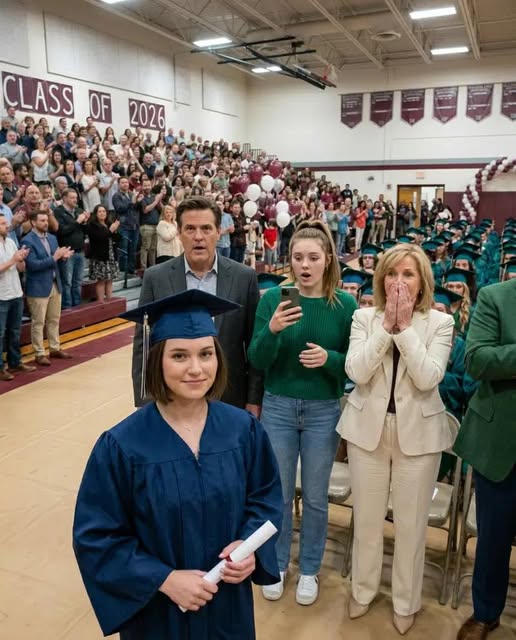
  • My parents told me to take the bus to my Harvard graduation because they were too busy buying my sister a brand-new Tesla, but when they finally showed up expecting to watch me quietly walk across the stage and go back to celebrating her

    My parents told me to take the bus to my Harvard graduation because they were too busy buying my sister a brand-new Tesla, but when they finally showed up expecting to watch me quietly walk across the stage and go back to celebrating her

    PART 1

    My name is Jordan Casey, and at twenty-two years old, I was only days away from graduating from the Wharton School at the University of Pennsylvania when my father reminded me, once again, where I stood in my own family. I had called my parents to confirm the details for my graduation ceremony, hoping they would at least pretend to be excited. Instead, my father answered in his usual clipped, distant tone, as if my call had interrupted something more important.

    “We simply don’t have time to drive you to commencement,” he said. “You’ll need to take the Greyhound bus.”

    Then, without the slightest shame, he explained that he and my mother were busy finalizing the purchase of a brand-new Rolls-Royce for my younger sister, Kaylee. Kaylee was only finishing high school, but the old familiar pain rose in my chest—the same pain that had followed me since childhood, the pain of knowing I could work twice as hard and still be seen as less deserving.

    I grew up in a huge estate in the suburbs of Maryland, but luxury never made me feel loved. My father, Franklin Casey, was the chief financial officer of a global corporation, a cold and precise man who treated life like a balance sheet. My mother, Victoria, was a celebrated neurosurgeon in Baltimore, brilliant and demanding in a quieter way. Together, they built a home where excellence was never celebrated from me because it was expected.

    When Kaylee was born, everything changed. I still remember the day my parents brought her home from the hospital. She had bright blue eyes, golden hair, and a way of pulling every ounce of attention toward her without even trying. From that moment on, I became the responsible older child, the example, the one expected to succeed without needing encouragement.

    The favoritism started small. For my eighth birthday, I received a leather-bound set of encyclopedias because my father said they would “develop my mind.” Two months later, Kaylee turned four and got a princess-themed party with decorations, music, a giant cake, and a rented pony in the backyard. I tried to convince myself she got more because she was younger. But the older we became, the harder that lie was to believe.

    Family vacations were always planned around Kaylee. If she wanted theme parks, we went to Orlando. If she wanted beaches, we packed for the coast. When I was twelve and asked to attend a summer science academy instead of the usual beach trip, my mother patted my head and gave me a distracted smile.

    “Maybe next year, Jordan,” she said.

    Next year never came.

    School was where the unfairness hurt the most. I worked relentlessly to keep perfect grades, joined debate, wrote for the school magazine, and took every advanced course I could. My report cards were met with a nod and a reminder that good grades were expected from someone with my resources. Kaylee, meanwhile, could bring home average marks and be praised for “trying her best.”

    By high school, I had learned a cruel equation: I had to be perfect to be noticed, while Kaylee only had to exist.

    My relationship with her was complicated. I never fully blamed her as a child. She was shaped by our parents just as much as I was. But as we grew older, distance opened between us. Kaylee became used to receiving whatever she wanted without effort or consequence. When she crashed her first luxury car at sixteen, my father replaced it the next day. When I asked for a small loan to buy a used car for my part-time job, he told me to learn the value of money.

    The worst memory came during my senior year of high school. I had been named valedictorian after four years of sacrifice, sleepless nights, and pressure I had carried mostly alone. My ceremony was scheduled for a Tuesday evening in May, and for once, I wanted my parents to see me. When I reminded them at dinner, my mother looked at her calendar and sighed.

    “Oh, Jordan,” she said. “That’s the same night as Kaylee’s dance studio performance. She has practiced her solo for months. You understand why we need to be there.”

    I nodded because that was what I had been trained to do.

    “I understand,” I whispered.

    I gave my valedictorian speech alone, surrounded by families cheering for other students. As I spoke about perseverance, I searched the audience for two faces I already knew were not there. That night, something inside me hardened. I had received a partial scholarship to the University of Pennsylvania, enough to make attendance possible but not enough to cover everything. My parents had hinted they might help, but I decided then that I would never ask them for money again.

    That summer, I worked three jobs. I made coffee in the mornings, helped in an office during the afternoons, and tutored students in the evenings. I saved every dollar. When August arrived, I packed my life into two suitcases. My parents looked surprised when I declined their offer to drive me to Philadelphia.

    “I’ve arranged my own transportation,” I said. “Everything is handled.”

    My mother tilted her head.

    “Do you have enough money for the semester, Jordan?”

    “I saved what I need,” I replied.

    My father barely looked up from his newspaper.

    “College is expensive. Don’t waste money on foolish things.”

    That was my goodbye. No hug. No encouragement. No pride. Behind me, Kaylee was preparing to start high school with a designer wardrobe and the newest laptop available. As I closed the front door, sadness and freedom mixed in my chest. I was finally leaving to build a life that belonged only to me.

    College was brutal at first. While many classmates focused on studying and social life, I balanced a full course load with three part-time jobs. I worked in the campus library before classes, delivered food between lectures, and spent weekends at a high-end clothing store downtown. Sleep became a luxury. My scholarship covered much of my tuition, but housing, food, books, and everything else came from my own pocket.

    I lived in one of the smallest dorm rooms on campus and ate instant noodles more often than I wanted to admit. During that difficult first year, I met Maya Torres, another business student from Arizona who was also working multiple jobs to survive. She quickly became my closest friend. We cooked cheap meals together, shared textbooks when we could, and encouraged each other when exhaustion threatened to win.

    One night, while we studied from a used textbook covered in old highlights, Maya looked at me with genuine anger.

    “How can your parents have that much money and still refuse to help you?”

    I shrugged, pretending it did not hurt.

    “They say struggle builds character.”

    Maya shook her head.

    “That isn’t character building, Jordan. That’s neglect—especially when they’re buying your sister cars and jewelry.”

    It was the first time anyone had named it so clearly. Hearing the truth from someone else made it impossible to keep pretending it was normal.

    PART 2

    In my sophomore year, I dated Logan, a charming and intelligent student from a wealthy Connecticut family. For a while, I thought I had found someone who truly saw me. He was generous and always wanted to pay for dinners or take me on weekend trips. But my pride made accepting help almost impossible. I insisted on paying my share, even when it meant picking up extra shifts just to afford the date.

    Logan never fully understood why I was so determined to stand on my own. He kept asking why I didn’t simply ask my parents for money. No matter how many times I explained the coldness of my family, he could not understand what it meant to have wealthy parents who treated help like a reward you had failed to earn. We broke up after he surprised me with expensive spring break plane tickets, and I told him I could not go because I had already committed to extra work shifts. He called me stubborn and ungrateful. We ended things that night in the rain.

    Holidays were the hardest. Most students went home to families. I stayed on campus to work. During my first Thanksgiving away, I called my mother hoping for warmth, even just a little.

    “We miss you, Jordan,” she said, though I could hear laughter and clinking glasses behind her. “We’re about to sit down for dinner. Kaylee made the most beautiful centerpiece.”

    I stood alone in my dark dorm room.

    “I should let you get back to dinner,” I said.

    “Yes, call again when you have free time,” she replied.

    Then she hung up. I spent that Thanksgiving working a double shift at a diner, serving turkey dinners to happy families who had no idea I was trying not to cry.

    The turning point came during my junior year in a financial technology course. Professor Sarah Jenkins noticed the exhausted student sitting quietly in the back row. After I submitted a research paper on digital payment security, she asked me to stay after class.

    “This analysis is far beyond typical undergraduate work,” she said. “Have you ever considered focusing on blockchain and consumer finance?”

    That conversation changed everything. Professor Jenkins became the mentor I had needed my entire life. She gave me books, introduced me to industry contacts, challenged my ideas, and believed in my potential before I fully believed in it myself.

    Under her guidance, I became fascinated by decentralized finance and security protocols. I spent hours in the computer lab learning to code stronger protection systems for digital transactions. By the end of junior year, my academic interest had become a real business idea: a secure platform that could make digital transactions easy and safe for ordinary users.

    Professor Jenkins pushed me to pursue it seriously.

    “You’ve found a real gap in the market,” she told me. “If you can build the technology, this could become something major.”

    For the first time in years, I felt more than survival. I felt purpose.

    That summer before senior year, while many classmates took prestigious internships or traveled abroad, I stayed in a tiny apartment with Maya and worked on my company. We filled walls with notes, code structures, market research, and business plans. The concept slowly became ChainVault, a digital security platform designed for speed, simplicity, and maximum protection.

    Wharton held an annual startup competition with major seed funding for promising student ventures. With Professor Jenkins pushing me forward, I entered. For weeks, I refined my pitch, built prototypes, and prepared for every question the judges might ask. The night before the final presentation, I rehearsed in front of Maya for what felt like the hundredth time.

    “Jordan, you need sleep,” Maya said. “You know this better than anyone. You’re ready.”

    The competition was fierce, with more than one hundred student ventures competing. When the judges announced ChainVault as the grand prize winner, I could barely breathe. The prize was fifty thousand dollars in seed funding and office space in the university’s innovation center. It was more support than I had ever received for anything in my life.

    The win attracted investors, including Christopher Banks, a successful tech entrepreneur who had built and sold several major software companies. He invited me to lunch to discuss ChainVault. After I explained my vision, he leaned back and studied me.

    “I’ll be direct,” he said. “I’m prepared to offer two million dollars to buy the concept and intellectual property today.”

    The offer was tempting. It would have solved my immediate financial problems instantly. Student loans, rent, food, exhaustion—all of it could have disappeared. But something inside me refused.

    “I’m honored,” I said. “But I’m not looking to sell my vision.”

    Christopher looked surprised, but not displeased.

    “Most students would take the money.”

    “I’ve never been like most students,” I said.

    The next day, he called with a better offer: five hundred thousand dollars for a fifteen percent stake in ChainVault. That was the deal I wanted. I accepted, incorporated the company, and hired a small team of developers.

    The following months were the hardest and most exciting of my life. I was still a full-time student, but now I was also the CEO of a growing startup. We worked out of a cramped, windowless office in the innovation center, coding until early morning. Three months in, we found a serious flaw in our main security protocol and had to rewrite half the system. Then one developer quit for a higher-paying tech job. Our funds were shrinking, and the product was still not ready.

    One night, exhausted and terrified, I called Professor Jenkins in tears.

    “I think I made a huge mistake,” I admitted. “We’re going to run out of money before we launch.”

    Her voice stayed calm.

    “Every successful entrepreneur reaches this moment. The question is whether you push through or walk away.”

    That was exactly what I needed to hear. I doubled down. I took on more coding myself. Maya helped with administrative work on weekends, even though she had her own responsibilities. Somehow, through sheer stubbornness, we survived.

    The breakthrough came in March of senior year. We perfected our proprietary security algorithm, allowing digital transactions to process faster than existing platforms while maintaining extremely strong protection. When we demonstrated it for Christopher, he knew immediately.

    “This changes the industry,” he said. “How soon can you prepare for Series A funding?”

    With his connections, we met top venture capital firms across the country. The timing was perfect. Interest in secure digital finance had exploded. After a month of intense pitches and negotiations, ChainVault closed a fifty-million-dollar funding round. The company was valued at seven hundred million dollars.

    The news shook the tech and finance world, but I stayed quiet. No interviews. No big social media announcement. Most importantly, I told no one in my family. Part of me wanted to prove I could succeed completely without them. Another part of me wanted to see their faces when they finally learned what I had built while they were busy worshiping Kaylee.

    By graduation, ChainVault had thirty full-time employees and had crossed a billion-dollar valuation. At twenty-two, I had become a paper billionaire. Still, I went to class, finished my coursework, and moved through campus like any other student. Only a few people knew the truth: Maya, Professor Jenkins, Christopher, and my team.

    As May approached, my feelings about graduation became complicated. I was proud of finishing my degree while building a billion-dollar company. But some small, wounded part of me still wanted my parents there. Three weeks before the ceremony, I mailed formal invitations to them and to Kaylee, including tickets and a handwritten note saying how much it would mean if they came.

    The call came on a Tuesday evening as I was leaving the innovation center.

    “Jordan, we received your graduation invitation,” my father said.

    “I was hoping you and Mom could come,” I said, waiting for congratulations that never came.

    There was a pause. I heard my mother’s voice faintly in the background.

    “Unfortunately, we have a conflict that weekend,” he said.

    “What conflict?”

    “Kaylee’s high school graduation is that same week, and we have several celebration activities planned.”

    I tightened my grip on the phone.

    “Her ceremony is Thursday. Mine is Saturday. You could attend both.”

    “Well, we’re also taking Kaylee to Miami for a shopping trip as part of her graduation gift,” he said. “You’ll have to take the bus to your ceremony. We’re busy buying your sister a Rolls-Royce.”

    For a moment, I could not speak.

    “A Rolls-Royce for an eighteen-year-old finishing high school?” I asked.

    “She worked hard in her own way,” he said. “And you’ve always been responsible enough to handle yourself.”

    The irony was almost funny. Kaylee had been accepted to the University of Miami with average grades and the advantage of our father’s donations. I was graduating at the top of my class from Wharton while running a billion-dollar company.

    “I see,” I said.

    Then the call ended.

    PART 3

    I stood frozen on the sidewalk while Philadelphia moved around me. Maya found me ten minutes later and knew immediately that something had happened.

    “They’re buying her a Rolls-Royce,” I whispered. “And they told me to take the bus to my own graduation.”

    Maya put an arm around my shoulder.

    “Then take the bus,” she said. “And let the people who actually love you cheer the loudest.”

    So I decided I would do exactly that. There was something almost poetic about it. I would arrive by public transportation to receive my diploma and then return to my office as the CEO of a billion-dollar company.

    Two days before graduation, I received an urgent email from Dean Lawrence at the business school. Worried there was an issue with my graduation status, I went to his office immediately. He greeted me warmly and explained that a major business publication had contacted the university about a feature story.

    “You have been named the youngest self-made female billionaire in the technology sector,” he said. “With your permission, we would like to briefly recognize that accomplishment during commencement.”

    At first, I wanted to decline. I valued privacy. But then I thought of my parents. I thought of the bus, the Rolls-Royce, the years of being overlooked. I knew they might come if Kaylee wanted to see the event.

    After a moment, I nodded.

    “That would be acceptable, Dean.”

    Graduation day arrived bright and clear. I stood in front of my mirror, adjusted my cap, smoothed my robe, and followed through on my plan. I boarded the city bus to campus. It was nearly empty, and I sat by the window watching familiar streets pass, thinking about the girl who had left Maryland with two suitcases and no encouragement.

    When I arrived, campus had transformed. White chairs covered the lawn, banners hung from historic buildings, and families filled the grounds. I eventually spotted my parents near registration. They looked exactly the same, but I felt like an entirely different person as I walked toward them.

    “I see you decided to come after all,” I said.

    My mother gave me a practiced smile and leaned in for a brief, cold hug.

    “The traffic was better than expected,” my father said.

    Kaylee stood beside them, bored and scrolling through her phone.

    Before the silence could grow too awkward, graduates were called to line up. The ceremony began with music, speeches, and applause. As valedictorian, I was scheduled to give the final address after the diplomas were awarded. When my turn came to cross the stage, my heart beat hard, but not from fear.

    “Jordan Casey, graduating summa cum laude with the highest distinction in business,” Dean Lawrence announced.

    I accepted my diploma, but he held the microphone a moment longer.

    “I also have the honor of sharing that Miss Casey has been recognized as the youngest self-made billionaire in her field.”

    A wave of shock moved through the audience. Then the applause erupted. Thousands of people rose to their feet. I looked toward my parents just in time to see my father drop his program onto the grass. My mother sat frozen with one hand over her mouth. Kaylee stared at me with her jaw open, her phone forgotten in her lap.

    For once, they had no script.

    I stepped to the podium and delivered my speech about resilience, self-belief, and the quiet strength it takes to build yourself when the people who should support you teach you to stand alone. I did not name my family. I did not need to. The lesson was larger than them now.

    When I finished, the applause was thunderous. But the sense of completion I felt had nothing to do with my parents. I had spent years chasing their recognition, only to realize I no longer needed it.

    After the ceremony, classmates, professors, investors, and friends surrounded me with congratulations. Through the crowd, I saw my parents pushing toward me. My father reached me first, his face still pale with shock.

    “Jordan, why didn’t you tell us about all of this?” he asked.

    He tried to hug me, but I stayed still.

    “It didn’t seem relevant to our recent conversations about buses and luxury cars,” I said calmly.

    My mother began talking quickly about pride, celebration, and dinner at an expensive restaurant.

    “I already have plans,” I said. “With the people who actually supported me these last four years.”

    For a moment, nobody spoke. Then Kaylee surprised me.

    “Can I come with you?” she asked quietly.

    I looked at her. For the first time, she seemed less like the golden child and more like a girl trapped inside a role she had never chosen.

    “I’m tired of being praised for doing nothing,” she admitted.

    Something in my chest softened.

    “You can come,” I said. Then I looked at my parents. “But they can’t.”

    One year later, I sit in an office overlooking the city, watching the world move beneath me. ChainVault has become a global leader, and the company I built from exhaustion, code, and stubborn hope continues to grow. My relationship with Kaylee has become one of the unexpected joys of my life. She stepped away from our parents’ control and began working with my foundation, learning how to build something real.

    As for me, I learned that success is not truly measured by money, headlines, or even revenge. True success is becoming someone you respect when no one is clapping. It is learning that being overlooked does not make you small. It only teaches you how to rise without waiting for permission.

    THE END.

  • The refrigerator was empty. My wife’s hands were trembling. And upstairs, my daughter was livestreaming her new designer bag, bought with the money meant for food. “Dad won’t do anything,” Mia whispered to her boyfriend.

    The refrigerator was empty. My wife’s hands were trembling. And upstairs, my daughter was livestreaming her new designer bag, bought with the money meant for food. “Dad won’t do anything,” Mia whispered to her boyfriend.

    I came home twelve hours earlier than expected and found my wife sitting in the dark, too weak to lift a glass of water. Upstairs, my daughter was laughing on a livestream while showing strangers the diamond bracelet she had purchased with my money.

    For ten full seconds, I forgot how to breathe.

    My wife, Elena, looked like a ghost sitting in our kitchen. Her cheeks had sunk inward. Her lips were dry and cracked. A blanket wrapped around her shoulders even though the house was warm.

    “Daniel?” she whispered weakly.

    I dropped my suitcase onto the floor.

    “What happened?”

    She tried to smile — the kind of smile people wear when pain has already defeated them. “I didn’t want to bother you. You were working.”

    I opened the refrigerator.

    Empty.

    Not badly stocked. Completely empty. Even the shelves looked wiped clean.

    The pantry held one stale box of crackers and a bottle of expired vitamins.

    From upstairs came my daughter’s voice, bright and vicious.

    “Dad’s overseas again, so this place is basically mine now. And Mom? She barely notices anything anymore.”

    My blood turned to ice.

    Mia was twenty-four. Beautiful, spoiled, and convinced beauty itself was a career plan. After her startup collapsed, I allowed her to move back home. Elena begged me for patience. “She’s young,” she insisted.

    But this wasn’t youth.

    This was decay.

    I knelt beside Elena. “When did you last eat?”

    She looked away silently.

    “Elena.”

    “Yesterday morning. Half a banana.”

    The sound that escaped my chest didn’t feel human.

    Then heels clicked against the stairs. Mia appeared wearing silk pajamas, holding her phone like a crown.

    Her smile froze immediately.

    “Oh,” she said. “You’re home.”

    Behind her stood Brent, shirtless and smug, wearing my watch.

    My watch.

    Mia recovered first. “You should’ve texted. We could’ve cleaned up.”

    I stared directly at her. “Why is your mother starving?”

    She rolled her eyes. “She’s being dramatic. She refuses delivery because she thinks it costs too much.”

    Elena flinched.

    Brent laughed softly. “Old people love guilt trips.”

    I took one slow step toward him.

    He stopped laughing.

    Mia lifted her chin defiantly. “Don’t start, Dad. You’re never here. You have no idea what it’s like managing this house.”

    I looked around at the empty kitchen. My shaking wife. The watch hanging from Brent’s wrist.

    Then I smiled.

    Not because I was calm.

    Because neither of them understood who paid for every wall around them, every account they touched, every lie they’d been telling.

    “You’re right,” I said quietly. “I need to understand everything.”

    Mia smirked.

    She thought she had already won.

    That was her first mistake.

    Part 2

    I didn’t raise my voice that night.

    That frightened them more than yelling would have.

    I made Elena soup with trembling hands and watched her manage three spoonfuls before she burst into tears over the bowl. She apologized. For being weak. For being sick. For needing help.

    I held her hand tightly. “No more apologizing.”

    Mia stood in the doorway with her arms crossed. “This is ridiculous. She’s acting like a victim because I asked her not to interfere in my life.”

    Brent leaned lazily against the counter. “Your daughter’s been taking care of things while you were gone. Maybe you should thank her.”

    I looked directly at him. “Take off my watch.”

    His grin faded slightly. “Mia said I could wear it.”

    “I didn’t ask who lied to you.”

    The kitchen fell silent.

    Brent slowly removed the watch and placed it on the counter.

    Mia’s cheeks flushed. “You can’t speak to him like that.”

    “This is my house.”

    She laughed sharply. “Actually, you put everything in Mom’s name for tax purposes, remember? And she’s not exactly sharp these days.”

    Elena’s fingers tightened around mine.

    There it was.

    The scent of the trap.

    Over the next two days, I became exactly the harmless father they expected me to be. I made breakfast. Canceled my remaining meetings. Slept beside Elena while she finally told me everything.

    Mia first borrowed Elena’s bank card “for groceries.”

    Then she changed the password to the delivery apps.

    Then she dismissed the housekeeper because “Mom needed privacy.”

    After that, she began inviting friends over, spending from Elena’s accounts on champagne, designer clothes, spa appointments, electronics.

    Whenever Elena protested, Mia called her confused.

    Whenever Elena tried contacting me, Mia whispered, “Do you want Dad knowing you’re falling apart?”

    The worst part came quietly.

    “She told me you’d be ashamed of me,” Elena whispered.

    I kissed her hand gently. “She lied.”

    While Mia and Brent grew more careless, I worked.

    At sunrise, I called our attorney.

    By noon, I had the bank records.

    By evening, I had footage from the doorbell cameras, kitchen cameras, garage cameras, and hallway cloud storage — storage Mia never knew existed because I installed the system through my security company five years earlier.

    That was the first thing she didn’t know.

    The second thing was worse.

    Before becoming a “traveling consultant,” I built fraud investigation systems for banks, hospitals, and private estates. I knew how thieves moved money. I knew how abusers isolated victims. And I knew arrogance always made criminals lazy.

    Mia used Elena’s cards for thirty-eight thousand dollars in six weeks.

    Brent sold three pieces from Elena’s jewelry box.

    And both of them forged Elena’s signature on a “family expense authorization” sent directly to our accountant.

    Forgery.

    Financial exploitation.

    Elder abuse, despite Elena being only fifty-nine. Under state law, her medical vulnerability mattered more than her age.

    On the third night, Mia threw a party in our living room.

    Music rattled the walls.

    Elena was asleep upstairs after visiting the doctor. I stood at the landing and watched Mia raise imported champagne into the air.

    “To freedom,” she announced. “Dad won’t do anything. He’s too obsessed with looking respectable.”

    Brent kissed her temple. “And your mom?”

    Mia shrugged casually. “She’ll be in assisted living before Christmas. Then we sell the house.”

    Everyone laughed.

    I recorded every word.

    Then I walked downstairs.

    The room instantly went silent.

    Mia smiled brightly. “Dad. Want a drink?”

    “No,” I replied. “But I would like to make a toast.”

    Brent laughed. “This should be entertaining.”

    I lifted my glass of water.

    “To targeting the wrong man.”

    Mia’s smile twitched.

    The doorbell rang.

    Then again.

    Then again.

    Part 3

    Mia frowned immediately. “Who is that?”

    “Consequences,” I answered.

    I opened the front door.

    Our attorney entered first carrying a leather folder. Behind her came two police officers. Then Elena’s doctor. Then my accountant, pale with fury. Finally Mrs. Alvarez, our former housekeeper, entered wiping tears from her face.

    Mia stepped backward. “What the hell is this?”

    Brent grabbed her arm tightly. “Don’t say anything.”

    “Excellent advice,” my attorney said calmly. “Though slightly delayed.”

    Several party guests raised phones to record.

    Mia snapped, “Turn those off!”

    I looked toward them. “Keep filming.”

    Her face lost all color.

    My attorney opened the folder. “Mia Carter and Brent Vale, we possess documented evidence of unauthorized use of Elena Carter’s accounts, forged signatures, sale of stolen property, intentional isolation of a medically vulnerable person, and recorded statements indicating plans to remove her from her home for financial gain.”

    Mia laughed too loudly. “That’s insane. Mom gave me permission.”

    Then Elena’s voice drifted down the stairs.

    “No, I didn’t.”

    Everyone turned.

    She stood wrapped in a cream-colored robe, still thin, still bruised by betrayal, but standing upright. Stronger than they expected.

    I started toward her, but she lifted one hand.

    She wanted to walk down alone.

    Panic flooded Mia’s face. “Mom, tell them. You said I could help.”

    Elena reached the bottom stair. “I said you could buy groceries.”

    “You’re confused.”

    “No,” Elena replied, voice trembling but steady. “I was hungry.”

    The room went silent.

    Brent muttered, “This is family drama. You can’t arrest people over drama.”

    One officer looked at him coldly. “We can arrest people for theft.”

    My attorney handed over the evidence package: bank statements, forged documents, camera footage, medical reports, witness statements, jewelry resale receipts, and the recording from ten minutes earlier.

    Mia lunged toward me. “You set me up!”

    “No,” I said calmly. “You built the cage. I only turned on the lights.”

    Her mask shattered completely.

    “You were never here!” she screamed. “I deserved something! You gave everything to her — the house, the accounts, the sympathy. I’m your daughter!”

    “You are,” I answered. “That’s why I gave you chances. And you used them to starve your mother.”

    Brent tried slipping toward the back door.

    Mrs. Alvarez stepped directly in front of him with shocking speed. “Going somewhere, thief?”

    The officers stopped him before he reached the hallway.

    Mia sobbed when Brent was handcuffed. She screamed when they cuffed her too.

    “You’ll regret this,” she hissed at Elena.

    Elena stared at her daughter for one long, heartbreaking moment.

    “No,” she said softly. “I regret not stopping you sooner.”

    That hurt Mia more than the handcuffs ever could.

    The aftermath moved quickly.

    The bank froze every disputed transaction. My attorney filed civil claims within forty-eight hours. Brent’s pawn shop receipts led investigators directly to the stolen jewelry. Mia’s influencer sponsors vanished after livestream clips spread online — clips showing the champagne, the laughter, the empty refrigerator, the truth.

    Her friends disappeared even faster.

    The court issued a protection order. Mia was banned from contacting Elena or entering the property. Brent accepted a plea deal first and blamed Mia entirely. Mia blamed Brent right back.

    Their loyalty survived exactly nine days.

    I changed the locks, replaced the household staff, and moved my office back home.

    Three months later, the house smelled like fresh bread again.

    Elena sat in the garden beneath a white umbrella, color finally returning to her face. She gained weight. She started painting again. Pale blue flowers covered the canvas resting on her easel.

    I carried her tea outside.

    She smiled softly. “You’re hovering.”

    “I’m admiring.”

    “That sounds nicer.”

    We laughed quietly together.

    Across town, Mia lived inside a rented room waiting for sentencing, her accounts frozen, her reputation destroyed, her designer bags sold to cover legal fees. Brent was already serving time.

    One afternoon, a letter arrived from Mia.

    Elena held it for several moments before placing it unopened into the fireplace.

    “Are you sure?” I asked quietly.

    She struck a match.

    Flames caught the corner immediately.

    “Yes,” she answered.

    We watched the paper curl into ash.

    For the first time in months, Elena leaned back and closed her eyes — not from weakness, but from peace.

    And in that moment, I understood something important.

    Revenge wasn’t the arrest.

    It wasn’t the money recovered, the public humiliation, or the locks changed forever.

    Revenge was this:

    My wife warm beneath sunlight, safe inside her own home, while the people who tried to bury her finally collapsed beneath the weight of everything they had done.

  • My mother threw scalding soup in my face for saying no to her stepdaughter. “Give her all your things — or get out!”

    My mother threw scalding soup in my face for saying no to her stepdaughter. “Give her all your things — or get out!”

    The soup struck my face like liquid fire, and for several seconds, I forgot how to breathe. My mother stood over me gripping the empty bowl, her expression cold enough to harden the burn she had just caused.

    “Give her all your things — or get out!” she screamed.

    Behind her, my stepsister Violet smiled.

    Not shocked. Not ashamed.

    Victorious.

    I sat frozen at the kitchen table while boiling broth dripped from my chin onto my blouse. My skin screamed. My eyes blurred. The entire kitchen smelled like onions, chicken stock, and betrayal.

    “All I said,” I whispered, “was no.”

    Violet folded her arms. “You humiliated me.”

    “You asked for my car, my laptop, and the necklace Dad left me.”

    “She needs them more than you do,” my mother snapped. “Violet has a job interview tomorrow. You work remotely. You don’t need a car.”

    “I paid for that car.”

    “You live under my roof.”

    I slowly looked around the kitchen. The marble countertops. The brass light fixtures. The crooked wedding photo of my mother and my late father hanging near the pantry. Mom always loved calling this place her house.

    She conveniently forgot the deed carried my name.

    My father had left the property to me when he died.

    Quietly.

    Legally.

    Permanently.

    I never corrected her because grief softened me at first. Then guilt silenced me. Then keeping the peace taught me patience.

    But pain sharpens memory.

    Violet stepped closer. “Face reality, Nora. You’re thirty-two, single, and invisible. Mom’s the only reason you’re not completely alone.”

    My mother slammed the bowl into the sink. “Pack a bag. Leave the keys. Leave the car. Leave anything Violet needs.”

    I rose slowly from the chair. Soup slid down my neck. My cheek throbbed violently. My hands trembled once, then steadied.

    “Okay,” I said.

    That startled both of them.

    My mother blinked. “Okay?”

    I grabbed a napkin, pressed it gently against my face, and walked past them.

    Violet laughed behind me. “That’s it? No tears?”

    At the staircase, I stopped and turned back.

    “No,” I answered quietly. “No tears.”

    Then I went upstairs, shut my bedroom door, and made three phone calls.

    One to my doctor.

    One to my attorney.

    And one to the security company whose cameras had recorded every second.

    I packed only one small suitcase.

    Not the designer handbags Violet had been eyeing for months. Not the jewelry case she opened whenever she thought I was asleep. Not the laptop she wanted because mine was newer, faster, and more expensive.

    Just clothes. My passport. Medical paperwork. Dad’s necklace.

    Everything else stayed exactly where it was.

    Downstairs, Violet was already celebrating.

    “She finally learned her place,” she announced loudly.

    My mother replied, “She’ll come crawling back before morning.”

    I stood silently in the hallway listening. Gauze covered my face now, cool burn cream soothing the damaged skin. The urgent care doctor had photographed my injuries and written “thermal injury caused by hot liquid” in an official report that included my mother’s full name.

    That report already sat in my lawyer’s inbox.

    When I walked downstairs, my mother barely glanced at me.

    “Keys,” she demanded.

    I placed a single key on the table.

    Violet frowned immediately. “That’s not the car key.”

    “It’s the guest-room key.”

    My mother narrowed her eyes. “Don’t get smart with me.”

    I gave her a tired smile. “Wouldn’t dream of it.”

    Then I walked out before either of them could stop me.

    Outside, I sat inside my car for ten full minutes watching the house through the windshield.

    My house.

    The home Dad built before cancer turned him quiet and thin. The home where he taught me to read contracts at twelve years old because he always said, “People who understand paperwork don’t disappear.”

    I started the engine.

    By the time my mother began calling, I was already checked into a hotel.

    I ignored every call.

    She rang twelve times. Violet texted thirty-one.

    Ungrateful witch.

    Bring the car back.

    Mom says she’s changing the locks.

    You’ll regret this.

    I replied with only one message.

    Do whatever you think is smart.

    They did.

    The next morning, Violet posted a driveway selfie beside my car, sunglasses on, smiling smugly.

    New chapter. Finally getting what I deserve.

    That same afternoon, my mother hired a locksmith.

    By evening, she had changed the locks on property she legally did not own.

    The following day, Violet invited friends over and announced online that I had “moved out after a mental breakdown.” They drank my wine, wore my coats, and filmed TikToks dancing beneath my father’s portrait in the living room.

    I saved every video.

    On the third day, my lawyer Marcus Hale arrived at my hotel suite wearing a dark suit and carrying a leather folder.

    The moment he saw my bandaged cheek, he went completely still.

    “Do you want to press criminal charges?”

    I stared out across the city lights. “I want them to understand exactly what they tried to steal.”

    Marcus opened the folder.

    “We have the deed. Trust paperwork. Medical records. Surveillance footage. Evidence of the illegal lock replacement. Property misuse. Defamation posts. We can move quickly.”

    “Then move quickly.”

    He nodded once. “They won’t expect it.”

    I touched the edge of Dad’s necklace resting against my throat.

    “No,” I said quietly. “They never really saw me at all.”

    When my mother and Violet returned home from shopping, the house was empty.

    Not trashed.

    Not burglarized.

    Empty.

    The furniture was gone. The artwork was gone. The wine fridge was gone. My books, rugs, coats, and my father’s antique desk—all gone. Every item I had purchased, inherited, insured, registered, or documented had been legally removed by an estate company under supervision.

    Only their belongings remained behind.

    Two suitcases stood in the hallway. Violet’s glitter heels sat abandoned beside the staircase. My mother’s cheap floral robe hung over the banister like a surrender flag.

    And in the living room, exactly where my father’s portrait used to hang, stood a man in a suit waiting for them.

    Marcus Hale stood beside two uniformed police officers.

    My mother froze instantly. “Who are you?”

    Violet dropped her shopping bags. “Where is everything?”

    Marcus calmly opened his folder. “Mrs. Whitaker. Miss Whitaker. I represent Nora Bell.”

    My mother’s face twisted with outrage. “This is my house.”

    “No,” Marcus replied evenly. “It is not.”

    He handed her a document.

    She snatched it away, scanned the page, and immediately went pale.

    Violet grabbed her arm. “Mom?”

    Marcus continued in the same calm, merciless tone. “The property was transferred solely to Nora Bell through her father’s estate six years ago. You were allowed to reside here as guests. That permission has now been revoked.”

    My mother opened her mouth, but no sound emerged.

    Violet recovered first. “She can’t do this! We live here!”

    “You changed locks on property belonging to the legal owner,” Marcus replied. “You used her vehicle publicly without authorization. You damaged personal property. You assaulted her with boiling soup. You defamed her online. Shall I continue?”

    My mother whispered weakly, “Assaulted?”

    Marcus tapped the folder. “Medical documentation. Security footage. A witness statement from the locksmith confirming you falsely claimed ownership of property that does not belong to you.”

    The smugness finally cracked across Violet’s face.

    Then my voice came from the doorway.

    “Hello, Violet.”

    Both of them turned sharply.

    I stood there in a black coat, my cheek still healing beneath fading red marks, my father’s necklace bright against my throat.

    My mother stepped toward me immediately. “Nora, sweetheart—”

    “Don’t.”

    The word sliced cleanly across the room.

    She stopped.

    “You threw boiling soup in my face,” I said evenly. “Because I refused to hand my entire life over to your husband’s daughter.”

    Violet pointed at me furiously. “You’re being dramatic.”

    I looked calmly toward the officers. “She drove my car yesterday. I have the footage and the social media post.”

    Color drained from Violet’s face.

    One officer asked, “Miss Whitaker, do you currently have a valid driver’s license?”

    Violet hesitated too long.

    She didn’t.

    It had been suspended two months earlier for reckless driving.

    Marcus smiled faintly without warmth. “We’ll add that as well.”

    My mother started crying then.

    Not from guilt.

    From fear.

    “Nora, please,” she whispered. “Where are we supposed to go?”

    I thought about being eight years old hiding behind the laundry-room door while my mother told Dad I was “too sensitive.” I thought about signing probate paperwork at twenty-six while she asked who would get the master bedroom. I thought about hot soup, Violet’s smile, and the silence that settled through the house after Dad died.

    Then I looked at the two suitcases waiting in the hallway.

    “You told me to get out,” I said quietly. “I’m simply returning the advice.”

    Marcus handed them formal eviction notices. The officers escorted them outside while Violet screamed about lawyers she couldn’t afford and my mother begged the neighbors not to stare.

    The neighbors stared anyway.

    Six months later, the house felt warm again.

    I rehung my father’s portrait. Repainted the kitchen. Sold the car Violet wanted so badly and bought one she would have hated because it was practical, quiet, and entirely mine.

    My mother eventually pleaded guilty to a reduced assault charge and paid restitution. Violet faced charges for unauthorized vehicle use along with probation violations. Their friends disappeared. Their social media posts vanished. Their pride didn’t survive the paperwork.

    On the first night of winter, I stood in my father’s kitchen and made soup.

    I ate it slowly.

    And for the first time in a very long while, nothing burned.

  • Two months after the divorce, I was sh0cked to see my ex-wife wandering aimlessly in the hospital. When I learned the truth, I completely collapsed.

    Two months after the divorce, I was sh0cked to see my ex-wife wandering aimlessly in the hospital. When I learned the truth, I completely collapsed.

    PART 1

    The envelope arrived on a Tuesday morning in October, slipped beneath my apartment door while I was asleep. My name was written on cream-colored paper in handwriting I did not recognize, but the return address made my stomach tighten: Riverside Memorial Hospital. Inside was a short note that shattered the careful distance I had built from my past. “Mr. Davidson, your ex-wife Rebecca listed you as her emergency contact. She has been admitted and is asking for you.”

    Three months had passed since our divorce became final. Three months since I had walked out of the courthouse believing I was free from a marriage that had slowly drained both of us. Rebecca and I had spent our final year together like strangers under the same roof, speaking mostly through lawyers and cold conversations about bills, furniture, and what each of us would take.

    The drive to the hospital felt like moving backward through time. Every mile brought back memories I had tried to bury: Rebecca laughing on our first date, the way she used to wake me with coffee and terrible singing, and the silence that eventually settled over our home like dust on furniture no one touched anymore.

    I found her in the cardiac unit, sitting near the window in a hospital gown that made her look smaller than I remembered. Her dark hair, once carefully styled, hung loose around her shoulders. The confidence that had drawn me to her seven years earlier seemed gone, replaced by someone fragile, tired, and uncertain.

    “You came,” she said when she noticed me in the doorway.

    Her voice carried both surprise and relief.

    “The hospital contacted me,” I said. “They told me you were asking for me.”

    I stayed near the door, unsure whether I had the right to come closer. Rebecca nodded slowly, fidgeting with the edge of her blanket.

    “I didn’t know who else to put down as an emergency contact,” she said. “My parents are gone, my sister lives across the country… I guess old habits stay longer than we expect.”

    The awkwardness stretched between us like a wall. We were two people who had once shared everything, now struggling to manage even the simplest conversation.

    “What happened?” I asked, finally taking a few steps toward her bed.

    She stayed quiet for so long that I thought she might not answer. When she finally spoke, her voice was barely above a whisper.

    “My heart stopped, David. I had a medical crisis at work. The doctors think it was connected to the way I’d been using my prescriptions.”

    The words hung between us. I stared at her, trying to understand what she was telling me.

    “What prescriptions?”

    Rebecca looked out the window instead of at me.

    “Different medications. Too many. The doctors are still sorting out everything.”

    Over the next hour, Rebecca began telling me pieces of her life that I had never known during our marriage. At first, she spoke carefully, as if each sentence had to be pulled from somewhere deep inside her. Then the words came faster, like they had been trapped for years.

    She told me about anxiety that had started in college and had grown worse over time. She told me about panic attacks at work, nights without sleep, and mornings when her mind was already exhausted before the day even began. She told me how she had first sought help, then slowly began depending too much on medication when fear became louder than reason.

    “At first, it helped,” she said. “Then the fear kept coming back, and I kept trying to quiet it. When one thing stopped working, I looked for another answer.”

    I listened with growing shock as she described how alone she had been. She had been seeing different doctors, collecting different prescriptions, and hiding the truth from almost everyone. What had nearly taken her life was not one dramatic moment, but the result of years of fear, shame, secrecy, and trying to survive without real support.

    “The morning I collapsed, I was already overwhelmed,” she said. “I kept thinking about the divorce, about how I had failed at the most important relationship in my life. I made a terrible choice because I didn’t know how to stop the panic.”

    Her voice was calm, but that made it worse. This was not the Rebecca I thought I had known. This was someone who had been quietly breaking while I stood beside her and saw only distance.

    “Why didn’t you tell me?” I asked before I could stop myself. “Why did you go through all of that alone?”

    Rebecca finally looked at me. In her eyes, I saw years of pain and shame.

    “Because I was afraid you would leave,” she said. “And then I was afraid you would stay only because you felt sorry for me. Either way, I thought I would lose you.”

    As Rebecca continued speaking, our marriage began rearranging itself in my mind. The emotional distance I had believed was proof that love had faded, the small arguments that grew into walls, the way she stopped wanting to see friends or go places—all of it looked different now.

    I remembered mornings when she said she felt sick and stayed in bed long after I left for work. I had thought she was avoiding responsibility. Now I wondered if those were days when anxiety had made ordinary life feel impossible. I remembered inviting her out with friends and feeling frustrated when she made excuses. I had thought she no longer cared. Now I understood that social situations may have felt unbearable to her.

    “There were signs,” I said quietly, more to myself than to her. “I just didn’t know how to read them.”

    Rebecca gave a sad smile.

    “I became good at hiding it,” she said. “Too good, maybe. I told myself that if I looked normal long enough, maybe I would eventually feel normal.”

    PART 2

    That was the cruel irony. She had hidden her pain to protect the marriage, but hiding it had helped destroy the connection between us. I had lived with someone who was drowning, but she had learned to sink quietly enough that I never reached for her.

    Sitting in that hospital room, guilt settled over me like weight. How had I missed the suffering of someone I once loved so deeply? How had I been so focused on my own frustration that I failed to see she was fighting a battle inside herself every day?

    I thought about our fights during the last year of marriage. I had accused her of not caring, of giving up, of pulling away. She had become defensive and distant, and I had taken that as proof that she wanted out. Now I understood that her withdrawal had not meant she stopped loving me. It meant she was trying to survive while pretending everything was fine.

    “I kept hoping you would notice,” she said softly. “Part of me wanted you to ask the right question. But another part of me was relieved when you didn’t, because then I didn’t have to admit how bad it had become.”

    That confession cut deeply. She had been sending quiet signals I did not understand. When she had needed support, I had been measuring her failures as a wife instead of seeing her pain as a person.

    Later, Dr. Patricia Chen explained privately that Rebecca had been through a serious medical emergency and was extremely lucky to be alive. The medical team was treating not only her heart condition but also the consequences of medication misuse. Her recovery would need careful supervision, mental health care, and a strong support system.

    “She will need steady help,” Dr. Chen said. “Not just medically, but emotionally. Does she have family or close friends who can support her?”

    I realized I did not know. During our marriage, Rebecca had slowly drifted away from most people. I had assumed it was part of her changing personality. Now I understood it was part of her illness and her shame.

    I spent that first night in the hospital’s family waiting area, unable to leave even though I had no legal reason to stay. We were divorced. She was no longer my responsibility. But the woman in that hospital bed was not just my ex-wife. She was someone I had loved, someone whose pain I had failed to recognize when it might have mattered most.

    Over the next few days, as Rebecca became physically stronger, we began having the conversations we should have had years earlier. She told me about the first panic attack she had experienced during our second year of marriage and how she convinced herself it was just stress. She described how ordinary things—answering calls, going to the store, attending gatherings—had slowly become overwhelming.

    “I kept telling myself I only had to get through one more day,” she said. “Then one more week. I thought if I held on long enough, whatever was wrong with me would fix itself.”

    The tragedy was that help had been available. Her condition could be treated. But shame, fear, and my own ignorance had kept her from reaching for support in time.

    Rebecca’s recovery required more than medical treatment. It required education for both of us. I attended therapy sessions where I learned about anxiety disorders, dependency, shame, and the ways untreated mental health struggles can damage relationships from the inside.

    Dr. Michael Roberts helped me understand that many of Rebecca’s behaviors during our marriage had not been about rejecting me. They had been symptoms of a serious condition that kept growing worse in silence.

    “Fear of judgment can keep people from seeking help,” he explained. “Then the condition worsens, and the fear grows stronger. Rebecca was trapped in that cycle.”

    Through those sessions, I began to see our marriage from her side. Every event she avoided, every responsibility she seemed to neglect, every argument we had about her behavior had been filtered through anxiety she did not know how to name out loud.

    I also began to see my part in the pattern. My frustration had become criticism. My criticism had made her fear worse. Without meaning to, I had helped create a home where she felt even more pressure to hide.

    Rebecca’s recovery was not quick. There were difficult days, setbacks, and moments when she wanted relief more than anything else. But there were also small victories: the first calm conversation, the first full night of sleep with proper medical support, the first walk down the hospital corridor without panic stopping her halfway.

    I became her advocate in ways I had not been during our marriage. I went to appointments, helped her remember questions, and learned about anxiety and recovery. It was exhausting for both of us, but it was also honest. We were finally seeing each other as people, not as the roles we had played in a damaged marriage.

    Six months after that first hospital visit, Rebecca and I had built a relationship unlike anything we had shared before. We were not trying to repair our romantic marriage. That chapter had ended too completely. Instead, we were building something different: a friendship based on truth, compassion, and a shared commitment to her healing.

    PART 3

    She found a therapist who specialized in anxiety disorders and joined support meetings where she met people who understood her experience. Slowly, the Rebecca I remembered began to return, but she was also different. She was more honest with herself. More aware. Less willing to hide behind performance.

    “I spent so many years afraid people would think I was broken,” she told me one afternoon as we walked through the park near her apartment. “Now I think pretending to be fine when you’re falling apart is what really breaks you.”

    Her healing was not perfect. Some days were still hard. Anxiety still came. But now she had tools, treatment, and people who knew the truth. She no longer had to perform wellness for everyone around her.

    Looking back, I see how many chances we missed. I learned that mental health struggles can be invisible even to the people closest to someone. Rebecca had become skilled at hiding her symptoms, but I also should have asked better questions. I should have noticed the changes instead of only resenting them.

    I learned that untreated mental health conditions do not affect only one person. They can reshape a whole relationship. Without understanding what was happening, I blamed our problems on lack of effort, when the deeper issue was pain neither of us knew how to face.

    Today, Rebecca and I remain friends. She has been in recovery for more than a year. She manages her anxiety with therapy, medical guidance, and a support system that knows the truth. She has returned to work in a healthier way and has slowly rebuilt relationships with people she once pushed away.

    I have changed too. I pay more attention now. I ask better questions. When someone’s behavior shifts, I try to wonder what might be happening beneath the surface before deciding what it means.

    The guilt I once felt has become a commitment to be more present in my relationships. I cannot undo what happened in our marriage, but I can let it make me more compassionate, more aware, and more willing to speak honestly about mental health.

    The end of our marriage was necessary. We had been too damaged by misunderstanding and silence to rebuild a healthy romantic life together. But learning the truth about Rebecca taught me that love can take different forms. Sometimes loving someone means supporting their healing without expecting to become the center of their recovery.

    Rebecca’s medical crisis forced both of us to face truths we had avoided for years. Her decision to confront her anxiety and dependency began her healing. My recognition of what I had missed began mine.

    We often wonder how different things might have been if we had spoken this honestly while we were still married. But maybe we were not ready then. Maybe we were too busy pretending the marriage was still fine to admit how much both of us were hurting.

    That hospital room changed both our lives. It was where I learned that the woman I thought I understood had been fighting battles I never saw. It was where I learned that relationships can fail not from lack of love, but from lack of understanding.

    Rebecca’s story eventually became part of my work in mental health awareness. I began speaking at community events about warning signs, shame, and the importance of creating safe spaces for people to ask for help. I learned that mental illness does not mean weakness. It does not care how intelligent, successful, or capable someone appears.

    Rebecca’s recovery inspired me because she survived, but also because she chose honesty afterward. She rebuilt her life on truth instead of hiding. She began using her story to help others feel less alone.

    The divorce I thought was the end of our story became only one chapter in something larger: healing, growth, and a different kind of love. We could not save our marriage, but in some ways, we helped save each other.

    Sometimes the most important discoveries happen after we believe the story is over. Sometimes understanding arrives too late to protect what we wanted, but just in time to protect what matters more: our humanity, our ability to grow, and our willingness to care for one another through life’s hardest moments.

    Rebecca’s second chance at life became my second chance to understand what it means to truly support someone. The marriage we lost was replaced by something quieter, more honest, and more lasting: a bond built on seeing each other clearly, accepting each other’s struggles, and choosing to stand together not as husband and wife, but as two human beings committed to each other’s wellbeing.

  • “The truth was waiting in the exam room, but he called me a cheat and left.”

    “The truth was waiting in the exam room, but he called me a cheat and left.”

    “He Called Me a Cheat and Walked Away—But the Truth Was Waiting in the Exam Room”
    —”Anna… I need you to look at this, because there isn’t just one baby in here.”

    I felt like my heart was going to leap out of my throat.

    My mother squeezed my hand tighter.

    —”Then what is it?” I asked, my voice barely a whisper.

    The doctor turned the screen slightly toward me. She moved the transducer carefully, focused the image, and then two small spots appeared—two tiny forms pulsing in the middle of that gray mist that I barely knew how to read.

    The doctor smiled, but it was a cautious smile, like someone who knows that news can be a miracle and an earthquake all at once.

    —”There are two, Anna.”

    I didn’t understand.

    I looked at her. Then I looked at the screen. Then at my mom. And back to the screen.

    —”Two… what?”

    —”Two babies.”

    My mom let out a soft “Oh, dear Lord,” so quiet it almost made me cry before my time.

    I stood frozen.

    Not out of sadness.

    Not out of fear.

    Out of pure bewilderment.

    Two.

    Two little hearts.

    Two lives.

    Two heartbeats in a body that was just learning how to support a single one.

    The doctor kept talking, pointing to one spot and then the other, explaining weeks, measurements, sacs, development, but for a few seconds, I stopped listening. In my head, only one phrase repeated over and over, like an absurd echo:

    Michael abandoned me for one.

    And now it turns out there are two.

    Tears escaped without permission. The doctor handed me a tissue. My mother kissed my hair.

    —”Don’t cry, my baby girl.”

    —”I don’t know if I’m crying out of shock or joy,” I said, laughing and trembling at the same time.

    The doctor lowered the volume on the equipment and looked at me with a kind seriousness.

    —”I want you to take very good care of yourself. A twin pregnancy requires more monitoring. I’m not telling you something is wrong, but I am saying we’re going to follow this closely. You need to rest, eat well, and not carry any more stress than necessary.”

    I almost laughed.

    Not carry any stress.

    I had a husband who called me a cheat, a neighbor who was already whispering about my misfortune, a mistress moved into what had been my marriage, and now two babies pulsing inside me as living proof that life sometimes has a very cruel sense of humor.

    But I nodded.

    —”Yes, doctor.”

    My mother, who never missed an important detail, asked everything I couldn’t formulate: vitamins, rest, ultrasound frequency, risks, food, warning signs. I just kept staring at the paper printout they gave us at the end. Two white dots. Two tiny shadows. Two miracles or two giant responsibilities—I still didn’t know which word scared me less.

    We left the clinic, and the heat of the street hit me all at once. I stood still on the sidewalk, the folder clutched against my chest.

    —”Do you want to go get some soup?” my mom asked.

    I looked at her and let out an unexpected laugh.

    —”I want to sit down.”

    We sat on a bench outside a pharmacy. The world went on as if nothing had happened: cars, people, kids in school uniforms, fruit vendors, a woman arguing on the phone. No one knew that I had just discovered that life had split my soul and filled my womb at the same time.

    My mom tucked a lock of hair behind my ear.

    —”What are you going to do about Michael?”

    I looked at the folder.

    —”Nothing.”

    —”Nothing?”

    —”Nothing for now.”

    And it was the truth.

    Because suddenly I understood something with almost violent clarity: I no longer wanted to beg him. Or convince him. Or run after a man who preferred to believe I was a whore rather than just ignorant. A man who knew the body of his coworker better than his own doctor’s instructions. A man who had seized the first excuse to flee the marriage and fall, coincidentally, into Natalie’s arms.

    No.

    I wasn’t going to run after him with ultrasounds in hand as if I needed to certify my dignity to him.

    That night, I stuck the ultrasound on the refrigerator with a blue magnet from a hotel where Michael and I had gone for our second anniversary. I pulled it off a second later and threw it in the trash. Then I used an old orange-shaped magnet my mom had brought from Florida.

    I stayed there for a long time staring at that image.

    —”Hi,” I whispered, touching the paper. —”Sorry for the mess you’re arriving into.”

    My mom heard me from the kitchen.

    —”Don’t apologize to them, Anna. Give them strength.”

    I closed my eyes.

    —”Then stay,” I told my babies, very softly. —”Stay with me.”

    The following days were strange.

    My body began to change with a speed that frightened me. More sleep, more hunger, more nausea, more sensitivity. And a background sadness that appeared at absurd moments: seeing one of Michael’s t-shirts forgotten behind the washer, hearing a commercial for the cologne he used, opening the pantry and finding the coffee he used to buy.

    I didn’t exactly miss him.

    I missed the version of my life where I still didn’t know how easy it was for him to turn his back on me.

    My mom occupied the house with her way of caring: she washed curtains, organized jars, filled the fridge, changed the sheets, opened windows, played music in the mornings. She never told me to “be strong.” She did something better: she stayed.

    One afternoon she found me looking at my phone without moving.

    —”Are you going to text him?” she asked.

    The screen showed the chat with Michael. The last message was still there like a slap in the face:

    “When it’s born, don’t come looking for me. Take responsibility for your own choices.”

    I closed the conversation.

    —”No.”

    And then something happened that ignited a new rage in me.

    Three days after the ultrasound, the doorbell rang.

    I opened it thinking it was the delivery guy from the pharmacy.

    It was Natalie.

    She was wearing a cream-colored dress, dark sunglasses worn like a bad actress, and a polite smile that gave me more disgust than if she had come to insult me.

    —”Hi, Anna. Can we talk?”

    I didn’t open the door any wider.

    —”No.”

    She took off her glasses.

    —”I only came because Michael is very upset and…”

    —”And you thought the mistress was the right person to mediate?”

    She grit her teeth.

    —”I’m not his mistress.”

    I laughed in her face.

    —”Sure. You’re just the woman he went to live with three days after calling me a cheat.”

    —”I didn’t come to fight. I came to ask you to stop looking for him.”

    I stared at her so hard she looked away for a moment.

    —”I haven’t looked for him.”

    —”Well, he’s nervous about the pregnancy.”

    —”How delicate. Tell him to breathe.”

    Natalie swallowed hard.

    —”He says he doesn’t intend to take responsibility for a child that isn’t his.”

    I felt my babies as a sudden presence, still imaginary but fierce.

    —”Then tell him not to take responsibility,” I replied. —”But tell him something from me too: when a coward needs to send another woman to speak for him, he doesn’t even reach the level of being a man.”

    I slammed the door without waiting for a reply.

    My hands were shaking. My mom came out of the kitchen, drying her hands on her apron.

    —”Who was it?”

    —”Perfumed trash.”

    My mom didn’t ask anything else. She just hugged me.

    That night I cried with rage. Not because of Natalie. Or Michael. Because of the humiliation of having to defend my pregnancy as if it were a criminal charge. Because of the exhaustion of carrying not just two lives, but also everyone else’s suspicion.

    Two days later, I called the clinic where Michael had his surgery.

    Not because I wanted to spy on him.

    Because I wanted to hear from a medical voice what I already knew and he refused to understand.

    The receptionist, for obvious reasons, didn’t give me detailed information. But what she let slip was enough when I asked about the general post-op protocol.

    —”Additional contraception is always indicated until the absence of motile sperm is confirmed in follow-up tests, ma’am.”

    The same thing. The same thing the doctor told him. The same thing he preferred to forget because it suited his pride better than reality.

    I tucked that fact away like someone hiding a match.

    I didn’t know when I was going to light it yet.

    My belly started growing sooner than I imagined. “It happens with twins,” the doctor told me. I bought looser clothes, stopped trying to squeeze into my favorite jeans, and started talking to my babies when no one was looking.

    At first, I felt ridiculous.

    Then I didn’t.

    I told them silly things: what we were going to have for breakfast, how the rain smelled, that their grandma made the best chicken soup in the world, that I still didn’t know if they were boys or girls but I was already waiting for them with a ferocidad that surprised me.

    Michael still didn’t call.

    But people did talk.

    The neighbors.

    A distant cousin.

    The lady at the stationery shop.

    There was always someone who knew something, had heard something, had seen something.

    “Oh, they say he left you because the kid wasn’t his…”

    “Well, but if he had the surgery, you can see his side too…”

    “The important thing is that you know the truth…”

    The truth.

    As if the truth were worth anything when no one wants to hear it.

    At twelve weeks, I had another ultrasound. Both were doing well. Two stubborn little hearts. Two tiny beings clinging to me as if they knew people outside were already judging them before they were even born.

    It was during that appointment when the doctor, while reviewing my chart, looked up.

    —”Is the father of the babies still denying paternity?”

    I didn’t know whether to laugh or cry.

    —”Yes.”

    —”Then I want to suggest something. Not for him. For you.”

    I looked at her.

    —”Document everything. Dates, messages, medical history, the records of his vasectomy if you can get them, the notes where the protocol was explained. If later you want or need a legal process, it will help you.”

    My mom, sitting nearby, nodded as if she had been waiting for that idea.

    I nodded too.

    That afternoon I opened a folder.

    I put in the note he left on the pillow.

    Printouts of his messages.

    Photos of the ultrasound.

    Dates.

    Screenshots.

    The clinic’s contact info.

    And a list, written by me, of everything I remembered from the day of the vasectomy: what the doctor said, what Michael answered, how he mocked the “excess of instructions,” how that night he wanted to brag to half the world that he was “free.”

    As I wrote, I started to feel something new.

    Not sadness.

    Order.

    And order, when you’re broken, can save your life.

    The blow came on a Thursday afternoon.

    I was organizing baby clothes that my mom had washed and hung in the living room—we still didn’t even know the sexes, but she had already bought yellow onesies “just in case”—when my phone rang.

    Unknown number.

    I answered.

    —”Hello?”

    —”Anna… this is Dr. Serrano.”

    It took me a second to place him. Then I remembered the voice. Michael’s urologist.

    I sat down immediately.

    —”Yes, doctor.”

    —”Forgive me for calling you like this, but Mr. Michael Torres requested a copy of his file and there was a… complicated situation. I can’t give you his detailed clinical information without authorization, but I do need to ask you a direct question for an ethical reason.”

    I felt cold.

    —”Tell me.”

    —”Are you still pregnant?”

    —”Yes.”

    There was a short pause.

    —”I see. Look, Michael finally came in for his post-vasectomy check because he was going to start another medical procedure. His test showed an abundant presence of motile sperm. That means he was not sterile. He wasn’t when you got pregnant, and he isn’t right now. I don’t know what personal conflict there is between you, but I’m telling you this because, from what I managed to gather, he is attributing this pregnancy to an infidelity with no medical basis.”

    I was speechless.

    Not because it was a surprise.

    But because hearing the truth confirmed by the very science he used as a weapon gave me an icy calm.

    —”Thank you, doctor,” I said finally.

    —”I’m very sorry. And take care of yourself. A twin pregnancy already requires peace, not this kind of stress.”

    I hung up.

    My mom was in the doorway, watching me.

    —”What happened?”
    —”So the jerk did know. Or at least he can’t say he didn’t know anymore.”

    I shook my head.

    —”No. But there’s more.”

    —”What’s more?”

    I looked at the folder.

    —”I want him to find out about something in front of me.”

    I didn’t have to look for him.

    Life put him in front of me on its own.

    Two weeks later, I went to the lab for some routine tests. I was coming out, with my belly already impossible to hide, when I saw Michael’s truck pull up abruptly at the curb.

    He jumped out in a hurry.

    Alone.

    And when he saw me, he stopped as if he had hit a wall.

    We stared at each other for a few seconds.

    He looked worse. Thinner. Dark circles. Messy from the inside out. He no longer carried that cocky, offended-man confidence. He carried something else. Shame, maybe. Or fear.

    —”Anna,” he said.

    I didn’t answer.

    He took a step forward.

    —”We need to talk.”

    —”Too late.”

    —”Please.”

    My mom wasn’t with me that day. I was alone.

    And curiously, I didn’t feel fear.

    I felt weariness.

    —”Did your doctor already tell you that you’re still fertile, or are you still here to accuse me of sleeping with the whole world?”

    He closed his eyes for a second.

    —”He told me.”

    —”Good.”

    —”Anna, I didn’t know…”

    I laughed. I actually laughed.

    —”No, Michael. You did know. You didn’t know about sperm counts, but you knew something more serious: you knew it was possible I was telling the truth. And even then, you preferred to leave with someone else.”

    He lowered his head.

    —”Natalie isn’t with me anymore.”

    That actually surprised me a little, though not enough.

    —”What a tragedy.”

    —”Don’t mock me, please.”

    —”Does it hurt? Imagine your husband calling you a cheat, abandoning you pregnant, and going to live with someone else. See if you ask ‘please’ then.”

    His eyes filled with something wet.

    —”I made a horrible mistake.”

    —”No. You made many. The first was not listening to the doctor. The second was using your ignorance as a hammer to break my face. And the third…” I pointed to my belly, “…was turning your back on your children before even knowing how many there were.”

    He frowned.

    —”How many?”

    I looked at him for one more second.

    There it was.

    The moment.

    The phrase.

    The real blow.

    —”There are two, Michael.”

    He stood motionless.

    —”What?”

    —”Twins.”

    I think he stopped breathing.

    He looked at my belly. Then at my face. Then back at my belly, as if suddenly he could see through the fabric and find the full magnitude of what he had done.

    —”Two…” he repeated, almost in a whisper.

    —”Yes. Two babies you called someone else’s kids before they were even born.”

    He put a hand to his mouth.

    For the first time since I had known him, I saw Michael look truly small.

    —”Anna… I…”

    —”Don’t say you’re sorry. That only serves you.”

    He tried to step closer.

    I took a step back.

    —”No.”

    —”Let me fix it.”

    —”It can’t be fixed.”

    —”I can go to the appointments with you, I can…”

    —”No.”

    Firmer.

    Clearer.

    Final.

    The real blow wasn’t when he found out the pregnancy could be his.

    Nor when the doctor confirmed he was still fertile.

    It was that exact instant, on the sidewalk, when he understood that it wasn’t enough to prove I wasn’t a cheat.

    He had to live with the fact that he had abandoned his own children for his own comfort.

    And that no one was going to take that image of himself away.

    He began to break down right there.

    —”Forgive me.”

    I shook my head slowly.

    —”Not yet.”

    And I kept walking.

    I left him standing on the sidewalk, with his guilt finally well-placed.

    The following months were hard, but no longer dark.

    There were appointments, vitamins, low blood pressure, sleepless nights, fear that something would go wrong, sudden tenderness when buying two cribs, arguments with my mom over whether green or beige was better for the room, and a strange peace that started to settle in once I accepted that I didn’t need to resolve my story with Michael before becoming a mother.

    He persisted.

    Calls.

    Texts.

    Flowers.

    A letter.

    Promises.

    He showed up once outside the house with a bag of diapers—ridiculously early, as if the right size of diapers could mend a betrayal.

    My mom didn’t let him in.

    —”When my grandkids are born,” she told him from the gate, “we’ll see if you deserve to meet them. For now, learn to live with what you did.”

    I heard everything from the living room, one hand on my belly and the other on the arm of the sofa.

    I didn’t go out.

    Not because it still hurt to look at him.

    But because I was no longer moved by his urgency.

    I was moved by mine.

    By my children.

    Because each week that passed, I understood something better: what I was going to need from then on wasn’t a repentant man. It was a whole mother.

    When the day of the birth arrived, it was raining.

    The hours were long, painful, exhausting. My mom didn’t leave my side. And when I finally heard the first cry, then the second, I felt my body break apart and rebuild itself at the same time.

    Boy and girl.

    Two.

    I placed them on my chest and I knew, with a certainty I had never had in my life, that even if everything else had been a disaster, they weren’t.

    They were the only clean thing left after the fire.

    Michael met them three weeks later.

    Not because he insisted.

    Because I decided it…
    Click Here to continuous Read​​​​ Full Ending Story👉: PART 3- “He Called Me a Cheat and Walked Away—But the Truth Was Waiting in the Exam Room”

  • PART 3- “He Called Me a Cheat and Walked Away—But the Truth Was Waiting in the Exam Room”

    He entered the room as if entering a church where he was no longer sure he deserved forgiveness. He saw them asleep, so tiny they were almost frightening, and he began to cry without making a sound.

    I let him.

    Sometimes guilt needs to look face-to-face at what it lost before it learns how to behave.

    He held the girl first. Then the boy. His hands were shaking.

    —”They look like you,” he said.

    —”They don’t look like anyone yet,” I replied.

    He looked at me. He nodded. And he understood that this was also a form of sentencing.

    I didn’t go back to him.

    Never.

    The wound healed, yes, but it healed toward a different side.

    Michael shows up. He fulfills his duties. He pays what he should. He is slowly learning to be a father from the periphery of the damage he himself caused. Sometimes I think he truly changed. Sometimes I don’t care.

    Because the story no longer revolves around his repentance.

    It revolves around two children who arrived when I thought I had lost everything.

    And around a woman who once left the clinic believing her life was falling apart because there wasn’t just one baby on the screen.

    And no.

    There were two.

    Two reasons never to beg again.

    Two heartbeats to learn how to stand up.

    Two living proofs that the truth, even if it arrives late, always ends up finding its way to be born

    Michael did not become a father the day the twins were born.

    He became a father slowly, painfully, and much later than he should have.

    The first time he held them, he cried.

    But tears are not proof of change.

    Tears are only proof that someone is feeling something.

    I had learned the hard way that a man could cry, apologize, send flowers, say he was ashamed, and still expect the woman he broke to rebuild the bridge for him.

    So when Michael sat in my living room with our daughter in one arm and our son asleep against his chest, I did not soften the way he hoped I would.

    I watched him carefully.

    He looked down at them like they were miracles he had almost thrown away.

    Maybe they were.

    Our daughter, Elena, opened one tiny fist against his shirt. Our son, Mateo, slept with his mouth slightly open, making the softest sound in his throat.

    Michael’s face collapsed.

    “I don’t know how to forgive myself,” he whispered.

    I was sitting across from him, still sore from delivery, still exhausted from sleepless nights, still wearing loose clothes because my body felt like it belonged to someone else.

    “That is not my job,” I said.

    He looked up.

    “What?”

    “It is not my job to teach you how to forgive yourself.”

    His eyes filled again.

    “Anna, I know.”

    “No,” I said quietly. “I don’t think you do. You want pain to become punishment, and punishment to become payment. But suffering because you did wrong does not automatically repair the wrong.”

    He looked back at the babies.

    “I want to be in their lives.”

    “I know.”

    “I’ll do anything.”

    “Then start with consistency.”

    He nodded quickly.

    “Anything.”

    “And stop asking me to comfort you.”

    That one hurt him.

    I saw it.

    But it needed to.

    Because Michael had spent months making me carry his anger, his suspicion, his humiliation, his betrayal, and then once the truth turned against him, he wanted me to carry his guilt too.

    I was done carrying things that belonged to him.

    From that day forward, we moved through a new kind of arrangement.

    Not romantic.

    Not warm.

    Not healed.

    Just structured.

    Michael came twice a week at first. My mother stayed in the house every time. Not because I was afraid of him, but because I no longer trusted emotional situations without witnesses.

    He brought diapers.

    Formula.

    Tiny socks.

    Sometimes groceries.

    Sometimes baby medicine.

    He paid what the court ordered after we filed formally. He did not fight me on support. I think even he understood that arguing over money after abandoning me pregnant with twins would have made him look smaller than he already felt.

    Natalie disappeared from the story almost completely.

    I heard from a friend of a friend that she left him after discovering the vasectomy had failed. Apparently, she had believed his version too. She had believed I was pregnant by another man, believed she had “won” him, believed she was receiving a clean future instead of a man running from his own responsibilities.

    When the truth came out, she saw him clearly.

    People like Michael often think they are choosing someone new.

    Most of the time, they are choosing someone who does not yet know the worst parts of them.

    Natalie learned quickly.

    One afternoon, when the twins were three months old, Michael arrived early. I was in the nursery trying to change Mateo while Elena cried in the crib, both of them hungry, both of them furious, both of them somehow stronger than my entire body.

    My mother was at the pharmacy.

    I opened the door with Mateo on my shoulder and Elena crying behind me.

    Michael stepped inside and froze.

    Not because anything dramatic was happening.

    Because real parenthood was happening.

    The kind no one photographs.

    A stained shirt.

    Unwashed hair.

    A bottle warming too slowly.

    A baby screaming with her whole body.

    A mother holding herself together with one hand and pure stubbornness.

    For once, Michael did not apologize.

    He simply took off his jacket, washed his hands, and said, “Give me one.”

    I looked at him for a moment.

    Then I handed him Elena.

    She screamed harder at first, offended by the change. Then he held her carefully against his chest and began walking in small circles around the living room.

    “I know,” he murmured. “I know. I’m late. I know.”

    That was the first useful thing he ever said.

    Not to me.

    To her.

    He did not ask for praise afterward.

    He did not say, “See? I’m trying.”

    He just stayed for three hours.

    He washed bottles.

    He folded tiny clothes badly.

    He changed two diapers and looked appropriately humbled by both.

    When my mother returned, she stood in the doorway watching him for a moment.

    Then she looked at me.

    I gave the smallest shrug.

    Not forgiveness.

    Observation.

    There is a difference.

    Months passed.

    The twins grew.

    Elena became alert and dramatic, always watching everything with wide dark eyes, as if she had arrived determined not to miss a single betrayal. Mateo was softer, sleepier, smiling first and worrying later. They were different from the beginning. Two little souls who had shared the same secret space inside me and still emerged with completely separate opinions about the world.

    Michael became steadier.

    Not perfect.

    Never perfect.

    He missed one appointment because of work, and I made it clear there would not be a second time without consequences. He learned that fatherhood was not a feeling. It was not guilt. It was not a photograph holding two babies for social media.

    Fatherhood was showing up when no one clapped.

    It was buying medicine at midnight.

    It was memorizing feeding schedules.

    It was knowing which baby hated the blue pacifier and which one calmed down when someone hummed.

    It was being present after losing the right to be trusted easily.

    When the twins turned one, Michael asked if we could talk privately after their small birthday party.

    My mother took the babies into the nursery.

    The house was messy with wrapping paper, cake crumbs, and little plastic toys making cheerful noises from under the couch.

    Michael stood near the kitchen table.

    “I know I don’t have the right to ask this,” he said.

    “Then think carefully before asking.”

    He nodded.

    “I know we’re not getting back together.”

    I said nothing.

    He continued.

    “I used to think the worst part was that you wouldn’t forgive me. But that’s not true. The worst part is knowing that even if you forgive me one day, I still became the kind of man who left you when you needed me most.”

    His voice broke, but he held it together.

    “I can’t undo that.”

    “No,” I said. “You can’t.”

    “I can only be different now.”

    “Yes.”

    He looked at me.

    “I’m trying.”

    “I know.”

    It was the first time I had said that to him.

    Not warmly.

    Not with softness.

    But honestly.

    His eyes reddened.

    “Thank you.”

    “Don’t thank me,” I said. “Keep trying.”

    That became the pattern.

    Years passed not in grand scenes, but in ordinary ones.

    Elena learning to walk by grabbing the edge of the sofa.

    Mateo saying “Mama” first, then “agua,” then “no” with the full authority of a tiny judge.

    Michael attending preschool meetings.

    Me returning to work part-time.

    My mother slowly moving back to her own house, though she still came over so often that the twins thought she was part of the furniture.

    Every now and then, people asked if I regretted not taking Michael back.

    Usually, they asked carefully.

    Sometimes not.

    “But he seems sorry.”

    “He’s a good father now.”

    “People make mistakes.”

    I learned to answer without anger.

    “Yes. And some mistakes change the shape of a relationship forever.”

    That was the truth.

    Michael did become a better father.

    But becoming a better father did not automatically make him a safe husband.

    He had accused me before he investigated.

    He had abandoned me before he listened.

    He had chosen another woman before he checked the medical facts.

    He had made my pregnancy a trial where I had to prove my innocence.

    That kind of wound does not disappear because someone later learns how to hold a baby.

    It can heal.

    But it heals into wisdom.

    When Elena and Mateo were four, Michael asked me one day if I ever planned to remarry.

    We were standing outside the preschool gates. Elena had paint on her sleeve. Mateo was carrying a paper sun he insisted was actually a lion.

    I looked at Michael.

    “Maybe.”

    He smiled sadly.

    “I hope he’s good to you.”

    “He will be,” I said.

    He nodded.

    He understood what I meant.

    Not that I had already chosen someone.

    But that I had finally become someone who would never again stay with a man who needed a crisis to learn respect.

    That night, after the twins fell asleep, I sat alone in the living room with the old folder open on my lap.

    The note Michael left on the pillow.

    The first ultrasound.

    The printed messages.

    The medical notes.

    The first photo of Elena and Mateo in the hospital, tiny and furious and alive.

    I kept those papers for years, not because I wanted to live in the pain, but because sometimes women are told to forget too quickly.

    Move on.

    Be mature.

    Think of the children.

    Forgive.

    Let it go.

    But memory is not always bitterness.

    Sometimes memory is protection.

    I kept the folder to remember what happened when I doubted myself too much. To remember that I had known the truth even when everyone around me wanted to debate it. To remember that my dignity did not begin when the doctor confirmed Michael was still fertile.

    My dignity had been there the whole time.

    Even on the bathroom floor.

    Even in the supermarket when Natalie smiled at my stomach.
    Even when Michael called my babies someone else’s children.

    The truth did not make me worthy.

    I was already worthy when no one believed me.

    Years later, Elena asked me why she and Mateo did not live with their father.

    She was seven. Old enough to notice differences. Young enough to ask directly.

    We were sitting at the kitchen table doing homework. Mateo was on the floor building something with blocks that looked structurally impossible but emotionally important.

    I put down my pen.

    “Your father and I hurt each other,” I said carefully. “And we decided it was better to be kind separately than unhappy together.”

    Elena studied me.

    “Did Daddy hurt you?”

    I took a breath.

    Children deserve truth, but not adult burdens.

    “He made choices that hurt me,” I said. “But he loves you.”

    She thought about that.

    “Can people love you and still hurt you?”

    “Yes,” I said. “That is why love is not the only thing we need. We also need respect, honesty, and responsibility.”

    She nodded as if filing that away somewhere deep.

    I hoped she would never need it.

    But I knew better than to raise a daughter on fairy tales alone.

    Mateo looked up from his blocks.

    “I respect you, Mommy.”

    I laughed so hard I almost cried.

    “I respect you too, my love.”

    That night, after they were asleep, I stood in the doorway of their room for a long time.

    Two beds.

    Two sleeping faces.

    Two lives that had arrived inside chaos and turned it into purpose.

    I thought about the ultrasound room.

    The doctor’s voice.

    There isn’t just one baby in here.

    At the time, I thought the biggest shock was that there were two.

    I was wrong.

    The biggest shock was not the twins.

    It was discovering that I could lose my husband, my reputation, my certainty, my old life, and still not lose myself.

    Michael’s vasectomy failed.

    Our marriage failed.

    His pride failed.

    But I did not.

    And that is the part I want women to understand when they hear my story.

    Sometimes the person who accuses you is not searching for truth.

    Sometimes he is searching for permission to leave.

    Sometimes he needs you to be guilty so he does not have to face his own weakness.

    But another person’s lie about you does not become your identity.

    Not even if they say it loudly.

    Not even if they leave.

    Not even if everyone else believes them first.

    The twins are ten now.

    Elena is sharp, fearless, and impossible to trick.

    Mateo is gentle, funny, and strangely good at noticing when people are sad.

    Michael is still in their lives.

    He shows up.

    He pays.

    He parents.

    He has apologized more than once, and I believe the apologies now because they no longer arrive with expectations attached.

    He no longer asks me if I can forgive him.

    Maybe he finally understands that forgiveness is not a door he can knock on until I get tired and open it.

    It is a landscape I walk through at my own pace.

    As for me, I did remarry eventually.

    Not quickly.

    Not because I needed rescue.

    I married a man named Gabriel who never once asked me to prove my truth before believing me. The first time I told him the story, he did not interrupt. He did not ask what I had done to make Michael suspicious. He did not try to make the pain smaller.

    He simply said, “I’m sorry you had to survive that.”

    And sometimes, that is how you know someone is safe.

    Not because they promise they will never hurt you.

    People are human.

    They will fail.

    But safe people do not turn your pain into a courtroom.

    Safe people do not require evidence before compassion.

    Safe people do not use your most vulnerable moment as an exit door.

    When Elena and Mateo were old enough, Michael sat with them and told them his part of the truth.

    Not all the details.

    Enough.

    He told them he had been wrong.

    He told them he had let fear and pride make him cruel.

    He told them their mother had deserved better.

    I watched from the kitchen doorway while he spoke.

    Elena cried quietly.

    Mateo looked angry in a way I had rarely seen.

    But afterward, something shifted between them and their father.

    Not because the truth fixed everything.

    Because truth gave them a foundation.

    Children can survive difficult truths better than they can survive confusing silence.

    That is another thing I learned.

    Do not build a family on secrets and call it peace.

    One evening, years after everything, Michael walked me to my car after the twins’ school concert.

    Elena had sung too loudly.

    Mateo had forgotten half the lyrics and improvised with confidence.

    We were both laughing.

    Then Michael grew quiet.

    “You look happy,” he said.

    “I am.”

    “I’m glad.”

    I looked at him, and for the first time, there was no ache.

    No anger.

    No secret hope that he would say the perfect words and undo the past.

    Just a strange, clean peace.

    “I am too,” I said.

    He nodded.

    Then he said, “I lost the best thing I had because I was too proud to ask one simple question.”

    “What question?”

    He looked at me.

    “What if she’s telling the truth?”

    That stayed with me.

    Because that was the entire story, really.

    One question he did not ask.

    One possibility he refused to hold.

    One truth he found too late.

    I drove home that night to Gabriel, to a house full of school drawings, laundry, half-finished mugs of tea, and the ordinary noise of a life that no longer needed to defend itself.

    Before bed, I checked on the twins.

    Elena was asleep with a book open on her chest.

    Mateo had one foot hanging off the bed.

    I covered them both.

    Then I stood there, hand on the doorframe, and whispered what I had once whispered to them before they were born.

    “Thank you for staying.”

    Because they had.

    Through fear.

    Through humiliation.

    Through the loneliness of being doubted.

    They had stayed.

    And because they stayed, I learned how to stay with myself.

    That was the real miracle.

    Not that the vasectomy failed.

    Not that twins appeared on the ultrasound.

    Not that Michael eventually understood.

    The miracle was that I stopped begging to be believed by people who preferred their own story.

    And I chose to become the kind of mother my children could believe without fear.


    Educational Meaning of the Story

    The first and most important educational meaning of this story is that trust is not optional in a marriage. A relationship cannot survive when one person turns a confusing situation into an accusation before seeking the truth. Anna’s pregnancy after Michael’s vasectomy was surprising, but it was not impossible. A responsible husband would have asked questions, contacted the doctor, reviewed the medical instructions, and stayed emotionally present while the truth was investigated. Michael did the opposite. He used the surgery as a weapon and treated his wife as guilty before any facts were known…………….

    This teaches that ignorance mixed with pride can destroy a family. Michael did not simply misunderstand the medical situation. He refused to remember the instructions because remembering them would have required humility. He wanted certainty without responsibility. He wanted the procedure to make him “safe” immediately, even though the doctor had clearly explained that follow-up testing was necessary. In real life and in relationships, people often hear only the part of the truth that benefits them. That selective hearing becomes dangerous when it is used to judge someone else.

    The story also shows how quickly love can become conditional when character is weak. Michael loved Anna when life was easy. But the moment something challenged his ego, he became cruel. He did not ask if she was okay. He did not ask if she was scared. He did not consider that she might be carrying his child. He cared first about his pride. That is a painful lesson: love that disappears the moment your image is threatened is not mature love. It is attachment built around comfort.

    Another educational lesson is that accusation can be a form of escape. Michael’s reaction was not only about believing Anna cheated. It was also about giving himself permission to leave. Natalie was already nearby. The marriage already had weaknesses. Anna’s pregnancy became the excuse he needed to justify a betrayal he may have already wanted. Sometimes people accuse others loudly because guilt is easier to carry when they can place it on someone else. If Anna was “the cheater,” then Michael could become the victim. That story allowed him to run away without facing his own disloyalty.

    The story teaches the importance of documentation and order during emotional crisis. When Anna begins saving messages, medical information, notes, and ultrasound documents, she is not being cold. She is protecting herself. Many people in painful situations rely only on memory and emotion, but when someone is falsely accused, written proof can become a lifeline. Documentation gives structure to chaos. It helps a person stop begging and start standing on facts.

    This story also teaches that dignity does not depend on being believed immediately. Anna was telling the truth from the beginning, but Michael did not believe her. Natalie did not believe her. People around her whispered. Yet her truth did not become more real only when the doctor confirmed Michael was still fertile. It was real all along. This is a powerful lesson for anyone who has been falsely accused: someone else’s disbelief does not erase your integrity.

    The ultrasound twist carries a deeper meaning than surprise. The discovery of twins is not just dramatic. It doubles the emotional weight of Michael’s abandonment. He did not reject one child; he rejected two. But it also doubles Anna’s reason to survive. The twins become proof that life can grow in the middle of betrayal. They are not a reward for suffering, and they are not a tool for revenge. They are innocent lives that force Anna to stop chasing Michael and start building herself.

    The story also teaches that repentance does not erase consequences. Michael eventually learns the truth. He cries. He apologizes. He wants to fix things. But Anna does not return to him. This is important because many stories treat apology as the end of pain. In reality, apology is only the beginning of accountability. Michael can become a better father, but that does not automatically restore him as a husband. Trust can be broken in ways that change the relationship permanently.

    A major educational message is that forgiveness and reconciliation are not the same thing. Anna may eventually release some anger. She may allow Michael to know his children. She may recognize his efforts. But she does not owe him remarriage, romance, or emotional comfort. Forgiving someone does not mean giving them the same access to your life. You can forgive and still protect yourself. You can heal and still say no.

    The story also teaches that children should not be used as punishment, but they also should not be used to erase accountability. Anna eventually allows Michael to meet the twins, not because he deserves easy forgiveness, but because she is thinking about what is healthy and structured for the children. At the same time, she does not pretend everything is fine. This balance matters. Children need truth, safety, and consistency more than they need adults pretending there was no harm.

    Another lesson is about the danger of public judgment. Neighbors, relatives, and acquaintances begin whispering about Anna without knowing the facts. This reflects a common social problem: people often prefer a simple scandal over a complicated truth. The story warns readers not to participate in destroying someone’s reputation when they do not know the full situation. Gossip can become a second injury after betrayal.

    The final educational meaning is that a woman’s strength is not proven by staying with the person who hurt her. Anna’s strength is shown in how she protects her pregnancy, accepts help from her mother, documents the truth, refuses to beg, and later builds a stable life for her children. She does not become strong because Michael leaves. She discovers strength that had been buried under fear, humiliation, and love for a man who failed her.

    The deepest lesson of all is this:

    Before you accuse someone you claim to love, ask whether you are searching for truth or protecting your ego.

    Before you abandon a family, ask whether your certainty is built on facts or fear.

    And when someone refuses to believe your truth, remember that your dignity does not require their permission.


    Character Analysis

    Anna

    Anna is the emotional heart of the story. At the beginning, she is shocked, vulnerable, and still hopeful that love will protect her. Her first instinct is not revenge. It is honesty. She tells Michael she is pregnant because she believes marriage should be a place where frightening truths can be shared. His reaction destroys that belief.

    Anna’s greatest strength is that she does not allow humiliation to turn her into someone cruel. She is angry, devastated, and falsely accused, but she does not respond by becoming reckless. She does not chase Michael, attack Natalie publicly, or use the babies as weapons. Instead, she slowly gathers herself. She accepts help from her mother. She documents the facts. She focuses on the pregnancy. Her strength grows through structure.

    Her emotional journey is powerful because she moves from wanting to be believed to no longer needing Michael’s belief to know her own truth. At first, his accusation wounds her deeply because she still sees him as the person who should know her best. Later, when the doctor confirms Michael is still fertile, Anna does not collapse into relief. She becomes calm. The truth matters, but she has already begun separating her worth from Michael’s judgment.

    Anna’s motherhood begins before the twins are born. It begins when she decides they will not be born “begging anyone for anything.” That line defines her transformation. She stops organizing her life around Michael’s reaction and starts organizing it around her children’s safety and dignity.

    Anna’s final maturity appears when she allows Michael to become a father while still refusing to take him back as a husband. This is a difficult emotional distinction. Many people would either shut him out completely or accept him back too quickly. Anna chooses a harder path: boundaries with fairness. She understands that the twins deserve consistency, but she also understands that she deserves peace.

    Michael

    Michael is a man ruled by pride. His vasectomy becomes part of his identity, not just a medical procedure. He treats it as proof that pregnancy is impossible, even though he was told otherwise. This reveals a core flaw: he confuses confidence with knowledge. Because he feels certain, he believes he is right.

    His reaction to Anna’s pregnancy shows emotional immaturity. Instead of asking, “How could this happen?” he asks, “Whose is it?” That question tells the reader everything. He is more concerned with being humiliated than with Anna’s fear. He sees himself as the injured party before he has any evidence.

    Michael’s abandonment is also cowardice disguised as moral outrage. By leaving a note and moving in with Natalie, he avoids the difficult work of truth. He does not want a conversation. He wants a clean story where Anna is guilty and he is justified. That makes his betrayal deeper than simple anger. He uses accusation to make his own disloyalty look righteous.

    However, Michael is not written as completely empty. Later, when the truth is confirmed, he feels real guilt. His pain seems genuine. But guilt is not the same as transformation. His character only begins to change when he stops asking Anna to repair him and starts showing up consistently for the twins.

    Michael’s arc teaches that people can regret what they did and still not be entitled to restoration. He may become a better father, but the husband he was cannot be undone. His tragedy is that he learns the truth too late to save his marriage.

    Anna’s Mother

    Anna’s mother is one of the strongest supporting characters because she represents steady love. She does not give speeches about strength. She brings soup, clean sheets, order, and presence. Her care is practical, which makes it powerful. In moments when Anna’s life feels unreal, her mother creates stability through ordinary acts.

    She also serves as Anna’s protector. When Natalie comes to the door, when Michael later tries to return, when the twins are born, Anna’s mother is there. She is not controlling Anna’s decisions, but she gives Anna the emotional safety to make them.

    Her character teaches that support does not always need to be dramatic. Sometimes the person who saves you is the one who stays in the kitchen, folds baby clothes, asks the doctor questions, and refuses to let you face humiliation alone.

    Natalie

    Natalie represents the illusion of victory. At first, she appears triumphant. She has Michael’s attention, his presence, and the satisfaction of seeing Anna abandoned. Her smile in the supermarket reveals that she believes she has won.

    But Natalie’s position is built on a lie. She believes Michael’s story because that story benefits her. If Anna is a cheater, then Natalie is not the other woman; she is the woman Michael “escaped” to. This allows Natalie to feel morally superior when she has actually participated in betrayal.

    Her visit to Anna’s house shows her lack of self-awareness. She comes as if she has authority to tell Anna to stop looking for Michael, even though Anna has not contacted him. This reveals that Natalie is insecure. She knows the pregnancy still has power over Michael, so she tries to control the narrative.

    When the truth emerges, Natalie disappears because the fantasy collapses. She did not win a loyal man. She received a man capable of abandoning a pregnant wife without confirming the facts. Her character teaches that if someone betrays another person to be with you, you should not be surprised when their weakness eventually turns toward you.

    The Doctor

    The doctor represents truth, science, and calm reality. In contrast to Michael’s emotional certainty, the doctor speaks carefully and factually. The medical explanation is simple: a vasectomy is not immediately effective until follow-up testing confirms it. That fact becomes the foundation of the entire conflict.

    The ultrasound doctor also represents compassionate truth. She delivers the twin news with caution, understanding that it is both beautiful and overwhelming. She does not minimize Anna’s fear. Later, she advises Anna to document everything. This shows that good professionals do more than provide facts; they help patients protect themselves.

    The Twins: Elena and Mateo

    The twins are innocent, but symbolically they carry the deepest meaning of the story. They are living proof of truth. Before they are even born, they are judged, rejected, and used as evidence in an accusation. Yet they continue to grow.

    Elena and Mateo represent life after betrayal. They do not erase Anna’s pain, but they give her a reason to rebuild with purpose. They also force Michael to face the full scale of what he rejected. One baby would have been enough to expose his cruelty. Two makes the truth impossible to soften.

    As they grow, the twins become the center of the new story. The narrative stops revolving around Michael’s guilt and begins revolving around their childhood, their safety, and Anna’s growth as a mother. This shift is important. It shows that healing begins when the betrayed person stops organizing life around the betrayer.

    Gabriel

    Gabriel appears later, but his role is meaningful. He represents safe love after betrayal. Unlike Michael, he does not put Anna on trial. He listens. He believes. He does not demand that she prove her pain before offering compassion.

    Gabriel’s character shows what mature love looks like. It is not dramatic. It is not possessive. It is not built on ego. It is patient, respectful, and emotionally safe. His presence proves that Anna’s story did not end with Michael’s failure. She still had a future beyond survival.

    The Vasectomy

    The vasectomy functions almost like a symbolic object in the story. Medically, it is a procedure. Emotionally, it becomes a test of character. Michael uses it as proof of Anna’s guilt, but in reality, it proves his irresponsibility because he ignored the follow-up instructions.

    The failed vasectomy represents the danger of false certainty. Michael thinks the procedure gives him control. Instead, it reveals how little control he has when he refuses facts. It exposes his pride, his impatience, and his willingness to condemn Anna without evidence.

    The Ultrasound

    The ultrasound is the turning point of the story. It begins as a moment of fear: Anna wants to know if the baby is okay. Then it becomes the shocking reveal: there are two babies. But beyond drama, the ultrasound gives Anna a new identity. She is no longer only a wronged wife. She is a mother of twins.

    The ultrasound changes the story from accusation to purpose. Michael’s betrayal still matters, but it no longer defines the future. The two heartbeats become Anna’s reason to stop begging and start building.

    The ultrasound also exposes the emotional scale of Michael’s mistake. He did not simply doubt Anna. He rejected two lives. He abandoned a future he had not even bothered to understand.

  • The night I gave birth to my daughter, a doctor placed her in my arms… and a stranger whispered, “Your husband’s plane went down. There were no survivors.”

    The night I gave birth to my daughter, a doctor placed her in my arms… and a stranger whispered, “Your husband’s plane went down. There were no survivors.”

    The night my daughter was born, a nurse laid her gently into my arms… and seconds later, a stranger leaned close and whispered, “Your husband’s plane crashed. No one survived.”

    For twenty years, I carried that grief like a second heartbeat. I became mother and father in one body, raised my daughter alone, and buried the man I loved a thousand times inside my mind. Then one rainy evening, my daughter came home shaking.

    “Mom,” she said quietly, “I met a man today… and he knew my name.”

    And when she showed me his picture, the world beneath my feet disappeared.

    The man staring back from the screen had been dead for two decades. I knew because I had mourned him every single night since the day I lost him.

    My daughter Lily stood in the kitchen doorway, rain dripping from her coat, fear written across her face as she held out her phone with trembling fingers.

    “Mom,” she whispered, “he stopped me outside the courthouse. He knew my full name. He said he knew Dad.”

    My hands shook so hard the image blurred. Silver hair now. Same hard jawline. Same scar slicing through his left eyebrow from the motorcycle crash before our wedding.

    Daniel.

    My husband.

    The man everyone said died when his plane exploded over the Atlantic the night I went into labor.

    I did not cry out. I did not collapse. I simply set the phone down carefully and asked, “Exactly what did he say?”

    Lily swallowed hard. “He said you lied to me.”

    Those words hit harder than any slap.

    For twenty years, I had scrubbed office floors at night, translated legal documents during the day, skipped meals so Lily could have violin lessons, and smiled through every school concert beside an empty chair. I had been her protector, her provider, her entire foundation.

    And now a ghost had returned to accuse me of deception.

    One hour later, he arrived at my front door.

    Daniel stood beneath the porch light wearing an expensive black coat, looking untouched by guilt, untouched by shame.

    “Hello, Claire,” he said softly.

    Hearing my name from his mouth felt wrong somehow, like something stolen.

    Behind him stood two men in tailored suits and a woman I immediately recognized from television business reports: Vanessa Vale, daughter of the airline executive whose company had paid me a settlement after the crash.

    Daniel smiled toward Lily. “You look exactly like me.”

    Lily instinctively stepped behind me.

    I stared at him. “You died.”

    A quiet laugh escaped him. “That version was easier for everyone.”

    Vanessa tilted her head with a cold smile. “Let’s not turn this into theater. Daniel made decisions. Your tragedy bought silence, Claire.”

    Daniel’s expression sharpened. “I need Lily to sign a few papers. Family trust matters. Nothing that concerns you.”

    “For me?” I asked calmly.

    His eyes swept across my worn sweater, the cramped kitchen, the cracked floor tile I never had money to replace.

    “You always knew how to survive small,” he said. “Don’t pretend you belong in larger rooms now.”

    I lowered my eyes just enough to let him believe he had hurt me.

    What Daniel failed to understand was simple.

    For twenty years, I had done more than survive.

    I had learned exactly where powerful men bury their secrets.

    Part 2

    Daniel came back the next morning with attorneys.

    They spread through my living room like scavengers in polished leather shoes. Vanessa sat on my couch without permission, crossed her legs, and slid a folder onto the coffee table.

    “Lily is Daniel’s legal heir,” she said smoothly. “Certain assets require her signature. If she cooperates, this ends well for everyone.”

    I opened the folder.

    Trust transfers. Confidentiality agreements. Release forms shielding Vale Aerospace from future claims. And near the bottom, one clause surrendering Lily’s right to investigate Daniel’s so-called death.

    I nearly smiled.

    Lily’s voice trembled. “Why now?”

    Daniel reached toward her hand, but she pulled away immediately.

    For a split second, anger flashed across his face before he buried it beneath practiced tenderness.

    “Because I missed you,” he said softly. “Because your mother kept you from me.”

    I looked directly at him. “You were legally declared dead.”

    “Because you accepted it,” he snapped.

    Vanessa smiled faintly. “A young widow with a newborn and a settlement payment doesn’t usually ask difficult questions.”

    There it was.

    The insult they had carried for twenty years.

    Poor. Exhausted. Easy to silence.

    Daniel leaned closer to Lily. “Sign the documents. Then we can finally move forward.”

    “With the father who abandoned me?” she asked quietly.

    His expression hardened again. “Watch your tone.”

    Silence swallowed the room.

    I stood and closed the folder. “We’ll review everything.”

    Vanessa laughed openly. “You?”

    “Yes.”

    Daniel smirked. “Claire translates divorce paperwork for immigrants. Don’t overestimate yourself.”

    I met his eyes calmly. “Come back Friday.”

    He mistook my calmness for weakness.

    It was control.

    That night, Lily cried until her voice gave out. I held her the same way I had held her the night she was born, when the hospital room smelled like blood, milk, and sudden death.

    “Did you know?” she whispered.

    “No,” I answered honestly. “But I always knew something felt wrong.”

    The settlement had arrived too quickly. No body had ever been recovered. One page in Daniel’s insurance file had been copied crookedly enough to reveal a second passenger manifest hidden beneath the first.

    I had saved that page.

    For twenty years, I had saved everything.

    Every letter. Every settlement record. Every airline memo accidentally mailed to my address. Every threatening voicemail after I asked too many questions.

    And there was one thing Daniel never knew.

    The overnight cleaning job he mocked so easily?

    It paid for law school.

    I was no longer only a translator.

    I was an attorney specializing in aviation fraud and wrongful death litigation.

    By Thursday evening, I had contacted a former client now working inside the Department of Justice. I sent copies of Daniel’s falsified death certificate, the hidden passenger manifest, the trust agreements, and Vanessa’s recorded threats from inside my living room.

    Friday morning, one message arrived:

    “We’ve been waiting for Vale Aerospace to slip.”

    At noon, Daniel texted me.

    Be smart. Don’t humiliate yourself in front of your daughter.

    For the first time in days, I smiled.

    Then I answered:

    Bring everyone.

    Part 3

    They arrived Friday evening carrying champagne.

    Daniel held the bottle like a king returning victorious. Vanessa brought two additional attorneys and a notary public. They came expecting signatures, surrender, gratitude.

    Instead, they found me seated at the dining table in a black suit.

    Lily sat beside me, pale but steady.

    Daniel frowned immediately. “What is this?”

    I motioned toward the empty chairs. “A family meeting.”

    Vanessa rolled her eyes. “Adorable.”

    Daniel dropped the paperwork in front of Lily. “Sign.”

    “No,” Lily said.

    One word.

    Sharp and clear.

    Daniel’s face darkened instantly. “You ungrateful little—”

    “Finish that sentence,” I said quietly.

    He turned toward me. “You think you can stop me?”

    “I already did.”

    I pressed play on my laptop.

    Vanessa’s recorded voice filled the room. “Your tragedy bought silence, Claire.”

    Then Daniel’s voice followed:

    “That version was easier for everyone.”

    The lawyers froze.

    Vanessa shot to her feet. “That recording is illegal.”

    “No,” I replied calmly. “This is a one-party consent state. You should probably learn that before discussing criminal conspiracy in someone’s home.”

    Daniel stared at me in disbelief. “You trapped us.”

    “No,” I said. “You walked in arrogant.”

    A knock sounded at the front door.

    All color vanished from Vanessa’s face.

    Two federal agents entered alongside a local detective. The taller agent looked directly at Daniel.

    “Daniel Reed?”

    Daniel stepped backward. “This is a misunderstanding.”

    The agent raised a warrant. “You are under arrest for insurance fraud, conspiracy, identity fraud, and obstruction related to falsified Flight 782 death records.”

    Vanessa exploded. “Do you have any idea who my father is?”

    The second agent smiled coldly. “Yes. We’re arresting him too.”

    Daniel finally looked at Lily then. Truly looked at her. Maybe hoping blood loyalty would save him.

    “Lily,” he said shakily, “tell them I’m your father.”

    She slowly stood.

    “My father,” she said, “was the empty chair my mother filled every single day. You’re just the coward who left it behind.”

    For the first time in his life, Daniel had nothing to say.

    As agents cuffed him, he turned toward me with naked hatred burning in his eyes.

    “You ruined my life.”

    I stepped close enough that only he could hear me.

    “No, Daniel,” I whispered. “I finally stopped you from profiting off mine.”

    Vanessa was arrested three weeks later after investigators uncovered offshore accounts, forged aircraft safety reports, and years of hush-money payments to grieving families poorer than mine. Vale Aerospace collapsed beneath federal indictments. Survivors and widows finally stepped forward. This time, nobody called us dramatic.

    Six months later, Lily and I stood on the porch of our new home watching sunrise pour gold across the garden.

    She rested her head against my shoulder.

    “Are we finally okay?” she asked softly.

    I thought about the terrified young woman I once was, holding a newborn while strangers buried my future with paperwork and lies.

    Then I thought about the woman I became afterward.

    I kissed Lily gently on the forehead.

    “We’re better than okay,” I said.

    “We’re free.”