Author: admin

  • My Husband’s Mistress Announced Their Wedding at Our Anniversary Dinner, But She Froze When I Revealed I Secretly Owned His Entire Company…

    My Husband’s Mistress Announced Their Wedding at Our Anniversary Dinner, But She Froze When I Revealed I Secretly Owned His Entire Company…

    PART 1

    The night my husband’s mistress rose during our anniversary dinner and declared she was going to marry him, I was wearing the pearl earrings my mother had placed in my hands on my wedding day.

    They were tiny, understated, nearly lost beneath the glow of the chandeliers inside the Grand Larkin Hotel ballroom. Ethan Hayes had always despised them. He preferred diamonds, emeralds, anything loud enough to announce to the world that he had married wealth, elegance, and influence. But I chose the pearls that evening because they reminded me who I had been before I became Mrs. Hayes, before people began murmuring that I should feel fortunate to have married such a powerful man.

    The ballroom was overflowing with executives, investors, attorneys, socialites, and longtime family friends who had accepted Ethan’s invitation to celebrate our fifteenth wedding anniversary. White linen covered every table. Champagne glasses passed from hand to hand. A string quartet played softly beside the windows overlooking downtown Chicago.

    And my husband sat next to me like an actor waiting for the curtain to rise.

    I noticed it before anyone else. His fingers kept drumming against the stem of his glass. His smile came too fast and lingered too long. Every few minutes, his gaze drifted toward the opposite side of the room, where Brooke Ellison sat in a silver gown that looked far too costly for a woman who had only joined Hayes Logistics as vice president of branding eight months earlier.

    Brooke was twenty-nine, blonde, polished, and dangerous in the way certain women become when they mistake a man’s attention for a crown. She laughed too hard at Ethan’s jokes. She touched her necklace every time he looked her way. And whenever my name came up, she tilted her head with a faint, pitying smile, as though I were an old painting still hanging only because no one had the courage to remove it.

    After the main course, Ethan stood.

    The room fell silent immediately.

    He fastened the button on his navy suit jacket and lifted his champagne glass. “Thank you all for being here tonight,” he said. “Fifteen years is a long journey. Claire and I have built a life together, and Hayes Logistics has grown far beyond anything I imagined when I first stepped into leadership.”

    Several guests applauded. I smiled because women like me were expected to smile.

    “Claire has been…” He paused, glancing toward me. “Supportive.”

    The word landed gently, but I felt the cut beneath it.

    Supportive.

    Not visionary. Not partner. Not owner. Not the woman who had signed the documents that placed him in the CEO chair. Just supportive.

    Across the ballroom, Brooke lowered her eyes to conceal a smile.

    Ethan continued. “But tonight, I believe in honesty. I believe in new beginnings. And I believe every person deserves to live their truth, even when that truth is difficult.”

    A strange chill swept across the room.

    My brother-in-law stopped chewing. The CFO’s wife glanced at me before quickly looking away. I could feel the weight of eighty people waiting without understanding what they were waiting for.

    Then Brooke stood.

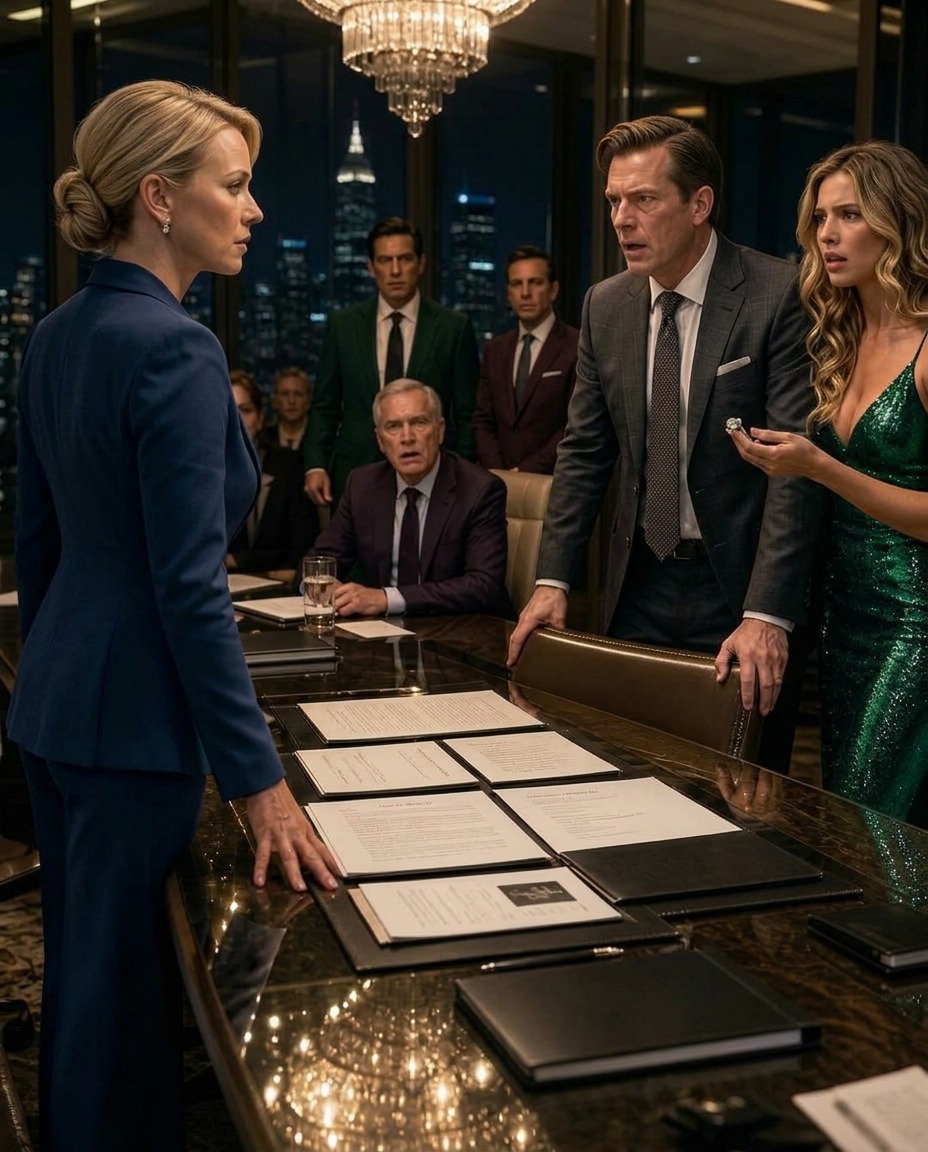
    She did not shake. She did not hesitate. She raised her left hand, and beneath the chandelier light, a diamond ring burst into brilliance.

    “Ethan and I are in love,” she announced. “And after his divorce is finalized, we’re getting married.”

    Someone gasped.

    A fork clattered against a plate.

    My mother-in-law, who had spent fifteen years pretending I was too quiet to matter, pressed a hand dramatically to her chest—not from shock, but performance.

    Ethan did not tell Brooke to sit down. He did not apologize. He simply looked at me with the guarded expression of a man who had rehearsed my humiliation and expected me to play my role.

    Brooke turned toward me. “Claire, I know this must be painful,” she said, her voice sweet enough to poison tea. “But Ethan deserves someone who sees him as more than a paycheck. He deserves passion. A future. A woman who isn’t hiding behind old family money.”

    That was when the whispers started.

    Poor Claire.

    Did she know?

    How humiliating.

    I felt every eye in the ballroom lock onto me, waiting for me to break. They wanted tears. They wanted screaming. They wanted me to throw champagne, slap Brooke, beg Ethan, or run from the room with mascara streaking down my face.

    Instead, I lifted my water glass and took a slow sip.

    Ethan’s jaw tightened.

    Brooke’s smile faltered.

    I placed the glass down carefully. “Congratulations,” I said.

    The word was soft, yet somehow it carried across the entire ballroom.

    Ethan blinked. “Claire—”

    “No,” I said, still smiling. “Please. Don’t ruin your moment.”

    Brooke’s expression shifted. Only briefly. But I saw it.

    Fear.

    Because women like Brooke understood anger. They understood jealousy. They understood public humiliation. What they did not understand was a wife who had just been betrayed in front of Chicago’s business elite and looked almost relieved.

    I stood, smoothed the front of my black dress, and picked up my clutch.

    Ethan reached beneath the table and grabbed for my wrist. “Don’t make this ugly.”

    I lowered my eyes to his hand until he released me.

    Then I leaned close enough that only he could hear.

    “You already did.”

    I walked out of that ballroom with my pearls against my neck, my back straight, and every whisper following me through the golden doors.

    But I did not go home.

    I did not cry in the back seat of a car.

    I did not call a friend.

    I went to the one place Ethan Hayes had never been permitted to enter.

    The private forty-sixth floor of the Hayes Logistics tower.

    The floor absent from the public elevator panel.

    The floor where my real name still appeared on the original ownership documents.

    Claire Whitmore Hayes.

    Majority owner.

    Controlling shareholder.

    The woman my husband had just mistaken for decoration.

    PART 2

    The security guard in the lobby looked startled when I entered the Hayes Logistics tower at 11:42 p.m.

    “Mrs. Hayes?” he said, halfway rising from his chair.

    I gave him a polite smile. “Good evening, Martin.”

    He glanced toward the elevators. “Is Mr. Hayes expecting you?”

    “No,” I replied. “He never does.”

    That answer clearly puzzled him, but he stepped aside. He had worked the night shift for seven years, and during all that time, he had only ever seen me pass through the public floors: charity photographs, holiday parties, carefully staged company celebrations where Ethan stood at the center while I lingered beside him like a pleasant afterthought.

    He did not know there was another elevator hidden behind the walnut wall near the executive archive room. He did not know my thumbprint unlocked it. He did not know that above the forty-fifth floor, above Ethan’s glass office and framed magazine covers, there was a smaller, quieter level belonging to the woman whose name had been deliberately buried.

    The elevator climbed in silence.

    When the doors opened, the lights switched on automatically.

    The forty-sixth floor looked nothing like Ethan’s empire below. No oversized portraits. No leather chairs chosen to intimidate. No bar cart, no trophy wall, no framed newspaper covers calling him “the king of American freight.”

    My office was quiet, orderly, and old-fashioned. Dark wood. Locked filing cabinets. A conference table with only six chairs. On one wall hung a photograph of my father, William Whitmore, standing in front of the first warehouse he had ever owned.

    He had built Whitmore Freight from a two-truck operation into one of the most important logistics networks in the Midwest. But after his sudden heart attack when I was twenty-six, the board panicked. Investors did not want a grieving young daughter running the company. Clients feared uncertainty. Competitors smelled weakness.

    So my father’s attorney, Miriam Cole, carried out his final strategy.

    A trust structure.

    A public-facing executive.

    A silent controlling owner.

    Ethan had been ambitious, charming, and hungry enough to become the perfect mask. He was my husband then, still gentle, still convincing. I believed putting him forward would protect the company until I was ready.

    I failed to realize I was handing a vain man a mirror and allowing him to mistake the reflection for power.

    Miriam was waiting for me inside the office.

    She was seventy-one now, sharp-eyed and elegant in a charcoal suit, silver hair twisted neatly at the nape of her neck. Beside her sat Nolan Reed, my private operations director, the only person under forty who knew every layer of the company’s true structure.

    Miriam rose as I entered. “I saw the video.”

    Of course she had. Half the ballroom had likely posted it before dessert was even served.

    Nolan looked furious. “Do you want me to send legal takedown requests?”

    “No,” I said, placing my clutch on the table. “Let everyone watch.”

    Miriam studied my face carefully. “Are you certain?”

    “I want them to remember exactly how confident he looked.”

    I crossed to the wall safe behind my father’s photograph and entered the code. Inside were the documents Ethan had never bothered asking about because Ethan never asked questions that might threaten his fantasy.

    The Whitmore-Hayes Trust.

    The shareholder map.

    The CEO limitation clause.

    The emergency executive removal provision.

    And the original transfer deed naming me as controlling owner of 68.7 percent of Hayes Logistics, formerly Whitmore Freight Holdings.

    I set the file onto the conference table.

    Miriam opened it slowly. “You understand what happens if we activate this.”

    “Yes.”

    “There is no reversing it.”

    “I have no interest in reversing anything.”

    Nolan slid a tablet toward me. “Ethan attempted to move three million dollars from the corporate reserve account at 10:58 tonight. The transfer was blocked.”

    My stomach tightened, not from shock but confirmation.

    “Where was it being sent?”

    “A consulting firm registered in Delaware,” Nolan replied. “Created six weeks ago. Beneficial ownership hidden, but we traced the contact number to Brooke Ellison’s personal assistant.”

    Miriam’s expression hardened.

    I looked toward my father’s photograph.

    For years, I had convinced myself Ethan was arrogant but not criminal. Careless but not corrupt. Cruel in private yet functional in business. That was how women excused men when the truth cost too much to face all at once.

    But tonight, he had not only betrayed our marriage.

    He had tried to steal from my father’s company while his mistress staged my humiliation in front of half the city.

    “Show me everything,” I said.

    Nolan tapped the screen.

    Emails appeared. Expense approvals. Vendor contracts. Internal messages exchanged between Ethan and Brooke. Payments hidden inside branding campaigns that never existed. Confidential client lists forwarded to outside accounts. A luxury apartment leased under a marketing budget. Jewelry purchases labeled “executive relationship development.”

    Brooke had not merely slept with my husband.

    She had used him like a ladder.

    And Ethan, intoxicated by the admiration of a younger woman, had allowed her to climb over the backs of employees who had spent decades building the company.

    Miriam closed the file. “We can remove him by emergency vote if the board receives evidence by morning.”

    “Not enough,” I said.

    Both of them looked at me.

    “He humiliated me publicly,” I continued. “That was personal. But what he’s done to this company is larger than me. Employees will lose pensions if we allow him to control the narrative. Clients will panic. Brooke will leak whatever she can. Ethan will paint me as a bitter wife.”

    Miriam nodded slowly. “Then we move first.”

    I sat at the head of the conference table for the first time in years.

    “Prepare a board packet,” I said. “Full ownership structure. Financial irregularities. Breach of fiduciary duty. Unauthorized transfers. Data exposure. Include screenshots of Brooke’s announcement.”

    Nolan’s fingers moved quickly across the tablet.

    “Miriam,” I said, “file the emergency injunction at 7 a.m.”

    A faint smile touched her lips. “Already drafted.”

    I nearly laughed.

    My father had chosen wisely.

    At 12:30 a.m., I removed my wedding ring and placed it beside the company seal.

    The diamond looked smaller than I remembered.

    Maybe because I had finally stopped mistaking it for a promise.

    “Ethan thinks tomorrow morning will be about damage control,” Nolan said.

    “No,” I replied. “Tomorrow morning is about ownership.”

    I looked one last time at my father’s photograph, at the man who had taught me never to mistake silence for surrender.

    Then I signed the activation order.

    Emergency Protocol Whitmore was no longer a contingency.

    It was war.

    PART 3

    At 6:05 the following morning, Ethan called me seventeen times.

    I watched his name flash across my phone while I sat in my office drinking black coffee and reviewing the finalized board packet. He called from his mobile, then from his office line, then from an unfamiliar number I assumed belonged to Brooke.

    I answered none of them.

    At 6:22, he left the first voicemail.

    “Claire, last night got out of hand. Brooke was emotional. We need to discuss this privately before you embarrass yourself.”

    By 6:41, his tone had shifted.

    “Claire, where are you? I need access to the reserve account. There’s a system issue.”

    At 7:03, he stopped pretending altogether.

    “What did you do?”

    I forwarded every voicemail to Miriam.

    By 7:30, Ethan’s executive access had been restricted. Not revoked. Not yet. Just limited enough for him to feel the walls closing in without understanding the architecture around him.

    At 8:15, board members began arriving for what Ethan believed was an ordinary executive strategy meeting. From upstairs, I watched the security feed as they stepped off the elevator one by one, carrying coffee cups, checking their phones, unaware that everything they thought they knew about the company was about to change.

    Ethan arrived at 8:27.

    He looked exhausted, though not defeated. Men like Ethan never recognized danger until it arrived with legal paperwork and locked doors. He wore a dark suit and the expression of a CEO preparing to reprimand difficult subordinates.

    Brooke arrived two minutes later.

    That surprised me.

    This time she wore cream instead of red, softer and more innocent. Her hair fell in flawless waves over her shoulders. She carried a slim folder and smiled at the receptionist as though she had not publicly detonated a marriage less than twelve hours earlier.

    Nolan, standing beside me, muttered, “She’s got nerve.”

    “No,” I replied. “She has confidence. Nerve requires understanding risk.”

    At 8:45, I walked into the boardroom.

    The silence spread in layers.

    First the assistants stopped typing. Then the CFO looked up. Then the board chairman, Harold Vance, instinctively rose halfway from his seat in confused politeness.

    Ethan stood at the far end of the table.

    “What are you doing here?” he asked.

    His voice stayed low, but everyone heard it.

    I set my leather folder at the head of the table, where his folder had already been placed.

    “I called this meeting.”

    Brooke let out a soft laugh. “Claire, this is a corporate meeting.”

    I looked at her for the first time that morning. “Yes. That’s exactly why you should be worried.”

    A flush of color rose in her cheeks.

    Ethan stepped toward me. “You need to leave.”

    Harold cleared his throat. “Ethan, actually, Mrs. Hayes’ counsel contacted us this morning. There are documents we need to examine.”

    Ethan looked around the room. “Her counsel?”

    At that moment, Miriam entered carrying a stack of sealed packets.

    She never looked at Ethan. She handed one packet to every board member before taking her place behind my chair.

    I remained standing.

    “For fifteen years,” I began, “Hayes Logistics has operated under a trust and ownership structure established by my late father, William Whitmore. Ethan Hayes was appointed CEO under limited executive authority. He did not found this company. He did not purchase this company. He does not own this company.”

    Brooke’s smile vanished.

    Ethan stared at me as though I had suddenly started speaking another language.

    I opened the first page of the packet. “I own Hayes Logistics.”

    No one moved.

    Then suddenly papers began turning all around the table.

    The CFO muttered something under his breath. Harold adjusted his glasses and leaned closer to the ownership chart. Another board member, Sandra Pike, looked from the documents to Ethan with visible disgust.

    Ethan recovered enough to laugh. “This is absurd.”

    “No,” Miriam said calmly. “It is documented.”

    He pointed toward her. “You work for my wife.”

    Miriam’s eyes sharpened. “I work for the controlling owner of this company. That has always been Mrs. Hayes.”

    Brooke rose abruptly from her chair. “This is obviously some revenge stunt because Ethan is leaving her.”

    I tilted my head slightly. “Brooke, sit down.”

    She froze.

    Not because I raised my voice. I didn’t.

    Because I sounded like someone with the authority to command the room.

    And I was.

    I clicked the remote in my hand. The screen behind me lit up.

    The first slide showed the attempted reserve account transfer.

    The second displayed Brooke’s consulting shell company.

    The third revealed emails between Ethan and Brooke discussing how to “shift funds before Claire gets emotional.”

    The fourth displayed confidential client strategy documents forwarded to Brooke’s personal email account.

    Ethan’s face lost all color.

    Brooke gripped the back of her chair.

    Harold’s voice dropped very low. “Ethan, is this accurate?”

    Ethan shook his head immediately. “No. It’s being taken out of context.”

    Sandra turned toward Brooke. “Did you receive restricted client documents?”

    Brooke opened her mouth, but no words came out.

    I advanced to the next slide.

    A photograph appeared on the screen: Brooke wearing sunglasses on a Miami hotel balcony, holding a folder marked with the Hayes Logistics confidential seal. The same weekend she had charged the company for a “regional branding retreat.”

    Nolan had recovered the image from an archived social media story Brooke believed had disappeared.

    The atmosphere in the room shifted. Not dramatically. Not loudly. But permanently.

    Power moved.

    Ethan felt it immediately. His eyes snapped toward me.

    “Claire,” he said, suddenly gentler. “Can we talk outside?”

    I glanced toward the board.

    “No.”

    His jaw tightened.

    I turned to Harold. “Under Article Nine of the Whitmore-Hayes Trust, I am requesting the immediate suspension of Ethan Hayes’ executive authority pending independent investigation. I am also requesting Brooke Ellison be removed from all company systems and escorted off the property.”

    Brooke’s eyes widened. “You can’t do that.”

    “I already did.”

    Her phone buzzed. She glanced down. Whatever appeared on the screen drained the color from her face.

    Probably the lockout notification.

    Ethan slammed his palm against the table. “This company is nothing without me.”

    That was the first honest thing he had said all morning.

    Not accurate.

    But honest.

    Because he truly believed it.

    I gathered my papers. “This company survived before you. It will survive after you. The only difference is now everyone knows who kept it alive while you played king.”

    Security appeared outside the glass doors.

    Brooke looked at Ethan, waiting for him to save her.

    Ethan looked at the board, waiting for loyalty.

    The board looked at me.

    I gave a single small nod.

    And just like that, the mistress who had proudly announced she was taking my husband was escorted out of the company she believed she would one day control.

    PART 4

    The story broke before noon.

    Not every detail. Not the legal specifics. But enough.

    A shaky phone video from the anniversary dinner went viral first: Brooke standing in her silver dress, flashing her ring, announcing that she and Ethan were getting married while I sat beside him in silence. On its own, it made me appear humiliated.

    Then, at 12:07 p.m., the company released an official statement.

    Ethan Hayes had been suspended pending investigation.

    Brooke Ellison had been terminated for breaches of confidentiality and professional conduct.

    Claire Whitmore Hayes had assumed interim executive authority as controlling owner of Hayes Logistics.

    That was when the internet changed sides.

    By sunset, headlines flooded every outlet.

    Betrayed Wife Revealed as Secret Owner of Husband’s Company.

    CEO Suspended After Mistress Announces Affair at Anniversary Dinner.

    Chicago Logistics Empire Rocked by Ownership Bombshell.

    I avoided reading most of them. Public sympathy behaves like weather—loud, temporary, and dangerous if mistaken for protection.

    The next three days disappeared into conference rooms filled with attorneys, auditors, and crisis managers. Ethan’s damage ran deeper than we initially believed. He had inflated regional performance reports, hidden losses inside vendor contracts, and authorized payments to Brooke’s shell companies disguised as branding expansion projects.

    But the worst discovery came from Nolan.

    He entered my office Friday afternoon carrying a blue folder.

    “You need to see this.”

    I looked up from a stack of client retention reports. “How bad?”

    “Bad enough that we don’t send it electronically.”

    He placed the folder in front of me.

    Inside were copies of messages between Brooke and a senior executive at NorthBridge Freight, our largest competitor. She had been offering pricing models, client renewal schedules, and internal expansion strategies.

    Not for love.

    Not for Ethan.

    For a job.

    “She was negotiating a chief marketing position,” Nolan said. “Using Hayes data as leverage.”

    I stared down at the documents.

    For one strange second, I almost pitied Ethan. Not because he deserved pity, but because he had destroyed his marriage and endangered his career for a woman who had already planned her exit.

    “When was her final message sent?” I asked.

    “Twenty minutes after the dinner announcement.”

    I looked at him.

    Nolan nodded once. “While Ethan was probably convincing himself they had a future, she was sending NorthBridge screenshots from his phone.”

    I closed the folder.

    Some betrayals burn.

    Others clarify.

    This one clarified everything.

    The emergency shareholder meeting was scheduled for Monday morning in the Palmer House ballroom. Ethan attempted to stop it. His attorney submitted a letter claiming I was emotionally unstable, vindictive, and unfit to lead due to “domestic distress.”

    Miriam laughed when she read it.

    “Men have been calling women hysterical for centuries,” she said. “Usually right before the women produce receipts.”

    At 9 a.m. Monday morning, I entered the ballroom wearing a white suit and my mother’s pearls.

    Hundreds of shareholders, executives, reporters, and legal observers filled the room. Ethan stood near the stage beside his attorney. He looked thinner. Angrier. Still handsome in the practiced way that had once fooled board members, clients, and me.

    Brooke was absent.

    Of course she was.

    Women like Brooke adored spotlights, not consequences.

    Harold Vance opened the meeting with a strained voice before introducing me.

    I stepped to the podium.

    The ballroom fell silent.

    “My name is Claire Whitmore Hayes,” I began. “Some of you know me as Ethan Hayes’ wife. Some of you watched a video last week and believed you were witnessing a woman being publicly discarded. But long before I became Ethan’s wife, I was William Whitmore’s daughter. And long before this company carried the Hayes name, it was built by my family.”

    Behind me, the screen displayed a timeline.

    Whitmore Freight.

    Whitmore Holdings.

    Whitmore-Hayes Trust.

    Hayes Logistics.

    I gave the room a moment to read before continuing.

    “For fifteen years, I remained private because stability mattered more than recognition. My father believed ownership was not about applause. It was about responsibility. I still believe that. But silence becomes dangerous when people use it to hide corruption.”

    I clicked the remote again.

    The screen shifted to Ethan’s unauthorized transfers.

    A murmur spread through the ballroom.

    Then Brooke’s shell companies appeared.

    Then the competitor communications.

    Then the clause limiting Ethan’s authority.

    Ethan’s attorney rose. “We object to the public presentation of unverified allegations.”

    Miriam stood from the front row. “Every document shown has already been delivered to the board, counsel, auditors, and the appropriate authorities. Sit down.”

    A few people actually applauded.

    Ethan looked at me then—not as a wife, not as a partner, not even as an enemy.

    He looked at me like a man discovering a locked door where he had always assumed an open hallway existed.

    I turned back to the microphone.

    “As controlling shareholder, I am calling for the permanent removal of Ethan Hayes as CEO, the restoration of the Whitmore name to our corporate structure, and a full independent audit of every executive action taken during the past five years.”

    Harold called for the vote.

    It was not close.

    When the result appeared on the screen, Ethan closed his eyes.

    Removed.

    Effective immediately.

    The ballroom erupted—not in celebration, but in the stunned roar of people realizing they had just witnessed an empire changing hands in real time.

    Ethan shoved past his attorney and approached the podium.

    For one brief moment, I thought he might apologize.

    Instead, he leaned close and whispered, “You planned this from the beginning.”

    I held his gaze.

    “No, Ethan. I prepared for it. There’s a difference.”

    His face twisted with anger.

    Security stepped forward.

    And this time, he was the one escorted out beneath the cameras.

    While I was the one who remained.

    PART 5

    The first week after Ethan’s removal was anything but glamorous.

    There were no victorious mornings with sunlight pouring through the windows while justice arranged itself neatly across my desk. There were furious clients, anxious employees, regulatory phone calls, reporters camped outside the building, and department heads suddenly insisting they had always suspected Ethan.

    Cowards often become excellent historians once the danger has passed.

    I listened to everyone.

    I trusted almost no one.

    On Wednesday, I held a company-wide meeting at the main warehouse outside Joliet. I chose the warehouse deliberately. Ethan had avoided it for years because he preferred stages, luxury hotels, and polished boardrooms. My father had loved warehouses. He used to say you could hear the truth of a company by listening to its loading docks.

    More than six hundred employees gathered between freight lanes and stacked pallets. Drivers stood beside dispatchers. Mechanics stood near accountants. Office managers watched from folding chairs. Some appeared curious. Some skeptical. Some simply exhausted.

    I stepped onto a temporary platform.

    No dramatic soundtrack. No giant logo. No applause sign.

    Just a microphone.

    “I won’t waste your time,” I began. “You have been lied to.”

    The warehouse fell silent.

    “You were told this company was built on one man’s genius. It was not. You were told loyalty meant silence. It does not. You were told cuts were necessary because the market demanded sacrifice from employees while executives protected themselves. That was false.”

    A mechanic in the second row crossed his arms and studied me carefully.

    I continued. “The audit uncovered executive misuse of company funds. Those funds will be recovered wherever possible. No warehouse employee, driver, dispatcher, maintenance worker, or support staff member will lose a job because Ethan Hayes treated this company like his personal wallet.”

    The first sound wasn’t applause.

    It was a collective exhale.

    Then someone clapped.

    Then another person joined in.

    Soon the entire warehouse filled with it—not polished applause, but rough, relieved, deeply human sound.

    I waited until it quieted again.

    “Some changes will still happen,” I said. “But they will begin at the top. Executive bonuses are frozen. Consultant contracts are under review. Any manager involved in fraud or retaliation will be removed. And from now on, promotions will be earned through performance, not proximity to power.”

    The mechanic in the second row gave a single nod.

    That meant more to me than any newspaper headline ever could.

    After the meeting, an older dispatcher named Linda approached me. She had once worked for my father.

    “You look like him,” she said.

    I smiled faintly. “People tell me I inherited his stubbornness.”

    “You inherited his timing,” she replied. “He always waited until people showed exactly who they were.”

    That evening, I returned to the house Ethan and I had shared.

    It was strange how little of it felt like mine.

    The foyer still carried traces of his cologne. His golf trophies lined one wall. His suits remained hanging upstairs. Brooke’s perfume lingered in the guest bathroom, an insult so ridiculous it nearly became funny.

    I packed none of his belongings.

    Instead, I hired a service.

    By the next morning, everything belonging to Ethan Hayes had been boxed, cataloged, and delivered to his attorney’s office.

    At 11:30 a.m., he appeared at the gate anyway.

    The security camera showed him standing in the rain without an umbrella, jaw unshaven, damp hair plastered to his forehead, anger disguised as heartbreak.

    I answered through the intercom.

    “What do you want, Ethan?”

    He lifted his face toward the camera. “To talk to my wife.”

    “You don’t have one.”

    His expression tightened. “Claire, please. Brooke lied to me too.”

    I nearly closed my eyes.

    There it was.

    Not remorse. Repositioning.

    “She used me,” he said. “She manipulated me. You know how ambitious she was.”

    I let the rain fill the silence between us.

    “You stood beside her while she announced your engagement at our anniversary dinner.”

    “I panicked.”

    “No,” I replied. “You performed.”

    He looked away.

    For the first time, I saw him clearly—not as the brilliant man I once loved, not as the villain the headlines wanted him to become, but as something smaller. A man who had borrowed power for so long that he mistook it for something born inside him.

    “I can help with the investigation,” he said. “I can tell them Brooke pushed the transfers.”

    “You can tell the truth to your attorney.”

    “Claire—”

    “No,” I said. “You don’t get my softness anymore.”

    His mouth opened, then slowly closed again.

    “I gave you fifteen years,” I continued. “My trust. My name. My company’s public face. And the moment you believed I was powerless, you chose to humiliate me in front of an entire room. That is the only truth I need.”

    He stood there while rain slid down his face.

    I disconnected the intercom.

    A week later, Ethan signed a settlement agreement. He surrendered every claim to marital property connected to Whitmore assets. He agreed to cooperate with investigators. In return, Miriam allowed him the dignity of avoiding immediate civil court proceedings.

    Brooke received no such dignity.

    NorthBridge Freight denied ever offering her a position. An investigation into her professional license began after Hayes Logistics filed a formal complaint. Former friends stopped answering her calls. The apartment Ethan had leased for her was repossessed during the fraud review. And the ring she had proudly flashed at my anniversary dinner turned out to have been purchased through a company expense account.

    Miriam recovered it.

    She placed it on my desk inside a small evidence bag.

    I stared at it for a long moment before laughing for the first time in weeks.

    “Sell it,” I said. “Put the money into the employee hardship fund.”

    Miriam’s smile was magnificent.

    PART 6

    Six months later, the name Hayes disappeared from the building.

    It happened early on a Friday morning, before most of downtown Chicago had finished their first cup of coffee. A crane removed the old silver letters from the tower one at a time while employees gathered on the sidewalk to watch.

    H.

    A.

    Y.

    E.

    S.

    For years, those letters had cast their shadow above the entrance.

    By noon, new letters rose in their place.

    WHITMORE LOGISTICS GROUP.

    I stood across the street beside Nolan, Linda, Miriam, and hundreds of employees who had come outside despite the cold weather.

    When the final letter locked into place, no one spoke for several seconds.

    Then Linda whispered softly, “Welcome home, Mr. Whitmore.”

    I thought I might cry, but I didn’t.

    Not because I felt nothing.

    Because what I felt was too large for tears to contain.

    The company did not heal overnight. No real company ever does. We lost two clients during the investigation. Three executives resigned before they could be fired. One regional manager was indicted for falsifying vendor bids. Eventually the press moved on to newer scandals, newer betrayals, newer women to pity before praising them.

    But inside Whitmore Logistics, something genuine changed.

    We created an ethics office with direct reporting access to the board. We rebuilt the promotion system. We launched a leadership program for women in operations, finance, and transport management. We restored pensions Ethan had planned to cut. We sold the private jet he had leased under “client relationship strategy” and used the money to modernize driver safety systems.

    For the first time in years, the company felt less like a throne room and more like a living machine.

    One spring afternoon, I visited the original Whitmore warehouse, the one my father bought back when he owned only two trucks and one impossible dream.

    The brick walls were worn with age. The loading doors had been replaced. But near the back office, beneath a layer of dust, I found the old brass plaque.

    WILLIAM WHITMORE
    FOUNDER
    BUILT ON TRUST

    I ran my fingers slowly across the words.

    Trust.

    People speak about trust as though it is soft. Gentle. Sentimental.

    It isn’t.

    Trust is infrastructure. It carries weight. It absorbs risk. And when it breaks, everything standing on top of it begins to collapse.

    Ethan broke trust and believed only our marriage would fall apart.

    He never understood he was standing inside something my father had built.

    That evening, I returned to the tower for a private reception celebrating the company relaunch. No ballroom this time. No mistress in a silver dress. No husband lifting a champagne glass while calling me supportive as he prepared to erase me.

    Only employees, partners, old family friends, and people who had earned the right to be in that room.

    Miriam stood beside me near the windows.

    “Your father would be proud,” she said.

    I looked out across the city lights. “He would probably ask what took me so long.”

    She laughed softly. “That too.”

    Across the room, Nolan introduced me to a young intern named Sophie who had joined through our new scholarship program. She stood nervously holding a notebook against her chest.

    “I watched your shareholder speech online,” she told me. “My mom sent it to me. She said, ‘That’s what it looks like when a woman stops asking permission.’”

    For a moment, I couldn’t speak.

    Then I smiled. “Your mother sounds wise.”

    “She is,” Sophie replied. “She drives nights. Freight, actually. She said your dad once helped her when nobody would hire women drivers.”

    My throat tightened unexpectedly.

    The past has a way of returning—not as a ghost, but as proof.

    Before the reception ended, I stepped to the front of the room. This time people quieted naturally, without fear.

    “I spent many years believing silence was the price of peace,” I said. “I was wrong. Peace built on lies is not peace. It’s simply a waiting room for disaster.”

    Several people smiled.

    I continued. “This company nearly disappeared because the wrong people confused visibility with ownership, charm with leadership, and silence with weakness. That will never happen here again.”

    I looked first at the employees.

    Then at the board.

    Then at the young women from the leadership program standing near the back of the room.

    “Whitmore Logistics Group will not be perfect,” I said. “But it will be honest. It will remember who built it. It will protect the people carrying it forward. And it will never again become a stage for someone else’s ego.”

    The applause rose softly at first, then stronger.

    Not shocked applause.

    Not scandal applause.

    Belief.

    Later that night, after everyone had gone home, I stood alone in the lobby beneath the new company name. My reflection stared back from the glass doors: older than the woman who had walked into that anniversary dinner, but steadier. Freer.

    My phone buzzed.

    An unknown number.

    For one brief second, I thought it might be Ethan.

    It wasn’t.

    It was a news alert.

    Ethan Hayes accepts plea agreement in corporate fraud investigation.

    I read the headline once.

    Then I deleted the notification.

    Some endings require no ceremony.

    I stepped outside into the Chicago night. The air felt cold and clean. Traffic moved along the river. High above me, the new letters glowed against the dark sky.

    Whitmore.

    My father’s name.

    My name.

    No longer hidden. No longer whispered. No longer protected behind a man who mistook love for ownership and performance for power.

    Mine.

    The next morning, I placed my wedding pearls into a small velvet box and locked them away. Not because they hurt to see, but because they belonged to a woman who had survived by being underestimated.

    I respected her.

    I thanked her.

    Then I slipped on my father’s old signet ring and went to work.

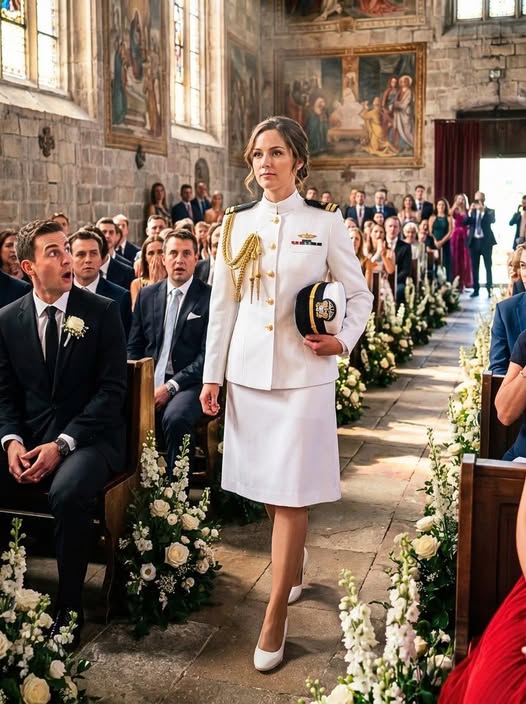
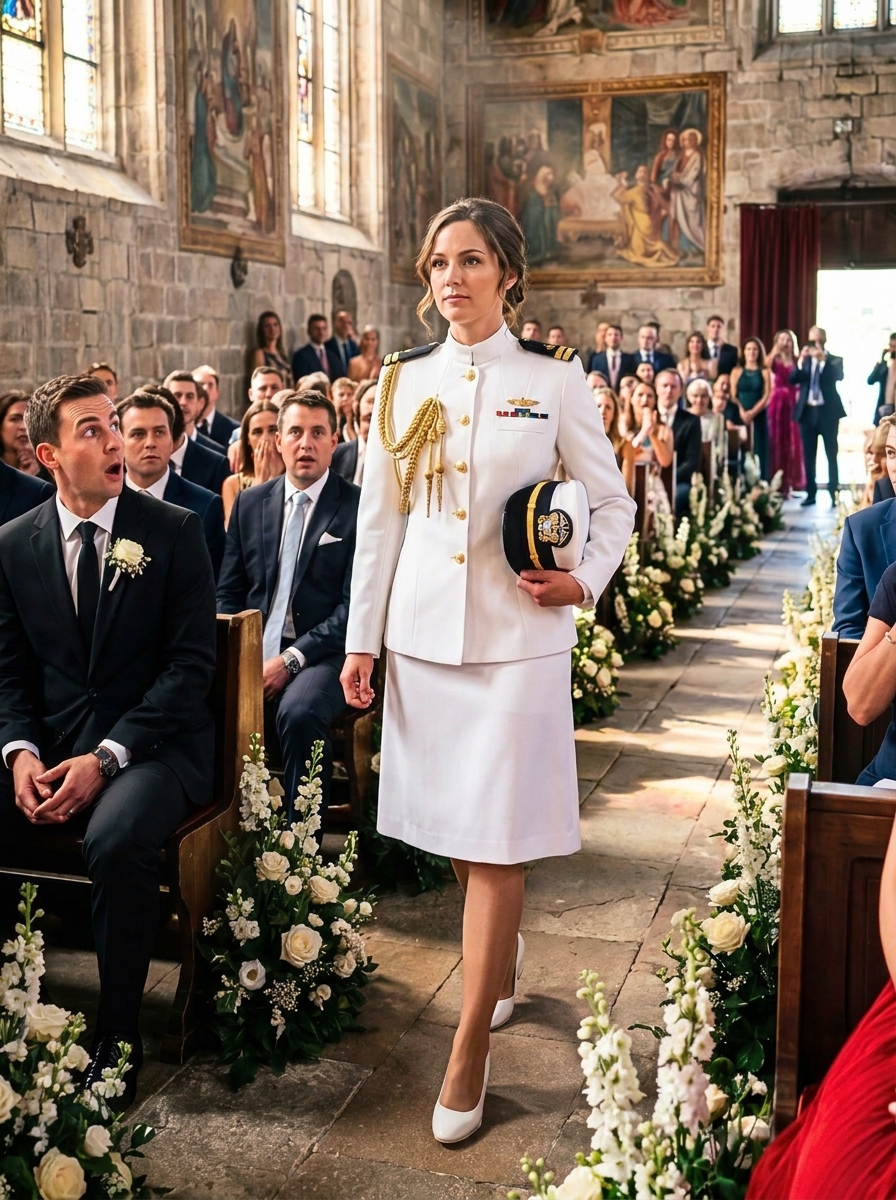
  • They destroyed her four wedding dresses hours before the wedding out of pure envy, but she arrived at the altar wearing something that made her own bl00d tremble with shame.

    They destroyed her four wedding dresses hours before the wedding out of pure envy, but she arrived at the altar wearing something that made her own bl00d tremble with shame.

    In San Antonio, Texas, people always said weddings had a way of bringing out the best in families.

    Madison had spent her whole life watching how, somewhere between country songs and flowing champagne, even the harshest relatives would sit in church wiping away tears and pretending, for one single day, that old resentments no longer existed.

    But for the Bennett family, Madison’s wedding only exposed the resentment they had buried for years. At thirty-two, she served as a Second Pilot Captain in the United States Air Force.

    To her father, Frank, she was nothing more than “a stubborn girl pretending to be a man.” He was deeply old-fashioned and couldn’t stand the sight of his daughter earning respect, piloting aircraft, and living completely by her own rules.

    To her mother, Carol, Madison was the selfish daughter—the one who refused to stay quiet, behave properly, and settle into the small obedient life everyone expected from her.

    Then there was Tyler. Twenty-eight years old, unemployed, still living off their parents, yet somehow praised endlessly for doing almost nothing at all.

    Madison had trained herself to survive it. The military had taught her discipline—sleep less, react quickly, never complain. But no amount of training prepares someone for the pain of realizing their own family hates them simply because they are strong.

    Her fiancé, Ethan, worked as an engineer from Dallas. They first met in Houston while helping with hurricane recovery operations. He never felt threatened by her—he respected her. Loved every part of who she truly was. Their wedding was planned for a small historic church just outside Austin.

    Two days before the ceremony, Madison came back to her childhood home carrying four wedding gowns, each one carefully protected in garment bags. One dramatic gown, one lace dress, one lighter option for the Texas heat, and one simple backup.

    That final evening in the house felt unbearable. Frank sat in front of the television muttering insults under his breath. Carol slammed dishes around the kitchen. Tyler lounged nearby laughing loudly at something on his phone.

    Madison kept her distance and retreated to her room early. She hung each dress carefully, letting her fingertips glide across the fabric of her main gown as nervous excitement finally settled into her chest for the first time. Just a few more hours, she whispered to herself.

    At 2 a.m., she jolted awake.

    A soft creaking sound. Someone moving.

    Her pulse hammered as she grabbed the lamp beside her bed and switched it on.

    The closet door stood open.

    The garment bags had been unzipped.

    She lunged toward the first gown—sliced apart from top to bottom. The second—cut clean through the middle. The third and fourth—completely shredded, hanging in strips of ruined fabric.

    Madison collapsed to her knees in shock.

    The bedroom door opened.

    Frank stood in the doorway, blocking the exit. Behind him, Carol wouldn’t even look her in the eyes. Tyler leaned casually against the hallway wall with a smirk spread across his face.

    “You brought this on yourself,” Frank said coldly. “Maybe now you’ll finally understand you’re not better than us just because you play soldier.”

    Madison couldn’t speak. She searched her mother’s face desperately for some trace of guilt or compassion—but there was nothing there. Tyler laughed quietly.

    “No dress, no wedding,” Frank said with satisfaction. “Problem solved.”

    Then they walked away and left her sitting alone in the dark.

    Madison never cried.

    She remained on the floor surrounded by ruined fabric until the pain inside her stopped feeling hot.

    What replaced it was colder. Harder.

    That night, she finally accepted the truth: they were never going to love or accept her. Their goal had always been to tear her down.

    But they forgot one important thing.

    She was never weak.

    She was an officer.

    At four in the morning, she stood up. Packed her things quickly. Buried in the bottom drawer of her dresser, she found a small handwritten note Ethan had once given her:

    “No matter what happens, I choose you.”

    She held onto those words tightly.

    At the very back of the closet, untouched, was the one thing they had not dared to destroy.

    Her Air Force dress uniform.

    She put it on quietly. Every detail flawless. Every medal earned through real missions, violent storms, sleepless nights—not obedience.

    Before sunrise, she walked out of the house and drove directly to the Air Base outside San Antonio.

    The guard at the gate immediately raised a salute.

    Inside the base, she found General Marcus Hale, the mentor who had guided her career for years. The second he looked at her face, he understood something terrible had happened.

    “What did they do?” he asked, anger already rising in his voice.

    She told him everything.

    The General slowly shook his head. “They really thought they could destroy you by ripping apart a few dresses?”

    At 9 a.m., the church near Austin was full. Guests whispered—the bride was late.

    In the front row, her family sat smug.

    Then the church doors opened.

    An official military vehicle had arrived.

    Madison stepped out in full uniform.

    The murmurs stopped.

    Ethan’s mother rushed to her. “What happened to your dress?”

    “They destroyed it,” Madison said calmly. “My own family.”

    The woman took her hands. “Then you walk in exactly like this. Strong.”

    Ethan appeared behind her. When he saw her, his eyes filled with tears.

    “You’ve never looked more like yourself,” he said.

    She kissed him lightly. “I’ll walk in first.”

    The doors creaked open.

    Madison walked down the aisle alone, steady and proud.

    Silence filled the church. Some guests stood instinctively in respect.

    Carol gasped. Frank’s smile vanished.

    “What is this?” he hissed.

    Madison stopped in front of them.

    “What’s embarrassing is sneaking into your daughter’s room at 2 a.m. and destroying her wedding dresses,” she said clearly.

    Gasps spread through the room.

    “You think you’re better than us!” Frank snapped.

    “No,” she replied. “You just tried to make me feel smaller.”

    From the pews, Aunt Linda stood up.

    “Sit down, Frank!” she shouted. “That woman has more dignity than you ever will!”

    Frank sank back, humiliated.

    The priest hesitated. “Do you wish to continue?”

    “Yes,” Madison said. “But not with them.”

    At that moment, firm footsteps echoed.

    General Hale entered, walked up, saluted, and offered his arm.

    “It would be my honor,” he said.

    She nodded.

    Before moving, she looked at her family one last time.

    “You don’t exist in my life anymore.”

    Then she walked forward.

    At the altar, Ethan waited, proud and emotional.

    The wedding continued.

    The reception was filled with real joy. Laughter. Music. Celebration.

    Her family sat alone, ignored. They left early, through the back.

    Three years later, Madison and Ethan live in Dallas, building a life full of respect and love. They cut all ties with her family.

    Her uniform still hangs carefully, a symbol of who she truly is.

    They thought destroying her dresses would destroy her.

    Instead, they forced her to walk into that church exactly as she was meant to be.

    Strong. Unbreakable.

    And unforgettable.

  • “Why don’t you just disappear?” my sister yelled, her eyes filled with fake tears and real hatred. Then my father’s hand sma:cked my face, and my mother whispered, “You ruined this family.”

    “Why don’t you just disappear?” my sister yelled, her eyes filled with fake tears and real hatred. Then my father’s hand sma:cked my face, and my mother whispered, “You ruined this family.”

    “Why don’t you just vanish?” my sister screamed, her voice slicing through the dining room like breaking glass.

    “You ru:ined my life like some cursed comet cra:shing into everything!”

    My mother didn’t look shocked.

    My father didn’t stand up.

    They all stared at me as though I were something dirty they had already decided to wipe away.

    Then my father’s palm struck my cheek so hard the chandelier above us split into three blurry rings of gold.

    “Apologize to your sister,” he ordered.

    I tasted blood on my tongue. I looked at Camille—perfect Camille, with her diamond bracelet, trembling lips, and fake tears shining beneath the warm lights. She pointed at me as if I had stolen the air from her lungs.

    “She sent the email,” Camille sobbed. “She told Martin’s family about the debt. The audit. Everything.”

    I hadn’t sent anything.

    But I knew exactly who had.

    Martin, Camille’s fiancé, came from a family with old money and older pride. Their engagement party was supposed to happen that night. Instead, his parents had canceled the wedding after receiving documents proving Camille had drained company accounts, forged loan papers, and used our parents’ home as collateral.

    A home that legally belonged to me.

    A fact no one at that table seemed to remember.

    My mother grabbed my arm, her nails digging into my skin.

    “You jealous little rat,” she hissed. “Your sister was finally going to be happy.”

    Camille laughed through her tears.

    “Happy? She can’t stand knowing I matter more than she ever will.”

    I stared at them.

    At the people who had allowed Camille to steal my scholarships, my birthdays, and the inheritance Grandma Evelyn left behind. At the people who called me unstable whenever I exposed their lies. At the people who smiled sweetly in public and sharpened knives behind closed doors.

    Then my father hit me again.

    “Get out,” my mother said coldly. “Before I forget you’re my daughter.”

    Something inside me went quiet.

    Not broken.

    Just silent.

    I picked up my coat from the chair. My hands were steady. Too steady. Camille noticed.

    “What’s wrong?” she snapped. “Aren’t you going to cry? Aren’t you going to beg?”

    I looked at her once.

    “You should sleep while you still can.”

    Her smile faltered.

    Outside, rain turned the driveway silver. I walked past the cameras above the garage, past my father’s luxury car, past the front door engraved with the family name.

    My last name too.

    At midnight, I checked into a small hotel downtown.

    At 6:12 the next morning, my phone lit up with fifty-four missed calls.

    All from home.

    The first voicemail was my mother screaming.

    The second was my father breathing like a wounded animal.

    The third was Camille.

    “Answer me, Nora,” she whispered. “This isn’t funny.”

    I sat on the hotel bed with one cheek swollen, my suitcase open beside me, rain tapping against the window like impatient fingers. Then I played the fourth message.

    My father’s voice came through.

    “The bank called.”

    Silence.

    Then, lower:

    “What did you do?”

    For the first time in years, I smiled.

    I hadn’t done anything overnight.

    That was the beauty of it.

    I had simply stopped protecting them.

    For six years, I had worked as a forensic compliance attorney under my grandmother’s maiden name. While Camille mocked me as useless, I built cases that made executives sweat. While my parents laughed at my “little office job,” I investigated shell companies, forged signatures, fake vendors, and hidden transfers.

    Including theirs.

    Grandma Evelyn had known exactly what they were. Before she died, she left me the house, voting shares in my father’s logistics company, and a sealed folder with one instruction:

    “When they finally mistake your silence for weakness, open this.”

    I opened it three months earlier.

    Inside were deeds, recordings, bank records, and a letter proving my father had pressured my grandmother to change her will.

    He failed.

    Then he lied to everyone, claiming he controlled the inheritance.

    He didn’t.

    I did.

    At 8:00 a.m., I walked into Fulton & Reed wearing a black suit and bruises I refused to cover. My senior partner, Elena Marsh, looked up from her desk.

    “Is today the day?” she asked.

    I placed my phone on the table. It buzzed again.

    Camille.

    “Yes,” I said.

    Elena’s eyes shifted to my cheek, and her expression hardened.

    “Then we’ll do it cleanly.”

    By noon, the court orders were filed. By two, the bank froze the family company’s accounts while the fraud investigation began. By four, Martin’s family received a certified evidence package proving Camille had not been framed by me.

    She had exposed herself.

    She had used my old email account, assuming I had forgotten it existed.

    She forgot I had set up recovery logs.

    At 5:30, Camille texted me.

    You’re a psychopath. You’re destroying us.

    I replied with two words.

    No, Camille.

    Then I sent the rest.

    You did this.

    That night, my parents went live on Facebook. My mother cried about “an ungrateful daughter attacking her family.” My father called me unstable. Camille sat between them, pale but smug, playing the wounded angel.

    They thought public humiliation would force me back.

    They forgot I had recordings.

    An hour later, I didn’t post a single thing.

    I simply forwarded everything to my lawyer, the fraud unit, the bank, Martin’s family, and my father’s board of directors.

    The next morning, news vans were outside their door.

    Three days later, I returned to the house with two lawyers, a sheriff’s deputy, and a court order.

    The sky was bright and cruelly blue. The same driveway I had walked down in the rain now flashed beneath camera lights. Camille stood on the porch in sunglasses, shaking with rage.

    “You can’t come in here,” she spat.

    I lifted the order.

    “I own this property.”

    My mother made a sound like something inside her had died.

    My father lunged at me, but the deputy stepped between us.

    “Sir,” he warned.

    My father’s face flushed purple.

    “She’s lying. This is my house.”

    Elena opened a folder.

    “The deed says otherwise. So do the probate records, the trust documents, and the court.”

    Camille ripped off her sunglasses.

    “You planned this.”

    I looked at her calmly.

    “No. You planned to bury me. I planned to survive.”

    The words struck harder than any slap.

    Inside, the house smelled of expensive candles and fear. My mother followed us from room to room while officials tagged items purchased with embezzled company funds: paintings, clocks, Camille’s engagement gifts, and my father’s imported liquor collection.

    “They can’t take that,” Camille cried, clutching a velvet box.

    Elena checked the inventory list.

    “Actually, they can.”

    Then came the final blow.

    At 2:15 p.m., the board removed my father as CEO. At 2:22 p.m., police arrived with warrants connected to fraud, assault, and witness intimidation. At 2:30 p.m., Martin entered with his family’s lawyer.

    Camille rushed toward him.

    “Martin, love, tell them! Tell them she’s crazy!”

    Martin looked at her as if he were finally seeing rot beneath silk.

    “You used my mother’s signature on a loan application.”

    Camille froze.

    “I was desperate,” she whispered.

    “You were greedy,” he said.

    Then my mother turned on me, her mask completely gone.

    “Are you happy now? Is this what you wanted?”

    I touched my bruised cheek.

    “No,” I said softly. “I wanted parents.”

    For the first time, no one had anything to say.

    My father was taken away first, shouting that I would regret it. Camille screamed until her voice broke. My mother collapsed onto the marble floor—not from injury, but from the sudden weight of consequence.

    I went upstairs to Grandma Evelyn’s old room.

    It was untouched.

    Dust floated through the sunlight. Her blue scarf still hung over the chair. On the desk sat the framed photo of us from my law school graduation—the same picture my family used to hide during holidays because they said I looked “too serious.”

    I picked it up and cried once.

    Not because I was weak.

    Not because of them.

    But for the girl who had waited so long to be believed.

    Six months later, I moved into a quiet apartment overlooking the river. I sold the house and donated part of the money to a shelter for abused women. My father took a plea deal. Camille declared bankruptcy after Martin’s family sued her. My mother moved in with a cousin who no longer invited guests over.

    As for me, I became a partner before turning thirty-five.

    Sometimes, my phone still lights up with blocked numbers.

    I never answer.

    Because peace, I learned, is not the same as silence.

    Peace is knowing they can scream your name forever…

    And still never reach you again.

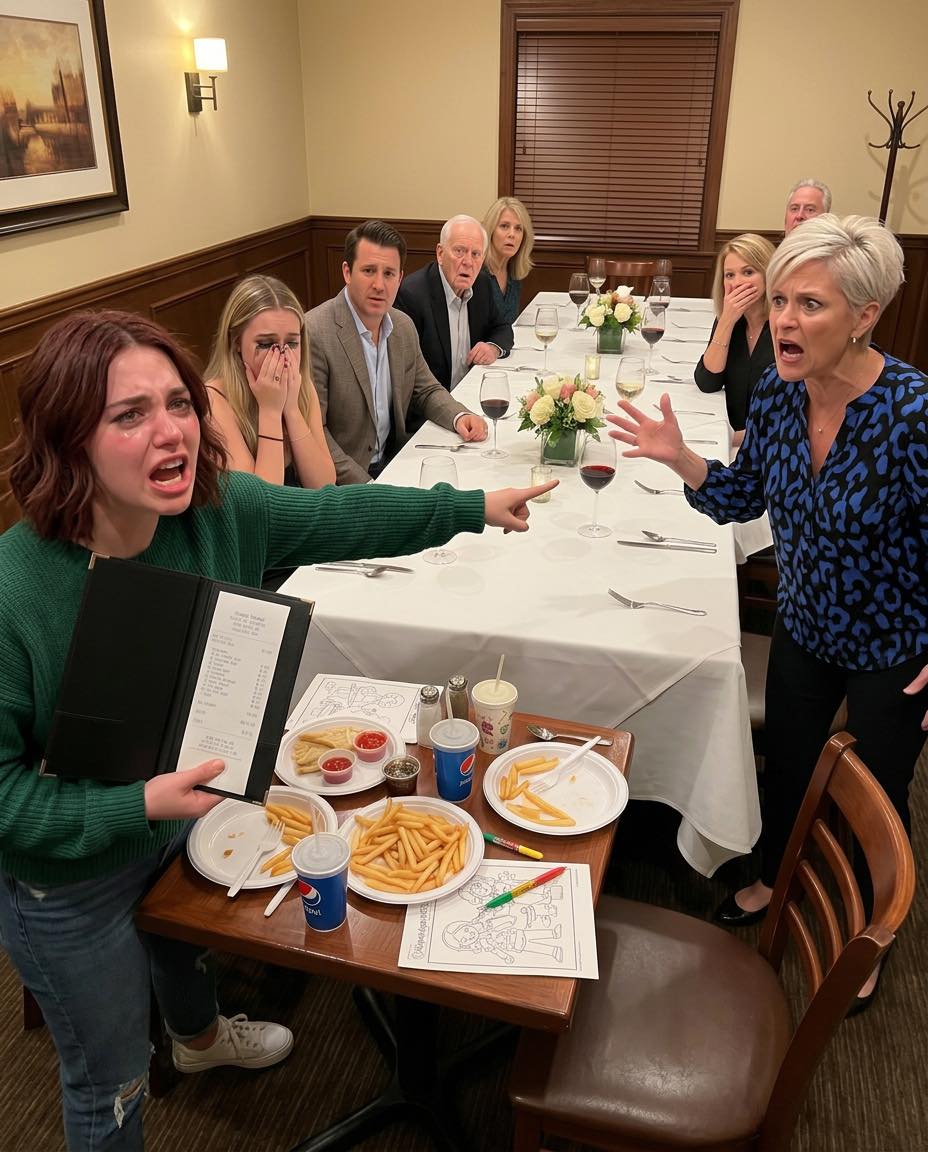
  • I showed up to my cousin’s engagement dinner, and my mom said, “Go sit with the kids. Only grown-ups at this table.” When the waiter handed me the bill, I said, “Give it to the grown-ups at that table!”

    I showed up to my cousin’s engagement dinner, and my mom said, “Go sit with the kids. Only grown-ups at this table.” When the waiter handed me the bill, I said, “Give it to the grown-ups at that table!”

    By the time I stepped into the private dining room at Rosewood Grill, everyone was already laughing like the evening had begun without me.

    My cousin Emily stood beside the tall windows, flashing her engagement ring while her fiancé, Brandon, shook hands with every uncle who owned a boat and every aunt who behaved like she had personally invented marriage. The room smelled of steak, expensive perfume, and old money. My mother, Carol, noticed me immediately.

    “There you are, Sophie,” she said with a smile stretched tight enough to crack. “You’re late.”

    “I’m six minutes late. I came straight from work.”

    Her eyes traveled over my black slacks, sensible flats, and exhausted face. I was twenty-six, working double shifts as a surgical scheduler at a clinic, and somehow my family still treated me like the little girl who spilled cranberry juice every Thanksgiving.

    I leaned toward Emily for a hug, but my mother caught my elbow first.

    “Go sit with the kids,” she whispered.

    I honestly thought I’d heard her wrong. “What?”

    She tilted her head toward the far end of the room. A smaller table sat near the kitchen doors where my younger cousins were eating fries, coloring on paper placemats, and staring at their phones.

    “Mom, I’m not sitting at the kids’ table.”

    Her smile sharpened instantly. “Only grown-ups are sitting at this table tonight.”

    A few people overheard. Aunt Diane focused very hard on her wineglass. Uncle Rob smirked openly. Emily’s cheeks flushed pink, but she stayed silent.

    Heat climbed slowly up my neck. “I pay my own rent. I cover my own bills. What exactly makes me not grown-up enough?”

    My mother lowered her voice. “Don’t embarrass me. This is Emily’s special night.”

    That was the strange rule in my family. They could humiliate me in front of everyone, but the second I reacted, I became the problem.

    So I sat with the kids.

    For two hours, I cut chicken into pieces for a seven-year-old, helped my cousin Tyler restart his game, and watched the adults order wine, seafood towers, filet mignon, and desserts served with tiny flames dancing on top. Every few minutes, my mother glanced toward me with the satisfied expression of someone who thought she had proved a point.

    Then the waiter appeared carrying a black leather bill folder.

    He passed the adult table completely.

    And walked directly toward me.

    “Ms. Miller?” he asked politely. “Your mother said you’d be taking care of the check.”

    The room fell silent.

    I opened the folder.

    The total was $4,386.72.

    Across the room, my mother lifted her chin and mouthed, “Please.”

    I stood slowly, the bill still in my hand.

    Then I smiled and said loudly, “I’m sorry. You’ll need to give this to the grown-ups at that table.”…

    The silence after I spoke was so absolute I could hear ice shifting inside someone’s drink.

    The waiter froze in place, looking like he wanted the floor to split open beneath him. I felt sorry for him. None of this was his fault. He probably dealt with wealthy families fighting over the honor of paying all the time. He was not prepared for a family that pretended to be generous until the bill arrived.

    My mother’s expression changed first. Her polished dinner-party smile slipped away, revealing pure panic underneath.

    “Sophie,” she said with a laugh far too loud, “don’t be dramatic.”

    “I’m not being dramatic,” I replied. “I’m sitting with the kids, remember?”

    A few younger cousins snickered. Tyler, who was twelve and definitely old enough to understand what was happening, whispered, “Oh, dang.”

    My mother pushed her chair back sharply. “Can I speak to you privately?”

    “No,” I said calmly. “You already spoke to me publicly.”

    That made Uncle Rob finally lower his fork. Aunt Diane studied the tablecloth like it contained legal advice. Emily looked helplessly between me, my mother, and Brandon, whose smile had disappeared entirely.

    My mother crossed the room carefully, like she was approaching something explosive.

    “You knew this was the arrangement,” she hissed.

    “No,” I answered. “I didn’t.”

    “Yes, you did. I told everyone you offered.”

    That hit harder than the amount on the bill.

    I turned slowly toward the adult table. “She told all of you I offered to pay?”

    Nobody answered.

    That silence answered everything.

    I looked back at my mother. “Why would I volunteer to pay for an engagement dinner I wasn’t invited to help plan, at a restaurant I didn’t pick, for people who don’t even think I belong at their table?”

    Her eyes flashed angrily. “Because family helps family.”

    “Family doesn’t use family.”

    Emily finally spoke, her voice shaky. “Aunt Carol, you told us Sophie wanted to do this as her engagement gift.”

    I looked at Emily. She genuinely looked confused, maybe even hurt. That softened a small part of my anger, but only a small part. “I already bought you a gift. It’s in my car. A Dutch oven from your registry.”

    Brandon rubbed his forehead tiredly. “Carol, did Sophie ever actually agree to pay for this?”

    My mother opened her mouth, but nothing came out.

    Then came the second blow.

    Trying to remain professional, the waiter quietly added, “The reservation was made under Ms. Carol Miller. The card used to secure the room was declined when we attempted the pre-authorization earlier tonight. Ms. Miller informed our manager that Ms. Sophie Miller would handle payment.”

    Every head turned toward my mother.

    Declined.

    That single word did what my anger never could. It stripped away every layer of performance.

    My mother hadn’t just planned to make me pay. She had built the entire dinner around a lie and waited until the very end to corner me publicly, counting on shame to force my hand where her bank account failed.

    I thought about every time she’d called me selfish. Cheap. Cold. The time I refused to lend her nine hundred dollars for “car repairs” only to learn she spent it on a weekend getaway with her boyfriend. The time she told relatives I was ungrateful because I wouldn’t co-sign a loan. The way she always turned responsibility into cruelty whenever it came from me.

    I placed the bill folder carefully onto the nearest empty chair.

    “I’ll pay for my meal,” I said. “And the kids’ table, since apparently I was their adult supervision.”

    The waiter nodded quickly. “Of course.”

    My mother’s voice cracked. “You would humiliate me like this?”

    I held her gaze for a long moment.

    “No,” I said quietly. “You humiliated yourself. I just stopped helping you hide it.”

    The manager separated the checks.

    My portion, including everything ordered for the kids’ table, totaled $412. It was still painful for me, but I paid it without complaint. The rest of the bill sat untouched on the adult table like a dead animal nobody wanted to claim.

    For the first time that evening, the so-called grown-ups actually had to behave like adults.

    Uncle Rob complained he’d only had one drink, despite the fact I personally watched him finish three bourbons. Aunt Diane insisted she thought Carol was “handling everything.” Emily cried quietly, not because of the money, I think, but because her engagement dinner had turned into a courtroom. Brandon wrapped an arm around her shoulders and asked the manager for a calculator.

    My mother tried one final time.

    “Sophie,” she said softly now, “please don’t do this to me.”

    That had always been her favorite sentence. It turned her into the victim and me into the villain. For years, it worked perfectly.

    But that night, something inside me finally refused to move.

    “I’m not doing anything to you,” I said. “I’m leaving.”

    I walked out to my car, grabbed Emily’s gift, and returned with it. She met me near the entrance, wiping tears from her cheeks.

    “I’m sorry,” she whispered.

    “You don’t need to apologize for her.”

    “I should’ve said something when she made you sit with the kids.”

    I almost told her it was okay, but it wasn’t, and I was tired of lying just to make other people comfortable.

    “Yes,” I said honestly. “You should have.”

    Emily nodded slowly. The truth hurt her, but she accepted it.

    Then she surprised me.

    “Brandon and I are paying the rest tonight,” she said. “Not because she deserves it, but because the restaurant staff shouldn’t suffer because of this. After tonight, though, I’m done letting her turn family events into traps.”

    I believed her. Not completely. Not immediately. But enough.

    The next morning, my phone was flooded with messages.

    Some relatives accused me of ruining Emily’s engagement dinner. Others admitted they’d always known my mother was irresponsible with money. Uncle Rob sent me a long lecture about respect, which was ironic coming from a man who hid behind his napkin while my mother tried to saddle me with a four-thousand-dollar bill.

    I ignored most of them.

    I sent one message to the family group chat:

    “I will no longer pay, lend, front, reimburse, or ‘temporarily help’ with anyone’s expenses unless I personally agree beforehand in writing. I will gladly attend family events where I’m treated with basic respect. If that’s too difficult, please stop inviting me.”

    Then I muted the chat.

    For three weeks, my mother didn’t contact me. It was the longest silence we’d ever had. Instead of guilt, I felt rested.

    Eventually Emily invited me to lunch, just the two of us. She told me Brandon’s parents had covered part of the dinner bill, and she and Brandon handled the rest. My mother promised she would repay them eventually, though nobody truly expected it.

    “She’s telling people you abandoned the family,” Emily said carefully.

    I laughed, not because it was funny, but because it was predictable.

    “No,” I said. “I just stopped being the emergency exit.”

    Emily stared down at her coffee cup. “I don’t want to become like them.”

    “Then don’t.”

    That was the real ending—not a dramatic apology or perfect reconciliation. My mother never admitted she was wrong. Uncle Rob still believes I should have “kept the peace.” Some relatives still invite me to events with carefully worded notes explaining exactly what everyone is expected to pay.

    But now they ask first.

    And when Emily got married the following spring, I sat at a real table near the front of the ballroom. My place card read “Sophie Miller” in gold lettering.

    Beneath it, Emily had handwritten a small note:

    “Thank you for teaching me the difference between keeping peace and staying quiet.”

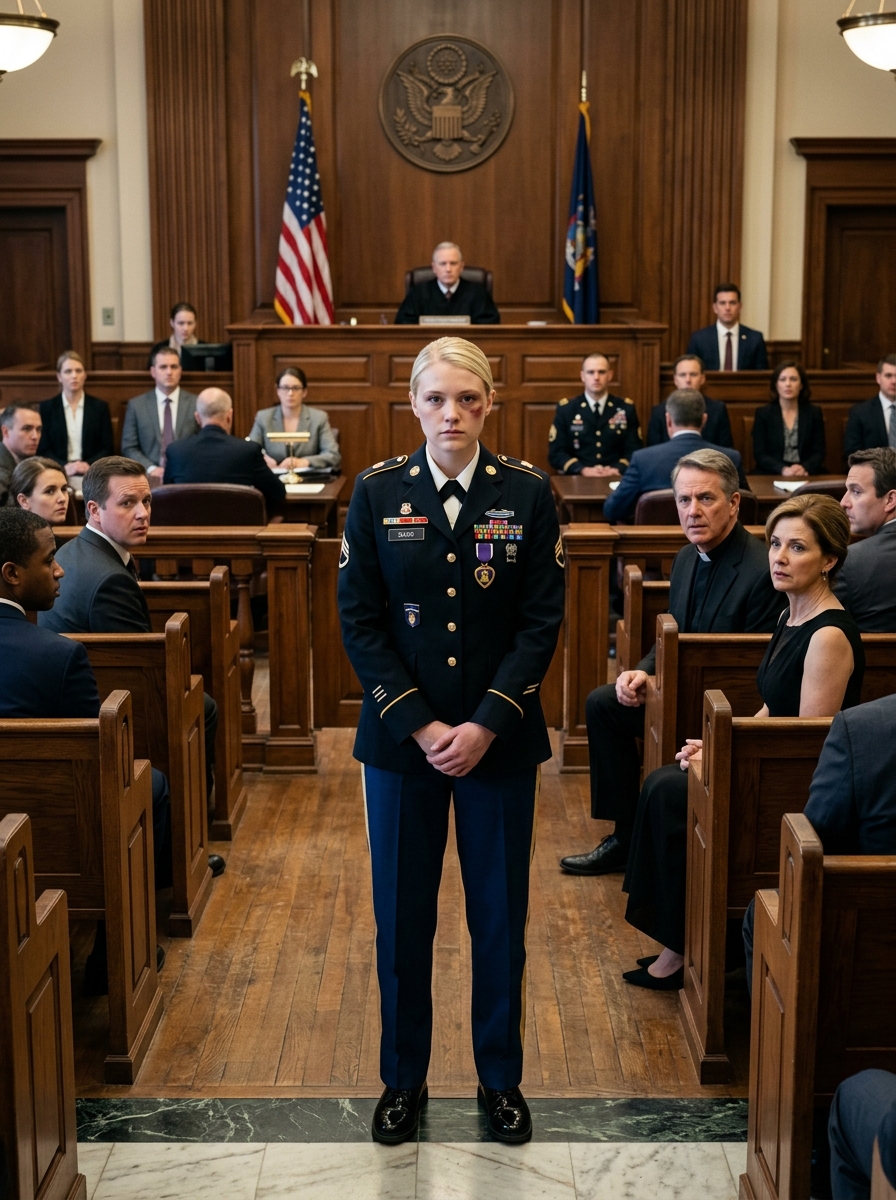
  • I walked into court in my Army uniform with a purple bruise under my eye. My father smiled from the front row because he was the one who put it there. “She’s unstable,” his lawyer said. “Combat broke her.” They wanted my grandfather’s farm taken from me “for my own good.” But when I plugged in the USB drive, the courtroom heard the slap that ended their lie.

    I walked into court in my Army uniform with a purple bruise under my eye. My father smiled from the front row because he was the one who put it there. “She’s unstable,” his lawyer said. “Combat broke her.” They wanted my grandfather’s farm taken from me “for my own good.” But when I plugged in the USB drive, the courtroom heard the slap that ended their lie.

    I walked into court in my Army uniform with a purple bruise under my eye. My father smiled from the front row because he was the one who put it there. “She’s unstable,” his lawyer said. “Combat broke her.” They wanted my grandfather’s farm taken from me “for my own good.” But when I plugged in the USB drive, the courtroom heard the slap that ended their lie.

    Part 1: The Bruise in Court

    My name is Major Leah Hart, and I walked into the Cumberland County Courthouse wearing my Army service uniform and a dark purple bruise beneath my left eye.

    My father smiled when he saw it.

    Because he was the one who put it there.

    Walter Hart sat in the front row beside my mother, broad shoulders filling his navy church suit like he was still trying to convince the world he was an honorable man. His silver belt buckle caught the courtroom lights whenever he shifted. That same buckle had gleamed under church windows every Sunday while men called him “a pillar of the community.”

    My mother, Sylvia, sat beside him in pearls. Her hair was sprayed into place, her pale dress soft and expensive. She glanced at the bruise under my eye, then looked away quickly. Not because she felt shame. Not because seeing me hurt wounded her.

    She looked away because I had brought the truth into public.

    In our family, that was the unforgivable sin.

    I was thirty-four years old. A major in the United States Army. A Ranger. I had survived Afghanistan, an IED blast, shrapnel in my knee, three friends carried home beneath flags, and nights so loud in my mind that sleep felt like another battlefield.

    But the bruise on my face did not come from war.

    It came from my father’s hand six days earlier.

    And now he was suing me.

    Not exactly for money. He wanted my grandfather’s farm—the only place on earth where I had ever felt wanted. His petition said I was unstable, damaged by combat, irresponsible with property, and incapable of managing the land my grandfather, Arthur Vale, had legally left to me.

    My parents claimed they wanted control of the farm “for my own good.”

    That phrase had followed me all my life.

    When my father locked the pantry and gave my older brother Caleb the key, it was for my own good. When my mother read my diary and slid it back into place slightly crooked, it was for my own good. When they told me West Point would ruin me, that no decent woman chose combat over family, it was always for my own good.

    The courtroom smelled of floor polish, old paper, and stale coffee. My shoes clicked against the linoleum as I walked to the defendant’s table alone.

    My father leaned toward his attorney and whispered loudly enough for half the room to hear, “Look at her. Wearing that costume for sympathy.”

    A few people laughed uncomfortably.

    I kept walking.

    Five local attorneys had refused to represent me. One said my father was respected and suggested “family reconciliation.” Another hung up the moment I said Walter Hart’s name. My father had spent decades building power through church handshakes, private favors, and quiet influence.

    To him, I was still the hungry little girl outside the locked pantry.

    He expected me to break.

    The bailiff called the room to order. Judge Samuel Greene entered, an older man with tired eyes and a face that had listened to too many lies. He opened the file and adjusted his glasses.

    My father’s smirk deepened.

    Then the judge looked up.

    His eyes moved over my uniform, my ribbons, my Ranger tab. He paused—not long, but long enough for the room to feel it.

    “We are here for Hart versus…” He stopped, looked directly at me, and his voice changed. “Major Hart.”

    Two words.

    That was all.

    But my father’s smirk vanished.

    My mother’s hand froze near her pearls.

    For thirty-four years, they had called me difficult, dramatic, ungrateful, broken. But under the seal of the court, in front of the town that had believed their story, I was not Walter Hart’s disappointing daughter.

    I was Major Hart.

    And for the first time in my life, my father looked afraid.

    Part 2: The House With the Locked Pantry

    I grew up in a house where cruelty did not need to shout.

    My father controlled the temperature of our home with silence. He controlled dinner with his eyes. He controlled my mother with a glance. And he controlled me with a brass key.

    Caleb had one.

    I did not.

    The pantry was always locked. Behind that white wooden door were cereal, cookies, crackers, soda, peanut butter—the ordinary things other children took without thinking. In our house, food was proof of worth. Caleb earned it by existing. I earned leftovers by staying quiet.

    When I was fourteen, I came home with an A+ in algebra. I carried the paper carefully because I wanted it clean when I showed my father.

    Instead, I found him and Caleb eating pizza at the kitchen table.

    “Can I have a slice?” I asked.

    My father did not look at my grade.

    “There’s stew in the fridge,” he said.

    My mother stood at the sink rinsing a glass. She saw my face fall. She saw everything.

    That was the worst part.

    She was not blind. She was not confused.

    She simply chose peace with him over protection of me.

    The only adult who saw me clearly was my grandfather, Arthur Vale, my mother’s father. He was a retired Marine with sun-spotted hands, a gravel voice, and a small farm outside Chesapeake, Virginia. His house smelled like coffee, engine oil, and pine shavings. His pantry was never locked.

    At his farm, I ate when I was hungry. I learned to bait a hook, split kindling, change oil, read weather in clouds, and sit still long enough to hear birds in the trees.

    Once, after my father made me stand outside during a family barbecue because I had “talked back,” Grandpa found me behind the garage trying not to cry.

    He sat beside me on an overturned bucket and said, “Your father mistakes fear for respect.”

    “What’s the difference?” I asked.

    He pulled a brass compass from his pocket.

    “Fear makes people smaller,” he said. “Respect helps them stand straighter.”

    Before he died, he gave me that compass. On the back, he had etched two words:

    Hold steady.

    Years later, when my West Point acceptance letter arrived, my hands shook as I handed it to my father. He read the first lines, laughed once, and threw it in the trash.

    “You’re not brave,” he said. “You’re running away.”

    For once, he was right.

    I ran to West Point. I ran into discipline, cold mornings, blistered feet, and rules that at least made sense. I ran until I became someone my father could no longer recognize.

    At Ranger School, pain did not have his voice. It did not call me worthless. Pain was simple there—rain, mud, hunger, distance, exhaustion. One breath. One step. One decision.

    I could survive that.

    In Afghanistan, I met Captain Elias Reed.

    He became the brother Caleb never was.

    Elias shared food when rations ran low. He covered my blind spots on patrol. He once deleted an email from my father demanding part of my combat pay before I could answer.

    “You don’t owe people respect because they share your blood,” he told me. “Let your actions speak for you.”

    He died beside me in an IED blast that left metal in my knee and a hole in my life.

    I came home with his voice in my head, nightmares in my sleep, and a retired military working dog named Scout, who understood grief better than most humans.

    My father saw my shaking hands. My sleeplessness. The way I flinched when something slammed.

    And he smiled.

    “Told you the Army would break you,” he said.

    I should have walked away forever then.

    But family has a way of making chains feel like duty.

    Part 3: The Farm They Wanted to Steal

    Grandpa Arthur’s farm became mine three months after his funeral.

    The will was clear. The land, the farmhouse, the tools, the tractor, the porch swing—everything went to me.

    My mother cried when the attorney read it, but not from grief. She had expected the farm to become hers, and through her, my father’s.

    My father did not cry.

    He stared at me across the attorney’s office with the stillness of a man making a promise.

    “You won’t know what to do with that place,” he said outside.

    “I’ll learn.”

    “You’ll ruin it.”

    “I won’t.”

    He stepped closer. “That land should stay with real family.”

    I almost asked what he thought I was.

    But I already knew.

    For the next ten years, I protected that farm from wherever the Army sent me. I paid the taxes, insurance, roof repairs, fencing costs, well service, electricity, and mowing bills. I sent checks from bases, airports, and tents on the other side of the world.

    My father told people I had abandoned the place.

    I kept receipts.

    The final break came when Mrs. Whitaker, Grandpa’s neighbor, called me.

    “Leah,” she said, her voice trembling, “your father is telling people you’re unstable. Says the farm is falling apart. Says he’s trying to save it before you lose it to taxes.”

    “That’s a lie.”

    “I know. But there’s more. He and Caleb met with a developer last week. A man named Carver. They talked about subdivisions.”

    For a moment, I could not speak.

    Grandpa’s white fences. His pine trees. His porch swing. The garden where he taught me to plant tomatoes.

    My father was not trying to protect the farm.

    He was trying to sell it and bury the last place that had ever loved me beneath concrete.

    I drove five hours home in uniform.

    He was in his recliner when I entered. My mother stood in the kitchen doorway, wiping her hands on a towel.

    “I hear you’ve been lying about me,” I said.

    His eyes narrowed. “You don’t walk into my house and call me a liar.”

    “I’m telling you to stop.”

    He stood slowly.

    “You think those cheap medals make you better than me?”

    “No.”

    “You think the Army dressed you up and now you can disrespect your parents?”

    “I think Grandpa left me that farm because he knew exactly who would protect it.”

    My mother looked down.

    That was when I knew she had known about the developer.

    My father stepped closer.

    “You’re still the same worthless little girl who ran away.”

    My thumb pressed the tiny button on the lapel camera clipped near my jacket.

    Recording.

    “I’m not afraid of you anymore,” I said.

    His hand came fast.

    The crack echoed through the living room.

    My head snapped sideways. My shoulder hit the wall. Blood filled my mouth.

    My mother gasped.

    For one wild second, I thought she might finally say the words I had waited my whole life to hear.

    Stop.

    Are you okay?

    I’m sorry.

    Instead, she whispered, “Walter, the neighbors will hear.”

    Not my daughter is hurt.

    Not you hit her.

    The neighbors will hear.

    I straightened slowly and looked at them both.

    “It’s done,” I said.

    Two days later, a sheriff’s deputy served me court papers at Grandpa’s farm.

    My parents claimed I was mentally unfit and asked the court to appoint them temporary conservators over the property.

    That was when I stopped being their daughter.

    And started preparing like a soldier.

    Part 4: Evidence Speaks Louder

    The first witness was my mother.

    Sylvia Hart walked to the stand in soft blue, pearls at her throat, a tissue already folded in her hand. She looked fragile in a way she had perfected over decades.

    My father’s attorney asked, “Can you describe your relationship with your daughter?”

    “We love Leah very much,” she said, voice trembling. “We always have.”

    My father bowed his head like he was praying.

    The attorney asked whether she noticed changes after I returned from Afghanistan.

    “Yes,” my mother said. “She was angry. cold. suspicious. We were afraid for her.”

    “Afraid of her?”

    “At times, yes.”

    A murmur passed through the gallery.

    I felt my father waiting for me to react. He wanted anger. A sharp word. A crack in my discipline that he could point to.

    I gave him nothing.

    When the judge asked if I wanted to cross-examine, I stood.

    I could have asked my mother about the locked pantry. The diary. The slap. Every silence she called love.

    Instead, I sat back down.

    “No questions, Your Honor.”

    My father thought I had surrendered.

    I had not.

    “Your Honor,” I said, “I would like to submit Exhibit A.”

    I placed a thick binder on the clerk’s desk. Ten years of tax payments, utility bills, insurance records, contractor invoices, roof repairs, fencing receipts, and bank statements showing every dollar coming from my military account.

    My parents claimed I abandoned the farm.

    The paper trail said I protected it from across the world.

    Judge Greene flipped through the pages. His face hardened.

    “This property appears to have been maintained with considerable diligence,” he said. “By Major Hart.”

    Then came Exhibit B: emails and photos Mrs. Whitaker had sent me. A developer’s letter of interest. Meeting notes. A proposed subdivision sketch carving Grandpa’s farm into twenty-six lots, with a cul-de-sac where the garden used to be.

    My parents said they wanted to preserve the farm.

    The documents said they intended to sell it.

    Then came Exhibit C.

    The USB drive.

    The courtroom monitor showed my father’s living room. My mother in the doorway. Me in uniform.

    My father’s voice filled the room.

    “You think those cheap medals make you better than me?”

    On screen, I said, “I’m not afraid of you anymore.”

    Then the slap.

    The sound cracked through the speakers.

    The gallery flinched as one body.

    The video tilted as I hit the wall. My mother’s voice followed, clear and damning.

    “Walter, the neighbors will hear.”

    The recording showed blood at my mouth. It showed me standing, not attacking, not screaming, not threatening anyone.

    Just standing.

    Judge Greene removed his glasses and looked at my father.

    “Mr. Hart, did you strike your daughter six days before filing this petition?”

    My father’s jaw worked.

    “She provoked me.”

    “No,” the judge said. “That was not my question.”

    The final witness was not someone my parents expected.

    Chaplain Marcus Hale walked in wearing his dress uniform. He had known me after Elias died. He had sat with me through grief I could not name. He had watched me return to duty, not because I was unhurt, but because I was disciplined enough to carry hurt without handing it to others.

    He spoke about my service, my leadership, and the difference between trauma and incompetence.

    He did not pretend I had no scars.

    He said scars were not proof of failure.

    My father’s attorney leaned forward.

    “So you admit Major Hart is damaged?”

    Chaplain Hale looked at him for a long moment.

    “We all come home carrying something,” he said. “But Major Hart did not abandon her family. From what I have seen, they abandoned her first.”

    The courtroom went still.

    Judge Greene dismissed my parents’ petition.

    My ownership of the farm was affirmed. The development documents were entered into record. The video was referred for review, resulting in an assault charge, a fine, and a restraining order against my father.

    When the gavel fell, I expected victory to feel like sunlight.

    It did not.

    It felt like standing in an empty field after battle, ears ringing, smoke clearing, unsure what to do with the silence.

    My father exploded.

    “You destroyed this family!”

    I gathered my papers and did not look back.

    Part 5: The Quiet Lock

    Outside the courthouse, the North Carolina sun was too bright.

    Scout waited in my truck, ears alert, tail thumping once when he saw me. I climbed into the driver’s seat, shut the door, and finally let my hand shake.

    “You okay, boy?” I whispered.

    He rested his head against my arm.

    That was answer enough.

    My father did not accept defeat gracefully. Men like him never do. He moved the war from court to town.

    At church, he said I humiliated him. At the hardware store, he said I staged the video. At the diner, he claimed the Army had trained me to manipulate people.

    But something had changed.

    For the first time, his lies had to compete with evidence.

    The video existed. The judge’s ruling existed. The tax records existed. The development plan existed.

    And the town that had spent years nodding along to Walter Hart’s version of the world began to look away from him the way my mother once looked away from my bruise.

    A few days later, an older man in a Vietnam veteran cap stopped near my truck at the hardware store. His eyes moved to my uniform jacket folded on the passenger seat.

    He touched two fingers to the brim of his cap.

    “Hold steady, Major,” he said.

    I had to turn away because the kindness almost undid me.

    That was the strange thing about surviving cruelty. You prepare for attacks. You build armor against insults. But gentleness can split you open.

    At Grandpa’s farm, I began repairing what had waited for me.

    The porch steps sagged. The white fence needed paint. The barn roof leaked. The garden had gone wild. Dust sat on every windowsill, and the porch swing groaned like an old friend clearing its throat.

    At night, when the fields turned dark and the house settled, I sometimes heard my father’s voice in my head.

    Worthless.

    Broken.

    Ungrateful.

    Then I put my hand in my pocket and touched Grandpa’s compass.

    Hold steady.

    A week later, my parents came to the property line.

    My father stayed back, far enough to obey the restraining order. My mother walked forward alone, wearing beige and carrying her purse like a shield.

    “Leah,” she said. “Your father isn’t well.”

    I kept the hammer in my hand.

    “The legal fees hurt us,” she continued. “People are talking. Caleb is angry. The developer may sue because your father made promises.”

    There it was.

    Not apology.

    Consequences.

    “We may lose the house,” she whispered.

    I waited.

    “We’re your family.”

    The oldest chain.

    Family.

    They had used that word whenever they wanted obedience without accountability.

    I looked past her at my father. Even from a distance, I could see his anger, his disbelief, his expectation that I would open the door and rescue him from what he had built.

    “No,” I said.

    My mother blinked.

    “No?”

    “I paid taxes on this land for ten years. I served this country while you let him call me worthless. I came home injured, and you let him use my pain against me. I have given enough.”

    “You’re turning your back on us,” my father shouted.

    I looked at him one last time.

    “No,” I said. “You taught me how to stand alone. Now I finally am.”

    Then I walked into my grandfather’s house and closed the door.

    Not slammed.

    Closed.

    The lock clicked softly.

    It was the quietest sound of freedom I had ever heard.

    Part 6: Hold Steady

    Peace did not arrive all at once.

    I had to build it.

    I replaced rotten boards on the porch swing. Painted the fence white. Cleared weeds from Grandpa’s garden and planted rosemary, tomatoes, and marigolds. I fixed the barn roof with Mrs. Whitaker’s nephew holding the ladder while Scout supervised from the shade.

    I installed a flagpole in the front yard, mixing the concrete myself until the base stood straight.

    When I raised the American flag over that land for the first time, Scout sat beside me and watched it unfurl against the Virginia sky.

    I thought of Grandpa’s compass.

    I thought of Elias Reed.

    I thought of the hungry girl outside the locked pantry, the young woman freezing in a West Point hallway, the officer standing alone in court with a bruised face while her father smiled.

    None of them had been weak.

    They had all been surviving.

    Caleb called once.

    I almost did not answer.

    When I did, he sounded older.

    “Dad says you ruined everything,” he said.

    I leaned against the kitchen counter and looked at the pantry door. It stood open. Inside were coffee, cereal, crackers, peanut butter, dog treats, and chocolate cookies I had bought for no reason except that I could.

    “Is that what you think?” I asked.

    Caleb was quiet.

    “He gave me the key,” he said finally.

    “I know.”

    “I used to eat in front of you on purpose.”

    “I know that too.”

    His breath shook.

    “I thought it made me special.”

    The anger I expected did not come. Only exhaustion.

    “That’s what he wanted you to think.”

    “I’m sorry, Leah.”

    There are apologies that ask for absolution.

    And there are apologies that simply tell the truth.

    His sounded like the second kind.

    “I hear you,” I said.

    He asked if we could talk again someday.

    I said maybe.

    Not yes. Not no.

    Maybe.

    That fall, a local high school invited me to speak at its Veterans Day assembly. I stood onstage in uniform, looking at rows of students who still believed adulthood would make everything simple.

    I did not tell them war stories.

    I told them courage was not always loud.

    “Sometimes,” I said, “courage is walking away from a place that keeps hurting you, even when that place is called home. Sometimes honor means letting your actions speak louder than the names people call you. And sometimes the bravest thing you will ever do is refuse to become the person someone cruel tried to create.”

    Afterward, a teenage girl approached me, clutching books to her chest.

    “What you said about family,” she whispered. “I know what that feels like.”

    I knelt so we were eye level. From my bag, I took a spare Ranger tab patch and placed it in her hand.

    “Hold steady,” I told her. “You are not what they call you.”

    She closed her fingers around the patch and stood a little straighter.

    That was when I understood.

    My legacy would not be my father’s cruelty or my mother’s silence. It would not be the bruise or the lawsuit. My legacy would be every piece of strength I chose to pass forward.

    Months later, Judge Greene’s ruling became final beyond challenge. The developer vanished. My father’s church replaced him as Bible study leader. My mother sent a Christmas card with only her signature inside.

    I did not answer.

    That was not revenge.

    It was peace.

    On Christmas Eve, Mrs. Whitaker brought pie and stayed for coffee. Caleb sent a small package with no return address. Inside was the old brass pantry key from our childhood home and a note.

    You should have had one too.

    I held the key for a long time.

    Then I walked outside, crossed the frozen yard, and buried it beneath the oak tree.

    Some keys open doors.

    Some only prove you were locked out.

    I did not need that key anymore.

    Now, on cool evenings, I sit on the porch swing I rebuilt with my own hands. Scout lies at my boots. The porch light glows gold against the steps. The farm is quiet—not with the cold silence of childhood, but with peace.

    For years, I thought home was something people gave you.

    I was wrong.

    Home is something you claim.

    Something you protect.

    Something you build after the war ends.

    And every night, when the porch light turns on, I look across the dark fields, touch the compass in my pocket, and remember the order that saved my life.

    Hold steady.

    THE END!

  • Trump Faces Criticism After Seeming to Forget Melania’s Homeland at Premiere

    The low-key debut of Melania brought the president and first lady onto the red carpet for the film’s world premiere but it appeared Donald Trump may have stumbled over a basic detail about his wife’s background.

    The Amazon-backed documentary—reportedly a $40 million project—follows Melania Trump in 2025 as she prepares for another four years in the White House, offering a carefully curated look inside the first family.The premiere, held Thursday night at the newly renamed Kennedy Center, drew noticeably limited family support. Melania’s son, Barron, was absent, as were Trump’s other children—Ivana, Eric, and Ivanka.

    Awkwardness peaked on the red carpet when reporters asked the president how he felt about Melania making the film, for which she was paid a reported $28 million.

    Trump said he was proud of her and praised her origins—yet seemed unable to name her country of birth.

    “She comes from a faraway country,” he said, describing it as “clean, beautiful, safe,” and “very good,” but never identifying it. He went on to compliment her intelligence and language skills, calling her “very smart” and “a good influencer” on him.

    Viewers quickly noticed the slip, with many online commenting that the president appeared unsure where his wife is from.

    Melania Trump, 55, was born in 1970 in the Socialist Federal Republic of Yugoslavia, in what later became Slovenia after the d3ath of Josip Broz Tito and the breakup of the USSR-era bloc.

    The region soon descended into years of conflict. Melania began modeling at 16 and moved to the United States in 1996 after landing a contract, later meeting Donald Trump two years after.

    As the documentary rolls out globally from January 30, early indicators suggest the costly Amazon production may struggle at the box office. Still, Melania has defended the project, telling CNN that success isn’t measured by ticket sales.

    “I’m very proud of the film,” she said. “People may like it or not—that’s their choice. We achieved what we wanted to achieve.”

  • On my seventieth birthday, my son put a bowl of dog food in front of me and laughed, “Freeloaders need dinner too.” Everyone at my table froze. His girlfriend started recording. “For free?” I whispered. “In the house I bought?” I didn’t yell. I didn’t cry. I simply went upstairs, opened my laptop, and began adding up every dollar they thought I was too old to notice.

    On my seventieth birthday, my son put a bowl of dog food in front of me and laughed, “Freeloaders need dinner too.” Everyone at my table froze. His girlfriend started recording. “For free?” I whispered. “In the house I bought?” I didn’t yell. I didn’t cry. I simply went upstairs, opened my laptop, and began adding up every dollar they thought I was too old to notice.

    On my seventieth birthday, my son put a bowl of dog food in front of me and laughed, “Freeloaders need dinner too.” Everyone at my table froze. His girlfriend started recording. “For free?” I whispered. “In the house I bought?” I didn’t yell. I didn’t cry. I simply went upstairs, opened my laptop, and began adding up every dollar they thought I was too old to notice.

    Part 1: The Bowl at My Birthday Dinner

    My name is Harold Bennett, and on my seventieth birthday, my son placed a bowl of dog food in front of me at my own dining table.

    Then he laughed and said, “Freeloaders need dinner too.”

    He said it in my house, in front of more than twenty people, while my late wife’s chair was occupied by his girlfriend and my own seat had been taken by him.

    My wife, Rose, and I bought this house when we were young, broke, and foolish enough to believe forever was guaranteed. She died nine years ago. After that, my only son, Adrian, became the center of my life.

    Maybe that was where I went wrong.

    Adrian was thirty-six, half-educated, rarely employed, full of grand plans, and short on discipline. Four years earlier, he had asked to stay with me “for a few weeks” while he got back on his feet. A few weeks became months. Then years. Then his girlfriend, Vanessa, moved in with designer luggage, expensive perfume, and a smile that made me feel like she had already spent my money in her head.

    They paid no rent. No utilities. No groceries. No repairs.

    And I kept quiet because he was my son.

    That Saturday, I woke early and cooked my own birthday dinner. Roast chicken, rice, salad, potatoes, and a tres leches cake from the bakery Rose loved. I thought we would sit together. Maybe Adrian would thank me. Maybe he would remember his mother. Maybe he would remember me.

    Instead, I fell asleep upstairs for a short while. When I woke, laughter drifted from downstairs. I walked down and stopped at the dining room entrance.

    There were more than twenty people in my house.

    Cousins. Neighbors. Adrian’s friends. Vanessa’s friends. People I barely knew.

    They were eating the food I had bought and cooked.

    No one had called me.

    “You started without me?” I asked.

    The room quieted for half a second.

    Then Adrian looked up from the head of the table.

    My seat.

    Vanessa sat where Rose used to sit.

    Adrian laughed. “Dad, we forgot you were upstairs. You’re so quiet these days, you’re basically a ghost.”

    Some people laughed.

    Others looked down.

    Then Adrian went to the kitchen and returned holding Rocky’s old dog bowl. Rocky had been gone for years. Adrian poured dry dog food into it and placed it in front of me.

    “There you go, old man,” he said. “Dinner for you too. Since everyone here contributes except you.”

    The room froze.

    Vanessa pulled out her phone and started recording.

    “Don’t be so sensitive, Mr. Bennett,” she said. “It’s a joke. Besides, he’s kind of right. You do live here for free.”

    For free.

    In the house I bought with my wife. With the money I earned over forty years of work.

    Something in me stopped hurting then.

    Not because it did not matter.

    Because I was finally done begging my own child to respect me.

    I did not shout. I did not cry. I did not throw the bowl.

    I picked it up, walked to the front door, and set it on the floor. Then I went upstairs and locked my bedroom door for the first time in years.

    Behind me, Adrian shouted, “Keep eating, everybody! I paid for dinner!”

    That was a lie.

    I had paid for all of it. The food. The house. The electricity. The water. The streaming accounts. Vanessa’s “emergency” credit card charges. Adrian’s car repairs. Their entire fake adult life.

    But Adrian had forgotten one thing.

    I had been an accountant for forty years.

    I kept records.

    Receipts. Transfers. Bank statements. Credit card charges. Screenshots. Every payment. Every lie.

    And that night, while they laughed downstairs and ate my birthday dinner, I started adding everything up.

    By the time I finished, my hands were steady.

    Then I logged into the bank and canceled every card, froze every authorized user, blocked every transfer, and changed every password.

    That was when I saw a charge linked to Vanessa’s name.

    A charge I had never approved.

    And I realized this was not only disrespect.

    They were hiding something.

    Something they never thought an old man would find.

    Part 2: The Plan to Remove Me

    By sunrise, the house was silent.

    Not peaceful.

    Silent.

    Peace is coffee dripping in the kitchen while sunlight touches the curtains. Peace is the memory of Rose humming while watering basil on the porch.

    This was the silence after people had taken too much and still believed they were safe.

    I sat at my desk with a legal pad full of numbers. I had added everything five times, not because I doubted the math, but because I did not want to believe it.

    Over four years, Adrian and Vanessa had cost me $187,420.

    Groceries. Utilities. Car repairs. Insurance. Cash withdrawals. Clothes. Fake emergencies. Gym memberships. A Miami vacation they told people they paid for themselves.

    But the number that made my hands go cold was $42,800.

    A payment connected to Vanessa.

    A business filing fee. A rental deposit. A company called Silver Gate Senior Transition Services.

    I searched deeper and found an email receipt in an old account Adrian had once used on my laptop and forgotten to close.

    Subject: Preliminary Intake Package — Harold Bennett

    My name.

    Not Adrian’s.

    Not Vanessa’s.

    Mine.

    I opened the file.

    It was an assisted-living transition packet. The intake form described me as having declining memory, confusion, dependency, possible paranoia, and emotional instability. It listed Adrian as my financial decision-maker.

    Preferred transition date: within sixty days.

    They were planning to remove me from my own home.

    Soon.

    Then I found the draft power-of-attorney document.

    My signature was on it.

    But it was not my signature.

    It looked traced from a check.

    For a long moment, I sat there and stared at Rose’s photo on my desk. She was in our backyard in 1987, holding strawberries, laughing at something outside the frame.

    “We did not survive all that,” I whispered, “so they could throw me out like furniture.”

    Downstairs, a door opened. Vanessa laughed. Adrian groaned.

    Someone was waking up.

    I copied everything onto two flash drives. One went inside the hollow base of Rose’s old jewelry box. The other went into my jacket pocket.

    Then I showered, shaved, and put on my best navy suit.

    The same one I wore to Rose’s funeral.

    Some clothes are not for celebration.

    Some are armor.

    When I walked downstairs, the dining room looked like a crime scene made of dirty plates, wineglasses, chicken bones, beer bottles, and cake crumbs. At the front door, Rocky’s old bowl still sat on the floor, the dog food swollen from spilled beer.

    I threw it away and washed my hands.

    Vanessa entered the kitchen wearing Rose’s pale blue robe.

    I stopped moving.

    Rose had worn that robe every Sunday morning. After she died, I folded it carefully and placed it in the cedar chest.

    “Morning, Mr. Bennett,” Vanessa said, yawning. “You’re dressed fancy. Church?”

    I looked at the robe.

    “Take that off.”

    She glanced down and smirked. “It was just sitting in that old chest. Nobody was using it.”

    Nobody.

    The word went through me like a nail.

    Adrian stumbled in barefoot, wearing yesterday’s shirt.

    “What’s with the suit?” he asked. “Can you make coffee?”

    “No,” I said.

    He turned slowly. “No?”

    “No.”

    Vanessa laughed. “Still mad about the joke?”

    “It was not a joke.”

    Adrian sighed like I was exhausting him.

    Then his phone buzzed.

    Vanessa’s buzzed too.

    Adrian looked at his screen. His face changed.

    “Why was my card declined?”

    Vanessa grabbed her phone. “Mine too.”

    They looked at me.

    “What did you do?” Adrian asked.

    “I canceled the cards.”

    “You can’t do that,” Vanessa snapped.

    “They were mine.”

    “We had an arrangement.”

    “No,” I said. “You had access. That is not an arrangement.”

    Adrian stepped closer. “Turn them back on.”

    “No.”

    His voice dropped. “Don’t play games with me.”

    For the first time in years, his anger did not scare me. It clarified him.

    “I’m not playing games,” I said. “I’m ending them.”

    Vanessa softened her voice. “Mr. Bennett, last night got out of hand. We were drinking. Nobody meant to hurt your feelings.”

    “Take off my wife’s robe.”

    Her softness vanished.

    Adrian slammed his palm on the counter. “Enough about the robe!”

    “No,” I said quietly. “Enough about you. I want everyone out of this house by six tonight.”

    Vanessa laughed. “That’s illegal.”

    “No. You are not tenants. You never paid rent. You never signed a lease. You lived here because I allowed it.”

    Adrian pointed at me. “You wouldn’t throw your own son out.”

    “Last night, you served your father dog food in front of guests. Let’s stop pretending blood excuses cruelty.”

    Then Vanessa said it.

    “You’re confused. This is exactly what we were worried about.”

    There it was.

    The trap.

    I placed the assisted-living intake form on the counter.

    Neither of them touched it.

    But they recognized it.

    “You went through my private files?” Vanessa said.

    “They had my name on them.”

    Adrian went pale. “Dad, listen—”

    “No. You listen. Declining memory. Emotional instability. Transition within sixty days. A forged power of attorney.”

    Vanessa lifted her chin. “We were trying to help you.”

    “By forging my signature?”

    Adrian whispered, “Vanessa.”

    She shot him a look.

    I turned to him. “You knew.”

    “It wasn’t like that.”

    “Then tell me what it was like.”

    He rubbed his face. “You’re getting older. This house is too much.”

    “I pay every bill.”

    “You forget things.”

    “I forgot nothing.”

    Vanessa stepped forward. “Denial is common at your age.”

    I looked at her for a long moment.

    Then I walked to the porch and called my attorney.

    Part 3: Witnesses in My Own House

    My attorney, Walter Price, had handled Rose’s estate. He was eighty-two, sharper than broken glass, and too old to waste words.

    “I need to remove unauthorized occupants,” I told him. “I also need to report attempted financial exploitation, identity theft, and forgery.”

    There was a pause.

    “Are you safe?”

    “For now.”

    “I’ll be there in thirty minutes. Call the police non-emergency line. Do not argue with them alone.”

    Then I called the police.

    Then the bank.

    Then my niece, Clara, Rose’s brother’s daughter. She was forty-nine, a nurse, and one of the few people who visited without asking for anything.

    “Uncle Harold?” she answered.

    “I need you.”

    “I’m on my way.”

    Inside, shouting erupted.

    Vanessa yelled, “You said he never checks anything!”

    Adrian shouted, “I didn’t think he would!”

    “He’s an accountant, you idiot!”

    I stood on the porch and listened.

    For the first time, their masks slipped when they thought I could not hear.

    By ten, my home had more witnesses than my birthday dinner.

    Two police officers stood in the foyer. Walter sat at the dining room table with his briefcase open. Clara stood beside me, furious in the controlled way only nurses can be.

    Vanessa had finally removed Rose’s robe after Clara looked at her and said, “Take it off before I do it for you.”

    Adrian paced by the fireplace.

    “This is insane,” he said. “He’s my father. This is a family matter.”

    Walter did not look up.

    “Forgery is not a family matter.”

    One officer asked me to explain. I did.

    Not emotionally.

    Like a ledger.

    Who lived in the house. Who paid for what. What happened at dinner. Which cards were canceled. What documents I found.

    When I mentioned the dog food, one officer looked at Adrian with open disgust before controlling his face.

    Adrian saw it.

    “It was a joke!” he snapped.

    Clara turned on him. “Did people laugh when your mother was alive?”

    That shut him up.

    For a second, I saw the boy he had been. The boy who cried when Rocky died. The boy Rose rocked through fevers. The boy who once wrote on a Father’s Day card, “Dad, you are my hero.”

    Then he looked away, and the man he had become returned.

    Vanessa tried again.

    “Mr. Bennett gets confused. Last month, he accused me of taking money from his wallet.”

    “Because you did,” I said.

    She smiled sadly at the officers.

    Walter slid a bank statement across the table.

    “There is ATM footage from that date. The card was used two blocks away while Mr. Bennett was at a cardiology appointment. Ms. Reid was not.”

    Vanessa’s smile died.

    Adrian stared at her. “You said he gave you that card.”

    She hissed, “Shut up.”

    The crack widened.

    Walter opened another folder.

    “This draft power of attorney bears a disputed signature. Compared with notarized estate documents, the discrepancy is obvious. I recommend treating this as suspected financial exploitation of a senior, attempted fraud, and identity theft.”

    Vanessa stood.

    “I’m leaving.”

    One officer moved slightly toward the door.

    “You’re free to leave, ma’am, but we’ll need your current address and contact information.”

    “I live here.”

    “No,” I said. “You don’t.”

    She looked at me then.

    Really looked.

    Until that moment, I had been a wallet with slippers.

    Now I was a witness.

    That frightened her.

    Adrian came toward me. “Dad, please. Don’t do this.”

    His voice cracked, and God help me, it still hurt.

    A father’s heart is not a switch. You do not stop loving your child because he becomes cruel. You learn that love without boundaries becomes permission.

    “I didn’t want it to go this far,” he said.

    “How far did you want it to go?”

    He swallowed.

    “Vanessa said if we had power of attorney, we could manage things. Sell the house. Get you into a nice place.”

    “By removing me from the home your mother and I built?”

    “You can’t live here forever.”

    “No. But I can decide when I leave.”

    His eyes filled.

    “I’m drowning, Dad. I owe money.”

    “How much?”

    Walter answered. “At least seventy thousand, based on Mr. Bennett’s records.”

    Adrian covered his face. “Sports betting. Loans. Cash advances. Vanessa said the house could fix everything.”

    Vanessa snapped, “Don’t put this on me.”

    Adrian turned on her. “You pushed it!”

    “I pushed it because you were useless!”

    The words hit him harder than my anger ever could.

    Then she turned to me.

    “You were sitting on a paid-off house worth almost half a million while we were suffocating. What was the plan? Wait until you died?”

    The officer’s pen stopped moving.

    Adrian whispered, “Vanessa.”

    But she was too far gone.

    “You old people hoard houses, money, memories, and expect everyone to bow because you survived long enough to own things.”

    I stood very still.

    “This house is not a thing,” I said. “It is thirty-eight years of my wife’s laughter. It is pencil marks on the pantry door showing how tall my son was each birthday. It is the porch I rebuilt after the storm. It is the bedroom where Rose took her last breath while I held her hand. It is the garden where I still grow tomatoes because she told me not to let the soil die.”

    My voice stayed calm.

    But Vanessa looked away.

    People like her hate when objects become sacred.

    Sacred things are harder to steal.

    By evening, they were physically gone. The legal process would take longer, but Walter was careful. Notices had to be served. Accounts secured. Locks changed properly.

    Vanessa left first, dragging designer suitcases I had unknowingly paid for.

    “You’ll die alone in this museum,” she said.

    “Maybe,” I replied. “But I’ll die in my own home.”

    Adrian stood on the porch with a duffel bag.

    “Dad,” he said.

    I waited.

    “I’m sorry.”

    I wanted those words to fix something.

    They did not.

    “I believe you’re sorry now,” I said.

    “What does that mean?”

    “It means you are sorry after losing access.”

    His eyes lowered.

    “I don’t have anywhere to go.”

    I looked past him into the dining room, at Rose’s chair sitting crooked from Vanessa leaning back in it like she belonged there.

    “You had a home,” I said. “You turned it into a hunting ground.”

    He began to cry.

    “Dad, please.”

    “I will pay for one week at a motel. I will give you numbers for a debt counselor and gambling recovery program. I will speak to you when you are sober, employed, and in treatment. But you will not sleep under my roof tonight.”

    “You’d choose the house over me?”

    “No. I am choosing myself before there is nothing left of me to love you with.”

    He wiped his face.

    “I hate you.”

    “I know.”

    “You’re cruel.”

    “No,” I said. “I’m late.”

    Then he picked up his bag and walked away.

    That night, after everyone left, I sat alone at the dining room table. The house felt enormous.

    For four years, I had mistaken noise for company. The television from Adrian’s room. Vanessa’s phone calls. Doors slamming. Delivery drivers ringing the bell. Friends I had not invited eating food I bought.

    I thought noise meant I was not lonely.

    But loneliness had been sitting beside me the whole time, watching my son teach me to accept less and less.

    I placed Rose’s photo across from me.

    “I failed him,” I whispered.

    The house gave no answer.

    Maybe because Rose would not have agreed.

    Part 4: The Truth Reaches the Family

    The next morning, my sister-in-law Margaret called.

    “Harold, what happened? Adrian says you threw him out over a joke.”

    I looked at my files.

    For the first time, I decided I was done protecting people from the truth they created.

    “I’ll send you something,” I said.

    I sent the dog bowl photo Vanessa had taken.

    Then the bank statements.

    Then the forged intake form.

    She called back ten minutes later crying.

    By noon, the family group chat had gone silent.

    Then I posted one message:

    Last night, at my 70th birthday dinner, my son placed dog food in front of me and called me a freeloader in the home I bought and paid for. This morning, I found documents suggesting he and Vanessa attempted to gain control of my finances and move me into assisted living without my consent. I have contacted my attorney and law enforcement. I will not discuss rumors. I will provide documents to anyone who believes I am confused.

    Then I attached enough proof.

    Not all of it.

    Enough.

    The people who laughed began texting apologies.

    Mr. Bennett, I didn’t know.

    Uncle Harold, I’m sorry.

    We thought Louis was joking.

    I did not answer most of them.

    A man publicly humiliated does not owe private comfort to the audience.

    But one message mattered.

    It came from my granddaughter, Mia.

    She was sixteen, Adrian’s daughter from a relationship before Vanessa. Her mother, Rachel, had moved two towns away after she and Adrian split. For years, Mia visited every other weekend. Rose adored her. I adored her. Then Vanessa moved in, and Mia stopped coming.

    Adrian told me teenagers were busy.

    Vanessa said Mia was rude.

    I believed them because it hurt less than admitting my son might be keeping my granddaughter away.

    Mia’s message said:

    Grandpa, Mom showed me your post. Dad told me you didn’t want me around because I reminded you of Grandma. Was that true?

    I read it until the screen blurred.

    Then I called her.

    When she answered, neither of us spoke.

    Finally, I said, “No, sweetheart. Never.”

    She started crying.

    So did I.

    That afternoon, Rachel drove Mia to my house.

    My granddaughter stood on the porch, tall and nervous, with Rose’s eyes.

    I opened the door and saw four stolen years in front of me.

    She looked inside.

    “It smells the same,” she whispered.

    “That’s probably the lemon cleaner.”

    “No,” she said. “It smells like Grandma’s house.”

    I stepped aside.

    “It still is.”

    Mia walked in slowly, touching the banister, the hallway wall, the old piano no one played anymore. Then she saw the pantry door, where pencil marks still measured family height.

    Adrian at seven.

    Adrian at twelve.

    Mia at five.

    Mia at eight.

    She touched her name.

    “Dad said you painted over them.”

    “I would never.”

    She broke.

    I held her while she cried, and for the first time in years, the house felt less like a tomb and more like a place where something could grow.

    Part 5: Distance, Accountability, and One Honest Door

    The investigation moved slowly.

    Carla hired a lawyer and claimed she only tried to arrange care for an aging relative. Adrian said he had been manipulated. The bank froze accounts while reviewing fraud. Adult Protective Services came and asked careful questions. I answered them all.

    Dignity, once defended, attracts paperwork.

    But I learned something else.

    I was not helpless.

    Old does not mean weak. Lonely does not mean available. Kind does not mean stupid.

    Three weeks after my birthday, Adrian entered a gambling recovery program.

    I did not pay for it.

    That mattered.

    Rachel helped him find a state-supported option. Clara drove him to the first meeting. I wished him well from a distance.

    Love from a distance is still love.

    It is just love with a locked door.

    One month after my birthday, I hosted dinner again.

    This time, I cooked for four.

    Clara. Rachel. Mia. And myself.

    Roast chicken, rice, salad, potatoes, and a tres leches cake from Rose’s bakery.

    Before we ate, Mia set one extra place at the table.

    “For Grandma,” she said.

    My throat tightened.

    “That was her chair.”

    “I know.”

    No one took my seat. No one laughed at me. No one recorded me.

    Halfway through dinner, the doorbell rang.

    Clara stood immediately, protective as a guard dog.

    Through the window, I saw Adrian on the porch. Thinner. Unshaven. Holding an envelope.

    I opened the door but did not invite him in.

    That boundary was small.

    It was also everything.

    “I’m not here to cause trouble,” he said.

    “Why are you here?”

    He held out the envelope.

    “I wrote something. My counselor said I shouldn’t ask forgiveness yet. Just acknowledge what I did.”

    I took it.

    “I lied about Mia,” he said.

    Behind me, I heard my granddaughter inhale sharply.

    “I know.”

    “I told myself it was because Vanessa didn’t like drama. But really, I hated that Mia loved this house. I hated that she seemed happy here when I felt like a failure every time I came through the door.”

    I said nothing.

    “And I let that become resentment. Toward her. Toward you. Toward Mom’s memory. Toward everything I hadn’t earned.”

    That was the first honest thing my son had said in years.

    It repaired nothing.

    But it was honest.

    He looked down.

    “I’m not asking to come in.”

    “Good.”

    He nodded, accepting the blow.

    “I’m at a sober living place. Looking for work. Vanessa and I are done.”

    Time would answer better than he could.

    “I hope you keep going,” I said.

    He asked, “Do you hate me?”

    “No. But I do not trust you.”

    “That’s fair.”

    Mia appeared beside me.

    “You told me Grandpa didn’t want me.”

    Adrian closed his eyes.

    “I know.”

    “That was cruel.”

    “Yes.”

    “You made me miss Grandma’s house.”

    “I’m sorry.”

    She looked at him for a long time.

    Then she said, “You don’t get to call it Grandma’s house until you stop trying to take it.”

    Adrian broke.

    Mia stepped back inside.

    I remained at the door.

    After he left, we finished dinner quietly.

    Later, I opened his letter.

    Three pages. Messy handwriting. Crossed-out words. No excuses. Not enough. But real.

    I placed it in a folder labeled: If He Changes.

    Six months passed.

    The house changed.

    Mia came every Saturday. She helped organize old photographs. Clara bullied me into getting a medical alert watch. Rachel joined us for dinner twice a month.

    I donated Rocky’s old bowl to the animal shelter.

    Not to erase what happened.

    Because some objects deserve better memories.

    Vanessa was eventually charged with forgery and attempted financial exploitation. Adrian testified against her as part of his agreement. He was not innocent, and he admitted that. He accepted probation, restitution, mandatory counseling, and the kind of public shame he had once given me.

    At the hearing, I made a statement.

    “I am seventy years old,” I said. “Financial abuse of an older person does not always begin with stolen checks. Sometimes it begins with jokes. With eye rolls. With being called confused when you are inconvenient. With people treating kindness like a loose door they can push open.”

    The courtroom went silent.

    “My son served me dog food at my own birthday dinner. That act did not steal money from me. But it told me the truth. He no longer saw me as his father. He saw me as an obstacle. Once someone becomes an obstacle, others can justify moving him.”

    Adrian lowered his head.

    “I do not ask for revenge. I ask the record show I was not confused, helpless, or a freeloader in my own home.”

    The judge nodded.

    “I believe the record is clear, Mr. Bennett.”

    A year after the dog bowl dinner, I turned seventy-one.

    I did not cook.

    Mia ordered from Rose’s favorite Italian place. Clara brought cake. Rachel brought flowers. Walter came with nonalcoholic cider and pretended it was champagne.

    And Adrian came.

    Alone. Clean-shaven. Carrying no laundry. Asking for no money.

    At the door, he handed me a wrapped package.

    Inside was a framed photograph of the house at sunset. The porch light was on. The garden was blooming. In the window, faintly, Mia and I sat at the dining room table, laughing over a puzzle.

    On the back, he had written:

    I forgot this was your life before it was my shelter. I’m sorry. Thank you for making me leave before I destroyed what was left of us.

    I read it twice.

    He did not ask if I forgave him.

    That was how I knew he had changed more than I expected.

    Dinner was awkward, of course.

    Healing bumps against chairs. It looks down at plates. It says please and thank you too carefully.

    But nobody took my seat.

    Nobody touched Rose’s chair without asking.

    Nobody laughed at cruelty.

    After cake, I lifted my glass.

    “A year ago,” I said, “I learned something I should have known earlier. A home is not protected by locks first. It is protected by standards. By what we allow and what we refuse. By whether love is permitted to become disrespect.”

    Mia reached for my hand.

    “I am grateful for a smaller table. For honest apologies. For locked doors. For second chances that must be earned. And for the woman who taught me that a house without dignity is just walls.”

    I looked at Rose’s chair.

    “To Rose.”

    Everyone lifted a glass.

    “To Rose.”

    Later, Adrian stayed to help with dishes.

    He washed. I dried.

    After a while, he said, “Dad?”

    “Yes?”

    “I know I don’t deserve it yet, but someday… could you tell me stories about Mom again?”

    I placed a plate in the cabinet.

    “You don’t have to deserve stories,” I said. “You only have to listen.”

    So we sat at the kitchen table.

    The same table where he had humiliated me.

    And I told him about the first time I saw his mother arguing with a grocery manager because the peaches were priced wrong. How I thought she was terrifying. How I married her three years later because terrifying and honest were sometimes the same thing.

    Adrian laughed softly.

    Then he cried.

    I did not reach over immediately.

    I let him feel it.

    Then I placed my hand over his.

    Outside, the porch light glowed over Rose’s garden. The house settled around us, old wood breathing in the dark.

    I was still seventy-one.

    Still widowed.

    Still a father to a son who had hurt me.

    Still a man who learned late that being needed is not the same as being loved.

    But I was no longer the ghost upstairs.

    I was Harold Bennett.

    This was my house.

    My chair.

    My name on the deed.

    My life, still unfinished.

    And at the center of that life was not revenge, bitterness, or even forgiveness.

    It was one simple truth I should have claimed the moment my son put that bowl in front of me.

    Respect is not a gift children give their parents when they feel generous.

    Respect is the rent everyone pays to stay in your heart.

    And if they refuse to pay it, you may still love them.

    But you do not have to leave the door unlocked.

    THE END!

  • Part1: WHEN I GOT MARRIED, I STAYED QUIET ABOUT THE $16.9M COMPANY I INHERITED FROM MY GRANDFATHER

    The morning after my wedding, my mother-in-law showed up before the flowers had even begun to fade, dressed in ivory as if she had been the one to marry my husband. She entered our suite with a notary, a leather folder, and the satisfied smile of someone convinced her target would bow without resistance.

    “Sign,” she said, placing the documents on the breakfast table. “Since you’re family now, put everything in Ethan’s name.”

    I studied the papers, then looked at my husband. Ethan stood by the window with his arms crossed, his jaw tight, avoiding my gaze entirely. Just a day earlier, he had whispered forever into my hair. Now he looked through me, as though I already belonged to his mother’s house.

    The room still carried the scent of champagne and roses. My silk robe brushed my legs as I sat. I read the first page, then again, slowly enough that Lydia Hale’s diamond bracelet tapped sharply against the table.

    “This isn’t a family trust update,” I said.

    Lydia let out a thin laugh. “Of course not. It’s simpler. A spousal transfer. Ethan will manage what little you have.”

    What little. The words nearly made me smile.

    To Lydia, my past was laughable. The quiet granddaughter from an ordinary suburban home. The girl in modest dresses driving an aging car. The woman whose grandfather “owned a few warehouses” before he passed. She never questioned why suited men rose when I entered a room.

    Ethan finally stepped away from the window. “Don’t make this difficult, Elena. Mom’s right. You’re not built for pressure. Let me take over.”

    Something inside me cracked—not from shock, but from confirmation. My grandfather had warned me in the hospital.

    Hide the company until you know who deserves your name.

    So I had concealed Hale Meridian Holdings—valued at sixteen point nine million dollars—behind a blind trust and layers of ordinary-looking structures. And I had instructed my lawyer to include one protective clause in my marriage file. A small clause. A devastating one.

    I placed the papers down. “You brought a notary to corner me the day after the wedding?”

    Lydia leaned closer. “I brought a witness for your good decision.”

    “And if I refuse?”

    Her smile sharpened. “Then you refuse your husband. You refuse this family. You’ll learn very quickly how lonely that can be.”

    I let the silence stretch until Ethan shifted uncomfortably. Then I picked up the pen.

    Lydia exhaled in triumph. Ethan relaxed. The notary prepared his stamp.

    I signed a single line.

    Not the transfer.

    The acknowledgment of receipt.

    Then I slid the folder back and said quietly, “Now it’s my turn.”

    Lydia blinked. “What did you say?”

    I stood, tightening the sash of my robe. “I said it’s my turn.”

    Ethan grabbed the folder, flipping through it. “You didn’t sign the transfer.”

    “No,” I said. “I signed proof that these documents were presented under pressure, in the presence of a notary you selected, less than twelve hours after our ceremony.”

    The notary turned pale. Lydia remained still. People like her confuse silence with weakness because they have never watched a trap close.

    “You ungrateful little nobody,” she hissed. “Do you think one clever sentence changes anything?”

    “No,” I said. “But evidence helps.”

    Ethan laughed harshly. “Evidence of what?”

    I picked up my phone and tapped once. His laughter died as his own voice filled the room from the recorder hidden in the table lamp I had switched on earlier.

    You’re not built for pressure. Let me take over.

    Then Lydia: Ethan will manage what little you have.

    And finally:

    You’ll find out very quickly how lonely that can be.

    Silence settled, broken only by the hiss of the coffee machine.

    Lydia recovered first. “Illegal.”

    “Actually,” I said, “not in this state when one party consents. I do.”

    Her eyes flicked to Ethan, and for a moment, fear surfaced beneath her polish. She had done this before—coercion disguised as propriety, theft masked as family obligation.

    Ethan threw the folder down. “What do you want, Elena?”

    There it was. Not confusion. Not outrage. Just negotiation—the instinct of someone who knows he’s caught.

    I walked to the safe, entered the code, and retrieved a navy file marked with a silver crest—my grandfather’s crest. The same one Lydia had admired on cufflinks without realizing she was praising what she intended to take.

    I placed it beside her papers.

    Lydia glanced down—and froze.

    Inside were shareholder certificates, board resolutions, valuation reports, and operating agreements for Hale Meridian Holdings. Warehouses, logistics hubs, cold storage chains, freight networks, land. Sixteen point nine million, conservatively. My controlling stake. My authority. My name.

    Ethan whispered, “What is this?”

    “The company I inherited,” I said. “The one you thought was just a few warehouses.”

    Lydia’s face drained. “No.”

    “Yes.”

    Ethan stared at me as if seeing me for the first time. “You lied.”

    “I was careful,” I replied. “There’s a difference.”

    Then I handed them the prenuptial schedule he had signed without reading because his mother dismissed it as routine. Paragraph twelve gleamed like a blade: Any attempt by spouse or related third parties to coerce, defraud, or unduly influence transfer of pre-marital assets shall trigger immediate marital nullification proceedings, forfeiture of all negotiated benefits, and referral for civil and criminal review.

    For the first time, Lydia’s hand shook.

    “You chose the wrong woman,” I said.

    Ethan reached for the document, but I stepped back. At that exact moment, the suite door opened.

    My attorney entered.

    Behind her came two uniformed officers, hotel security, and the notary I had requested earlier to formalize my statement. Calm has a distinct sound when it arrives with witnesses.

    Lydia stood abruptly, her chair falling. “This is ridiculous.”

    My attorney, Nora Vance, placed a document on the table. “Mrs. Hale, it becomes less ridiculous when attempted fraud, coercion, and conspiracy are recorded and supported by signed acknowledgment.”

    Ethan’s face drained. “Conspiracy?”

    Nora nodded. “Including transfer documents prepared before the wedding. We have the metadata. They were created eight days ago.”

    Lydia faltered. “You hacked our files?”

    Nora smiled coldly. “No. Your office printer stores logs. Your assistant cooperated once she realized her name was on the chain.”

    That was when Lydia understood she had lost. Greed breeds carelessness, and carelessness leaves evidence.

    The officers requested the folder. The notary Lydia brought tried to explain, claiming he believed this was consensual planning. Then Nora pointed out the clause, the timing, the pressure. He fell silent.

    Ethan turned to me, softer now. “Elena, please. We can fix this.”

    Click Here to continuous Read​​​​ Full Ending Story Part2: WHEN I GOT MARRIED, I STAYED QUIET ABOUT THE $16.9M COMPANY I INHERITED FROM MY GRANDFATHER

  • Part2: WHEN I GOT MARRIED, I STAYED QUIET ABOUT THE $16.9M COMPANY I INHERITED FROM MY GRANDFATHER

    For a moment, I almost felt pity. Then I remembered him at the window, saying nothing.

    “You knew,” I said.

    He said nothing.

    Lydia straightened. “You think money protects you?”

    “No,” I said. “Preparation does.”

    I signed the annulment petition in front of everyone. Nora witnessed it. The notary sealed it. Security escorted Lydia out when she refused to stop shouting. Ethan followed, calling my name once, then falling silent when officers stopped him.

    By noon, my board was informed. By evening, Lydia’s access to accounts was frozen. Within days, inquiries began. Within weeks, lawsuits followed. Ethan lost clients when his emails surfaced. He had written one the night before the wedding:

    Once she signs, it’s done.

    Six months later, spring light filled the new headquarters of Hale Meridian’s expansion. Glass, steel, clarity. I walked through the building my grandfather had envisioned, my footsteps echoing like a verdict.

    Outside, cranes moved under a clear sky.

    Inside, people stood when I entered—not from fear, but respect.

    Lydia was left battling debts and fading influence. Ethan lectured half-empty rooms about leadership he never had.

    And me?

    I had my name. My company. My peace.

    The wedding flowers were long gone.

    The signature they wanted was the one that ended them.

  • My mother looked me in the eye and said, “Your sister’s family will always come first. You’ll always be second.” My father nodded like the decision had already been carved in stone. So I said, “Then I’ll start choosing myself.” I separated my finances, made my own plans, and stepped away from the role they had assigned me. Then a major family crisis exploded. They came back assuming I would pay, fix everything, and fall into place like always. But this time, my answer left them speechless.

    My mother looked me in the eye and said, “Your sister’s family will always come first. You’ll always be second.” My father nodded like the decision had already been carved in stone. So I said, “Then I’ll start choosing myself.” I separated my finances, made my own plans, and stepped away from the role they had assigned me. Then a major family crisis exploded. They came back assuming I would pay, fix everything, and fall into place like always. But this time, my answer left them speechless.

    My mother looked me in the eye and said, “Your sister’s family will always come first. You’ll always be second.” My father nodded like the decision had already been carved in stone. So I said, “Then I’ll start choosing myself.” I separated my finances, made my own plans, and stepped away from the role they had assigned me. Then a major family crisis exploded. They came back assuming I would pay, fix everything, and fall into place like always. But this time, my answer left them speechless.

    Part 1: The Sentence at Thanksgiving

    My mother said, “Your brother’s family will always come first. You’ll always be second,” while the gravy cooled in a porcelain boat shaped like a turkey.

    That is the detail I remember most. Not her face, though I remember the powder gathered in the lines around her mouth and the pearl earrings catching the dining room light. Not my father’s heavy nod, as if he were confirming a legal ruling. Not my brother, Evan, looking down at his plate and cutting turkey into tiny perfect squares like he had done since childhood.

    The gravy stayed in the middle of the table, untouched between the mashed potatoes and green bean casserole, a glossy skin forming over the top.

    I had come to Thanksgiving hoping for one peaceful meal. I was twenty-eight, exhausted from late nights at the tech company where I worked, carrying a cheap pumpkin pie from the grocery store because my mother would claim dessert was unnecessary and then judge anyone who arrived empty-handed. The house smelled like sage, butter, cinnamon candles, and the lemon polish she used only when guests were coming. Everything looked normal.

    That was the trick.

    Normal meant Evan sitting closest to Mom, his wife Paige leaning back like someone already forgiven, their kids leaving fingerprints on glass without consequence. Normal meant Dad asking Evan about business, Paige about the kids, Mom about their kitchen remodel, and me about traffic.

    I set my pie beside three homemade desserts Paige had brought in glass dishes tied with ribbons. Mom glanced at the store label, smiled with only her mouth, and said, “That’s fine, honey. We’ll put it in the garage fridge.”

    Fine.

    That word had raised me.

    Dinner began with Paige talking about quartz counters. Evan wanted navy cabinets, she wanted white oak, and my parents acted as if civilization depended on their backsplash. Forty-five thousand dollars, Paige said, maybe more if they opened the wall to the breakfast nook.

    Dad whistled with admiration. “You only do a kitchen once.”

    Mom touched Evan’s arm. “You deserve a beautiful home.”

    I was reaching for a roll when I said, casually, stupidly, “I’m moving next month. My lease is ending, and I found a place closer to work. The deposit is a little rough.”

    It was not exactly a request. More like testing a door I knew was locked.

    Mom’s fork paused. Evan stopped chewing. Paige kept eating. Dad wiped his mouth.

    Then Mom looked at me with a calm so complete it felt rehearsed.

    “Caleb, you need to understand something,” she said. “Your brother’s family will always be the priority. He has children. A household. Real responsibilities. You’ll always be second.”

    The room did not explode.

    That was the worst part.

    The kids kept arguing over cranberry sauce. The refrigerator hummed. Football noise drifted from the den.

    Dad nodded. “That’s just how it is, son.”

    Always second.

    Not sometimes. Not because money was tight. Always.

    The sentence moved through me like cold water under a door. First shock, then embarrassment, then recognition. She was not creating a rule. She was finally naming one.

    I looked around and saw the evidence everywhere. Evan’s college graduation photo on the sideboard. Evan’s wedding portrait above the piano. A canvas of his children over the fireplace. My high school photo, small and faded, half-hidden near the hall.

    I remembered Evan’s sixteenth birthday car. My gas station gift card. Their private college payments for him while I unloaded trucks at night to afford community college. My university graduation, where I scanned the crowd until my smile hurt, while my parents attended Evan’s second baby shower because “family needed them.”

    All the little cuts became one shape.

    I stood.

    Mom blinked. “Where are you going?”

    “To start putting myself first.”

    Dad frowned. “Don’t be dramatic.”

    “I’m not,” I said. “That’s the point.”

    I walked down the hall to the bathroom, past decades of proof that I had been edited out of my own family. In the mirror, under yellow light, I saw a tired man with gravy on his sleeve.

    For the first time, I stopped wondering how to make them love me.

    I wondered what would happen if I stopped needing them to.

    Part 2: Disappearing From the Role

    I did not storm out. That would have made it too easy for them to call me sensitive. I washed the gravy from my sleeve and returned to the table.

    My plate was gone.

    Not saved. Not cleared with concern. Just gone.

    Everyone kept eating. Mom laughed at something one of Evan’s kids said. Paige showed Dad a photo of a farmhouse sink. I stood behind my chair for half a second, and nobody looked up.

    That was when the decision settled into bone.

    I took my coat from the hall closet.

    Mom finally noticed. “You’re leaving before pie?”

    “You put mine in the garage fridge.”

    Her lips tightened. “Caleb.”

    That one word carried twenty-eight years of instruction. Don’t embarrass me. Don’t ask for what Evan gets. Don’t notice what we all know.

    I opened the front door. Cold November air rushed in.

    Dad followed me onto the porch. “You need to grow up. Your brother has more at stake than you.”

    I looked at his plaid slippers, the ones I bought him two Christmases earlier. He never thanked me, but he wore them every winter.

    “I heard you the first time.”

    “This attitude won’t get you anywhere.”

    I thought of the promotion letter in my desk drawer, the investment account I had started with fifty dollars, and the emergency fund they knew nothing about because they had never asked one real question about my life.

    “It already has,” I said.

    I drove home with the heater blasting. My apartment was small, third floor, one bedroom, radiator heat that clicked all night. But when I opened the door, the silence felt like ownership.

    No one was disappointed in me there.

    The next morning, I changed every financial password, opened a new bank account, moved my emergency fund, reviewed my retirement, brokerage account, stock options, and credit report. I spread the statements across my kitchen table.

    Checking: $41,762.

    Savings: $118,309.

    Investments: $246,880.

    Company equity: uncertain, but promising.

    The numbers looked unreal, not because I had not earned them, but because I had hidden them even from myself. Poverty had trained me. My family had perfected the lesson. Evan always needed. I always managed.

    So I had managed myself into stability.

    I made three lists.

    Money I Will Never Give Them.

    Events I Will No Longer Attend Out of Guilt.

    Things I Want.

    That last one took the longest.

    A better apartment. A real vacation. Therapy. A leather jacket. A relationship where I did not audition for attention.

    By Sunday, the family chat buzzed.

    Mom: Caleb, you left abruptly. We’ll expect an apology before Christmas.

    The old me would have explained. Softened. Apologized for making them uncomfortable after they gutted me over stuffing.

    Instead, I wrote: I won’t apologize for responding to what you said. I’m taking space.

    Mom replied: Space from your own family? That’s selfish.

    Dad: Don’t start this.

    Evan: Can we not? I have enough stress right now.

    Of course he did.

    I muted the chat.

    That silence roared at first. My body expected punishment. A call. A lecture. A demand.

    Instead, Leah Kim from work texted.

    You survived Thanksgiving?

    Leah worked in product design. We had been orbiting each other for months—coffee jokes, late-night deployment snacks, shared hatred of open offices. She listened without waiting to talk.

    I replied: Barely. My family finally said the quiet part out loud.

    She answered: Drinks? Coffee? Or do we need pancakes?

    Twenty minutes later, I sat across from her in a diner with fogged windows and red booths. I told her everything. The car. The tuition. The graduations. The house money. The sentence.

    When I finished, she said, “They didn’t make you second. They made you useful.”

    Something cracked open in my chest.

    “What are you going to do now?” she asked.

    “I think I’m going to disappear from the role they gave me.”

    For the first time, that did not sound lonely.

    It sounded like escape.

    Part 3: The Crisis Finds Me

    The call came on a Tuesday night while I was assembling a cheap bookshelf.

    I had upgraded nothing yet except my habits. I cooked real dinners. I went to therapy every Wednesday. I bought the leather jacket and wore it around my apartment like an idiot. Leah took me to Korean barbecue and teased me for overcooking brisket.

    Small things.

    Mine.

    Then Evan’s name appeared on my phone.

    I let it ring.

    It stopped.

    Started again.

    Then a text.

    Evan: Caleb, please pick up. Something happened.

    My first thought was the kids. I answered.

    Evan was crying so hard I could barely understand him.

    “Paige,” he gasped. “Her office. Federal agents came with warrants.”

    I sat on the floor. “What did she do?”

    “I don’t know.”

    “You do know.”

    The story came out in pieces. Paige had been falsifying mortgage documents: income statements, employment letters, client assets, tax forms. At first, Evan said, it was “helping people get homes.” Then it became inventing jobs, routing verification calls through prepaid phones, changing numbers to get loans approved.

    Their mortgage was six months behind. Paige had used house money for credit card minimums. Evan owed $52,000 across nine cards. The kitchen remodel was twenty grand over budget. The private school was threatening to remove the kids. Their SUV had been repossessed in a grocery store parking lot while the kids sat in the back seat with melting ice cream.

    “Mom and Dad know?” I asked.

    “Some.”

    “Not all.”

    He sobbed harder. “They can’t cover this. Dad can pull maybe thirty from retirement, but it’s not enough. Paige’s lawyer wants a retainer. We might lose everything.”

    We might lose everything.

    I thought of Thanksgiving.

    “What do you want from me?” I asked, though we both knew.

    Evan’s breath caught. “You’re good with money.”

    It was almost funny. For years, I had been irresponsible, dramatic, less settled than Evan. Now I was good with money.

    “How would you know?” I asked.

    He went quiet.

    “Mom said you probably had savings,” he whispered. “Because you’re single and don’t have real expenses.”

    There it was. My life reduced to unused capacity.

    “I need a day,” I said.

    “Caleb, we don’t have—”

    “You’re asking me for help with a federal investigation, foreclosure, school debt, credit cards, and legal fees. You can give me a day.”

    When I hung up, I called Leah.

    “No,” I said when she asked if I was okay. “My family just found out I might be useful again.”

    She said, “I’m on my way.”

    Forty minutes later, she sat on my floor reading my notes.

    “This is bad,” she said.

    “Yes.”

    “They’re going to make it your moral test.”

    “Yes.”

    Then she asked, “What do you want?”

    No one in my family had asked me that. Not once.

    “I want them to understand I’m not the emergency fund for a life they built without seeing me.”

    Leah nodded. “Then don’t be.”

    The next day, Mom called. “We’re having a family meeting Sunday. Your father has made a plan.”

    “Of course he has.”

    “Your brother needs us. Try not to make this about yourself.”

    That was when I knew Sunday would not be a rescue.

    It would be a trial.

    And for once, I was not arriving as the defendant.

    Part 4: The Family Meeting

    My parents’ living room looked smaller when I arrived Sunday. Same beige couch. Same brass lamp. Same mantel crowded with Evan’s life: graduation, wedding, babies, autumn portraits.

    I counted myself twice.

    One eighth-grade photo. One Christmas picture where Dad’s shoulder half-blocked me.

    The coffee table was covered with bills, late notices, a foreclosure letter, a legal invoice, and Dad’s yellow pad.

    Mom asked, “You came alone?”

    “For now.”

    “For now?” Dad said.

    “I asked someone to join us later if needed.”

    “This is family business,” Mom snapped.

    “So was Thanksgiving.”

    No one answered.

    Dad picked up his pad. “To stabilize the situation, we need eighty-six thousand dollars. Your mother and I can contribute thirty from retirement. Evan and Paige can liquidate some things. That leaves forty-four thousand. We need you to cover that.”

    Need.

    Not ask.

    “And,” Mom added, “you should move back here temporarily. It’ll save rent, and you can coordinate finances until Evan and Paige get back on their feet.”

    I stared at her. “You want me to leave my apartment and manage their finances.”

    “It’s practical.”

    Paige leaned forward, eyes red. “Caleb, the kids keep asking if we’ll have to move.”

    I believed her fear. Her fear was real.

    So was the wreckage beneath it.

    Mom said, “This is not optional. Family takes care of family.”

    Dad added, “You’re single. You have flexibility. Evan has children.”

    There it was again, dressed as logic.

    I said, “When Mom said I would always be second, you didn’t say a word.”

    Evan’s eyes filled. “That was Thanksgiving. This is different.”

    “No. This is the same sentence with a bill attached.”

    Dad’s face hardened. “Watch your tone.”

    I looked at him. “Or what?”

    The question cracked the room open.

    Mom inhaled. Paige stared. Dad’s jaw worked.

    “What’s ugly,” I said, “is deciding my life has no weight until it can hold up Evan’s.”

    Mom said, “You’ve always been jealous.”

    “No. I was neglected beside him. There’s a difference.”

    I stood and told them I needed twenty-four hours. Dad exploded, but I left.

    The next evening, Leah came with me. She did not fight my battle. She sat beside me while I fought it myself.

    Inside, everyone had taken positions like actors in a play. Dad in his recliner. Mom on the loveseat. Evan and Paige on the couch. Papers on the table.

    Evan’s first sentence was: “Did you figure out the money?”

    “Yes,” I said.

    Relief moved through the room instantly.

    Disgustingly.

    I opened my folder and handed Dad my checking statement. Then savings. Then investments. Then salary and equity.

    Mom’s lips parted. Evan stood halfway. Paige muttered, “Holy hell.”

    “You make this much?” Mom asked.

    “Yes.”

    “And you had this money?” Evan said. “While we were struggling?”

    “You were remodeling a kitchen.”

    Dad asked, “Why didn’t you tell us?”

    “When?” I said. “Between Evan’s kitchen samples and Evan’s tuition? Between baby showers and renovations? Between graduations you skipped and birthdays you downgraded?”

    Mom whispered, “We didn’t know.”

    “You didn’t ask.”

    Leah spoke calmly. “Caleb has built a strong financial life from nothing. I’ve known him less than a year and know more about his goals than you do.”

    Mom flushed. “You don’t know this family.”

    “No,” Leah said. “But I know what it looks like when someone is treated like an appliance. Useful when needed. Ignored when quiet.”

    I removed the final document.

    “I am not giving you forty-four thousand dollars. I will not pay your mortgage, cards, tuition debt, or legal retainer.”

    Mom went pale. “What?”

    Dad said, “Don’t be cruel.”

    “Cruel is asking the child you put last to bankrupt himself for the child you put first.”

    “You can afford it,” Evan snapped.

    “And you can sell the house.”

    The room froze.

    Mom cried angry tears. “After everything we’ve done for you?”

    “What exactly did you do for me?” I asked.

    She stared.

    I waited.

    The radiator clicked.

    “You housed me. Fed me. Made sure I survived. I’m grateful. But you did not see me, protect me, celebrate me, or choose me. And now that survival has made me useful, you want to call it love.”

    I slid my letter across the table.

    It said I would not co-sign, pay, move home, manage accounts, cover lawyers, or act as emergency support. It also said I was taking six months away from contact.

    Evan looked at me like I had become a stranger.

    “You’re cutting us off?”

    “No. I’m cutting myself free.”

    As Leah and I walked to the door, Mom said, “You’re choosing money over family.”

    “No,” I said. “I’m choosing myself over people who only remember I’m family when they need my money.”

    Outside, Leah slipped her hand into mine.

    Behind us, Evan shouted, “How could you do this to me?”

    That old spell would once have turned me around.

    This time, I kept walking.

    Then blue and red lights flashed at the end of the street, and an unmarked sedan rolled toward my parents’ house.

    Part 5: When Consequences Arrive

    Two federal agents stepped out and asked for Paige Hale.

    She appeared in the doorway, pale and stunned.

    “This about the office thing?” she said weakly.

    “Your attorney can meet us downtown,” one agent replied.

    Mom kept saying, “No, no, no.” Dad froze at the door. Evan stumbled barefoot onto the walkway as agents placed Paige in the back seat.

    She looked at me and shouted, “You happy? This what you wanted?”

    I did not answer.

    The sedan pulled away.

    Evan turned on me. “You did this.”

    “Federal agents don’t arrest people because I don’t write checks.”

    “You could’ve helped us.”

    “Money might have hidden it longer. That’s not help.”

    The first week afterward, I heard nothing. Then the messages began.

    Mom: We need to talk.

    Dad: Paige’s situation is more serious than we thought.

    Evan: I can’t believe you’re doing this to the kids.

    Mom: Your brother isn’t eating.

    Dad: We may have to sell the house.

    I muted them all.

    Therapy helped. Dr. Alana Price asked, “What would helping have bought you?”

    “Peace, maybe.”

    “For how long?”

    “A week.”

    “And the cost?”

    “My savings. My sanity. Leah, probably. My future.”

    “So they weren’t asking for help,” she said. “They were asking for access.”

    Access.

    The clean word.

    Three weeks later, a certified letter arrived from my parents. It was not an apology.

    It was an invoice.

    Family Expense Reconciliation.

    They had itemized my childhood.

    Food, clothing, medical co-pays, school supplies, housing contribution, birthday and holiday gifts.

    Total: $143,812.

    At the bottom, in Mom’s handwriting:

    Since you no longer believe family helps family, we believe it is only fair to acknowledge what was invested in you.

    Invested.

    I laughed so sharply my neighbor’s dog stopped barking.

    At therapy, Dr. Price read it and said, “This is an attempt to reframe care as debt.”

    I stared at the invoice. “Evan got a car, college, wedding money, house money, babysitting, insurance. I got billed for cereal.”

    She said, “Children do not owe parents repayment for basic care. That is the minimum obligation of choosing to have a child.”

    That night, I scanned the invoice into a folder titled Never Again.

    Evidence keeps memory company when people deny it.

    Part 6: A New Life With Locked Doors

    Evan’s house went on the market. Paige’s name hit the local news. Mortgage Fraud Investigation Expands.

    I did not enjoy it. That mattered to me. I felt grief with edges, not guilt.

    In March, I moved into the apartment I wanted: top floor, exposed brick, big windows, blue kitchen cabinets with brass handles. Leah brought coffee and a label maker. Marcus from work brought beer and refused to let me carry the couch because “rich tech boys have soft hands now.”

    I put no family photos on the walls.

    Not bitterness.

    Honesty.

    Then Madison—no, Evan—called from an unknown number asking me to co-sign an apartment because Paige had taken a plea and they were downsizing.

    “No,” I said.

    He said, “I have children.”

    “I know. They mean enough that I hope their father learns to stop using them as a key to other people’s wallets.”

    He called me selfish, proud, alone.

    I looked around my apartment.

    “No,” I said. “Just unavailable.”

    When my mother later appeared at my door holding the childhood invoice and my old eighth-grade photo, I did not let her in.

    “You’re making your mother stand in the hallway?” she asked.

    “You chose to come uninvited.”

    She said she brought my picture because she thought I’d want it.

    I opened the door only enough to take it.

    Then I took the invoice envelope too.

    Relief softened her face. She thought it was an opening.

    I tore the invoice in half. Then quarters.

    “I’m keeping the boy,” I said, holding the old photo. “Not the bill.”

    I closed the door gently.

    Final.

    Months passed. Paige was sentenced. Evan moved into a smaller apartment with the kids. My parents sold some retirement investments to keep him afloat anyway. Aunt Carol finally called and said, “I watched how they treated you. I’m sorry I stayed quiet.”

    That apology mattered because it came without a request.

    Thanksgiving arrived again. My father emailed:

    Your mother wants everyone together. Evan and the kids will be there. No drama. Just family.

    I replied: I already have plans.

    And I did.

    Leah and I hosted Friendsgiving. Twelve people came. Marcus burned the Brussels sprouts. Someone spilled wine on the rug. We ate too much pie. At one point, I stood in my kitchen watching chosen people pass plates and argue about movies, and realized no one in the room needed me to shrink.

    Leah came beside me.

    “You disappeared,” she said.

    “No,” I answered. “I think I appeared.”

    Before Christmas, Evan sent a handwritten letter. No request for money. Just truth.

    He admitted he had benefited from my being second. He admitted he let Mom say it because being first helped him. He admitted he had ignored my absences, my birthdays, my graduation, because looking too closely would have made him guilty.

    I wrote back with a boundary, not forgiveness.

    I am not ready for a relationship. An apology does not erase the years. If there is a true emergency involving the kids’ safety, Aunt Carol can reach me. I hope you continue becoming honest, especially when honesty costs you.

    He replied: Thank you for reading it. I’ll respect that.

    And he did.

    That respect did more for me than all the birthdays he had overshadowed, but it did not fix them.

    By spring, my company went public. My equity became real enough to change the shape of my future. I called a financial planner, then took Leah to dinner. On a bridge over the river, with city lights broken gold on the water, I asked her to marry me.

    “You make my life feel like a place I’m allowed to live,” I said. “I want to keep building that place with you.”

    She said yes.

    We called her family first.

    I did not call mine.

    Aunt Carol texted: Beautiful. I’m happy for you. No pressure, but I would be honored to attend.

    I invited her.

    My parents sent a check for $5,000 and a note saying they would put everything behind us if I did “the right thing” and included family.

    I tore the check in half and mailed it back certified.

    When they tried to show up at my office, I gave security their names and photos. They were turned away. My father later emailed that if I married “that woman” without family present, I would no longer be their son.

    I replied:

    Leah is my partner. You do not get to threaten to remove me from a role you never honored. Do not contact me, come to my workplace, or appear at my home. Obedience is not love.

    Mom wrote back: Then consider yourself without parents.

    The words hurt.

    Of course they hurt.

    But beneath the hurt was something unexpected.

    They thought they were cutting me loose.

    They did not realize I had already untied the rope.

    The wedding was small. Leah’s family. Marcus. Aunt Carol. A few friends. No assigned family roles for people who never played them well.

    Evan sent a card through Carol: I hope it’s peaceful. You deserve that.

    It was.

    Years later, when people ask whether I regret walking away, I think of the gravy cooling on Thanksgiving. I think of Mom saying always second like a weather report. I think of the invoice for my childhood, the shredded check, the locked office door, Leah’s hand in mine.

    Then I think of my apartment full of laughter, my wife asleep beside me, and the life I built once I stopped auditioning for a family that had already cast me as spare.

    I do not regret choosing myself.

    I only regret how long I waited.

    THE END!