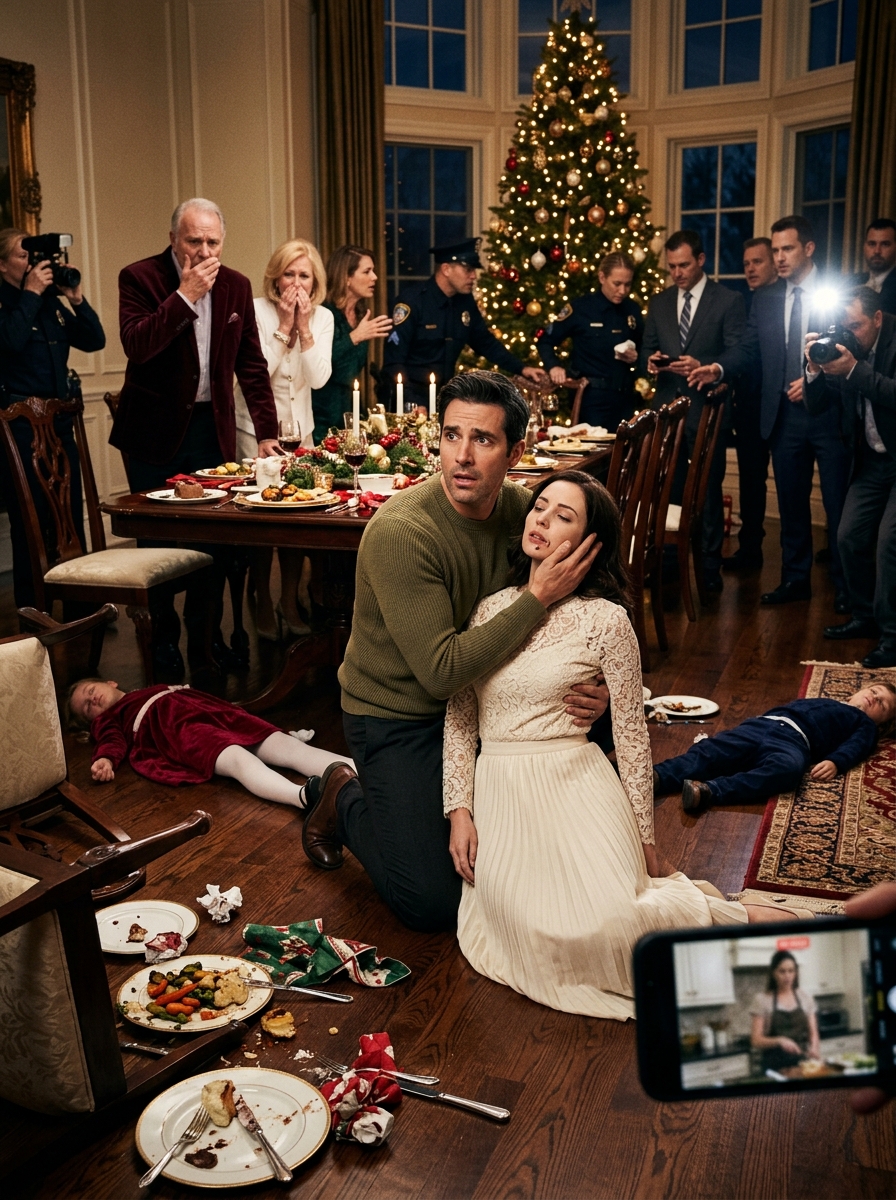
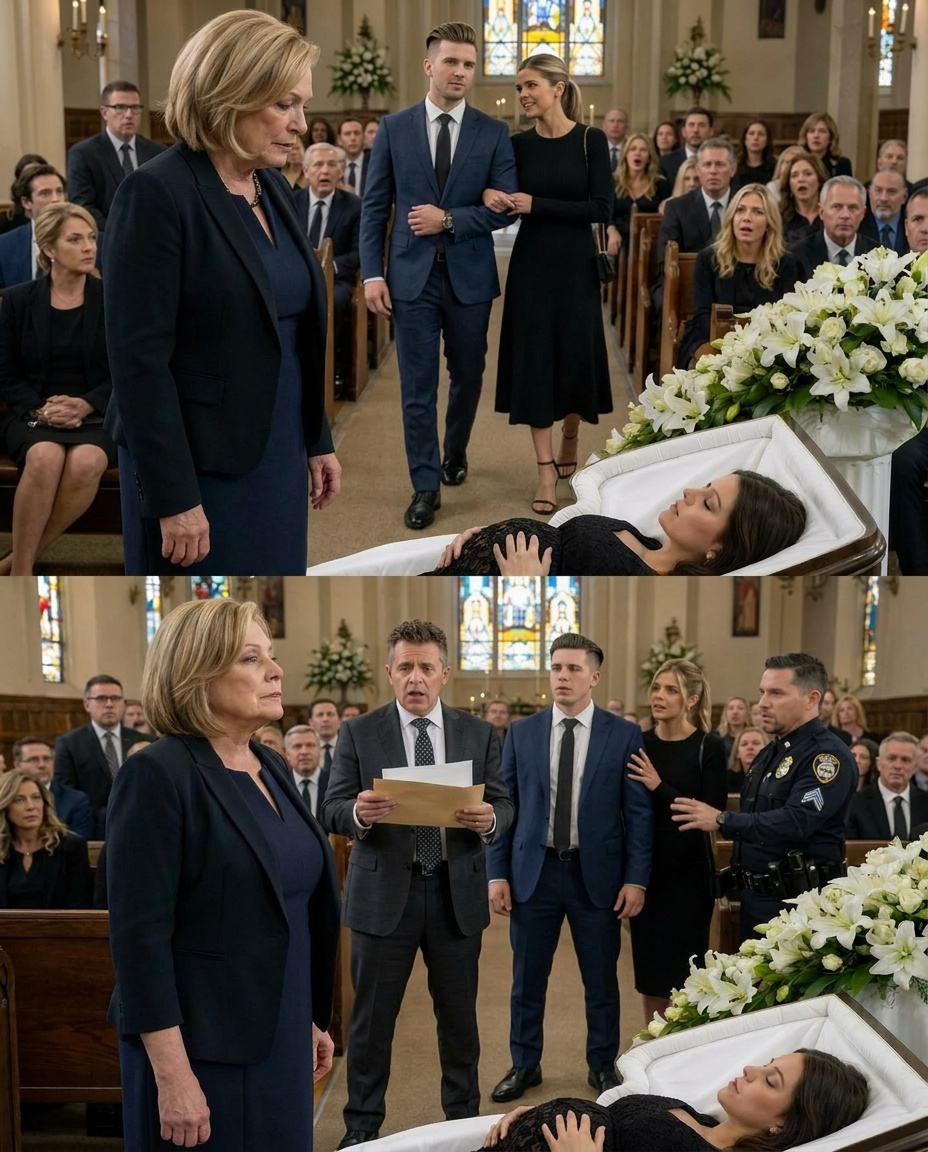
I married an eighty-one-year-old millionaire so my little boy could have the surgery that might save his life.
I believed I had traded away my own future to protect his. But on our wedding night, Arthur locked the office door behind us and said, “The doctors already have their payment. Now it’s time you understand what you actually agreed to.”
I sat beside my son’s hospital bed, watching him sleep and begging silently for a miracle.
Noah was eight years old, smaller than most children his age. His father had left before Noah was even born. I was six months pregnant when he admitted he wasn’t ready to be a parent, packed a bag, and disappeared before I had even bought a crib.
People told me I should give the baby away.
I refused.
I raised Noah on my own. It was exhausting, but somehow, we survived. Then doctors found a serious problem with his heart, and suddenly the fragile world I had built around us came crashing down.
A few hours after one appointment, the doctor pulled me aside.
“Ma’am, Noah’s condition is getting worse. He needs surgery within six months, or the damage may become permanent.”
“How much?” I whispered.
“With the procedure, hospital stay, and treatment included… close to two hundred thousand dollars.”
My stomach turned.
“I clean offices at night and care for elderly patients during the day,” I said, barely able to speak. “I don’t have that kind of money. No one I know has that kind of money.”
“I’m sorry,” he said. “There are payment plans, but—”
“Payment plans won’t save my child in six months.”
He lowered his eyes. There was nothing else he could say.
Noah was sent home two days later with more medicine, more rules, and a warning not to wait too long.
Three weeks later, I found what felt like a miracle.
A wealthy family needed a caregiver for an elderly woman recovering from a stroke. The salary was twice anything I had ever earned.
When I arrived at the mansion, a woman in a gray uniform led me through a long hallway.
“Miss Eleanor is in the sunroom,” she said. “She doesn’t talk much since the stroke. We read to her most days. She likes that.”
“And the family?” I asked.
She paused. “You’ll meet them soon enough. Just try not to be nearby when they start arguing.”
“Arguing about what?”
“Money,” she said flatly. “Always money.”
Within a week, I understood the household.
Arthur, Eleanor’s brother and the man who had hired me, was eighty-one, widowed, sharp-eyed, and suspicious of everyone. He was still walking with a cane, but the staff whispered that his health was failing.
His daughter, Vivien, smiled like honey and looked at people with eyes so cold they made my skin prickle.
Vivien came almost every afternoon, always dressed perfectly, pearls clicking at her throat, a lawyer usually following close behind.
“Daddy, we just need your signature,” she would say sweetly. “It’s about Eleanor’s care plan. We found a more affordable facility.”
“Eleanor stays here,” Arthur answered.
“Daddy, be reasonable. She barely knows where she is anymore. And after you’re gone—”
“She knows exactly where she is, Vivien. She understands more than any of you think.”
One afternoon, Vivien noticed me standing in the doorway with Eleanor’s tea tray.
“And who is this?”
“Eleanor’s caregiver,” Arthur replied. “She’s been here for a month.”
“Hm.” Her gaze moved over me slowly, like a cat studying something it might eventually attack. “How nice.”
A few weeks later, the hospital called while I was reading to Eleanor. I excused myself and stepped into the hallway.
My hands were already trembling before I answered.
“Ma’am, we need Noah back this afternoon for updated scans and testing.”
“Yes,” I said quickly. “Yes, we’ll be there.”
After I hung up, I pressed my forehead against the cool wallpaper and tried to breathe.
When I turned around, Arthur was at the end of the hall in his robe, leaning on his cane, watching me carefully.
“Who keeps calling you and making your hands shake?” he asked quietly.
I realized then that while I had been watching his children fight over his fortune, Arthur had been watching me far more closely than I knew.
“The hospital,” I admitted. “My son needs heart surgery. Urgently.”
“Ah.” Arthur’s expression softened. “I’m sorry.” He tapped a hand against his own chest. “My heart is failing too. Soon enough, I’ll need a caregiver myself.”
“I’m sorry, sir. If there’s anything I can—”
“Arthur,” he corrected gently. “Call me Arthur.”
The next morning, the hospital called again.
“Ma’am, Noah’s latest test results came back. We need to move his surgery forward and begin pre-op treatment immediately. Can you confirm payment by Friday?”
I held the phone so tightly my fingers hurt.
“Friday? I—I need more time.”
But there was no more time.
I ended the call and sank onto the marble floor in Arthur’s hallway. Ten minutes later, he found me there, his cane tapping softly against the tile.
“What happened?” he asked.
“My son,” I whispered. “They’re moving the surgery up. I can’t pay for it. I’ll never be able to pay for it.”
He was silent for a long moment.
Then he said something so shocking I thought I had misunderstood him.
“Marry me. Your son gets his surgery, and I get a wife my children can’t control.”
I shook my head as tears spilled down my face. “I won’t become that woman.”
“Not even to save your son?”
I left the mansion that night with his words echoing inside my head.
Around midnight, I had to rush Noah back to the hospital. The doctors stabilized him, but their warning was clear: surgery could not wait much longer.
The next morning, I called Arthur from the hospital parking lot.
“If I say yes, the money goes to the hospital today.”
“Done,” he said.
I closed my eyes.
“Then yes. I’ll marry you.”
Noah was admitted for pre-op treatment that afternoon. Soon, color returned to his cheeks, and the doctor said he could attend the wedding as long as he didn’t stay long and came straight back afterward.
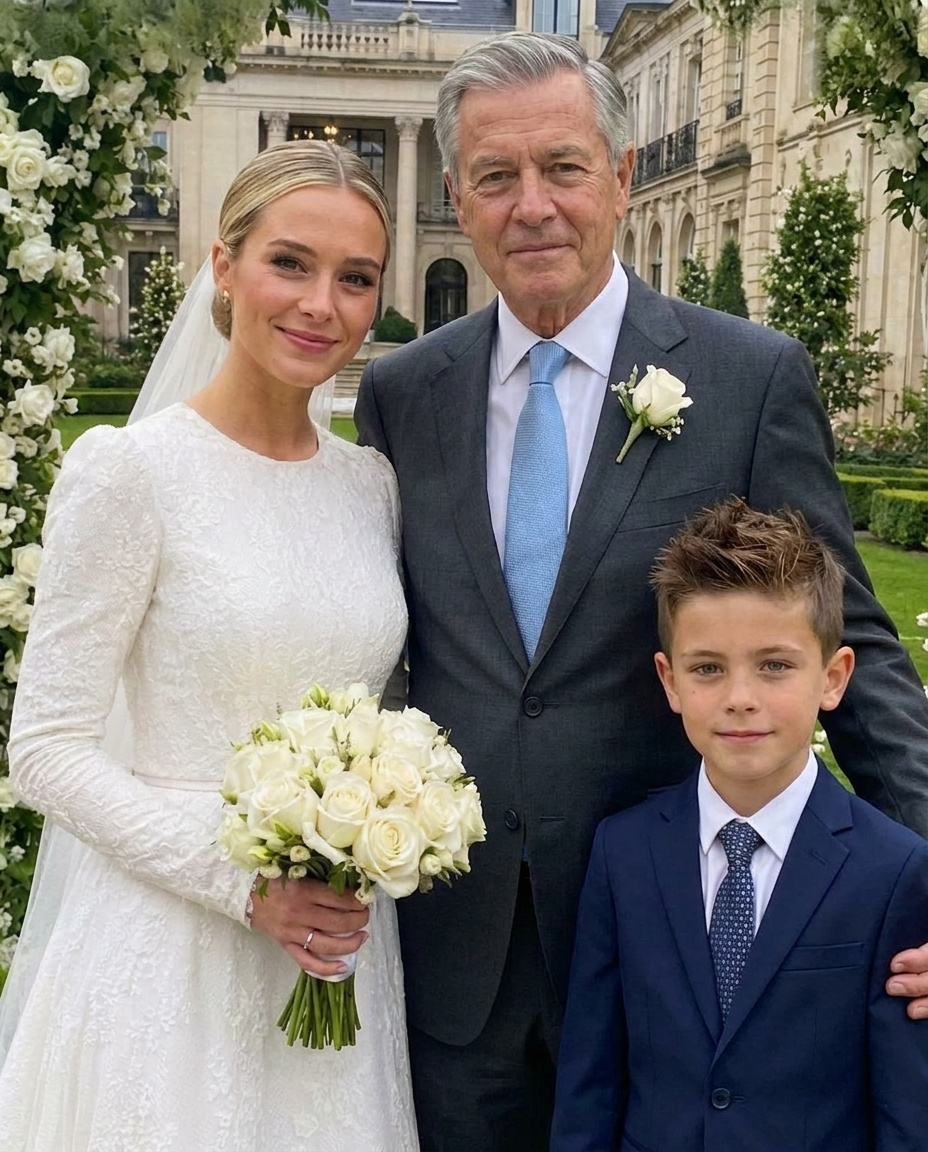
White roses lined the mansion’s grand staircase. Reporters crowded outside the gates, taking pictures of “the millionaire’s mystery bride.”
I wore a simple ivory dress Arthur’s tailor had rushed overnight.
Noah stood beside me in a navy suit, smiling as if something wonderful was happening. He had no idea I had agreed to the marriage only to save him.
Arthur’s children glared at me throughout the ceremony and left as quickly as they could.
That night, Arthur led me into his office and closed the door behind us.
“The doctors already have their money,” he said. “Now you can finally learn what you really signed up for.”
My stomach dropped as he slid a thick folder across the polished desk.
“Open it,” he said quietly.
With trembling hands, I lifted the cover.
The folder was filled with legal documents. On the first page, my name appeared in bold black letters beside Eleanor’s.
“You are now Eleanor’s legal guardian,” Arthur said. “And the executor of my entire estate. I’ve changed my will so that you receive the largest share.”
I stared at him, unable to breathe properly.
“Why would you do this?”
“Because I know what my children are planning,” he said. “And I refuse to let them win.”
“I know they’ve been fighting over the inheritance,” I said softly.
Arthur nodded. “They’re dividing my estate as if I’m already dead. But it’s worse than that. Vivien wants to send Eleanor to the cheapest facility she can find. I heard her call my sister ‘a burden draining the inheritance.’”
I covered my mouth with one hand.
“My children are waiting for me to die so they can profit from it and throw Eleanor away,” he continued. “But you don’t think like them. You—”
The office door suddenly slammed open.
Vivien stormed inside with two men in dark suits behind her, briefcases swinging at their sides.
“Vivien, what are you doing?” Arthur demanded.
She pointed at me. “You gold digger. I know exactly what you’re doing, and I won’t let you manipulate my father into signing away his fortune. My lawyers have already prepared a petition. Elder abuse. Undue influence.”
One of the men stepped forward with papers in his hand.
“You should read these carefully.”
“And there’s more,” Vivien said, smiling now. “I’ve already spoken to someone at social services. A woman who marries a dying millionaire for money raises serious questions about her child’s welfare.”
My blood went cold.
“Don’t you dare bring my son into this.”
“Then disappear quietly,” she snapped. “Or I’ll make sure your little boy is taken before the week is over.”
“Vivien, stop this,” Arthur said, his voice cracking.
“You stop, Father. You’ve embarrassed this family enough.”
“I said stop—”
Arthur’s hand flew to his chest. His face drained of color, then turned gray. He stumbled forward against the desk.
Then he collapsed onto the carpet.
“Someone call an ambulance!” I screamed, dropping beside him. “Arthur, stay with me. Please stay with me.”
His lips moved faintly.
“The Bible,” he whispered. “Eleanor’s Bible… read it…”
“What?”
Vivien stood frozen for one second before turning sharply to her lawyers.
“Get the documents. Now.”
I rose to my feet and placed myself between them and the desk.
“You will not touch a single paper in this room.”
For the first time in my life, I wasn’t trembling because I was afraid.
I was trembling because I was furious.
“Move,” Vivien hissed.
“Your father is lying on this floor fighting for his life, and you’re reaching for paperwork,” I said. “You want to accuse someone of elder abuse? Look at yourself, Vivien.”
Sirens wailed in the distance. Someone on the staff must have heard the shouting and called for help.
Arthur was admitted to the ICU that night.
One week later, I faced Vivien in court. Arthur’s lawyer, Mr. Hensley, stood beside me with a leather folder held tightly against his chest.
“Your Honor,” Vivien said, “this woman married my dying father for his money. She manipulated a vulnerable old man.”
“Your Honor,” Mr. Hensley said calmly, “may I submit documents signed by Mr. Arthur W. before the marriage?”
The judge nodded.
“These are guardianship papers for Eleanor,” Hensley explained. “And this is a sealed letter Mr. W. instructed me to deliver only if his daughter filed suit.”
Vivien’s face went pale.
“That letter is not admissible.”
“It is notarized,” Hensley said. “And it concerns Eleanor’s care.”
The judge opened it slowly and began to read.
“My daughter Vivien has been preparing transfer papers for my sister, Eleanor, without Eleanor’s consent. She intends to move her from my home into the cheapest facility available, then use the savings to strengthen her claim over my estate.”
“That’s a lie!” Vivien shouted. “Eleanor doesn’t even understand what’s happening.”
Hensley reached back into his folder.
“Then perhaps Ms. Vivien can explain the letters Eleanor hid inside her Bible. Written over the last six months. Dated. Signed. Witnessed by two household staff members.”
Vivien went still.
Hensley handed the letters to the clerk.
The judge read them in silence.
Then he looked up at Vivien.
“These letters state that Eleanor repeatedly refused to leave her brother’s home,” he said. “They also state that you attempted to pressure her into signing documents after her stroke.”
“I was trying to be practical,” Vivien snapped.
Hensley slid another document forward.
“We also have the unsigned transfer packet from the facility, along with emails showing Ms. Vivien requested the lowest-cost placement available before Mr. Arthur W. had even passed.”
The judge folded his hands.
“I find no evidence that Mrs. W. manipulated Mr. Arthur W. I do, however, find clear evidence that Ms. Vivien W. attempted to override Eleanor’s stated wishes for financial gain.”
Vivien opened her mouth, but no words came out.
“Mrs. W. will remain Eleanor’s legal guardian,” the judge continued. “Ms. Vivien W. is removed from any authority regarding Eleanor’s care. I am also referring these documents for review in probate court.”
The gavel fell.
Three weeks later, Noah squeezed my hand in the hospital hallway. His scar was healing, and his cheeks were pink again.
“Mom,” he whispered, “are we finally safe?”
I kissed his forehead.
“Yes, baby,” I said. “We’re finally safe.”
Arthur passed away peacefully that winter. Eleanor lived four more gentle years under my care.
And the foundation I later built in their names now pays for surgeries for mothers who once stood exactly where I had stood—terrified, ashamed, and one impossible decision away from losing everything.
At sixty-eight, I had never seen the ocean. So when my son invited me on a Florida beach vacation, I cried right there in my kitchen.
I packed a new sunhat, painted my nails pale pink, and let myself believe I had finally been chosen. But the moment we reached the hotel lobby, my daughter-in-law handed me a piece of paper that revealed the real reason I had been invited.
I was crying over Jack and Rose in Titanic when my phone rang, which says almost everything about the kind of lonely afternoon I was having. I had a blanket over my knees, cold tea on the side table, and the familiar quiet widows learn to live with.
“Mom,” my son Sam said brightly. “We’re taking the family to Florida in two days, and we want you to come with us.”
“Florida?” I repeated. When you’ve spent your whole life in the mountains, Florida sounds less like a real place and more like a rumor made of sunshine and expensive sandals.
“Beach trip,” he added. “All of us.”
“The ocean?”
He laughed. “Yes, Mom. The ocean.”
I started crying harder, which made him laugh and ask if I was okay. I told him I was fine, just old enough to know that some invitations arrive thirty-five years late and still feel like miracles.
After we hung up, I stood in my little kitchen, smiling and crying at the same time.
We want you with us.
I bought a pretty sunhat at the church bazaar. It was wide-brimmed, floppy, and had a ribbon that probably wouldn’t survive coastal wind, but I loved it anyway. I found soft sandals that wouldn’t punish my feet, two light blouses with tiny blue flowers, and cheap sunglasses that made me look like a retired movie star if you were feeling generous.
That afternoon, my six-year-old granddaughter, Susie, video-called me.
“Grandma, you need vacation nails.”
“Do I?”
“Yes. Pale pink. It’s beachy.”
So I painted my nails pale pink, because when a six-year-old speaks with that much confidence, someone should listen. We spent twenty minutes talking about shells and dolphins. Her older brother, Matt, popped into the frame once, rolled his eyes like a ten-year-old who had seen too much of the world, but his smile looked wrong.
Grandmothers notice things like that.
“Everything all right, sweetheart?” I asked.
Matt nodded too quickly and disappeared.
Two days later, they pulled into my driveway.
And I went.
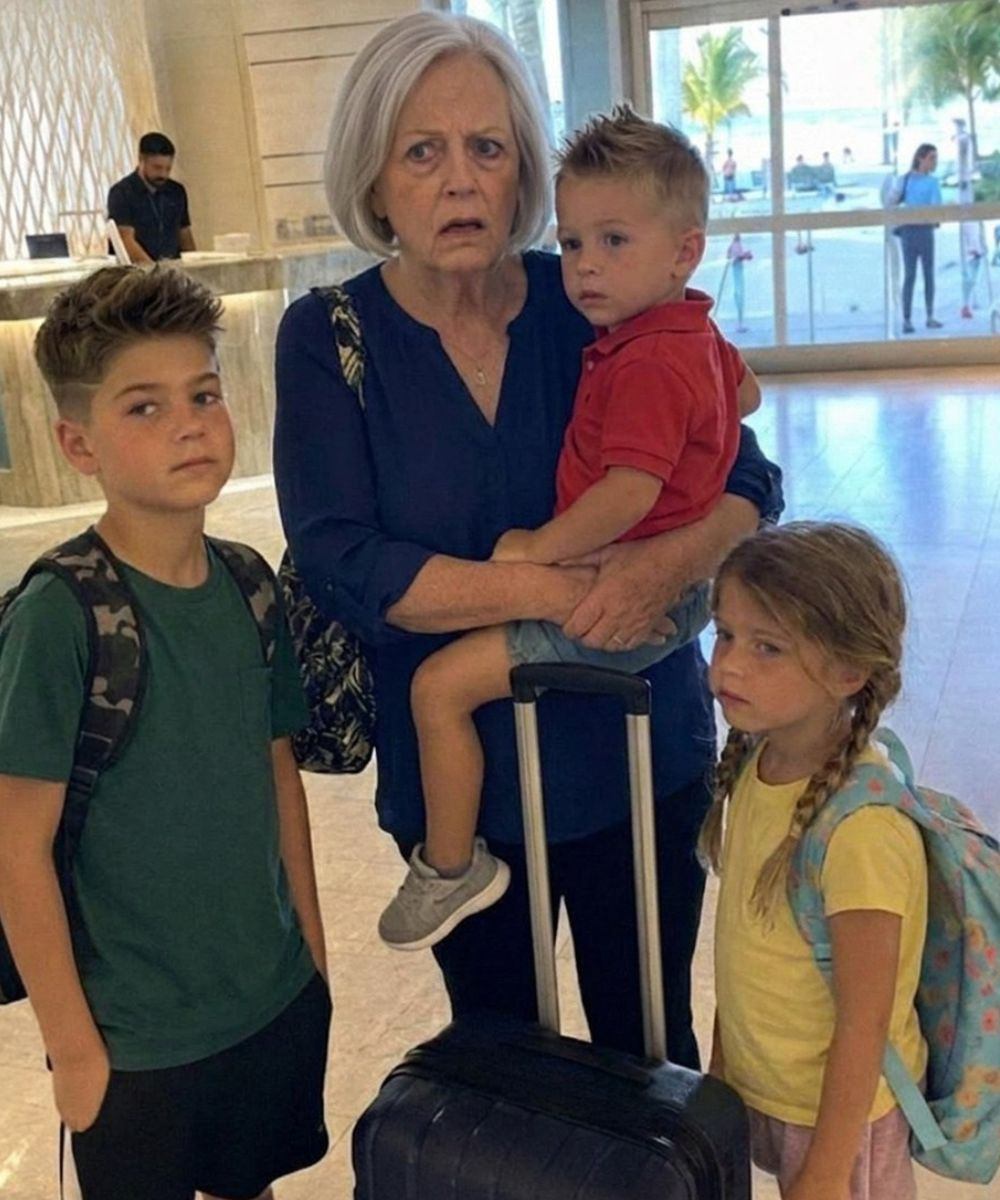
Sam hugged me by the car, and for one beautiful second, I let myself believe everything. His wife, Jennie, gave me a quick side hug while balancing Brad’s sippy cup. Susie shouted that my nails looked “so Florida.” Brad, who was three and firmly against shirts with buttons, ran circles around my mailbox.
Only Matt stayed quiet. He helped load my suitcase, but kept glancing at his father, then at me, then down at the pavement.
That stayed with me.
The drive was long, but I didn’t mind. I watched the mountains flatten into unfamiliar roads while Susie showed me beach photos on her iPad until every picture looked like a postcard from another life.
When we finally arrived at the hotel, I almost forgot how to breathe. The lobby smelled like sunscreen and expensive flowers. Through the glass doors, I saw a strip of blue water glittering under the sun.
The ocean.
It was real.
Moving.
Bigger than I had ever imagined.
For one moment, I felt like I truly belonged. Not like an afterthought. Not like someone included out of duty. Just family.
Sam hugged me and said, “This is going to be perfect, Mom.”
I believed him.
Then Jennie handed me a folded sheet of paper before we even reached the elevators.
“Before we unpack, we should go over the schedule,” she said.
I smiled, thinking she meant dinner reservations, beach plans, or maybe a dolphin tour. I opened it right there in the lobby while Susie leaned against my arm and Brad tried to eat a straw wrapper.
7 a.m. — Take the kids to breakfast. 9 a.m. — Pool duty. 1 p.m. — Brad’s nap and laundry. 5 p.m. — Baths and dinner prep. 8 p.m. — Stay with them while we go out.
I read it twice.
Then I looked up.
“What is this?”
Sam exhaled through his nose and wouldn’t quite meet my eyes.
“Mom, we finally need a break. The kids listen to you.”
Jennie gave a little laugh.
“Please don’t act surprised, Carol. This is why we brought you.”
The words landed like a slap.
I love my grandchildren. I never mind helping with them. If Sam and Jennie had asked me honestly, I probably would have packed my bag and come anyway.
But this was different.
They had used the ocean as bait.
Then Matt looked down at the carpet and whispered, “Dad said Grandma isn’t really on vacation. She’s the help.”
Jennie snapped his name, and Matt went silent.
Then she turned to me.
“You should know your place, Carol.”
I folded the paper neatly.
“You’re right,” I said. “I should know my place.”
Then I picked up my suitcase and went to my room without another word.
People often mistake calm for surrender. They have clearly never met a woman who has raised a son alone, buried a husband, and lived long enough to understand that silence can be the start of a lesson.
I sat on the edge of the hotel bed and listened to the ocean through the balcony doors. Honestly, it sounded rude. All that beauty carrying on while my son and his wife had turned me into an unpaid nanny with resort towels.
I thought about Jeremy, my husband. He used to promise he would take me to the ocean one day. He always said it like the trip already existed and only needed a date.
But life had other plans for him.
I looked at the schedule again and laughed.
My son and his wife had organized my exploitation in bullet points.
So I picked up my phone and called the one group of women who would understand both my heartbreak and my need for theater.
The Flamingo Six.
That is not their legal name, though it should be. It is what our church friend group calls itself after one unfortunate fundraiser involving matching visors, too much sangria, and a karaoke version of “Dancing Queen” that permanently changed the social life of our county.
Judy answered on the second ring.
“Carol,” she said, already suspicious. “Why do you sound calm?”
I told her everything.
There was silence for three seconds.
Then she said, “Text me the hotel name.”
I did.
And I slept beautifully after that.
Right on time the next morning, pounding started on my door.
First came Sam’s voice.
“Mom?”
Then Jennie shouted, “Carol! How dare you?”
I opened the door slowly.
Behind Sam and Jennie, stretching down the hallway and spilling toward the lobby, stood six older women in matching flamingo visors, oversized sunglasses, and tropical outfits loud enough to disturb the weather.
Judy had a karaoke machine.
Marlene had a cooler.
Patty had somehow found maracas before breakfast.
The lobby went quiet.
Everyone sensed a show.
Judy pointed at Sam and Jennie.
“Which one of you invited your own mother here as unpaid labor?”
Somewhere behind the front desk, a receptionist made a choking sound and disguised it as a cough.
“You invited them?” Jennie snapped at me.
“You said I should know my place,” I replied. “I thought I might enjoy it more with company.”
My grandchildren appeared in different stages of breakfast stickiness and looked absolutely delighted. Brad immediately attached himself to Marlene’s tote bag because it had crackers.
Susie gasped. “Grandma, your friends are amazing!”
Matt, who had looked worried since the drive down, smiled for the first time.
Judy clapped her hands.
“Ladies, to the pool!”
Within ten minutes, 80s music was blasting, Marlene was leading water aerobics like a naval commander, and random tourists were joining in. Sam ended up chasing Brad around the pool deck while sweating through his shirt.
“Move those young hips, Sammy!” Judy yelled.
Sam turned red so fast it looked like the Florida sun had personally chosen him.
Breakfast became worse for Sam and Jennie and much better for me.
At the buffet, Patty loudly asked, “Does the all-inclusive package always come with grandmother childcare, or is that an upgrade?”
Marlene pressed a hand to her chest. “Oh dear! I thought this was a family vacation, not a childcare convention.”
Nearby guests turned so quickly their chairs nearly squeaked.
Meanwhile, the children had already decided that six senior women with no fear of public embarrassment were more interesting than anything their parents had planned.
Susie learned how to fold napkins into swans. Matt played cards and laughed so hard milk came out of his nose. Brad started calling Patty “Captain Judy,” even though Patty’s name was not Judy, and no one corrected him because joy does not have to be accurate.
Any time Sam or Jennie tried to ask me for help, a Flamingo appeared.
“Sorry,” Marlene would say. “Carol has seashell therapy.”
“Can’t,” Judy added once. “She’s double-booked for margarita yoga.”
At one point, Sam was carrying three beach bags, a stroller, and one screaming child while Patty’s sister Brenda called out, “Oh look, he finally discovered parenting!”
The pool deck erupted with laughter.
Jennie looked like she wanted the earth to open beneath her.
That evening, Judy charmed the activities director and took over the karaoke signup sheet with the confidence of a woman who had survived menopause and no longer feared human systems.
They dedicated “Respect” to me.
All six stood beneath the resort string lights and sang directly at Sam and Jennie, who sat frozen with three exhausted children and the expressions of people who had not expected public accountability to come with backup vocals.
The whole patio joined in.
Even Matt sang.
Later that night, Judy sat beside me on a pool chair and looked out at the water.
“You deserved to see the ocean as someone’s guest, Carol. Not as their employee.”
That nearly made me cry. I pressed my nails into my palm instead.
“You’re very dramatic for a retired bookkeeper,” I told her.
She sniffed. “All the best people are.”
The next morning at checkout, Patty leaned over the front desk and asked the receptionist, clear as a church bell, “Do y’all offer parenting classes with the room package, or is that seasonal?”
The receptionist snorted so hard she had to pretend to cough into the printer.
Outside, the Flamingo Six hugged me one by one. Judy wagged a finger at Sam.
“If you misuse this woman again, we are one group chat away.”
They drove off honking and waving beach towels like flags. The children begged to bring them on every future trip. Even Jennie was too tired to object properly.
The drive home was quiet for the first twenty minutes.
That is how remorse travels.
Finally, Jennie spoke.
“I’m sorry. I thought we could borrow your help and make it sound nicer than it was.”
Sam gripped the steering wheel.
“Mom, I’m sorry too.”
“If you had asked me honestly,” I said, “I would have watched my grandchildren all week.”
He nodded, eyes wet. “I know.”
“No,” I said gently. “You didn’t. That’s why this happened.”
Then I told him the part that mattered most. Using the ocean to get me there had hurt more than the list. My son knew what the ocean meant to me. He knew his father had always promised to take me one day and never got the chance. He knew that unfinished dream, and he still handed it to me like bait.
Sam’s face folded in on itself.
Jennie said nothing, which was its own kind of confession.
Susie leaned forward. “Can the flamingo grandmas come next time?”
That made all of us laugh, even Jennie against her will.
When I got home, I unpacked slowly.
Sand had gotten into everything. I turned my hat upside down and let the shells the children and I had collected slide into my palm. Little white ones, a pink-edged one Susie insisted was lucky, and a flat gray one Matt had given me without a speech, because some gifts do not need words.
I set them beside Jeremy’s framed photo on the mantel.
“Well,” I told him softly. “I finally saw the ocean.”
The house was quiet, the way it always is in the evening, but it did not feel quite as lonely anymore. For the first time in years, I did not feel small beside the people I loved.
I was not a free nanny.
I was the mother.
And the grandmother.
And if my son and his wife ever forget that again, the Flamingo Six still have my location.
“Just shut your mouth and stay out of men’s business!” my husband barked as he hauled my belongings into the hallway. He was arranging a couch in our bedroom for his brother, behaving as though my own home no longer belonged to me. But the second my mother stepped into the apartment, his so-called “men’s business” came to an abrupt stop…
“Just shut your mouth and stay out of men’s business!”
My husband yelled it while dragging my suitcase across the bedroom floor.
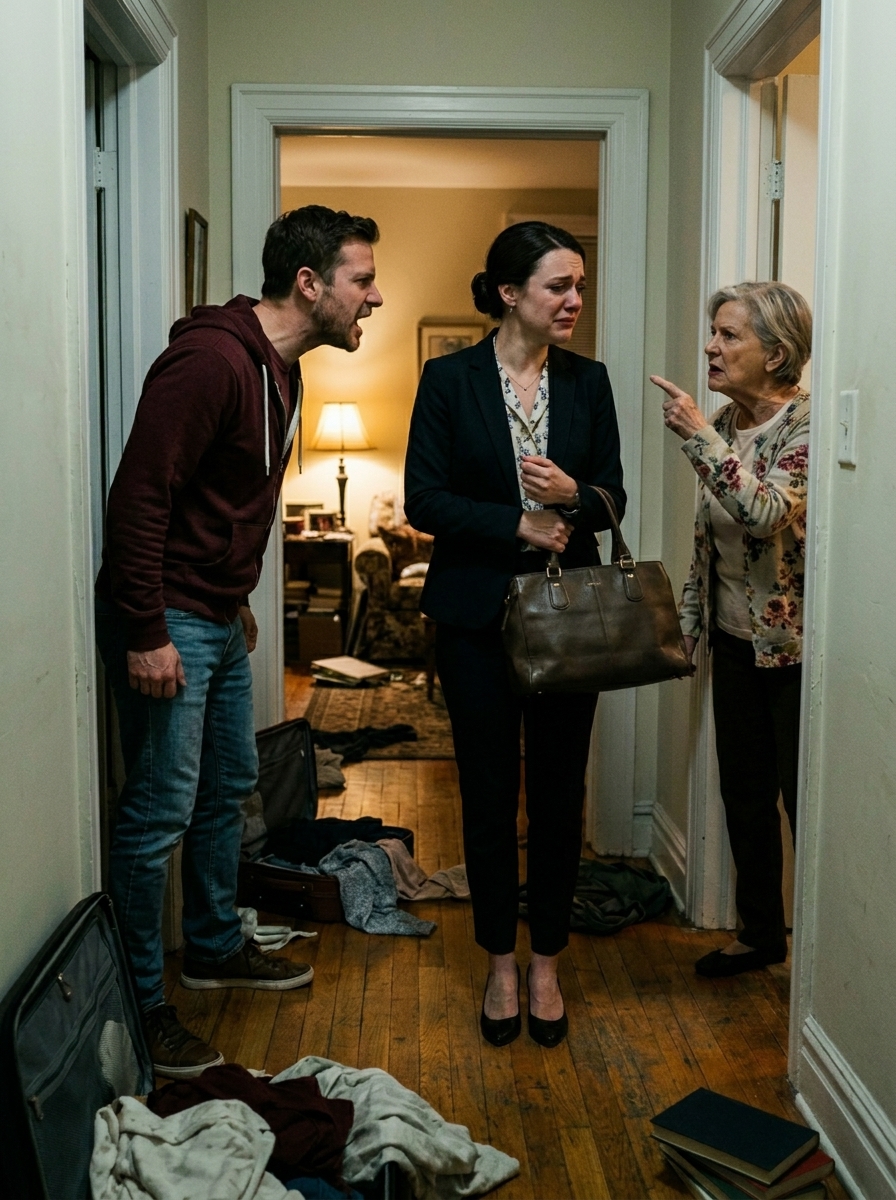
I stood in the hallway of our apartment in Queens, watching him toss my sweaters, books, and work documents into a messy heap beside the laundry basket. Behind him, his older brother, Dean, leaned casually against the doorframe with a beer in one hand and a smug grin on his face.
A worn secondhand couch blocked half of our bedroom.
My bedroom.
The room I had painted a soft green. The room where my grandmother’s quilt rested neatly at the foot of the bed. The room where I had cried silently after losing the baby Ethan promised we would “try again for when things were less stressful.”
Now he was clearing space for Dean.
“For how long?” I asked, even as my voice trembled.
Ethan didn’t even glance at me. “As long as he needs.”
Dean lifted his beer. “Family helps family, Tessa.”
I stared at him. Dean was thirty-eight, unemployed by choice, and known for depending on the same people he insulted. He had lost his apartment after blowing his rent money on sports betting, then told Ethan that “a real brother wouldn’t let him sleep in his truck.”
I had suggested the living room.
Ethan said that would be disrespectful.
Apparently, disrespecting his wife required less consideration.
“This is our bedroom,” I said.
Ethan turned then, his face flushed, jaw tight. “I pay most of the rent.”
“You pay more because you insisted I quit my full-time job and go part-time.”
“Don’t twist things.”
“You said a wife should be home more.”
Dean laughed. “She keeps receipts like a lawyer.”
Ethan grabbed my jewelry box from the dresser and shoved it into my hands. “You can sleep in the office until Dean gets back on his feet.”
The office was a windowless storage room barely wide enough for a folding chair.
Something inside me turned cold.
Not anger.
Clarity.
Because this was never really about a couch. It wasn’t about Dean. It was about Ethan believing that marriage meant I could be shifted around like furniture whenever his family demanded it.
My phone buzzed in my pocket.
A message from my mother appeared.
I’m downstairs. Buzz me in.
I had called her twenty minutes earlier, whispering from the bathroom while Ethan and Dean carried the couch upstairs. I hadn’t told her everything. I only said, “Mom, I think I need help.”
She had replied, “Open the door when I get there.”
Now Ethan noticed my phone.
His eyes narrowed. “Who did you call?”
Before I could answer, the intercom rang.
Dean snorted. “Let me guess. Mommy?”
Ethan stepped toward me. “Tessa, don’t you dare bring your mother into this.”
The intercom rang again.
I looked at the couch, my clothes in the hallway, and my husband standing between me and my own bed.
Then I pressed the button.
The front door buzzed open.
Five minutes later, my mother walked into the apartment carrying her black purse, wearing red lipstick, and staring at the couch like it had personally insulted her.
She glanced at Ethan and said, “Men’s business?”
Then she smiled.
“Good. I brought the deed.”…
Part 2
No one moved.
Ethan stared at my mother as if she had spoken a different language. Dean slowly lowered his beer. I stood in the hallway clutching my jewelry box, trying to process what she had just said.
My mother, Angela Monroe, had worked as a paralegal for twenty-seven years. She was five foot three, widowed young, and capable of making grown men straighten up with a single cleared throat. She had raised me on black coffee, library cards, and the belief that panic only had value after paperwork failed.
Ethan spoke first. “What deed?”
Mom walked past him into the living room and set her purse on the coffee table. “The deed to this apartment.” Ethan let out a short laugh. “This is a rental.” “No,” Mom said. “It was a rental.” My stomach dropped. “Mom?”
She turned to me, softer now. “Your grandmother left me her savings. When your landlord decided to sell the unit last year, I bought it through an LLC. I wanted to surprise you on your anniversary.”
Ethan’s expression shifted.
The apartment suddenly felt tighter.
He looked at me. “You knew?” “No,” I said. “I didn’t.” Mom opened her purse and took out a folder. “Tessa is listed as the managing member of the LLC effective this month. The transfer paperwork was finalized yesterday.” Dean pushed off the doorframe. “That sounds fake.”
Mom looked at him. “So does your plan to get back on your feet from my daughter’s bedroom.” Ethan stepped forward. “Angela, this is ridiculous. Even if you bought it, I’m her husband.” “You are her husband,” Mom said. “Not her landlord. Not her owner. Not a king assigning sleeping arrangements.” His jaw tightened. “Dean has nowhere to go.”
“He had a lease,” I said. “He gambled it away.” Dean pointed at me. “Watch your mouth.” My mother turned her head slowly. “Do not point at my daughter in her home.” Ethan snapped, “This is exactly why I told you to stay out of men’s business.” Mom smiled thinly. “Men’s business ended when men started throwing a woman’s underwear into the hallway.”
Dean’s face flushed.
Ethan grabbed the folder, flipping through pages as if the truth might vanish if he moved fast enough. His eyes landed on the signatures. Then the notary seal. Then my name. For the first time since our wedding, I saw him calculating without control. “This doesn’t change our marriage,” he said. “No,” I replied quietly. “But it changes what you can threaten me with.” He looked at me, startled.
There it was—the old fear rising, urging me to soften things, to apologize, to restore peace before he got angrier.
But my clothes were still on the floor. My husband had not asked me. He had ordered me out of my own room. I walked past him, picked up one of my sweaters, and folded it over my arm. “Dean can sleep somewhere else.” Ethan’s voice dropped. “Tessa.”
My mother stepped closer. “Say the whole sentence, sweetheart.” I swallowed. “Dean can leave tonight.” Dean cursed. Ethan turned on my mother. “You think money gives you the right to break up my family?” Mom’s eyes sharpened. “No. But dignity gives my daughter the right to stop being displaced by yours.” For several seconds, the apartment was silent except for traffic below.
Then Ethan said the words that ended something inside me. “If you make him leave, I’m going with him.” I looked at the couch in the bedroom, at Dean’s beer sweating on my nightstand, at the pile of my belongings in the hall. Then I looked at my husband. “Okay.” He blinked. I said it again, firmer. “Okay, Ethan. Go.”
Part 3
Ethan didn’t leave right away.
Men who make threats often expect women to chase them with apologies. He stood in the hallway for nearly a full minute, waiting for me to panic. When I didn’t, Dean grabbed his jacket and muttered that we were both crazy. My mother called the building superintendent.
Within twenty minutes, the couch was back in the elevator. Ethan packed as if every folded shirt accused him. He said I was choosing my mother over my husband. He said I had humiliated him. He said Dean was the only one who understood loyalty.
I said very little. That unsettled him most. At the door, he turned one last time. “You’ll call me by morning.” I looked at my mother, then at the bedroom behind me. “No,” I said. “I’ll sleep.” The door slammed. For a moment, I stood completely still. Then my knees gave out.
Mom caught me before I hit the floor. I cried into her shoulder in the hallway, surrounded by sweaters, hangers, and the broken fragments of a life I had tried too hard to keep orderly. That night, Mom helped me put everything back. Not the way it had been. Better.
We moved the bed to the opposite wall. We opened the windows. We threw Dean’s beer cans into the trash. At midnight, Mom made tea while I changed the sheets and placed my grandmother’s quilt where it belonged. The room looked different afterward. So did I.
Ethan came back two days later, not with flowers, but with conditions. He said he would return if I apologized to Dean, promised not to involve my mother again, and “acted like a wife instead of a landlord.”
I didn’t let him in. We spoke through the chain lock. “I want a separation,” I said. His face hardened. “You’re making the biggest mistake of your life.” “No,” I told him. “I made that three years ago when I started calling disrespect compromise.” The divorce wasn’t simple.
Ethan tried to claim rights to the apartment, but the paperwork was airtight. He tried to paint my mother as controlling, but the messages he had sent told another story: commands, insults, threats, and long lectures about obedience disguised as tradition.
Dean disappeared as soon as he found another couch. That hurt Ethan more than he admitted.
Over the next year, I rebuilt my life in small, meaningful ways. I returned to full-time work at the design firm that had wanted me all along. I bought a desk for the office instead of sleeping there. I invited friends over without asking permission. I learned that a quiet home can feel peaceful when no one is waiting to punish you for breathing wrong. My mother did not move in. She did not take over.
She simply came every Sunday with groceries, legal advice I didn’t ask for, and a look that said she had always known I would stand up eventually. One spring afternoon, I painted the bedroom deep blue. While the first coat dried, Mom stood in the doorway holding two paper cups of coffee.
“Do you regret it?” she asked. “The marriage?” “The door.” I smiled. “Opening it for you?” She nodded. I looked around the room that had once held a couch meant to erase me. “No,” I said. “That was the first time this apartment felt like mine.” Two years later, I bought out the LLC from my mother in monthly payments she pretended were too high and I pretended not to notice were too low. The deed eventually carried only my name.
Ethan remarried someone from his church. I heard Dean lived with them for three months before causing trouble there too. I hoped Ethan learned something, but I no longer needed his growth to justify my freedom. On the day the new deed arrived, Mom and I framed a copy of the first page and hung it in the hallway. Not because property made me powerful.
Because it reminded me of the night I stopped confusing marriage with surrender. The lesson was simple, but it took me years to understand: love may invite family in, but it does not throw a wife out to make room for someone else’s entitlement. A home is not where a man places a couch.
It is where a woman is allowed to stand, speak, and sleep without asking permission.
They buried my husband at nine in the morning. By sunset, his mother struck my six-year-old son hard enough to leave red marks across his cheek.
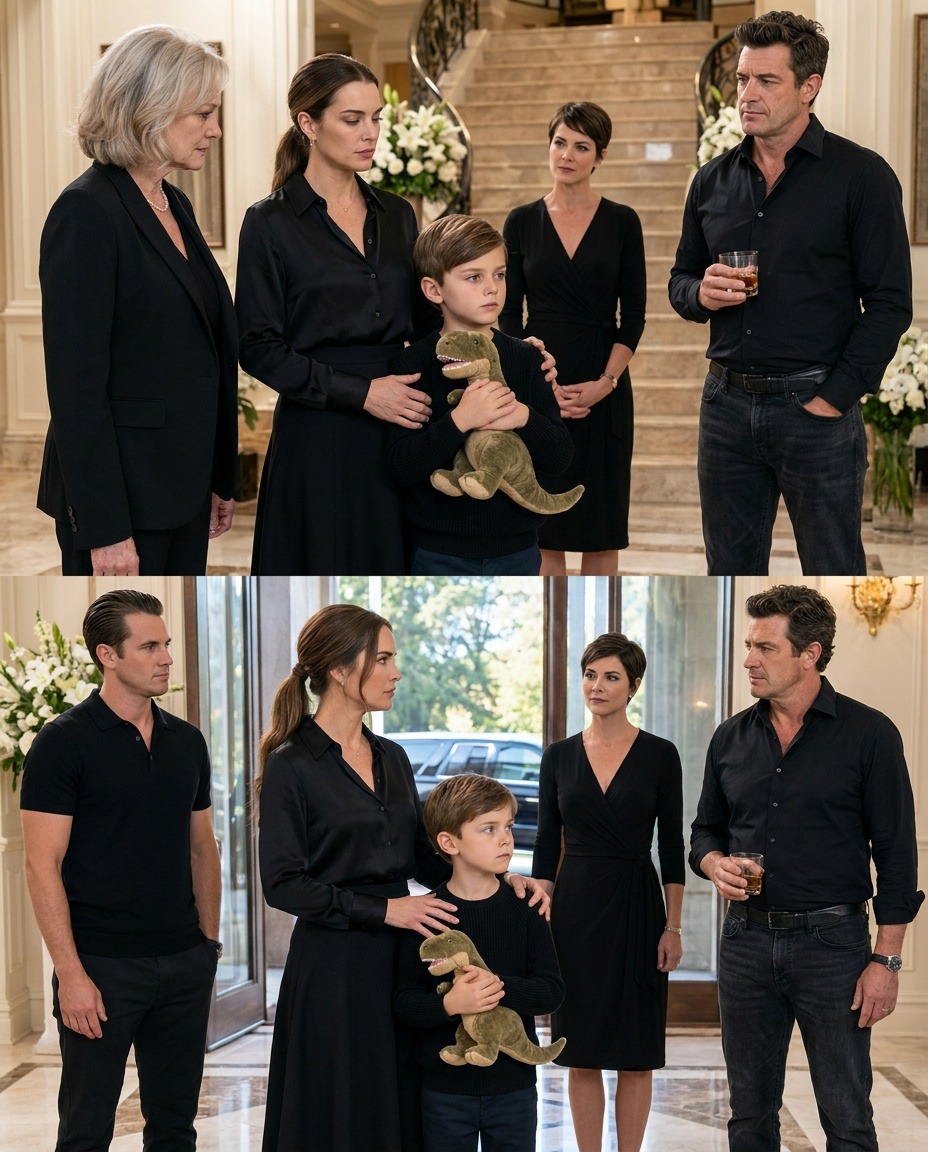
The sound echoed through the marble foyer, sharp enough to freeze everything for a moment. Eli stumbled back, clutching his stuffed dinosaur.
“Grandma?”
Marjorie Vale stood over him in her black silk mourning dress, her face dry but tense with something that wasn’t grief. Behind her, my husband’s brother, Grant, leaned casually against the staircase, watching as if it were nothing serious.
“Take your things and leave this house,” Marjorie said coldly, pointing first at me, then at my child. “My son is gone. I’m done pretending you belong here.”
I held Eli close against my coat, trying to steady both of us. Just hours earlier, I had stood beside Daniel’s coffin and promised him I would protect our son.
Now his family was pushing us out of the home he built.
Grant gave a careless smile. “Come on, Lena. Don’t make this bigger than it is. Mom’s just tired.”
“Tired?” I said quietly. “She hurt my child.”
“He was touching Daniel’s watch,” Marjorie snapped. “That watch belongs to this family.”
“It belonged to his father.”
“And Daniel is gone,” she said sharply. “So everything returns to us.”
That was when it became clear. The cold looks, the quiet conversations, the tension in the house—it wasn’t grief. It was control.
Grant picked up a folder and waved it slightly. “We found updated documents. Daniel wanted the house transferred back to the family trust. You and the boy will receive a small settlement. Enough to start over somewhere… suitable.”
Somewhere suitable.
I glanced at the folder, then at Marjorie’s expensive jewelry—things Daniel had once paid for when she needed help. My phone vibrated in my pocket. I didn’t check it. I already knew.
I wiped Eli’s tears gently, kissed his cheek, and walked toward the door.
Marjorie let out a small laugh. “Finally. Some dignity.”
At the doorway, I paused.
Then I pulled out my phone and made a call.
“I need you here. Now.”
Grant smirked. “Calling a friend?”
I turned just enough for them to see my face.
“No,” I said calmly. “I’m calling Daniel’s lawyer.”
Part 2
For the next two hours, they treated my silence like defeat.
Marjorie ordered bags for our belongings. Grant followed me from room to room, making comments as I packed.
“Don’t take the silver frames,” he said. “They belong to the family.”
I picked up a photo of Daniel holding Eli on his shoulders, both laughing in the rain, and placed it carefully in my bag.
Grant blocked the doorway. “Did you hear me?”
“I heard you.”
He studied me. “You’ve always been too calm. Daniel thought it meant class. I knew better.”
Eli shifted nervously behind me.
That was when something in me changed.
I knelt and zipped his backpack.
“Go sit by the window, sweetheart. Count the cars.”
“But Mom—”
“Trust me.”
He nodded and walked away.
Grant watched him go, then said casually, “Funny how Daniel never questioned certain things.”
The room went still.
I stood slowly.
“You should be careful,” I said.
“Or what?” he replied. “You going to make a scene?”
“No,” I said. “I don’t waste energy.”
Downstairs, Marjorie spoke loudly on the phone, making sure I could hear. “Yes, tragic. But Daniel was under pressure. That woman isolated him. Thank goodness Grant found the corrected documents before she took everything.”
Corrected documents.
I walked into Daniel’s study. Drawers had been opened, papers scattered—but the safe behind his diploma remained untouched.
I remembered what Daniel had told me months earlier.
“If anything happens, don’t argue. Just watch.”
I entered the code.
Inside was a small drive, a sealed envelope, and Daniel’s watch.
I took all three.
Grant appeared behind me.
“What is that?”
“Something you missed.”
He moved closer, tense.
“Give it to me.”
“No.”
He reached for my arm, but I stepped back.
From the front of the house, Eli’s voice called out.
“Mom!”
Headlights appeared outside.
Then more.
Cars pulling into the driveway.
The front door opened.
A woman stepped inside, calm and composed.
Marjorie whispered, “Clara?”
Clara Rhodes—Daniel’s lawyer—looked straight at me.
“Lena,” she said. “Do you have it?”
I nodded.
Grant’s confidence vanished.
Part 3
Clara entered like a final decision.
Two men followed—one with a briefcase, another in official uniform. The atmosphere shifted instantly.
“What is this?” Marjorie demanded.
Clara removed her gloves. “This is Lena Vale’s property.”
Grant scoffed. “That’s not possible.”
Clara placed documents on the table. “Daniel transferred full ownership of this house to his wife eighteen months ago. He also dissolved the family trust after discovering unauthorized withdrawals.”
Marjorie’s expression changed.
“That’s not true.”
“The records say otherwise.”
Grant pointed at me. “She manipulated him.”
“No,” I said calmly. “You did.”
I handed the drive to Clara. Daniel’s voice filled the room.
“If you’re hearing this, it means things moved faster than I hoped. Lena, I’m sorry. I wanted to protect you.”
The recording revealed everything—hidden transactions, forged documents, plans to take control after his death.
“Turn it off,” Marjorie said weakly.
But it was already too late.
An officer stepped forward. “Grant Vale, we need you to come with us.”
“For what?”
“Financial misconduct and related charges.”
Grant protested, but his voice had lost its certainty.
Clara placed another document on the table. “Lena is also filing for legal protection. You will leave this property immediately.”
Marjorie looked around the house, as if realizing it was no longer hers.
“You can’t do this.”
I stepped forward, fastening Daniel’s watch onto Eli’s wrist.
“Yes,” I said quietly. “I can.”
Three months later, the house felt different.
No more tension. No more silence filled with fear.
Just sunlight, laughter, and quiet peace.
Grant lost everything he built on lies. Marjorie moved away, her influence gone.
Eli still held onto me a little tighter some nights—but he smiled more now.
One evening, we planted a tree in the backyard.
“For Dad?” he asked.
“For Dad,” I said. “And for us.”
He pressed the soil gently.
“Are we safe now?”
I looked at him, at the home Daniel left us, at the future we were rebuilding.
My husband di:ed on a rainy Thursday, and everyone called it a tragic acc:ident.
I tried to believe that—until his boss called and told me Liam had left something behind with my name on it.
People kept repeating the same sentence: he lost control of the car, the road was wet, there were no witnesses. It sounded simple, almost comforting. So I repeated it too, because I didn’t have the strength to question anything. But deep down, something about it never felt right. Liam was careful in all the quiet ways that matter—he checked locks twice, kept jumper cables in the trunk, never let the gas tank drop too low. He wasn’t careless. He wasn’t reckless.
At the funeral, people said what they always say.
“He adored you.”
“He loved those kids.”
“You had a good man.”
I nodded through it all while my sister Grace stayed beside me, handling everything—food, calls, the children. Ava clung to my hand. Ben wouldn’t let go of my sweater. I moved through the house afterward like a ghost, wearing Liam’s old sweatshirt, replaying his voicemail just to hear his voice one more time.
Three days later, his boss called.
“Emily, you need to come in. Liam left something in his office safe. It has your name on it.”
When I arrived, he looked uneasy. He led me to the safe and handed me a thick envelope. On the front, in Liam’s handwriting, were simple words meant only for me.
Inside were bank records, photos… and a letter.
“Em, if you’re reading this, then they finally got to me. Don’t trust Grace.”
I stopped breathing.
I read it again.
And again.
Grace—my sister—had been taking money meant for my children. Liam had uncovered it while helping with taxes. There were documents, proof, records from years back when our mother passed away. Grace had insisted on handling everything. I had trusted her.
Then I saw the next line.
“I didn’t tell you until I had proof. I knew what accusing your sister would do to you.”
My hands started shaking.
There were photos of Grace meeting Ryan—her ex-husband—behind Liam’s office. She had told me he was gone for good. That was a lie. He had returned desperate, in debt, and she had been secretly helping him with money that wasn’t hers.
Then came the line that made everything go cold.
A week before the crash, someone had left a message for Liam: “Drop it. Think of your wife.”
I stared at it, unable to move.
At the bottom, Liam had written one final instruction.
“If Mark gives you this, go to the storage unit. Toolbox. Underside. Don’t tell Grace.”
I went home in a daze and saw Grace in the kitchen, smiling, making pancakes with my children. For a moment, I just stood there watching her—wondering how long she had been pretending.
Then I smiled back.
“Who wants to go out for lunch?”
I took the kids, dropped them at a neighbor’s house, then went straight to the bank. Liam had frozen the children’s account before he died—no withdrawals without me. That’s when I understood. Grace hadn’t just been helping me.
She had been waiting.
From the bank, I drove to the storage unit. Exactly where Liam said, taped under an old toolbox, I found a flash drive, another envelope… and a voice recorder.
I pressed play.
Liam’s voice came through calm but firm.
“You have one week to tell Emily yourself.”
Grace was crying.
“I said I’d fix it.”
Ryan’s voice followed, cold and threatening.
“Stay out of it.”
Liam didn’t back down.
“Emily and those kids are my family. You don’t touch what belongs to them.”
The recording ended.
I sat there on the floor, covering my mouth, realizing the truth—Liam hadn’t hidden anything from me.
He had been protecting us.
That night, I set a trap.
I told Grace I had found documents I didn’t understand and asked her to look at them. I watched from the hallway as she opened the folder, her face draining of color. Then she grabbed her phone.
“She has it,” she whispered. “Liam kept copies.”
I stepped into the room.
She dropped the phone.
For a long moment, neither of us spoke.
“Emily,” she said.
“No.”
Tears filled her eyes.
“Please let me explain.”
“Start with this. Did you steal from my children?”
She broke.
“I was going to put it back.”
“That’s not what I asked.”
She admitted everything—Ryan’s debts, the fear, the lies. She thought she was protecting her daughter. Instead, she destroyed everything.
Then I asked the question that had been burning inside me.
“Did you tell Ryan Liam had proof?”
She closed her eyes.
“Yes.”
The room went cold.
“I thought he would just scare him,” she cried. “I never thought—”
“Liam is dead.”
“I know.”
“No,” I said, my voice shaking. “You don’t get to say it like that. You sent him there.”
She covered her mouth, collapsing under the weight of it.
The next day, I took everything to a lawyer Liam had already contacted. That hurt more than anything—he had known enough to prepare for not coming back.
The truth came out quickly. Evidence, records, footage. Ryan had followed Liam that night. It wasn’t an accident.
It never was.
Weeks later, Grace came back with money and a box of Liam’s belongings she had taken. She said she wanted something of his.
“Why?” I asked.
Her voice broke.
“Because he was the only one brave enough to stop me.”
I looked at her for a long time.
“You don’t get to grieve him like you didn’t help destroy what he was protecting.”
She nodded.
Months passed. Life slowly moved forward. The kids still asked questions I couldn’t fully answer. But one night, Ava asked me something simple.
“Did Daddy know we loved him?”
I smiled through the tears.
“Every day.”
Later, I found the letter Liam had written for them. He told Ava to keep asking questions. He told Ben to be kind—but not so kind that people take advantage of him. At the end, he wrote:
“If your mom is reading this to you, it means she found her way through. I knew she would.”
On the anniversary of his death, I went back to that road. In the rain, I found a small piece of his old keychain—a blue-painted washer our daughter had once decorated. I picked it up and smiled.
Not because everything was healed.
But because Liam had left me a path.
And I followed it.
When I got home, the kids were waiting with badly made pancakes, proud and smiling.
“We made dinner breakfast,” Ava said.
I looked at them… then at the small blue piece in my hand.
The first time Mrs. Valdez told Daniel she had heard a little girl crying inside his house, he forced out a laugh.
Not because he found it amusing, but because the truth behind her words felt too painful to face.
“My house?” he asked, rain dripping from his coat as he stood by the gate with his briefcase. “My daughter stays with my wife after school. Maybe the television was too loud.”
The elderly woman narrowed her eyes.
“I know the difference between a television and fear,” she said quietly.
Daniel turned toward his home.
Warm lights glowed behind the curtains. The smell of dinner drifted through the air. From the outside, everything looked perfect.
Inside, his wife Clara greeted him with a quick kiss on the cheek. Their eight-year-old daughter, Lucía, sat silently at the dining table, forcing a smile too quickly.
“How was your day, princess?” Daniel asked softly.
Lucía nodded before Clara answered for her.
“She had a difficult afternoon, but she’s fine now.”
From the kitchen doorway, Mateo—Clara’s brother—leaned against the frame with a smirk. He had moved into their house months earlier after claiming he lost his job, though Daniel had never once seen him searching for work. Mateo wore Daniel’s clothes, drank his expensive whiskey, and acted as though he owned the place.
“Did the neighbor complain again?” Mateo asked mockingly.
“It’s nothing important,” Daniel replied.
Clara rolled her eyes. “People with empty lives love inventing drama.”
Lucía lowered her spoon.
Her hand was shaking.
Daniel noticed immediately.
That night, he quietly knocked on his daughter’s bedroom door.
“Lucía?”
She lay awake beneath the blanket.
“Do you ever feel scared in this house?” he asked carefully.
Her lips parted slightly.
Before she could answer, Clara appeared behind him.
“She’s tired,” Clara said smoothly.
Daniel turned toward her. “I asked her.”
“And I answered,” Clara replied with a smile that felt colder than ice. “You work all day. You don’t understand what she needs.”
Mateo laughed from the hallway.
“The big businessman thinks money makes him a father.”
Daniel clenched his jaw. He was used to the insults. Clara constantly mocked him for being “too soft,” “too distracted,” and “easy to manipulate.” She believed his silence meant weakness.
But Daniel had built his career as a forensic auditor by staying calm and paying attention.
He kissed Lucía’s forehead gently.
Her skin felt cold.
“I’m here,” he whispered.
For half a second, Lucía gripped his sleeve tightly.
The next morning, Mrs. Valdez stopped him again near the gate.
“It happens after your wife leaves,” she said quietly. “Yesterday I heard your daughter say, ‘Please stop.’”
This time, Daniel didn’t laugh.
He stared at his house for several long seconds before asking calmly,
“What time?”
The following afternoon, Daniel left work early and parked two streets away. Instead of entering through the front door, he slipped inside through an old basement entrance Clara believed no longer worked.
Daniel had repaired it years earlier, back when the house still felt like home.
He moved silently through the basement.
Above him, footsteps crossed the floor.
Then Mateo’s voice echoed downstairs.
“Say it louder.”
Lucía began crying softly.
Daniel’s hand tightened around the railing.
Clara snapped impatiently, “Stop crying. Do you want your father to think I’m a terrible mother?”
“I didn’t do anything,” Lucía sobbed.
A loud slap echoed overhead.
Daniel nearly rushed upstairs.
Nearly.
Then Mateo laughed.
“Your father won’t believe you anyway. He barely sees you. And if you tell him anything, your mother will cry and say you’re lying.”
Clara laughed quietly.
“We’ll win.”
Daniel felt the blood drain from his face.
But instead of exploding with anger, he stepped back silently.
Anger was emotional.
Evidence was permanent.
That night, he hid cameras inside the house. One inside a smoke detector facing the living room. Another inside Lucía’s bookshelf. He placed a recorder beneath the kitchen counter and quietly reviewed financial records connected to Clara and Mateo.
By the end of the week, the truth became horrifyingly clear.
Clara had secretly opened credit cards in Daniel’s name. Mateo had been stealing money through fake repair invoices. Worse still, Clara had already begun preparing custody claims that described Daniel as emotionally unstable and distant.
They weren’t only hurting Lucía.
They were preparing to destroy him too.
On Saturday morning, Daniel sat across from Clara at breakfast.
“I’m taking Lucía to the park,” he said calmly.
Clara smiled tightly. “She has piano lessons.”
“She quit piano two months ago,” Daniel replied.
For a moment, Clara froze.
Mateo leaned back in his chair. “Careful, Danny. You sound stressed.”
Daniel calmly spread butter across his toast.
“Do I?”
“You should probably see a doctor,” Clara added. “Stress makes people imagine things.”
Lucía stared at her plate silently.
Daniel looked at his daughter.
“Do you want to go to the park?”
Clara’s fingernails tapped sharply against the table.
Finally, Lucía whispered, “Yes.”
Mateo stood up immediately.
“She has homework.”
Daniel slowly rose to his feet too.
He wasn’t physically intimidating. Shorter than Mateo, quieter, easier to overlook.
But something about the calm in his eyes made Mateo stop talking.
“She’s going to the park,” Daniel said evenly.
Mateo smirked. “Or what?”
Daniel gave a small smile.
“Or you’ll finally learn what I do for a living.”
That afternoon, while Lucía fed ducks at the park beside Mrs. Valdez, Daniel met privately with a lawyer, a detective he once helped during a fraud investigation, and a child psychologist willing to document Lucía’s statements properly.
By Monday, Clara and Mateo became careless.
They believed Daniel was weak.
They thought he wasn’t paying attention.
But Daniel had hidden inside the house after pretending to leave for work.
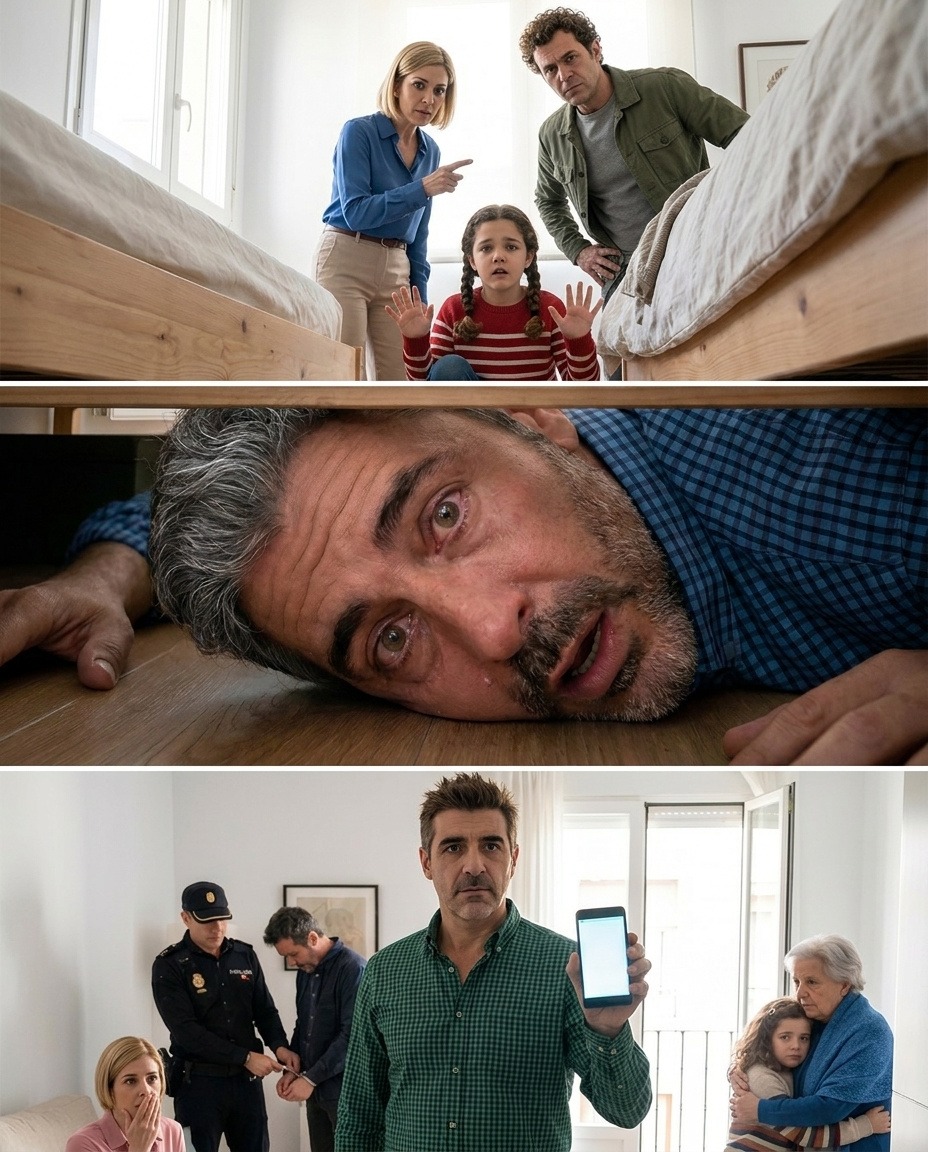
From beneath the bed in the guest room, he recorded everything.
Mateo cornered Lucía in the hallway.
“Tell your father you lied,” he demanded. “Tell him the neighbor misunderstood.”
“I didn’t lie,” Lucía whispered.
Mateo grabbed her wrist.
“Please stop,” she cried.
And in that moment, Daniel finally understood something important.
Justice didn’t need screaming.
It only needed truth.
Daniel stepped out from beneath the bed while Mateo still held Lucía’s arm.
For the first time ever, Mateo looked afraid.
“Let her go,” Daniel said calmly.
Clara spun around in shock.
“Daniel—”
“Not another word.”
Mateo laughed nervously. “What are you going to do? Hit me? Perfect. Then Clara gets the house, the kid, everything.”
Daniel ignored him and looked at Lucía.
“Go to Mrs. Valdez.”
Lucía ran.
Clara’s face twisted with panic.
“You can’t take my daughter away from me.”
Daniel raised his phone.
The recording was still running.
Mateo lunged toward him—
—but the front door suddenly burst open.
Two police officers entered alongside Daniel’s lawyer, Mrs. Valdez, and a child protection worker.
Clara immediately turned pale.
“What is this?” she whispered.
Daniel’s voice remained calm.
“This is the moment you stop pretending.”
Mateo resisted arrest and was forced to the ground.
Clara instantly began crying.
“My husband is unstable,” she sobbed dramatically. “He planned this. He’s obsessed.”
Daniel calmly opened a folder.
“Credit cards in my name. Fake invoices. Messages discussing how to frame me as abusive. Recordings of threats toward Lucía. Videos of Mateo hurting her. Copies already sent to the police, my lawyer, and the court.”
Clara stopped crying.
Mateo shouted angrily from the floor, “You think you’re smart?”
Daniel looked down at him coldly.
“No. I think you underestimated me.”
The silence afterward felt heavy.
The custody hearing happened the next morning.
Clara arrived wearing pearls and fake tears, describing Daniel as cold and unstable.
Then Daniel’s lawyer played the recordings.
Lucía’s small voice filled the courtroom.
“Please stop.”
The judge listened silently.
By the end of the hearing, Daniel received temporary full custody of his daughter. Clara was ordered to leave the home. Mateo remained in jail as fraud and abuse charges expanded against him.
Daniel didn’t celebrate.
He changed the locks.
He painted Lucía’s bedroom yellow because she said it reminded her of sunshine. Every Wednesday, he took her to therapy and waited outside with hot chocolate.
Three months later, Lucía laughed again for the first time.
Daniel nearly cried hearing it.
One quiet morning, Lucía asked softly,
“Are they gone forever?”
Daniel placed pancakes in front of her as sunlight filled the kitchen.
“They can’t hurt you anymore,” he said gently.
Lucía reached for his hand.
And Daniel—the man everyone once called weak—finally understood that peace was not the absence of pain.
Sometimes peace only arrives after justice finishes its work.
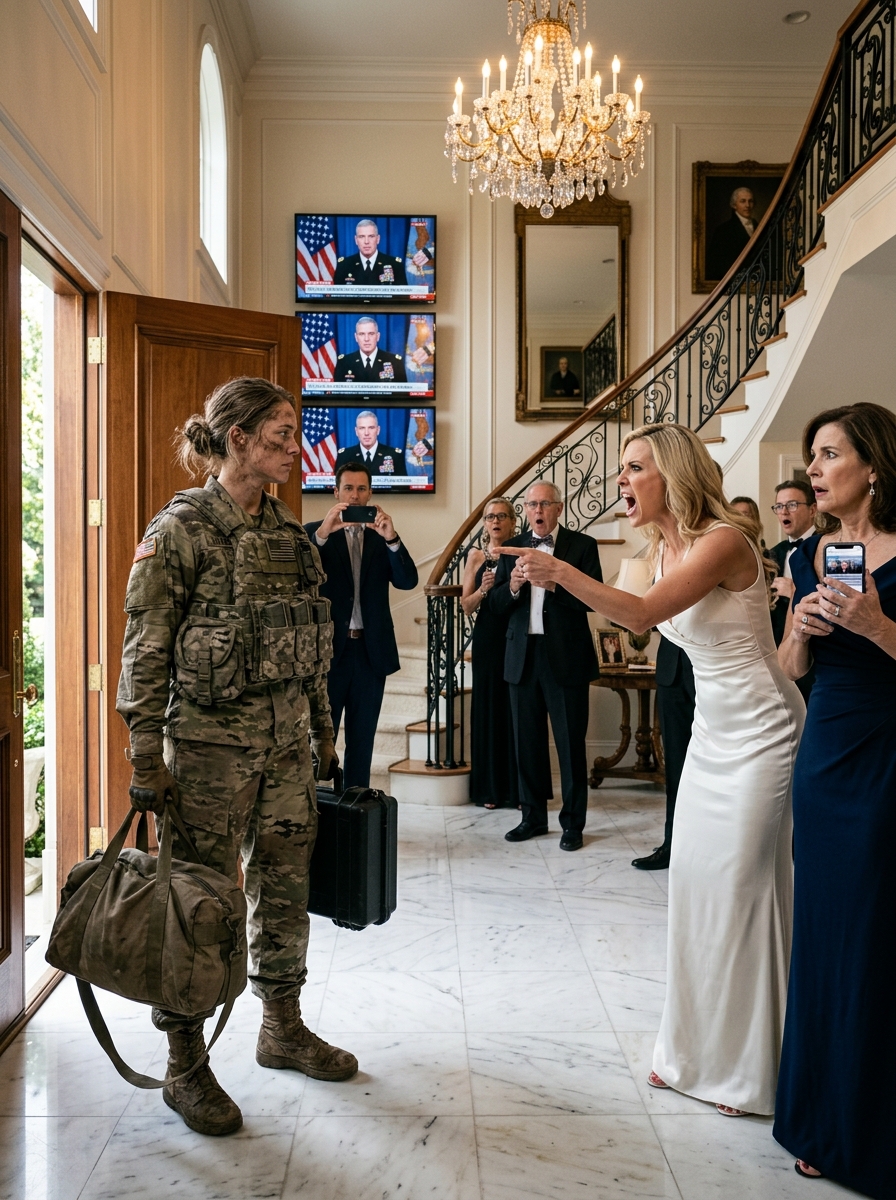
I walked into my family’s charity gala still wearing dusty field gear from a classified extraction. My sister grabbed my arm and hissed, “Take that filthy gear outside.” Then her fiancé handed me a folder and said, “Sign this before you make things worse.” It would have surrendered my mother’s restricted veterans’ fund. They thought exhaustion made me weak. They didn’t know federal agents were already watching the ballroom.
Part 1: The Gala Trap
My name is Major Elise Warren, and the first thing I remember about the Fairmont Grand in Washington, D.C., was the smell of white roses.
Not diesel. Not gun oil. Not the metallic dust still caught in the seams of my gloves after seventy-two hours in a country I was not allowed to name. White roses, arranged in tall glass vases outside the ballroom, perfuming the air so heavily it made wealth feel like a physical thing.
I stood beneath the hotel’s gold lobby lights with dried mud in the grooves of my field boots and a tear across one sleeve of my jacket. My hair was pinned back by habit, though loose strands had escaped around my face. My hands still trembled faintly from too much caffeine, too little sleep, and the silence that comes after rotor blades fade and nobody is firing anymore.
A woman in a silver dress looked me over and stopped smiling. A waiter paused with champagne flutes. Somewhere inside the ballroom, a quartet played polite music under a banner that read: Warren Valor Foundation Annual Gala.
My family’s foundation.
My mother’s name had once meant something there. Now my father used it like branding.
I had landed two hours earlier. My sister, Celia, sent three texts before I even reached my apartment.
Dad expects you there.
Donors are asking.
Don’t embarrass us tonight.
I should have showered, slept, and ignored them. But my mother built that foundation after my first deployment, before cancer turned her into bones and whispered apologies. She used to say, “Elise, if your name opens a door for someone with less power than you, hold it open.”
So I walked in.
The room noticed in waves. Conversations slowed. One laugh broke off mid-sound. A photographer lowered his camera, then lifted it again as if he smelled scandal.
Three steps inside, Celia appeared.
My older sister moved like she had been born under flattering light. Pale gold dress. Smooth hair. Diamonds at her ears. A smile made for donors and knives.
“Elise,” she said warmly, too loudly.
Then her fingers closed around my arm.
Her nails bit through the dusty fabric.
“Take that filthy gear outside,” she hissed, still smiling.
I looked at her hand first. Then her face.
Celia had my mother’s cheekbones and my father’s cold eyes. As children, she had once stood between me and trouble. Later, she learned standing beside trouble photographed better.
“I came because you told me to,” I said.
“I told you to arrive like a civilized person.”
“I landed two hours ago.”
“You always have an excuse.”
Behind her, my father watched from near the podium. Grant Warren did not move toward me. He held a lowball glass in one hand and wore the soft, regretful expression he used when he wanted witnesses to believe he was suffering nobly.
Beside him stood Nolan Pierce, Celia’s fiancé.
He wore a tuxedo so black it looked poured over him. Handsome, composed, professionally concerned. He did not look surprised to see me. That was the first thing that bothered me.
The second was his watch.
Silver. Heavy. Far too expensive for a foundation consultant who made speeches about keeping administrative costs low.
“You need to leave,” Celia whispered.
“No.”
Her fingers tightened.
I had been grabbed by men who intended to kill me. But my sister’s grip hurt in a place no enemy had ever reached.
“You smell like smoke.”
“I probably do.”
“This is a charity gala.”
“I know what room I’m in.”
“Do you?” Her gaze flicked toward the donors watching their wine glasses. “Because right now, you look unstable.”
The word landed clean.
Prepared.
Before I could answer, Nolan stepped beside her. He did not touch her. He did not need to. His closeness claimed the scene.
“Elise,” he said gently, “maybe we should talk outside.”
“I’m not here for you.”
“No,” he said. “But you may want to hear what I have before this gets worse.”
He lifted a white folder.
Too clean for the rainy night outside.
Celia’s face shifted for half a second. Not fear. Anticipation.
My father sipped from his glass.
That was when I understood.
They had not asked me to come because donors were asking.
They had waited for me.
And whatever was in Nolan’s folder had my name on it.
Part 2: The Paper Knife
The rain outside fell in shining ropes beneath the hotel awning. Nolan led me near the valet stand as if we were discussing seating arrangements instead of a trap.
Celia stayed by the glass doors. Close enough to observe. Far enough to deny.
“Say it,” I told him.
Nolan opened the folder slowly.
“Your mother’s restricted fund,” he said.
My body went still.
The fund had been my mother’s final rebellion. Restricted money for veteran recovery, emergency housing, medical transport after discharge, and family support grants. No gala expenses. No salaries. No branding campaigns. No consulting fees.
And no access without my consent.
Nolan angled the top page toward me.
“The foundation is expanding services. Your signature is the final approval.”
I read enough.
Full transfer of management rights. Permanent release of objection. Consolidation of restricted funds into operational accounts.
Expansion was not the word.
Surrender was.
“No,” I said.
“You haven’t read it.”
“I read enough.”
His jaw flickered once.
“Your father expected resistance.”
“Did he?”
“Celia hoped you’d be reasonable.”
“Reasonable means silent?”
“It means not dragging private family matters into a room full of donors while wearing combat gear like a costume.”
There it was.
The polished knife.
I glanced at his watch.
“Where did that come from?”
His eyes dropped before he caught himself.
“A gift.”
“From whom?”
“This isn’t about my watch.”
“No. I suppose it isn’t.”
He stepped closer.
“You’ve been awake too long. You walked into a formal event visibly agitated. Celia is worried. Grant is worried. Frankly, several people in that ballroom are worried.”
“Worried enough to prepare paperwork?”
“Worried enough to document behavior.”
Rich people threaten quietly. They use words like concern, fitness, review, judgment.
“You’re saying if I don’t sign, my family will call me unstable.”
His expression softened with fake regret.
“I’m saying everyone wants to protect you from your own choices.”
For a moment, I was back in my mother’s study on the night she signed the restrictions. Her hands shook so badly I had to steady the pen. My father stood in the doorway, smiling tiredly, telling her she was overcomplicating things.
She ignored him.
She looked at me and whispered, “Promise me.”
So I had.
I pushed the folder back against Nolan’s chest with two fingers.
“Tell my father he used the wrong messenger.”
His face hardened.
“You have no idea how ugly this can get.”
I almost laughed.
Ugly had a smell. It sounded like a generator dying in the dark. It looked like a young medic pressing both hands into a wound while talking about baseball so a man would not realize he was dying.
This was not ugly.
This was paperwork wearing cologne.
“Try me,” I said.
I left without returning to the ballroom.
In my truck, half a block away, I sat in the dark while rain drummed on the roof. My phone buzzed before I started the engine.
The message was from Mara Cole, the foundation’s compliance officer.
Your name is on a file you did not approve.
A second message followed.
Do not go back inside.
Part 3: The Forged Signature
I called Mara from a side street near Dupont Circle.
She answered immediately.
“Are you alone?”
“Yes.”
“Keep driving.”
She directed me to a twenty-four-hour coffee shop off Connecticut Avenue. Burnt espresso, scratched tables, security cameras aimed at the register instead of the corners.
“What file?” I asked.
“A recovery services packet tied to your unit designation.”
“Explain.”
“It authorizes payments to three subcontractors. Post-extraction veteran support, emergency lodging, medical transport coordination.”
Each phrase sounded reasonable alone.
Together, they smelled wrong.
“I never authorized that.”
“I know.”
“How much?”
A pause.
“Almost nine hundred thousand dollars.”
For a second, the city outside my windshield went distant. Horns still barked, tires still hissed, but inside the truck, everything narrowed to my breathing.
Mara sat at the back of the coffee shop beneath a wall clock stopped at 11:17. Usually exact and composed, tonight she looked like someone who had been reading documents under threat.
A plain envelope sat beneath her palm.
“If they know I gave you this, I’m done.”
“If they forged my approval, you’re already in it.”
She pushed the envelope toward me.
Inside were invoice summaries, vendor names, payment dates, approval forms, and one page that made my skin turn cold.
Major Elise Warren.
My name typed beneath a signature.
Not mine.
The M was too round. The E too open. Whoever had copied my name knew the shape, not the pressure. Signatures are like footsteps. They tell on the body.
The timestamp was worse.
“At this time,” I said, tapping the page, “I was not in the country.”
“I checked,” Mara said. “That’s why I called.”
The vendors were careful lies: field retrieval group, client relocation, emergency personnel movement.
Nobody in my world spoke that way. It was civilian language pretending it had earned boots.
My family entered the room without opening a door.
One invoice had a blue margin note.
C.W. wants service photo beside grant slide.
C.W.
Celia Warren.
My sister had used my service photo before. The foundation loved images where I looked brave, distant, and unavailable to object. I tolerated it because my mother’s programs still helped people.
That was before my name became a key.
“Why call now?” I asked.
“Nolan asked me to backdate a compliance note this morning. Your father said if I couldn’t distinguish between a clerical irregularity and a family matter, he would find someone who could.”
The stopped clock ticked once without moving.
At the bottom of the vendor list, one company was circled lightly in pencil.
Holloway Strategic Care.
I had never heard of it.
But Mara’s face changed when I looked at it.
“What?”
She swallowed.
“That company’s mailing address belongs to Nolan’s brother.”
Part 4: The Review
I did not sleep.
Back in my Arlington apartment, I spread the papers across my kitchen table and built the timeline.
Statements from Grant Warren, Celia Warren, and Nolan Pierce.
I had returned from assignment agitated. I had fixated on unfounded accusations. I seemed unable to distinguish family disagreement from professional obligation. I showed exhaustion and emotional instability.
They mentioned none of the forged approvals. None of the vendors. None of the nine hundred thousand dollars.
That was the trap.
They were not trying to prove I lied. They were making sure nobody would listen when I told the truth.
By 0850, I was outside a military legal office that smelled of toner, coffee, and carpet cleaner.
Captain Ellis, assigned to the preliminary review, looked younger than I expected. Or maybe I felt older than I was.
“This is only preliminary,” he said.
“Then call it that in the record.”
His pen paused.
He started with standard language: exhaustion, judgment, family concern, possible temporary restriction.
I let him finish.
Then I asked, “Who recommended access restriction?”
“Your father raised the concern. Mr. Pierce supported it. Your sister corroborated.”
Corroborated.
A clean word for betrayal when betrayal wears perfume.
I opened my folder and placed three pages on the table.
The forged approval.
My duty log proving I was overseas when it was submitted.
The terminal record showing the approval came from the foundation’s executive wing.
Captain Ellis stared at the documents. His breathing changed before his face did.
“This is serious.”
“So is using a fitness review to bury a forged funding file.”
He reached toward the review packet, then stopped.
That hesitation told me he understood the procedure had been misused—and that naming it too quickly would put him beneath the same falling ceiling.
“Log this meeting as incomplete pending document verification,” I said. “Preserve the packet. Refer the signature issue to the proper channel.”
He looked at me for a long moment.
Then he pulled the yellow-marked pages back into his folder.
“This conversation stays procedural.”
“Good. That’s all I asked.”
In the hallway, my phone buzzed.
Celia: Dad says come tonight in dress uniform. Smile. Don’t make this worse.
Then another message from an unknown number.
Major Warren, this is Special Agent Rowan Bell. We need to talk before the gala.
Part 5: The Federal Net
Special Agent Rowan Bell chose a parking garage near the federal buildings. Level four. Oil, rainwater, concrete, old smoke.
He showed me ID without drama.
“Captain Ellis referred a document irregularity this morning. Separately, Ms. Cole provided preliminary compliance concerns through counsel.”
“Mara has counsel?”
“She does now.”
Good.
“What do you need from me?”
“For tonight, nothing public.”
I laughed once.
“You’ve met my family, then.”
“Enough to know they prefer public spaces when applying private pressure.”
“What happens tonight?”
“We have a preservation order ready. Timing depends on whether key parties attempt to move or destroy materials.”
“So you want me to go.”
“I am not asking you to bait anyone.”
“No. You’re just saying the trap works better if the mouse walks in.”
His expression did not change.
“You are not the mouse.”
I wanted to believe him. Instead, I asked, “Why was my unit designation used?”
Bell hesitated.
“Your recent operation produced materials relevant to an ongoing inquiry. We are still determining who knew and when.”
Cold moved across my back.
That mission had been classified. Not donor bait. Not family gossip.
Memory returned in fragments: a black hard drive, a courier with shaking hands, a safehouse floor covered in papers smelling of mildew and burned plastic, and one word spoken over a secure channel.
Holloway.
Not Holloway Strategic Care.
Holloway as a file label.
A person.
A contact.
The courier’s cracked voice came back: Tell them it goes through charities.
“What did your source say?” Bell asked quietly.
I looked at him.
“He said money moved through charities.”
Bell’s jaw tightened.
“Tonight may be uncomfortable,” he said.
“I’ve had uncomfortable.”
“No,” he replied. “Tonight will be personal.”
He gave me instructions. Keep my phone charged. Do not warn Mara. Do not confront Nolan. Do not touch foundation servers. Attend as a family member, not an investigator.
As I turned to leave, Bell added, “A senior officer may attend. If he enters the room, let him speak first.”
That night, I returned to the Fairmont Grand in dress uniform.
The same roses. The same gold light. This time, faces softened when they saw me. Clean uniforms make civilians comfortable. They turn danger into symbolism.
Celia found me first.
“You came.”
“You asked.”
“I asked you to act appropriately.”
“I’m in regulation dress.”
Her eyes searched for something to criticize and failed.
“After the program,” she said, “you’ll make a short statement thanking the foundation. Nothing strange.”
“No.”
Her cheeks flushed.
“For once, could you stop acting like the only person who sacrificed anything?”
The words struck an old bruise.
“I know you sacrificed,” I said. “You sacrificed the truth whenever it inconvenienced you.”
Before she could answer, my father approached with Nolan.
“Elise,” Grant said. “You look better.”
“Do I?”
“Rest helped.”
“I didn’t rest.”
Nolan said, “Tonight is important. Donors need reassurance.”
“About the programs?”
“About leadership.”
“And which of you is leadership?”
Celia laughed softly. “She’s joking.”
“I’m not.”
My father placed his hand on my shoulder. To anyone watching, paternal concern. To me, pressure.
“You will sit where we placed you,” he said quietly. “You will listen. You will not interrupt. When this is over, you will sign what needs signing before you damage yourself beyond repair.”
I looked at his hand until he removed it.
“You sound cornered.”
His eyes hardened.
Then the program began.
I sat near the rear, close enough to hear, far enough to be displayed as tolerated.
Celia walked to the podium.
“Families who serve,” she began, “carry more than one kind of burden.”
The room leaned toward her.
And I understood.
The statement they wanted from me was only the backup plan.
She was going to bury me herself.
Part 6: The Room Turns
Celia let her voice soften.
“Some wounds are visible,” she said, “and some show up later in ways families do not always understand.”
The room stilled.
“When someone comes home changed, the loving thing is not to indulge every fear or accusation. It is to guide them back before they harm themselves or others.”
She never said my name.
She did not need to.
People glanced, lowered their eyes, shifted half inches away. A retired colonel three chairs ahead looked at his shoes.
That hurt more than the whispers.
He knew better.
He chose comfort anyway.
My father came to my chair while applause began.
“You should have signed,” he said.
“Celia made it public.”
“Your sister protected this family.”
“From what?”
His fingers gripped the chair.
“From you.”
I looked at him.
There had been years when I wanted his pride so badly I mistook approval for love. I brought home medals and watched him ask if they came with speaking opportunities. I let him use my name because saying no felt like betraying my mother.
But he was not my mother.
And the foundation was no longer hers.
“By tomorrow morning,” he said, “you will be removed from every foundation document. Your command will know you brought personal instability into professional spaces.”
“Is that what you told them to say when investigators arrived?”
His smile failed.
Only for a second.
But I saw it.
So did Nolan.
Before my father could answer, the side doors opened.
Federal agents entered quietly.
The conversation died from the walls inward.
Special Agent Bell led them, badge visible.
“Federal investigators are securing foundation records and associated materials.”
My father lifted his chin.
“This is a private foundation event.”
Bell did not slow down.
Then the main doors opened behind him.
A colder silence fell.
General Marcus Hale entered in service dress, four stars on his shoulders.
Every military person in the room reacted before he spoke. Spines straightened. Chairs shifted. Hands dropped from pockets.
He crossed the ballroom without looking at my father.
He stopped in front of me.
I stood.
“Major Warren,” he said.
“Sir.”
Then the four-star general saluted me.
For one hard second, no one moved.
I returned the salute.
He turned to the room.
“Major Elise Warren completed a classified extraction assignment under extreme conditions. She delivered material that accelerated this investigation. Her service record is not in question.”
Celia’s face drained of color.
My father searched for a doorway that had become a wall.
Bell connected a laptop to the ballroom screen.
The donor slideshow vanished.
The forged recovery services approval appeared.
“For the record,” Bell said, “do you recognize this approval?”
Almost nine hundred thousand dollars in false lodging support, duplicate transport coordination, and shell services.
Nolan gave a brittle laugh.
“Accounting errors.”
The side entrance opened.
Mara Cole walked in with a female investigator.
“They were not errors,” she said.
Celia snapped, “Mara.”
“I was instructed to backdate review notes,” Mara said. “And mark the packet compliant.”
“Be careful,” Celia warned.
Mara looked at her.
“I was careful for six months. That was the problem.”
The screen changed to an email from Celia’s office.
Service photo should sit beside recovery grant language. Donors respond strongly to Elise’s field credibility.
My field photo appeared.
Helmet on. Eyes tired. Sand-colored sky behind me.
Celia whispered, “I only handled messaging.”
“Messaging raised the money,” I said.
Bell turned to Nolan.
“Mr. Pierce, we need to discuss your brother’s address.”
Nolan stopped breathing.
Part 7: After the Applause Dies
Nolan was escorted out quietly. No handcuffs yet. Men like him fear silence more than spectacle.
My father tried one last speech.
“I founded this organization to honor my wife.”
Bell listened with patient emptiness.
“My daughter has misunderstood internal operations.”
General Hale said, “Mr. Warren, you are speaking about an officer whose name appears on documents she could not have signed.”
My father’s mouth tightened.
Then a ledger appeared on the screen.
Highlighted entries.
HSC.
Beside one payment: G.W. wants split before gala.
G.W.
Grant Warren.
My father stared at the screen with no speech ready.
Celia whispered, “Dad?”
He did not answer.
That silence changed her face. For a moment, she looked like a child realizing the adult driving the car had no idea where the road went.
I almost pitied her.
Then I remembered the podium.
Some wounds show up later.
She had not hesitated when the wound was mine.
Bell secured the records. Accounts were frozen. Devices were preserved. Donors were told not to leave with foundation materials.
Then Bell found the thread between Celia and Nolan.
Nolan: She won’t sign if she thinks the fund is still sacred.
Celia: Then make her look unsafe. Dad says command review scares her more than court.
Nolan: Field photo tonight?
Celia: Yes. Dirty gear helps. People need to see the crack before we name it.
Dirty gear helps.
They had wanted me to arrive that way.
The urgent texts. The demand to come straight from landing. Celia’s disgust had not been spontaneous.
It was staging.
Bell also found evidence my father contacted a consultant who drafted language about acute stress impairment. Phrases from that fake assessment appeared in the statements submitted that morning.
Cold anger makes you precise.
I walked to my father.
“Did you tell them to bring me in dirty?”
His attorney warned him not to answer.
My father looked at me with exhausted disappointment.
“You have always needed everything to be about you.”
That was his answer.
Then I asked, “This was Mom’s fund.”
His face hardened.
“Your mother was sentimental. She didn’t understand scale.”
There it was.
The truth beneath every gala speech.
Celia heard it. I saw the flinch.
Good.
Let her know what kind of man she had helped.
Bell told my father he needed to come for formal questioning.
Grant looked at me.
“You think this ends with you clean? Families don’t survive betrayal.”
“No,” I said. “They don’t.”
For the first time, he understood I did not mean his version of betrayal.
Outside, rain had softened to mist. I left through the side exit, having already given the ballroom enough of myself.
Celia followed.
“Please,” she said.
“What do you want?”
“Tell them I didn’t understand what Nolan was doing.”
“You understood enough to use my photo.”
“That was fundraising.”
“That was fraud with better lighting.”
She looked desperate.
“I was scared. Dad said if we lost the expansion, the foundation would collapse. Nolan said Mom’s rules were choking the work. I thought we were saving it.”
“You slandered me to save a brand.”
“Our mother’s brand.”
“No,” I said sharply. “Don’t put this on her.”
Her chin trembled.
“You left, Elise. I stayed. Mom got sick, and I was here. I dealt with doctors. I watched her disappear.”
“I know.”
“No, you don’t. You came back in pieces and everyone called you brave. I stayed and nobody called it anything.”
For a moment, I saw the bruise beneath the diamonds.
Real pain. Real enough.
But real pain does not excuse what people build from it.
“You’re right,” I said. “You stayed.”
Her eyes lifted.
“And then you became him.”
She went still.
“We are sisters,” she said.
“No,” I said. “We share parents. That is not the same as loyalty.”
Then I walked to my truck and did not look back.
Part 8: The New Trust
The next morning, my attorney Rachel Kim arrived at my apartment.
She brought three notices.
One removed me from every foundation document, advisory role, donor list, and family-controlled account where my consent was required.
The second prohibited the use of my name, image, rank, service record, likeness, or unit association in any fundraising.
The third required all contact from Grant, Celia, Nolan, or their representatives to go through counsel.
Peace, I learned, sometimes needs paperwork.
I signed.
The investigation widened over weeks.
Holloway Strategic Care tied back to a mailbox above a vape shop. Northline Veteran Transport had no vehicles. Civic Recovery Lodging billed for hotel rooms that did not exist. Several beneficiary names were real people harvested from old aid applications.
They had not only stolen money.
They had stolen need.
Nolan took a plea. Celia testified in exchange for reduced exposure. My father fought until fighting became more expensive than surrender.
He sent one letter after sentencing. Rachel opened it first.
“He says your mother would have wanted unity,” she told me. “He says prison has given him time to reflect. He says he forgives you.”
I laughed once.
“He forgives me?”
“That is the phrase.”
“Shred it.”
Celia tried too. Through cousins. Church friends. Then a letter.
Rachel summarized it gently.
“She says she misses you. She understands now that love cannot be demanded. She hopes someday you can remember who she was before this.”
I did remember.
The sister who braided my hair. The sister who saved pancakes. The sister who whispered, Don’t cry.
But memory is not a pardon.
I wrote one reply through Rachel.
Celia,
I remember who you were. I also remember what you chose. I will not have further contact. I hope you tell the truth without needing me as your witness.
Elise.
The foundation did not survive in its old form. The board dissolved it after federal review. The restricted fund was transferred under court supervision to an independent veterans’ trust with my mother’s name restored.
Eleanor Warren Recovery Fund.
No gala.
No family portrait.
No glossy image of me beside language I had not approved.
A year after the gala, I attended a small ceremony at the new trust office. It was held in a converted row house with uneven floors, bad parking, and a coffee machine fighting for its life.
Near the entrance hung a photo of my mother.
Not the formal portrait my father used in brochures. This one showed her in jeans, sitting on the floor beside cardboard boxes of winter coats, laughing at something outside the frame. Her hair was growing back then, short and soft. Her eyes were bright.
Under the photo was a brass plate.
Eleanor Warren Recovery Fund Help without performance. Dignity without debt.
Mara stood beside me, holding coffee in both hands.
“She would like this,” she said.
“Yes,” I replied. “She would complain about the parking.”
A young program director thanked the legal teams, advocates, volunteers, and families. Then she asked if I wanted to say anything.
The room turned toward me.
No polished judgment. No hunger for scandal.
Just people waiting.
I looked at my mother’s photograph. Then at the folding chairs, scuffed floor, cheap coffee, and grant folders stacked for real people who needed real help.
“My mother believed protection was an action,” I said. “Not a speech. Not a last name. Not applause. An action. If you see a door closing on someone, you hold it open. If you see money meant for the wounded turned into someone else’s ladder, you cut the ladder down.”
The room stayed quiet.
“Some people will call your silence loyalty because it benefits them. Some will call your boundaries cruelty because they preferred you useful. Let them call it whatever helps them sleep. You are allowed to protect what is sacred without apologizing to those who tried to sell it.”
Afterward, a retired sergeant told me my mother had once paid for his daughter’s bus ticket home and never told anyone. A widow showed me a note my mother had written years before. A medic hugged me too hard and apologized.
When I stepped outside, the rain had stopped.
My phone buzzed.
Rachel: Celia signed final cooperation documents. She asked again whether you would consider one conversation. I told her no unless you instruct otherwise.
I looked at the screen.
Then I typed back.
No.
Across the street, a little girl in a yellow raincoat jumped into a puddle while her father laughed and told her not to soak her socks. Sunlight caught the splash, bright and brief as glass.
My face slammed into the salad bowl so hard the clinking of champagne glasses instantly stopped. For one frozen second, the entire room watched goat cheese slide down my cheek like a quiet display of humiliation. Then my mother-in-law smiled.
“Oh honey,” Vivian said sweetly, lowering her glass, “maybe next time sit up a little straighter.”
My husband laughed.
Not awkwardly. Not out of discomfort. Daniel threw his head back like I was part of the evening’s entertainment—something placed between the lobster course and the anniversary cake. The private dining room filled with polite, poisonous laughter. His cousins looked away. His brother half-raised his phone before pretending he hadn’t. Vivian’s diamond bracelet sparkled under the chandelier as she nudged my fallen chair with her heel.
“Clumsy little thing,” she added.
I pushed myself up slowly. Lettuce clung to my black dress. Dressing burned my eye. Across the table, Daniel wiped tears of laughter from his face.
“Relax, Claire,” he said. “Mom was joking.”
I looked at him—really looked.
The man who kissed my forehead that morning. The man who promised, five years ago, that his family would become mine. The same man who had spent the last eight months quietly moving money through accounts he thought I was too naive to understand.
I picked a cherry tomato off my lap and placed it carefully onto my plate.
“I know,” I said softly.
That was enough to make Vivian’s smile flicker.
She hated calm. She preferred women who explained themselves, apologized, shrank. Since the day I married Daniel, she had called me “sweetheart” with a hidden edge in every syllable. Too quiet. Too plain. Too grateful. The orphan who married into the Whitmore name and should feel lucky just to sit at their table.
What she didn’t realize was that quiet women notice everything. Late-night phone calls behind closed doors. Passwords hidden under drawers. Signatures, timestamps, transfers.
And sometimes… they know exactly when someone has gone too far.
Daniel leaned closer, still smiling. “Go clean yourself up before dessert. You look ridiculous.”
I stood. The room blurred—gold light, smug faces, soft laughter. Vivian raised her glass slightly.
“To family,” she said.
I smiled back.
“To evidence,” I whispered.
No one heard me—except Daniel.
And for the first time that night, he stopped laughing.
Part 2:
In the restroom, I locked the door and stared at my reflection.
Salad in my hair. Dressing across my collarbone. A faint red mark forming on my cheek where I hit the table.
I should have cried.
Instead, I opened my clutch and checked my phone.
Three missed calls from Mara Chen—my attorney. One message.
“Federal investigator is here. Waiting for your signal.”
I washed my face slowly with cold water. My hands were steady.
For eight months, Daniel and Vivian had been using my name like a shield. They opened a consulting firm under my signature, funneled client funds through it, forged approvals, moved money in the middle of the night. They assumed that because I worked from home as a forensic accountant, I spent my days making spreadsheets and drinking tea.
They forgot what I actually do.
I find hidden money.
The first sign was Daniel’s expensive new watch. Then Vivian’s sudden renovation project. Then a bank statement that arrived at our house by mistake.
After that, I stopped asking questions.
I started collecting answers.
Every invoice. Every fake email. Every transfer. Every message where Vivian called me “the perfect scapegoat” and Daniel replied, “She’ll never understand what she’s signing.”
I understood everything.
Part 3
When I returned to the dining room, dessert had been served. A towering cake sat in front of Vivian—white frosting, gold accents, as dramatic as her lies.
“There she is,” Vivian said. “All cleaned up.”
Daniel pulled out my chair with exaggerated politeness.
“Careful, sweetheart. Dangerous furniture.”
Laughter again.
I sat.
Vivian leaned forward. “Daniel says you’ve been stressed lately. Maybe that’s why you’re so… distracted. Have you thought about therapy?”
Daniel’s hand pressed down on mine—a warning.
I turned my hand over and squeezed his fingers.
He flinched.
“I’ve thought about many things,” I said.
Vivian laughed sharply. “Don’t be mysterious. It doesn’t suit you.”
“No,” I replied. “It doesn’t suit the version of me you created.”
The table fell silent.
“Claire,” Daniel whispered.
I ignored him. “You should eat your cake before it melts.”
“It’s not ice cream,” Vivian snapped.
“No,” I said calmly. “But your empire is.”
At that exact moment, the doors opened.
Mara walked in first, calm and precise. Behind her were two agents and a woman carrying a folder.
Vivian stiffened.
Daniel went pale.
Mara stopped beside me. “Claire, are you ready?”
I dabbed my lips with a napkin.
“Yes,” I said. “They’ve had enough dessert.”
Vivian stood so quickly her chair scraped loudly. “What is this?”
Mara placed a document on the table. “A very bad night for people who forge signatures.”
Daniel grabbed my wrist under the table.
“Stop this now.”
I turned to him. “You ignored me for five years. She humiliated me tonight. Let go before I add assault to the list.”
He released me.
The agent stepped forward. “Daniel Whitmore? Vivian Whitmore? We need to ask you some questions regarding fraud, embezzlement, identity theft, and conspiracy.”
Vivian laughed nervously. “This is ridiculous. Claire is confused. She’s emotional.”
I stood.
“I was emotional when you told people I trapped Daniel for money. I was emotional when you convinced him to move my inheritance into your fake investment fund.”
Daniel whispered, “Claire, please.”
“No,” I said. “You don’t get my silence in public after giving me humiliation in public.”
Mara opened the folder. “We have financial records, forged documents, recordings, and surveillance footage. Claire also filed a claim today to freeze multiple accounts.”
Vivian’s mouth opened.
Nothing came out.
Daniel stood, sweating. “Mom handled everything. I didn’t know—”
“You coward!” Vivian snapped.
“There it is,” I said quietly.
Officers stepped in. Conversations stopped. Phones lowered.
Vivian pointed at me, shaking. “You ungrateful little nobody. We made you.”
I stepped closer.
“No,” I said calmly. “You underestimated me.”
Daniel reached for me again, but Mara stepped between us.
“Don’t.”
His face fell apart. “Claire… I love you.”
I looked at the stain still drying on my dress.
“You loved having someone to blame,” I said. “Find someone else.”
Six months later, I signed the final divorce papers in my own office overlooking the river. The Whitmore assets were under investigation. Vivian lost everything she had built. Daniel lost his license, his reputation, and every friend who once laughed at his jokes.
That night, I took myself out to dinner.
One table. One glass of wine. One perfect salad.
And this time, I sat up straight—
because I chose to.
Not because anyone ever had the power to make me bow.
My wife smiled as she set the turkey on the table and whispered, “This is going to be our best Christmas ever.” Ten minutes later, she was collapsing in my arms, struggling for breath, while our children lay shaking on the floor, their faces turning blue. At the hospital, the doctors gave me one word. Poison. The police stared at me first. My in-laws sobbed for the cameras. Everyone acted broken. But when I opened my home security footage and watched someone tamper with the gravy, I understood the truth. The killer had been sitting at our table the entire night, smiling while we ate. Some relatives come for dinner. Others come to destroy the family.
Part 1: Christmas Turned Into a Crime Scene
I watched my wife die while Christmas lights blinked behind her, cheerful and indifferent.
The turkey was still warm. The gravy sat in the center of the table. Cinnamon candles glowed on the sideboard, and an old holiday song played softly by the window, so calm it made the terror feel unreal.
Elise collapsed first.
One moment, she was laughing at something our seven-year-old son, Noah, had said about Santa needing bigger boots. The next, her fork slipped from her hand and struck her plate with a sharp little sound.
I looked at her.
“Elise?”
Her eyes had changed.
She tried to speak, but only a strained choking sound came out. Her hand flew to her throat. Her face went pale, and then she fell forward against the table.
For half a second, no one moved.
Then Sophie screamed.
My five-year-old daughter had cranberry sauce on her chin and pure fear in her eyes.
“Daddy,” she cried, reaching for me. “It burns.”
Noah gagged beside her. His lips were turning bluish. His small body folded over the edge of his chair.
After fifteen years in special operations, I had seen death in places that still haunted my sleep. I had trained for chemical threats, ambushes, poisoned water, and enemies hidden behind ordinary faces.
But nothing prepares a man for watching his family fall apart at his own Christmas table.
I shoved my chair back so hard it hit the wall. Plates crashed. Someone screamed my name. I got Elise onto the floor and started compressions, counting because counting was the only thing keeping my mind from splitting.
“One, two, three. Come on, baby. Breathe.”
Noah slipped from his chair. Sophie’s cries grew weaker.
“Call 911!” I roared.
Chairs scraped. Glass shattered. My brother-in-law, Martin, stood frozen. His wife, Jenna, sobbed into her phone. Their teenage son, Caleb, backed into the corner, white-faced and silent. Elise’s old college friend, Lucas, stumbled toward the sink, sick with panic.
And near the doorway stood Celia, my mother-in-law, in a cream sweater and pearls, one hand pressed neatly over her mouth.
Too neatly.
The thought flashed through me and vanished beneath panic.
Then I tasted metal.
It spread across my tongue like a warning. My stomach twisted. Sweat went cold across my neck.
Poison.
The word did not arrive like a possibility.
It arrived like a fact.
By the time paramedics burst through the front door, Christmas dinner looked like a battlefield. Food smeared the tablecloth. Wine had spilled across the wall. The tree blinked blue, gold, blue, gold over Elise’s body as medics worked over her.
They loaded Elise first. Then Noah. Then Sophie.
I climbed into the ambulance with my wife and held her hand under the harsh white lights.
“Elise,” I whispered. “You promised me one normal Christmas.”
Her eyes did not find mine.
At the hospital, they pulled me away from her. Two security guards had to do it.
Then I saw Sophie’s stretcher rushing past, my daughter surrounded by tubes and white sheets. Noah came behind her, too still for a child who had been laughing an hour before.
That stopped me.
A doctor came toward me with tired eyes.
I knew before he spoke.
“Mr. Mercer,” he said softly. “I’m sorry. Your wife didn’t make it.”
The world narrowed to my shaking hands.
“What about my kids?”
His pause was small.
It destroyed me anyway.
“They’re alive,” he said. “But critical.”
I slid down the wall. My wife was dead. My children were fighting for their lives. And somewhere behind me, in a dining room full of broken dishes and Christmas music, someone we knew had put death into our meal.
By dawn, grief had hardened into something colder.
I did not know who had done it yet.
But I knew this: someone at that table had smiled at my children while waiting for them to die.
Part 2: The People in the Waiting Room
The hospital waiting room had the kind of fluorescent lighting that made every face look suspicious.
Martin paced near the vending machines. Jenna sat with shredded tissues in her lap. Caleb kept his hood up and his eyes down. Lucas leaned against the wall, pale and restless.
Celia sat apart from everyone.
She always looked expensive, even in crisis. Pressed slacks. Pearl earrings. Cream sweater untouched by the chaos. Her lipstick had smudged slightly, but even that seemed deliberate, as if grief were just another accessory she had chosen carefully.
She noticed me watching.
“Daniel,” she said thinly. “I’m so sorry.”
I did not answer.
Doctors had already pumped my stomach, drawn blood, run fluids, and asked questions that came at me like blows.
Did you eat the gravy?
Did you drink wine?
Did the children eat the same food?
Who prepared what?
Every question opened a door. Behind every door stood someone I knew.
Elise cooked the turkey and rolls. I made the mashed potatoes. Celia brought green bean casserole. Martin and Jenna brought sweet potatoes. Lucas brought wine. Jenna made cranberry sauce. Someone had filled the gravy boat while I was carving.
That last detail stayed blurry.
It bothered me.
Detective Nora Vale arrived at four in the morning with snow melting on her coat and a notebook already open.
“Mr. Mercer,” she said, “I know this is a terrible time for questions, but it is exactly when I need answers.”
“Ask.”
She studied me. “Military?”
“Retired special operations.”
Her grip changed on the pen.
“Then you understand what I’m asking. Was this random?”
“No.”
“You’re sure?”
I looked through the ICU glass. Noah lay beneath a heated blanket, tubes taped to his small face. Sophie was in the next room, still sedated, curls tangled against the pillow.
“I’m sure.”
Vale asked me to walk through dinner. I did it three times. Each time, more details surfaced.
Lucas whispering with Elise in the kitchen. Martin urging people to try the sweet potatoes. Celia watching Elise take the first bite of casserole. Jenna fussing over Sophie’s napkin. Caleb barely eating. The white ceramic gravy boat being passed hand to hand.
“Who ate gravy?” Vale asked.
“The kids,” I said. “A lot. Elise had some. I had a little.”
“Who didn’t?”
I replayed the table.
Celia had touched almost nothing except turkey and salad. Lucas had not eaten gravy. Caleb mostly pushed food around. Martin and Jenna had eaten enough that they should have been sick too.
“That doesn’t make sense,” I muttered.
“Unless the poison wasn’t evenly spread,” Vale said. “Or unless the gravy wasn’t the only source.”
Before I could answer, a nurse came out of the ICU. Her face was so carefully neutral my blood went cold.
“Your son’s pressure dropped,” she said. “We stabilized him. Your daughter is responding. The next forty-eight hours are critical.”
Celia stood.
“Can I see them?”
The nurse looked at me.
“No,” I said.
Celia blinked. “Daniel, I’m their grandmother.”
“My wife is dead. My kids are in there because someone poisoned them. Until I know who, no one sees them but me.”
Martin turned. “Come on. You don’t really think one of us—”
“I don’t think anything yet.”
That was a lie.
I was thinking too much.
At six in the morning, the first toxicology hint came back.
Heavy metal poisoning.
Rare. Deliberate. Not spoiled food. Not an accident.
Vale told me near the elevator, but voices carry in hospitals.
Celia heard.
Her fingers touched her pearls.
Martin cursed.
Lucas sat down hard.
But only one person made no sound.
When I turned, Celia was slipping her phone into her purse, her face calm again.
And for the first time, I wondered who she had been texting while my children fought to breathe.
Part 3: The Cameras
I returned to the house before noon because grief was useless unless I could aim it at something.
The police had sealed the dining room, but Detective Vale walked me through after I mentioned the cameras.
“You have security footage?” she asked.
“Front door, back door, kitchen, living room. Cloud backup.”
“Why didn’t you say that earlier?”
“Because earlier my wife died.”
She said nothing after that.
The house still smelled like Christmas dinner. Butter, rosemary, cinnamon, turkey—and something ruined underneath. A good smell made unbearable forever.
The tree lights blinked over the empty living room. Noah’s half-unwrapped drone sat under the tree. Sophie’s dollhouse still had a bow stuck to the roof.
I kept my eyes away from where Elise had fallen.
In my office, I opened the security app.
At 3:12 p.m., Celia arrived with two casserole dishes in quilted carriers. Her husband, Arthur, was absent. Flu, she had said.
Before ringing the bell, Celia looked directly into the camera.
Not glanced.
Looked.
Inside, Elise hugged her mother with the tight smile she used when she wanted peace. Celia barely hugged back. She carried her dishes to the counter like she owned the room.
For thirteen minutes, she was alone in the kitchen.
That alone meant nothing.
Or everything.
At 4:08, Martin, Jenna, and Caleb arrived. At 4:39, Lucas showed up with wine and a small wrapped gift for Elise. He hugged her too long. On screen, he said something that made her step away carefully.
Vale glanced at me.
“History there?”
“College friend.”
“That isn’t an answer.”
“It’s all I have.”
Then the gravy boat appeared.
Jenna took it from the cabinet. Martin stirred drippings in a saucepan. Elise came in, added flour and seasoning, tasted it, smiled, and poured it into the boat.
Clean so far.
Too clean.
At 5:52, Elise left to help Noah in the hall.
Celia entered.
She opened her purse and took out a silver compact. She checked her reflection. Powdered her nose. Then set the compact beside the gravy boat.
Vale leaned closer.
Lucas appeared in the doorway. Celia snapped the compact shut and slid it back into her purse. They spoke with no audio. Lucas looked tense. Celia looked still. Then she leaned close and said something that made his face go blank.
Lucas left.
Celia stayed.
Her hand hovered near the gravy boat, but Sophie ran in before Celia touched it. Celia smiled down at my daughter, reached into her pocket, and gave her a peppermint.
Later, while we were all seated, the kitchen camera caught Lucas returning alone. He picked up the gift he had brought for Elise, hesitated, then slipped something small from beside the wine bottles into his jacket pocket.
Vale froze the frame.
“What is that?”
I zoomed in until the image blurred.
A tiny vial.
Maybe.
Or a corkscrew.
Or nothing.
Then my phone rang.
Hospital.
“Mr. Mercer,” the nurse said. “Noah is asking for you.”
My knees nearly gave out.
“He’s awake?”
“Briefly. Weak, but yes.”
“And Sophie?”
“Still sedated, but stable.”
For the first time since Elise’s last breath, air entered my lungs without pain.
Vale closed the laptop slowly.
“We have more than one suspect,” she said.
That should have comforted me.
Instead, it made the room colder.
Because if more than one person had touched death that night, then my family had not been attacked.
We had been surrounded.
Part 4: The Inheritance
Noah looked too small in the hospital bed.
When his eyelids fluttered and he whispered, “Daddy?” something inside me nearly broke.
I sat beside him and held his hand.
“Where’s Mommy?” he asked.
I had rehearsed answers in the elevator. Gentle ones. Honest ones. But words are useless when a child asks for his dead mother.
“Noah,” I said, voice cracking. “Mommy got too sick. The doctors tried everything.”
His eyes filled.
“She died?”
I nodded.
He turned into the pillow and made a sound I will hear for the rest of my life.
When he calmed, he whispered, “Did I do something bad?”
“No,” I said, holding his face. “No. Somebody hurt us.”
Before sleep took him, he murmured, “Grandma gave me candy. It tasted funny.”
“How funny?”
“Like metal.”
In the hallway, Detective Vale confirmed it.
“Toxicology found high levels in the gravy. Trace amounts on two peppermint wrappers.”
“Celia,” I said.
“We need evidence clean enough for court.”
She was right.
Justice was not revenge. But grief makes them look like twins.
Then my phone buzzed.
Unknown number.
Ask yourself why Elise never told you about the money.
Below it was a photo of my wife outside a law office, holding a folder against her chest, looking over her shoulder.
The message vanished seconds later.
Elise had secrets.
That thought hurt because grief is cleaner when the dead are simple.
I called an old contact, Adrian Cole, a former intelligence analyst turned private investigator.
“I need you working,” I said.
“Name it.”
“Find out why Elise went to Alden & Briggs. And trace a disappearing text.”
Later, back at our house, I searched Elise’s office. In a locked file box, beneath passports and birth certificates, I found a blue folder marked Eleanor Estate.
Eleanor was Elise’s grandmother. She had died the year before.
The first page was from Alden & Briggs.
Elise had inherited 2.4 million dollars.
I read the number three times.
My wife, who clipped coupons and argued about replacing our old dishwasher, had inherited a fortune and never told me.
Then I understood why.
Eleanor had left everything to Elise and explicitly excluded Celia.
Attached was a letter.
My dear Elise,
Money is rarely a gift in families like ours. Your mother will call this theft. It is not. Celia stole from me for years. Jewelry, checks, accounts. You were the only honest heart in that house.
Use this money to build safety.
Do not let her touch it.
Behind the letter were emails from Celia.
Ungrateful thief.
Return what belongs to me.
Then anonymous letters.
Your children will not protect you.
Christmas is a season of giving back.
The final note read:
You have until Christmas Eve.
After that, dinner is on you.
My phone rang.
Adrian.
“The vanishing text bounced through encrypted routing,” he said. “But whoever sent it slipped. It connected through Wi-Fi near Lucas Bell’s apartment.”
Lucas.
“There’s more,” Adrian said. “Elise changed her life insurance beneficiary three weeks ago.”
“To who?”
“Not you.”
My grip tightened.
“Then who?”
“Lucas Bell.”
For one burning second, I forgot Celia. I forgot the candy. I forgot everything except the man who had hugged my wife too long and walked out of my kitchen with something hidden in his coat.
Part 5: The Friend, the Brother, and the Board
I found Lucas in his apartment above a brewery.
He looked like a man who had not slept since Christmas Eve.
“Why did Elise make you beneficiary?” I demanded.
He froze.
“Where did you hear that?”
“Wrong answer.”
I grabbed his shirt and shoved him against the wall.
“My wife is dead. My children almost died. You had residue in your jacket and you sent me a message about her inheritance. Talk.”
“I didn’t poison anyone,” he said.
“Did you love her?”
His face changed.
“Yes,” he admitted. “But she didn’t love me that way. She loved you.”
“She changed the insurance.”
“She made me temporary trustee,” Lucas said. “For Noah and Sophie. Medical care, school, everything. She thought if the money came directly to you, you’d go after whoever was threatening her and get yourself killed.”
That landed too close.
“The sedative?”
“Elise asked me to bring it. She thought Celia might make a scene, maybe attack her, maybe try to steal documents. She wanted something to calm her if she lost control. Not poison. Nothing like that.”
Before I could answer, a small sound came from the bedroom.
I moved fast.
Jenna stood beside the bed holding Lucas’s laptop.
She tried to run. I caught her before she reached the fire escape.
The messages between Lucas and Elise were not romantic.
They were investigative.
One subject line froze me.
Martin’s debt.
Martin had borrowed nearly three hundred thousand dollars against his business. Missed payments. Threats from investors. Insurance fraud rumors. Elise had found records and planned to confront him after Christmas.
Jenna broke down.
“He didn’t poison them,” she whispered.
Too fast.
“Where is Martin?” I asked.
Her silence answered.
Martin was not home. His truck was gone. His phone went to voicemail.
At his house, officers found a storage receipt. Cash payment.
The unit was near the industrial edge of town. Vale cut the lock.
Inside were file boxes, burner phones, printed bank records, photos of Elise, copies of the threatening letters—and a whiteboard.
Elise — primary inheritance.
Noah — contingent heir.
Sophie — contingent heir.
Daniel — obstacle.
Celia — useful.
Lucas — leverage.
Martin had not just needed money.
He had been planning.
Notes covered the board.
Make Celia push first.
Use Lucas jealousy angle.
Dinner opportunity?
Adrian cracked Martin’s laptop fast.
“He tried to buy thallium sulfate six months ago,” Adrian said.
“Did he receive it?”
“No. Shipment failed. He got refunded.”
I looked at Vale.
“So Martin planned poison but did not have poison.”
“Correct,” Adrian said. “But he was communicating with Celia. A lot.”
“What about the actual poison?”
“That came through a military-adjacent supply chain. A company called IronGate Tactical Disposal.”
I knew the name.
I had consulted for them after retirement. I had once said at dinner that their chemical inventory controls were sloppy.
Elise heard me.
So had Celia.
So had Martin.
Then Vale’s phone rang.
Martin’s truck had been found near Boulder Creek.
Empty.
Blood on the steering wheel.
I looked back at the whiteboard.
Daniel — obstacle.
Martin had not run.
Someone had removed him from the board.
Part 6: The Architect
They found Martin alive in an abandoned ranger station.
He had been badly beaten, but he could speak.
Vale questioned him while I stood outside the room, close enough to hear through the thin wall.
“I didn’t kill Elise,” he said.
“You planned to,” Vale replied.
“I wanted money. I wanted Celia to scare her. That’s all.”
“You bought poison.”
“I tried. I never got it.”
“Who hurt you?”
A pause.
“A man with a scar on his jaw. Smelled like cigarettes. He said Celia was cleaning loose ends.”
Scar on the jaw.
Adrian had warned me about a man named Ray Knox. Former prison enforcer. Current problem solver.
Martin continued.
“Celia talked to him through someone at IronGate. She called him Mr. Hale.”
Conrad Hale.
IronGate’s compliance director. Smooth voice. Navy suits. Clean hands. He had once toured me through restricted storage and laughed when I called their disposal logs a disaster waiting to happen.
Vale got the warrant that night.
Celia’s house looked like a Christmas card: white columns, perfect wreaths, gold lights in every window.
She answered the door in a silk robe.
No fear.
Just annoyance.
Officers carried out her laptop, boxes from her study, burner phones, and a silver compact.
The compact from my kitchen camera.
Vale came to me.
“It tested positive,” she said. “Residue in the powder well.”
Across the snow, Celia looked at me from the doorway.
She smiled.
Not like someone caught.
Like someone still winning.
Then my phone buzzed.
Your kids survived the first course. Are you sure they’ll survive dessert?
Attached was a photo taken through Noah’s hospital window.
Part 7: The Trap and the Letter
The hospital locked down within minutes.
Not fast enough for me.
The photo had been taken from the parking garage across the street. Ray Knox was close.
Vale warned me the text was bait.
“He wants you angry,” she said. “If you chase, you leave your children. Or you destroy the case. Either way, Celia wins.”
That cooled me.
Because that was her talent—making other people carry her violence.
Late that day, my phone rang.
Unknown number.
A rough voice said, “Your mother-in-law wants you to know she still has insurance.”
“Knox.”
“Smart soldier. Parking garage. Ten minutes. Come alone, or the next picture comes from inside the room.”
We turned the parking garage into a trap.
I walked alone to the fourth level.
Alone in appearance.
Vale had officers in the stairwells. A tactical team waited nearby. Adrian watched from a van.
Knox stepped from behind a pillar, pistol low at his side.
“You took a picture of my son,” I said.
“Good zoom,” he replied.
“What does Celia want?”
“A deal. You tell prosecutors Martin led everything. Hale supplied the poison. Celia was just an angry mother pulled into a bad plan.”
“And you?”
“I disappear.”
He smiled. “Also, she says your wife wasn’t a saint. Elise knew more than she told you. She made Lucas trustee. She kept secrets. Maybe your kids should know their mother gambled with their lives.”
The words hurt because Celia knew exactly where old wounds lived.
But they did not break me.
“Elise’s memory doesn’t need protection from you,” I said. “My kids will know the truth.”
“Truth hurts children.”
“Lies poison them.”
His face hardened.
He raised the gun.
I moved first.
The fight was fast, brutal, and over when police flooded the level. Knox hit the concrete, cuffed and bleeding, one arm pinned beneath him.
Vale glared at me.
“You were supposed to wait for the signal.”
“I saw one.”
“That was not the signal.”
“It looked signal-ish.”
Knox laughed from the ground.
“Celia has one more story for you,” he said. “This one is about Elise’s father.”
That night, after Noah and Sophie slept, I opened Elise’s blue folder again. Behind the estate papers was a sealed envelope.
On the front, in Elise’s handwriting, were four words.
Daniel, forgive me someday.
Inside was a letter and a flash drive.
Daniel,
If you are reading this, I either failed to tell you in time or I got too scared.
My mother told me after Grandma Eleanor died that Arthur was not my biological father. She said I came from an affair. I never tested it. Arthur is my father in every way that matters.
But Celia used it like a knife.
She said I stole a family I did not belong to, then stole money that should have been hers. She said our children came from a rotten branch.
I did not tell you because I knew you would confront her, and she would turn it into war.
I asked Lucas to hold documents because I needed someone outside the family. I never cheated on you. Lucas wanted more. I did not. I should have kept better boundaries, but I was scared.
If anything happens, do not let Celia rewrite me.
I believed she wanted money. I believed she wanted control.
I did not believe my own mother would kill us.
I love you. I love Noah. I love Sophie.
Please live.
E.
I read it through blurred eyes.
The flash drive held recordings. Celia threatening Elise. Lucas explaining legal documents. Elise crying in her car after Thanksgiving, whispering that she would not let her mother destroy another holiday.
One recording froze me.
Celia said, “You think Daniel will save you? Men like him bring war home and call it protection.”
Elise answered, “My husband has done more good than you ever will.”
“He’ll hate you when he learns about Lucas.”
“I gave Lucas nothing that belongs to Daniel.”
Celia laughed softly.
“You always were easy to corner.”
She had tried to kill my wife’s body, then her memory, then my trust in her after death.
Some people do not stop stabbing just because the victim is gone.
Part 8: The Trial
The trial began four months later.
By then, Noah and Sophie were home. Not healed. Healing is slower than survival. Noah sniffed meals before eating. Sophie refused anything red for weeks. We went to therapy. We ate from paper plates because shattering dishes still made Noah flinch.
Elise’s funeral had been small. Noah tucked a drawing into her coffin. Sophie gave her the peppermint she had refused to eat after the hospital. I gave Elise the necklace I had bought for Christmas and never got to see around her neck.
Celia did not attend.
She asked.
I refused.
Martin took a plea. Jenna divorced him. Lucas testified and left Colorado. Hale tried to bargain and failed. Knox flipped when prosecutors showed him enough years.
That left Celia.
She entered court in a navy dress, chin high, hair perfect.
When she saw me, she smiled.
Sophie whispered, “She looks like a grandma.”
I bent close.
“Monsters often do.”
The first week was evidence: poison residue, letters, bank transfers, the compact, peppermint wrappers, and security footage of Celia standing in my kitchen with death in her purse.
I testified.
The prosecutor asked me to describe Christmas Eve.
So I did.
The turkey. Elise’s rolls. Noah’s paper crown. Sophie feeding potatoes to her doll. Elise squeezing my knee and whispering that she was glad I was home.
Then the fork falling.
The panic.
The ambulance.
The doctor saying she was gone.
When asked what it meant to learn Celia had given my children candy, I looked directly at her.
“It meant she looked my children in the eyes and handed them poison.”
Celia’s lawyer tried to make me the shadow in the room.
“You had military training,” he said. “Chemical knowledge. Contractor connections.”
“Yes.”
“Your wife hid financial decisions from you.”
“Yes.”
“That angered you?”
I leaned forward.
“If you are suggesting I murdered my wife and poisoned my children because Elise tried to protect them financially, say it plainly.”
He did not.
Noah and Sophie gave recorded testimony.
Noah said, “Grandma gave me candy. I didn’t want it, but she said it was our secret. It tasted like pennies.”
Sophie hugged a stuffed rabbit and said, “Grandmas are supposed to love kids. She didn’t love us right.”
Three jurors looked at Celia with disgust.
Then came the recording Knox had kept as insurance.
Celia’s voice was calm.
“The children eat sweets before dinner. A small dose in the peppermints, then the main dose in the gravy. If the children react first, Elise may panic and eat less. Make sure she has enough before symptoms begin.”
Someone in the gallery gasped.
Hale’s voice asked, “And the husband?”
Celia laughed.
“Daniel will survive if he eats lightly. Better if he does. A grieving soldier makes a useful suspect if needed.”
There it was.
Her backup plan.
Me.
Then Celia chose to testify.
Her attorney begged her not to.
She ignored him.
The prosecutor asked, “Did you arrange the poisoning of Elise Mercer and her children, Noah and Sophie?”
Celia looked at the jury.
Then at me.
“Yes.”
The courtroom went still.
“Why?”
“Because Elise stole what was mine,” she said.
Then, almost casually, she added, “And because she should have known better than to defy her mother.”
The jury deliberated six hours.
Guilty on all counts.
First-degree murder.
Attempted murder of Noah Mercer.
Attempted murder of Sophie Mercer.
Conspiracy.
Poisoning.
Solicitation.
Justice did not feel like victory.
It felt like watching a locked door close and knowing the monster was finally on the other side.
Part 9: What Survived
At sentencing, Celia wore orange.
No pearls.
The uniform should have made her smaller, but she sat with the same lifted chin, the same dry eyes, the same poisoned pride.
Arthur spoke first.
“I loved my daughter,” he said, voice breaking. “Blood did not make her mine. Choosing her did. Celia, you killed the best part of this family. You tried to kill children who trusted you.”
Then Maya, Elise’s sister, stood.
“I forgive myself for not seeing you clearly,” she told Celia. “But I do not forgive you. You are not family anymore.”
Then I stood.
“Elise was afraid of you,” I said. “I know that now. She hid it beneath patience, holiday dinners, polite calls, and hope. She tried to survive you without becoming cruel. That was her strength.”
Celia’s eyes fixed on mine.
“You thought killing her would give you control. It didn’t. You thought killing my children would give you money. It didn’t. You thought leaving me alive would make me useful to your story. It didn’t.”
My voice stayed steady.
“Noah and Sophie will grow up loved. They will remember their mother as brave and kind. They will remember you as the person who tried to kill them and failed. You get no visits. No letters. No forgiveness wrapped as peace.”
For the first time, Celia’s expression changed.
Not remorse.
Anger.
Good.
She was sentenced to life without parole, plus consecutive sentences for the attempted murders and conspiracy.
Before they led her away, she asked to speak.
“Elise was ungrateful,” she said. “The money was mine. Everything happened because she forgot her place.”
That was all.
No apology.
No tears.
Just rot speaking clearly.
We moved from the old house in March.
I sold it furnished, except for Elise’s journals, her wedding dress, and a few things the children chose. The gravy boat was destroyed after trial. I did not need relics of the weapon. I needed memories of the woman.
Our new house had big windows, a small yard, and no dining room. The kitchen table sat near the back door, where morning light came in warm and honest.
For months, we ate simple food. Pizza. Soup. Toast. Food the kids could watch me make.
Noah sniffed every bite at first.
Sophie asked if Celia could escape.
Every time, I answered, “No.”
Therapy helped slowly. Noah learned fear could be named without obeying it. Sophie learned nightmares were memories, not warnings. I learned that staying alive for your kids is not the same as living for them.
They deserved the second.
The first Christmas after the poisoning, we did not cook.
No turkey. No gravy. No cinnamon candles.
We ordered pizza from Elise’s favorite place and ate from paper plates in pajamas. Maya came with Caleb. Arthur brought root beer. We played old home videos on the wall.
Elise laughing at the beach.
Elise dancing in the kitchen.
Elise holding newborn Sophie while Noah stuck stickers on her hospital blanket.
Halfway through, Noah paused the video.
“Mom was happy,” he said.
“She was,” I told him.
“With us?”
“More than anywhere.”
Sophie leaned against me.
“Pizza Christmas forever?”
“Forever,” I said.
The next Christmas, we went to the beach.
Elise had loved the ocean. She said waves made grief feel less personal, as if the world were big enough to hold what hurt.
At sunset, I sat near the water with her journal open on my knees.
Her final entry read:
Today feels almost perfect. Daniel is home. Noah lost another tooth. Sophie says Santa likes chocolate milk. I am scared, but I am loved. Maybe love is the only brave thing we ever really do.
I closed the journal.
Noah sat beside me. Then Sophie. Their shoulders pressed into mine, warm and real.
“Dad?” Noah asked.
“Yeah?”
“Are we okay now?”
We were not whole. Whole is for things that never shattered. Elise was still gone. Some nights I still reached for her. Some smells still made Sophie cry. Noah still checked the locks twice.
But Celia had not won.
We ate. We laughed. We remembered. We chose each other every day.
I put an arm around both my children.
“We’re okay,” I said. “Not because nothing bad happened. Because it did, and we’re still here.”
Later, after they fell asleep under blankets on the couch, I walked alone to the shore.
The tide had erased our footprints. The moon laid a silver road across the water.
I scattered the last of Elise’s ashes into the waves.
No speech.
No dramatic goodbye.
Just my hand opening and the ocean taking what I could no longer hold.
“I found who did it,” I whispered. “I protected them.”
The wind touched my face.
Behind me, my children slept in a house full of light.
My pregnant daughter lay in a coffin—and her husband arrived as if it were a celebration. He stepped in laughing with his mistress on his arm, her heels striking the church floor like applause. She even leaned close and whispered to me, “Looks like I win.” I swallowed my scream and fixed my gaze on my daughter’s pale hands, motionless, forever. Then the lawyer moved to the front, holding a sealed envelope. “Before the burial,” he declared, voice cutting, “the will must be read.” My son-in-law smirked—until the lawyer spoke the first name. And the smile vanished from his face.
My pregnant daughter rested in a coffin, and her husband walked into the church laughing.
Not smiling. Laughing.
The sound sliced through the hymn like a blade through silk. Every head turned. Black suits stiffened. White lilies quivered in their stands. And there he was—Evan Vale, my son-in-law, polished shoes gleaming, gold watch flashing, one hand resting at the waist of the woman who had ruined my daughter’s marriage.
Her name was Celeste.
Her heels clicked against the church floor, sharp and merciless, like applause after a crime.
I stood beside my daughter’s coffin with both hands clasped before me. The elderly women from the neighborhood murmured prayers behind gloved hands. My sister gripped my elbow, but I did not move.
Inside the coffin, my daughter Emma looked like porcelain. Too pale. Too still. One hand rested over the curve of her belly, where my unborn grandson had stopped moving with her.
Evan’s eyes met mine.
“Margaret,” he said warmly, as though we were meeting at a holiday gathering. “Terrible day.”
Celeste tilted her head, her red lips gleaming. She leaned close enough for me to catch her perfume.
“Looks like I win,” she murmured.
My throat burned.
For a single second, I was not a mother. I was a storm. I wanted to rip the veil from her hair, drag Evan by his perfect collar, scream until the stained glass shattered.
But I looked down at Emma’s hands.
Still.
Forever.
So I swallowed my scream.
Evan expected tears. A scene. A shattered old woman collapsing in grief while he performed the grieving husband for the cameras outside. He had always believed I was small because I spoke softly. He thought age made me weak. He thought grief made me foolish.
He was wrong on all three counts.
At the front of the church, Mr. Halden, Emma’s lawyer, stepped out from the shadow of the pulpit. Thin, silver-haired, dry as paper. In his hands was a sealed envelope with Emma’s name written across it.
Evan’s smile sharpened.
“Is this really necessary now?” he asked. “My wife isn’t even buried.”
Mr. Halden adjusted his glasses.
“Before the burial,” he announced, voice sharp enough to silence the room, “the will must be read.”
A ripple passed through the mourners.
Evan smirked. Celeste squeezed his arm.
Then Mr. Halden opened the envelope and read the first name.
“My mother, Margaret Ellis.”
Evan’s smile vanished instantly….
Part 2
Mr. Halden continued, each word striking like a nail driven into polished wood. “I leave all my personal assets, including my shares in ValeTech Holdings, my life insurance payout, my private savings, and the property at Lake Arden, to my mother, Margaret Ellis, to manage through the Ellis Family Trust.”
Evan went pale. Celeste’s fingers slipped from his arm.
“That’s impossible,” Evan said. His voice cracked on the last word. “Emma didn’t own shares. I gave her an allowance.”
Mr. Halden looked at him over his glasses. “Your wife owned twelve percent of ValeTech Holdings. Transferred to her by your father before his death. Properly registered. Properly witnessed.”
The church seemed to inhale. Evan’s jaw tightened.
“That old man was senile.”
“No,” I said quietly.
Everyone turned toward me.
I had not spoken since Emma died. Not to reporters. Not to Evan. Not even to the priest.
I raised my eyes. “Your father was afraid of you.”
Evan stared at me.
Mr. Halden reached into his leather folder. “There is more.”
Celeste gave a sharp, brittle laugh. “This is disgusting. A funeral is not a courtroom.”
“No,” Mr. Halden said. “But evidence travels well.”
Evan stepped forward. “Be careful.”
There it was—the real man beneath the black suit.
For six months, Emma had called me at midnight and said nothing. I would hear her breathing, then a click. For six months, bruises appeared beneath long sleeves. For six months, Evan told everyone pregnancy made her emotional, paranoid, unstable.
Then, three weeks before her death, Emma came to my kitchen barefoot in the rain.
“If something happens to me,” she whispered, “don’t cry first.”
I held her face in my hands. “Then what do I do?”
She looked at me with my own eyes. “Fight smart.”
So I did.
While Evan gave interviews about losing the love of his life, I met Mr. Halden. While Celeste posted black-and-white photos with captions about “fragile life,” I delivered Emma’s phone to a forensic analyst. While Evan arranged a swift burial, I filed an emergency motion to delay cremation and demanded an independent medical review.
And while they laughed in church, convinced grief had blinded me, the county medical examiner was already reviewing the bloodwork they had tried to hide.
Mr. Halden read the next clause.
“If my death occurs under suspicious circumstances, my mother shall have full authority to pursue civil action, release evidence, and vote my shares against my husband, Evan Vale, in all corporate matters.”
A murmur moved through the church—shock, horror, hunger.
Evan looked at me as if he had just realized the coffin was not the trap.
I was.
“You bitter old woman,” he whispered.
Celeste recovered first. “This means nothing. He’s the CEO. He has lawyers.”
I stepped closer to her. “And I have recordings.”
Her face shifted—just for a fraction of a second. But it was enough.
I turned to the mourners, to Evan’s board members sitting rigid in the second pew, to the detective standing near the rear door in a dark coat.
“My daughter documented everything,” I said. “Every threat. Every transfer. Every doctor he bribed to call her unstable. Every message from Celeste telling her to disappear before the baby ruined their future.”
Celeste stepped back. Evan seized her wrist too tightly. “Shut up.”
Mr. Halden lifted another envelope. “And one final instruction,” he said.
The room fell silent again.
“If Evan attends my funeral with Celeste Marrow, play the file labeled Church.”
Evan lunged. The detective moved faster.
Part 3
The detective caught Evan by the arm before he reached Mr. Halden.
“Sit down,” the detective said.
“This is harassment!” Evan shouted. “My wife is dead, and this witch is using her corpse to steal my company!”
At the word corpse, something ancient and cold settled inside me.
I walked to the small speaker beside the pulpit. Mr. Halden gave a single nod. Then he pressed play.
Emma’s voice filled the church. Soft. Trembling. Alive.
“Evan, please. I’m pregnant.”
Then Evan’s voice, low and cruel. “You think that baby saves you? You think my father’s shares make you powerful? I built this life. Not you. Not your gutter mother.”
A gasp rose behind me.
The recording continued.
Celeste laughed in the background. “Just sign the trust amendment, Emma. Then everyone can stop pretending you matter.”
Emma sobbed. “You’re hurting me.”
Evan said, “You haven’t seen hurt.”
Celeste’s face drained of color.
Evan stood frozen, mouth open, eyes darting toward the board members, the priest, the detective, the cameras visible through the church doors.
Then came the final part.
Emma’s voice, quieter now. “I already sent everything to my mother.”
The recording clicked off.
For a moment, no one moved.
Then Evan erupted.
“She edited that! She was sick! She was obsessed with me!”
I turned to the detective. “He said that before too,” I said. “On camera. In the hospital hallway. After he told the nurse not to run a toxicology panel.”
The detective nodded.
Evan’s gaze snapped to me. “You don’t know what you’re doing.”
“I know exactly what I’m doing,” I said. “I spent thirty years as a fraud investigator before you decided I was just Emma’s quiet mother.”
That was the moment he understood.
Not the will. Not the shares. Not the recording.
Me.
I had followed the money through shell companies. Found the payment to Emma’s private doctor. Found Celeste’s apartment lease paid through a ValeTech vendor account. Found the deleted messages, the falsified medical notes, the pressure campaign to have Emma declared mentally unstable before forcing her to sign away her inheritance.
And I had given all of it to the police, the board, the insurance investigator, and the district attorney.
All before the funeral.
Two officers entered from the back of the church.
Celeste tried to run first. She made it six steps before a female officer caught her by the elbow.
Evan looked at the coffin, then at me, searching for mercy.
He found none.
“Margaret,” he said, suddenly gentle. “Emma wouldn’t want this.”
I stepped close enough for only him to hear. “Emma wanted peace. I want justice.”
His hands were cuffed beneath the stained glass, in front of God, his mistress, his board, and the daughter he had thought too silent to speak.
Three months later, Evan was indicted for manslaughter, coercion, fraud, and conspiracy. Celeste took a deal and still went to prison. ValeTech removed Evan in an emergency vote led by Emma’s twelve percent.
I sold the Lake Arden house and used the money to open the Emma Ellis Center for Women, a safe place for mothers with nowhere to run.
Every spring, I visit Emma’s grave at sunrise. I bring white lilies and one blue ribbon for the grandson I never held.
The grass is quiet there. Peaceful.
And when the wind moves through the trees, I no longer hear Evan laughing.