Author: admin

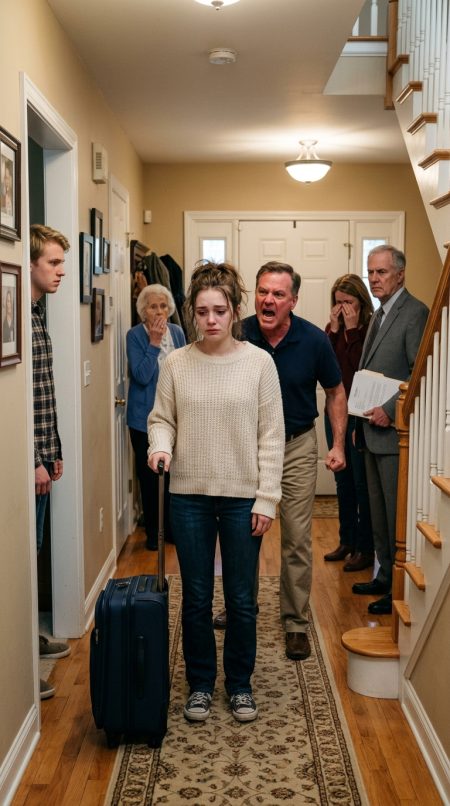
  • On Christmas night, I held my husband’s hand and whispered, “I’m going to be a mother.” The whole table went silent. My father-in-law jumped up and pointed at me: “You and that child do not belong in this family!” I didn’t cry. I simply placed a gift in front of him and said, “Then open this after I’m gone…”

    On Christmas night, I held my husband’s hand and whispered, “I’m going to be a mother.” The whole table went silent. My father-in-law jumped up and pointed at me: “You and that child do not belong in this family!” I didn’t cry. I simply placed a gift in front of him and said, “Then open this after I’m gone…”

    On Christmas Eve, I held my husband’s hand beneath the table and whispered, “I’m going to be a mother.” The entire room fell silent. Then my father-in-law rose from his chair, pointed directly at me, and said, “You and that baby are not part of this family!” I didn’t cry. I simply slid a wrapped gift toward him and replied, “Then open this after I’m gone…”

    My name is Emily Carter, and the night my world shattered began with four words: “I’m pregnant.”

    It was Christmas Eve. Ryan squeezed my hand beneath the dinner table as I said it aloud. Carter family dinners had never exactly been warm, but that night the atmosphere turned to ice. Forks froze halfway to mouths. Every conversation vanished instantly. I could hear the old clock ticking behind us louder than my own pulse.

    Ryan forced a nervous smile. “We’re having a baby,” he added gently, trying to ease the tension.

    His mother looked shocked, but his father, Richard Carter, reacted first. Slowly, he lowered his glass onto the table, his jaw tightening. “Repeat that,” he said coldly.

    I swallowed hard. “I’m pregnant.”

    His eyes locked onto mine with something far colder than anger. “I don’t want you,” he said quietly, his words sharp as knives, “or that child anywhere near this family.”

    Ryan stiffened beside me. “Dad, what are you saying?”

    But Richard never even looked at him. He pointed directly at me. “She trapped you. And now she thinks she deserves our name? Our money? Absolutely not. You’re both finished.”

    The words struck harder than I expected. I always knew he disliked me—my upbringing, my career, my independence—but this was different.

    “You’re dead to me,” he continued as he stood from the table. “And you’re out of the will.”

    Silence crashed through the room.

    Ryan rose immediately. “If she leaves, I leave too.”

    Richard didn’t hesitate for even a second. “Then get out.”

    Something cracked inside me then—but strangely, no tears came. Instead, I reached into my purse and removed a small neatly wrapped box. I placed it directly in front of him.

    “You should open this,” I said softly. “Just not yet. Wait until we’re gone.”

    Ryan stared at me in confusion, but I simply took his hand. Without another word, we walked out into the freezing night.

    Behind us, the front door slammed shut.

    And several minutes later, inside that house, Richard Carter opened the gift I had left behind—

    —and his entire life changed.
    …

    Part 2

    Neither of us spoke during the drive home.

    Ryan gripped the steering wheel so tightly his knuckles turned white, his jaw clenched hard enough to crack. The silence between us wasn’t empty—it was suffocating, heavy with everything that had happened.

    Eventually, he exhaled sharply. “Emily… what exactly did you give him?”

    I kept staring through the window, watching Christmas lights blur past in the darkness. “Something he should’ve known years ago.”

    Ryan frowned but didn’t ask anything else.

    When we reached home, I lowered myself onto the edge of the couch, suddenly exhausted. The adrenaline had faded, leaving behind a strange mixture of fear and relief.

    Ryan knelt in front of me. “Hey,” he said quietly. “Look at me.”

    I lifted my eyes.

    “I’m sorry,” he whispered. “For him. For all of it.”

    I shook my head slowly. “You didn’t do this.”

    “But I should’ve stood up to him sooner,” he admitted. “I knew the way he treated you. I just kept hoping he’d eventually change.”

    I placed my hand over his. “He won’t. Not unless something forces him to.”

    That was when his phone rang.

    We both froze instantly.

    Ryan glanced at the screen. His father’s name flashed across it.

    After a moment of hesitation, he answered. “What?”

    There was silence on the other end. I couldn’t hear Richard’s words, but I watched Ryan’s face shift from confusion to disbelief.

    “What are you talking about?” Ryan asked slowly.

    Another pause.

    Ryan rose to his feet. “No. That’s impossible.”

    My heartbeat quickened again. “Ryan, what happened?”

    He covered the phone briefly. “He says… the test results you left him—”

    “Put it on speaker,” I said immediately.

    Ryan hesitated before obeying.

    Richard’s voice filled the room, but it no longer sounded cold or commanding. It sounded shaken. “Where did you get that DNA test?”

    I stood carefully, my legs trembling while my voice stayed steady. “From a certified laboratory. Why?”

    A long silence followed.

    Then he spoke again.

    “Because according to these results… Ryan isn’t my biological son.”

    The room seemed to tilt around me.

    Ryan stared at the phone. “What?”

    “You heard me,” Richard said weakly. “This says… I’m not your father.”

    The truth I had uncovered weeks earlier—the truth I had struggled to carry alone—was finally exposed.

    And in a single moment, everything Richard Carter believed belonged to him… suddenly didn’t.

    Part 3

    The following days felt unreal.

    Ryan barely slept. He kept replaying his entire life in his mind—his childhood, his father’s expectations, the endless pressure to uphold a family legacy that apparently had never even belonged to him.

    “I don’t understand,” he said late one evening while sitting at the kitchen table staring into space. “How could my mom hide something this big for so many years?”

    I didn’t have an easy answer for him.

    What I did have was the truth—and all the damage that came with it.

    Two days later, Richard arrived at our front door.

    When I opened it, my chest tightened. He looked different somehow. Smaller. The arrogance that once filled every room around him had disappeared, replaced by uncertainty.

    “I need to talk,” he said quietly.

    Ryan stepped up behind me. “About what? The part where you disowned us? Or the part where your whole world collapsed overnight?”

    Richard flinched visibly.

    “I didn’t know,” he said softly. “All these years… I truly didn’t know.”

    Ryan laughed bitterly. “Does that even matter? You threw me away in less than five seconds.”

    Richard looked at him, his voice breaking. “Because I believed you were mine. I thought that gave me the right to control your life… your decisions…”

    “And now?” Ryan asked coldly.

    Richard hesitated. “Now I understand I never had that right.”

    Silence settled heavily across the room.

    I stepped forward slowly. “You didn’t lose a son because of a DNA test,” I told him. “You lost him because of the way you treated him—and the way you treated me.”

    Richard nodded slowly as tears filled his eyes. “I know.”

    Then he looked at me. “And after everything… you still brought me the truth.”

    I held his gaze steadily. “Because lies destroy people. I wasn’t going to let another generation grow up buried beneath one.”

    He swallowed hard.

    “I don’t expect forgiveness,” he admitted quietly. “But I want to try… if you’ll allow me to.”

    Ryan didn’t respond immediately. Instead, he looked toward me.

    And in that moment, I understood something important—this wasn’t only about the past anymore. It was about what kind of future we wanted for our child.

    I inhaled slowly. “That depends,” I said. “On whether you’re truly willing to change.”

    Richard nodded once. “I am.”

    Finally, Ryan spoke.

    “Then prove it.”

    That night didn’t magically heal everything. But it began something genuine—something honest.

    Because sometimes the truth doesn’t only destroy families…

    …it gives them the chance to rebuild them.

    And now I want to ask you: if you had been in my position, would you have revealed the truth… or kept it buried forever?

  • Trump wants to change another historic landmark and it’s not gone down well

    Trump wants to change another historic landmark and it’s not gone down well

    Susan Eisenhower has urged officials not to rush the controversial White House-adjacent makeover

    Donald Trump is once again making efforts to put his own stamp on Washington DC, and his latest plan has already sparked a wave of criticism.

    Since returning to the White House, The POTUS has been linked to a string of changes around the US capital, from major work on the White House grounds to wider plans intended to make the city look more impressive — or even altering certain American passports.

    Supporters have framed the projects as part of an effort to restore pride and beauty to America’s most famous political landmarks, yet not everyone is convinced.

    In reality, this latest proposed makeover has gone down particularly badly with preservationists, architects, and historians, who say it could cause permanent damage to a building that has stood for well over a century.

    The historic landmark in question is the Eisenhower Executive Office Building, which sits right next to the White House, and Trump wants to paint the 19th-century building white.

    At the moment, though the building is known for its grey granite exterior, Trump has previously made it very clear that he is not exactly a fan of the colour, calling it a ‘really bad color’, as reported by outlets like AP News.

    As noted by The Washington Post, he also said: “Gray is for funerals,” adding: “Look at it, how beautiful that is with a coat of paint.”

    The building opened in 1888 after 17 years of construction and is a National Historic Landmark, as well as being listed on the National Register of Historic Places.

    As per the White House, the proposed paint job could cost taxpayers at least $7.5 million. That figure is only for the exterior work, meaning it does not include future maintenance costs.

    Officials have reportedly put forward two options for the makeover. One would see the entire granite exterior painted white, while the other would paint most of the building but leave the granite base untouched.

    The full white version is believed to be the preferred option.

    Nevertheless, experts have warned that painting granite is not as simple as giving a wall a fresh coat before guests come over.

    Those against the plan argue that paint could trap moisture, damage the stone, and permanently alter the historic landmark.

    Priya Jain, of the Society of Architectural Historians, said: “Painting the granite facade of the building white will adversely and permanently alter this important landmark, and should be rejected.”

    The National Capital Planning Commission has not approved the proposal. Instead, it has asked the White House to provide more information about the paint, testing, removal, long-term maintenance, and possible alternatives.

    Ryan Erb, the construction operations and facilities manager in the White House Office of Administration, said testing is still ongoing.

    He told commissioners: “Unfortunately, we can’t rush that process,” adding: “We’re trying to get all the data first.”

    Susan Eisenhower, the granddaughter of former President Dwight D. Eisenhower, has also urged caution.

    In an essay, she wrote: “There is no need to rush to paint it.”

    She added: “The building positively sparkles.”

    A White House spokesperson defended Trump’s wider plans, saying: “President Trump continues to beautify the White House and our Nation’s Capital and is giving it the glory it deserves — something everyone should celebrate.”

  • My Husband Tried To Buy His Mistress An iPhone 17 Pro Max With My Money—So I Froze His Cards And Let His Perfect Life Collapse In Public…

    My Husband Tried To Buy His Mistress An iPhone 17 Pro Max With My Money—So I Froze His Cards And Let His Perfect Life Collapse In Public…

    I didn’t scream when I spotted my husband standing inside the Apple Store with his hand resting possessively on another woman’s waist.

    I didn’t storm over, slap him across the face, rip off my wedding ring, or collapse into the kind of public humiliation strangers record for social media. I stood quietly behind a polished glass display in the middle of The Grove, holding my phone in one hand and my dignity in the other, while my husband, Grant Whitaker, laughed like a man who had never experienced consequences a single day in his life.

    Beside him stood a woman young enough to mistake cruelty for confidence. She had long blonde waves, a white designer mini dress, and the restless, hungry eyes of someone who thought another woman’s husband counted as an achievement. Her manicured fingers curled around Grant’s arm as if she had somehow earned him. As if ten years of marriage, three miscarriages, one family business saved from collapse, and every quiet sacrifice I made meant nothing compared to youth and a pout.

    “Baby, I want the white titanium one,” she said, tapping the glass above the newest iPhone 17 Pro Max. “The biggest storage. I need space for my content.”

    Grant grinned proudly. “Get whatever you want, Madison. You know I never look at prices.”

    That almost made me laugh.

    Because he never checked prices for the same reason children don’t check prices.

    Someone else always pays.

    Me.

    I paid for the Italian suit stretched across his shoulders. I paid for the gold watch he flashed at the Apple employee. I paid for the black SUV parked outside, the penthouse where he took her while pretending to attend investor dinners, the private gym membership where he bragged about being “self-made,” and the polished American Express card he was about to slap onto the counter like a king issuing a royal decree.

    For years, my husband called me cold. Boring. Too focused on work. Too exhausted to be desirable. He told me I was lucky he stayed with me. At first he said it gently, then regularly, then casually, until those words became permanent furniture inside our marriage.

    But that afternoon, watching him perform wealth for his mistress, I realized something that slowed my pulse instead of raising it.

    Grant had mistaken my silence for weakness.

    The sales associate placed two sealed iPhone boxes onto the counter. Madison squealed happily and leaned against him. Grant looked around deliberately, making sure strangers noticed him.

    “Put both on the card,” he announced loudly. “No financing. I’m not one of those people.”

    The associate inserted the card.

    I opened my banking app.

    Grant smiled confidently.

    I pressed one button.

    The payment terminal beeped.

    The associate blinked awkwardly. “I’m sorry, sir. It says the transaction was declined.”

    Grant’s smile twitched. “Run it again.”

    She did.

    Declined.

    A teenage boy standing behind him snorted loudly. Madison’s expression changed instantly, the way expensive flowers wilt the moment water goes bad.

    Grant pulled out another card. “Try this one.”

    I pressed another button.

    Declined.

    Then another.

    Declined.

    By the time the third card failed, people were openly staring. Madison had already removed her hand from his arm. Grant’s neck flushed red above his expensive white collar.

    “This is ridiculous,” he snapped. “Do you know who I am?”

    I almost laughed.

    That was the problem.

    He didn’t know who he was without me.

    His hand shook slightly while dialing my number. I watched from across the store as my phone lit up. For the first time in years, I let it ring twice before answering.

    “Elaine,” he barked immediately—not hello, not honey, not even my name spoken kindly. “What the hell is wrong with the cards?”

    I looked directly at him through the glass display.

    He still hadn’t seen me.

    “Nothing is wrong with them,” I said calmly.

    “Then fix it. I’m standing here getting humiliated because of your incompetence.”

    Madison crossed her arms impatiently. The sales associate looked desperate to disappear. Around them, several people already held phones pointed in Grant’s direction.

    I smiled slightly. “No, Grant. You’re being humiliated because I finally stopped financing your lies.”

    Silence.

    His eyes darted around the store frantically. “What did you say?”

    “I froze the cards. Closed the joint accounts. Revoked your access to Whitaker Holdings. Reported the SUV for corporate recovery. Terminated the Malibu penthouse lease. And changed the locks at noon.”

    His mouth opened.

    Nothing came out.

    Then he saw me.

    I stepped out from behind the display wearing the navy dress he once told me made me look like “a lawyer at a funeral.” My hair was smooth. My face was dry. My left hand was bare.

    Grant stared at my missing wedding ring like it was a weapon.

    Madison whispered nervously, “Grant?”

    I walked close enough for him to catch the scent of my perfume—the one he always complained was too sharp, too serious, too much like me.

    “You brought your mistress shopping with my money,” I said quietly. “So I decided to give both of you something better.”

    His voice cracked. “Elaine, don’t do this here.”

    “Here?” I glanced around at the growing crowd. “You picked here. You picked the audience. You picked the gift. I just picked the ending.”

    His face twisted with rage. “You bitter, aging—”

    “Careful,” I interrupted, lifting my phone slightly. “The lawyer is already watching.”

    That was when anger finally transformed into fear.

    And for the first time in our marriage, I knew Grant Whitaker finally understood who I really was.

    Not as his wife.

    As the woman who controlled every exit.

    For ten years, I had been the quiet wife standing in the background of Grant’s life. In photographs, he stood in the center while I smiled politely beside him. At charity galas, people congratulated him on my company’s success because he interrupted faster than I corrected them. At restaurants, he ordered expensive wine using my card while bragging about “building something from nothing,” and I sat across from him remembering exactly what kind of nothing he came from.

    When we met, Grant was charming in the dangerous way broken men often are before they learn charm itself can become a weapon. He was thirty-two, handsome, unemployed, and full of stories about opportunities stolen from him. I was thirty-five, exhausted from taking over my father’s commercial real estate company after his stroke. Grant made me laugh during the loneliest year of my life.

    He proposed six months later with a ring I eventually discovered had been purchased using the emergency credit card I gave him.

    I forgave that.

    I forgave far too much after that.

    I forgave lies about business meetings. Secret withdrawals. Expensive “networking” weekends in Vegas. Assistants quitting after inappropriate late-night texts. The way he smiled at younger women when he thought I wasn’t watching. The way he called my intelligence intimidating before using it whenever he needed rescue.

    But I did not forgive Madison Pierce.

    Not because she mattered.

    She didn’t.

    She was simply careless enough to leave evidence where I could find it.

    Three months before the Apple Store incident, Grant forgot his laptop open on our kitchen island. A message appeared while he was upstairs showering.

    Miami was amazing. Next time tell your wife the conference lasts longer. I miss the suite already.

    Underneath sat a photograph.

    Madison wearing one of my hotel robes.

    My initials were embroidered onto the sleeve.

    Something inside me became perfectly still.

    I didn’t run upstairs screaming through the bathroom door. Women ask why only when they still believe answers can repair something. I was already beyond repair.

    Instead, I documented everything.

    Messages. Receipts. Flights. Transfers. Hotel invoices. Jewelry purchases. Restaurant charges. I uncovered two years of betrayal buried beneath the lazy arrogance of a man convinced a wife could be humiliated forever as long as the house remained beautiful.

    The next morning, I sat across from my attorney, Vivienne Ross, inside a private conference room overlooking Century City.

    Vivienne was elegant, terrifying, and expensive enough for people who understood divorce wasn’t emotional—it was strategic.

    She listened silently while I slid the evidence folder across the table.

    When I finished, she asked only one question.

    “Do you want revenge or freedom?”

    I looked out across the skyline my father taught me to conquer.

    “Both.”

    Vivienne smiled faintly. “Then we keep it clean.”

    Clean meant no screaming.

    Clean meant no impulsive confrontation.

    Clean meant no emotional fight over assets Grant never actually owned.

    My father insisted on a prenup years earlier. At the time, I felt embarrassed. Grant acted insulted but signed after my father calmly explained there would be no wedding otherwise.

    The prenup separated everything.

    My inheritance. My company. My properties. My investments. Every asset connected to Whitaker Holdings. Even Grant’s “executive compensation”—which he bragged about as income from his own ventures—was clearly documented as a discretionary stipend from my company.

    He was never a partner.

    He was an expense.

    And I decided it was time to reduce costs.

    Over the next twelve weeks, I became exactly the wife Grant believed he understood.

    Quiet.

    Busy.

    Polite.

    Predictable.

    While he slept, I moved assets.

    While he golfed, I changed trustees.

    While he entertained Madison, I terminated leases.

    While he called me boring, I sold the Pacific Palisades house through an LLC and moved into a secure downtown condo with biometric access and a skyline view that did not include him.

    Pretending was the hardest part.

    Every morning, Grant kissed my cheek like a man checking an item off a list. Every night, he returned home smelling faintly of someone else’s perfume and asked what was for dinner. I watched him eat meals prepared by employees I paid inside a house I owned beneath lights already scheduled for removal.

    “You look tired,” he told me one Thursday night while scrolling through his phone. “You should try harder, Elaine. Men notice when women let themselves go.”

    I looked across the table at him and thought:

    You have nine days left.

    On the final morning, he announced he was going shopping before a “client dinner.” He wore the blue suit I bought him in Milan. He grabbed the Centurion card from the drawer, kissed my forehead, and said, “Don’t wait up.”

    “I won’t,” I answered.

    He didn’t notice the luggage near the service elevator.

    He didn’t notice my ring already gone.

    He didn’t notice the staff looking at him with quiet pity reserved for people walking toward cliffs.

    By the time he entered the Apple Store with Madison, I was already inside the mall.

    Because I wanted to see his face.

    Not because I needed closure.

    Because I paid for the theater, and I deserved to watch the final act.

    After I told him everything, Grant tried pulling me aside. “Elaine, we can discuss this at home.”

    “You don’t have a home,” I replied.

    Madison’s mouth fell open.

    Grant lowered his voice sharply. “You’re emotional. You shouldn’t make decisions like this publicly.”

    “I made them privately. Public is just where you found out.”

    A man standing in line muttered, “Damn.”

    Grant snapped toward him. “Mind your business.”

    “That’s rich,” the man replied. “Apparently nothing else about you is.”

    Someone laughed.

    Then another.

    Madison stepped farther away from Grant as if embarrassment itself were contagious.

    Grant turned back toward me, fury hardening his face. “You think you can just throw me away?”

    “No,” I said calmly. “I know I can.”

    Madison grabbed her purse nervously. “Grant, what is she talking about? You told me the company belonged to you.”

    “It does,” he answered quickly.

    I tilted my head slightly. “Name one building.”

    He blinked.

    “Name one investor.”

    Silence.

    “Name one account password my assistant didn’t hand to you.”

    Madison stared at him with dawning horror.

    Grant lunged toward my arm, but mall security had already moved closer. Vivienne arranged that too.

    “Touch me,” I said softly, “and you’ll leave here in handcuffs before you leave broke.”

    His hand froze midair.

    That video went viral before sunset.

    By evening, millions watched my husband’s credit cards decline while he tried buying his mistress a phone. The internet did exactly what the internet always does: investigate, mock, exaggerate, distort, and judge with the speed of a guillotine.

    Fake rich husband exposed.
    Mistress discovers sugar daddy is sugar-free.
    Wife freezes cards at Apple Store.

    Grant called me eighty-three times that night.

    I answered none of them.

    Instead, I sat barefoot inside my new condo with takeout sushi and a bottle of wine I had been saving for an anniversary that no longer existed.

    At 8:12 p.m., my head of security texted me footage from the gate of the old house. Grant stood outside with Madison, yelling at the keypad while two black garbage bags rested beside him on the curb. Inside them were the only things legally classified as his personal belongings: clothes, shoes, toiletries, and a framed photograph of himself accepting an award at a charity gala for work I had actually done.

    Madison abandoned him fifteen minutes later.

    Her rideshare arrived. She climbed inside without kissing him goodbye.

    Grant actually chased the car down half the street.

    I watched the video once.

    Then I erased it.

    The divorce took six weeks.

    Grant fought at first. Men like him always do. They confuse noise with power. He stormed into Vivienne Ross’s office wearing wrinkled designer clothes and demanded half of everything. Vivienne let him rant until he exhausted himself.

    Then she opened the folder.

    Prenup. Signed.

    Corporate audit. Completed.

    Misuse of company finances. Documented.

    Affair expenses billed through business accounts. Documented.

    Jewelry purchased for Madison using Whitaker Holdings funds. Documented.

    Unauthorized transfers. Documented.

    Vivienne folded her hands neatly. “Mr. Whitaker, you can sign the settlement and walk away without a criminal referral, or you can continue litigation and explain to a judge why corporate funds purchased diamond earrings for a woman who wasn’t your wife.”

    Grant stared at the paperwork as though the words themselves had turned into blades.

    “I loved her,” he whispered weakly.

    Vivienne didn’t even blink. “That isn’t a legal defense.”

    He signed.

    The settlement gave him nothing beyond the terms already outlined in the prenup and a temporary financial payment contingent upon silence and non-disparagement. He lost access to the company, the properties, the vehicles, the memberships, the staff, the credit cards, the accounts, and the last name he spent ten years polishing with my money.

    The public forgot him faster than he expected.

    That hurt Grant more than losing the money.

    He imagined himself important enough to become a lasting scandal. But scandals require substance. He became a meme for one week, a podcast punchline for two, and then yesterday’s embarrassment buried beneath fresher disasters.

    Madison uploaded a tearful video claiming she had been “manipulated by a financially abusive older man.” Two months later, she started dating a nightclub owner.

    I wished her exactly what she deserved:

    Someone exactly like herself.

    As for me, I disappeared.

    Not permanently.

    Just long enough to remember what my own thoughts sounded like.

    I flew first to Maine, to a small coastal town where nobody recognized my name and the ocean sounded like an old woman telling uncomfortable truths. I rented a gray cottage overlooking the cliffs and spent mornings walking with coffee in my hand, afternoons reading books I bought years earlier but never opened, and evenings learning what silence felt like when it wasn’t punishment.

    For years, silence meant Grant was angry.

    Now silence meant peace.

    One evening, while rain tapped softly against the windows, I cried for the first time.

    Not for Grant.

    Not even for the marriage.

    I cried for the woman I was at thirty-five—so lonely she confused dependence with devotion. I cried for every dinner where I swallowed insults just to preserve peace. I cried for the babies I lost while Grant complained grief made the house “too depressing.” I cried until something deep inside me finally emptied.

    Then I slept ten straight hours.

    When I returned to Los Angeles, I didn’t return to my old life. The old house had already been demolished by the developer.

    Good.

    Some places shouldn’t survive their memories.

    I walked into Whitaker Holdings on a Monday morning wearing a cream-colored suit and no wedding ring. Employees stood when I entered the conference room—not because they feared me, but because they had been waiting for me to come back.

    My chief financial officer handed me the quarterly report.

    Without Grant’s expenses, profits had increased eighteen percent.

    I laughed so hard I had to sit down.

    Six months later, I renamed the company Hartwell Properties, reclaiming my father’s family name. Then I established a foundation for women rebuilding after financial abuse and quiet marriages that appeared perfect from the outside. We funded legal consultations, emergency housing, and forensic accounting support.

    The first time a woman hugged me after a seminar and whispered, “I thought I was crazy until you told your story,” I realized my humiliation had not been wasted.

    One year after the Apple Store incident, I walked past that same mall again.

    The Apple Store still glowed bright and crowded, filled with people touching glass displays and wanting newer versions of themselves. I paused outside briefly, watching a husband and wife laugh while choosing phone colors together. His hand rested gently against her back. She leaned into him without fear.

    I hoped they were happy.

    Then I saw Grant.

    He stood near the parking structure entrance wearing a delivery vest and carrying two insulated food bags. His hair had thinned. His face looked older—not with wisdom, but resentment. He noticed me at the exact same moment.

    For one second, the world tightened.

    His eyes moved across my clothes, my handbag, my calm expression. Shame flickered across his face, followed immediately by the old instinct to blame someone else.

    “Elaine,” he said.

    I could have kept walking.

    But I stopped.

    He swallowed hard. “You destroyed my life.”

    I looked at him carefully.

    Once, those words would have destroyed me. Once, I would have spent hours explaining, apologizing, softening the truth, trying to prove my heart.

    Now they landed at my feet like a dead leaf.

    “No, Grant,” I replied calmly. “I stopped paying for it.”

    His expression hardened instantly. “You think you’re better than me?”

    “No,” I said. “I think I’m finally free of you.”

    He glanced around nervously, embarrassed by how calm my voice sounded. “I made a mistake.”

    “You made choices.”

    “I lost everything.”

    “You lost what was never yours.”

    For a brief moment, I saw the man I married buried underneath all the damage—still handsome in a faded way, frightened, hollow, furious at consequences he never imagined would reach him. I wondered if he would ever truly understand what happened.

    Probably not.

    Some people mistake regret for simply missing comfort.

    His phone buzzed. He glanced down at the delivery app notification. The old Grant would have hidden it immediately. This version had no performance left to protect.

    “I have to go,” he muttered.

    “So do I.”

    I walked away first.

    That became my final gift to myself.

    Not revenge.

    Not money.

    Not the viral video, the signed divorce papers, or the expression on Madison’s face when the card declined.

    The gift was leaving without needing him to understand.

    That evening, I hosted dinner at my condo for eight women from the foundation’s first graduating support group. We ate pasta, drank wine, shared stories that would have shattered our former selves, and laughed with the reckless disbelief of survivors.

    Close to midnight, I stepped onto the balcony alone.

    Los Angeles glittered beneath me—wide, shameless, alive. Somewhere out there, Grant was still blaming me. Somewhere, Madison was still chasing luxury through someone else’s wallet. Somewhere, another woman was staring at a message that would divide her life into before and after.

    I lifted my wineglass toward the city.

    For her.

    For the woman I used to be.

    For the woman I became the moment I pressed one button and let the truth decline his card.

    Then I turned off my phone, walked back into the warmth, and closed the door behind me.

    For the first time in ten years, nothing followed me inside.

  • Five Minutes After Our Divorce, I Took My Kids and Left for London—While My Ex’s Entire Family Celebrated His Pregnant Mistress Until One Ultrasound Sentence Destroyed Everything…

    Five Minutes After Our Divorce, I Took My Kids and Left for London—While My Ex’s Entire Family Celebrated His Pregnant Mistress Until One Ultrasound Sentence Destroyed Everything…

    Part 1

    It had not even been five minutes after I signed the divorce papers when my ex-husband picked up a call from his mistress right in front of me and told her, in the gentlest voice I had ever heard him use, that he was on his way to see “their baby.”

    That was the exact moment I realized I had not lost my marriage that morning.

    I had escaped from it.

    The mediator’s office was too bright, too spotless, too silent for the kind of destruction sitting around that polished conference table. My name is Catherine Harlow. I was thirty-two years old, mother to two children under ten, and I had just ended an eight-year marriage to David Harlow—the man who once cried while slipping a wedding ring onto my finger and promising I would never have to face the world alone.

    Promises, I had learned, were often nothing more than beautifully packaged lies.

    The clock on the wall read 10:03 a.m. My pen had barely lifted from the paper when David’s phone lit up. He did not even look at me before answering it.

    “Yes, I’m done,” he said, already getting to his feet, already impatient. “Give me ten minutes. I’ll be there before they call you in. Today’s the ultrasound, right?”

    He smiled.

    Actually smiled.

    Then came the sentence that destroyed the final illusion I still carried.

    “Don’t worry, my whole family’s coming. Your son is the heir to our family, after all.”

    My stomach should have tightened. My heart should have shattered. But instead, I felt a strange, heavy calm—as if my grief had burned for so long it had finally turned into ash.

    Across from me, the mediator cleared his throat and slid the remaining documents toward David. “Mr. Harlow, if you would just review the settlement terms—”

    David waved him off, signed without even reading, and tossed the papers back. “There’s nothing to review. She gets nothing. The condo is mine. The car is mine. If she wants the kids, she can take them. Frankly, that makes things easier.”

    His older sister, Megan, who had insisted on attending as though my divorce were some kind of family entertainment, let out a short laugh. “Exactly. David’s starting fresh. He doesn’t need extra baggage.”

    One of his aunts, standing by the window in a cream pantsuit and far too much perfume, clicked her tongue. “A man has the right to want a son. Everyone knew Catherine was never enough for him.”

    Another voice added, “And now he finally has a woman who can give the family what it deserves.”

    What it deserves.

    Not who it deserves.

    What.

    I reached into my purse and placed a set of keys onto the table. “These are the condo keys.”

    David looked down, briefly surprised, then leaned back with a smug expression. “Good. At least you understand how this works.”

    I ignored him and pulled out two navy blue passports.

    “The children’s visas were approved last week,” I said.

    David frowned. “What visas?”

    “I’m taking Aiden and Chloe to London.”

    The room fell completely silent.

    Megan reacted first. “You’re what?”

    I met David’s eyes. “I’m taking my children to London.”

    David let out a short, cold laugh. “You can’t even afford your own legal fees, Catherine. How exactly are you taking two kids overseas?”

    “Don’t concern yourself with my finances.”

    “Those are my children,” he snapped.

    “And yet you just signed paperwork giving me permission to take them.”

    His mouth opened, then closed again.

    For the first time that morning, uncertainty crossed his face.

    Not regret. Not heartbreak.

    Just uncertainty.

    I stood and picked up my bag. “You said you were in a hurry. Your mistress is waiting.”

    His expression darkened. “Don’t start pretending you’re proud now. You lost.”

    I bent down and lifted my daughter, Chloe, onto my hip. She had been coloring quietly in the reception area with the solemn obedience children learn when adults disappoint them too often. My son, Aiden, walked over and slipped his hand into mine.

    Then, as if heaven itself had arranged the timing, a black Mercedes SUV pulled up outside the entrance.

    The driver stepped out, opened the rear passenger door, and asked, “Ms. Harlow, are you ready?”

    David stared at the vehicle, then back at me. “What is this?”

    I turned toward him one final time.

    What I wanted to say was: This is what happens when the woman you underestimated finally stops begging for scraps.

    What I actually said was, “From this moment on, the kids and I won’t interfere with your new life.”

    I walked out before he could respond.

    Behind me, I heard Megan hiss, “She’s bluffing.”

    But I was not bluffing. I had not been bluffing for weeks.

    The driver handed me a large envelope the moment I got inside. “Mr. Mercer asked me to give this to you personally.”

    I opened it as the car merged into traffic. Inside were copies of bank transfers, property documents, and photographs. In one picture, David stood beside Allison—his twenty-six-year-old mistress—inside a real estate office, both of them smiling over paperwork for a luxury condo.

    The highlighted source of the down payment caught my eye.

    It came from an account connected to the company David had insisted was “struggling.”

    Another page revealed something even worse: money transferred from shared marital assets into shell accounts, then funneled into hidden property purchases under allied LLCs.

    My uncle Nick had been right.

    David had not only cheated on me.

    He had quietly built an entirely new life while my money still clung beneath his fingernails.

    Aiden leaned closer. “Mom?”

    I turned to him, softening immediately. “Yes, sweetheart?”

    “Is Dad coming later?”

    I brushed a hand through his hair. “Not today.”

    He nodded as though he had already expected that answer.

    My phone buzzed.

    A message from Steven Mercer, the attorney who had helped me prepare everything.

    They’ve arrived at the clinic. Doctor has the file. Stay calm. Get on the plane.

    I looked out through the tinted window and watched Manhattan slide past in fragments of glass, steel, and memory.

    At that exact moment, David’s entire family—his mother Linda, his sister Megan, two aunts, one uncle, his cousin Bethany, and David himself—were gathering around Allison in the VIP wing of a private fertility clinic, congratulating her on the son they believed would carry the Harlow name into another generation.

    They had champagne waiting.

    They had presents.

    They had already erased me.

    None of them knew that before noon, a doctor would say one sentence that would silence the room, humiliate Allison, and rip the foundation out from beneath David’s perfect new future.

    And none of them knew that while they celebrated the child they believed would replace my children, I was taking my son and daughter toward an airport, toward a new country, and toward the first honest breath I had taken in years.

    Part 2

    The private reproductive clinic on the Upper East Side looked more like a luxury hotel than a medical facility. Everything was soft marble, pale golden lighting, and perfectly rehearsed smiles. It suited David’s family perfectly. They loved expensive places that made them feel important.

    Allison sat in the waiting area with one hand dramatically resting over her barely visible bump, dressed in a cream maternity dress she had no reason to need yet. Linda Harlow hovered beside her as though she were already grandmother to a royal heir.

    “My grandson is going to be strong,” Linda said, squeezing Allison’s hand. “I can feel it.”

    Megan laughed. “You’ve been saying that for weeks.”

    “Because I know it,” Linda replied. “A mother knows.”

    David stood by the window, scrolling through messages with a smug half-smile on his face. His divorce was finalized. His mistress was pregnant. His family was delighted. As far as he knew, the wreckage of his old life had already been swept away.

    When the nurse called Allison’s name, David followed her into the exam room. Linda tried to follow too, but the nurse gently stopped her. “Only one companion, ma’am.”

    The door shut, leaving the family gathered outside like anxious audience members waiting for the next act.

    Inside, Allison leaned back on the examination bed. David took her hand. “Relax. In twenty minutes we’ll walk out there and tell them it’s a boy.”

    Allison’s smile shook slightly. “I hope so.”

    The doctor, a calm man in his late fifties named Dr. Rosen, began the scan with practiced precision. Gel. Probe. Screen.

    The grainy black-and-white image flickered onto the monitor.

    At first, David noticed nothing unusual. The doctor, however, became very still.

    He adjusted the angle.

    Looked again.

    Adjusted it once more.

    Allison noticed first. “Is there a problem?”

    Dr. Rosen did not answer immediately. Instead, he pressed a button near the wall. “Please send legal counsel and security to Ultrasound Room Three.”

    David straightened. “Why would you need security?”

    Allison gripped the edge of the bed tighter. “Doctor, what’s wrong with my baby?”

    Dr. Rosen removed the probe and folded his hands together. “I need to confirm some details before continuing.”

    The atmosphere in the room shifted. Colder. Heavier. Charged.

    A few minutes later, the door opened. A man in a navy suit entered beside two uniformed security officers.

    David’s face hardened. “This is ridiculous.”

    Dr. Rosen angled the screen slightly toward him. “Mr. Harlow, according to the intake form, Ms. Allison Greene reported conception approximately nine weeks ago.”

    “That’s right,” Allison answered quickly.

    Dr. Rosen nodded once. “The fetal measurements do not support that timeline.”

    David frowned. “What does that mean?”

    The doctor’s voice remained calm and clear. “Based on fetal development, conception occurred at least four to five weeks earlier than the date provided.”

    Silence crashed into the room like a slammed door.

    David blinked. “That’s impossible.”

    Allison turned pale. “Maybe the dates are wrong.”

    “By over a month?” Dr. Rosen asked.

    The door behind them had not fully closed. Linda, Megan, and the others had drifted close enough to hear every word.

    Megan pushed it open wider. “What is going on?”

    Dr. Rosen turned toward the group. “It means the pregnancy predates the timeline given to this clinic.”

    Linda stared at Allison. “No. No, that can’t be right.”

    David looked from the screen to Allison and back again. “Tell him he’s wrong.”

    Allison swallowed hard. “Doctor, machines can be wrong.”

    Dr. Rosen lifted a printed report. “Measurements this consistent are not a machine error.”

    David’s expression changed—first confusion, then realization, then a rage so sharp it drained the color from his face.

    “You told me you got pregnant after our trip to Miami,” he said.

    Allison said nothing.

    “You said the baby was conceived after Miami,” he repeated, louder this time.

    “I—I thought—”

    “You thought what?”

    Linda gasped as though the room itself had betrayed her. “Allison…”

    David stepped away from the bed as if her body itself had become toxic. “Whose child is that?”

    Allison burst into tears. “David, listen to me—”

    “No,” he shouted. “You listen to me. You let me divorce my wife. You let my family humiliate her. You let all of us stand here celebrating a baby that might not even be mine?”

    The security guards subtly moved closer.

    Outside the exam room, the hallway had gone silent. Nurses glanced over. The legal adviser quietly reminded the family that the clinic required accurate medical reporting, especially when fertility and paternity claims affected treatment decisions.

    But David was beyond hearing anyone.

    Megan pointed at Allison. “You lied to all of us?”

    Allison covered her face. “I was scared.”

    Linda staggered backward into the wall, one hand pressed against her pearls. “You said my son finally had a son on the way.”

    Allison looked up, mascara streaking down her cheeks. “I thought if he loved me enough, it wouldn’t matter.”

    David laughed, but there was nothing human in the sound. “You thought if you got pregnant, I’d choose you over my wife.”

    The truth hung there, naked and ugly.

    And because there is no humiliation quite like public humiliation, Dr. Rosen delivered the final blow in a voice that would echo in David’s mind for months:

    “Mr. Harlow, whatever personal assumptions were made, this pregnancy does not align with the paternity story presented to this clinic.”

    That was the sentence.

    That was the sentence that turned triumph into disgrace.

    Back in the Mercedes speeding toward JFK, I received exactly four messages in under three minutes.

    From Steven: It’s done. Total collapse.

    From my investigator: Clinic incident confirmed. Family in chaos.

    From David: What did you do?

    And then, seconds later: Call me now.

    I stared at his name on the screen and felt nothing.

    Then I blocked the number.

    At the airport, everything moved quickly. Private check-in. A quiet lounge. Two children with backpacks and exhausted eyes. I had not told them every detail, only what children needed to know: we were leaving, we were safe, and we were going somewhere we would be loved.

    My uncle Nick lived outside London in Surrey. He had been my father’s closest friend since law school, and after my parents died in a car accident three years into my marriage, he had quietly become the one person who still checked on me without asking for anything in return.

    When I finally told him the truth about David’s affair, he did not ask, Are you sure?

    He said, Tell me what you need.

    What I needed, it turned out, was a plan.

    Aiden rested his head against my arm. “Mom, are you okay?”

    I kissed the top of his head. “I will be.”

    He nodded. Chloe had already fallen asleep curled against me, her small hand gripping my sleeve.

    I watched planes move across the runway and thought about the woman I had once been at twenty-four, standing in a church wearing white silk, believing love and loyalty were the same thing.

    They are not.

    Loyalty is proven when life becomes ugly.

    Love is easy when everything is easy.

    The boarding announcement echoed through the lounge. I stood, gathered my children, and walked toward the gate.

    Behind me, in a clinic across the city, David Harlow was discovering that the woman he had destroyed his marriage for had lied to him, the family he trusted was collapsing into blame and shame, and the future he thought was secure had already begun to crack apart.

    Ahead of me was London.

    Ahead of me was distance.

    Ahead of me was freedom.

    And for the first time in years, I chose it.

    Part 3

    The first time I saw Heatherwood House again, I cried.

    Not because it was magnificent—although it was, in that quiet English way, with ivy climbing warm stone walls and wide lawns stretching toward ancient oak trees. Not because it was the place where I had spent childhood summers after my parents died, or because Uncle Nick had preserved my old bedroom exactly as it had been when I was twelve.

    I cried because when the car rolled through the gates and Aiden whispered, “Mom, is this ours now?” I realized my children had already started to recognize what safety felt like.

    Uncle Nick met us at the front steps before the driver had fully stopped the car.

    He was in his sixties, silver-haired, broad-shouldered, still wearing a waxed field jacket despite the June sunshine. He opened my door himself, wrapped me in his arms, and said only, “You’re home.”

    That sentence shattered me more than anything David had done.

    I did not cry in court. I did not cry in the car. I did not cry at the airport.

    But standing in my uncle’s embrace, with my children beside me and the worst finally behind us, I finally allowed myself to grieve.

    Not for David.

    For the years.

    For the woman I had become while making myself smaller to fit inside someone else’s ambition.

    For the loneliness of being married to a man who valued me only when I made his life easier.

    Nick held me until I steadied myself. Then he crouched and smiled at the children. “You must be Aiden and Chloe.”

    Aiden nodded carefully. Chloe hid behind my leg.

    Nick smiled wider. “I have a treehouse, a Labrador who steals sandwiches, and a cook who makes the best chocolate pudding in England.”

    Chloe peeked around me. “Really?”

    “Absolutely.”

    By dinner that evening, she was following him around the kitchen.

    That night, after the children fell asleep in freshly prepared beds beneath dormer windows, I sat in the library with Nick and Steven Mercer, who had joined through a video call from New York.

    Steven got straight to the point. “Catherine, the fallout is accelerating.”

    He explained everything with the precision of a man who trusted facts more than emotions.

    The condo David had claimed was premarital property? The down payment came from my parents’ trust. We had the records.

    The company accounts? He had been moving funds through shell entities to conceal assets before the divorce.

    The property he bought with Allison? Potentially traceable to marital income, which made it discoverable.

    And worst of all: at least two tax disclosures appeared incomplete.

    Nick leaned back in his chair. “How vulnerable is he?”

    Steven adjusted his glasses. “If we pursue this aggressively? Very.”

    I stared at the documents spread across the table. “I don’t want a circus.”

    “You already have one,” Nick said gently. “The real question is whether you intend to be consumed by it or survive it.”

    I exhaled slowly. “What do you recommend?”

    Steven answered immediately. “Freeze whatever can be frozen. Challenge the settlement based on hidden assets. Secure long-term support for the children. And document every hostile communication from him or his family.”

    I almost laughed at the last part. “That file will be thicker than a Bible by morning.”

    Steven did not smile. “Then we’ll build a case out of it.”

    Over the next week, life split into two separate worlds.

    In Surrey, there were school visits, warm baths, quiet dinners, and the slow, miraculous process of my children relaxing. Aiden started sleeping through the night again. Chloe stopped asking whether Daddy was angry. I walked through the gardens in the early mornings and remembered that I used to enjoy silence.

    In New York, according to Steven, David’s world was becoming almost unrecognizable.

    Allison disappeared from social media and from David’s apartment. Linda stopped answering calls from her friends after gossip about the clinic spread through three country clubs and a charity board before sunset. Megan tried to contain the damage to the family’s reputation and failed spectacularly.

    David, meanwhile, shifted from rage into desperation.

    First he emailed:

    We need to talk.

    Then:

    You had no right to take the children out of the country without discussing it.

    Then:

    I know you set this up. What did you tell the clinic?

    And finally:

    Please let me speak to Aiden and Chloe.

    I let Steven handle the legal responses and arranged one monitored video call.

    David appeared on the screen looking ten years older than the man I had divorced. His tie was crooked. His eyes were bloodshot. He smiled too quickly when the children appeared.

    “Hey, buddy. Hey, princess.”

    Aiden shifted awkwardly. Chloe hid half her face behind my arm.

    David swallowed hard. “How are you guys?”

    “We’re okay,” Aiden answered.

    “That’s good. That’s good.” David forced another smile. “You like England?”

    Chloe nodded. “There’s a dog.”

    For a brief second, David actually looked relieved. Then he noticed me at the edge of the frame and the relief disappeared.

    “Catherine, can we talk privately?”

    “No.”

    His jaw tightened. “You can’t keep doing this.”

    “I’m not stopping you from speaking to your children. I’m stopping you from controlling me.”

    “That’s not fair.”

    I nearly laughed. “Fair?”

    He looked away. “I made mistakes.”

    That word. Mistakes.

    As if cheating for a year, publicly humiliating me, and attempting to hide assets before a divorce were emotionally equivalent to backing into a mailbox.

    I said nothing.

    The children’s call lasted eight minutes. Afterward, Aiden asked quietly, “Why did Dad look scared?”

    Because, I thought, sometimes the truth becomes the first mirror a liar cannot escape.

    But aloud I said, “Because adults get scared when life changes.”

    Days later, the official motions were filed in New York. Asset concealment. Fraudulent transfers. Revised financial discovery. Temporary support requests.

    And that was when David made his biggest mistake yet.

    He went to my old apartment looking for me and found it empty.

    Not merely empty.

    Closed.

    Because before leaving the country, I had already taken everything that mattered.

    The photo albums. The children’s drawings. My mother’s jewelry. My father’s letters. The things David never noticed because they could not be sold or displayed.

    The building manager, following Steven’s instructions, handed David an envelope.

    Inside was a formal notice.

    Further contact with Ms. Harlow outside legal channels will be documented.

    It was not dramatic.

    It was better.

    It was final.

    That evening, Nick found me in the greenhouse behind the house, surrounded by the scent of basil and tomato vines warmed by the late afternoon sun.

    “You did the right thing,” he said.

    I looked down at my hands. “Why does it still hurt?”

    He took his time before answering. “Because being right doesn’t protect you from grief. It only protects you from ruin.”

    I looked through the glass toward the lawn, where Aiden was kicking a football and Chloe was chasing the dog in wild circles.

    For months, maybe years, I had believed surviving meant enduring.

    But survival, I was beginning to understand, could also mean leaving.

    Part 4

    By the end of the month, David Harlow’s name had become radioactive in exactly the circles he used to worship.

    Not publicly—not in tabloids or headlines. Men like David knew how to avoid dramatic public destruction. But in private finance, law, and old-money social networks, scandal traveled faster and cut deeper than the press ever could. A missed payment, whispers of fraud, a mistress pregnancy gone wrong, a family humiliating a wife from a respected background—those stories spread through boardrooms like smoke slipping beneath a locked door.

    Steven kept me informed, though carefully. He understood I wanted information, not obsession.

    “Two lenders have triggered review rights,” he said during one of our weekly calls. “There are concerns about liquidity.”

    “Meaning?”

    “Meaning David built his lifestyle on leverage and reputation. Both are under pressure.”

    “And the company?”

    “His partners are distancing themselves. One may cooperate with us.”

    I leaned back in the conservatory chair. Rain tapped softly against the glass ceiling overhead. “Do I need to do anything?”

    “Not yet,” Steven replied. “He’s unraveling under the weight of his own decisions.”

    David’s family, predictably, began searching for someone else to blame.

    At first they blamed Allison.

    Linda reportedly told three different people Allison was a “trap” and a “street-level opportunist,” as though David himself had no responsibility in the affair. Megan, practical as ever, blamed David for being careless. One aunt blamed me, insisting I must have “manipulated” the clinic. Another claimed I had become cold and calculating.

    That one made me smile.

    Women are called cold the moment they stop bleeding publicly for everyone else’s comfort.

    Meanwhile, in Surrey, life developed a rhythm so simple it felt revolutionary.

    Aiden started at a local preparatory school and came home one afternoon glowing with pride because he had been chosen first for football. Chloe fell in love with watercolor painting and insisted every swan on the pond needed a name. I slept better. Ate better. Stopped checking my phone every ten minutes expecting the next crisis.

    And then, one Tuesday morning, crisis crossed the ocean anyway.

    David arrived at Heatherwood House without warning.

    I was in the kitchen with Chloe, helping her frost cupcakes, when the butler entered wearing a careful expression.

    “Ms. Harlow,” he said, “there is a Mr. David Harlow at the front gate.”

    My hand froze above the bowl of icing.

    Nick, who had just walked in carrying the newspaper, muttered, “The nerve of him.”

    Aiden, hearing the name, looked up from the table. “Dad’s here?”

    All children, no matter how disappointed, continue to hope.

    That hope is the cruelest inheritance adults give them.

    I set down the spatula and turned toward Nick. “Don’t let him in yet.”

    Nick nodded once.

    I went outside alone.

    David stood beyond the iron gate in a tailored coat that could not hide how worn down he had become. He looked thinner. The confidence people once noticed first had been replaced by a restless, brittle intensity.

    “I came to talk,” he said.

    “You should have arranged that through my attorney.”

    “I didn’t come as your opponent. I came as the father of my children.”

    I folded my arms. “Interesting. You weren’t particularly interested in them when you said taking them would be ‘less hassle.’”

    He flinched. Good.

    “I was angry,” he said.

    “No. You were honest.”

    Dark rain clouds gathered overhead, thick and low. The English air sharpened every sound around us.

    “Please,” he said quietly. “I know I was terrible. I know I don’t deserve much from you. But I want to see them.”

    “That depends on why.”

    His eyes flashed. “Because they’re my kids, Catherine.”

    I held his gaze. “Then start acting like it.”

    The silence stretched between us.

    Finally, he said the one thing I had waited too long to hear and no longer needed.

    “I’m sorry.”

    Not dramatic. Not eloquent. Just tired and stripped bare.

    I believed he meant it.

    I also knew it changed nothing.

    “You weren’t sorry when you lied,” I said quietly. “You weren’t sorry when you hid money. You weren’t sorry when your family humiliated me. You only became sorry once consequences arrived.”

    His face tightened. “That’s not fair.”

    “There’s that word again.”

    He exhaled sharply and looked toward the trees. “Everything is collapsing.”

    I said nothing.

    “My mother won’t stop crying. Megan barely speaks to me unless it’s about legal documents. Allison…” He stopped there, jaw tightening. “Allison’s gone.”

    “Do you know whose baby it was?”

    He let out a humorless laugh. “She says she’s not sure.”

    I should have felt vindicated. Instead, I just felt exhausted.

    “What do you want from me, David?”

    He looked at me then, and for the first time in years, he looked like a man standing in front of truth instead of running around it.

    “I want one chance not to fail my children completely.”

    That was the first honest thing he had said.

    So I made a decision.

    Not for him.

    For Aiden and Chloe.

    “You may see them,” I said. “Today. One hour. In the garden. With me and Nick present.”

    Relief flooded his face so suddenly it almost resembled grief. “Thank you.”

    “Don’t thank me. Use the time well.”

    When I brought the children outside, their reactions broke my heart in opposite ways.

    Chloe ran first.

    “Daddy!”

    David dropped to his knees and caught her, squeezing his eyes shut as though he had forgotten what forgiveness felt like. Aiden walked more slowly, somehow older now, measuring the distance with caution no child should have to carry.

    David opened one arm toward him. “Hey, buddy.”

    After a moment, Aiden stepped forward and allowed his father to hug him. But over David’s shoulder, his eyes found mine, and I saw the question there.

    Can I trust him?

    I did not know how to answer that for him.

    The hour passed gently and painfully. David pushed Chloe on the swing, kicked the football with Aiden, listened as they talked about school, the dog, and the pond. He laughed, and this time the sound was real. He looked at them the way he always should have.

    Like they mattered.

    When it ended, Chloe asked softly, “Are you staying for dinner?”

    David glanced at me. He already knew the answer before I spoke.

    “No, sweetheart,” he said, kissing her forehead. “Not today.”

    Aiden stood very straight. “Will you come back?”

    David swallowed hard. “If your mom says yes, I will.”

    That answer, at least, respected reality.

    After the children went inside, he turned toward me at the gate. “I don’t expect you to forgive me.”

    “Good.”

    “But I am going to cooperate with the settlement.”

    That caught my attention.

    “I told my attorney to stop fighting disclosure. You and the kids will get what you’re owed.”

    “What changed?”

    He looked past me toward the house where our children’s laughter had started again. “I finally remembered what mattered. Too late, maybe. But I remembered.”

    I nodded once. “That’s your burden to carry.”

    He closed his eyes briefly, then walked away without another word.

    I watched him disappear down the lane alone, shoulders hunched against the wind, and felt the strange, hollow mercy of no longer loving someone enough to let them destroy you.

    Part 5

    Once David stopped resisting, the legal battle ended far more quickly than I had expected.

    There were still documents, valuations, negotiations, and more signatures than any reasonable person should ever be forced to produce, but the atmosphere shifted. No more posturing. No more strategic delays. No more attempts to wear me down through exhaustion and intimidation. The revised settlement acknowledged what should have been obvious from the beginning: the children were entitled to support, the condo purchase had been connected to my family trust, and David’s asset transfers had not erased his financial obligations.

    Steven called me after the final negotiations concluded. “You won.”

    I looked out toward the winter garden where frost had turned the hedges silver overnight. “No,” I replied. “I survived.”

    He paused before answering. “Fair enough.”

    David sold the company within six months—not for the price he once would have demanded, but for an amount low enough to wound his pride and high enough to keep bankruptcy away. One of his former partners purchased the strongest division. The rest was dismantled, repackaged, or absorbed elsewhere.

    The Harlow image never truly recovered.

    Linda withdrew from committees and charity boards. Megan reinvented herself as the competent family member who had “always warned David against reckless decisions,” which, to be fair, was partly true. The aunts moved on to fresher scandals. That is what vultures do when a carcass has nearly been stripped clean.

    As for Allison, she disappeared entirely from our orbit. Rumor claimed she moved to Florida. Rumor also claimed she tried to reconcile with the actual father of the baby and failed. I never bothered confirming any of it. Her choices had already cost me enough.

    David came to Surrey three more times that year.

    Always with notice.

    Always within boundaries we agreed to in writing.

    The first visits were awkward. The children were cautious, excited, confused. Aiden sometimes warmed toward him, only to become withdrawn for days after David left. Chloe adored every visit and cried the first time her father had to return to New York. I held her that night while she slept in my bed, her face blotchy from sadness, and reminded myself that protecting children does not mean preventing them from loving imperfect people.

    It means teaching them that another person’s flaws are not their fault.

    David changed in ways I had not anticipated. Not into a hero. Not into the man I once married. But into someone more grounded, less arrogant, less convinced that the world existed to validate his importance.

    One afternoon in early spring, while the children fed ducks at the pond with Nick, David and I stood several feet apart along the bank.

    “You seem different,” I said before I could stop myself.

    He gave me a tired smile. “Poverty of the soul is apparently very educational.”

    That almost made me laugh.

    “I’m not poor,” he added. “Not really. But I’m no longer pretending consequences are temporary inconveniences.”

    He shoved his hands into his coat pockets and stared out at the water. “I got an apartment. Smaller place. Started consulting for a friend’s firm. I’m rebuilding.”

    “That’s good.”

    He glanced toward me. “I don’t deserve your kindness.”

    “This isn’t kindness. It’s peace. There’s a difference.”

    He nodded slowly. “You always were stronger than I gave you credit for.”

    “No,” I said. “I became stronger than you allowed me to be.”

    He accepted that without argument.

    The children came running back then, Chloe breathless and bright-eyed, Aiden clutching a feather he insisted belonged to a heron.

    “Dad, look!”

    David crouched immediately, and they gathered around him.

    I watched the three of them and realized something that surprised me:

    My anger had ended before my memory did.

    I would always remember the cruelty, the betrayal, the humiliation. Those things had shaped me. But they no longer controlled me. They had become chapters instead of a prison.

    That summer, exactly one year after the divorce, Heatherwood House hosted a small garden party for Aiden’s tenth birthday. There were classmates from school, balloons tied to hedges, sandwiches growing warm in the sun, and children shrieking across the lawn.

    David attended.

    So did Nick.

    At one point I stood on the terrace with a glass of lemonade and watched David helping Aiden assemble a model airplane while Chloe painted the dog’s ears with washable watercolor and Nick pretended not to notice.

    There was no romance in what I felt.

    No longing.

    Only recognition.

    This was what remained after fantasy died: responsibility, distance, and the possibility of decent behavior.

    Later that evening, after the final guests had left and the children were upstairs half-asleep from cake and excitement, David lingered near the front steps.

    “Thank you for letting me be here,” he said.

    “It was Aiden’s birthday.”

    “I know.” He hesitated. “Still. Thank you.”

    We stood together in the long amber light of sunset.

    “I used to think losing you was the worst thing that ever happened to me,” he said quietly. “But that’s not true. The worst thing was becoming the kind of man capable of treating you that way.”

    That was the closest he would ever come to absolution.

    And it was enough.

    Not enough to erase the past.

    Enough to place it where it belonged.

    “Then don’t be him anymore,” I said.

    He nodded, got into his car, and drove away.

    That night I checked on the children before bed. Aiden was asleep with the model airplane resting on his chest. Chloe had one hand wrapped around a ribbon from a balloon.

    I stood between their beds in the dim light and let gratitude settle into the place where fear used to live.

    A marriage had ended.

    A family had broken apart and rebuilt itself into something different.

    Not ideal. Not untouched.

    But honest.

    And honesty, I had learned, is the first real foundation any life deserves.

    Part 6

    Two years later, if you had asked a stranger to describe my life, they probably would have called it peaceful.

    I lived in Surrey with my children in a home filled with light, old books, muddy shoes, and the kind of laughter that arrives without permission. I chaired the board of a small educational foundation my parents had once supported. I painted again—badly, but enthusiastically. I slept through the night more often than not. Some evenings, after the children were asleep, I sat in the kitchen with Nick while the dog snored beside the fire and thought about absolutely nothing.

    Nothing.

    That was the luxury I had nearly forgotten existed.

    David kept his word.

    He visited regularly, contributed to the children’s school fees and travel expenses, attended parent conferences through video calls, and slowly—imperfectly—learned that fatherhood is not a title granted by blood or ego. It is the discipline of showing up.

    Aiden trusted him again in careful doses. Chloe adored him without reservation, because children are generous in ways adults rarely deserve. I did not interfere with their relationship. I protected it only where necessary.

    One autumn, David asked if he could take the children to New York for a week during school break.

    The old version of me would have panicked.

    The current version requested the itinerary, confirmed the details, spoke with the children, reviewed the legal paperwork, and said yes.

    When they returned, Aiden overflowed with stories about museums and baseball, while Chloe wore a tiny Statue of Liberty crown she insisted was fashionable. David had done well. Not perfectly. But well.

    That mattered.

    It mattered because endings are rarely as clean as people imagine. The end of a marriage does not erase shared children, shared history, or the obligations that remain after love disappears. Real endings are quieter. More disciplined. Less theatrical. They are built through choices repeated over time.

    Mine was built that way.

    Not through revenge, though I had every reason to crave it.

    Not through reconciliation, because some doors should remain closed.

    But through clarity.

    I stopped telling myself the story that if I had been prettier, softer, more patient, less tired, more glamorous, more exciting, more anything, David would have remained faithful. Betrayal says far more about the betrayer’s character than the worth of the betrayed person.

    That truth changed my life.

    I also stopped believing pain automatically makes people noble. It doesn’t. Pain can make people bitter, cruel, manipulative, hollow. Survival becomes strength only when you refuse to pass your damage on to your children.

    That became my real work.

    Years from now, Aiden and Chloe may remember the divorce differently than I do. They may remember airports and tears, a strange house slowly becoming home, awkward calls with their father, birthdays divided across continents. They may remember confusion more than details.

    What I hope they remember most is this:

    They were wanted.

    They were protected.

    They were never the reason anything broke.

    On a bright morning in late May, almost three years after the day I signed the papers, I sat on a bench beside the pond while Chloe sketched ducks and Aiden kicked a football with friends. Nick walked over carrying two coffees and handed one to me.

    “You look content,” he said.

    “I am.”

    He sat beside me. “Your father would have been proud of you.”

    I looked out across the water shimmering beneath the sun. “I hope so.”

    “He would have been.”

    We sat quietly for a while.

    Then Nick asked, “Do you ever regret not going back?”

    I smiled faintly. “To New York?”

    “To David.”

    The answer came easily because time had purified it.

    “No,” I said. “I regret staying as long as I did. But I don’t regret leaving.”

    Nick nodded as though that was exactly the answer he expected.

    Across the lawn, Chloe waved enthusiastically. “Mom! Look at my duck!”

    I waved back.

    Aiden shouted, “I scored!”

    “I saw!” I called.

    The breeze moved softly through the trees in a low, comforting hush. Somewhere behind me, the dog barked. Somewhere ahead of me, my children ran toward whatever lives they would someday build for themselves.

    And suddenly I understood the entire story—not as a story about a cheating husband, a lying mistress, a family of seven crowded around an ultrasound, or a dramatic collapse from social grace.

    It was a story about the exact moment a woman stops confusing endurance with love.

    It was a story about what happens when humiliation fails to destroy her.

    It was a story about children carried out of one life and guided carefully, bravely, into another.

    David had lost more than money.

    He had lost the illusion that loyalty could be demanded without being earned.

    Allison had lost the fantasy that deception could create permanence.

    The Harlow family had lost the convenient lie that cruelty comes without cost.

    And I had lost something too.

    I had lost the need for their approval.

    In exchange, I gained peace.

    Not the glittering kind. Not the triumphant kind people applaud.

    The real kind.

    The kind that arrives quietly after you tell the truth, close the door, and build a life sturdy enough that no one else’s betrayal can tear it down again.

    I watched Aiden and Chloe running toward me through the sunlight, their voices overlapping, their faces bright, alive, unafraid.

    I stood to meet them.

    And this time, I was not walking away from my life.

    I was walking into it.

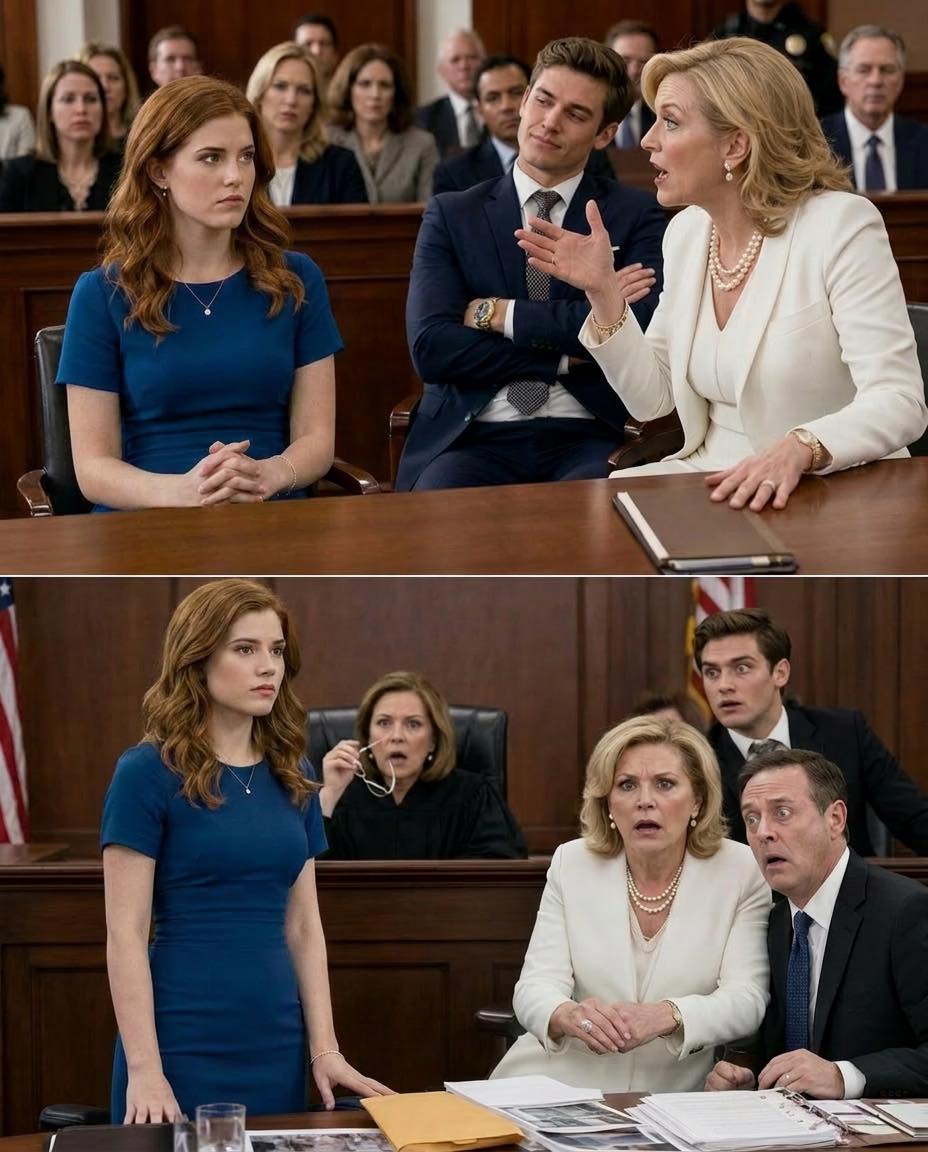
  • In court, my stepmother swore and said, “She can’t handle this. She needs a guardian.” I remained calm. The judge took off her glasses and said, “You really don’t know who she is?” Her lawyer turned pale. My stepmother was speechless…

    In court, my stepmother swore and said, “She can’t handle this. She needs a guardian.” I remained calm. The judge took off her glasses and said, “You really don’t know who she is?” Her lawyer turned pale. My stepmother was speechless…

    In court, my stepmother swore under oath and declared, “She can’t handle this. She needs a guardian.” I stayed completely calm. Then the judge slowly removed her glasses and said, “You truly have no idea who she is, do you?” Her attorney turned pale instantly. My stepmother lost the ability to speak…

    The first lie my stepmother told the court was that I was fragile. The second was that she cared about me.

    “She can’t manage this,” Vivian said, pressing a lace handkerchief against perfectly dry eyes. “She needs someone to protect her.”

    Her voice shook with practiced precision. Pearls gleamed beneath the courtroom lights. Beside her, my half-brother Mason sat with his arms folded, wearing my father’s old watch like grief was a fashion accessory.

    I sat alone at the opposite table in a navy dress, hands folded neatly, expression unreadable.

    To everyone watching, I appeared twenty-six, quiet, fatherless, and trapped.

    Exactly the image Vivian wanted.

    “My husband left behind an extremely complicated estate,” she continued. “Eleanor has always been… emotionally sensitive. After the accident, she withdrew from everyone. She stopped taking family calls. She even refused medical support.”

    “You mean I refused the doctor you paid for,” I replied softly.

    Her eyes sharpened for half a second before melting back into sorrow. “See? Paranoia.”

    Her attorney, Mr. Bell, stood smoothly. “Your Honor, we have financial records showing Miss Vale has made erratic withdrawals from company accounts. We believe she is vulnerable to manipulation and incapable of responsibly handling her late father’s holdings.”

    My father’s holdings.

    Not “family business.” Not “legacy.”

    Holdings.

    Like assets hanging from a butcher’s hook.

    Judge Maren glanced down at the file in front of her. “Miss Vale, are you represented by counsel today?”

    “No, Your Honor.”

    A quiet murmur swept through the courtroom gallery.

    Vivian’s lips curved slightly.

    She thought this was the ending she had scripted. The grieving stepdaughter, emotionally unstable, stripped of control. Vivian would become guardian of my finances, trustee of my shares, public voice of my father’s company. Mason would finally receive the board seat he had begged for ever since he learned how to spell the word inheritance.

    “You understand how serious these proceedings are?” the judge asked me.

    “Yes.”

    “And you intentionally chose to appear alone?”

    “I did.”

    Mason snorted loudly. “Classic Ellie. Always pretending she’s smarter than everybody else.”

    I turned slightly toward him. “No, Mason. I just stopped pretending you were.”

    His smirk twitched.

    Vivian leaned toward her lawyer while Mr. Bell whispered quietly, “Stay composed.”

    I heard him.

    I heard everything.

    For months, they mistook my silence for weakness. They assumed grief had hollowed me out completely.

    They never realized it sharpened me instead.

    Inside my bag, beneath a folded scarf, rested a sealed envelope, a flash drive, and my father’s final letter.

    And across the courtroom, the judge had just noticed the crest stamped onto the envelope.

    Her expression shifted immediately.

    Vivian didn’t notice it.

    Not yet….

    Vivian’s confidence grew stronger with every document her attorney handed to the court.

    Bank records. Therapy recommendations. A notarized letter of concern signed by Mason. Even photographs showing me leaving my father’s office late at night, head lowered, coat wrapped tightly around me like a woman wandering through ruins.

    “She accessed confidential company files after midnight,” Mr. Bell stated. “Multiple times.”

    “I possess authorized credentials,” I replied calmly.

    “For a department you do not oversee.”

    “Correct.”

    Mason laughed under his breath. “She doesn’t oversee anything.”

    Judge Maren lifted one finger.

    Instant silence.

    Mr. Bell continued. “We also have testimony from household staff confirming Miss Vale behaved erratically after Mr. Vale’s death. She argued with Mrs. Vale. She accused family members of theft.”

    Vivian lowered her head gracefully. “I forgave her. Grief can make people cruel.”

    I watched her perform sorrow the way actors perform royalty: elegant, rehearsed, empty.

    My father married Vivian when I was sixteen years old. She entered our home wearing expensive perfume, silk gloves, and a talent for discovering where every lock was hidden. By the time I left for law school, she had replaced the housekeeper, the accountant, and eventually even my father’s nurse.

    After his stroke, she controlled every room he entered.

    After his death, she controlled every story people told about him.

    Except one.

    “Miss Vale,” Judge Maren said carefully, “would you like to respond to these allegations?”

    “Soon.”

    Vivian blinked.

    Mr. Bell frowned slightly. “Your Honor, there is no reason for delay. We are prepared to demonstrate why guardianship is urgently necessary.”

    He pressed a remote. A transfer record appeared on the screen behind him.

    “Three weeks ago,” he announced, “Miss Vale transferred two million dollars from a company reserve account.”

    The gallery gasped audibly.

    Mason leaned back triumphantly. “Told you.”

    Vivian whispered dramatically, loud enough for the front row to hear, “Oh, Eleanor.”

    I looked directly at the screen. “That transfer was authorized.”

    “By whom?” Mr. Bell snapped.

    “By me.”

    “You had no authority to do so.”

    “Are you certain?”

    His jaw tightened. “Miss Vale, this is not a game.”

    “No,” I replied evenly. “It’s a fraud investigation disguised as a guardianship hearing.”

    The temperature in the room seemed to drop instantly.

    Vivian froze mid-motion with her handkerchief.

    Judge Maren’s eyes shifted from me to the sealed envelope. “Miss Vale, what exactly do you have in your possession?”

    I opened my bag slowly.

    Mason leaned forward. Vivian’s breathing changed subtly. Mr. Bell glanced toward her, and in that single glance I understood something important:

    He knew part of the truth.

    But not all of it.

    Good.

    I placed the envelope carefully onto the table.

    “My father’s emergency trust amendment,” I said calmly. “Signed eighteen months before his death and filed under seal with probate court.”

    “That document was invalid,” Vivian said far too quickly.

    The judge looked directly at her. “How would you know which document she’s referring to?”

    Vivian’s lips parted slightly.

    Mr. Bell turned pale.

    I placed the flash drive beside the envelope.

    “And these contain recordings from my father’s study, office access logs, modified medication invoices, and emails exchanged between Vivian Vale, Mason Vale, and two former executives discussing how to have me declared incompetent before the annual shareholder vote.”

    Mason shot upright immediately. “That’s illegal! You can’t secretly record people!”

    I smiled for the first time.

    “My father could. It was his study. His security system. His company servers. The consent notice was included in every executive contract you signed.”

    Mason looked toward Vivian.

    Vivian looked toward the judge.

    Then Judge Maren slowly removed her glasses.

    For the first time, Vivian looked frightened.

    Not because she was innocent.

    Because she was finally beginning to understand I was never alone.

    Judge Maren held the envelope with both hands as though it weighed far more than paper should.

    She read silently.

    Vivian’s attorney swallowed hard twice. Mason whispered nervously, “Mom, what’s happening?”

    I answered him myself.

    “What’s happening is that Dad knew.”

    Vivian flinched visibly.

    “He knew about the altered invoices. He knew his medication was being delayed. He knew you were pressuring him to rewrite the trust while he was medically impaired.”

    “That’s disgusting,” Vivian hissed. “You are a sick little girl.”

    I turned toward the judge. “May I play the first recording?”

    Judge Maren nodded once.

    My father’s voice filled the courtroom, thinner than I remembered but still carrying iron beneath it.

    “If Vivian or Mason petition for control over Eleanor’s inheritance, they are acting directly against my wishes. Eleanor is not weak. She is my designated successor, legal proxy, and majority voting trustee. I built Vale Biologics for her to protect, not for them to sell.”

    Vivian’s face turned white.

    The recording continued.

    “I have reason to believe my wife conspired with Mason to force a sale to Northbridge Capital after my death. Eleanor, if you are hearing this, do not show mercy to thieves pretending to be family.”

    The courtroom remained silent except for Vivian’s uneven breathing.

    Mr. Bell whispered shakily, “I was not aware of this recording, Your Honor.”

    “That issue will be addressed later,” the judge replied coldly.

    I stood slowly.

    “For the record, the two-million-dollar transfer secured payroll after Vivian and Mason attempted moving company liquidity into an account controlled by Northbridge. I possess sworn statements from the CFO and independent auditors. I also already filed an injunction freezing every transaction connected to their attempted sale.”

    Mason slammed his palm against the table. “You set us up.”

    “No,” I answered calmly. “You walked into the room carrying matches. I simply turned on the lights.”

    Vivian rose slowly to her feet. “I cared for your father.”

    “You isolated him.”

    “I kept that family together.”Intergenerational communication workshops

    “You sold pieces of it.”

    “He loved me!”

    “He warned me about you.”

    That wounded her more deeply than shouting ever could. Her face crumbled for one naked second before rage pulled it tight again.

    Judge Maren spoke with lethal calm. “The petition for guardianship is denied. I am referring this matter to the district attorney, the probate fraud division, and the state bar regarding Mr. Bell’s filings presented today.”

    Mr. Bell gripped the edge of the table tightly.

    Mason’s watch loosened around his wrist. My father’s watch. He stared at it as though it had betrayed him too.

    I pointed toward it.

    “Take it off.”

    He laughed weakly. “You can’t be serious.”

    My voice remained perfectly steady. “It belongs to the trust.”

    The bailiff stepped closer.

    Mason removed it.

    Vivian slowly sank back into her chair, finally speechless.

    Six months later, Vale Biologics announced a new patient-access foundation created in my father’s name. The attempted sale collapsed completely. Mason accepted a plea agreement for conspiracy and financial misconduct. Vivian lost the house, the cars, and every account she believed she had hidden behind shell companies.

    I kept my father’s watch inside a glass case beside my office window.

    Some evenings, sunlight struck its face and filled the room with gold.

    I had not destroyed my family.

    I had buried the lie pretending to be one.

    And for the first time in years, my home was finally quiet.

  • I greeted my husband as a passenger on my flight… while he was sitting next to another woman using the money I helped him borrow, already 30,000 feet in the air, I didn’t make a scene: I turned his lie into evidence that grounded his entire life.

    I greeted my husband as a passenger on my flight… while he was sitting next to another woman using the money I helped him borrow, already 30,000 feet in the air, I didn’t make a scene: I turned his lie into evidence that grounded his entire life.


    Share

    Part 1:

    I stood at the aircraft door in Terminal 4 at JFK, dressed in my perfectly pressed navy uniform, hair neatly pulled back, wearing the polished smile that ten years of international flying had made instinctive. It was a red-eye to Madrid, and I was leading the premium cabin, making sure every wealthy passenger felt comfortable and important.

    That same morning, my husband Adrian had kissed my forehead and told me he was flying to Dallas for an important business meeting. I believed him, because believing had long become a habit. Then I saw his name on the passenger list. Adrian Salvatore. For a few seconds, I convinced myself it had to be someone else. But then he boarded the plane. And he wasn’t alone.

    A younger woman walked beside him, elegant and confident, wrapped in luxury as if it belonged to her. His hand rested on her back in a way that said everything before either of them spoke. Her eyes met mine, and in that instant, I saw the certainty in her expression falter.

    I didn’t react. I didn’t cause a scene. I straightened my shoulders and smiled professionally.

    “Welcome aboard, Adrian. I hope your Dallas trip is going well.”

    He froze for a second.

    “Oh… do you two know each other?”

    I turned calmly to the woman.

    “You could say that. I helped him sign the most important contracts of his life. Please follow me to seats 2A and 2B.”

    She looked confused, but not yet worried.

    I walked away first.

    And that was the moment everything began to shift.

    Part 2:

    Once the plane reached cruising altitude and the cabin lights dimmed, I stepped into the galley and placed both hands on the counter. My fingers trembled briefly before training took over.

    “Mara… that was your husband, wasn’t it?” Hannah asked quietly.

    “Yes,” I replied. “And he’s flying to Madrid with her using money I helped him secure.”

    She handed me the transaction report. Two business-class tickets. Fourteen thousand dollars. Charged to our company’s corporate card.

    The same company I had helped build. The same one I had personally guaranteed with my own credit.

    Later, I pushed the service cart into the cabin. Adrian avoided looking at me. The woman beside him still held onto her confidence.

    “Excuse me,” he said casually. “Bring us the Krug. We’re celebrating.”

    I opened the champagne and poured it steadily.

    “Congratulations,” I said. “Is this for the increase in the corporate credit line? The one your wife personally guaranteed?”

    The woman froze mid-motion.

    “What did your wife guarantee?”

    Adrian’s expression tightened.

    “Mara… don’t do this here.”

    “You’re right,” I said calmly. “This is my workplace. Enjoy the flight while you can.”

    Later, during my break, I connected to the in-flight Wi-Fi and sent a message to a lawyer. I documented everything—his presence, the charges, the misuse of company funds.

    The reply came quickly.

    “Stay calm. Gather everything you can. I’ll take care of the rest.”

    At that moment, something inside me settled.

    I wasn’t just a betrayed wife.

    I was preparing evidence.

    Part 3:

    As dawn approached over Spain, the cabin filled with the smell of coffee and quiet exhaustion. The woman—Lila—stopped me as I passed.

    “Are you really his wife?” she asked.

    I looked at her calmly.

    “Did he tell you we were separated, or that I couldn’t support his ambitions?”

    She didn’t answer. That was answer enough.

    Adrian suddenly snapped.

    “Mara, that’s enough. I’m your husband.”

    I stood straight, voice steady and clear.

    “At home, you were my husband. On this plane, you’re passenger 2A. And right now, you’re interfering with a crew member performing her duties.”

    Silence spread through the cabin.

    He sat down.

    When the plane landed in Madrid, I stood at the door, thanking each passenger. When Adrian reached me, he lowered his voice.

    “Mara, can we talk? I can explain everything.”

    I didn’t move.

    “Thank you for flying with us. Please do not come to the crew hotel. Security has been informed.”

    He stared at me, but I had already closed that door.

    Weeks later, everything collapsed for him. The accounts were frozen. His company was investigated. His assets were seized.

    We met in a law office, and for the first time, he looked small.

    “Mara, we can fix this,” he said.

    I placed a folder in front of him.

    “It’s already done.”

    “And the apartment?” he asked.

    “It was mine before the marriage.”

    He had forgotten.

    A year later, I stood on another flight, no ring on my finger, no weight on my shoulders. A message appeared on my phone.

    “Your guarantor file has been closed.”

    I smiled.

    That flight to Madrid didn’t break me.

    It freed me.

  • At My Mom’s Birthday, My Brother’s Son Dumped Soda In My Lap And Ye:lled, “Grandma Says You Don’t Belong Here.” The Table Laughed. I Wiped My Clothes, Smiled, And Stayed Quiet. That Night, I Pulled My Name From Their Loan. By Morning, His Car Was Gone. And At 8 A.M., There Was A Knock At My Door. I Opened It

    At My Mom’s Birthday, My Brother’s Son Dumped Soda In My Lap And Ye:lled, “Grandma Says You Don’t Belong Here.” The Table Laughed. I Wiped My Clothes, Smiled, And Stayed Quiet. That Night, I Pulled My Name From Their Loan. By Morning, His Car Was Gone. And At 8 A.M., There Was A Knock At My Door. I Opened It

    I was already halfway up my mother’s walkway when I realized I hadn’t practiced my smile.

    After thirty-six years, you’d think it would come naturally—the polite, harmless curve of the lips that says I’m fine even when you’re not. The kind that looks good enough in photos, even if it never reaches your eyes.

    The porch light buzzed above the door, drawing in moths that kept throwing themselves against the glass, desperate to get inside. I understood that feeling more than I wanted to admit. Laughter spilled out every time the door opened—warm, loud, and easy.

    My mom’s voice rang clear, my brother Mike’s deeper laugh underneath, and the chaotic noise of teenagers—Tyler and his friends. I paused at the last step and tightened my grip on the gift bag in my hand. Inside was a small velvet box—a necklace I had picked weeks ago. A delicate gold lily. Her favorite. I had spent too much time choosing it, imagining her reaction, imagining her smiling and saying, “You always know exactly what I like.” I knew better, but hope doesn’t disappear just because it’s foolish. I forced a smile and knocked.

    The door flew open. Tyler stood there, tall and smug, already carrying himself like the world owed him something.

    “Oh. You came.”
    “Yes. Your grandmother invited me.”
    “Just throw your stuff somewhere.”

    I stepped inside. The house was crowded, music thumping, voices overlapping, glasses clinking. The air smelled like sugar, fried food, and expensive cologne. For a moment, no one noticed me. It always happened like that—as if I needed time to come into focus. My mom sat at the head of the table, smiling at Tyler like he had hung the stars, proudly telling someone about how gifted he was. I cleared my throat and stepped forward.
    “Hi, Mom.”
    “Oh. Stephanie. You made it.”
    “Of course. It’s your birthday.”
    “Put the gift somewhere. We’re doing presents.”

    They had already started. Boxes were open, wrapping paper everywhere, Tyler lounging in his chair soaking in attention. I placed my gift quietly on the sideboard next to the cakes, suddenly aware of how small it looked. My brother called out, already flushed from drinking, pulling me toward the table and squeezing me into a seat between strangers. My mom raised her glass and began a toast about how proud she was of her family—her son, her grandson—her voice full of warmth that never quite reached me.
    “I love you all.”

    Everyone cheered. I raised my glass too.

    “Happy birthday.”

    Presents continued, laughter rising and falling, Tyler bragging, my mom encouraging him. My gift sat untouched. I told myself it didn’t matter, but it did. Then Tyler stood up with a cup of soda and wandered around the table with casual swagger before stopping beside me.
    “Grandma says…”
    “You don’t belong here.”

    Before I could react, he tipped the cup. Cold soda poured into my lap. For a heartbeat, everything went still. Then the room erupted in laughter.
    “Oh, Tyler!”
    “He’s so honest.”
    “That’s my boy.”

    I stared down at the spreading stain, something inside me going quiet—not hurt, not embarrassment, but clarity. I looked at Tyler, proud of himself, at my mother, amused, at everyone else entertained. I smiled, but not the practiced one.
    “Excuse me.”

    I stood up, ignored the laughter, and walked to the bathroom. I closed the door and looked at myself in the mirror, barely recognizing the woman staring back.
    “You don’t belong here.”

    For the first time, it didn’t hurt. It felt true. I left shortly after. No one stopped me, no one asked me to stay, no one cared.

    That night, in my apartment above my store, I sat at the table with my laptop open, staring at my brother’s loan documents. My name was everywhere—loans, leases, accounts—years of helping because “family takes care of each other.” Funny how that always meant me taking care of them. I hovered over the screen, then made the decision. I removed myself from everything.

    The next morning, Mike showed up furious, pushing into my space with anger spilling out of him.
    “You need to fix this.”
    “The loan’s frozen. You’re ruining us.”
    “This is over a joke?”
    “This isn’t about the soda.”
    “Then what?”
    “It’s about not funding people who humiliate me.”

    He didn’t understand, and he never would. He left with threats hanging in the air.

    Then came the damage. My car scratched from end to end, glass shattered, red paint screaming across the door: FAKE AUNT. I watched the security footage—Tyler laughing as he did it—and called the police. I pressed charges. Things escalated fast. My brother went online, calling me unstable, accusing me of using grief for attention. My mother stayed silent, and somehow that silence was louder than anything he said.

    But something unexpected happened. People supported me. Customers came into my store just to say I was doing the right thing. My business grew, my life steadied without them in it. Court day came, and the evidence spoke for itself—vandalism, fraud, harassment. The judge didn’t hesitate. We won everything.

    They didn’t change. If anything, they got worse—more damage, more threats—but I didn’t break. I documented everything and kept moving forward. Months passed, and my life became something I barely recognized—not chaotic, not painful, but calm.

    One afternoon, I saw my mother standing outside my store through the security camera. She stood there for a long time, looking in, taking in the space I had built. She didn’t come inside. She didn’t knock. She just turned and walked away.

    And that’s when I understood something I should have known all along. Belonging isn’t something you earn by shrinking yourself. It isn’t something others get to give or take away. I had spent years trying to fit into a place that never had room for me. That night, when Tyler said I didn’t belong, he thought he was humiliating me.

    He wasn’t.

    He was setting me free.

    Now, when I lock my store at night and sit in the quiet of my own space, I feel something I thought I had lost forever.

    Peace.

    And this time, it’s mine.

  • My dad thought forcing me to apologize in front of twenty laughing relatives was the end of it. I just said, “Fine.” But the next morning,

    My dad thought forcing me to apologize in front of twenty laughing relatives was the end of it. I just said, “Fine.” But the next morning,

    My father assumed hu:miliating me in front of twenty laughing relatives would settle everything. I only replied, “Fine.” But the next morning, when he opened the door to my empty room, the confidence drained from his face. Then the family attorney arrived at the house shaking, clutching his briefcase, and asked one terrifying question: “Sir… what exactly have you done?”

    “Apologize to your brother or you’re grounded,” my father shouted, his face flushed at the head of the long dining table.

    Twenty relatives had gathered for my grandmother’s seventieth birthday at my father’s house in Connecticut. Aunts, uncles, cousins, spouses — all pretending not to enjoy the spectacle while laughing into their wineglasses. My older brother, Evan, reclined in his chair wearing that polished smirk he used whenever he thought he had already won.

    I stood beside the kitchen doorway with sauce staining my sleeve and humiliation burning behind my eyes.

    Evan had “accidentally” shoved my portfolio case into the sink. Six months of sketches, proposal drafts, and signed design contracts soaked in greasy dishwater. When I snapped and called him a jealous fraud, he laughed and told everyone I was overreacting.

    Dad believed him immediately.

    “Say it,” Dad demanded.

    Mom stared down at her plate. Aunt Sandra muttered, “She was always too sensitive.”

    Evan lifted his hands innocently. “I’m willing to forgive her.”

    That was when the room burst into laughter again.

    I looked at my father, Richard Calloway, the man who had spent twenty-four years teaching me that family loyalty mattered more than dignity. The same man who emptied my college fund after Mom’s medical bills and told me not to make trouble over it. The same man whose construction company survived the recession because I quietly rebuilt his client presentations, cleaned his bookkeeping, and introduced him to people he later bragged about as “my contacts.”

    Something inside me became completely still.

    “Fine,” I said.

    Dad frowned. “Fine what?”

    “I apologize.”

    Evan’s grin widened.

    I turned toward him. “I’m sorry I expected you to be better than this.”

    The laughter vanished instantly.

    Dad slammed his hand against the table. “Go to your room. You’re grounded. No car, no cards, no phone until I decide you’ve learned respect.”

    I nodded once. “Fine.”

    That night, while the house slept and relatives filled the guest rooms, I packed without making a sound. One suitcase. One laptop. One folder from the locked drawer beneath my desk. Inside were copies of every agreement Dad had me sign when Grandma transferred Grandpa’s shares into a trust.

    He assumed I never bothered reading them.

    By sunrise, my room was empty. The bed was stripped bare. The framed family photograph lay facedown on the desk. My car — bought in my name using money from my freelance work — was gone.

    At 8:17 a.m., Dad opened my bedroom door expecting to smirk.

    At 8:24, our family lawyer, Martin Ellis, appeared at the front door without a tie, carrying a leather briefcase like it contained a bomb.

    “Richard,” he said, pale and short of breath. “Sir… what exactly have you done?”…

    Part 2: Dad stared at Martin as though the question itself off:ended him.

    “What are you talking about?” he snapped. “She threw a fit. I grounded her.”

    Martin stepped inside and lowered his voice — though not enough. Every word carried down the hallway into the dining room where relatives hovered around cold coffee and leftover birthday cake. Evan lingered near the kitchen doorway, still wearing yesterday’s confidence like an expensive suit.

    “Richard,” Martin said carefully, “you did not ground a child. Claire is twenty-four years old. She’s an adult. More importantly, she is not financially dependent on you.”

    Dad laughed sharply. “She lives here.”

    “She resided here,” Martin corrected. “Under the family occupancy agreement attached to the Calloway Trust.”

    The room went still.

    Mom stepped out from behind Evan. “What agreement?”

    Martin glanced at her briefly before looking back at Dad. “The agreement your mother required when she transferred controlling interest of Calloway Residential Holdings. Claire was named operational beneficiary for the East Harbor properties. She permitted Richard’s company to use the office space and equipment under a family-use clause.”

    Evan frowned. “That’s not true.”

    “It is completely true,” Martin replied. “And if she vacated the property under hostile conditions, the clause terminates automatically unless she files a waiver.”

    Dad’s jaw tightened. “She wouldn’t know that.”

    Martin’s expression answered before his words did. “She filed notice at 7:42 this morning.”

    Silence swallowed the kitchen.

    I was not there to witness it, but later my cousin Maya told me everything. She said Dad looked like the floor had shifted beneath him. Evan stopped leaning against the counter. Aunt Sandra crossed her arms, then slowly uncrossed them.

    Martin opened his briefcase and removed a thick packet of papers.

    “Claire also submitted copies of messages, invoices, and amended proposals showing several company accounts were personally maintained by her after your accounting department failed to reconcile them. She is requesting a formal audit before additional trust assets are used by your business.”

    Dad snatched the papers. “She has no right.”

    “She has every right,” Martin replied. “She is the signatory beneficiary attached to those assets.”

    Evan barked out a laugh that sounded too loud. “This is absurd. She draws pretty buildings on an iPad. She doesn’t run anything.”

    Martin turned toward him. “Mr. Calloway, one of the soaked documents Claire photographed last night was a signed letter of intent from Hargrove Development. That letter names Claire as design consultant and client liaison — not you, and not your father.”

    Evan’s expression changed instantly.

    Dad noticed.

    “What did you do?” Dad demanded.

    Evan glanced toward the staircase, as if I might suddenly appear and make myself easy to blame again.

    Martin continued. “Claire also included screenshots showing Evan forwarded portions of her proposal to himself two weeks ago. Hargrove’s legal department has already been contacted. They are now asking whether Calloway Construction knowingly submitted another consultant’s work without authorization.”

    Mom whispered, “Evan.”

    Evan snapped back, “I was helping the family.”

    “No,” Martin said coldly. “You created exposure.”

    That word hit harder than any accusation. Exposure meant lawsuits. Exposure meant frozen contracts. Exposure meant banks asking uncomfortable questions Dad usually avoided with charm and steak dinners.

    Dad lowered his voice. “Where is she?”

    Martin paused.

    “Where is my daughter?”

    “At a hotel in New Haven,” Martin answered. “With legal counsel copied on all correspondence. She instructed me that she will only communicate through written channels for the next thirty days.”

    Aunt Sandra gave an awkward cough. Uncle Paul suddenly became fascinated with his shoes.

    Dad’s face darkened. “She’s humiliating this family.”

    Martin looked exhausted. “Richard, with respect, this family humiliated her in front of twenty witnesses. Half of them recorded it.”

    Maya had recorded Dad demanding the apology. One cousin recorded Evan laughing over the destroyed portfolio. Another captured Dad threatening to take my phone, cards, and car. Dad probably viewed it as discipline. On video, against a grown woman with contractual authority over family assets, it looked like coercion.

    By noon, Hargrove suspended all negotiations with Calloway Construction. By two, the bank demanded updated trust documentation. By four, Dad’s office manager called because the company access codes no longer worked for the East Harbor server.

    Not because I hacked anything. I didn’t need to. The system belonged to the trust. My name controlled the permissions. When I left, I simply removed the convenience access I had granted to people who confused convenience with ownership.

    For the first time in years, my father actually had to read the paperwork.

    And for the first time in my life, nobody could order me back into the room.

    Part 3: Three days later, Dad emailed me with the subject line: Come home.

    The message itself said, We need to talk as a family.

    I forwarded it to Martin and never responded.

    On the fourth day, Mom called from a blocked number. I almost ignored it. But despite everything, I answered because some part of me still wanted to hear her say my name without fear behind it.

    “Claire,” she said quietly. “Your father is under a lot of pressure.”

    I stood beside the hotel window watching rain slide down the streets below. “I know.”

    “He didn’t understand the trust.”

    “He signed it.”

    “He was angry.”

    “He humiliated me.”

    Silence stretched between us.

    Then she said softly, “Evan says he only copied your files because he wanted Dad to finally take you seriously.”

    I closed my eyes. “Mom, Evan destroyed the printed originals after copying them. That isn’t support. That’s theft with dishwater.”

    Her breath trembled. “What do you want?”

    It was the first honest question anyone had asked me.

    “I want a written apology from Dad and Evan. I want Evan permanently removed from the Hargrove pitch. I want the company to pay for an independent audit. I want the family-use clause renegotiated with market rent paid to the trust. And I want my personal work acknowledged as mine.”

    “That sounds harsh.”

    “No,” I replied. “It sounds documented.”

    The following week was ugly, but clean. Lawyers wrote the things family members refused to say aloud. Hargrove agreed to continue negotiations only if I remained lead consultant while Calloway Construction acted strictly as builder, not designer. Evan was furious. Dad attempted to replace me with a senior architect he barely knew, but Hargrove refused. They had wanted my concept from the beginning.

    At the audit meeting, Dad looked smaller than I remembered. Not weak exactly — just unfamiliar with sitting on the wrong side of authority.

    Evan arrived late and dropped into his chair without looking at me.

    Martin placed the final agreement on the table.

    Dad read it twice. “You’re charging rent for the office?”

    “The trust is,” I answered.

    “This company paid for your life.”

    “No,” I said calmly. “Grandpa’s trust paid for your building. My unpaid work protected your contracts. And Mom paid for peace by staying silent.”

    Mom flinched beside him but said nothing.

    Evan muttered, “You’re enjoying this.”

    I looked at him for a long moment. He still wanted the old version of me — angry enough to look irrational, hurt enough to dismiss.

    “I’m not enjoying it,” I said quietly. “I’m finishing it.”

    His jaw tightened, but no clever response came.

    Dad signed first. Evan signed after Martin reminded him that Hargrove’s intellectual-property complaint would remain open until the correction letter was submitted. His apology sounded stiff, legal, and empty. Dad’s apology was worse because it almost sounded sincere.

    Claire, I was wrong to threaten you, wrong to dismiss your work, and wrong to allow the family to laugh at you. I apologize.

    I read it once and slipped it into my folder.

    I never moved back home. Instead, I rented a small apartment near the train station in New Haven with white walls, quiet neighbors, and a desk facing the morning light. On my first night there, I ordered takeout, balanced my laptop on a cardboard box, and opened a blank file titled Hargrove Final Concept.

    No one knocked on my door. No one shouted from downstairs. No one told me loyalty meant swallowing disrespect.

    Two months later, the Hargrove deal closed. Calloway Construction received the build contract — smaller than Dad wanted, but enough to stabilize the company. My consultancy was listed separately.

    At Grandma’s next birthday, I attended for exactly one hour. Dad stood when I entered. Evan stayed silent. Aunt Sandra complimented my coat far too loudly.

    Grandma squeezed my hand and whispered, “Your grandfather always said you were the one who read before signing.”

  • She Flew to Surprise Her Millionaire Husband—But the Voice Behind Room 847 Exposed the Signature He Forged

    She Flew to Surprise Her Millionaire Husband—But the Voice Behind Room 847 Exposed the Signature He Forged

    Hannah frowned. “Not that I know of. Why?”

    “Because you mentioned he said something about the house and company debt disappearing. That usually means he could be planning to get you to sign documents—maybe collateral papers, transfer forms, or even a settlement that shifts liability onto you. Has he asked you to sign anything recently?”

    Hannah’s hand froze above her notebook.

    Three weeks earlier, Evan had come home with a folder after dinner. He said it was just boring insurance paperwork related to the house. She had been tired, half-watching a cooking show, and he had pointed at a few sticky notes.

    “Just sign here,” he had said casually. “Nothing important.”

    And she had signed—because after ten years of marriage, signing papers her husband placed in front of her had become routine.

    “Oh my God,” Hannah whispered.

    Dana’s voice sharpened. “What is it?”

    “I signed something,” Hannah said, her voice unsteady. “I didn’t read it. He told me it was insurance.”

    Silence filled the line.

    Then Dana spoke, firm and urgent. “Go home. Don’t confront him. Just gather evidence. Do you have access to his office?”

    “Yes.”

    “Good. Photograph everything—files, computer screens, drawers, even safes if you know the codes. Don’t take anything unless it clearly belongs to you. If you find financial documents, loan records, or emails with banks, take photos and send them to an account he can’t access.”

    Hannah scribbled notes quickly. “Okay.”

    “And Hannah?”

    “Yes?”

    “Never underestimate a man who has already convinced himself that betraying you is justified.”

    That sentence stayed with her the entire flight back to Kansas City.

    When she unlocked the front door that afternoon, the house felt different—too perfect, almost staged, like a model version of a life that no longer existed. The blue table she had painted. Their wedding photo above the stairs. The neatly labeled kitchen jars in Evan’s handwriting. Everything looked peaceful.

    Now it all felt like a cover for something hidden underneath.

    She didn’t hesitate.

    First, she gathered her essentials—passport, birth certificate, Social Security card, her mother’s jewelry, and a few irreplaceable photos. She packed them into a gym bag and locked it in her car.

    Then she went straight to Evan’s office.

    For years, that room had been his domain—mahogany desk, leather chair, shelves filled with business books he rarely read but liked others to see. On the wall hung a framed article about Mercer Vale Strategies, the company he built with his college friend, Connor Vale.

    Hannah opened the filing cabinet.

    At first, everything looked normal—tax returns, insurance policies, old contracts.

    Then, hidden in the bottom drawer behind a stack of brochures, she found a blue folder marked only with a black X.

    Inside were documents bearing her signature.

    Her real signature.

    Or something close enough to make her heart race.

    She spread the pages across the floor. A home equity loan. A personal guarantee tied to the company. Papers authorizing their house as collateral.

    The dates didn’t make sense.

    One document showed a signature from a day she had been in Denver for a conference—she even had photos to prove it.

    She had never signed it.

    Evan had forged her name.

    The room seemed to spin. She sat back, pressing her hands against her knees, trying to steady herself.

    The affair had broken her heart.

    This could have destroyed her entire future.

    She took photos of everything. Then she kept searching.

    There were bank transfers—money moving from the company account into Evan’s personal one. Payments to jewelry stores. Hotel charges. A lease application for a downtown apartment.

    And a draft separation agreement.

    In it, Hannah would “temporarily” take responsibility for the home equity loan.

    She almost laughed.

    Evan had planned everything. He would come home, confess just enough of the affair to seem honest, act like a man trapped in an unhappy marriage, and convince her to sign documents “for both their sake.”

    He knew her. He knew she avoided conflict. He knew she might sign just to end the pain faster.

    And if she hadn’t gone to Chicago… she might have.

    Her phone buzzed.

    Evan: Flight delayed. I’ll be home late. Can’t wait to see you.

    Hannah stared at the folder.

    “Liar,” she whispered.

    Then she picked up her phone and called Sarah.

  • My Mom Found Me at the Hospital With $47 in My Account—Then I Said My Husband’s Sister Took Our Baby Money and the Truth Shattered His Family Forever…

    My Mom Found Me at the Hospital With $47 in My Account—Then I Said My Husband’s Sister Took Our Baby Money and the Truth Shattered His Family Forever…

    PART 1

    The first time my mother discovered me crying in a hospital corridor, I was thirty-one weeks pregnant, wearing one swollen sneaker and one hospital slipper, gripping my phone as though it were the only steady thing left in my world.

    The woman at admissions had just repeated the words, quieter this time, as if kindness could somehow strip away the humiliation.

    “Ma’am, I’m sorry. The card is still declining.”

    Behind me, a man in scrubs rolled a wheelchair down the hall. Somewhere farther away, a newborn let out a thin, angry cry that cut straight through my chest. I had gone to Mercy General to pre-register for my daughter’s birth. I expected paperwork, insurance forms, maybe the normal nerves of becoming a mother.

    I had not expected to learn that the account holding our baby savings—the hospital deposit, the rent cushion, the emergency fund my husband and I had built paycheck by paycheck—had been emptied down to forty-seven dollars.

    Forty-seven dollars.

    I stared at the banking app until the numbers smeared together. Fourteen transfers. Eleven days. Different amounts, same authorized user.

    My husband’s sister.

    Tara Whitmore.

    My sister-in-law.

    The woman who had been staying in the in-law suite attached to my home for six months. The woman who walked into my kitchen without knocking. The woman who told me just last week that “real mothers sacrifice comfort,” while sitting at my island eating my groceries and criticizing the rocking chair I picked for the nursery.

    I called my husband, Marcus.

    No answer.

    I called again.

    No answer.

    By the fourth attempt, my thumb shook so badly I nearly dropped the phone. My daughter kicked once, hard, as if she could feel the floor disappearing beneath us.

    So I called my mother.

    “Mom,” I said when she answered. My voice sounded so small I barely recognized it. “I need you to come to Mercy General.”

    There was a pause. Not confusion. Not panic. Just the immediate silence of a mother hearing fear in her child’s voice.

    “I’m getting my keys,” she said.

    Nineteen minutes later, Linda Harper came through the automatic doors like a woman marching into battle. She was sixty-one, five-foot-four, gray-haired, and had never once in her life needed to raise her voice to frighten anyone. She found me sitting in a bolted-down chair beside a vending machine, one hand resting on my stomach, the other wrapped around my phone.

    She didn’t ask why I was crying.

    She sat beside me and said, “Show me.”

    I showed her the balance. I showed her the transfers. I showed her Tara’s name connected to every withdrawal.

    My mother’s expression changed only once. Her mouth tightened slightly.

    “Where is Marcus?” she asked.

    “He won’t answer.”

    “Where is Tara?”

    “Probably at my house.”

    My mother stood.

    “Then we go to the bank first,” she said. “And after that, we go get your life back.”

    I should have felt brave in that moment. I didn’t. I felt humiliated. Sick. Exposed. I felt as though the entire hospital could see through me—see that I was the woman whose husband handed his sister a key, whose mother-in-law treated her pregnancy like a group project, whose own kitchen had become a place where she needed permission just to know where the cups were.

    But my mother took my elbow, steady and warm, and guided me out of that hallway.

    When we stepped into the parking lot, the February air hit my face sharp enough to wake me up.

    I looked down at my stomach and whispered, “I’m sorry.”

    My mother heard me.

    “No,” she said, unlocking her car. “You don’t apologize to your baby for what thieves did.”

    At the bank, a manager named David confirmed everything I already knew, and somehow hearing it aloud made it worse.

    Tara was an authorized user.

    She had access.

    Marcus had approved it months earlier, “for emergencies.”

    The transfers looked ugly, suspicious, possibly actionable, but not simple. Not clean. Not the way crimes are supposed to look when your world collapses. David froze what remained, removed Tara’s access, printed the records, and advised me to contact both an attorney and the police.

    By the time my mother drove me home, I had stopped crying.

    That frightened me more than the tears.

    Marcus’s truck sat in the driveway.

    Tara’s white SUV was parked beside it.

    Inside my own kitchen, Tara stood at the stove stirring soup in my Dutch oven while wearing one of my aprons. Marcus leaned against the counter scrolling through his phone.

    He looked up and smiled like nothing was wrong.

    “Hey,” he said. “I saw your calls. I was in a meeting. Everything okay?”

    I placed my phone on the counter, transaction history still open.

    “Explain this,” I said.

    Tara turned from the stove. Her eyes dropped to the screen.

    For one second, her face went empty.

    Then she smiled.

    “I was holding it for you,” she said.

    PART 2

    There are moments in a marriage when the room reveals the truth before anyone inside it speaks it aloud.

    Marcus did not ask Tara what she meant. He did not grab the phone. He did not look nearly shocked enough.

    He only whispered, “Rachel…”

    My name, spoken like a warning.

    And that was when I understood.

    Not everything. Not the full rotten shape of it. But enough.

    I looked at my husband, the man who cried in the car after our first ultrasound, the man who pressed his hand against my belly every night and whispered terrible made-up lullabies to our daughter. I looked at him standing beside his sister, and I realized there had been three people in my marriage all along.

    Maybe there always had been.

    “Tara,” I said, forcing my voice to stay level, “you transferred more than fourteen thousand dollars out of our savings account.”

    She placed the spoon down carefully. “Don’t make it sound criminal.”

    My mother stepped into the kitchen behind me.

    Tara’s eyes flicked toward her with irritation. “This is a family matter.”

    “My daughter is my family,” my mother replied.

    Marcus rubbed at his forehead. “Everybody needs to calm down.”

    I laughed once. It sounded sharp and unfamiliar.

    “Calm down?” I said. “I was at the hospital trying to pay the delivery deposit. My card declined. I had forty-seven dollars left in the account we saved for our baby. Forty-seven dollars, Marcus.”

    He swallowed hard.

    Tara folded her arms. “That money wasn’t safe just sitting there.”

    “It was in a bank.”

    “You haven’t been thinking clearly lately. Pregnancy hormones can make people impulsive.”

    My mother took one step closer. “Choose your next words carefully.”

    Tara ignored her. “Mom and I were worried. You cut your hours. You’ve been buying nursery things, ordering expensive organic sheets, talking about hiring a postpartum doula—”

    “I bought a crib,” I said. “And those sheets were on sale.”

    “That’s not the point.”

    “Then what is the point?”

    She lifted her chin. “The point is, Marcus works hard, and someone had to protect the baby money.”

    “From me?”

    The silence answered for them.

    Marcus stared at the floor.

    I wanted him to deny it. I wanted him to look at Tara like she had lost her mind. I wanted him to say, Rachel, no, I didn’t know, I would never let this happen.

    Instead, he said, “I thought it was temporary.”

    My daughter kicked again. This time it hurt.

    “You knew?”

    “I knew Tara moved some money.”

    “Some?”

    “I didn’t know it was all of it.”

    Tara snapped, “It wasn’t all of it. There was still money.”

    “Forty-seven dollars,” my mother said.

    Tara’s face flushed red. “We were going to transfer it back when it was needed.”

    “It was needed today,” I said.

    Marcus finally looked at me, and now there was fear in his eyes. Not fear for me. Fear of consequences.

    That was almost worse.

    I picked up my phone.

    “You have until tomorrow morning,” I told Tara, though my eyes stayed on Marcus. “Every dollar returned to that account. If not, I’m filing a police report.”

    Tara scoffed. “You wouldn’t dare.”

    My mother said, “Try her.”

    Marcus stepped forward. “Rachel, please. Let’s talk privately.”

    “No,” I said. “You had private conversations when you gave your sister access. You had private conversations when you let your mother decide I couldn’t be trusted with money for my own child. We’re done with private.”

    Tara’s mouth twisted. “You always wanted to turn him against us.”

    I looked at her then, truly looked at her.

    She was thirty-six, pretty in an expensive, fragile kind of way, with flawless blond highlights she couldn’t actually afford and a diamond pendant she wore even with sweatpants. She lost her job the year before and moved into our in-law suite “for a few weeks.” Then a few weeks became months. Then she started eating dinner with us every night, coming through the interior door, reorganizing the pantry, commenting on my weight gain, telling Marcus what his mother thought.

    And I swallowed all of it because I wanted peace.

    Peace, I had learned, was often just silence wearing a prettier name.

    I turned toward Marcus. “I’m staying with my mom.”

    His eyes widened. “Rachel, come on.”

    “I need my hospital bag. Prenatal vitamins. Laptop. The folder from my desk.”

    “I’ll get them.”

    “No,” my mother said. “She will get them. You will stand where we can see you.”

    For a moment, Marcus looked offended.

    Then he looked ashamed.

    I went upstairs slowly. The nursery door stood open. Inside, pale yellow curtains framed the window. The crib was only half assembled. On the dresser sat a tiny pair of socks shaped like strawberries.

    I stood there long enough for my anger to fracture.

    I pressed both hands against my stomach.

    “I don’t know what I’m doing,” I whispered.

    But then I noticed my notebook resting on the rocking chair.

    The one where I had written dates, comments, strange intrusions.

    Tara came over unannounced Tuesday. Moved bottles to top cabinet.

    Vivian said breastfeeding is “nonnegotiable” in their family.

    Marcus said I was sensitive again.

    I had forty-three notes.

    Forty-three times some part of me already knew I needed proof.

    I packed the notebook too.

    PART 3

    My childhood bedroom still had yellow curtains.

    The quilt on the bed had been sewn by my grandmother, a woman who survived two terrible husbands, one tornado, and breast cancer before she ever reached fifty. When I was little, I used to trace the quilt squares and imagine every piece of fabric was a tiny doorway into another life.

    That first night back in my mother’s house, I lay beneath that quilt at thirty-one weeks pregnant and felt as though I had failed at every adult thing I was supposed to understand.

    Marriage. Money. Boundaries. Motherhood.

    Marcus texted me eleven times before midnight.

    The first messages were gentle.

    I’m sorry. I should’ve answered.
    I didn’t know she took that much.
    Please let me make this right.

    Then came the explanations.

    Mom was worried.
    Tara has been under a lot of pressure.
    We all agreed the money needed to be protected.

    Then came the shift.

    You’re turning this into something bigger than it is.
    You can’t run to your mother every time we have a disagreement.
    Come home and talk like an adult.

    I read every text. I replied to none of them.

    The next morning, my mother made coffee for herself and peppermint tea for me. She placed a plate of toast on the kitchen table, then set my notebook beside it.

    “You’re calling a lawyer,” she said.

    “I don’t even know what kind.”

    “I do.”

    Of course she did.

    My mother had worked as an office manager for a family attorney for seventeen years before retiring. She knew the difference between bad behavior and behavior that left a paper trail behind. By nine-thirty, I was speaking on the phone with Patricia Cole, a lawyer with a calm voice and the frightening patience of someone who had already heard every excuse imaginable.

    I told her everything.

    The account. The hospital. Tara. Marcus. Vivian, my mother-in-law, who started treating my pregnancy like a corporate takeover the moment I entered my second trimester.

    Patricia interrupted only once.

    “Did anyone put in writing why the money was moved?”

    “I don’t know.”

    “Find out.”

    I sent her screenshots of the bank records, Marcus’s texts, and photographs of my notebook pages. At eleven-fifteen, Patricia called back.

    “Rachel,” she said, “your husband accidentally forwarded you one very useful sentence.”

    She read aloud from one of Marcus’s messages.

    Tara only pulled the baby money because Mom was scared you’d waste it.

    Baby money.

    Not joint savings.

    Not household funds.

    Baby money.

    Patricia’s tone sharpened slightly. “That wording matters. It establishes intent. It shows they understood exactly what the money was for. Now I need statements showing where it ended up.”

    By that afternoon, Patricia had requested records through the bank’s fraud department. By evening, she called again.

    I was sitting on my mother’s couch, untouched tea cooling beside me, watching rain trail down the windows.

    “Rachel,” Patricia said, “more than half the money is gone.”

    My chest tightened. “Gone where?”

    “Six thousand four hundred dollars was transferred into Tara’s personal account. From there, it appears to have been used for a loan payment and two credit card balances.”

    I closed my eyes.

    A sound escaped me—not quite a sob, not quite a scream. Something smaller. Uglier.

    My mother muted the television.

    “How much?” she asked.

    I lowered the phone.

    “She spent it,” I said.

    My mother’s expression went completely still.

    Then she stood, walked to the hall closet, pulled out her coat, and said, “Then we file the report.”

    The police station smelled like old paper and floor cleaner. The officer taking my statement was kind but cautious. He explained that because Tara had authorized access, the situation was complicated. Patricia, joining by phone, explained the documented purpose of the funds, the deceptive transfers, and Tara’s written intention to prevent me from accessing money meant for medical expenses.

    The officer wrote everything down.

    I signed the report with a hand that barely trembled.

    When we returned home, I had four voicemails from Vivian Whitmore.

    The first sounded syrupy sweet.

    Rachel, sweetheart, this has gone too far. Tara was only trying to help.

    The second sounded wounded.

    I cannot believe you would involve police over a misunderstanding between family.

    The third was angry.

    Do you understand what you’re doing to Marcus? To all of us?

    The fourth was the truth.

    You are using that baby as a weapon. You always wanted control. Marcus knows it.

    I saved all four messages.

    That night, Marcus came to my mother’s house.

    He stood on the porch beneath the weak yellow porch light, looking like a man who had finally reached the edge of something he could no longer explain away. Rain dampened his hair. His eyes were red.

    I opened the door but did not invite him inside.

    “Rachel,” he said. “Tara is returning the money.”

    “She spent six thousand four hundred dollars.”

    “Mom is covering it.”

    I leaned against the doorframe, suddenly so exhausted I could barely stay upright.

    “Your mother helped steal money meant for your daughter’s birth,” I said, “and now she wants praise for replacing it?”

    He flinched.

    “I know how it sounds.”

    “No,” I said. “You only know how it sounds now. You didn’t know how it felt when I sat in a hospital hallway wondering how I would pay for our baby’s delivery while you ignored my calls.”

    “I was in a meeting.”

    “You were in a family you kept choosing over me.”

    That hit him.

    For a long moment, he said nothing at all.

    Then quietly, he admitted, “I don’t know how to fix this.”

    I looked past him, at the wet driveway and the streetlights shining across the pavement.

    “You start by deciding who you are,” I said. “My husband, or your mother’s son first. Because I cannot raise a child in a house where that answer changes depending on who’s in the room.”

    PART 4

    The money returned on Tuesday.

    Fourteen thousand two hundred dollars, including the amount Tara had already spent and whatever Vivian scraped together to replace it. Patricia confirmed the restitution in an email so professionally written it almost made the disaster sound routine.

    Restitution received in full. Police report remains active pending complainant decision.

    I read the sentence three times.

    For two days, I believed getting the money back would make me feel safe again.

    It didn’t.

    Money could be restored. Trust could not simply be redeposited into an account.

    Marcus asked to meet me at Patricia’s office. I agreed because there were things that needed to be said in a room filled with witnesses and fluorescent lights. My mother drove me but stayed outside, knitting a baby blanket in the lobby like a general sharpening a weapon.

    Marcus arrived alone.

    That surprised me.

    He looked at my stomach first, then my face.

    “How is she?” he asked.

    “Our daughter is fine.”

    The words our daughter made his jaw tighten.

    Patricia outlined conditions in a voice that left no space for emotional confusion. Tara would be permanently removed from all accounts, household access, emergency contacts, and medical paperwork. The interior door to the in-law suite would remain locked. Tara would move out within two weeks. Vivian would not attend medical appointments, the birth, or postpartum visits unless I personally invited her. Any future harassment would be documented.

    Marcus listened. He nodded.

    Then Patricia asked, “Do you understand that your wife is under no obligation to return to the marital home?”

    He looked at me.

    “Yes,” he said.

    That single word cracked something open inside me. Not forgiveness. Not yet. But maybe the beginning of reality.

    After the meeting, Marcus walked me to my mother’s car.

    “I told Tara she has to leave,” he said.

    “What did she say?”

    “That you poisoned me.”

    “And Vivian?”

    “She said I’m abandoning my family.”

    I waited.

    Marcus exhaled slowly.

    “I told her you and the baby are my family.”

    I wanted to believe him so badly it physically hurt.

    But wanting is dangerous when you’ve spent months turning red flags into decorations.

    So I said, “Words are easy.”

    “I know.”

    “Do you?”

    He lowered his eyes. “I’m starting to.”

    Tara moved out twelve days later.

    I did not return home for it. Marcus texted me when it was over.

    She’s gone. I changed the lock on the suite door. I’ll bring you the key.

    That evening, he came to my mother’s house holding a small brass key in his palm.

    I took it.

    For the first time in weeks, I saw not the man who betrayed me, but the man who despised himself for doing it. That did not erase what happened. It only made the pain harder to untangle.

    “I should’ve done this months ago,” he said.

    “Yes,” I answered.

    “I’m sorry.”

    “I know.”

    He looked at me, perhaps waiting for something more.

    I gave him nothing else.

    At thirty-four weeks, I moved back home under conditions written by Patricia and approved by my mother, who announced she would be “dropping by whenever she felt like it, since apparently that was the family culture.”

    Marcus did not argue.

    The house felt strange when I came back. Familiar furniture. Unfamiliar air. The kitchen cabinets had been arranged the way I liked them again. The nursery was finished, the crib assembled, the strawberry socks still sitting on the dresser.

    On the rocking chair rested an envelope.

    Inside was a handwritten letter from Marcus.

    Not a romantic one. Not the kind where a man says he loves you and expects love to erase cowardice.

    It was an inventory.

    I let them have a key without asking you.
    I dismissed you when you said you were uncomfortable.
    I allowed Tara to speak to you disrespectfully.
    I agreed to move money because I was afraid to fight my mother.
    I made you feel alone while you were carrying our child.

    At the bottom, he had written:

    I am not asking you to trust me today. I am asking for the chance to become someone you might trust later.

    I folded the letter and placed it in my nightstand.

    Two weeks before my due date, Vivian showed up.

    She arrived on a Sunday afternoon wearing pearls and the hard smile of a woman who had confused pride with righteousness for so long she no longer understood the difference. Marcus opened the door while I sat in the living room sorting baby blankets.

    “I need to speak to my daughter-in-law,” Vivian said.

    Marcus blocked the doorway.

    “No.”

    I froze.

    Vivian blinked. “Excuse me?”

    “No,” he repeated. “You can text Patricia if something legal comes up. Otherwise, you need to leave.”

    Her voice rose immediately. “I am your mother.”

    “And Rachel is my wife.”

    The silence afterward felt enormous.

    I stood in the living room holding a tiny pink blanket and felt my daughter move inside me.

    Vivian spotted me over Marcus’s shoulder.

    “You’re really going to keep my granddaughter away from me?” she shouted.

    I walked slowly toward the doorway.

    “No,” I said. “You did that.”

    Her face twisted. “After everything I’ve done for this family?”

    “You helped steal money meant for her birth.”

    “I protected my son.”

    “No,” Marcus said. “You protected control.”

    Vivian looked at him then as if he had slapped her across the face.

    For one moment, I almost felt sorry for her.

    Almost.

    Then she said, “You’ll regret choosing her.”

    Marcus’s voice never shook.

    “I already regret not choosing her sooner.”

    And then he closed the door.

    PART 5

    Our daughter arrived early.

    Not dramatically early. Not television-drama early. Just early enough that the hospital bag still lacked a phone charger and Marcus had to drive through a thunderstorm with one hand gripping the wheel while the other kept reaching toward me whenever a contraction stole my breath.

    Mercy General looked different at night.

    The lobby lights were dimmer. The admissions desk quieter. But when Marcus guided me through the automatic doors, I saw the same hallway where I once sat with forty-seven dollars and a panic attack trying to swallow me alive.

    I stopped walking.

    Marcus stopped beside me.

    “What is it?”

    I stared at the bolted chairs near the vending machine.

    For one moment, I was back there again. Alone. Pregnant. Humiliated. Calling a husband who never answered.

    Then Marcus said softly, “I’m here.”

    I looked at him.

    He didn’t say it defensively. He said it like an offering.

    “I know,” I replied.

    Our daughter was born at 3:17 a.m. after sixteen hours of labor, one epidural that only numbed my left side, and an argument with a nurse over whether ice chips counted as emotional support.

    She entered the world furious.

    Red-faced, loud, astonishing.

    Marcus cried before I did. He bent over her tiny body when the nurse placed her against my chest and whispered, “Hi, Lily. Hi, baby. I’m so sorry it took me this long to become your dad.”

    I turned my face and cried into my daughter’s hair.

    We named her Lily June Whitmore.

    June after my grandmother, because any girl born into our family deserved the name of a survivor.

    My mother arrived at the hospital that morning carrying a bag of muffins, three phone chargers, and the expression of a woman prepared to fight everyone from the parking attendant to the chief surgeon.

    She paused when she saw Marcus holding Lily.

    He stood immediately, nervous.

    “Do you want to hold her?” he asked.

    My mother studied him for a long moment.

    Then she said, “I want to wash my hands first.”

    That was the closest thing to forgiveness she had available that day.

    For the first few weeks, our home became a quiet little country made of bottles, diapers, soft lamps, and whispered negotiations. Marcus handled every nighttime feeding he could. He attended counseling. He blocked Tara after she sent a message accusing him of “letting Rachel destroy the family.” He didn’t show me the text first and ask what he should do.

    He simply handled it.

    That mattered.

    Vivian sent gifts through a delivery service. Expensive gifts. A silver rattle. A monogrammed blanket. A tiny white dress no infant could possibly wear comfortably. I donated the dress, returned the rattle, and kept the blanket in a closet because I still wasn’t strong enough to decide whether fabric could hold guilt.

    At six weeks postpartum, Patricia called.

    “The detective wants to know if you intend to pursue charges,” she said.

    I looked across the room.

    Marcus sat on the floor in sweatpants, Lily asleep against his chest, one huge hand spread carefully across her back. Dark circles shadowed his eyes. There was spit-up on his shirt. He looked exhausted and peaceful and terrified, like every new parent in America.

    “I don’t know,” I admitted.

    “That’s allowed.”

    “What would you do?”

    Patricia paused. “I would ask myself what outcome I needed in order to feel safe.”

    Safe.

    Not vindicated. Not triumphant.

    Safe.

    That night, I told Marcus about the call.

    He did not defend Tara.

    He did not say but she’s my sister.

    He said, “Whatever you decide, I’ll support it.”

    I watched him closely.

    “You understand that if I move forward, your mother will blame me forever.”

    “She already does.”

    “And Tara could face real consequences.”

    “She should’ve thought about that before taking money from a pregnant woman.”

    I looked down at Lily sleeping between us in her bassinet.

    “She took more than money,” I said.

    “I know.”

    For the first time, I believed maybe he truly did.

    In the end, I chose not to pursue prosecution after restitution was documented and after Tara signed a civil agreement through Patricia admitting she moved the money without my consent and agreeing to no contact unless initiated by me. Some people called that mercy.

    It wasn’t.

    Mercy is soft.

    This was strategy.

    I didn’t need Tara in jail. I needed her documented. I needed records. I needed a locked door between her chaos and my child.

    Three months later, Marcus and I sat in a counselor’s office while Lily slept in a carrier at my feet. The counselor asked what had changed.

    I thought about it carefully.

    “The old version of me believed peace meant being easy to live with,” I said. “Now I think peace means feeling safe inside your own life.”

    Marcus reached for my hand.

    I let him hold it.

    Not because everything had been repaired.

    Because some things were finally being rebuilt with stronger materials.

    PART 6

    A year later, Lily took her first steps in my mother’s backyard.

    She was barefoot in the grass, wearing a yellow romper and an expression of deep suspicion, as though walking had been Marcus’s idea and she didn’t entirely trust his leadership. My mother crouched beside the hydrangeas with her arms open wide. Marcus sat behind Lily, hands hovering nearby, ready to catch her if she fell.

    I stood on the porch holding my phone, recording everything.

    “Come on, June Bug,” my mother called. “Come to Grandma.”

    Lily wobbled once.

    Marcus whispered, “You’ve got it.”

    And then she did.

    Three tiny steps.

    A tumble into my mother’s arms.

    A celebration loud enough to frighten birds from the oak tree.

    I watched Marcus wipe his eyes with the heel of his hand and felt something inside me loosen. Not disappear. Some wounds never vanish. They become part of the map. But they stop being the entire landscape.

    We were still in counseling. We still had difficult days. There were arguments where old patterns tried sneaking back into the room disguised in new clothing. But Marcus had learned to recognize them. More importantly, I had learned not to ignore them.

    Tara never met Lily.

    Not because I hated her, though some days I did.

    Because motherhood clarified something marriage once blurred: access to a child is not a reward for shared blood. It is a responsibility earned through safety, respect, and trust.

    Vivian saw Lily only once, from across the aisle of a grocery store.

    I was picking apples while Lily sat in the shopping cart chewing on a plastic giraffe. Vivian appeared near the bread section and froze in place. For a second, she looked older than I remembered. Smaller. Her pearls were gone. Her hair remained perfect.

    She stared at Lily.

    Lily stared back, unimpressed.

    Vivian looked at me. “She has Marcus’s eyes.”

    I placed another apple into the bag.

    “She has her own eyes,” I replied.

    Vivian swallowed hard. “Rachel, I—”

    I waited.

    The apology never came.

    Instead she said, “This has gone on long enough.”

    There it was.

    Not remorse. Impatience.

    I tied the produce bag and placed it in the cart.

    “Yes,” I said. “It has.”

    Then I turned Lily around and walked away.

    That night, I wrote one more note into my phone.

    Vivian at grocery store. No apology. Still believes time equals forgiveness.

    It was note number forty-four.

    But this one felt different.

    The first forty-three were written by a woman trying to prove she wasn’t crazy. Number forty-four was written by a woman who trusted herself.

    On Lily’s first birthday, we held a small party in our backyard. My mother baked lemon cake. Marcus grilled burgers. A few friends arrived carrying noisy toys and board books. There were no pearls, no accusations, no surprise relatives appearing at the door.

    After everyone left, Marcus and I sat on the back steps while Lily slept inside.

    The yard was littered with tissue paper and tiny shoes. The evening smelled like frosting and cut grass.

    Marcus handed me a folded sheet of paper.

    “What’s this?”

    “Read it.”

    It was another inventory.

    One year of counseling.
    One year of no contact violations.
    One year of separate finances with full transparency.
    One year of choosing this house first.
    One year of learning that loyalty without boundaries is just fear.

    At the bottom, he had written:

    Thank you for not making it easy for me to become better.

    I laughed through sudden tears.

    “That’s the least romantic thank-you note anyone has ever written.”

    He smiled. “I’m working with what I’ve got.”

    I looked through the kitchen window at the warm light glowing inside, at the high chair, at the line of baby bottles drying beside the sink. My kitchen. My house. My life.

    Not perfect.

    Mine.

    I thought about the woman sitting in that hospital hallway with forty-seven dollars. I wished I could sit beside her for one minute. I wished I could hold her numb hands and tell her she wasn’t weak because she froze. She wasn’t foolish because she trusted. She wasn’t dramatic because betrayal hurts loudly.

    I would tell her panic was not the end of her.

    It was the alarm.

    I would tell her every note she wrote mattered. Every uncomfortable feeling she swallowed had been evidence. Every time she thought, Maybe I’m overreacting, something wiser inside her whispered, Write it down.

    And I would tell her that one day, her daughter would take three brave little steps across summer grass into the arms of a grandmother who came when called.

    Marcus wrapped his arm around me carefully, asking permission without words.

    I leaned into him.

    “Do you ever think about that day?” he asked quietly.

    “The hospital?”

    He nodded.

    “Yes.”

    “Me too.”

    I waited.

    He stared out at the yard. “I used to think the worst part was the money. Now I think the worst part was that you called me, and I wasn’t there.”

    I took a slow breath.

    “That was the worst part,” I said.

    He nodded. No defense. No excuses.

    Just truth.

    Inside, Lily stirred and made a tiny sound through the baby monitor.

    We both stood at the exact same time.

    And maybe that was the answer after all.

    Not a perfect marriage. Not a neat ending. Not a family magically healed because money returned and locks were changed.

    Just two people hearing the same cry and choosing, together, to answer it.