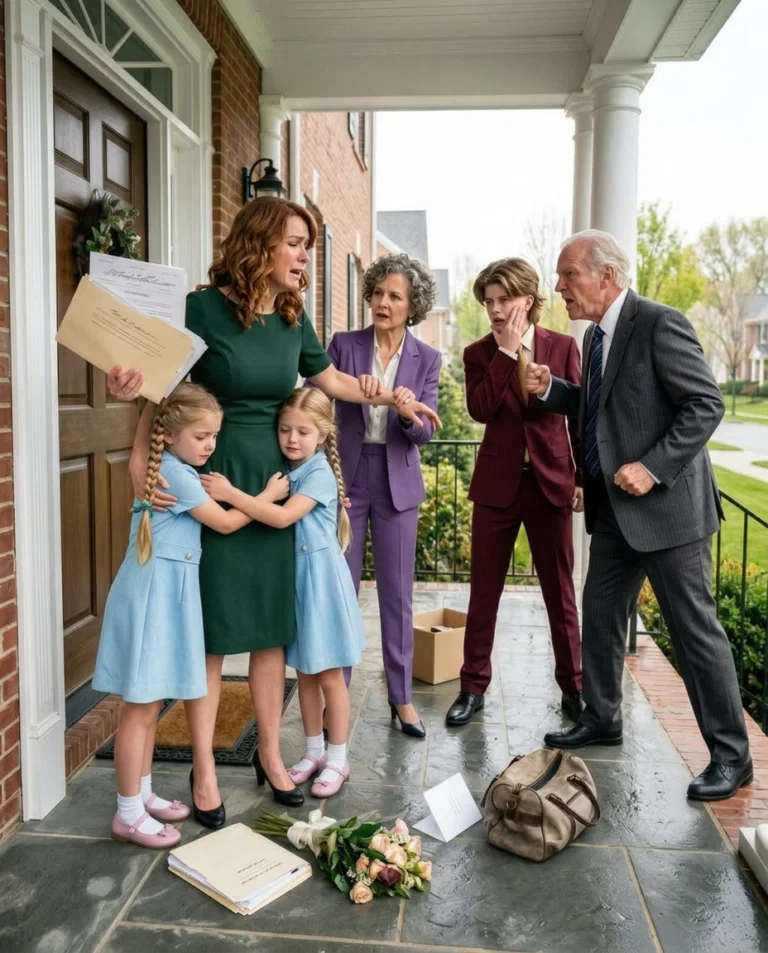
My wedding day was the day I lost the woman I used to be… and became someone no one could ever break again.
Not because of love.
Not because of happiness.
Because of betrayal.
The church in Seville was packed with guests. White roses lined the aisle, candles glowed softly, and music floated through the air like something from a dream. I, Lucía Herrera, walked toward the altar believing I was about to marry Alejandro Vega, the man who had promised to love me forever.
When the priest asked, “Do you take Alejandro as your husband?” Alejandro squeezed my hands too tightly.
His smile vanished.
Then he leaned closer and whispered, “I’m sorry… I’ve been lying to you all this time.”
Before I could understand his words, a woman’s voice rang out from the back of the church.
“Stop the wedding! She deserves to know the truth!”
Everyone turned.
A pregnant woman walked down the aisle with tears in her eyes and anger in every step. She stopped in front of us and pointed at Alejandro.
“This man is the father of my baby.”
The church fell into stunned silence.
My mother gasped. Guests began whispering. I felt strangely cold, as if my heart had stopped reacting.
“Is it true?” I asked.
Alejandro let go of my hands.
Then he smiled.
“Yes.”
The crowd gasped.
I stared at him. “Why?”
He leaned toward me and said, “Because your last name is worth more than you are.”
Every word cut deep.
“Your father is dying. You’re the heir. Marrying you would have given me access to everything.”
Murmurs spread through the church. Someone whispered that poor Lucía had always been too naive.
Naive.
Weak.
The clumsy rich girl.
That was what they thought I was.
Alejandro continued, “Without your money, nobody would have looked twice at you.”
Some guests tried to hide their laughter.
It was public humiliation.
Perfectly planned.
He pulled the ring from my finger and dropped it onto the floor.
“It’s over.”
The pregnant woman smiled.
And that was when I understood.
She wasn’t devastated.
She was acting.
So was he.
But they were too late.
My father had taught me something when I was young:
“When everyone thinks you’ve lost, the real game has just begun.”
So I breathed slowly.
Alejandro expected tears.
A breakdown.
A scandal.
Instead, I smiled.
Small.
Cold.
Controlled.
“I understand,” I said.
He frowned. “That’s all?”
I looked into his eyes.
“No, Alejandro. This is only the beginning.”
That night, all of Spain talked about me.
“Bride abandoned at the altar.”
“Millionaire wedding scandal.”
“Lucía Herrera publicly humiliated.”
The internet exploded with jokes, pity, and rumors.
Alejandro enjoyed every second.
Three days later, he appeared on television in a perfect suit with a predator’s smile.
“I never loved Lucía,” he said. “I only wanted to escape a toxic relationship.”
Liar.
Manipulator.
Brilliant in front of cameras.
But he made one mistake.
He believed I was hiding somewhere, crying.
He believed he had won.
He had no idea who I really was.
Inside the law office of Herrera Capital, my legal team waited for me.
“Lucía,” Javier, our legal director, said, “we have enough evidence to file charges.”
I slid a folder across the table.
“Not yet.”
He frowned. “What are you waiting for?”
I smiled.
“For him to feel untouchable.”
Javier opened the folder.
His face changed.
Inside were bank transfers, forged contracts, recordings, messages, and one more thing.
A list of names.
Alejandro had not acted alone.
My best friend, Clara.
My cousin, Sergio.
The fake pregnant woman.
Three rival executives.
All of them had plotted to take control of Herrera Capital after Alejandro married me.
Javier looked at me in shock.
“How long have you known?”
“Six months.”
He stared at me. “Six months?”
I nodded.
“Alejandro left his email open one night.”
“So you walked into that wedding knowing everything?”
“Yes.”
“Why?”
I looked at him calmly.
“Because predators only show their full teeth when they believe the prey is already trapped.”
PART 2
One week later, Alejandro held a grand party.
There was champagne, press, investors, and bright lights everywhere. He was announcing a new company built with stolen money.
My money.
I arrived uninvited.
Black dress.
Silent heels.
Every head turned.
Whispers followed me across the room.
Alejandro smiled arrogantly.
“Look who came. The abandoned bride.”
People laughed.
Clara crossed her arms. “Lucía, this is embarrassing.”
Sergio smirked. “Accept that you lost.”
I looked at them calmly.
“Lost?”
Alejandro raised his glass.
“Yes. You lost.”
I took out my phone and pressed one button.
The giant screens behind him lit up.
His smile disappeared.
A recording began.
His voice filled the room, clear and sharp.
“After I marry Lucía, we empty the accounts and leave her with nothing.”
Silence.
Then Clara’s voice followed.
“That idiot suspects nothing.”
Then Sergio.
“She’ll sign anything.”
Their faces went pale.
Alejandro shouted, “Turn it off!”
But the recording continued.
The final audio was the cruelest.
Alejandro’s voice said, “After the marriage, her father can die in peace. The company will be ours.”
Gasps filled the hall.
Panic spread instantly.
I stepped forward.
“You chose the wrong woman to deceive.”
Alejandro began sweating.
“What did you do?”
For the first time, fear appeared in his eyes.
I smiled.
“I’m not finished.”
The doors opened.
Police entered.
Behind them came prosecutors, auditors, reporters, and cameras.
The color drained from Alejandro’s face.
“No…”
The inspector spoke firmly.
“Alejandro Vega, you are under arrest for financial fraud, conspiracy, forgery, and money laundering.”
Clara stepped back. “This is insane.”
Javier entered with documents.
“No,” he said. “This is evidence.”
Sergio shouted, “Lucía, stop this!”
I looked at him.
“Did you stop when you betrayed me?”
No one answered.
Alejandro rushed toward me, furious.
“You can’t do this to me!”
I held his gaze.
“Can’t I?”
“I loved you!”
I laughed once.
Empty.
Cold.
“That might be the saddest lie of the night.”
He grabbed my arm, but the officers reacted immediately.
“Let her go.”
Alejandro trembled.
“Lucía, listen. We can fix this.”
“No.”
“I can explain.”
“No.”
“Please—”
“No.”
I stepped closer and lowered my voice.
“Do you know your biggest mistake?”
He breathed heavily. “What?”
“You confused kindness with weakness.”
The room went silent.
“You thought because I smiled, I was stupid. You thought because I loved, I could be controlled. You thought because I stayed quiet, I didn’t see anything.”
His eyes filled with terror.
“But I saw everything,” I said. “And I let you continue.”
That was when he finally understood.
The wedding.
The humiliation.
The scandal.
I had allowed it all.
I let him expose himself.
I let him dig his own grave so deep he could never climb out.
“No…” he whispered.
“Yes.”
Then I held up one final document.
“And one more thing. Herrera Capital was never truly in my name.”
Confusion filled the room.
Clara gasped. “What?”
I smiled.
“Two years ago, my father transferred real control into a protected trust.”
Alejandro froze.
“That means…”
“That means you were never capable of stealing the company.”
His face went blank.
“So everything… was useless?”
I looked at him without hate.
Without anger.
Only truth.
“Yes.”
The police handcuffed him.
Clara cried.
Sergio shouted.
The fake pregnant woman begged.
They all fell, one by one.
Before Alejandro was taken away, he turned back to me.
“Did you ever love me?”
I thought about the man he had pretended to be.
The man who never existed.
“I loved someone you invented.”
Then the door closed.
Six months later, golden sunlight covered Seville.
I opened the window of my office on the fortieth floor.
Herrera Capital was stronger than ever.
I was in charge now.
Alone.
Peaceful.
Free.
Javier entered with news.
“Alejandro received twelve years.”
I nodded.
“Clara?”
“Bankrupt.”
“Sergio?”
“Sued for fraud.”
I looked out over the city and breathed easily for the first time in years.
Javier asked, “Do you regret anything?”
I thought of the church, the white dress, the ring falling to the floor, and the betrayal that almost destroyed me.
Then I shook my head.
“No.”
“Why?”
I smiled softly.
Because I finally understood something.
Revenge does not always need fire.
Sometimes, the best revenge is watching the people who tried to destroy you collapse beneath the weight of their own greed.
I lifted my coffee as sunlight touched my face.
Then I whispered to myself:
“Thank you for breaking me, Alejandro.”
Because his betrayal created the woman he could never defeat.
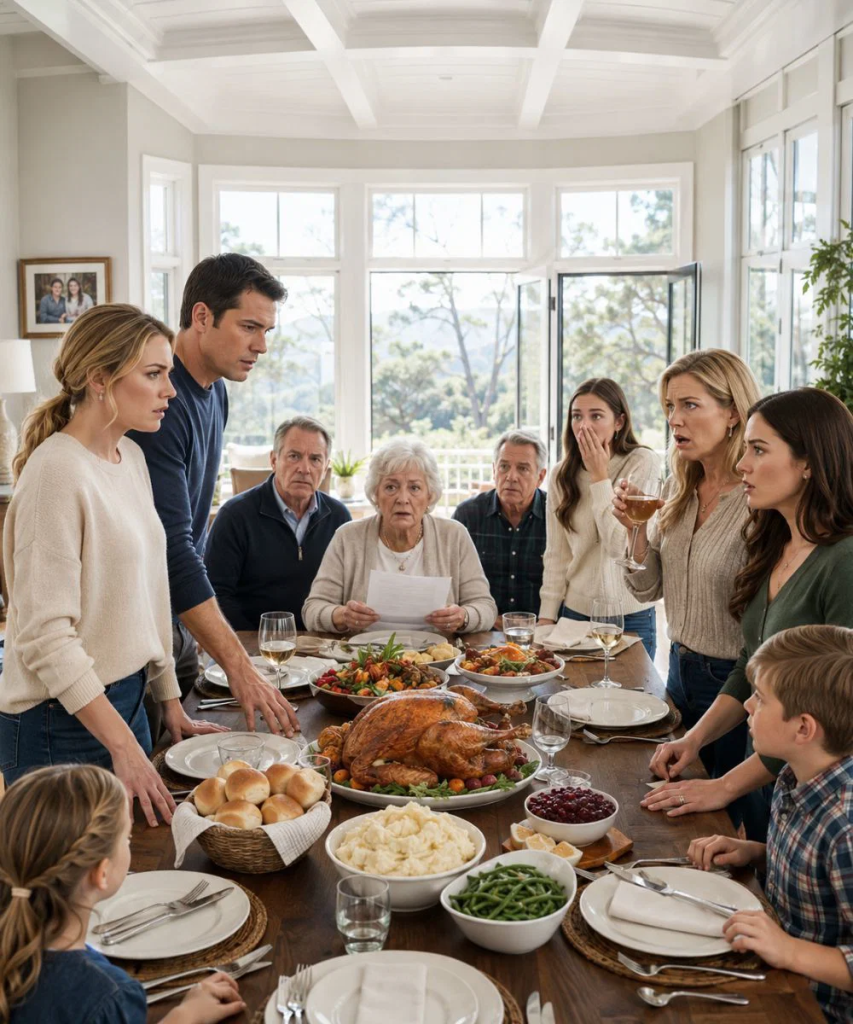
When I opened the front door, I knew something was wrong before Mia even looked at me.
The house was too quiet.
Not peaceful quiet.
The kind of quiet that means someone has been sitting alone with something painful for too long.
Mia was at the kitchen table, her backpack dropped beside her chair. Her shoulders were hunched, and her hands were pressed flat against the tabletop.
“What happened?” I asked.
She looked up, and the tiredness in her eyes did not belong on a twelve-year-old’s face.
“I worked,” she said softly.
“Worked where?”
“I cleaned Mrs. Novak’s house. For three hours.”
Then I saw her hands.
Her fingers were red. The skin near her nails looked raw. Her knuckles were irritated from hot water and cleaning products.
“She paid me twenty dollars,” Mia said, trying to sound proud.
But then she winced when she tried to move her fingers.
“I still have homework,” she whispered, “but my hands hurt. I can’t hold my pen right.”
I crossed the kitchen and gently took her hands in mine.
“Mia, why were you cleaning someone’s house after school?”
She looked down.
“I needed money.”
“For what?”
Her voice became smaller.
“For Sophie.”
Sophie was my sister Heather’s daughter. She was the same age as Mia, but in our family, Sophie was always treated like the special one.
“They’re collecting money for her birthday,” Mia explained.
“How much?”
“A hundred dollars.”
I froze.
“Mia, who told you that you had to pay?”
She hesitated.
“Grandma.”
I forced myself to stay calm.
“What exactly did Grandma say?”
Mia blinked hard, trying not to cry.
“She said if I don’t contribute, I’m not family anymore.”
For a moment, I heard nothing but the refrigerator humming.
Then Mia whispered, “I didn’t want to ask you. I thought it had to be my money. I broke open my piggy bank, but it wasn’t enough. So I worked.”
I looked at her painful little hands and felt something inside me go very still.
“You did nothing wrong,” I told her.
Then I picked up my phone and called my mother.
PART 2
My mother answered cheerfully, as if nothing unusual had happened.
“Mia told me something,” I said. “She said you told her she had to give one hundred dollars toward Sophie’s birthday gift.”
There was a pause.
Then my mother said, “Yes. That’s right.”
“She’s twelve.”
“Twelve-year-olds can learn responsibility.”
“Did you tell her she wouldn’t be family if she didn’t pay?”
“Yes,” my mother said without shame. “She needs to learn what supporting family means.”
That was the moment something in me closed.
Not exploded.
Closed.
Because suddenly, I remembered everything.
I remembered being the oldest child.
I remembered Heather getting more because she was younger. Leo getting more because he was the boy. And me being told, “You’re older. You understand.”
I remembered working at twelve, doing small jobs for neighbors, then handing the money over because the family “needed” it.
I remembered not going to college while Heather and Leo both did.
I remembered becoming the reliable one, the useful one, the one who always paid.
For years, I had helped my parents. I had helped Heather with her mortgage. I had helped Leo while he “found himself” in different countries.
And I called it family.
But when Mia came home with sore hands because she believed she had to buy her place in that family, I finally saw the truth.
This was not love.
It was a system.
I called Heather next.
“Did you know Mia was asked to give one hundred dollars for Sophie’s birthday?”
“Oh, yeah,” Heather said casually. “It’s for horse camp. Sophie really wants to go.”
“You asked my twelve-year-old to help pay for your twelve-year-old’s horse camp?”
“It’s only a hundred,” Heather said. “And Mia does little jobs, right? She’s responsible. Just like you were.”
There it was.
Responsible.
The word they had used my whole life when they really meant useful.
I ended the call and opened my banking app.
One by one, I canceled every recurring payment.
My parents.
Heather.
Leo.
The extra bills.
The family “help.”
Seven confirmations later, the arrangement that had controlled my life for decades was over.
PART 3
That night, Mia came to me holding an envelope filled with crumpled bills and coins.
“With the twenty dollars from Mrs. Novak, I have ninety,” she said. “I can ask if there’s more work.”
My heart broke.
She said it like earning her place in the family was her responsibility.
I took a ten-dollar bill from my pocket and placed it in her hand.
“You’re not giving them this money,” I said.
Her face filled with panic.
“But Grandma said if I don’t pay—”
I knelt in front of her.
“Listen to me. You do not pay for love. You do not pay to belong in a family. If someone says your place costs money, that is not love. That is a transaction.”
Then I sent one message to the family group chat.
Mia had been asked to pay one hundred dollars toward Sophie’s gift. I was not allowing it. We would not attend the party.
By morning, I had dozens of missed calls.
A few days later, I found my parents waiting outside Mia’s school. They had cornered her and told her she had ruined the family by telling me.
That was the final line.
I removed them from every school contact list. No pickups. No calls. No access.
Three weeks later, my mother, father, and Heather showed up at my house.
My mother smiled like she was being generous.
“We’re willing to move past this,” she said. “The hundred-dollar thing was a bad idea. Let’s go back to normal.”
“No,” I said.
She blinked.
“No to normal. No to payments. No to showing up at my daughter’s school. No to making a child feel responsible for adult problems.”
Heather snapped, “You’re punishing everyone over one stupid comment.”
“Your idea of punishment,” I said, “is me no longer funding your life.”
My mother said, “We’re family.”
“Being related does not make me your resource.”
They left angry and silent.
Six months later, life is different.
Heather works more now. Leo’s overseas adventure ended when the money stopped. My parents are selling their house and calling it downsizing.
And Mia comes home with clean hands.
Our house is quieter now.
Safer.
Ours.
They always told me I was the oldest, so I had to understand.
They were right.
It just took me thirty years to understand the truth.
No one showed up for my son’s surgery. Three days later, my mother texted, demanding $5,000 for my sister’s wedding dress. I sent her 50 cents with the memo, “Buy a veil,” then locked them out of my accounts. The following morning, the bank manager called.
On the morning of my son’s surgery, I stood inside the pediatric wing of St. Mary’s Hospital in Denver, watching the automatic doors slide open and shut for families who were not mine.
My son, Caleb, was seven years old. He had been born with a heart defect that had suddenly become worse after months of “monitoring.” His surgery was set for 6:30 a.m. I had told my mother, Patricia, three weeks ahead of time. I had told my younger sister, Vanessa. I had even sent them the hospital address, the surgeon’s name, the floor number, and mentioned Caleb’s favorite dinosaur blanket in case they wanted to bring him something.
No one came.
At 5:58 a.m., Caleb tightened his small fingers around mine and whispered, “Is Grandma lost?”
I lied.
“She’s probably on her way, buddy.”
He nodded as if he believed me, but his eyes kept drifting toward the hallway.
At 6:22, the nurse began rolling his bed toward the operating room. Caleb looked even smaller beneath the hospital lights, swallowed by blue blankets, wires, and the gentle beeping of machines. He tried to smile at me, but his lower lip shook.
“Tell Aunt Vanessa I wasn’t scared,” he said.
That broke something inside me.
For six hours, I sat by myself. No text. No missed call. No “How is he?” Not even a heart emoji from the people who posted birthday collages calling themselves “family above everything.”
Caleb made it through the surgery. The doctor said everything had gone well, though recovery would require careful attention. I cried in the bathroom so my son would not see me fall apart.
Three days later, while Caleb slept in the ICU with tubes taped against his tiny chest, my phone buzzed.
Mom: Need $5,000 for your sister’s wedding dress. Send today. Vanessa found the one.
I stared at the message until the letters blurred.
Not “How is Caleb?”
Not “I’m sorry.”
Just money.
For years, my mother had been allowed access to one of my secondary checking accounts because she said she needed “emergency help” after my father passed away. Vanessa used my credit card for “temporary” expenses that somehow never ended. I paid their phone bills, insurance gaps, and rent shortages while they called me dramatic whenever I needed emotional support.
I opened my banking app.
I sent my mother fifty cents.
Memo: Buy a veil.
Then I called the bank and froze every card, every authorized user, and every linked transfer. I changed passwords, removed access, and filed disputes for charges I had ignored for years because “family helps family.”
The next morning, at 8:11 a.m., the bank manager called.
His tone was cautious.
“Mrs. Whitaker, we need to discuss activity on your accounts. Your mother came into the branch this morning with your sister. They were very upset.”
My stomach clenched.
“What did they do?”
He paused.
“They tried to withdraw everything.”
PART 2
The bank manager was Harold Jenkins, and I knew him only from polite signatures on loan paperwork and cheerful holiday emails sent by the branch. That morning, his voice sounded nothing like a holiday greeting.
“They presented old authorization paperwork,” he said. “Your mother claimed you were incapacitated at the hospital and that she was acting on your behalf.”
I looked through the glass wall of Caleb’s ICU room. He was still sleeping, one hand curled beside his face, his dark lashes resting against pale skin.
“Incapacitated?” I repeated.
“Yes, ma’am. She said your son’s surgery had caused you to have a breakdown. Your sister supported the claim.”
I almost laughed. It came out only as breath.
“They didn’t come to the surgery.”
Silence followed.
“I’m very sorry,” Harold said. “Because of the freeze you placed yesterday, the withdrawal did not process. However, they became aggressive with staff. Your mother also demanded access to your safe deposit box.”
My spine straightened.
“My safe deposit box?”
“Yes.”
I had not thought about that box in months. Inside were Caleb’s birth certificate, my late husband Aaron’s watch, several insurance papers, and the small stack of savings bonds Aaron’s parents had bought for Caleb before moving to Oregon.
“What exactly did she say was in it?”
“She said it contained jewelry belonging to your family and that you were withholding it out of spite.”
Spite was Patricia’s favorite word for boundaries.
I thanked Harold, asked him to send me a written summary by email, and requested that the bank keep any surveillance footage. He agreed right away.
When I ended the call, my phone already showed thirteen missed calls from Mom and nine from Vanessa. Then the messages started coming.
Mom: How dare you embarrass me at my own bank.
Vanessa: You ruined my appointment.
Mom: After everything I sacrificed for you.
Vanessa: It’s my wedding. Stop making Caleb’s thing about yourself.
I read that one twice.
Caleb’s thing.
My son’s open-heart surgery was “Caleb’s thing.”
Something inside me went quiet. Not numb. Clear.
For most of my life, I had worked to earn a place in my own family. Vanessa was the golden child: prettier, softer, always “going through something.” I was the dependable one, the oldest daughter, the emergency fund with a heartbeat. When Aaron died in a highway accident two years earlier, my mother cried at the funeral, then asked me two weeks later whether his life insurance had “come through yet.”
I had still helped her.
I had still paid Vanessa’s car loan when she lost her job after insulting her manager.
I had still hosted Christmas, even when they arrived late, left early, and complained that I had not bought enough wine.
But as I stared at my phone beside my son’s hospital bed, I saw the pattern with perfect clarity. They were not careless. They were relying on me to keep pretending carelessness was love.
At 11:40 a.m., Patricia appeared at the ICU entrance wearing pearl earrings and a cream coat, as if she had just come from brunch.
Vanessa stood behind her, carrying a bridal boutique garment bag over one arm.
My mother spotted me and lifted her chin.
“Don’t start,” she said. “We need to talk like adults.”
I stepped into the hallway and let the ICU door close behind me.
“No,” I said. “You need to leave.”
Vanessa rolled her eyes. “Oh my God, Leah, it’s just money.”
I looked at the garment bag, then at my sister’s perfectly curled hair.
“And he’s just my son, right?”
Neither of them replied.
That was reply enough.
PART 3
My mother recovered before Vanessa did.
“Lower your voice,” she hissed, even though I had not raised it. “There are people here.”
“Yes,” I said. “Sick children. Worried parents. Nurses trying to work. Which is why you’re leaving.”
Vanessa adjusted the garment bag higher on her arm, as if it were more delicate than my son. “We drove all the way here.”
“You drove to the bank first.”
My mother’s mouth tightened.
“That manager had no right to speak to you that way. You’ve always been dramatic with money. I was trying to prevent you from making rash decisions.”
“By telling him I was incapacitated?”
A nurse at the station looked over. Patricia noticed and immediately softened her face. It was an old performance. Her voice turned sweet, wounded, almost shaking.
“My daughter is under terrible stress,” she told the nurse. “Her little boy is ill, and she’s lashing out at everyone who loves her.”
The nurse, a tall woman named Denise who had cared for Caleb since recovery, looked from my mother to me.
“Mrs. Whitaker,” Denise asked, “would you like security called?”
Patricia blinked.
Vanessa scoffed. “Security? Seriously?”
“Yes,” I said.
My mother’s expression cracked.
“Leah.”
I looked at Denise. “Please.”
Vanessa moved closer and lowered her voice. “You’re going to regret humiliating us. Mason’s family is already asking why my side hasn’t paid their portion. Do you know how bad this makes me look?”
I almost admired how honest she was. Caleb had tubes in his chest, and Vanessa’s crisis was embarrassment.
“You should have thought of that before trying to rob me.”
Mom gasped. “Rob you? I am your mother.”
“You are a woman who tried to access my bank accounts while my child was in the ICU.”
Her eyes sharpened. “After everything I did raising you alone—”
“Dad died when I was twenty-four.”
“You know what I mean.”
“I do. That’s the problem.”
Security arrived within two minutes. Two calm, professional officers asked Patricia and Vanessa to leave the ICU floor. My mother tried to play the grieving grandmother. Vanessa tried outrage. Neither worked. The officers escorted them to the elevator while Patricia shouted that I was unstable and Vanessa yelled that she hoped I enjoyed being alone.
When the elevator doors shut, the hallway became quiet again.
I returned to Caleb’s room and sat beside him. His eyes fluttered open.
“Was Grandma here?” he whispered.
I carefully took his hand, avoiding the IV.
“She came, but she couldn’t stay.”
He looked disappointed, then exhausted.
“Did Aunt Vanessa bring the dinosaur blanket?”
“No, sweetheart.”
He nodded slowly. “That’s okay. I have Dad’s.”
He meant Aaron’s old gray hoodie, folded at the foot of the bed. I had brought it because Caleb said it smelled like safety, even though by then the smell was mostly laundry detergent.
That night, after Caleb fell asleep, I opened my laptop on the hospital tray table. Harold had sent everything: the incident summary, timestamps, teller notes, and confirmation that Patricia and Vanessa had attempted to withdraw $42,760 from my savings account. They had also asked about a line of credit in my name.
I read the number three times.
Forty-two thousand dollars.
Not five thousand.
The wedding dress had been bait, a test to see whether I would obey quickly. When I sent fifty cents, they panicked and tried to take whatever they could before I fully cut them off.
I forwarded Harold’s email to my attorney, Diane Mercer. Aaron and I had hired Diane years earlier for our wills, and she had always seemed like the kind of woman who could cut bread with a glance.
She called within twenty minutes.
“Leah,” she said, “do not speak to them by phone. Everything in writing. Save every message. I want copies of the account authorizations, the attempted withdrawal record, and any footage the bank will preserve.”
“I already asked.”
“Good. Also, revoke every family access point you can think of. Medical contacts, school pickup lists, insurance beneficiaries, emergency contacts, cloud accounts, everything.”
I closed my eyes.
“They’re really going to fight this.”
“Yes,” Diane said. “Because they thought your grief made you easy to manage. Your boundaries are going to feel like theft to them.”
That sentence stayed with me.
The next morning, while Caleb watched cartoons with half-open eyes, I began removing them from my life in practical, boring, permanent ways. Patricia was removed from my emergency contact list. Vanessa was removed from Caleb’s school pickup authorization. I changed the garage code at home through the security app. I removed my mother from the family phone plan and transferred Vanessa’s number out with one final paid-through date. I canceled the card Vanessa had been using for “gas and groceries,” which bank records showed had mostly paid for salon visits, boutique deposits, and restaurant tabs.
By noon, my phone had become a storm.
Mom: You are being cruel.
Vanessa: Mason is furious.
Mom: You owe your sister support.
Vanessa: You’re jealous because your husband is dead and I’m getting married.
I stared at that message for a long time.
Then I took a screenshot, sent it to Diane, and blocked Vanessa.
For the first time in years, silence came after.
Not peace yet. Silence.
Caleb improved slowly. On the fifth day after surgery, he sat up long enough to eat three bites of applesauce. On the sixth, he asked if his scar made him look like a superhero. On the seventh, he took four careful steps with a physical therapist and declared that walking was “overrated but possible.”
Every tiny milestone felt enormous.
While my son was learning to breathe without fear, the rest of my family was learning what frozen access meant.
Patricia showed up at my house two days after the hospital incident. My neighbor, Mrs. Alvarez, called me because she had seen my mother and Vanessa standing on my porch with a locksmith.
“A locksmith?” I said, gripping the hospital phone.
“Yes, honey. He’s looking confused. Your mother is pointing at the door like she owns the place.”
I opened my security camera app. There they were.
Patricia stood in my driveway with her hands on her hips. Vanessa paced beside her in sunglasses, talking quickly. The locksmith, a young man in a navy jacket, kept checking his tablet.
I pressed the speaker button through the doorbell camera.
“This is Leah Whitaker. You do not have permission to access my home. Please leave.”
The locksmith looked startled. “Ma’am, your mother said—”
“My mother does not own this property. I am the sole owner. Police are being contacted.”
Patricia lunged toward the camera.
“Leah! Stop this nonsense! I need the jewelry from your safe!”
“There is no wedding jewelry in my house.”
“Your grandmother’s bracelet belongs to Vanessa!”
That was another lie. My grandmother had left the bracelet to me because I was the only grandchild who visited her in assisted living. Vanessa had called the place “depressing” and refused to go.
“The bracelet is mine,” I said. “Leave.”
Vanessa shouted, “You don’t even wear it!”
“No,” I said. “I keep it safe from people like you.”
Mrs. Alvarez called the police before I could. The locksmith left immediately. Patricia and Vanessa remained long enough to give the officers a polished version of the story, then left after being warned for trespassing.
Diane loved the footage.
“This helps,” she said. “A lot.”
“What happens now?”
“Now we make it inconvenient for them to continue.”
Within a week, Diane sent formal cease-and-desist letters to both Patricia and Vanessa. The bank permanently revoked all old authorizations and added identity verification notes to my accounts. My credit was locked. My home security company updated my authorized contact list. Caleb’s school confirmed in writing that only I and Aaron’s parents, Mark and Elaine, could pick him up.
Mark and Elaine flew in from Oregon the day Caleb was discharged.
They arrived with a suitcase full of practical things: soft pajamas, low-sodium snacks, puzzle books, a new dinosaur blanket, and a tiny stuffed heart with arms and legs. Elaine cried when Caleb slowly walked into the living room. Mark turned away and pretended to inspect the thermostat.
That evening, after Caleb fell asleep on the couch between them, Elaine sat with me at the kitchen table.
“I’m sorry we weren’t here for the surgery,” she said. “The storm grounded flights. We should have started driving.”
“You called,” I said. “You texted. You talked to Caleb before they took him back. You tried.”
She reached across the table and squeezed my hand.
“That boy is our family. So are you.”
I had not realized how badly I needed someone to say that without asking for anything afterward.
Two weeks later, Vanessa’s wedding started falling apart.
It began when Mason called me from an unfamiliar number.
I almost did not answer, but Diane had advised me not to avoid possible witnesses. I put him on speaker and recorded after saying I was doing so.
Mason sounded exhausted.
“Leah, I need to ask you something directly. Did you promise Vanessa ten thousand dollars for the wedding?”
“No.”
A long silence followed.
“She told my parents you were paying for the dress, the venue flowers, and half the catering.”
“No.”
“She said the money was from Aaron’s life insurance and that you wanted to contribute because you couldn’t stand being the center of attention after Caleb’s surgery.”
My hand went cold.
“She said what?”
He exhaled. “I’m sorry. I didn’t know about the surgery until after. Vanessa said it was minor.”
“It was open-heart surgery.”
“I know that now.”
Mason went quiet again, but this silence carried weight. Maybe shame. Maybe calculation.
“She also told my mother your mom had legal access to your accounts,” he said. “That you were withholding family funds.”
“There are no family funds. There is my salary, my savings, and money meant for Caleb.”
“Understood.”
He ended the call politely.
Three days later, Vanessa posted a dramatic statement online about betrayal, sisterhood, and “people who weaponize children for sympathy.” She did not mention my name, but she did not need to. Cousins began messaging. Old family friends asked what had happened. For once, I did not write long paragraphs defending myself.
I posted one sentence:
“My seven-year-old had open-heart surgery; during his ICU stay, my mother and sister attempted to withdraw $42,760 from my bank account.”
Then I attached nothing else.
The comments changed within an hour.
People began asking Vanessa questions. She deleted her post. Patricia called relatives crying that I had exposed private family matters. One aunt, my father’s sister, called me and said, “Your dad would be furious with her.” It was the first time anyone from that side had said something simple and true.
Mason postponed the wedding.
Vanessa blamed me, of course. She emailed from a new address because she was blocked everywhere else.
You destroyed my life over money.
I replied once, copying Diane.
No. I protected my son’s life from people who saw it as an inconvenience.
After that, I stopped responding.
The legal consequences were not dramatic like they are on television. No one was dragged away in handcuffs. But the paper trail mattered. The bank banned Patricia from the branch after her second attempt to argue with Harold. Vanessa’s boutique deposit bounced when the card was canceled, and the store refused to release the dress without full payment. Mason’s parents withdrew their contribution until “financial representations were clarified,” which was a polite way of saying they no longer trusted her.
Patricia tried one final tactic.
She mailed me a handwritten letter, six pages long, beginning with “As your mother, I forgive you.”
I read the first sentence, laughed once, and handed it to Diane without finishing the rest.
Months passed.
Caleb healed.
His scar changed from angry red to soft pink. He returned to school part-time, then full-time. He became very serious about showing certain classmates his “zipper mark,” as he called it, though I had to remind him that not everyone wanted a medical presentation during lunch.
One Saturday in early spring, we went to Aaron’s grave. Caleb placed a plastic stegosaurus beside the headstone.
“Dad would have come to the hospital,” he said.
“Yes,” I answered. “He would have been first through the doors.”
Caleb looked at me. “Grandma didn’t come because she doesn’t like hospitals?”
I had prepared many careful answers, but the truth came out softly.
“Grandma makes choices that hurt people. That doesn’t mean you did anything wrong.”
He thought about that.
“Do I have to see her?”
“No.”
“Good,” he said, then leaned against me. “Can we get pancakes?”
So we got pancakes.
A year later, our life looked smaller from the outside and bigger from within. Holidays had fewer chairs but more laughter. My bank account belonged to me. My home was quiet. Mark and Elaine visited often. Mrs. Alvarez became Caleb’s unofficial cookie supplier. Diane became someone I sent Christmas cards to with real affection.
As for Patricia and Vanessa, I only heard updates through relatives who had not yet learned that silence was a gift.
Vanessa and Mason never married. Patricia moved in with Vanessa after losing her apartment when I stopped covering the gap between her income and her lifestyle. They told people I had abandoned them. Maybe that version comforted them. It no longer mattered to me.
The last time my mother contacted me was through a birthday card addressed to Caleb. Inside, she wrote: Tell your mother family is forever.
Caleb read it at the kitchen table, frowned, and asked, “Can forever be blocked?”
I smiled despite myself.
“Sometimes,” I said. “Yes.”
He took a blue marker and wrote on the card before handing it back to me.
No thank you.
I placed it in the folder with the bank documents, not because I still needed evidence, but because it marked the cleanest ending.
For years, I had confused access with love. Access to my money. My house. My patience. My grief. My son. They had called it family because that word sounded better than control.
But family had been the ICU nurse who protected our door. Harold Jenkins, who stopped a withdrawal and made a careful phone call. Mrs. Alvarez, who watched my porch. Diane, who turned panic into paperwork. Mark and Elaine, who arrived with pajamas, puzzle books, and open arms.
And most of all, family was Caleb, standing in our kitchen with a healing heart and syrup on his shirt, asking whether pancakes counted as dinner if you ate them after sunset.
“They do today,” I told him.
He grinned.
That was the life I chose after the bank manager called.
Not revenge.
Not drama.
Just a locked door, a protected child, and the kind of peace that only comes after you stop paying people to pretend they love you.
“Mom says you never really do anything for this family.”
“It’s always about you.”
Those were the words my sixteen-year-old nephew spoke in front of our entire family.
A few relatives chuckled. Others nodded along. My older sister, Regina, calmly sipped her iced tea as if she had heard nothing at all.
I simply smiled.
“That’s good to know,” I said. “Then I’m sure your mother won’t miss the ₱290,000 I pay every month toward the mortgage on her house.”
The color drained from Regina’s face instantly.
The confrontation happened during our annual family reunion at a private resort in Caliraya, Laguna.
Every year, we gathered there to celebrate Mama Lourdes’s birthday. The resort overlooked a peaceful lake, with a long wooden table set beneath giant acacia trees.
My husband Paolo and I arrived with our two sons, Enzo and Gab. We never liked drawing attention to ourselves.
I brought lechon belly, baked pasta, and several boxes of desserts from Mama’s favorite bakery.
Everyone was having a wonderful time.
Children ran across the grass.
The adults laughed while sharing stories from decades ago.
Then everything changed.
Regina’s son Mika suddenly looked directly at me.
“Aunt Isabel,” he said loudly, “Mom says you always talk about family, but you never give anything back.”
Silence crashed over the gathering.
Mama stopped talking.
Aunt Tess froze with food halfway to her mouth.
My sons stared at me in shock.
And Regina?
She continued drinking her iced tea.
That hurt more than Mika’s accusation.
She allowed her own son to humiliate me.
The boy looked proud of himself. He believed he was defending his mother from a selfish aunt who never helped anyone.
I took a slow breath.
Then I smiled.
“If that’s true,” I said calmly, “then your mother won’t miss the ₱290,000 I send every month to cover her mortgage in Nuvali.”
A spoon clattered onto the table.
Everyone stared.
“What?” Mika whispered.
I looked toward the driveway.
“That SUV your mother drives every day? I bought it. The insurance is under my name because she couldn’t qualify for the loan.”
Every eye turned toward the white vehicle.
“The electricity bill that almost got disconnected last year? I paid it.”
I paused.
“Twice.”
Nobody spoke.
“When Mika’s grades dropped and he needed tutoring, I paid for that too.”
My nephew lowered his head.
“Even the Christmas presents from ‘Santa’ were bought by Paolo and me.”
The silence became unbearable.
I turned to Regina.
“After everything I’ve done, this is the story you tell people about me?”
Tears appeared in her eyes.
But I knew my sister.
Not all tears came from guilt.
Sometimes they were simply another weapon.
“You don’t understand,” she whispered.
Before she could continue, Paolo placed a thick brown envelope on the table.
“Maybe it’s time everyone understood the truth,” he said.
Regina shot to her feet.
“Paolo, don’t!”
But it was too late.
He opened the envelope.
The first document went directly into Mama’s hands.
Within seconds, Mama’s face turned pale.
She gripped the edge of the table and stared at Regina.
“My child,” she whispered. “How could you do this to your own sister?”
PART 2
Regina stood frozen.
The document trembled in Mama’s hands.
“What is this?” Mama asked. “Why is there a loan application using Isabel’s name?”
The entire family looked at me.
Three weeks before the reunion, Paolo and I had received a phone call from the bank.
Someone had attempted to secure a loan worth ₱8.6 million using me as the guarantor.
The collateral was Regina’s house.
The same house I had been paying for over the past several years.
But that wasn’t the worst part.
Regina had forged my signature.
And it wasn’t the first time.
“I wasn’t going to finish the application,” she said quickly. “I was only asking questions.”
“You forged Isabel’s signature,” Paolo replied firmly. “That’s not asking questions.”
“I had no choice!” Regina shouted.
Mika flinched.
For the first time all day, Regina looked genuinely afraid.
“Tell everyone why you needed ₱8.6 million,” I said.
“Everything works out for you,” she continued. “You have a successful career. A wonderful husband. Good children. Everyone admires you.”
“I never held that over you.”
“You didn’t have to,” she replied. “I saw it every day.”
Her words hurt.
Not because they were true.
But because I had spent years trying to protect her.
When her marriage collapsed, I helped her buy a house.
When she needed temporary assistance, I agreed to cover her mortgage.
Six months became two years.
Two years became five.
I never complained.
Yet while I protected her dignity, she turned me into the villain.
“Why did you tell Mika I didn’t care about this family?” I asked.
Regina looked away.
Before she could answer, Mika spoke.
“You did say that, Mom.”
The table went silent again.
“You said Aunt Isabel only helps when she gets something back.”
Regina closed her eyes.
“You also told me you were the one helping her,” Mika continued through tears.
That was the moment everything broke.
Not because she accepted my help.
But because she had rewritten the truth completely.
“Why?” I asked quietly.
My voice cracked.
“Why teach your own child to hate me?”
Regina burst into tears.
“Because I was ashamed!” she cried.
“I was ashamed that I couldn’t give him what you gave your children. Ashamed that our house, our car, and even his tutoring came from you.”
Mika stood up.
“But lying was worse, Mom.”
Everyone froze.
“I humiliated Aunt Isabel because I believed you.”
Then he walked toward me.
“Auntie,” he whispered. “I’m sorry.”
I squeezed his hand.
“You don’t have to carry the mistakes of adults.”
PART 3
The reunion had become painfully quiet.
Paolo stood beside me while Regina sat crying at the end of the table.
I took a deep breath.
“Starting next month,” I said, “I will no longer pay your mortgage.”
Regina’s eyes widened.
“Please, Isabel.”
“I’m not throwing you out.”
She looked hopeful.
“I’ll give you three months to reorganize your finances. I’ll help you speak with the bank and create a repayment plan.”
She exhaled in relief.
Then I continued.
“But there are conditions.”
“What conditions?”
“You must sell the SUV.”
Her face fell.
“And you must meet with our lawyer regarding the forged signatures.”
She covered her mouth.
“Am I going to be sued?”
“That depends on what you do now,” Paolo answered.
“If you cooperate, things can be resolved. But the lies have to stop.”
Regina slowly nodded.
There was no dramatic reconciliation.
No movie-style ending.
No magical moment that erased years of resentment.
But something important happened that day.
For the first time, Regina stopped blaming everyone else.
She told the truth.
In the months that followed, the SUV was sold.
Regina and Mika moved into a smaller townhouse in Santa Rosa.
It wasn’t luxurious.
But it was affordable.
We helped her build a budget.
We did not pay off her debts.
We helped her face them.
There is a huge difference between helping someone and carrying them while they refuse to walk on their own.
Six months later, a message appeared on my phone.
It was from Regina.
“I paid off my first credit card. Thank you for not abandoning me completely. And I’m sorry for making you the villain because I couldn’t admit I was the one creating my problems.”
I stared at the message for a long time.
Then I replied.
“I’m proud of you. Keep going.”
Things never returned to the way they were before.
Some wounds heal but leave scars.
Still, Regina finally learned that love is not permission to take advantage of kindness.
And I learned something too.
Boundaries are not cruelty.
Saying “enough” is not the same as giving up on someone.
Sometimes the greatest act of love is refusing to rescue a person from consequences they need to face themselves.
I remember the exact time because I was already awake, staring at the ceiling fan while the old house creaked softly around me. When my phone lit up on the nightstand, I foolishly thought maybe Ethan was checking on me.
Maybe he had remembered I existed.
Instead, the message said:
Be gone when we get back. I hate old things. I work hard, so I deserve a new life.
I read it once.
Then again.
Then a second message arrived.
Don’t embarrass yourself. The kids will be with us.
I turned the phone over and lay there in the dark.
Somewhere across the ocean, my husband of nineteen years was probably sleeping peacefully after telling me to disappear from the life I had helped build.
Ethan Caldwell had always made cruelty sound practical.
Short sentences.
No apology.
No softness.
Just instructions, as if every decision had already been made and I was only being informed.
Three weeks earlier, he had told me about Sienna at our kitchen island while my coffee went cold.
She was twenty-six.
She worked at his firm.
She made him “feel alive.”
He said he had handled everything.
The divorce.
The financial plans.
The transition.
He had even planned a destination wedding at a resort in the Pacific. He invited his parents, our friends, and our two teenagers, Marcus and Lily.
He did not invite me.
He simply informed me I would not be there.
After the 2 a.m. text, I did not sleep. I sat in the living room and thought about nineteen years of shrinking myself to fit around Ethan’s needs.
I thought about the early years when we struggled together.
The later years when money changed him.
The dinner parties where he corrected me in public.
The way he treated our home like a hotel and me like the staff.
Then I thought about my father.
Six years before he died, he had quietly signed the deed to the land beneath our house over to me.
Not to Ethan.
Not to both of us.
Only me.
Part 2:
Ethan used to laugh about it and call it my father’s little paranoia.
That night, I finally understood.
My father had left me a door.
The next morning, I went to an attorney named Gloria Mendez. I showed her Ethan’s texts.
She read them carefully, then looked at me over her glasses.
“You want him out,” she said.
“I want him to feel it,” I answered.
She nodded.
“Then we do it clean. Paperwork. Timing. No drama from you. He’ll create enough of that himself.”
Within forty-eight hours, I filed for divorce. I froze my credit. I opened a new bank account. I printed every cruel text, every dismissive email, every message Ethan had sent thinking they would never matter.
Then Gloria filed an emergency motion for temporary exclusive use of the property.
Ethan’s own words became evidence.
But I had one more call to make.
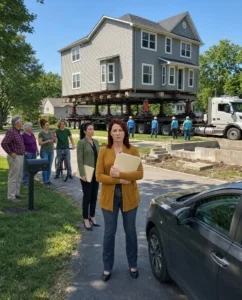
A house mover named Roy came to inspect the property. He walked around the house, checked the foundation, measured, studied, and finally said it could be done.
“You want the lot completely cleared?” he asked.
“I want it to look like nothing was ever there,” I said.
He looked at me for a long moment.
“We can do that.”
While Ethan married Sienna on a beach, I packed my life.
I took the things that mattered.
My daughter’s painted coffee mug.
Old photos.
Memories that were mine.
I left behind the furniture Ethan chose, the art he bought to impress clients, and the expensive things that never felt like home.
Before dawn on Thursday, Roy and his crew arrived.
I watched them lift the house off its foundation with steel beams and hydraulic lines. The structure groaned once, deep and low, then rose slowly from the ground where it had sat for thirty-one years.
By late afternoon, the lot was empty.
Flat earth.
Open sky.
Only the faint outline of where the foundation had been.
I expected triumph.
Or grief.
Instead, I felt space.
Like a room that had finally been cleared after holding too much for too long.
Then I drove to my friend Dana’s house.
She handed me wine, her dog Biscuit jumped into my lap, and for the first time in years, I slept without waiting for footsteps or a key in the door.
Ethan came home Sunday morning.
I parked half a block away in Dana’s car and watched.
The taxi arrived at 11:24.
Ethan stepped out first, tan and relaxed from his wedding trip. Sienna followed. Then Marcus. Then Lily.
They all stopped at the same time.
Ethan’s suitcase handle slipped from his hand.
He stared at the empty lot where the house had been.
The roofline was gone.
The porch was gone.
The home he thought he could return to was gone.
He called me.
I let it ring four times.
Then I answered.
“Where is it?” he demanded, his voice raw. “Natalie, where is the house?”
“Gone,” I said.
“You can’t just—” He stopped. “That was my home.”
“It was my land,” I replied. “You always knew that. Remember? My father’s little paranoia.”
Part 3
Silence.
I watched him turn in place, finally understanding that I had planned this quietly, legally, and completely.
“You’re going to regret this,” he said.
“Maybe,” I answered.
Then I thought about the text at 2:13 a.m.
The years of being dismissed.
The house my father had protected for me long before I knew why.
“But not today,” I said.
Then I hung up.
I watched them for another minute.
Sienna stood with her arms crossed.
Marcus picked up the suitcase his father had dropped.
Lily stared at the empty space where her bedroom window used to be.
That part hurt.
I loved my daughter. I would be there for her. I would not force her to understand everything at once.
But I had not created that empty lot.
Ethan had.
When I returned to Dana’s house, she had waffles waiting. The coffee was hot, the kitchen smelled like maple syrup, and nothing in that room expected me to make myself smaller.
Gloria called that afternoon.
“How did it go?”
“He sounded like a man who forgot he didn’t own the ground he stood on.”
She laughed softly.
“Get some rest. Paperwork starts Thursday.”
The land is still mine.
Flat.
Clean.
Waiting.
I do not know what I will build there yet.
Maybe a small house.
Maybe a garden.
Maybe nothing for a while.
But I understand now what my father understood years ago.
Some things can be moved.
Some things cannot.
And the most powerful thing a person can do is know the difference—and act quietly while someone else is busy assuming the world will stay exactly where he left it.
It didn’t.
And my father’s signature on that deed made sure of it.
Sometimes, finding the truth requires building a lie carefully enough for someone else to reveal themselves. I had one weekend to learn whether my fiancé truly loved me or was making a calculated bet. All I needed was the right bait to expose him.
The kitchen was spotless again. I sat at the long oak table with roasted chicken on a plate and a glass of pinot beside it, the overhead light catching the polished edges of the silverware I had cleaned out of habit rather than need. Beyond the window, the maple trees were changing color, and I realized I had not spoken a single word aloud since locking my office that afternoon.
A senior partner at a firm that paid me more than I had ever imagined I could earn, living in a four-bedroom house I had purchased completely by myself.
And most nights, this was what dinner looked like.
My life had not always been this way.
My second husband walked away with most of my savings and left behind a note saying he needed to “find himself.”
After that, I stopped searching.
Until Richard.
I met him six months earlier at a charity gala for the children’s hospital. I had been standing near the bar, trying to remember whether I had locked my car, when a tall man in a charcoal suit leaned closer and said, “You look like a woman who already regrets agreeing to come tonight.”
“That obvious?”
“Only to someone who feels the same way,” he said, and offered his hand. “Richard.”
He was 55, with silver at his temples. He was the kind of man who pulled out chairs without making a performance of it and remembered the next morning that I liked my coffee with one sugar and a splash of cream.
For six months, he was patient. He never pushed me. He brought soup when I had the flu and sent flowers to my office on an ordinary Tuesday, just because.
When he proposed on the back porch in September, I said yes before I had time to think too hard.
And then, slowly, I started thinking too hard.
It was the little things. The way he trailed his hand along the granite countertop one morning and said, “You really have built something beautiful here, Maggie. It would be a shame for anyone to disturb it.”
Or the evening he asked, very gently, over wine, “Do you have everything in one place, financially? Or scattered? I only ask because at our age, a single misstep can undo decades.”
I told myself he was being practical. Responsible.
But then there was the waitress at the bistro on Fifth. Twenty-six, maybe. He held her gaze one second too long when she set down his glass.
I noticed. He noticed me noticing. Then he smiled at me as though nothing had happened.
I looked down at the ring on my left hand. The diamond was a full carat, set in platinum, the kind of ring a man buys when he wants it to say something.
I turned it around my finger once. Then twice.
“He’s just thoughtful,” I said aloud, to no one. “He’s just careful with money. That’s a good thing.”
The kitchen gave me no answer.
And somewhere beneath the wine, the chicken, and all the careful arguments I kept making in his defense, a quieter voice asked the question I had been avoiding for weeks.
The dinner two nights later was when my doubts hardened into something I could no longer ignore. Richard poured the wine, smiled at me from across the table, and asked the question casually, as though he were asking about the weather.
“So have you thought about consolidating your retirement accounts, sweetheart? It would make planning our future so much simpler.”
I set my fork down carefully.
“My retirement accounts are already organized, Richard.”
“I just mean, once we’re married, it makes sense to have one clear picture. Joint visibility. That kind of thing.”
I smiled the way women my age learn to smile when something inside them is screaming.
“Let’s not rush. We have time.”
He reached for my hand.
“Aunt Maggie, it’s almost midnight,” she answered, her voice half-asleep.
“I need to talk. About Richard.”
I told her everything. The compliments about my house. The questions about my savings. The way his eyes wandered in restaurants. The tiny half-second shift in his expression whenever money entered the conversation.
There was a long silence on the other end.
“Aunt Maggie, I love you. But you have been burned so badly before.”
“Maybe I am,” I said. “That’s why I need help being sure.”
“What does that mean?”
“I want to test him. One time. One coffee. And then I’ll know.”
“Test him how?”
“I’m going to tell him I have a daughter I never mentioned. Twenty-five years old. I want you to be her.”
She actually laughed.
“You want me to pretend to be your kid?”
“Just for an hour. Call me Mom. Sit with us. Watch him. Tell me what you see.”
Her laugh faded.
“Okay. But Aunt Maggie, when this turns out to be nothing, you have to promise me you’ll let yourself be happy.”
I told Richard the next evening, during a second glass of wine in my living room. I made my voice soft, almost ashamed.
“There’s something I never told you. Before we get married, you need to know. I have a daughter.”
Something passed across his face — only for a flicker. The smile froze, his eyes went still, and then everything returned to place like a curtain dropping.
“A daughter? Maggie, why would you hide that?”
“She’s 25. We had a falling out years ago. We’re talking again now.”
His shoulders lowered half an inch — I watched it happen.
“What caused the falling out?”
“It’s complicated. Old wounds. I’d rather not get into it tonight.”
“And does she know about me? About us?”
“A little. Not everything yet.”
“What’s her name?”
“Chloe,” I said.
“Chloe.” He tested the name carefully. “Twenty-five,” he said again, almost under his breath. “So she’s grown. Independent.”
“Yes.”
“Well.” He smiled completely now. “That’s wonderful news. I would love to meet her.”
I poured myself more wine just to give my hands something to do.
“How about Saturday? Coffee. Just the three of us.”
That Saturday, I sat in my car in the coffee shop parking lot for ten full minutes before I could force myself to get out. Through the window, I watched Richard enter, scan the room, and choose a table near the back. He smoothed his collar twice.
Chloe’s car pulled in beside mine. She tapped on my window.
“You ready?”
I was not. But I nodded anyway.
“Whatever happens in there,” I said quietly, “this is either going to save me or set me free.”
She squeezed my shoulder and waited for me to go inside first.
I sat there one more moment, gripping the steering wheel, and whispered to myself that I was about to learn exactly who I had almost married.
A few minutes later, Chloe walked through the door right on cue, her hair loose around her shoulders, a soft smile already on her face. She crossed the coffee shop and bent down to hug me.
Richard stood so quickly his chair scraped against the floor. Something switched on behind his eyes, and a different version of him stepped forward.
“Richard, this is Chloe.”
“You must be the famous daughter,” he said, pulling out her chair himself. “Your mother didn’t tell me you were this lovely.”
Chloe gave a polite laugh and sat down. I tried to catch her eye, but Richard had already leaned toward her, elbows on the table, his body turned away from me.
“What do you do, Chloe? Your mother’s been so secretive about you.”
“I work in marketing,” she said.
“Marketing. Smart girl. I bet you’re brilliant at it.”
“Richard, I was telling Chloe how you and I met at that gala.”
“Mhm,” he murmured, his eyes still fixed on her. Then, almost as an afterthought, he reached over and squeezed my wrist. “You’ve seemed tired this week, haven’t you, darling? I keep telling her work is getting to be too much.” He turned back to Chloe without waiting for my answer. “Chloe, tell me, do you live nearby? Do you see your mother often?”
“Pretty often,” she said carefully.
He nodded slowly, as if she had just given him something useful.
I needed a moment to breathe — and to see what he would do when I gave him room.
“I’ll be right back,” I said, pushing my chair back. “Restroom.”
Neither of them truly looked up. But as I stood, I caught Chloe’s hand sliding from the table into her lap, her phone already hidden against her thigh.
In the restroom, I let the tap run until the water turned cold, then splashed it over my face. I held the edge of the sink and stared at myself in the mirror for what felt like forever, wondering exactly when I had started looking tired to other people. I dried my hands slowly. I checked my lipstick.
I had barely stepped back into the hallway when my phone buzzed in my palm. Chloe’s name lit up the screen. Her message was three words, typed clumsily beneath the table.
“Come back now.”
My stomach dropped so hard I felt it in my knees. I turned the corner and walked back toward our table, certain I could end the whole thing with one sentence.
That was not what I saw.
Richard was hunched forward, both elbows on the table, his face arranged into a look of careful, fatherly concern. He was speaking softly. Chloe was leaning back, perfectly still, her jaw set in a way I knew too well.
I stopped a few feet away, behind a wooden divider, and listened.
“I worry about her, you know,” he murmured. “She’s been so stressed lately. Forgetting little things. I’m sure you’ve noticed it too, haven’t you, sweetheart?”
“I’m not trying to overstep,” he continued, lowering his voice even more. “There’s just a lot of paperwork coming at her this month with the wedding, and I can see it wearing her down.”
He continued, “If you could gently encourage her to take her time with all of it, not rush, not sign anything when she’s this exhausted, it would put my mind at ease. She’ll listen to you. She trusts you in a way she doesn’t quite trust me yet.”
I felt the blood drain from my face.
“I’m only thinking of her,” he added softly. “Someone has to look out for her when she won’t look out for herself.”
Chloe’s eyes lifted and met mine over his shoulder. They were wide, almost wet, filled with something between horror and apology.
He had been testing doors, gently, the way he tested every door, and now he had found one he thought would open. Everything clicked into place like a key turning in a lock I had never realized was on my own front door.
He was not there to marry me. He was there to dismantle me, piece by piece, and he had decided my “daughter” would be the easiest crowbar.
The smile he gave me became the final lie he would ever tell me. I did not make a scene. I sat back down, folded my hands on the table, and looked at Richard with the steadiest expression I could manage.
“Richard, would you repeat for me what you just told my daughter?”
He blinked. The false concern slid away from his face, and something colder moved into its place.
“Maggie, sweetheart, you misunderstood. I was telling her how worried I’ve been about you.”
“Worried about my finances, you mean.”
“That’s not fair.”
“Here’s what’s fair, Richard. Chloe isn’t my daughter. She’s my niece. I asked her to sit here today because my gut has been screaming at me for weeks, and I needed to know if I was crazy or if I was right.”
“Yesterday I pulled copies of every document you’d been asking about — account summaries, the deed to the house, the draft prenup your lawyer sent — and drove them to Diane’s.”
“…She’s been my closest friend since law school, and I wanted a dated paper trail in someone else’s hands, in case you ever tried to claim I’d agreed to something I hadn’t.”
His expression changed. The charm drained out of him so completely that I almost did not recognize the man sitting across from me.
“You set me up.”
“I tested you. There’s a difference.”
“You’re paranoid, Margaret.” He used the name like a blade. No one had called me Margaret since my mother died, and he knew that. “You’re going to die alone in that big empty house, do you know that? No man is going to put up with this.”
I slid the ring across the table. It made a small sound against the wood — one that felt louder than anything either of us had said.
“Drop your key in the mailbox by seven. Whatever you’ve left at my house will be on the porch. Diane has copies of everything you were angling for. If you contact me again, she goes to my attorney. The locks change tonight.”
“Maggie, come on.”
“You never wanted to marry me. You wanted to dismantle me. And you almost did.”
He opened his mouth, then shut it again. He picked up the ring, looked at it as if calculating what it might be worth, and walked out without saying another word.
Chloe exhaled like she had been holding her breath for an hour.
“Aunt Maggie, I am so sorry.”
That night, Chloe came home with me. We sat at my kitchen table — the same table where I had eaten so many meals alone — and opened a bottle of wine that had been waiting two years for a reason.
“I thought I was lonely all these years,” I told her after a while.
She waited.
“Turns out I just hadn’t learned the difference between an empty house and a quiet one.”
Chloe smiled and reached across the table for my hand. We stayed that way for a long time, saying very little. For the first time in years, the silence inside my house sounded like it belonged to me again.
Do you think Maggie was justified in creating an elaborate “test” to expose Richard, or did she cross a moral line by involving her niece in a deception?
After eighteen months deployed overseas, I pushed through a blizzard expecting to come home to warmth, only to find my wife collapsed on the frozen porch, holding our baby against her. “Your parents said we were no longer family,” she whispered. Something inside me turned ice-cold. I carried her past them and said, “You threw out my whole world. Now I’ll take back every dollar, every key, and every secret you stole from us.”
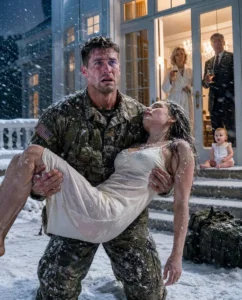
The first sight that greeted me after coming home from war was my wife nearly dying in the snow. The second was my mother standing behind a warm window, calmly drinking wine.
My transport had been delayed by the worst snowstorm Virginia had seen in years. I hauled my duffel bag up the long driveway, picturing Claire running into my arms and our six-month-old daughter, Lily, laughing at the uniform she had only ever seen through video calls.
Instead, Claire was curled against the porch railing, her lips blue, with Lily tucked beneath her coat. Two suitcases lay beside them, half-covered by snow.
“Claire!”
Her eyes opened faintly. “Daniel?”
I fell to my knees and pulled off my field jacket. Lily whimpered against my chest.
“What happened?”
“Your parents said we were no longer family.” Claire’s voice broke. “They changed the locks. Your father said the house belonged to him now.”
The front door opened. My mother, Evelyn, stood beneath the chandelier in a silk robe. My father, Richard, appeared behind her, holding my grandfather’s whiskey.
“Well,” he said, smiling. “The hero finally made it home.”
I lifted Claire with careful arms. Fury slammed against my ribs, but eighteen months in a combat zone had taught me that anger only worked when it was controlled.
“Open the door.”
Mother crossed her arms. “That woman has been poisoning you against us. She spent your deployment money, refused to obey house rules, and tried to steal company documents.”
Claire looked at her. “You emptied our accounts.”
Father laughed. “Our accounts. Everything you have came from this family.”
I carried Claire inside anyway. Father moved forward, but the look on my face stopped him.
“You threw out my whole world,” I said. “Now I’ll take back every dollar, every key, and every secret you stole from us.”
He sneered. “You’re a staff sergeant with a government paycheck. Don’t threaten people who can crush you.”
That was his first mistake.
Upstairs, I warmed Claire and checked Lily for frostbite before calling an ambulance. While the paramedics carried them out, my mother complained that the neighbors would talk. My father demanded my house keys and warned me not to humiliate him. I gave him no reply and not even a glance. Soldiers learn that silence often makes guilty people speak too freely.
Then I opened the waterproof folder hidden beneath the lining of my duffel.
Inside were bank statements, property deeds, recorded calls, and a report from Army Criminal Investigation Division. For six months, while my parents ridiculed Claire and believed I was trapped overseas, I had monitored every transfer they made through an account they thought I could not access.
The house did not belong to my father.
Neither did the company.
And by morning, neither would his freedom….
Part 2
At the hospital, Claire and Lily were treated for hypothermia. The doctor said one more hour outside could have killed them. I stood next to the bed as Claire told me everything my parents had done.
Three weeks after Lily was born, Evelyn had moved into our house “to help.” Richard followed with boxes full of company files. They intercepted my mail, took Claire’s debit card, and claimed I had signed a new power of attorney. When she challenged them, they showed her papers carrying my signature and threatened to report her as an unstable mother.
“They said you wanted a divorce,” Claire whispered. “They had a letter.”
“I never wrote it.”
“I know that now. But they knew things from our private messages. Things only you should know.”
I did not tell her yet that my mother had accessed my old laptop using a saved password. CID had already traced the logins. Every lie had already been preserved.
At dawn, I returned to the house with my phone recording from my breast pocket. Richard was in the study, making calls about an emergency board meeting. Evelyn had stuffed Claire’s belongings into garbage bags.
“You should be at the hospital,” she said.
“You should explain why my deployment account is missing four hundred and eighty thousand dollars.”
Her face tightened. Father entered the room, still wearing confidence like armor.
“That money was invested,” he said. “You’ll thank me when you understand business.”
“You transferred it to Blackthorn Holdings.”
His smile flickered. Blackthorn was a shell company registered under his accountant’s brother.
“You’ve been snooping.”
“I’ve been auditing.”
He laughed and poured himself another drink. “You think a soldier can frighten me with spreadsheets? I built Vale Defense Construction.”
“No. Granddad built it.”
“And left it to me.”
“He left you forty-nine percent.”
Silence hit the room.
Years earlier, my grandfather had placed the remaining fifty-one percent in a trust for me, naming an independent bank as trustee until my thirty-fifth birthday. I had turned thirty-five while deployed. Richard had hidden the trust documents, assuming the bank’s notices would disappear in military mail.
I placed a certified letter on his desk.
“As of last Tuesday, I control the company.”
Mother went pale. Father ripped the letter in half.
“A piece of paper changes nothing.”
“It changes who can authorize an audit.”
That afternoon, he gathered the board and announced that combat stress had made me unstable. He claimed Claire had manipulated me and demanded that I be declared incompetent. My parents smiled while their attorney presented the forged power of attorney.
Then the doors to the conference room opened.
My grandfather’s trustee entered with a federal forensic accountant, two CID agents, and the company’s outside counsel.
The accountant projected six years of transactions onto the wall: fake vendors, diverted military contracts, stolen payroll taxes, and my deployment funds routed through Blackthorn.
Richard finally stopped smiling.
Yet Evelyn leaned close and hissed, “They still need proof we intended any of it.”
I looked at the phone in my pocket.
She had just given me more.
Part 3
The boardroom went so silent I could hear the projector fan running.
Richard recovered before anyone else. He slammed both hands onto the table. “This is my company. These people work for me.”
Outside counsel closed her folder. “Not anymore. The controlling shareholder has removed you as chief executive, effective immediately.”
I signed the resolution.
My father stared at me as if I had pulled a trigger. “You ungrateful coward.”
“No,” I said. “A coward throws a mother and infant into a blizzard because she discovered his theft.”
I played the recordings.
First was Richard admitting he had “invested” my money. Then came Evelyn describing how she copied my signature and read my messages. Finally, the security system captured them ordering Claire outside while she begged for Lily’s winter bag.Patio, Lawn & Garden
Several directors turned their faces away. One began to cry.
CID arrested my parents for identity theft, fraud involving military pay, and conspiracy. Federal agents handling the company audit added wire fraud, tax violations, and procurement charges. Richard tried to negotiate by blaming Evelyn. She answered by screaming that the shell companies had been his idea.
Their marriage fell apart before they even reached the elevator.
But I was not done.
The house had been placed in my trust by my grandfather. My parents held only a revocable right to live there, dependent on maintaining the property and committing no financial crime against a beneficiary. Their fraud ended that right automatically.
I changed the locks that same afternoon.
When Evelyn was released while awaiting trial, she returned with a suitcase and demanded to be let in. Claire stood beside me on the porch, Lily warm against her chest.
“You cannot leave your mother homeless,” Evelyn cried.Family relationship advice
Claire’s stare hardened. “You left a baby in the snow.”
I handed Evelyn the address of a prepaid motel room.
“One week,” I said. “More mercy than you gave my family.”
Richard pleaded guilty after the forensic audit uncovered eleven million dollars in diverted funds. He received eight years in federal prison and forfeited his shares, vehicles, investment properties, and hidden accounts. Evelyn received four years for conspiracy, forgery, and identity theft. The stolen money was restored, employees recovered unpaid benefits, and every affected military subcontractor was reimbursed.
I sold the mansion. Claire never wanted to look at that porch again.
One year later, I left active duty and became chairman of the rebuilt company. We renamed it Lily Shield Construction and created a housing program for military families facing emergencies during deployment. Claire ran it with the fierce compassion my parents had mistaken for weakness.
On the first snowy evening in our smaller home, I found Claire near the fireplace, rocking Lily under a knitted blanket. No chandeliers. No marble staircase. Only warmth, safety, and quiet.True crime books
“Do you miss what they lost?” she asked.
I looked out the window as snow settled over the garden.
“They lost things,” I said. “We saved a family.”
Lily reached toward me, laughing.
For the first time in years, I felt no anger, only peace.
My husband fastened another woman into the front passenger seat of my car while I stood outside in the icy rain like an inconvenience he wished would disappear.
Not a taxi.
Not a company car.
My car.
The Mercedes SUV I helped finance during the year his real estate business nearly went under. The same vehicle where we once shared fast-food fries in empty parking lots because we were too exhausted and too broke to eat inside restaurants. The car where he squeezed my hand after our first miscarriage scare and promised, “When I make it, Catherine, you’ll never sit behind anyone again.”
Yet that evening, beneath the glass canopy outside his Manhattan office building, David Sterling opened the passenger door for his twenty-four-year-old assistant, Cecilia Moore, and announced loudly enough for the doorman to hear, “Cat, get in the back. She gets carsick.”
Rain dripped from my eyelashes as I stared at him.
Cecilia stood beneath his umbrella without a drop touching her. One hand rested dramatically against her forehead as though New York traffic itself might make her collapse. Her beige coat was buttoned incorrectly. Her glossy pink nails wrapped around a handbag that probably cost more than her monthly rent. She looked at me once with wide, watery eyes, then lowered her gaze like an injured bird.
“David,” I said carefully, fighting to keep my voice steady. “That is my seat.”
He clicked his tongue.
That sound hurt more than being slapped. It was the same sound he used with incompetent contractors, slow waiters, and interns who forgot coffee orders.
“Don’t be ridiculous,” he replied. “She nearly fainted upstairs. She can’t sit in the back.”
“She can take a cab.”
“It’s pouring.”
“I drove through the same rain to pick you up.”
His jaw tightened. A black sedan honked behind us. A delivery cyclist shouted profanity from the curb. Rain slid down the collar of my silk blouse, cold against my skin.
Cecilia made a small trembling noise.
“I can sit in the back, Mr. Sterling,” she whispered. “I don’t want to cause trouble.”
David looked at her with an expression I had not received in years. Gentle. Protective. Almost affectionate.
“You’re not causing trouble,” he told her. Then his eyes returned to me and the warmth disappeared. “Catherine is just being sensitive.”
Sensitive.
The word cut deeply because he knew exactly how to use it. Sensitive meant unreasonable. Sensitive meant jealous. Sensitive meant a woman whose pain could be ignored because acknowledging it would inconvenience a man.
“I am your wife,” I said, measuring every word. “You are asking me to sit in the back of my own car so your secretary can sit beside you.”
David’s expression hardened.
“And I’m asking you to show basic human compassion to a young woman who feels ill. Are you honestly threatened by an employee?”
Cecilia lowered her head. Her shoulders trembled. At first, I thought she was crying.
Then I saw it.
A tiny smile.
It lasted less than a second at the corner of her mouth, hidden from David and intended only for me. There was no guilt there. No fear.
Only triumph.
Something inside me became completely still.
David leaned across Cecilia and pulled the seat belt over her body. His hand lingered near her shoulder. “Careful,” he murmured. “You’re shaking.”
I watched his fingers move a strand of hair away from her face.
The doorman deliberately looked elsewhere.
A man wearing a gray coat stopped pretending he was not watching.
For twelve years, I had stood beside David Sterling when he had nothing. I edited business proposals at two in the morning, sold my mother’s emerald bracelet to cover payroll, entertained investors who barely acknowledged my existence, and smiled through dinners where men praised him for decisions I had actually made. I spent years making myself smaller so he could become larger.
And now, before strangers, he reduced me to baggage.
I opened the rear door and climbed inside.
The leather felt cold beneath my soaked skirt. David slid behind the wheel, bringing with him the scent of rain and expensive cologne. Cecilia leaned her seat slightly backward and turned toward the window, but I caught her reflection in the glass.
That smile again.
David merged into traffic.
“Is the heat okay, Cece?” he asked.
Cece.
Not Cecilia. Cece.
“Maybe a little warmer,” she answered softly. “I’m sorry, Mrs. Sterling. I feel awful.”
I looked at the back of her head.
“No,” I said. “You don’t.”
David’s eyes met mine in the mirror. “What was that?”
“Nothing.”
The storm wrapped Manhattan in silver rain. Taxi lights blurred across wet streets. My husband asked his secretary whether she needed water, gum, mints, his jacket, even his shoulder.
He never asked if I was cold.
When we reached her apartment in Queens, he escorted her to the entrance with the umbrella completely covering her. He returned to the car smiling like a man who had just finished a first date.
The smile disappeared when he saw my face in the rearview mirror.
“You’re still upset?” he asked. “Grow up, Cat.”
I looked at him quietly.
For the first time in our marriage, I said nothing.
That silence frightened him more than anger ever could.
Three nights later, I discovered a perfume bottle beneath her seat.
Pink Fantasy.
Cheap. Sweet. Adolescent.
The passenger seat had been reclined nearly flat. My Chanel fragrance had disappeared beneath hers.
David had told me he was flying to Chicago for an emergency inspection. But shortly before noon, a Hamptons winery reposted a photograph from a private account: two hands intertwined above a table, vineyards stretching behind them, a man’s wrist wearing the blue-dial Patek Philippe I had purchased for my husband on our anniversary.
The caption read: My boss takes the best care of me. Best getaway ever.
I sat on our bed staring at the screen until the woman I had once been finally disappeared.
I did not call him.
I did not cry.
I opened my laptop.
First, I checked the townhouse deed.
Still mine.
Then the bank accounts.
Still accessible.
Then my lawyer’s number.
Still saved.
David had placed his secretary in my seat.
So I decided to remove him from every position of power he had ever taken from me.
PART 2
Harry Harrison had served as my family’s attorney since I was seventeen, meaning he had guided me through my father’s death, my first inheritance-tax disaster, my marriage agreements, and every terrible decision I had stubbornly refused to admit was terrible.
When I entered his Midtown office wearing a cream-colored coat, oversized sunglasses, and the expression of a woman who had already buried someone inside her heart, he never asked whether I wanted tea.
He shut the door.
“What did he do?” Harry asked.
I placed the printed screenshots on his desk.
The Hamptons photograph.
The perfume receipt I found inside the glove compartment.
The hotel charge David had hidden through a shell LLC.
Then I laid the deed to the Upper East Side townhouse on top.
Harry read everything in silence. His mouth tightened.
“Catherine.”
“I want him out.”
“Divorce?”
“Eventually.”
“Eventually?”
I smiled.
It was not a gentle smile.
“First, I want him to understand the difference between what he built and what I allowed him to stand on.”
Harry leaned backward in his chair. “That sounds expensive.”
“For him.”
He removed his glasses and rubbed his eyes. “Tell me exactly what you want.”
“The townhouse belongs to me. It was a wedding gift from my father. David never bothered reading the deed because he assumed everything beautiful in his life automatically belonged to him. I want it sold quietly. Pocket listing. Cash buyer. Fast.”
“That can be done.”
“The Mercedes title is in my name.”
Harry raised an eyebrow.
“He thinks the car belongs to him because he drives it,” I said. “I want it recovered once I leave.”
“Go on.”
“Our investments. I want my premarital assets separated immediately. Everything legally mine gets transferred today. Everything jointly owned gets frozen or audited.”
Harry studied me carefully. “You understand that once he realizes what is happening, he’ll become desperate.”
“He pushed me into the back seat of my own life,” I said. “Desperate is exactly where I want him.”
For a moment, Harry looked at me not as his client, but as the young woman who had cried in his office lobby after burying her father.
“Did he hurt you?”
“Not physically.”
That would change the following day.
At that moment, I still believed betrayal had limits. I believed humiliation was the worst thing he could do. I believed there was still an invisible line inside David, one final boundary labeled wife, history, respect.
I was wrong.
I went home and performed my role.
When David returned from his fake Chicago trip, he kissed my forehead with lips carrying the faint taste of another woman’s lipstick and handed me a bag of airport popcorn.
“Garrett,” he said cheerfully. “Your favorite.”
“My favorite is honesty.”
He blinked.
“What?”
“Nothing. Dinner is in the oven.”
He smiled, relieved that I had apparently returned to being useful.
That had always been David’s favorite version of me: elegant, silent, forgiving, and available to feed him.
He ate pot roast at the kitchen island while I watched him from the staircase. His tan glowed beneath the kitchen lights. Not a Chicago tan.
A Hamptons tan.
He hummed while eating and scrolled through his phone with a smug, boyish smile.
“Good trip?” I asked.
“Exhausting. You have no idea.”
“I’m sure.”
He glanced up. Something in my voice unsettled him, though not enough to investigate. David had survived for years on my emotional labor. He had become lazy from being loved too completely.
“I’m going to bed early,” he said. “Big charity auction tomorrow night. We got VIP seats.”
“I know.”
“You’re coming?”
“Of course.”
He smiled again. “Good. Wear the blue dress.”
“I sold it.”
His fork paused. “Why?”
“It didn’t fit anymore.”
That was true.
Not with the new steel growing inside my spine.
The following afternoon, I brought beef stew to his office.
It was not an act of love.
It was bait.
His receptionist greeted me with the familiar warmth reserved for wives who once decorated the office Christmas tree and remembered everyone’s children.
“Mr. Sterling is in his office, Mrs. Sterling.”
“I know.”
The executive floor was quiet. Lunchtime. Thick carpeting. Frosted glass walls. The kind of silence that felt expensive.
David’s office door stood slightly open.
Laughter spilled out.
A woman’s giggle.
A man’s low, hungry laugh.
I pushed the door open.
Cecilia sat on my husband’s lap.
Her blouse hung partially unbuttoned. Her legs crossed over his. She fed him slices of fruit from a plastic container, creating some ridiculous fantasy of innocence and temptation.
David’s hand rested on her thigh.
He froze.
Cecilia screamed and knocked over his coffee.
Hot liquid splashed across paperwork and lightly touched her sleeve. She shrieked as though her arm had been severed.
David jumped to his feet.
“Cece! Oh my God, are you burned?”
I stood in the doorway holding beef stew.
My husband had been caught with his secretary sitting on his lap in his office, and his first instinct was to protect her from coffee.
“Are we finished performing?” I asked.
David turned toward me with such fury that, for a brief moment, I did not recognize him.
“What the hell is wrong with you?” he shouted.
“With me?”
“You barged in and scared her!”
“I walked into my husband’s office.”
“You did that on purpose.”
Cecilia clutched her arm and cried. “Please don’t fight because of me.”
David stepped toward me. “Look what you did.”
I looked at Cecilia’s barely pink sleeve, then at his face.
And I laughed.
Only once.
A quiet, disbelieving sound.
David shoved me.
Hard.
My heel caught the rug. My back struck the floor. Pain exploded through my shoulder, but I made no sound. The office became horrifyingly quiet.
Even Cecilia stopped acting.
David stared at his own hand as though it belonged to someone else.
Then shame transformed into anger.
“Get up,” he snapped. “Stop embarrassing yourself.”
I stood slowly.
I straightened my skirt. Raised my chin. Looked directly into his eyes.
For twelve years, I had begged, compromised, forgiven, explained, sacrificed, and softened.
Not anymore.
“Thank you,” I said.
David frowned. “What?”
“Thank you for making this easy.”
He stepped backward.
I set the stew down on the glass table.
“Give it to security,” I said. “I’m sure they’re less disgusted by food prepared by a weathered wife.”
The color drained from his face.
“Cat—”
But I had already left.
Inside the elevator, I texted Alex Whitman.
Alex was an old college friend, hedge-fund royalty, and the only man who had ever loved me without trying to possess me. I had already told him enough to prepare the next move.
Plan B, I typed. Tonight.
His response arrived three seconds later.
Showtime.
PART 3
The Plaza Hotel ballroom shone like a jewel box designed for gorgeous deception.
Crystal chandeliers spilled golden light across silk dresses, black tuxedos, diamond-covered necks, and men who judged generosity by how prominently their names appeared in the event program. Tall white roses rose from every table. Champagne never stopped pouring. A string quartet played something soft enough to convince millionaires they were refined.
I arrived wearing black velvet.
Not blue.
Never blue again.
The dress was sharp, backless, and graceful. My hair was pinned up. My lipstick was a dark burgundy that made me look less like a wife and more like a sentence being delivered.
Alex stood near the entrance in a tuxedo.
“You look dangerous,” he said.
“I am.”
He offered me his arm. “He’s here.”
“With her?”
“With the circus.”
Across the ballroom, David was seated at a VIP table with Cecilia beside him in a red sequined gown that challenged the chandeliers and failed. The slit climbed too high, the neckline dipped too low, and the confidence looked borrowed. She scanned the old-money guests with anxious hunger, touching her hair every few seconds while pretending she belonged there.
David noticed me.
His expression shifted.
First came shock. Then possession. Then fury.
His gaze dropped to Alex’s arm under my hand.
Cecilia leaned close and whispered something. I knew the question without hearing it.
Who is he?
A better man, I thought.
We sat directly opposite them.
The auction opened with the usual indulgences. A week on a yacht in Greece. A vintage timepiece. A private wine tasting in Napa. David bid aggressively on items that did not matter, desperate to appear wealthy and unaffected.
He was sweating.
Then the auctioneer smiled.
“Ladies and gentlemen, our next item is deeply personal. An original oil portrait titled Shadow of a Lover, painted by Mrs. Catherine Sterling.”
A spotlight struck the stage.
The velvet curtain fell.
And there it was.
David at twenty-nine, standing in work boots at a half-finished construction site in Queens, dust smeared across his face, his eyes filled with hunger and hope. I had painted it when we still lived in a one-bedroom apartment with a leaking ceiling. Back then, I believed his ambition had honor. Back then, he believed I was the reason he could continue.
He used to call that painting his lucky charm.
He had displayed it in the foyer of our townhouse like a holy object.
Tonight, I offered it for sale.
Every face turned toward him.
David’s skin flushed deep red.
The auctioneer went on, “Bidding begins at five hundred thousand dollars.”
Silence.
Then Alex raised his paddle.
“One million.”
A wave of murmurs crossed the room.
David’s eyes shot toward him.
Alex leaned back, completely at ease.
David raised his paddle. “One point five.”
Cecilia grabbed his sleeve. “David, why?”
He ignored her.
Alex smiled. “Two million.”
David’s jaw tightened. “Two point five.”
“Three.”
“Three point five.”
The ballroom became charged.
People adore a bidding war, especially when pride is bleeding underneath the numbers.
Cecilia’s voice carried across the table. “Babe, stop. It’s just an ugly painting.”
David turned on her. “Shut up.”
The word hit her like ice water.
For the first time, Cecilia understood the truth. She was not his grand love. She was an ornament. And ornaments were not allowed to speak when a man’s ego was burning.
Alex lifted his paddle again. “Four million.”
David looked at me.
Not furious anymore.
Begging.
Stop this.
I raised my champagne glass and took a slow drink.
He stood.
“Five million dollars,” David said, his voice breaking.
The entire room fell silent.
The auctioneer looked toward Alex.
Alex set his paddle on the table and clapped once, slowly.
The message could not have been clearer.
You purchased your own disgrace.
“Sold,” the auctioneer cried, “to Mr. David Sterling for five million dollars.”
The gavel came down.
Applause crashed through the ballroom.
David sank back into his chair, pale and drenched in sweat.
He had won the portrait.
He had lost the battle.
What he still did not know was that the painting belonged entirely to me. After the charity percentage and taxes, the proceeds would land in my private account. He had just paid me five million dollars for the right to keep a painted ghost of the man he once was.
I crossed the ballroom with Alex.
David looked up at me, his eyes red. “Are you happy?”
“Very.”
“You humiliated me.”
I bent close enough that only he could hear me.
“No, David. I sold my memories. You were foolish enough to buy them back.”
His throat moved.
“The money goes to you.”
“Consider it a return on investment.”
Cecilia looked between us, confused and enraged.
David whispered, “What did you do?”
I smiled.
“I left.”
His face went blank.
“You mean tonight?”
“No. I mean emotionally, legally, financially, and physically.”
The confidence drained from him like blood escaping a wound.
“Cat.”
“Don’t call me that.”
His hand moved toward mine.
Alex stepped forward once.
David lowered his hand.
I placed my wedding ring on the table beside his champagne flute. The diamond glittered beneath the chandelier for the final time.
“Enjoy the painting,” I said. “It’s the only piece of me you’ll ever own again.”
At 11:18 that night, I was sitting in the first-class Emirates lounge at JFK with a one-way ticket to Berlin.
My old phone lay faceup on the table.
David called at 11:26.
Then again at 11:27.
11:29.
11:32.
I watched his name appear again and again while I drank orange juice and waited for boarding to be announced.
By then, he had already gone back to the townhouse.
The gates would not open.
The codes would not work.
The locks had been replaced.
The staff had been let go.
The furniture was gone.
The art was gone.
The rugs, silver, china, books, lamps, photographs—gone.
The buyers would take possession on Monday.
In the empty master bedroom, he would find divorce papers, deed-transfer documents, and the wedding ring I had stopped wearing in my heart long before.
David called again.
Fifty missed calls.
Eighty.
One hundred.
By the time I boarded, the number had risen to two hundred and twenty-two.
The flight attendant offered me a warm towel.
I accepted it.
David called one last time before takeoff.
I answered.
For several seconds, I heard only his uneven breathing.
“Catherine,” he sobbed. “Where are you?”
I looked through the window at the runway lights.
Then I gave him the only sentence he deserved.
“You wanted her in the front seat. Now let her ride with you.”
I ended the call and turned the phone off.
The plane rose into the darkness.
New York became a glittering wound below the clouds.
For the first time in years, I slept.
PART 4
Three days after I arrived in Berlin, Alex called me from New York.
I was standing inside an empty gallery space in Mitte, surrounded by white walls, concrete floors, and the scent of fresh paint. It was the first place I had visited that made me feel something close to hope.
Alex did not greet me.
“It happened.”
I closed my eyes. “What happened?”
“David crashed the Mercedes on the Long Island Expressway.”
The room shifted slightly beneath me.
“Is he dead?”
“No.”
I was not sure whether that answer brought relief.
Alex continued, “He and Cecilia were fighting. According to dashcam footage from a truck behind them, he was driving too fast in heavy rain. Lost focus. Swerved into an eighteen-wheeler.”
“Cecilia?”
“Minor injuries.”
Of course.
“And David?”
Alex paused.
“That bad?”
“Spinal trauma. Internal injuries. Surgery. Doctors think he’ll survive, but he may never walk normally again.”
I turned toward the tall windows. The Berlin sky was gray and indifferent.
For one strange moment, I saw him young again. Dust on his cheek. Paint under my fingernails. His head resting in my lap while he talked about building towers and transforming our lives.
Then I saw him fastening Cecilia into my front seat.
The memory turned me hard again.
“Was she with him at the hospital?” I asked.
Alex gave a short laugh with no humor in it. “For about twenty minutes.”
“What did she do?”
“Stole his wallet. Took his cash. Took the Patek. Left before surgery.”
There it was.
The delicate girl.
The injured dove.
The secretary with motion sickness who needed my husband to shield her from rain, coffee, traffic, and consequences.
She abandoned him bleeding in a hospital and disappeared with his watch.
I waited for satisfaction to come.
It did not.
Only silence arrived.
“Cat,” Alex said softly. “Do you want me to arrange anything? A lawyer? A message? Medical contact?”
“No.”
“He has no one.”
“That is inaccurate,” I said. “He has Cecilia.”
“She ran.”
“Then he has the outcome of his choices.”
Alex said nothing.
“Does that sound cruel?” I asked.
“It sounds like someone who finally stopped volunteering to be destroyed.”
I sat on the windowsill and watched cyclists move along the street below.
David’s empire fell apart faster than anyone predicted. My divorce filings revealed enough financial irregularities to spark audits. Investors backed away. Two projects stopped. Contractors demanded payment. Rumors raced through New York real estate circles like flames across dry grass.
The official story was simple: a tragic accident during a period of personal strain.
The unofficial story was far better: David Sterling’s wife sold his house, removed her entire life from around him, auctioned his portrait back to him for five million dollars, fled to Europe, and then his mistress robbed him in the hospital.
By Christmas, Sterling Development had filed for restructuring.
By spring, his name had vanished from the buildings he once boasted about owning.
I created something else.
The gallery opened in May.
I called it The Front Room.
People assumed the name referred to the design: a bright front exhibition space with windows facing the street.
Only I knew the real meaning.
It was a private joke I kept for myself.
I had spent far too long sitting in the back seat of my own life. Now everything I loved stood in front.
Alex visited frequently. At first, I told myself he was only a friend helping settle legal loose ends. Then he began arriving with coffee before meetings, remembering which artists made me anxious, which collectors bored me, and which evenings I needed quiet instead of advice.
He never touched me without asking.
He never called me fragile.
He never confused patience with weakness.
One evening after a successful opening, we stood outside the gallery while rain darkened the Berlin pavement.
“You know,” he said, holding an umbrella above both of us, “I used to imagine rescuing you.”
I raised an eyebrow. “Did you?”
“Yes.”
“How embarrassing for you.”
He laughed.
Then his face softened.
“But you didn’t need rescuing. You needed witnesses.”
The words reached a part of me no apology from David ever could have touched.
A year passed.
I learned German badly, then better.
I bought fresh flowers every Friday.
I stopped flinching when men raised their voices in restaurants.
I painted again.
Not portraits of husbands.
Abstract pieces. Violent colors. Clean lines. Rooms without doors.
Winter arrived harshly.
Berlin turned white beneath the snow, and the Christmas markets glowed like tiny golden kingdoms. One evening, Alex and I walked near the U-Bahn station after a gallery event, sharing roasted chestnuts from a paper cone.
He had asked me, very carefully, whether I might consider spending New Year’s with him in Prague.
I had said yes.
Not because I needed a man.
Because I wanted this man close.
We turned a corner near the station entrance, and my steps stopped.
A man was sitting on cardboard under the shelter of a stone wall.
A dirty cup rested in front of him with a few coins inside. Beside him lay a battered pair of aluminum crutches. His coat was thin. His beard was overgrown. A scar twisted down the left side of his face.
At first, he looked like just another ruin among many.
Then he lifted his head.
And the world narrowed to his eyes.
David.
PART 5
For several seconds, neither of us moved.
Snow drifted between us in soft, careless flakes.
David’s eyes grew wide. Disbelief arrived first. Then shame. Then something even worse.
Hope.
“Catherine?”
His voice was ruined, scraped raw by cold, cigarettes, and whatever life had done to him after I stopped protecting him from it.
Alex shifted slightly in front of me.
David saw him and flinched. That tiny reaction told me he remembered the auction. He remembered the man who had lured him into purchasing his own disgrace. But hunger overpowered pride.
He tried to rise.
His hands trembled as he reached for the crutches. One leg dragged stiffly beneath him. The other shook violently. He nearly slipped on the frozen pavement.
Alex caught his elbow before he fell.
The irony was so sharp I almost laughed.
David looked from Alex’s hand to his face, humiliated by the kindness.
“Don’t touch me,” he muttered, pulling away.
Alex let go without reacting.
David turned back to me. “I found you.”
I said nothing.
“I searched everywhere,” he said, his breath turning white in the air. “New York, then London, then here. I saw your gallery in a magazine someone left on a train. I knew God was giving me one chance.”
“God has a strange distribution system.”
His mouth shook.
“Cat, please.”
The nickname dropped at my feet like a dead bird.
“My name is Catherine.”
He swallowed. “Catherine. Please. Just listen.”
People passed around us. A young couple glanced over. An elderly woman slowed down, then kept walking. The city did what cities always do with suffering: it made space for it without stopping.
David’s face was almost impossible to recognize. The handsome arrogance had caved into hollows and scars. The edges of his eyes were yellow. His hands were split and rough. The man who once wore Italian suits and corrected waiters about wine temperature now smelled like old alcohol, antiseptic, and snow-damp wool.
“Cecilia robbed me,” he said.
“I heard.”
“She took everything. My wallet, my watch, the cash I had left. She told the nurse she was my fiancée, took my belongings, and disappeared. I woke up in the hospital alone.”
“How unfortunate.”
His eyes searched mine, begging for tenderness.
“My parents cut me off. They said I embarrassed the family. The company collapsed. Insurance barely covered anything. Rehab was hell. I tried to come back, Catherine. I tried.”
I looked at his crutches.
“Apparently not enough.”
He flinched.
“I deserved that.”
“You deserved worse.”
“I know.” Then he started crying, openly, messily, tears carving lines through the grime on his face. “I know. I was insane. I threw away the only woman who ever loved me. I see it now. Every night I see it. You in the rain. You in the back seat. You on the office floor.”
Something cold moved through me.
So he remembered.
Good.
“I hate myself,” he said.
“That must be exhausting.”
“It is.” He reached toward me. Alex shifted. David dropped his hand. “I’m sick. I can’t work. I sleep wherever police don’t move me. I haven’t eaten since yesterday.”
I looked at the coin cup.
A year earlier, I would have emptied my wallet, called a physician, booked a hotel room, arranged care, and blamed myself for not seeing his suffering sooner.
That woman felt very far away.
“Why did you come here?” I asked.
“To apologize.”
“No.”
He blinked.
“You came because you ran out of people to use.”
His face collapsed.
“That’s not true.”
“It is exactly true. If Cecilia had stayed, you would still be calling me bitter. If your company had survived, you would still be telling investors I was unstable. If your legs worked, you would still be walking away from accountability.”
“No,” he whispered.
“Yes.”
He dropped to his knees in the slush.
Several people were staring now. Alex’s jaw tightened, but he stayed silent.
David pressed his hands together. “Please. I’ll do anything. I’ll sign anything. I’ll be nothing. Just don’t leave me like this.”
A laugh slipped out of me, quiet and stunned.
He looked up, confused.
“David,” I said. “You left me like this long before I left you.”
He shook his head violently. “We had ten years.”
“We had ten years where I loved you better than you deserved.”
“And I ruined it.”
“Yes.”
“I can fix it.”
“No.”
“You don’t know that.”
“I do.”
He dragged himself closer, one leg trailing behind him. “Catherine, please. Take me home.”
The words were so absurd I almost felt sorry for him.
Home.
As if home were only a building.
As if he had not watched me become homeless inside my own marriage while he decorated the front seat with another woman.
“You do not have a home with me,” I said.
His breathing turned frantic.
“In the eyes of God, we’re still—”
“Do not bring God into the wreckage you made.”
He went silent.
I stepped closer and looked down at him. Not with cruelty. Not with tenderness. Simply with clarity.
For the first time, I saw David without memory softening him. He was not a tragic hero. Not a ruined king. Not a man destroyed by temptation.
He was a man who had mistaken a woman’s love for infrastructure.
And when the infrastructure was removed, he fell apart.
“I waited for this moment once,” I said. “I imagined you begging. I imagined telling you all the ways you broke me. I imagined making you understand.”
His eyes lifted.
“But now that you’re here, I realize something.”
“What?” he whispered.
“I don’t need you to understand anymore.”
His face froze.
That was the real freedom.
Not the money.
Not Berlin.
Not the gallery.
Not even watching his empire decay.
Freedom was standing before the person who had once held your heart and no longer needing him to believe you.
“I don’t hate you,” I said.
Hope flickered again, small and dangerous.
Then I finished.
“Hating you would mean I still care. And I don’t.”
Snow continued to fall.
David stared at me as though I had struck him.
“You don’t mean that.”
“I do.”
“No. You loved me.”
“I loved who I thought you were.”
“I’m still him.”
“No, David. You are a stranger whose name I happen to know.”
The sentence entered him slowly.
I watched it put out the final light in his eyes.
Bankruptcy had not done that.
The accident had not done that.
Cecilia’s betrayal had not done that.
My indifference did.
Because somewhere inside him, beneath the ego and entitlement and decay, David had believed there would always be one door left open.
Mine.
He was wrong.
PART 6
Alex and I walked away.
David called my name once.
Then again.
The second time, it broke in the middle and dissolved into a sound that could have been either a sob or a cough.
I did not look back.
Not because I was strong every second.
Because I had learned that some women lose their lives by looking back too many times.
The hot chocolate shop was warm and packed. Bells rang above the door as we entered. My hands only began to shake after I sat down.
Alex noticed, but he did not turn it into a performance. He ordered for both of us, then placed his hand palm-up on the table between us.
An invitation.
Not a demand.
After a moment, I put my hand in his.
“You okay?” he asked.
“No.”
He nodded. “Fair.”
“I thought I would feel more.”
“More anger?”
“More victory. More pity. Something dramatic.”
“And?”
“I felt like I was looking at an old burned-down house I used to live in.”
Alex squeezed my hand once.
Outside, beyond the fogged window, snow softened the street into a painting. People rushed past carrying shopping bags, flowers, umbrellas, ordinary lives. Somewhere near the station, David was still there or already gone. I did not know.
For the first time, I did not need to know.
Two days later, Harry called from New York.
“David contacted my office,” he said.
“I expected that.”
“He asked for your address.”
“No.”
“I told him communication must go through legal channels only.”
“Good.”
“He also asked whether you would consider providing humanitarian assistance.”
I looked across my gallery at a large canvas I had just hung: black lines breaking open into white space.
“What did you say?”
“I said I would ask.”
“No.”
Harry exhaled. “Understood.”
“Wait,” I said.
He paused.
“Find a reputable shelter and rehabilitation charity in Berlin. Donate anonymously. Not in his name. Not directly to him. I don’t want him contacted. I don’t want him told. But if he walks into a place that helps people like him, let there be funding there for whoever needs it.”
Harry was silent for a long moment.
“That is more grace than most would give.”
“It isn’t grace for him,” I said. “It’s proof I didn’t become him.”
Spring returned gradually.
Berlin thawed.
The gallery thrived.
A German newspaper called me “a curator with the discipline of a banker and the soul of a woman who survived fire.” I cut out the sentence and taped it inside my office drawer where no one else could see it.
Alex did come with me to Prague for New Year’s.
In March, he kissed me on the Charles Bridge after asking, “May I?”
I laughed against his mouth because the question was so simple and so devastatingly unlike everything I had known.
By summer, I stopped checking American business news for David’s name.
By autumn, I stopped dreaming about the car.
The Mercedes was eventually sold at auction for parts after legal clearance. I did not attend. I did not want it. That car had been a witness, not a treasure.
Cecilia appeared once in Los Angeles under a different last name, attached to a fitness investor twice her age. Alex sent me the link with the message: Some snakes shed skin, not habits.
I deleted it.
I had no interest in following her story.
People often believe revenge sounds like a door slamming.
It does not.
Real revenge is a door closing so quietly that the person left outside spends the rest of his life wondering when the lock turned.
A year and a half after I saw David in the snow, I hosted an exhibition called Passenger No More. It featured twelve women artists from five countries, each exploring abandonment, power, marriage, money, and escape.
Opening night was crowded.
Collectors came. Critics came. Survivors came.
One painting made everyone stop.
It showed the inside of a luxury car from the back seat. The front passenger seat was empty, glowing with cold light. The steering wheel had no driver. Beyond the windshield, one road split into two directions: one vanishing into a storm, the other leading into sunrise.
The artist, a young woman from Chicago, stood beside me and said, “I painted this after my divorce.”
I looked at the empty front seat and smiled.
“Me too,” I said.
She did not understand.
She did not need to.
After the guests left, Alex and I walked through the silent gallery. Champagne glasses sat abandoned on tables. Flowers leaned from tall vases. The city hummed beyond the windows.
On the final wall hung my newest painting.
Not David.
Never David.
It was a self-portrait, though not in the traditional sense. No face. No body. Only a woman’s black coat hanging open in falling snow, with golden light blazing from the lining like a private sun.
Alex stood beside me.
“What’s it called?” he asked.
I looked at the label.
The woman Who Kept Walking.
He smiled. “That sounds like you.”
“No,” I said. “That is me.”
That night, after we locked the gallery, we walked home beneath a sky full of stars. Berlin was quiet. My boots clicked against the pavement. My hand rested inside Alex’s, warm and unafraid.
At a corner, a taxi slowed beside us. The rear door opened as passengers climbed out, laughing. For one brief second, I saw the empty front seat.
There was no pain.
No flashback.
No ghost.
Only one clear, simple thought.
I will never sit behind my own life again.
And somewhere far behind me, in another country, another season, another version of myself had finally stopped waiting for an apology that could never repair what had been broken.
David had wanted Cecilia in the front seat.
He had wanted me silent in the back.
He had wanted comfort without loyalty, worship without responsibility, marriage without respect.
In the end, he received exactly what he had chosen.
A front seat with no wife beside him.
A house with no home inside it.
A name with no honor attached to it.
And a woman who had once loved him so fiercely that she helped build his kingdom, now walking beneath European streetlights without turning her head while that kingdom burned.
A bride entered her wedding believing she was finally stepping out of grief. But before the evening ended, her little daughter noticed something everyone else missed, and one innocent warning changed everything.
The morning of my wedding carried the scent of white lilies and promises that felt older than the room itself. I sat before the vanity in the bridal suite, my veil already weighing against my hair, and allowed myself to believe, for the first time in three years, that the darkest chapter of my life was finally over.
Sophie sat cross-legged on the carpet near my feet, swinging her little white shoes and humming beneath her flower crown.
“Mommy, is it crooked?”
I knelt in front of her and adjusted the small circle of daisies resting on her curls.
“Perfect. Now remember what we practiced. What do you call the tall man in the gray suit?”
She rolled her eyes in the dramatic way only a five-year-old can manage.
“Evan. Just Evan.”
“That’s right, baby.”
“Why can’t I call him Daddy? Lily at school calls her new one Daddy.”
I smoothed her hair and worked to keep my voice gentle.
“Because you already had a Daddy. And no one gets to take his name. Not ever.”
She nodded as if that made perfect sense, then returned to humming.
Evan entered without knocking, exactly the way a groom was not supposed to, and kissed my forehead before I could scold him.
“You’re not supposed to see me yet.”
“I couldn’t wait,” he said, smiling that careful smile. “And how’s my favorite flower girl?”
Sophie did not lift her head.
“I’m okay, Evan.”
He laughed and gave my shoulder a squeeze, but his eyes shifted toward a leather folder he had placed on the dresser. His fingers tapped it twice before he slid it back under his arm.
“What’s in the folder?”
“Nothing, love. Boring paperwork from the venue.”
Peter knocked against the doorframe behind him, glowing with big-brother pride in his charcoal tuxedo.
“There’s my baby sister. You ready to do this thing?”
“I’m ready.”
He came in and hugged me tightly, and over his shoulder, I watched Evan watching him. A quick look passed between them, almost playful, like a private joke I had not been invited into.
“What?”
“Nothing,” Peter said, pulling back. “I was just telling Evan this morning. Eight months ago, you couldn’t get out of bed. Look at you now.”
“You picked a good one for me, big brother.”
“I always do.”
He kissed my cheek and held out his arm, and I took it.
The music began. The doors opened. Two hundred faces turned toward me, and I walked down the aisle on my brother’s arm, certain at last that I had made the right choice.
Halfway down the aisle, I saw Peter silently mouth something to Evan through my veil. I could not read the words. I told myself it did not matter.
The vows were still echoing in my chest when the reception dissolved into laughter and the ringing of glasses. I moved through the ballroom like a woman finally forgiven by her own life, accepting cheek kisses, smiling for photographs, and letting strangers tell me how radiant I looked.
Across the room, Evan stood beside the cake with my brother, their heads close together, two champagne flutes lifted in a private toast.
Peter laughed at something Evan said. Evan laughed too, the kind of laugh that sounded practiced for an audience that was not paying attention.
I almost went to them. Then Sophie appeared beside my hip.
Her flower crown had slipped to one side, and one small white shoe was missing. She tugged at the lace of my waist hard enough to pull a stitch.
“Mommy.”
I knelt carefully, mindful of the veil, and cupped her cheek.
“What is it, baby?”
“Evan and Uncle Peter were bad.”
The music continued playing. Somewhere behind me, a guest laughed too loudly at a joke I could not hear.
“What do you mean, sweetheart?”
Sophie pressed her face into my skirt.
“I was told not to tell. But you said I have to tell you everything.”
“That’s right. So tell me. Why were they bad?”
She looked toward the cake, then back at me, her little voice trembling the way it did when she had broken something and was afraid to admit it.
“They were in the garden room. The one with the green couch. Uncle Peter said papers. Evan said when you sign, the money goes.”
I kept my hand steady against her back.
“What money, baby?”
“Sophie’s money. From my other daddy. The daddy in the picture.”
The room seemed to tilt, just slightly, like a boat shifting before you realize the water underneath has changed.
“What else did they say?”
She concentrated hard, arranging the words carefully the way a child lines up beads.
“Evan said, she’ll never suspect. She’s lonely. He said that was the whole point.”
I felt my smile freeze in place, like something painted onto my face.
“Are you sure those were the words?”
“He said lonely. I know lonely. You said it about Grandma.”
I held her closer so my hands would not betray me.
“Did they see you, honey?”
“No. I was getting my shoe. It went under the couch.”
She lifted the foot missing its white shoe, as though that detail mattered more than anything else.
Across the ballroom, Peter looked up.
His eyes met mine, and his face changed in a way I had never seen before. Not guilt. Not shock. A warning, fast and sharp, the kind of look one man gives another when the wife has stepped too close to a locked door.
He set down his glass and touched Evan’s arm. Evan turned.
That same polished smile he used for waiters and in-laws spread across his face, and he raised his hand in a small wave, as if I were across a parking lot instead of standing across the wreckage of my own wedding.
I kissed the top of Sophie’s head.
“You did exactly right, baby. Exactly right.”
“Are you mad?”
“Not at you. Never at you.”
I nearly stood up, the veil whispering across the floor, but stopped myself. If I was going to burn this room down, I needed two minutes alone first.
I straightened her crooked flower crown and waved the nanny over with the calmest hand I could manage.
“Take her for cake, please. The little one with the strawberry. She earned it.”
Sophie walked away without turning back. I rose slowly, gathered my veil in one fist, and asked the wedding planner for two minutes of privacy.
In the side hallway, behind a curtain of white hydrangeas, I pulled out my phone. My fingers trembled against the screen. I texted Lena, my late husband’s estate attorney, the only other person I trusted with every detail of Sophie’s trust.
“Did anyone request paperwork on Sophie’s trust recently. Anyone at all.”
Her answer arrived ninety seconds later.
“Your brother. Three weeks ago. He said you authorized it. I told him I needed to hear it from you directly before I released anything — he never followed up. I have the email. Are you safe.”
I read the message twice. Then a third time, because my eyes refused to hold the words still.
“Darling?”
Evan stepped into the hallway, his jacket open, carrying two champagne flutes. He looked at me the way he had looked at me for eight months, gentle, attentive, perfectly measured.
“You disappeared. People are asking.”
I forced myself to smile.
“Just catching my breath.”
He brushed the back of his fingers against my cheek. I let him. I needed to test one thing first.
“Evan, I’ve been thinking. Next week, I want to move Sophie’s trust to a new firm. The old one keeps pushing fees. Lena agrees.”
His face flickered. It was tiny, only a twitch beneath his left eye, gone in half a second. Then the careful smile returned.
“Whatever you think is best, love.”
His hand closed around my wrist. Only for a moment. Only tight enough.
“We can talk about it after the honeymoon.”
“Of course,” I said.
He kissed my temple and walked back toward the ballroom, whistling softly.
I stayed in the hallway and stared at the wall. My pulse felt trapped behind my teeth. I opened my phone again, scrolling back through months of voice memos I had made for myself, grocery lists, reminders, and things I wanted to say to my dead husband when sleep would not come.
Then I found it. Eight months earlier. The dinner party where Peter had introduced me to Evan.
I had pressed record at the table so I could remember a recipe the hostess promised me, then carried the phone with me when I followed her toward the kitchen for saffron. I had set it on the console by the hallway arch while she searched a cupboard. I had forgotten to stop it.
I pressed play and lifted the phone to my ear.
Distant silverware. Laughter from the dining room. My own voice, closer, asking about saffron, then footsteps fading away. Then, as clear as if I were standing right between them, my brother’s voice came from the alcove beyond the console.
“Trust me, she’s ready. Two years of grief. She’ll say yes to anyone who’s nice to Sophie.”
Then Evan’s voice, lower and amused.
“And the kid’s account?”
“Sealed until she’s eighteen. Unless the mother remarries. Then the new husband signs as co-trustee with a family member.”
“Family member meaning you.”
“Family member meaning me.”
I lowered the phone.
It was the kind of clause my late husband had believed would protect Sophie: one spouse and one blood relative, two signatures, no single person with control. Peter had found the weakness and built a trap around it.
For a long moment, I felt nothing. Then I felt everything at once, and I had to press my palm flat against the wall to keep myself upright.
Peter. My brother. The one who held my hand at the funeral. The one who said, “Let me set you up with a good guy, you deserve a good guy.”
He had not introduced me to Evan. He had recruited him. Auditioned him. Coached him through every dinner, every gentle question about Sophie, every patient bedtime story that had made me cry because it felt like a miracle.
Three years of resentment over a will. Eight months of deception. One wedding day to finish it.
I wiped my eyes with the back of my hand, careful not to ruin the mascara. I fixed my veil in the hallway mirror. I cued the recording to the exact second Peter’s voice began. Then I sent the voice memo to Lena, told her what Sophie had overheard, and asked her to contact a family-law attorney immediately.
Then I walked back into the ballroom, smiling, and headed directly for the stage.
I crossed the room in my wedding dress, climbed onto the small stage, and asked the singer for the microphone.
Two hundred faces turned toward me. Evan smiled, expecting a toast. Peter lifted his glass halfway to his mouth.
“Thank you all for being here tonight,” I said. My voice did not tremble.
Then I looked straight at my brother.
“Before I cut the cake, I’d like to play a voice memo Peter recorded for me eight months ago. The night he introduced me to my groom.”
Peter’s glass slipped from his hand and shattered across the marble floor.
I pressed play. His voice rang through the speakers, clear as a bell.
“Trust me, she’s ready. Two years of grief. She’ll say yes to anyone who’s nice to Sophie.”
Somewhere in the back, a cousin laughed, then fell silent. A woman near the head table gasped.
Evan stepped forward, one hand raised.
“Sweetheart, whatever you think you heard.”
“I know about the trust,” I said into the microphone. “I know you requested the paperwork three weeks ago, Peter. I know what my daughter overheard in the garden room an hour ago.”
“You’re confused,” Evan tried again.
I stopped him with one sentence.
“My daughter knew your name. She never called you Dad. She knew before I did.”
He had nothing left.
“This marriage will be challenged immediately. Lena has already handed the evidence to a family-law colleague, and we are pursuing annulment. Peter, you will never sit at my table again.”
I stepped down. I did not look back.
Weeks later, in a quieter apartment, with the trust sealed again under new trustees, Sophie sat at the kitchen counter eating cereal. No veil. No ring.
“You were the bravest person in that whole ballroom, baby.”
She shrugged.
“Mommy, can I have more milk?”
I laughed. For the first time in months, I truly laughed.
The smallest voice in the room had been the only honest one all along.
My husband, Mark Whitman, was laid to rest that morning in the black suit I had chosen through trembling tears. By four o’clock that afternoon, I stood outside our suburban Pennsylvania home with our two children—sixteen-year-old Noah and nine-year-old Lily—while Mark’s parents refused to let us inside.
My father-in-law, Richard, gripped the front door key like it belonged to him. Beside him stood my mother-in-law, Elaine, wearing a dark coat, her face dry and unreadable.
“This house belongs to the Whitman family,” Richard said. “You and the kids can stay with your sister until everything is sorted out.”
I stared at him, too drained to process such cruelty.
“This is our home.”
Elaine glanced at my inexpensive black dress, then at Lily’s worn shoes.
“Mark supported you for years, Julia. He’s gone now. We’re not taking over that responsibility.”
Noah stepped in front of me.
“Don’t talk to my mom like that.”
Richard’s face hardened.
“Watch your tone, boy.”
“He buried his father today,” I said.
Before I could finish, Richard swung his hand across Noah’s face. The slap sent my son stumbling into the porch railing. Lily screamed and grabbed my coat.
Something inside me went completely quiet.
I reached for Noah, but Elaine grabbed my left hand and pulled my wedding ring from my finger. The diamond scraped against my skin.
“This belonged to my mother,” she said coldly. “It was never yours.”
For eleven years I had worn that ring while standing beside their son through endless overtime, medical bills, and the fear of his cancer returning. They had called me family every Sunday at church.
Now they looked at me like a burden.
Without saying another word, I checked Noah’s cheek, took Lily’s hand, and walked back to my car.
Inside the glove compartment was a sealed brown envelope Mark had given me two months before he passed away. He made me promise not to open it unless I truly needed to.
With shaking hands, I broke the seal.
The first page was a letter written in Mark’s own handwriting.
*Julie, if my parents ever turn against you, don’t argue. Call Attorney Rebecca Hale immediately. The house belongs to you. The lake cabin belongs to you. My business shares are held in trust for you and the children. Mom and Dad know nothing.*
I looked through the rain at Richard and Elaine standing on my porch.
Then I called the attorney.
Rebecca Hale answered on the third ring as though she had been waiting for my call.
After I explained everything, her calm voice turned icy.
“Julia, stay in the car with the children. Do not go back inside. I’m calling the police and bringing certified copies of every document.”
Richard saw me talking on the phone and laughed.
“Calling your sister won’t help.”
I lowered the window just enough.
“I’m calling Mark’s lawyer.”
His smile disappeared.
Elaine tightened her grip around my wedding ring.
For the first time that day, fear crossed her face.
Twenty minutes later, a patrol car arrived, followed by a silver sedan.
Rebecca stepped out wearing a navy coat, carrying a leather briefcase and an expression that made Richard instinctively step backward.
She ignored him at first.
Instead, she came to my car, checked Noah’s swollen cheek, looked at Lily crying in the back seat, and said quietly,
“You did exactly what Mark hoped you would.”
Then she faced Richard and Elaine.
“You are currently trespassing on property legally owned by Julia Whitman.”
Richard laughed loudly.
“That’s ridiculous. My son bought this house before they were married.”
Part 2:
Rebecca opened her briefcase.
“After his diagnosis, Mark transferred the property into a marital trust. Julia is both the primary beneficiary and trustee. Six months ago, you were invited to attend the estate signing. You declined.”
Elaine whispered,
“Mark would never leave us out.”
Rebecca never looked away.
“He didn’t. He left you the Florida condo outright and arranged an annual allowance from a separate account. What he did not leave you was permission to force his widow and children out of their home on the day of his funeral.”
The police officer looked at Noah.
“Did he hit you?”
Noah glanced at me before nodding.
Richard raised both hands.
“I was disciplining him.”
“He’s a minor,” the officer replied. “And this isn’t your property.”
Elaine quietly tried slipping my wedding ring into her pocket.
Rebecca noticed immediately.
“That ring is listed in Mark’s personal property instructions as Julia’s separate possession.”
“It belonged to my family first,” Elaine snapped.
“It belonged to Mark,” Rebecca answered calmly. “And Mark gave it to his wife.”
The officer extended his hand.
Reluctantly, Elaine surrendered the ring.
When it was returned to me, I simply held it tightly instead of putting it back on.
I watched Richard and Elaine realize that the widow they believed was powerless had been protected all along by the son they thought they controlled.
By sunset, they stood in my driveway beside two packed suitcases, which Rebecca had allowed them to collect under police supervision.
Neighbors watched quietly from behind curtains.
I neither celebrated nor hid.
Richard pointed at me.
“You turned our son against us.”
I almost smiled.
“No. Mark protected me because he understood you better than I ever did.”
Elaine’s voice trembled.
“We lost our son.”
“So did my children,” I replied. “And before the flowers on his grave had even wilted, you tried to make them homeless.”
She had no answer.
Rebecca remained until every lock had been replaced.
Together we searched the house, checking drawers, paperwork, and finally the hidden safe Mark had concealed behind old tax boxes in his office closet.
Inside were insurance documents, bank records, birth certificates, passwords, and another sealed letter addressed to Noah and Lily.
I left it unopened.
Some words belonged to my children when they were ready to hear them.
The next morning, Rebecca explained everything in her office.
Mark had known his parents were pressuring him to transfer his assets back to them during his illness.
Before treatments weakened him, he quietly placed the house, his ownership in the family equipment company, and the lake cabin into protected trusts.
“He wanted to leave you more than survival,” Rebecca said softly. “He wanted to leave you freedom.”
For the first time since the funeral, I cried openly.
Three weeks later, Richard challenged the trust in court, claiming Mark had lacked mental capacity.
Rebecca presented medical evaluations, video recordings of the signing, and testimony from three bank employees.
The judge dismissed the case in less than an hour.
Elaine never apologized.
She mailed back a box of family photographs with my name intentionally misspelled on the label, as though spelling it correctly would acknowledge I had ever mattered.
Noah’s bruise healed within days.
His anger took much longer.
Lily slept with one of Mark’s old sweatshirts for months.
I learned grief never follows a straight path.
Some mornings it looks like coffee and paperwork.
Some nights it looks like a child crying quietly against your shoulder.
But one thing never changed.
We stayed in our home.
That spring, I took Noah and Lily to the lake cabin Mark had left us.
We opened every window, swept the porch, and planted yellow flowers beside the front steps.
Only then did I slip my wedding ring back onto my finger.
Not because it proved I belonged to the Whitman family.
But because Mark had chosen me, protected me, and left behind the truth when everyone else expected me to fall apart.