Category: Uncategorized

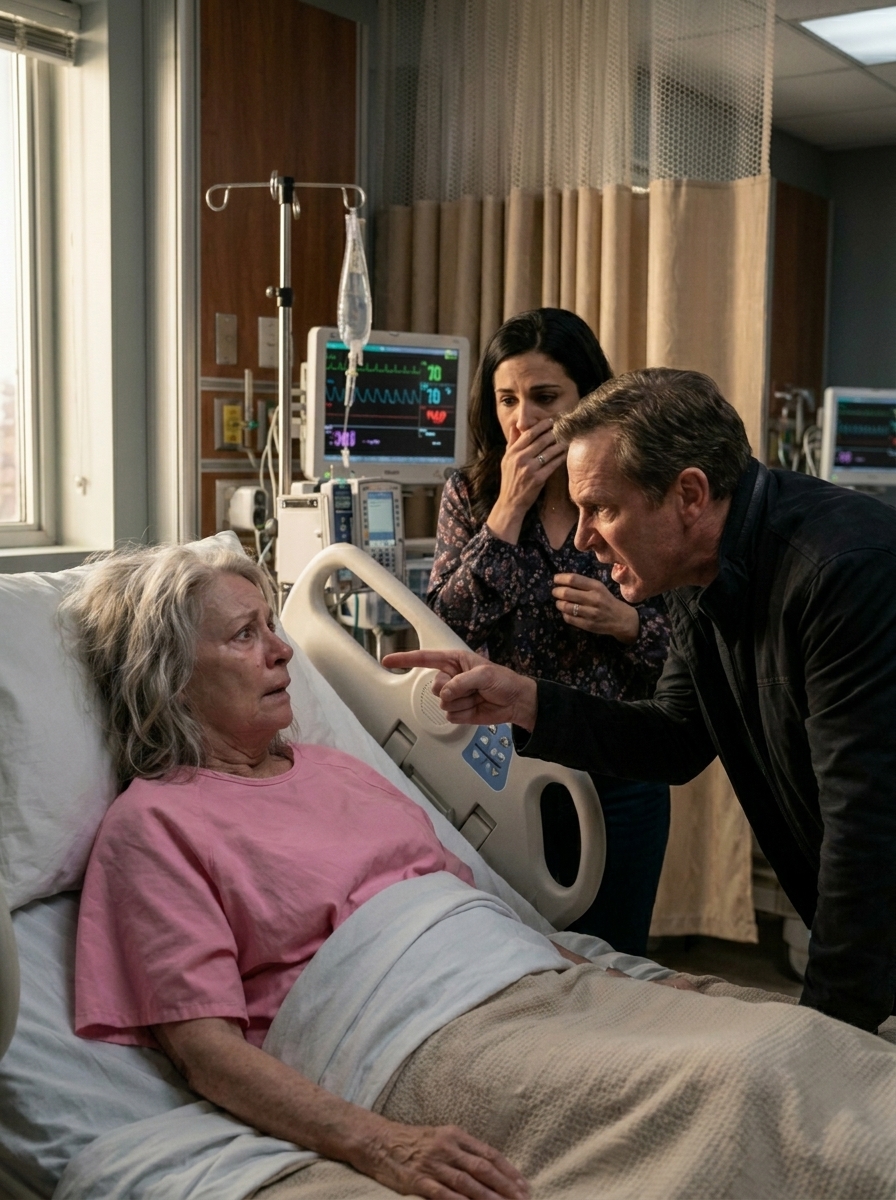
  • “I told my son, ‘I can’t breathe… my chest hurts.’ He sighed and snapped, ‘Mom, don’t call me over every little thing.’

    “I told my son, ‘I can’t breathe… my chest hurts.’ He sighed and snapped, ‘Mom, don’t call me over every little thing.’

    When I told my son, “Caleb, I can’t breathe… my chest hurts,” I expected panic in his voice. Maybe worry mixed with annoyance. Anything that sounded like he still remembered I was his mother.

    Instead, he sighed heavily into the phone.

    “Mom, don’t call me over every little thing,” he snapped impatiently. “I’m busy right now.”

    I sat at my kitchen table with one hand pressed against my chest, staring at the framed picture of Caleb at eight years old—missing his two front teeth and holding a baseball bat nearly taller than he was. Back then, he ran to me for every nightmare, every scraped knee, every thunderstorm.

    Now I was the frightened one, and my own son treated me like a burden.

    “Caleb,” I whispered, “this doesn’t feel little.”

    There was silence for a moment. Then I heard a woman laughing somewhere behind him. Vanessa, probably. Or maybe one of their country club friends—the same club membership I helped him afford.

    “You always overreact,” he muttered. “Take an aspirin. I’ll call you later.”

    Then the line disconnected.

    I stared at my phone for several seconds before another crushing wave of pain spread across my chest, heavy and sharp like someone pressing bricks against my ribs. I realized I couldn’t wait for “later.”

    So I grabbed my purse, stumbled toward my car, and drove myself to Mercy General Hospital.

    Every traffic light felt endless. My left arm throbbed. The edges of my vision blurred. I remember gripping the steering wheel so tightly my knuckles hurt while whispering aloud, “Lord, please don’t let me die in this car.”

    When I finally reached the emergency entrance, a young nurse saw me leaning against the wall and rushed over with a wheelchair.

    “Ma’am, are you having chest pain?”

    I nodded weakly.

    As they wheeled me inside, my phone buzzed.

    Caleb.

    For one foolish second, hope rose inside me. Maybe he changed his mind. Maybe he was coming.

    But his message read:

    Mom, did you pay the card bill? My card just declined at dinner. This is embarrassing.

    I stared at those words while nurses attached heart monitors to my chest.

    Not “Are you okay?”

    Not “Where are you?”

    Not “I’m coming.”

    Just the card.

    And suddenly, something inside me became very calm.

    For ten years after my husband Richard died, Caleb slowly took over pieces of my life. First it was rent help. Then car payments. Then business expenses. Then “temporary” access to my credit cards. I kept telling myself mothers helped their children. I kept believing he would eventually outgrow it.

    But lying there in that emergency room with machines beeping beside me, I finally understood something painful.

    Caleb never forgot I was his mother.

    He forgot I was a person.

    With trembling fingers, I opened my banking app. I froze the credit card in his wallet. Then the second card. Then the emergency debit card I gave him “just in case.” I changed my investment account password. I removed him completely as an authorized user.

    Then I called my attorney, Margaret Ellis.

    When she answered, I whispered, “Margaret, it’s Helen. I need to change my will.”

    She immediately fell silent.

    “Helen, are you okay?”

    “No,” I said quietly while watching a doctor rush toward me. “But I’m finally awake.”

    And right before they rolled me away for more tests, Caleb called again.

    This time I answered.

    He shouted immediately, “Mom, what did you do?”

    I stared up at the fluorescent hospital lights and replied calmly:

    “Something I should have done years ago.”

    Then I hung up….

    Part 2

    The doctors confirmed I hadn’t imagined anything. It was a heart attack. Not the dramatic kind from movies where someone collapses clutching their chest. Mine arrived quietly and cruelly, disguised as pressure, nausea, and pain I almost ignored because my son made me feel ridiculous for asking for help.

    The next morning, a cardiologist named Dr. Patel stood beside my bed and said, “Mrs. Harper, you were fortunate you came in when you did.”

    Fortunate.

    That word settled heavily inside me.

    I drove myself to the hospital because my only child couldn’t be bothered to drive twenty minutes.

    By lunchtime, Caleb finally appeared wearing a navy blazer and an expression that tried to look concerned but was far too angry to succeed.

    Vanessa followed behind him with sunglasses resting on top of perfectly curled hair.

    “Mom,” Caleb said while glancing at the monitors, “you should’ve told me it was serious.”

    I stared at him.

    “I said I couldn’t breathe.”

    He shifted awkwardly. “You can be dramatic sometimes.”

    Vanessa touched his arm gently. “Caleb, maybe not now.”

    But he was already glancing toward my purse, then toward my phone beside the hospital bed.

    “The bank told me you removed me from the accounts,” he said. “Do you realize the disaster that caused? We were having dinner with investors.”

    I almost laughed.

    Investors.

    Caleb’s “business” was a luxury home staging company that never made profit without my money rescuing it. He called it entrepreneurship. I called it a bottomless hole he knew exactly how to guilt me into filling.

    Dad would’ve believed in me.

    You don’t want your grandson suffering, do you?

    Family helps family.

    My grandson Owen was seven years old. I loved him more than anything in this world, and Caleb knew it.

    “Where’s Owen?” I asked quietly.

    “With the sitter,” Vanessa answered.

    I nodded slowly. “Good. He shouldn’t witness this.”

    Caleb frowned. “Witness what?”

    I reached into the bedside drawer and pulled out a folder Margaret delivered that morning. My attorney wasted no time, which was exactly why I trusted her.

    “I updated my financial documents,” I said calmly. “The house remains solely mine. My retirement accounts are protected. My medical power of attorney now belongs to Margaret, not you.”

    For the first time since entering the room, Caleb looked genuinely afraid.

    “Mom, that’s insane. I’m your son.”

    “Yes,” I replied quietly. “That used to matter.”

    Vanessa slowly sat down beside the window. “Helen, maybe this isn’t the best moment for huge decisions.”

    “No,” I answered. “It’s exactly the right moment. Because yesterday, while I thought I might die, my son worried about a declined dinner bill.”

    Caleb’s jaw tightened. “That’s unfair.”

    “What’s unfair?” I asked, my voice stronger now. “The fact that I paid your mortgage for eight months? That I covered Owen’s preschool because you were ‘temporarily short’? That I gave you my cards for emergencies and found charges for golf clubs, luxury resorts, and Vanessa’s spa weekends?”

    Vanessa’s mouth dropped open. “Those were related to business.”

    I looked directly at her. “A seaweed body wrap in Scottsdale was business-related?”

    She immediately looked away.

    Caleb leaned toward my bed. “So what? You’re cutting us off over one missed call?”

    “No,” I said calmly. “I’m cutting you off because I finally heard what was hidden underneath that call.”

    He shook his head bitterly. “That lawyer is manipulating you.”

    “No, Caleb,” I answered. “You manipulated me.”

    The room went silent except for the steady beep of my heart monitor.

    Then Margaret entered.

    She was small, gray-haired, and sharp as shattered glass. Carrying her leather briefcase, she smiled politely at Caleb in a way that instantly made him uncomfortable.

    “Mrs. Harper,” she said, “I brought the revised documents.”

    Caleb turned red instantly. “You can’t just walk in here and—”

    Margaret lifted one finger. “Mr. Harper, your mother is alert, stable, and fully competent. I spoke directly with her physician. She has every legal right to protect her assets.”

    “My assets?” Caleb snapped.

    Margaret adjusted her glasses. “Interesting choice of words.”

    I watched my son’s face carefully as realization spread through him. For years he treated my savings like an inheritance he could start spending early. He confused love with unlimited access. He believed guilt would always overpower my self-respect.

    Then my phone buzzed again.

    A bank notification appeared on the screen.

    Attempted transaction declined: $12,480. Harper Lifestyle Design.

    I slowly lifted the phone.

    “Caleb,” I asked quietly, “what exactly were you trying to buy?”

    His silence answered before his mouth ever could.

    Part 3

    Margaret took the phone from my hand and read the notification carefully. Her eyes narrowed slightly, though her voice remained calm.

    “Mrs. Harper, did you authorize this charge?”

    “No.”

    Caleb dragged his hand through his hair nervously. “It was temporary. I was going to explain.”

    “For what?” I asked.

    He didn’t answer.

    Vanessa whispered softly, “Caleb…”

    That whisper told me enough. Maybe she didn’t know every detail, but she knew enough.

    Margaret stepped closer to my hospital bed. “Mr. Harper, attempting to access a frozen account without permission could create serious legal consequences. I strongly suggest you stop speaking unless your mother directly asks you something.”

    For the first time, Caleb truly looked at me.

    And briefly, I saw the little boy from that old photograph again. Not innocent anymore. Just scared. Cornered.

    “Mom,” he whispered, softer this time, “we’re in trouble.”

    There it was.

    Not “I’m sorry.”

    Not “I was worried about you.”

    Not “I should’ve come.”

    Just the real reason he stood beside my hospital bed.

    I closed my eyes as grief moved through me like icy water. People think the hardest part of parenting is raising children.

    It isn’t.

    The hardest part is realizing the child you raised learned how to weaponize your love.

    “What kind of trouble?” I asked quietly.

    Caleb swallowed hard. “Business debt. Personal loans. We were supposed to fix everything after the next contract.”

    “There isn’t going to be another contract, is there?”

    His eyes dropped instantly.

    Vanessa quietly started crying. I didn’t comfort her.

    I spent years comforting everyone else while abandoning myself.

    Margaret gently placed the paperwork beside me. “Helen, you don’t need to decide anything else today.”

    But I already had.

    “Owen,” I said.

    Caleb looked up quickly. “What about him?”

    “I’ll pay for Owen’s school directly. Medical care directly. Clothes, food, whatever he truly needs—directly. But not one dollar will pass through your hands.”

    His face twisted with humiliation and anger. “You don’t trust me?”

    “No,” I answered honestly. “I love you. But I do not trust you.”

    That sentence broke something open in the room.

    Caleb sank heavily into the chair against the wall. For the first time, he looked less like an entitled man and more like a son with nowhere left to hide.

    “I messed up,” he whispered.

    “Yes,” I replied.

    “I didn’t think you’d really cut me off.”

    “I know.”

    His eyes filled with tears, but this time I didn’t rush to save him from consequences. That had been my mistake for years. Every time he fell, I softened the landing. Every time he lied, I blamed stress. Every time he took from me, I called it need.

    The following weeks were difficult.

    At first Caleb was angry. Then desperate. Then quiet.

    Margaret helped me report the unauthorized transactions, though I chose not to pursue criminal charges as long as Caleb agreed to financial counseling and a repayment plan. I changed every password. I sold the extra car I’d been letting him drive. I moved important documents into a safe deposit box.

    And three times a week, I attended cardiac rehabilitation.

    For once, I became the emergency.

    Owen visited every Sunday carrying drawings and terrible knock-knock jokes. I never spoke badly about his parents in front of him. Children should never carry adult failures.

    About two months after the heart attack, Caleb came by alone carrying grocery bags.

    “I brought soup,” he said awkwardly. “Low sodium. The kind Dr. Patel recommended.”

    I studied him quietly for a long moment.

    Then I opened the door.

    That day, he didn’t ask me for money.

    Or the next day.

    Eventually he found part-time work while rebuilding his business honestly—smaller than before. Vanessa got a job at a dental office. Their marriage looked strained, but that was theirs to repair.

    Caleb and I were not magically healed. Real life doesn’t work that way. Trust does not regrow overnight because someone cries in a hospital room.

    But one Sunday, while Owen played outside, Caleb stood beside me at the kitchen sink and whispered:

    “Mom, when you called me that day… I should’ve come.”

    I kept washing the cup in my hands.

    “Yes,” I answered quietly. “You should have.”

    His voice cracked apart. “I’m sorry.”

    And this time, I believed he understood what those words cost.

    I forgave him in my heart.

    But I never gave him back my bank cards.

    Because forgiveness is not permission.

    Now every time my phone rings, I remember that hospital bed, those frozen accounts, and the exact moment I finally chose to live—not merely survive.

    So honestly—if you were in my place, would you have given Caleb another chance, or would you have walked away completely? Sometimes the people we love most are also the people we eventually must teach how to live without using us.
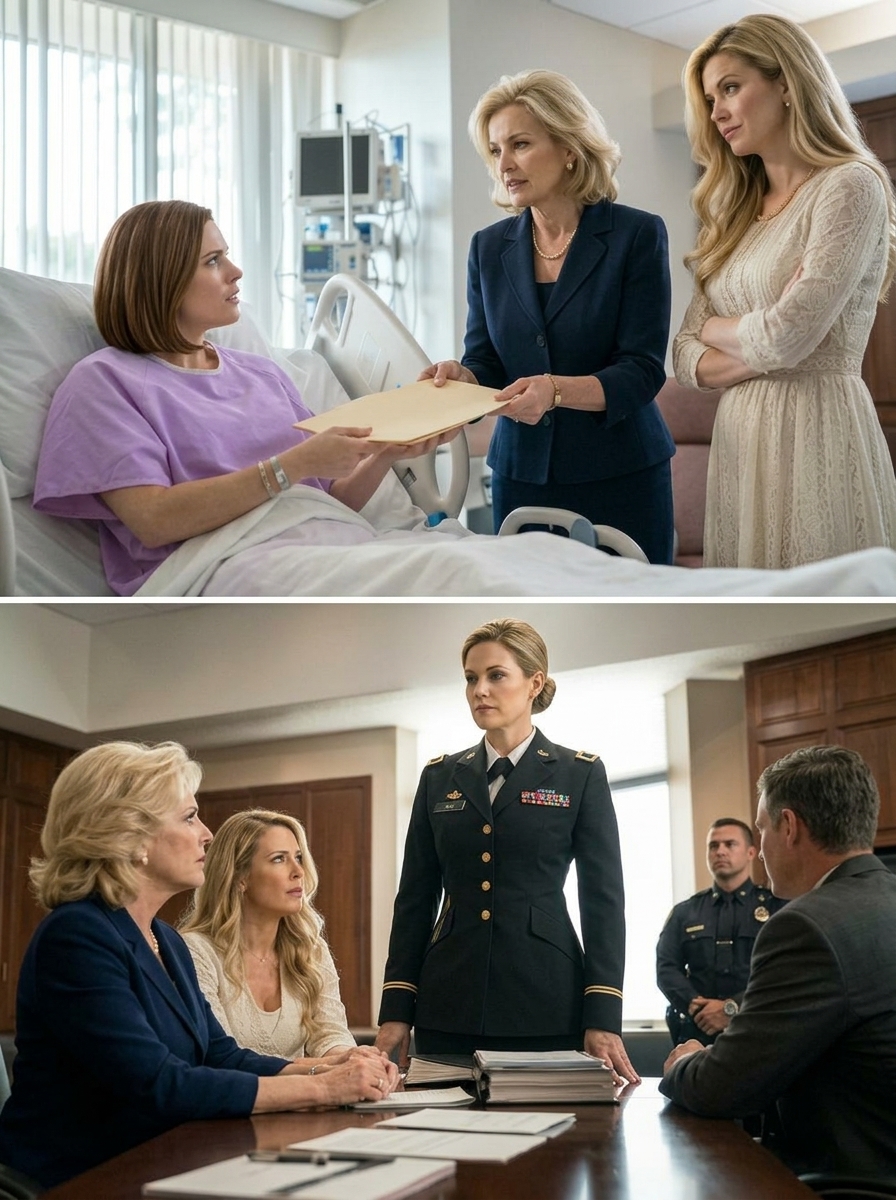
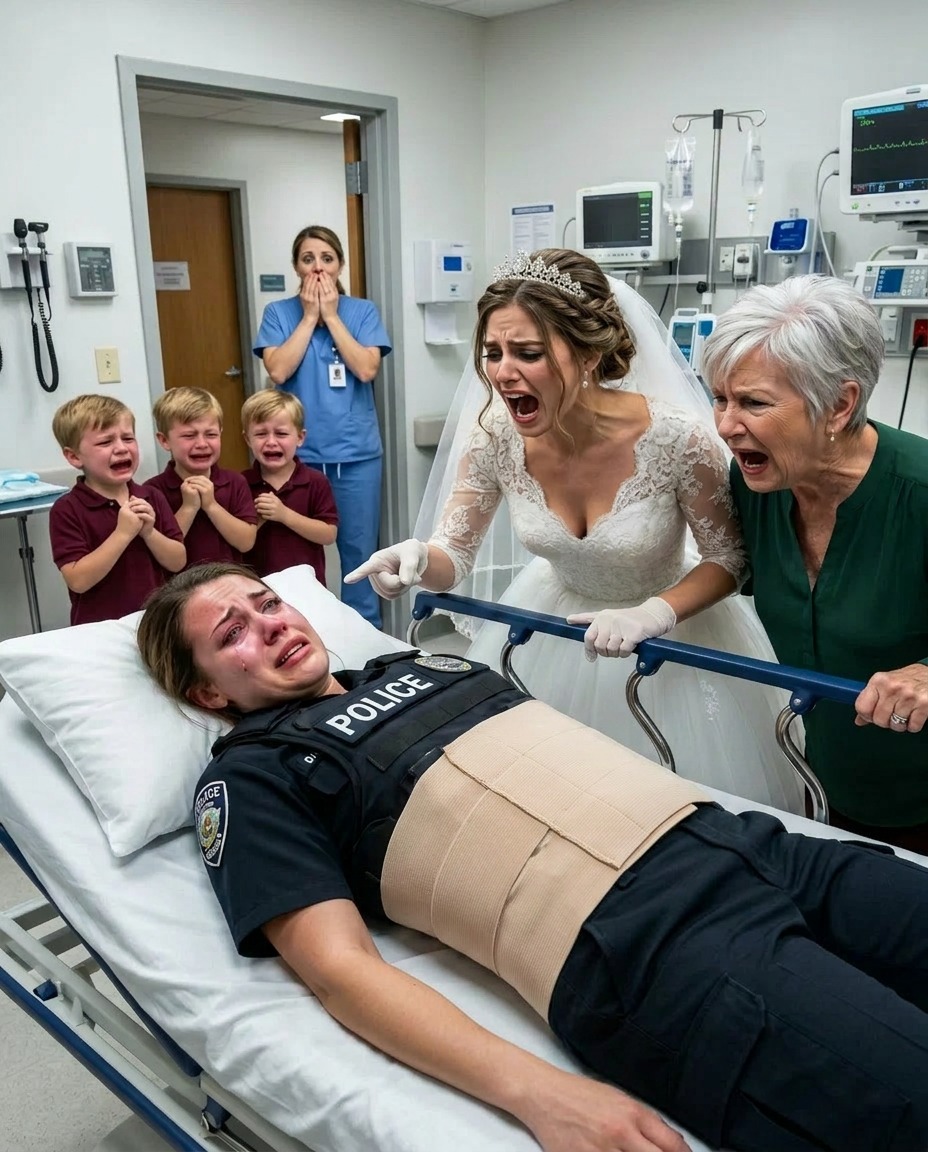
  • 72 hours after I gave birth, my mom walked into my hospital room with custody papers for my baby. She said my “infertile” sister deserved him more than I did. I paid $42,500 for her IVF treatments.

    72 hours after I gave birth, my mom walked into my hospital room with custody papers for my baby. She said my “infertile” sister deserved him more than I did. I paid $42,500 for her IVF treatments.

    Seventy-two hours after bringing my son into the world, my mother entered my hospital room carrying a manila folder like it held a weapon. My newborn slept against my chest, warm and milk-heavy, when she said, “Don’t make this ugly, Mara.”

    I stared from her pearl earrings to the documents in her hands.

    Behind her stood my sister, Celeste, wrapped in cream-colored linen, sunglasses resting on her head, fake grief painted carefully across her face. She did not resemble a heartbroken woman. She looked like someone waiting for a purchase to be gift-wrapped.

    “What is that?” I asked.

    Mom set the folder onto my tray table. “Temporary custody papers.”

    The room fell silent except for the soft sound of my son breathing.

    I laughed once because screaming would have hurt more. “You brought custody documents into my maternity room?”

    Celeste stepped closer. “You’re alone. You deploy in six months. You don’t have a husband, a stable home, and honestly, Mara, you’ve always been… intense.”

    “Intense,” I repeated.

    Mom’s tone sharpened instantly. “Your sister deserves a baby. After all she’s been through.”

    My hold tightened around my son. “She deserves my child?”

    Celeste’s expression collapsed perfectly on cue. “You know I can’t carry a baby. You know what infertility has done to me.”

    Yes. I knew.

    I knew because I had drained my savings account for her.

    Forty-two thousand five hundred dollars.

    Every bank transfer labeled “IVF.” Every crying phone call. Every reminder from Mom that family sacrifices for family.

    I stared directly at Celeste. “I paid for your treatments.”

    Her mouth twitched slightly. “And they didn’t work.”

    Mom pushed the papers closer. “Sign now, and we’ll tell everyone you made the loving choice.”

    The loving choice.

    My C-section stitches burned as I pushed myself upright. My son stirred softly, and I pressed my cheek against his tiny head.

    “No.”

    Celeste’s fake sorrow disappeared immediately. “Don’t be ridiculous.”

    Mom leaned over my bed, her perfume thick in the sterile hospital air. “Listen carefully. I still know Colonel Hayes from your command charity board. I can make calls. A single mother suffering postpartum instability? Refusing a safer guardian? Your military career could vanish before your stitches even close.”

    For one second, pain blurred everything around me.

    Then something cold, steady, and razor-sharp settled inside my chest.

    They believed I was exhausted. Weak. Trapped.

    They forgot I had survived interrogation training, hostile deployments, and superior officers who mistook silence for surrender.

    I looked down at the custody papers.

    Then at my mother.

    “Leave,” I said quietly.

    Mom smiled confidently. “You’ll call us by morning.”

    I smiled back.

    “Bring a pen when you return.”….

    Part 2

    By the next morning, my mother had escalated from threats to performance art.

    She uploaded a photo of herself holding a blue baby blanket—not my son, only the blanket—with a caption about “praying for the baby’s safest future.” Celeste added a broken-heart emoji beneath it. By lunchtime, relatives were flooding my phone with messages about sacrifice and selflessness.

    At two in the afternoon, Mom returned with Celeste and a lawyer named Brent who wore a watch far too large for his wrist.

    He stood at the foot of my hospital bed and said, “Ms. Vale, your family hopes to resolve this privately.”

    “My family wants my newborn,” I replied.

    Celeste smiled sweetly. “Temporarily.”

    “Until when?”

    “Until you’re healthy again.”

    “I’m healthy enough to recognize fraud.”

    The smile froze instantly.

    Mom recovered first. “Be careful.”

    I picked up my phone. “Funny thing. That IVF clinic you sent me invoices from? The Hopewell Reproductive Institute?”

    Celeste’s lips parted.

    “I called them.”

    Brent adjusted his tie nervously. “That’s harassment.”

    “No,” I said calmly. “That’s research. Especially since the number on the invoice belongs to a prepaid phone. The address leads to a dental supply warehouse. And the doctor listed there died in 2019.”

    Mom’s face hardened into the exact expression I remembered from childhood: the look she wore before punishment.

    “You started digging three days after giving birth?” she hissed.

    “I was bored between contractions.”

    Celeste snapped immediately. “You’re lying.”

    I opened my banking app, angling the screen just enough for them to see the transfers. “Forty-two thousand five hundred dollars. Sent over eleven months. You cried through every request.”

    Her eyes flashed angrily. “You have no idea what it feels like to be me.”

    “No. I only know what it feels like to finance you.”

    Brent cleared his throat. “Even if there was some misunderstanding regarding medical expenses, custody is an entirely separate matter. Your mother has documented concerns.”

    He placed another stack of papers onto the table.

    Screenshots.

    Private messages where I admitted fear. Exhaustion. Loneliness.

    Mom had saved every single one.

    Celeste’s voice turned soft and syrupy. “You told us you were overwhelmed.”

    “I told my mother I was scared.”

    “And she did what mothers do,” Mom replied. “She protected the baby.”

    That nearly shattered me.

    Not the fraud. Not the stolen money.

    That.

    Because for years I had mistaken control for love.

    A nurse stepped into the room to check my blood pressure. Her eyes moved across the room, the paperwork, and my white-knuckled grip on the bassinet.

    “Everything alright in here, Captain Vale?”

    Brent blinked. “Captain?”

    Celeste looked sharply at me.

    I smiled.

    There it was.

    The first crack.

    They knew I served in the military. What they did not know was that I had spent three years attached to investigative logistics, building fraud cases involving procurement crimes. They did not know I understood chains of evidence better than Brent understood his cheap intimidation tactics.

    And they definitely did not know I had already emailed everything to JAG, my bank’s fraud division, and a detective who owed me a favor from a previous charity embezzlement investigation.

    “Everything’s fine,” I told the nurse. “But please document in my chart that these visitors are causing distress and attempting to pressure me into signing legal documents during medical recovery.”

    The nurse’s expression changed immediately.

    Brent stepped backward.

    Mom’s jaw tightened. “Mara.”

    I looked at the nurse. “Also, revoke their visitor privileges.”

    Celeste laughed too loudly. “You can’t do that.”

    The nurse pressed the emergency button beside my bed.

    Hospital security arrived in less than two minutes.

    Mom pointed at me while security escorted her toward the hallway. “You think this is over?”

    “No,” I said, lifting my son into my arms. “I think it’s finally beginning.”

    Part 3

    The final confrontation happened thirteen days later inside a courthouse conference room with gray walls and no windows.

    Mom arrived dressed in navy blue, the color she always wore when she wanted to appear respectable. Celeste wore white again, as though innocence could be purchased in silk. Brent carried a thicker briefcase and a noticeably thinner smile.

    They expected to meet a frightened new mother.

    Instead, they found me in uniform.

    My son was safe in the waiting area with my commanding officer’s wife. My stitches still pulled painfully whenever I stood, but my voice remained steady.

    Brent began carefully. “We are prepared to offer a family agreement.”

    “No,” I replied. “You’re prepared to listen.”

    Mom scoffed loudly. “Still dramatic.”

    The door opened behind me.

    My attorney walked in beside a JAG liaison, a county detective, and a representative from my bank’s fraud division.

    Celeste went pale instantly.

    Brent’s smile disappeared first.

    My attorney placed three folders onto the table. “We have fraudulent medical invoices, falsified clinic records, evidence of coercion, threats involving military employment, and attempted custodial interference.”

    Mom snapped, “This is ridiculous.”

    The detective opened his folder. “Hopewell Reproductive Institute does not exist. The payment account traces directly to an LLC registered under Celeste Vale.”

    Celeste whispered weakly, “Mom.”

    Mom turned toward her sharply.

    There it was: not guilt. Betrayal that the lie had unraveled so completely.

    My attorney continued calmly. “Ms. Vale also recorded yesterday’s phone conversation, which is legal under state one-party consent law. In that recording, Mrs. Danner threatened to report Captain Vale as mentally unstable unless she surrendered physical custody.”

    Mom stood abruptly. “I was protecting my grandchild.”

    The detective replied flatly, “You were extorting your daughter.”

    Brent pushed his chair backward immediately. “I was unaware of these allegations.”

    I nearly laughed. The rat abandoning the ship before it sank.

    Celeste finally broke, tears spilling for real this time. “You have everything. A career. Respect. A baby. I had nothing.”

    “You had a sister,” I said quietly. “You sold her grief back to her as invoices.”

    She flinched hard.

    Mom’s voice dropped low. “After everything I did for you.”

    I looked at the woman who had raised me to obey, apologize, and bleed quietly while calling it gratitude.

    “You taught me something useful,” I said. “Always keep receipts.”

    The settlement discussion disappeared immediately. The custody petition was withdrawn before noon. By that evening, an emergency protective order barred Mom and Celeste from contacting me or coming near my son.

    But that was not the revenge.

    The revenge was controlled, lawful, and precise.

    I filed a police report. The bank froze Celeste’s LLC account. The state bar received a complaint regarding Brent’s role in presenting coercive legal documents without proper due diligence. My command received my full evidence packet before Mom could make a single phone call, including the recordings, fraud timeline, and witness statements from hospital staff.

    Colonel Hayes called me personally.

    “I’m sorry they attempted to use my name,” he said.

    “So am I, sir.”

    “They picked the wrong officer.”

    “Yes, sir,” I replied while watching my son sleep beside me. “They did.”

    Six months later, Celeste pleaded guilty to felony fraud. Restitution totaled $42,500 plus additional fees. Mom accepted a plea deal for coercion and harassment after prosecutors played her recorded threats in court. Brent withdrew from the custody matter and soon found himself under disciplinary review.

    I bought a small house near base with a yellow nursery and a front porch that caught the morning sunlight.

    On my son’s first birthday, he smashed cake into his hair while my friends laughed around the kitchen.

    My phone buzzed once with a voicemail from a blocked number I never listened to.

    I deleted it.

    Then I lifted my son high into the air, and he laughed like thunder cracking open the sky.

    For the first time in my life, nobody was taking anything from me.

    And nobody ever would again.

  • My mom stole my $150,000 surgery fund for my sister’s wedding. When I collapsed in the ER, my sister called me dramatic, and Mom tried to cancel my CT scan. Then a nurse opened my tactical jacket—and found the two things that silenced everyone.

    My mom stole my $150,000 surgery fund for my sister’s wedding. When I collapsed in the ER, my sister called me dramatic, and Mom tried to cancel my CT scan. Then a nurse opened my tactical jacket—and found the two things that silenced everyone.

    Part 1

    The pain did not hit me all at once. It had been building quietly for weeks, starting as a dull pressure low in my abdomen that I kept blaming on stress, exhaustion, and too many hours on my feet. But that morning, as I stood in the parking lot of an elegant catering venue in Columbus, that quiet ache turned sharp. It twisted through me so violently that my breath disappeared. My knees buckled, gravel scraped my palms, and the world tilted sideways before everything went black.

    When I came back to myself, bright fluorescent lights burned through my eyelids. A gurney rattled beneath me, wheels squeaking over hospital floors while paramedics spoke in clipped, urgent voices. My stomach felt like something inside me had torn open. Each breath was shallow, painful, and punished by another wave of agony.

    “Twenty-nine-year-old female,” one paramedic said. “Collapsed at a catering venue parking lot. Severe abdominal pain. Blood pressure dangerously low.”

    I tried to open my eyes, tried to tell them how bad it was, but my body would not obey. Then I heard Chloe.

    “She does this,” my sister said with a light, irritated laugh. “Maybe not exactly this, but Harper gets dramatic when she’s stressed.”

    I forced my eyes tighter, wishing the pain would vanish, wishing I could wake up somewhere else.

    “I’m not—” I gasped. “I’m not faking.”

    A nurse leaned over me, her face blurred by the lights.

    “Ma’am, from one to ten, how bad is the pain?”

    “Ten,” I whispered. “No. Eleven.”

    Through the haze, I saw Chloe standing there in a polished sweater set, arms folded, her huge engagement ring flashing under the hospital lights. Her wedding was in six days, and for the past year, my mother had treated it less like a ceremony and more like a royal coronation. Every conversation, every family gathering, every dollar had revolved around Chloe’s perfect day.

    Then my mother, Eleanor, rushed in—not frightened, not tearful, but annoyed.

    “What happened now, Harper?”

    Even through the pain, the bitterness of that sentence almost made me laugh. Not, Are you okay? Not, What’s wrong? Just, What happened now? As if my collapse were another inconvenience on her schedule.

    Chloe turned to the nurse.

    “We were finalizing the flowers. She dropped right by the valet. I told her she should’ve stayed home if she was going to make the week about herself.”

    I tried to lift my hand. My fingers caught weakly on my olive-green tactical jacket, still lying over me. It was old, heavy, and practical, a jacket that had survived army deployments, logistics jobs, bad weather, and a lifetime of being the person everyone used when they needed something done.

    “Please,” I whispered. “Doctor.”

    A man in navy scrubs stepped into view. Dr. Hayes. His calm expression cut through the noise like an anchor.

    “Harper, look at me. When did the pain start?”

    “This morning,” Chloe answered quickly.

    “No,” I forced out, locking my eyes on the doctor. “Weeks.”

    Dr. Hayes frowned.

    “Weeks?”

    “Worse today. Dizzy. Nauseous. Feels like something tore.”

    That got his attention instantly.

    “Labs, IV fluids, type and cross,” he ordered. “I want a CT of the abdomen and pelvis now.”

    My mother stepped forward, offended.

    “A CT scan? Isn’t that expensive? Harper is between contracts. She doesn’t have premium insurance.”

    Dr. Hayes did not even look at her.

    “Her blood pressure is dropping, and she has severe abdominal pain. She needs imaging.”

    Eleanor’s voice sharpened.

    “She exaggerates. Her sister’s wedding is this Saturday. We cannot approve unnecessary tests because Harper is having an episode.”

    I stared at her, stunned by how easily she reduced my suffering to drama. I was shaking on a hospital gurney, barely able to breathe, and she was worried about cost and cake tastings.

    “Mom,” I rasped. “Stop.”

    “She gets overwhelmed,” Chloe added, softening her voice for the staff. “Could you please focus on people who are actually in danger? She’s probably dehydrated. We have somewhere to be in two hours.”

    The nurse froze.

    “Excuse me?”

    For one terrible second, my physical pain disappeared beneath something colder.

    Dr. Hayes’s voice turned firm.

    “My only concern right now is my patient.” He leaned closer to me. “Harper, I need your consent. Do you want the CT?”

    “Yes,” I whispered.

    My mother clicked her tongue.

    “You aren’t thinking clearly.”

    “No,” I said, staring at her. “You just never let me.”

    Then the pain exploded again. My fingers went numb. The ceiling blurred. The monitors began screaming somewhere above me, and Dr. Hayes shouted for a crash cart.

    As darkness closed in, I heard my mother’s voice cut through everything.

    “Her sister’s wedding is in six days. She needs the money more than this.”

    And even as I slipped under, one thought burned clear in my mind.

    Of course.

    Even now, while I’m dying.

    Part 2

    I did not fully black out. I floated somewhere beneath the noise, trapped inside a body that would not answer me. I heard rubber soles squeaking across the floor, Velcro ripping open, nurses moving quickly around me. Then someone said they needed my ID for the blood bank.

    “Check her jacket.”

    My jacket.

    I tried to speak, but my tongue felt too heavy. For eight months, that coat had carried more than my keys and wallet. Hidden inside its compartments were two things that were about to destroy the version of reality my family had been performing.

    In one pocket was a medical packet from a low-cost imaging clinic I had visited three hours earlier. In the other was a sealed bank envelope taped shut.

    That morning, I had gone to the clinic because the pain had become impossible to ignore. The physician assistant who performed the ultrasound had gone pale. She handed me papers with ER NOW written across the top in red ink and told me I was bleeding internally. I needed emergency care immediately.

    But Chloe had been texting nonstop, threatening to remove me from the wedding party if I missed the final appointments. So I made a foolish plan. I would give her the envelope, smile through the venue meeting, survive the cake tasting, and then drive myself to the hospital.

    I did not make it past the valet.

    Suddenly, something hit the floor in the trauma bay.

    “Oh my God,” a nurse breathed.

    I forced my eyes open. Nurse Jenkins stood beside my gurney, holding my olive jacket. The hidden pockets had spilled everything: my military ID, the urgent medical report, a cream-colored handwritten note, and the thick sealed bank envelope.

    Dr. Hayes grabbed the report. His face changed immediately.

    “Get radiology ready,” he barked. “Page vascular surgery now.”

    Eleanor blinked.

    “What is that?”

    Dr. Hayes ignored her for one satisfying second before turning with cold fury in his eyes.

    “It’s a report from an imaging center. Your daughter was told three hours ago to come to the ER for an active internal bleed and suspected splenic artery aneurysm.”

    The room fell silent except for the frantic beeping of my monitor.

    “The bloodwork supports it,” he continued. “This was not a panic attack. It was not dehydration. And it was not dramatics.”

    Nurse Jenkins picked up the note and envelope, then handed them to Chloe. My sister stared down at them, her hands shaking.

    I knew what the note said. I had written it in my car.

    Chloe—
    For the venue, flowers, band, or whatever makes your day perfect. I know Mom says I never show up for you. I hope this proves I do.
    Love, Harper.

    Inside were cashier’s checks totaling twenty-three thousand dollars. I had sold my motorcycle, the one thing I owned that truly made me feel free. I had worked double shifts, skipped meals, lived cheaply, and pushed my body too hard for months to save it.

    Chloe read the note. Confusion passed over her face first. Then shock. Then shame, raw and ugly.

    Eleanor stepped toward the envelope.

    “That’s for the wedding?”

    Not Harper, I’m sorry.

    Not Are you going to live?

    Just that.

    I looked at her.

    “It was,” I whispered.

    Dr. Hayes moved between us.

    “This conversation is over. She is going to surgery. Unless you are medical staff, leave my trauma bay.”

    “I’m her mother,” Eleanor snapped.

    Dr. Hayes did not blink.

    “Then act like it.”

    After that, everything moved fast. The CT confirmed the aneurysm was leaking. Dr. Hayes told me they had to operate immediately. Through the glass doors, I saw my mother and sister standing in the hallway. Chloe still held the bank envelope, her fingers clenched around it.

    A strange clarity came over me.

    “Doctor,” I said, grabbing his wrist with the last strength I had. I looked at Chloe through the glass. “Tell her not to touch that money. Not one dollar.”

    The operating room doors swung shut. Anesthesia poured warmth through my veins, and I closed my eyes, not knowing whether I would open them again.

    Surgery felt like missing time. One moment, I was beneath blinding lights. The next, I was clawing my way up through fog. A monitor beeped steadily beside me.

    When I opened my eyes, my throat was dry and raw. My abdomen felt packed with stone.

    “Welcome back,” Nurse Jenkins said softly, adjusting my IV.

    “Did I make it?” I croaked.

    She smiled.

    “You did. It was close, but you made it.”

    Later, Dr. Hayes came in and explained that they had repaired the artery just before a catastrophic rupture. I had lost a frightening amount of blood, but I was stable.

    “Your family is in the waiting room,” he said carefully. “Your sister cried. Your mother had questions.”

    “What kind of questions?”

    His face became carefully neutral.

    “Billing. Visitor access. And how a next-of-kin can collect a patient’s personal property.”

    I laughed, and the pain from my stitches punished me for it.

    “Of course. Did you let them in?”

    “Not without your permission. Do you want to see them?”

    I looked toward the dark Columbus skyline outside the window.

    “No. Ban them from the floor.”

    He nodded once.

    For the next three days, my family tested that boundary. Eleanor called the nurses’ station using fake names. Chloe sent white lilies, even though she knew I was allergic to them, then a fruit basket and a long text claiming wedding stress made people say things they did not mean.

    Only Liam, Chloe’s fiancé, sent something that felt real.

    He wrote that he had just learned about the money and the ER. He said he was sick over it and had no idea. He told me to focus on healing.

    On the fourth day, the hospital social worker came in with my estimated bills. The total at the bottom of the page was painful to look at.

    I glanced at my belongings bag on the chair. The bank envelope was inside, guarded by the nursing staff.

    “Can I use my own cashier’s checks to pay my hospital balance?” I asked.

    The social worker smiled gently.

    “If they’re in your name and unendorsed, yes.”

    There was no dramatic speech. No music. No grand moment. Just the simplest math of my life.

    The money I had saved to buy my family’s love would now pay for the care that saved my life.

    That night, Chloe sent the text that ended us.

    “Harper, I know you’re hurting, but if you can’t give the full $23k, can you at least cover the venue balance? They’re threatening to cancel. We’ll pay you back after the honeymoon.”

    I read it three times.

    Then I replied.

    “You watched me bleed out on a gurney, and you still think I owe you centerpieces.”

    I blocked her. Then I blocked my mother. I called the bank, canceled the checks, and redirected every cent toward my medical and recovery accounts.

    For years, I thought being the family workhorse made me strong. I thought sacrifice could earn love. But lying in that hospital bed, I finally understood the truth.

    Love that only values your labor is not love.

    It is access.

    Part 3

    When I was discharged, I needed a ride home. The old me would have called my mother and accepted whatever guilt came with it. Instead, I texted Riley, a blunt former army medic I had worked with on logistics contracts. She showed up two hours later in an oversized hoodie with a duffel bag that looked ready for a disaster response.

    “What’s in the bag?” I asked as she helped me into the wheelchair.

    “Soup, extra gauze, electrolyte drinks, and a grabber tool so you don’t rip a stitch trying to reach the remote,” she said. “Don’t make it weird.”

    I nearly cried. Not because it was grand, but because it was simple. Someone cared without demanding payment in return.

    Riley drove me to my apartment and stayed while I settled in. We were opening soup containers when a sharp knock hit the front door. I knew that knock. It sounded like entitlement.

    Riley checked the peephole.

    “Older woman with a Prada bag. Very angry. Want me to tell her to leave?”

    I held one hand against my healing abdomen and took a breath.

    “No. Let her in. It’s time to finish this.”

    Eleanor swept into my apartment as if she owned the air. She did not look at Riley. She barely looked at my blanket, my pale face, or the way I sat carefully to protect my incision.

    “Harper,” she said with rehearsed disappointment. “You look terrible.”

    “I had an artery repaired, Mom.”

    She sat on my sofa without being invited.

    “Your sister is devastated. She has been crying for two days.”

    “Because I almost died?”

    Her jaw tightened.

    “Because you canceled the cashier’s checks. The venue is threatening to cancel. You are creating a division in this family right before the most important day of Chloe’s life.”

    Something small and hopeful inside me finally died. The child who had still wanted her mother to care was gone.

    “I canceled the checks to pay the surgeon who saved my life, Eleanor.”

    She flinched at her first name.

    “Harper, don’t be cruel. Emotions were high in the ER.”

    “You told a trauma doctor Chloe needed my money more than I needed a CT scan.”

    “I was panicking.”

    “No,” I said. “You were prioritizing.”

    The apartment went still.

    “I worked double shifts for nearly a year. I sold my motorcycle. I saved twenty-three thousand dollars because some sad part of me believed that if I bought Chloe’s dream wedding, you would finally love me. But in that ER, you showed me exactly what I am worth to you.”

    Eleanor stood, red-faced and furious.

    “You have always been jealous of her. You make everything difficult. We are your family.”

    “Not anymore,” I said, pointing to the door. “Get out. And do not come back.”

    She stared at me, waiting for the old Harper to fold. But that version of me had nearly died in a trauma bay.

    “You will regret this,” she said.

    “Maybe,” I replied. “But I would regret it more if I kept letting you treat me like an ATM.”

    Riley opened the door. Eleanor stormed out, heels striking the hallway like small weapons. When the door closed, I expected guilt. Instead, I felt light.

    Saturday came, the day of Chloe’s wedding. Columbus was sunny and perfect. I sat on my couch in sweatpants, eating Riley’s soup and feeling the dull ache of my healing incision. Once, missing a family event would have crushed me. That day, my absence felt like justice.

    At two in the afternoon, my phone buzzed. It was Liam.

    “I thought you should know. I canceled the wedding.”

    I set down my spoon.

    His next message arrived.

    “What Chloe did in the hospital wasn’t wedding stress. It showed me who she is. I won’t marry someone who can watch her sister nearly die over a catering bill. I hope you heal well.”

    I did not celebrate. I only felt sad. Sad for Liam. Sad for the family I had spent my life trying to fix. Sad that it had taken me almost dying for everyone to see the truth.

    Half an hour later, an unknown number called repeatedly. I let it go to voicemail. Later, Chloe’s voice screamed that I had ruined her life, that Liam left because of me, that the humiliation was my fault.

    I deleted it and blocked the number.

    Six months later, my scar had faded to a thin silver line across my stomach. I moved into a brighter apartment across the city. I returned to work. My bank account slowly recovered. My medical proxies were legally changed so Eleanor could never make decisions for me.

    One evening, I stood in my new bedroom as sunlight spread across the floor. My phone buzzed with a message from Riley.

    “Dinner tonight. Bring your cornbread. Don’t be late.”

    I smiled and opened my closet. The olive-green tactical jacket hung there. For a while, I had almost thrown it away because it reminded me of that day. But the jacket had not hurt me. It had carried the truth.

    I unzipped the hidden pockets. They were empty now.

    No medical report.

    No envelope.

    No desperate proof that I deserved love.

    I put it on. It fit perfectly.

    Then I grabbed my keys, locked my apartment, and walked into the cool evening air.

    I did not wear the jacket as armor anymore.

    I did not need armor.

    Now it was just a jacket.

    And I was just a woman who had survived, told the truth, and finally walked away.

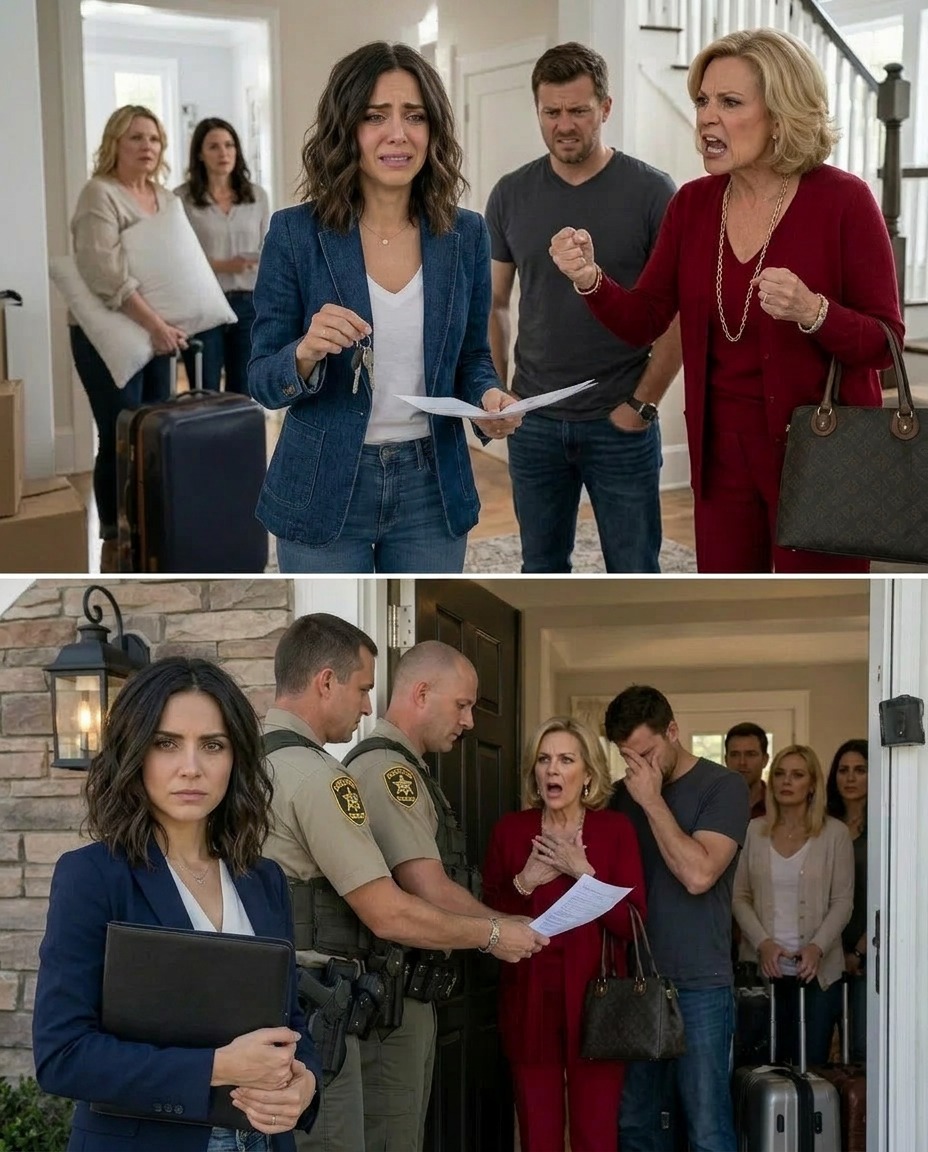
  • The first night in the house I had sacrificed seven years to buy, I found my mother-in-law standing in my hallway, handing out bedrooms like she owned my life. “This is where family runs,” she said, while my husband looked away. I smiled, even as my heart cracked—because buried in the missing mortgage folder was one signature that would destroy them all.

    The first night in the house I had sacrificed seven years to buy, I found my mother-in-law standing in my hallway, handing out bedrooms like she owned my life. “This is where family runs,” she said, while my husband looked away. I smiled, even as my heart cracked—because buried in the missing mortgage folder was one signature that would destroy them all.

    Part 1

    The first night in our new house, I slept on the floor beside six suitcases that were not mine. By morning, my mother-in-law had turned the home I had fought for into a family hostel, smiling as though she had given me a blessing instead of taking over my life.

    I stood barefoot in the hallway with a cup of coffee in my hand, watching strangers drag pillows, blankets, and bags into the rooms I had painted myself. Aunt Lien moved into the guest room. Cousin Bao claimed the study. Two nephews carried gaming consoles into the room I had secretly imagined as a nursery one day.

    My husband, Daniel, would not look at me.

    “Daniel,” I asked quietly, “why are they unpacking?”

    Before he could answer, his mother, Marlene, spoke for him.

    “Because family takes care of family.” She adjusted the gold bracelet on her wrist. “This is where family belongs.”

    Her words landed like a slap.

    I turned to Daniel. “We agreed they could stay for one weekend.”

    He rubbed the back of his neck. “Things changed.”

    Marlene let out a small laugh. “You always make everything so dramatic, Emily. You married into this family. That means this house is part of the family too.”

    “No,” I said. “This house belongs to us.”

    Her smile faded into something sharper.

    “Us?” she repeated. “Sweetheart, Daniel is my son.”

    From the staircase, the cousins laughed under their breath.

    For seven years, I had worked double shifts as a paralegal, skipped vacations, survived on cheap lunches, and saved every dollar I could. The mortgage Daniel and I signed felt heavy enough to crush me, but when we finally received the keys, I cried because I believed we had built something of our own. Now Marlene stood beneath my chandelier like a queen standing on stolen land.

    That evening, I found her in my kitchen giving Daniel instructions.

    “Your uncle’s family will arrive next month,” she said. “We’ll move Emily’s desk into the garage.”

    I stepped into the room. “Absolutely not.”

    Marlene turned slowly. “You clearly don’t understand how marriage works.”

    “I understand how ownership works.”

    Silence filled the kitchen.

    Daniel finally looked at me, and what I saw in his eyes was not guilt. It was fear.

    That was the first warning.

    Later that night, after everyone had gone to sleep, I opened the filing cabinet and searched for our mortgage folder. It was gone. In its place sat a thick envelope with my name spelled wrong across the front.

    Inside were copies of documents I had never seen before. And on the final page, beside Daniel’s signature, there was another signature.

    Marlene’s.

    My hands went still.

    Then I smiled.

    Because Marlene had forgotten one important thing.

    Paperwork had always been my battlefield.

    Part 2

    The next morning, Marlene announced breakfast as though she owned the house, the kitchen, and everyone inside it.

    “Emily, make more eggs,” she said from the head of my table.

    I poured myself coffee. “No.”

    Every fork stopped moving.

    She blinked. “Excuse me?”

    “You heard me.”

    Bao grinned from his chair. “Careful, Auntie. She thinks she’s the landlord.”

    Everyone laughed.

    Daniel leaned toward me and whispered, “Emily, please don’t start.”

    I rested against the counter. “Interesting word. Landlord.”

    Marlene’s eyes narrowed.

    For the next two weeks, I let them believe I was falling apart. They parked on my lawn, used my towels, criticized my cooking, and treated my home like a place they had inherited. Marlene moved furniture without asking and told the neighbors I was “struggling to adjust to real family life.”

    Every insult went into my phone. Every unpaid bill went into a spreadsheet. Every text from Daniel saying, “Just let Mom handle the house for now,” went into a folder named Exhibit A.

    At work, I stayed late. Not because I had to, but because my boss, Nora Vance, was the best real estate attorney in the county. She had taught me that some families do not steal with masks. They steal with smiles, pressure, and paperwork.

    When I showed her the envelope, she read every page in silence. Then she looked up.

    “Emily, do you know what this is?”

    “A transfer attempt?”

    “Worse,” she said. “It’s a fraudulent refinancing packet.”

    My blood went cold. The documents showed that Marlene had pushed Daniel into applying for a home equity line of credit using our house as collateral. The money was supposedly for renovations, but the attached bank records told a different story. Funds had been wired to Daniel’s cousin, Marlene’s brother, and a fake company that did not seem to exist anywhere.

    “They were trying to drain the equity,” Nora said. “And if the payments failed, you could lose the house.”

    I stared at Daniel’s signature.

    “He knew?”

    Nora did not answer. She didn’t have to. That night, I came home and found Marlene giving two more relatives a tour.

    “This room will be yours,” she said, pointing toward my office.

    I set my bag down. “No, it won’t.”

    She smiled. “Daniel already said yes.”

    Daniel appeared behind her, pale and sweating.

    I looked directly at him. “Did he?”

    He swallowed. “It’s temporary.”

    Marlene stepped closer. “Stop acting so important. You’re just a little office assistant who got lucky marrying my son.”

    There it was.

    Their biggest mistake.

    They thought I only typed documents.

    They did not know I drafted them, reviewed them, filed them, and understood exactly which signatures mattered. I knew which clauses exposed lies, which judges hated fraud, and which legal notices could remove people from a house before breakfast.

    I smiled gently. “You’re right, Marlene. I got lucky.”

    Her smug expression returned.

    “Finally,” she said.

    I walked past her and locked myself in the bedroom. Then I called Nora.

    “File it,” I said.

    Nora asked, “All of it?”

    I looked around the house I had sacrificed years to buy.

    “All of it.”

    Part 3

    The confrontation came on a rainy Friday night, with thunder shaking the windows and Marlene standing in my living room wearing my robe. Her relatives surrounded her as she held a glass of wine like she was hosting a celebration.

    “We’ve decided,” she announced, “that Emily should move out for a while. This tension is unhealthy.”

    Daniel stared at the floor.

    I looked at him one final time. “Is that what you want?”

    He whispered, “Mom knows best.”

    Something inside me became completely calm. I opened the front door. Two uniformed deputies stood on the porch with a process server between them. Marlene’s smile vanished.

    “Mrs. Marlene Carter?” the server asked.

    She lifted her chin. “Who wants to know?”

    “You’ve been served.”

    He handed her the packet. Bao gave a nervous laugh. “What is this supposed to be? A joke?”

    “No,” I said. “It’s a civil suit for fraud, conspiracy, and attempted conversion of marital property.”

    Daniel’s face went gray.

    Marlene tore open the papers. “You stupid girl.”

    “Careful,” I said. “The deputies are recording.”

    Nora stepped in behind them, holding a black umbrella, calm and elegant as a blade.

    “And so are we,” she added.

    Marlene’s mouth opened, but no words came out. Nora placed another folder on the table. “We have also filed an emergency injunction freezing the home equity line, notified the bank of suspected fraud, and forwarded evidence to the district attorney.”

    One cousin grabbed his backpack.

    A deputy looked at him. “Sit down.”

    I turned to Daniel. “You signed documents behind my back. You tried to borrow against our home and hide the transfers.”

    He trembled. “Mom said it was family money.”

    “No,” I said. “It was my future.”

    Marlene pointed at me. “This house belongs to my son.”

    I pulled the deed from my folder and held it up. “Tenants by the entirety. No sale, refinance, or transfer without my consent. You forged my initials on page six.”

    Her eyes flickered. That tiny reaction was enough. Nora smiled. “Thank you for confirming you knew exactly which page we meant.” The room went silent except for the rain against the windows.

    Then came the second blow. I handed the deputies a stack of notices. “Everyone here received written notice ten days ago that they were unauthorized occupants. Today is the lawful removal date.”

    Marlene screamed. “You can’t throw out family!”

    I stepped closer. “You were never here as family. You came here as thieves.”

    By sunset, suitcases were rolling across the wet driveway. Daniel tried to touch my arm, but I stepped back.

    “My attorney will contact you about the divorce.”

    Six months later, the house was quiet again. The study became my office. The guest room became a bright little library. The nursery remained empty, but for the first time, that emptiness did not frighten me.

    Marlene pleaded guilty to fraud-related charges. Daniel settled the divorce quickly after the bank records came out. Bao moved back into his parents’ basement.

    Every morning, I drank coffee in my kitchen alone, peaceful and undisturbed. The house was finally mine. And this time, no one else had a key.

  • A simple act — a waitress feeding an elderly woman with Parkinson’s — caught a billionaire’s eye and sparked something no one expected.

    A simple act — a waitress feeding an elderly woman with Parkinson’s — caught a billionaire’s eye and sparked something no one expected.

    A Quiet Restaurant in Querétaro

    Where It All Began

    La Esquina del Laurel stood on a modest street in downtown Querétaro, two blocks from the market and one block from the constant growl of passing trucks.

    At lunchtime, the air thickened with the scent of noodle soup, fresh tortillas, and coffee brewed in clay pots. Plates clattered. Chairs scraped. Voices overlapped. Everyone seemed in a hurry — except the moments that mattered.

    Valeria Cruz, twenty-three years old, had been living in that hurry for years.

    She worked there from morning to night. After closing, she delivered food on her motorcycle to afford rent for the tiny room she shared in a working-class neighborhood. Her feet ached. An overdue electricity bill sat folded inside her uniform pocket.

    And she carried one dangerous habit:

    Even when she was exhausted, she treated other people’s pain as if it were her own.

    That’s why she noticed her.


    The Woman with Trembling Hands

    A Battle with a Spoon

    At a corner table, away from the noise, sat a woman with impeccably styled white hair and a cream blouse. There was dignity in her posture — the kind that age had not managed to erode.

    In front of her rested a plate of enchiladas she could not conquer.

    Her hands trembled violently.

    She tried to lift a bite. The salsa hovered mid-air, shaking just as much as her fingers.

    Valeria was carrying a bill in one hand and a water pitcher in the other. A customer at table eight had already clicked his tongue twice in irritation.

    Still, she stopped.

    She leaned slightly so as not to expose the woman.

    “Are you alright, ma’am?”

    The woman looked up. Her eyes were tired, yes — but strong.

    “I have Parkinson’s, daughter,” she said softly. “Some days, eating becomes a battle.”

    Valeria’s chest tightened — not from pity, but from memory. Her grandmother had trembled the same way before she died. She remembered those hands struggling with a cup, the quiet humiliation of needing help for something so basic.

    “Wait a moment,” Valeria said gently. “I’ll bring something easier.”

    Four minutes later she returned with hot soup.

    While other customers complained about delays, Valeria pulled up a chair and sat beside her.

    “Slowly,” she smiled. “There’s no rush.”

    The woman let out a small, grateful laugh.

    “Thank you, daughter.”


    The Man Who Was Watching

    A Son Who Had Forgotten Something

    At the far end of the restaurant, near a column, a man had been watching everything.

    He had ordered an espresso fifteen minutes earlier. It had gone cold.

    His name was Alejandro Castañeda.

    Forty-one years old. Owner of industrial parks, boutique hotels, and companies across the Bajío region. The press called him brilliant. Employees called him efficient. Rivals called him ruthless.

    No one — not even himself — would have called him sentimental.

    Until that moment.

    The woman Valeria was helping was his mother: Doña Mercedes Salgado.

    And she was smiling.

    Not her polite society smile.

    A real one.

    Alejandro hadn’t seen that smile in years.

    How many times had assistants escorted her to events?
    How many times had staff pretended patience while glancing at their phones?
    How often had she been treated like a responsibility instead of a person?

    And now a tired waitress — who didn’t know who she was helping — restored something others never managed to.

    Alejandro felt something uncomfortable shift inside him.


    An Offer Refused

    Kindness Without Audience

    Before leaving, Doña Mercedes grasped Valeria’s wrist gently.

    “What’s your name, daughter?”

    “Valeria.”

    “What a beautiful name.”

    Valeria blushed and returned to work, unaware of what had just begun.

    Alejandro approached.

    “Did you know my mother before today?” he asked.

    “No.”

    “Then why help her like that?”

    Valeria looked genuinely confused.

    “Because she needed it.”

    Alejandro placed a business card on the table.

    “Call me tomorrow. I’d like to offer you a job.”

    Valeria glanced at it.

    Then calmly pushed it back.

    “With respect, sir, I didn’t do that to gain anything.”

    She walked away.

    Alejandro watched her leave.

    For the first time in years, someone had rejected him — without fear and without performance.

    He didn’t sleep well that night.


    A Second Proposal

    Not Employment — Something Deeper

    The next morning, he returned — without a card.

    With humility.

    “Would you consider working with my mother?” he asked directly. “Not as a nurse. As company. As someone who treats her like a person.”

    “Why me?” Valeria asked.

    “Because you can’t fake what I saw.”

    He named a salary.

    More than triple what she earned.

    “That’s too much,” she said.

    “No. My mother is worth that much.”

    Before Valeria could answer, Doña Mercedes spoke.

    “You remind me of someone,” she said softly.

    “Who?”

    “A girl who once worked for me. Her name was Clara.”

    Alejandro stiffened.

    “Mother…”

    “Let me speak.”

    Valeria sensed the tension.

    “Who was Clara?”

    Mercedes inhaled.

    “Alejandro’s mother.”

    The restaurant noise continued, but for Valeria everything went silent.


    The Hidden Truth

    A Woman Forced to Disappear

    Clara had worked in Mercedes’s house when Alejandro was three. She had been young, kind, intelligent.

    One day, she vanished.

    Alejandro had searched. Grieved. Waited.

    Three years ago, he finally found her.

    “They didn’t let her come back,” he said quietly.

    “Who?” Mercedes whispered.

    “My uncle. Ramiro.”

    Ramiro Salgado — trusted manager of the family fortune. Deceased. Reputable.

    “He threatened her. Accused her of theft. Said he would ruin her life if she returned.”

    Mercedes trembled — not from Parkinson’s.

    “I trusted him.”

    “So did I.”

    Then Mercedes looked at Valeria.

    “I need to see Clara. And I want you to come.”

    Valeria hesitated.

    “When are we leaving?”

    “Tomorrow at dawn.”


    The Road That Changed Everything

    A Name That Broke the Silence

    During the drive, Mercedes asked gently:

    “Do you have family?”

    “I had my grandmother,” Valeria said. “My mother passed away when I was three.”

    “What was her name?”

    “Clara.”

    Alejandro pulled the car over.

    The air grew heavy.

    “I was three when my mother disappeared,” he whispered.

    “And I was three when mine died.”

    Silence.

    “Do you have a photo?” Mercedes asked.

    Valeria handed over a worn photograph.

    A young woman with light eyes and a quiet sadness.

    Mercedes gasped.

    “It’s her.”

    The truth arrived like gravity.

    They were not strangers.

    They were siblings.


    The Door That Finally Opened

    Recognition Without Surprise

    Clara’s small house stood quiet among fields.

    When she opened the door and saw Alejandro, she froze.

    “Alejandro…”

    “Hello, Mom.”

    Then she saw Valeria.

    Recognition filled her face.

    “Valeria?”

    “How do you know my name?” she whispered.

    “Because I gave it to you.”

    The embrace that followed carried twenty years of absence.

    Inside, truth spilled slowly.

    Clara had been forced away. Threatened. Silenced. Later, she had given birth to Valeria. When Ramiro reappeared, he manipulated circumstances so that Valeria was raised by her grandmother under lies.

    Clara had searched for both her children for decades.

    Alejandro had found her three years earlier but hadn’t known about Valeria’s identity.

    Until now.


    Rebuilding What Was Stolen

    No More Years Given Away

    “They stole forty years from us,” Mercedes said quietly. “Let’s not give them another one.”

    Nothing erased the lost childhoods.

    Nothing returned missed birthdays.

    But the wound was no longer silent.

    It could finally be spoken.

    That evening, Clara poured coffee.

    “I don’t know how to rebuild a family,” she admitted. “But I know how to stay.”

    Valeria smiled faintly.

    “I agreed to care for Doña Mercedes,” she said. “But I think we’ll all be caring for each other.”

    Alejandro laughed softly.

    It was the first time his smile reached his eyes.


    The Foundation

    When Kindness Multiplies

    A month later, Valeria divided her time between Mercedes and Clara.

    Alejandro delegated business responsibilities he once guarded obsessively.

    Mercedes laughed again.

    Clara no longer slept in a silent house.

    And Alejandro quietly founded a small initiative to support elderly adults with neurodegenerative diseases and the caregivers who stood beside them.

    He named it simply:

    The Clara Foundation.

    When asked why, he answered:

    “Because some people hold up the world with gestures no one applauds.”


    The Quiet Return

    It all began in a modest restaurant in Querétaro.

    An ordinary afternoon.

    A tired waitress sat beside a trembling woman and helped her finish her soup.

    Sometimes life takes years to return what was lost.

    And when it does, it doesn’t arrive loudly.

    It arrives the way true kindness does:

    Silently.

    Without asking for anything in return.

    And it changes everything.

  • Prince William details ‘chaotic’ family routine in surprising Prince George update

    Prince William details ‘chaotic’ family routine in surprising Prince George update

    Updated 10:52, 22 May 2026

    Prince William and Kate with their three children

    Prince William and Kate with their three children

    Prince William has suggested that his morning routine with his children is far more ordinary than many might expect. The future King and Queen have three children; Princess George, 12, Princess Charlotte, 10 and Prince Louis, eight. Appearing on Heart Breakfast with Jamie Theakston and Amanda Holden on Friday (May 22), the Prince of Wales offered a rare glimpse into life in a royal household, including the school run.

    When asked if he was a morning person, he admitted: “I’m definitely not a morning person, no, but I’m very thrilled to be here with you both, so good morning.”

    He went on to shed light on the family’s school routine, noting that two of his children were listening to the show, while Prince George was at Lambrook School, which he and his siblings attend.

    Man shouts ‘Oi Will’ at Prince William in the street and his reponse is perfect

    Multiple crashes cause disruption during bank holiday getaway

    The leading co-educational prep school in Berkshire offers flexible boarding for students aged three to 13.

    Prince William joined Jamie Theakston and Amanda Holden on Heart Radio

    Prince William joined Jamie Theakston and Amanda Holden on Heart Radio

    Sending a message to them, he said: “Charlotte and Louis, because George is boarding last night, if you’re listening, make sure you’re on time, please. Make sure you’re not fighting over who’s listening to what this morning.”

    Asked whether the school run is chaotic like many families’, he replied: “It can be, it depends if there’s a guitar lesson in the morning or a music lesson and you’ve got to get the guitar in the car.”

    He continued, mimicking the morning back-and-forth: “‘No, we’re not taking the guitar, we’re just taking a bag to school’. ‘Are we boarding? No. Are we seeing friends? No.’ There’s all that going on in the morning.”

    William also shared details about breakfast on the go, saying his children often opt for jam sandwiches during the rush.

    Prince George

    Prince George and his siblings attend a private preparatory school for pupils aged 3-13

    “There’s a lot of jam sandwiches taken in the car usually,” he revealed. “Louis will leave jam fingerprints in the car, which is very helpful.”

    For him, William said he likes to tuck into a simple breakfast – eggs and sourdough. During his appearance on the show, he also enjoyed a builders’ tea without sugar.

    The father-of-three additionally reflected on Kate Middleton’s recent trip to Italy, her first overseas engagement since her cancer treatment and recovery.

    Kate Middleton

    Princess William said he is ‘so proud’ of his wife Kate

    Gushing over his wife, William said he was “so proud” of her and hinted that more overseas trips could be on the horizon.

    Kate impressed fans during the visit by speaking Italian, something her husband joked even took him by surprise.

    Sharing details about how much preparation she had put into the trip, he told the hosts: “Most evenings I’m fighting to get past in the bedroom with all the paperwork that she’s got lined up ready to read.”

    He added: “I’m so proud. I’m very, very proud—she has been amazing. She’s been through so much in the last couple of years, particularly. She’s been looking forward to the Italian trip a lot, so I’m really glad it went really well.”

  • When doctors informed him that his wife had only a few days left, he bent over her hospital bed and, masking his satisfaction with a cold smile, murmured

    When doctors informed him that his wife had only a few days left, he bent over her hospital bed and, masking his satisfaction with a cold smile, murmured

    Alejandro was gone for nearly twenty-four hours.

    To most people, that would have meant nothing. But Lucía knew him well — he never stepped away from something he considered his. If he disappeared, it was because he was arranging something behind the scenes.

    Carmen Ruiz noticed the shift first. After a quiet adjustment in Lucía’s treatment plan, the lab results began to improve. The liver values that had been climbing dangerously were now stabilizing. It wasn’t dramatic, but it directly contradicted the earlier warning that she had “no more than three days.”

    “This doesn’t make sense,” the attending doctor muttered, studying the monitor. “If the damage were irreversible, we wouldn’t see this kind of response.”

    Carmen and Lucía exchanged a look. The pattern was becoming clear.

    Alejandro returned the next day, impeccably dressed, wearing his usual refined cologne and the carefully rehearsed expression of concern he displayed so well in public.

    “How is she?” he asked at the nurses’ station.

    “Stable,” Carmen answered evenly.

    A slight tightening in his jaw gave him away, though he quickly masked it. Lucía caught it when he entered her room.

    “Love…” he said gently, approaching her bed. “You look pale.”

    Lucía kept her breathing shallow, eyes barely open.

    “I’m tired,” she murmured.

    He leaned closer.

    “I’ve spoken to the lawyer. Just as a precaution. In case things… worsen.”

    Lucía opened her eyes more fully and studied him.

    “Always thinking ahead,” she said calmly.

    For a brief second, his composure slipped.

    “I’m just protecting what’s ours.”

    “Ours?” she repeated quietly.

    At that moment, Carmen entered with a tray, interrupting the tension. Alejandro stepped aside, but his glance drifted toward the IV pump. Carmen noticed immediately.

    “Please don’t touch the equipment.”

    “Relax,” he replied stiffly.

    Later that afternoon, Alejandro was summoned to the medical director’s office.

    “Mr. Martinez,” the doctor began neutrally, “we’ve identified irregularities in certain medication orders.”

    “Irregularities?”

    “Drugs not typically indicated for this diagnosis — authorized with your signature.”

    Alejandro frowned. “I relied on the staff’s expertise.”

    “Interestingly, since those medications were discontinued, the patient’s condition has improved.”

    The silence that followed was thick.

    “Are you suggesting something?” he asked coldly.

    “We’re reviewing the facts.”

    When he left, his confidence seemed shaken.

    That evening, he entered Lucía’s room without greeting her.

    “What did you tell them?” he demanded quietly.

    Lucía met his eyes with unexpected steadiness.

    “The truth.”

    “No one will believe you. You were sedated.”

    “Not completely.”

    He stepped back.

    “You have no idea who you’re dealing with.”

    “I do,” she answered softly.

    The door opened. Carmen and the doctor stepped inside.

    “Mr. Martinez, your visitation privileges are suspended while the review continues.”

    “This is absurd.”

    “It’s precautionary.”

    He cast Lucía a final look — anger mixed with disbelief.

    “You haven’t won.”

    She held his gaze.

    “It was never a competition.”

    In the days that followed, her tests continued to improve. Internal findings revealed inappropriate influence and requests outside protocol. Alejandro’s name appeared repeatedly in decisions that weren’t his to make.

    The matter was referred to authorities.

    Lucía, still weak but stronger each day, managed to sit upright without assistance. Carmen stood beside her.

    “We made progress,” Carmen said gently.

    Lucía shook her head.

    “This is only the beginning.”

    It wasn’t just about her health. It was about reclaiming her voice, her independence, her finances, her dignity. Alejandro had relied on her silence and vulnerability. He believed appearances were enough to protect him.

    He underestimated her.

    One bright morning, sunlight streamed through the window as Lucía received official confirmation: Alejandro was under investigation for suspected medical interference tied to financial motives.

    Carmen placed the document on the bedside table.

    “He’s worried,” she said quietly.

    Lucía looked out at the city moving on outside.

    “So was I,” she replied. “The difference is… I learned.”

    She inhaled deeply.

    The air felt different now.

    The room was silent.

    But it was no longer the silence of defeat.

    It was the silence before a new beginning.

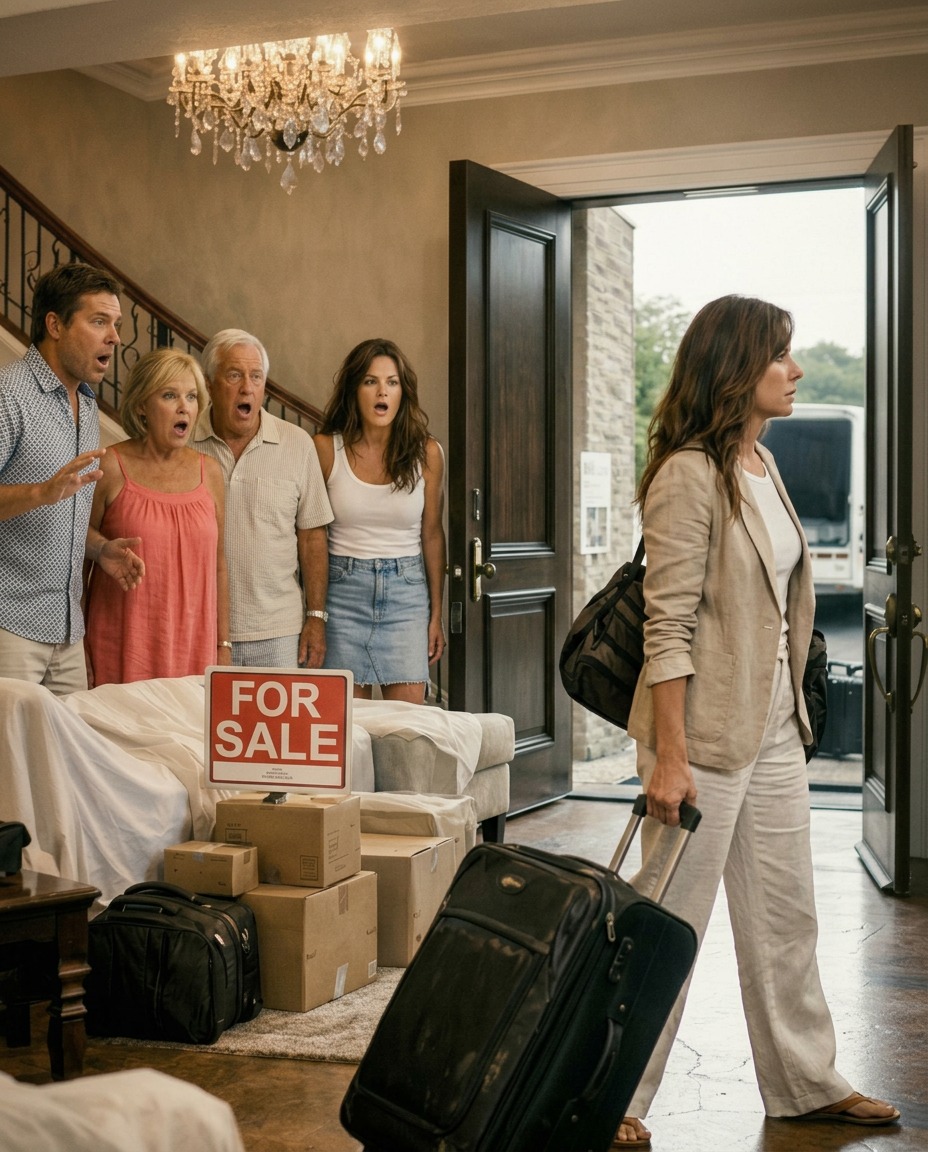
  • Just after I bought a luxury house, my husband suddenly announced his parents and divorced sister were moving in with us. When I refused, he snapped, “This house is mine—you bought it with my money. Object again, and I’ll kick you out!” But when he showed up at the mansion with them, they froze at what they saw…

    Just after I bought a luxury house, my husband suddenly announced his parents and divorced sister were moving in with us. When I refused, he snapped, “This house is mine—you bought it with my money. Object again, and I’ll kick you out!” But when he showed up at the mansion with them, they froze at what they saw…

    Just after I purchased a luxury home, my husband suddenly declared that his parents and his recently divorced sister would be moving in with us. When I objected, he snapped, “This house is mine—you bought it with my money. Object again, and I’ll kick you out!” But when he arrived at the mansion with them, they all stopped cold at what they found.

    The day we finalized the purchase, the realtor placed the keys in my hand like they were a royal crown.

    The property was a sleek, glass-fronted home tucked into the hills outside Austin—white stone walls, black steel beams, and a pool that looked like it belonged on the cover of a magazine. I had paid for it using the money I made selling my software company, but I still let Ryan soak in the moment. He had been playing the role of the supportive husband—grinning for photos and calling the place “our dream.”

    Two evenings later, while I was organizing paperwork at the kitchen island, he casually dropped the news.

    “Mom and Dad are moving in,” he said, as casually as if he were announcing we were ordering pizza. “And Heather. She needs a fresh start.”

    I froze. “Your sister? The one who got divorced last month?”

    Ryan leaned forward on the counter, his eyes turning cold. “Don’t start.”

    “I’m not starting anything. I’m asking why you didn’t discuss it with me first. This is our home.”

    He let out a short, harsh laugh. “Our home? Emily, this house is mine.”

    My stomach tightened. “What are you talking about?”

    “You bought it with my money,” he snapped. “I’ve been paying for everything. If you object, I will kick you out.”

    I stared at him, waiting for the punchline.

    It never came.

    “I paid for it,” I said quietly. “From my accounts.”

    Ryan’s jaw tightened. “Then prove it.”

    The following morning, he left early in his BMW, claiming he was going to pick them up from the airport. By midday, I was sitting in the empty living room with my laptop, pulling up every document I had signed—title records, wire confirmations, closing disclosures. My name appeared on every single page.

    Only mine.

    But as I kept reading, the situation became worse.

    About a week before closing, Ryan had insisted that we “simplify” our finances. He asked me to add him as an authorized user on a joint account for “house expenses.” I agreed without hesitation—because I trusted my husband.

    Now, as I reviewed the statements, I saw the transfers.

    Large ones.

    Ten thousand here. Twenty-five thousand there. A chain of withdrawals and wires that didn’t match anything related to the closing costs. Each one labeled “family support.”

    I called the bank. My voice stayed calm while my heart pounded like it wanted to escape my chest. They confirmed it—Ryan had used the access I gave him to move money out of the account.

    I didn’t scream.

    I didn’t call him.

    I made a plan.

    At exactly 4:17 p.m., a black SUV pulled into the driveway behind Ryan’s BMW. He stepped out first, wearing the smug expression of a man returning to claim his kingdom. His parents followed—Linda carrying her designer tote, Frank in his usual golf cap. Heather came out last, dragging two huge suitcases behind her.

    They walked confidently up my front steps.

    Ryan punched in the code to the smart lock.

    The door chimed.

    But it stayed locked.

    He tried again.

    Still locked.

    Linda’s smile faltered. “Ryan?”

    I opened the door from inside, calm as a judge.

    Behind me, the foyer stood completely empty—no furniture, no artwork, no rugs.

    Just echoing space.

    And taped to the wall at eye level was a single envelope with Ryan’s name written across it in thick black marker.

    All four of them stared in stunned silence as Ryan’s face slowly drained of color.

    Ryan’s hand hovered awkwardly in the air, as if he suddenly didn’t know what to do with it.

    “What is this?” he demanded, stepping forward like he intended to push past me. “Why is the house empty?”

    I didn’t move an inch. “Take your shoes off if you come in,” I said, watching his mother’s eyes tighten at the nerve of it.

    Linda edged slightly ahead of Ryan, sniffing disapprovingly. “Where is everything? Did you return the furniture? Ryan told us you had already decorated.”

    Heather stretched her neck, searching for any sign that someone actually lived there—pictures, cushions, anything that suggested she belonged. When she saw nothing, her lips twisted. “Is this… some kind of joke?”

    Ryan’s voice rose. “Emily. Stop playing games. Let us in.”

    I held the door open with one hand and pointed toward the envelope. “Read it.”

    He yanked it off the wall so hard the tape peeled away a strip of paint. He didn’t notice. His fingers trembled as he tore it open.

    Inside were three things:

    1. A copy of the deed and closing statement, clearly showing my name alone on the title.

    2. A printed summary of the bank transfers—highlighted, dated, with totals circled in red.

    3. A letter from my attorney, stating that Ryan’s access to my accounts had been revoked and that any attempt to enter the property without my consent would be treated as trespass.

    Ryan’s eyes moved across the pages, and for a brief moment he looked like a man reading his own obituary.

    “This is insane,” he said, his voice cracking. “You can’t do this.”

    “I already did,” I replied.

    Frank finally spoke, his voice slow and heavy. “Ryan said this house was yours. He said you paid for it.”

    Ryan turned sharply toward his father. “Dad, I—”

    Linda snatched the papers from his hands and skimmed them faster than I expected. Her expression hardened into something controlled and calculating. “So you’re threatening my son with the police?”

    “I’m protecting myself,” I corrected. “Your son stole from me and tried to bully me out of my own home.”

    Heather scoffed. “Stole? Are you serious? We’re family.”

    I couldn’t help it—I let out a short, sharp laugh. “Family doesn’t drain someone’s account and then show up with suitcases.”

    Ryan shoved the documents back into the envelope, clearly trying to regain control. “Fine,” he said, lowering his voice like a salesman switching tactics. “Let’s talk inside.”

    “No,” I said.

    His eyes flashed. “You think you’re so smart because you have lawyers. But you made a mistake.”

    “What mistake?”

    “You wired the down payment from an account I had access to,” he said. “That means it’s marital money. That means—”

    “That means you don’t understand how any of this works,” I cut in.

    He stepped closer, crowding the doorway. “Emily, open the door. Right now.”

    I looked at him—really looked. The man I had married had always been charming in public and subtle in private. He rarely raised his voice. He didn’t need to. He used tone, timing, and guilt. He used affection like a leash.

    But now that leash had snapped, and he was panicking.

    I lifted my phone. “You’re not coming in. I changed the code this morning. And I changed something else too.”

    Ryan frowned.

    “I called your HR department,” I said. “Not to accuse you of stealing. I don’t care about revenge gossip. I just wanted confirmation of something.”

    He swallowed. “What?”

    “That bonus you bragged about,” I said. “The one you claimed paid for this house.”

    Ryan’s face twitched.

    Linda’s eyes darted between us. “Ryan?”

    I watched him try to decide—deny, deflect, explode. In the end, he chose anger.

    “You had no right to contact my employer!”

    “I didn’t accuse you,” I said calmly. “I asked a question. And they answered.”

    Heather snapped, “What did they say?”

    “They said Ryan hasn’t received a bonus in over a year,” I replied. “And they also confirmed something else—because I asked them to send it to me in writing.”

    Ryan’s lips parted, but nothing came out.

    I continued steadily. “Ryan has been lying about his income. He’s been borrowing against credit lines and using access to my accounts to cover it.”

    Frank’s face turned gray. “Ryan…”

    Ryan grabbed the envelope again like he could crush the truth back into it. “You don’t know what you’re talking about.”

    “Oh, I do,” I said. “Because after I saw the transfers, I pulled your credit report using the authorization you gave me when we bought our last car. Remember signing that?”

    His eyes widened—just a fraction, but enough.

    Linda’s composure cracked. “Ryan, tell me you didn’t… embarrass us.”

    Ryan’s voice shifted to pleading. “Mom, it’s not like that. Emily is twisting things.”

    I tilted my head slightly. “Then explain why you moved $38,600 out of my account in fourteen days.”

    Heather gasped. “Thirty-eight thousand?”

    Ryan glared at me. “You’re doing this to punish me.”

    “No,” I said. “I’m doing this to stop you.”

    Then I stepped back and opened the door just enough for them to see the empty interior again—the bare floors, the hollow echo.

    “I didn’t move out,” I said quietly. “I moved your future out.”

    Then I shut the door before Ryan could lunge forward.

    The next hour was nothing but noise.

    Ryan pounded on the door twice before stopping—probably remembering the attorney letter. Outside, his mother raised her voice, trying to regain authority through sheer volume.

    “Emily! This is disgusting! Open the door and talk like an adult!”

    I didn’t respond. Instead, I walked to the security panel and opened the camera feed on my phone. Four faces hovered in my entryway like a failed ambush.

    Then I did something Ryan never expected.

    I called the police—non-emergency, calm and factual. “There are people at my residence refusing to leave. One of them is my husband. I have documentation stating they are trespassing.”

    Within fifteen minutes, a patrol car drove up the hill. Then another followed. Austin doesn’t take lightly when someone says “trespass” and “documentation” in the same sentence.

    Ryan straightened as the officers stepped out, trying to look like the victim. Linda adopted her best wounded-mother expression. Heather started crying almost instantly, like tears were currency she knew how to spend.

    I opened the door when the officers asked.

    The female officer—Officer Ramirez—spoke first. “Ma’am, are you the homeowner?”

    “Yes,” I said, handing her a folder. “Deed, closing statement, attorney notice. My husband is not on the title.”

    Officer Ramirez scanned the papers and nodded once. “Thank you.”

    Ryan jumped in quickly. “This is marital property. She’s locking me out illegally.”

    The other officer, Officer Dwyer, looked at him calmly. “Sir, do you have documentation showing you own the property?”

    Ryan hesitated a fraction too long. “I—my wife is being hysterical.”

    Officer Dwyer didn’t react. “Documentation, sir.”

    Linda stepped forward, voice dripping with sweetness. “Officers, this is just a family misunderstanding. We just arrived from—”

    Officer Ramirez raised a hand. “Ma’am, I need you to step back.”

    Linda’s smile disappeared. “Excuse me?”

    “Step back,” Ramirez repeated, calm but firm.

    Ryan’s shoulders tightened. I could practically see his thoughts racing: If he could just get inside, he could claim residency. If he could just cross the threshold, the story would change.

    Officer Dwyer read the attorney letter and quietly asked me, “Do you want them removed from the property?”

    “Yes,” I said. “All of them.”

    Heather let out a sob. “Where are we supposed to go?”

    “Not my problem,” I replied, and felt something unexpected—relief.

    Officer Ramirez turned to Ryan. “Sir, you need to leave the premises. If you refuse, you may be cited or arrested for trespassing.”

    Ryan laughed once in disbelief. “You’re kidding.”

    Officer Dwyer’s voice sharpened slightly. “We are not.”

    Ryan’s eyes burned into mine. “Emily, you’re really doing this? Over a few transfers?”

    “A few?” Frank muttered quietly, suddenly sounding years older. He stared at Ryan like he barely recognized him. “Son… what did you do?”

    Ryan shot his father a look that clearly said shut up.

    But the damage was done. Linda’s anger turned inward toward her son, because that’s what pride does when it’s cornered.

    “You told us this house was yours,” she hissed. “You said you were providing.”

    Ryan’s face twisted. “I was trying to take care of you!”

    Heather snapped back, “By stealing from your wife?”

    He spun toward her. “You wanted to live here!”

    Heather flinched, then wiped her tears away, suddenly colder. “I wanted somewhere to stay. I didn’t say destroy your marriage.”

    That was when Ryan realized no one was going to stand in front of him anymore.

    Officer Ramirez gestured toward the driveway. “Let’s go.”

    Ryan took a step, then paused, trying one last tactic. “Fine. But I’m coming back with my lawyer.”

    “I hope you do,” I said calmly. “Mine already knows your name.”

    They walked away—Linda muttering angrily, Frank silent, Heather dragging her suitcases down my front steps like someone being sentenced.

    Ryan lingered beside his BMW. He looked up at the house—my house—with a mixture of hatred and disbelief, like it had betrayed him.

    Before getting into the car, he turned and said quietly enough that only the cameras and I could catch it:

    “You think you won.”

    I didn’t raise my voice. “I think I survived.”

    After they left, I locked the door and leaned my forehead against it. My hands trembled—not from fear, but from the crash after adrenaline.

    Then my phone buzzed.

    A new email had arrived—from my attorney’s office.

    Subject: Temporary Protective Order & Emergency Hearing Date

    I exhaled slowly.

    The next battle would happen in court, not on my front porch.

    And this time, Ryan wouldn’t get to shout me into silence.

  • My jobless husband demanded I pay for his mom’s trip to Hawaii—or I’d be the one leaving this house. My MIL just laughed, saying, “You’ll have to pay.” So I threw the divorce papers at both of them and said, “Fine—let’s get a div

    My jobless husband demanded I pay for his mom’s trip to Hawaii—or I’d be the one leaving this house. My MIL just laughed, saying, “You’ll have to pay.” So I threw the divorce papers at both of them and said, “Fine—let’s get a div

    The evening Marcus told me I had to cover the cost of his mother’s trip to Hawaii, he didn’t even bother lifting his eyes from the couch. He sat there in sweatpants with a controller in his hands, no job-search tabs anywhere on his screen—just a paused game and a half-finished energy drink.

    “Mom needs a real vacation,” he said. “You’re going to book it. First-class if you love this family.”

    I stood in the doorway, still wearing my work badge from the hospital billing office. My feet were sore. My head pounded. For the past eight months, I had been the only one bringing in a paycheck in that house.

    “I’m not paying for your mother’s vacation,” I replied carefully. “We’re behind on the mortgage—”

    That’s when he finally glanced up, his eyes somehow both lazy and cold. “Then you can leave this house.”

    As if it belonged to him.

    From the kitchen, Diane—my mother-in-law—burst into a sharp, amused laugh. She walked into the living room wearing pearls like she was about to attend a fancy event, even though she’d been living in our house for weeks “between leases.”

    “Listen to her,” Diane said, smiling at me like I was a child having a tantrum. “You’ll have to pay. Marcus is my son. A good wife supports her husband’s mother.”

    The words hit me like a slap. Not because I hadn’t heard versions of them before, but because something inside me finally…shifted. I had been trying to reason with people who didn’t even see me as human.

    I placed my purse down, walked past them, and went to the small desk in the corner where I kept our paperwork—bills, insurance letters, the mortgage statements Marcus never bothered opening. My hands were steady. That surprised me more than anything.

    Inside the drawer was a folder I had prepared the week I discovered he’d used my credit card to fund his so-called “business idea” with his friends—the one that turned out to be nothing more than poker nights and sports bets.

    I walked back into the living room and dropped the papers onto Marcus’s lap.

    He frowned as he flipped through the first page. “What is this?”

    “Divorce papers,” I said. “Since you’re so sure this is your house, let’s make it official.”

    Diane’s laughter vanished instantly. Marcus’s face drained of color so quickly it looked like someone had pulled a plug.

    “You can’t be serious,” he whispered, suddenly sitting upright.

    “Oh, I’m serious,” I said. “And before you start threatening me again—check the attachments.”

    Marcus turned the page, scanned the bold headings, and his mouth opened without making a sound. Diane reached for the documents with stiff fingers, reading just enough to understand.

    Then the front door handle rattled—hard—like someone was trying to force it open.

    Marcus stared at me. “Who did you call?”

    I didn’t respond.

    Because the person outside wasn’t here for me.

    The knocking turned into pounding, heavy enough to make the framed photos on the wall shake. Marcus stood halfway up, unsure whether to act like the man of the house or stay the boy who hid behind his mother.

    Diane recovered first. “Marcus,” she whispered sharply, “don’t open it. It’s probably her little drama—one of her friends.”

    I walked to the door anyway. My heartbeat stayed oddly steady, like my body had decided it was finished wasting adrenaline on this family.

    When I opened it, the hallway light revealed two men and a woman. One man wore a dark windbreaker with a badge clipped to his chest. The other held a clipboard. The woman carried a folder under her arm and had the kind of neutral expression that suggested she’d been trained not to react to chaos.

    “Ms. Carter?” the woman asked.

    I nodded. “I’m Leah Carter.”

    Marcus stiffened behind me. “What is this?”

    The man with the badge stepped forward slightly. “Ma’am, I’m Deputy Ramirez with the county sheriff’s office. We’re here regarding a civil matter and a complaint filed in your name.”

    Diane stepped forward, her voice sharp with offense. “Sheriff? For what? This is a private home.”

    Deputy Ramirez didn’t even glance at her. His focus stayed on me, calm and professional. “Ms. Carter, are you safe? Do you need us to step in right now?”

    The question struck me in a way I hadn’t expected. Not because I felt in immediate danger, but because no one in that house had asked me something like that in years. I swallowed.

    “I’m safe,” I said. “But yes. Please come in.”

    Marcus shoved past Diane. “No, you can’t just—this is my house!”

    The deputy looked at him briefly. “Sir, do you have proof of ownership?”

    Marcus opened his mouth. Nothing came out.

    Behind him, Diane tried to regain control. “This is ridiculous. She’s being hysterical because we asked for a simple vacation. We’re family.”

    The woman with the folder stepped inside, her eyes scanning the room like she’d walked into versions of this situation many times before. “I’m Ms. Bennett. I work with the county housing and financial protections office. Ms. Carter, we received documentation you submitted regarding identity misuse, unauthorized debt, and threats of eviction.”

    Marcus’s eyes snapped toward me. “You—what did you do?”

    I ignored him and turned to Ms. Bennett. “I brought everything. Credit card statements, bank logs, screenshots of messages. The mortgage paperwork too.”

    Diane scoffed loudly. “Unauthorized debt? Please. She’s married. What’s his is hers and what’s hers is—”

    “Not how it works,” Ms. Bennett said, calm but firm. “Especially not with forged signatures and accounts opened without consent.”

    Marcus’s face turned gray. “Forged—? I didn’t forge anything.”

    Deputy Ramirez gestured toward the couch. “Sir, please sit. Everyone needs to stay calm while we clarify facts.”

    Marcus looked at Diane like a child searching for direction. Diane’s lips tightened. “This is a misunderstanding,” she said, her voice softer now as she tried a different tone. “Leah, honey, you’re upset. Let’s not do something you’ll regret.”

    I almost laughed.

    Honey.

    She had called me “girl,” “freeloader,” “office worker,” anything but my name. And now suddenly I was honey.

    Ms. Bennett opened her folder and spread several copies across the coffee table. The first page displayed a credit card application with my name, my social security number, and a signature that looked like mine if you glanced quickly—but the pressure strokes were off. It was a carefully practiced imitation.

    Marcus leaned forward and then jerked back as if the paper burned him. “That’s not—”

    “The account was opened three months ago,” Ms. Bennett said. “The spending pattern traces to vendors and withdrawals near your known locations. We also have a recorded call from a collection agency, in which Ms. Carter stated she never opened this account, and a follow-up letter requesting an investigation.”

    Diane lifted her chin. “She’s trying to frame my son.”

    I placed a second page on top of the stack. “That’s not the only one.”

    Marcus stared at it. His jaw tightened. “Leah, you’re overreacting. I was going to pay it back when I got hired.”

    “When?” I asked, my voice flat. “After your mother got back from Hawaii? After she posted pictures of herself on a beach while I worked overtime?”

    Diane’s expression twisted. “How dare you talk about me like—”

    Deputy Ramirez raised a hand. “Ma’am. Enough.”

    The deputy turned to Marcus. “Sir, you’re being informed that there is a pending investigation into identity theft and financial fraud. Today, we are here to keep the peace while Ms. Carter gathers personal belongings and while Ms. Bennett serves notice regarding occupancy and financial liability.”

    Marcus jumped to his feet again. “Occupancy? What are you talking about?”

    I reached into the folder I had thrown onto his lap earlier. “Flip to the section you didn’t read.”

    He did. His fingers trembled now.

    The house. The deed. The mortgage.

    Only my name.

    My father had left me an inheritance when he passed away—something I quietly used as a down payment years ago. Marcus had always behaved as if the house simply existed because he lived in it. As long as the lights stayed on, he never asked questions.

    “The house is mine,” I said. “Not ours. Mine.”

    Diane blinked rapidly. “That can’t be right.”

    “It is,” I replied. “And here’s the other part: your ‘you’ll have to pay’ Hawaii trip? That’s extortion when you pair it with the threats you two put in writing.”

    Marcus looked like he might be sick. “Leah, please—”

    He reached for my wrist automatically, like he could physically pull me back into the role he preferred.

    Deputy Ramirez stepped between us immediately. “Do not touch her.”

    Marcus froze. Diane’s eyes darted around the room, calculating, realizing for the first time that her usual intimidation meant nothing against badges and paperwork.

    Ms. Bennett slid another document forward. “Ms. Carter, if you’d like to proceed, we can also discuss a temporary protective order given the threats of eviction and the financial coercion documented.”

    Marcus’s voice cracked. “A protective order? For what? I never hit her.”

    “No,” I said quietly. “You just tried to ruin me while calling it marriage.”

    The room fell silent except for Diane’s shallow breathing.

    Then Diane made her final move. She turned to Marcus urgently. “Call your father’s lawyer. Now. Tell him she’s—she’s stealing from you. She’s trying to take your home.”

    Marcus looked at her, then at me, then at the deputy. He seemed smaller by the second.

    Because for once, there was nowhere left to hide.

    I didn’t pack with drama. I packed with efficiency.

    While Deputy Ramirez stood near the hallway, I moved from room to room with a laundry basket, placing inside the things that actually belonged to me: my work clothes, my passport, my grandmother’s necklace, the small box of letters my dad sent me during college. Each item felt like a thread I was cutting cleanly instead of tearing away.

    Behind me, Diane’s voice kept rising and falling in the living room like a siren testing different tones.

    “Leah, you’re destroying a family!”

    “This is a marriage—this is what vows are!”

    “Marcus, tell her to stop! Tell her!”

    Marcus didn’t sound like himself when he spoke. “Leah… can we just talk? No police, no… no office people. Just you and me.”

    I stepped into the bedroom and noticed the second drawer of the dresser standing open—my sock drawer. A stack of envelopes was tucked inside, shoved behind some old T-shirts.

    My stomach turned cold.

    I pulled them out. Past-due notices. A final warning from the utilities company. A letter from our mortgage lender about a delinquency I hadn’t known about.

    I had been paying. Every month I transferred the money, trusting Marcus to handle the online portal the way he claimed. But the letters in my hands told a completely different story.

    I walked back into the living room holding the stack.

    “Marcus,” I said.

    He looked up, hopeful for half a second. Then he saw the envelopes and his throat bobbed.

    “What are these?” I asked.

    Diane tried to intercept. “Those are—old. Don’t confuse yourself.”

    I ignored her. “Our mortgage is behind?”

    Marcus stood with his hands out as if he could catch the words before they landed. “It’s not what you think.”

    “It’s exactly what I think,” I said. “Where did the money go?”

    His eyes flicked toward Diane. It was a tiny movement, but it said everything. The same reflex he’d always had—look to Mom before answering.

    Diane lifted her chin. “We needed help,” she said sharply. “Your husband has been under stress. He was trying to keep things afloat.”

    “By lying?” I asked. “By opening credit cards in my name?”

    Marcus’s voice cracked again. “I was going to fix it. I swear. Mom said it was temporary—”

    “Mom said,” I repeated. I turned to Diane. “So how much did you take?”

    Diane’s expression hardened. “Excuse me?”

    “How much?” I said louder. “Because if the mortgage payments weren’t made, and I transferred the money… it went somewhere.”

    Diane’s laugh returned, but it sounded thin now. “You’re acting like I robbed a bank.”

    Ms. Bennett stepped forward, opening her folder. “Ms. Carter, one of the accounts you reported shows multiple transfers to a payee listed as ‘D. H.’ and cash withdrawals matching the dates of the missing mortgage payments. Additionally, there’s a purchase history consistent with travel bookings.”

    Diane’s eyes flashed. “You can’t prove that’s me.”

    Ms. Bennett didn’t blink. “The payee name matches your full legal name, Diane Hughes. The bank confirmed the recipient account belongs to you.”

    Marcus looked as though the ground had shifted under him. “Mom…?”

    Diane snapped toward him. “Don’t you dare look at me like that. I raised you.”

    Something sharp and clear settled inside me then. Not anger. Clarity.

    “You were never going to Hawaii on my dime,” I said. “You were going on my identity. My credit. My paycheck.”

    Diane’s voice turned poisonous. “If you’d just been a better wife, Marcus wouldn’t have had to—”

    “Stop,” Deputy Ramirez said firmly. “Ma’am, you need to calm down.”

    Diane spun toward him. “This is my son’s house!”

    The deputy glanced at Ms. Bennett, who nodded once.

    Deputy Ramirez turned back to Diane. “Ma’am, this residence is legally in Ms. Carter’s name. You are being informed that you are not authorized to remain here if Ms. Carter revokes permission. If you refuse to leave peacefully, you may be trespassed.”

    Marcus’s face twisted with panic. “Leah, please. Don’t do this. Where am I supposed to go?”

    I looked at him—really looked at him. At the man who had let his mother laugh at me, who threatened to throw me out of my own house, who gambled my money while pretending to be a husband.

    “Call your friends,” I said. “The ones you were always ‘networking’ with.”

    He flinched as if I’d struck him. Diane began crying immediately, like she’d flipped a switch. “Leah, sweetheart, please. We can work this out. I’ll pay you back. I’ll—”

    “You can talk to my lawyer,” I said. “Not me.”

    I walked to the closet and pulled my suitcase down from the top shelf. Not because I was leaving. Because I was reclaiming space—clearing their clutter from my life the same way I would clear their belongings from my house.

    Within an hour, Diane’s bags were by the door. She kept muttering about betrayal, about ungrateful women, about how the world treated mothers unfairly. Marcus moved around like a ghost, carrying suitcases without meeting my eyes.

    At the doorway, Diane stopped and turned.

    “This isn’t over,” she said quietly.

    I met her stare. “For me, it is.”

    Marcus hesitated, then whispered, “Leah… I loved you.”

    I didn’t argue. I didn’t soften. I simply told the truth.

    “You loved what I provided.”

    Deputy Ramirez watched as they stepped into the hallway. The door closed behind them, and the silence that followed didn’t feel lonely.

    It felt clean.

    I slid down to the floor with my back against the door and let myself breathe for the first time in years. My hands finally started shaking—not from fear, but from the shock of freedom arriving all at once.

    On the coffee table, the divorce papers lay open. The bold heading caught the light.

    Dissolution of Marriage.

    And for the first time, it didn’t feel like an ending.

    It felt like a beginning.

  • My daughter emailed me: “Don’t come to my wedding. Watch through livestream.” Ok, I knew what to do.

    I Was Shut Out of My Daughter’s Paris Wedding—The One I Helped Fund. She emailed me: “If you want to be part of it, watch on livestream… or Google Earth, lol.” So I replied: “Sure. Enjoy your big day.” By the next morning, she couldn’t stop calling. I was far too busy to answer.

    Part 1

    The email landed on an ordinary April morning in New Jersey—coffee in hand, sunlight on the counter, my neighbor outside tending his flowers like the world was gentle.

    Natalie’s name popped up, and my reflex kicked in the way it always had: hope first. Even lately, with wedding stress and Marcel and money, I kept telling myself it was just pressure. That we’d be fine.

    Her message started with a single word: Mom.
    No greeting. No warmth. Like I was a file label.

    She wrote that the guest list for Paris was “finalized,” and after talking with Marcel and his family, it would be “best” if I attended by livestream instead of in person. Then came a neat bundle of details—link, time zones, suggestions for where I should sit so my face looked good on camera. As if exile could be made polite with good lighting.

    And then the line that didn’t even try to be kind:
    If you wanna be a part of it, you can watch through the Google Earth window lol.

    That lol did something to me. Not loud. Not dramatic. Just… final. Like a door clicking shut after years of being left open.

    I typed four words back:
    Sure. Enjoy your big day.

    My phone rang immediately. I watched her name flash, then flipped it face down and finished my coffee like I hadn’t just been erased from a wedding I’d been paying for.

    By lunchtime, the missed calls stacked into double digits. I listened to one voicemail—Natalie’s voice sharpened with irritation, not remorse. I deleted it. Then deleted the rest.

    After work, I drove somewhere I’d never gone in anger before: the bank.

    Carlos, the manager, greeted me like always. I sat down, folded my hands, and said, “I need to stop a wire transfer.”

    He pulled it up. “The France transfer? For the wedding?”

    “Yes,” I said. “That one.”

    He warned me about fees. I told him I’d pay them. He paused, then said, almost relieved, “It hasn’t processed yet. You caught it in time.”

    He asked if I was sure—because fifty thousand dollars is a weight you feel even when you can afford it. Especially when it’s on top of the thirty thousand I’d already contributed.

    “I’m sure,” I said.

    That night, I turned off my phone, poured a glass of wine, and sat outside as the sky went dark. I thought about the years I’d been “strong.” The years I’d been “reliable.” The years I’d been treated like the quiet engine that made everything run.

    Then the doorbell rang.

    I opened it expecting—stupidly—Natalie.
    It was Justin.

    He walked in like he’d been assigned to manage me. “Mom, why aren’t you answering? Natalie’s losing it.”

    I corrected him calmly. “I’m not going. I wasn’t invited.”

    He frowned. “She says you’re being difficult about the livestream thing.”

    I let out a short laugh. “The livestream ‘thing’ where I watch my only daughter get married from my kitchen because her future mother-in-law doesn’t want me there?”

    Justin tried to soften it. “Marcel’s family is traditional. And they’re paying for most of it.”

    That’s when my patience turned to ice. “Are they? Because I already paid thirty thousand—and I was about to send fifty more when I got told not to come.”

    His face changed. “Fifty thousand?”

    “Yes,” I said. “And I canceled it.”

    He snapped into panic. “Mom, they’re counting on that. Deposits, catering—”

    I took a slow sip of wine. “Not my responsibility.”

    He stared like I’d broken the rules of motherhood. “She’s your daughter.”

    “And I’m her mother,” I said quietly. “But apparently that doesn’t earn me a seat in the room.”

    He got angry. He said I was making it about me.

    That’s when something in me stopped negotiating.

    “Leave,” I said.

    He blinked. “What?”

    “Get out of my house.”

    Not to punish him. Not for drama. Because I was done being spoken to like an inconvenience in the life I funded.

    He left. The door closed.

    And for the first time in years, I didn’t feel guilt first.
    I felt relief.

    Part 2

    The next morning, I turned my phone on and watched it explode: calls, texts, voicemails—panic in every notification.

    Then Natalie’s email arrived with a subject line that told on her immediately:
    Please don’t ruin my wedding.

    Inside, she wrote about lost deposits and urgent deadlines. And then the sentence that said everything:

    We can talk about you coming… but we need the money first.

    Not an apology. Not remorse. A bargain.

    At lunch, my boss invited me out, and for once I didn’t say no out of habit. Sitting across from someone who didn’t need anything from me, I finally said it out loud: “It feels like I stopped volunteering to be hurt.”

    That evening, someone knocked hard on my door.

    Marcel stood there—tired, messy, and nervous. He didn’t ask for money. He came with the truth.

    He admitted he wrote the email. Natalie told him to “handle it.” His mother was worried I’d “take over” because I was contributing so much. She wanted “only their chosen people” in the room.

    I told him flatly, “I’ve never tried to take over. I just paid.”

    He said his parents were leaving. The wedding was unraveling.

    After he left, Natalie finally called. I answered.

    She didn’t start with “I’m sorry.” She started with outrage—how everything was collapsing, how everyone was judging her, how humiliating it was.

    I waited, then said, “Almost as humiliating as being told to watch your daughter’s wedding on Google Earth.”

    She called it a joke. Stress. Pressure.

    But then she offered the real truth: “Fine. You can come. Just send the money.”

    And that was the moment I understood—she didn’t want me there. She wanted the problem solved.

    “It’s too late,” I said.

    She sobbed the way she used to when she wanted me to fold.

    For the first time in her life, I didn’t rescue her with a plan.

    “That’s up to you,” I said, and hung up.

    Part 3

    Days passed in silence. No crisis, no demand—just proof that when I stopped being useful, I stopped being urgent.

    Then the “helpers” arrived: relatives, old numbers, even my ex-husband—showing up to pressure me back into my role.

    He tried charm. Then guilt. Then the classic line: “It’s her wedding. Can’t you just let it go?”

    I told him the truth: I wasn’t “letting it go” anymore. I was refusing to pay for my own rejection.

    Later, Natalie showed up herself—exhausted, angry, shaken.

    She asked, “So what now?”

    I said, “Those are consequences. Not a crisis I need to solve.”

    Then I laid down the new rules: if she wanted a relationship, it couldn’t be built on money. If she wanted forgiveness, it would start with truth—public truth, not private excuses.

    She whispered, “That will make me look horrible.”

    I nodded. “Yes. It will.”

    Because that’s what accountability feels like when it’s real.

    Part 4

    Natalie resisted at first—she feared being judged more than she feared losing me. But when she realized I wouldn’t bend, she finally posted an honest statement online: she had told me not to come, expected money anyway, and lied to protect her image.

    It wasn’t a perfect confession. But it was a start.

    The Paris spectacle collapsed. Vendors disappeared. Marcel’s parents withdrew. Natalie had to sit in the discomfort she’d created instead of handing it to me.

    Eventually, she and Marcel planned a small garden wedding they could actually afford—no grand performance, no controlling relatives, no hidden bill for me to cover. I agreed to attend under one condition: I came as family, not as a sponsor.

    Justin showed up too—awkward, late, but honest enough to apologize.

    At the reception, Natalie gave me something that surprised me: a repayment plan for what I’d already contributed. Not because I demanded it, but because she finally understood that love isn’t supposed to be debt disguised as devotion.

    In the months after, things didn’t become perfect. They became real.
    Natalie stopped calling only when she needed something.
    Justin started showing up with effort instead of entitlement.
    And I started choosing my life like it belonged to me—because it did.

    Because boundaries aren’t revenge.

    Sometimes they’re the first quiet proof that you finally believe you’re a person… not a wallet.

    THE END.