Category: Uncategorized

  • Part1:My husband secretly bought a $10 million house for his mistress… when the bank notified me, I stayed as calm as if nothing had happened. But three days later, I drove my in-laws there, pointed at that woman right in front of him, and asked: “Is this the new maid for our mansion?”… The ending left her paralyzed.

    —”Three days ago, when the bank notified me, I could have made a scene. But I didn’t. I figured that a man brave enough to use his wife’s money to support his mistress should also be brave enough to face his own parents.” My husband secretly bought a $10 million house for his mistress… when the bank notified me, I stayed as calm as if nothing had happened. But three days later, I drove my in-laws there, pointed at that woman right in front of him, and asked: “Is this the new maid for our mansion?”… The ending left her paralyzed.

    The message from the bank arrived at 9:17 a.m., right when I was sitting in my office on Madison Avenue in New York City, about to sign a major contract. “Real estate transaction notification for the amount of $10,000,000 USD confirmed from the joint marital account.” I stared at my phone screen for almost ten seconds. I didn’t ask any questions. My hand didn’t shake. I didn’t even get furious in that moment. I simply dialed, in silence, the number of my account manager at the bank. Five minutes later, I had all the information.

    The house had been purchased in an exclusive new gated community in the Hamptons, under the name of a shell company. But the real beneficiary was a woman named Chloe Preston: twenty-six years old, eight years younger than me, an employee at a high-end interior design showroom whom my husband had once introduced to me as an “associate vendor.” My husband, Alexander Vance, really knew how to lie perfectly. He hadn’t bought that house with his own money. He had used the exact funds the bank considered our joint marital assets. In other words, he took money from our marriage to build a love nest for his mistress. I leaned back in my chair and took a deep breath. My assistant, who was standing in front of me, noticed I was too quiet and thought I was feeling sick. Cautiously, she asked if I wanted to postpone the meeting. I looked up and gave a faint smile. —”No need. Everything proceeds exactly as planned.” And it did. I lived as if nothing had happened for the next three days.

    I kept coming home at my usual time. I kept having dinner with my son. I kept asking Alexander how his day at work went. I even poured him wine as if nothing were wrong. Alexander had no idea that I had already received the bank notification. He also didn’t know that, in less than twenty-four hours, I already had my hands on the transaction records, pictures of the house, the payment history, photos of him going in and out of the place, and even the complete background of the mistress he was trying so hard to hide. My name is Victoria Sterling. In New York, very few people know that I am the person behind the Sterling family’s chain of investment funds, because I’ve never been in the habit of showing off.

    During eight years of marriage, I pretty much let Alexander live convinced that he was the real breadwinner of the household. I let him believe that our mansion on the Upper East Side existed because he “knew how to hustle.” I let his family think that I was nothing more than a kind, discreet wife, good at taking care of everything. I never bothered to explain anything to them. Because the person who enjoys underestimating others the most, falls the hardest when their time comes.

    On the morning of the third day, I called my in-laws myself. —”Do you have some time? I want to invite you to see a house.” My mother-in-law, Theresa Vance, asked me, surprised: —”A house? What house?” I answered with a light tone: —”A very special house. I think you should see it with your own eyes.” My father-in-law, Ernest Vance, who was always a man of few words, stayed silent for a few seconds before answering: —”If you are calling us personally, then it’s no small matter. Let’s go.” I went to pick them up myself in my car. During the entire drive to the Hamptons, barely anyone spoke. I didn’t rush to explain anything either. I wanted them to see it with their own eyes. I wanted Alexander to hear it from his own family.

    And I wanted that mistress to understand why some women stay silent not because they are weak… but because they are waiting for the exact moment to strike. When the black SUV pulled up in front of a brand-new house in that exclusive neighborhood, my mother-in-law even let out an admiring comment: —”What a beautiful house. Are you planning on buying another property?” I unbuckled my seatbelt and smiled. —”Something like that.” I rang the doorbell. A few seconds later, the door opened. And the person who appeared was Alexander. His face turned white as soon as he saw me.

    But when his eyes slid to my in-laws, who were standing right behind me, his entire body seemed to freeze. —”D… Dad? Mom? What are you doing here?…” He hadn’t even finished the sentence when a feminine voice, sweet and carefree, called out from inside: —”Alexander, babe, who’s at the door?” And then Chloe Preston appeared. She was wearing a cream-colored silk dress, her hair carefully styled in waves, elegant slippers, and that insolent naturalness of someone who already feels she owns the place.

    The instant she saw me and my in-laws, her smile hardened on her face. I slowly crossed the threshold, swept my gaze over the luxuriously decorated living room, and then turned to my in-laws with a serenity so cold it chilled the blood. Then I raised my hand, pointed directly at Chloe, and asked, with the utmost politeness in the world: —”Mom, Dad… is this the new maid for our mansion?”

    The entire room went dead silent. Chloe’s eyes widened. Her face went from red to white in a matter of seconds. Alexander stammered: —”Victoria, you… don’t misunderstand this…” I turned my head toward him. My calmness was so absolute that he seemed more afraid of me like this than if I had come in screaming. —”Misunderstand what? You used 10 million dollars from our joint marital account to buy a house for a younger woman. And now you’re standing inside that house telling me not to misunderstand anything.”

    My mother-in-law stumbled and had to lean on the arm of the sofa. —”Ten million dollars?” I opened my bag, took out the folder I had already prepared, and dropped it on the glass coffee table. —”Here is the confirmation from the bank. Here is the transfer history. Here are the documents for the shell company. And here are the photos of the two of you going in and out of this place for the last two months.”

    Page after page was laid out. Proof after proof. Everything was so clear that there was no room left for denial. Alexander lowered his head. Chloe, trembling, tried to maintain her composure: —”Mrs. Sterling, I think you should listen to Alexander’s explanation…” I tilted my head slightly and looked at her as if looking at a complete stranger. —”Explanation of what? That you didn’t know he had a wife and child? That you thought the money was his and not ours? Or that you’re innocent because you only accepted a ten-million-dollar house?”

    She bit her lip, unable to answer. At that moment, my father-in-law picked up the folder and began reviewing each paper carefully. He had always been an old-school man, the kind who considers family honor more valuable than life itself. And Alexander had been, for many years, his greatest pride. But after just a few minutes, Ernest’s face completely changed.

    He looked up and, with a raspy voice, asked: —”You took money from your marital assets to pull a stunt like this?” Alexander took a step forward. —”Dad, I can explain it…” —”Shut up!” The yell echoed with so much force that even Chloe flinched. For the first time in many years, I saw true fear in Alexander’s eyes. It wasn’t fear of losing me. It was fear of losing the perfect image he had upheld before his family for so long. My mother-in-law burst into tears right there.

    She looked at me with trembling lips.

    —”Victoria… I… I didn’t know anything…”

    I answered her softly:

    —”I know. That’s why I brought you here. So you could see the truth with your own eyes.”

    Then I looked back at Alexander one last time.

    Alexander tried to approach me.

    —”Victoria, I made a mistake. She manipulated me. I really didn’t want to…”

    A short laugh escaped me.

    —”Didn’t want to what? You didn’t want to buy the house? You didn’t want to betray me? Or you didn’t want me to find out?”

    Then I pulled another envelope from my bag and dropped it on the table as well.

    —”Here is the request for a temporary freeze on the disputed assets. And here are the divorce papers, already signed by me.”

    Alexander stood petrified.

    Chloe too.

    She had thought that house was her triumph.

    But she didn’t know that since the previous morning, my legal team had already finished working with the bank and the court. Since that money came out of our joint assets without my authorization, the transaction had already been placed under legal dispute.

    In other words…

    the house whose living room she was standing in, so sure of herself, feeling like the owner, would probably soon cease to belong to her.

    Chloe stammered:

    —”No… that can’t be…”

    I looked her straight in the eyes.

    —”You thought you were walking into the life of a successful man. But in reality, you walked into a lawsuit.”

    No one said anything else.

    The silence was so heavy you could hear the ticking of the clock on the wall.

    My father-in-law slammed the folder down on the table and turned to Alexander.

    —”As of today, do not set foot in the main house again until you clean up this mess. You have humiliated your wife and disgraced the entire Vance family.”

    My mother-in-law was crying inconsolably, but she didn’t go to her son.

    Instead, she walked over to me and took my hand.

    For the first time, I no longer saw in her eyes the harsh judgment with which she had looked at her daughter-in-law for years, but sincere shame and genuine regret.

    —”Victoria… forgive me.”

    I didn’t pull my hand away.

    But I didn’t forgive her immediately either.

    Because some wounds aren’t healed with a single apology.

    I just nodded slightly and turned around to leave.

    I had barely taken a few steps when I stopped.

    Without looking back, I spoke loudly enough so both of them could hear me clearly:

    —”Oh, and one more thing… Chloe.”

    She tensed up completely.

    —”Starting tomorrow, if you still want to stay in this house, you’d better ask your lawyer if you should introduce yourself as the owner, a guest… or the maid. Because, at the end of the day, the money that bought it came from my marriage.”

    And I walked out.

    Behind me, I heard her muffled sob, Alexander’s desperate voice calling my name, and my father-in-law’s shout reprimanding his son once again.

    But I didn’t turn back.

    The sky over New York was incredibly blue that day.

    The wind blew through the trees of the exclusive neighborhood, crisp and sharp as a blade.

    I stood by the car, lifted my face, and took a deep breath.

    My three days of silence were finally over.

    Not with tears.

    Not with a scene of jealousy.

    But by forcing them all to face the truth, inside the very house built on betrayal.

    And that…

    was just the beginning.

    That was just the beginning.

    Because that afternoon, when I got into the car and closed the door calmly, I didn’t feel like my world was collapsing.

    I felt, for the first time in many years, that I belonged to myself again.

    I didn’t cry when I started the engine.

    I didn’t tremble when I watched in the rearview mirror as Alexander’s figure fell behind, growing smaller and smaller, trapped in front of that house he had bought with betrayal and that now threatened to become the most expensive proof of his ruin.

    I just took a deep breath.

    Then I picked up my phone, called my lead attorney, and said a single sentence:

    —”Proceed.”

    In less than two hours, the process I had silently prepared for three days began to snap shut like a perfect trap.

    The linked accounts were placed under review.

    The real estate transaction was preventatively frozen.

    And that very night, Alexander received formal notification of the asset lawsuit and the divorce filing.

    But the hardest blow for him didn’t come from the bank.

    Nor from the court.

    It came from his own last name.

    Ernest Vance kept his word.

    Before the day was over, he called his son to the family office and, without raising his voice, stripped him of control over two major projects that Alexander had arrogantly directed until then. He didn’t disinherit him—because men like him don’t usually act out of impulse, but from the cold weight of consequences—but he did remove him from any relevant decision-making until further notice.

    Theresa, for her part, did something I never imagined: the next day she came to my house, alone, without a chauffeur, without jewelry, without that haughtiness with which she had always protected herself from the world.

    When I saw her at the entrance of the Upper East Side mansion, with swollen eyes and her hands clasped tightly together, I knew something had truly changed.

    I opened the door for her myself.

    She looked at me for a few seconds, as if searching for the right words and not finding them.

    In the end, she spoke the truth, which was the only thing that mattered anymore.

    —”I failed you.”

    No one else answered.

    Speeches weren’t necessary.

    Theresa came in, took a seat in the living room where she had observed me so many times with that distant courtesy that hurt more than an insult, and this time she lowered her head.

    —”I thought my son was a decent man because I wanted to believe it. And you… I mistook you for a woman who was too quiet, too reserved. I thought you didn’t understand a lot of things. Today I realize the only one who refused to see was me.”

    I stayed silent.

    She swallowed hard before continuing:

    —”I’m not here to ask you to forgive him. He doesn’t deserve it. I’m here to tell you that if you need me to testify, hand over family documents, or confirm the origin of certain assets, I will do it. I’m not covering for anyone this time.”

    Then I understood that some defeats reveal people as they truly are.

    Alexander had lost more than his wife.

    He had lost the respectable reflection his own mother held of him.

    The days that followed were a silent fire.

    Chloe Preston tried to resist.

    For forty-eight hours, she still clung to the fantasy that Alexander would fix everything, that the house would remain in her hands, that the scandal was a passing storm, and then the trips, the gifts, the dinners in restaurants where she felt important would return.

    But reality arrived quickly.

    Too quickly.

    First, the law firm managing the sale distanced itself from any guarantees on the property while the asset lawsuit was ongoing.

    Then, the bank blocked several transactions related to the house’s maintenance.

    And finally, Alexander stopped answering her with the same confidence as before.

    Because a man can pretend to be brave as long as everything is in his favor.

    The hard part starts when he discovers that the mistress wasn’t a trophy… but a debt.

    It was Chloe who left him first.

    I found out a week later, not out of curiosity, but because my lawyer informed me that she had tried to separately negotiate a discreet exit from the conflict, claiming she “was unaware of the marital nature of the funds.” A desperate lie. Just one more.

    It didn’t work.

    That house remained under judicial measures, and Chloe left almost as fast as she had entered.

    Without a title.

    Without keys.

    Without a triumph.

    With only the echo of my last sentence chasing her like a slap in the face:

    “Ask your lawyer if you are the owner, a guest… or the maid.”

    Alexander, on the other hand, took longer to fall.

    For weeks he called me.

    He sent flowers.

    He sent long letters, full of belated regret and phrases that might have seemed touching if they hadn’t arrived after a calculated betrayal.

    I didn’t answer.

    Not because I enjoyed seeing him beg.

    But because I had already understood something essential: the regret of certain men doesn’t stem from the damage they caused, but from the price they finally had to pay.

    And I had no intention of ever paying for him again.

    My son, Matthew, was my only priority from the very beginning.

    He was seven years old and had eyes far too observant for his age. Kids always notice the tremor in the air, even if adults try hard to hide it behind closed doors and calm smiles.

    One night, as I tucked him in, he asked me in a quiet voice:

    —”Is Dad not going to live here anymore?”

    I froze for a second.

    Then I sat beside him and stroked his hair.

    —”No, my love. Not right now.”

    Matthew looked down at his small hands.

    —”Is it because of something bad I did?”

    That was the only moment, throughout that whole process, when I felt a real crack inside my chest.

    I leaned in immediately and held his little face between my hands.

    —”Listen to me closely. None of this is your fault. None of it. Adult problems belong to adults. You didn’t do anything wrong.”

    His eyes shone, uncertain.

    —”And are you going to stay with me?”

    I hugged him with a quiet strength, the kind of strength that makes no noise but holds up an entire world.

    —”Always.”

    From then on, my house changed.

    Not in a scandalous way.

    Not overnight.

    But it changed.

    It filled with a different peace.

    A more honest one.

    There was no longer a need to fake harmony to sustain a lie. There was no longer a need to rearrange schedules, silences, and smiles just so an unfaithful man could keep feeling like the center of everything.

    I kept working.

    I kept going to the office on Madison Avenue.

    I kept closing deals.

    But I also started coming home earlier some days just to have dinner with Matthew, help him with his homework, and listen to him tell endless stories about planets, dinosaurs, and imaginary soccer games where he always scored the winning goal.

    And amidst that new routine, something unexpected began to bloom.

    Not a new romance.

    Not yet.

    First it was something more important:

    the possibility of being at peace with myself.

    Two months after the scandal, the judge issued a favorable preliminary ruling: the funds used to purchase the property were, indeed, subject to marital dispute, and that strengthened my financial position in the divorce. Alexander was legally far more exposed than he ever imagined.

    Three weeks later, he agreed to negotiate.

    He no longer had the haughty tone from before.

    He no longer spoke like the man who thought he controlled everything.

    He showed up at mediation thinner, aged, with that weariness that comes not from work but from the collapse of the ego.

    As soon as he saw me, he tried to approach.

    I didn’t move.

    He stopped.

    During the session, he gave up arguing points he would have previously fought to the point of absurdity. He accepted an asset distribution that was far more favorable to me, formally acknowledged financial irregularities committed during the marriage, and signed a clear custody arrangement regarding Matthew.

    When it was all over, he asked to speak with me alone for a few minutes.

    My lawyer looked at me, waiting for a signal.

    I nodded.

    They left us in a small, quiet room, with a window that showed a sliver of gray sky over the city.

    Alexander took several seconds to speak.

    —”I never thought it would all end like this.”

    I looked at him without resentment, but also without nostalgia.

    —”Neither did I. But here we are.”

    He swallowed hard.

    —”Victoria… I know I don’t have the right to ask for anything anymore. I just wanted to tell you that I ruined the best thing I ever had.”

    He said it with a broken voice.

    And perhaps for the first time, he didn’t sound like an actor rehearsing regret.

    He sounded like a man looking at his ruins.

    Even so, my answer didn’t change.

    —”You ruined it long before I ever knocked on the door of that house.”

    His eyes closed for a moment.

    He nodded, like someone finally receiving a truth they had spent far too long dodging.

    When I walked out of that room, I didn’t feel victorious.

    I felt free.

    And that feeling was worth more than any revenge.

    The divorce was finalized months later, without major public scandals, though in certain circles of the Upper East Side and the Hamptons the subject kept circulating like an elegant whisper: the silent wife who turned out to be far more powerful than anyone imagined; the husband who mistook discretion for weakness; the mistress who tried to enter a mansion through the wrong door and ended up walking out of a lawsuit.

    But while others talked, I built.

    I decided to open a new division within the Sterling fund focused on supporting women who needed legal and financial backing to rebuild their lives after betrayal, abandonment, or asset disputes. I didn’t do it for my image.

    I did it because during those weeks I realized how many intelligent, capable, even brilliant women stay paralyzed not out of a lack of courage… but a lack of resources.

    And I had both.

    That’s how the Horizon Foundation was born.

    Matthew chose the name.

    —”Because when you’re sad,” he explained very seriously, while drawing a blue line on a piece of paper, “you need to see something far away so you know there’s still a path ahead.”

    I cried that day.

    But they were clean tears.

    The kind that don’t stem from pain, but from love.

    The foundation’s inauguration was six months later, in a restored brownstone in Brooklyn. There were journalists, businesswomen, lawyers, single mothers, young women who were just starting over, and others who had spent years learning to stand back up.

    I gave a brief speech.

    I didn’t talk about Alexander.

    I didn’t mention Chloe.

    I didn’t share the details of my story.

    I simply said:

    —”Sometimes a betrayal doesn’t destroy a woman. It just forces her to stop living halfway.”

    The applause that followed was long, warm, real.

    And in the crowd, sitting in the front row, were Ernest, Theresa, and Matthew.

    The presence of my ex-in-laws surprised many.

    Not me.

    After the divorce, both maintained a close relationship with their grandson. And with me, slowly, humbly, and steadily, they rebuilt something that had never fully existed before: true respect.

    Theresa was the first to stand up and hug me at the end of the event.

    Her eyes were full of tears.

    —”I had to lose a lot of blind spots to be able to see you as you truly are,” she whispered.

    This time, when she asked for my forgiveness, I did hug her back.

    Because sincere regret, when upheld by actions and not just words, also deserves an open door.

    That night, after everyone left, Matthew fell asleep in the backseat of the car, hugging a small blue balloon he had refused to let go of.

    I was driving slowly through the illuminated city streets when my phone buzzed.

    It was a message from an unsaved number.

    I thought it might be work-related.

    But no.

    It was a photo.

    Matthew, a few hours earlier, sitting at a table during the inauguration, laughing out loud while I, without realizing it, looked at him with a serene smile.

    Below the image was a single sentence:

    “There are people who only start to shine when they stop surviving. Congratulations on everything you’ve built.”

    I frowned.

    Then I saw the name at the bottom.

    James Sterling.

    I recognized it immediately.

    He was the architect who had led the restoration of the brownstone in Brooklyn. An educated, observant, soft-spoken man, who over the last few months had crossed paths with me several times amidst blueprints, meetings, and last-minute decisions. A widower, father of a little girl, discreet to an extreme. He never intruded. Never hinted at anything inappropriate.

    And yet, on more than one occasion, I had caught myself noticing the way he listened to me: unhurried, without calculation, without that need to impose himself that so many men confuse with strength.

    I smiled, put the phone away, and kept driving.

    I didn’t reply that night.

    Not because I didn’t want to.

    But because for the first time in a long time, I was in no rush to fill any void.

    My life was already complete.

    If someone ever entered it, they would have to do so as a companion.

    Never as a salvation.

    Two weeks later, James invited me for coffee on a quiet terrace in SoHo, in the middle of the afternoon, while our kids were at a painting activity organized by the foundation.

    I accepted.

    It wasn’t a scene from a movie.

    There were no grand promises.

    There was no background music or cinematic rain.

    Just a clean conversation, two adult people, tired of masks, laughing at small things while the sun filtered through the trees.

    And when he looked at me and said:

    —”What I admire most about you isn’t your strength. It’s that you didn’t let the pain turn you cruel.”

    I knew that something new, something good, could begin.

    Slowly.

    Without betrayals.

    Without lies.

    Without having to shrink myself so someone else could shine.

    A year later, I drove through the Hamptons again for a business meeting.

    From the car window, I saw, in the distance, the gated community where that house had been.

    I didn’t feel rage.

    I didn’t feel sadness.

    I felt nothing but a profound calm.

    Because some addresses only exist to remind us where we finally finished waking up.

    That night I returned to my home on the Upper East Side, where Matthew was waiting for me in the living room with a half-finished model of the solar system and blue paint on the tip of his nose.

    James was in the kitchen, helping to make hot chocolate, while his daughter Emma debated with Matthew whether Saturn was a better planet than Jupiter.

    The house was full of laughter.

    Of life.

    Of truth.

    I stood for a moment in the doorway, observing that simple and beautiful scene, and understood something I wouldn’t have understood before:

    the happy ending doesn’t always come when you get back what was taken from you.

    Sometimes it comes when you discover that you deserved something much better from the very beginning.

    James looked up and smiled when he saw me.

    Matthew ran toward me holding the model.

    —”Mom! You’re just in time! Today we’re actually going to finish the stars!”

    I set my bag aside, leaned down to kiss his forehead, and as I straightened up, I looked around that warm, bright, peaceful room.

    The same woman who one day silently received a message from the bank…

    now no longer needed to prove anything.

    Because she had turned betrayal into justice.

    The fall into momentum.

    The wound into a path.

    And fear into a true home.

    This time, yes.

    Forever.
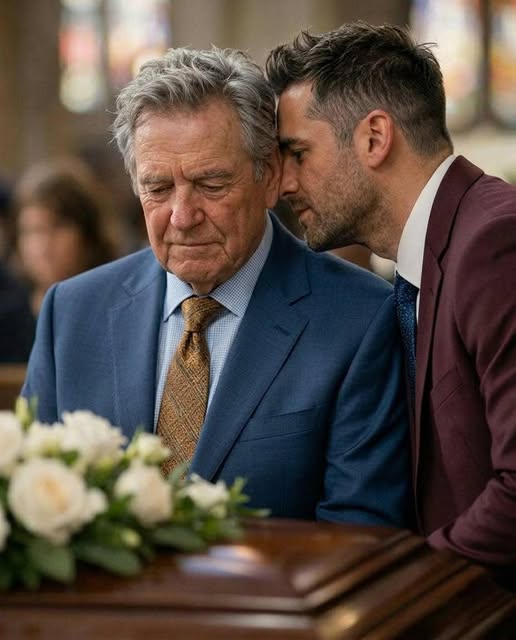
  • At my daughter’s funeral, my son-in-law leaned close and murmured, “You have 24 hours to get out of my house.” I held his gaze, smiled without a word, packed one small bag that night, and left without saying goodbye—seven days later, his phone rang…

    At my daughter’s funeral, my son-in-law leaned close and murmured, “You have 24 hours to get out of my house.” I held his gaze, smiled without a word, packed one small bag that night, and left without saying goodbye—seven days later, his phone rang…

    My daughter Laura’s funeral was the bleakest day of my life.

    The church was packed—coworkers, neighbors, distant relatives, and strangers whose faces I barely knew, all gathered to mourn her. White and blush flowers crowded the altar, their sweet scent heavy in the warm air. Candles trembled in tall brass holders, throwing unsteady light across the ancient stone walls. Somewhere behind it all, the organ played a slow funeral hymn I had heard too many times before.

    And still, in the middle of all those people, I had never felt so alone.

    I stood a short distance from the closed casket, my hands hanging uselessly by my sides. I stared at the polished wood as though looking hard enough might somehow make it open, might let me hear her voice one last time. Just once. Long enough for her to tell me, “Dad, it’s okay. I’m fine. There’s been some mistake.”

    But coffins don’t make mistakes, and death doesn’t bargain.

    Laura had been my whole world. She was the reason I kept going after everything else had fallen apart. When her mother died, the house became an empty shell. Every room echoed. The bed felt too wide and too cold. That first night, I watched my little girl cry herself to sleep, her tiny shoulders trembling under the blanket, and I made a silent promise—to her and to whatever force might be listening—that I would protect her no matter what it cost me.

    And I did.

    I raised her alone. At first awkwardly, then with the fierce devotion only a widowed father truly understands. I worked two jobs, sometimes three, to give her every chance. I learned to braid hair badly, ruined more dinners than I can count, and sat up late helping with homework I barely understood. The day she got into college, I cried alone in the kitchen. The day she graduated, I clapped until my palms stung and shouted her name until my throat hurt.

    I had shown up for every milestone in her life.

    And I had been there the day she introduced me to Daniel.

    Even standing beside her casket, the thought of him crept into my mind and tightened my throat with grief and resentment. Daniel stood near the first pew in a perfect black suit, every hair in place, his face arranged into an expression of noble suffering. People kept approaching him, touching his sleeve, shaking his hand, whispering condolences as though he were the one who had suffered the deepest loss.

    He performed his role flawlessly.

    Now and then, one of the older women from the neighborhood would glance at me, seeming to remember I was Laura’s father, only to drift back toward Daniel, pulled in by the elegance of his sorrow. I watched the quiet theater of it all—the bowed heads, the sympathetic looks, the soft voices saying, “So tragic,” and “She was far too young”—and something in me recoiled. Not because pain can be measured, but because I knew exactly what was hidden behind his carefully controlled facade.

    During the entire service, Daniel barely acknowledged me. His gaze skimmed past me as if I were just another object in the room. The few times our eyes met, there was no softness there. If anything, his expression hardened, as though my presence irritated him even on the day we buried Laura.

    The priest spoke about faith, eternal peace, and Laura having “gone home.” I heard only pieces of it. My mind kept drifting through old memories—her first bicycle, the day she broke her arm falling from a tree, the long stormy night we stayed awake together because thunder terrified her. When the priest sprinkled holy water over the casket and the droplets rolled down the wood, it felt like watching what remained of my life wash away.

    When the ceremony ended, people slowly started to leave. Some paused to grip my shoulder and offer the usual words—“Stay strong, Antonio,” “Call if you need anything,” “She’s in a better place.” I nodded without really hearing them.

    Then I saw Daniel by the doors, accepting one final round of sympathy.

    And then he came toward me.

    He walked with quiet precision, his face blank, like a man who had already made up his mind and was only waiting for the right moment to announce it.

    “Antonio,” he said softly.

    It was the first time he had spoken directly to me all day.

    “We need to talk.”

    There was no warmth in his tone. No shared grief. No recognition of what we had both lost. It was the voice of someone handling a practical matter, as if he were summoning an employee into his office. Still, I followed him, because I was too drained to do anything else.

    We stepped away from the remaining mourners and stopped near a side aisle beside an old wooden confessional that smelled faintly of dust and polish. Colored light from the stained-glass windows spilled across the floor. For a brief moment, I thought perhaps he was about to say something decent. Something about Laura. Something about how we might endure the days ahead.

    Instead, he said the words I will never forget.

    “You have twenty-four hours to leave my house.”

    The sentence didn’t erupt. It landed with the cold finality of a judge’s ruling.

    His voice never rose. There was no anger in it—just a calm, efficient order delivered on the day we laid my daughter to rest. His eyes were steady, detached. He sounded like a man concluding a transaction.

    Something twisted sharply inside my chest. It wasn’t shock exactly. Daniel’s cruelty had never been loud; it had always been smooth, measured, and deliberate. But even knowing who he was, part of me still struggled to believe he would choose that moment to cast me out.

    He kept talking, like he had rehearsed it.

    “The house is legally mine,” he said matter-of-factly. “I need room. I can’t deal with complications right now. It’s not good for me, and it’s not good for moving on. I think it would be best if you found somewhere else to stay.”

    He didn’t hesitate. He didn’t stumble. He didn’t apologize.

    I looked at him carefully. The costly suit. The polished shoes. The watch worth more than my car. The small crease between his brows, perfectly measured to make him seem wounded enough to earn sympathy without appearing truly broken. I remembered dinners at that very house—the one he now claimed completely—Laura laughing across the table, her eyes darting nervously between us whenever the mood turned tense.

    A knot tightened in my chest. Maybe it was anger. Maybe it was grief sharpening into something colder. But it didn’t come out as shouting.

    I smiled.

    Just a small smile. Barely there. Not mocking. Not challenging. It wasn’t for him at all. It was for me—a quiet reminder that I still had some control over myself, even if so much else had been taken.

    “I understand,” I said softly.

    I didn’t argue. I didn’t remind him of the years I had lived there helping Laura. Of the nights I stayed behind with their son when they traveled. Of the money I had put in when he was still just a young man with ambition and empty pockets. I said nothing about the contracts, the meetings, the signatures, the sacrifices.

    I simply nodded.

    That evening, I returned to the house for the last time.

    Without Laura, it felt hollow. As if her absence had emptied the walls themselves, leaving only furniture and photographs standing stiffly inside a place that no longer belonged to either of us. When I passed her room, the door stood half-open. I stopped, resting one hand on the frame, looking at the bed she had slept in as a teenager, now neatly made and untouched.

    I could almost hear her voice again. “Dad, why do you always knock twice? I already told you to come in.”

    I stepped inside and stood there in silence. Her perfume still lingered faintly in the air, mixed with detergent and the old-paper scent of books on the shelf. On the desk was a framed wedding photo of her and Daniel—her smile bright, his posture proud.

    On the nightstand sat a smaller photograph: Laura at eight years old on my shoulders at the beach, her arms stretched wide like wings. I picked it up gently.

    Later, in my room, I pulled out a small suitcase. I packed only essentials—clothes, socks, underwear, the sweater she once bought me because, as she joked, I needed “something respectable” for her business events. I added my documents, which I always kept neatly in a folder: my ID, bank papers, a few contracts.

    Then I placed the old beach photograph on top.

    Everything else—the furniture, the bookshelves, the worn armchair where I used to read while she and Daniel watched television, the kitchen tools I had bought when I first moved in to help with the baby—none of it mattered. It was just weight, and I had no interest in fighting over things.

    I made the bed before leaving. Habit, I suppose. Then I went to the kitchen and set the house keys on the table. They made a small, sharp sound against the wood that echoed in the empty room.

    At the front door, I stopped and looked around one last time. The house was dim, lit only by the small hallway lamp. Family photos lined the wall—Laura holding their son, Daniel smiling at the camera, the three of them beside a Christmas tree. In one or two of the older photos, I was there too, tucked off to the side like a supporting character.

    “Goodbye, hija,” I whispered. “I hope… wherever you are, you don’t have to see this part.”

    Then I stepped outside, closed the door, and walked away.

    I spent that night in a simple hostel near the train station. The room was narrow, the mattress thin, but the sheets were clean and the window looked out over the tracks. Every time a train passed, the glass rattled slightly. I lay there in the dark thinking about everything I had lost so quickly—my daughter, my home, the fragile sense of family I had tried so hard to preserve.

    Daniel thought he had won. He believed he had humiliated me and erased me from his life.

    What he didn’t know was that I had been a silent partner in his company since the very beginning.

    Sleep came only in fragments. Grief doesn’t rest easily. It keeps replaying memory after memory until exhaustion finally drags you under.

    When I woke, pale morning light seeped through the curtains. For a few seconds, I lay there in that half-awake state before pain returns.

    Then it hit again.

    Laura was gone.

    I sat up slowly and looked at the photograph resting on my suitcase. Her smile. My younger face. My hands holding her ankles as though she were the most precious thing in the world.

    “I did my best,” I murmured.

    After a plain breakfast in the hostel’s shared room, I crossed to the café opposite the station. I ordered coffee and sat by the window. Outside, life moved on as though nothing had happened—people hurrying to work, buses rolling past, someone walking a dog, a teenager laughing into a phone. It was strange how normal the world could look while your own life had been split open.

    I checked my phone. There were unread condolences from friends, a cousin, and even a florist confirming a delivery that had probably reached the cemetery too late.

    I answered none of them.

    Instead, I scrolled to my lawyer’s number.

    This wasn’t impulsive. The truth had been set down years ago, in meetings Daniel attended without ever really paying attention, signing documents with the bored carelessness of a man who thinks the details don’t matter. I had stayed in the background because Laura wanted calm, not conflict. She used to say, “Dad, please don’t make this harder. He’s trying. He’s just stressed. Let me handle it.”

    I honored her wishes while she was alive.

    But Laura was gone now.

    So I called.

    “Antonio,” my lawyer said, warm and surprised. “I was meaning to call. I heard about Laura. I’m very sorry.”

    “Thank you,” I said. “I appreciate that.”

    A brief pause followed.

    “What do you need?” he asked.

    I looked into my coffee as steam curled upward.

    “I want to review the company structure,” I said quietly. “And I think it’s time Daniel was reminded of a few things he seems to have forgotten.”

    A week later, while I drank my coffee in that same café, Daniel got a phone call.

    I wasn’t there, of course, but I could picture it perfectly—the way he would slip a hand into his pocket, glance at the caller ID, and answer with the easy confidence of a man who expected everything to bend to his will.

    He probably thought it would be routine. A signature. A meeting. Something minor.

    Instead, he heard words that drained all the color from his face.

    The law firm was direct.

    “Mr. Martínez,” they told him, “the upcoming restructuring requires the signature of the majority shareholder. According to company records, Mr. Antonio García owns eighty-four percent of the business.”

    I can imagine the silence that followed.

    Then the panic.

    The real kind—the kind that begins deep in the stomach and climbs into the throat. He would have gone hunting through contracts he signed without reading, old emails he ignored, paperwork he assumed would never matter. But it was all there. The phased transfers. The terms. The clauses. Every document legal, clear, and undeniable.

    That was Daniel’s flaw. He always mistook quietness for weakness. Because I rarely spoke, he assumed I didn’t understand. He saw an old man in a guest room, a grandfather playing with a child—not the one who had funded his dream when no one else would.

    He forgot that I paid attention. That I remembered.

    That afternoon, he called me.

    I saw his name appear on my screen.

    For a second, I thought about letting it ring. Letting him sit in his fear a little longer. But I was never a man who enjoyed watching others unravel, even when they deserved it. So I answered.

    “Hello, Daniel.”

    There was no arrogance left in his voice.

    “Antonio,” he said, strained and rough. “We need to talk.”

    How quickly everything changes.

    I asked him to meet me at a small office I occasionally used—a modest room above a bakery, with a wooden desk and two chairs. Neutral ground. Not his house. Not my former home. Just a place for facts.

    When he walked in, he looked altered. The expensive suit was still there, but the composure was gone. His hair was slightly out of place. Dark shadows sat under his eyes. He lowered himself into the chair as if unsure it would hold.

    “Thank you for seeing me,” he said, not quite lifting his eyes.

    “You weren’t generous enough to offer me that courtesy at the funeral,” I replied evenly. “So this time, I chose when and where we would speak.”

    He flinched.

    “I was…” He swallowed. “I was under enormous stress. I wasn’t thinking clearly.”

    “Stress doesn’t change who we are,” I said. “It reveals us.”

    He stared at his trembling hands.

    “I made mistakes,” he muttered. “I know that. I was overwhelmed, and after Laura… I needed to control something. The house, the company, I…”

    His words failed him.

    I watched him in silence. To my surprise, I didn’t feel hatred. I had expected to. I thought I would want revenge, that I would want to strip away everything from him as easily as he had tried to strip it from me. But when the moment came, what I felt was something quieter and heavier: disappointment. Not only because he had hurt me, but because he had never understood what had been given to him.

    He had been given Laura. Love. Trust. Support.

    And he had treated all of it like it was his due.

    “You know why you’re here,” I said.

    He nodded.

    “The lawyers told me…” he began. “They said you… that you own—”

    “Eighty-four percent,” I finished. “Yes.”

    His eyes widened.

    “I didn’t know,” he said. “I swear I didn’t. I thought we—”

    “You thought it was yours,” I interrupted calmly. “Because you ran it. Because your name was on the walls, in interviews, in magazines. You believed being the face of something made you its owner.”

    I leaned back slightly.

    “When you first started, you had only an idea and a mountain of debt. Banks refused you. Investors laughed. You came home bitter and exhausted, and Laura came to me.”

    I remembered that night clearly—Laura at my kitchen table, folder in hand, her face full of hope and worry.

    “She told me, ‘Dad, he just needs one chance. He has something real, he just needs someone to believe in him. Please.’”

    I met Daniel’s eyes.

    “I did not help you for your sake,” I said. “I did it for her.”

    I went on.

    “I gave the initial funding. I accepted the legal exposure. I agreed to stay invisible because you said another public name would ‘confuse investors’ and ‘complicate the brand.’ I accepted that. My name stayed out of the interviews, the social media, the magazine profiles where you called yourself self-made.”

    He winced.

    “But the contract,” I said, “was perfectly clear. You signed it. The lawyers explained it line by line. You knew. You simply chose to forget because forgetting was convenient.”

    He rubbed his face.

    “I thought…” He gave a dry, empty laugh. “I thought you were just helping Laura. Helping us. I never imagined…”

    “No,” I said. “You never imagined the quiet old man in the corner might be the one holding the real power.”

    Silence settled between us. Downstairs, the bakery clattered on with ordinary life—cups, plates, muffled voices, laughter.

    “I’m not here to ruin you, Daniel,” I said at last.

    His head snapped up, startled.

    “You’re not?”

    “I’m not a vindictive man,” I said. “If I wanted revenge, I wouldn’t be sitting here speaking to you. I would have let the lawyers do their work while I watched everything collapse.”

    He swallowed hard.

    “Then what do you want?”

    I considered that.

    What I wanted was Laura back. But that was impossible.

    I wanted the years of strain undone. I wanted the worry erased from her face whenever she tried to defend him. I wanted never to have stood beside her coffin.

    But life does not return those things.

    “What I want,” I said slowly, “is respect. Not for me. For her. For the sacrifices made so you could become what you became.”

    I folded my hands on the desk.

    “I am going to restructure the company. Legally. Transparently. As it should have been from the start. There will be audits. Oversight. Protections for employees who spent years enduring your temper because they were afraid to lose their jobs.”

    He started to protest.

    “I tried to be fair,” he said weakly.

    “Daniel,” I said, firm but calm, “this is not the moment to rewrite history. We both know how you treated people.”

    He lowered his eyes.

    “You will stay with the company,” I continued. “You understand its operations. You have relationships that matter. I’m not foolish enough to throw all of that away because of anger. But your authority will be reduced. You will answer to a board. Your vote will no longer be absolute. You will be accountable.”

    He stared at me as though seeing me for the first time.

    “And if I refuse?”

    I shook my head.

    “This is not a negotiation. This is me choosing not to crush you with the power you so carelessly placed in my hands years ago, because you assumed it would never matter.”

    He let out a long breath, and the last of the fight left him.

    “I don’t deserve your mercy,” he said quietly.

    “No,” I answered. “You don’t. But this is not for you.”

    I thought of Laura again—her hope, her stubborn faith that people could become better if given time.

    “In her memory,” I said, “I’ll give you the chance to become the man she always insisted you could be.”

    In the months that followed, the company changed.

    We hired external auditors—serious people who didn’t care who they upset. They uncovered exactly what I expected: misuse of power, careless spending, the sort of behavior that grows when someone believes they cannot be challenged. Nothing severe enough for prison, but more than enough to justify sweeping change.

    Little by little, employees began to relax. At first, they thought I was only a figurehead—the old man occasionally seen in the lobby meeting Laura for lunch or carrying a toy for his grandson. But as policies shifted, abusive managers were replaced, pay was handled more fairly, and contracts were honored, the atmosphere slowly changed.

    I visited every department myself. Not as a tyrant. Not as a savior. Simply as the majority shareholder who had finally stepped out of the background. I listened. I took notes. I brought concerns to the board.

    In the marketing department, one young woman hesitated when I asked if she had concerns. Her colleagues nudged her gently. She twisted her hands.

    “It’s just…” she said. “When Mr. Martínez got angry, it was hard. He yelled. A lot. We never knew where we stood.”

    She glanced around like she expected him to appear.

    “I understand,” I told her. “Thank you for saying it. That will not be acceptable anymore—not from him, not from anyone.”

    And I meant it.

    Daniel changed too, though more slowly. At first he resisted every adjustment. Pride doesn’t surrender gracefully. But over time, his outbursts became less frequent. He listened more in meetings. Spoke less. Occasionally, he even asked questions instead of pretending to already know the answers.

    Grief strips people down. Some grow harder. Others grow more thoughtful. I’m still not sure which one Daniel became. Perhaps both.

    We never became friends. That would have been too large a lie for either of us. But we found a strange kind of coexistence, tied not by affection, but by love for the same woman.

    With part of the profits—profits I finally had the power to direct—I founded an organization.

    I named it simply: “Laura.”

    Not “The Laura Foundation.” Not some elaborate title. Just her name.

    The first time I saw it printed on the glass door of our modest office, it hit me harder than I expected. Her name, simple and visible, felt like a way of carving her into the world so she could not be erased.

    The mission was simple, but deeply personal. We would support entrepreneurs with good ideas and no access to capital or connections. But we would also support something else that rarely appears in business plans.

    We would support parents.

    Parents who gave everything—time, money, energy, health—to help their children succeed, only to be sidelined or forgotten. Parents whose sacrifices never appear in headlines. Parents who sleep on sofas so their children can live near better schools, who skip meals to pay tuition one more month.

    Every project we backed came with clear conditions: respect, ethics, and acknowledgment.

    Not a vague thank-you post online. Real contractual protection. Written recognition. Proof that the invisible hands behind success would no longer be erased.

    Our first case was a young woman named Nadia.

    She came in carrying a laptop, with her tired-looking father behind her. His hands were rough from a lifetime of labor. His clothes were clean but worn. Nadia spoke quickly about her app, her plan, her projections. Her father sat silently in the corner.

    When she finished, I looked at him.

    “And what is your role in this?” I asked gently.

    He looked embarrassed.

    “I’m just the driver,” he said. “I take her to meetings when I can. I… also put in a little money. Not much. I sold my van.”

    Nadia turned sharply.

    “Dad,” she whispered. “You told me you sold it because you didn’t need it.”

    He smiled at her in a way I recognized immediately.

    “I didn’t want you to feel guilty,” he said.

    My chest tightened.

    We funded her project. But we also wrote his contribution directly into the contract—not as a favor, not as a footnote, but as a formal investment. The day they signed, Nadia slid closer to him and took his hand.

    “I’ll buy you a new van,” she said through tears. “A better one.”

    He laughed softly and shook his head.

    “Just get to your next meeting on time,” he said. “That’s enough.”

    Stories like that kept me going.

    They did not heal the emptiness Laura left behind, but they gave structure to it. They turned pain into direction.

    Sometimes, late in the evening after everyone had gone home, I sat alone in my office at Laura. Two photographs stayed on my desk. One showed her at eight years old on my shoulders at the beach. The other was from her graduation, her arm around me, cap crooked, smiling brightly.

    Sometimes I spoke to her.

    “We approved another project today,” I’d murmur. “A single mother who mortgaged her house so her son could open a bakery. We made sure her name is on the ownership papers this time. You would have liked her.”

    Or:

    “Daniel didn’t raise his voice in today’s meeting. Can you imagine? Maybe some part of him really is learning.”

    I don’t know whether anyone hears such things. I no longer believe in dramatic miracles. But I do believe in echoes. In the way love remains inside the choices we make after someone is gone.

    Now and then, Daniel and I crossed paths outside business. Once, months after the restructuring, we met at the cemetery. I was leaving. He was arriving with a bouquet of white lilies.

    We stopped a few feet apart.

    “Hello,” he said.

    “Hello,” I answered.

    No handshake. No embrace. Just a quiet understanding that we both came there often, that we both stood before the same grave, that we both spoke to the same silence.

    “How’s the company?” I asked.

    “Stable,” he said. “Better. The new systems… they make sense.” He paused. “Thank you for not destroying it.”

    “I didn’t do it for you,” I said again.

    He nodded.

    “I know. I’m trying to become the man she believed I could be.”

    “You’re late,” I told him. “But trying is still better than not trying.”

    He gave me a sad, tired smile and continued toward the grave. I didn’t follow. Some moments belong to a man and his memories alone.

    As for me, I created my own rituals.

    Every Sunday morning, I went to the cemetery with fresh flowers. Sometimes roses, sometimes wildflowers from an old woman on the corner. I cleaned Laura’s headstone, brushed away dead leaves, and sat on the small bench nearby. I told her about the week—the families we had helped, the dreams we had supported, the small ways her name was changing lives.

    Over time, the anger that had burned in me at the funeral cooled. It never disappeared entirely, but it changed into something steadier. Something clearer.

    Sometimes I thought back to that exact moment in the church when Daniel said, “You have twenty-four hours to leave my house.”

    At the time, it had felt like a sentence.

    Now I see it differently.

    Yes, it was a door closing. But it was also a door opening—one I had been too hesitant, too respectful of Laura’s wish for peace to open myself. It forced me into the role I had long held quietly in the background: not only father, not only grandfather, not only the man who helped with school pickups and bedtime.

    It made me the man who finally used his power.

    People misunderstand power. They think it belongs to whoever speaks the loudest, commands the room, or makes others afraid. But real power is quieter. It lives in contracts, in ownership, in the certainty that you do not need to shout to change the direction of a life.

    Sometimes I remember the smile I gave Daniel in the church.

    It was not weakness.

    It was certainty.

    Certainty that I had never been as invisible as he believed. Certainty that truth resurfaces, even after years buried in silence. Certainty that the stories people tell about themselves—the self-made man, the brilliant founder, the good husband—eventually answer to what is written in ink and what is remembered by those who watched quietly from the edges.

    I lost my daughter. Nothing will ever make up for that. Some days grief still catches me without warning—in the grocery store when I see her favorite cereal, on the street when someone laughs in a voice that sounds like hers, when the phone rings and for one foolish second I think it might be her.

    But I gained something too, though it came at a terrible price.

    I gained purpose.

    I found a way to carry her name forward, not only on stone, but as something living—something that could protect others.

    Daniel made the greatest mistake of his life when he believed one sentence could erase me. He thought removing me from his house meant removing me from his story.

    What he never understood was that I had been there from the very beginning—not as an accessory, not as a burden, but as the foundation.

    And foundations are not so easily torn out.

    Now, when I sit in the office of Laura and watch the sun sink beyond the city, painting the glass in orange and gold, I feel something I once believed I had lost forever.

    Not happiness. That word is too light.

    But peace.

    A quiet, imperfect peace made from grief, memory, duty, and one stubborn truth:

    Respect is rarely lost all at once.

    It is broken slowly, through repeated choices.

    And sometimes, if we are fortunate—or determined enough—we are given the chance to build it again, not for ourselves, but for the people whose love we did not deserve and yet were given anyway.

    I sip my coffee, look at her photograph, and whisper, “I’m still here, hija. And so are you.”

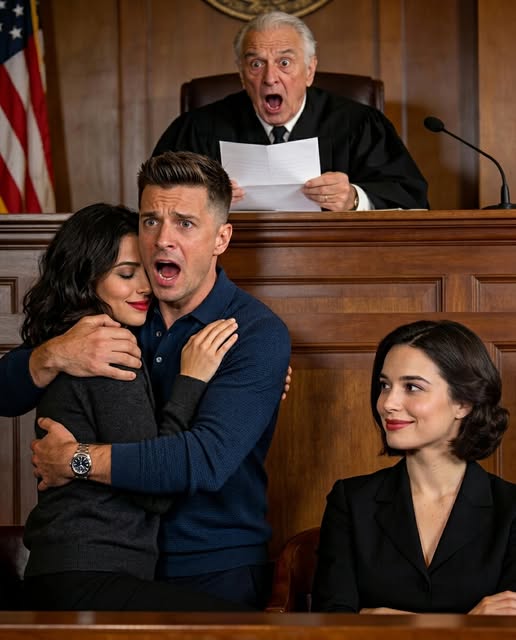
  • At the courtroom, my ex husband smirked like he had already won. He whispered that I would leave with nothing. His new girlfriend squeezed his hand proudly.

    At the courtroom, my ex husband smirked like he had already won. He whispered that I would leave with nothing. His new girlfriend squeezed his hand proudly.

    At the courtroom, my ex-husband looked like he had already won. He leaned back in his chair with a smirk that made my stomach twist. Just before the hearing started, he leaned toward me and whispered that I’d walk out with nothing. His new girlfriend squeezed his hand proudly, and even his lawyer seemed relaxed.

    Then the judge finished reading my documents, slowly removed her glasses, and said something that wiped the confidence from all their faces.

    “This case,” she said calmly, “just became very interesting.”

    Ethan Caldwell sat at the respondent’s table in a perfectly tailored navy suit, looking more like he was finalizing a business deal than dissolving a marriage. Beside him, Madison Hale—his “consultant,” his “friend,” his “not what you think”—sat close enough that their shoulders touched. In the first row behind them, his mother Lorraine held her purse like it contained the family fortune itself.

    When the bailiff called our case, Ethan didn’t even look at me. He stared straight ahead with a jaw set in quiet triumph, like a man already celebrating victory.

    His attorney began the speech I had heard versions of for months.

    “My client’s premarital assets are substantial. The prenuptial agreement is valid. Mrs. Caldwell is requesting support she is not entitled to. We respectfully ask the court to enforce the agreement as written.”

    Ethan finally turned toward me, his eyes glittering with spite.

    “You’ll never touch my money again,” he said loudly enough for the court reporter to capture every word.

    Madison leaned forward with a thin smile. “That’s right, sweetheart.”

    Lorraine didn’t even pretend to whisper. “She doesn’t deserve a cent.”

    I didn’t react. Not because their words didn’t sting, but because I had rehearsed this moment so many times that the pain had faded into something distant. My hands stayed folded in my lap, nails pressing into my palm so they wouldn’t tremble.

    Judge Patricia Kline watched everything with the patient weariness of someone who had seen every possible version of cruelty that money and divorce could produce.

    She asked several routine questions—about the prenuptial agreement, financial disclosures, and timelines.

    Then she looked at me.

    “Mrs. Caldwell,” she said, “is there anything you would like the court to review before we proceed?”

    “Yes, Your Honor,” I replied.

    I stood and walked calmly to the clerk with a plain envelope. No drama. No shaking hands. Just paper.

    Judge Kline opened it and began reading.

    Then something unexpected happened.

    She laughed.

    Not a polite chuckle—an honest, sharp laugh that echoed around the courtroom.

    Ethan’s smirk disappeared instantly. Madison straightened in her seat like someone had pulled a string. Lorraine’s smile froze mid-expression.

    Judge Kline lowered the letter and peered over her glasses at Ethan’s lawyer.

    “Counselor,” she said slowly, “this is good.”

    Ethan’s attorney suddenly looked like a man who realized he’d stepped onto a trapdoor.

    And for the first time in a year, something loosened inside my chest. Not happiness—at least not yet.

    Relief.

    Because the trap had sprung exactly where I planned it.

    Judge Kline held the letter thoughtfully.

    “Before we discuss enforcing any agreement,” she said, “I need clarification regarding the financial disclosures submitted to this court.”

    Ethan’s lawyer blinked. “Your Honor, disclosures were made in accordance with—”

    Judge Kline raised a finger.

    “I’m asking about accuracy. Not format.”

    She looked back at me.

    “Mrs. Caldwell, your letter states that significant assets were intentionally omitted. You also reference exhibits. Where are they?”

    I reached down, opened my folder, and handed the clerk a neatly organized binder.

    “Exhibits A through H,” I said. “There’s also a flash drive containing the digital originals.”

    Ethan stood halfway out of his chair.

    “This is ridiculous,” he snapped. “She’s bluffing.”

    Madison’s hand slid onto his wrist, squeezing tightly as if warning him to sit down. Lorraine leaned forward and whispered something urgent in his ear.

    Ethan dropped back into his seat.

    Judge Kline flipped open the binder.

    “Exhibit A,” she read aloud. “Bank statements. An account at Redwood Private opened eight months prior to filing.”

    Ethan’s attorney cleared his throat nervously.

    “Your Honor, I am not aware of this account.”

    “That,” Judge Kline replied evenly, “is precisely the problem.”

    I kept my gaze fixed on the bench. I refused to look at Ethan, even though I could feel the tension building beside me like heat from a fire. Watching him unravel was a temptation I didn’t trust myself with. I promised I would do this properly.

    Everything began eleven months earlier.

    That was when Ethan told me he wanted a divorce—casually, over dinner, as if he were choosing dessert.

    By that point, he had already moved into a condo downtown. He had already “restructured” his finances. He had already crafted the narrative: I was emotional, ungrateful, and fortunate he was willing to leave me anything at all.

    And he felt completely safe behind the prenuptial agreement.

    The prenup was real. We signed it three weeks before our wedding. I still remembered sitting in a sterile conference room with stale coffee and stacks of paperwork. Ethan’s lawyer slid the documents across the table like I was merely completing a form.

    I was twenty-nine, newly promoted at work, and in love with a man who praised my independence—right up until the moment it challenged him.

    Ethan called it “just business.”

    Lorraine called it “just smart.”

    I signed because I believed marriage meant we were partners.

    What Ethan never realized was that the first time he called me “replaceable,” something shifted inside me.

    After that, I started keeping records. Quietly.

    Not out of revenge—at least not at first.

    My father, an ER nurse who had spent years watching families fall apart under pressure, always told me something simple: love doesn’t erase patterns.

    And Ethan had patterns.

    Those records became invaluable the day I discovered why he was so confident I would leave the marriage with nothing.

    He had moved money.

    I found the first clue by accident—an email confirmation printed on our shared printer. It contained a partial account number and the words “Redwood Private.”

    Ethan was careful.

    But he was also arrogant.

    And arrogance makes people sloppy.

    I called Redwood and pretended I needed to confirm a wire transfer. Of course they wouldn’t give me any real information. But they accidentally revealed one small detail that mattered.

    “Sir, we can’t discuss that without the account holder present.”

    Sir.

    Not “ma’am.” Not “the client.” Sir.

    That night I didn’t confront Ethan. I did exactly what years of marriage to him had trained me to do: I stayed calm and became strategic.

    My best friend, Tessa Monroe, worked in compliance for a regional bank. Over coffee in a crowded diner, I slid the printed email across the table and asked a single question.

    “If someone hides assets during a divorce, what happens?”

    Tessa didn’t smile.

    “If you can prove intentional concealment,” she said, “judges hate it. And if it crosses into fraud, it gets ugly fast.”

    “How do I prove it?”

    “You don’t hack anything. You don’t trespass. You gather what belongs to you, what’s public, and what’s voluntarily provided. Then you let the lawyers handle the rest.”

    So I hired a forensic accountant named Mark Ellison, recommended by my attorney, Dana Whitaker.

    Mark asked for everything I could legally provide: our joint tax returns, mortgage paperwork, credit card statements, business filings, shared account records.

    He also ran public searches.

    Two weeks later he called me with a tone that had shifted from polite professionalism to pure fascination.

    “Claire,” he said, “your husband is playing a very dumb game.”

    Mark discovered a shell company in Delaware—Caldwell Ridge Holdings—created six months before Ethan filed for divorce. The registered agent was a generic service, but the mailing address connected back to Ethan’s business partner.

    That LLC had purchased a lake property in upstate New York.

    Not in Ethan’s name.

    In the company’s name.

    The purchase date matched several transfers from our joint account labeled “consulting fees.”

    Consulting fees.

    Madison was a “consultant.”

    Exhibit C showed invoices from Hale Strategy Group—Madison’s firm—billing Ethan’s company for “market analysis.” Exhibit D showed deposits hitting Madison’s account for nearly identical amounts, followed by transfers to Redwood Private.

    The money wasn’t just hidden.

    It was being laundered through fake consulting work.

    And then there was the prenuptial agreement.

    Exhibit F: a clause requiring complete and truthful disclosure of all assets and liabilities at the time it was signed.

    “Dana,” I asked during one meeting, “what happens if he didn’t disclose everything?”

    Her eyes sharpened.

    “Then the agreement can be challenged. Possibly thrown out.”

    “And the money he’s hiding now?”

    “If he moved marital funds during the marriage, those are still marital assets. Judges can sanction him, award you a larger share, order him to pay your legal fees—and possibly refer the matter to other agencies.”

    When I mailed my letter to the court, I didn’t think of it as revenge.

    It was information.

    But sitting in the courtroom while Judge Kline flipped to Exhibit G—screenshots of a text thread where Ethan wrote, “She’ll get nothing. The prenup holds. Redwood is untouchable.”—I realized something.

    Ethan had mistaken my silence for stupidity.

    Judge Kline looked up.

    “Mr. Caldwell,” she said, “did you provide full and accurate financial disclosures to this court?”

    Ethan opened his mouth.

    No words came out.

    And Madison, for the first time, looked directly at me. Not smug. Not amused.

    Calculating. Afraid.

    Like she finally understood I wasn’t just the wife he left behind.

    I was the person who could prove exactly what they had done.

    Ethan’s attorney stood. “Your Honor, may we request a brief recess?”

    Judge Kline shook her head.

    “Not yet. We’re going to address what’s in front of me.”

    The attorney quickly pivoted.

    “Your Honor, if there were undisclosed accounts, we can remedy—”

    Judge Kline stopped him with a glance.

    “Remedy applies to mistakes,” she said. “This appears deliberate.”

    Then she turned to me.

    “Mrs. Caldwell, your letter also references an audio recording. Explain.”

    “Yes, Your Honor,” I said. “It’s a recording of a phone call I was part of. Ethan called me from his office. I placed him on speaker while my attorney was present. During the call he discussed moving funds and referenced Ms. Hale’s invoices.”

    Ethan slammed his hand on the table.

    “That’s illegal!”

    Dana Whitaker stood smoothly.

    “Your Honor, this is a one-party consent state. My client was part of the call. The recording is admissible.”

    Judge Kline extended her hand.

    “I’ll review it.”

    The courtroom went silent except for the soft hum of the recorder as the clerk pressed play.

    Ethan’s voice filled the room.

    Confident. Mocking.

    “You can threaten all you want, Claire. The money’s not in my name. It’s in holdings. Madison knows what she’s doing.”

    A pause.

    “You signed the prenup. You don’t get my money.”

    Then his laugh—casual and cruel.

    When the audio stopped, the silence felt heavier than noise.

    Madison’s face had turned pale. Lorraine stared straight ahead as if refusing to acknowledge reality.

    Judge Kline set the documents down slowly.

    “Mr. Caldwell,” she said, “I have serious concerns that you attempted to defraud this court by concealing assets and routing marital funds through sham invoices.”

    Ethan’s lawyer started to speak.

    “Your Honor, my client—”

    “No,” Judge Kline interrupted. “Your client will answer.”

    Ethan swallowed.

    “I… I don’t know what she’s talking about.”

    Judge Kline didn’t raise her voice. She didn’t need to.

    “Then you will have no objection to a full forensic accounting of all accounts, entities, trusts, and transfers during the marriage.”

    Ethan’s attorney shifted uncomfortably.

    “That process could take months.”

    “Good,” Judge Kline replied calmly. “We’ll take them.”

    She issued temporary orders immediately. Ethan was prohibited from moving any assets—personally or through any entity he controlled. He was required to produce full financial documentation: bank statements, LLC records, invoices, communications with Madison and her company.

    She also ordered him to pay my legal fees for the time being as a sanction.

    Ethan’s face turned red.

    “This is insane.”

    Judge Kline looked at him coolly.

    “What’s insane is believing you can mislead this court and walk away without consequences.”

    Madison leaned toward her attorney, whispering frantically. If the invoices were fake, she wasn’t just the girlfriend—she was part of the scheme.

    What followed wasn’t dramatic.

    It was procedural.

    And it was devastating for them.

    Over the next several weeks, Mark Ellison and Dana did exactly what the judge authorized. Subpoenas were issued. Banks responded. Emails were recovered.

    The paper trail unraveled quickly.

    Madison’s “consulting reports” were copied from free templates online. Travel records proved she wasn’t even in the same state on the dates she billed. One wire transfer came directly from our joint account on a day I could prove we were sitting together at the hospital after Ethan’s father’s surgery.

    Ethan had handed me his phone to answer calls while he slept.

    He had used marital money like it was monopoly cash.

    Dana filed a motion to challenge the prenup based on incomplete disclosure. The judge ordered a full evidentiary hearing. Ethan had to testify under oath.

    Under oath, Ethan looked very different.

    His confidence dissolved into evasive answers.

    When Dana asked, “Did you disclose Caldwell Ridge Holdings before signing the prenuptial agreement?”

    Ethan hesitated too long.

    “It didn’t exist,” he said finally.

    Dana calmly slid a document across the table.

    “This draft formation agreement is dated two months before your wedding. It includes your signature.”

    Ethan stared at it like it might bite him.

    Madison tried to distance herself next. Her attorney claimed she was merely a contractor and had no idea the funds were marital assets.

    Mark’s report destroyed that defense.

    There were text messages.

    Route it through me again. He can’t trace it.

    Another message read:

    Your wife is clueless.

    The most satisfying moment wasn’t hearing those texts.

    It was watching Judge Kline read them. Her expression was calm, but the disgust was unmistakable.

    By the time we reached the final settlement conference, Ethan’s lawyer had abandoned threats.

    He negotiated quietly. Urgently.

    Because this wasn’t just divorce court anymore.

    Dana had already explained my options. If the judge referred certain findings, tax authorities might investigate. Business partners might investigate. Other agencies might investigate.

    Ethan understood that too.

    So he signed.

    I kept the house.

    My retirement accounts remained untouched.

    I received a substantial payment reflecting the hidden transfers. Ethan paid my legal fees and the forensic accounting costs. Caldwell Ridge Holdings was acknowledged as containing marital funds and divided accordingly.

    Madison faced civil exposure and was quietly forced out of Ethan’s company. No press release. No apology. Just a silent disappearance that told everyone involved she had become radioactive.

    Lorraine never looked at me again. The last time I saw her in the courthouse hallway, she clutched Ethan’s arm like he might collapse.

    Outside the courthouse, Dana asked, “How do you feel?”

    I thought about Ethan’s words in court—You’ll never touch my money again.

    About Madison’s smug smile.

    About Lorraine’s contempt.

    “I feel,” I said slowly, “like I finally got my life back.”

    It wasn’t revenge the way people imagine it.

    No shouting. No dramatic confrontation.

    Just a letter, a binder full of evidence…

    …and the truth placed in front of the one person in the room who couldn’t be intimidated.

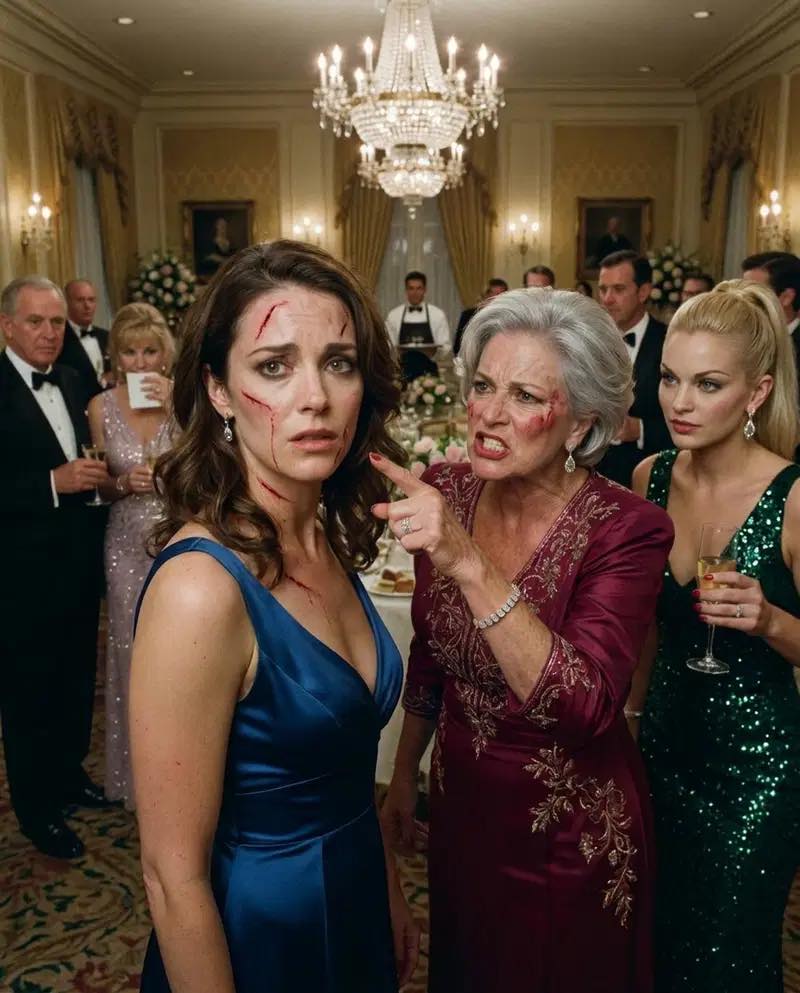
  • “You don’t belong here, you ungrateful mistake!” The Bloodied Gala: My sister smiled as my mother dug her nails into my face in front of Connecticut’s elite.

    “You don’t belong here, you ungrateful mistake!” The Bloodied Gala: My sister smiled as my mother dug her nails into my face in front of Connecticut’s elite.

    The glow from my father’s iPad lit the darkness of his study, and every single pixel felt like a punch directly into my chest. My name is Catherine Adams. I’m twenty-four years old, and in six days, I’m supposed to walk across the Yale University stage to receive my Master’s Degree in Architecture. But right now, standing silently in the shadows of the house where I grew up, staring at a spreadsheet titled “Paige’s Graduation Spectacular,” my hands are trembling.

    My parents had secretly spent five months organizing an $85,200 gala at the most exclusive country club in Connecticut to celebrate my sister, Paige, completing a six-month marketing certificate at a community college. Eighty-five thousand dollars. When I got accepted into Yale, my father handed me a $500 check for “books” and told me I needed to figure out the remaining $68,000 tuition bill myself. So I did. I worked three jobs, buried myself in debt, and survived on caffeine and stubborn determination. Meanwhile, my sister—who received a $52,000 BMW for her eighteenth birthday simply because she existed—was getting a full red-carpet celebration.

    But the spreadsheet itself was not the cruelest part.

    The cruelest part was the seating chart.

    My name appeared beneath a category labeled “General Guests (Do Not Introduce).”

    They had not even formally invited me. Their plan was to trick me into attending as an unnoticed spectator so I could watch Paige’s grand surprise unfold.

    Six days later, the trap finally closed around me. I stood in the glittering ballroom, completely invisible, while my father raised his champagne glass for the fourth time and shouted into the microphone about Paige being the “ultimate pride of the Adams family.”

    He never mentioned my name.

    Not once.

    Across the ballroom, Paige caught my eye. She did not look guilty. Instead, she slowly lifted her champagne flute and smiled at me with a triumphant, mocking grin.

    She should not have done that.

    That smile changed everything.

    Paige believed her smirk marked the final victory in our parents’ lifelong game of favoritism. She had no idea she had just handed me the match that would burn their polished world straight to the ground.

    Part 2

    The morning of my actual Yale graduation, the silence inside my tiny apartment felt deafening. There were no balloons, no catering deliveries, no proud family phone calls. At exactly 9:00 AM, my mother swept through my front door, her heels clicking sharply across the hardwood floor. She did not sit down. She did not even glance at the cap and gown hanging beside my closet.

    Instead, she dropped a cheap Hallmark card onto my kitchen counter—the kind you buy last minute at Target for $4.99. Inside was a $50 gift card.

    “We won’t be able to make it to the ceremony, sweetie,” she said while checking her gold Cartier watch. She had been inside my apartment for exactly twenty-three minutes. “Your father has a golf tournament, and Paige booked a spa day to recover from her big party. Besides, we figured you wouldn’t want all the fuss. You’ve always been so… independent.”

    Independent.

    Her favorite polite replacement word for unwanted.

    As the door shut behind her, I didn’t cry. Tears serve no structural purpose. Instead, I placed that $4.99 card carefully on my desk and started building.

    Architects do not destroy things through messy emotional breakdowns. We build structures that last longer than the people who doubted us.

    My first call was to my advisor at Yale, a giant in the architecture world who understood the real significance of my thesis project. My second call went to my grandmother, Harriet Adams. At eighty-two years old, Harriet remained the true matriarch of our family—old money, razor-sharp intelligence, and a woman who had silently watched my parents’ toxic favoritism grow more disgusting for over thirty years.

    When I showed Harriet the spreadsheet from the iPad and told her about the Target card, her aristocratic expression hardened into stone.

    “Your mother is a real estate agent who married into my family’s name, Catherine,” Grandma Harriet said coldly. “And your father has forgotten whose blood runs through his veins. How much do you need to show people who you really are?”

    “I don’t want a party, Grandma,” I answered quietly. “I want an exhibition.”

    Two days later, a cashier’s check for $180,000 appeared in my account. With Harriet’s backing and my advisor’s enormous influence, I didn’t simply rent a hall—I secured gallery space at the Museum of Modern Art (MoMA) in New York City for a private unveiling of my graduate pavilion project, Quiet House.

    The guest list itself became a masterpiece of strategy. I invited three hundred of the most influential figures in East Coast architecture, Yale faculty members, and respected art critics. But the most important detail was inviting exactly six women: the absolute center of my mother’s elite social circle, the wealthy Connecticut women whose approval she had spent her entire life desperately chasing.

    I specifically did not invite my parents or Paige.

    The night of the exhibition blurred into expensive catering, brilliant lighting, and elegant conversations. Quiet House—a minimalist architectural structure representing resilience through isolation—became the undeniable centerpiece of the evening. My mother’s closest friends stood inside the MoMA gallery staring in shock as they realized the daughter my mother constantly dismissed as “anti-social” was being celebrated as a prodigy by New York’s elite.

    Then Grandma Harriet stepped toward the microphone.

    The entire room fell silent.

    “I am here tonight to celebrate true brilliance,” Harriet announced, her voice echoing through the museum walls. “And to publicly remind everyone that excellence cannot be purchased with shallow praise or seventy-thousand-dollar cars. I am extraordinarily proud of my granddaughter, Catherine. And because true legacy belongs only to those who earn it, I have a public announcement regarding the Adams family estate.”

    I watched my mother’s closest friends lean forward eagerly, eyes wide.

    But just as Grandma Harriet prepared to deliver the blow, my phone vibrated violently inside my velvet clutch. It was a frantic text from my father written entirely in capital letters:

    WHAT HAVE YOU DONE? THE LAWYERS JUST CALLED. TURN ON THE NEWS.

    Part 3

    The true destruction of my parents’ gilded empire did not happen inside that museum, but the foundation had already been obliterated.

    What my father had just learned through that panicked legal call was a secret Grandma Harriet had quietly protected for sixteen months. Long before my MoMA exhibition, Harriet had privately ordered a forensic audit of the family’s historic education trust funds. What she discovered was devastating: my mother, using her power of attorney, had illegally embezzled $86,400 from the trust intended for my education to pay for Paige’s luxury trips to Italy and her extravagant lifestyle.

    Harriet had not confronted them immediately.

    She waited patiently for the moment of maximum destruction.

    That same week, Harriet officially changed her will. The entire $4.8 million family estate, including the ancestral mansion in Rhode Island, was legally transferred entirely to me. My parents and Paige were completely disinherited, left with nothing except the crushing debt created by their own vanity.

    But I still was not finished.

    The final blow arrived the following Sunday.

    The New York Times published a massive 2,800-word feature in the Arts & Design section. The headline included a full-page photograph of me standing beside Quiet House, praising me as “The Future of American Architecture.”

    I bought a physical copy of the newspaper.

    Then I carefully folded it and slid it into a clean FedEx envelope. But I did not send only the article. I returned to the exact same Target store my mother had visited and purchased the exact same $4.99 Hallmark card she had given me.

    Inside the card, I taped the original cash-register receipt showing the $4.99 total.

    Beneath it, in elegant architectural lettering, I wrote one sentence:

    “We didn’t think you’d want to fuss.”

    The fallout was absolute.

    The moment my mother’s social circle realized she had embezzled family funds, lied about my success, and been publicly disowned by the family matriarch, they abandoned her immediately. In the brutal world of Connecticut and New York high society, social executions happen quickly. When my mother attempted to host her annual Christmas cocktail party later that year, not a single guest appeared. The catering trucks sat outside an empty house.

    Today, I live in a beautiful brownstone. My architecture firm is thriving, and Grandma Harriet proudly sits on my board of directors. I blocked my parents and Paige everywhere the day the Times article arrived at their house. They have tried calling, begging, explaining, apologizing, but their voices disappear into silence.

    Sometimes, while designing a new structure, I think back to that night at the country club—the glittering chandeliers, the expensive champagne, and the cruel smile on my sister’s face.

    She thought she had won a lifelong game of favoritism.

    But she forgot something every architect understands:

    A house built on lies and cruelty will always collapse beneath the weight of its own foundation.

    What do you think about this story? Please leave a like and share your thoughts in the comments. Your support means so much to us and inspires us to continue writing more meaningful and powerful stories. Thank you! 👍❤️

  • “You’re not welcome,” Mom emailed. “This is my resort.” I forwarded it: “Cancel her event—owner’s orders.”

    “You’re not welcome,” Mom emailed. “This is my resort.” I forwarded it: “Cancel her event—owner’s orders.”

    “You’re not invited to my retirement party,” my mother wrote in an email. “This is my beach resort, my celebration.”

    There was no phone call. No gentle “sweetheart.” Just a subject line—RETIREMENT WEEKEND DETAILS—and a neat paragraph explaining that I would “ruin the atmosphere.” She even cc’d my aunt, my brother, and two cousins, as if it were a public decision.

    I’m Harper Patterson, thirty-five years old. And the “beach resort” she was claiming? It wasn’t hers. It was mine.

    Not in some petty or symbolic way—legally, financially, painstakingly mine. I bought Seabrook Cove Resort four years ago after building a career in hospitality management. I kept my ownership quiet because in my family, success only invited new expectations. The staff knew I owned it, but to my relatives, I was just “still finding my way.”

    My mother, Diane Patterson, thrived on image. A retirement party at an oceanfront resort was exactly her kind of statement. The invitations were already printed. She’d chosen the ballroom setup, the menu, even scheduled a sunset photo session.

    And she had decided I didn’t belong in it.

    My brother texted me moments after the email. “Just let her have this,” he wrote. “Don’t turn it into a thing.”

    I stared at the screen until my hands stopped trembling.

    Then I did something I had never done before with my family.

    I replied to everyone with a single sentence: “Understood. I hope you have a lovely weekend.”

    No arguments. No pleading. No explanations.

    Then I opened a fresh email.

    To: Miles Chen, General Manager – Seabrook Cove
    Subject: Event Cancellation Request — Diane Patterson

    I forwarded my mother’s message and added: “Please cancel Mrs. Patterson’s reservation immediately per owner directive. Do not issue a refund until I review the agreement.”

    I hesitated for just a second.

    Then I pressed send.

    Within two minutes, my phone rang. It was Miles.

    “Harper,” he said cautiously, “are you certain?”

    “Yes,” I replied, my voice steadier than I felt. “She isn’t authorized to host anything there. And she just confirmed in writing that I’m not welcome.”

    There was a pause. I could faintly hear the ocean outside his office.

    “Understood,” he said. “I’ll take care of it.”

    I ended the call and waited.

    The backlash was immediate.

    My mother’s name flashed on my phone. I let it go to voicemail. Then another email appeared, this one in all caps:

    HARPER, DO NOT DO THIS.

    I didn’t answer.

    Instead, I opened Miles’s reply.

    It contained a single word.

    “No.”

    For a moment, I couldn’t make sense of it.

    In four years, Miles Chen had never told me no. He was the kind of general manager who could handle a ballroom crisis and still have everything perfect by sunset. Reliable. Loyal. Precise.

    So why would he refuse a direct instruction from the owner?

    Before I could call him back, another email landed in my inbox—from an unfamiliar corporate-looking address: events@seabrookcovepartners.com
    .

    Subject: Event Confirmation — Diane Patterson Retirement Weekend

    My pulse skipped.

    I opened it. It confirmed my mother’s reservation, detailed her selected package, and—what made my blood run cold—showed the event labeled “VIP APPROVED,” with a note: Override authorized.

    Override? Authorized by whom?

    I called Miles immediately. He picked up on the first ring.

    “Harper,” he said, tense, “I was just about to reach out.”

    “Explain,” I said evenly.

    He sighed. “Someone claiming to represent ‘Seabrook Cove Partners’ contacted the front desk and finance. They instructed us not to cancel. They said your cancellation email was ‘emotional’ and invalid.”

    My jaw tightened. “There is no ‘Partners.’”

    Miles hesitated. “They provided documentation.”

    “What kind of documentation?”

    “A letter on legal letterhead,” he replied. “It states there’s a partial ownership transfer pending and that Diane Patterson has authority over events this weekend.”

    My stomach dropped. “Pending transfer?” I repeated carefully. “Miles, nothing can be transferred without my signature.”

    There was a pause filled with the faint background noise of the lobby—rolling suitcases, distant laughter, life moving on as mine felt like it was unraveling.

    “I didn’t want to worry you,” Miles said carefully, “but they also requested access to internal guest lists and reserved room blocks.”

    That wasn’t about throwing a party.

    That was about taking control.

    “I need that letter,” I said. “Immediately.”

    Miles forwarded it while we were still speaking. I opened the PDF, steadying myself against the desk.

    The letterhead looked official. The wording was polished. It referenced my resort’s LLC and used my mother’s full legal name. It claimed an “ownership restructuring” was underway due to “family governance considerations,” and until it was complete, Diane Patterson would act as an “authorized representative.”

    It was complete fiction.

    But it was calculated fiction—crafted to pressure employees into compliance.

    “Who sent this?” I asked.

    Miles hesitated. “A man named Trevor Lang, from a firm called Lang & Pierce. He said he’d ‘deal with you directly’ if necessary.”

    Lang & Pierce.

    I didn’t recognize the name, but I recognized the strategy: fabricate authority, intimidate staff, move quickly before the truth catches up.

    At the same time, my mother left a voicemail, furious. “You ungrateful little—do you realize how embarrassing this is? You will not humiliate me!”

    I didn’t finish listening. I forwarded everything—the email thread, the event confirmation, the PDF—to my real attorney, Jasmine Rios. The subject line read:

    URGENT: FRAUDULENT CLAIM OF AUTHORITY OVER MY PROPERTY

    She called within minutes. “Harper, this isn’t just about a party.”

    “I know,” I replied. “They’re trying to override me.”

    “Then we treat it accordingly,” she said firmly. “This is potential fraud and interference with business operations.”

    She instructed me to have Miles lock down access immediately—no internal data shared, no changes approved without my written consent and direct verification. Then she added something that tightened my throat.

    “Send me your operating agreement and ownership documents. If someone is claiming a pending transfer, they’re either bluffing… or they’ve filed something.”

    Filed something.

    The room seemed to tilt.

    My mother didn’t just want me excluded from her party.

    She wanted me erased from my own resort.

    And based on Miles’s earlier “no,” she had already begun persuading my staff that she was in charge.

    Jasmine met me at her office that afternoon. There was no small talk—just urgency.

    We reviewed every document: LLC filings, title records, operating agreement. Everything confirmed what I knew—Seabrook Cove belonged solely to me. No partners. No pending transfers. No family governance clauses.

    Then Jasmine checked state and county records.

    Her expression shifted.

    “Someone submitted an amendment request,” she said carefully.

    My heart sank. “What kind?”

    “A change of registered agent and management contact,” she explained. “Not ownership yet. But it’s a classic tactic. If they control where official notices are sent, they can intercept legal filings and create confusion.”

    “Who filed it?”

    “Lang & Pierce,” she replied.

    So the firm existed—at least enough to file paperwork.

    “Can they do that without me?” I asked.

    “They can attempt it,” Jasmine said. “Whether it’s accepted is another matter. But even a pending filing can cause disruption if exploited.”

    I thought about the override notation, the guest list requests. This wasn’t about a retirement celebration. It was about manufacturing confusion long enough to shift control.

    Jasmine immediately contacted the Secretary of State’s office to flag potential fraud, notified my bank to require additional verification for account changes, and prepared emergency legal filings.

    “We’re issuing a cease-and-desist today,” she said. “And we’re formally notifying your management team that you alone hold authority.”

    As she spoke, my brother texted:

    “Mom says you’re ruining her retirement. You’re being cruel.”

    Cruel—the word families use when you refuse to comply.

    Jasmine drafted a concise, emotionless letter stating the facts: I was sole owner. No transfer existed. Any claims by Diane Patterson or Lang & Pierce were unauthorized. Continued interference would result in legal action.

    She added one decisive line:

    Any individual misrepresenting authority over Seabrook Cove Resort may face civil and criminal consequences.

    We sent it to Lang & Pierce and copied my mother, attaching proof of ownership.

    I braced for an explosion.

    Instead, there was silence—for thirty minutes.

    Then Miles called.

    “Harper,” he said, “they’re here.”

    My chest tightened. “Who?”

    “Your mother,” he replied. “And two people with clipboards. They’re telling the front desk they’re assuming control and insisting the event proceed.”

    “Put me on FaceTime,” I said.

    He did.

    The camera showed Diane—pearls, flawless hair, dressed like a guest of honor. Beside her stood a man with the same letterhead folder. Another woman hovered near the concierge, requesting access to reserved rooms.

    My mother noticed the screen and smiled sharply. “Harper, don’t do this,” she said loudly.

    “You were informed in writing that you have no authority,” I responded calmly.

    She laughed dismissively. “This is my resort.”

    Staff members watched nervously, unsure whom to obey.

    I said what my family never expected to hear:

    “Miles, call security and notify the Sheriff for trespassing.”

    My mother’s composure faltered.

    The man with the folder stepped forward. “You cannot remove a VIP client,” he began.

    Jasmine stepped into view beside me. “You represent no legally authorized party,” she stated. “And your filing has been flagged.”

    My mother’s eyes flickered with alarm before narrowing again. “You hired a lawyer?” she accused, as though defending myself were betrayal.

    “You attempted to remove me from my own company,” I replied evenly.

    The lobby fell silent, the sound of ocean air drifting through the doors.

    When security arrived, my mother switched tactics—tears. “I’m just trying to celebrate,” she said dramatically. “My daughter is punishing me.”

    Miles remained composed. “Mrs. Patterson, you are not authorized to host an event here. Please leave.”

    Two deputies arrived shortly after. The clipboards lowered. Confidence drained from the would-be representatives.

    For the first time, my mother realized she couldn’t intimidate her way through a public lobby the way she did through family group chats.

    She left without her party.

    That weekend, Seabrook Cove hosted its regular guests and quiet sunsets—along with one defining moment: my staff saw that their owner would defend the business—and them—when someone tried to hijack it.

    Later, my brother called—not to apologize, but to suggest we “move on.”

    I declined.

    Because moving on without accountability only invites the next attempt.

    If you were in my place—your own parent trying to claim your business publicly—would you cancel the event and involve authorities, or would you swallow it to avoid family conflict?

  • A woman went out to throw out the trash in the evening and found an almost new sofa in the trash. She decided to take it home. At home, she and her husband started repairing the sofa, but suddenly her husband shouted: “Look what this is…”

    A woman went out to throw out the trash in the evening and found an almost new sofa in the trash. She decided to take it home. At home, she and her husband started repairing the sofa, but suddenly her husband shouted: “Look what this is…”


    Share

    A woman went out to throw out the trash one evening and found a nearly new sofa in the dumpster. She decided to take it home. At home, she and her husband had started fixing the sofa, but suddenly her husband shouted, “Look what this is…” 😨😱

    Emma went out to throw out the trash one evening. The yard was ordinary, quiet, and gray. An old sofa and a few bags were sitting near the dumpsters. At that moment, a small truck pulled up to the dumpster. Two guys got out, quickly unloaded the battered chair, and drove off without even looking back.

    Emma walked closer. The chair was old, the fabric was worn, the armrest was torn, but the shape was sturdy and the frame was intact.

    “Strange, why throw something like that away,” she thought. “A little effort, and it will be as good as new.”

    She stood there for a couple of minutes, then made up her mind and dragged the chair to the entrance. With difficulty, she dragged it into the apartment.

    “Are you serious?” “Her husband, Daniel, was surprised when he saw the find. “Are we collecting furniture from the street now?”

    “Look closely,” Emma replied calmly. “The frame is sturdy. We’ll replace the upholstery, and it’ll be a great chair. You won’t be able to get up from it.”

    Daniel shook his head, but smiled.

    “Okay, since you brought it, let’s try it. Only if there are cockroaches in it, I’m taking it back.”

    They carried the chair into the room. Daniel took his tools and began carefully removing the old fabric. Emma, ​​meanwhile, took out some thick, light-colored fabric, some thread, and set the sewing machine on the table.

    “Who even assembled this?” Daniel grumbled, ripping out the staples. “It’s firmly attached, but it’s done haphazardly. It’s clear the work wasn’t done by a professional.”

    He removed the upholstery from the backrest and moved on to the seat. When the fabric was almost gone, he suddenly froze.

    “Emma… come here. Quickly.”

    There was something strange in his voice. Emma walked over and leaned toward the chair.

    What they saw inside sent a chill through them. 😨😱

    He pulled back the stuffing, revealing a package. Then a second. And a third.

    They were neatly folded wads of hundred-dollar bills, tied with rubber bands.

    Emma and Daniel looked at each other silently.

    “Where are they from?” Emma asked quietly.

    “If the chair was thrown out, that means no one wants it…” Daniel said slowly. “That means whoever threw it out didn’t know about the money. Or…”

    He fell silent.

    “Or maybe it’s someone’s evidence,” Emma finished. “Maybe it’s related to the crime.”

    The room grew unusually quiet.

    “What should we do? Call the police?” she asked.

    Daniel ran his hand through his hair and looked at the money again.

    “Or… maybe buy tickets and go on vacation?”

    They stood in the middle of the room, and on the floor lay something that could either change their lives or ruin it.

  • My brother called and said my husband wasn’t in New York on business. He was in Hawaii with another woman, using my debit card like I’d never find out. By the next morning, I froze every dollar, locked the card, and let his luxury escape collapse in real time. When he called begging for help from that hotel lobby, he still had no idea I was the one holding the final bill.

    My brother called and said my husband wasn’t in New York on business. He was in Hawaii with another woman, using my debit card like I’d never find out. By the next morning, I froze every dollar, locked the card, and let his luxury escape collapse in real time. When he called begging for help from that hotel lobby, he still had no idea I was the one holding the final bill.


    Share

    My brother called and said my husband wasn’t in New York on business. He was in Hawaii with another woman, using my debit card like I’d never find out. By the next morning, I froze every dollar, locked the card, and let his luxury escape collapse in real time. When he called begging for help from that hotel lobby, he still had no idea I was the one holding the final bill.

    Part 1: The Call from Honolulu

    My name is Lauren Pierce, and until the afternoon my brother called, I would have described my marriage the way a tired woman describes a house with a hairline crack in the ceiling: not perfect, maybe overdue for attention, but still standing. Ethan had lied before, though only in the small, irritating ways some husbands do when they think convenience is more important than honesty. He said he worked late when he had really gone for drinks, claimed he forgot errands he never intended to run, softened facts that didn’t flatter him. I had noticed all of it, stored it away, and told myself none of it meant the foundation was weak. Then my brother called from Honolulu in the middle of a weekday, and the entire structure shifted under my feet.

    Daniel almost never phoned during business hours. He ran our family’s boutique hotel on Oahu with the kind of discipline that made interruptions rare and meaningful, so the moment I saw his name on my screen, I assumed there had been some emergency with our mother or one of the cousins. Instead, after I answered, he said my name in a way that made my stomach tighten before the words even arrived. “Lauren,” he said slowly, “where is your husband?” I didn’t hesitate. Ethan had left the day before with a carry-on, a pressed shirt, and a lie I still believed. I told Daniel Ethan was in New York for meetings and wouldn’t be back until Friday. Daniel went quiet for two long seconds. Then he said, “No. He’s at my hotel in Hawaii. He’s with a beautiful woman. And he’s using your ATM card.”

    For one suspended instant, everything in my office disappeared. The phones, the low hum of conversation, the stale air-conditioning, the clatter of keyboards from the accounting department outside my glass wall—they all dropped away until there was nothing left but the pounding inside my chest. I did not ask Daniel to repeat himself because some truths announce themselves with such violence that the mind recognizes them before it accepts them. Ethan was not in Manhattan. He was at the Royal Pacific in Honolulu, and the card he was using belonged to me. That detail hurt in a different register than the affair itself. Another woman was betrayal. My money paying for her ocean view turned it into theft.

    When my voice returned, it was flatter than I expected. I asked Daniel what room Ethan was in. He said Room 804 without even checking, which meant he had already verified everything before calling. I asked if he could keep eyes on him. He answered, “Already doing it,” in the calm tone that meant my brother had shifted fully into protective mode. I told him to record whatever he could and not let Ethan or the woman suspect they had been seen. Daniel said he understood. Then I ended the call, set my phone face-down on the desk, and sat still long enough for shock to burn itself out.

    What replaced it was not grief. Not yet. It was clarity. Ethan thought he was clever. He thought he could tell me he was flying east, take another woman west, use my card like a private travel fund, and come home with some polished excuse about networking dinners and delayed flights. He thought marriage made me soft enough to be managed. He had forgotten something important: I was not a woman who panicked first and thought later. I had access to the shared systems of our life, control of my own accounts, and a brother in Honolulu with no tolerance for cheating men who confused charm with intelligence. By the time I left the office that evening, the outline of a plan had hardened into something sharp.

    At home, I opened my banking app and found exactly what I expected. The charges sat there in crisp little rows, neat enough to be insulting: the room, the restaurant, the room service, the evidence of two people enjoying themselves under tropical skies while I sat in San Diego paying for their fantasy. I moved every dollar out of the account linked to the card Ethan had taken “by accident.” I froze the card online, then called the bank and reported suspicious out-of-state activity. The woman on the line spoke in the pleasant, careful cadence of someone used to angry customers, but I was not angry anymore. I was methodical. By the time the call ended, the card was locked, the funds were elsewhere, and my husband’s island escape had already begun to collapse. I slept better that night than I had in months.

    Part 2: Paradise on My Dime

    The next day, just after noon, Ethan called. His name lit up my phone while I sat at my desk pretending to care about a vendor contract, and I watched it ring long enough to imagine the exact expression on his face. When I finally answered, his voice came through thin with panic. He didn’t bother easing into the conversation. “Lauren, thank God,” he said. “Something’s wrong. My card isn’t working. The hotel says there’s a problem with the payment and they need another one. Can you send money?” The desperation in him was so immediate that I almost admired it. He had skipped right over denial and landed in supplication.

    I asked what was wrong in a tone so mild it must have unnerved him. He said the card was frozen. I told him that was strange. Then I let the silence stretch just long enough before asking why someone was using my card in Hawaii. It was almost possible to hear the lie he had prepared die in his throat. He tried first to salvage a fragment of it, then gave up and admitted he was not in New York. He was in Honolulu. He was with “a friend.” When I asked whether the friend was female, he said yes in the low voice of a man discovering honesty only when all the exits are blocked. I thanked him for finally telling the truth and asked why his own card was unavailable. He said he had grabbed mine by accident because they looked similar. The sheer laziness of that excuse would have insulted me if I still respected him enough to be insulted.

    Then I told him the part that really mattered: he wasn’t just in Hawaii. He was at my brother’s hotel. Daniel had already seen him. Daniel had already called me. I could feel Ethan unraveling in real time. “Lauren, please,” he said. “Just transfer money so I can settle the room and we can deal with this later.” Later. After checkout. After the beach and the wine and the woman and the fantasy. He wanted me to underwrite the ending of his affair so he could return home and negotiate the emotional damage from a position of comfort. I told him no.

    While he begged, my phone buzzed with a message from Daniel. He was at the room door. I switched to the video feed and watched as hotel management introduced itself to my husband in front of his mistress. Ethan looked sunburned and disheveled, his shirt wrinkled, his confidence already leaking out through the seams. Behind him, a tall brunette stood with crossed arms and the expensive irritation of a woman who expected better logistics from the man she was sleeping with. The room behind them looked exactly as ugly as I imagined: champagne, disordered sheets, clothing draped over furniture, the small wreckage of borrowed intimacy. Daniel explained, in his most professional voice, that the card on file had been declined and another form of payment would be required immediately. The woman snapped at Ethan to use another card. Ethan whispered that he couldn’t.

    I let the moment breathe. Then I told Ethan, still on the phone, that I would not be helping him. He said they would be kicked out if I didn’t. I said that sounded like a consequence. He asked if I was seriously leaving him stranded. I reminded him he had not worried about leaving me betrayed. In the background, his companion’s voice rose louder. I later learned her name was Vanessa and that Ethan had apparently told her he was separated, financially independent, and far more impressive than he had any right to claim. By the time Daniel escorted them out, she knew the truth: the card was mine, the room was not paid for, and the man she had followed across the ocean could not even finance his own deception.

    Daniel sent updates throughout the afternoon. They had been removed from the room. They were in the lobby with their luggage. Vanessa was furious. Ethan had no cash and no way to settle anything. A few hours later, Daniel sent me a photo of them standing outside the hotel entrance beneath the ruthless midday sun, both dragging suitcases, both visibly miserable. His caption was brief: She just left him. Apparently Vanessa managed to buy herself a last-minute ticket home and departed after making it abundantly clear what she thought of liars and cheap men. Ethan, who had imagined himself some kind of tropical leading man, was left alone on the curb in Honolulu with no money, no dignity, and no wife interested in rescue.

    That night I packed his things. It took longer than it should have, not because he owned so much, but because objects have a way of remembering the version of a person you once believed in. The watch I gave him for our anniversary. The leather jacket from Seattle. The framed wedding photograph from the beach ceremony where he had looked at me as if I were the only woman in the world. I turned that photo face-down before putting it in the box. The man in the picture no longer existed, or maybe he never had. Ethan called repeatedly while I worked. I ignored every ring. He texted that he had borrowed money from a stranger for food at the airport. I read that and then set the phone aside. The kindest thing I could have given him by then was the full educational value of his own choices.

    Part 3: The Porch and the Lawyer

    Ethan returned three days later. By then his belongings were already waiting for him on the porch in five cardboard boxes and one overstuffed suitcase. I had taped a note to the top in block letters I hoped he would understand even if he had spent years failing to understand me. You lied. You cheated. I’m done. From the living room window I watched him walk up the driveway. He looked wrecked—sunburned, badly shaved, clothes wrinkled, the confidence gone from his stride. He read the note slowly, then knocked. I did not move. He knocked again and called my name with that pleading softness men always seem to discover only after they are no longer entitled to anything. I stood in the hallway and listened until his voice cracked on an apology and then dissolved into the silence of a man finally forced to carry his own weight. After fifteen minutes, he lifted the boxes and left.

    That should have been the end of it. It wasn’t. Ethan had always been most dangerous when embarrassed because shame made him ambitious in the ugliest way. The first letter arrived three days later. It was handwritten, which was so unlike him I almost laughed before opening it. The letter said what all letters like that say. He had made a terrible mistake. The trip meant nothing. He loved me. He couldn’t believe he had thrown away ten years. The phrases were arranged in that familiar order men learn when they want forgiveness without fully comprehending consequence. But one line caught my attention near the end. He asked me not to destroy everything we had built. I folded the pages back into the envelope and thought, with more calm than bitterness, that he had already handled the destruction himself.

    The next morning I met with my divorce attorney, Margaret Lawson, whose office overlooked the harbor and smelled faintly of coffee and paper. She was one of those women whose competence seems almost restful. I told her the whole story from Daniel’s call to the hotel charges to the porch. She listened, took notes, and then said something I did not expect. “You handled the financial side very intelligently,” she told me. “Most people react emotionally. You reacted strategically.” I understood then that what I had done in those first twenty-four hours had not just been revenge. It had been self-preservation. Ethan had counted on chaos. I had given him structure instead.

    Margaret asked if I wanted to proceed immediately. I said yes. She asked if I thought he would contest it. I said yes again, because by then I understood my husband well enough to know that losing me would bother him less than losing the version of himself he preferred when reflected in marriage. He would fight not because he loved me, but because men like Ethan hate being made irrelevant.

    He proved me right within a month. Before that, though, he made one more direct attempt. I came home from work one evening and found him sitting on the curb outside my house like some exhausted actor in a commercial about regret. He stood the second he saw my car and said my name in a way meant to summon old tenderness. I gave him five minutes on the porch, no more. We sat opposite each other, and I listened as he told me he had never meant for this to go so far. He admitted he met Vanessa at a conference in Chicago. She had flirted, he had flirted back, and then what had begun as vanity became opportunity. When I asked why Hawaii, he surprised me with one brutally honest answer. “Because I thought I deserved a break,” he said. I asked from what. He was silent long enough to answer without words.

    He tried to frame the affair as a lapse, a pressure release, a bad sequence of decisions made by a tired man under stress. What he did not understand was that every explanation he offered translated to the same thing: he had seen our marriage as sturdy enough to abuse. He had treated my loyalty as infrastructure, something static and unglamorous that would still be there when his appetite burned itself out. When I told him the real issue was not just the cheating but the entitlement underneath it, he looked genuinely confused. That was the moment I knew we were past repair. Affairs happen in marriages all the time. But the calm certainty that a wife will absorb humiliation if approached with enough softness afterward—that is not an accident. That is character.

    Two weeks later he contested the divorce. Margaret phoned me with the news in a tone so dry it almost improved my mood. Ethan was claiming I was overreacting and requesting mediation. I told her it would not change anything. She replied, “Then we proceed,” with the cool pleasure of a woman who had watched many mediocre men mistake process for leverage.

    Part 4: What He Said Under Oath

    Mediation took place in a bland office that smelled faintly of stale carpet and legal caution. Ethan arrived looking polished again—good haircut, expensive suit, watch visible, the whole costume of a man trying to remind the room that he had once been taken seriously. The illusion lasted until he saw me. Fear moved across his face quickly and then disappeared under a practiced expression of remorse. The mediator, Harold Bennett, was gentle but efficient, the sort of man who no longer mistook reconciliation for virtue if it had to be extracted by force. He asked Ethan to speak first.

    Ethan said he had made a terrible mistake but did not believe one mistake should end a marriage. The phrasing fascinated me. A luxury trip to Hawaii with another woman funded by my debit card had become, in his mouth, one mistake. Not a sequence of decisions. Not a lie, a theft, an affair, and a cover-up. Just one thing, singular and softened. Harold asked why Ethan believed the marriage should survive. Ethan said we had built a life together. Then Harold turned to me.

    I told the truth in one clean line. My husband lied to me, stole from me, and took another woman on a luxury vacation using my money. Ethan winced as though accuracy itself were ungenerous. He said that was a harsh description. I said it was a precise one. Harold, to his credit, understood immediately that there was no middle ground to be discovered here. He asked if reconciliation was possible. I said no without hesitation. Ethan leaned forward and said my name in warning or appeal—I honestly couldn’t tell which. I repeated it. No.

    The mediation ended not with drama but with paperwork, which was exactly right. The unraveling of our marriage did not require opera. It required signatures. Over the next months, the divorce moved through the courts with the impersonal steadiness of a machine finally switched on. Accounts were separated. Property was valued. Ethan fought for the house and lost. He attempted to claim a portion of my personal savings and lost that too, largely because judges are not fond of men who accidentally use their wives’ debit cards while cheating in Hawaii. Every time he pushed, the record of his own behavior pushed back harder.

    What struck me most during those months was how little of the process was about passion. By the end, I was not leaving him because I was heartbroken in some cinematic sense. I was leaving because he had revealed himself to be someone who believed he could spend me—emotionally, financially, morally—and then negotiate over the damage once his own comfort was threatened. That is not a husband. That is a hazard.

    There was one final letter after the mediation, shorter than the first and far more honest in tone, if not in total understanding. He wrote that he knew he had ruined everything but could not figure out when, exactly, the point of no return had arrived. I read that line twice because it summarized him better than anything else he had ever written. Men like Ethan rarely recognize the real ending when it happens. They imagine the end is the confrontation, the signed papers, the day the boxes appear on the porch. In truth, the end had happened long before that—in the moment he booked the ticket, or maybe in the moment he believed my trust was durable enough to exploit. I did not answer the letter.

    Part 5: The Quiet After

    Six months after the divorce was finalized, I sold the house. It had been too large for one person even before the marriage collapsed, and afterward it felt less like a home than a museum of misjudgment. I moved into a bright condo near the marina where the windows faced the water and the light entered cleanly every morning as though the day were being offered to me rather than demanded from me. The first few weeks there felt strangely weightless. No one else’s laundry. No apologies lingering like smoke. No dinners arranged around moods I did not create. The silence was not loneliness. It was recovery.

    Daniel visited often. We had always been close, but what he did in Honolulu altered the structure of my gratitude toward him. He had not just informed me. He had stood beside me without turning my humiliation into spectacle. One evening we sat on the balcony with wine while boats moved through the harbor below us and gulls cut white lines through the darkening sky. He asked if I had regrets. I thought carefully before answering because by then I had learned not to confuse sorrow with error. “No,” I said at last. “I regret trusting the wrong man. I don’t regret leaving him.” Daniel smiled the way brothers do when they are trying not to say I told you so while still letting you feel that they could have.

    I believed the story was over. In practical terms, it was. The legal door had closed. Ethan was gone. My life was smaller, cleaner, mine again. But some endings do not settle fully until one final truth arrives to rearrange what you thought you already understood. Mine came not through Ethan, but through another story altogether—one that was already moving toward me while I was building this quiet life. By the time it reached me, I understood enough about betrayal to recognize its pattern immediately, and enough about survival to stand still when it mattered.

    There was a gala months later, a winter night full of chandeliers and donors and public kindness polished to a shine. I attended because Daniel wanted support for a housing foundation connected to one of his business circles, and because by then I had relearned how to move through elegant rooms without mistaking them for safety. The old Riverside Hotel was all marble and music and expensive civility, the sort of place that makes people believe goodness can be purchased in bulk if you pair it with enough candlelight. I wore black. Daniel, as always, seemed at ease under crystal and applause. My friend Evelyn stood across the room near the bar, and when she caught my eye, she gave me a brief nod that meant more than a paragraph.

    What happened that night was not mine to start, but it was mine to witness, and it altered me in ways even Ethan never had. When the emcee introduced Evelyn for what was supposed to be a routine announcement, I did not yet know she had spent the better part of a year investigating financial fraud connected to the foundation Daniel ran. I did not know she was about to expose shell companies, stolen millions, and a life insurance policy in my name. I did not know she had reason to suspect that the water Daniel brought me every night before bed—the tender domestic ritual I had once found almost embarrassingly sweet—had been turned into a slow weapon meant to weaken me over time. I only knew, in the first sharp moments of her speech, that the room had changed in exactly the same way my office had changed when my brother said Hawaii.

    By the time the police walked through the ballroom doors, my old life was already ash. Daniel did what cornered men do when the performance fails: he reached for the nearest ritual he believed still belonged to him. He picked up a glass of water and held it out to me in front of the entire room, telling me with his eyes that if I exposed him completely, the scandal would consume me too. For six years he had brought me water every night. For six years I had trusted him without checking. That was his final gamble. He thought shame would finish what poison had not.

    Instead, I took the glass, turned to the room, and told them exactly that. My husband was right, I said. For six years he had brought me a glass of water every night. Then I held it out to him and suggested that if it was so safe, perhaps he should drink it himself. He wouldn’t. Of course he wouldn’t. Fear showed up in his face then in its purest form—not fear of arrest, not even fear of exposure, but fear of losing control of the story. The officers stepped in, and Daniel Carter was arrested for fraud and attempted murder while the room watched.

    Later, when the investigation widened, I learned the truth was more complicated and therefore far more human than anyone wanted it to be. Daniel had stolen millions from the foundation, yes. He had also diverted most of that money to build water infrastructure for a neglected desert community whose suffering echoed the place where his father died. He had poisoned me slowly, not intending immediate death but incapacitation, so he could step in and control the foundation himself. He had loved parts of me honestly and harmed me with equal intention. He was neither monster nor martyr, which made him infinitely worse to live with in memory because simple hatred would have been easier.

    I visited him in jail once and asked why. He told me about his father, the bad water, the waiting, the government neglect, the ache of watching people die because help never arrived. He said when he finally had access to money, he fixed what no one else would. I told him he stole it. He said he helped people. We both told the truth, and neither of us left absolved. That, I think now, is the hardest lesson adulthood teaches: kindness and corruption can live in the same heart, and one does not cancel the other out.

    The foundation eventually launched a clean-water initiative inspired by the very project Daniel had funded in secret, and the first community it served formally and lawfully was Red Mesa. Daniel went to prison. The water still flowed. I kept the condo by the marina. Daniel, my brother, still visits. Ethan remains somewhere in the rearview distance of my life, which is where he belongs. Sometimes people ask how I survived all of it—the husband in Hawaii, the divorce, the second husband with the poisoned water and stolen millions, the collapse of trust in forms both banal and bizarre. I usually tell them the simplest version. I stopped rescuing men from the consequences of what they were willing to do while assuming I would absorb it.

    That is not bitterness. It is architecture. It is how I live now. Quietly, yes. But no longer by accident.

  • At my brother’s rehearsal dinner, I showed up with my six-year-old daughter expecting her big moment. Instead, my mother pulled me aside and flatly told me Emma had been replaced as flower girl and that “plans changed.” We swallowed it and walked inside anyway. Then my father texted me to meet him on the porch immediately, and when he came back in and spoke in front of the whole room, my brother and mother had nothing left to say.

    At my brother’s rehearsal dinner, I showed up with my six-year-old daughter expecting her big moment. Instead, my mother pulled me aside and flatly told me Emma had been replaced as flower girl and that “plans changed.” We swallowed it and walked inside anyway. Then my father texted me to meet him on the porch immediately, and when he came back in and spoke in front of the whole room, my brother and mother had nothing left to say.

    Share
    At my brother’s rehearsal dinner, I showed up with my six-year-old daughter expecting her big moment. Instead, my mother pulled me aside and flatly told me Emma had been replaced as flower girl and that “plans changed.” We swallowed it and walked inside anyway. Then my father texted me to meet him on the porch immediately, and when he came back in and spoke in front of the whole room, my brother and mother had nothing left to say.

    Part I: The Parking Lot
    The text hit just before we parked.

    My mother: Come around to the garden entrance. Alone. Don’t bring Emma.

    I read it twice.

    Derek looked over from the driver’s seat. “Problem?”

    “My mom wants to talk before we go in.”

    Emma was in the backseat, smoothing her flower-girl dress with both hands. White daisies clipped in her hair. She had spent four months practicing that walk in our hallway. There was still a gray scuff mark on the baseboard where she pivoted at the end.

    “Is Uncle Ryan going to notice my daisies?” she asked.

    “He’ll notice everything,” I told her.

    That was a lie, and I knew it even then.

    The Hargrove Inn sat on the lake like money with landscaping. White columns. Crushed stone paths. String quartet somewhere inside. My daughter looked at it like she was arriving at the center of the universe.

    I left Derek with her and followed the path around the house.

    My mother was waiting by the garden bench in a navy dress, already braced for impact.

    “What happened?” I asked.

    She didn’t waste time.

    “Madison changed the flower girl. Her sister’s daughter is doing it.”

    I stared at her.

    “She changed it weeks ago,” Mom said. “Ryan didn’t want a scene. Madison wanted the bridal party to feel cohesive.”

    I heard the words. They just didn’t fit inside my head.

    “Emma has practiced for four months.”

    “I know.”

    “She’s in the car in the dress we drove to three cities to find.”

    “I know, Sarah.”

    “She’s six.”

    Mom exhaled like I was being difficult. “It’s Madison’s wedding.”

    That sentence did it.

    Not the switch. Not the cowardice. That.

    I looked at her and said, “And what exactly are we?”

    She gave me the tone she used when she wanted obedience. “I need you to be gracious. Ryan is stressed. Madison is overwhelmed. Tonight does not need you making this bigger than it is.”

    There it was. The family script. Hide the damage. Smile through it. Bleed privately.

    I stepped back.

    “Okay,” I said.

    She relaxed too soon.

    “I’m going back to the car.”

    I walked away before she could say anything else.

    I had to go tell my daughter that her uncle had let her spend four months loving a role he already gave away.

    Part II: The Girl with the Daisies
    Derek saw my face and straightened immediately.

    “What happened?”

    “They replaced her,” I said. “Madison’s niece. Ryan knew for weeks.”

    His jaw locked. “How do you want to handle it?”

    I looked at Emma in the gravel, lining up white stones on the toe of her shoe like she had all the time in the world.

    “I have to tell her.”

    Derek nodded once. “Then tell her. The rest can wait.”

    I knelt on the gravel.

    Emma held up another stone. “This one has sparkles.”

    “That’s a good one,” I said.

    Then I took both her hands.

    “Hey, bug. I need to tell you something.”

    She looked at me, already reading the room better than most adults.

    “The job changed a little,” I said. “Another little girl is going to carry the flower basket today.”

    She went still.

    “Did I do the walk wrong?”

    That almost dropped me.

    “No. You did it perfectly. This is not because of you. Not one bit.”

    She looked down at her shoes. “So I don’t get to carry it?”

    “Not today.”

    She thought about that. Hard. Six-year-old hard. Which is deeper than people think.

    “Can I still go to the party?”

    “Yes.”

    “Can I still wear my dress?”

    “Yes.”

    She nodded once. “Okay. Will there be snacks?”

    Derek barked out a short laugh. I almost did too.

    “So many snacks,” I said.

    “Okay.”

    That was it. No tantrum. No dramatic tears. Just a child swallowing hurt because she trusted the adults around her to tell the truth from that point on.

    We went inside.

    Then she saw the other girl.

    Five years old, white dress, pink sash, basket in hand, trotting past us like she had always belonged there.

    Emma stopped walking. Her hand found mine without looking.

    That was when it became real.

    Dinner was a blur. My daughter ate her chicken, charmed an old couple by talking about a frog in our backyard, and held herself together with more grace than the people who had caused this.

    I made it through appetizers before I had to leave the room.

    In the restroom, I locked the door, turned on the faucet, and gripped the sink until my hands stopped shaking.

    I bought the dress. I curled her hair. I watched her rehearse in the hallway for months. And my brother didn’t have the spine to call me.

    Then my phone buzzed.

    My father.

    He never texted.

    The message said: Come to the east porch. Now.

    Part III: The Porch
    He was standing at the railing when I got there.

    Suit jacket on. Hands braced on the wood. Looking out at the lake like he needed something bigger than the room to keep him from exploding.

    “Your mother told me what happened,” he said.

    “She ambushed me in the garden.”

    “She told me during the bruschetta.”

    I almost smiled at that. My mother could reduce any betrayal to table service.

    Dad turned toward me. “Ryan knew for three weeks.”

    I stopped breathing for a second.

    “He texted your mother this afternoon,” Dad said. “Said, ‘Sarah will make it a whole dramatic thing and I can’t deal with her on top of the wedding stress.’”

    That hurt worse than the flower basket. Not because it was surprising. Because it was clean. He had already made me the problem before I even arrived.

    “He called me a thing to manage,” I said.

    Dad nodded. “Yes.”

    He looked old suddenly. Not weak. Just done.

    “I have covered for your brother his entire life,” he said. “Every mistake. Every dropped ball. Every shortcut. I called it helping. Tonight he let your little girl get dressed for a role he had already taken from her because he didn’t want one uncomfortable phone call.”

    He reached into his jacket and pulled out his phone.

    “Six weeks ago, your grandmother’s estate finally cleared. There was one remaining asset. The Vermont acreage.”

    I stared at him.

    “The cabin?” I said.

    He nodded. “I was going to split it between you and Ryan. I changed the deed Tuesday. It’s yours. Sole ownership.”

    I just looked at him.

    “This isn’t because of tonight,” he said. “Tonight only confirmed what I already knew.”

    Then he reached into the other pocket and handed me a dark green velvet pouch.

    I opened it.

    My grandmother’s gold locket dropped into my palm.

    I felt the air leave my body.

    “Mom gave it to Madison three months ago,” he said. “As a ‘welcome to the family’ gift.”

    I looked up at him.

    “I asked for it back tonight,” he said. “Madison gave it to me immediately.”

    My fingers closed hard around the locket.

    For one second I couldn’t speak.

    Then Dad said, “I’m going back in there. I’m going to say what should have been said the moment this happened. I want you standing next to me.”

    I should have told him no.

    I should have protected the room.

    Instead I thought about my daughter counting stones in the parking lot so she wouldn’t cry.

    “Okay,” I said.

    Part IV: The Speech
    When we walked back into the dining room, people noticed.

    Not because we were loud. Because my father looked like a man who had finally run out of reasons to stay quiet.

    He went straight to the head table.

    Ryan looked up and smiled the automatic smile people use when they think they still control the next five seconds.

    That smile died fast.

    My father didn’t ask for a microphone. Didn’t tap a glass. He just stood there until the room shut itself down around him.

    Then he said, “I need to say something.”

    Every fork stopped.

    Madison’s hand tightened on her champagne flute.

    “My daughter and granddaughter drove forty minutes to be here tonight,” my father said. “My granddaughter spent four months preparing to be flower girl. She was told in the parking lot that the role had been given away weeks earlier. No one called. No one warned her. No one gave her the basic dignity of the truth.”

    You could feel the room contract.

    Ryan tried to stand. “Dad—”

    “No.”

    That one word pinned him down.

    “You knew for three weeks,” Dad said. “And instead of calling your sister, you asked your mother to intercept her so you wouldn’t have to deal with the discomfort.”

    Ryan went pale.

    Madison stared at her plate.

    My mother looked like she wanted the floor to split open.

    “I love my son,” Dad said. “That is exactly why I’m saying this in daylight. What happened to Sarah and Emma tonight was cowardly.”

    Nobody moved.

    “My granddaughter is family,” he said. “She was owed a phone call. So was her mother.”

    Then he stepped back.

    That was all.

    No screaming. No drama. No threat.

    Which made it worse.

    The room stayed silent for a long, ugly beat. Then conversation restarted in broken pieces. No one knew where to look. Some people stared openly. Some stared into their wine. My mother hissed at Dad that he had humiliated the family.

    He said, “Good.”

    Derek was holding Emma by then. She had one arm around his neck and looked from my father to me like she knew something serious had just happened but hadn’t yet decided if it was good or bad.

    Grandpa took her from Derek and held her close.

    “I like your hair clips,” he told her.

    “They’re daisies,” she said.

    “I noticed.”

    Then, later, when dessert was being cleared and the room was trying to pretend it had a pulse again, Ryan came over.

    He looked wrecked.

    “I should have called you,” he said.

    “Yes,” I said.

    He looked at Emma, who was focused on a lemon tart like it was the only honest thing in the room.

    “I want to fix it,” he said. “Maybe tomorrow she can lead the bridal party in with a peony. Just at the start.”

    I looked at him.

    “You clear that with Madison first,” I said. “And if she hesitates for even a second, you do not say a word to Emma. You do not get to disappoint her twice.”

    He nodded.

    For once, he had nothing else to say.

    Part V: The Locket
    The next day, Emma walked down the aisle first carrying a single white peony.

    Not the flower basket. Not the thing she had trained for. But she walked like it was state business. Chin up. Tiny hands locked around the stem. Every step careful. Every step earned.

    When she reached the front and saw us, she smiled so hard I thought it might break my chest.

    Dad clapped until his hands turned red.

    Ryan looked ashamed.

    Madison looked tired.

    My mother looked furious in the contained way only women like her can manage in church clothes.

    It wasn’t a fix.

    There isn’t one for certain things.

    But it was something.

    Two weeks later, on a Tuesday morning, I finally opened the velvet pouch.

    I put the locket around my neck while Emma ate cereal and swung her legs under the kitchen chair.

    She looked up. “Shiny?”

    “It belonged to your great-grandmother.”

    She nodded like that explained everything.

    The truth is, life didn’t become magically clean after that weekend.

    Ryan and I still had years of damage between us.

    My mother still believed she had “kept the peace.”

    My father called every Thursday at 6:15 p.m. sharp and insisted on being put on speaker so he could talk to Emma about the red cardinal in his backyard. She named it Gerald. He mailed her a photocopied page about cardinals with the important parts highlighted. She kept it beside her bed like scripture.

    That was how we rebuilt.

    Not beautifully.

    Not all at once.

    Piece by piece.

    My daughter still asked too often if she was being difficult. Still apologized for small things she shouldn’t even have noticed. Still carried old fear in her shoulders.

    But in our house, when she coughed, nobody punished her for it.

    When she practiced walking down a hallway, nobody let her dream on borrowed time.

    When she asked if someone would notice her daisies, the answer was yes.

    And if they didn’t, that was their failure, not hers.

    Some families break in one loud moment.

    Ours broke quietly, over years, and then all at once in a dining room full of candles and people who suddenly didn’t know where to look.

    That night didn’t heal anything.

    It did something better.

    It named the wound.

    And once a thing is named, it can stop pretending to be love.

    The End.

  • She went to the hospital to give birth, but the doctor broke down in tears when he saw the baby…

    She went to the hospital to give birth, but the doctor broke down in tears when he saw the baby…


    Share

    She went to the hospital to give birth, but the doctor broke down in tears when he saw the baby…

    She went to the hospital to give birth. And the doctor broke down the second he saw her baby.

    She arrived alone on a cold Tuesday morning, carrying a small overnight bag, wrapped in a faded sweater, with a heart that already felt cracked clean through. No husband walked beside her. No mother held her arm. No friend sat in the waiting chair. There was no hand to squeeze hers beneath the white lights of the maternity wing.

    There was only her. Her shallow breathing. And nine months of silence pressing down on her chest.

    Her name was Clara Morales. She was twenty-six years old, and she had already learned something most women do not expect to learn so young: sometimes you do not just give birth to a child. Sometimes you give birth to a new version of yourself too.

    At the front desk of St. Gabriel Medical Center in San Antonio, the admitting nurse smiled kindly as she checked the paperwork.

    “Is your husband on the way?”

    Clara gave the same tired smile she had perfected for strangers—the kind that looked polite enough to survive and empty enough not to invite questions.

    “Yes,” she said. “He shouldn’t be long.”

    It was a lie.

    Ethan Salazar had left seven months earlier, on the exact night she told him she was pregnant. He had not screamed. He had not insulted her. He had not even had the courage to make a scene. He packed a few shirts into a duffel bag, said he needed time to think, and closed the door behind him with the kind of soft cowardice that somehow hurts worse than fury.

    Clara cried for three weeks. Then she stopped.

    Not because the pain was over, but because the pain no longer fit inside her as grief. It had to become something else. Work. Routine. Endurance. She rented a tiny room. Took double shifts at a downtown diner. Counted every dollar twice. Rubbed her swollen feet at night and talked to the baby with one hand resting over her belly.

    “I’m staying,” she would whisper. “No matter what happens, I’m staying.” Labor started before sunrise.

    It lasted twelve hours.

    Twelve hours of pain, sweat, and contractions that came like furious waves, building and crashing and tearing through her. Clara gripped the bed rails until her knuckles went white. Nurses coached her through every breath. Someone kept wiping the sweat from her forehead. Between contractions, she repeated the same plea over and over, voice thin and ragged.

    “Please let him be okay. Please let him be okay.” At 3:17 p.m., the baby was born.

    A sharp cry rang through the delivery room—clear, strong, alive. Clara dropped back against the pillow and wept.

    Not the way she had cried the night Ethan left. This was something else. This was fear finally loosening its grip. This was love arriving all at once in the shape of a child.

    “Is he okay?” she asked. “Is he okay?” A nurse smiled as she wrapped the baby in a white hospital blanket. “He’s perfect, sweetheart. He’s perfect.”

    They were just about to place him in Clara’s arms when the attending physician stepped in to review the final chart. He was close to sixty, with steady hands, a deep voice, and the quiet authority of a man people trusted without thinking about it. His name was Dr. Richard Salazar.

    He took the chart. Walked toward the baby. Looked down. And froze. The head nurse noticed first. He had gone completely pale.

    His hand trembled once over the clipboard. His eyes—calm, practiced, professional eyes—filled with something no one in that room expected to see.

    Tears. “Doctor?” the nurse asked carefully. “Are you alright?” He didn’t answer. He just kept staring at the baby. At the shape of the nose. The soft line of the mouth.

    And just below the left ear, a tiny birthmark shaped like a cinnamon-colored crescent.

    Clara pushed herself upright, weak and frightened all at once. “What happened?” she asked. “What’s wrong with my son?” The doctor swallowed.

    When he spoke, his voice was barely above a whisper. “Where is the baby’s father?”

    Clara’s entire face hardened. “He’s not here.” “I need his name.”

    “Why?” she asked, alarm turning sharp. “What does that have to do with my baby?” Dr. Salazar looked at her with a sadness so old and heavy it almost made the whole room bow beneath it.

    “Please,” he said. “Tell me his name.” Clara hesitated. Then she answered. “Ethan. Ethan Salazar.” The room went still. Dr. Salazar closed his eyes. One tear slipped down his cheek.

    “Ethan Salazar,” he repeated slowly. “Is my son.” No one moved. The baby’s soft crying was the only sound left in the room.

    Clara felt the air leave her lungs. “No,” she whispered. “No… that can’t be.” But there was no uncertainty in his face. Only pain. Old pain.

    The kind that had been waiting for a name and had suddenly found one.

    He sat down beside the bed like his legs had given up holding him. Then, in the quietest voice in the room, he began to speak.

    He told her Ethan had been estranged from the family for two years.

    That he had left after a brutal fight, furious at living in the shadow of a respected father and a deeply loving mother he no longer knew how to face.

    He told her his wife, Margaret, had died eight months earlier with a broken heart and unanswered hope. That every Sunday until the end, she lit a candle and set an extra plate at the table in case her son came home.

    Clara listened in stunned silence, her son finally placed in her arms, wrapped tight against her chest.

    Then Dr. Salazar asked how she had met Ethan. And the story came out in pieces. A coffee shop. A charming smile.

    A man who looked at her as if she were the only person in the room. He never talked about his family. Never mentioned a doctor father. Never mentioned a mother waiting for him.

    He built himself out of half-truths and omissions, and when Clara told him she was pregnant, he did what men like that do when life demands courage.

    He ran. Dr. Salazar listened without interrupting, hands clasped between his knees, his own face somehow becoming more broken with every word. When she finished, he looked down at the baby wrapped in white and said, so softly it disarmed her completely,

    “He has his grandmother’s nose.” Clara laughed through her tears. A small, choked, disbelieving laugh.

    Because in the middle of all that grief and shock, that sentence was the most human thing she had heard in months. Before he left that night, he stopped at the door and turned back.

    “You said you have no one,” he said. Clara lowered her eyes. “That’s what I thought.”

    He shook his head gently. “That child is my family,” he said. “And if you’ll let me… so are you.”

    Part 2

    Clara had spent nine months building walls. Walls against hope. Against dependence. Against anyone who might leave again.

    But there was something in Dr. Salazar’s face that made refusal harder than it should have been. It was not pity. It was not duty. It was not some dramatic promise made in the heat of emotion.

    It was quieter than that. Steadier. A kind of love that did not ask for applause. A chosen kind of love.

    She looked down at her son. “I still don’t know what to name him,” she admitted. For the first time, Dr. Salazar smiled for real. It was small, tired, and full of memory.

    “My wife’s name was Margaret,” he said. “I called her Maggie.” Clara looked at the baby for a long time, tracing the edge of his blanket with one trembling finger. Then she bent and kissed his forehead.

    “Hi, my love,” she whispered. “I think your name is going to be Matthew Salazar Morales.” Three weeks later, Dr. Salazar found Ethan.

    He was staying in a cheap roadside motel outside Austin. Working odd jobs. Sleeping badly. Drinking too much. Carrying the face of a man who had been running from himself for so long he no longer knew how to stop.

    Richard went alone. He did not yell. He did not threaten. He did not beg.

    He simply set a photograph on the table. A newborn. Eyes shut. Tiny fists curled tight.

    Ethan stared at it without touching it.

    His face changed slowly, like ice beginning to split under its own weight.

    “His name is Matthew,” Dr. Salazar said. “He has your mother’s nose. And he has a mother who worked until the last month of her pregnancy to make sure he wanted for nothing.”

    Ethan kept staring at the photo.

    Then, after a long silence, he said in a voice that sounded scraped raw,

    “I’m not enough for them. I never was.”

    Dr. Salazar leaned forward.

    “That is not yours to decide anymore.”

    Ethan said nothing.

    “Being a father isn’t something you’re magically ready for,” Richard continued. “It’s something you choose. Again and again. And you’ve already run far enough.”

    Then he slid a piece of paper across the table.

    An address.

    “Your mother died waiting for you to come home,” he said quietly. “Don’t make me bury that hope with her.”

    Two months passed.

    Then one Sunday morning, while Clara rocked Matthew beside the window, someone knocked on the apartment door.

    She opened it.

    And there he was.

    Ethan looked thinner. Older. His eyes were red from too little sleep and too much regret. He held a teddy bear in one hand as if it were the only thing keeping him upright.

    At first, he didn’t speak.

    He just looked at her.

    Really looked.

    And for the first time since she had known him, Clara saw something in him she had never seen before.

    Shame.

    Regret.

    Fear.

    And a new kind of fragility—the kind a man carries when he is standing on the edge of becoming better or losing himself completely.

    “I don’t deserve to be here,” he said.

    Clara held his gaze.

    “No,” she said. “You don’t.”

    Silence sat between them.

    Then, from the crib behind her, Matthew made a small sound. Just a tiny coo. Barely more than breath.

    Ethan’s face broke.

    Completely.

    Clara stepped aside.

    Not because she had forgiven him.

    She hadn’t.

    Not yet.

    Maybe not even close.

    But there was a child in that room who deserved a chance to know his father.

    And Clara was strong enough to open the door a crack, even when it cost her something.

    Ethan walked in slowly, like a man entering a church after years of believing in nothing.

    He knelt by the crib.

    He looked at his son for the first time.

    Then, with the frightened care of someone touching a miracle he does not believe he deserves, he reached out with two fingers and brushed Matthew’s tiny hand.

    The baby knew nothing of abandonment.

    Nothing of guilt.

    Nothing of fear, or hospitals, or the long wreckage adults create around children.

    He just closed his fist around Ethan’s fingers and held on.

    Ethan started crying without making a sound.

    Part 3

    Nothing after that turned magically easy.

    It wasn’t quick.

    It wasn’t clean.

    And it definitely wasn’t a fairy tale.

    There were hard conversations.

    There were days Clara wanted to tell him to get out and never come back.

    There were days Ethan looked as though the old instinct to run was still standing right behind him, whispering.

    But this time, something had changed.

    He was no longer trying to outrun the truth by himself.

    His father was there—steady, unsparing, refusing to soften the truth but refusing to withdraw love either.

    Clara was there—setting boundaries with a dignity that didn’t ask permission from anyone.

    And Matthew was there too, growing, changing, demanding presence with the simple force of his existence.

    Dr. Salazar started visiting every Sunday.

    He brought soup.

    Diapers.

    Advice nobody asked for.

    And a tenderness that slowly began to fill the apartment in ways Clara didn’t even realize it had been empty.

    He told Matthew stories about his grandmother Maggie—how she sang while making tortillas, how she lit candles for the people she loved, how she laughed with her whole shoulders when she found something genuinely funny.

    Sometimes he would stop talking and simply sit there watching the child.

    And Clara understood that he was healing too.

    Ethan got a steady job at a small print shop.

    He quit drinking.

    At Richard’s insistence—and because Clara said something he couldn’t shake—he started therapy too.

    “If you’re going to stay,” she told him one night, “you cannot stay broken and expect love to do the repair for you.”

    That sentence stayed with him.

    A year passed.

    Matthew learned to walk between the arms of the three of them.

    The first time he took real steps, he toddled toward Clara, then tipped sideways laughing into Ethan’s legs. Richard, sitting on the couch, covered his mouth with one hand like he had just watched a miracle happen in slow motion.

    Two years later, Clara finished the technical certification she had once left unfinished and got a better administrative position—at the same clinic where Matthew had been born.

    Ethan was still working.

    Still trying.

    Still carrying shadows, but no longer obeying them.

    One December night, while Matthew slept and the city hummed softly beyond the apartment windows, Ethan sat across from Clara holding a small ring box.

    She raised an eyebrow.

    “Don’t do anything foolish.”

    He laughed nervously.

    “I’ve already done enough foolish things. That’s exactly why I’m trying to do one thing right.”

    He opened the box.

    The ring inside wasn’t expensive.

    It was simple. Modest. Honest.

    “I’m not giving you this because I think it erases anything,” he said. “And I’m not giving it to you because I think I deserve some perfect story at the end of everything I broke.”

    Clara said nothing.

    He looked at her with the kind of seriousness she had once begged the world to show her.

    “I’m giving it to you because I finally understand what it means to stay,” he said. “And if you say no, I’m still staying. As Matthew’s father. As a man who takes responsibility. As what I should’ve been from the start. But if someday you really want to try with me… I want to spend the rest of my life learning how to deserve you.”

    Clara looked at him for a long time.

    And in that moment, she did not think first about abandonment.

    Not even about anger.

    She thought about the hospital room.

    About Dr. Richard Salazar standing there with tears in his eyes.

    About Maggie’s nose on their son’s face.

    About Matthew’s tiny hand curling around his father’s fingers as if the world had not yet taught him what fear was.

    She thought about everything she had done alone.

    Everything she had survived without rescue.

    Everything she had carried until she had become someone stronger than the girl who first walked into that hospital.

    And she realized that saying yes would not be surrender.

    It would not be need.

    It would be choice.

    “I didn’t forgive you that day at the hospital,” she said at last.

    “I know.”

    “I didn’t forgive you when you came back either.”

    “I know that too.”

    “I’ve been forgiving you one day at a time,” she said. “And there are still days I’m not done.”

    Ethan nodded.

    No argument.

    No protest.

    Just acceptance, the way a man accepts a scar that finally has a name.

    Then Clara reached across the table, closed the ring box gently, and left it there.

    “Stay tomorrow,” she said. “And the day after that. And ten years from now. That matters more to me than any ring.”

    Ethan smiled through tears.

    “I’m going to stay.”

    From the living room, where Dr. Salazar had fallen asleep in an armchair after watching over Matthew while they talked, the child gave a soft sleepy laugh, as though even in dreams he somehow understood that something good had finally settled into place.

    Clara never needed anyone to save her.

    She saved herself.

    All she did was leave the door open just wide enough so that others—if they were brave enough—could learn how to walk through it.

    And how to stay.

  • Celebrity birthdays for the week of Jan. 18-24 includes Mariska Hargitay and Dolly Parton

    Celebrity birthdays for the week of Jan. 18-24 includes Mariska Hargitay and Dolly Parton

    Celebrity birthdays for the week of Jan. 18-24:

    Jan. 18: Singer-songwriter Bobby Goldsboro is 85. Comedian-singer Brett Hudson of the Hudson Brothers is 73. Actor-director Kevin Costner is 71. Country singer-actor Mark Collie (“Nashville”) is 70. Actor Mark Rylance (“Bridge of Spies,” ″The Other Boleyn Girl”) is 66. Actor Alison Arngrim (“Little House on the Prairie”) is 64. Actor Jane Horrocks (“Absolutely Fabulous”) is 62. Comedian Dave Attell (“Insomniac”) is 61. Actor Jesse L. Martin (“The Irrational,” ″Law & Order”) is 57. Rapper DJ Quik is 56. Singer Jonathan Davis of Korn is 55. Singer Christian Burns of BBMak is 52. Actor Derek Richardson (“Men in Trees”) is 50. Actor-screenwriter Jason Segel (“Shrinking,” “How I Met Your Mother”) is 46. Singer-actor Samantha Mumba is 43. Actor Ashleigh Murray (“Riverdale”) is 38. Actor Zeeko Zaki (“FBI,” “24: Legacy”) is 36. Actor Mateus Ward (“Hostages”) is 27.

    Jan. 19: Actor Tippi Hedren is 96. Director Richard Lester (“A Hard Day’s Night,” “Superman II and III”) is 94. Actor-singer Michael Crawford is 84. Actor Shelley Fabares is 82. Country singer Dolly Parton is 80. TV chef Paula Deen is 79. Singer Martha Davis of The Motels is 74. Singer Dewey Bunnell of America is 74. Actor Desi Arnaz Jr. is 73. Actor Katey Sagal (“Sons of Anarchy,” ″Married… With Children”) is 72. Comedian Paul Rodriguez (“a.k.a. Pablo”) is 71. Keyboardist Mickey Virtue (UB40) is 69. Actor Paul McCrane (“ER”) is 65. Actor William Ragsdale (film’s “Fright Night,” TV’s “Herman’s Head”) is 65. Singer Whitfield Crane of Ugly Kid Joe is 58. Singer Trey Lorenz is 57. Actor Shawn Wayans (“White Chicks,” ″Scary Movie”) is 55. Singer-guitarist John Wozniak of Marcy Playground is 55. Actor Drea de Matteo (“Joey,” ″The Sopranos”) is 54. Comedian Frank Caliendo (“Frank TV,” ″Mad TV”) is 52. Actor Drew Powell (“Gotham”) is 50. Actor Marsha Thomason (“Las Vegas”) is 50. Actor Bitsie Tulloch (“Grimm”) is 45. Actor Jodie Sweetin (“Full House”) is 44. Director Damien Chazelle (“La La Land”) is 41. Actor Shaunette Renee Wilson (“The Resident”) is 36. Actor Briana Henry (“General Hospital”) is 34. Actor Logan Lerman (“Percy Jackson” films) is 34. Rapper Taylor Bennett is 30. Actor Lidya Jewett (“Hidden Figures”) is 19.

    Jan. 20: Singer Eric Stewart (10cc, Wayne Fontana and the Mindbenders) is 81. Drummer George Grantham of Poco is 79. Bassist Ian Hill of Judas Priest is 74. Guitarist Paul Stanley of Kiss is 74. TV host Bill Maher is 70. Actor Lorenzo Lamas is 68. Actor James Denton (“Desperate Housewives”) is 63. Bassist Greg K. of The Offspring is 61. Country singer John Michael Montgomery is 61. Actor Rainn Wilson (“The Office”) is 60. Actor Stacey Dash (“Clueless”) is 59. Actor Reno Wilson (“Mike and Molly”) is 57. Singer Edwin McCain is 56. Actor Skeet Ulrich is 56. Drummer Questlove of The Roots is 55. Drummer Rob Bourdon of Linkin Park is 47. Singer-songwriter Bonnie McKee is 42. Country singer Brantley Gilbert is 41. Singer Kevin Parker of Tame Impala is 40. Actor Evan Peters (“American Horror Story”) is 39.

    Jan. 21: Opera singer Placido Domingo is 85. Actor Jill Eikenberry is 79. Guitarist Jim Ibbotson (The Nitty Gritty Dirt Band) is 79. Singer-songwriter Billy Ocean is 76. Actor Robby Benson is 70. Actor Geena Davis is 70. Actor Charlotte Ross (“NYPD Blue”) is 58. Singer Marc Gay of Shai is 57. Actor Karina Lombard (“The L Word”) is 57. Actor Ken Leung (“Marvel’s Inhumans,” ″Lost”) is 56. Rapper Levirt of B-Rock and the Bizz is 56. Drummer Mark Trojanowski of Sister Hazel is 56. Singer Cat Power is 54. DJ Chris Kilmore of Incubus is 53. Singer Emma Bunton (Baby Spice) of the Spice Girls is 50. Actor Jerry Trainor (“Wendell & Vinnie,” ″iCarly”) is 49. Singer Nokio of Dru Hill is 47. Actor Izabella Miko (“Coyote Ugly”) is 45. Actor Luke Grimes (TV’s “Yellowstone,” film’s “Fifty Shades”) is 42. Actor Feliz Ramirez (TV’s “Grand Hotel”) is 34.

    Jan. 22: Singer Steve Perry (Journey) is 77. Bassist Teddy Gentry of Alabama is 74. Director Jim Jarmusch (“Broken Flowers,” “Stranger Than Paradise”) is 73. Actor John Wesley Shipp (“The Flash,” ″Dawson’s Creek”) is 71. Actor Linda Blair is 67. Rapper-actor DJ Jazzy Jeff is 61. Actor Diane Lane is 61. Country singer Regina Nicks of Regina Regina is 61. Celebrity chef Guy Fieri is 58. Actor Olivia D’Abo (“Law & Order: Criminal Intent,” ″The Wonder Years”) is 57. Actor Katie Finneran (“The Michael J. Fox Show”) is 55. Actor Gabriel Macht (“Suits”) is 54. Actor Balthazar Getty is 51. Actor Christopher Kennedy Masterson (“Malcolm in the Middle”) is 46. Jazz singer Lizz Wright is 46. Singer Willa Ford is 45. Actor Beverley Mitchell (“Seventh Heaven”) is 45. Guitarist Ben Moody of The Fallen (and formerly of Evanescence) is 45. Actor-singer Phoebe Strole (“Glee”) is 43. Rapper Logic is 36. Actor Sami Gayle (“Blue Bloods”) is 30.

    Jan. 23: Actor-director Lou Antonio (“Cool Hand Luke”) is 92. Jazz vibraphonist Gary Burton is 83. Bassist-keyboardist Bill Cunningham of The Box Tops is 76. Actor Richard Dean Anderson (“MacGyver”) is 76. Singer-guitarist Robin Zander of Cheap Trick is 73. Singer Anita Baker is 68. Bassist Earl Falconer of UB40 is 67. Actor Peter Mackenzie (“black-ish”) is 65. Actor Boris McGiver (“House of Cards,” ″Boardwalk Empire”) is 64. Actor Gail O’Grady (“American Dreams,” ″NYPD Blue”) is 63. Actor Mariska Hargitay (“Law & Order: Special Victims Unit”) is 62. Singer Marc Nelson (Az Yet) is 55. Former “CBS Evening News” anchor Norah O’Donnell is 52. Actor Tiffani Thiessen (“Beverly Hills, 90210”) is 52. Bassist Nick Harmer of Death Cab for Cutie is 51. Actor Lindsey Kraft (“Living Biblically”) is 45.

    Jan. 24: Fiddler Doug Kershaw is 90. Singer Ray Stevens is 87. Singer Neil Diamond is 85. Singer Aaron Neville is 85. Actor Michael Ontkean (TV’s “Twin Peaks,” film’s “Slap Shot”) is 80. Country singer-songwriter Becky Hobbs is 76. Comedian Yakov Smirnoff is 75. Actor William Allen Young (“Code Black,” “Moesha”) is 72. Keyboardist-turned-TV personality Jools Holland (Squeeze) is 68. Actor Nastassja Kinski is 65. Drummer Keech Rainwater of Lonestar is 63. Comedian Phil LaMarr (“Mad TV”) is 59. Singer Sleepy Brown of Society of Soul is 56. Actor Matthew Lillard (“Scooby-Doo,” ″She’s All That”) is 56. Actor Merrilee McCommas (“Friday Night Lights,” ″Family Law”) is 55. Singer Beth Hart is 54. Actor Ed Helms (“The Office”) is 52. Actor Christina Moses (“A Million Little Things”) is 48. Actor Tatyana Ali (“The Fresh Prince of Bel-Air”) is 47. Actor Carrie Coon (“The Gilded Age,” “Leftovers”) is 45. Actor Daveed Diggs (“black-ish”) is 44. Actor Justin Baldoni (“Jane The Virgin”) is 42. Actor Mischa Barton (“The O.C.”) is 40.